Category: Political drama

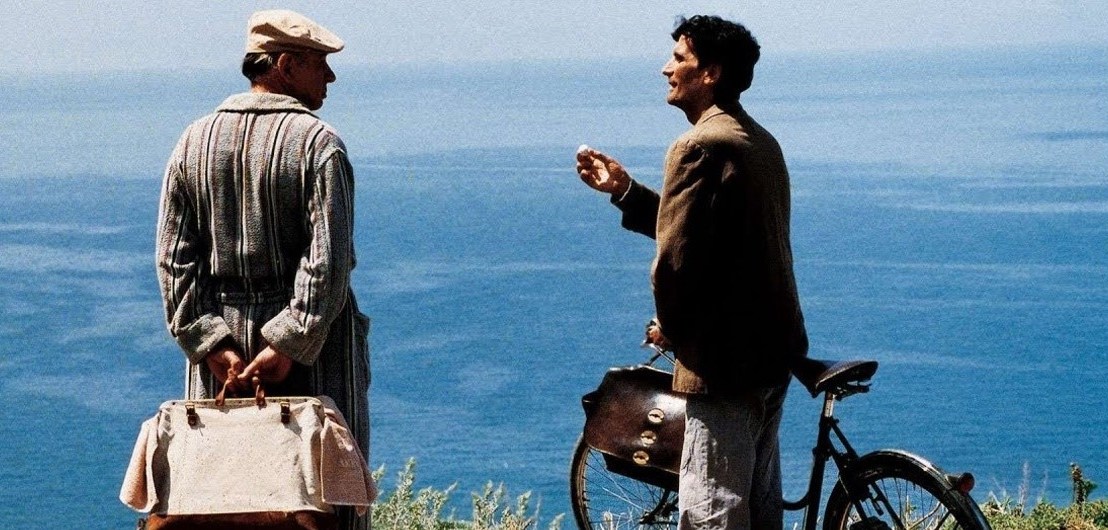
Il Postino (1995)

Il Postino (1995)

A friendship (of a sort) across the divide in this sentimental, overtly charming romantic comedy drama

Director: Michael Radford

Cast: Massimo Troisi (Mario Ruoppolo), Philippe Noiret (Pablo Neruda), Maria Grazia Cucinotta (Beatrice Russo), Renata Scarpa (The Telegrapher), Linda Moretti (Donna Rosa), Mariano Rigillo (Di Cosimo), Anna Bonaiuto (Matilde Urrutia)

Pablo Neruda (Philippe Noiret) arrives on an Italian island in 1950, exiled from his home in Chile. He brings celebrity to the small community: but also transforms the life of local Mario Ruoppolo (Massimo Troisi). Mario, a quiet and slightly lost man who doesn’t want to follow in his father’s fishing footsteps, takes a job delivering Neruda’s mail. He becomes fascinated by poetry and idolises Neruda with whom he forms a friendship, after he enlists him to help woo Beatrice (Maria Grazia Cucinotta), daughter of the local café worker. Mario becomes more and more influenced by Neruda’s communism and love of language. How will he cope when Neruda’s exile ends?

A massive box office success – one of the biggest foreign language hits in the USA – Il Postino is a film born from tragedy. Troisi had long wanted to adapt the novel by Antonio Skarmeta. So much so, he delayed urgent heart surgery to make the film. With filming due to start, Troisi was so ill he could work little more than an hour a day. Many of his scenes were done in a single take. Radford re-worked scenes to allow Troisi to sit as much as possible, while a body double did all long shots, medium shots and any close-up where Troisi’s face didn’t need to be seen. Troisi recorded all his dialogue before filming – and tragically died the day after shooting completed.

It’s a moving story: and it’s hard to separate your reaction to it from your reaction to the film. Perhaps influenced by Troisi’s illness, Radford turns Il Postino into a quiet, gentle and mediative piece, crammed with restrained camerawork and thoughtful pacing. There is a gentle, easily digestible warmness to Il Postino, with relatable themes around love, friendship and the power of poetry. But you can’t help but feel subtitles made some feel they were watching something arty, rather than something that is essentially a bit of popular fiction turned into a film.

Don’t get me wrong, there are plenty of positives. Radford perfectly captures the warmth and eye-opening wonder of a man discovering intellectual horizons he never imagined. Mario at first seems not particularly bright – but we discover he is simply a man who has grown up without intellectual stimulation of any sort. No one ever leaves his island and the only ambition anyone has is to become a fisherman. Watching a newsreel of Neruda’s arrival in Italy, the villagers seem as stunned by seeing these magic moving pictures as they do the famous poet’s arrival.

Into this tiny world drops a magic figure: someone who makes Mario discover that the functional words that only ever dropped hesitantly from his mouth, can actually be crafted into gorgeously elaborate sentences, full of power and beauty. Poetry at first just seems like a great way to get girls – Mario is stunned by the amount of mail from ladies Neruda receives – but then becomes an end in itself. Slowly Mario appreciates things around him – the moon, the lapping of waves on the shore, the sound of the wind in the hills – in a way he never even thought about before. Similarly, he begins to question the quiet acquiescence the village shows to all-too-obviously corrupt local politician Di Cassimo.

This largely works due to a quiet, unforced and gentle performance from Troisi. Shyly muttering his lines and rarely raising his head up to look directly at the person he is talking to, Troisi’s performance has an unaffected naturalness to it. He’s quiet, abashed and shy, also childlike, worshipping Neruda with a puppy-dog intensity (that never wilts, even after Neruda leaves the island) and reacts to things around him with an awe-filled wonder.

Opposite him, Noiret soaks himself in artistic confidence as Neruda, a man very aware he’s a huge fish in a small pond. Perhaps because he’s lonely, perhaps because he finds Mario’s childlike openness endearing, he indulges and encourages Mario’s attempts to befriend him. But, despite appearances, I’m not sure Il Postino wants to commit to the fact that this is not a friendship of equals. Neruda is fond of Mario – but he never, truly, sees him as an equal. Mario is, at heart, a distraction Neruda is fond of. He indulges Neruda’s clumsy attempts to win his attention, and there is a slight quiet background air of fatherly condescension in his treatment of him.

It means people overlook the more interesting parts of Il Postino. Because, despite the way it’s presented, this isn’t a story of a friendship over a divide. The final act is in fact more interesting in showing, after Neruda leaves, that a relationship that changed Mario’s life forever was just a brief, fond distraction to Neruda. Neruda remains the most important person in Mario’s life – but he wouldn’t even make the top hundred in Neruda’s life. Neruda makes little effort to keep in touch, gets a secretary to write a functional letter to Mario and takes years to even consider a visit.

The real point of interest here is how Mario flew, Icarus like, close to the sun – but found he could only get so close. He will only ever be a footnote in Neruda’s life, while Neruda is his life. Even when faced with evidence of Neruda’s affectionate disregard, he will still insist on naming his child after him. Similarly, poetry is something he can love but never quite master himself. This is interesting stuff. Il Postino avoids it.

Instead, it’s a film that settles on sentiment. You can’t argue with the skill Radford directs the film, or the quiet power of a late sequence when Mario records the sounds of the island for Neruda. Radford’s unobtrusive direction – partly influenced by working around Troisi’s illness – works to wring the maximum emotion from it. But it’s still a sentimental package: a package skilfully presented to Academy voters by Miramax (Luis Bacalov’s Oscar win for score was surely connected to Weinstein mailing a recording to every member of the Academy) and presents a pleasant fantasy story for the masses, that veers away from its more complex parts to present something far more reassuring and gentle.

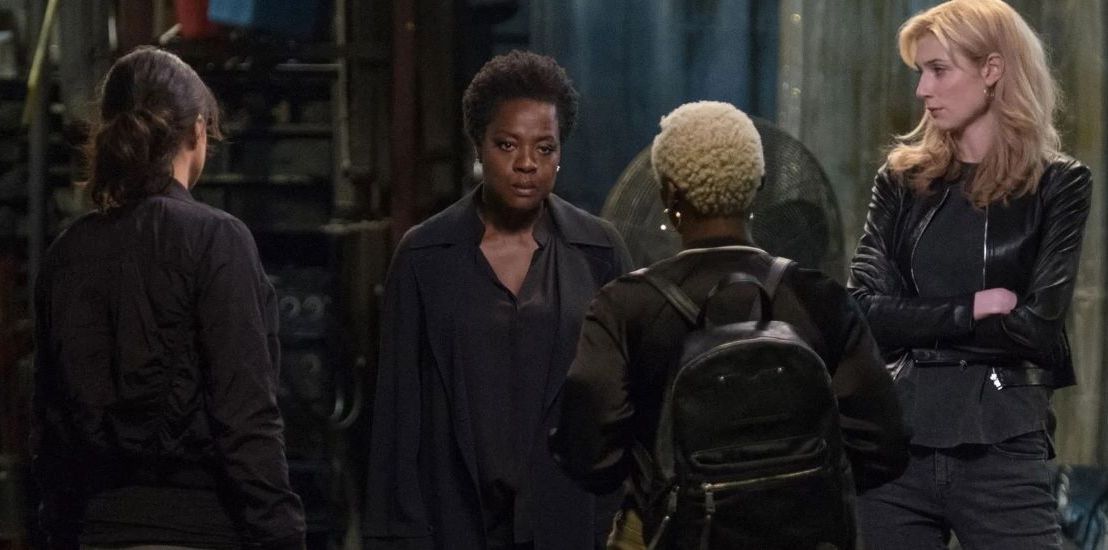
Widows (2018)

Widows (2018)

Sexism, racism and corruption get mixed in with crime drama in McQueen’s electric heist film

Director: Steve McQueen

Cast: Viola Davis (Veronica Rawlings), Michelle Rodriguez (Linda), Elizabeth Debicki (Alice), Cynthia Erivo (Belle), Colin Farrell (Jack Mulligan), Brian Tyree Henry (Jamal Manning), Daniel Kaluuya (Jatemme Manning), Jacki Weaver (Agnieska), Carrie Coon (Amanda), Robert Duvall (Tom Mulligan), Liam Neeson (Harry Rawlings), Jon Bernthal (Florek), Garret Dillahunt (Bash), Lukas Haas (David)

A getaway goes wrong and Harry Rawlings (Liam Neeson) and his criminal gang all wind-up dead and their loot burned up. Their last job was cleaning out the election fund of gangster-turned-electoral-candidate Jamal Manning (Brian Tyree Henry). Manning believes he’s owed a debt by Harry’s widow Veronica (Viola Davis). On the hock for millions, Veronica has no choice but to recruit the widows of Harry’s gang to help her pull off the next job Harry planned: cleaning out the campaign fund of Manning’s electoral rival Jack Mulligan (Colin Farrell).

Adapted from an 80s British TV mini-series, Widows has been run through Steve McQueen’s creative brain, emerging as a compelling, beautifully shot crime drama mixing social, racial and gender commentary with blistering action. It takes a traditionally masculine genre – the crime caper – and places at its heart a group of women motivated by desperation and survival rather than the lure of lucre.

What’s particularly interesting is that none of these women fit the bill of the sort of person you expect to arrange a daring heist. Viola Davis’ Veronica is a retired teachers’ union rep; Elizabeth Debicki an abuse victim, treated terribly by her husband and selfish mother; Michelle Rodriguez a shop owner desperately trying to give her kids a chance, despite her husband’s reckless gambling. Even the driver they hire, played by Cynthia Erivo, is a hairdresser and babysitter. These women are a world away from the ruthless criminals you’d expect to pull off this kind of operation.

It’s probably why they are routinely underestimated and patronised by men. Veronica is advised clear her debt by selling either everything she owns and disappear. As with the rest of the women, the world expects her to put up and shut up. These are women defined by their husbands and the expectation that their needs are subordinate to others’. Debicki’s Alice is all-but pushed into escort work by her demanding mother, while Rodriguez’s Linda is blamed by her mother-in-law for her husband’s death. But these women have a steely survival instinct that makes them determined and (eventually) ruthless enough to take this job on.

Davis is superb as a determined and morally righteous woman, whose principles are more flexible than she thinks. She efficiently (and increasingly sternly) applies her organisational skills to planning the heist, pushing her crew to adapt her own professionalism. Davis wonderfully underplays Veronica’s grief, not only at the loss of her husband but also the recent death of her son (shot by police officers while reaching to answer his phone behind the wheel of an expensive car – in front of a wall of Obama “Hope” posters, a truly striking visual image).

Her co-stars are equally impressive. Debicki has mastered the mix of vulnerability and strength behind characters like this (how many times has she played suffering, glamourous gangster molls?). Her Alice gains the self-belief to push back against those exploiting her. Rodriguez beautifully balances grief at the loss of her husband with fury at the financial hole he has left her in. Erivo gets the smallest role, but makes Bella dry, loyal and sharp. All four of them use the way men underestimate them – seeing them as widows, wives, weak or sex objects – to plan out their heist.

The reversal of gender expectations crosses over with the social political commentary McQueen wants to explore. This sometimes works a treat: the flashback to the shooting of Veronica’s son is shockingly effective. But the film’s dives into the Chicago political scene and the deep class divisions in the city don’t always have the impact they should. There is a marvellous shot – all in one take, mounted on the car bonnet – as Farrell’s Mulligan travels (in a few minutes) from a photo op in a slum back to his palatial family home, emphasising how closely extreme wealth and poverty sit side-by-side in America.

Both candidates are corrupted in different ways. Jamal Manning – a knife behind a smile from Brian Tyree Henry – is a thug talking the talk to line his pockets. Farrell’s Mulligan has more standards – and you wish for more with this fascinating put-upon son part on-the-take, part genuinely wanting to help. His domineering dad – an imperiously terrifying Robert Duvall, who wants to backseat drive his son in office – demeans his son, shouts racial slurs and bullies everyone around him. Politics: your choice is the latest off-spring of a semi-corrupt dynasty or a literal criminal.

But the film doesn’t quite find the room to explore these issues in quite as much detail as you feel it could: it’s a strong hinterland of inequality, but you want more. McQueen however, does have a gift for unique character details that speak volumes: the women’s operation is shadowed by an electric Daniel Kaluuya, as Manning’s calm yet psychotic brother, who listens to self-education podcasts on Black history and shoots people without a second thought. He, of course, underestimates the women as much as everyone else. That’s as much of a political statement as anything else: none of the men in this film seem to even begin to think that they could be in a world which is truly equal.

The film adds a late act reveal that doesn’t quite work – and the film as a whole is trying to do a little too much – but it’s a confirmation of what a gifted and superb film-maker Steve McQueen is. McQueen shoots even conventional scenes in unique and interesting ways – check out his brilliant use of mirrors throughout – uses editing superbly to set tone and is brilliant at drawing the best from talented actors. Widows is crammed full of terrifically staged scenes and gallops along with pace and excitement. It’s a fine example of a great director turning a genre film into something deeper.

Clear and Present Danger (1994)

Clear and Present Danger (1994)

Tom Clancy’s door-stop thriller is turned into an involving conspiracy thriller that makes masterful use of Harrison Ford

Director: Philip Noyce

Cast: Harrison Ford (Jack Ryan), Willem Dafoe (John Clark), Anne Archer (Dr Cathy Ryan), Joaquim de Almeida (Colonel Felix Cortez), Miguel Sandoval (Ernesto Escobedo), Henry Czerny (Bob Ritter), Harris Yulin (James Cutter), Donald Moffat (President Bennett), Benjamin Bratt (Captain Ramirez), Raymond Cruz (Domingo Chavez), James Earl Jones (Jim Greer), Tim Grimm (Dan Murray), Hope Lange (Senator Mayo)

Tom Clancy’s Jack Ryan has always been the All-American hero (his slimy, besuited CIA rival even frustratedly snarls “you are such a Boy Scout”). Ryan is almost too-good-to-be-true: pure as the driven snow, incorruptible, a success at everything he does and a devoted family man. What chance does someone like that have in Washington? In Clear and Present Danger, Ryan is dragged into the War on Drugs, unwittingly becoming the front man for an illegal military assault team against the Columbian cartels, ordered by a US President on a vendetta for the death of a friend. When the truth comes out, you’ve got one guess who takes it on himself to save the soldiers who are hung out to dry by the suits in Washington.

We know he’ll do the right thing as well, because he’s played by Harrison Ford. Ryan is basically a blank slate as a character, so Ford’s straight-as-an-arrow everyman decency does most of the heavy lifting to establish who he is. As an action hero, Ford has the chops but his real strength is his ability to look frazzled, scared and muddling through – rather like the rest of us would. Ryan gets in some real scrapes here, from dodging missiles in an attack on a diplomatic convoy to desperately fighting for his life in a timber factory. Ford’s strength as an actor is to be both authoritative and also vulnerable – his willingness to look scared but determined works wonders.

Clear and Present Danger also gives plenty of scope for Ford to employ his other major empathetic weapon: the clenched jaw and pointed figure of moral outrage. He does a lot of both here, a central scene seeing Ryan confronting besuited rival Ritter (played by a weaselly, bespectacled Henry Czerny, the polar opposite of Ford’s clean-cut everyman-ness) earnestly telling him he broke the law and is heading to jail (laughed off). There can’t be an actor more skilled at getting you to invest in someone, to both simultaneously worry about him while being confident he will do the right thing. It’s a rare gift, and Clear and Present Danger exploits it to the max.

Ford is the centrepiece – and main strength – of a competent, well-made conspiracy thriller, directed with a professional assurance by Philip Noyce. It makes a good fist of translating Clancy’s doorstop novel – with its huge complexities – to the screen (although you might need a couple of viewings to work out the twisty-turny, backstabby plot, where wicked schemers turn on their own schemes). Noyce has a special gift for keeping dense technical and exposition scenes lively. At one point he cross-cuts a parallel investigation into a fake car bombing between Ryan (who flicks doggedly through textbooks) and his Cartel rival who employs gadgetry and computers. Plot heavy scenes like this are well-shot, pacey and capturing plenty of reaction shots, even if they only feature characters messaging each other on clunky 90s computers or walking-and-talking in shadowy metaphors.

Clear and Present Danger also successful juggles its Washington shenanigans, with parallel intrigue in its Columbia setting. There ruthlessly charming Cortes (played with a wonderful cocksure suaveness by Joaquim de Almeida) is scheming to takeover his boss’ (a blustering Miguel Sandoval) operation. These plot unfold both together and in parallel, allowing for a little bit of neat commentary contrasting the cartels and Washington. The film manages a bit of critique of America’s thoughtlessly muscular intrusion into the affairs of other countries, with a President turning a blind eye after passing on implicit instructions (but still with a boy scout hero who will sort it all out).

Noyce also pulls out the stops for a couple of brilliantly executed scenes. Great editing, sound design and committed acting makes a scene where Luddite Ryan races to print off incriminating evidence from a shared drive while technically assured Ritter deletes the files, edge-of-the seat stuff. Never before has racing to fill a printer with paper seemed more exciting.

That pales into significance with the film’s centre piece, a genuinely thrilling Cartel ambush on a US diplomatic convoy, with Ryan stuck in the middle. With perfect build-up – from James Horner’s tense score to the skilful editing – the attack (with Oscar nominated sound design) is hugely tense, leaves our heroes terrifyingly powerless and is flawlessly executed by Noyce and his crew. It makes the whole film a must watch all on its own.

It’s surrounded by several other well-handled action set pieces, featuring the Marines sent on a covert mission (and then hung out to dry). As the operation leader, Willem Dafoe plays very successfully against type as a (ruthless) good guy, as Clancy’s other regular character, uber-fixer John Clark. Dafoe also has the chops to go toe-to-toe with Ford, and like de Almedia’s charmingly wicked Cartel-fixer also serves as another neat contrast to Ryan’s decency-with-a-fist.

The film is rounded out by a troop of reliable actors. Anne Archer has little to do as Ryan’s supportive wife, but Donald Moffat is good value as the shifty President (communicating both intimidating authority and Nixonian survival instinct), Harris Yulin perfectly cast as a President-pleasing apparatchik and Raymond Cruz as an ace but naïve marine sharp-shooter. Clear and Present Danger has few pretensions to be anything other than an involving thriller – but that also helps make it a very enjoyable one.

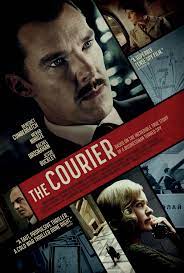
The Courier (2021)

The Courier (2021)

True-life Cold War thrills, as two spies battle to prevent the Cuban Missile crisis

Director: Dominic Cooke

Cast: Benedict Cumberbatch (Greville Wynne), Merab Ninidze (Oleg Penkovsky), Rachel Brosnahan (Helen Talbot), Jessie Buckley (Shelia Wynne), Angus Wright (Dickie Franks), Željko Ivanek (John McClone), Kirill Pirogov (Oleg Gribanov), Anton Lesser (Bertrand), Maria Mironova (Vera)

In October 1962 the world nearly ended, as the USA and the USSR clashed over Soviet missiles in Cuba. The history of this grim month is well known, as the fate of the world hung in the balance. What’s less known is the role Soviet double agent Oleg Penkovsky played in passing information on Soviet capabilities and strategy to the West – and how crucial this was to bringing the crisis to a (world-surviving) end.

The Courier covers – in a pleasingly old-fashioned, Le Carré-ish way – Penkovsky’s (Merab Ninidze) dangerous espionage career, and the relationship he built with British businessman Greville Wynne (Benedict Cumberbatch). Wynne – totally unconnected to the Secret Services – was chosen by MI6 to make initial contact with Penkovsky. He then served as Penkovsky’s courier, carrying secret documents and microfilm back to the West under cover of business trips to the Soviet Union – and the two men became close friends. When the Cuban Missile Crisis increases the risks to Penkovsky, it’s Wynne who pushes for a risky mission to extract him before he is uncovered and killed.

Directed with confident, low-key aplomb by Dominic Cooke, The Courier mixes shady, spy-thriller tropes (secret meetings, scratched signals, one-time pads, secret cameras) with a genuine friendship between two very different people. All taking place in a grim, Soviet environment where the risk of discovery lurks around every corner. Ordinary receptionists and chauffeurs could all be active or potential informants of the KGB, and there is not a single room that cannot be bugged.

It’s a very unusual world fish-out-of-water Wynne finds himself in. Expertly played by Cumberbatch as a stiff-necked people-pleasing fixer (introduced deliberately losing a game of golf to close a business deal with the triumphant winners), Wynne uncovers depths he didn’t suspect in himself. He at first has no interest in spying – or the Soviet Union – and simply wants a quiet life rebuilding trust with his wife (Jessie Buckley making a great deal of a rather thankless part of a woman kept in the dark about her husband’s activities) after a past affair.

He needs brow-beating from MI6 to even carry out his first mission – which he executes with a nervy unease – and reacts with horror at the idea of repeating it. What draws him in is the same quality that will see him take huge risks: his sense of humanity and fair play and the bond of mutual friendship and understanding between him and Penkovsky. Wynne willingly accepts dangers and sacrifices others would blanche at, out of loyalty and a sharply defined sense of right and wrong.

Wonderfully played by Ninidze, The Courier makes clear the huge risks Penkovsky is taking even considering talking to the West. This is a country where a Western spy is executed in the middle of a special staff meeting at his ministry. Whose leader is hell-bent on asserting Russian dominance and devil-take the consequences (sound familiar?). A country taking part in an arms race that could destroy the world, and disregarding the risks that could lead to those weapons being used. A quiet, loving family man, Penkovsky is appalled at the aggressive posturing of his country and how it is endangering his family and millions like them around the world.

It’s the bond between these two men, their sense of duty and their desire to protect, their quiet wit and small acts of thoughtfulness – as well as their capacity for betrayal (Penkovsky of his country, Wynne of his wife) – that draws them together. For Wynne, the selfless risks of Penkovksy create a deep well of respect and admiration, as well as pushing this businessman to develop into a justified-risk-taking moralist with a greater emotional connection to the beauty of life (represented by two contrasting scenes showing the two of them attending a Russian ballet – the second performance moves them both to tears, as if reminding them why they fight).

Around them, shot in a beautifully drained out style that really adds to the sense of terror and danger, plays out a sharp, well-paced spy thriller. Rachel Brosnahan plays Penkovsky’s CIA handler – an invented female agent, allowing the film to take a few shots at the stuffed-shirt unimaginativeness of her superiors – while Angus Wright (all stiff realpolitik) is his MI6 one. The official agencies play a more pragmatic bat, pushing Penkovsky to greater-and-greater calculated risks to improve their access. They also coldly accept any double agent has only a limited shelf-life before discovery, and getting the maximum out of them while they can is essential.

The film’s final act explores the impact of this, as Penkovsky is exposed and Wynne goes to dangerous lengths to try and help him escape. Shifting at this point into something more claustrophobic and hand-held, the film’s final act layers on the grim suffering spies face when uncovered – and includes several moments of genuinely moving suffering.

The Courier is a low-key, efficient, well-made and well-paced true-life espionage story, that feels like the professional, smartly assembled, film-making that often gets squeezed out of cinemas today. Very well acted by a strong cast, every frame has a perfect mixture of 50s/60s style and Cold War paranoia and its final sequence carries a decent emotional punch. A fine retelling of an overlooked story.

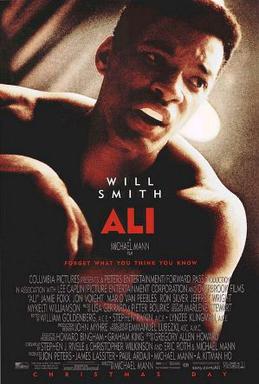
Ali (2001)

Ali (2001)

Will Smith captures The Greatest in a film that misses the fire and passion of Muhammad Ali

Director: Michael Mann

Cast: Will Smith (Muhammad Ali), Jamie Foxx (Drew Bundini Brown), Jon Voight (Howard Cosell), Mario van Peebles (Malcolm X), Ron Silver (Angelo Dundee), Jeffrey Wright (Howard Bingham), Mykelti Williamson (Don King), Jada Pinkett Smith (Sonji Roy), Nona Gaye (Khalilah Ali), Michael Michele (Veronica Porché), Michael Bentt (Sonny Liston), James Toney (Joe Frazier), Charles Shufford (George Foreman), Joe Morton (Chauncey Eskridge), Barry Shabaka Henley (Herbert Muhammad)

There is perhaps no greater sportsman of the 20th century than Muhammad Ali. Not for nothing did he call himself “The Greatest”. His impact on his sport is unrivalled, and his impact on our culture almost matches it. He’s one of those titanic figures that, even if you don’t care a jot for boxing, you know exactly who he is. Ali approved the film – and even more so, Smith’s performance – in Mann’s film that covers ten turbulent years in Ali’s life, from winning the title and changing his name, to refusing the Vietnam draft and losing his boxing licence and title, to reclaiming the title again in  the legendary “Rumble in the Jungle”.

If there is a major flaw about Ali, it’s that Ali was a man who was about so much more than just boxing – but Ali struggles to be more than a film about a boxer. It’s hard today to look at the film and not think that a black director would have had more connection with the emotional, cultural and political turmoil that defined Ali’s life in the 60s and 70s. Mann mounts all this well – and gives it plenty of empathy in the film – but his outsider perspective perhaps contributes to the film’s coldness.

Coldness is the prime flaw of the film. There was no sportsman larger than life than Ali. No public figure who demanded attention more, no boxer who fought his battles as much with wit, convictions and passion as well as fists as Ali. A film of his life needs to capture some of this magic alchemy: it needs to feel like a film that conveys the man Ali was. While there is no doubt there was a melancholy in Ali, a quiet inscrutability behind the pizzazz, this film leans too much into this. It does this while never really telling us anything about Ali’s inner life.

As two marriages are formed and collapse, we don’t get an understanding of what drew Ali to, and caused him to turn away from, these women. His relationship with the Nation of Islam ebbs and flows throughout, but other than a few on-the-nose statements from Ali, we don’t get an idea of how his faith defines him. We get his brave stand against serving in the Vietnam war, but not the emotional and intellectual conviction behind it (other than parading a series of famous quotes).

The film is packed with famous black figures – from Malcolm X to rival boxers and Ali’s support team – his father and family, not to mention three of his wives, but the relationship the film is most invested in is Ali’s mutual appreciation/attention-feeding verbal duels with boxing correspondent Howard Cosell (a pitch-perfect vocal and physical impersonation by Jon Voight). There feels something wrong about this film about a black icon, that his relationship with a white man feels the best defined.

But then it’s also a flaw with the film that its most striking, inventive and memorable sequences are all pitch-perfect recreations of filmed events. Will Smith perfectly captures the vocal and physical grace of Ali, and brilliantly brings to life his interviews with Cosell and his larger-than-life press conferences. The boxing matches are compellingly filmed, a perfect mix of slow-mo and immersive angles (they were largely fought for real, with few punches pulled). Ali’s final KO of Foreman in the Rumble in the Jungle, after several rounds of exhausting Rope-a-dope, is punch-the-air in its triumphal filming and scintillating excitement. But all of this stuff you could actually watch for real today. How essential is a film that uses actors to recreate, with better camera angles and superior editing, stuff that was filmed when it actually happened? Essentially if I want to see Ali stunning the world with his words, or sending Foreman to the canvas, would I choose to watch the man himself, or Will Smith’s perfect impersonation of him doing it?

There is nothing wrong with Will Smith’s performance though. For all his Oscar-winning work in King Richard, this is his finest performance. Bulked up to an impressive degree (Smith spent a year preparing for the film), he’s got Ali’s movements in and out of the ring to a tee and the voice is an unparalleled capture of The Greatest’s. It’s a transformative, exact performance – Smith has just the right force of character for the patter, but also brings the part a soulful depth that the film struggles to explore further. It’s a superb performance.

Enough to make you wish this was in a better, more passionate film. Ali was at the centre of a storm of civil rights and class war in America. He became the public face of a black community struggling to make its voice heard, sick of tired of being treated like second-class citizens by a country they were expected to die for in battle. The politics of the time is lost – Mario van Peebles has a wonderful scene as a troubled Malcolm X, but even he feels like a neutered figure – and the cultural impact of Ali is diluted.

The film ends with captions that dwell on Ali’s later boxing career and his marriages. That’s fine. But this a man who was so much more than what he just did in the ring. He used his position to take a stand on vital issues in America, at huge personal cost, when thousands of others would have settled down to mouth platitudes and make money. He took on the government and refused a compromise that would have allowed him to continue boxing, because he felt the war and America’s domestic policies were wrong. He was a brave leader of men, at a time of furious injustice. The film conveys the facts, but none of the glorious passion. It’s a photocopy of Ali, which is why its best bits are recreations of filmed events. It can’t quite understand or communicate the tumultuous feelings behind racial injustice in the 60s and 70s. It could – it should – have been so much more.

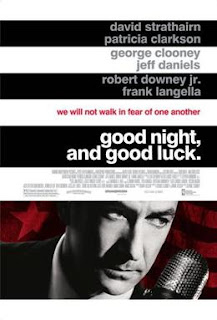
Good Night, and Good Luck (2005)

Good Night, and Good Luck (2005)

The importance of journalism is loudly praised in this engaging but faultlessly liberal Clooney film

Director: George Clooney

Cast: David Strathairn (Edward R Murrow), George Clooney (Fred Friendly), Robert Downey Jnr (Joseph Wershba), Patricia Clarkson (Shirley Wershba), Frank Langella (William Paley), Jeff Daniels (Sig Mickelson), Tate Donovan (Jesse Zousmer), Ray Wise (Don Hollenbeck), Helen Slayton-Hughes (Mary), Alex Borstein (Natalie), Thomas McCarthy (Palmer Williams)

In the early 1950s America seemed to be in the paranoid grip of one man. Senator Joseph McCarthy was the tip of a spear of anti-Communism, targeting every part of American life. To have even had thoughts that might be seen as socialist or communist, was enough for you to be considered an Anti-American and potential enemy of the state. McCarthy led a campaign to unearth Communist spies and sympathisers in the government, military, business, academia and the media. Blacklists and persecution were rife, and the slightest past association could condemn you. It took many years before anyone took a stand against this.

One of the leaders of this stand was renowned journalist Edward R Murrow (David Straithairn). Famous for his broadcasts from London during the Blitz, Murrow hosted an investigative journalist programme See It Now. A passionate believer in the power of television to educate and inform, Murrow and his producer Fred Friendly (George Clooney) are appalled when Air Force officer Milo Radulovich is condemned to be discharged, based on members of his family being communists and a sealed envelope of charges he was never allowed to see. Despite the worries of network CBS, Murrow, Friendly and their team run an episode of the show that exposes McCarthyism and its injustice, the first of several investigating McCarthy. But what price will they pay?

Clooney’s well-made, heartfelt film, is an impeccably liberal piece of film-making that is a very sincere tribute to the potential of television to be more than just an idiot’s lantern. Clooney frames the film with Murrow accepting a lifetime achievement award in 1958: he uses the opportunity to make a speech rebuking the room full of executives and journalists for squandering the potential of television to inform rather than just entertain. Murrow would of course be horrified by what TV became. Good Night, and Good Luck is a rose-tinted view of television journalism at its pioneering best: just as the end result of See It Now being gutted by cuts is a realistic look at where the scales will fall if entertainment and money are balanced with principles and education.

Clooney’s father was a TV journalist, while Clooney himself majored in journalism. The cut-and-thrust of the newsroom is as intrinsic to him, as is a desire to investigate and inform as part of a healthy political debate. Good Night, and Good Luck captures the mood of a newsroom with a convincing confidence. Journalists debate the fine point of stories, editors rush to assemble films and executives balance the pros and cons. It’s all shot in a beautiful monochrome, that exquisitely captures the haze of cigarette smoke all this takes place in. It’s a shot with a handheld urgency, sharply cut, that puts us into this world of cut-and-thrust media decisions.

And it makes clear what TV news can be. Not agenda led, but facts led. Not kowtowing to power, but challenging it to justify itself. Looking into matters that are important, not sensational. Wanting to inform people and expand their understanding, rather than pander to the lowest common denominator. Murrow’s shows are scrupulously fact-checked, and allow full rebuttal from their subject. He comes at story not with a pre-supposed position, but based on where the facts and his editorial judgement leads him.

It all takes place in a TV set that’s really striking in its humbleness, compared to the operatic news sets we see today. The 1950s studio is small, cramped and simple – and by contrast the ideas are large, expansive and complex. Murrow’s set is little more than a chair with a TV monitor. His producer Fred Friendly, literally sits at his feet to hand him notes and cue him in with announcements and VT. The See It Now set contrasts vividly with the more grandiose sets for Murrow’s other show, a series of puff piece interviews with popular stars like Liberace. (While Murrow learns his scripts by heart for See it Now, he professionally reads through a series of cue cards for these for-the-money interviews).

Murrow and Friendly also won’t compromise. They defend their right to make the show to CBS President William Paley (a brilliant performance from Frank Langella), who prides himself on no direct intervention on the news but pushes for a less controversial line. The entire team is consulted on every issue. The newsroom is a place where our better angels can come out.

But it’s still happening in an America where people are careful about what they say and do. A subplot concerns reporters played by Robert Downey Jnr and Patricia Clarkson: secretly married – contrary to CBS policy – like those suffering from McCarthyism, they must live a lie in order to protect what they have. See It Now is in danger of criticism, cancellation and attack. Another CBS anchor, Don Hollenbeck – perfectly played by Ray Wise (and few actors are better at suppressed desperation than Wise) – is dealing with constant media persecution for his perceived communist sympathy. Murrow and Friendly are not perfect: they sometimes dodge the fights they can’t win and Murrow in particular shrugs off or ignores Hollenbeck’s concerns with tragic results.

But, as Clooney makes clear, the good outweighs all the rest. As Murrow, David Straithairn (Oscar-nominated) has never been better. He perfectly captures Murrow’s mannerisms, but mixes it with wonderful measure of honesty and decency, mixed with a degree of pride and self-righteous certainty. He dominates the film (with Clooney as a generous foil) and carries much of the film’s liberal message that smart, intelligent, dedicated men can change the world.

Good Night, and Good Luck might be the most soft-left liberal film made in Hollywood in the last fifteen years. But it is a fine example of film-making craft and the earnest honesty with which it is made in its own way inspiring. It’s Clooney’s finest film and it’s grounded in his strengths: fine actors and writing carrying a sincerely told message.

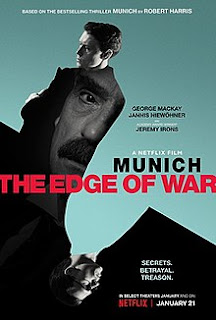
Munich: The Edge of War (2021)

Munich: The Edge of War (2021)

The backstory of history’s most famous empty promise is explored in this solid historical drama

Director: Christian Schwochow

Cast: George MacKay (Hugh Legat), Jannis Niewöhner (Paul von Hartmann), Jeremy Irons (Neville Chamberlain), August Diehl (Franz Sauer), Liv Lisa Fries (Lena), Sandra Hüller (Helen Winter), Alex Jennings (Sir Horace Wilson), Ulrich Mathes (Adolf Hitler), Anjli Mohindra (Joan), Jessica Brown Findley (Pamela Legat), Mark Lewis Jones (Sir Osmond Cleverly)

It’s 1938 and Hitler (Ulrich Matthes) wants the Sudetenland in Czechoslovakia. Will the British and French say no? The danger is, if they do, it will lead to a war only Germany is ready for. War is feared by Prime Minister Neville Chamberlain (Jeremy Irons), who remembers the horrors of the trenches. So, he flies to Munich to make a deal with Hitler. While there, a member of the British legation Hugh Legat (George MacKay) is contacted by an old friend, Paul von Hartmann (Jannis Niewöhner), a German diplomat now extremely disillusioned by the brutal Hitler regime.

Schwochow’s film is a handsomely mounted film version of Robert Harris’ best-selling thriller. Lots of critics called it a “What if” history film, which pretty much suggests people don’t understand what that term means. The film presents a pretty much a faithful (if compressed) version of the Munich talks, rather than some sort of alternative history. What makes it different is the revised angle it takes on Chamberlain – spiced up with a fictional plot about young diplomats trying to bring down Hitler.

Played with an avuncular, praetorian charm by a perfectly-cast Jeremy Irons, Harris book (and this film) presents Chamberlain not as a naïve idiot, duped by Hitler, but a man very much aware of the nature of his opponent, but who felt duty bound to do everything he could to safeguard peace. Chamberlain speaks with real emotion of the loss of a whole generation in the trenches and his fear that Britain is not ready for another war. Sure, Irons’ Chamberlain can also be arrogant and blinkered, convinced of his own cunning shrewdness, but he’s willing to risk his reputation for peace.

What he’s willing to sacrifice of course are the Czechs – and the film doesn’t give a lot of time (if any) to this screwed nation, that saw huge parts of its country split off and handed over to an aggressive power. The film would have been richer with more content around the debates and discussions at the conference and giving more time – as the novel does – to understanding Chamberlain’s strategic thinking. The film implies Chamberlain’s infamous bit of paper was his effort to clarify where blame for eventual war would lie – but it doesn’t allow us to understand more about what Chamberlain initially intended to gain from the conference or when he decided that he was unlikely to win any concessions from Hitler. We never see a moment of the negotiations, which seems a waste for a film that was designed to re-evaluate Chamberlain.

That’s partly because the film, like the book, gives a lot of time to its fictional plot. And like there, never seems to make this seem as vital or interesting as the historical storyline. Perhaps because, while the Munich storyline presents us with something we’ve not seen before, the fictional storyline feels familiar and derivative. George MacKay and Jannis Niewöhner do good work as slightly naïve young men who feel they can change the world, if they find a way to apply pressure at the right moment. But they feel like narrative devices to spice up the history, to throw in a bit of light espionage and peril to stop it being a film about a conference.

But everything feels familiar: clandestine meetings in crowded bars and pubs (surely anyone watching would hear everything?), meetings in parks, document handovers, pacey walks with people looking over their shoulder… It’s all handsomely done but it doesn’t feel fresh. And somehow, since we know (as this isn’t a What if… movie!) that it all end in failure (our heroes spend ages trying to get a copy of the Hossbach memorandum to Chamberlain who basically ignores it immediately) it doesn’t feel urgent enough.

And more interesting personal stories get short-changed. There is more than a hint of sexual chemistry between Hugh and Paul, that the film does more than hint at in performance, but doesn’t explore. Liv Lisa Fries as a young woman both men fall in love with, ends up shifted into a very stereotyped martyr role. There are some interesting ideas touched upon with the growth of a resistance movement to Hitler, but it never quite tells us enough to understand this. And the film shies away from being too bleak in its ending – even though the fates of both our lead characters must surely be a terminal one as they head into the war (given their chosen paths of anti-Nazi resistance cell and the RAF).

I wish the film – just as I felt when reading the book – had dropped most of its standard espionage sub-plot and instead had focused solely on Chamberlain. Especially with an actor as well-suited to the role as Irons. It would have allowed to focus exclusively on re-evaluating and exploring the motivations of those at the conference and the political and military difficulties they faced. Unfortunately, this gets diluted too much, which means we never quite get our perceptions challenged as much as they should. It’s a well-made film, but settles too often for being traditional rather than daring.

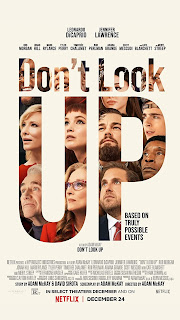
Don’t Look Up (2021)

Don’t Look Up (2021)

A host of stars tell us the world us coming to an end in this self-satisfied film

Director: Adam McKay

Cast: Leonardo DiCaprio (Dr Randall Mindy), Jennifer Lawrence (Kate Diabiasky), Rob Morgan (Dr Teddy Oglethorpe), Meryl Streep (President Janie Orlean), Cate Blanchett (Brie Evantree), Jonah Hill (Jason Orlean), Mark Rylance (Peter Isherwell), Tyler Perry (Jack Bremmer), Timothée Chalamet (Yule), Ron Perlman (Colonel Benedict Drask), Ariana Grande (Riley Bina), Scott Mescudi (DJ Chello), Himesh Patel (Philip Kaj), Melanie Lynsky (June Mindy), Michael Chiklis (Dan Pawketty)

Climate Change. It’s the impending disaster where we stick our head in the sand and pretend it’s not incoming. Governments have been told for decades our carefree use of fossil fuels and slicing down of rainforests will have a cataclysmic impact. But it’s always easiest for governments and people to just say “nah” and not let those thoughts get in the way of our everyday lives. Adam McKay’s satire Don’t Look Now takes these trends of indifference, disbelief and denial climate scientists have faced their whole careers and reapplies them to a comet-hits-the-Earth disaster movie.

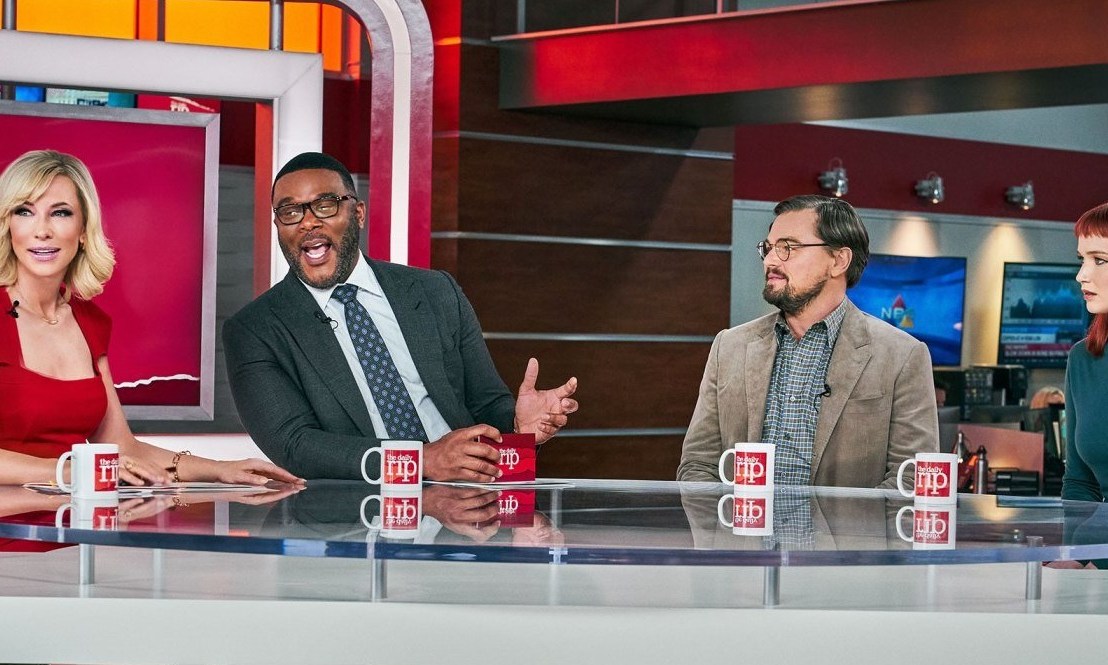
So, when Michigan State University astronomers Dr Randall Mindy (Leonardo DiCaprio) and Kate Diabiasky (Jennifer Lawrence) spot a hunk of ruck the size of Everest on a collision course with the Earth they are met with a chorus of… yawns, memes and flat-out denials. The Trumpian President (Meryl Streep) is only interested in her donors, the mid-terms and dodging the fall-out from a host of scandals. The media – represented by Fox News style anchors Brie Evantree (Cate Blanchett) and Jack Bremmer (Tyler Perry) – aren’t interested in a story they can’t process down into a feel-good social media meme. And even when people start to listen, plans to destroy the comet are benched in favour of a wildly risky scheme, dreamed up by Steve Jobs/Elon Musk style tech billionaire Peter Isherwell (Mark Rylance) to mine the rare ores it contains for money. What could go wrong?

I can see what Adam McKay is aiming for here, to create a sort of Dr Strangelove for climate change, where the great and the good we are counting on to get us through a crisis, turn out to be the blinkered morons who end up causing it. There are moments where it sort-of hits on a rich mixture of farce and genuine anger. Moments where first Kate then Mindy – thelatter with lashings of Howard Beale – melt down on National TV, apoplectic at the comet-denying indifference of millions of people stand out as both hilarious and also compelling.

But, like a lot of McKay’s would-be satirical attacks over the last year, on finance and politics, the message sometimes fails to land because of the heavy-handed, self-satisfied, smug tone of the delivery. Don’t Look Up frequently isn’t very funny – and yes I know it ends with the world being destroyed due to everyone’s indifference and incompetence – and it ladles most of the blame on obvious targets. It’s takedown of Trump – here represented by Meryl Streep – is basic, it hits open goals with the agenda-driven bias of American news reporters and takes pot-shots at messianic tech billionaires. A real punch would perhaps have focused in more on how all the mindless, unfocused greed and ambition of these people is fed by the bland, social media focused, sound-bite obsessed shallowness of the masses. But Don’t Look Up remains focused on the big people.

So focused in fact that, even in this satire, only America has the wherewithal to launch a mission against the comet. A joint Russian, Chinese and Indian mission fails to get off the ground and other world leaders are noticeable by their absence. We never really spend time with any normal people. While much of the blame does lie with governments not taking a lead, we do live in a world where normal people are radicalised by reading about nonsensical mush like QAnon through chat rooms. Imagine a satire that looked at how ordinary people can be made to believe wild theories rather than the evidence of their own eyes as a comet heads towards Earth? Instead Don’t Look Up wants to stick with something vaguely comforting – that there are big, selfish, elites running us who act out of greed and stupidity and they carry all the danger (and the blame).

Where the film is strongest is the doubt and nonsense thrown at scientists. Mindy and Diabasky are first ignored by the administration because they aren’t Ivy League. Attempting to leak their findings on the TV, they are overshadowed by an on-air-proposal of a celebrity DJ to his singer girlfriend and when they hit the news, the only takeaway is that Mindy is ‘cute’, while Diabasky is a freaky angry woman, ranting about the world ending (she’s a meme in minutes). At every point the science is questioned or put on the same level as gut feelings and political agendas. Even their campaign to encourage the world to “Just Look Up” to see the impending catastrophe is countered by the President’s “Don’t Look Up” campaign that persuades millions of people the comet isn’t real.

Really rule by social media and the dumbing down of humanity should be the main target here. A comet isn’t even a great metaphor for climate change – which is gradual, can’t be just blown up and needs to be prevented by society making changes to the way we live. In some ways, by replacing climate change with a comet, even the film is acknowledging its not sexy or exciting enough – and that it doesn’t want to turn its critical fire on millions of people who would rather turn the heating up or drive to the corner shop rather than push to make changes in their lives.

So, it’s easier and simple for McKay to create a cartoon freak show of easy targets and bash them rather than tackle the underlying causes of climate change – that our world and its population wants to have its cake and eat it, and governments for generations have been too focused on the here and now to ever worry about the years to come. So funny as it can be to see Streep Trump it up, or Rylance channel his softness into insanity, or Hill play another of his mindless frat boys turned power brokers, the film doesn’t feel like it really goes for the real causes of climate change: our own culture. It takes hits at our social media simpleness, but not at our short sightedness.

McKay does at least direct without much of the fourth-wall leaning flashiness of his earlier works, and there are committed – if not exactly stretching – performances from Lawrence (whose characters checks out in despair at the shallowness) and DiCaprio (who is seduced by fame, power and Blanchett into becoming an apologetic mouthpiece for the administration). But Don’t Look Up is a little too pleased with itself, a little too focused on easy targets and doesn’t do enough to spread the blame wider. It stills see many of us as victims or mislead – when really we are as to blame a everyone else.

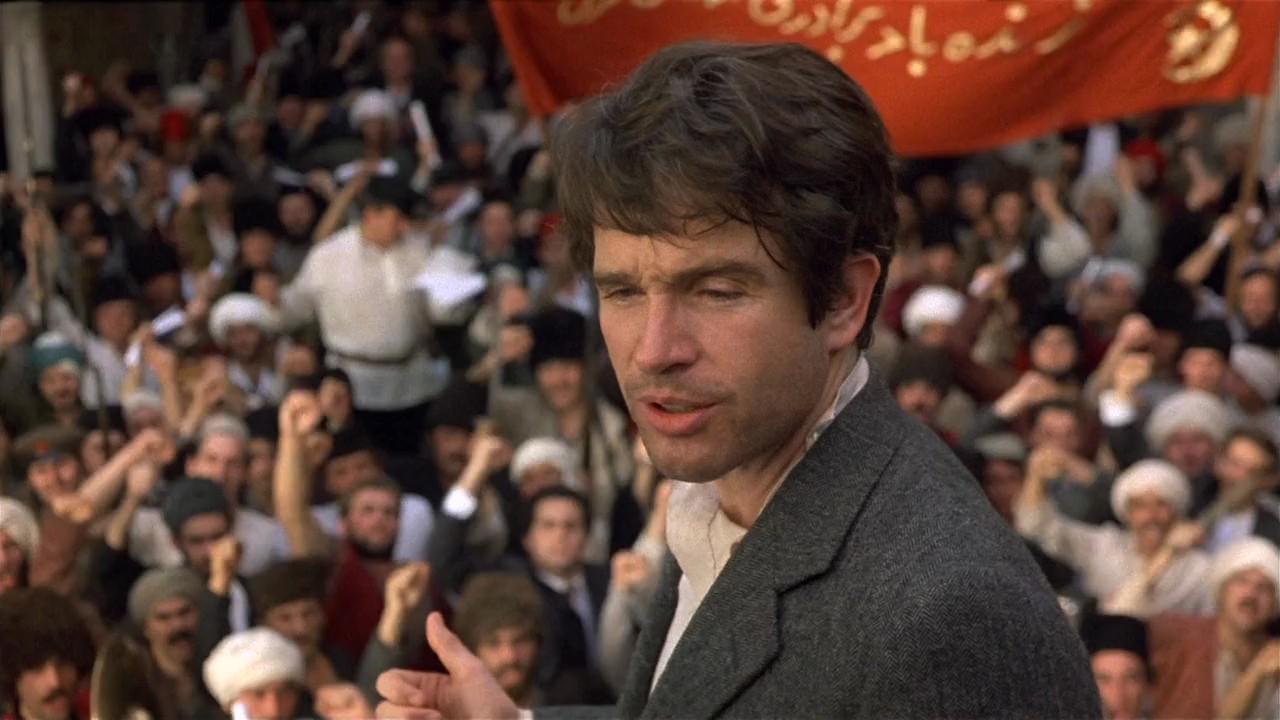
Reds (1981)

Reds Header
Warren Beatty brings his passion to life in Ken Loachesque Reds

Director: Warren Beatty

Cast: Warren Beatty (John Reed), Diane Keaton (Louise Bryant), Edward Herrmann (Max Eastman), Jerzy Kosinski (Grigory Zinoviev), Jack Nicholson (Eugene O’Neill), Paul Sorvino (Louis C Farina), Maureen Stapleton (Emma Goldman), Nicolas Coster (Paul Trullinger), William Daniels (Julius Gerber), Jan Triska (Karl Rodek), Gene Hackman (Pete van Wherry)

Reds is the film only Warren Beatty could have made. Imagine the pitch meeting: I want to make a three hour long biopic about American communists, with the hero being the only American buried in the Kremlin, and I need $30million dollars to do it. Only Beatty had the force of personality to get major companies to invest greenbacks into a film celebrating a man who would have happily cheered their demise. Reds is a tribute above all to the dedication of its multi-titled director and his refusal to compromise. It’s a big piece of serious minded, educational but also dramatic and romantic storytelling. Not many people could have pulled it off.

In 1915 Louise Bryant (Diane Keaton), a young would-be journalist and suffragette, meets and falls in love with left-wing journalist John Reed (Warren Beatty). The two of them tun off together to Reed’s bohemian circle in Greenwich Village, New York then to Massachusetts, becoming the centre of a community of anarchists, socialists and artists. Their mutual love is damaged by affairs – in particular Bryant’s heartfelt affair with the sensitive Eugene O’Neill (Jack Nicholson) and Reed’s own (off-screen) infidelities – but is rekindled as they are swept up in the Russian Revolution, an event that motivates Reed to try and build a similar communist party in America (with very little success). But, when Reed is trapped in Soviet Russia, how far will Bryant go to reunite with him?

Beatty’s dream of making a film on Reed’s life had been knocking around in his head since the 1960s, but it took the success of Heaven Can Wait in 1978 for him to finally have the muscle to get the film made (when Studio execs, having signed the deal, begged him to consider another subject Beatty stuck to his guns). He originally planned only to produce: that quickly expanded into also writing the script (with Marxist British playwright Trevor Griffiths, a hilarious personality mismatch with the Virginian millionaire Beatty), then directing it and finally, to be completely sure the project went where he wanted it to go, playing Reed as well. It would result in Beatty joining the short list of people nominated in four different categories for one film at the Oscars (but he won only Best Director, Reds losing out the big one to Chariots of Fire).

The real strength of Reds is probably Beatty’s producing. This is a huge epic, filmed across multiple countries in Europe (standing in for each other and for America), marshalling a vast number of sets and locations. Much like Attenborough’s Gandhi, it’s a film directed with a smooth, professional competence, but stage-managed to the screen with the flair of a master producer. Each department was staffed by an expert: Vittorio Storaro shot the film with a Golden Age beauty; Stephen Sondheim contributed to the score; Dede Allen assembled thousands of hours of footage, and dozens and dozens of takes of every scene, into a coherent, pacey movie that effectively balances politics and romance.

In many ways, Reds is like the mirror image of Lean’s Doctor Zhivago (it even has a late train ambush set-piece, chugging through the Spanish wheat fields, that could have come out of Lean’s epic). That film was a romance-for-the-ages that used politics and revolution as a backdrop. Reds uses romance and personal stories as a context-setting background, to push to the forefront politics and revolution. This is perhaps the most earnest and impassioned exploration of the history of American left-wing politics in film history. Giving a lot of time  – particularly in its second half – to scenes made-up entirely of impassioned socialists sitting in a room arguing at each other over the minutia of party rules and ideology, this is the sort of epic Ken Loach would have been proud of making.

The politics are also genuinely interesting, quite a feat in itself. Beatty is unafraid to look at the fundamental weaknesses of Western left-wing politics: its own worst enemy is always itself. People who agree on 90% of the issues, swear themselves to become life-long enemies because of differences over the remaining 10%. In one dynamically filmed sequence, Bryant is a frustrated and resigned observer as Reed oversees the split of the American Socialist Party into no less than three factions, two of which set up rival claims to be the “official” Communist party of America.

Not that Reds has any sentiment for Russia: Beatty is savvy enough to know (I wonder if Griffiths was?) that the USSR is about a million miles away from ideal. Factionalism is just as prevalent there, with the difference being the main faction happily uses, suppresses and crushes the others. Reed’s time in Russia sees him becoming increasingly disillusioned and homesick, as he realises a dictatorship isn’t made palatable just because it’s a Communist Dictatorship. As the representative of that system, author Jerzy Kosinski makes for a grippingly stone-faced and ruthless Zinoviev, brow-beating any deviation from the party line.

Beatty makes all this political theorising and left-wing political infighting palatable, by framing it carefully around a genuine romance between Bryant and Reed. For all the unconventionality of their open-ish relationship (their feelings on this change from infidelity to infidelity), these are two people who share a deep and lasting bond on both an emotional and a political level. Both skilled writers, we are shown time and again that they bring out their best work from the other and that when they are focused on each other, they have a mutual understanding few can hope to match.

As Bryant, Beatty (who was in a relationship with her at the time – which didn‘t survive the epic shooting schedule) cast Diane Keaton. It’s a stroke of genius – and this is certainly Keaton’s finest performance. In a way no other role has allowed her, this looks past Keaton’s comedic skills and allows her to match her intelligence and spark with a woman who challenged norms, as a skilled writer and journalist. Keaton can play heart-rending emotion just as well – her breakdown fury at discovering Reed’s infidelity is fully-committed without being OTT – and she’s perfect as the increasingly disillusioned observer of left-wing failures. She believably flourishes from a woman uncertain of who she is to become a determined intellectual willing to cross continents to find what she wants. It’s a brilliant performance, smart, sharp and moving.

Beatty fronts-and-centres her so much, he slightly short-changes himself – playing Reed he doubles down on the boyish charm and enthusiasm (and he feels really young here), making Reed an enthusiastic, vulnerable, naïve figure. We just don’t quite get a real sense of who he is beyond that. You can’t say the same for Nicholson’s Eugene O’Neill, delivering a remarkably low-key, restrained and sensitive performance. He’s loving, emotionally vulnerable and eventually devastated, in one of his finest acting performances. Maureen Stapleton won the Best Supporting Actress for her Earth-mother anarchist Emma Goldman, the cuddly aunt of firey, confrontational anarchic politics.

Reds is marshalled by Beatty into an epic that powers along effectively. The first half of the film gets its narrative balance right: contrasting personal and political growth with a backdrop of War and Revolution. The second half leaves a little too much to chew, a vast amount of political debate rushed through with a series of increasingly short and sometimes disconnected scenes. Beatty balances the narrative with extensive “witness” interviews, from real-life contemporaries of the characters. (These are never identified, which is a bit of shame as it never allows to really know what their perspective was). It adds a feeling of earnestness to a project that gets an effective balance between politics and the personal, between showmanship and details and between scale and intimacy. While it is more of a producer’s film – and rushed in its second half – than a triumph of directorial imagination, it’s still an impressive – and informative – achievement.

The Square (2017)

The Square header
Art goes wrong in Ruben Östlund’s scattergun satire The Square

Director: Ruben Östlund

Cast: Claes Bang (Christian), Elizabeth Moss (Anne), Dominic West (Julian), Terry Notary (Oleg Rogozjin), Christopher Læssø (Michael), Lise Stephenson Engström (Daughter), Lilianne Mardon (Daughter), Marina Schiptjenko (Elna), Annica Liljeblad (Sonja), Elijandro Edouard (Boy with Letter)

Christian (Claes Bang) has it all. The respected director of a celebrated Swedish Modern Art Gallery, he’s rich, handsome and highly thought of by all. That all fractures when his phone and wallet are stolen in a confidence trick. Using the phone’s tracker, Christian identifies the working-class apartment building its in. In a burst of late-night energy, he writes a threatening letter to the thieves and posts a copy through every single apartment door demanding it’s return. It is: but Christian’s letter has a negative impact on an innocent young boy (Elijandro Edouard) whose parents now believe he must be a thief. Christian is so preoccupied with this he fails to pay attention to a YouTube video created to promote his new exhibition: the video of a homeless child being blown up outside the museum leads to national condemnation.

And that exhibit? It’s called The Square (you see!). Its main feature is a literal square on the floor, marking a safe space where everyone is equal. The exhibit is themed around trust, mutual respect and altruism. Traits which Östlund’s film reminds us time-and-time again his central characters are all sadly lacking in. It’s part of a broad-ranging satire on the self-importance of the Art World and the self-obsession of the upper classes that, while beautifully filmed, comes across as rather scattergun. Putting it bluntly, most of its targets are so obvious, the entire film might as well be footage of fish being shot in barrels.

A film like this, hinges on Christian’s self-perception being clearly shown to be very different from his reality. In effect, we need to see how Christian believes himself to be a decent, upstanding, noble fellow but also be shown he is in fact prejudiced, self-obsessed and vain. While the film does very well to show how shallow Christian’s “nice-guy” image is – he basks in the adulation of colleagues and museum patrons and carefully prepares his ‘spontaneous’ presentations for maximum effect – we never get quite enough of a sense of how he sees himself. His mystique is punctured so early, that the sense of events forcing an awkward confrontation with his true character is not developed.

This takes nothing away from the exceptional performance of Claes Bang, a charismatic and gifted actor who can pivot on a sixpence from huge charm to bullying menace. He’s completely believable as the red-spectacled, scarf wearing aesthete just as he is the sort of bully who’ll push a troublesome kid over. Matey and jovial with his employees, he’s also hesitant on their names and berates assistant Michael (Christopher Læssø) when he gets cold feet about executing his letter drop plan (on top of which, he naturally assumes as Michael is black, he’ll be better at carrying out the plan than Christian). His life is a careful performance, with every moment scripted by him, that fractures into something much messier the instant he loses control.

It’s just a shame that Östlund doesn’t delve into the opportunities this presents. He’s more interested in obvious characters like Elizabeth Moss’ Anne, a preening journalist (she inexplicably lives with a Chimp) with whom Christian enjoys a one-night stand, culminating in the two of them bickering over a used condom. (Christian seems worried she’ll pinch his sperm).

Too often Östlund contents himself with simply stating that the upper clases are vain and pre-occupied with their own needs instead of the lives of others. In case we miss this point, the film is littered with shots of beggars. It even opens with the camera focused on a beggar sleeping on the street in broad daylight while, off camera, a passionate student pushes leaflets urging people to do more to help the homeless while passers-by express irritation or disinterest to them. You see! Even the campaigner is more interested in virtue signalling than actually helping people! Interactions with beggars pepper the film: Christian is annoyed by one beggar not being grateful enough when he condescendingly offers to buy them dinner to get out of an awkward conversation with them and then later pays another to guard his shopping when he takes a phone call.

This social satire runs in parallel with a scathing-but-rather-obvious series of jokes at the expense of the preening self-importance of the Art World. The exhibition, The Square, is treated as if it’s the second coming but, other than parroting the Artist’s written vision, no one (not even Christian) seems interested in engaging in it or really has a clue what it is trying to do. The most important part of Christian’s role is in fact attracting money from rich patrons, who ooh and ahh over the art but have nothing whatsoever to say about it. The art itself is a parade of cliches – although there is a very funny recurring joke of an installation that is a series or piles of ash on the floor which the museum cleaners inadvertently slowly reduce each night.

The unwillingness of people to rock the boat in social situations is also parodied. Dominic West cameos as an American artist whose Q&A is constantly disrupted by a man with Tourettes – the discussion collapses but no one knows how to even to begin to manage the situation. This culminates in the film’s showpiece (and best scene). A Russian artist whose ‘art’ is to impersonate a monkey (played by motion-capture guru Terry Notary), performs an installation at a fund raiser dinner. The guests (and Christian) sit in increasingly awkward silence, no one willing to take the first step to intervene, as the artist progresses from humorous monkey noises to increasing acts of intimidation, violence and finally sexual assault.

It’s all interesting stuff, but it all feels a little too obvious. The advertising reps bought into design the video are such cliched social media obsessives they feel like sitcom characters. The juxtaposition of The Square’s idea that “everyone inside the square is equal” with the reality of no one being equal is made time and time and again with reduced impact.

Östlund finds a host of squares (stairways, windows etc) to frame Christian in visually to hammer this home. He makes frequent use of one-sided two shot set ups (meaning we only focus on one character during a conversation or exchange) which helps further drill down into that character’s psyche and stress their distance from whoever they are talking to. But it’s a lot of flash on an otherwise rather obvious and self-satisfied film, which never makes as many new and original points as it thinks.

If it’s a stunning realisation to you that people have a tendency to be self-obsessed, that the Art world is as much about posing and money as it is art and that social awkwardness will stop people intervening in the most disastrous circumstances, this is the film for you. Otherwise, you might find little real insight here.