Category: Relationship film

Marty (1955)

Betsy Blair and Ernest Borgnine are two shy people out on a date in Marty

Director: Delbert Mann

Cast: Ernest Borgnine (Marty Piletti), Betsy Blair (Clara), Esther Minciotti (Mrs Piletti), Augusta Ciolli (Aunt Catherine), Joe Mantell (Angie), Karen Steele (Virginia), Jerry Paris (Tommy)

Strange to think today, but until Parasite, only one other film had won both the Palme d’Or at Cannes and the Oscar for Best Picture. That film was Marty and if that fact seems odd today when you watch the film, it’s easy to forget how revolutionary a film about a regular guy with an average job and boring life was back then. Films were about larger than life guys doing big manly things. They weren’t about butchers who lived with their mamas and can’t get girls.

Our butcher is Marty Piletti (Ernest Borgnine) and one night he meets Clara (Betsy Blair), an equally shy chemistry school teacher. They spend the whole night talking, and Marty excitedly plans to call her the next day. Problem is, a brief meeting with his mother (Esther Minciotti) is a disaster – not least because she’s worried Clara could mean her being thrown out of Marty’s home like her sister (Augusta Ciolli) has been – and Marty’s best friend Angie (Joe Mantell) doesn’t think Clara is much to write home about. Under these peer pressures will Marty make that call or not?

That plot summary by the way effectively covers 95% of the film. Today Marty seems so lightweight and slight it’s almost a puff of air. The film was adapted from a one hour TV play, and beat a host of Broadway adaptations (Picnic, The Rose Tattoo and Mister Roberts) to the big one. Today of course a TV play would never be adapted into a movie (in fact if anything Paddy Chayefsky’s play would probably be expanded into a ten episode Netflix drama), but in 1950s America a TV play would have been screened once and then disappeared forever. What better for Hollywood but to assume the one-off delights of TV could be as mined as easily as the best work on Broadway?

So Marty was made and won and it’s a decent, reasonably charming movie even though it’s really hard to see what the fuss is about now. The main delights lie in the script by Paddy Chayefsky, one of the greatest screenplay writers of American film history here winning the first of his three Oscars. The script is simple, well observed, full of cracking little lines, creates some marvellously rounded characters and is careful not to overbalance the overall low-key effect of the film. 

Chayefsky has teed the whole film up so well that most of those involved simply run with the great material they have been given. None of the actors – or Delbert Mann, who received a generous Best Director Oscar – ever hit these heights again. But then that’s about right for a film that is all about the triumph of the little guy (or at least the little guy getting a small day in the sun). Mann marshals the actors (some of whom were in the original TV production) to good effect and basically doesn’t get in the way of the script.

The story itself covers just two days in the life of Marty, but it’s still a gift of a part for Ernest Borgnine, who won an Oscar (surely to the chagrin of Rod Steiger who played the role on TV). The role subtly subverts Borgnine’s persona – Marty has the build for muscular action that matches the series of smarmy, working-class heavies Borgnine had played up to this point (characters much like some of his friends in the drama) but he moves with the nerves of a timid man. Borgnine is as gentle and careful as the picture itself, a shy man who has given up on good things happening to him but comes alive when he meets someone who sees him for who he is rather than what he is not.

That first long date – it takes up well over half the film’s runtime – sees him slowly go through stages from nerves, to stumbled confessions to an excited jabbering as he is so excited to be with Clara he keeps failing (accidentally) to let her speak so keen is he to share everything with her, through to a protective regard and a euphoric celebration. The only slight dated misstep is Marty’s reaction when denied a kiss – which he goes for with the entitlement of a Mad Men era male – but it’s swiftly course corrected in the film as another sign of Marty’s clumsy lack of knowledge of how relationships work. Throughout all this Borgnine is charming, heartfelt, tender and sweet and deserving of recognition for the role.

Opposite him for most of the film is Betsy Blair, who won the role after vigorous campaigning from her and her husband Gene Kelly (who announced he would refuse to do his next film if she was not cast). Mousy, timid and shy but looking for warmth and affection in life, Clara is just like Marty: a woman who isn’t sure what the next step in her life is but is certain that she doesn’t want to spend it growing old alone. It’s another heartfelt performance. The cast is rounded out by the sort of solid minor supporting players who don’t usually stand out, with Joe Mantell getting an Oscar nomination repeating his role as brash best friend Angie from TV. Stand out though is Esther Minciotti (also repeating her role) as Marty’s loving but domineering mother.

It all comes together into something very small, sweet and low-key and if it’s strange to see what the fuss is all about, it’s probably because there have been so many more movies made about ordinary people since then that this first trend setter now looks like nothing too special. But with a marvellous script and some wonderful performances from actors who never got an opportunity like this again, it’s truly a magic moment for all concerned, a once in a life-time film before most of them returned to jobbing roles once more.

Butch Cassidy and the Sundance Kid (1969)

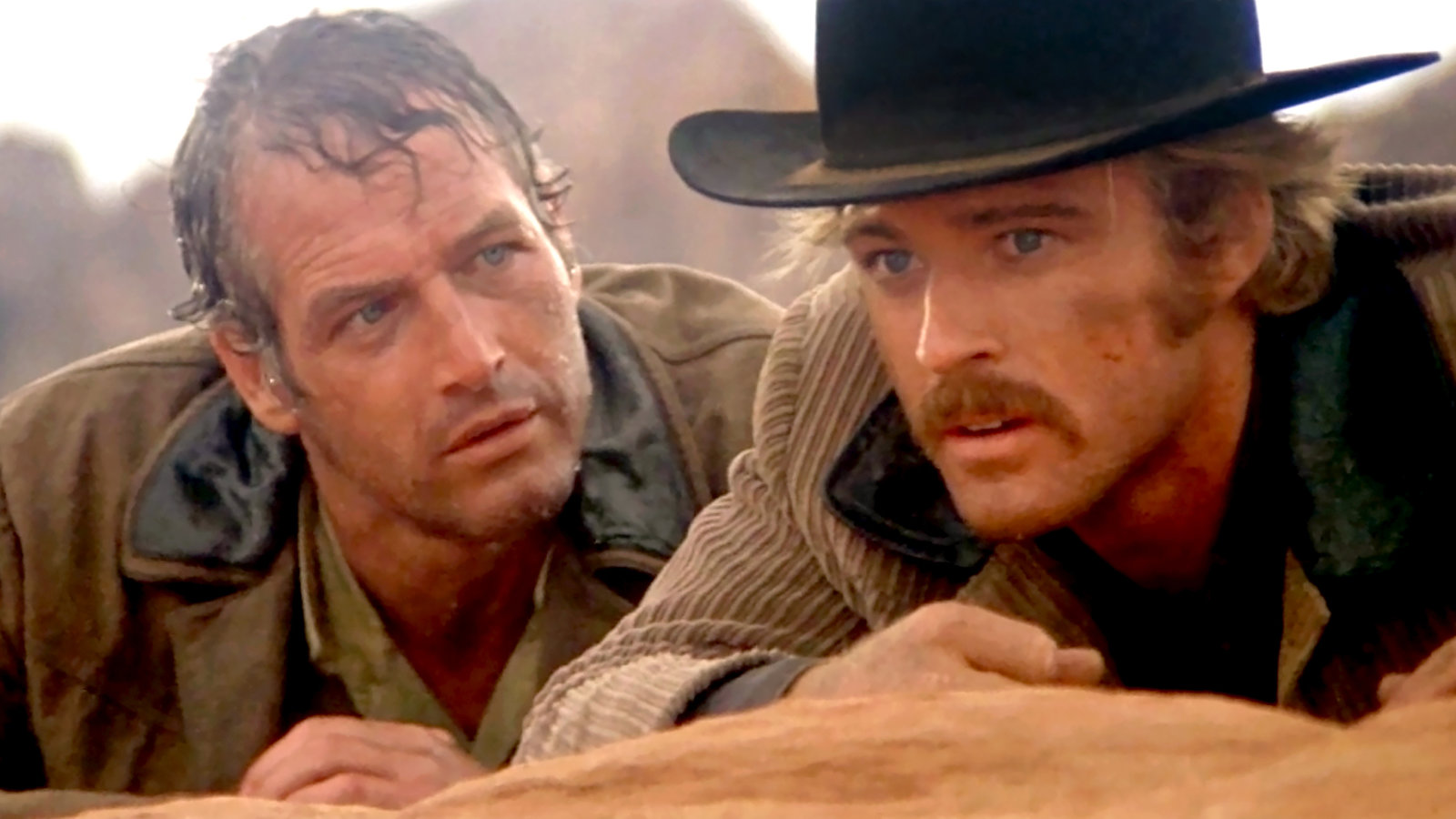
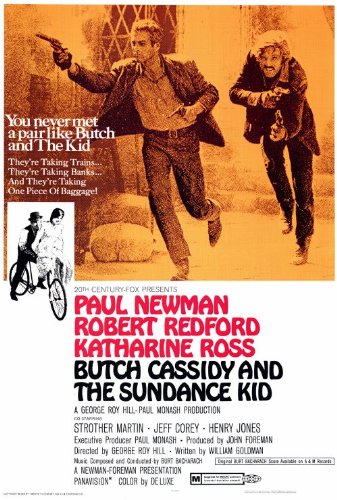
Paul Newman and Robert Redford in the perfect partnership in Butch Cassidy and the Sundance Kid

Director: George Roy Hill

Cast: Paul Newman (Butch Cassidy), Robert Redford (The Sundance Kid), Katharine Ross (Etta Place), Strother Martin (Percy Garris), Henry Jones (Bike Salesman), Jeff Corey (Sheriff Bledsoe), George Furth (Woodcock), Cloris Leachman (Agnes), Ted Cassidy (Harvey Logan), Kenneth Mars (Marshal)

Butch Cassidy and the Sundance Kid was a monster hit in 1969. It struck cinematic gold by combining Newman (originally first choice for the Sundance Kid) and Redford (fourth choice at best after Jack Lemmon – and what a different film that would have been! – Warren Beatty and Steve McQueen) and got the tone just about spot on between old school charm and hit 1960’s chic. It reinvents no wheels, but it’s a prime slice of classic Hollywood entertainment.

In the dying days of the Old West, the Hole in the Wall Gang is finding trade tough. The banks are wising up to how easy they are to rob, and the new idea of holding up trains is fraught with danger. Not least from the powerful backers who don’t like to see their money and goods being half-inched off the tracks by a gang of desperados. The leader of the gang, affable, fun-loving Butch Cassidy (Paul Newman) and his sidekick sardonic ace-shot the Sundance Kid (Robert Redford) continue to ply their trade of stealing, but they are fighting a losing battle. Hounded out of the states by a crack squad of lawman they make their way to Bolivia – but find the life of crime isn’t easier there either, what with no one speaking English and the Bolivian army being even more trigger happy than the American law and order forces. What’s a couple of guys to do?

Butch Cassidy and the Sundance Kid is really a celebration of nostalgia, repackaged with a wry sense of 60s cool that merrily seizes on its lead characters as the sort of anti-authoritarian, free-spirited, jokers who were bucking the rules of Vietnam-era America. But fundamentally at heart, it’s a joke filled sad reflection on a lost America and a lost sense of freedom – even if it was the freedom for two basically decent guys to make a living from robbing banks – that even shoots most of its opening segment in a romantic sepia. 

Because this is all about Butch and Sundance being two guys left behind by progress. Their way of life is dying out around them – the opening sequence sees Butch walk around a new bank, with its impressive new security measures. What happened to the beautiful old bank? Asks Butch: “People kept robbing it” comes the cold response. This follows on from a recreation of old sepia newsreal footage that states that the entire membership of the Hole in the Wall Gang is now dead – meaning that we know where the film is heading from day one. It’s a world where the train and modern communications are leaving our heroes behind. Even the humble bicycle is a sign of the future – “the horse is dead!” crows a bike salesman to a crowd of red necks.

The film may be cool and whipper-sharp in its style and the characterisation of its lead characters, but it’s a firmly nostalgic film that sentimentalises the Wild West and our heroes. No wonder at its conclusion it freeze frames (famously) as the heroes charge out to certain death in a shoot-out with the Bolivian army. It’s like Hill can’t bear seeing these guys torn apart ala Bonnie and Clyde or The Wild Bunch by the cold hard truth of a bullet. 

The film makes an interesting comparison with The Wild Bunch released the same year. In many ways the latter is a more traditional western, both in its style and its content. But in every other way it’s a far more radical piece, really embracing the lack of rules, the cruelty and the lack of glamour of life in the west – and ending with its heroes being shot to pieces on screen in a prolonged bloody shoot out that set a new record for use of squibs. Compared to this, Butch Cassidy is very light stuff, with its final image almost hopeful in its sepia toned romanticism.

Not that it’s not entertaining for all that. Its sense of sixties defiance is perfectly captured in the film’s lightness and playfulness – and in the fine lines and gags in William Goldman’s well structured (and Oscar winning) script. From its opening lines “Most of what follows is true” through the offbeat wisecracks of its lead, it’s a lot of fun. Newman and Redford are both just about perfect. Newman is the very picture of relaxed, casual cool while Redford’s style of handsame smartness works perfectly for the more plugged in Sundance. The two of them also form a very swinging sixties sexfree-Thruple with Katharine Ross as Sundance’s girlfriend, but essentially a companion to both men.

Not that Etta isn’t aware that the good times are coming to end. She makes it clear she won’t stick around to watch them die, and when (late in the film) she announces she will return to the US, it’s a clear sign to everyone that things are near the end. But then Butch and Sundance have already faced the cold realities, as an attempt to go straight protecting bank money from robbers see them gun down a group of bandits (the first real bloodshed in the film), an action that leaves them both slightly stunned.

It’s very different from the hijinks of the film’s first three quarters. The two of them spend a chunk of the film trying to evade the lawmen chasing them, each attempt failing, ending in them making a desperate jump off a cliff into water (because no one would follow unless they had to) and even their early career robbing banks in Bolivia is hampered by their inability to speak Spanish (cue a series of lessons from Eta on the rudiments of larceny in Spanish). The film’s lightness and warmth early on lies behind its popularity.

Butch Cassidy is a film that is designed to please and for you to love it. It has two fine actors giving superbly entertaining performances. It has some wonderful scenes, not least the introduction of each character, two superb scenes (Butch’s facing down of a challenge against his leadership of the gang is a scene so good I don’t think the film bests it). But Hill’s film is also a cosy and safe picture, that drips with sentimentality towards its leads and nostalgia for its era. It’s successful because it’s such an unchallenging and safe film.

Midnight Cowboy (1969)

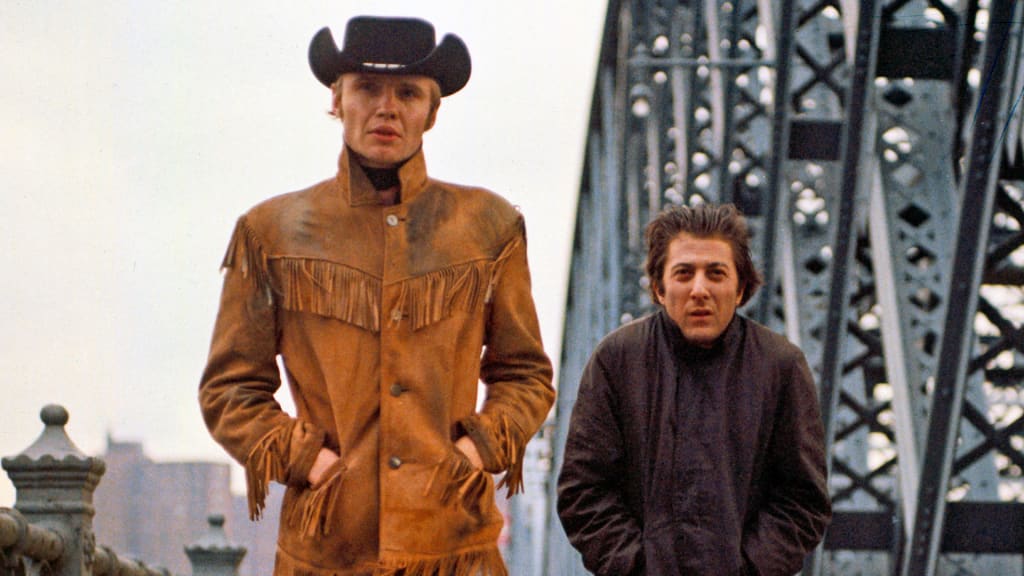
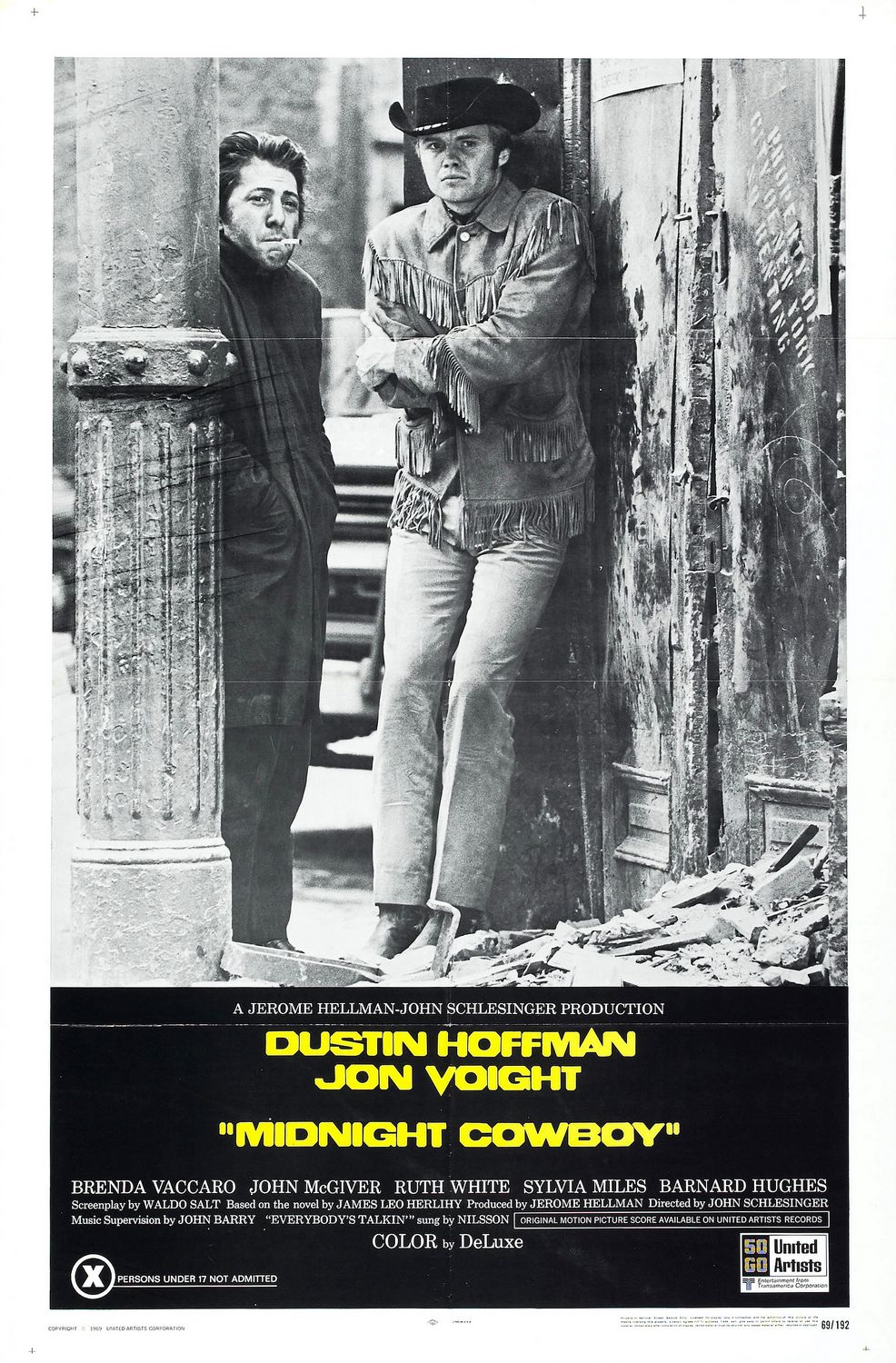
Jon Voight and Dustin Hoffman are an odd couple in the Big Apple in Midnight Cowboy

Director: John Schlesinger

Cast: Jon Voight (Joe Buck), Dustin Hoffman (Enrico “Ratso” Rizzo), Sylvia Miles (Cass), John McGiver (Mr O’Daniel), Brenda Vaccaro (Shirley), Barnard Hughes (Towny), Bob Balaban (Young Student), Ruth White (Sally Buck), Jennifer Salt (Annie)

Even today it still feels like an odd Best Picture winner: two down-and-outs in the slums of New York, both trying to hustle, develop a strangely symbiotic relationship part brotherly, part semi-romance. It’s even more bizarre when you remember the year before the Academy had given the Big One to the super-safe family-friendly charms of Oliver! Still the only X-rated film to win Best Picture (though it looks hilariously tame for such a rating today), Midnight Cowboy is both the first step towards the fresh, modern film-making of the 70s and also a dated landmark of a particular era of film-making.

Joe Buck (Jon Voight) is the would-be Cowboy, escaping the hum-drum life of dishwashing in a run-down restaurant in Texas (not to mention a backstory darkly hinted at of a childhood of neglect and traumatic sexual encounters of the past) to make the trip to the Big Apple to find a new career – as a gigolo. After all he “ain’t a for-real cowboy. But [he is] one helluva stud”. Sadly making a career of sleeping with rich women for money ain’t half a lot harder to pull off than you might think. Not least when you are quite the naïve rube, certainly compared to more practised hustlers like “Ratso” Rizzo (Dustin Hoffman), a crippled, seriously ill born-and-bred New York who lives a hand-to-mouth on the streets desperate for each coin he can find. Both hustlers team up to try and make their wealth from Joe’s attractions – but life is tough for the desperate underclass of American society.

Released in 1969, the film stunned the States with Brit John Schlesinger’s insight into the dark underbelly of the American dream. Schlesinger, in a way few film makers before had, focused on the scuzzy poverty of the American loser, the two dreamers who fantasised about turning their lives around into the American ideal, but instead met failure and depression at every turn. This was a million miles from the “poor boy made good” vision of past films, or the sort of Capraesque spin of small-town guys winning out in the big city due to their inherent pluck and honesty. There’s none of that in Midnight Cowboy

Throw in Schlesinger’s style – the way his camera immerses you in New York with its “on the hoof” immediacy (Schlesinger couldn’t afford to get the streets closed, so simply shot the actors in medium or long-shot in real streets and locations, with real people) – and you got a vision of America you hadn’t seen before. The use of locations gives triumphant shots – Jon Voight emerging head and shoulders above the New Yorkers as he walks through bustling streets – and also moments that hum with authenticity. Most famously Hoffman’s “I’m walkin’ here” outburst when the actor was nearly mowed down by a taxi mid-shot while crossing a road. Midnight Cowboy takes you down in the gutter with these characters, and makes you feel part of their world. When we see the freezing poverty they live-in – in an abandoned apartment block – you practically shiver with them.

Throw in with this Schlesinger’s (and Waldo Salt’s fabulous script) careful and sensitive exploration of the bonds between the two men. Starting as strangers, both Ratso and Joe slowly find themselves drawn together in a symbiotic way that’s part soul mate, part unspokenly romantic. It’s implied throughout that the two characters feel a connection towards each other that they lack both the emotional and intellectual language to understand. But it’s there for the audience to pick up on, even if the sexuality of the two characters is something they seem barely able to understand (Joe’s sexuality is certainly far more fluid than he can even begin to grasp, while Ratso hurls around homosexual slurs so often you can tell he doth protest too much). These characters become inseparable, tending to each other (at one point an ill and soaking Ratso loosely embraces Joe, while Joe uses his shirt to dry his face and hair), sharing dreams and hopes for the future, forming a bond that goes way beyond questions of sexuality. For both of them it’s more than clear that an emotional bond like this is something alien to them both, a connection they have long feared in a cruel world.

Both actors excel in the two roles. Voight – in a career making performance – is understanding as a man who is naïve, easily fooled, caring but distant, who slowly begins to replace his wide-eyed innocence with a greater understanding of himself. Joe is a hopeless hustler – a failure as a seducer of women, and twice reduced to tragically mismanaged male prostitution, a stud who ends up paying his first customer to spare her feelings. The film carefully sketches in a backstory of emotional frigidity which adds context to a character who is charmingly selfish but learns to make a connection with another human being.

Hoffman was equally keen for the role, desperate for a part that would be the polar opposite of Benjamin from The Graduate. While Voight plays with a grounded naturalism and unaffected genuineness, Hoffman’s performance pushes the envelope of quirk. There is no end to the affectation of the role – scruffy, limping, sweaty, loud, twitchy – it’s a show-off of a role, with the moments of emotional vulnerability seized on with an actorly relish. But it still works because, despite it all, Hoffman communicates a genuine empathy and sorrow in the role, and because the performance bounces so well off Voight’s stiller, more balanced work.

The film works less well when it drifts away from this central pairing. The “marks” get short shrift, with the women in particular either hornily manipulative (Sylvia Miles, receiving a generous Oscar nod for five minutes work) or serenely wise (Brenda Vaccaro as a woman with more insight into Joe’s fluidity of sexuality than himself). Joe’s male marks are a tragically ashamed young student (Bob Balaban in an effecting debut) or full of messed up self-loathing (Barnard Hughes). 

Similarly, Schlesinger’s directorial flourishes may have looked like modern cinema verite at the time, but don’t half look like dated, heavy-handed touches today. Joe’s backstory – told in wordless sequences with different film stock – not only seem tiresome and alienating but also flimsy in the extreme in their psychological insight. Schlesinger’s satire on the Warholesque arty high-life of New York is heavy handed in the extreme, and its filming style outrageously clunky. The film’s psychological depth is thin and insight often blunted, while Schlesinger’s analysis of character often seems dependent on actors (some overindulged) rather than a true vision.

But despite that, Midnight Cowboy works because the characters are so rich and the insight into the life down-and-outs in New York still feels real. Voight and Hoffman (for all his indulgence) are excellent and the sexless romance between the two characters is intriguing and, by its conclusion, carries real emotional weight. While dated and lacking in as much insight as you might wish, it’s still a film that reflects on the damaging gap between dreams and reality, and the difficulty of casting the former aside.

Fat City (1972)

Stacy Keach and Jeff Bridges excel as boxers failing to live The Dream in Fat City

Director: John Huston

Cast: Stacy Keach (Billy Tully), Jeff Bridges (Ernie Munger), Susan Tyrell (Oma Lee Greer), Candy Clark (Faye), Nicholas Colasanto (Ruben), Art Aragon (Babe), Curtis Cokes (Earl)

The American Dream has an underbelly. For all those dreamers who find fame, fortune and glory in the Land of Free there are thousands who never made it. Thousands who stayed rooted at the bottom of the rung of the ladder and saw their dreams disappear and lives head into turnaround. Fat City – the good life, according to the slang of San Francisco, the crazy goal you’ll never achieve – is all about those left behind by their dreams.

Billy Tully (Stacy Keach) is a former boxer, now down on his luck and now possibly struggling with alcoholism. Ernie Munger (Jeff Bridges) is a young prospect who shows some promise in the ring. Both of them dream of getting into the limelight – but what hope do they have when it’s nearly impossible to turn your life around in smalltown America?

John Huston’s film is unflashily assembled, but carries a fundamental emotional power as it investigates with a simplicity and honesty the difficult dynamics of real life. It’s a film which has no pat answers, no simple solutions and doesn’t offer much in the way of hope. Which is not to say that it is a depressing vision of the world. Just a recognisable one. Because, sure, for most of us there isn’t any real chance of seeing our lives change. 

Huston’s film – brilliantly shot with a 1970’s muddy graininess mixed with flashes of revealing light by Conrad Hall – is wonderfully well observed and beautifully paced and keeps refreshingly loyal to its essentially downbeat vision of life. There is nothing forced in Huston’s well-paced touch and his embracing of the ordinariness of the drama and the lives of the characters. Because for both of them what we see in this film – and it ain’t much – is still clearly the high point of their life. Just getting into the ring and being beat (and only one fight in the film ends with one of our heroes winning – and even then he’s unaware of his win, he’s so punchdrunk) makes them something rather than nothing. These small moments are the best they can hope for.

Because both men have lives of nothingness in front of them. Keach’s Tully is a man whose best years are already behind them, but keeps up a touching air of hope and belief that maybe that could change, even while he drunkenly stumbles from one moment to the next. And maybe he did have something in the past – but he certainly doesn’t have something to come. Keach captures this superbly – like a reliable pro embracing what he feels might be the highlight of his career – investing Tully with a gentleness but also touch of fantasy, a man who can’t quite accept where his life is, but despite a lack of bitterness he’s still a man balancing fantasies. 

Jeff Bridges makes a perfect balance to this amiable failure of a man as Ernie, a young man who may well have more promise than Tully but lacks any sense of personal drive. He’s a friendly but empty shell. While Tully at least goes through spells of wanting success – even if he drifts and falls into alcoholic patches of non-achievement and becomes lost in recollections – Ernie has no desire. He’ll allow himself to be put forward but will do no work at all to push himself forward. He’s a young man with no hurry, a man who seems destined to never achieve anything because he has no desire to do so. It’s a great performance of amiable emptiness from Bridges.

But then you hope that Ernie won’t be heading to the alcoholism that consumes Tully and his romantic interest Orma. Played by an Oscar-nominated Susan Tyrell, Orma is the picture of a failed life, a semi-bloated, rambling alcoholic who oscillates between small insights and far more common drunken ramblings and bitter drunken whining but believes strongly in what she does. Huston’s film places her firmly as much of a drifter through life as Ernie in her way, taking up with Tully while her lover serves prison time – and moving easily and with little impact from one domestic set-up to another. Tyrell and Keach give outstandingly strong performances of drunkenness, never over-playing and totally convincing in their slurred speech, attempts to not appear as drunk as they are and emotional swings from calm to sudden and consuming fury.

But then what is there to look forward to in this life than the next drink? Certainly not the fights. For all the dreams of trainer Ruben (Nicolas Colosanto – very good) to find the next big thing, every fight we see is a tragic and painful affair mostly ending in defeat. Ruben drives carfuls of beaten, ring fodder from place to place, watches them get duffed up and then takes them home all the while dreaming of a title shot. It is dreams shared by Tully – even while we watch his slow, alcoholic fuelled body struggle to get through a few minutes of shadow boxing.

But then that’s the message of Fat City the anti-Rocky – and probably more realistic for it. Huston;s simple touch and pure vision help to make this one of his finest films, his unfussy and naturalistic camera encouraging truthful and powerful performances from his leads. And every small moment is full of it, including a marvellous wordless sequence that sees Tully’s Mexican opponent arrive in town (on a rundown bus), wordlessly check into a motel, piss blood and then head to the ring to be (only just) beaten – a moment of victory so fleeting and small it barely counts (and is only a hiatus on Tully’s return to shambling from bar to bar on the streets). The American Dream is a great thing – but for many people it’s just that: a dream.

Marriage Story (2019)

Scarlett Johansson and Adam Driver are an estranged couple in Marriage Story

Director: Noah Baumbach

Cast: Scarlett Johansson (Nicole Barber), Adam Driver (Charlie Barber), Laura Dern (Nora Fanshaw), Alan Alda (Bert Spitz), Ray Liotta (Jay Moratta), Azhy Robertson (Henry Barber), Julie Hagerty (Sanda), Merritt Wever (Cassie), Wallace Shawn (Frank), Martha Kelly (Nancy Katz)

It’s a scenario that more and more marriages in our modern world head towards – divorce. And it’s never easy to separate from something that has dominated your life for years, and the more that bonds two people together, the harder to pull them apart. As the film says, “it’s not as simple as not being in love any more” – and the complex emotional bonds that form between people, and the inability we have to switch these on and off like lights, are what drive Noah Baumbach’s film, heavily influenced by his own real-life divorce from Jennifer Jason Leigh.

Nicole Barber (Scarlett Johansson) is a former child-star who has built a career as a respected theatre actor in tandem with her husband Charlie Barber (Adam Driver), an acclaimed and visionary theatre director. Living in New York with their young son Henry (Azhy Robertson), their marriage is dissolving with Nicole frustrated at Charlie’s selfishness, just as Charlie is angered by what he sees as her refusal to take full responsibility for her career choices. As mediation fails, Nicole returns to LA for a role in a TV series, taking Henry with her. With divorce papers filed in LA, the couple engage in a cross-state legal battle for custody and finances, with their positions increasingly weaponised into hostile encounters by their respective legal teams. No one is coming out of this one unscathed.

Baumbach’s film is tender, sympathetic and offers a fine line of arch comedy and even farce (at points), that works over time to be as even-handed as it possibly can. The film’s sympathies are aimed not solely at husband or wife, but at the couple themselves wrapped up in the hostile, money-spinning world of divorce where, it’s strongly implied, the only real winners are the lawyers making thousands of dollars spinning out clashes as long (and as aggressively) as possible in order to cement their positions and keep their industry going.

The film is a solid denunciation of the entire industry that has grown up around divorce, where it’s seemingly impossible to find any arrangement alone without lawyers giving it a legal force, or to come out without that process consuming most of the wealth of the couple. Even worse in this case, the main battle-ground becomes the rights of each parent to access to their son, Henry’s college fund disappearing into a legal battle and the child becoming the centre of both fraught attentions and an unseemly competition for affection between both parents, effectively offering bribes for preferential responses from their son. All in order to prove that their link to him is the stronger.

The tragedy of all this – the way the system seems designed to turn personal relationships poisonous and bitter – becomes Baumbach’s focus. Brilliantly the film starts with a voiceover from both Nicole and Charlie in turn, over a montage, stressing the wide list of things they loved about their partner in the first place: part, it is revealed, of a mediation session that ends in disaster and Nicole’s walkout. But the closeness, the bond, the intimacy of these two people is revisited time and time again in the film. Legal dispute scenes and lawyer confrontations are followed by perfectly friendly home visits and regretful conversations. Legal meetings are bizarrely punctuated by coffee with conversation from the lawyers suddenly turning light and breezy. Then, as events hit a courtroom, moments like Charlie’s failure to properly install a car seat are spun out by lawyers as evidence of his risky disregard of his child’s safety while Nicole’s glass of wine after work becomes incipient alcoholism. 

For a film about divorce, it’s striking that it’s the process of divorce that turns the couple’s relationship increasingly toxic (culminating in a brutal scene where each throws increasingly personal and cruel abuse at each other for other five minutes). Sure there are resentments and anger at the front, but these are kept under reserve and still allow the couple to chat and negotiate amicably when they’re by themselves. As soon as the lawyers are involved, the mood steadily turns worse and worse. 

This is part of the film’s attempt to present the couple even-handedly. I’d say it only partially succeeds at this – with a 55/45 split in favour of Charlie, who is presented as the most “victimised” by the system, as the New York man having to prove he has a link to his now-LA-based-son. While Nicole does get a fantastic monologue (brilliantly performed by Johansson, full of regret, apology, anger and confusion) where she outlines Charlie’s selfishness, distance and probable (later confirmed) affair to her lawyer, the focus soon shifts to Charlie’s travails in the system. It’s him hit by a blizzard of demands from court and lawyer. It’s him who is separated from his son. It’s him who pays the biggest financial burden. It’s him who takes the biggest blows and has to bend his whole life to try and claim a residency in LA. It’s not a surprise Baumbach marginally favours his surrogate, but it does leave you wanting a few more scenes – especially in the latter half of the film – for the impact on Nicole.

However you keep on side with both halves of the couple thanks to the superb performances from Johansson and Driver. Johansson is both fragile and acidly combative, a woman who feels she has led someone else’s life for far too long. Driver is a bewildered gentle giant, but carrying a long streak of self-justifying self-obsession, clearly believing himself the only victim, but deeply hurt by the situation he finds himself in.

Supporting him are three very different lawyers. Laura Dern is on Oscar-winning form as Nicole’s brash, confident, ruthless defender with a smile so practised it’s hard to tell when it’s false or when it’s true. Alan Alda is endearing – but also gently out of his depth – as Charlie’s more conciliatory first lawyer (in one brilliant moment, Charlie interrupts a lengthy joke from Alda’s Bert during a sidebar with the frustrated put down “sorry Bert am I paying for this joke?”) while Ray Liotta channels De Niro roughness as his fiercely competitive second lawyer.

Marriage Story is a bittersweet, superbly made, moving but occasionally strangely funny story of a couple falling out of love and trying to find the way of converting that into a functioning co-parenting friendship. Throughout it’s not the couple, but the system making money from their dysfunction, that’s to blame in this marvellously written and superbly played drama.

The Lonely Passion of Judith Hearne (1987)

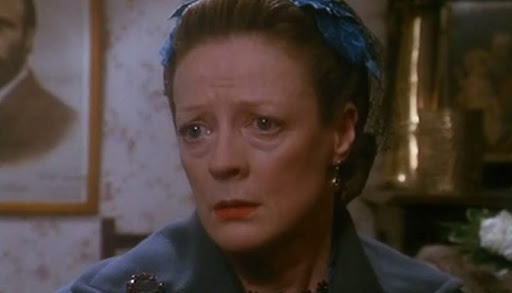
Maggie Smith excels in stately literary drama The Lonely Passion of Judith Hearne

Director: Jack Clayton

Cast: Maggie Smith (Judith Hearne), Bob Hoskins (James Madden), Wendy Hiller (Aunt D’Arcy), Marie Kean (Mrs Rice), Ian McNeice (Bernard Rice), Prunella Scales (Moira O’Neill), Alan Devlin (Father Quigley), Rudi Davies (Mary)

Judith Hearne (Maggie Smith) is a lonely, frustrated Irish spinster who never found her place in the world. Arriving at her new lodgings in Dublin, Judith leaves behind her a whiff of scandal and a slight air of being someone you don’t want in your home. However, while her superior manner may not fool everyone, it’s enough to spark the interest of chancer James Madden (Bob Hoskins) brother of Judith’s lodger Mrs Rice (Marie Kean) – who is not remotely fooled by Judith’s pretence at upper-class gentility. While Judith wonders if romantic love may, after all, finally be round the corner for her with Madden, Madden himself wonders if the starting investment for his next dream is in his grasp.

Jack Clayton’s adaptation of Brian Moore’s novel is a stately passion project. An adaptation that Clayton had worked for years to bring to screen, it’s a quiet and respectful picture that moves with a graceful serenity over its runtime, covering emotional territory but never quite sparking into life. Clayton’s adaptation of the book is precise and perfect in nearly every way, with the film very true to Moore’s style and his ability to capture the domestic tragedy of small-scale, disappointed lives. But it’s not quite a film that hums with inspiration.

What inspiration it has is bound up with Maggie Smith’s superb (BAFTA winning) performance in the lead role as Judith herself. This is surely some of Smith’s finest work on screen, perfectly capturing every beat of this character study. Judith Hearne is a woman who relies on her upper-class background – her airs and manners – to cover up the facts of her poverty and, even more importantly, her chronic alcoholism. Couple this with her self-loathing, her confused attitudes towards God and her (barely consciously aware) mixed feelings for her deceased aunt (Wendy Hiller in imperious form in flashbacks) and she is a woman reeking of disappointment, depression and oppression as much as she does the booze she knocks back.

Smith’s performance progresses throughout the film, from a veneer of assurance to an increasingly poignant and tough to watch collapse into starkly raw emotional disintegration. Desperate in ways she hardly understands for emotional (and physical) content for another, she’s almost touchingly over-enthusiastic when offered the olive branch of friendship of a man, and the self-loathing and loneliness that channel her collapse into brutal alcohol-driven meltdowns show Smith holding nothing back but never once heading over the top. Smith totally understands how to get the balance between quiet tragedy and emotional force, constantly balancing the two expertly. 

It’s her performance that is a triumph of small moments that build over time to carry emotional force, from her careful arrangement of a room to her confused slightly timid eagerness to please when in conversation with Madden. Smith’s superb in the role, never anything less than real her eyes little windows to the depths of sadness in her soul.

It’s a shame that the rest of the film doesn’t quite measure up to her and that, despite the force of her performance, the film never quite manages to capture the overall impact of domestic tragedy that the film needs in order to be something more than just a gracefully filmed package around a superb central performance.

Too many other plot directions end up in cul-de-sacs or never get explored. Madden’s frustrated sexual feelings – and his eventual assault on housemaid Mary (a decent performance by Rudi Davies) are simply never explored any further. Bob Hoskins gets short-changed with a character that doesn’t really go anywhere and whose darker side is demonstrated but then never referenced again. The film gives such force to the damage of Judith’s alcoholism and depression that her struggles with the church never quite gain the force they need. This is despite some sterling work from Alan Devlin as a bullying but empty churchman, not interested in hearing about problems that can’t be solved with doggerel and dogma.

The finest subplots feature Ian McNeice is superb as the bloated wastrel son of the landlady, a spoiled, lazy former student claiming to be working on the next great Irish poem (a work he estimates will take him at least another 5 years), but largely spends his time swanning around the house causing problem and sniping arrogantly at the residents. Marie Kean is also fine as the arch landlady who sees through all deceptions, other than her son’s.

It’s a shame that the film itself – for all the excellence of Clayton’s work – doesn’t quite come together into a really coherent package. What it kind of misses is perhaps the sort of sharp, knowing observation and dry wit that Alan Bennett bought to so many similar small-scale stories of wasted lives in Talking Heads. The film is on a grander scale than those, but somehow carries both less weight and less insight than an average Bennett monologue. Smith is superb – possibly a career best – but the film itself is more something to be admired than remembered.

The Silence of the Lambs (1991)

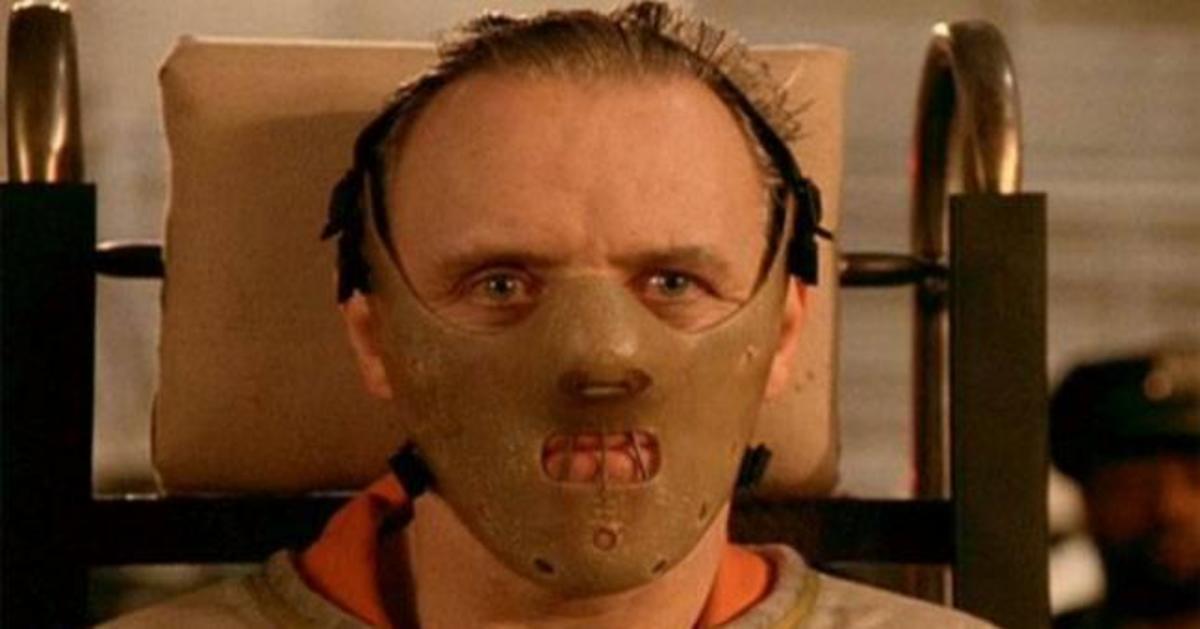
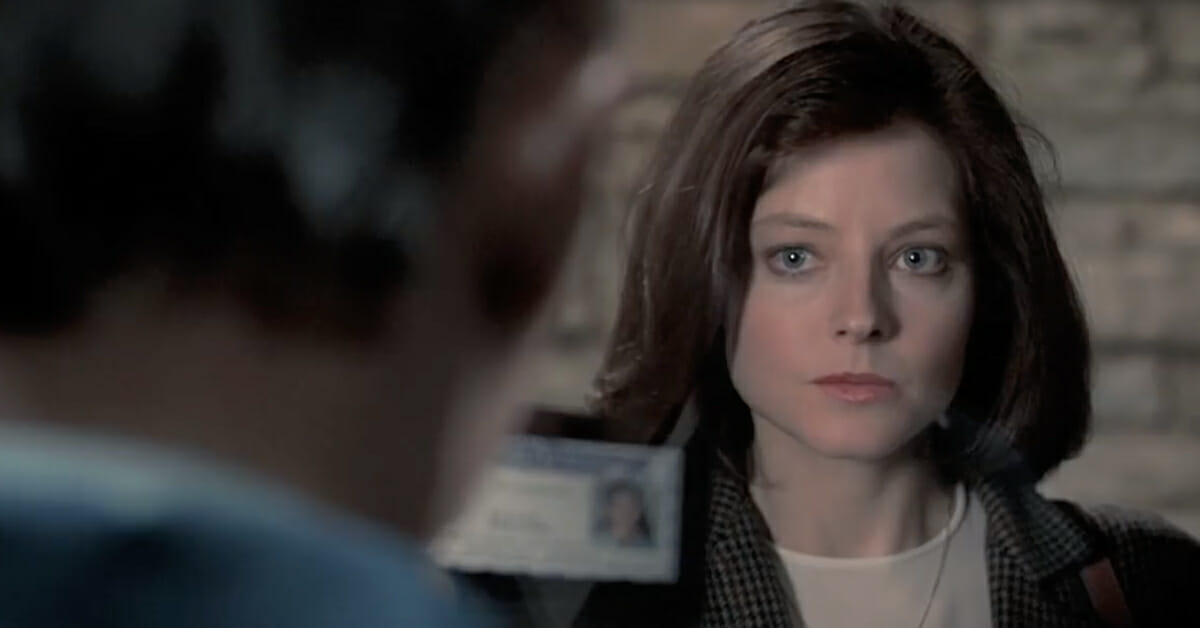
Jodie Foster and Anthony Hopkins carry out a strange dance in the compelling The Silence of the Lambs

Director: Jonathan Demme

Cast: Jodie Foster (Clarice Starling), Anthony Hopkins (Dr Hannibal Lecter), Scott Glenn (Jack Crawford), Ted Levine (James “Buffalo Bill” Gumb), Anthony Heald (Dr Frederick Chilton), Brooke Smith (Catherine Martin), Diane Baker (Senator Ruth Martin), Kasi Lemmons (Ardelia Mapp), Frankie Faison (Barney Matthews)

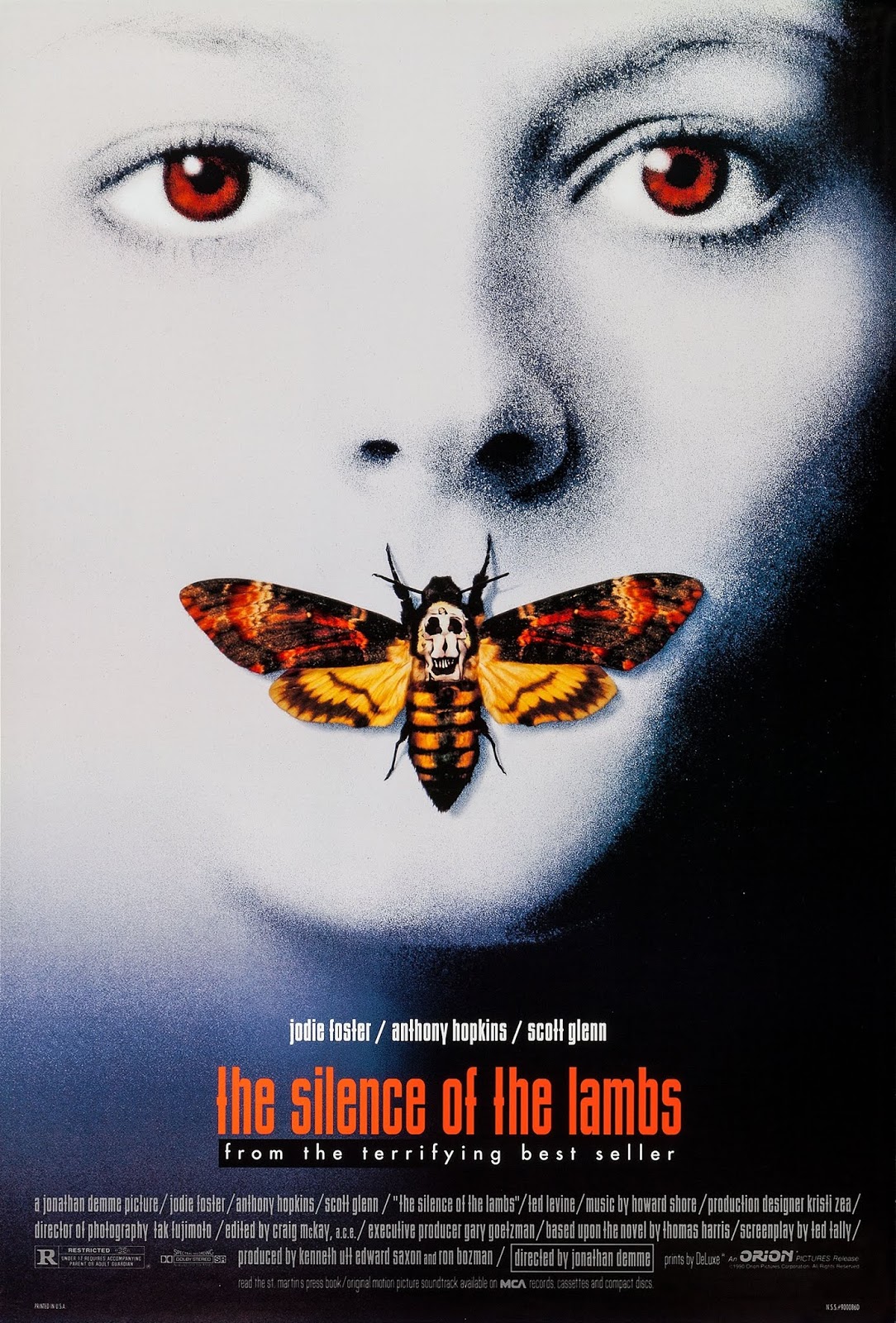
Is there a more unlikely Oscar winner than The Silence of the Lambs? In fact, double down on that: is there a more unlikely film to have won all five of the Big Ones – Picture, Director, Actor, Actress and Screenplay – only the third film in history to have achieved that (It Happened One Night and One Flew Over the Cuckoo’s Nest being the others)? Re-watching the film, it’s actually a triumphant vindication for Hollywood to have chosen a thriller for the ages, a complex and intriguing puzzle wrapped in an unsettling outer layer of thrills and horror, as if the academy was (late in the day) finally tipping an award-lined hat to the film’s spiritual grandfather, Hitchcock himself.

Clarice Starling (Jodie Foster) is a trainee FBI agent, in the final weeks before her graduation. Out of the blue she is plucked from Quantico by the head of the Behavioural Science Unit, Jack Crawford (Scott Glenn), to interview notorious psychiatrist-turned-cannibalistic-serial-killer Dr Hannibal Lecter (Anthony Hopkins), now interned in a psychiatric prison-cum-dungeon in Baltimore. Crawford hopes the Lecter might be able to shed light on the motives of “Buffalo Bill” (Ted Levine), a serial killer kidnapping and skinning young women across a number of states. Lecter can shed some light – but the price is an opportunity to investigate further into the psyche of the determined and ambitious Starling. A three-way game of cat-and-mouse between Bill, Clarice and Lecter soon starts to emerge.

Demme’s film is a sublimely made entertainment that brilliantly pulls together the trappings of multiple genres (there are splashes of horror, thriller, police procedural, romance and black comedy to name but a few) into an unsettlingly tense and engrossing whole. It’s truly a film Hitchcock would have been proud of, a masterfully assembled thrill ride where every shot serves a purpose, and each scene is carefully constructed to establish a clear story and push the audience’s buttons. It has two of the best tense “prolonged misdirects” in film history (wittily signposted in advance by an early car chase that is revealed in a pull-away to be a training exercise in Quantico – don’t trust your eyes!) and it brilliantly immerses you in the world and emotions of Clarice Starling.

Demme’s aim was to get us to empathise above all with Clarice, as she descends into the dark underbelly of this terrifying world. Demme uses a carefully selected combination of POV shots and straight-to-camera addresses to deliberately put us into the position of actually “being” Clarice Starling. From following her perspective through rooms and corridors, to seeing the characters she is talking to address the camera directly as if talking to us, through to carefully placed close-up shots that allow us to study the thoughts and feelings travelling across Clarice’s face, it brilliantly allows us to invest overwhelmingly in her without us even really noticing we are doing it.

And of course that is put together with Jodie Foster’s extraordinarily brilliant performance in the role. One of the film’s many strengths is exploring the nature of being a determined, brave and ambitious – but still slight and feminine – woman in the alpha-male world of crime investigation. Clarice fends off in virtually every scene not just discrimination and instant judgement, but a parade of half-spoken advances and flirtations from male colleagues. Foster’s brilliance is to make a character who is determined but humane, slightly vulnerable while never weak. She’s the key driver of the story, but also both an insider and outsider in her world, partly motivated by a desire to prove herself, partly by an attempt to vanquish haunting childhood memories of weakness and loss.

It’s these feelings under the surface that attract the interest of Hannibal Lecter, and the strange dance between them is the heart of the film’s appeal and it’s magic. Why does Lecter want to know about the facts of Starling’s life (that quid pro quo he archly asks for)? Does he want to analyse her? Does he want to help? Does he want to amuse himself with her terrible memories? Or is he just bored? He hardly seems to be certain himself, but the intimacy shared revelations provide is neatly played with by Demme in sequences between the two (they barely share the frame by the way more than twice) that hum with a tension of danger, but also a thrill of illicit romance, mixed with incestuous interest (Starling the orphan, Lecter the father-like man of wisdom helping her catch the killer). And it works with us as well – we are so invested in Starling that, just like her, we end up liking Lecter (even though we know we shouldn’t).

Of course it helps that Hannibal Lecter is portrayed in a performance of magnetic, career-defining brilliance by Hopkins. Hopkins modestly claimed playing Lecter was easy once you mastered the voice and the physicality – but that’s to downplay the extraordinary skill mastering those aspects concern, and the bravura brilliance with which Hopkins plays to the camera but never tips into absurdism. It’s an arch, knowing, winking performance that also carries with it an intense, psychotic menace, a delirious capacity for violence (as we find out). Demme introduces the character sublimely – after the build-up, his ram-rod stillness, polite manner and refined behaviour are somehow even more unsettling. Sure Brian Cox in Manhunter may be more conventionally chilling, but Hopkins is like an elemental demon playing with our childhood bogeyman fears, a guy who seems even more dangerous as he playfully chats one minute, then beats you to death with a truncheon the next.

The scenes between these two characters dominate the film (even if they take up no more than ten minutes of its runtime), and their relationship (beautifully shot as a game of one cagey upmanship that turns into semi-flirting, that turns into something in between) defines the movie and its legacy. Lecter’s magnetism was such that in later movies he would increasingly become an anti-hero of sorts, a lord of misrule rather than a brutal and indiscriminate killer, but here he’s terrifying and satanic, just as Starling is courageous and noble as the lady on a quest.

And that quest targets Buffalo Bill – a deeply unsettling performance of psychological unease and self-loathing by Ted Levine. The film was controversial at the time for its killer being both a transsexual and gay (although the film makes clear it’s a desire to be anyone apart from who he is that drives all these feelings), especially as at the time these groups were barely represented positively in the movies. But it also makes for singularly unsettling character, living in a subterranean cave-like basement, surrounded by moths, his voice slurred childishly while carrying no sense of shame or regret for his actions.

The hunt for Bill is the film’s story, and Demme uses the devices of cinema to make this as tense and unsettling an experience as needed. The camera prowls terrifyingly around Bill’s domains. Howard Shore’s score makes a deeply unnerving use of mournful refrains. Frequently scenes – such as the post-mortem inspection of a victim’s body – are often silently scored, making the mechanical noises of the investigator’s trade (such as the loudly clicking and whirring camera) deeply jarring. The film is grim, but relies more on reaction rather than bathing us in horrors, and implication brings the greatest terror. Every sequence of the film is perfectly assembled to leave us struggling to breathe – not least as events place Starling in more and more peril.

With its playful sense of black comedy, mixed with genuine terror and thrills, The Silence of the Lambs genuinely feels like the film Hitchcock was born to make. Everything in the film is perfectly assembled to serve the film’s aims – there is not a foot wrong in its assembly, and it’s sad that Demme never hit these sort of heights again. But the film is like a twisted companion piece to Psycho (only better), and in Hopkins and Foster produced two landmark performances. While the film engrosses us in Starling’s struggles in a man’s world, it also overwhelms us with Hopkins’ devilish magnetism and dark mystery. And what to make of the relationship between Starling and Lecter? It’s a mystery so enigmatic that it continues to grip today and it’s the secret behind the success of this compelling masterpiece.

The Greatest Showman (2017)

Hugh Jackman excels in The Greatest Showman, like a Broadway show bought straight to film

Director: Michael Gracey

Cast: Hugh Jackman (PT Barnum), Michelle Williams (Charity Hallett-Barnum), Zac Efron (Philip Carlyle), Rebecca Ferguson (Jenny Lind), Zendaya (Anne Wheeler), Keala Settle (Lettie Lutz), Yahya Abdul-Mateen II (WD Wheeler), Natasha Liu Bordizzo (Deng Yan), Paul Sparks (James Gordon Bennett), Sam Humphrey (Charles Stratton)

In early 2018, the whole world seemed to go crazy for The Greatest Showman. A big old-fashioned film musical that wouldn’t look out of place with Gene Kelly in the lead, people went to the cinema again and again to see this escapist song-and-dance epic. Based loosely on the life of PT Barnum (Hugh Jackman), covering his marriage to childhood love Charity (Michelle Williams) and the creation of his Museum of Curiosities (funded through some chicanery with banks), he staffs the museum with “freaks” whom he encourages to embrace their nature and entertain the crowds. The “circus” is a huge success, but will Barnum be seduced by his desire for greater fame and acceptance in the cultural high circles that have no time for his mass entertainment? And how will his fascination with opera singer Jennie Lind (Rebecca Ferguson) affect his marriage?

If you get the idea from that plot summary that this is rather safe and unchallenging plot-wise, you would be right. Structurally this doesn’t offer anything more than hundreds of musicals before it – a hero aims for the stars, loses his roots on the way, only to triumphantly rediscover them and remember why he got into this business in the first place. Yup that’s your classic Hollywood plot here. And it doesn’t matter a damn.

Because The Greatest Showman, like the shows Barnum offered the crowds, knows exactly what it is: an old-fashioned Hollywood musical, shot like a classic piece of Broadway spectacle, crammed to the gills with hugely exciting and dynamic musicals performers ripping through a series of impressive songs and some stunningly choreographed numbers. Who gives a damn if you’ve seen the story before, when it’s so well done, the actors so engaging and the highlights on the way to brilliant to watch. Come to this with your mind set for the West End, and you’ll love it. Expect to see La La Land and you are in for a disappointment (or a pleasant surprise!)

Gracey’s film is unashamedly old-fashioned, and shot with a confident stillness that puts the actors, dancers and singers front-and-centre rather than the flourishes of a director. In contrast to some over-directed musical numbers, Gracey is happy to place the camera so we can see all the numbers perfectly. And why wouldn’t he when all the actors can dance as well as this? I want to see every step of the intricate choreography (that would have thrilled Kelly) from Jackman and Efron in The Other Side. I want to see every step of the thrilling group dance number From Now On. I want to marvel at Efron and Zendaya soaring through the skies on trapeze ropes in Rewrite the Stars.

It’s a musical that chose its cast carefully, requiring that they should all be capable of the sort of feats of physical and musical perfection that we all enjoy watching on Strictly every week. In all this, the snubs of the critics seems neither here nor there – hilariously the film always commentates on its own terrible reviews in advance (!) in the character of James Gordon Bennett, a humourless snobby theatre reviewer – it’s a film that is shot in the arm of pure entertainment. 

I mean you’d need to have a heart of pure cold not to feel some serious emotions during Jackman and Williams’ beautiful rooftop ballet during A Million Dreams. What I particularly liked about this was its unabashed, carefully designed artificiality – like a blast of 1950s Minnelli musicals, this uses painted backdrops and studio locations to beautiful effect to create a larger-than-life, theatrical world of hyper reality. It really helps you to get even more swept up by it all.

But then you also get swept up from having an actor as charismatic as Hugh Jackman in the lead. Oozing charm and grace from every pore, Jackman is riveting in the role, his grin a mile wide, his skills as a singer and (most especially) a dancer shown off to stunning effect. He turns moments that could have rogueish qualities into sweetness, he is impossible not to root for. Sure as an actor he’s not stretched with the conventional arc Barnum has, but does that matter when he is giving this all he has. It’s a hugely, overwhelmingly enjoyable performance of pure charisma that I can’t imagine any other actor in Hollywood having the chutzpah to pull off. It’s so skilled that he never overwhelms the film but you could move the whole performance into a 1,000-seater theatre and it would still work perfectly.

The rest of the cast all lift their considerable game to match the commitment and expertise of the lead. Williams showcases her own musical talents, while Efron and Zendaya have a truly affecting romance at the heart of the film (while also being considerably compelling musical performers). Rebecca Ferguson has the least rewarding role (and is also dubbed for the high soprano singing), but does a decent job as someone you could imagine turning Barnum’s head. The rest of the cast playing assorted circus performers create a truly family atmosphere, with Keala Settle and Sam Humphrey particularly fine.

You could argue that the film – with its message of acceptance and lack of judgement – flies a little bit in the face of the real Barnum (“there’s a sucker born every minute”) who probably was partly exploiting his acts for cash. The treatment of Jennie Lind as an increasingly scheming would-be-seductress is a sad slur on a woman who gave most of her earnings to charity. In fact you wish allthe names had been changed to distance us from reality.

But the film gets away with it because it is basically a heartfelt and genuine piece of work that, most of all, like a huge Broadway musical just wants to entertain the audience. And on that score it works – you’ll get invested in the characters and their story and you’ll find yourself humming the songs afterwards and trying (failing) to dance those steps. Go into it in the right mindset, and you’ll find a delight.

Boyhood (2014)

Ellar Coltrane grows up before our eyes in Richard Linklater’s 12-years-in-the-making Boyhood

Director: Richard Linklater

Cast: Ellar Coltrane (Mason Evans Jr), Patricia Arquette (Olivia), Ethan Hawke (Mason Evans), Lorelei Linklater (Samantha Evans), Libby Villari (Catherine), Marco Perella (Bill Welbrock), Brad Hawkins (Jim), Zoe Graham (Sheena)

If there is one thing we can all relate to, it’s the trials and tribulations of growing up, that shift from being a child to an adult. It’s the subject of Richard Linklater’s film Boyhood, which follows the growing up of Mason Evans (Ellar Coltrane) from the age of 6 to 18 and his relationship with his divorced parents Olivia (Patricia Arquette) and Mason (Ethan Hawke) and his sister Samantha (Lorelei Linklater). What is however most striking about Linklater’s film is that it was shot over a staggering period of time, 12 years in fact, meaning that Ellar Coltrane and Lorelei Linklater literally grow up on screen before our eyes.

It makes for an almost unrepeatable power over any other film dealing with the same subject, by letting all the actors naturally grow older over the length of the film. Suddenly it becomes not just a film dealing with an idea, but instead a real life dramatisation of the process of ageing, becoming some sort of emotional scrap-book or album, a type of film version of the trick of making a drawing move by quickly flicking the pages of a notebook. It adds an air of depth and reality to the whole film that gives it a universal strength and appeal. It’s an actual slice of real life, it’s unrepeatable and profoundly well done and immersive.

Linklater was given near creative freedom to shoot the film – with the small yearly budget for shooting the film being squirrelled away into various studio accounts. Linklater creates a film with a lack of actual drama that makes it feel even more like a part of life. There are precious few “narrative points” or dramatic tools in the overall film, with the exception maybe of Olivia’s hard drinking second husband Marco (Bill Welbrock). Instead, the issues that Mason (and Samantha) deal with have a universal relevance. These are the sort of events – the sort of conversations – that any child could have growing up. Far from making the film dull, this serves to increase its power.

Linklater based each year’s filming script on the events and feelings that were going on in the life of Ellar Coltrane at the time (although he had a clear idea of the final scene and shot), which perhaps also helped to draw such a series of deeply felt and real performances from Coltrane. The intimacy of the story also brilliantly makes each scene feel engrossingly real, precisely because everything is grounded in reality and nothing in some sort of overarching film narrative.

It’s a film entirely about capturing the rhythms and beats of real life and Linklater’s style allows moments of spontaneity, of naturalness and reality. Nothing in the film ever feels forced. You could argue that it also leads to a film that is almost restrainingly unambitious – it’s about as grounded as you can get, and barely has a structure as such at all beyond time passing. But that would be to miss the point – and the very fact that the film ignores virtually all the clichés of filmmaking narrative and storytelling is something to be praised than to be criticised. 

The film works so well due to the commitment of all involved, not least Arquette and Hawke as the parents. Arquette won nearly every award going (including the Oscar) as the mother, and her performance is a testament to the film’s strengths. It totally eschews the loud moments of acting, the look-at-me Oscar bait that the role could have had, to instead focus on a quiet, sad dignity – but also warmth and loving regard for her children. There is no studied pretence to the role at all, but instead Arquette seems to play instead the moments of joy, tinged with disappointment at moments and chances lost from early motherhood, that you can imagine everyone feeling. It’s a bravely real performance, stuffed with moments of searing, heartfelt emotional truth.

Hawke is just as good as the father, a man who slowly comes to terms with his own responsibilities and adulthood over the course of the film. Starting as still something of a would-be beatnik and playboy, we see him slowly – especially after a second marriage – grow up and accept the role of an adult and a parent, while still clinging to the idea of dispensing fatherly/brotherly wisdom to his son.

If Linklater’s film does have a flaw it’s on this focus of father-son. There really was nothing to stop this from being Childhood rather than Boyhood, but instead it’s the story of the son (and with a particular stress on his bond with his absent father) that is at the heart of the film. It’s perhaps reflecting the angle that Linklater himself bought to the story, but its shame the film doesn’t try and be more even handed by allowing us to get a greater sense of how time and childhood affected both Mason and Samantha, rather than filtering Samantha’s experience through Mason’s perspective. It also means that Mason’s relationship with his mother is downplayed in favour of the bond between father and son, a general preoccupation with male relationships that runs through the film.

It’s a minor flaw I suppose, more of a missed opportunity – and less tasteless than a clumsy sequence where Oliva inadvertently motivates a Mexican immigrant to change his life, something he is profoundly grateful for years later but which she seems uncomfortably unaware of – but then this is a film that gets so much else right. Linklater’s live-action time-lapse film is a work of art that is probably unrepeatable, and is so low-key and normal that it carries a force and relevance few other films can.

Loving (2016)

Joel Edgerton and Ruth Negga in a love story that fails to capture fire

Director: Jeff Nichols

Cast: Joel Edgerton (Richard Loving), Ruth Negga (Mildred Loving), Marton Csokas (Sheriff Brooks), Nick Kroll (Bernie Cohen), Michael Shannon (Grey Villet), Terri Abney (Garnet Jeter), Alano Miller (Raymond Green), Bill Camp (Frank Beazley)

Imagine the idea of the state dictating whom you could and couldn’t marry. This was the predicament Richard and Mildred Loving found themselves in, when the appalling segregationist policies of America in the 1950s saw them arrested for the crime of a white man marrying a black woman. Over time, especially from the 60s onwards, their case was seized upon by Civil Rights movements as a possible cause celebre for repealing many of the worst excesses of laws against mixed-race marriages. But the Lovings themselves remained quiet, private and determined to lead as normal a life as possible, while others fought this battle for them in the court.

Jeff Nichols’ film is full of affection, empathy and regard for these very everyday, normal people. What it is not – for all the skill of Joel Edgerton and Ruth Negga’s performances in the leads – is a film that manages to raise any real interest at all. This is a frequently slow-moving story that manages to drain any drama out of what should be a really dramatic story.

Racial inequality is the sort of topic that desperately should be throwing up rage and anger. Imagine Spike Lee tackling this sort of content. Loving settles instead for being a polite, even rather patronising homage to the quiet lack of drive and energy in Richard Loving (in particular). The sort of film that honours his decision to, essentially, get involved as little as possible in the case, to avoid engaging as much as he can in the wider implications their legal battle has for the nation and to studiously resist any attempts to get either side involved in it.

This may be great for reality, but it’s strikingly poor drama. You feel that a drama that focused instead on those actively campaigning for the rights for equal marriage rights to be recognised, the ones who actually fought these battles in court and brought energy and fire to the debate might be a more interesting film. Instead this settles for being a film about regular, not special people, while around the edges of their lives far more interesting events and actions are constantly taking place. 

There are some things to admire in the making of the film – Nichols’ brings his usual poetic skill to it – but this is a glacially paced, unabsorbing, overlong film that manages to make a scintillating and passionate subject as dull as dish water. Negga and Edgerton both do fine jobs – and clearly really admire the everyday nature of their characters – but these softly spoken, unengaged people to whom events happen, but who never take a stand of any sort of try and shape these events or set the direction of their own life, slowly switches the audience off.

Where is the fire here? Nichols’ film instead tries to become a tribute to the honesty of the working man, to Richard’s everyday values, simple, homespun viewpoints. It hails his lack of education (the film dances around where on the education spectrum Richard would be placed today), social awareness or even opinions as something which somehow makes him more “real” than anything else. This attitude, to be honest, becomes both trying and even a little patronising in its bluntness and sense of importance.

Just in case we are ever in danger of ever forgetting that he is a working man, the film can’t go longer than about five minutes without showing Richard laying some bricks. Mildred gets a little more engagement with the social issues of the 1960s – and the film does a good job of suggesting that she was a woman of considerably more hinterland than her husband, but who loyally followed his lead in the world. But neither of them come into focus as truly engaging characters. And because they are so hard to invest in, because the story and their film gives us so little personality for either of them to latch onto,  in the end you don’t get as fired up by the injustice of their case as you should do.

Instead you are left thinking at the end that this sort of racism is bad because, well, we know it was at the start. Following the story of two basically boring people who were in the right place at the right time to become the face of overturning some terrible laws, doesn’t make them interesting and doesn’t make a story that focuses on their lives at the cost of any of the wider issues or actual battles that were being fought, suddenly interesting either.