Category: Relationship film

Three Colours: Red (1994)

Irène Jacob gives a soulful performance in Kieślowski’s crowning achievement Three Colours: Red

Director: Krzysztof Kieślowski

Cast: Irène Jacob (Valentine Dussault), Jean-Louis Trintignant (Joseph Kern), Jean-Pierre Lorit (Auguste Bruner), Frederique Feder (Karin), Samuel LeBihan (Photographer), Marion Stalens (Vet), Teco Celio (Barman)

Spoiler warnings: I wouldn’t usually do this for a film that was made over 20 years ago, but discussing this film is almost impossible without covering the entire plot so – be warned! This is a rich viewing experience you should discover for yourself.

Kieślowski’s great trilogy wraps up with Three Colours: Red, a fascinating, moving, intriguing puzzle of a film that opens itself up to countless interpretations. It’s a film that seems to be about a great many things, but wears its intelligence and insight very lightly, never hammering points home or getting too wrapped up in its own smartness. It’s primarily a story and never forgets that. It also pulls together threads and themes from the entire trilogy hugely effectively. It’s a great movie.

Valentine (Irène Jacob) is a student in Geneva, funding her time at university through part-time modelling. After accidentally hitting (but not killing!) a dog with her car, she meets the dog’s owner, retired judge Joseph Kern (Jean-Louis Trintignant). Joseph is spending his time in isolation from the world, listening to his neighbours’ phone calls, more out of a judge’s habit of finding out secrets than any truly malicious intent. Valentine challenges this blatant disregard of privacy, and she and Joseph begin to form an increasingly strong bond. 

Red is a beautiful film, wonderfully made and rewards constant analysis. Kieślowski described this as the hardest film of the trilogy to write, and you can see why. Dealing with themes of fraternity, it ties this in closely with love (romantic and otherwise). The entire film shows the strengths of people coming together, specifically Valentine and Joseph who develop a bond that enriches their lives. This is contrasted throughout with Valentine’s domineering boyfriend on the other end of the phone-line, and modern communication in general that builds distance between people. Joseph, a man distanced himself from all others, finds his humanity once he opens himself to considering other people as people.

Kieślowski’s film also plays interesting games with narrative and time. A seemingly minor character, Auguste, a lawyer training to become a judge, is slowly shown to share a huge number of life events with Joseph’s youth. The question that bubbles over the film is, is this a coincidence or are Auguste and Joseph somehow linked? Is Auguste in some way the same person as Joseph – some sort of reincarnation? Is this fate or chance or mere coincidence? Is Joseph, living like some lonely old-testament God in complete isolation, somehow trying to move events to correct errors in the past – to try and find some contentment for Auguste (whose conversations with his girlfriend he has been listening to) so that he avoids the life Joseph has led?

I like this idea. It appeals a lot to me, not least as I started to feel that Joseph was almost some sort of Prospero, using phone taps as his own private Ariel to know everything happening around him and then (more benignly perhaps than Prospero) using this to improve the lives of those close to him. Perhaps. There is even a seemingly magic storm at the end of the film that brings several characters together, not least the leading couples from the previous two films in the trilogy. It’s also a storm that, it is suggested, will bring Valentine and Auguste together.

It’s a romantic flourish at the end of the film that speaks of the possibilities for the future (though typically of this intriguing series, it’s a flourish that comes out of a ferry accident that kills over a thousand people – you can’t get something for nothing in this world, and no romantic story is straight forward). It’s also a natural development of the strong romantic link between Joseph and Valentine. If Joseph and Auguste are (essentially) versions of the same person, it’s a further suggestion that (in another life) Joseph and Valentine would certainly have fallen in love (to match the platonic love that develops between them). This interpretation of love joining people together is seen as well in the lead couples from Blue and White also surviving the accident.

Or is this all coincidence? Kieślowski plays the mystery and depth so lightly – lets these points float out or be lightly stated without tub-thumbing – that it leaves it all gently to the viewer’s imagination. You can make of it what you will: the story works just as effectively if you ignore all the things I just discussed. Joseph as the isolated, austere man who finds a warmth in himself awakened by the generosity and compassion of Valentine. All this stuff could just be the working of chance.

But either way, the film is about fraternity: people coming together, and communication and compassion making us human. Irène Jacob is wonderful as the endearing, romantic and empathetic Valentine, her brightness and humanity shining through. Jean-Louis Trintignant is superb as the judge, whose careful veneer of distance and coldness is punctured throughout the film. The scenes these two share are beautifully done: conversations that throb with emotion under the surface. Kieślowski again directs these scenes with a masterful minimalism, using differing heights and levels (they are very rarely on the same level, usually one sits or stands above the other) to show the dynamics subtly change between the two. These height differentials – with Valentine often kneeling at Joseph’s feet – also suggest a growing intimacy between the two characters. 

Technically the film is a marvel. It is lusciously filmed by Piotr Sobociński. The presence of red throughout is very well done and adds a poetic brilliance to the images. Kieślowski in particular shoots sunrises and sunsets with an astounding beauty, and uses light to add a huge emotional depth and beauty to private conversations. Zbigniew Preisner’s score is marvellous, a lyrical, beautiful series of compositions that rewards constant re-listening.

Red is a marvellous, thought-provoking and humane film crammed with wonderful and involving ideas, and brilliantly gives you loads to think about both narratively and thematically. It’s a warm and moving story, with darker elements that make those parts seem richer. With two marvellous performances at its centre, it’s brilliantly directed by Kieślowski (who tragically died shortly after the film’s release), with grace, poetry and passion. It looks wonderful, it sounds marvellous and it always make you think. It’s a masterpiece.

Three Colours: Blue (1993)

Juliette Binoche seeks liberty from grief in Krzysztof Kieślowski’s masterpiece Three Colours: Blue

Director: Krzysztof Kieślowski

Cast: Juliette Binoche (Julie de Courcy/Vignon), Benoît Régent (Olivier Benôit), Emmanuelle Riva (Madame Vignon), Florence Pernel (Sandrine), Guillaume de Tonquédec (Serge), Charlotte Véry (Lucille), Yann Trégouët (Antoine), Hélène Vincent (La journaliste), Zbigniew Zamachowski (Karol Karol), Julie Delpy (Dominique)

There are few foreign language films that have cemented themselves in film’s cultural history more than Kieślowski’s Three Colours Trilogy. These three inter-linked films – made with French and Polish money – looked (individually) at themes of Liberty, Equality and Fraternity, while using a colour palate and design that reflected one colour of the French flag each. The first film in this interlinking trilogy is Blue, a sombre, intriguing, intimate drama that perhaps wears its intelligence a little heavily on its sleeve.

Julie de Courcy (Juliette Binoche) is the only survivor of a car crash that kills her husband, a famous composer, and her daughter. Lost in grief, Julie decides that she will separate herself from the world and live entirely independently. She rents out her home, distances herself from friends, takes back her maiden name and destroys what she believes to be the only copy of her husband’s final composition – a concert for the unification of Europe. But Julie finds that liberating herself from all worldly connections is not as easy as she hoped.

Blue is a heartfelt, gentle film that throbs with emotional intensity, much of it coming from Binoche’s searing performance of a woman consumed with a mixture of grief and survivor guilt, who sees complete isolation and “liberty” from all connections as the only chance for sanity. Kieślowski’s direction is masterful – patient, stable, quiet and with a brilliant eye for small details. The film is crammed with small moments that speak of peace and quiet reflection – from watching a lump of sugar being soaked in tea, to lingering studies of everything from rooms to streets. 

The opening sequences of the film convey this masterful confidence from Kieślowski. The camera is a still observer, alternating between subtle POV shots and gentle, perfectly placed observation of Julie. Every moment of the shocking discovery of Julie’s loss is wonderfully assembled – from the stumbling news from the doctor, to the crackling mini-TV on which she watches her family’s funeral being broadcast. Quietly we see Julie return to her own home – and Binoche bottles up emotion with a resolve that suggests as much her determination not to engage with the pain as it does self-control. No wonder her housekeeper bursts into tears at the fact that Julie isn’t crying.

This all ties in very interestingly with the film’s theme of liberty. Conventionally, we would have had Julie escaping from something to find her own life. Kieślowski’s film more interestingly explores the positive and negative of liberty. Julie chooses freedom from all of life’s connections – but this is shown constantly to be not only impossible, but also less than healthy. Her surface liberty is instead crushing her under the pressure of isolation.

At the same time, the film is partly about Julie learning to free herself from her survivor guilt. Cutting herself off from the world denies her a genuine emotional connection with her husband’s friend Olivier (a puppy doggish Benoît Régent). In the first months of her guilt she sleeps with Olivier, hoping it will get her a bit of peace (it doesn’t). Inevitably, as Julie finds out more about her husband’s life – and as we find out that his music output was heavily reliant on Julie’s secret collaboration – the film becomes a question of whether Julie will allow herself the liberty from her past to continue living.

Because in a way this is an anti-tragedy: it starts with a trauma and is about the survivor learning to continue her life. Kieślowski peppers the film with moments of falling, from items to bungee jumpers on the TV. Slowly, these images of falling progress to include being caught, or shots of the bungee cords snapping the person back from oblivion. It’s a neat, subtle continual reference to Julie’s unconscious search for support.

Particularly as it’s made clear that Julie’s entire personality is all about giving, about loving and supporting people. From her silent collaboration with her husband, to her patient caring for her mother suffering from increasing dementia (another perverse form of liberty), to her forming a reluctant friendship with an exotic dancer in her block of flats (who the rest of the tenants are trying to drive out), it’s clear that Julie’s attempt to distance herself is never going to truly work. A character late on even tells her that her husband had always described her as kind and forgiving – qualities Julie learns to re-embrace. 

The wider world that Julie is trying to escape is represented brilliantly throughout by the score of her husband’s (her?) music for Europe. This score – a richly exuberant piece of music by Zbigniew Priesner – constantly intrudes into the action, accompanied by moments where Kieślowski seems to suggest time has stopped as Julie becomes lost in her reflections. Kieślowski uses colour changes and slow zooms to suggest throughout these beats where Julie temporarily becomes lost in the past and memories. The continual presence of the music is perfectly done.

The one element I was less keen on was the over use of blue. From filters on the camera, to backlighting, to objects present in every frame, there is a lot of blue in this movie – every shot has something blue in it. Although this is clever, and clearly thematically intentional for the whole trilogy – I’ve got to be honest spotting this stuff probably took me out of the film at moments. I imagine on a second viewing this will be dramatically reduced – but it’s one of those curses of a trilogy of films that have been so hyped up on the arts circuit, that you are aware of some of its subtle tricks so much that they cease to be subtle.

But Three Colours: Blue is still a masterful, quiet study of grief, loss and yearning, that avoids the obvious and explores different types of liberty and freedom. Binoche is brilliant in the lead role, and Kieślowski sears the brains with images (I still wince remembering a sequence where Julie deliberately scrapes her knuckles over a wall she walks past) and his direction is impeccably sensitive and unshowy, letting the film speak for itself. I can’t wait to watch the other two films in the trilogy – and see how this might affect my views on this first one.

The Young Victoria (2009)

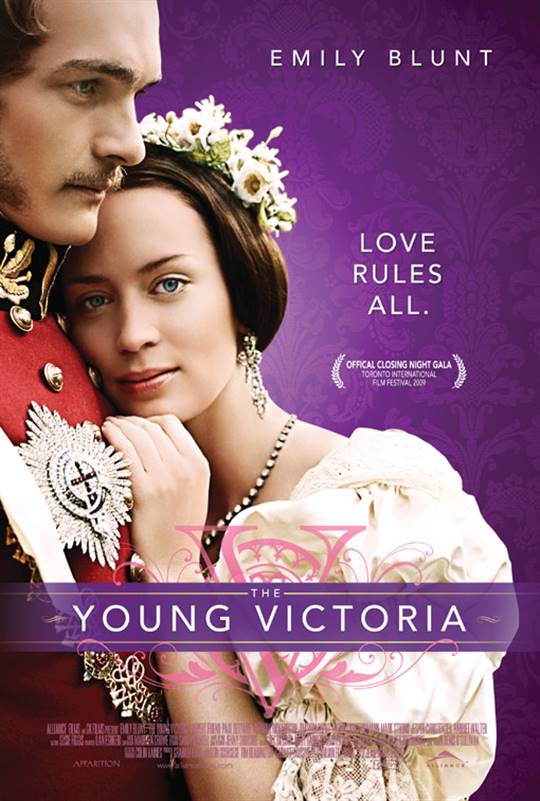
Emily Blunt and Rupert Friend play the royal couple in the cozy The Young Victoria

Director: Jean-Marc Vallée

Cast: Emily Blunt (Queen Victoria), Rupert Friend (Prince Albert), Paul Bettany (Lord Melbourne), Miranda Richardson (Duchess of Kent), Mark Strong (Sir John Conroy), Jim Broadbent (King William IV), Harriet Walter (Queen Adelaide), Thomas Kretschmann (King Leopold), Jesper Christensen (Baron Stockmar), Jeanette Hain (Baroness Lehzen), Julian Glover (Lord Wellington), Michael Maloney (Sir Robert Peel), Michel Huisman (Prince Ernest), Rachael Stirling (Duchess of Sutherland)

Now ITV’s Victoria exists, it’s a bit strange to go back and watch The Young Victoria. With the love today of long-form drama, and the time it can invest in things, it’s funny to see what the drama took almost 8 hours to do being crammed into an hour and a half here. But saying that, The Young Victoria is still an entertaining, luscious viewing experience which, while it has some strange ideas about certain events, is the sort of relaxing Sunday afternoon viewing that will take you out of yourself.

After the death of William IV (a slightly overripe Jim Broadbent), Victoria (Emily Blunt) is elevated to the throne. Finally able to shed the control of her mother’s (Miranda Richardson) domineering secretary Sir John Conway (Mark Strong), Victoria is determined to steer her own course. But she is surrounded by competing influences, not least from the charming arch-politician Lord Melbourne (Paul Bettany). King Leopold of Belgium (Thomas Kretschmann) dispatches his nephew Prince Albert (Rupert Friend) to England with the express interest of marrying Victoria and controlling her – but Albert and Victoria find themselves as kindred spirits, supporting each other to rule.

The Young Victoria is the epitome of prestige costume dramas. It looks fantastic, the cinematography is ravishing, the production and costume design exquisite. It’s pretty clear what the producers thought would sell the picture abroad. The royal regalia is pushed very much to the fore, and we get some wonderfully sweeping scenes, not least an impressively large-scale coronation. The soundtrack brilliantly riffs on Handel, and Julian Fellowes’ script mixes period regal style with a sweeping feeling of romance between Victoria and Albert.

The film actually does a very good job of repositioning Victoria as a young woman, and gives her a strong quality of self-determination and a desire to be herself in a man’s world. It’s really helped in this by the combination of imperial strength, girlish wilfulness and sharp intelligence Emily Blunt brings to the role. Blunt and the film also aren’t afraid to show that, however much Victoria had guts and determination, she was also quite a headstrong woman not above making emotionally led mistaken decisions. In fact, much of the drama spins out of Victoria learning to try and put these youthful crushes and prejudices aside.

Having said that, it’s interesting that the successful conclusion of the film centres on Victoria accepting that she needs the help of Albert to run the kingdom, and that she needs to remove competing influences for her affection – Melbourne and Lehzen – to focus her affection and loyalty on him. The film frames this as a winning romance and a successful partnership (which it was) – but it’s also vaguely creepy if you think about it. Mind you, since all the affectionate influences on Victoria are implied by the script to be at least partly motivated by self-interest, with the possible exception (eventually) of Albert, it manages to suggest this was for the best.

Albert’s background gets some interesting exploration here. He’s very much presented at first as the tool of Leopold as a means of controlling British politics. But he is far too independent, smart and noble to ever be the means of manipulation. Friend is very good here – his performance is quiet, authoritative but also heartfelt. Fellowes guilds the lily a bit to show his devotion by having Albert shot by a would-be assassin late-on in the film. Historically the assassin’s pistol wasn’t loaded, and Albert didn’t get shot (though Fellowes protests Albert didput himself in front of Victoria and that this intent is what’s important, not whether he was shot or not) but the moment does work – it gives the drama a boost and it’s undeniably moving.

While Albert is presented overwhelmingly sympathetically, interestingly Lord Melbourne gets quite a kicking. Paul Bettany is presented far more as a rival love interest than the sort of father-figure Melbourne was in real life (Bettany is probably 20 years younger than the real Prime Minister). Melbourne is shown as cynical, controlling, manipulative and overwhelmingly motivated by self-interest (a few more pushes and he would virtually become the film’s villain). He’s constantly contrasted negatively with Michael Maloney’s upright, honest Sir Robert Peel (one of my favourite statesmen of the 19th century so at least I’m pleased) – and his relationship with Victoria is one of self-promotion, which seems odd seeing as historically the two of them were so close. 

The film introduces other villains for us to hiss at. Kretschmann and Christensen do a good job as arch political schemers. Our real villain though is Mark Strong, who does a great job of scowling, controlling nastiness as the failed-bully Sir John Conroy. Strong’s performance works so well because he makes it clear that Conroy feels that his “Kensington System” (an attempt to manipulate and cow Princess Victoria into being a submissive puppet) is genuinely in her best interest, and that he genuinely cares for her. His partnership with Miranda Richardson as Victoria’s near-love-struck mother works very well.

The Young Victoriathrows in enough interesting character beats like this for it to really work as an enjoyable afternoon period-drama. With some great performances – Emily Blunt carries the movie brilliantly – and while some of the historical characterisation is a bit off, and other moments feel a little too chocolate box it’s a very entertaining, undemanding view., it’s great fun. The hardcore Victorian costume-drama fans will probably prefer Victoriafor the same story in more depth – but this film does it with great sweep (and doesn’t cram in Victoria’s stupid below-stairs plotlines!).

Ordinary People (1980)


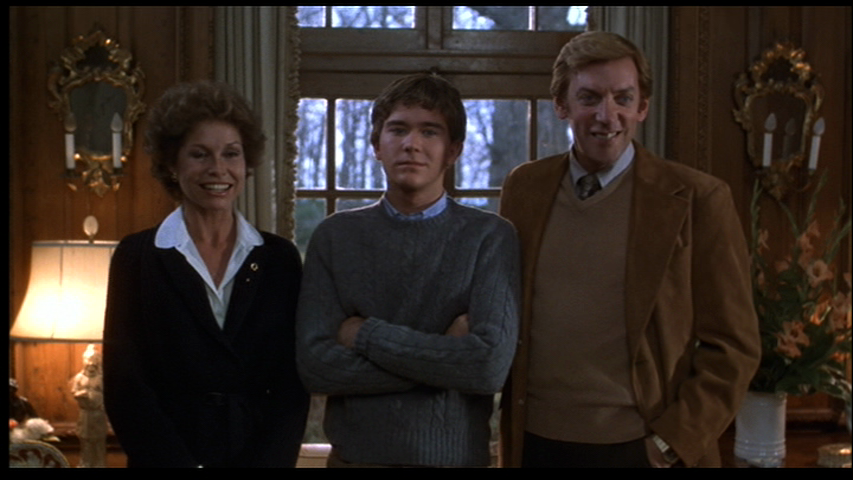
Mary Taylor Moore, Timothy Hutton and Donald Sutherland pose for an awkward picture in family troubles drama Ordinary People

Director: Robert Redford

Cast: Donald Sutherland (Calvin Jarrett), Mary Taylor Moore (Beth Jarrett), Timothy Hutton (Conrad Jarrett), Judd Hirsch (Dr Tyrone Berger), Elizabeth McGovern (Jeannine Pratt), M. Emmet Walsh (Coash Salan), Dinah Manoff (Karen Aldrich), Fredric Lehne (Joe Lazenby), James B Sikking (Roy Hanley)

In 1980, Robert Redford became the first big Hollywood stars to parlay acting success into producing and directing small scale, independent films that otherwise might never have been made. Ordinary People was the first of these – with Redford focusing on staying behind the camera – and it was a big success. It even won four Oscars – best picture, screenplay, supporting actor for Timothy Hutton (despite the fact Hutton is really the lead) and best director for Redford himself (beating out David Lynch for The Elephant Man and Martin Scorsese for Raging Bull). It was a great story for 1980 – the matinee idol turned artist. But is Ordinary People that great a film?

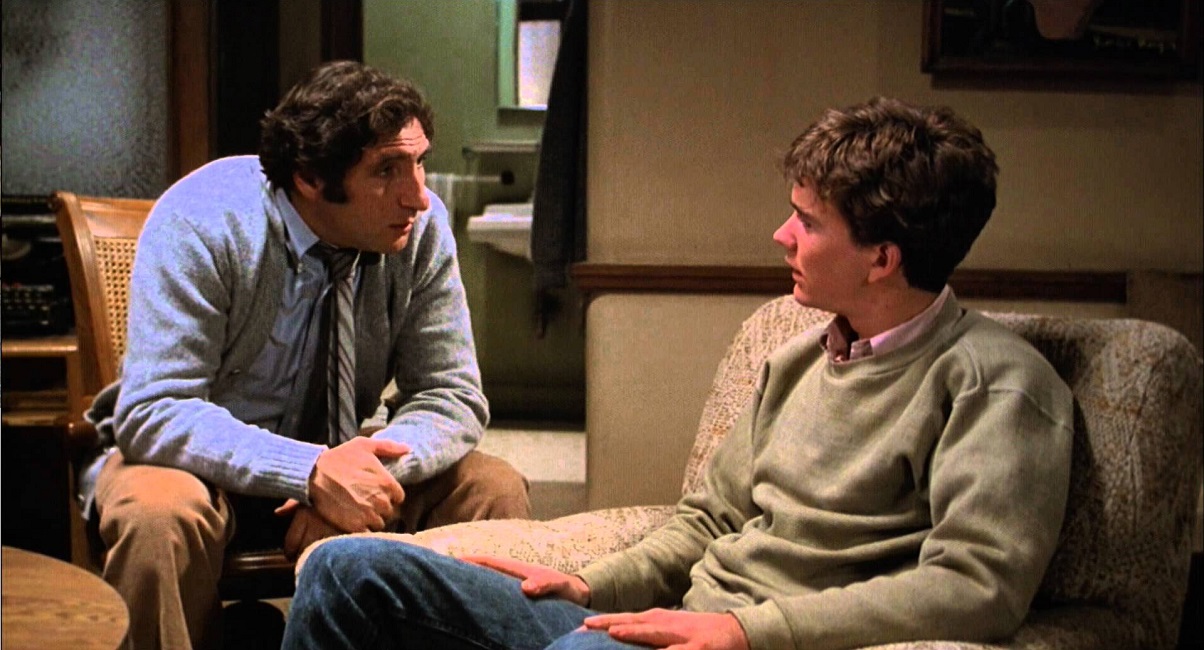
The film covers the emotional collapse of a wealthy middle-class American family after the eldest son Bucky is killed in a boating accident. Younger son Conrad (Timothy Hutton) has had trouble coming to terms with the accident, which he survived, and has only just left an institution after a suicide attempt. His father Calvin (Donald Sutherland) is desperate to try and relate to his son again, while his mother Beth (Mary Taylor Moore) remains emotionally distant attempting to put the accident behind them. Conrad starts seeing psychiatrist Dr Berger (Judd Hirsch), to adjust – but the after effects of Bucky’s death continue to tear the family apart.

Nobody really talks about Ordinary People any more do they? Out of all the 1980s Best Picture winners it’s perhaps the most easy to overlook (except maybe for Terms of Endearment). Why is this? Well truth be told it’s just a pretty ordinary picture. There really isn’t much to it. The story it tells of a wealthy family (only a millionaire like Redford could consider these loaded people ordinary) suffering emotional trauma and psychiatry finding the answer has been told so many times before, and since, that there isn’t anything particularly unique or interesting about it. 

In fact Ordinary People is exactly the sort of small-scale, quiet, middle-brow independent film that awards ceremonies slather over and a few years later (never mind over 30!) people struggle to see what the fuss was about. Redford directs the film with a quiet professionalism – the sort of competent craftsmanship and skill with actors that dozens of other directors could have done just as well. His Oscar for best director is especially galling when you consider the artistry and imagination of Scorsese’s direction of Raging Bull, or the unbearable sadness and tragedy Lynch gave The Elephant Man. It’s the sort of direction a non-famous director wouldn’t even have been nominated for.

This film uses shot-reverse-shot like it’s going out of fashion, most of the scenes are conversations across tables that are weighted down so heavily with meaning you start to lose interest in them. The score uses Pachelbel’s music in such an overwhelming style, it makes that sound as anodyne as much of the rest of the movie. Maybe it’s just because this is such well-trodden ground, but the revelations towards the end of the movie are so blindingly obvious you wonder why it takes so long to get to them (the son blames himself, the mother blames the son and doesn’t love him as much as the dead son, the father wants the two to kiss and make-up). 

This rotates around a series of psychiatrist scenes which at least have the feeling of actual sessions, even if Judd Hirsch (good as he is here) basically plays the sort of revelation inspiring psychiatrist that only appears in movies. The film has a touching faith in the power of analysis being able to solve all problems, and spends so long luxuriating in scenes like this it virtually forgets to put actual living, breathing characters in the middle of them. With the possible exception of the father, none of these characters feel particularly real – they are just mouthpieces for the plot.

Not that it’s badly acted at all. Timothy Hutton made his film debut here and he brings a real fire and passion to the role, as well as a moving emotional vulnerability and anger directed only at himself. The supporting actor Oscar feels a bit of a cheat, as he’s clearly the lead, but he’s very good here as Conrad, struggling to express himself, bottling up his feelings and lashing out at those around him. It’s a part that feels drawn together from bits and pieces of plot requirement, but Hutton plays it to the hilt – it just doesn’t feel like a really real person, more a collection of sad traits.

Mary Taylor Moore is in a similar situation as a mother so cold and distant from her son, so repressed and controlling her distance starts damaging the entire family. She’s unable to process what has happened so almost wants to pretend nothing has (and blames her son for not doing that same), that it again feels like something from a psychiatric case-study rather than real person. Moore gained particular attention at the time as she was best known for comedy (much like Judd Hirsch, famous for the sitcom Taxi) – so the performance at the time might have looked stronger than it actually was.

The best performance might well come from Donald Sutherland in the least flashy role as the father trying to puzzle out what is going on – and trying to work out his own feelings. It’s the only character that feels less like a construct and more a genuine person, whose answers aren’t easily worked out by a bit of psychology study. Sutherland is low-key, tender, gentle and carries all his emotion on the inside – it’s a subtle and excellent performance, overlooked way too much. 

Redford essentially directed an actor’s film here (it’s all about the big moments of acting) so it’s not a surprise that it seized the attention of the Academy (largely made-up of actors) but really it’s not that far away from a well-made “movie of the week”,  with its obvious beats and not particularly surprising revelations. Perhaps it’s the point that the family’s problems seem a lot more apparent to the viewer than they do to the characters – and there is some interesting development of perceptions, not least from Sutherland’s father who starts to come to profound realisations about his wife and son. 

But Ordinary Peopleis an uninspiring and even rather tame drama, that today looks even more low-key and insubstantial. While it tries to break free from the confines of “social drama” it actually wants to tie everything up with a neat bow psychologically – and despite the fact it has an ending that suggests not everything is perfect, it really concludes with a safe full stop. There is a reason why it’s surely one of the best pictures which has been most forgotten about.

Alfie (1966)


Michael Caine excels as amoral cockney moralist lothario Alfie

Director: Lewis Gilbert

Cast: Michael Caine (Alfie), Shelley Winters (Ruby), Millicent Martin (Siddie), Julia Foster (Gilda), Jane Asher (Annie), Shirley Anne Field (Carla), Vivien Merchant (Lily), Eleanor Bron (Doctor), Denholm Elliott (Abortionist), Alfie Bass (Harry), Murray Melvin (Nat)

Is there a more “swinging Sixties” film than Alfie – the story of a cockney wideboy interested only in “birds” and having a good time? On the surface it captures the attitude of the 1960s, with free love, thumbing your nose at authority, and having the sort of fun the wartime generation frowned on. But it’s a more interesting film than this, which criticises the emptiness of the 1960s by showing us Alfie’s selfishness and loneliness. Sure he has a good time now and again – but would anyone really want to live like this forever?

Alfie (Michael Caine) is a handsome chauffeur with a never-ending stream of affairs, commitment constantly avoided. The film follows these entanglements, starting with his needy girlfriend Gilda (Julia Foster), the mother of his child, whom he constantly cheats on. When Gilda finally leaves him – and Alfie loses touch with the son he has become fond of – a medical condition ends up with him in a convalescent home, where his affairs include the wife of a fellow patient, Lily (Vivien Merchant). Later relationships with a young hitchhiker (Jane Asher) and a rich American woman (Shelley Winters) similarly lead to disappointment.

The main thing that makes Alfie last (possibly the only thing) is Michael Caine’s sublime performance. Caine is on screen the whole time, and the film is spotted throughout with his casual direct-to-camera addresses. Caine’s charm and likeability work perfectly for this device, winning the audience over. But Caine never falls for Alfie – even if many audience members clearly did. Caine’s constantly demonstrates Alfie’s hypocrisy, shallowness, meanness and selfishness. Sure he recounts his actions with wit, but most of these actions are extremely shitty. But right from the start there is a charismatic, lothario swagger to him – and a cheeky charm – that makes you like him.

But his general shittiness is more obvious today than back in the 1960s. Then the amount of sex probably shocked viewers the most. Today it’s Alfie’s inability in to refer to women as anything but “it”, like some smooth Richard Keys. His attitude to women is appalling – he describes Jane Asher’s hitchhiker like some sort of floor-cleaning, bed-sharing car. Alfie avoids any sort of emotional connection at all with his conquests, and the film makes clear that this has left him empty and lonely, feelings he buries deep down.

In fact, the film is most telling at the moments when Alfie doesn’t turn to us with that confident grin and place a self-serving spin on what just happened. Seeing his son being warmly embraced by Gilda’s new husband (at the christening of their new child), Alfie can only skulk quietly at the back of the church – as scared to meet our eyes as he is those of this family he could have had. His love for his son is something Alfie refuses to accept himself – but his feelings are all too clear at his physical collapse on losing access to his child, and his later tear-stained reaction to Lily’s abortion.

Ah yes the abortion scene. Probably the highlight of the film – if only because its intense seriousness is so different from the rest of the film, and Alfie’s wheedling weakness and whiny self-justification become all the clearer. His complete lack of principle in sleeping with his only friend’s wife (“Well what harm can it do?”) of course results in her pregnancy. And Alfie is all at sea, firstly with Vivien Merchant’s expert portrayal of distress, pain, shame and guilt as Lily – and with Denholm Elliot’s perfect cameo of grimy, resentful disillusionment as a struck-off doctor turned back-street abortionist. Just to bang the nail on the head, Alfie leaves Lily alone after the operation (telling the audience that there’s nothing he can do anyway, right?). He may be horrified later at what he has done, and may feel moments of empathy – but has he really learned anything?

The film is full of these moments where we are invited to understand that Alfie is not leading a life for us to aspire to, but one we need to avoid. It’s left Alfie alone, miserable and abandoned. For all the jaunty 1960s vibe, and Alfie’s charming cheek, he’s not a happy man but a desperately shallow one. And he’s even got a shelf life for this way of life: “He’s younger than you are” one of his lovers tells him late in the film, as she leaves him. Because what has Alfie got in his life? When he runs through a checklist in the film’s closing monologue (“a bob or two, some decent clothes, a car. I’ve got my health back and I ain’t attached. But I ain’t got my peace of mind”) the emptiness of his life is all too clear.

Caine’s brilliance is to make this tragic, empty, selfish man seem attractive and exciting – while also never losing sight of what a complete shit he is. It’s a great performance and he dominates the entire film. He plugs perfectly into the hip, light touch that Lewis Gilbert directs the film with, and the entire film has a layer of cool on it that works rather well. What makes the film last today though is its shrewd analysis of the empty, soulless, coldness that underpins living your life like this – and how the sort of shallow, no consequences, no emotional investment bouncing around Alfie has just leaves you alone and growing old.

“What’s it all about?” You can argue the answers are buried in this film – but Alfie never spots them.

Phantom Thread (2017)


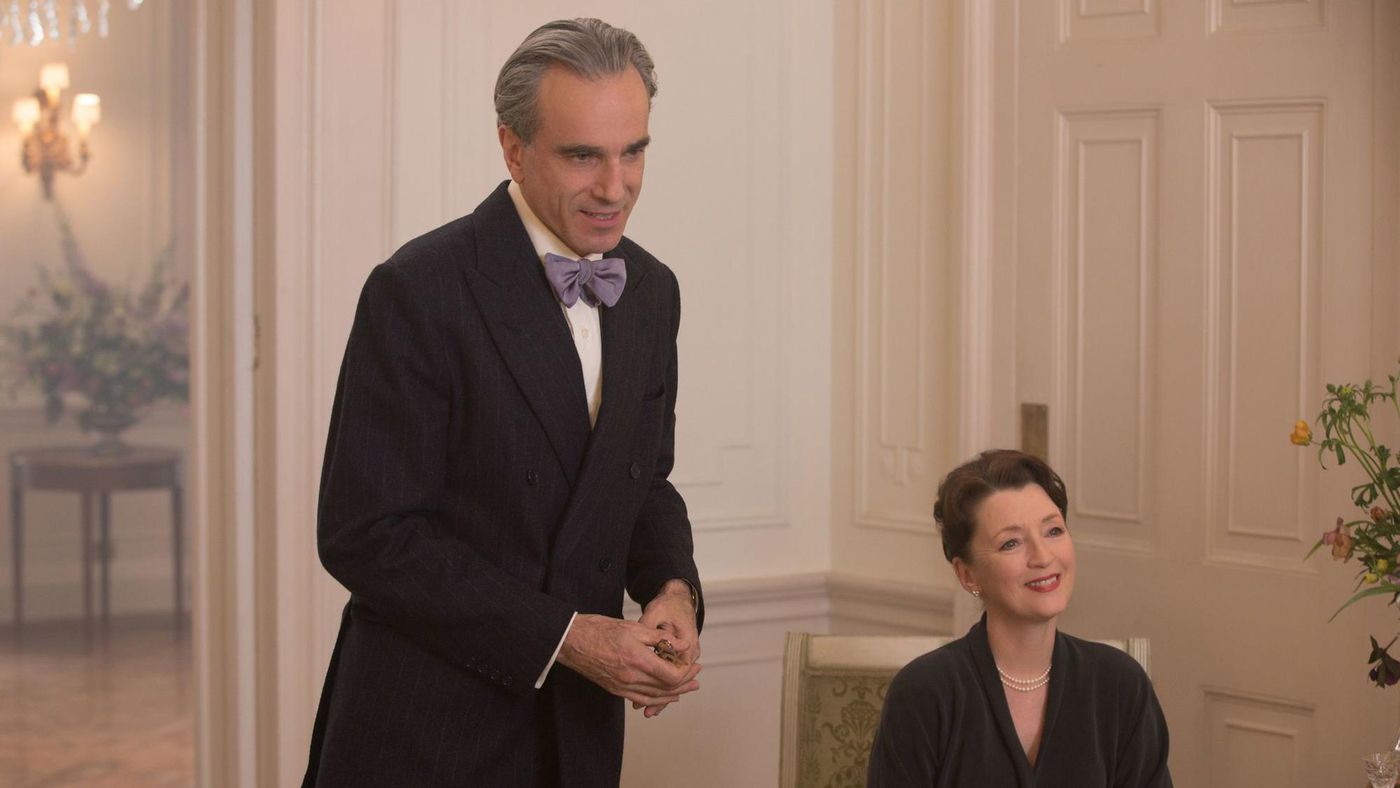
Vicky Krieps and Daniel Day-Lewis play dangerous games in Paul Thomas Anderson’s fascinating film about control, Phantom Thread

Director: Paul Thomas Anderson

Cast: Daniel Day-Lewis (Reynolds Woodcock), Vicky Krieps (Alma Elson), Lelsey Manville (Cyril Woodcock), Camilla Rutherford (Johanna), Gina McKee (Countess Henrietta Harding), Brian Gleeson (Dr Robert Hardy), Harriet Sansom Harris (Barbara Rose), Lujza Richter (Princess Mona Braganza), Judy Davis (Lady Balitmore), Philip Franks (Peter Martin)

The last time Paul Thomas Anderson and Daniel Day-Lewis worked together, we got a true masterpiece in There Will Be Blood. Phantom Thread couldn’t be much more different. In place of rolling plains, oil, and Day-Lewis as a monstrously larger-than-life alpha male, we get confined rooms, handsome dresses and Day-Lewis as a pernickety, obsessive, creepy dressmaker. But Phantom Thread may also be just as intriguing, thought-provoking and memorable in its way as There Will Be Blood.

Reynolds Woodcock (Daniel Day-Lewis) is a leading couturier in 1950s London, whose fashions are highly sought after by the rich and famous. He lives and works with his sister Cyril (Lesley Manville), who dominates his life – and dispatches his various muses as their use comes to an end. On a break near the coast, Reynolds meets Alma (Vicky Krieps), a hotel waitress whom he takes back to London as his latest muse. At first Alma seems to be merely the tool of this fashion Svengali – but Alma has her own desires that quickly spark conflict in the House of Woodcock.

Paul Thomas Anderson’s film has lashings of Daphne du Maurier, Powell and Pressburger (it’s more than a little reminiscent of The Red Shoes) and a slickly inverted Pygmalion. It’s a film that slowly emerges as being about control and the way power relationships can shift and transform. Reynolds at first seems a twisted Henry Higgins: his muses come and go (and, it’s implied, fail to live up to his mother) – he becomes tired of them, and his sister, business partner, factotum and part-time mother-figure Cyril dismisses them when they have served their purpose. 

Reynolds and Alma’s first meeting is one of creepy control. He asks her to memorise his order, wipes her lipstick away so he can “see her” and, in a late night “living mannequin” sequence, dresses her in a series of fabrics and clothes, and offers dispassionate comment about her body. What’s interesting in this sequence though, is that Alma only becomes uncomfortable when Cyril arrives and joins Reynolds in the process. It’s a hint of the developments that will emerge over the course of the film: Alma doesn’t want to share Reynolds.

That’s the tension the film explores from thereon: Reynolds seems to have all the power, but Alma pushes against this to forge her own position as something more than a muse. The film has an acute understanding of the psychology of power in human relationships, which is more than reminiscent of Rebecca: the exact motivations of the characters remain unclear (sometimes even to themselves) until late in the film. The film veers into My Cousin Rachel territory – while giving us a totally unexpected series of emotional developments that spin out of this, which shock but make perfect sense.

That’s because Paul Thomas Anderson has made a sharply observant film about human fallibility and our desire to understand our place in the hierarchies around us, and the unusual paths to contentment that we can find. Like The Red Shoes, it also feels like a film that really understands the psychology of Svengali figures, and adds a Freudian bent to it. Reynolds is looking for a mother to take the place of his own and he is drawn to muses who remind him of her, but who constantly fail to replace her. It’s in the weakness that Reynolds’ perfectionism drives him away from, that he is capable of finding love and happiness.

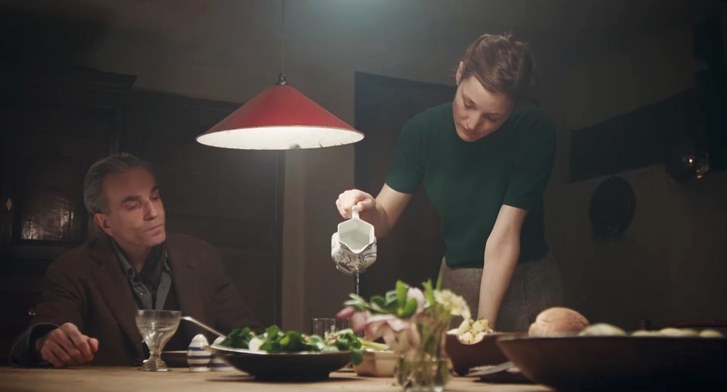
So the film becomes a series of wonderfully low-key power shifts, many of them revolving around meals. It’s established early that Reynolds demands very precise conditions for his breakfasts – most importantly silence; in every breakfast scene that follows, everything from the loudness of the crunching to the amount of scrapping of jam on toast tells you who is in control. 

Because just as Reynolds wants to craft Alma to take on the perfect muse position for his dressmaking – so Alma wants to craft Reynolds into the perfect combination of high-achieving genius whose success she can vicariously enjoy, and a man who needs her emotionally. Anderson’s brilliant, bitter and waspy screenplay shows the different steps both characters dance through to achieve this. Alma’s solution, and its psychological impact, is brilliantly du Maurier; it’s out there, but makes perfect sense.

Visually the film is beautifully crafted. Anderson shoots a lot of the film with a combination of slow prowling shots, and cameras held at close-up or medium shots that regularly place the actors close to the camera. It means that we always feel like we are right in the middle of the action – looking over the shoulders of actors, or seeing their faces loom into the camera. It obviously creates a claustrophobic feeling, but also one of real intimacy – it’s like the camera is dressing the characters, the same way Reynolds does. But Anderson’s choices pull you closer into the action, and get you really thinking about the psychology of the characters you are watching.

And Anderson wants you to get into the psychology here, because he has cast three actors at the top of their game in this tight-character study. Day-Lewis is of course superb, as a character unnervingly precise and cool – his voice is a perfect combination of icy preciseness, and trembling emotional confusion. Reynolds is in many ways a child – his every whim must be followed, he explodes in foul-mouthed (hilarious) fury at any deviation from his procedures. But he’s also an emotionally stunted man who has never got over the loss of his mother, capable of strong sexual feelings and a yearning for closeness. It’s a subtle, controlled, low-key performance.

But Day-Lewis’ retirement has stolen a lot of the attention from Vicky Krieps, who is sensational as Alma. In many ways, she is the real protagonist of the story. Alma is at first our entry into the story – but we quickly learn we know or understand very little about her. She comes from somewhere in Europe, she may well be Jewish, but Krieps makes her hard to define. Unusual and impossible to understand, Krieps makes her a fascinating character. She emerges as a determined, strong-willed, manipulative figure, looking to have a firm place in her partner’s life – she’s both a toy that bites back, and a woman who will settle for no compromise in what she wants. It’s a fascinating performance. 

Lesley Manville rounds out the cast as the waspish Cyril, deliciously spitting out some cruel lines. Manville is terrific, and Cyril sits in an unusual place in the Woodcock house, partly catering to Reynolds’ demands, partly controlling and positioning him. This makes a perfect foil both for Reynolds’ demanding requirements for a mother, and for Alma’s desire to bring Reynolds under her own influence.

Anderson’s film is a beautiful, fantastically scored, wonderfully acted, intriguing character study, and an insightful exploration of emotional and sexual control and the traps we built for ourselves and for others. It’s a film where every scene is open to interpretation, where both the past and the future seem to haunt events and every resolution leaves questions. It’s a brilliant psychological study that rewards endless thinking, analysis – and I’m sure repeat viewings. I think this one could run and run.

Youth (2015)


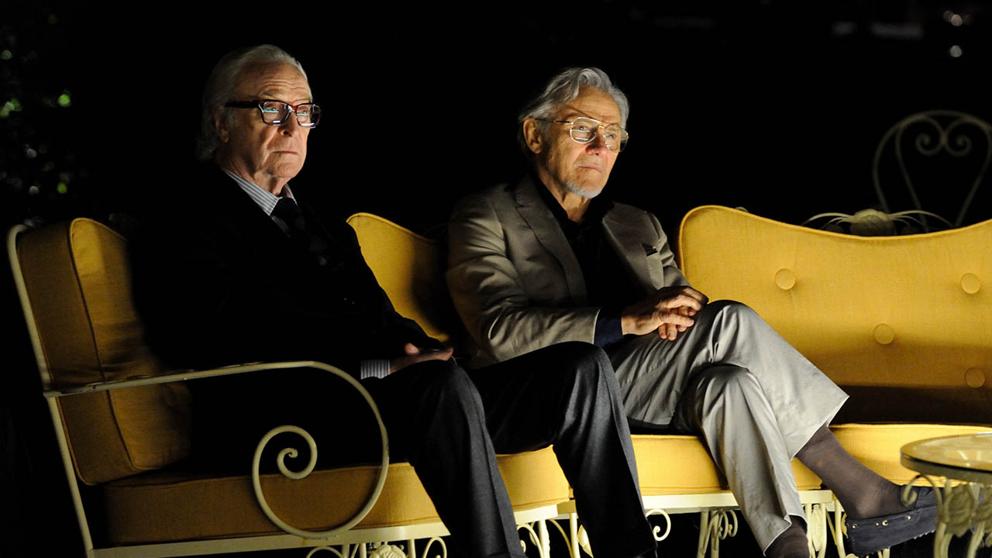
Michael Caine and Harvey Keitel try to embrace their past in Paolo Sorrentino’s mesmeric Youth

Director: Paolo Sorrentino

Cast: Michael Caine (Fred Ballinger), Harvey Keitel (Mick Boyle), Rachel Weisz (Lena Ballinger), Paul Dano (Jimmy Tree), Jane Fonda (Brenda Morel), Roly Serrano (Argentinian Footballer), Alex MacQueen (Queen’s emissary), Robert Seethaler (Luca Moroder), Ed Stoppard (Julian Boyle), Paloma Faith (Herself), Tom Lipinski, Chloe Pirrie, Alex Beckett, Nate Dern, Mark Gessner (Screenwriters)

Well this is something different. Youth is a hard to categorise film from Paolo Sorrentino. Sorrentino often seems the definition of (admittedly beautifully filmed) style over substance. But he’s also able to suggest great, unseen depth, a hard to define quality. Sometimes these qualities result in an impressive but frustratingly empty work. And sometimes it results in something simply wonderful. Youth falls firmly into the second category. In fact, it fits so firmly into this that I think it might be the most wonderful film Sorrentino has made. Put frankly, I loved this film. I can’t quite put my finger on why somehow, but I loved it.

It’s set in a Swiss retreat, peopled by the rich and famous. There are film stars, Miss Universe, famous pop stars and an overweight former Argentinian footballer (who could be anyone right?). Fred Ballinger (Michael Caine) is a world-famous composer, a man officially in retirement, uninterested in answering entreaties from the Royal Family to perform his famous “Simple Song #3” at Prince Philip’s birthday. He is accompanied by his daughter Lena (Rachel Weisz), who acts as his assistant, and struggles with her father’s difficult personality and her resentment towards him. Fred’s best friend Mick Boyle (Harvey Keitel), a famous director, is also staying at the resort with a gang of screenwriters, preparing his script for what he intends to be his final film (his “testament”).

Youth is a film that conveys great depth and emotional strength, while never falling into any category or offering up clear answers or spoon-fed themes. Instead it explores, in a gentle way, age, disappointment, hope, lost opportunities and warm memories. It’s nominally a film about old people reflecting on their youth, but it’s also full of moments that show these characters still have moments of vibrancy. In a beautiful moment, the footballer (barely able to get himself out of a pool without oxygen) carries out a series of beautifully skilful keepie-uppies with a tennis ball for over a minute, before he wheezes and has to stop. That’s kinda the whole film right there in an image: age and youth all in one go. It’s beautiful. I loved it.

Sorrentino loves the flashy shot, and carefully framed image. This film is full of them, and they work wonderfully well. It’s sprinkled throughout with gorgeous dream sequences and fantasy moments, from Boyle seeing a field full of his leading ladies past, to Lena dreaming of a hilariously overblown music video showing her unfaithful husband (a slimy Ed Stoppard) and Paloma Faith (a very good sport) undulating over a speeding car. We see Fred sitting in a field conducting a semi-imaginary orchestra of cows with bells. Imaginative shots are sprinkled throughout, everyday things seen from new and unique angles. 

And its so emotionally fulfilling, filled with both lump-in-the-throat moments and moments of searing, magical hope and joy. It explores what matters to us as we get old – and how what matters to us in our lives changes as we age. Sometimes these things remain the same, sometimes we move with the times. Sometimes we adjust, and sometimes we don’t. It’s a film where some characters struggle to recall events, others reinterpret their lives as they happen. You could criticise the film for not having a clear central theme, but its theme if anything is life – and life is not easy to categorise. It’s a mountain of different moments and attitudes: and that is what this film likes. It’s messy and hard to predict. And it’s strangely beautiful. 

So Sorrentino crafts a feast of a film here, crammed full of dialogue that should be almost too weighty and overtly “important”, but somehow never comes across like that. It’s partly because it’s delivered with such experienced, lightly worn skill, but also because Sorrentino pulls off the trick of positioning it as profound rather than overbearing. Shot with a gentle, elegiac expressiveness, it’s a film that brilliantly works, that conveys and carries great weight. It’s about the human condition, and it feels real and human at all times.

It also helps that it’s superbly acted. There isn’t a dud performance here – and some give some of the most beautiful work of their career. Michael Caine takes a few minutes to accept as a world famous composer (something about him just doesn’t quite work), but you quickly let it go because he is astonishingly good here. Caine’s Fred carries great reserves of regret and loss, but also many memories of joy. Caine is beautifully expressive – part observer, part driver of the action. He has the wonderful air of being young-old and an old-young-at-heart. He’s playful but also tired. He’s strangely unknowable but at times open. It’s a beautiful performance.

Just as good is Harvey Keitel. The film is full of these two guys – like Stadler and Waldorf – moaning about getting old. But Keitel brings a great tragic depth to Boyle, a great director fallen on hard times, a man whose best days may well be behind him but who refuses to let the light die. He’s both funny and (by the end) incredibly moving. Rachel Weisz is radiant as Lena – a scene where she finally lets years of anger out is wonderful – but another late scene as she quietly weeps with a sort of sad joy is simply superb. She has a gentle romance that builds with real sweetness. She’s impossible to look away from in this, she’s brilliant.

Youth also has moments where it explores the nature of art and its legacy. Ballinger feels he is probably a good-but-not-great composer. Boyle feels there are moments he touched greatness, but is never sure if it’s there or not. Paul Dano plays a great stage actor who is known worldwide for his role as a robot in a Star Wars style smash. What is art? The film doesn’t dare to answer the question, but it does ask what are artists? How do they question themselves? Why do they do what they do? Artists in this film are always watching – even the footballer – they are always looking to become a part of their world or comment on it. 

Sorrentino’s film is marvellous. I really loved it. It’s crammed full of brilliant moments. Even Jane Fonda’s overblown cameo as a film star works (I think just). It’s played with such brilliancy, structured with such light playfulness, that it is able to carry great depth and grace. It’s a film that rewards reviewing – I’m not sure I’ve worked out the implications of the final shot, or what it might mean for how we should interpret Ballinger’s final actions – and I can’t wait to see it again.

Up in the Air (2009)


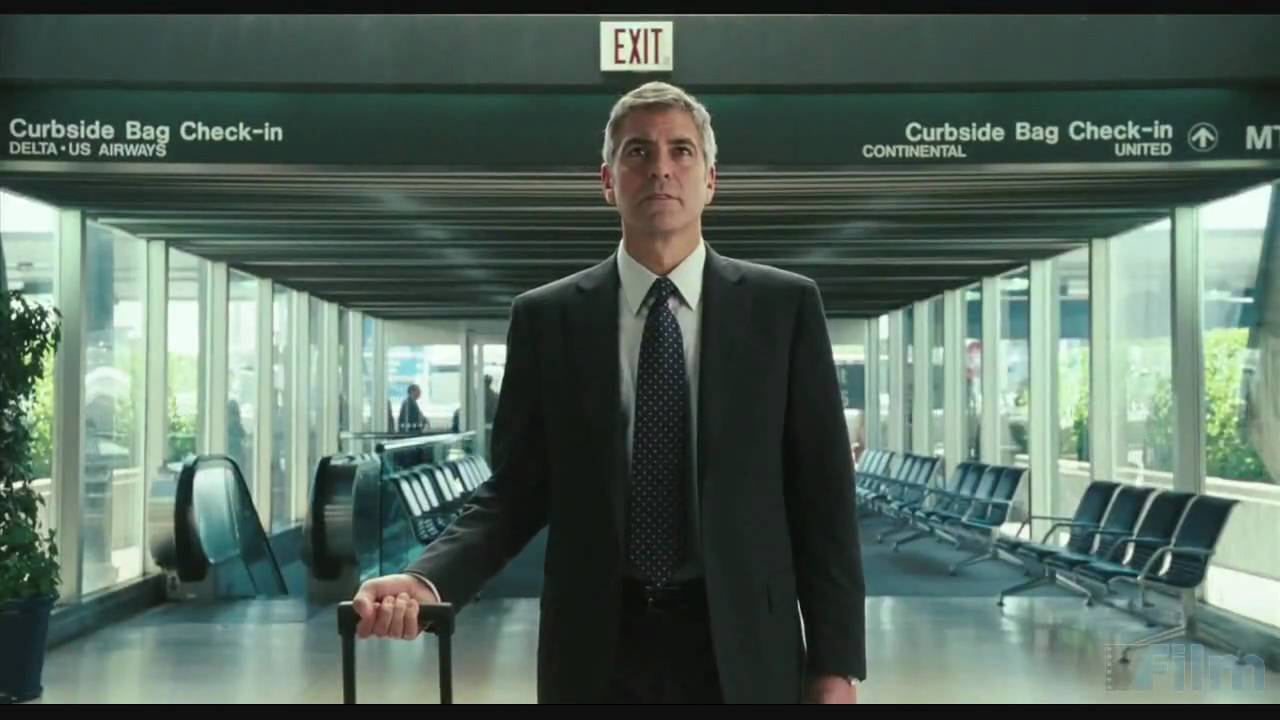
George Clooney about to head Up in the Air in Reitman’s brilliant bitter-sweet comedy

Director: Jason Reitman

Cast: George Clooney (Ryan Bingham), Anna Kendrick (Natalie Keener), Vera Farmiga (Alex Goran), Jason Bateman (Craig Gregory), Amy Morton (Kara Bingham), Melanie Lynskey (Julie Bingham), Danny McBride (Jim Miller), Zach Galifianakis (Steve), JK Simmons (Bob), Sam Elliott (Marnard Finch), Tamala Jones (Karen Barnes)

One of the worst days in your life can be the day you lose your job. The uncertainty, the insecurity, the sudden feeling of no longer knowing what the future holds – it hurts. Imagine, however, if you were the other side of the equation. What if it was your job to actually tell other people they no longer had a job?

Ryan Bingham (George Clooney) works for a Human Resources consultancy company who specialises in firing people for companies. Ryan spends his life flying from company to company across America, fires thousands of people a year, and gives motivational speeches promoting his ideology of no relationships with people or possessions. His relationships are on-the-road flirtations, in particular with one of his female counterparts Alex Goran (Vera Farmiga). However, Ryan’s world is facing threat: his company has hired young, ambitious Natalie Keener (Anna Kendrick), and wants to introduce a video conferencing system to conduct firings remotely. Ryan argues Natalie knows nothing about the ‘human element’ of his job, and she joins him on the road to find out more.

Up in the Air is a marvellous, perfectly formed, small-scale film: thought-provoking, endearing, with plenty of laughs as well as an air of bittersweet sadness. It manages to focus on all its issues and themes equally without short-changing any of them, and leaves you feeling rewarded and rich at its end. There are moments in there that will make you cry, make you laugh but also make you a little angry. Reitman never insults your intelligence though: he presents things as they are and trusts you to make the judgements you want to make. It’s quite simply wonderful, a little masterpiece of cinema. 

It’s also a wonderful film of its time, which very deliberately doesn’t shy away from the brutality of the economic climate so much of its plot focuses on. Reitman used a series of talking heads of real people who really had gone through meetings exactly like this, and their emotional, very real reactions to losing their jobs gives the picture a profound depth. 

Up in the Air doesn’t take the easy route of condemning Ryan’s work. Sure our sympathies are naturally with those losing their jobs, but Ryan isn’t a heartless shark. He genuinely feels he is there to support people: his principal objection to the video conferencing is it removes the human element from an extremely difficult moment in people’s lives. He has platitudes, and smooth professionalism, but also a brilliant understanding of people and he gets so close to appearing that he cares deeply about people’s lives (even if he can’t remember them days later) it’s as near as damn it to counting. Watch the scene where he fires JK Simmons’ character – he’s read Simmons’ CV, gently questions why Simmons is working anyway at a company he hates and encourages him to follow his dream of becoming a chef. Sure it’s about defusing a situation – but to Ryan it’s also about helping a person see possible future steps, if only for a moment.

It’s such a brilliant snapshot of how Ryan can analyse in seconds what might encourage a person to find greater depth in their lives, that you forget for a moment that Ryan prides himself on having nothing. His flat is a facelessly cold place, which looks less welcoming (and cheaper and colder) than the hotel rooms he stays in. He’s never happier than when in a VIP lounge. He proudly lives out of a suitcase perfectly sized to avoid checking bags. His motivational career stresses the aim of getting everything that matters to you in the world into a backpack. He has no friends, he’s a stranger to his family, no fixed abode (he spends over 320 days a year travelling). He shares a few painful minutes with people and then never sees them again. 

This might just be the part Clooney was born to play: his handsome, slightly smug grin, his studied chuckles, his slight air of blankness behind his good looks are perfect for Ryan’s surface, but Clooney’s great gift as an actor is the emotional weight and depth he is able to show beneath this veneer as soon as it is scratched. He’s a marvellous physical actor – watch his growing flirtatious ease with Alex turn into a comfy affection. He understands the psychology of Ryan completely and never judges him: he can see why Ryan does what he does, and why it works for him. His performance gives Ryan the dignity of his convictions, doesn’t present with any inch of satire Ryan’s feeling that his job is partly about helping people. Even the slightest touch of distance from the part would have shattered the film’s delicate equilibrium – Clooney doesn’t do it for a second.

Of course, drama means Ryan is thrown into situations that challenge this way of thinking, not least his relationship with Alex (essentially the female version of himself). Vera Farmiga is outstanding as a woman with a very male outlook on the world. Perhaps because they share so much, their relationship grows from a sexually charged flirtation (a brilliantly shot and edited sequence in a VIP lounge) into one that increasingly becomes more and more tender. The film dangles before us and Ryan the option for a new way of life – but it doesn’t lie to us about the nature of either of these people. The relationship doesn’t develop the way we expect – and in fact it becomes a commentary in its own way on the very same future prospects Ryan spends his life selling the people he fires, that despair is a gateway to future opportunity.

Anna Kendrick’s Natalie comes at the world of firing from our ruthless modern age – how can we do this faster, quicker and cheaper? Let’s put together a framework for all conversations, let’s do it remotely, let’s use as many buzzwords and platitudes as we can. While Ryan’s work (to him) is all about not forgetting you need to guide an actual human being through without them getting angry or upset, for Anna it’s a simple progression from A to B. Kendrick’s wonderful performance is all about unpeeling these layers. As she finds out first-hand what the job involves, so we discover she is a far more sensitive, “normal” person than we expect, someone who can’t see the logic behind Ryan’s world-view.

And the film asks Ryan to look at the logic of this world view as well. Everything he expresses at the start of the film comes under fire. Change threatens to make him as redundant as the people he fires. His growing closeness to Alex challenge his ideas about commitment (“we fall in love with pricks and are then surprised when they are pricks” Alex comments, something the film explores late on). The impending marriage of his sister – and the realisation of the complete lack of presence he has in his family’s lives – makes him start to think about the strength of his rootless existence.

But the film doesn’t hammer these points home, it juggles them all perfectly within its framework of looking at corporate America today. In a world where people are increasingly becoming faceless numbers on a spreadsheet, is it surprising so many need a faceless man to do the firing for them? Travel has made the world smaller, but also our lives smaller – like Ryan we can be everywhere and nowhere. Up in the Air is a sad and tender film, but one which leaves a kernel of hope somewhere – there are moments that make you think there are opportunities for change and rebirth. Sure it might be pulling the same trick Ryan does, but if so that’s smart – and shows what a good trick it is. Up in the Air is a hell of a movie, and Reitman is one hell of a director.

A Day in the Death of Joe Egg (1971)

Janet Suzman and Alan Bates balance the pressure of bringing up a paralysed daughter in A Day in the Death of Joe Egg

Director: Peter Medak

Cast: Alan Bates (Bri), Janet Suzman (Shelia), Peter Bowles (Freddie), Shelia Gish (Pam), Joan Hickson (Grace), Elizabeth Robillard (Jo), Murray Melvyn (Doctor), Constance Chapman (Moonrocket lady)

The playwright Peter Nichols’ daughter Abigail was born in 1960, suffering from severe physical and mental disabilities, requiring 24-hour care from her parents. Nichols transformed the experience into a play about two parents who struggle to care for their daughter, and spin out little fantasy conversations with their child, indulging in flights of fancy even while her father wonders if it is even worth carrying on with looking after a child who will never experience any improvement or independent life.

Alan Bates plays the husband Bri, a put-upon teacher at a boys’ school, prone to flights of comic fantasy. Bri feels increasingly frustrated about the unacknowledged strain their handicapped daughter Jo is placing on his marriage to Shelia (Janet Suzman), whose focus is almost exclusively on looking after their daughter. The couple use often surreal black humour to cope with the constant pressure of caring for the child.

The excellent Indicator blu-ray contains a fascinating interview with Peter Nichols, who clearly didn’t care for the film. He found it off-balance, too emotionally overwrought, too realist and essentially too depressing. He’s probably right. The play is a finely balanced mixture of near stand-up comedy and marital grief. Bri’s comic moments are vaudeville fantasy sequences, with funny accents and larger-than-life characters pulled together. This toying with the fourth-wall just can’t be translated in to cinema here, instead the film downplays the dark humour and humanity of the piece, and instead makes it a rather heavy-handed and glum watch.

Bates still has many of the essentially comic funny voices and character-based routines – there are sequences where he acts out the roles of various doctors and priests who have consulted on Jo in the past. But his performance is just a little too eccentric, a little too out-there, a little too twitchy – frankly it makes him hard to engage and empathise with. Maybe it’s the changing times that haven’t helped, but Bri’s constant whining that his sex life has been destroyed just doesn’t sound right.

Of course, Nichols is using this whining to touch upon the damage done by the pressure of constantly caring for a daughter who will never show any signs of improvement and never be capable of communicating with her parents. Nichols knows of what he speaks: he and his wife eventually hospitalised their daughter (and had two other children) – and he believes the parents should have done the same in his play. By making the entire focus of their life a child who is, essentially, an object (twice at opposite ends of the film she is pushed into a room slumped over a wheelchair), it’s clear the couple are causing no end of damage to their emotional lives. Maybe it’s just heavier going as well because the film features a real child – while the play used theatrical invention to represent the child.

The film slightly unbalances itself by moving away from black humour to emotional impact. Maybe part of this is due to Janet Suzman’s astonishingly strong performance as Shelia, a part she invests with great layers of emotion and hope, constantly refusing to give up hope that one day Jo may respond. Suzman has one extremely emotional speech, recounting a moment where Jo pushed over some play blocks, which she delivers with a teary, earnest, simplicity to the camera which is profoundly moving. It probably makes Bates’ performance seem a little more irritating than it actually is, because she is strong.

And that is a problem with the film, because in order for it to work you need to bond with both parents. You need to share and be inspired by Shelia’s hope, while at the same time see that Bri’s more realistic perceptive, and his dark longings to end Jo’s life of suffering, are in many ways just as legitimate. The film is all about this issue of euthanasia – conversations dance around it constantly – and it largely manages not to fall either side of the issue. There are points on both sides – and the real issue is should the parents find some other way to get support and help with caring for their daughter? Instead you don’t quite bond with both parents the way you need too. You feel Bri is a bit too sharp, and that Shelia is a bit too unrealistic in what she believes in.

The second half of the film introduces most of the secondary characters, particular Freddie and Pam (expertly played by Freddie Bowles and Shelia Gish), giving us a fresh perspective on the events. Freddie is bluntly concerned in a jolly way with doing what he can to help and urges the couple to consider hospitalisation. Pam, however, behaves with the awkward embarrassment many of us are ashamed to admit we feel when confronted with the seriously paralysed. We also get to see more of Joan Hickson (the only cast member from the original stage production) as Bri’s brassy and difficult mother, whose attempts to help largely only serve to increase tensions.

It slowly becomes clear though that this is a film about the collapse of a marriage under pressure, even more than about caring for a disabled child. But shorn of much of its humour – the fantasy sequences don’t really work, because they feel a little too heightened and overplayed – the film turns the play into something really quite bleak. It’s frankly a little too depressing and overbearing to really enjoy. It has plenty of good performances, but doesn’t really open up the play and instead turns it into an intense, rather overbearing chamber piece. A film that loses its balance from the stage version, and instead becomes something quite glum, in which Bates’ Bri doesn’t really win our sympathy as you feel he should do. It’s a tougher watch than Nichols intended – surely why he wasn’t really happy with it.

Ex Machina (2015)


Alicia Vikander: is she human or not? The question that troubles the cast of Ex Machina

Director: Alex Garland

Cast: Domhnall Gleeson (Caleb Smith), Alicia Vikander (Ava), Oscar Isaac (Nathan Bateman), Sonoya Mizuno (Kyoko)

It’s the age-old story of creation: man yearns for the power of the gods. There is something intrinsically god-like about the desire to create life and to develop a new creation. Ex Machina is a film that precisely explores this idea (along with a host of others). In the struggle to create an artificial intelligence, are we motivated to further mankind – or is it a perverse desire to become God ourselves? 

Caleb (Domhnall Gleeson) is a low-level coder working for a Google-like organisation founded by genius inventor Nathan Bateman (Oscar Isaac). Caleb wins a competition to spend a week at the reclusive home of Bateman, a solitary modernist house cumresearch station in the middle of a secluded forest. Nathan wants Caleb to conduct a series of interviews with his new invention – an android named Ava (Alicia Vikander), as part of a Turing Test to ascertain if she is truly intelligent or not. However, over the week, the mysteries of the house darken – and, as Caleb begins to develop strong feelings for Ava, the question arises of who is manipulating whom.

Ex Machina is a confident, fascinating piece of film-making from first-time director Alex Garland, who also writes a screenplay stuffed with ideas. It challenges and provokes discussion, carefully outlining a story of deception and counter-deception, demanding multiple viewings to unpick truth from lie. Garland is also a brilliant chamber-piece director, drawing fantastic performances from his cast, and shooting the secluded house in such a range of styles and angles that it feels both expressive and claustrophobic. Ex Machina is an extremely intelligent small-scale discussion piece, which would make as terrific a play as it does a film.

Among its themes is the question of man striving for god-like control. Nathan, a prickly, socially uneasy and unempathetic person, wants God’s mantle – and is willing to treat his creations with the same ruthless indifference, he demonstrates to Caleb, and the users of his search-engine. His knowledge of humanity is based on essentially stealing an understanding of our thoughts and desires from our search histories, so creating artificial intelligence is simply a progression from the control he already has.

It’s especially creepy that the androids Nathan creates are all attractive young women. Throughout, the film explores the attitudes men have to women. To Nathan, it’s increasingly clear they are objects. He proudly brags about how Ava is both sexually attractive and fully capable of experiencing sex. He treats his housemaid (and sexual partner) Kyoko with a contempt bordering on outright cruelty. Nathan is possessive – and you suspect it’s logical to him to make the first in the next generation of his perfect race as a woman, subservient to him.

Caleb has a healthy but romanticised view of women –he wishes to see himself as white knight, sweeping in to save the woman he loves. He has a lovestruck, teenage protectiveness and devotion towards Ava – qualities, the film suggests, make him ripe for manipulation (the question being from whom). Caleb’s entire attitude towards women is protective – he is increasingly disgusted by Nathan’s vileness – but still in its way paternal. Caleb is naïve and strangely innocent, prone to hero worship – and his initial devotion to Nathan slowly transfers to Ava.

A lot of this works because Alicia Vikander’s Ava is such a fascinatingly elliptical figure. Vikander and Garland skilfully leave you guessing: just how human is Ava? Under observation from Nathan, her discussions with Caleb seem cold and functional. During the many brief power cuts that blight the lab, when they are alone from CCTV, she appears to be far more emotional and tender. But what does she feel for Caleb? Is it genuine feeling – or an approximation designed to draw Caleb in? Her desire for freedom is a genuine human feeling – but how is she going about this? In scenes where we glimpse her alone, Vikander’s movement and expression are neutrally unreadable. It’s a fascinating superb performance from Vikander, both tender and gentle and also unsettling and creepy.

The script never loses its way, and never gets overwhelmed by cheap thrills. There are moments of violence and danger – and the ending of becomes increasingly dark – but it all seems a very natural progression. Because the ideas of seeking freedom from oppressive masters – and mankind looking to abuse the powers of the gods over their creations – feel very real and true. These are ideas that are endlessly fascinating – and the film explores them in brilliant detail, without ever flagging, becoming bogged down in tedious discussion, or letting its ideas overwhelm the plot.

Ex Machina is a fascinating film, brilliantly acted – Isaac and Gleeson are quite simply superb as two very different tech geeks, struggling with ideas about humanity they can scarcely begin to understand and express. The effects to create Ava are extraordinary (and Oscar-winning). Alex Garland makes himself as a director of true promise – and Ex Machina is a film that can take its place as one of the compelling, intelligent and intriguing science-fiction films of the 2010s.