Category: Relationship film

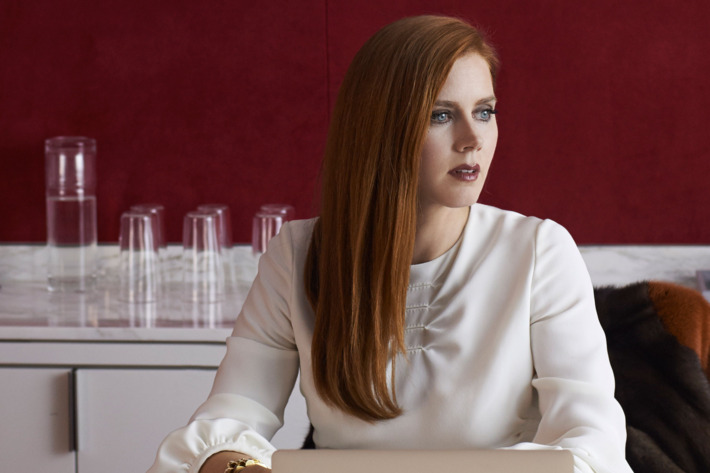
Nocturnal Animals (2016)


Amy Adams does a lot of reading and thinking in Tom Ford’s intriguing part thriller, part strange romance, part memory saga Nocturnal Animals

Director: Tom Ford

Cast: Amy Adams (Susan Morrow), Jake Gyllenhaal (Edward Sheffield/Tony Hastings), Michael Shannon (Detective Bobby Andes), Aaron Taylor-Johnson (Ray Marcus), Isla Fisher (Laura Hastings), Ellie Bamber (India Hastings), Armie Hammer (Hutton Murrow), Laura Linney (Anne Sutton), Andrea Riseborough (Alessia Holt), Michael Sheen (Carlos Holt)

Susan Morrow (Amy Adams) is a society wife, running art galleries and married to an increasingly uninterested husband (Armie Hammer). One day she receives a copy of a manuscript from her ex-husband, Edward Sheffield (Jack Gyllenhaal). The book, while sensitive and from the heart, is also terrifying and visceral, and speaks to her in a way few things in her life have. It makes her begin to question her own choices. We see the story of the novel played out – Tony Hastings (Gyllenhaal again) and his wife (Isla Fisher) and daughter (Ellie Bamber) are waylaid late at night on an abandoned road by a violent local (Aaron Taylor-Johnson) – tragedy ensues.

It would be easy to say Nocturnal Animals is a stylish film that favours beauty over substance. But that would be untrue – Tom Ford has crafted a dynamically structured, intriguing puzzle, open to (and ripe for) discussion and reinterpretation over and over again. The film teases us with uncertainty and ambiguity, but it manages to avoid slipping into heavy-handed pretension. It leaves us with things unsaid, presenting parallel narratives and inviting us to mix and match them to create our own understanding. Ford’s skill is to not always present a definitive answer for how the book plot we are watching is meant to reflect on the plotline of the real world.

Ford is really good at distinguishing between the fiction and the reality. The world of Edward’s story is heightened in nearly every way, in a broad Western setting, while Morrow’s “real world” is cooler and contained, set in chilly apartment rooms or icy modern galleries or homes. The intercutting between the two is skilfully done, perfectly paced, never confusing or jarringly pulling us suddenly from one reality to another. The film avoids making obvious visual crossovers and links between the two (bar once – a moment that doesn’t really work), leaving the interpretation up to the viewer.

The story-within-a-story has a heightened tension, sometimes difficult to watch, not least in the road-rage incident that opens it. This sequence is almost unbearable in its whipper-cracker tension, with a threat of physical and sexual violence in every moment. The horror is almost palpable, sold a lot by Gyllenhaal’s struggles to control his panic and fear. Taylor-Johnson plays the demonic bully with an overblown operatic intensity, a hyper-real flamboyance that works well because it serves as a contrast with the grounded elements in the real story. It also adds to the sense of horror throughout this whole chilling sequence. Who hasn’t felt fear of being pulled over in a road in the middle of nowhere by terrifying, aggressive young men?
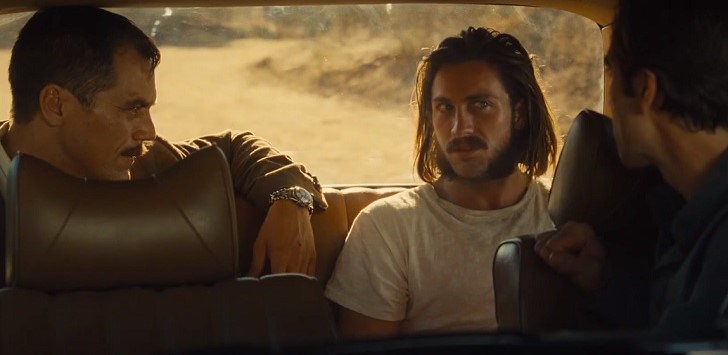
But all the elements of the story-within-a-story are cleverly balanced literary flourishes, carefully designed to appear just a little too close to “drama”, than those of the real world. Michael Shannon – a hard-boiled slice of charisma, he’s very good – is basically a stock character, repackaged with depth, but very much the sort of character you would find in a film rather than real life. Gyllenhaal’s Hastings similarly has the sort of moral conundrum and intense grief that feel that they belong more to a character from literary fiction than real life. The events of this story have a ferocious hyper-real intensity to them. Events in the story-within-a-story has a carefully constructed sense of dramatic irony.

By comparison, the “real world” is almost deliberately low-key and humdrum –minor affairs, and small but telling secrets, lives that are stuck in dull ruts or unimaginative cul-de-sacs. Amy Adams gives a complex and fascinating performance, much of which is essentially her reacting to things she is reading. It’s a performance that reeks of regret, of a woman unhappy in the choices she’s made, but too in love with the advantages they’ve brought to risk changing. She’s so set in the conventionality of life she seems unable to even imagine using her independence to break free.

The film teases us by misleading us about the parallels between the characters in the real world and those in the story. Ford playfully implies at first what we are watching may be partly true, and invites us to wonder what may be invention and what might have actually happened in real life. Alongside that, he also uses the double casting of Gyllenhaal to demonstrate the self-identification writers have for their characters. How much does Sheffield see himself in Hastings – and how much do the events that occur to Hastings, suggest a self-loathing in Sheffield? Again it’s all left to our own invention and imagination. We get flashbacks to past events in the real world that serve to both broaden our understanding and make us question our preconceptions. 

The film builds towards a conclusion that is equally open. Despite its horrendous content in the story-within-a-story, there is a romantic longing in this film, a sense of a life not lived – and a hope for the future. The final sequence is completely open to interpretation – you could equally see it as hopeful (as Ford sees it) or bleak (as most audience members do) – I probably incline more to the latter, but that might just be me. Everyone though will think something a little different depending on what they see, and how they interpret it – the film doesn’t labour the points it makes or push you too far in any direction.

Nocturnal Animals is an intriguing experiment in form and content that works extremely well. It’s powered by some terrific performances and shot with grace and beauty by Ford. This is Ford really flexing his muscles as an artist of film, and he borrows liberally from Lynch to Hitchcock. Ford has a brilliant eye for composition and form and his editing is masterful. He gives his work a lyrical musicality, a sense of balance and rhythm – he’s also a fine, subtle writer and avoids the crudity of the showman. He’s a fine film maker, and Nocturnal Animals is an intriguing, at times hard to watch, but fascinating film that grabs hold of you and doesn’t let go.
Les Diaboliques (1955)


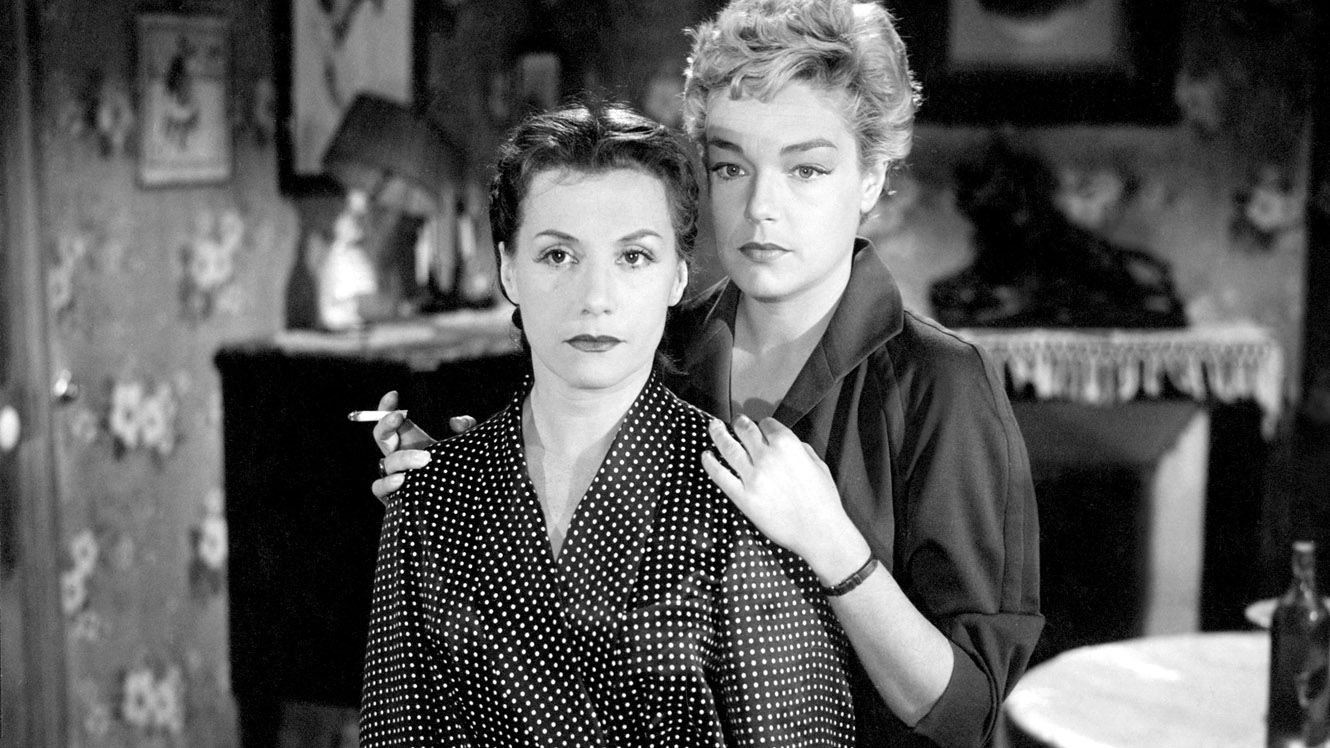
Véra Clouzot and Simeone Signoret plot murder in twisty thriller Les Diaboliques

Director: Henri-Georges Clouzot

Cast: Simeone Signoret (Nicole Horner), Véra Clouzot (Christina Delassalle), Paul Meurisse (Michel Delassalle), Charles Vanel (Alfred Fichet), Jean Brochard (Plantivaeu), Pierre Larquery (Drain), Michel Serrault (Raymond)

Clouzot is one of those fine directors, less prominent today in the list of the great artists of cinema. This might be because, unlike some of his contemporaries, many of his films were unashamed thrillers, Hitchcockian suspense tales, rather than the serious, artistic films we associate with French cinema. Les Diaboliques is the most popular of these films, a part mystery, part horror drama which slowly builds a confusingly terrifying picture of murder, danger and betrayal.

Christina (Véra Clouzot) is the wife of Paul (Michel Delassalle), a sadistic, bullying nightmare of a man. Together they run a boarding school, set up by her inheritance, but their marriage is a disaster. Paul is openly conducting an affair with fellow teacher Nicole (Simone Signoret). Nicole, however, is as disgusted and contemptuous of Paul as Christina – and she eventually persuades her that they should consider ridding themselves of Paul, with a temptingly simple scheme. However, things swiftly go against their plans…

Les Diaboliques is a compelling psychological thriller cum horror story, a creepy slow-burn of suggestion and paranoia that unfolds a bizarre whodunit mystery, which unnerves and constantly leaves you guessing. The story unfolds at a measured, inexorable pace. Clouzot’s camera is a quiet and carefully placed observer, taking in the events that occur in this hellishly cruel school with a calm directness, a cool minimalism that lets them speak for themselves.

And it’s a pretty hellish school. Paul is a brutal tyrant and bully, the teachers and students alternating between fear and loathing for him. He treats his fragile wife (struggling with a heart condition that could end her life at any moment) with a casual disregard and cruelty. Poor Christina is so put-upon and crushed, she seems wearily accepting of her husband’s constant affairs intermixed with cruelty. Even his mistress (an imperiously cold, harshly determined Simeone Signoret) can’t stand him. The whole school seems to have felt the effect of Paul’s personality – its run down, crushed, disheartened. The other teachers are either disinterested, faintly criminal or both. Is it any wonder wife and mistress want to murder him?

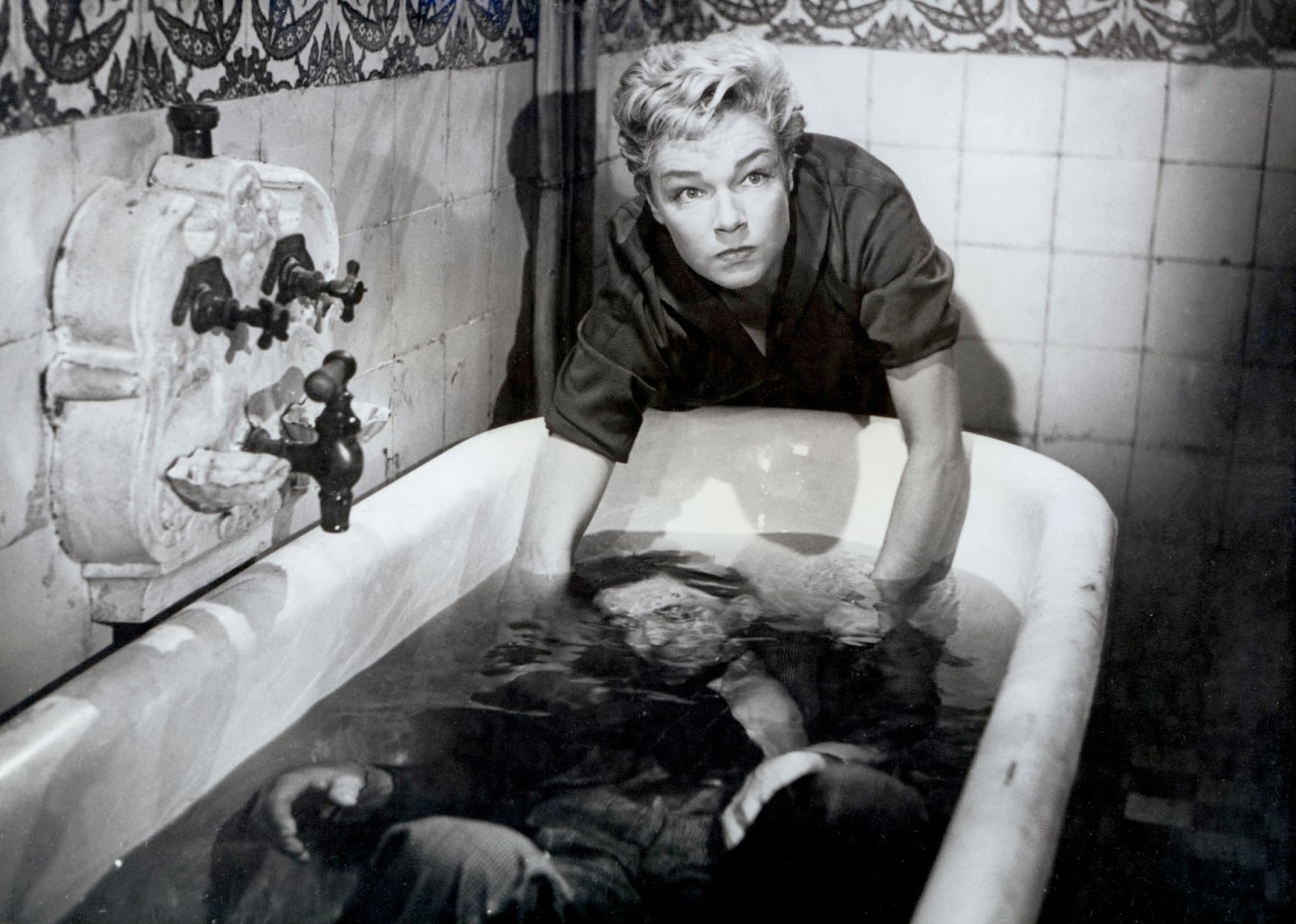
The murder, when it comes (and it’s the best part of half way through the movie) is almost blandly low-key. Clouzot even partly intercuts it with next-door neighbours complaining about the hot water being run late at night, the sound disturbing their radio quiz – unaware that it’s filling the bath so the two women can drown a drugged Paul. The flat where the crime occurs is as low-key and shabby as most of the rest of the film’s locations. 

Fascinatingly, what emerges increasingly are the lesbian undertones to the relationship between Nicole and Christina. Their intimacy is a major part of the build-up to the murder – their conspiratorial closeness seems as much as a careful seduction of Christina by Nicole as it is two like-minded souls coming together (this feeling, by the way, really comes into play as the film reach its conclusion). As events spiral out of control, Nicole becomes more and more of a protective, husbandly figure over the fragile Christina (an intriguing performance of vulnerability from Clouzot’s wife Véra), their physical and emotional closeness making them feel more and more like lovers dispatching a husband, rather than allies of convenience. It’s an intriguing subtext to the film, that I feel will make it of more and more interest as time goes on.

Events certainly do spiral out of control, as the body carefully placed in the swimming pool by the murderers (hoping to give the impression that Paul has accidentally drowned) is never discovered. Is it in the pool at all? Is Paul dead? Or has someone taken the body? A string of increasingly unnerving deliveries and visitations occurs – is Paul somehow speaking from the dead? Or are forces unknown manipulating the killers to disaster? Clouzot lets these events slowly build, avoiding the temptation to sprinkle clues or – more importantly – to give the audience more clues than the characters. We are only ever shown what Christine and Nicole see and only get the information they get.

This is where the film introduces its fourth primary character, retired detective Alfred Fichet. Fichet’s ambling, scruffy, seeming absent-mindedness makes him an eerily accurate forerunner of Colombo (at one point he all but says “just one more thing”). He rolls from place to place, clearly much sharper than he appears – it’s an impressively charismatic performance from Charles Vanel. He manages to work out what has happened (or perhaps what is happening) before the end – but moves too slowly in order to prevent disaster. But he changes the dynamic of the film in an intriguing way – shaking the film up 2/3rds of the way in, a tribute to the invention of its writing.

The final reveal of the plot is tinged with a horrifying terror – shot with an intense, watery fear that is guaranteed to haunt the memory. To say more is to reveal too much of an excellent act four twist. But it’s a sequence that you will find hard to shake from your mind – and one that you later realise the whole film was building towards. It’s what has led many people to call this film partly a horror story.

Clouzot’s film is a fine twisty thriller, even if at times it feels a little too in love with the mechanics of its tricks and plot mechanisms than it is with emotion and character. But it creates some intriguing and effective characters (including some small cameos) and it feels like a film that genuinely teaches us about the casual cruelty and selfishness that drives so many of our actions. There are many, many lies told in the film – even the children at the school casually lie – this is not a film that has a high opinion of the human race. 

Les Diaboliques has been called the greatest Hitchcock film Hitch never made. Hitch might well have brought a bit more flash and punch in its style (Clouzot is not the most inventive user of the camera here, with most shots very safe). But I’m not sure he could have improved its sense of creeping inevitability and grim claustrophobia. It still packs an inventive, clever and intriguing punch even today.

Saturday Night and Sunday Morning (1960)


Albert Finney is an angry young man out for himself in Saturday Night and Sunday Morning

Director: Karel Reisz

Cast: Albert Finney (Arthur Seaton), Shirley Anne Field (Doreen), Rachel Roberts (Brenda), Hylda Baker (Aunt Ada), Norman Rossington (Bert), Bryan Pringle (Jack), Edna Morris (Mrs Bull), Elsie Wagstaff (Mrs Seaton), Fran Pettitt (Mr Seaton)

Whatever people say I am, that’s what I’m not because they don’t know a bloody thing about me! … What I’m out for is a good time – all the rest is propaganda. – Arthur Seaton

The 1960s saw a cultural shift in British cinema. Prior to this, most British films were either Ealing-style comedies or dramas focused on the middle or upper classes. When the working classes did appear, they were usually scamps or “ever so ‘umble”. This all changed in the 1960s with the emergence of “kitchen sink” dramas. The New Wave of British Cinema had arrived – films that looked at the real lives and issues of the working classes, that dared to present the working man (and it generally was men) as a living, breathing human being (warts and all) rather than some sort of latter-day Shakespearean comic turn.

Arthur Seaton (Albert Finney) is a skilled, well-paid worker in a bicycle factory in Nottingham. He’s also your quintessential “angry young man”, contemptuous of his fellow workers, adamantly opposed to being told what to do with his life and only interested in a hedonistic life where he does whatever he wants. As Arthur begins a relationship with aspirant young woman Doreen (Shirley Anne Field), his life is complicated by the wife of a fellow worker, Brenda (Rachel Roberts), whom he’s sleeping with, announcing she’s pregnant.

Saturday Night and Sunday Morning caused such a sensation when it was released. But it’s such a strong capturing of a particular time and moment that it’s hard to look at it today without seeing it as a little bit dated, or finding it hard to work out what all the fuss was about. But Arthur Seaton seemed to capture the mood of generation – and that’s a credit to Alan Sillitoe’s excellent (semi-autobiographical) script, based on his own novel.

Albert Finney gives the part a forceful, primal aggression that seems to capture the spirit of the age. He constantly bubbles with ill-directed resentment, mixed with cynicism and a beery oafishness. He isn’t a “faux” intellectual, like a Jimmy Porter, or a man striving to move up the greasy pole. He’s a chippy, arrogant, slightly lazy man with no interest in self-improvement. He’s also a horrendously selfish character, interested only in his own pleasure – I think it goes without saying his treatment of women doesn’t stand up well. Tied of being preached at about the sacrifices of the war generation (who surround him in the factory), he merely wants to do what he wants, when he wants. Despite his flaws, he seemed to capture the feelings of a post-war generation.

The film was also unique for the themes it addressed. It was pretty much unheard-of for a film to even mention the possibility of abortion. It tackled issues of adultery and pre-marital sex (it’s one of the first films to show a man and woman waking up in the morning in bed together). Its lead character drinks, swears (as much as allowed by the censors) and even takes pot shots at neighbours he doesn’t like with an air gun. All of this of course seems rather tame now – but at the time, it was radical to see someone like this, behaving like this, on screen.

The plot, such as it is, is as aimless in many ways as Arthur himself. Not a lot happens in the film, apart from Arthur constantly pushing to not “let the bastards grind you down”. Of course all the pain in the story actually comes from Arthur’s own actions, not least to Brenda, his occasional mistress. Rachael Roberts is sensational as Brenda – the finest performance in the film – a slightly faded former glamour girl, now older, lonely and whose appeal to Arthur (and his appeal to her) seems as much maternal as it does sexual. Brenda’s a tragic figure, clinging to a fantasy of a life free from her dull husband – but slowly (and sadly) learning that she is looking for something from Arthur he can never give her.

By contrast, Arthur’s other conquest, Doreen, is a far more assured, determined and ambitious woman, closer to his own age. Shirley Anne Field is playful and charming, but in her own way as much besotted with Arthur’s rootless masculinity as Brenda. Unlike Brenda though, she is a determined to get what she wants. Arthur and she eventually seem set to settle down for domesticity on a new-build council estate, a decision Arthur seems to resign himself to (he flings a stone impotently at the new houses, but barely seems to understand why). Even this relationship reinforces Arthur’s emptiness – his aimless rebellion lands him eventually in the very conventional lifestyle he spent the rest of the film pushing back against.

Karel Reisz shoots all this with a documentary realism. Freddie Francis’ brilliant photography gives a new wave, neo-realist romance to the Nottingham streets that reinforces the feeling that we are watching a real slice of life. Of course, today much of this revelatory impact of this is lost – we’ve seen these sort of dramas too many times. Arthur’s rebellion is so ill focused – and his attitudes bordering so heavily on the misogynistic – that it’s a lot harder to sympathise with him today than it would have been back then. However, it captures a moment of history, and a feeling many young people at the time had – that the world they were presented with just didn’t match up with what they wanted from life. A dated classic, but still an important piece of film making.

Wild at Heart (1990)


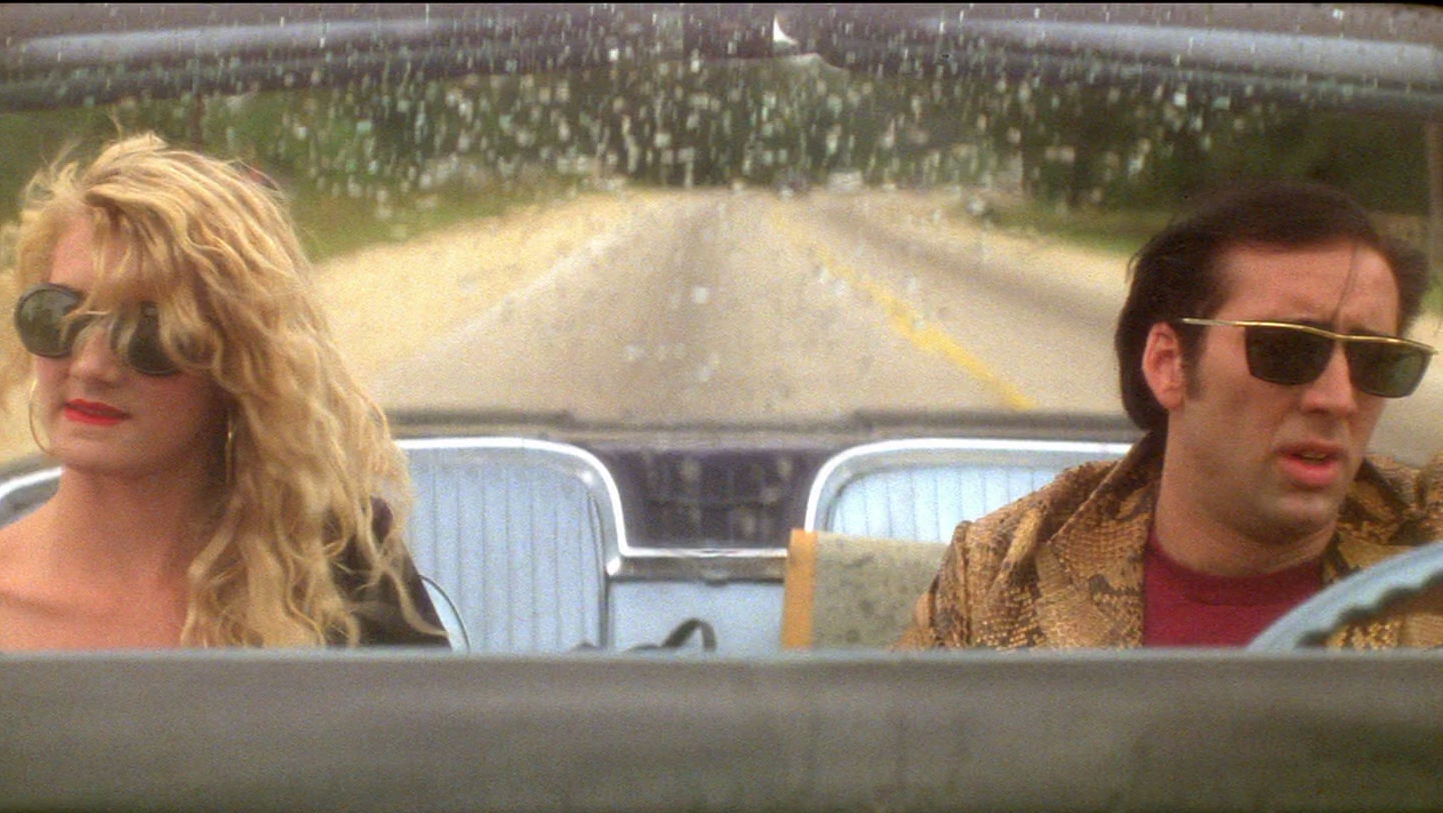
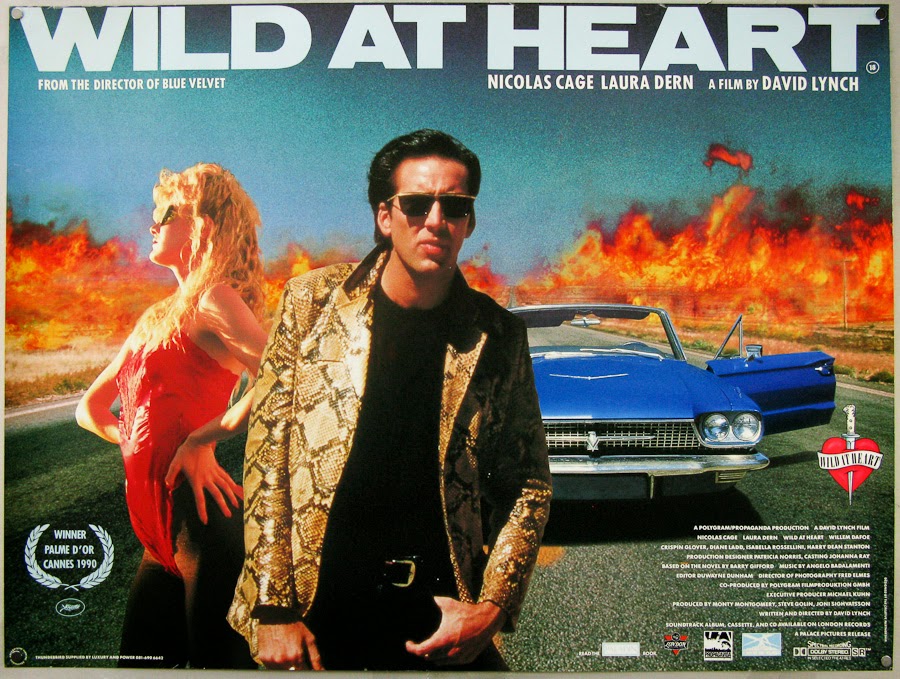
Laura Dern and Nicolas Cage in the hideously empty Wild at Heart

Director: David Lynch

Cast: Nicolas Cage (Sailor Ripley), Laura Dern (Lula Pace Fortune), Diane Ladd (Marietta Fortune), Harry Dean Stanton (Johnnie Farragut), J.E. Freeman (Marcello Santos), W. Morgan Sheppard (Mr Reindeer), Willem Dafoe (Bobby Peru), Crispin Glover (Dell), Isabella Rossellini (Perdita Durango), Sherilyn Fenn (Car Accident Girl), Sheryl Lee (Good Witch)

David Lynch is an eccentric film director. I think that is a fair comment. At his best, he combines his “view askew” look at the world with genuine comedy and pathos. At other times, his films disappear down a self-reverential rabbit-hole that seems designed to frustrate and alienate the viewer. Wild at Heart is the latter type of movie.

Sailor Ripley (Nicolas Cage) is released from prison after his self-defence response to a knife-wielding man at a party turns into a homicidal fury. The knifeman may (or may not) have been hired by Marietta (Diane Ladd), mother to Sailor’s “girl” Lula Pace Fortune (Laura Dern, Ladd’s real life daughter) a woman with a sexually troubled background of abuse, who is in the middle of a sexual awakening. Together they go on a road trip to – well just kinda to get away I guess.

I’ve got to confess I really hated this movie. I only stuck with it to the end, because (a) it wasn’t that long and (b) I wanted to have actually watched the whole thing before I laid into it in this review. This film is the absolute worst elements of Lynchian oddness and gore mixed with pop-culture references to the 1930s through to the 1950s.

In fact it’s a film that is so totally obsessed with these two things that there is literally no room in it for any real plot or emotion. Instead it’s full of pointless, smug and irritating visual and audio quotes from Elvis to The Wizard of Oz, and empty characters played by showboating actors giving massive performances under ostentatious make-up, all to hide the fact that the film (for all its bombast) is a shallow as a puddle. It’s a horrible piece of intellectual fakery, that pretends to be about deep profound themes about love and death but tells us nothing about them. In the end it gets more delight from Dafoe blowing his head off with a shotgun than it does from anything to do with its so-called themes.

Lynch piles on the violence for the sake of it, all in the name of parodying the aggression that lies under his apple-pie surface Americana. This worked in Blue Velvetbecause the contrast was so great, and the characters (for all their larger-than-life qualities) felt real. Here, everything feels artificial. A constant visual image of fire and flames runs through the story – it’s a reference back to the murder (it’s not a surprise to say) of Lula’s father (burnt alive on the orders of his wife it turns out). This adds nothing at all to our understanding of anything – particularly since Marietta is the most obviously corrupt and hypocritical character from the start, drawing attention in such a ham fisted way to her past misdeeds, and the impact of them, hardly seems necessary.

The film is full of signs of man’s inhumanity – the brutal shootings, the torture of Harry Dean Stanton’s luckless PI (toned down considerably from the original cut), Sailor’s brutal murder at the start, a road accident peopled with twisted bodies – but it’s all so bloody obvious. We get it David, the world is bad and people suck. Just because you’ve shot this with some tricky angles and carry it across with a tongue-in-cheek delight at your own naughtiness doesn’t make this a masterpiece. It just highlights the shallow emptiness you are peddling as art.

The rampant self-indulgence spreads to the actors. You’d think Cage would be perfect for Lynch right? Wrong. His hideously self-conscious performance of overt oddity here just makes his performance all the more unbearable. Diane Ladd gives the sort of performance many call brave, but is really just about shouting and smearing lipstick all over her face. By the time Willem Dafoe turns up with ludicrous teeth, ripping into the scenery, you’ve lost all patience. The only person who emerges with any credit is Laura Dern, who at least invests her characters with some level of humanity and sweetness. Everyone else (everyone!) is a stock cartoon drawing.

But even Dern is cursed with Lynch’s awful sexual abuse sub-plot, which is genuinely offensive in its trite shallowness and in its suggestion that having sex with your uncle as a young teenager will turn you into a real goer later in life. Did he really deal with the same themes with such sensitivity in Twin Peaks? As for the so-called romantic happy ending – it’s unearned in any way by the film, which has treated the subject with scorn. The film’s dark wit isn’t even particularly funny – everything is so dialed up to eleven, that all the comic beats get smothered in over acting or over stylised dialogue and action.

Wild at Heart won a flipping Palme d’Or (to be fair the announcement was booed). But don’t be fooled. This is a film pretending an intellectual depth it never gets anywhere near to achieving. It’s a horrible, pathetic, cruel and empty film that thinks it’s a satire on the dark heart that lies at America’s soul. It’s not. It’s just a cartooney, self-important lecture which mistakes oddity and eccentricity for heart. Lynch is a talent for sure, but here his talents are sorely misdirected into indulgent, childish emptiness and faux profundity. Don’t watch it.

The Duchess (2013)

Keira Knightley in lusciously filmed, but shallow The Duchess

Director: Saul Dibb

Cast: Keira Knightley (Lady Georgiana Devonshire), Ralph Fiennes (Duke of Devonshire), Hayley Atwell (Lady Bess Foster), Charlotte Rampling (Countess Georgina Spencer), Dominic Cooper (Earl Grey), Aidan McArdle (Richard Brinsley Sheridan), Simon McBurney (Charles James Fox)

My main memory of The Duchess is seeing the trailer while watching Mamma Mia in the cinema. The first shot was Keira Knightley’s face, met with an overwhelming groan from the female-dominated audience. There is something about Knightley that seems to get people’s goat.  If you’re one of those who struggle to warm to Knightley as a performer, this probably isn’t going to be the film that changes your mind.

In the late 18th century, Lady Georgiana (Keira Knightley) marries the absurdly wealthy, but older and duller, Duke of Devonshire (Ralph Fiennes). She wants a meeting of minds. He just wants an heir. The marriage flounders – and gets worse when the Duke in turn starts an affair with Lady Bess Foster (Hayley Atwell), Georgiana’s closest friend. As her home-life becomes a menage-a-trois, with the Duke treating both women as wives (with their agreement) she begins to experience deeper feelings for the dashing Charles Grey (Dominic Cooper), an ambitious politician.

So, first things first, Keira Knightley. She does a decent job. She’s pretty good. But, rather like Jonathan Rhys Meyers, it feels like her best is a 7/10 performance. She’s dedicated, she’s really striving here – but always feels like someone trying rather than truly natural and unforced. She brings Georgina’s glamour and does a decent work of her bewildered hurt, but she (and the film) don’t communicate her intelligence and political activism, so she never really develops as a character. You can’t really put your finger on her doing anything wrong as such, it’s just a performance where you always see the acting, and never feel the naturalism.

It’s particularly noticeable here as her two supports – Fiennes and Atwell – are such accomplished performers. In many ways, the film would have been improved with Atwell in the lead. As it is, as the third corner of the triangle, she has just the right mix of guilt, warmth and mercenary self-interest. In a terrific low-key performance, Fiennes manages to turn a character the film always wants to push into being a bullying villain into a man who feels alive, real and often understandable if not (whisper it) even rather sympathetic.

The film is desperate to turn Georgiana into a suffering victim, and to push Devonshire into the role of a domestic despot. But in fact, most of Devonshire’s actions are quite forward thinking: he adopts and cares for his bastard daughter (conceived pre-marriage), he saves Bess’ children and cares for them as his own, he condones a quiet affair from his wife, he treats her with the utmost public respect and allows her to spend time with her son by another man (although this is relegated to a caption at the end). The only problem is he clearly doesn’t love her, while he clearly does love Bess. Hardly able to believe he wasn’t as besotted with Georgiana as the film is, the film works overtime to try and turn someone a little dull, with some surprisingly generous views, into a monster.

In order to make it categorical who is “right” and who is “wrong”, the film chucks in a gratuitous marital rape scene that feels so out of character and over-the-top, it actually makes you step out of the film. Did it really happen? There’s no evidence of it, and it flies in the face of virtually every other action the Duke does in the film. It’s probably also in there to further contrast Georgiana’s joyless couplings with the Duke against her passionate rumpy-pumpy with Dominic Cooper’s Charles Grey (here re-imagined as a penniless adventurer and radical, rather than the son of an Earl) Like Knightley, Cooper has the glamour and dash for the high-class Mills and Boon plot the film is peddling, but fails to convey Grey’s intellect and political ideals.

The film has deliberate echoes of Princess Diana throughout – the crowded marriage, the glamourous outsider marrying into a great family, the sense that her dashing public image made him look like a dullard. And like much of the public reaction to Charles and Diana in real life, the film can’t compute why Devonshire didn’t love this public idol, overlooking the fact that they shared no interests and had nothing in common. Many of Georgiana’s negative aspects are downplayed to help this – the gambling addiction that left her bankrupt is no more than high spirits here.

Basically this is a film interested in style over substance, aiming to turn a fascinating story about a menage-a-trois into something very straightforward and traditional about a husband who treats his wife badly. Now the style is great – Rachel Portman’s score is brilliant, the photography luscious, the make-up and costumes gorgeous – but the substance often isn’t there. The idea of Georgiana’s celebrity is only briefly touched upon, and her intellect barely at all.

Not content with airbrushing out her less appealing characteristics, even her positive ones are done few favours by this candyfloss depiction of her life – one of the first women to take a prominent role in the British political scene, a published writer of novels and poems, and a famously charismatic social figure, here she is little more than a mannequin on which to hang elaborate period hairstyles and costumes, who talks about being a free-spirited intellectual without doing anything that corresponds with these interests.

It shoves in dramatic events which feel out of step with both the characters and the events to push the film towards being as straightforward as possible. Knightley does a decent job – and Fiennes is extremely good as the Duke – but it settles for being something safe and traditional rather than a really interesting look at the cultural moods of the time, or the complexities of the real people it claims to portray. It shares it’s subjects beauty, but reduces her to blandness.

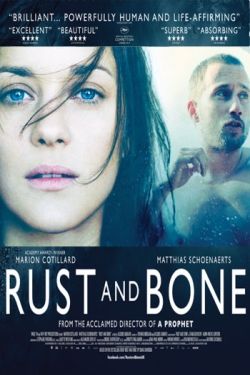
Rust and Bone (2012)


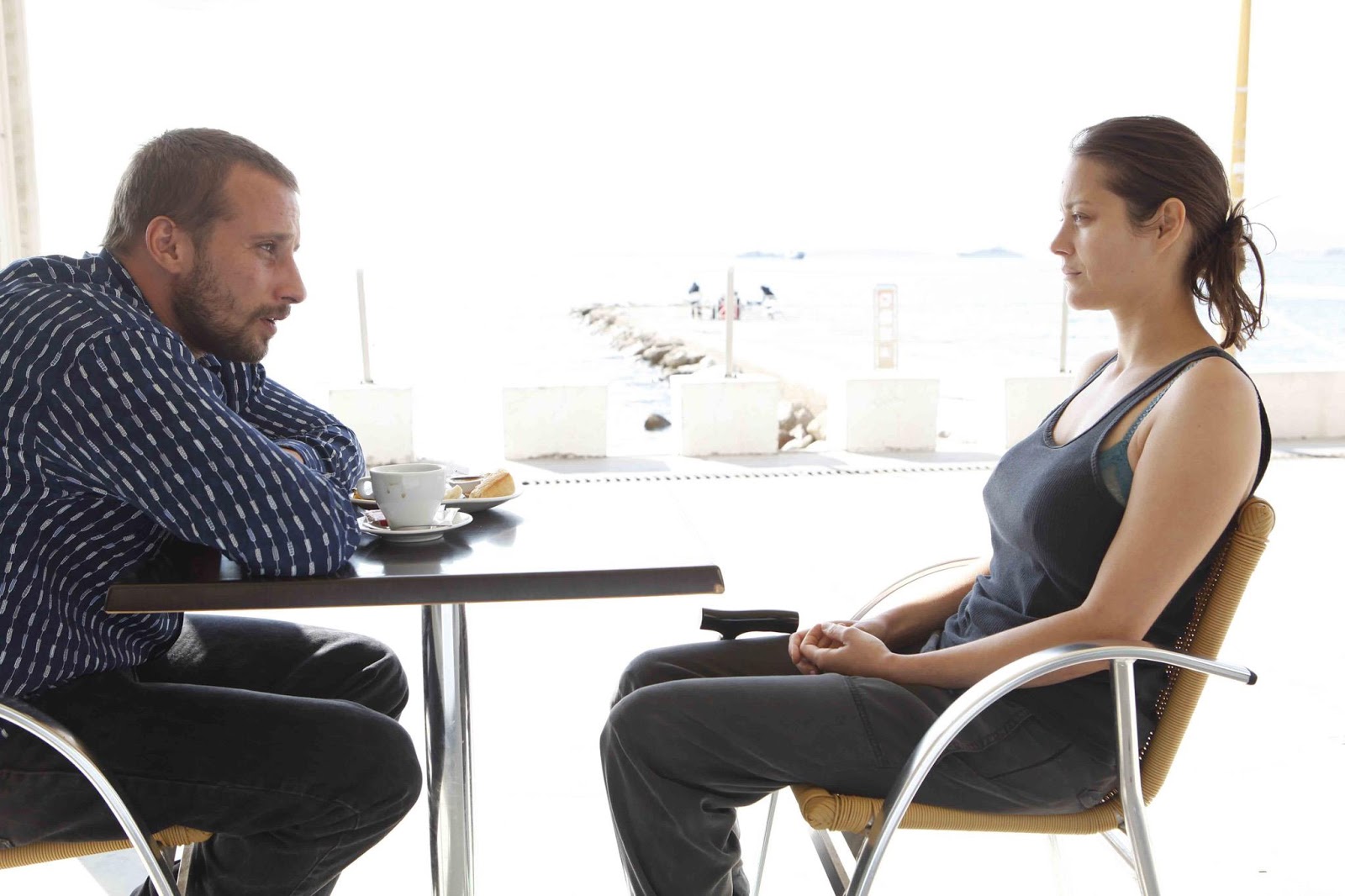
Matthias Schoenaerts and Marion Cotillard in an unusual romantic drama

Director: Jacques Audiad

Cast: Marion Cotillard (Stéph), Matthias Schoenaerts (Ali), Armand Verdure (Sam), Corinne Masiero (Anna), Céline Sallette (Louise), Bouli Lanners (Martial)

Audiad’s films combine cinematic artistry with profound, sometimes elliptical, character studies that provoke great work from talented actors. Rust and Bone is no exception.

It’s the plot of a melodrama, staged like social-realism. Written down it sounds like the purest Hollywood schlock: crippled killer whale trainer Stéph (Cotillard) enters into a friendship that grows deeper with would-be kickboxer Ali (Schoenarts), who has a troubled relationship with his 5-year-old son. But the realistic portrayal of the pain of losing your limbs (in a scene of raw intensity from Cotillard) and Ali’s troubled homelife, penchant for casual sex and occasional resorting to violence when frustrated, pegs the film style farcloser to a hard-edged Bicycle Thieves. The film also has a lyrical poetry about it, as their relationship gently develops from friends with benefits to genuine feeling, which stops it from feeling gritty or hard-edged.

The film’s main strength is the brilliance of its two leads. Cotillard is outstanding as a passionate free-spirit whose entire world ends overnight. Her expressive face carries a host of confused feelings which shift and reform across her like a human kaleidoscope. Stéph’s vulnerability is married with a great strength of character, but Cotillard avoids many of the clichés of movie paraplegics by making her a woman who adapts without anger to her new condition. Instead, after overcoming depression, Stéph is looking actively (and with a curiosity) for something new to fill her life with.

Cotillard is so wonderful in the role, it’s very easy to overlook Schoenaerts’ skilful underplaying and Brandoish physical mastery. Ali is, I’ve got to be honest, a hard character to like – selfish, childish, in many ways thoughtless, blunt and fixated on himself. He’s also a terrible dad. Not malicious or cruel, just easily bored and frustrated with his kid. This frustration appears with anyone who doesn’t react the way he wants – “You’re so annoying!” he whines at both Stéph and Sam. Despite this, Schoenaerts’ is the heart of the movie. The film is his story, and he makes a difficult character engaging enough to carry the audience with him.

Rust and Bone is a film constructed around brilliant scenes and striking moments. In a wonderful sequence, Stéph repeats the arm signals she used to train the whales: at first she seems sad, then a warmth of enjoyment crosses her face. It’s the prompt for her to revisit the zoo, but the visit seems bittersweet: we see hugs with her friends, but Audiad cuts out the dialogue, adding to Cotillard’s own confused feelings about her return. Later she visits the whale that crippled her. Her mood here (with the camera to her back) is hard to read – is she forgiving the whale? Is she saying goodbye to this part of her life? Moments like this work so well because of the brilliance and humanity of the performances of both leads and Audiad’s patience and control as a filmmaker.

Audiad packs this beautiful film with moments like this. I particularly liked the bookend images he uses for each act. Each sets up the act thematically, from a bloodied tooth spinning on a pavement to the cover of a transit van flapping in motion. Audiad bathes the film in a series of cool blue colours, interspersed with flashes of light at moments of suggested revelation. He also has the discipline not to belabour the points of scenes or hammer home the feelings of characters (sometimes leaving you wanting more definition for the emotions they experience).

For a film immersed (to a certain degree) in a social realist world, there are odd gaps in logic: after throwing Ali out of her home (at gun point!) over his serial disregard for Sam, his indirect responsibility for her losing her job and his stroppy temper, would Anna really happily allow Sam to visit him a few months later? The disappearance of Stéph for much of the final reel of the film also pulls the focus from the central relationship and makes the final ending both rather sudden and slightly pat, out of step with the rest of the movie.

Audiad does bring a degree of engaging ambiguity to the story. The relationship between Ali and Stéph is intriguingly hard to define. She seems drawn to him for his lack of guile and his treatment of her disability with a matter-of-factness free of pity or embarrassment (qualities that linger around many of her other interactions). However, shifts in her character over the course of the film are deliberately kept low-key and open-ended, allowing moments where she surprises herself and the audience with the strength of her feeling. Similarly, the lack of depth in Ali’s personality makes his emotional development halting and discordant – he is attracted to her physically, but which qualities in her cause those feelings to deepen? It’s not immediately clear watching it – and I suspect many viewers would have different opinions from watching this curiously inscrutable film.

It’s a thoughtful film, but somehow never quite as moving as you expect. I think a lot of your connection with it depends on how much you feel Ali deserves redemption, or if you can forgive the constant stream of selfish and thoughtless things he does. I’m not quite sure I did. Similarly Stéph remains, for all the expressive humanity Cotillard brings to her, strangely unknowable.

That’s partly the problem with the film. Despite its beauty, it’s a little too enigmatic to be completely engaging. Wonderfully shot, and strangely haunting as it is, I think this is one every viewer will have a personal reaction to. I can imagine many would be deeply moved by its blue-tinted mystery and fragile dissection of damaged souls. For me it didn’t quite have the impact I think the film needs, and I didn’t feel this love story quite coalesced into a something truly profound in itself. It’s a beautifully made and intelligent film but not one I fell in love with – though I can imagine many people have.

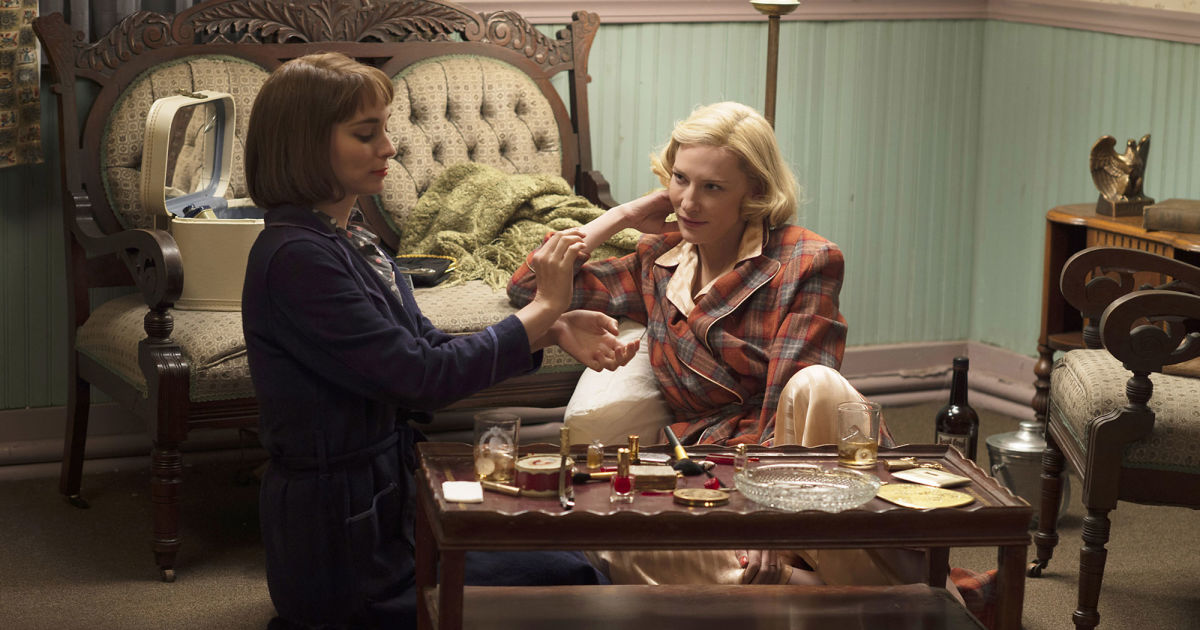
Carol (2015)


Rooney Mara and Cate Blanchett in a moving dance of love and romance

Director: Todd Haynes

Cast: Cate Blanchett (Carol Aird), Rooney Mara (Therese Belivet), Sarah Paulson (Abby Gerhard), Kyle Chandler (Harge Aird), Jake Lacy (Richard Semco), John Magaro (Dannie McElroy), Cory Michael Smith (Tommy Tucker), Carrie Brownstein (Genevieve Cantrell)

It’s the way of things that gay love-stories in Hollywood are invariably relegated to a sub plot – often one that has a certain tragical element to it. This is not the case here in Todd Haynes’ superlative romance, which places a lesbian love story at its centre, sensitively building the characters and romantic journey between them.

Therese Belivet (Rooney Mara) is a lost department store worker, drifting through life. One Christmas, working on the toy stall, she recommends a toy for the daughter of socialite Carol Aird (Cate Blanchett). A spark of attraction between the two is immediately apparent, and Carol invites Therese first to dinner, then to spend an evening together and finally a Christmas road trip across America, during which their attraction grows and deepens into a flourishing love.

This wonderful love story, almost a twist on Brief Encounter, is a brilliantly done, extremely engrossing and moving romantic film, a film that manages the rare feat in Hollywood movies of not making a homosexual relationship something that requires narrative punishment. Haynes’ luscious 1950s filming style, stressing the aesthetics and manners of the era, combines brilliantly with a subtly murky photography style that darkens and lightens at different points to create an immersive fairy-tale quality. It’s a perfect tapestry for a deeply caring and sensitive story, anchored by a superb script and wonderful performances.

It has now got to the point where it is axiomatic to say Cate Blanchett gives a wonderful performance – she is, after all, one of the best actresses in the world right now. She is quite simply perfectly cast as Carol, her features having the flexibility to appear both cold and distant and soft and caring, a switch she is able to make with the slightest of gestures. Her patrician manner is deconstructed brilliantly. Her character is initially established as an almost predatory figure, a determined and manipulative woman; it’s only over the course of the film that this persona is slowly taken apart, revealing waves of emotion and pain from years of denial, loneliness and a sense of being trapped. Each scene slowly prompts us to reassess and reevaluate her character, and Blanchett handles this journey with astounding skill, revealing a hinterland of pained, self-doubting isolation and desperation to experience real love behind her cool and confident exterior. It’s a performance of phenomenal skill and emotional force.

It’s matched brilliantly by Rooney Mara as the object of Carol’s affections – and it must be said at the very least a co-lead of the film. Therese is a woman sleepwalking through life when we first see her, trotting through the motions of her interactions with others – a clear void in her, waiting for something to happen to her, but clearly with no idea of what that might be. Similar to Blanchett, Mara’s gentle and sensitive exterior deepens over the course of the film as she becomes more assertive to those around her, more of a determiner of what she wants from her own life. Mara’s soulful eyes and gentle face make her a perfect audience surrogate, creating a character whose feelings, doubts, anxieties and growing confidence we become immersed in. The film is in many ways her story, and Mara’s expressive gentleness is vital to our investment in the story.

The road trip at the heart of the movie’s plot is a charming, lyrical dance between two people juggling an unspoken attraction: one of them on the edge of all times of saying it, the other drawn towards an attraction she is still trying to understand and express. Haynes perfectly captures the small playful moments of first love that pepper these scenes, the camera intimately placed to make us part of this growing partnership of equal minds and hearts. Slowly they grow physically closer – both in their ease of body language, and through their slow progress towards sharing hotel rooms and finally (in an achingly romantic scene) a bed.

It’s a film about romantic longing between two people, the instant attraction. Therese’s first glance of Carol is across a crowded room, with the camera panning past Carol in a POV shot and then returning to her, before cutting back to Therese, now seemingly alive with an attraction she doesn’t quite understand. The Brief Encounter structure of the film is established with the film opening with Carol and Therese’s (possible) last meeting in a dinner. We see their interrupted conversation leading to Carol’s departure, leaving after touching a hand on Therese’s shoulder – the camera lingering on Therese’s back and her unseen reaction (and contrasting it with a meaningless similar touch from a male friend). When this scene is replayed later, we see it more from Carol’s perspective – and her pulsating emotion and longing.

The reason these scenes work so well is that the film continually shows Carol and Therese struggling to hide their growing attraction in plain sight, to maintain the balance between expressing their feeling and keeping a plausible deniability. This feeling grows because the film has the patience to take its time with building this relationship– and because we are aware of Therese’s feelings earlier than she is.

The film’s sensitivity extends to the sympathy it feels for all its characters. As useless as many of the men in the story are, they are confused, distressed or lonely rather than malicious or cruel. Carol’s husband Harge could have been a bullying monster, but he actually comes across as a frustrated and deeply hurt man, who understands on some level his wife’s sexual preferences, but is unable to fully comprehend the implications of this. On paper it’s a thankless part, but Kyle Chandler is superb, his Mad Men features perfectly suited to the role of floundering masculine figure. Many of Therese’s would-be suitors are similarly drawn reasonably sympathetically, however laddy, over-keen or dull they may be – Haynes’ film has an understanding that they are products of their time. In a lovely scene Therese talks about homosexuality with one of her male suitors, who can barely countenance its existence, as if she was talking about the man in the moon.

Haynes’s mastery of the aesthetics of the material is present throughout. Haynes increases the feelings of being trapped or surrounded by a number of shots through windows, using mirrors, from the other side of doors – divides that stress the characters’ sense of being trapped and enclosed in their lives. He also carries across just a small teasing touch of the melodrama of 1950s films – though I would argue this is no way a melodramatic film – with a gun making a deliberately misleading appearance, and a few beats that briefly suggest the film is heading in an entirely different direction.

Carol is a wonderful, soulful and entrancing film. It’s about two people showing each other hidden depths about themselves, uncovering truths and building each other’s capacity for love and ability to admit and understand their feelings. It makes this a tender and endearing film, with two characters whose fates we become completely involved with. It also avoids passing any form of judgement over any of the characters. Filled with subtle moments, open to interpretations (even their first meeting is full of code, from the recommendation of a non-gender-conforming train set to Carol’s gloves left invitingly on the counter) that constantly ask us to review how open we feel the characters are being with themselves and others. With brilliant performances by Mara and Blanchett (backed by Chandler and a very sensitive performance from Sarah Paulson as Carol’s former lover), this wonderful film is both profoundly moving and very uplifting.

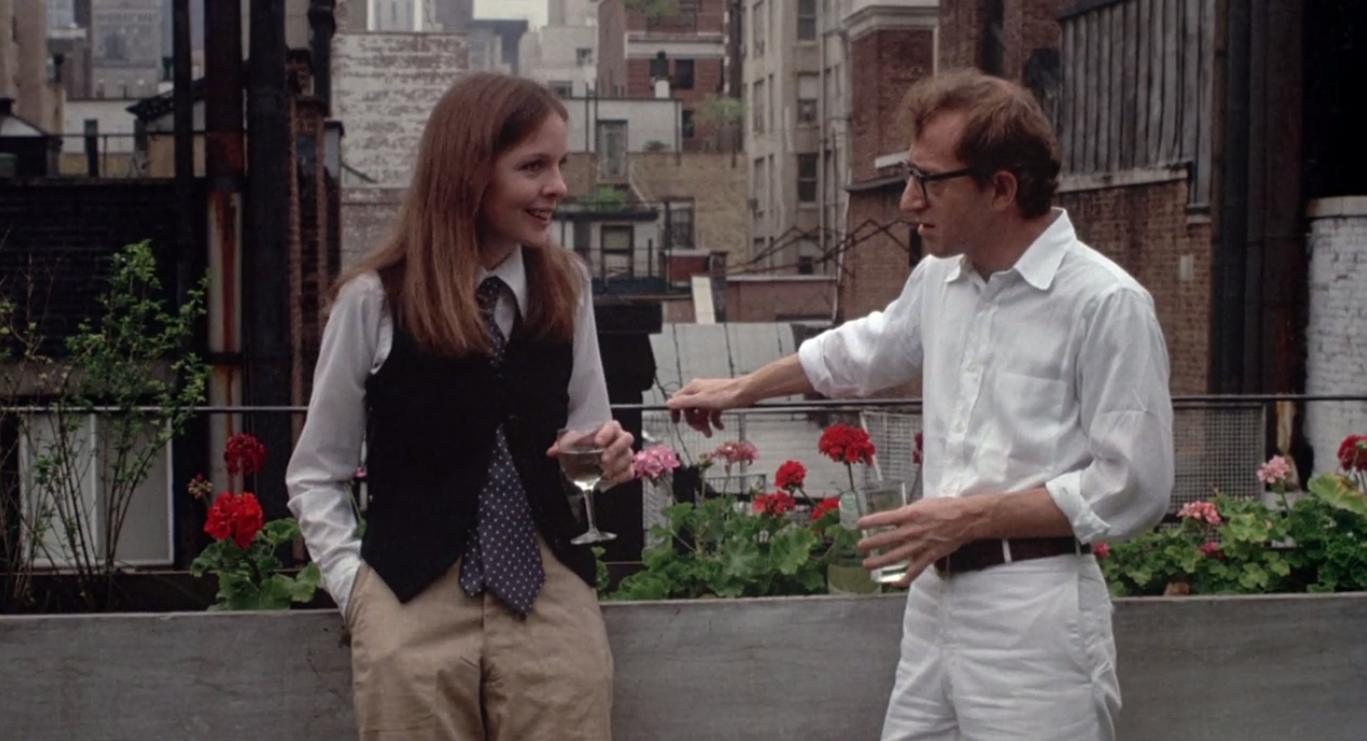
Annie Hall (1977)


Diane Keaton and Woody Allen on the quest for love and romance. How much of this is autobiographical eh?

Director: Woody Allen

Cast: Woody Allen (Alvy Singer), Diane Keaton (Annie Hall), Tony Roberts (Rob), Carol Kane (Allison Portchnik), Paul Simon (Tony Lacey), Janet Margolin (Robin), Shelley Duvall (Pam), Christopher Walken (Duane Hall), Colleen Dewhurst (Mrs. Hall), Donald Symington (Mr. Hall)

Why is love so damned difficult? And, as it is, why do we keep setting ourselves up for a fall with it? Why are we all such relationship addicts? These are questions that Woody Allen tackles in Annie Hall, the film that elevated him from comedian to Oscar-winning cinematic super scribe (he won three Oscars for the film – Picture, Director and Writer). Does it deserve its reputation? You betcha.

Alvy Singer (Woody Allen) is a neurotic New York comedian (is it any wonder he was seen as synonymous with Allen himself?), twice divorced and incapable of maintaining a relationship. He meets Annie Hall (Diane Keaton, Allen’s ex-girlfriend playing Allen’s character’s eventual ex-girlfriend, using Keaton’s real name as a character name – confused?) over a game of mixed doubles tennis, and their immediate chemistry and shared sense of humour leads to a romantic relationship. Their only problem? Their innate neurotic self-analysis that stands forever in the way of maintaining a relationship.

Annie Hall is a deliriously funny film – I actually think it might be one of the funniest I have ever seen – with an astounding gag-per-minute hit rate. Allen uses multiple techniques to deliver gags: commentary, voiceover, celebrity cameos, an animated interlude, “what they are really saying” subtitles, flashback, direct to camera address – and the blistering parade of delivery styles never seems jarring, but ties together perfectly. Large chunks of the film are inspired high-wire dances where a punch-line is a few beats away, and the film never settles into a style or becomes predictable. So many of the jokes have become so familiar due to their excellence that it’s almost a shock to see them minted freshly here – and the fact they all land so effectively is a tribute to the performers. 

In many ways, Annie Hall is a series of sketches loosely tied together with an overarching plot line. In fact Alvy’s constant commentary on events (a brilliant playing with conventional cinematic storytelling form), add to the feeling this is in some ways an illustrated stand-up routine by a gifted self-deprecating comedian. The material seems so synonymous with Allen’s personae (and the characters of Alvy and Annie so close to what we know about the actors who play them) it’s very easy to see the whole film as auto-biographical. Not that there’s anything wrong with that – particularly as the hit rate of the gags here is so phenomenally high. 

But what makes this film such a classic is that it is more than a collection of excellent jokes. Allen is also telling a story about romance – or rather or need for romantic connection, and how easily we can sabotage or undermine this through our own mistakes, errors and (above all) neuroses. Alvy Singer is almost chronically incapable of embracing happiness and contentment, with every good thing merely an interlude between crises. Annie is the most promising opportunity he has had for long-term contentment – and still his neurotic self analysis gets in the way. As such the film is about the quest for love – and the title Annie Hall(not the character) is a metaphor for this – to Alvy Annie Hall represents the perfect relationship, something he (and indeed she as well) will never accomplish. 

The film perfectly captures the dance of first meeting – the shy, stumbling early conversations of people who are attracted to each other but are both trying too hard (the subtitles here are a brilliantly funny choice – we’ve all thought to ourselves “what am I saying?” in that situation!). There is a wonderfully playful scene where Alvy panics over the cooking of lobsters – clearly playing up for Annie’s delighted engagement in it, as she photographs his distress. These photos appear in the background, framed on their wall, as their relationship breaks up relatively amicably later. At another point, Alvy attempts to recreate the same moment (same location, lobsters again) with a new girlfriend – only to be met with unamused, annoyed confusion. It’s a perfect little vignette that captures the magic of chemistry – and the difficulty of finding it or holding onto it.

Because what is striking is that Allen allows the relationship to break apart surprisingly early. Roger Ebert has written about Annie almost “creeping into” the film – and this is true. She is only briefly seen in the first 25 minutes (the first third of the film almost!) as the focus is on Alvy’s discussion of his background and childhood, and his past romantic failings and sense of disconnection from people. Then very swiftly after its establishment, the relationship is past its prime, with both parties finding it hard to keep the interest going. The second half of the film follows them amicably drifting apart – meaning this is probably the most romantic film about a long break-up ever made.

The film has a beautiful little wistful coda of Alvy and Annie meeting outside a cinema, each with new partners. In long shot we see them engage in an animated and engaged conversation while their new partners look on, nervously smiling. The magic link between them hasn’t faded away, and their importance to each other, and natural chemistry, hasn’t changed – but, the film seems to be saying, their natures work against them. It’s one of several touching moments in the film that demonstrate the heart that underpins the jokes. After their first break up, Annie calls Alvy round to get rid of a spider in the bath. He does so with comic incompetence, then in a still medium shot he comes to Annie in the corner of the frame sitting on the bed. They reconcile and then embrace tenderly – it’s a beautiful, moving, gag-free moment, all the more effective as its reality is contrasted with the humour throughout the rest of the film.

The film is a full of tender and real moments like these in between the jokes: it’s a nearly perfect balance between them. The parts are perfectly written for the actors: Allen is so brilliantly good here as Alvy that the character has essentially become the public persona of Allen (and allegedly his desire to never make a sequel was linked to his unease with the association between Alvy and himself). Diane Keaton (her real surname being Hall and her nickname Annie) also had this part perceived as a loose self portrait (her past relationship with Allen not helping). Truth told, it’s a very simple part and Keaton actually has to do very little in the picture beyond react (the focus is so strongly on Alvy) and deliver the role with charm – but she captures the sense of an era shift, a woman stuck between transitioning from the hedonistic 60s to the ambitious 80s, an ambitious free-spirit. The Oscar for the role was generous, but not undeserved.

For all the film’s emotional understanding and complexity, it’s the jokes though that you will remember, and they are glorious: Alvy’s schoolfriends telling us what they are doing now as adults; Alvy’s description of masturbation; the accident at the cocaine party; Christopher Walken’s monologue on driving; the puncturing of the pretention of a loud-mouth know-it-all in a cinema queue – it’s a blistering array of comic genius and it will have you coming back for more and more. It’s Allen’s most garlanded movie and it’s certainly the best balance he ever made between “the early funny ones” and his “later serious ones”. It’s simply shot, but told with heart, feeling and emotional intelligence and with dynamic, comic wit – it’s one of Allen’s greatest movies.