Category: Romance

Letter From an Unknown Woman (1948)

Letter From an Unknown Woman (1948)

Lusciously filmed melodrama that might also be an exploration of dangerous obsession

Director: Max Ophüls

Cast: Joan Fontaine (Lisa Berndle), Louis Jourdan (Stefan Brand), Mady Christians (Frau Berndle), Marcel Journet (Johann Stauffer), Art Smith (John), Howard Freeman (Herr Kastner), Carol Yorke (Marie), John Good (Lt. Leopold von Kaltnegger)

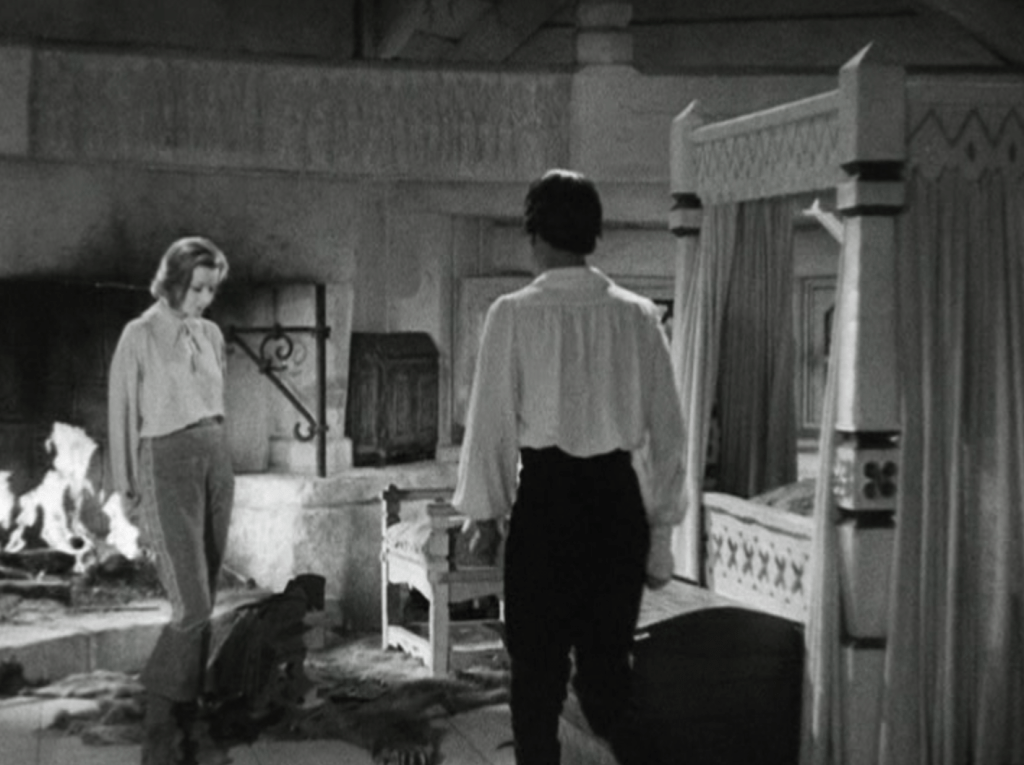
Faded pianist and lothario Stefan Brand (Louis Jourdan) plans to skip town in 1920s Vienna before his duel with a reputed crack-shot. He’s packed up and ready to go, but halts when his butler passes him a letter from a woman unknown to him that opens “By the time you read this letter, I may be dead”. The writer is Lisa Berndle (Joan Fontaine), a young woman who has loved Stefan since first seeing him when she was an impressionable 15-year-old living in his apartment block in 1900. All her life she has shadowed Stefan and twice they have met – once ten years before, spending a few romantic days together and then again recently under another name – but Stefan has no idea who she is.

Adapted from a Stefan Zweig short story, Letter From an Unknown Woman becomes a richly elaborate display of film-making from Max Ophüls, a show-case for his gorgeous camera work and luscious sense of visual theatre. This is classic melodrama, the characters thrown together after years apart by chance and contrivance, heightened emotions guiding every scene, with the suspense hook at all times of wondering who will see clearly first: will Stefan recognise this woman who has loved him from afar all his life, or will Lisa acknowledge that what she wants from Stefan, a full recognition and genuine return of her feelings, he is unable to give?

It makes for perfect material for Ophüls almost-unmatched visual sense. Letter From an Unknown Woman is packed with the sort of elaborate, carefully planned tracking shots and fluidic camera movements Ophüls made his own. From the start, the camera roves upwards, following the young Lisa as she excitedly runs up a spiral staircase to creep into the apartment of Stefan. There is a superbly handled tracking shot through the street of Venice, as a mid-twenties Lisa walks with a soldier would-be-suitor whose proposal she will immediately reject. And, most triumphantly of all, a tracking shot through a grand society theatre, that roams past crowds of hoi-polloi with Lisa, before focusing on her reaction as she glances Stefan from a distance across the hall.

It’s a visual richness Ophüls triumphs at and he uses it to give an intensity to several scenes, in particular the lost opportunity weekend Lisa spends with Stefan. This is marked by a beautifully framed late-night café dance, before a walk full of romantic lingering in a nearly-abandoned fairground. What’s superb about what Ophüls does with these sequences is to make them look romantic while also suggesting a sort of broken decadence to them (the locations, like the slightly faded café with its bored band, are always slightly past their best). There is a faded grandeur in Letter From an Unknown Woman, with everyone clinging to something they’ve lost or never had, hopes of love or artistic success that are never quite going to happen.

It’s easy to see Letter from an Unknown Woman as a traditional romance of the loyal loving woman, who sticks with her love for a man for better-or-worse. But, particularly today, it’s also clear that the film walks a fine line where its possible to see its lead character as both richly romantic and a delusional, obsessive border-line stalker, fixated on a heartless seducer. Is love a force to be praised at all times, or a destructive force that prevents someone from maturing? For all the richness of the photography and music, it’s hard not to think it’s the latter. And I think Ophüls lets this play on the edges, the camera lingering at points on Fontaine’s face full of obsessive self-sacrifice monomania.

It make for a richly complex role for Joan Fontaine, playing the young Lisa from age 15 to 35, taking her from doe-eyed, love-struck teenager to a woman seasoned by years of regrets, obsessively clinging to has last chance of finding a love she has spent her whole life pining for. Fontaine is giddy, excited but that glimmer of obsession is always there. Ophüls presents her at one point standing, stalker-like, outside Stefan’s apartment, her eyes craning up for just a glance of the object of her affection. In his presence, she’s breathless and excited but also with a touch of pain and desperation, longing for him to give her some sort of validation after years of dutiful, unremarked-on love. Fontaine manages to keep Lisa vulnerable and sympathetic, even as she goes about her life with an obsessive self-destruction, discarding other suitors, spending years working a menial role in a dress shop on the off-chance it might lead to an encounter with Stefan.

Self-destruction is what this ‘relationship’ brings to Lisa, a woman who stubbornly refuses to move on in her life from the decisions and emotions she first experiences as a teenager and will discard attentive lovers, husbands and even children all to the chance of finding a few moments of bliss with the object of her affection. She does this with a real sense of fragility, a longing that keeps her vulnerable, but also something that keeps her from really living her life. Particularly since Stefan – and the film uses Louis Jourdan’s cool, detached arrogance to great effect – emerges as a heartless roué, who thinks only of the immediate and destroys his own promise in a hedonistic clinging to the moment rather than really building something.

For all its luscious romance, Letter from an Unknown Woman carries this air of self-destructive futility about it. Is cradling a teenage obsession healthy for Lisa? Especially as its object is scarcely worthy of the effort? After all, Stefan meets and seduces (as he sees it) the same woman twice several years apart without ever joining the dots up in his head- repeating the same smooth pick-up lines both time. It doesn’t stop Lisa, until the very end, lighting up with a sort of youthful joy you imagine she’s not felt at any other time But Ophüls is using it to build towards a moment where Stefan may perhaps finally remember Lisa – and even more strikingly may realise the shallow emptiness of his whole life and the lost opportunity of being genuinely loved by someone.

That feeling exists, even if you feel (as I do) that Stefan is the unworthy figure of an emotionally-immature woman’s unhealthy obsession. Perhaps Lisa’s life would have been better and happier if she had moved on, as we all do, from our first crushes. But Letter from an Unknown Woman also celebrates a sort of strength in this, by contrasting the morally pure and consistent Lisa with the shallow and mercenary Stefan. His flaws are obvious but, in a way, they also serve to cement Lisa’s own innocence and vulnerability – and add to the impact as Stefan realises the path not taken.

Wheel of Fortune and Fantasy (2021)

Wheel of Fortune and Fantasy (2021)

Low-key, beautifully made short-story anthology, crammed with wonderfully little touches

Director: Ryusuke Hamaguchi

Cast: Kotone Furukawa (Meiko), Ayumu Nakajima (Kazuaki Kubota), Hyunri (Tsugumi Konno), Kiyohiko Shibukawa (Segawa), Katsuki Mori (Nao), Shouma Kai (Sasaki), Fusako Urabe (Moka Natsuko), Aoba Kawai (Nana Aya)

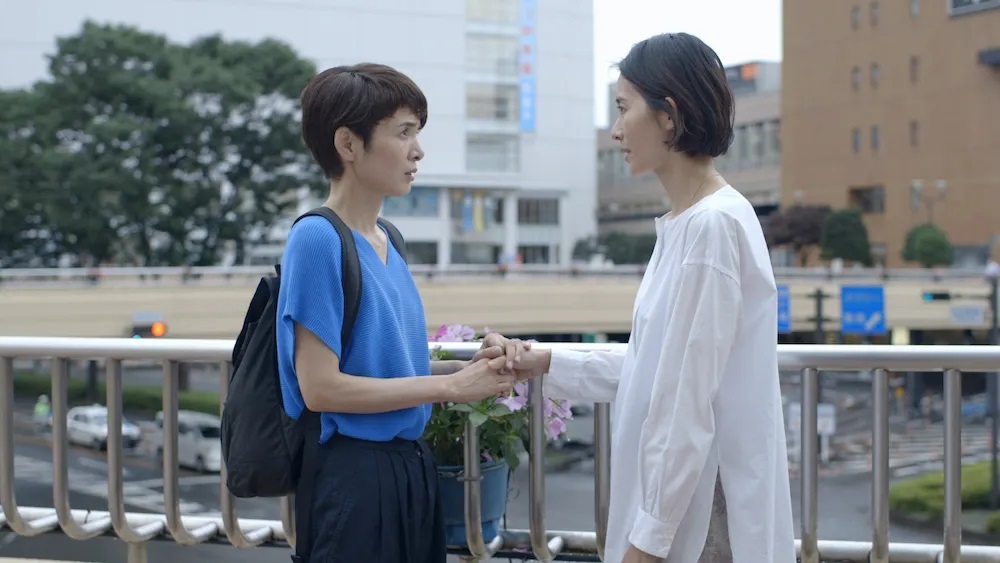
Hamaguchi’s Wheel of Fortune and Fantasy feels deceptively simple. But it’s the Japanese auteur combining an Ozu-inspired sensibility with the narrative flair of Chekhov. In its three acts, Wheel of Fortune and Fantasy presents three short stories, each chamber pieces, each revolving around intimate, intense and life-changing conversations between two people. Hamaguchi demonstrates how lives can rotate on their axis in split seconds, with conversations shifting for one or both participants with no warning, generating unexpected, emotionally surprising results.

‘Magic’, the first story, revolves around model Meiko (Kotone Furukawa) and best friend Tsugami (Hyunri). During a long cab journey, Tsugami tells Meiko all about her new romance – only for Meiko to realise, part way through, she is talking about Meiko’s ex-boyfriend Kazuaki (Ayumu Nakajima) with whom Meiko may still love. ‘Door Wide Open’ sees distinguished professor and author Segawa (Kiyohiko Shibukawa) become the unsuspecting target of a honey trap by Nao (Katsuki Mori), after her friend-with-benefit’s Sasaki (Shouma Kai) had his media career-plans derailed by Segawa failing him. Nao and Segawa however find unexpectantly common ground. Finally, ‘Once Again’ has Natsuko (Fusako Urabe) excitedly bumping into her former high school girlfriend Aya (Aoba Kawai) at a train station – only to find, when they return to Aya’s home, both have mistaken the other for someone else. These two strangers however find it easier to talk and bond.

All three of these stories are deceptively simple. Only ‘Once Again’ features any unusual set-up (a computer virus has rendered all computers unusable, a sci-fi insertion that only exists to remove any chance of the mix-up being avoided).  Hamaguchi shoots each story with an unaffected simplicity, frequently employing long-takes and staging the bulk of each story (each is about 40 minutes) in single, every-day locations – from taxis to offices to homes.

But Hamaguchi’s approach allows the performances to grow with a subtle, skilful naturalness, capturing intense (but often hidden) changes of mood in the slightest micro-expressions. Each of the three key conversations underpinning the stories develops in utterly unexpected ways and part of the magic of Wheel of Fortune and Fantasy is immediately wanting to play each of back and try and spot the moments where they changed their participants lives.

Hamaguchi carefully builds our empathy with these characters, using Ozu-inspired stationary set-ups complemented with unfussy two-shot set-ups, but culminating in moments of complete immersion where POV shots place us behind the eyes of each character, looking directly at the person they are talking with. It’s a superb way of quietly building our connection with the characters and the events they are experiencing and works brilliantly to immerse us in these moments that we know will shape their emotional development over months and years to come.

This gives these small scale – and they are defiantly small-scale – stories real impact. Hamaguchi’s film is about real people facing real problems: lost loves, frustrated ambitions, childhood regrets. The very human feelings in play here help make the stories affecting. It’s helped again by the subtle performances Hamguchi draws from the cast. When Meiko – a marvellous ambiguous Kotone Furukawa – fumes against her ex-boyfriend for moving on, is she angry at him or at herself for letting him go? Does Segawa (a perfectly dour, almost unreadable Kiyohiko Shibukawa) feel fear at his reputation being damaged or because of stirrings of sexual longing he has clearly repressed? Does Natsuko (a gorgeously fragile Fusako Urabe) relish the freedom of speaking her mind to a complete stranger even more than she would talking to the actual person she is recalling?

Hamaguchi mixes this with intriguing moments of fantasy. A deliberately clumsy camera zoom at one point indicates to us a no-holds-barred conversation in a café has just been in the imagination of one of its participants. Sasaki fantasises about himself reporting on the television about his former mentor. Hamaguchi also brings a wonderful sense of magic to everyday locations (not to mention the fairy tale like set-up of the final stories lack of computers, which feels like the aftereffects of a witch’s curse). The escalator Natsuko and Aya meet on takes on a mystic beauty as it moves them past each other on careful tracking shots. Meiko walks through city streets and stares back at a skyline that feels filled with meaning. Hamaguchi isn’t afraid to slow the film down at key moments to soak up atmosphere and observe the everyday beauty in objects around us.

It lends even more power to the sudden changes these characters experience. Each story carefully builds on the emotional impact of the one before, taking us through ambiguity to complex mixed feelings to a final cathartic moment at a train station that carries real emotional force. Every story ends in a very different place from what we expected at the start – or arguably even the middle – without Hamaguchi ever overplaying his Dahlish Tales of the Unexpected card.

Wheel of Fortune and Fantasy is a small-scale expression of Hamaguchi’s directorial mastery, a perfect expression of his ability to infuse small-scale stories with great emotional force and psychological depth. It’s a highly skilled piece of short-film-making, pulled together into an effective collection. A clear indicator that this – combined with Drive My Car – marks Hamaguchi out as a future great.

Written on the Wind (1956)

Written on the Wind (1956)

Sirk’s melodrama packs in plenty of tight psychological observation among soap suds

Director: Douglas Sirk

Cast: Rock Hudson (Mitch Wayne), Lauren Bacall (Lucy Moore Hadley), Robert Stack (Kyle Hadley), Dorothy Malone (Marylee Hadley), Robert Keith (Jasper Hadley), Grant Williams (Biff Miley), Robert J. Wilke (Dan Willis), Edward Platt (Dr. Paul Cochrane), Harry Shannon (Hoak Wayne)

Money can’t buy you love. The oil-rich Hadleys live the high-life off the oil-empire built by patriarch Jasper Hadley (Robert Keith). Unfortunately, his children are both deeply unhappy and emotionally stunted. Kyle (Robert Stack) is an alcoholic playboy, Marylee (Dorothy Malone) a lonely woman who plays with other people’s lives to make herself feel better. Both are, in different ways, in love with sub-consciously resentful Mitch Wayne (Rock Hudson), the poor-boy childhood friend turned geologist who their father sees as the son he wishes he had. Mitch is in love with Lucy Moore (Lauren Bacall), an ambitious secretary at Hadley Oil – but Kyle also falls for her, marrying her. Marylee is in love with Mitch, who doesn’t feel the same. We already know from the film’s prologue all this is going to end with a bullet.

It makes for gorgeous entertainment in Douglas Sirk’s lusciously filmed melodrama, that helped lay out the template for the sort of soapy Dynasty-type TV monoliths that would follow years after. Sirk’s gift with this sort of material was to imbue it with just enough Tennessee Williams’ style psychological drama. Written on the Wind is awash with the glamour and beauty of wealth but, at the same time, demonstrates the immense psychological emptiness at the heart of the American Dream. What’s the point of all this luxury when those who have it are as deeply fucked up as the Hadleys are?

Their family is so wealthy the Texas town they live in is named after them and the run it like a private fiefdom, with the police running around like their errand boys. It’s not made them a jot happy. Both Maryann and Kyle are deeply aware of their own emptiness, rooted in the lack of attention (and love) from their father, a work-obsessed man who seems to have written his children off at an early age and invested far more time in training up Mitch like some sort of cuckoo-in-the-nest. Perhaps to try and win back their father’s love as much as to try and find meaning in their own, both of them want to possess Mitch: Maryann is destructively desperate to marry him, Kyle seems to want to become him and if one-way of doing that is by stealing the girl Mitch loves, all the better.

Wonderfully played by Robert Stack, overflowing with false confidence, jocularity and an utter, all-engulfing emptiness, Kyle talks endlessly about how Mitch is like a brother to him all while repeating as often as he can gently disparaging references to his poor-upbringing and dependence on the Hadley’s patronage. It’s coupled with his homoerotic (unspoken of course – it’s the fifties – but you can’t miss it!) obsession with Mitch. All of these confused, contradictory feelings wrap up in Stack’s (Oscar-nominated) performance, with the weak Kyle all too-readily believing Mitch might just be bedding his wife.

It’s an idea planted by Maryann, played with a scene-stealing bravado by Oscar-winner Dorothy Malone. Despite her vivacious energy and languidly casual confidence in establishing her pre-eminence over the newcomer Lucy, Maryann is a miserable, disappointed, deeply damaged soul, painfully bereft of any love and seeking meaning in casual couplings with a parade of gas attendants and hotel bellboys. Obsessively in love with Mitch, she dwells like Kyle on their childhood and the lost dreams of what might have been, but never was. This bubbles out over the course of Written on the Wind to an ever-more destructive Iago-like manipulation of the haplessly drunk Kyle, out of a mix of wanting everyone to be as miserable as she is and a desire to either own or destroy Mitch.

Malone and Stack triumph in these show-case roles, successfully building both frustration and sympathy in the audience. Opposite them, Hudson and Bacall (the stars!) play the more sensible, less interesting parts. Bacall’s strength and firmness balance rather nicely the contradictions in Lucy. A clear-eyed realist on meeting Kyle, attracted to the display of wealth while repulsed by his shallow, well-oiled, lothario routine, she never-the-less marries him, at least partly out of a desire to mother this fragile figure (she is genuinely moved by Kyle’s cockpit confessions of inadequacy and self-loathing while he flies her from New York to Miami for a date). From this Lucy confronts the psychological mess of the Hadley family with a stoic determination to make the best of things.

When does she start to develop feelings for Mitch? Mitch is clearly smitten on first sight, glancing fascinated at her legs while she stands behind a display board. But Sirk uses Rock Hudson’s similar stoic quality to great effect, turning Mitch into the epitome of duty, loyal enough to the Hadley family to bend over backwards to support the Kyle-Lucy marriage, all while clearly carrying an immense candle for Lucy. Saying that, part of the fun in Written on the Wind is wondering how much the patient Mitch is a conscious cuckoo, displaying all the intelligence, dedication and aptitude that Jasper so publicly lambasts his children for lacking (and whose fault is that?)

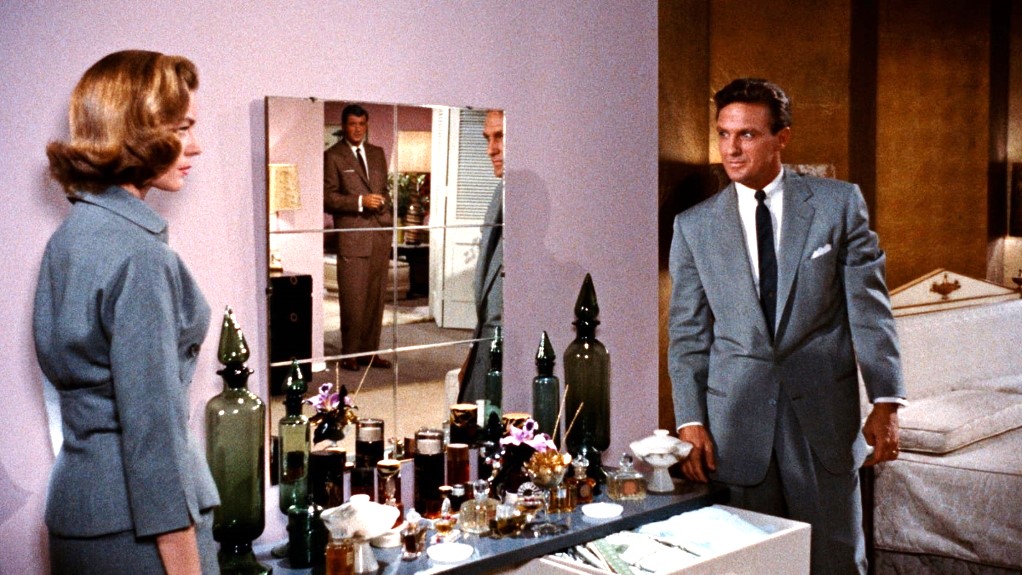
All these psychological soapy suds bubble superbly inside Sirk’s intricately constructed world. Every shot in Written on the Wind is perfectly constructed, splashes of primary colours dominating a world of pristine 50s class. Sirk frames the picture gorgeously, notably using mirrors effectively to place the characters in triangular patterns (Mitch at one point strikingly appearing in a mirror standing between Kyle and Lucy) or to suggest psychological truths (one shot angled to show Lucy brushing her hair in a mirror where we see a reflection of the reclining Maryann and don’t forget that marvellous closing shot of Dorothy subconsciously mirroring her father’s pose in the painting behind her while caressing a phallic model of an oil drill).

Sirk keeps events just the right side of melodramatic excess. A brilliantly staged sequence sees Maryann – dragged home from an assignation by the police – dance with a wild abandon in her bedroom while Jasper, horrified at realising how his disregard has warped Maryann, collapses to a heart-attack on the stairs. It’s a sequence that could be absurd but has just the right amount of reality to it, grounded as it is in Maryann’s self-loathing. Just as Kyle’s belief that impotence is going to consign him to being as much a failure in continuing the Hadley line as he is in everything else. Particularly since he’s constantly reminded of his inadequacy opposite the taller, smarter, better-at-everything Mitch who everyone else in the film openly seems to prefers to him.

It’s an extraordinary balance Sirk keeps, treating the characters with utter respect and affection while placing them in an over-the-top structure full of elaborate sets and overblown, melodramatic events and heightened feelings. Perhaps because Sirk never laughs at the concepts and content he’s created, we invest in both its truth and ridiculous entertainment quality. He does this while avoiding any touch of self-importance, never forgetting this is an old-fashioned melodrama. It makes Written on the Wind a hugely enjoyable, and surprisingly rich, character study mixed with plot-boiler.

Challengers (2024)

Challengers (2024)

Dynamic, mature, hilarious and moving relationship drama, an absolute delight

Director: Luca Guadagnino

Cast: Zendaya (Tashi Duncan), Josh O’Connor (Patrick Zweig), Mike Faist (Art Donaldson), Darnell Appling (New Rochelle Final Umpire), AJ Lister (Lily Donaldson), Nada Despotovich (Tashi’s mother), Naheem Garcia (Tashi’s father), Hailey Gates (Helen)

Tennis superstar Art Donaldson (Mike Faist) is on the slide after six majors – he’s lost his click and can’t even struggle past up-and-comers from the lower rungs of the tour. His coach, manager and wife Tashi (Zendaya) has an idea for how to get his groove back: he’ll enter a lowest-rung Challenger tournament, chalk up an easy win and return to confidence. Problem is, Art’s estranged former friend and doubles partner Patrick Zweig (Josh O’Connor) is also in the tournament and the two of them now line up for a grudge match in the final. But there is more going on than meets the eye, as Guadagnino’s film unfolds in a non-linear style to reveal the complex, confused and frequently ambiguous sexual, emotional and sporting tensions that have beset the three over 13 years.

Challengers feels like it might be a ripe piece of teen click-bait fluff – but reveals itself to be a whipper-sharp, funny, involving and cleverly open-ended film stuffed full of excellent dialogue by Justin Kuritzkes that frequently catches you off-guard with its plot developments. Challengers is a thrillingly mature, adult and very truthful exploration of the underlying attractions and tensions between three people, all of whom seem confused about their exact feelings and motivations.

What is clear – as made explicitly clear by an intensely erotic late-night encounter in a hotel room between the three of them thirteen years earlier – is the rich, unspoken attraction they all share. Art and Patrick are strongly attracted to Tashi, she seems equally interested in different aspects of each of them, while Art and Patrick’s homoerotic bond (clued in before this by their affectionate, casual physical intimacy as well as their intense celebrations on winning the Junior US Open) is immediately clear to the savvy Tashi and briefly embraced by the two men.

Sport – particularly mano-a-mano games like tennis – has an undercurrent of sexual energy to it. Adrenalin-filled men pounding away at each other from across the net, bodies glistening with sweat? Teammates grasping each other in victory with an intensity often beyond anything they would show to a romantic partner? Challengers explores how close a dance sport and sex is, the remarkably similar effects both have on our bodies. It’s what Tashi – a former tennis sensation whose career was ended in tragic circumstances – is getting at when she says the best tennis matches aren’t about tennis. They are semi-romantic couplings, the perfect rally being two bodies in perfect harmony.

This all develops thrillingly in the inter-relationships between the three leads, each excellent. Zendaya is superb as a woman forced to live her tennis dreams vicariously through her husband, who values the loyalty of Art while being quietly troubled by his neediness, infuriated by Patrick’s arrogant performative selfishness while being deeply attracted to his don’t-give-a-damn independence. She has a tight knot of tension throughout that is compelling, a constant sense we are watching a woman struggling to find some sort of resolution from a lifetime of competing resentments and desires.

Equally superb – revelatory in fact – is Josh O’Connor, who makes Patrick a cocksure, confident, selfish but immensely charming guy. Patrick scraps a career from natural skill that he never bothered to hone (witness his bizarre crooked-arm serve), embraces his sexual confidence, bounces around with a breezy bro-confidence and does everything he can to hide the lonely, lost boy he really is. This is breathtaking work from O’Connor, from hilariously funny when shamelessly pimping himself on tour for a roof over his head, and tragically vulnerable in bashful confessions with Tashi.

Mike Faist has the least flashy role but is equally wonderful. Art is – if you will – the most closeted of the three, the least confident, most dutiful, who dedicates himself to things and doesn’t stop to think deeply about his true feelings. You suspect the unspoken intense romantic bond between Art and Patrick remains unspoken in their youth because Art himself is uncertain (scared?) about what he feels. Just as he buttons up and represses his own resentments and anger towards Tashi.

Challengers switches and re-aligns these characters beautifully and constantly leaves us guessing. When Tashi (and by extension Art) refuses to see Patrick after her injury, is this because she genuinely blames him for unsettling her before the match or because she just needs something other than random chance to blame? Does she drive Art into becoming a Grand Slam winning machine out of love, a vicarious desire for success or anger (as she shapes into something he isn’t) because she blames him as well? Does Art know or care? Does he realise how much his depression comes from severing connections with his alter-ego Patrick and does Patrick slog it out on the circuit because it’s the only way he can still feel in-any-way close to the only two people he loves (but won’t admit?).

Watching all this unfold, seeing each scene reveal a new piece of information that refocuses what we thought about each character, is compelling – helped a great deal by the vibrant, emotional and intensely sympathetic performances from the three leads. Challengers is also a superbly assembled film, sharply and snappily edited and with an electric, emotionally well-judged score by Trent Reznor and Atticus Ross that skilfully uses refrains to link back to key emotions and sensations. It’s also a film that shoots tennis more electrically than any other. With sweeping crane shots, hand-held camera and every trick in the book, we see matches from the perspective of everything: the players, the ground, even the ball itself. It’s stunningly visually inventive.

It culminates in a truly wonderful, open-ended, emotionally satisfying ending that I actively adored. It’s a film about love, about three people who feud over petty things for years but need each other to be complete, who find there are elements of each other’s personalities that serve to complete themselves. Who are fiercely sexually attracted to each other, but also have a deep, intense emotional bond they need more than they realise. Challengers is an absolutely gorgeous, delightful, superb film – another emotional, mature triumph from Guadagnino, with three brilliant actors working wonders with a sharp script. It’s a film to love and treasure.

Hello Dolly! (1969)

Hello Dolly! (1969)

Bloated, miscast and over-produced musical that nearly sank the genre and studio

Director: Gene Kelly

Cast: Barbra Streisand (Dolly Levi), Walter Matthau (Horace Vandergelder), Michael Crawford (Cornelius Hackl), Marianne McAndrew (Irene Molloy), EJ Peaker (Minnie Fay), Danny Lockin (Barnaby Tucker), Joyce Ames (Ermengarde Vandergelder), Tommy Tune (Ambrose Kemper), Judy Knaiz (Gussie Grander), David Hurst (Rudolph Reisenweber), Louis Armstrong (Band leader)

The old-fashioned musical had always been a winner for Hollywood. So, I guess it made perfect sense to pump $25 million (just over $200 million in today’s money) into Hello Dolly!. Reality didn’t agree though. Hello Dolly! was a massive box-office bomb which, despite its seven Oscar nominations (including Best Picture, due to intense studio lobbying) pretty much killed the traditional, Freed-style musical stone-dead. After this, musicals would have drama at their heart (like Fiddler on the Roof or Cabaret) and scale down the production numbers.

It also didn’t help that the mega-budget, colossal production values across its bum-numbing two-and-a-half hour run time ruthlessly exposed Hello Dolly! as a perilously slight story, in a way its years playing on Broadway hadn’t. Dolly Levi (Barbra Streisand) is a widowed matchmaker, hired by grumpy “half-a-millionaire” Horace Vandergelder (Walter Matthau) to find him a wife. However, Dolly rather fancies getting back into the game with Horace herself. Around them other parties flirt, such as Horace’s niece Ermengarde (Joyce Ames) with artist Ambrose Kemper (Tommy Tune) and his clerks Corenlius Hackl (Michael Crawford) and Barnaby Tucker (Danny Luckin) with fashion store owner Irene Molloy (Marianne McAndrew) and her assistant Minnie Fay (EJ Peaker).

I’ll grant the scale and sets are impressive. Whole streets and parks were built. Grand, elaborate costumes (some of Streisand’s costumes cost thousands and thousands of dollars by themselves) add wow factor. If you believe “more is more” Hello Dolly! is for you, it’s Oscar for set design well deserved. But as you watch Streisand hit a high note in long shot while an entire parade of thousands takes place around her, you start to realise you’ve not formed a bond with the characters. When we finally get them all in one place (a crowded restaurant in New York) the best part of thirty minutes is taken up with three massive numbers (Dancing waiters! Streisand’s entrance number! Comedy foot-tapping from Crawford! Louis Armstrong cameo!) that piles so much stuff on, that you almost forget what the scene was meant to be about in the first place.

What this probably needed to be is a tighter, American in Paris style romantic comedy, the sort of stuff Arthur Freed would have run out in 100 minutes with a few set pieces. Instead, it’s a bloated mega-production with colossal sets, 12,000 extras, widescreen soaking up the action and vast, never-ending dance numbers that fail to progress either story or emotion. After being bludgeoned by balletic leaps, you suddenly realise not only has nothing much happened, but you are being asked to invest in the future happiness of characters you barely know and often hardly even like.

It’s not helped by the chronic miscasting of the leads. Barbra Streisand was the hottest star in town – the studio was (correctly) convinced mega-stardom was inevitable after watching the rushes of Funny Girl – but she is wrong on almost every level for Dolly Levi. A part intended for a slightly-over-the-hill widower in her late 40s, was barely retrofitted for a glamourous diva aged 26. Streisand, clearly painfully aware she was wrong for the part, struggles to work out how to play it. Sometimes she’s coquetteish, other times she goes for a mother-in-law largeness, most of the time she ends up channelling Mae West sauciness. While her singing is (of course) outstanding, she never looks comfortable. Equally out-of-place is Walter Matthau, whose grouchy comedy style never meshes with the tone of the film (although he has a great bit of business with a walking stick which he hammers down onto a table with such irritated force it almost rebounds and hits him in the face).

It also doesn’t help that Matthau and Streisand all-too-clearly can’t stand each other (their closing kiss is hilariously awkward – try replicating their physical positions to see how unnatural and unromantic it is). On set Matthau felt Streisand was too big for her newcomer boots while Streisand saw him as envious of her star quality. The two frequently fell into heated rows: this at least meant they fitted in naturally on a set where almost no-one got on. Streisand and Kelly’s working styles (both being demanding perfectionists) proved incompatible, Kelly stopped speaking to the official choreographer who also stopped speaking to the costume designer.

With the leads struggling, most of the film’s charm actually relies on its secondary leads. Hello Dolly! is, actually, an effective showcase for Michael Crawford’s physical dexterity (some would say recklessness) and his sweet romance with Marianne McAndrew’s charming Irene Molloy is the film’s emotional heart. It’s a shame both their film careers effectively ended here (though Crawford would go on to greater things on stage). Their dance number Elegance is one of the film’s most engaging while their duet It Only Takes a Moment is the simplest filmed and most moving moment in the film.

Bloat and bombast overwhelms the rest. Although Kelly knows how to shoot dancing – effective camera moves and having the dancers move towards the camera, increasing their dynamism is very well done – he’s far less suited to the character moments which Stanley Donen and Vincente Minnelli excelled at. The gags very rarely land, either because the timing is off or the camera is so focused on getting the mammoth sets in that the bits of business look like minor irrelevances.

Fundamentally, Hello Dolly! bet the house on throwing all the budget on the screen to wow audiences the way something like The Great Ziegfeld had over thirty years ago. But audiences needed an emotional connection with what they were watching. Hello Dolly spectacularly fails to deliver on this. What we were left with is a very slight story about matchmaking, basically a chamber piece with about six characters, transposed onto the sort of epic backdrop that makes Gone with the Wind look humble. The mismatch never works and the entire enterprise eventually collapses under its own gravitational pull. A box office dud that nearly sank the studio, the musical would never be the same again.

The Big Sleep (1946)

The Big Sleep (1946)

Bogie and Bacall flirt their way into legend in the iconic Chandler adaptation

Director: Howard Hawks

Cast: Humphrey Bogart (Philip Marlowe), Lauren Bacall (Vivian Sternwood Rutledge), John Ridgeley (Eddie Mars), Martha Vickers (Carmen Sternwood), Sonia Darrin (Agnes Lowzier), Dorothy Malone (Acme bookstore owner), Regis Toomey (Chief Inspector Bernie Ohls), Peggy Knudsen (Mona Mars), Charles Waldron (General Sternwood), Charles D Brown (Norris), Elisha Cook Jnr (Harry Jones)

The Big Sleep was actually shot in 1944 – you can spot the odd wartime reference, from a female taxi driver to Marlowe’s special gasoline permit – but was released almost two years later. A lot had changed since then (the end of the war for starters) not least the fact that Bogart and Bacall had become the most famous couple in the world. After previews, Warner Bros quickly twigged they could have a mega-hit if they took out some of the dull bits and replaced them with Bogie and Bacall flirting instead. Which they duly did, helping turn The Big Sleep from what could-have-been a fairly routine Chandler gumshoe adaptation into a sort of genre-defining phenomenon.

The first thing they sacrificed was the plot. Famously, nothing in The Big Sleep really makes that much sense – and it hardly matters. Bogie asked Hawks at one point just who exactly shoved the Sternwood unconscious chauffer’s into the river – neither Hawks or the several scriptwriters (including William Faulkner and Leigh Brackett) had a clue. It doesn’t matter, because few films are about “the ride” as much as The Big Sleep. Every moment has something in it to appeal to the hard-boiled detective fan. Not a scene goes by without either a glamourous lady eager to bed Bogie, a fight, a shooting or some combination of all three. All washed down by a hard-bitten Bogie at his absolutely best, over-flowing with charisma and an impish sense-of-fun at how cool it all was.

The Big Sleep sees Philip Marlowe (Humphrey Bogart) hired by General Sternwood (Charles Waldron) to investigate a series of mysterious debts run up by Sternwood’s carefree and wantonly flirtatious daughter Carmen (Martha Vickers). The plot inevitably thickens as Marlowe uncovers blackmail, prostitution, pornography rings and lord knows what else, all circulating around a sinister bookseller with a sideline in naughty photos, a brazen femme fatale (Agnes Lowzier) manipulating a series of weak-willed men and a tough gangster Eddie Mars (John Ridgeley) willing to use his secrets to win advantage. That’s not even mentioning Carmen’s austerely arch sister Vivian (Lauren Bacall) whose sultry flirtatiousness captures Marlowe’s attention.

The Big Sleep really is a series of hugely entertaining scenes, loosely tired together with a vague plot. The original cut had featured a dull scene with Bogie laboriously explaining what was going on to his dull-as-ditch-water police friend. What Hawks and co realised is no one really wants to see that when they could see Bogie and Bacall puffing cigarettes and talking suggestively (brazenly!) about how you need to ride a horse hard. They were probably right: after all, no one thinks about Psycho and says “my favourite scene is the bit with the psychiatrist’s explanation at the end”. Hawks realised if the viewer enjoyed themselves, no one would give a damn if it made almost no sense.

How else really can you explain scenes like Marlowe’s drop-in on an Acme bookstore where he meets the sort of drop-dead gorgeous bombshell store owner (Dorothy Malone, sexy as hell) who only exists in movies and happily closes the store in the middle of the afternoon to drink a bit of whisky (and more) with Bogie? It offers nothing to the plot that couldn’t be covered with a brief time-lapse montage – it’s all about the mood, the dialogue and the sensual charge between the two characters, with the illicit promise of no-strings sex (which, rather nicely for a 40s movie, they both seem well-up for). Who hasn’t dreamed of that?

It’s the same frisson that lies behind the whole Bogie and Bacall appeal. These two set the screen alight with the sort of temperature that came from basically watching them have an affair right in front of us. The two became an illicit item while filming To Have and Have Not and large chunks of The Big Sleep were held up due to Bogie drinking away his guilt. By ’46 they were an official item, but you couldn’t doubt it from the lingering, heated looks they give each other. Or the screwball lightness – and the one-upmanship and delight in making the other laugh – during their telephone call to the police department, as they pass the phone between each other putting on voices and pretending to be various members of an entire clan of troubled curtain-twitchers.

Humphrey Bogart was in his element here. Literally no one before or since could play this sort of super-smart, more-sensitive-than-he-appears hero who covers himself with a cynical, wise-cracking front than him. His Philip Marlowe has a joke for every occasion but also a strong moral sense close to the surface. He’s playful – the delight in which he affects the fusspot demeanour of a book collector early on is delightful – but superbly unruffled by threats.

No wonder Bacall’s Vivian is drawn towards him. Bacall is sultry and husky voiced, a slice of imperial sexiness. If the film doesn’t call for her to do much more than that, she certainly can deliver it. It’s a performance that is left surprisingly one-note (after all that one-note was all Hawks wanted from her). Chandler believed Martha Vicker’s inspired performance of childish selfishness and sexual shamelessness as her sister Carmen was if anything even better – and he’s probably right. But then Bacall has those famous scenes with Bogie – somewhere between His Girl Friday and Basic Instinct – and it’s those moments that cement themselves in your mind.

That and The Big Sleep’s effective moments of hard-edged violence. Elisha Cook Jnr gets his greatest role as a weakling who bungles his way into an early grave in a partially-silhouetted murder. There is a cracking shoot-out between Marlowe and Mars’ hired gun and a neat (if barely logical) final face-off between the outraged Bogie and Joh Ridgeley’s expertly judged Mars who crumbles from arrogant superiority to snivelling cowardice. There are equal delights in numerous other scenes that play out like stand-alone treats – from Bogie’s imperious swatting of bully-boy Brody to his greenhouse hiring by General Sternwood. Every scene in the film plays out with hard-boiled zing like its own cool little stand-alone movie.

It makes for a fun package – and it’s easy to see why The Big Sleep is the sort of film people list as “their favourite”. It’s playful and manages to seem extremely cool without seeming to make any effort. Bogart is sensational and every second of the film offers something good. What the hell does it matter if none of it really makes sense?

Spellbound (1945)

Spellbound (1945)

Hitchcock dives into psychiatry with mixed success in a middle-brow effort

Director: Alfred Hitchcock

Cast: Ingrid Bergman (Dr Constance Petersen), Gregory Peck (Dr Edwardes/John Brown/John Ballantyne), Michael Chekhov (Dr Alexander Brulov), Leo G Carroll (Dr Murchison), Rhonda Fleming (Mary Carmichael), John Emery (Dr Fleurot), Norman Lloyd (Mr Garmes)

Spellbound was born out of Selznick’s faith in the magic of psychiatry. It opens with a touchingly naïve dedication that stresses a little touch of Freud is a magic bullet: “once the complexes that have been disturbing the patient are uncovered and interpreted, the illness and confusion disappear and the devils of unreason are driven from the human soul”. Oh, would that it was so easy. Spellbound turns psychiatry as a sort of detective game, the subconscious a sort of smorgasbord of clues that, when shuffled into the correct order, will produce the answer.

The mystery is what exactly has happened to the new head of Green Manors Psychiatric Hospital, Dr Edwardes, here to replace the not-exactly-happy-to-retire Dr Murchison (Leo G Carroll)? The man who has arrived claiming to be Edwardes (Gregory Peck) may be charming but his odd obsessions with dark parallel markings on white surfaces, tendency to faint and lack of familiarity with psychiatry in general raise suspicions. Dr Constance Petersen (Ingrid Bergman), leading light of the Hospital, deduces Edwardes or “JB” as he vaguely remembers his initials being, is suffering from guilt-induced amnesia. Petersen refuses to believe – despite mounting evidence – that this man she has fallen in love with could be a killer. On the run, she recruits her old mentor Dr Brulov (Michael Chekov) to help analyse JB’S dreams, convinced the answer to the mystery is there.

Selznick hired his psychiatrist to act as a consultant on the film. This didn’t matter that much to Hitchcock, who considered the film essentially another murder-mystery thriller with a bit of Freudian dressing and bluntly told the advisor at one point when she protested yet another inaccuracy “my dear, it’s only a movie”. Spellbound is a decent, mid-level Hitchcock effort, with a touch or two of the master’s invention and magic, but which slows down for an extended act three analysis scene crammed with dodgy psychiatry and a detailed Salvador Dali-inspired dream sequence.

Of course, no one watching the film (rather like Cary Grant in Suspicion) could ever believe for a minute that the charming, handsome Gregory Peck is actually a murderer. Hitchcock’s trick is to keep the tension up, since (at best) there are only two suspects (and only one of them has a heavily advertised motive). You could argue here the trick is a “howdunnit” rather than a “who”. What mystery is Peck holding in his head and why can’t he remember who he is? Hitchcock throws in a host of little flourishes to keep us guessing, and if he clearly cares very little about Freudian insight (just as well, imagine the field day Freud would have had with Hitch) that hardly seems to matter.

Spellbound still manages to fairly barrel along, with a sparky script by Ben Hecht interweaving screwball banter between Peck and Bergman with cod-psychiatry. Hitchcock lets most of this play out fairly traditionally, but punctuates it with moments of flair. An early romance dialogue takes place in voiceover over a series of shots of doors opening to reveal a never-ending corridor (a neat visual metaphor for delving inside the mind). A tracking shot on a disturbed Peck down a flight of stairs, focuses on a cut-throat razor in his hand, ending with the razor alarmingly large in-shot. Disturbing POV shots make objects appear ultra-large, from a glass of milk (echoes of Suspicion) to a gun barrel turned to face us at the film’s conclusion. All of this is accompanied by an excellent score by Miklos Rosza which brings together romantic strings and the theremin to suggest the unsettling undercurrents of the subconscious. Rosza, rightly, won an Oscar for his hugely atmospheric work.

Spellbound is also notable for the way it inverts gender expectations. Peck effectively plays the damsel-in-distress here. Vulnerable and scared about what he could do, he lapses into catatonic panicked silence as much as smooth banter. Instead, for all the film stresses her feminine weakness when in love, it’s Dr Petersen who is the protagonist here. Played with a relaxed authority by Bergman, Constance is an assured professional and a dedicated campaigner for the truth. It’s she who constantly drives the plot forward and its her who plays both doctor and detective to crack the case and confront (with an assured coolness) the killer.

Hitchcock’s film provides a subtle commentary on the experience of women. Searching for JB in a hotel lobby, Petersen is first pestered by a drunk traveller who drunkenly all-but calls her a cock-tease when she asks him to leave her alone. Even when saved from an unpleasant scene by a hotel detective, he assumes her to be a schoolteacher or governess, and Petersen immediately recognises that disguising her accomplishments is a perfect way to gain this would-be-saviour’s help. Petersen also has to shrug off the pestering attentions of a colleague (John Emery).

But it’s her who eventually deduces the meaning of JB’s dream. This dream was heavily promoted as the work of Salvador Dali. While full of striking imagery, it feels more like a pastiche of Dali, as if a Hollywood art director threw The Persistence of Memory and Eyes for Your Eyes at the wall see what stuck. Which is pretty much what happened: Dali’s work was largely discarded for being too weird and overlong and William Cameron Menzies was bought into create something in Dali’s style. Selznick hardly cared – what mattered was promoting the Dali collaboration (Hitchcock had little to do with the scene, until it drew praise and he then claimed authorship).

It’s another striking moment in Spellbound. But truthfully the film is a careful construction of striking moments and performances, which power a simplistic and unrealistic plot which relies on coincidence and bizarre logic gaps. Psychiatry is a magic bullet – it’s hard to imagine anyone in real life reacting with the sort of glee JB does here when he discovers he didn’t murder his brother in his childhood, only accidentally fatally impaled him on some railings outside his house. The “revelations” from the analysis takes an over-extended single session with the unconscious yielding a series of Agatha Christie-style clues.

But then that fits Spellbound in the tradition of Hollywood psychiatry, from this to Ordinary People to Good Will Hunting, a touch of confession on a couch eventually solves all problems (all the kissing Peck gets from Bergman – which didn’t stop off camera – also clearly helped). Hitchcock’s work here is professional, but middlebrow. However, the odd imaginative shot, and the impressive performances (Bergman, Peck and also famous acting-coach Michael Chekov, immensely playful and Oscar-nominated as Constance’s cuddly mentor) still make this an entertaining watch.

Apu Sansar (1959)

Apu Sansar (1959)

Satyajit Ray’s trilogy comes to close with another masterfully done small-scale story of hope and loss

Director: Satyajit Ray

Cast: Soumitra Chatterjee (Apu), Sharmila Tagore (Aparna), Alok Chakraborty (Kajal), Swapan Mukherjee (Pulu), Dhiresh Majumdar (Sasinarayan), Sefalika Devi (Sasinarayan’s wife), Dhiren Ghosh (Landlord), Tusar Banerjee (Bridegroom), Abhijit Chatterjee (Murari)

As he stands, consumed with despair, watching a train rush perilously close to him, does Apu (Soumitra Chatterjee) remember when he ran with excitement after the trains as a boy? Apu Sansar, the conclusion of Ray’s breathtakingly humanist trilogy, concludes another cycle in Apu’s life; one touched, as with the previous ones, with loss, tragedy and a dream of hope. Beautifully filmed, simple but deeply affecting, it’s a breath-taking culmination of this masterful trilogy.

Apu (Soumitra Chatterjee) is now a young man longing for a career as a writer in Calcutta. Attending the marriage of his friend Pulu’s (Swapan Mukherjee) cousin Aparna (Sharmila Tagore), he finds himself surprisingly roped into the role of groom to take the place of the unsuitable intended (as part of Hindu tradition to prevent the risk of Aparna never marrying). Returning with Aparna to Calcutta – and a life of poverty she is unused to – their romance flourishes into a happy marriage, until tragedy strikes leading to Apu tumbling into years of drift and depression.

Apu should be used to tragedy by this point. In Ray’s series, death has always raised its deadly force in his life. In Pather Panchali his beloved sister passed away from sudden illness. In Aparajito the death of his mother leaves Apu stricken with guilt and grief. It’s natural that Ray’s subtle trilogy continues to look at how closely tragedy and sadness dog hope and contentment. Tragedy this time strikes Apu out of the blue, a searing, raw pain that Ray conveys to us almost entirely through a series of still, tender shots of Soumitra Chatterjee’s face as Apu’s world falls apart around him.

Ray’s film, with its beautiful observational style and low-key camera work (and use, at several points, of low angles) reminded me sharply on this viewing of Yasujirō Ozu. Apu Sansar follows in Ozu’s footsteps in its careful, focused study of the lives of ordinary people and how whole worlds of love, hurt and joy can be contained within small rooms. Unlike Pather Panchali or Aparajito, there are few shots of the widening countryside or the scale of the cities. Instead, Apu’s world seems smaller and more intimate, its focus on his apartment and a few other locations, site of momentous events that will shape his life.

Marriage is at the heart of that. His relationship with Aparna has an inauspicious start, Apu roped in as a husband due to the mental incapacity of Aparna’s intended. (There are hints that the possibility of a replacement husband being expected lie behind the last minute, out-of-the-blue invite Apu receives from his friend Pulu which, if true, does add a slightly more manipulative quality to his amiable college friend). The two of them don’t know each other and have little or no idea if they even have anything in common. Their first night together is one of slightly awkward, exploratory talking and it leaves the viewer wondering if common ground can be found.

But Ray sketches out the development of this relationship into something strong, living and (eventually) heartbreaking with a mastery of little touches and his skill with montage and transition. Aparna is at first thrown by the poverty of Apu’s life in Calcutta (similarly to the Dickensian nature of Aparajito he lives in a rain-soaked apartment on a month-to-month basis). But she sets to work to turn this place into a home and soon little touches abound that denote their growing closeness. A cigarette pack hidden under Apu’s bed that Aparna has written a message in, pleading him to smoke only after meals. Late night conversations – which involve a brilliant Ray cut as the camera zooms into the fan between them and out again as a transition finds them sitting again opposite each other on a different night. The pleasure Apu takes in buying her the smallest gifts and the pride Aparna has in turning his home into something cleaner and more decent.

The future seems bright for them. In Ray’s trilogy the future and the march of time and civilisation has often been represented by trains. This theme continues masterfully in Apu Sansar, however this time with the train taking on a more sinister, dangerous presence. Apu’s apartment overlooks a major railway junction his home frequently invaded by the sounds of the train and an onslaught of smoke from the engines. Rather than offering tempting possibilities, this increasingly feels like an intrusion, an outside force intruding into the haven that Apu and Aparna are trying to create.

This sense of invasive menace is captured exquisitely in a beautiful but haunting shot as Apu stands on his balcony – the train sounds build and then smoke from the engines pours across the balcony and seems to envelop Apu. His home can be a place of wonder and beauty, but its harmony is always under siege from transportation that, like time, relentlessly moves forwards. It’s the train that will carry Aparna away from Apu, back into the countryside for her fateful lying in before giving birth. It’s a gift of a toy train – a chance at a future together – that Apu’s son will throw in his face five years later. It’s the same train, that dangerous future finally left behind, that Aparna’s father will clutch to him as Apu heads into a more hopeful future. Throughout trains intrude, threaten and signal danger and separation for Apu.

Soumitra Chatterjee is excellent as this young man who has seen so much, learned so many things, but also seems destined to repeat the mistakes of the past. Like his father he is a dreamer, planning a loosely autobiographical novel and beginning to exhibit the same Micawber-like expectations that something will turn-up. Perhaps over time, without tragedy, Aparna might have become his mother, beaten down with the burdens of being the sensible rock for a flighty man unable to settle.

Perhaps tragedy is what is needed for Apu – Apu Sansar is notable for its lack of romanticism for poetic longings and its favouring of embracing actual responsibilities. There are few other films where the destruction of a nascent novel could be met with such bitter-sweet acceptance. Certainly, no Western films, where the dream of having it all is baked in. The Apu Trilogy is partially about accepting things as they are and taking on your responsibilities: dreams and self-focused desires have no place in that. After all the trilogies hero, perhaps even more so than Apu, is his mother Sabarjaya who gave everything to give Apu opportunities.

Apu finally accepts his place in this cycle after years of denial and grief by seeking to build a relationship with a son he has never met. Ray charts this slow thawing between strangers with a delicacy and emotional force striking in its simplicity. It’s really striking to me how each film in this trilogy is slightly shorter than the one before, as Ray mastered that less really can be more with every frame: that sometimes the emotional force of a single glance can be greater than that of a tracking shot. Apu Sansar is a film brimming with confidence, from a director who has mastered his aim and subject. A heart-breaking, but also heart-warming, conclusion to a great trilogy.

War and Peace (1956)

War and Peace (1956)

Tolstoy is boiled down in this epic and luscious but soapy adaptation of the greatest novel ever

Director: King Vidor

Cast: Audrey Hepburn (Natasha Rostova), Henry Fonda (Pierre Bezukhov), Mel Ferrer (Andrei Bolkonsky), Vittorio Gassman (Anatole Kuragin), Herbert Lom (Napoleon Bonaparte), Oskar Homolka (Field Marshal Mikhail Kutuzov), John Mills (Platanov), Anita Ekberg (Hélène Kuragina), Helmut Dantine (Fedor Dolokhov), Tulio Carminati (Vasily Kuragin), Barry Jones (Mikhail Rostov), Milly Vitale (Lisa Bolkonskaya), Lea Seidl (Natalya Rostova), Anna Maria Ferrero (Mary Bolkonskaya), Wilfrid Lawson (Nikolai Bolkonsky), May Britt (Sonya Rostova), Jeremy Brett (Nicholas Rostov)

Let’s just say it right from the start: you can’t do Tolstoy’s War and Peace in three hours. All you can hope for is the little chunk of it you’ve bitten on is the most succulent part. King Vidor’s War and Peace zeroes in on the elements of the book Hollywood is most comfortably reproducing: a golden-tinged romance between Natasha and Pierre and the sweeping epic spectacle of Napoleon’s soldiers surging towards Moscow and limping home in the snow. While War and Peace, bravely, barely cuts a single major character or development, almost every other theme Tolstoy attempted gets shoved to the margins. This makes it both a SparkNotes version of the Greatest-Novel-Written, but also a very earnest attempt to do the impossible.

Tolstoy’s story stretched over seven years. The great Russian struggle against Napoleon is a backdrop to the lives of dilettante-turned-thinker Pierre Bezukhov (Henry Fonda), vivacious and impulsive Natasha Rostov (Audrey Hepburn) and stolid-but-thoughtful Andrei Bolkonsky (Mel Ferrer). Around them swirl other characters: Natasha’s warm-but-useless family, worthless womaniser Kuragin (Vittorio Gassman), his sister and Pierre’s faithless wife Hélène (Anita Ekberg), heartless roister Dolokhov (Helmut Dantine) and of course Napoleon (Herbert Lom) and his military antagonist, the pragmatic Kutuzov (Oscar Homoloka). Natasha falls in love with Andrei, betrays him then finds maturity caring for soldiers retreating from Napoleon, all while silently loved by Pierre.

This is compressed together into a film that certainly doesn’t feel like it is covering seven years despite its epic run-time. No one seems to age (just as well since everyone starts the film far too old) and the attempt to cover as much of the plot as possible means the film is moving forward so swiftly any sense of time is lost. It also means that the script frequently has to fill in the dots, communicating vital information that alters the lives of characters – major figures often die or are married off in short, easy-to-miss, sentences – and the ideas Tolstoy masterfully expounded about spirituality, destiny, fate, the quest for a life of meaning, are pretty much rinsed out in the plot focus.

War and Peace effectively reduces Tolstoy down into a sudsy romance against an epic backdrop. The romance is handled reasonably well, even if there is very little chemistry of any sort between any of the three protagnonists. Tolstoy’s rich leads, with the fascinating inner lives, are reduced to pen-portraits. There are odd moments where we have access to the inner thoughts and voices – sprinklings of voiceover dot around the picture – but they never feel real. Andrei has been robbed of the decency and warmth behind his thoughtfulness that attracts Natasha, while Pierre feels more like a second father or benevolent uncle than a soul mate.

This stripping down of Tolstoy’s complex characters to their bare principles fatally compromises all three lead performances. Hepburn comes off best, making a decent fist of Natasha Rostov. This is, after all, a character who embodies in her mix of passion, loyalty, fecklessness and self-sacrifice the very nature of Russia itself. No adaptation has ever managed to translate Tolstoy’s unplayable creation, but Hepburn has all the radiance and self-sacrificial guilt down pat. The film has to rush through her foiled elopement with Kuragin (Hepburn has more chemistry with Gassman than any of the others and their near elopement is artfully framed by Vidor with mirrors, reflections and a real illicit charge). Hepburn conveys the mesmeric impact this playboy has on Natasha and her selfish, tear-stained fury at the foiling of her disgraceful plans is laced with enough genuine guilt and pain by Hepburn to keep us caring. Hepburn skilfully translates this into a far wiser and more generous Natasha, placing others needs before her own.

By contrast, literally nobody reading the novel could picture Henry Fonda as Pierre (he’s the wrong age, shape, manner – there is nothing right about him at all), but Fonda does his best (as one reviewer at the time mentioned he’s one of the few actors who looks like he has read the book). He never convinces as the drunken playboy who gets into duels (he looks and sounds far too mature) and similarly doesn’t capture any of Pierre’s doubt and uncertainty (Fonda always looks like he knows exactly what he needs to do). It’s an intelligent reading for all that, but fundamentally miscast. Which is more than you can say about Mel Ferrer who turns Andrei into a stuff bore, ramrod straight and flatly monotone, an intellectual we never get interested in.

Honestly the film would have done better cutting more. Fonda is so unconvincing as the reckless young Pierre, they may as well have made him officially middle-aged to begin with. Similarly, Natasha’s brother Nicholas and his one-sided romance with cousin Sonya is given a mention so token its likely to confuse casual viewers. Andrei’s first marriage gets about five minutes and his sister Mary is reduced to a few dull scenes. Even John Mills’ thoughtful performance as Platanov strips out the characters worldview (and its profound impact on Pierre), turning it into one of simple, symbolic tragedy. It’s all the more noticeable when the film gets some stuff right, most notably Helmut Dantine’s bullying Dolokhov who war turns into someone with a sense of shame.

Faring much better are the historical characters. Like all War and Peace adaptations, this dials up the presence of Napoleon played with an excellent puffed-up grandeur by Herbert Lom, prowling with a swagger stick and collapsing into childish frustration, then silent tears as his plans for world domination collapse. Equally stand-out is Oscar Homoloka as scruffy realist Kutuzov.

Vidor’s film may offer a simplified, romantic vision of the characters but he delivers on the scale. If you can bemoan the fact the peace leaves the characters neutered, the film completely nails the war.  War and Peace is a beautifully filmed by Jack Cardiff. From the sweeping vistas of the battlefield of Borodino, to the Dante-tinged flames at Moscow that cast orange light through the arches of a monastery where the Rostov’s take shelter, through the white-and-blue chill of the snow-covered retreat from Moscow, the film is an explosion of gorgeous colours. It’s also got the scale that old Hollywood loved. Borodino is restaged seemingly at 1:1 scale with a literal army of extras, soldiers and cavalry charging in their hundreds in long-shot and cannon fire peppering the land as far as the eye can see. Ballrooms are overflowing with extravagantly costumed extras and seemingly never-ending lines of Frenchmen march through the snow in the films closing moments.

It’s what this War and Peace is: a coffee-table accompaniment to the novel. You can look at the images it brings to life and the sweeping camera work Vidor uses to create nineteenth century Russia. But you’ll not understand anything that makes the novel great. In fact, to the uninitiated, you are likely to come away thinking the film must be a sort of high-brow Mills-and-Boon page-turner, a Gone with the Snow. What this tells us, more than anything, is that fifteen years on from the definitive Hollywood epic, Hollywood was still trying to remake it – and bringing Tolstoy to the screen was very much second to that.

Past Lives (2023)

Past Lives (2023)

Lost opportunities and the path not taken carries real emotional force in this fabulous debut

Director: Celine Song

Cast: Greta Lee (Nora), Teo Yoo (Hae Sung), John Magaro (Arthur), Seung Ah Moon (Young Nora), Seung Min Yim (Young Hae Sung), Ji Hye Yoon (Nora’s mum), Min Young Ahn (Hae Sung’s mum)

Few things carry such mystique and indestructible promise as the paths not taken. We can invest choices we didn’t make with overpowering possibilities. In them, every moment can be perfect, every outcome joyful, every conclusion perfect. But when we look back at who we were when we made those choices, our past lives can feel like exactly that: other lives of different people. The passions, desires and dreams of those people can feel completely foreign to us today, while at the same time carrying a strong nostalgic pull.

The mystique of the past is a key theme in Celine Song’s debut. Partially inspired by events in her own life, Past Lives covers 24 years in the lives of Nora (Greta Lee) and Hae Sung (Ted Yoo). Childhood sweethearts in Seoul in the late 90s, Nora migrates to Canada with her family and the two lose touch, reconnecting in their early 20s. Nora is now a writer-in-training in New York, Hae Sung an engineering student in Seoul. Communicating by Skype, they recapture some of their closeness but never meet in person before Nora cuts off contact to focus on her writing career. Twelve years later, Nora is a playwright married to novelist Arthur (John Magaro), living in the East Side of New York, when Hae Sung visits the city, looking for he-knows-not-what from Nora, who is herself torn between the pull of her past, the happiness of her present and her plans for future.

Past Lives is a romance devoid of contact, features no words of love and built on unspoken feelings and distance (a distance that covers metres in person, continents online and years in understanding). Gentle, poetic and full of lingering moments, it’s wistful and quietly involving. In many ways very little happens, but everything is at stake for all of the film’s characters and their future happiness. Song gives the dialogue a poetic naturalness, but also knows when silence speaks volumes. It’s particularly striking that nearly half the film – and 24 years – pass by before Nora and Hae Sung actually meet in person and the extent to which they recognise the differences between who they are and who they were is one of Song’s central themes.

Nora is key to this. Beautifully played by Greta Lee, she is a mix of unspoken desires and determined ambition, focused and driven but with a deep vein of romantic nostalgia in her. An immigrant who has moved from Seoul to Toronto to New York, she has a career in English but (as her husband tells her) dreams in Korean. She is also a woman who has effectively remade herself at several junctures: from the child who dreams of the Nobel Prize, to the trainee writer who wishes to win the Pulitzer Prize for journalism, to the playwright cracking Broadway. She moves forward at every point.

This contrasts sharply with Hae Sung. Ted Yoo is wonderful as this quiet, polite, romantic soul whose ambitions are simpler and desires more homespun. He’s the sensitive boy reduced to sullen, hurt silence when Nora leaves for Canada. He supports his parents, forms friendships for life (he has a core group of three university friends who remain his closest friends 12 years later – they are, by the way, a wonderful portrait of male supportiveness) and remains unspokenly devoted to Nora all his life. While she can compartmentalise him away for a decade, it’s clear her image stays with him every day, the pain of that tearful goodbye over Skype lingering through his future relationships.

He arrives in New York to see if there may be something there, to see if in-person those long-distance Skype calls (at dawn in New York and dusk in Seoul) can turn into something real. It relates to a Korean idea of In-Yun – that over several lives, an invisible force can bring people together by destiny. In-Yun is what Nora and Hae Sung both wonder may join them together: play-dates in a park in Seoul, Skype calls in their twenties, walks along the banks of the East River in their thirties. These are like different lives, but yet they keep returning to each other. Could this mean they are meant to be together? Or could this all just be groundwork for a future life to come?

The characters don’t know. Perhaps they will never know. But as Nora and Hae Sung stroll through New York – surrounded by canoodling couples at every turn – it’s hard to escape the pull of that possibility. It’s recognised by Nora’s husband Arthur, a difficult part well-played by John Maguro. In many ways, Arthur is patience embodied. Arthur, who recognises that part of the groundwork of their marriage is the pragmatism of Nora needing a green card, doesn’t complain. He sits quietly (admittedly with flashes of pain in his eyes) while they chat in Korean at a bar and makes every effort to be welcoming. But the obvious bond makes him ask, does he have the same bond with Nora? Could he affect her life, the way Hae Sung has – and the way Nora has affected his own. In a bedroom chat, he playfully (but with a tinge of passive aggressiveness) suggests she might be happier with Hae Sung. Maybe Arthur sees a lot of himself in Hae Sung – it’s not a stretch to imagine Arthur flying halfway around the world on the off-chance of a date with Nora.

If Past Lives has a fault, it is that it doesn’t do enough of really using this relationship-that-never-was as a way to delve into the immigrant experience. Nora has a passing wistfulness for Seoul and Korean culture, but Song relies a little too much on Nora bluntly telling us this. Any sense of conflict, between the pull of these two cultural heritages doesn’t really come to life in the film. Past Lives doesn’t really delve into the alienation and lack of understanding Nora now has for parts of her Korean culture – for instance she is stunned to hear Hae Sung lives with his parents and about his sense of financial obligation before marriage, but the film treats these as more personal eccentricities rather than insights into a cultural divide that has grown up.

Past Lives though builds – in a year that feels very French New Wave and inspired by Richard Linklater – into a masterful single-shot sequence that plays out a fateful wait for a taxi in real time that carries devastating emotional force, where every possible outcome guarantees pain. It uses the slightly awkward, self-conscious distance between two people who never touch but want to, to extraordinary effect and creates an atmosphere replete with longing, sadness and inevitability. With superb performances from the three leads – who are all in turns both wonderfully patient and desperately needy – it’s a simple but universal tale that grows rich in the telling.