Category: Serial killer film

The Night of the Hunter (1955)

The Night of the Hunter (1955)

Laughton’s only masterpiece is a fairy-tale, stuffed with beautiful images and dreamlike logic

Director: Charles Laughton

Cast: Robert Mitchum (Harry Powell), Shelley Winters (Willa Harper), Lillian Gish (Miss Rachel Cooper), James Gleason (Uncle Birdie), Evelyn Varden (Icey Spoon), Don Beddoe (Walt Spoon), Billy Chapin (John Harper), Sally Jane Bruce (Pearl Harper), Gloria Castilo (Ruby), Peter Graves (Ben Harper)

Few films have had their critical reputation change quite as much as The Night of the Hunter. When released, its reception from film critics and audiences was so negative that the crushing disappointment saw director Charles Laughton decide his debut would also be his last film. Flash forward seventy years and it’s now hailed as one of the great American films, a pictorial masterpiece. The Night of the Hunter sits alongside Citizen Kane as the classic film unappreciated in its day.

Adapted from Davis Grubb’s best-selling novel, it follows the nightmareish experiences of young John Harper (Billy Chapin) and his sister Pearl (Sally Jane Bruce). These kids witness their father Ben (Peter Graves) dragged away by the cops to imprisonment and execution – but not before he’s hidden $10,000 in Pearl’s doll and sworn them both to secrecy. Word about the money gets out: it’s why sinister ‘Preacher’ Harry Powell (Robert Mitchum) arrives and starts a-courting their mother Willa (Shelley Winters). After swiftly disposing of Willa, Powell turns his attentions to the kids – who flee down river, eventually coming under the protective wing of kindly widower Rachel Cooper (Lilian Gish) and her brood of young waifs and strays. Is it far enough though to escape Powell’s clutches?

The Night of the Hunter plays out like a fairy tale. Its images are full of the magic of the countryside and mysticism of nature. It frequently, deliberately, uses artificial sets and locations to create a dream-like state. It’s got a classic monster its heart, with Powell a demonic force-of-nature. It follows a pair of children on a journey reminiscent of Hansel and Gretel. There is a kindly old woman and a moral message of the importance of love, family, faith and loyalty. Everything in it feels, to various degrees, heightened. This is Southern drama via Hans Christian Anderson.

I wonder if that’s what threw people off on release. I’d agree that the film’s opening – Lilian Gish’s face superimposed over a starry night sky (followed by a cut of five kids heads superimposed over the same sky raptly listening) – might tee us up for the film’s mood, but looks and feels kitsch. The moments where Laughton deliberately aims at heightened, almost cartoonish, reality push the envelope of what you can accept – why does Powell, at one point, chase the kids up a flight of stairs, hands stretched out before him like he’s in a live action Tom & Jerry cartoon? Stumble onto The Night of the Hunter unwarned about its fantastical grounding and melodrama and it must look and feel odd, bizarre and even a bit laughable.

But it’s these same qualities that have made the film last. Laughton created a film of magical force and power, crammed with striking, imaginative images and beautiful sequences that tip between dream and reality. Its real heart lies in the children’s escape down the river, a remarkable sequence as the camera follows the boat drifting down an obviously artificial river, the children asleep as it glides past spider’s webs, frogs and other wildlife. From a film that opens with the aggressive arrest of the Harper’s dad, this burst of Where the Wild Things Are mysticism intentionally feels like we are crossing into a completely different world, let alone movie. But it’s also part of the film’s striking originality and quirky memorability. Few things look conventionally ‘real’ – in fact, like the farmhouse the kids stop at overnight in their long drift down river it feels even intentionally artificial – but it also gives the film a timeless, poetic feeling.
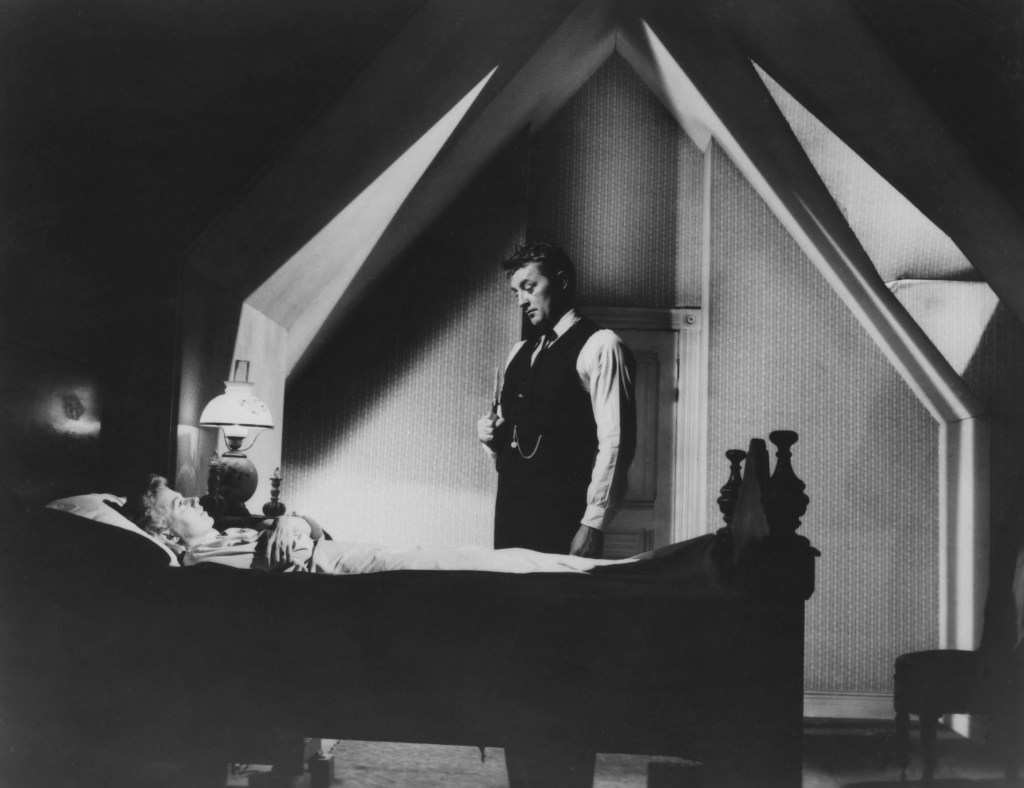
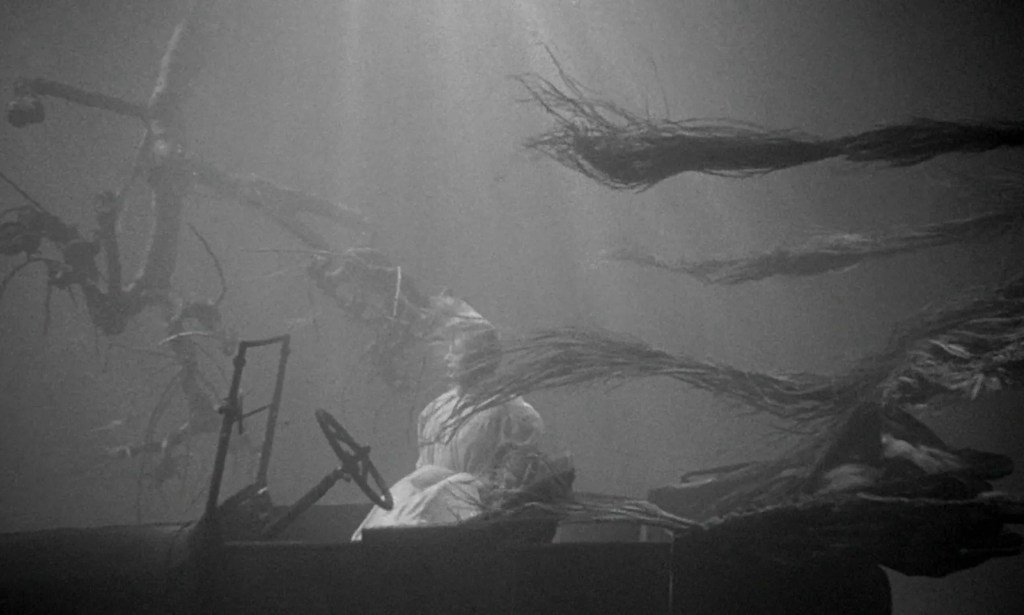
It’s a beautiful sequence in a film stuffed with them. Laughton worked closely with cinematographer Stanley Cortez and several sequences are awash with poetic visual flourishes inspired by some of the great German silent cinema of the 1920s. Who can forget the visually stunning shot of Willa’s body in a car at the bottom of the river, her hair flowing in matching waves with the weeds around her (possibly the most beautiful image of death in the movies)?  From the countryside shots that bring back memories of Murnau’s Sunrise to striking sets that seem to have emerged from The Cabinet of Dr Caligari. Most striking is the high-ceiling, Church-like set that is Powell and Willa’s bedroom, a shadow-laden expressionist nightmare. The scene is played with the same carefully choreographed expressionist force, from Mitchum’s vivid gestures to Winter’s corpse-like resting.

Death comes from Mitchum’s Preacher, one of the great monsters in cinema. With those famous ‘Love’ and ‘Hate’ tattoos, Mitchum makes the role truly terrifying. Mitchum kept up a studied public contempt for acting, but he immerses himself in Preacher in a way he did with few other roles. He makes him horrifyingly charming (he wins adult confidences easily) and his smooth gravel-voice and masculine bearing are both imposing and intimidating. But Mitchum also embraced the weirdness, the psychopathy of a man who murders without a second thought while keeping up a private conversation with the Lord. Preacher is an animalistic demon wrapped up in human skin – he lets out the most bizarre, piercing screams when foiled or injured – twisting his body into unsettling shapes before his misdeeds or letting his eyes boil with anger and disgust (most particularly at sex, something he seems to find repulsive and fascinating).

It’s an extraordinary, terrifying, monstrous performance unlike almost everything else in Mitchum’s career in its willingness to go to such twisted, eccentric, unnatural extremes. Mitchum credited Laughton as his finest director – and Laughton’s skill with actors is clear from all the performances. Shelley Winters’ has rarely been better in a role she skilfully downplays, as an unhappy woman, desperate for redemption, forced to feel ashamed of her desires. The two children are very good, in particular Chapin’s frequently raw panic and trauma and determination. The rest of the cast is stuffed with striking, Dickensian pen portraits, performances of striking eccentricity.
These performances fit within the magical realism of the film in a film that is as stylised as this. Again, I can’t imagine that audiences at the time – used to blockbusters, shot on gloriously realistic locations – were ready for something that aped so strongly the artistic flourishes of silent cinema. But it works spectacularly for a film about a children’s semi-magical quest into the wilderness. It’s hard to think of another film that leans so completely into such an aesthetic unreality as this one – even the town the kids eventually escape to feels like it’s a movie set rather than a real place.

The film’s final act in the home of Miss Rose Cooper is not as strong as those before. There is something rather po-faced and self-satisfied about the slightly clumsy moral message of finding faith and goodness which feels rather twee and disappointing considering the gothic film we’ve just watched. The film’s final sequence, on a peaceful Christmas day, belongs in a more conventional film (even though you could argue it’s also a conventional fairy tale ending). Much as I enjoy several moments of Lillian Gish’s performance as a tough old woman – like a shot-gun wielding Whistler’s Mother – the shift of focus away from Preacher’s demonic schemes feels like a loss.

The Night of the Hunter, for me, isn’t the complete masterpiece it’s sometimes hailed as – there are clumsy moments (I would agree the Tom & Jerry Preacher chase feels tonally out of place, and neither the opening or closing is strong), but it’s also filled with moments of pure cinematic magic – and has a performance from Mitchum that is one for the ages. Its imagery is beautiful, it’s tone mostly perfect and its imagination limitless. The greatest sadness about watching it is that Laughton never directed again – based on this, imagine how good his next film might have been?
Seven (1995)

Seven (1995)

Darkly, unrelentingly unsettling, Fincher’s true-debut is an outstanding psychological thriller

Director: David Fincher

Cast: Brad Pitt (Detective David Mills), Morgan Freeman (Detective William Somerset), Gwyneth Paltrow (Tracy Mills), Richard Roundtree (DA Talbot), R. Lee Ermey (Police captain), John C McGinley (‘California’), Julie Araskog (Mrs Gould), Mark Boone Jnr (FBI man), John Cassini (Officer Davis), Reginald E. Cathey (Dr Santiago), Richard Schiff (Mark Swarr), Kevin Spacey (John Doe)

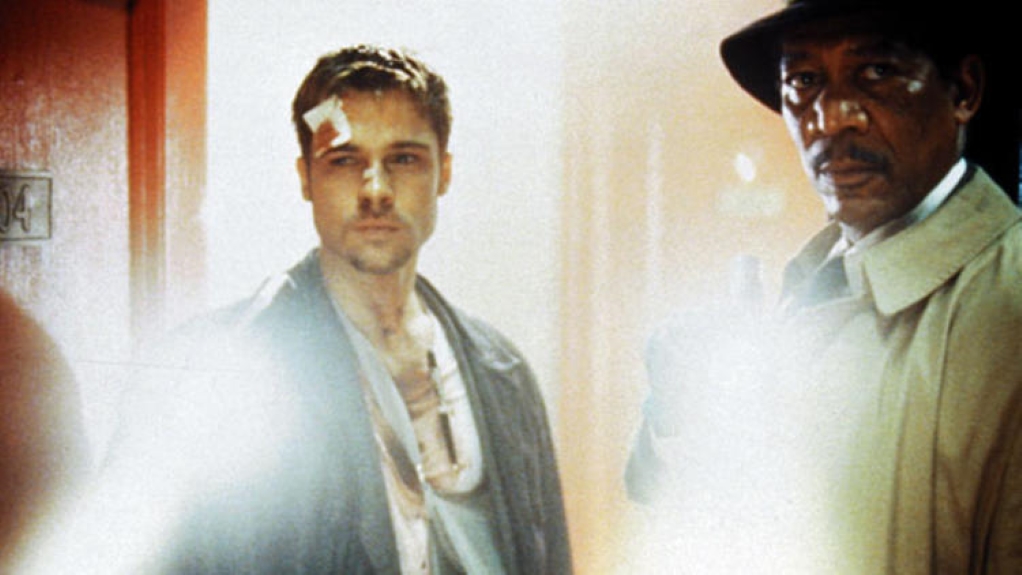
Set in a city where decency and humanity goes to die, daylight is a stranger and everything is covered with constant rainfall, Seven covers the most chilling week-in-the-life of two detectives. One, disillusioned William Somerset (Morgan Freeman), is counting down to his early retirement. The other, his cocksure replacement David Mills (Brad Pitt) thinks he’s unbeatable and indestructible. But they are going up against someone who will shake them to their core, a calculating serial killer dispatching victims he judges guilty of the seven deadly scenes, framing their bodies in grotesque rituals. Can they track him down before he completes his terrible work?

Seven is one of the finest, and most influential, of all serial killer films. Dark, haunting and relentless, it’s a perfect package of grim foreboding and nihilistic terror, expertly directed by David Fincher. Seven is very careful about what it shows you, trusting far more in the horror of suggestion and witnessing the reactions of the characters – you come out of it convinced you have seen more than you have. It never lets you relax for a moment, always dreading the worst – yet so many people never saw coming its infamous final act with its unexpected, horrifying, reveals and darkly, hope-free conclusion. Seven offers almost no comfort and never pets you at ease only a despairing look at how terrible the world can be and how desperate the struggle for goodness can be.

In a visual design that’s reminiscent of Blade Runner, the world of Seven is almost permanently dark, dingy and rain-soaked, the crime scenes filthy, terrifying haunted houses of grimness. The chaotic sounds of the city, mechanical and uncaring, are everywhere: Somerset even sleeps with a metronome ticking in an attempt to impose sone order on his world. The score uses base beats and near-industrial sound, the editing mixes smooth classic cuts and sudden shocks, the camera work is awash with tones from the green of greed to the blood red of lust. Not there there is any comfort in daylight, since the brightest, most open sequence of this claustrophobic film (even the Mills’ apartment violently shakes from passing trains, a subtle hint no where is safe) takes place in a pylon-stuffed field and it’s the most horrific, nihilistic of the lot.

Seven though is also darkly seductive: it plays on our fascination with the dark ‘genius’ of Hollywood killers, their love of patterns and the twisted purity of their quest for perfection. The film’s opening sequence, showing the killer’s preparations in a series of jagged, disorienting cuts, even places us in his perspective. When he is revealed, he mixes prissy politeness with dark, obsessive love for his work. Seven understands out fascination with the pattern killer – just as we were obsessed with Hannibal Lector and the Terminator, the guy in control is intriguing. It punishes us for this by stressing the horrific impact of his crimes and the traumatic impact on the survivors, is nihilistic ending even more effective for all the dark enjoyment the viewer has taken out of Seven’s grim momentum.

It’s also benefits hugely from its play on the conventions of the odd-couple detective pairing. Somerset and Mills are chalk-and-cheese: Somerset is calm, methodical and professionally distant, Mills is volcanic, lacks focus and becomes terribly personally invested. One of the films few touches of humanity and hope is the growing friendship between these two – slow-burning to say the least – that sees them go from butting heads to sharing jokes and supporting each other’s calls.

The performances are excellent. Brad Pitt (whose clout helped ensure producers couldn’t neuter the film’s shocking ending) is full of jittery energy masking his insecurity, doubt and fear; so worried about looking weak he resorts constantly to anger. Lacking patience (hilariously he can’t bring himself to read Dante and Chaucer, as Somerset recommends, instead resorting to hiding Cliff Notes books in his desk) he investigates the crimes with gusto, focused on the exterior not the interior. He can’t only see the killer as a lunatic, an under-estimation that makes him easy to manipulate.

The moral centre is Morgan Freeman’s Somerset, a superb performance. Somerset is completely disillusioned, convinced any trace of goodness in the world has disappeared. Despite this, events prove him wise (but not above terrible errors) and determined with a strong moral centre. He’s empathetic about crime in ways Mills isn’t (at an early crime scene, one of his first questions is if the victim’s kid has seen the body, a question dismissed as irrelevant by his colleagues) and investigates from inside the killer’s psyche, seeking to understand his motives. Perhaps no other film than Seven has given Freeman so perfect a vehicle, his expressive eyes full of sorrow and regret, his careful decency a mask of detachment that he slowly lets slip to Mills and his wife.

As that wife, Gwyneth Paltrow gives a striking, endearing and perfectly judged performance in a small but crucial role. Tracy Mills is the one unquestionably decent person in this crap-sack world, perhaps why she and Somerset are drawn together. Seven has a wonderfully quiet, humane moment in all this horror, when the two meet to discuss parenthood, a beautifully played exploration of doubt and fear from Paltrow and quiet semi-regret from Freeman. It’s a role pivotal for the film, Paltrow leaving a deeply tender impression on the viewer.

It’s vital for the film’s final act pay-off. Seven is perfectly constructed, both in its pacing of the murders and in not dragging out the mystery of the motive too long (it knows, of course, that everyone watching the film is ahead of the detectives on that score). It’s crammed with stand-out sequences: a SWAT team house storming promises drama but turns into a dark twist on the wrong-door routine; a chase sequence after a chance encounter with the unseen killer gives a perfect shot of adrenalin. It’s all unbalancing us for a shockingly unexpected move by the killer (the actor’s identity carefully kept a secret in advance, meaning his reveal is a genuine shock for the uninitiated) leading to its horrifically nihilistic ending that I defy anyone to anticipate (except its now probably as famous as the identity of Rosebud or Keyser Soze).

Seven is astonishingly brave in all its pulsating thrills and perfectly judged tension for offering very little hope. This is a film where good is essentially powerless against evil: Somerset is too detached to beat evil, Mills so invested in his own black-and-white world he’s easy prey for the coldly manipulative. The film’s conclusion is a punch to the gut, but logical in a film where we’ve seen ordinary people indifferent to the worst of humanity and evil being so devilishly determined and ingenious in its actions no one stands a chance to beat it. You can criticise Seven for its small beats of misogyny: while Tracy is pure, like a fairy-tale princess, the two female victims are a shallow, preening model while the lust victim is not the man who uses prostitutes but the prostitute herself – an attitude we shouldn’t be surprised the killer has, but is unquestioned by any of the (all-male) investigators. (I was uncomfortable with this when I first saw it in the nineties, and time hasn’t changed my mind).

But aside from that, Seven is a darkly compelling masterpiece, a brilliantly unsettling film from David Fincher, at last allowed to deliver a film that exactly matched his vision (in a way Alien 3 did not). The battle to keep its nihilistic dark and shocking ending was a battle well-won, and it makes for a film that is a chilling exploration of evil in the world as well as a compelling, darkly-bloody film noir set in a world of unrelenting hopelessness. One of the greatest serial killer films ever made.

Saltburn (2023)

Saltburn (2023)

Dreadfully pleased with itself and full of shallow insights and stunt clickbait moments

Director: Emerald Fennell

Cast: Barry Keoghan (Oliver Quick), Jacob Elordi (Felix Catton), Rosamund Pike (Lady Elspeth Catton), Richard E Grant (Sir James Catton), Alison Oliver (Venetia Catton), Archie Madekwe (Farleigh Stuart), Carey Mulligan (“Poor Dear” Pamela), Paul Rhys (Duncan), Ewan Mitchell (Michael Gavey), Sadie Soverell (Annabel), Reece Shearsmith (Professor Ware), Dorothy Atkinson (Paula Quick)

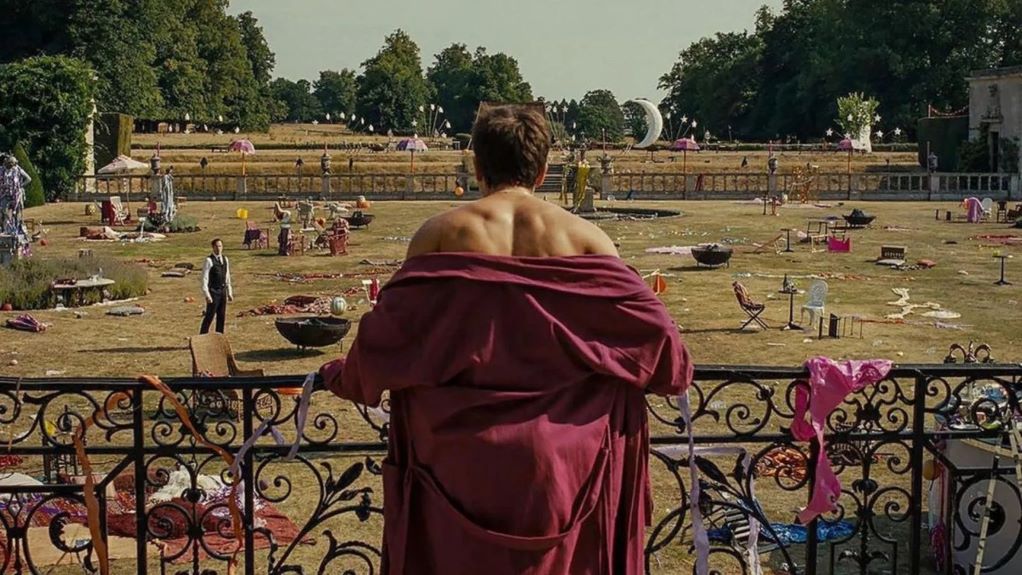
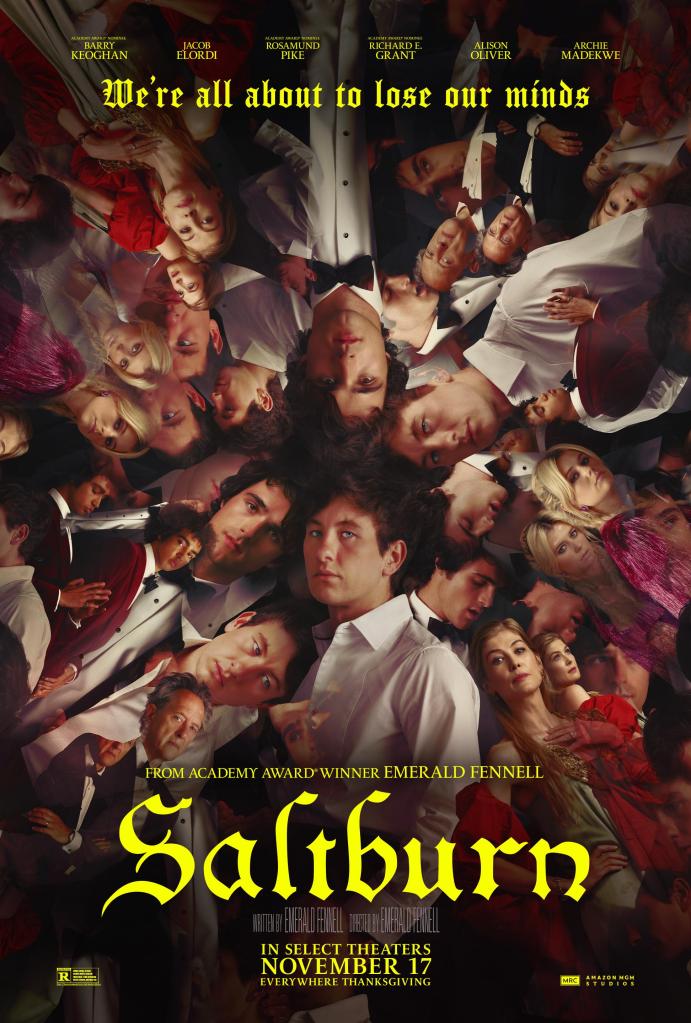
Promising Young Woman was a thought-provoking, very accomplished debut. It’s odd that Emerald Fennell’s sophomore effort plays more like a first film: try-hard, style-over-substance, very pleased with itself and its punky attempts to shock. Crammed full of moments designed to be snipped out and talked about – in a “you will not fuckin’ believe what just happened” way – Saltburn is a fairly trivial remix of ideas much, much better explored elsewhere, predictable from its opening minutes.

It’s 2006 and Oliver Quick (Barry Keoghan) is a scholarship student at Oxford University, socially awkward and very conscious of his Liverpudlian roots, struggling to fit in among the wealthy set that dominates his college. At the centre is Felix Catton (Jacob Elordi), fundamentally decent but blithely unaware of his privilege, who takes a shine to Oliver with his shyness, troubled working-class background and grief at the recent death of his alcoholic father. Felix invites Oliver to spend the summer at Saltburn, his luxurious family seat. There Oliver is welcomed – or does he inveigle his way? – into the lives of the Cattons, from seducing Felix’s sister Venetia (Alison Oliver) to charming his parents Sir James (Richard E Grant) and Lady Elspeth (Rosamund Pike). But is Oliver all he appears to be?

The answer, of course, is no. Which shouldn’t surprise anyone who has ever really encountered any form of unreliable narrator before. Fennell opens the film with a clearly older, well-dressed Oliver recounting the film’s story to an unseen person. It’s not much of a deduction from this alone, that Oliver is at best not to be trusted, is definitely potentially dangerous and is probably a lot worse. All that, inevitably plays out, in a film that so nakedly rips off Brideshead Revisited (or Recycled) and The Talented Mr Ripley that Oliver might as well be called Ripley Ryder.

“Ryder” would at least have been a witty name for a character who spends most of the film putting his (apparently) well developed manhood to effective use in manipulating and controlling people. Saltburn assembles a series of “shocking” moments of sexual weirdness from stalker-like sociopath Oliver – so much so, that the moments he merely wanders (or dances) around in the buff feel almost normal. Surely there was more than half an eye on hashtags when the film presents scenes like Oliver drinking spunky bathwater, performing oral sex on a woman during her period or dry humping then wanking over a grave. It’s not big and it’s not clever.

“Not clever” also sums up the film’s inane social commentary. Set in 2006, it seems to take place in a version of Oxford that probably hasn’t existed since 1956. Having been in a state-school kid at Oxbridge at this time, its vision of a university 98% populated by poshos jeering at working-class kids with the wrong sort of tux just isn’t true (in fact there were more state school students than private school kids at Oxford that year). In this fantasy, all the students are either from Old Etonians or maladjusted weirdos from state schools. It’s hard not to think this is Emerald Fennell (a woman so posh, her 18th birthday party was featured in Tatler) guiltily looking back at how her “set” at Oxford might have behaved to the less privileged students.

It boils down to a view of Oxford as an elitist social club laughing openly at anyone who can’t trace their descendants back to the House of Lords, where tutors are entranced by the idea that a place like “Liverpool” exists and snort at the working class student for being a clumsy try-hard by actually reading the books on the reading list with student life flying by in a series of hedonistic raves, hosted by the rich and famous. Maybe I was just in the wrong circles back in the day.

This portrait of Oxford as a play pen for the super elite is as damaging (it’s exactly the sort of false image that stops deserving people from wanting to go) as it is lazy, tired and false. But then, Saltburn compounds its boringly seen-it-all-before social commentary by trudging off down other, all-too-familiar paths as it turns its fire on those with their nose pressed up against the window of privilege. The film’s vilest member of the elite, Farleigh, is himself an interloper, turned aggressive gate-keeper. And, as is not a surprise, Oliver’s roots turn out to be far more comfortable than he is letting on. Oliver is a Charles Ryder who yearns for Brideshead so much, he starts destroying the Marchmain family to get it. Because, in his eyes, as an aspirant middle-class type he appreciates it more.

On top of this is layered a clumsy, Ripley-esque madness to Oliver, who can’t decide himself whether he is infatuated with the charming Felix (very well, and sympathetically, played by Jacob Elordi) or just wants to suck his soul dry. Barry Keoghan plays this Highsmith-styled sociopath with just enough flash and sexual confusion – and he does manage to successfully turn on a sixpence from wide-eyed wonder, to vicious anger. But the character again feels like a remix of something done better elsewhere, trading emotional depth for cartoonish bombast and clumsy on-the-nose point scoring.

The on-the-nose-ness runs through the whole film. It’s a film screaming to be taken seriously, from its 4:3 framing, to its jarringly satirical music choices, arty Gothic fonts, visual quotes from Kubrick and look-at-me love of tricksy camera shots (some of these, I will admit, are gorgeously done, even if the film frequently lingers on them so we can “see the work”). But it makes very little sense. How does Oliver manage to exert an influence, so profound and complete, over Felix’s parents? Why does the wool fall from everyone’s eyes one-at-a-time in quick succession? Does Saltburn feel sorry for the generous but emotionally dysfunctional Cattons or does it feel they deserve their fate?

Because so many of these ideas are so half-heartedly explored, it becomes a collection of scenes designed to shock, tricksy directorial decisions, some flashy performances (Rosamund Pike can certainly wittily deliver a slew of lines dripping with blithely unaware privilege) and twists that will only surprise those who have never seen a story about an outsider before. Jacob Elordi emerges best, creating a character of surprisingly revealed emotional depth, but most of the rest of Saltburn settles for flash and instant gratification. To use its own terms of reference, it’s as satisfying as premature ejaculation: fun for an all-too-brief second, then a crushing, shameful disappointment.

The Omen (1976)

The Omen (1976)

Extremely silly horror with a great score, more interested in inventive deaths and genuine fear or dread

Director: Richard Donner

Cast: Gregory Peck (Robert Thorn), Lee Remick (Katherine Thorn), David Warner (Keith Jennings), Billie Whitelaw (Mrs Baylock), Patrick Troughton (Father Brennan), Leo McKern (Carl Bugenhagen), Harvey Stephens (Damien Thorn), Martin Benson (Father Spiletto), Robert Rietty (Monk), John Stride (Psychiatrist), Anthony Nicholls (Dr Becker), Holly Palance (Nanny)

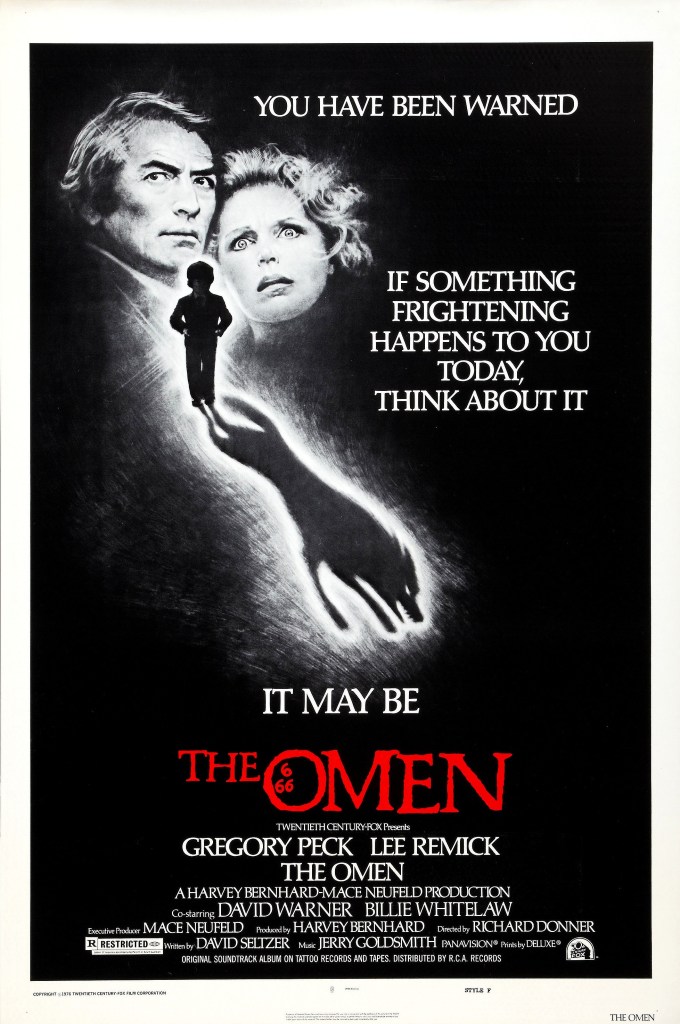
“Let him that hath understanding count the number of the beast; for it is the number of a man; and his number is 666.” One of the sweetest things about The Omen is that the number of the Beast was considered such an unknown concept to original viewers, that its painstakingly explained to us. In some ways The Omen is quite sweet, a big, silly Halloween pantomime which everyone involved takes very seriously. If The Exorcist was about tapping into primal fears, The Omen is a gory slasher (with a cracking score) that’s about making you go “Did you fucking see that!” as actors are dispatched in inventively gory ways. It’s brash, overblown and (if we’re honest) not very good.

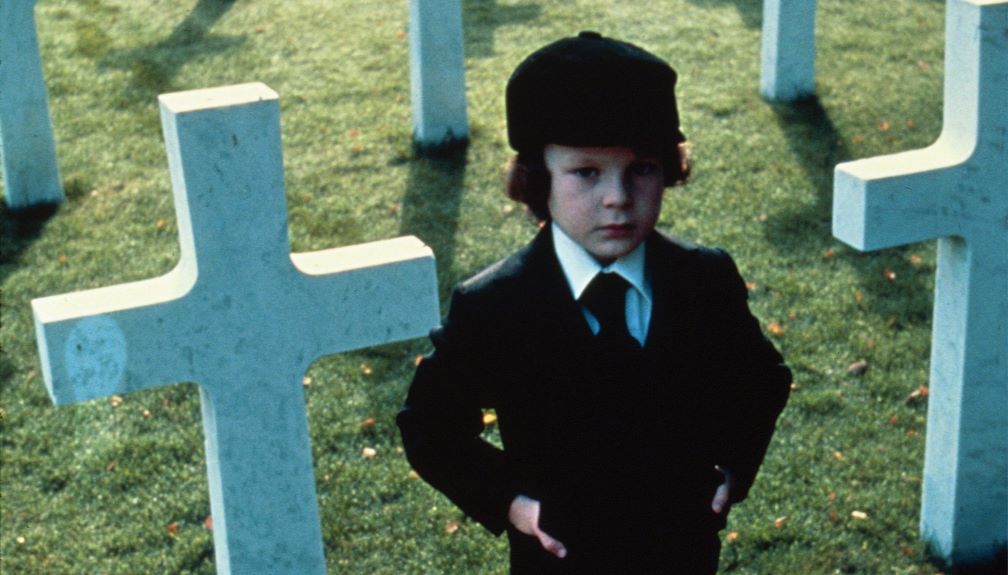
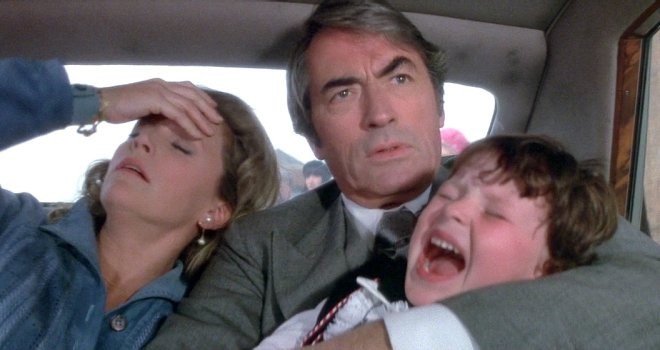
Robert Thorn (Gregory Peck, selling every inch of his innate dignity for cold, hard lucre) is an American diplomat told one night in Rome that his pregnant wife Katherine (Lee Remick) has given birth to a stillborn child. “Not a problem” he’s told by an absurdly creepy Priest (Martin Benson) – just so happens there’s another motherless new-born child in the hospital tonight so he can have that one, no questions asked, and his wife need never know. Flash forward five years: Thorn is Ambassador to the Court of St James and young Damien (Harvey Stephens) is a creepy kid, with few words and piercing stare. In a series of tragic accidents people start dying around him. Could those people warning Thorn that his son is in fact the literal anti-Christ himself, be correct?

Want to see how powerful music can be? Check out how The Omen owes nearly all the menace it has to it imposing, Oscar-winning score from Jerry Goldsmith (wonderfullyGothic full of Latin-chanting and percussive beats). It certainly owes very little to anything else. The Omen is an exploitative, overblown mess of a film, delighting in crash-zooms, jump-cuts and extreme, multi-cut build-ups to gore. Richard Donner never misses an opportunity to signpost an approaching grisly death, by cutting between the horrified face of the victim, the object of their demise and then often back again. For the best stunts – including a famous demise at the hands of a sheet of glass – Donner delights in showing us the death multiple times from multiple angles.

This slasher delight in knocking off actors – people are hanged, impaled, crushed and decapitated in increasingly inventive manners – is what’s really at the heart of The Omen. None of this is particularly scary in itself (with the possible exception of the hypnotised madness in the eyes of Holly Palance’s nurse before her shocking suicide at Damien’s birthday party) just plugging into the sort of delight we take in watching blood and guts that would be taken in further in series like Halloween (which owed a huge debt to the nonsense here). Donner isn’t even really that good at shooting this stuff, with his afore-mentioned crude intercutting and even-at-the-time old-fashioned crash zooms.

With Goldsmith’s score providing the fear, The Omen similarly relies on its actors to make all this nonsense feel ultra serious and important. They couldn’t have picked a better actor than Gregory Peck to shoulder the burden of playing step-dad to the Devil’s spawn. Peck has such natural authority – and such an absence of anything approaching fourth-wall leaning playfulness – that he invests this silliness with a strange dignity. Of course, Atticus Finch is going to spend a fair bit of time weighing up the moral right-and-wrongs of crucifying with heavenly knives the son of Satan! Peck wades through The Omen with a gravelly bombast, managing to not betray his “for the pay cheque” motivations, and investing it with his own seriousness of purpose.

Peck’s status also probably helps lift the games of the rest of the cast. Lee Remick may have a part that requires her to do little more than scream (and fall from a great height twice) but she does manage to convey a neat sense of dread as a mother realising her son is not quite right. David Warner gives a nice degree of pluck to a sceptical photojournalist (while also bagging the best death scene). Troughton and McKern ham it up gloriously as a drunken former devil-worshipping priest and an exorcist archaeologist respectively. Best in show is Billie Whitelaw who filters her Beckettian experience into a series of chillingly dead-eyed stares as Damien’s demonic nanny.

The Omen does make some good hay of its neat paedophobia. Harvey Stephens with his shaggy hair, impish smile and pale skin (not to mention darkly sombre wardrobe) looks like your worst nightmare – he’s creepy enough that the film doesn’t need to gift him a vicious rottweiler as well. Donner’s decision to never have Damien show a touch of any real emotion for most of the film also pays off, meaning even something as silly as Damien inflicting slaughter from behind the pedals of a child’s tricycle seems scary.

Of course, if Damien was savvy enough to present himself as a bright and sunny child perhaps Troughton, Warner, McKern and co would have struggled to convince Peck he was the Devil’s seed. In that sense he takes after his dad: Satan loves an over-elaborate death, and from a storm herding one victim to a fatal impalement under a tumbling church spire to popping the handbrake of a glass-bearing van for another, no trouble is too much for Satan when bumping off those who cross him. (The Omen could be trying to suggest that maybe everything is a freak accident and Thorn goes wild and crazy with grief – but that Goldsmith score discounts any possibility other than Damien is exactly what we’re repeatedly told he is.)

The Omen trundles along until its downbeat, sequel-teasing ending, via a gun-totting British policeman who sticks out like a sore thumb in a country where the cops carry truncheons not pistols. Donner balances the dialled up, tricksy, overblown scares with scenes of po-faced actors talking about prophecies and the apocalypse, all shot with placid straight-forwardness. There is a really scary film to be made here about finding out your beloved son is literally a monster, or how a depressed father could misinterpret a series of accidents as a diabolical scheme. But it ain’t The Omen – this is a bump-ride of the macabre. The Devil may have the best tunes – but he needs to talk to his Hollywood agent.

Dirty Harry (1971)

Dirty Harry (1971)

Eastwood enters into cinematic legend in this grippingly entertaining pulpy cop thriller

Director: Don Siegel

Cast: Clint Eastwood (Inspector Harry Callahan), Harry Guardino (Lt Al Bressler), Reni Santoni (Inspector Chich Gonzalez), John Vernon (Mayor), Andy Robinson (Scorpio), John Larch (Police Chief Paul Dacanelli), John Mitchum (Inspector Frank DiGiorgio), Mae Mercer (Mrs Russell)

“Do you feel lucky? Well do ya? Punk” With these words, .44 Magnum in one hand and remains of a hot dog in the other (yes, Harry Callahan was so cool he didn’t even stop having lunch to take on a bunch of armed robbers), Clint Eastwood made a permanent mark on cinematic history. In 1971 Dirty Harry was condemned by some as fascist or reactionary, but really it’s just energetic, punchy, impossibly entertaining pulp. In a year where tough, rule-bending cops were de rigour, Dirty Harry may have more of a B-movie vibe than Friedkin’s Oscar-winning The French Connection but there is no doubt which one is the most viscerally entertaining.

“Dirty” Harry Callahan (Clint Eastwood) – so called because he gets all the jobs no-one else wants – is a tough-as-nails Inspector who values the Rule of Law over the Rules of the Law. Taciturn, not-suffering fools and always on the hunt for criminals (as the prototype gruff cop maverick, of course he works best alone), he prowls the streets of San Francisco and stops at nothing to take down bad guys and protect the innocent. He’s the guy you want on the case when the ruthless Scorpio killer (Andy Robinson) holds the city to ransom, shooting innocent people at random, seizing hostages and sending notes demanding payment to prevent more outrages.

Dirty Harry is lean, mean and a simply perfect piece of pulpy action. Directed with a tautness by Don Siegel, that never let’s go, it riffs on real life events – Scorpio is an obvious stand-in for the Zodiac Killer – and basically shifts a shoot-first-ask-questions-later cowboy into the heart of a modern city. Harry, embodied with sublime suitability by Eastwood (cementing his image) has a waspish sense-of-humour, speaks as he finds, never-ever-stops, has the ruthless determination we all wish we had and carries inside himself (buried deep) a maudlin sadness at his fundamental loneliness.

Dirty Harry doesn’t shirk in showing how a cop who bends the rules to deliver real justice can be an attractive figure. Harry doesn’t quite shoot first – he gives a cursory warning every time – but he always responds with lethal force when people are threatened. He’ll carry out illegal search operations of despicable offenders, he’ll follow a psychopath because he knows he’ll offend again (he’s right, but still) and when Scorpio won’t tell him where a hostage has been hidden, he doesn’t think twice about effectively torturing the guy to get him to talk.

Siegel’s film knows that this makes Harry the sort of guy we liberals tut about but, when push-comes-to-shove we need. Harry clones run through film and television history – what is 24’s Jack Bauer, but Dirty Harry fighting nuclear terrorists? – and it’s rooted in the fact that, although we know we should respect the rights of criminals, secretly we don’t want to. Surely, it’s not an accident that the film was set in San Francisco, the nirvana of liberalism in 1970s America. What makes that possible – cops like Harry.

The film stacks the deck slightly by making most of the besuited bosses Harry rubs up against punch-clock rules followers who place the letter of the law above its spirit. Of course, the DA will release Scorpio back onto the street because the damning evidence Harry has collected needs to be thrown out. Of course, he’ll order Harry to leave the clearly-mad-as-a-bag-of-bats Scorpio in peace. Of course, almost every other law official we see can’t hold a candle to Harry’s ruthless skill. Eastwood is so cool, we need to take a beat to remind ourselves that Harry is a widower who lives in an empty apartment, has no friends and he looks on with a quiet envy when his wounded partner is comforted by his wife.

But Harry is made for other things. Siegel’s character-defining set-piece early on, irrelevant to the plot, introduces everything we need to know about Harry. He effortlessly surmises a robbery is taking place at a bank across the street, calls for back-up and when he realises it will arrive too late, grabs that .44 Magnum and hot dog and strolls across the street into a shoot-up. At the same time, it’s a miracle no one is caught in the crossfire or crashing cars. He then bluffs another robber to stand down with a hard-as-nails bad ass speech, despite his chamber being empty of bullets.

To take on a guy like that, you need a truly inspired villain. Andy Robinson, his performance a master-class of twitch with a high-pitched giggle that acts like nails on a blackboard, provides it. He makes Scorpio a deeply unhinged, unpredictable predator who compensates for his slightness and youth (opposite Eastwood’s chiselled masculinity) by simply being an utterly unpredictable lunatic, with no sense of moral compass. Robinson pitches the performance just right, avoiding obvious histrionics to present a character larger than life but terrifyingly plausible.

The duel between them is shot by Siegel like an extended, grimly tense mix of chase and spy thriller. Opening the film with Scorpio searching the horizon for a new victim through a rifle’s telescopic lens, it throws us into a dark nightmare of San Francisco, with parks and baseball grounds places of unimaginable danger and a closing tense game of cat-and-mouse at an industrial plant. Through it all, Eastwood brings his softly spoken charisma to a man who knows full well there is little too him but the chase, but who puts the rights of the guilty a very, very distant second to the victims.

Dirty Harry plays like a punch to the guts, a superbly (and seductively) entertaining film that gives just enough hints at the dangers of Harry’s methods, while making their effectiveness abundantly clear. Siegel’s direction is pitch-perfect – this is one of the greatest cop thrillers ever made – and Eastwood’s performance is iconic. The French Connection maybe a more complex film – but Dirty Harry is more entertaining and the one you’d choose to put on with some popcorn.

Manhunter (1986)

Manhunter (1986)

Mann’s visually striking thriller doesn’t have quite the dark subversiveness it needs but is an unsettling thriller

Director: Michael Mann

Cast: William Petersen (Will Graham), Kim Griest (Molly Graham), Dennis Farina (Jack Crawford), Brian Cox (Dr Hannival Lecktor), Joan Allen (Reba McClane), Tom Noonan (Francis Dollarhyde), Stephen Lang (Freddy Lounds)

Before The Silence of the Lambs, there was an earlier attempt to bring the twisted world of Thomas Harris’ gothic thrillers to the screen. Michael Mann’s Manhunter has grown in reputation since its release, along with an increased regard for the visually stylised and cold modernism of Mann’s work. Truthfully, Manhunter lacks the Hitchcockian dark wit, and is far less effective at exploring the dark links between investigator and psychopath, than Silence of the Lambs. But it remains an intriguing – and often disturbing – curiosity.

FBI profiler Will Graham (William Petersen) is called out from extended leave by Agent Jack Crawford (Dennis Farina) to investigate chilling serial killer, the Tooth Fairy. The killer breaks into family homes and brutally murders the occupants, leaving bite marks and broken mirrors behind. Graham has an empathetic gift for understanding the mindset of killers, something he used to capture cannibalistic serial killer Hannibal Lecktor (Brian Cox), now imprisoned in a mental institute. Graham’s quest to catch the Tooth Fairy leads to him becoming ever more obsessive, including reconnecting with Lecktor to help profile the killer. Meanwhile the Tooth Fairy, Francis Dollarhyde (Tom Noonan), a lonely photo developer obsessed with William Blake’s Red Dragon and desperate to ‘become’ something greater begins his first meaningful relationship with blind colleague, Reba (Joan Allen).

Manhunter is set in a crisp, modernist world of clean, soulless buildings, glass fronted houses and offices and precise, featureless rooms. Mann and cinematographer Dante Spinnotti film everything with a series of tinges – strong, cool blues, drained out and striking whites, murky greens. All is designed to give the film a deliberately forensic feeling, like we watching something play out in a crime lab. It fits with a film that is fascinated with the procedures of investigating and profiling and delights in the intuitive, deductive leaps Graham makes.

Mann’s film attempts to draw parallels between Graham and Dollarhyde, both men uncomfortably in touch with their darkest, twisted impulses. As Hannibal Lecktor observes, Graham can so completely inhabit the interior world of killers, because he secretly longs for the buzz of killing himself. That’s easy to see in William Petersen’s focused, intense performance. Reluctantly dragged back in, Graham is noticeably unphased by the horrific crime scenes he witnesses (however much he is furious at the loss of life) and becomes ever more fixed and lean as the hunt continues, increasingly more-and-more like the obsessive prey-hunting psychopath he is investigating.

In doing so he sidelines his family – even putting them in danger – and increasingly cuts off human connections to feed his laser-focused quest. This contrasts him with Dollarhyde, a damaged, isolated and self-loathing man who flirts with the last vestiges of humanity. A man who sees nothing in himself that anyone could love, Dollarhyde becomes as giddy as a schoolboy when Reba sees him as a kind, attractive and decent man. Behind his eyes, Tom Noonan shows a quiet struggle between the obsessive monster, driven to destroy, and a man considering changing his path. This intriguing contrast between the family-man who leaves tem to hunt killers and the killer who flirts with settling down is a thread you wish the film had more patience to explore among its neon-lit, filtered style.

But Mann doesn’t quite have the patience to draw these threads together. Perhaps not helped by, skilled and intelligent as Noonan’s performance is, always presented Dollarhyde as an imposing, Frankenstein-monster style heavy rather than someone we invited to feel the sort of twisted empathy for that the film needs. We should be feeling something of what Graham says when he talks about feeling pity for the abused child and disgust for the twisted killer that child grew up to be. We never truly do.

Perhaps that’s partly because Dollarhyde is a character the film can never build up the same interest in, as it does with the looming shadow of Hannibal Lecktor (the spelling was unique to this film). Appearing only in three scenes, Lecktor dominates the film. Basing his performance on Scottish serial killer Peter Manuel, Cox brings the part a chillingly studied delight at his own intelligence with an air of quiet politeness which only vaguely masks his malice and cruelty. A ghost of a smile is behind every cruel, hurtful word and action he carries out and his every action is motivated only by a desire to harm. It’s a mesmerically terrifying, low-key performance that overwhelms the film.

It contributes to the film’s second half never really matching the first. As Lecktor recedes and Graham focuses on the Tooth Fairy, the lack of personal connection between hunter and hunted (and the film’s unease to draw too distinctive a comparison between them) makes the final hunt less compelling ironically than when the Tooth Fairy was an unknown, unseen adversary. Noonan’s most effective scene is his terrifyingly soft-spoken interrogation of smart-aleck reporter Freddy Lounds (a braggart Stephen Lang), but the film isn’t brave enough to give him enough potential humanity to make the character really interesting – or the Satanic charisma that Lecktor has.

Manhunter culminates in a disappointingly run-of-the-mill shootout (edited with a curiously ham-fisted jaggedness) and an unsatisfactory Graham family reunion that feels like it hasn’t got the energy or desire to explore any of the lasting impact the darkness we’ve discovered in our lead character would surely have. Manhunter not only changes the title of Harris’ book (there was fear that Red Dragon was too easy to mistake as a martial arts film), but it also benches the emotional and psychological obsession of Dollarhyde (even the character’s famous tattoos don’t appear in the film). It becomes a strikingly shot, intriguingly fast-paced thriller which doesn’t manage to make the psychological complexities its striving for either as fascinating or unsettling as it should. It has plenty to haunt you – its creepy POV home-invasion opening is nightmare-inducing – but Harris was better served by Lambs mix of playful dark-horror and focus on acute psychological insight.

Misery (1990)

Misery (1990)

Obsessive fans wanting to control the narrative is nothing new in this tension-filled King adaptation

Director: Rob Reiner

Cast: James Caan (Paul Sheldon), Kathy Bates (Annie Wilkes), Richard Farnsworth (Sheriff Buster), Frances Sternhagen (Deputy Virginia), Lauren Bacall (Marcia Sindell)

“I’m your number one fan”. Do any other words strike more fear into the hearts of celebrities? Stephen King’s Misery feels more and more ahead of the time. We live in an era where obsessed fans frequently take to YouTube (or obscure blogs – oh dear…) to shout their fury into the ether about how their beloved franchise has taken a wrong (i.e. counter to their head cannon) turn. Stephen King wasn’t a stranger to this: he’d already had fans in the mid-80s lambast his non-horror books. Misery takes it all a step further.

Successful novelist Paul Sheldon (James Caan) has written a series of Mills & Boon style Victorian romance novels about a character called Misery Chastain. Wanting to restart a career as a serious novelist, Paul retreats to the depths of Colorado to put the finishing touches to his new non-Misery novel. Driving back to New York, he has a car accident. With two broken legs and fractured shoulder, he is dragged from his car by nurse and fanatic Misery fan Annie Wilkes (Kathy Bates). Annie tells him not to worry: the phone lines will be back up soon and until then he can stay at her home. Until she discovers Paul has killed off Misery in his recently published book. A furious Annie makes it clear no one knows he’s there and that, if he ever wants to escape her secluded home, he’ll write a new Misery book to Annie’s personal specifications.

Misery is part horror, part deeply black comedy – a heightened fantasy of increasing paranoia powered by a superb performance by Kathy Bates that walks a fine line between grand guignol, farce and deluded tragedy. In many ways Annie, monstrous in her obsession, is a superb dark comic creation. She has an anorak-level obsessive knowledge about her passions, litters her speech with prudish replacement swear-words (“cockadoodie!”), bounces around the room with schoolgirlish excitement at having Paul in her presence and adores her pet pig (named, of course, Misery). Bates is energetic, wide-eyed and times kind of sweet.

But she’s also a chillingly ruthless and capable of great outbursts of rage and fury at the slightest provocation. A lonely woman with clear signs of being either bipolar or deeply depressed, sinking at times into “black dog” moods, stuffing herself with junk food in front of trashy TV, she relies on Paul’s books to give her a slice of the romantic, exciting life she feels she has missed out on. Like the most toxic fans today, she feels such emotion for the Misery books, she believes they belong to her personally – and if they deviate from what she wants it’s a personal affront. She is also so desperate to love and be loved, she takes a brutal control of the world around her, convinced that if she just works really hard the object of her admiration will admit he feels the same.

Bates is extremely good in a performance strikingly similar to Hopkins’ Lecter a year later (also, of course, Oscar winning). It’s a masterclass in actorly tricks, all deployed with triumphant expertise to create a character who is both darkly funny and terrifyingly controlling. Annie is so twisted that, in a way, doping Paul up on drugs and smashing his legs with a sledgehammer is like an expression of love. If he really understood what she was trying to do for him, how she knew the sort of books he should be writing, he’d never want to leave anyway right?

That leg smashing scene – and God it’s almost impossible to watch – is the height of Reiner’s taut direction that brilliantly makes this an endlessly tense chamber piece. The camera frequently shoots Annie from Paul’s prone position, meaning we are craning our heads up to look at her in exactly the same way he is. Later sequences, where Paul finally works out how to pick the lock of his room and explore (in his wheelchair) Annie’s kitsch-filled house with its shrines to her favourite celebrities, also place us on his visual level. Several scenes use tension effectively – you’ll catch your breath at the dropping of a model penguin, clench as Paul hides pills and knives around him for future escape attempts or sweat as Paul rushes to return to his room when Annie arrives home suddenly. But Reiner also threads in Hitchcockian wit throughout, amongst the tension.

It also gains a great deal from James Caan’s measured performance as Paul. Caan was last in a longlist of male actors offered the role (a sharp change from those days when Caan turned down roles that went on to win other actors Oscars) but willingly plays the passive, scared Paul with a low-key humbleness that works very well. He becomes someone who it is easy to root for.

Misery explores the lengths obsessive fans will go to to own their passions very well. Annie rejects Paul’s first attempt at humouring her with a new Misery book for its inconsistencies with previous novels (she clearly knows way more about it then him). That’s not even mentioning she demands he burns the (only) copy of his new non-Misery novel because “it’s not worthy of him” (being full of naughty words). It’s so good – and in a way prescient of where fandom is heading – it feels a cheap cop-out to also reveal Annie is a serial killer. Far more interesting is how quickly an unhealthy fixation could tip a maladjusted person from demands, to threats, to leg smashing fury.

Misery also fits a little too neatly into a trend – common at the time – of “regular guys” having their lives turned upside down by dangerous, deranged women (there are more than a few nods to Fatal Attraction and it’s not a surprise to hear Michael Douglas was offered the role). For all the dark skill Bates plays Annie with, we are rarely invited to sympathise with or understand her (she’s cemented as a freak with the discovery of her killer past) – again, how more interesting (and prescient) would it have been to just have a woman driven to extremes by obsessive monomania?

The film works best as a chamber piece. So much so, that any scene outside of the house feels superfluous – despite the excellent work from Richard Farnsworth as the local sheriff investigating Paul’s disturbance. Misery, with its abandoned house in the middle of nowhere, is sometimes a little too open in its huge debt to Psycho. But it’s ahead of its time in understanding the obsessive anger that lies under the surface of the darker elements of fandom – so much so you wish it had stuck to that.

The Menu (2022)

The Menu (2022)

Dark satire is mixed with intelligent character work and a challenge to our assumptions in this intriguing film

Director: Mark Mylod

Cast: Ralph Fiennes (Julian Slowik), Anya Taylor-Joy (Margot Mills), Nicholas Hoult (Tyler Ledford), Hong Chau (Elsa), Janet McTeer (Lilian Bloom), John Leguizamo (Famous Actor), Reed Birney (Richard Liebbrandt), Judith Light (Anne Leibbrandt), Paul Adelstein (Ted), Aimee Carrero (Felicity), Arturo Castro (Soren), Rob Yang (Bryce), Mark St Cyr (Dave)

A dash of Succession. A soupcon of Hannibal Lector. Lashings of The Most Dangerous Game. All these ingredients are mixed to delightfully dark comic effect in The Menu, a sharp and tangy assault on class and modern society which leaves an unusual but satisfying taste in the mouth.

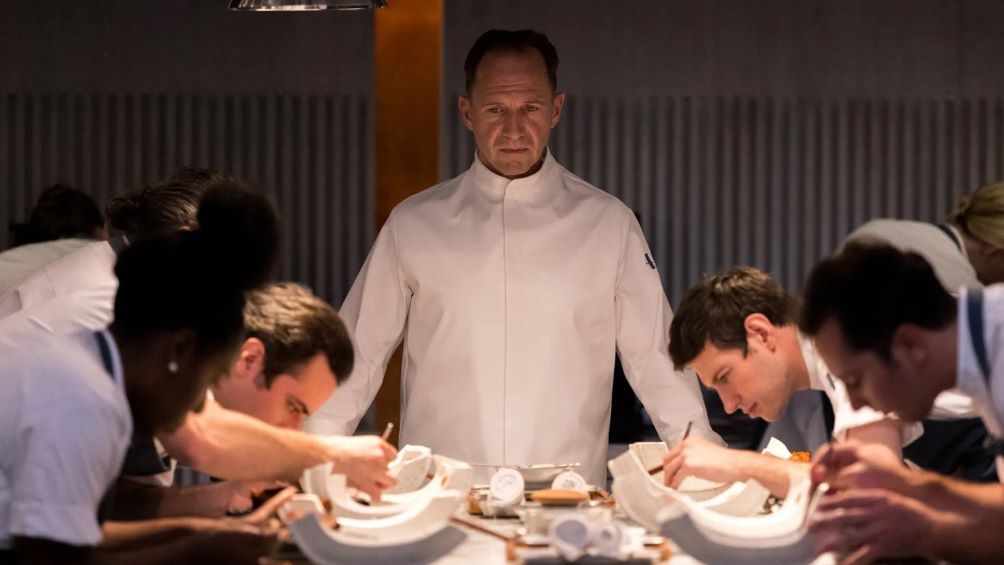
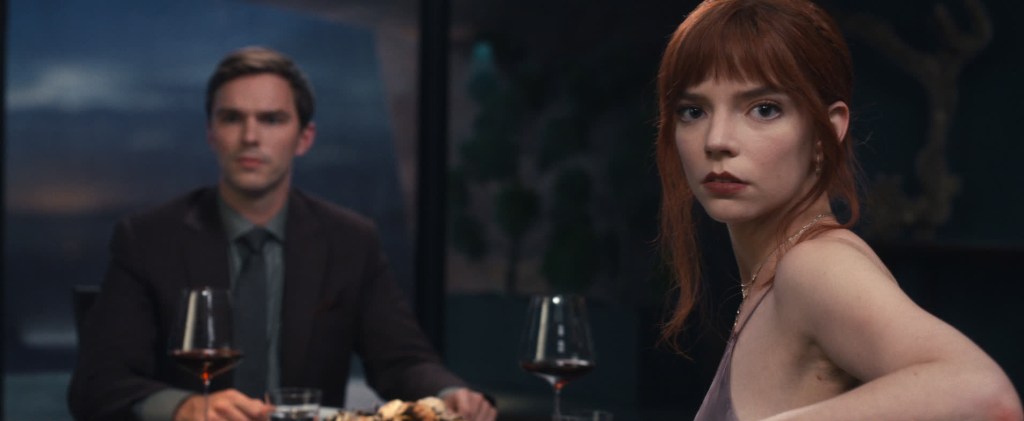
First those touches of The Most Dangerous Game. Julian Slowick (Ralph Fiennes) is a restauranteur so exclusive, his restaurant is based on a private island. Each course, of each menu is part of an overall story that forms the meal. For the story of the meal he is currently preparing, Slowick has selected an exclusive guest list of the rich and famous: businessmen, the rich, movie stars, food critics – the elite, the snobbish, the 1%. And the story he is serving up is one of increasingly grim retribution for this table-load of takers not givers. The only unexpected figure there is Margot (Anya Taylor-Joy), last-minute guest of obsessive food purist Tyler (Nicholas Hoult). How will this unexpected fly in the soup affect Slowick’s plans for the evening?

The Menu in many ways is a revenge satire. Slowick does not hold back in his increasing fury and bitterness at the people he serves without appreciation or gratitude in return. His customers are interested only in food if it costs a lot and is exclusive. They have no interest in his actual skills, in the staff (whose names they do not remember), the food itself or anything beyond their own desires. Many of the customers – most hideously a trio of “bro” investors (played with slapable smugness by Castro, Yang and St Cyr) – flash their jobs and cash expecting these to ensure their every whim is met. To them the world is like dough to be shaped into whatever bread they want it to be.

The film – with glee – exposes the hideous selfishness of the rich customers. A rich couple (Birney and Light) who have attended Slowick’s restaurants several times yet remember nothing about the food or the staff. Janet McTeer’s elite food critic, who practically scratches marks into her pen to mark the restaurants she has closed (she’s accompanied by a fawningly obsequious editor, played by Adelstein). A famous actor (John Leguizamo) who has long-since sold-out and treats his fans with contempt, joined by his spoilt rich-girl assistant/girlfriend (Aimee Carrero). Each of them is deconstructed in turns by Slowick over a series of courses parodying the snobbish bizarreness of high-class dining.

And here is where those touches of Succession make themselves known in the flavour. That series – and Mylod is a veteran (and its finest director) – also presents the ghastly shallowness and greed of the super-rich to expert comic effect. But what that show also does – and what Mylod brilliantly manages here – is make what could be two dimensional monsters sympathetic. The Menu presents these dreadful people with honesty; but, as the punishments – cruelly personal reveals, psychological torture, a finger cut off here, a man hunt there – pile up, you start to wonder if the punishment is too much?

The “bro” investors may be dreadful selfish, arrogant, dick-swinging morons: but they are also immature idiots who have never really grown up. The rich couple might treat places like this elite restaurant as a God-given right, but does that really deserve death? The food critic is harsh and arrogant, but is writing cruel words a mortal sin? The actor loathes himself for selling out his talent to make money and his girlfriend has simply been born into money and never wanted for anything. Do these people really deserve the monstrous ends Slowick has planned for them?

It’s the smartness of The Menu which could easily have invited us to just enjoy the rich and powerful being exposed, humiliated and punished. Instead, this is a smarter, more intelligent dish. The lower-class restaurant staff should be the people we are rooting for. But Slowick runs the restaurant like a cult, the staff near-robotic automatons that follow Slowick’s orders without question, intone their “Yes, Chef!” answers like a religious chant and snap to attention as one. Slowick’s number two Elsa – superbly played by Hong Chau – sums them up: all of them are desperate to become her boss and will follow Slowick to hell and back without a murmour and their heartless, personality free cruelty makes them very hard to root for.

As does Slowick himself. Here comes that sprinkling of Lector. Played with a superb, chilling intensity by Ralph Fiennes at his most coldly austere, Slowick could have been a character who swept us up in his intelligent superiority. But there is not a hint of joy in Slowick, only a vast, bubbling anger and resentment under a coldly precise exterior. Who on earth could look at this near-psychopath and think “I’d love to be him”? Slowick’s service is dryly, terrifyingly funny but you’d certainly not be left wanting to leave him a tip (unless it was your only way of getting out alive).

Instead, we gravitate towards the odd one-out. Anya Taylor-Joy is excellent as Margot, the unexpected guest who finds herself the only person unprepared for by Slowick, who is neither a member of the super-rich, but too free-spirited and independent minded to join the Slowick cult. Dragged along by Tyler – a hilarious performance of over-eagerness, snobbish elitism and stroppy self-entitlement by Nicholas Hoult – The Menu revolves more and more around the dance of death between her and Slowick. Like the audience, Margot is invited to pick a side to sympathise with.

It makes for a rich, lingering dish with an intriguing after taste, far more developed and better cooked than the sloppy revenge saga or re-heated leftovers it could have been. It left me wanting a second course.

Strangers on a Train (1951)

Strangers on a Train (1951)

A man accidentally agrees to a murderous exchange in Hitchcock’s tense, seductive thriller

Director: Alfred Hitchcock

Cast: Farley Granger (Guy Haines), Ruth Roman (Anne Morton), Robert Walker (Bruno Antony), Leo G. Carroll (Senator Morton), Patricia Hitchcock (Barbara Morton), Kasey Rogers (Miriam Joyce Haines), Marion Lorne (Mrs Antony), Jonathan Hale (Mr Antony), Howard St John (Captain Turley)

Two men meet on a train: Tennis star Guy Haines (Farley Granger) and entitled playboy Bruno Antony (Robert Walker). They chat awkwardly, possibly because Guy is too polite to tell Bruno to sod off and leave him alone. They both have problems: Guy can’t marry his girlfriend, Senator’s daughter Anne Morton (Ruth Roman) because his trampy wife Miriam (Kasey Rogers) won’t give him a divorce; Bruno longs to escape from the shadow of his controlling dad. Then Bruno makes a suggestion: he’ll dispatch Miriam and Guy can kill his father. No-one will suspect a thing, as neither man has a motive. Criss Cross. Guy shakes hands and forgets all about it: until Bruno murders his wife and demands quid pro quo.

Hitchcock’s dread was to be arrested for a crime he did not commit. As a young boy, his father sent him down to the local police station with a note instructing him to locked up for a few hours to teach him a lesson. The horror stayed with Hitchcock for his whole life. Strangers on a Train was one of his best explorations of this concept (with the twist that the hero secretly wanted to but wouldn’t of course), and desperately attempts to prove his innocence and stop the psychopath he’s accidentally commissioned.

It’s a dream of a concept from Patricia Highsmith’s novel, superbly assembled into a tense thriller, where questions of whodunnit are (as so often in Hitchcock) irrelevant, with the real suspense coming from how the hero is going to get himself out of his predicament. That horrific predicament is masterfully assembled by Hitchcock into a series of striking set-pieces and shots, all of which carefully build a sense of being trapped in a terrible, oppressive nightmare as Guy realises there is no escape from the expectant glare of Bruno, determined that he fulfil his side of the bargain.

Bruno haunts Guy like a phantom. Guy sees him standing in front of an empty Lincoln memorial, Hitchcock shooting Walker like a distant black smear on the pristine white background. At a tennis match, Bruno sits fixedly starring at Guy, while every other face moves from side to side around him. Bruno inveigles his way into the home of Guy’s would-be fiancée and cheerfully sends him instructions on the best time and method for dispatching his father. The world seems to close around Guy – he’s framed through grills, trapped in rooms, never in control of his own destiny.

Bruno is relentless in his pursuit – and that feels like the right word for it – of Guy. It’s a superb performance from Robert Walker as this sexually ambiguous psychopath, chillingly amoral, fixated on his own desires and unrelenting in his sinister obsessions. Walker’s charisma and slimy, insinuating charm dominate the movie – he’s bizarrely sympathetic, so honest is he in his carefree sociopathy – and makes a great contrast with Granger. Here Hitchcock used the weakness of an actor to splendid effect. Original choice William Holden would never have been so meek and awkward talking with Bruno on a train: Granger, a less strong performer, utterly convinces as someone so inept at removing himself from an unwanted conversation he accidentally commits to murder.

The meeting between the two men on the train drips with homoerotic tension. It plays pretty much like a pick-up, Bruno smoothly working his way from sitting opposite Guy, to sitting next to him, to sharing dinner with him. Hitchcock introduces the two of them with tracking shots of their very differently shoed feet walking to a train, until they accidentally touch feet. Later a lounging Bruno stretches out his feet to touch Guy’s once more. Bruno essentially seduces Guy, Guy’s flustered awkwardness at least as much connected to a sort of sexual confusion as it is to the strange social interaction. Walker’s performance has a seductive purr and a beautiful delicate, feminine precision.

Not that it stops him committing murder. The killing of Miriam (wonderfully played with a slutty charm by Kasey Rogers) sees Bruno again as stalker, only this time with murder in mind. He prowls behind Miriam – dragging two horny lads along – as she moves through a fairground, keeping his distance but constantly catching her eye. Hitchcock tracks these flirtatious glances – this really is murder by seduction – and Bruno impresses her like a would-be lover with his prowess at the strong-man bell. It’s a dance, the two of them drifting down a tunnel in boats, one after the other.

And it culminates in an intimate killing by strangulation. Hitchcock uses a virtuoso shot: we watch the killing of Miriam reflected in the lens of her fallen oversized glasses, Bruno bearing down over her until she disappears. The perverse sexual excitement Bruno feels over the killing creeps into his fascination with Anne’s sister Barbara (played, for extra perverse points, by Hitchcock’s daughter Patricia) who wears similar glasses to Miriam. Bruno stares at her with dreadful, tingling excitement and eventually loses control of himself miming out strangulation on a guest at the Morton’s house, swept up in the thrill of it.

Of course, Guy is far too straight-laced (in every sense) to get to wrapped up in Bruno’s plot. (Rather different from Highsmith, where his equivalent character regretfully but willingly upholds his part of the bargain.) The film overplays its hand slightly as it heads into the denouement with an overextended tennis match intercut with Bruno attempting to retrieve Guy’s lighter from a drain (where he has dropped it, en route to planting it at the murder scene). It pulls it back though with a final fight on a wildly speeding-out-of-control carousel (just the right side of ridiculous).

The film is littered with little references to doubles and dark shadows and is a superbly constructed thrill ride by Hitchcock. Granger’s weaknesses as a performer are surprisingly well suited to his role, although Hitchcock failed to hide his lack of regard for Ruth Roman in a weakly written role. The film gets a superb dark momentum from Robert Walker’s marvellous performance and Hitchcock shoots it with a brilliantly unsettling stalkerish eye, with Bruno’s trailing of each of his targets tinged with a dark sexuality beneath the malicious intent. With good reason, Hitchcock called this his “first American movie” and it kickstarted a run of hits.

The Most Dangerous Game (1932)

The Most Dangerous Game (1932)

Manhunting takes on a new meaning, in this punchy, influential horror-thriller that launched a whole genre

Director: Ernest B. Schoedsack, Irving Pichel

Cast: Joel McCrea (Bob Rainsford), Fay Wray (Eve Trowbridge), Robert Armstrong (Martin Trowbridge), Leslie Banks (Count Zahoff), Noble Johnson (Ivan), Steve Clemente (Tartar), William Davidson (Captain)

It’s man of course. Adapted from Richard Connell’s iconic short story, The Most Dangerous Game sees famous big-game hunter Bob Rainsford (Joel McCrea) washed up on jungle island in the middle of the ocean. He finds a Gothic castle, home to White Russian aristocrat Count Zahoff (Leslie Banks). Zahoff is an overblown egotist with a hunting obsession. He seems an urbane, generous – if sinister – host. But what’s behind that locked iron door? If he’s such a passionate hunter where are all his trophies? And why do people keep getting ship-wrecked and disappearing on his island?

The Most Dangerous Game is staged in a trim 63 minutes, with much of the first half being build-up towards the extended chase sequence that fills it’s second half. The film kickstarted a genre of “manhunt” films, which would take its ideas (and violence) much further. On its release, many of the shots of Zahoff’s human trophy room (with its mounted and pickled heads and his grim, wry commentary of the fates each met on his hunt) were cut, and the first victim, drunken buffoon Martin Trowbridge (Robert Armstrong) is killed off camera. That’s not to say the violence is avoided as the film’s final battle features snapped spines, stabbings and death by bloody-thirsty hounds.

It all makes for an exciting film, told with whipper-sharp pace. This is especially surprising considering how relatively slowly it starts, with Rainsford and his friends chatting about the ethics of hunting (oh the irony!) on their luxury yacht before it sails into Zahoff’s booby trap. Any idea we are in for a staid journey is quickly dispelled as Rainsford’s two fellow survivors are swiftly gutted by sharks, forcing him to swim for shore and the striking, immersive jungle set.

The Most Dangerous Game was shot on the same sets as King Kong – either concurrently or as a test for design work for that classic, depending on who you ask. Schoedsack would go on to direct that – and bring along Wray, Armstrong and several other members of the cast – and TMDG is a wonderful initial try-out for Kong. You can even recognise shots and settings from that film, while the film’s wonderful use of tracking shots, careful editing and superb whip-pans as hunter and hunted charge through the bushes makes for brilliant dramatic tension in its own right.

That’s after we’ve had the odd gothic, horror-tinged oddness of Zahoff’s castle. Zahoff’s trophy room is somewhere between medieval torture chamber (a sort of iron maiden device seems to be the main persuader Zahoff users to get guests to join in ‘the game’) and haunted house, with pickled heads bubbling in jars. The house itself is intimidating, huge in scale with rooms decorated with blood-thirsty hunting tableaus inspired by myths and legends.

It all matches Zahoff’s own OTT grandness. Played, in a remarkable film debut, by Leslie Banks, Zahoff is a truly iconic villain. Banks, a war veteran with striking scars and half of whose face had been paralysed, is a mesmeric, captivating presence whose eyes shine with obsessive indifference and sadistic glee. Spending his nights pontificating to his guests – who he treats with snobby disdain – he’s also a braggart and a cheat. He talks a good game of giving his guests a “fair chance” – but arms them only with a knife, while he has a bow and arrow and rifle (not to mention a team of dogs and three burly, violent, Tartar servants). Banks plays the role to the absolute hilt, dressed in stormtrooper black, a riotous operatic grandness just the right side of camp, relishing every second.

He soaks up most of the interest in the film. Joel McCrea is left with little to do but to look wary – although the revenge-soaked fury he returns with in the film’s violent denouement is effective. Fay Wray adds a lot of charm to the film in this early trial as scream queen. Robert Armstrong tries the nerves a little too much as her drunken brother, overplaying the comic stumbling. But the relative grounded normality of McCrea and Wray is needed for us to stick with them when they are reduced to fleeing through the jungle to escape the maniacal eyes of Banks.

Zahoff of course wants to get the respect of noted hunter Rainsford, but that doesn’t stop him frequently cheating in their battle of wills. He’s smart enough to dodge Rainsford’s traps, but doesn’t hesitate to unleash his hounds or leave (what he believes to be) the killing blow to someone else. It’s a nice beat to remind us that, for all his big speeches, Zahoff is an inadequate bully desperate to be the legend he claims to be.

It’s something we grow aware of throughout the film’s momentum packed second half, essentially a wild chase through the jungle with Rainsford and Eve desperately trying everything to stay one step ahead (the original story didn’t include a female character, but it’s a wonderful insertion which helps humanise Rainsford considerably compared to Zahoff). The unrelenting action, expertly shot, is undeniably exciting (even if we expect, based on its successors, a higher number of innocents being chased to meet fatal deaths) helping to make TMDG one of the most influential B-movies around.