Category: Small town drama

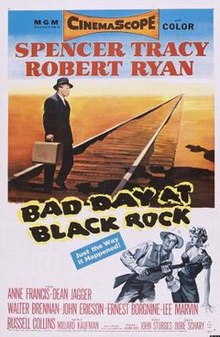
Bad Day at Black Rock (1956)

Spencer Tracy is the only just man in town, in brilliant modern Western Bad Day at Black Rock

Director: John Sturges

Cast: Spencer Tracy (John J Macreedy), Robert Ryan (Reno Smith), Anne Francis (Liz Wirth), Dean Jagger (Sheriff Tim Horn), Walter Brennan (Doc Viele), John Ericson (Pete Wirth), Ernest Borgnine (Coley Trimble), Lee Marvin (Hector David), Russell Collins (Mr Hastings), Walter Sande (Sam)

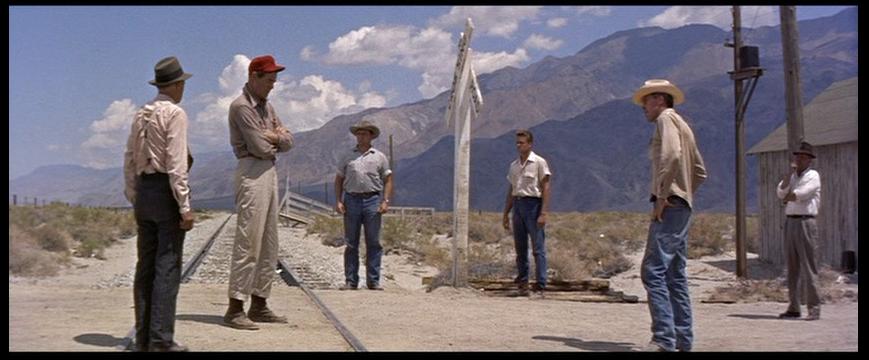
A man walks into a town. It’s a dust bowl town, looks like it’s just one street with a few buildings. The natives sit warily outside the bar and treat the stranger with suspicion. Trigger fingers are itchy. Is it the Wild West? No it’s 1945, but the new guy in town is about to find out just how unfriendly the American West can be. Just as well that, despite only having one hand, he’s more than capable of looking after himself.

Spencer Tracy, perfect as a man of rigid principles and certainties who won’t waver in the face of any intimidation, is our no-nonsense hero Macreedy. Arriving in town, he’s looking for Japanese-American farmer Komoko, father of a deceased colleague from the war, but no one wants to talk about where he is or what happened to him. Sheriff Horn (Dean Jagger) is an alcoholic who doesn’t want to know anything, the local doctor (Walter Brennan) doesn’t want to get involved and hotel clerk Pete (John Ericson) doesn’t want to give Macreedy a home. Macreedy is tailed on arrival by a couple of intimidating heavies (Ernest Borgnine and Lee Marvin – the go-to guys at the time for these sort of roles), and quickly works out the town is run by local businessman Reno Smith (Robert Ryan) – and any secrets it holds ain’t coming out easy.

Bad Day at Black Rock is a classic western, set in a time when the world of the West had been left far behind. American culture has a romantic longing for rural, small-town America, and the heroic past of the pioneers of the old West. Bad Day inverts a lot of this mythology: this America is horribly corrupt, unspeakably racist and hiding no end of dirty linen in its cupboards. In fact, small-town America is horrible, while the man from the big city represents all that is good – that in itself is quite a surprise turnaround from what you might expect from Hollywood.

In many ways it’s a very simple, very gripping, film. Macreedy’s arrival in the town sparks guilty consciences and sets the town bully, Reno Smith, into a quiet, panicked breakdown. We know watching it roughly where the film is likely to go. However, what Sturges does well is to invest this with so much attention. Huge chunks of the film involve both Macreedy and the men of the town, tensely trying to work out what is going on, or watching and waiting to see what opportunities there will be. It’s a film packed with moments of waiting or characters sitting and watching, talking around subjects rather than tackling the big questions they want to ask. It sounds slow but it actually builds up an extraordinary amount of danger and feeling of danger.

It’s a drama that works on the slow burn while also being a very short, snappily paced film. The best part of the first half-hour of the film is the careful establishing of the atmosphere, the relationships between the different characters, and the politics of this Western town. In the middle of this we have Macreedy, the man of mystery whom we know nothing about, who never seems to rise to the unfriendly intimidation he meets from every corner. You know that all this tension is going to erupt into something serious – but the film constantly leaves you guessing exactly how it will pan out and keeps you surprised about who ends up on which side.

You couldn’t get a better actor for this role than Spencer Tracy. There is something so rigidly determined about Tracy in this film, so adamantine and determined – the sort of man who operates in rights and wrongs, who even in this world of intimidation and terror tries to play by some sort of rules for as long as he possibly can. What’s so great about Tracy in this film is that he seems like both a stranger in black and a disappointed dad, with the people in the town constantly letting him down. The film also teases us for a long time – we suspect throughout that Macreedy is more dangerous and more capable of looking after himself than he appears. (It was Tracy who insisted, by the way, that Macreedy be made one-armed, as he thought it could give Macreedy an interesting vulnerability to overcome). 

The film makes us wait for its three action set-pieces: a car chase, a bar fight and a shoot-out. But it’s perfect in its patience, because violence always seems like it could burst out at any time. Marvin and Borgnine as the obvious heavies do great work as different types of overt muscle. Robert Ryan as the corrupt guy who really runs the town is especially good as a man who seems, under his dominance, to only just be holding onto his self-control, going to great lengths to prevent himself getting into trouble. It’s a point that Macreedy himself makes – deep down, Smith doesn’t have the guts to do his dirty work alone, and gets his strength from controlling others. All this delicate mixture of guilt and fear that bubbles under the surface of Smith is apparent in Ryan’s excellent performance.

But then no-one in the town is in control. Dean Jagger’s moral weakling sheriff is a drunk and a pathetic loser. Walter Brennan’s (very good) doctor wants to do the right thing, but lacks the guts to do it. John Ericsen’s hotel clerk knows he’s in the wrong, but isn’t brave enough to stand his ground. Their lack of control is in fact the root of the problem – Macreedy would never have suspected there were any dark secrets to uncover in the town if the people there hadn’t treated him with such overt suspicion. Sturges captures this perfectly (even if I think the Cinemascope width of shot isn’t perfect for a film that gets so much play out of claustrophobia and suspicion).

Politically the film is pretty simple – racism ain’t good you know – but as an example of brilliantly assembled Western tension and moral righteousness, mixed with a bit of action, adventure and claustrophobia, it works really well. Brilliantly directed, and very well written as a piece of expressive theatre, this is terrific with some wonderful performances. And front and centre is Spencer Tracy as the ultimate man in black, a man with moral certainty and courage, whom it’s impossible not to admire.

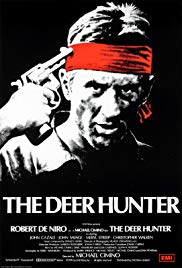
The Deer Hunter (1978)

Robert De Niro goes into a journey into the dark heart of America’s Vietnam experience in The Deer Hunter

Director: Michel Cimino

Cast: Robert De Niro (Mike Vronsky), Christopher Walken (Nick Chevotarevich), John Savage (Steven Pushkov), John Cazale (Stan), Meryl Streep (Linda), George Dzundza (John Welsh), Pierre Sagui (Julian Grinda), Shirley Stoler (Steven’s mother), Chuck Aspregren (Peter Axelrod)

The Deer Hunter is a mighty 1970s milestone of American cinema. Michael Cimino’s Vietnam story is a big poetic epic – its plot is slim but it’s all about the atmosphere, and Cimino’s understanding of the impact that the trauma of war has on different types of men. For vast stretches of the film nothing much in particular happens, followed by short, sharp bursts of gut-wrenching tension – but these have such impact because we have taken the time to see these men’s ordinary lives.

Mike Vronsky (Robert De Niro), Nick Chevotarevich (Christopher Walken) and Steve Pushkov (John Savage) are three Polish-American friends working in a Pittsburgh steel yard, who have volunteered to serve in Vietnam. Before they ship out, they celebrate Steve’s wedding, in a traditional Polish ceremony, and go for one last deer hunt in the woods together – where Mike outlines his philosophy of “one clean shot” (or “This is This”) and the near sacred experience of man communing with nature and hunting. In Vietnam, the three friends are captured by the Viet Cong and forced to take part in a chilling competition of Russian roulette. The impact of these experiences changes their lives – and not for the better – as they struggle to adjust as the war comes to an end.

Michael Cimino was seen at the time as the next great director. This reputation lasted little more than two years, when the box office disaster of his next film Heaven’s Gate (with its tales of ludicrous excess and Cimino’s overly demanding perfectionism) led to the destruction of a studio and effectively ended his career. To be honest, the roots of all this are there in The Deer Hunter. Cimino fought tooth and nail to prevent anything in the film being cut – and he lucked out that he had a few supportive producers and a picture powered by great performances and capturing something of the spirit of the age. Because just this once, more was indeed more.

In some ways The Deer Hunter is an over-indulgent mess. It’s very long, its plot is very slight, it’s very pleased with itself, the camera dawdles for ages through first the friends preparing for a wedding, the wedding itself and then a long hunting trip. This takes up a solid opening hour and 15 minutes of this long film – and progresses the plot forward very little other than establishing the characters and their relationships. But somehow, despite this, the film is magnetic during this. I’m almost not quite sure why, because nothing really happens at great length, but there is a sort of poetic majesty about these sequences that just makes them work.

It’s also a perfect entrée into our characters. After basically sitting and watching them for over an hour do little more than live their everyday lives, we really feel like we understand them. We know Mike is distant, controlled, slightly repressed but prone to moments of exhibitionist wildness that suggest primal, raging emotions beneath the surface. We also understand, with his famous “this is this” speech (“what the fuck does that mean?” his frustrated friend-cum-adversary Stan blurts out), that he is reaching for some sort of symbolic, expressionist understanding of man’s place in the world. He wants to be a poet but doesn’t have the abilities of expression to achieve that.

Similarly, we see Nick as a more carefree, open spirit, someone more in touch with expressing himself and more ready to seize life by the horns. He’s also got a gentle, conciliatory quality to him – out of all the characters, he fits most naturally into the role of confidante. Steven is a child, just trying to do his best in the world, but too naïve for the grown-up world. Most crucially we also see how they interact with each other, and how they relate to women. 

Most women in the film are clearly of very little importance to the characters. Wives and girlfriends are very much on the outskirts of the macho world of the steelyard. And they are of similarly little concern to the men when they come home. Meryl Streep – excellent in an almost nothing part, really it’s amazing how slimly this role is written – plays a woman torn between feelings for Mike and Nick, but the men’s feelings for her waver between uncertainty, indifference and confused affection. Barely any other woman gets a look in, certainly not Steve’s wife who is treated with open suspicion as some sort of floozy.

All this thematic manly matiness then explodes in the later acts of the film, as the after-impact of war – and PTSD, although the word is never used – hits our characters square in the face. And there are few things that will hit you as square on as a bullet. Cimino of course faced waves of criticism about his inclusion of the grisly gambit (no evidence that it was used by the Viet Cong) – but as a metaphor for going to war, and the trauma it will do to your mind, there are few things better than a “sport” which involves placing a gun to your head and pulling the trigger. 

These scenes are already tension-inducing to watch (you can’t help but put yourself in the shoes of the men putting that gun to their heads and wondering if they’ll hear a click or nothing ever again) but Cimino ramps up the pressure here, helped by truly powerhouse performances by De Niro, Walken and Savage. The unbelievable intensity of these scenes, and the total gear shift from everything you’ve seen up to this point in the movie, is a justification of Cimino’s slow pace earlier. After a luxurious opening sequence where we’ve watched the guys fool around, dance, sing and play pool, to suddenly be thrown into this grim, despairing, terrifying situation works brilliantly.

No wonder the rest of the film feels as much in shock as the characters do. Walken is exceptional (and Oscar-winning) as the sensitive soul whose spirit and will to live are destroyed by the incident, who no longer sees any point going home and barely even (by the end) seems to remember who or what he was. Cimino even makes the film feel colder, drabber and chillier in the third act back in Pittsburgh, following Mike’s return home – and his utter inability to deal with his experiences or communicate the horrors of what he has gone through to his friends.

This is also where the film gains immeasurably from a truly sublime performance from De Niro as Mike. In any other actor’s career, this performance would be the stand-out, so it says a lot for De Niro that it’s so often overlooked. But he underplays to devastating effect, as an inarticulate, slightly shy man who has a sheen of confidence, who will do what it needs to survive, who has a poetry and power of love in him that he can’t really express or understand. De Niro is truly brilliant in this film, a still centre that bears almost the total weight of Cimino’s thematic intentions. Essentially De Niro kinda plays an everyman Vietnam vet, and the burden of a whole country after the war without ever having the release of fireworks. He’s excellent.

But then the whole film is a little bit excellent. The Deer Hunter is a masterpiece of a sort, a compelling, dark, tragic and unsettling piece of poetic movie-making. Saying that, there’s something uncomfortable in its depiction of its non-American characters – to a man they are all violence loving degenerates – but then in a film that focuses on the unsettling experience of these Hicksville Americans in a land they don’t understand and can’t deal with, this is at least justifiable in a sense. The Deer Hunter’s main problem at points is that it is a rather pompous, pleased with itself film, but it’s not so much the story that is so strong here but the telling – and Cimino’s telling is first class.

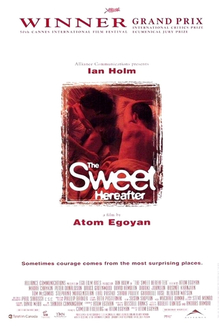
The Sweet Hereafter (1997)


Sarah Polley and Ian Holm are outstanding in this heartfelt story of grief The Sweet Hereafter

Director: Atom Egoyan

Cast: Ian Holm (Mitchell Stephens), Sarah Polley (Nicole Burnell), Bruce Greenwood (Billy Ansel), Tom McCamus (Sam Burnell), Alberta Watson (Risa Walker), Maury Chaykin (Wendell Walker), Gabrielle Rose (Dolores Driscoll), Stepheanie Morgenstern (Allison O’Donnell), Caethan Banks (Zoe Stephens), Arsinée Khanjian (Wanda Otto), Earl Pastko (Hartley Otto)

Atom Egoyan’s melancholic, wintery The Sweet Hereafter is a small-scale masterpiece about grief and mourning and the impact a calamitous accident has on a community. Told across three delicately interwoven timelines, it explores how the loss of a child can affect us and how a community can be broken apart by trauma. 

In a remote Canadian town, an accident to a school bus leaves most of the town’s children killed. The only survivors are bus driver Dolores (Gabrielle Rose) and 15-year-old Nicole Burnell (Sarah Polley) who has been left paralysed from the waist. Mitchell Stephens (Ian Holm), is a lawyer looking to start a case against the bus company or the local authority or anyone else he can think of who might be to blame. Stephens himself suffers from the “loss” of his daughter, a hopeless drug addict who contacts him intermittently for money.

Egoyan’s film has a beautiful elegiac quality, the camera mixing intimate close-ups of tormented actors with sweeping vistas of snowy wilderness. The film has a medieval-style pipe score, suggesting an old medieval morality tale. Egoyan builds on this by introducing the recurring theme of the Pied Piper throughout the film – just like Hamelin, the town has lost all its children (bar one child). Nicole seems obviously the one remaining child – but is she more than that? Is Dolores or the bus the pied piper? Is it fate itself? Is Mitchell Stephens another Pied Piper, promising to solve all the town’s problems?

Either way it’s a beautifully heartfelt look at grief, loss and the impact it has on small communities. Everyone is aware of each other’s business, but this town still has secrets, from affairs to suggestions of dark family issues. But the overwhelming feeling is how grief affects us in different ways – how it turns some to depression, some to anger, some to melancholy and some to isolation. It also show how suspicion and resentment can start to bubble up and rend the community – and how finger-pointing and blame can be an inevitable consequence.

This theme is helped by the immaculate acting. There is not a false step in the entire cast. Bruce Greenwood is wonderfully bitter and deeply pained as the father who has lost both his children and his wife in quick succession and wants nothing more than to forget. Alberta Watson is lifeless and going through the motions as a mother who has lost her sole reason for living. Arsinée Khanjian burns with undirected fury at losing her beloved adopted son. The interplay between these and other characters is sublime, Egoyan asking profound questions of love and trust.

Into all this appears our lawyer. In a simply superb performance by Ian Holm, Stephens is both an ambulance chaser and also a man who seems to need this court case to fill a void within himself. Stephens skilfully adjusts his pitch for each member of the town he meets, adroitly recognising and playing on the different emotions he sees to sign them up for a group lawsuit. But how much does his daughter’s own disastrous life tie into his mantra that “someone” is always to blame, that someone has cut corners to save a buck? Does this same mantra help him to deal with his daughter’s failures – that they are not his or hers but some external force? 

Stephens is the classic interloper in the town – it’s easy to see why Greenwood’s Ansell sees him as feeding off the tragedy. Holm leaves the question brilliantly open in a wonderfully subtle performance: how much does he care and how much does he want the money? He talks to the Ottos with real empathy and concern, but then runs to his car in haste to get an agreement for them to sign. Egoyan’s film asks throughout whether Stephen’s presence is, in its way, equally damaging to the town: this Pied Piper offers to take away their pain, but at what price? Will this crusade stop the town from putting the dreadful event behind them?

Interweaving timelines here work very effectively – it’s a good hour into the film before the timeline following the day of the accident finally reaches the accident itself. By this point this accident has so dominated the film that we have become all too familiar with the painful mundanity of grief and the emptiness of carrying on. Egoyan shows us the accident: but not all of it. We see it largely from Ansell’s reaction – and while we see the bus tumbling towards the frozen lake, we never see what makes it swerve. The point perhaps is to put us in the same position as the rest of the town: we can never know if it was an accident, act of God, or if someone was certainly to blame.It’s the balance between blame and moving on that this film dwells on.

The Sweet Hereafter of the film is that netherworld after loss, that “living death” of carrying on after a loved one has left forever. Any doubt that Stephens himself isn’t stuck in the same condition is dispelled in the film’s third contrasting plotline. Two years later, Stephens is a on a plane journey to collect his daughter from another treatment clinic. On the plane he finds himself by chance sitting next to his daughter’s childhood friend. The conversation between them slowly reveals more and more the immense loss, emptiness and longing for family in Stephens. How much of this feeling did he recognise in the town: and how much did his own feelings allow him to exploit the feelings of the town?

Holm is again sublime in these sequences, his eyes little pin holes of sadness, his tight-lipped firmness holding back waves of emotion. In one stand-out sequence, he tells a heart-rendering monologue of a time when his daughter as a child was bitten by a black widow spider. Rushing her to the hospital, Stephens had to keep her calm to prevent her throat swelling up, while simultaneously standing by to perform an emergency tracheotomy. The point of the story for Stephens is his own fear, and the film asks: is this fear also linked to his own regret that this was the last time he could truly keep his daughter safe? And does he also look back on it and wonder why he saved his daughter then so she could die of drug addiction today?

The other daughter in the film is Nicole, played with a mature distance by Sarah Polley. Nicole, the last surviving child, slowly turns into a pivotal figure in the film, her decisions affected by both her relationship with her father (an unsettlingly hipsterish Tom McCamus) and perhaps her wish to do what is best for the town. McCamus is equally good as a loving father whose interest in his daughter is not healthy – and it’s one of many complex questions in the film as to how far Nicole is unsettled or enamoured with his attentions. 

The Sweet Hereafter is a beautifully made, wonderful film – perhaps one of the best you’ll see about small town grief and pity. It may also be one of the best acted films you’ll see – every performance is simply spot-on, heartfelt and true. It may well be Ian Holm’s finest hour, in the most complex leading role he ever got in his career. Egoyan’s emotional and heartfelt story has so much to tell you about grief and mourning that it can’t help but be a sad, melancholic, but thought-provoking and engrossing watch.

The Cider House Rules (1999)


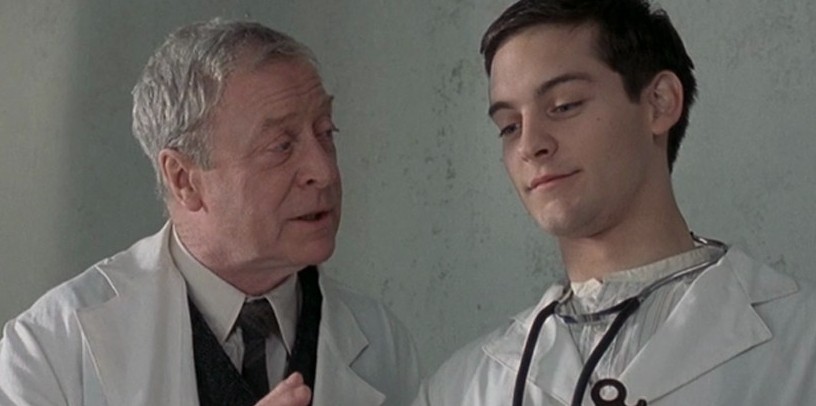
Michael Caine and Tobey Maguire deal with moral dilemmas in this handsome adaptation of John Irving’s Dickensian novel

Director: Lasse Hallström

Cast: Tobey Maguire (Homer Wells), Michael Caine (Dr. Wilbur Larch), Charlize Theron (Candy Kendall), Paul Rudd (Lt. Wally Worthington), Delroy Lindo (Arthur Rose), Erykah Badu (Rose Rose), Heavy D (Peaches), K. Todd Freeman (Muddy), Kieran Culkin (Buster), Jane Alexander (Nurse Edna), Kathy Baker (Nurse Angela), Kate Nelligan (Olive Worthington), J.K. Simmons (Ray Kendall) 

The Cider House Rules is the sort of well-constructed literary adaptation that Hollywood excels at producing: a well-crafted script (Irving adapted his own novel extremely well), juggling serious affairs without hectoring the audience, handsomely mounted, with a Dickensian style and a cast of heavyweight actors delivering performances that speak of their investment in the film.

In a Maine orphanage in the 1940s, Homer Wells (Tobey Maguire) is raised by Dr Wilbur Larch (Michael Caine) as a surrogate son. Larch is a domineering autocrat with a passionate love for his charges, whose humanitarian instincts lead him to perform illegal abortions. Troubled by this – and feeling pressured into succeeding Larch’s as director – Homer leaves with a young woman (Charlize Theron) and her fiancée (Paul Rudd) after she visits for an abortion. Working as an apple picker in their orchard, under Mr Rose (Delroy Lindo), Homer learns important lessons above love and duty.

There are many similar films that feel like dull awards-bait, and the fact that this one avoids that is a major point in its favour. It’s very easy with material like this – cute orphans and tear-jerking speeches – to feel Cider House is a manipulative film (and I guess in a way it is) but it’s put together with such commitment and sincerity I found it genuinely moving. Hallström’s warm and beautifully paced direction creates a marvellous coming-of-age tale with characters whose flaws can be as deep as their warmth is vibrant.

The film also manages to move beyond its ‘coming-of-age’ roots with intelligent (but not too heavy-handed) mulling on the nature of “rules” – both those imposed on us and those we impose on others. Dr Larch (a magnetic performance by Oscar-winner Michael Caine) is a maverick, disregarding the abortion laws as he believes it is better he does abortions rather than someone untrained; he is also perfectly willing to impose his own rules on Homer as testaments to be followed without question. Similarly the “Cider House Rules” written on the wall of the apple workers’ lodgings are rejected outright by the working gang for their own unspoken code of conduct, no more effective than the system it replaces. All the characters are forced to draft their own rules (or principles) they can live with, matching their circumstances and actions.

The film also looks gently at the conflict between our desires and our duties, with Homer and Candy both yearning for freedom from their natural inclinations to have something to serve. This is presented as a struggle without a natural “right or wrong”, even if the apple orchard is a loose Garden of Eden, into which evil is admitted with tragic (and life-changing) consequences. A small criticism would be that the charismatic warmth of Caine’s performance and the family atmosphere of the orphanage are so endearing that it does unbalance the dilemma Homer eventually faces – instead of the audience feeling as torn as Homer about whether he should stay or return, most audience members I think would want him to return to the orphanage forthwith!

Tobey Maguire is so perfectly cast as the naïve in some ways, wordly wise in others, old-boy-young-man that he effectively reprised Homer Wells as Peter Parker a few years later. His sweet face –uncomplicated innocence and charm are in every twitch of his smile – carries the film, and his easy-going desire for a simple life makes perfect sense of the character’s rebellion against Larch’s benevolent dictation. Equally good for me though is Theron as Candy. She is a wonderfully expressive performer: midway through the film she is caught off-guard by an overlong hug from Homer, and a series of conflicted emotions from shock, to guilt, to attraction play across her face.

There is hardly a weak performance in the film, with Hallström drawing excellent work from the young orphans. Amongst the sprawling, Dickensian feeling cast, Caine is marvellous as the part dictator, part humanitarian Larch making a larger-than-life character feel real and grounded. Lindo captures the pride mixed with arrogance of Mr Rose. There are plenty of other excellent performances, not least from Baker and Alexander as two contrasting nurses in the orphanage.

I almost feel slightly guilty for the impact Cider House Rules had on me. In many ways it’s exactly the sort of safe, middle-of-the-road “serious” drama that seems designed to attract the notice of Oscar voters. But it’s told with a great deal of skill and dedication, and delivers so many emotional moments with warmth and feeling, I found myself genuinely moved by it. In fact I felt a bit teary at least twice. This is closely linked to some excellent performances – and a wonderful swelling musical score by Rachel Portman – but despite being the sort of middle brow Hollywood film it’s fashionable (and easy) to attack, I thought this was engaging, moving and thought provoking from start to finish.

Sleepy Hollow (1999)


Rumours that Johnny Depp is tapping into his eccentric style are of course unfounded

Director: Tim Burton

Cast: Johnny Depp (Ichabod Crane), Christina Ricci (Katrina Van Tassel), Michael Gambon (Baltus Van Tassel), Miranda Richardson (Lady Van Tassel), Casper Van Dien (Brom Van Brunt), Jeffrey Jones (Reverend Steenwyck), Richard Griffiths (Magistrate Philipse), Ian McDiarmid (Dr. Thomas Lancaster), Michael Gough (Notary Hardenbrook), Christopher Lee (Burgomaster), Christopher Walken (The Headless Horseman), Claire Skinner (Beth Killian) 

Tim Burton’s films often take on a larger-than-life quality, an overblown fanciful journey into a world that is a few degrees off from our own. So a bizarre ghost story about a headless horseman lopping off bonces left, right and centre, in an isolated town that feels more like a construct from a series of other films than any sort of real place, probably suits him perfectly.

After a series of murders via decapitation in the small town of Sleepy Hollow, Iachobad Crane (Johnny Depp) is called from New York to investigate. An eccentric (what else, it’s Depp) moderniser, Crane believes in logic and forensic investigation and is having none of the fears of the townspeople that the murders are being committed by a headless ghost. However he soon changes his views…

This adaptation bears little or no resemblance whatsoever to the original source material, bar a few homages, one or two brief scenes and a few character names. Burton, indeed, seems to have no interest in it at all: what he is interested in doing is paying homage to high-blown Hammer horror films from the 60s and 70s. Whether you enjoy this largely depends on whether you were a fan of either Burton or this style of film-making going into it.

I found the film rather too arch throughout – from the stylised performances of the actors, through to the slight tongue-in-cheek tone. It’s not particularly scary at any point, despite the blood and gore – largely because nothing ever feels real, there’s no sense of dread or peril. Heads are lopped off with an almost comic athleticism, bouncing around floors or rotating on necks. Only one sequence – the murder of a family – carries any real sense of unease about it. The rest of the film is one not-particularly-witty black comedy, in which a lot of time and talent seems to be invested in something not particularly interesting.

Depp is of course perfectly suited to this, his “look at me” acting style springing to the fore as Crane. As usual he overloads the character with quirks and mannerisms, the sort of tricksy emptiness it’s easy to mistake for great acting. The rest of the cast go about their business with a trained professionalism. However, despite the array of British acting talent on display, in truth none of them make much of an impression, with the exception of a nice cameo from Alun Armstrong as a senior New York policeman, and Miranda Richardson who has fun with her role as a sinister housewife with hidden depths.

The awards attention for the film focused on its finest aspects – its look and design. The production design of the film is impressively constructed and the artificial look of the exterior sets actually fits in very nicely within the world of the film. Emmanuel Lubezki’s photography also looks fantastic, shooting the film with a slightly off colour, 70s style that adds a vibrant red to the large amount of blood on screen. Costumes and other technical aspects are also impressive. The film looks fantastically striking, like a brilliantly designed coffee table book – and has about as much plot as one. It’s my problem with Tim Burton – this whole “unique vision” of his, often seems to be an excuse for littering his films with in jokes, arch design and stylisation and leaving out the things we actually care about, like characters, emotion and drama.

In the end, it’s really not a lot more than a joke, a pastiche of a certain genre of film that seems much more like one for the fans than a joke that we can all take part in. I’m aware not liking it throws me open to accusations of not “getting it” or expecting more from it, but I basically didn’t really find the joke funny enough. Its arch style make it hard to relate to, and despite the clear enjoyment of all involved, not a lot of the wit behind the scenes is clear in the final product. With nothing to really invest in, a rather sudden ending and a mood throughout that is trying to be creepy rather than genuinely so. Don’t expect a retelling of its plot around a camp fire to awaken too many goosebumps.

Touch of Evil (1958)

Orson Welles investigates (though the real mystery is probably Charlton Heston’s Mexican heritage)

Director: Orson Welles
Cast: Charlton Heston (Ramon Miguel Vargas), Janet Leigh (Susan Vargas), Orson Welles (Police Captain Hank Quinlan), Joseph Calleia (Pete Menzies), Akim Tamiroff (Uncle Joe Grandi), Marlene Dietrich (Tanya), Joanna Cook Moore (Marcia Linnekar), Ray Collins (District Attorney Adair), Mort Mills (Al Schwartz), Dennis Weaver (Night Manager)

Has any director ever cast himself in such a physically unflattering role as Welles takes on here? Hank Quinlan is a grotesque, sweaty, grossly obese, lame, mumbling copper with a hinterland of loneliness in his past and a background of missed chances. Yet despite this, it’s Quinlan’s film and despite the terrible things he does in the film (kidnap, two murders, suspect framing) it’s very hard not to feel empathy and sorrow for him. Welles’ immense charisma as a performer is a large part of this, but I think he also recognises the sadness of being the genius who has surrounded himself with mediocrities, the man who knows he could have achieved more in life but for whatever reason never did. If that’s not Welles’ career, what is?

Of course Quinlan isn’t actually the lead. Charlton Heston, curry-coloured but otherwise actually pretty good, plays Vargas, a Mexican law agent (“He don’t look like a Mexican” Quinlan correctly observes) with a new American wife, caught up in an investigation into a bombing of an American citizen in a US-Mexico border-town. Quinlan investigates, finds his culprit quickly and produces evidence – evidence Vargas knows for a fact wasn’t there minutes ago. Accusations of corruption fly and, before you know it, Quinlan (a man flirting with corruption) is forced into alliance with a jumped-up Mexican gang leader to frame Vargas for corruption via implicating his wife in drugs and murder.

The plot, however, largely takes second place to Welles’ virtuoso film-making. The opening sequence of the film – an extended three and a half minute single take that tracks in and out of streets, from close-ups to crane shots – has an astonishing “how did they do that?” quality. But it’s matched by Welles’ brilliance with both actors and camera placement during the equally long continuous takes set in bomb suspect Sanchez’s apartment. He’s adept at jinglingly unsettling imagery, with the murder scene 2/3rd of the way through the film almost queasily twitchy in its fragmented shooting style. The final sequence of the film, as Vargas tracks Quinlan through a filthy oil yard, should be silly but is completely compelling.

Welles of course dominates the film as Quinlan. I love the half smile on his face as his praises are sung by besotted partner Menzies early in the film – the “aw shucks, are you talking about me?” non-modesty – but I also adore the unspoken sadness of his early scene with Dietrich, where he sadly attempts to flirt with this (presumably) lost love (we are never told for certain) only for her to literally not recognise him. Quinlan in many ways is a good copper – he frames the guilty, he doesn’t take bribes, he is reasonably loyal – but he’s also selfish, egotistical and needs the adoration of his position to fill the void in his life. He’s a man who’s corrupt almost without realising it, who sinks into bemused maudlin depression when accused without even recognising that he is in fact guilty.

There are some other equally strong performances in the film. Heston of course looks ridiculous – but look past that and this is one of his best performances, Vargas demonstrating the stand-up, straight-shooting honesty of many of Heston’s roles, combined with arrogant short sightedness and narrow minded determination. Janet Leigh is also absolutely terrific as his wife, despite being saddled with a bizarre subplot of being terrorised in a motel. A note for trivia fans – Leigh actually broke her arm before shooting and it’s in a cast throughout the movie bar one shot (where she doesn’t move her arm) – you can’t spot it until you know.

I was particularly enthralled by a beautiful performance of hero-worship from Joseph Calleia as Menzies, Quinlan’s adoring partner whose entire life has been one of loyal service to Quinlan. In many ways he is the moral centre of the film, and as the film shifts its focus to Quinlan, so it equally explores the changes in how Menzies views his boss. Akim Tamiroff gives a lovely performance of puffed up pomposity as a ridiculous small time gangster with a dodgy wig. Dennis Weaver’s hotel manager is an eccentric collection of manners that is more likely to split opinions, but he doesn’t half go for the oddness. Marlene Dietrich is marvellous in her few brief scenes.

Touch of Evil is one of those films that lingers with you and rewards constant reflection and rewatching. I re-watched large chunks of it again immediately the next morning. As a piece of film making it’s a master class, an immersive, tightly framed, wonderfully shot film that brilliantly uses its filthy, litter strewn locations. The acting is terrific and the final moments strangely moving. Welles was a terrible self-promoter and later he ballooned to the very Quinlan proportions that padding and make-up create here. But when he was on his game, and fully focused, he was terrific. As is the film, which is surely one of the greatest (and last) film noirs ever.

CODA: The coda to this? Of course Welles wasn’t fully focused. He cut the film once, then shot off to Mexico to explore a new film possibility. Studio hands recut the film again. Welles sent a famous 58 page memo suggesting changes. Most of them got ignored for the third cut. Three versions of the film now exist – the two studio recuts and a 1998 recut using the memo (Welles’ original was wiped). I watched the 1998 recut. But it’s always the problem with Welles – a man I always felt who largely lacked the focus to actually finish something. The film bombed on release. Welles never worked in Hollywood again.