Category: Social issue films

12 Angry Men (1957)


Henry Fonda must win over 12 good men and true in 12 Angry Men

Director: Sidney Lumet

Cast: Henry Fonda (Juror #8), Lee J Cobb (Juror #3), Ed Begley (Juror #10), E.G. Marshall (Juror #4), Jack Warden (Juror #7), Martin Balsam (Juror #1), Jack Klugman (Juror #5), Joseph Sweeney (Juror #9), John Fiedler (Juror #2), Edward Binns (Juror #6), George Voskovec (Juror #11), Robert Webber (Juror #12)

A young man is on trial for murder. The jury retires to consider. On the first vote, only one man (Henry Fonda) questions his guilt. The other jurors are convinced they are right – can Fonda turn them around?

Who hasn’t done jury service and dreamed of being Henry Fonda? 12 Angry Men is perhaps the most compelling courtroom drama ever, for that very reason: hardly any of us are judges or lawyers, but we’ve all got a decent chance of doing jury service. What would we do in this situation? How thoughtful would we be about the evidence? And, of course, that little stab of ego – could we be charismatic and persuasive enough to sway a room of people? I think this is why this film sticks with people and has become such a persuasive part of our popular culture – we all wanna be Fonda.

12 Angry Men is a film that I feel touches perfection. I thought quite heavily about whether I could identify any flaws in it at all: the closest I got at was the shot Lumet throws in of the suspect (a sweet looking kid). I suspect this shot was required so that the 50s audience could be confident that Fonda was crusading for someone who at least looked innocent (although it always makes me think, since so many of the other jurors make snap decisions, why doesn’t at least one of them look at that cute kid and think “he ain’t no killer…”). Aside from that, I don’t think there is a single mis-step in the filming, acting or writing of the film – and how many times can you say that?

Lumet is a director who doesn’t get a lot of public recognition. He subordinates his skills to the requirements of the story, rather than an auteur who imposes his style. This works perfectly for this compelling slow-burn. Lumet’s expert filming quietly lets the actors and dialogue stand front-and-centre, while cleverly using his camera language and shot choices to amp up the tension.

At first, Lumet uses wider and high angle shots, allowing us to get a sense of the room and the characters. But the real effect of this plays out over the rest of the film, as Lumet slowly moves to tighter angles at POV height, until the final sequences are played out over a series of close-ups cutting from juror to juror, at low angles. What this achieves brilliantly is to make the film feel tighter and more claustrophobic – the room feels like it’s actually shrinking in on the jurors as they argue. You can get a sense of it in the videos below, both early and later in the film.

The film also works so brilliantly because it offers a brilliant insight (and critique even?) of the legal system. The one legal professional we see is a bored judge. All references to the unseen lawyers mention either their showmanship or inadequacy. Even the jury system is subtly called into question: several of the jurors are motived more by prejudice and personal experience than by any analysis of the evidence. Others are flawed in other ways; #12 switches sides indecisively three times while #7 is so impatient and bored with the whole process, he follows the direction of the least resistance. Without #8, a decision would have been made with no discussion at all. Even the very process of taking the vote is shown to root many of the jurors down to “sides” and creates an atmosphere of competition that becomes as important as seeing justice done. And in a system of trial by your peers, only #4 in any way identifies himself as sharing the background of the man on trial. Is this a perfect system?

These ideas, though, are skilfully interwoven in the background of a gripping legal thriller. 12 Angry Men is completely objective. We never see the witnesses whose performance is the cause of such analysis. We never see the scene of the crime. We don’t have any confirmation at all that either side is right. It’s a film about the importance of reasonable doubt – and the need to be absolutely certain before sending someone to the chair. Fonda feels that doubt – and persuades the other jurors of it – but we never know if he was right or not. We never know if any of the suppositions in the jury room are true – the important thing is how high the possibility is that they might be true – and how much that affects our willingness to convict.

The film is one brilliant set-piece after another, as each piece of evidence is interrogated. I honestly can’t decide which one I like the most. What makes it work is the variation of how each case is presented. The film is as comfortable with the drama of #8 flinging a replica of the “unique” murder weapon onto the table, as it is with a careful dialogue-led dissection of the eyesight of a key witness. Who can resist Fonda limping around an approximation of the next-door neighbour’s flat to see if he can cover a certain distance within a certain time. It helps that the dialogue is incredibly rich – it has to convey a lot of information, but also manages to sketch out each of the characters so swiftly and carefully that each of them feels real.

And we’ve come all this way and not even mentioned the performances. Again, each viewing gives me a chance to appreciate a new performance: my eye was caught on this viewing by Robert Webber’s seemingly cool and collected advertising man, who has far less certainty than he projects. Needless to say each actor is brilliant. Fonda (who also produced) is the very image of moral authority – as well as a generous collaborator on the movie. Is this his best performance? It’s got to up there – #8 is a humanitarian, but he’s never smug or self-serving, just a man who feels a strong sense of his own obligation.

If Fonda is the superego, Cobb’s #3 (the primary antagonist, if there is such a thing) is the ego – raging, elemental, decisive, unshaken in his beliefs. Cobb’s performance veers the closestto a little too stagy, but it’s a character that demands it. His bluster and swaggering are vital to the character in order to make his later emotional collapse work as well as it does – and #3’s final emotional disintegration really rings true. It’s a ferociously intense performance.

Each actor gets his chance to shine. Voskovec’s sensitive immigrant has a wonderful speech on the responsibility of passing judgement. The most barnstorming speech is Begley’s racist outburst late in the film. It’s beautifully done as this loud-mouthed bully explodes with frustration, then slowly and even rather sadly collapses as he talks on and on, each sentence making him weaker and weaker, more defensive and vulnerable. But it’s never a scene about just one man – the reactions are as well judged as everything else. And I can’t tell you how much I love #4’s “I have [listened to you]. Now sit down and don’t open your mouth again” one-line response which caps the scene.

In fact just mentioning #4 brings on my love of E.G. Marshall’s performance in this film. #4 should be one of the least engaging characters in the film – coldly analytical, professional, assured and clear minded. But he’s always human, never an antagonist, but a respected citizen – the only one of the jurors who is motivated by judgement rather than prejudice. I love his calmness, his cool lack of regard for #3 and #10’s loud-mouthed berating, his patient, studied explanation of his convictions. I adore his calm puncturing and counterview of each point Fonda puts forward, until he is finally won over – and its his winning over which makes the film work. If this thoughtful, intelligent man has doubts, shouldn’t we all?

But I repeat they are all great. Jack Warden’s #7 is totally convincing as (the film’s real villain?) a man indifferent to right and wrong when compared to his own needs. Balsam’s decent but ineffectual #1 is the perfect mediocrity in above his head. Sweeney’s wry, observant and shrewd #9 is a delight (Sweeney was the only member of the original TV play to be retained). Fiedler’s #2 grows in moral force throughout, belaying his quiet appearance. Klugman’s #5 is quietly defiant and conflicted. Binn’s #6 reveals himself as a mild, humble and honourable man.

I think I could watch 12 Angry Men every week of the year. It’s brilliantly filmed (how could I not mention the oppressive rain soundtrack that accompanies the latter part of the film) and wonderfully directed. The script is simply perfect, Reginald Rose expanding and enriching his original TV adaptation. The acting is nearly flawless from all concerned. It’s, quite simply, a great movie. I simply can’t imagine anyone not reflecting on this movie when heading into jury service. It subtly comments on the legal system, but never gets bogged down in this, telling a gripping and compelling story about things we never see. It’s pretty damn near close to perfection.

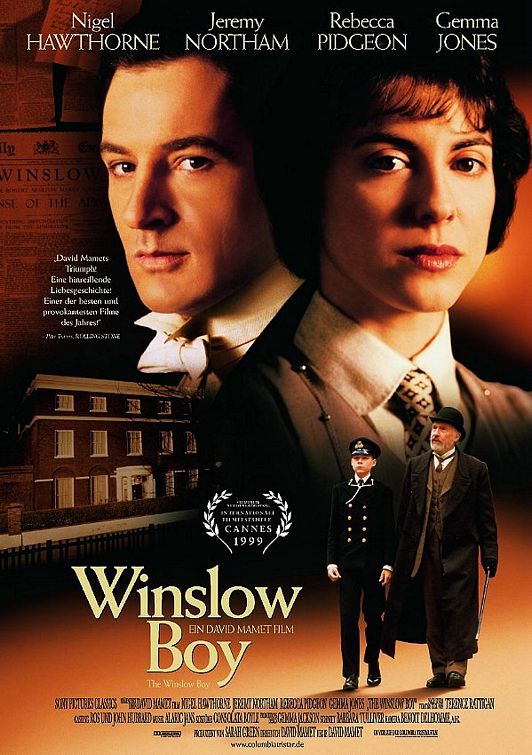
The Winslow Boy (1999)


Nigel Hawthrone will stop at nothing for justice for his son in faithful literary adaptation The Winslow Boy

Director: David Mamet

Cast: Nigel Hawthorne (Arthur Winslow), Rebeccca Pidgeon (Catherine Winslow), Jeremy Northam (Sir Robert Morton), Gemma Jones (Grace Winslow), Guy Edwards (Ronnie Winslow), Matthew Pidgeon (Dickie Winslow), Aden Gillet (John Waterstone), Colin Stinton (Desmond Curry)

David Mamet surprised those who associate him with macho, alpha-male led drama with this sensitive and faithful adaptation of Terence Rattigan’s play. After his young son Ronnie is sent down from naval college for stealing a five shilling postal order, Arthur Winslow (Nigel Hawthorne, terrific) will stop at nothing to clear his name, supported by his suffragette daughter Catherine (Rebecca Pidgeon, excellent in a difficult role). They recruit Sir Robert Morton (an electric Jeremy Northam) to champion Ronnie’s case, as the scandal rocks the nation.

There can’t be many film adaptations of plays that so completely avoid “opening up” the play. The settings and dialogue of Rattigan’s original are kept largely as is. This means that – just as in the play – all the major dramatic events happen off-stage and are reported in dialogue. The campaign to clear Ronnie’s name? Apart from flyers and newspaper prints in Winslow’s home, you’re not seeing that. Morton’s advocacy of the case in the House of Commons? The smallest of scenes. The crowds outside the Winslow home? A faint echo on the soundtrack. The pivotal court case itself? Not a single shot. If ever a production made Rattigan feel more like Chekov, I’m yet to see it.

This theatricality is not necessarily a bad thing. I’ll admit it may create a film a bit too contained and low key for some. But catch this in the right mood and Mamet’s carefully considered staging brings many of its smaller moments and personal interactions into shape. Would a film full of triumphal courtroom scenes have so perfectly captured anti-climax and confusion that can come after an event that has dominated your whole life comes to an end?

This approach also allows the relationships to come front and centre – in particular the growing attraction between Catherine and Morton, treated lightly and subtly but with huge warmth. Catherine here mirrors the main plot. Her suitors are, in turn: an upright military careerist (whom she loves, but we care little for), a gentle non-entity (whom we like but she is bored by) and the imperious Morton – on the surface someone she shares few opinions with but, subconsciously, recognises a deep kinship with. Like the public reaction to the campaign, the attitudes of these people to Catherine represent the wider reactions happening off-camera. The Morton-Catherine story is a beautiful romance in which not a single word of overt, direct affection passes between the two characters, but volumes are increasingly spoken in each glance.

Mamet’s approach also allows plenty of stagy touches to translate really well to film. The film is clearly divided into acts, and each one returns us to the Winslow home, each time in less pomp than before (by the final scene it’s stripped down to bare essentials). Arthur Winslow is less and less sturdy each time we see him, the character shrinking ever closer to old age and infirmity. Each member of the family increasingly pays heavier prices, as their financial security is sacrificed (though Mamet certainly understands the characters’ very British acceptance of these turns in fortune).

The other major benefit is that the acting comes to the fore. I’m not sure Jeremy Northam has been better than he is here: the one downside of not staging the courtroom scenes is that we will never get to see Northam play them! His Morton is a perfectly pitched imperious upper-class professional, whose exterior hides a compassionate and selfless concern for “right”. The film’s most electrifying moment is his hostile examination of Ronnie, a dynamic verbal assault that rips into the film’s quiet austereness, crackling with tension. Northam is so good, at one point I am sure he muffs a line – but he carries it off with such brilliance (the austere man awkwardly burying his feelings) that Mamet keeps it in (take a look around 2:10 here and make up your own mind!). It’s also a beautifully real moment – the man of words, briefly revealed by them. This scene is, by the way, a masterpiece of unspoken emotions and affection (from both actors).


The other main performers are equally strong. Nigel Hawthorne mixes his cuddly avuncular wit with hints of the monomaniacal obsessiveness that leads Winslow to drain his resources, and strength, in pursuit of justice. While the film doesn’t always acknowledge the sometimes self-destructive effects of Winslow’s passion – and only hints at how much Winslow sees the accusation against his son as a personal affront, as if questioning his son’s honesty is questioning his own – Hawthorne keeps the character morally rigid yet sympathetic and understandable.

Rebecca Pidgeon, the director’s wife, is practically an open target for suggestions she only got the part through nepotism. Such views are unjust. While her accent seems a little forced, her performance as the slightly distant, intellectual, prickly and driven Catherine is spot-on. The crusade begins as her father’s obsession, which she shares. Their characters then evolve so naturally that you only realise at the conclusion that she has become the lead character, and the main driver of the crusade, for quite some time.

I’ve seen The Winslow Boy three or four times now. The first time I saw it I was thrown (disappointed) by its staginess, its surface stateliness. However, since then I’ve grown to appreciate its careful, respectful lack of showiness more and more. It’s an intelligent, well-handled adaptation, crammed with wonderful performances. Yes it’s sometimes a little too “Masterpiece Theatre”, but when it can deliver such stirring, and moving, moments as it does – well you could never refuse it a place in your heart. Let Right Be Done.

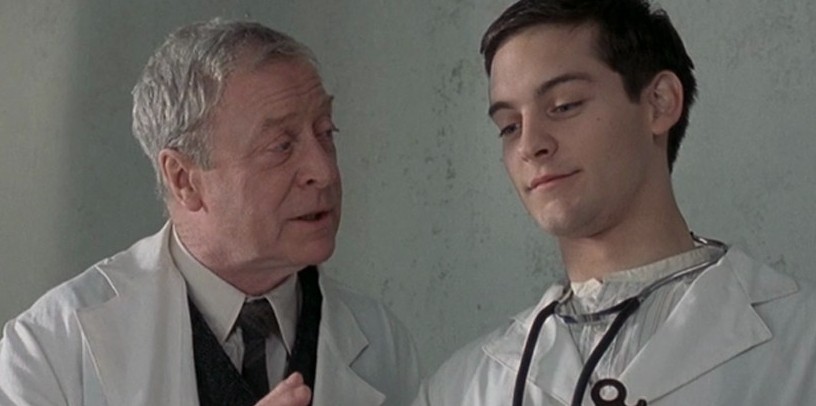
The Cider House Rules (1999)


Michael Caine and Tobey Maguire deal with moral dilemmas in this handsome adaptation of John Irving’s Dickensian novel

Director: Lasse Hallström

Cast: Tobey Maguire (Homer Wells), Michael Caine (Dr. Wilbur Larch), Charlize Theron (Candy Kendall), Paul Rudd (Lt. Wally Worthington), Delroy Lindo (Arthur Rose), Erykah Badu (Rose Rose), Heavy D (Peaches), K. Todd Freeman (Muddy), Kieran Culkin (Buster), Jane Alexander (Nurse Edna), Kathy Baker (Nurse Angela), Kate Nelligan (Olive Worthington), J.K. Simmons (Ray Kendall) 

The Cider House Rules is the sort of well-constructed literary adaptation that Hollywood excels at producing: a well-crafted script (Irving adapted his own novel extremely well), juggling serious affairs without hectoring the audience, handsomely mounted, with a Dickensian style and a cast of heavyweight actors delivering performances that speak of their investment in the film.

In a Maine orphanage in the 1940s, Homer Wells (Tobey Maguire) is raised by Dr Wilbur Larch (Michael Caine) as a surrogate son. Larch is a domineering autocrat with a passionate love for his charges, whose humanitarian instincts lead him to perform illegal abortions. Troubled by this – and feeling pressured into succeeding Larch’s as director – Homer leaves with a young woman (Charlize Theron) and her fiancée (Paul Rudd) after she visits for an abortion. Working as an apple picker in their orchard, under Mr Rose (Delroy Lindo), Homer learns important lessons above love and duty.

There are many similar films that feel like dull awards-bait, and the fact that this one avoids that is a major point in its favour. It’s very easy with material like this – cute orphans and tear-jerking speeches – to feel Cider House is a manipulative film (and I guess in a way it is) but it’s put together with such commitment and sincerity I found it genuinely moving. Hallström’s warm and beautifully paced direction creates a marvellous coming-of-age tale with characters whose flaws can be as deep as their warmth is vibrant.

The film also manages to move beyond its ‘coming-of-age’ roots with intelligent (but not too heavy-handed) mulling on the nature of “rules” – both those imposed on us and those we impose on others. Dr Larch (a magnetic performance by Oscar-winner Michael Caine) is a maverick, disregarding the abortion laws as he believes it is better he does abortions rather than someone untrained; he is also perfectly willing to impose his own rules on Homer as testaments to be followed without question. Similarly the “Cider House Rules” written on the wall of the apple workers’ lodgings are rejected outright by the working gang for their own unspoken code of conduct, no more effective than the system it replaces. All the characters are forced to draft their own rules (or principles) they can live with, matching their circumstances and actions.

The film also looks gently at the conflict between our desires and our duties, with Homer and Candy both yearning for freedom from their natural inclinations to have something to serve. This is presented as a struggle without a natural “right or wrong”, even if the apple orchard is a loose Garden of Eden, into which evil is admitted with tragic (and life-changing) consequences. A small criticism would be that the charismatic warmth of Caine’s performance and the family atmosphere of the orphanage are so endearing that it does unbalance the dilemma Homer eventually faces – instead of the audience feeling as torn as Homer about whether he should stay or return, most audience members I think would want him to return to the orphanage forthwith!

Tobey Maguire is so perfectly cast as the naïve in some ways, wordly wise in others, old-boy-young-man that he effectively reprised Homer Wells as Peter Parker a few years later. His sweet face –uncomplicated innocence and charm are in every twitch of his smile – carries the film, and his easy-going desire for a simple life makes perfect sense of the character’s rebellion against Larch’s benevolent dictation. Equally good for me though is Theron as Candy. She is a wonderfully expressive performer: midway through the film she is caught off-guard by an overlong hug from Homer, and a series of conflicted emotions from shock, to guilt, to attraction play across her face.

There is hardly a weak performance in the film, with Hallström drawing excellent work from the young orphans. Amongst the sprawling, Dickensian feeling cast, Caine is marvellous as the part dictator, part humanitarian Larch making a larger-than-life character feel real and grounded. Lindo captures the pride mixed with arrogance of Mr Rose. There are plenty of other excellent performances, not least from Baker and Alexander as two contrasting nurses in the orphanage.

I almost feel slightly guilty for the impact Cider House Rules had on me. In many ways it’s exactly the sort of safe, middle-of-the-road “serious” drama that seems designed to attract the notice of Oscar voters. But it’s told with a great deal of skill and dedication, and delivers so many emotional moments with warmth and feeling, I found myself genuinely moved by it. In fact I felt a bit teary at least twice. This is closely linked to some excellent performances – and a wonderful swelling musical score by Rachel Portman – but despite being the sort of middle brow Hollywood film it’s fashionable (and easy) to attack, I thought this was engaging, moving and thought provoking from start to finish.

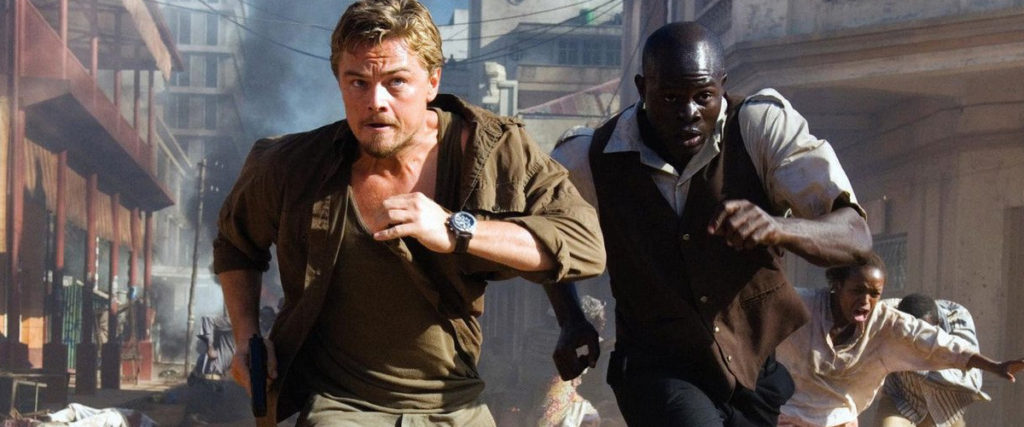
Blood Diamond (2006)


Leonardo DiCaprio and Djimon Hounsou excel in this self important Hollywood message film

Director: Edward Zwick

Cast: Leonardo DiCaprio (Danny Archer), Djimon Hounsou (Solomon Vandy), Jennifer Connelly (Maddy Bowen), Arnold Vosloo (Colonel Coetzee), Michael Sheen (Rupert Simmons), David Harewood (Captain Poison), Basil Wallace (Benjamin Kapanay), Jimi Mistry (Nabil), Kagiso Kuypers (Dia Vandy)

Hollywood films set in Africa often have a difficult conundrum – they want to tell a story about that often troubled continent, but struggle to do so without feeling impossibly worthy – and often need to filter the story through the experience of white westerners in the region. Blood Diamond tries to avoid these traps very hard – but largely ends up falling into them.

In 1999, Sierra Leone is ravaged by Civil War. Fisherman Solomon Vandy’s (Djimon Hounsou) village is attacked by rebels, led by Captain Poison (David Harewood), and his son is taken as a child soldier. Captured Vandy is forced to work at the diamond mines, where he discovers a priceless “Blood Diamond”. After concealing it, Vandy is captured by government troops. Overhearing of the diamond’s existence from a confrontation between Vandy and Poison in prison, Rhodesian arms trader Danny Archer (Leonardo DiCaprio) enlists Vandy to claim the diamond – promising to help find Vandy’s lost family with the help of journalist Maddy Bowen (Jennifer Connolly).

The only thing that elevates this rather shallow film is the excellence of its two lead performers. Both DiCaprio and Hounsou give committed, energised and emotional performances way beyond the clichés and mundane predictability of the rest of the film. DiCaprio has a fairly standard redemption cycle, but invests Archer with an inner pain, a supressed sense of honour and a bitter anger at the world that acts as a shield against opening himself up to affection and friendship. Hounsou takes on the difficult task of effectively representing Africa, but makes Solomon a living, breathing man, a loving father but also a rash man, defensive but burning with emotions.

It’s a shame the rest of the actors aren’t given the time to build these sort of real human portraits out of this stodgy script. Jennifer Connolly in particular is cursed with a lousy part – every third line is either a plot device or a method of communicating facts and figures from the writer’s research. The film is bookended by tedious “G8” meeting scenes where (mostly white) politicians effectively sanctimoniously read the contents of Wikipedia’s Sierra Leone pages at each other. 

The film manages to tick most of the expected boxes of African-set Hollywood films, with poverty, violence, blood diamonds, war lords and child soldiers all mixed in. It’s very clear all involved were of the opinion they were making an “important” film. It’s this “on the nose” seriousness that prevents the film from being a really effective piece of message-film making, not helped by Zwick’s careful but uninspired direction. It’s not a bad film by any stretch, but it is only a competently well-made, average one.

Throughout, messages are heavily delivered and metaphors hammered home (a metaphor about the blood in the soil is whacked over our head at a crucial dénouement). The film overeggs the pudding for its emotional moments – the final scene certainly goes too far. Many of these problems come back to the script, which is so wedded to its research and earnestness, that it keeps getting in the way of the moments when the film tries to come to life. We never really feel we are actually sharing the experience of those most affected by events (even Vandy is really a supporting actor in his what should be his own movie, his experience filtered through the impact it has on Archer).

So this is a flawed film, but it still sort of works – and most of that praise needs to go to the leads, who deserved a far better film. It’s predictable and sanctimonious, keen to be a landmark piece of cinema, but really it’s just another Hollywood “message” piece. DiCaprio and Hounsou sell the hell out of the predictable story and stodgy script, and make it one that keeps your interest throughout, even if it never really hits you with the impact it desired.

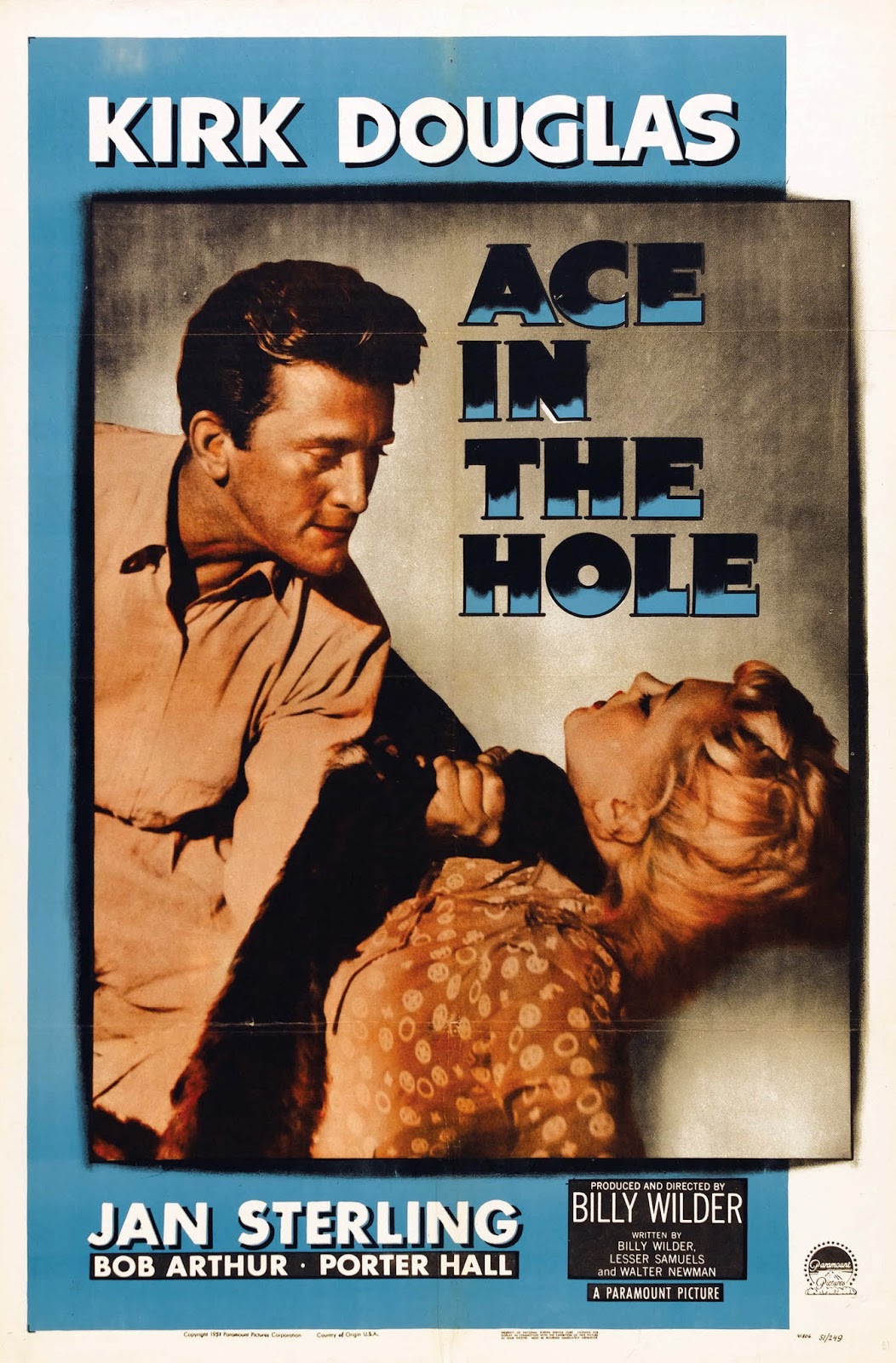
Ace in the Hole (1951)


Kirk Douglas surveys the horrors he has willingly unleashed in Billy Wilder’s bitter beyond belief media satire

Director: Billy Wilder

Cast: Kirk Douglas (Chuck Tatum), Jan Sterling (Lorraine Minosa), Robert Arthur (Herbie Cook), Porter Hall (Jacob Q. Booth), Frank Cady (Mr Federber), Richard Benedict (Leo Minosa), Ray Teal (Sheriff Kretzer), Robert Arthur (Herbie Cook)

Ace in the Hole was Wilder’s first big flop as a director. It’s not surprising that the media savaged it and claimed it was ridiculous. This is a film way, way, way ahead of its time, a stinging indictment of the ruthless obsession of the media with selling stories rather than reporting them, of spinning out crises to sell newspapers. It’s Fake News decades ahead of its time, a gutter journalism film released at a time when the media was totally trusted. Is it any wonder contemporary critics claimed they couldn’t recognise their trade here? Now it’s practically the way every journalist on film is portrayed.

Charles Tatum (Kirk Douglas) is a big-city reporter fired by a host of newspapers for offences ranging from alcoholism to libel to sleeping with the boss’s wife. Arriving in Albuquerque, New Mexico, he wangles a job on the local paper aimed to eventually encounter a story he can spin into a national media sensation, a crisis with a “human interest story”. A year later, he stumbles upon a cave-in that has trapped a man, Leo Minosa (Richard Benedict), below the surface. Believing this is the story that he can get him back his seat at the high table, Tatum seizes control of the rescue operation, insisting a quick and easy plan is dropped in favour of a week long public drilling operation. Tatum’s reporting of the event becomes a media sensation and in days the abandoned town is full of reporters and rubberneckers.

What’s astonishing here is that this is one of the few films I can think of that is totally devoid of sentiment or hope. It’s ruthlessly cynical where virtually every character is irredeemable, and no suggestion of redemption exists. The only major character who seems normal is Leo himself, although that is largely because his bland non-descriptness (well portrayed by Richard Benedict) and childlike, homespun dependency on those around him make him a near blank anyone can project feelings onto. Wilder’s hard-bitten cycnicsm, bordering on anger with the media and their audience, pulls no punches without descending into polemic – ironically it keeps the human interest, while never compromising the dark satire.

It’s a savage attack not just on journalism and the mass media, but human nature itself. The media stirs up a storm of excitement and drama around one man’s fate solely to make money – and Tatum himself is the worst form of manipulative gutter press, with no interest in truth, investigation or even journalism, only a shark-like love of the main event. But Wilder shows that the people just lap up this exploitative press storm – the growing crush of on-lookers, the bated breath as each update comes in, the literal carnival set up on the site, specially chartered trains – everyone wants to feel part of this story, to vicariously feel the emotions of those the event is actually happening to. It’s virtually a prediction of Twitter.

At the heart of this is Tatum, played with maximum forcefulness and dark charisma by Kirk Douglas in surely one of his finest performances. What Douglas does here that is so skilful is to never make Tatum an out-and-out villain. He plays it with a subtle suggestion of self-loathing: the quietly suggested need for alcohol, the revulsion he feels for those around him whom he sees as reflections of his own moral emptiness. At the same time, if Tatum has morals he long since stopped listening to them. Every time it looks like Tatum has realised what he has done, he reverts back to keeping the story going. Douglas’s dynamism also brings Tatum’s relentless drive and determination to life with real power. Tatum is easily able to cow, bully and bribe those around him into making him the funnel of the story. Never once do you question why all around Tatum bow to his will – his force of personality is so great you have no choice. Despite the hints of self-loathing, Douglas isn’t afraid to play Tatum as a reprehensible man – not bad or evil, just totally self-serving and selfish.

Jan Sterling I was less sure of at first, but actually this is another incredibly brave performance of uncompromising hardness. Lorraine is trapped in a marriage with a man she does not love, in the middle of nowhere, having believed she was marrying into something very different. But even with those provisos, her lack of interest in her husband’s safety and her focus on getting as much cash out of the tourists as possible (to finance her departure to the city) is astonishingly ruthless. Out of all the characters, she is the one who is immediately aware of what game Tatum is playing, and (with his advice) she is the most capable of exploiting the public excitement for her own gain. While she has elements of a femme fatale, Sterling’s performance seems more bitterly cynical than manipulatively feminine.

Wilder’s cynical and hard-nosed film is a brilliantly written deconstruction of the American dream, packed with wonderful lines and sharply drawn characters. It scrapes away at the surface of its characters to reveal the rot underneath – even Tatum’s photographer Herbie degrades from idealist to acolyte – and then blames us all for the mess. It shows us the disgusting ease with which our feelings can be manipulated to sell anything, then shows how gleefully we want to be feel part of an event: shots are filled with details like spectators carrying candy-floss while praying for Leo’s safety.

And then there is a complete lack of redemption – or even suggestion of it. Decent characters are peripheral, and far outnumbered by Tatum and his like. The resolution of the crisis does not go according to Tatum’s plan. It’s almost astonishing in its bleakness and in Tatum’s confused reaction to it and his lack of clear-cut guilt. Again, it’s Douglas’ skill and Wilder’s uncompromising direction: I actually had to watch it twice to catch the shading Douglas and Wilder give Tatum’s reactions to events finally going out of his control – and I still don’t know to what extent self-loathing trumps frustration and disappointment.

This is a masterful media satire and a wonderful, thought-provoking film, surely one of Wilder’s finest. It should be a lot better known than it actually is. I haven’t stopped thinking about it in days and I’m already looking forward to seeing it again. And, if anything, it is getting more relevant every single day.

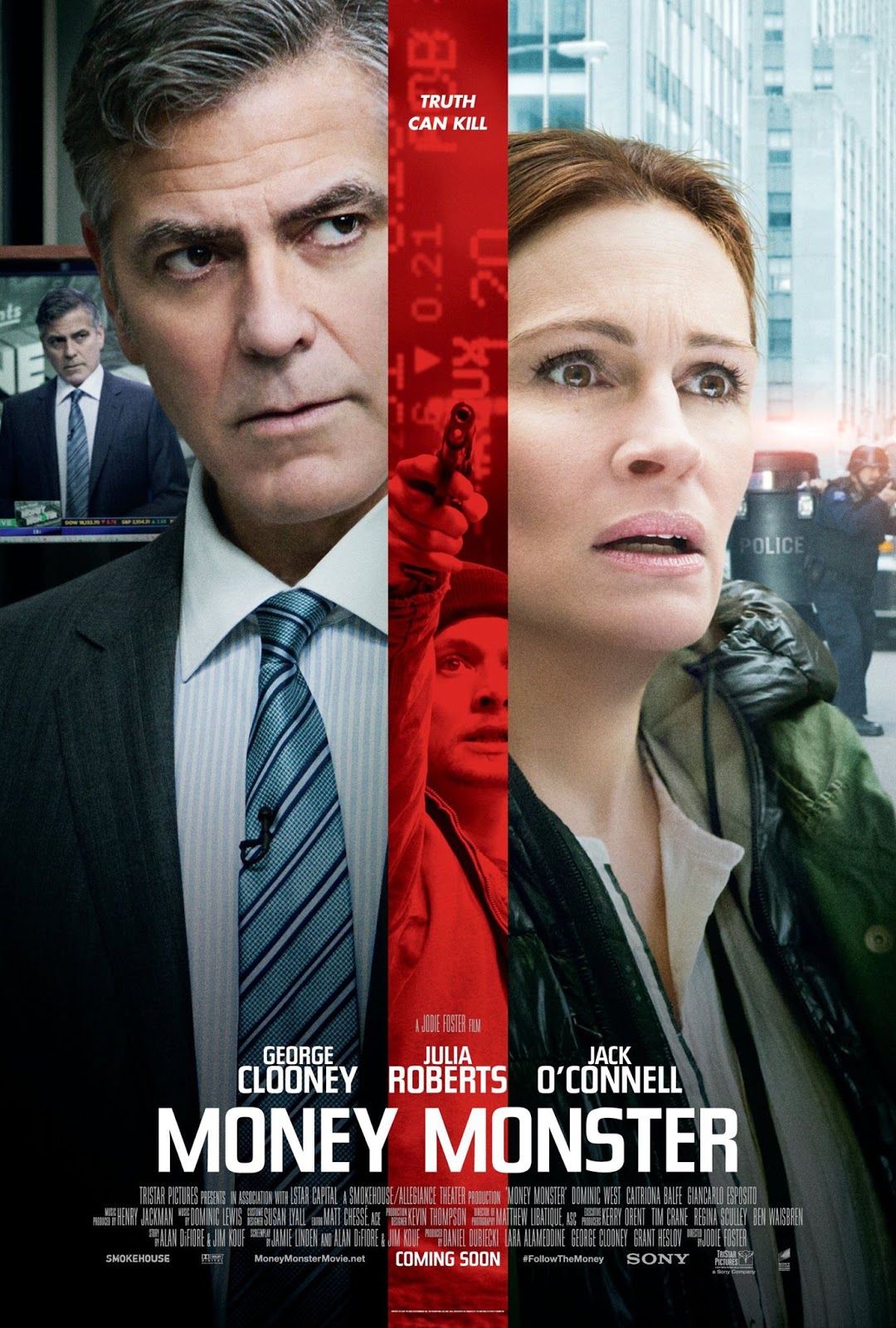
Money Monster (2016)


A bad day at the office was ahead for George Clooney

Director: Jodie Foster

Cast: George Clooney (Lee Gates), Julia Roberts (Patty Fenn), Jack O’Connell (Kyle Budwell), Dominic West (Walt Camby), Caitriona Balfe (Diane Lester), Giancarlo Esposito (Captain Marcus Powell)

For as long as there has been TV, then the world of Film has looked down its nose at the mass market medium. “It’s in your homes! It makes you dumber! It stops you caring!” Set a film in a TV studio and it’s a fair bet that, before long, some shallow media types will appear, a dramatic on-air event will take place, a shallow man will rediscover his soul and the camera will cut back to punters at home watching the drama as if they it was just part of the show.

All this is exhibited to its full in Money Monster, a passably entertaining hostage drama set in the studio of a fictional Wall Street themed entertainment and “news” show. Lee Gates (George Clooney) is a shallow, image and money-obsessed TV personality taken hostage after a desperate grief-stricken viewer Kyle Budwell (Jack O’Connell) loses his life savings on one of Gates’ tips. However, with the prodding of his director Patty (Julia Roberts), Gates slowly begins to rediscover his journalistic integrity.

Watching the film when it rather heavy-handedly enters into the world of media satire, it’s pretty hard not to remember better films in the same genre. Network covered much of this ground so well 40 years ago, it’s almost not been necessary to watch another film about the manipulation of the media. The Truman Show so successfully skewered the thoughtless collaboration of the watcher at home, that this film’s attempt feels like a rather mundane repeat.

Saying that, George Clooney does a grand job of portraying the shallow, media man re-discovering his depths – although lord knows he’s played this sort of part often enough to do it standing on his head. But he gets the dark comedy of it, and he is also able to deliver on the growing decency and integrity of the character. Julia Roberts is pretty good as a confident professional who has allowed her principles to slide for too long. In this illustrious company, Jack O’Connell more than holds his own, delivering brilliantly as a desperate and angry man.

The hostage taking sequences are quite well done, and threaded in well with the general satirical air of the film. At two key moments during the crisis, the film successfully pulls the rug out from under the feet of the viewer by delivering a different outcome than we might have expected. It’s probably when the film is most effective. It also does a good job threading many of the themes, locations and characters that will become important by the end of the film into its opening moments – many of them done so gently, you won’t even notice until they become important later.

The dark satire around the uncaring nature of big business and its lack of principles also hits more than a few familiar beats (big business being another thing multi-million film companies love to lay into), but this side of the plot is interesting enough – and I didn’t quite work out how the dodgy dealing had worked out. The final reveal and confrontation around this is well staged. It doesn’t tell you anything new, or present its old points in a unique or intriguing new way, but it does it in an entertaining way.

The film generally deserves some congratulation for its staging – Foster directs with a tightness and the flimsy conception of the film is delivered in a taut 85 minutes (almost in real time) which certainly means it doesn’t outstay its welcome. The acting is decent and the points it makes are well delivered, no matter how familiar they are. The film effectively plays with and changes your views on its characters over the course of its runtime. Honestly there are worse ways you can spend an hour and a half. It’s just not something that is going to stick with you for long.

The Lost Weekend (1945)

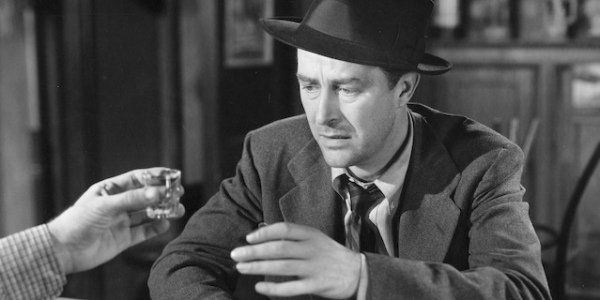
One more for the road: Ray Milland spend the rest of his life reassuring people he wasn’t an alcoholic. Talk about the film that keeps on giving.

Director: Billy Wilder
Cast: Ray Milland (Don Birnam), Jane Wyman (Helen St. James), Philip Terry (Wick Birnam), Howard da Silva (Nat), Doris Dowling (Gloria), Frank Faylen (‘Bim’ Nolan)

It opens like a counter view of the American Dream: a long pan down through the New York skyline. A voiceover leads us through the window (via a shot of a bottle hanging out of the window) onto a pair of brothers packing for a weekend away. Only of course the bottle is really the third character here, and it’s all that one of the brothers has on his mind.

The Lost Weekend is simply that: a long weekend in which we see alcoholic would-be author Don Birnam (Ray Milland) lie, cheat and steal with a shabby English charm through the bright lights of the city, occasionally resolving to quit the demon booze, but constantly drawn back by its siren charm. Other characters drop in and out of his story: an almost fanatically supportive girlfriend Helen (Jane Wyman), his weary brother Wick (Philip Terry), an ambiguousbartender (Howard da Silva – very good), a naïve hooker (Doris Dowling – innocent in the way only Hollywood golden age hookers can be) and finally a truth-telling male nurse Bim (Frank Faylen).

Probably what’s most remarkable about this film is that it was made at all, especially considering that this was when Hollywood’s “morality” dictates ruled. Film historians have suggested that Wilder’s introduction of an obvious hooker, and the suggestions of the Nurse’s homosexuality, so focused the Hays Code’s attention that they let slide that the central character is a lying, shifty drunk who feels only slight shame and very little regret for his actions, and whose announcement at the end that he has changed is potentially just the beginning of another cycle of sobriety in the addicted alcoholic.

Wilder’s genius here in filming is, instead of judging him or pitying, the camera sticks firmly with Don and makes us a co-conspirator in his low cunning and desperation to obtain alcohol. Don is a man who, during the course of the film, pawns several valuable possessions (some not his own), trashes his own apartment in search of booze, fleeces money from people with sympathetic-sounding grandiose stories, and is reduced to attempting public theft. But instead of placing us in the perspective of the (overly) saintly girlfriend frustrating us by striving to reform Don, we stick with Don and are invited to see those standing between him and the booze as the antagonists that Don perceives them to be.

Wilder also skilfully suggests that the same earnest help that Helen (and to a lesser extent Wick) are piling on Don is actually contributing to pushing him further into desperate addiction by smothering him. Don doesn’t seem to be ready to listen to anyone until, sunk to near rock bottom and hospitalised in the drunks’ ward, nurse Bim tells him out right that he is a self-destructive loser who is controlled by his addiction (I’ll also point out this doesn’t stop Don trying to bribe him to facilitate his escape from the ward). I’m also going to mention here a popular theory from film critics that Bim is a figment of Don’s imagination (his name is a near anagram of Don’s, he talks only to Don in the film, seems to know everything about Don’s inner thoughts, and his coded homosexuality links to Don’s own suggested homosexuality in the original book – the underlying cause of his addiction).

The film also has a wonderful noirish quality, capturing of the seedy world of the drunk: the bars and pawnshops that are Don’s world, and the impressionistic lighting used to dramatise Don’s drunken states. In one shot I particularly enjoyed, Don searches desperately for a bottle he hid while drunk the night before – he can’t remember where he hid it because he was pissed, but we know it’s hidden in the lightshade. The camera frames Don and his search with the lampshade constantly in shot above him. A later agonising sequence captures a hideously hungover Don staggering down Third Avenue to reach the pawnbrokers – only to find on arrival (in another moment of black comedy that permeates the film) that it, and all other pawnbrokers, are closed for the day.

The film wouldn’t work though without the excellent performance of Ray Milland in a role that he never matched again. Milland, an ex-pat Welshman with a theatre background, has just the right edge of shabby nobility to make you believe that everyone would continue to find this man endearing and constantly want to give him that second, third, fourth chance. Milland and Wilder are also not afraid to show us that Don’s only real creativity with language comes from drink – his inspired, poetic speeches grow with fervour the more beer he consumes, while his attempts to write without a drink get little further than the front page. Don is sympathetic to us, because I feel we all recognise our failures in him and our self loathing. Hating Don would almost be like hating ourselves – after all who hasn’t looked at their life and thought (to quote another classic) “I coulda been a contender”?

Brilliantly directed and with a fantastic central performance, this is perhaps one of the most empathetic films made about addiction. It’s not perfect – Wilder I think does his best to suggest that the rather sudden happy ending could be the start of another cycle of recovery and collapse, but I’m not sure if there is quite enough in the film to suggest this. Similarly Jane Wyman’s loving girlfriend is so cloyingly devoted you can well imagine she would drive a man to desperation – it’s a very dated character, and hard for a modern viewer not to see her as a facilitating doormat. But all that aside, this is a film packed with beautiful moments, great images and a knock-out performance by Milland. Recommended!

Trainspotting (1996)

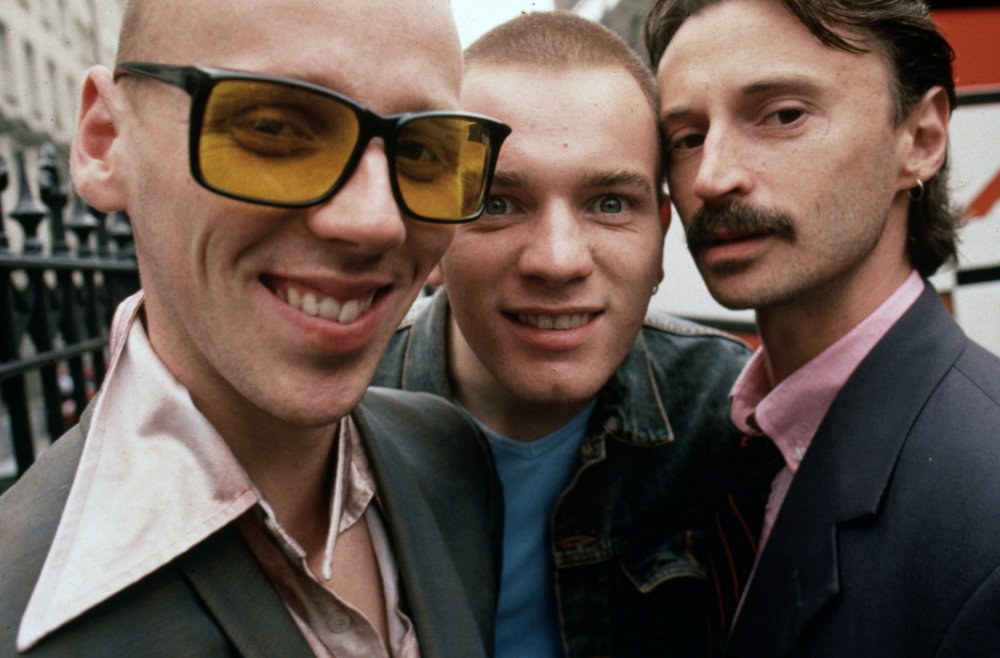
Another happy day in Edinburgh… Ewen Bremner, Ewan McGregor and Robert Carlyle define their careers in the mid-1990s phenomenen

Director: Danny Boyle

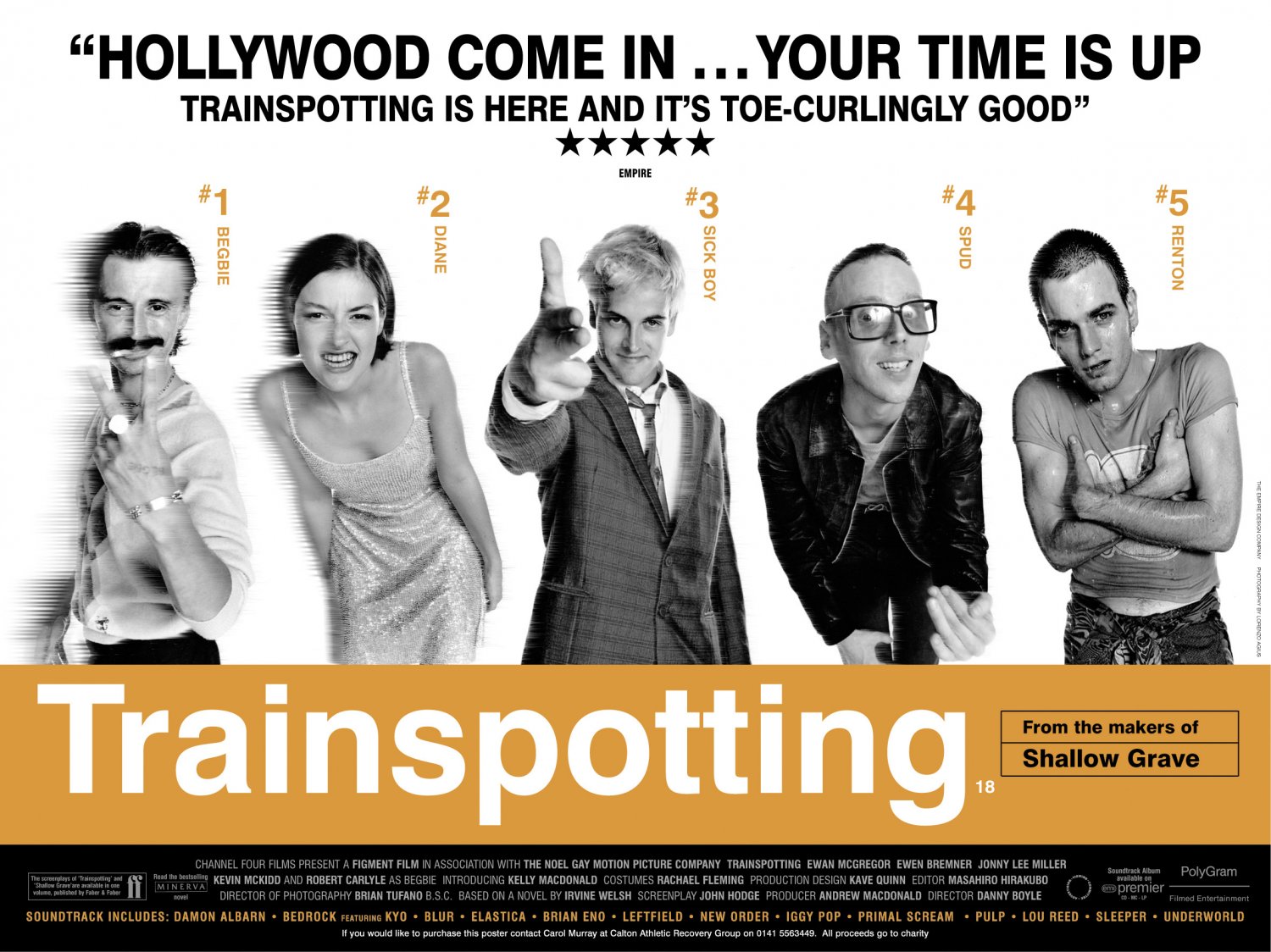
Cast: Ewan McGregor (Renton), Ewen Bremner (Spud), Jonny Lee Miller (Sick Boy), Robert Carlyle (Begbie), Kevin McKidd (Tommy), Kelly Macdonald (Diane), Peter Mullan (Mother Superior), Eileen Nicholas (Mrs. Renton), James Cosmo (Mr. Renton), Shirley Henderson (Gail Houston), Stuart McQuarrie (Gav), Irvine Welsh (Mikey)

Surprise, surprise the Drug’s Don’t Work. They just make you worse. Honestly, watching Trainspotting you would have to be a Grade A moron or wilfully missing the point to ever imagine that this film could, in any way what-so-ever, be endorsing the life of heroin addiction. The unbalanced, unreliable, sickly-looking, soul crushingly blank-eyed losers in this film are no-ones idea of an aspiration. The fate of Tommy alone, starting the film as a health freak and ending it as a smacked out, paper thin, wasting AIDS victim could only encourage the truly unbalanced to take up drugs.

You must know the story: Ewan McGregor is our “hero” Renton, a junkie with delusions every so often (the film implies this has occurred multiple times) of going clean, kicking the habit only to find that he is always drawn back in – largely it seems due to his own weak personality. Fellow junkies include Spud (Ewan Bremner), Sick Boy (Jonny Lee Miller) and later (tragically) Tommy (Kevin McKidd). On the edge of their junkie circle (not a user) is psychotic Begbie (Robert Carlyle) who doesn’t need drugs when he can get a high from starting a bar fight. The basic plot is slim in this whipper sharp film where experience is all – Renton goes clean, gets sucked back in, misses prison, goes cold turkey, escapes to London, gets sucked back into a drug deal. That’s basically it. What’s important here is the experience.

This is possibly one of the best films about addiction ever seen (I watched it in a double bill with The Lost Weekend which actually works out as a pretty natural combo). Boyle and screenwriter Andrew Hodge aren’t scared to show that drugs at times can be fun (after all if they didn’t make you feel good part of the time why would you do them?) and they can give colour to life (particularly to the shallow non entities this film centres on). The is even a strange family warmth to Renton and friends getting smacked out in an otherwise disgusting dilapidated drug pit, listening to Sick Boy dissect the Sean Connery Bond films. This is then brilliantly counterbalanced by the appalling lows – from the truly unsettling dead baby, abandoned and unfed in said drug den, to Renton’s appalling cold turkey. 

Perhaps the most remarkable thing here is that Danny Boyle directs with such verve and with a gleeful delight for every single shooting and editing trick in the book, but the film never feels like a triumph of style over substance, or as if the tricks are the centre of the director’s attention. Instead throughout the whole film you can tell the heart of the film makers – and therefore the heart of the viewer – is also focused on the story and the characters. So we get a film that crackles with energy, with a sense of youthful vitality (that is vital to understanding its characters), has an attractive anti-society message – but also reminds us that the perils of following this kind of counter culture life can be truly horrifying.

At the centre of this film is Ewan McGregor, who I don’t think has ever found a role that he could seize and bring to life as successfully as he did with this one. McGregor is captivating, managing to skilfully demonstrate without any judgement a man who believes he is strong, but is in fact desperately weak. His performance is so charismatic that you hardly notice that Renton is, actually, a pretty nasty person. High or not he has a barely concealed contempt for nearly everyone around him, his reaction to the baby death is shockingly cold, his treatment of Tommy laced with indifference, his pronouncements to the audience overflow with self-regard and delusion. But you just don’t notice.

What you do notice is that Robert Carlyle’s Begbie is a total nutter. Just like McGregor, I think Carlyle struggled to find a role that matched this one, probably not helped by the string of psychos he was offered by casting directors. Carlyle again actually isn’t in the film that much, but he nails how terrifying total self belief can be when matched with a complete lack of any moral sense. In fact most of the cast have hardly ever been better. Excellent support also comes from Peter Mullan, Eileen Nicholas, James Cosmo, Shirley Henderson and Stuart McQuarrie while Irvine Welsh pops up as low rent dealer.

Electric film making with a heart, I don’t think even Danny Boyle has topped this. There is something strangely perfect about this film – anything more and it might out stay it’s welcome, but every scene has something magic in it, some little touch that stays in the mind – either performance, dialogue, direction or all three. It looks fantastic and seemed to define its era. So fingers crossed for the sequel. No pressure…