Category: Survivalist film

Twister (1996)

Twister (1996)

Cardboard characters try not to get blown away in this extremely silly disaster movie

Director: Jan de Bont

Cast: Helen Hunt (Dr Jo Harding), Bill Paxton (Dr Bill Harding), Jami Gertz (Dr Melissa Reeves), Cary Elwes (Dr Jonas Miller), Lois Smith (Aung Meg Greene), Philip Seymour Hoffman (Dusty Davis), Alan Ruck (“Rabbit” Nurick), Sean Whalen (Allan Sanders), Todd Field (“Beltzer” Lewis), Wendle Josepher (Haynes), Jeremy Davies (Brian Laurence), Joey Slotnick (Joey), Zach Grenier (Eddie)

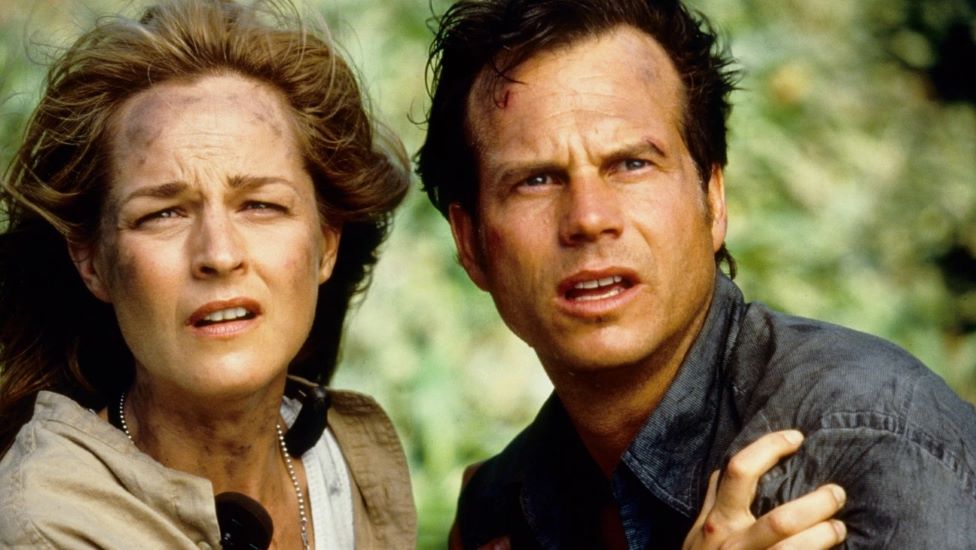
In 1996 Twister blew through cinema screens with a vengeance, becoming the second most biggest hit of the year. Yes, you read that right. Stop me if I am wrong, but has anyone thought about, even for a second, this bog-standard disaster film since? Staffed almost exclusively by characters so lightweight a puff of wind would blow them away, never mind a tornado, the whole thing is full of sound and fury and signifies absolutely nothing at all.

Drs Jo (Helen Hunt) and Bill Harding (Bill Paxton) are trying to get divorced. He’s finally had enough of risking his neck on their joint passion for storm-chasing, deciding to jack it in for a lucrative life on the media circuit and marriage to relationship therapist Dr Melissa Reeves (Jami Gertz). He arrives in Oklahoma to get Jo to sign the divorce papers – but doncha know it, he gets sucked in to “one more job”, to road-test the storm measurement doo-hickey device he and Jo dreamed of making but she’s actually built. And, handily, one of those pesky twisters is on the way.

The doo-hickey – I’m really not sure what it’s meant to do – is the sort of ludicrous scientific device that only exists in the movies. It’s basically a huge metal cauldron full of marbles that needs to be placed in the path of a twister. It’s also – in a terrible design flaw – hugely fragile and unstable, constantly falling over at the worst possible time. There are apparently three prototypes, of decreasing quality, each a back-up of the one before – you have one guess as to how many of these they burn through in the film.

In fact, you can pretty much one guess almost everything that might happen. Will Jo finally come-to-terms with the death of her father in a storm? (That’s right – she has a “I’m passionate and obsessed because a twister killed my dad” backstory!) Will Bill realise Jo is the one for him, not fish-out-of-water big-city-girl Mel? Will Cary Elwes’ lip-smacking, moustachio-curling copyright-stealing storm expert get his (fatal) comeuppance? Will sweet Aunt Meg (and her dog) survive her tussle with the storm? That “it’s almost never happened” super-storm they talk about at the start of the film – do you think it’s possible our heroes will find themselves in the middle of it before the end?

All of this is shuffled in a film with a hideously over-loaded deck. Jo’s team consists of around eight assistants, none of whom have so much as a character between them. They are a feeble collection of archetypes: the geek, the shy one, the techie, the religious one and the loud-mouthed one (a role of flamboyant indignity for Philip Seymour Hoffman, yet to be recognised as a great actor and instead relegated to feeble comic relief roles). But then it’s not like the leads are that interesting either: she’s committed, passionate but gosh-darn-it puts the storm before her personal life. He’s trying to move on but doncha-know-it he’s just lying to himself that he doesn’t love the storm.

In fact, as this rather smug ex-couple riffed on in-jokes, storm facts and their shared love for their doo-hickey made of marbles I felt rather sorry for Mel. Obviously, we are meant to scorn Mel, with her hand-wringing profession of counsellor (as opposed to the macho jobs of Bill and Jo) and her reluctance to run into a massive twister. Actually, I think she’s rather sensible. Bill and Jo are both clearly insane and take suicidal risks. She puts up with her fiancé flirting with his ex far longer than most of us would and she is hugely patient with the polite scorn she’s treated with by Jo’s rag-tag band of tedious risk-taking geeks playing at being alphas. She hangs around far longer than anyone else would do, before departing after maturely and sensibly telling Bill he should stick with his first two loves (Jo and storms – maybe not in that order).

People aren’t watching these films for the character or plot though – just as well as the film doesn’t really have either – but the special effects. These are impressive, I suppose, as the storm rips through sets, throws CGI buildings around and generally makes for loud and impressive noise. The film has a sort of goofy wit at times – at one point a CGI cow is blown through the sky in front of the Hardings, mooing rather sadly.

There are some decent set-pieces, even though they are basically all the same set-piece repeated over and over again at a different scale (first the storm blows over a car, then a building, then a village, then most of a town while our heroes duck and cover their heads). Lots of it was done with practical effects, shot with an alarming lack of regard for safety – Hunt got an infection from being flung into a drain and she and Paxton were temporarily blinded by a burst of artificial lightning.

De Bont directs all this with a personality-free competence. The film is at absolute best less than half as good as his first film, Speed – and de Bont’s subsequent film, The Haunting, would be half as good again in a career of ever-diminishing returns. Twister offers nothing new or even particularly interesting, other than some wind special effects that are of passing curiosity value but nothing else. It’s almost quaint that, in 1996, this was seen as something earth-shatteringly impressive. Now it’s as fearsome a burst of raw natural power as a fart.

In the Heart of the Sea (2015)

In the Heart of the Sea (2015)

Hunger, desperation, the sea and a very big whale in this Moby Dick origins story

Director: Ron Howard

Cast: Chris Hemsworth (Owen Chase), Benjamin Walker (Captain George Pollard), Cillian Murphy (Matthew Joy), Tom Holland (Thomas Nickerson), Brendan Gleeson (Old Thomas Nickerson), Ben Whishaw (Herman Melville), Michele Fairley (Mrs Nickerson), Gary Beadle (William Bond), Frank Dillane (Owen Coffin), Charlotte Riley (Peggy Chase), Donald Sumpter (Paul Mason), Paul Anderson (Caleb Chappel), Joseph Mawle (Benjamin Lawrence), Edward Ashley (Barzillai Roy)

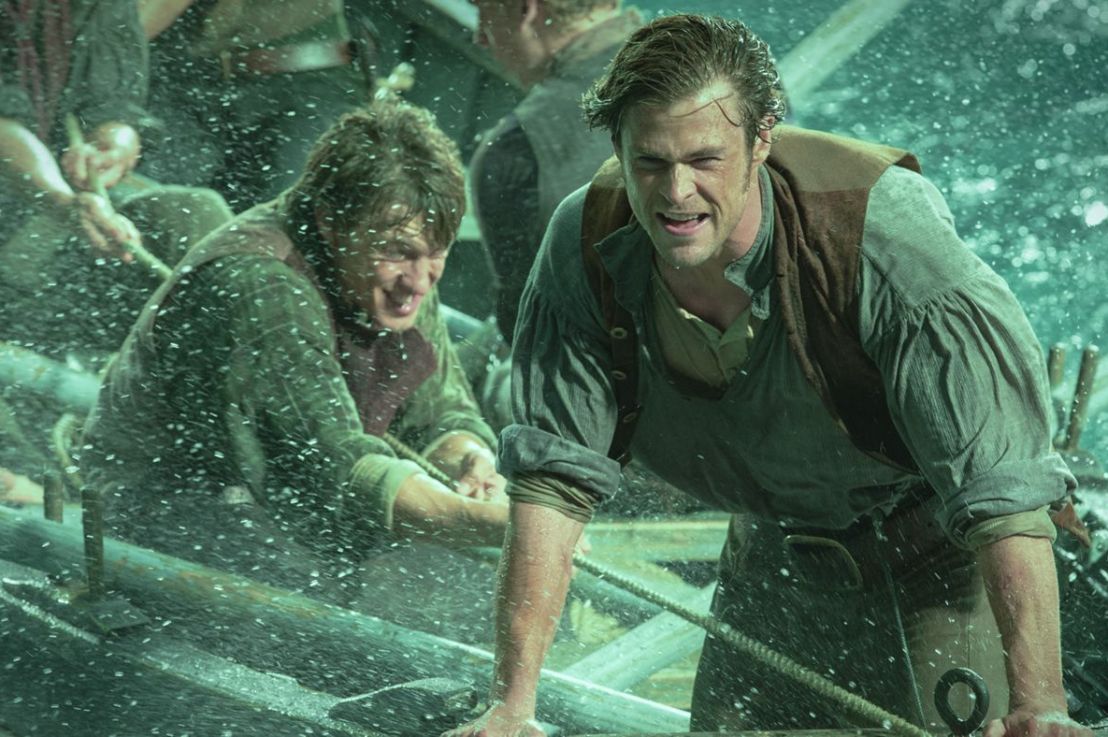
1820 and the world is run by oil. Not the sort you get out of the ground, but the sort you fish out of a whale’s corpse with a bucket. America is the leading exporter of whale oil and Nantucket is the centre of the industry. But it’s a dangerous business: as the crew of the Essex are about discover. Attacked by a whale, their ship sinks in the Pacific Ocean, thousands of miles from land. Passed-over first officer Owen Chase (Chris Hemsworth) and privileged captain George Pollard (Benjamin Walker) must set aside their differences to lead the survivors to safety. But starvation and desperation will lead those survivors to ever more desperate acts. All of this is told to Herman Melville (Ben Whishaw) by final living survivor Thomas Nickerson (Tom Holland and Brendan Gleeson), and it all sounds like a perfect inspiration for that Big Whaling Book Melville wants to write.

That Melville framing device is a good place to start when reviewing the many problems of In the Heart of the Sea, Ron Howard’s misfiring attempt at a survivalist epic. When we should be consumed by concern at whether these men survive, the film keeps trying to get us care as much about whether Melville will write a novel worthy of Hawthorne. The clunky prologue eats up a good sixth of the film, and we keep cutting back for Gleeson to tell us things the script isn’t deft enough to show us. Worse, it keeps ripping us way from the survivalist story that should be film’s heart.

Howard should know this: he directed one of the best survival-against-the-odds films ever in Apollo 13. Maybe the difference is that Apollo 13 is, at heart, a hopeful story. In the Heart of the Sea is about grimy sailors in a trade the film can’t find any sympathy for, eventually drawing lots in a long boat to see who is going to get killed and eaten by the others. It’s the sort of thing Werner Herzog would (pardon the metaphor) eat up for breakfast. For Howard, a fundamentally optimistic film-maker, its an ill fit. No wonder he wants to end the film with the triumph of Moby Dick.

In the Heart of the Sea is the rare instance of a film that is too short. The narration keeps skipping over time jumps in the first hour, that means we don’t get invested in the characters (most of whom are barely distinguished from each other, especially as beards and wasted bodies become the uniform). The sinking doesn’t take place until almost an hour in the film, meaning the time we spend with them lost in boats is a mere 40 minutes or so.

That is nowhere long enough for us to get a sense of either the monotonous time or the ravages hunger and desperation have made. Difficult as that stuff is to film – and I can appreciate its hard to make five men sitting, dying slowly, in a boat visually interesting – it means the film is asking us to make a big leap when it goes in five minutes from the men leaving a stop on an abandoned island to regretfully slicing one of their party up for dinner. We need to really understand how desperation has led to this point, but the film keeps jumping forward, as if its impatient to get to it.

Understanding is a general problem in the film. It can’t get past the fact that, today, we don’t see whaling (rightly so) as a sympathetic trade. But to these men, plunging a harpoon into a whale wasn’t an act of barbarous evil. It was more than even just making a living: it was a noble calling. Several times the film makes feeble attempts to push its characters towards moral epiphanies which seem jarringly out of chase (would Owen Chase, a hardy whaler with multiple kills, really hold his hand when confronted with a whale he thinks is trying to kill him?). Clumsy parallels are drawn between the heartless corporate oil industry of today, and the ‘suits’ back at Nantucket who only care about the bottom line.

Without accepting that, to these men, striving out into the ocean to bring back whale oil was as glorious a cause as landing on the moon, the film struggles to make most of the earlier part of the film interesting. Hard to sympathise with the characters, when the film is holding their profession at a sniffy distance. The film even radically changes the future career of its hero, Owen Chase, claiming he joined the merchant navy and never whaled again (not remotely true).

On top of this, Howard doesn’t manage to make the act of sailing feel as real or as compelling as, say, Peter Weir did in Master and Commander. Everything has a slightly unconvincing CGI sheen. Strange fish-eyed lenses keep popping up zooming in on specific features of pulleys and sails (is it meant to be like a whale’s eye view?). The film never manages to really communicate the tasks taking place or the risks they carry. There is a feeble personality clash between Pollard and Chase that fills much of the second act of the film, but is written and acted with a perfunctory predictability that never makes it interesting.

You can’t argue with the commitment of everyone involved. The cast noticeably wasted themselves down to portray these starving dying men. But it all adds up to not a lot. Chris Hemsworth gives a constrained performance as Chase – his chiselled Hollywood bulk looks hideously out of place – while Cillian Murphy makes the most impact among the rest as his luckless best friend. But the film’s main failure is Howard’s inability to make us really feel every moment of these men’s agonising suffering and to really understand the desperation that drove them to lengths no man should go to. Eventually that only makes it a surprisingly disengaging experience.

The Lost City of Z (2016)

The Lost City of Z (2016)

An obsessive explorer plunges into the Amazon in search of a lost city in this imaginative epic

Director: James Gray

Cast: Charlie Hunnam (Percy Fawcett), Robert Pattinson (Henry Costin), Tom Holland (Jack Fawcett), Sienna Miller (Nina Fawcett), Edward Ashley (Arthur Manley), Angus MacFadyen (James Murray), Clive Francis (Sir John Scott Keltie), Ian McDiarmid (Sir George Goldie), Franco Nero (Baron de Gondoriz), Harry Melling (William Barclay)

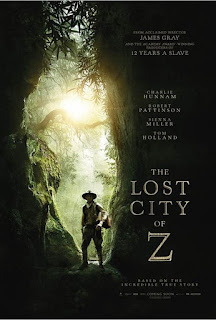
For as long as parts of a map so unknown, that all we write on them is “Here Be Dragons”, there have been explorers yearning to uncover their secrets. Exploring in the nineteenth and early twentieth century was a dangerous, sometimes fatal, call, as explored with a near-mystical thoughtfulness in James Gray’s ambitious film The Lost City of Z. Percy Fawcett (Charlie Hunnam) was the courageous soldier, whose whole life was a campaign to prove he had nothing in common with his disgraced father. Fawcett became obsessed with discovering the secrets of the Amazon, principally the existence of a lost civilisation built by the indigenous people of Brazil, which he called The Lost City of Z. It was to become a quest that would dominate his life.

Based on a true story, Gray’s film taps deeply into a Herzog-by-way-of-Lean view of the Jungles of South America, a place of great awe and danger which creeps inside the soul of Fawcett until, as one tribesperson says, he seems to be of both the West and the Jungle. Shot on location, the Jungle becomes a place of great beauty, but also unknowable mystery and menace. As Fawcett and his companions hack their way through it, on what could be a fool’s errand, their growing respect for it and the indigenous people, is matched only by their increased awareness of its dangers.

The Golden Age of Exploration is a difficult subject to tackle today, with many seeing (in some cases correctly) it as underpinned by a Westernised Imperialism, that earnestly believed the best thing that could happen to these lands (and the ‘savages’ who populated them) was that they should gratefully concede their land and culture to Western ‘civilisation’. Gray’s film is careful to show that Fawcett acknowledged he didn’t always understand the world he was in and learned some hard lessons. But the key difference is that acknowledgment and, as presented here, the humility and respect he recognised the rights and skills of the indigenous people. It marks him out from several of his contemporaries who see them only as contemptable savages and simpletons.

Indeed, Gray’s film positions Fawcett as an admirable egalitarian. His belief that the people of Brazil were not only capable of building in the Jungle, but that they could create an advanced society of pottery and irrigation ahead of those in the West is laughed out of court by many of his fellow members of the Royal Geographical Society (as we see in an involving debate sequence). While staying with a tribe in the Amazon, he marvels at their ability to cultivate and farm the land – something he had been assured was impossible. Encountering a tribe whose custom is to eat parts of their dead (so as to preserve their spirit in themselves), he reacts not with kneejerk disgust but understanding and respect.

The respect he shows for the environment and those he finds there is contrasted with the reaction of famed explorer James Murray, who joins him for his second expedition. Played with a puffed-up self-satisfaction and rigid believe in his own righteousness by Angus MacFadyen, Murray (a noted polar explorer) proves a serious handicap on the expedition. Unfit, unprepared for the tropical environment and treating all he encounters with hauteur, Murray slowly alienates the rest of the party by displaying the imperialist confidence Fawcett and his companions avoid. Stealing supplies, nearly overtipping a raft and ruining some of their stores, Gray uses Murray as the picture of the arrogant classic explorer and a great contrast with Fawcett, who swears thereafter to never again judge a man on his standing and reputation rather than on his character.

Gray’s film has rather a good ear for the pressures and hypocrisies of post-Edwardian Britain. The film opens with Fawcett successfully shooting a leading stag during a state visit by Archduke Franz Ferdinand. It’s a feat that wins him praise – but not any form of meeting with the Archduke since Fawcett is, as a Lord puts it, “unwise in his choice of ancestors”. It’s a stigma Fawcett has to deal with at almost every turn, from being pooh-poohed for his advocation of the Amazonian tribes to dealing with the criticism of the entitled establishment figures.

Gray marshals this all rather effectively, bringing the film into a neat balance of acknowledging modern issues with exploration while still giving an excellent idea of why motivated these men. It all plays out within a dream like aesthetic that leaves a haunting impression. During his first expedition, Fawcett emerges from the bushes into a make-shift opera house built in the jungle (how Fitzcarraldo is that?), on a plantation ruled by a Portuguese landowner dripping with the greed of his class (Franco Nero in a delicious cameo). During his time at home – and at the front during the First World War – elements of the jungle creep into frame, reflecting Fawcett’s longing to return to this mysterious exotic land which makes him feel alive in ways the stifling life at home never does.

Gray’s sense of atmosphere is so well done in the film – its mesmeric shots and sense of unreality will linger – that it’s a shame Charlie Hunnam isn’t quite the right actor to play the role (he took over from Benedict Cumberbatch, who would have been perfect for the obsession, decisiveness and desire to prove himself). Hunnam gives a solid performance, and he really understands the egalitarian humanity of Fawcett, who treats all men and women as equals. But there is a deeper unknowability and mystical longing in Fawcett that is beyond his grasp.

Interestingly, Robert Pattinson – here grimy, eccentric and almost unrecognisable as Fawcett’s best friend Henry Costin – would have been a better call. This is an intensity and soulfulness in Pattison that Hunnam can’t quite bring to Fawcett. Tom Holland gives a heartfelt performance as Fawcett’s hero-worshipping son and Sienna Miller a sensitive and intelligent one as his devoted wife. Clive Francis and Ian McDiarmid play with aplomb sympathetic senior RGS men.

There are many more virtues than faults in The Lost City of Z. The photography by Darius Khondji is wonderful – no one has filmed the jungle better since The Mission. Gray’s intelligent and thoughtful film addresses questions of colonialism and prejudice, while also not shying away from the danger and aggression of some of these tribes. The portrayal of Fawcett’s final expedition is wonderfully done, culminating literally in a dream like sequence where reality, hope and fate merge. It’s a fascinating film.

The Midnight Sky (2020)

The Midnight Sky (2020)

Dystopian end-of-the-world drama gets dull and dreary in this misfire

Director: George Clooney

Cast: George Clooney (Augustine Lofthouse), Felicity Jones (Dr “Sully” Sullivan), David Oyelowo (Commander Adewole), Kyle Chandler (Mitchell), Demián Bichir (Sanchez), Tiffany Boone (Maya), Caoilinn Springall (Iris), Ethan Peck (Augustine), Sophie Rundle (Jean)

The world has been evacuated after an unspecified radiological disaster, with the survivors bound for K-23, a newly discovered moon of Jupiter capable of supporting life. The only person left on Earth is Augustine Lofthouse (George Clooney), suffering from a terminal illness. He remains behind at an arctic base to warn returning space missions. The returning mission Aether – crewed by Jones, Oyelowo, Chandler, Bichir and Boone – are en route, but to make contact with them Lofthouse must travel across the arctic to a back-up transmitter, accompanied by a mysterious wordless child called Iris (Caoilinn Springall) who seems to have been left behind during the evacuation.

The Midnight Sky is the largest, most technically ambitious film Clooney has directed. Did the focus on the technical aspects mean he took his eye off other elements? Even the ones his previous films have been strong on: dialogue and character. The Midnight Sky looks great and has some impressive effects. But it is a dull film, lacking pace or energy, populated by paper-thin characters and often feeling like a Frankenstein-like stitching together of elements of other, much better, films.

It splits its focus between two story lines: one a survivalist two-hander between Clooney and child actress Caroilinn Springall; the other a “journey home against the odds” space mission. The first carries a little more interest, if only because Clooney manages to brilliantly convey loneliness, isolation, sadness and how terminal illness increases the effects of all of these. There is also emotional depth from his growing bond with Iris: the two of them playfully flicking peas at each other over dinner and his protecting her from the dangers outside. This is shot in some stunning Iceland vistas and shows a competent selection of various traditional survivalist set-ups during the struggle to complete the journey. It’s not exactly original, but at least it holds the interest.

That interest isn’t found in the space scenes – although the lack of originality is. How did Clooney fail to notice that he assembled a terrific cast of actors, but then failed to give them so much as a whisper of a character to play between them. This crew are terminally unengaging 2-D characters, whose dialogue echoes tropes of other films. Despite the dangers they encounter while navigating a course to Earth (that inevitably takes them through uncharted meteor storms), we are never really given a reason to really care about these characters (all the sad mooning over holograms of the families they left behind doesn’t actually make us feel like we know them).

The sense of nothing we are seeing here actually feeling new is key, and the main problem with the whole film. Countless other films have covered world-ending events. Clooney’s battle to cross the arctic and survive carries more than an echo of The Revenant by way of The Road. The struggles in space have lashings of Gravity with an Interstellarvibe. And those are just for starters. Even the final narrative twist (which you can probably see coming) echoes other film twists. For all the handsomeness of the film, it never feels fresh, always more of a tribute remix of other superior films that you should probably just consider rewatching instead.

That’s Clooney’s main failing here. As if he was so focused on getting the technical elements spot on, he never checked if the patient had a pulse. The Midnight Sky, knitted together from the offcuts of other films, has only the vaguest of heartbeats. Nothing is original and virtually no character in it ever feels either fully-formed or someone we care about. Others, all too obviously, serve as nothing but narrative devices. There are some wonderful shots and a lovely score from Alexandre Desplat. But narratively, the film often feels too cold, distant and emotionally dead. It ends up feeling far, far longer than its two-hour run time.

The Edge (1997)

Anthony Hopkins and Alec Baldwin take on nature (and a bear) in The Edge

Director: Lee Tamahori

Cast: Anthony Hopkins (Charles Morse), Alec Baldwin (Robert Green), Harold Perrineau (Stephen), Elle Macpherson (Mickey Morse), LQ Jones (Styles), Bart the Bear

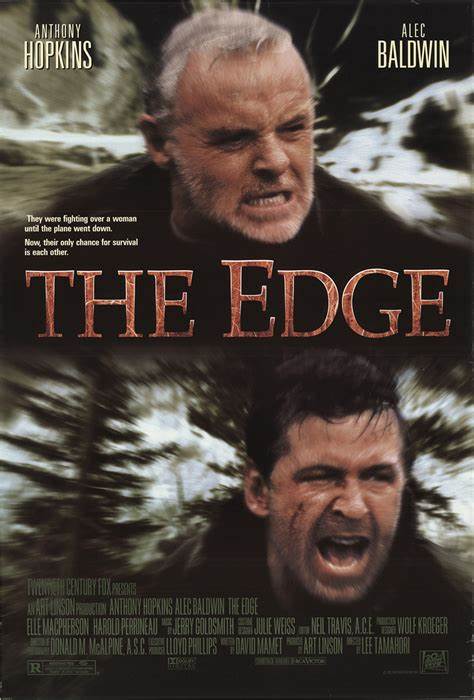
During a trip to a remote part of Alaska to celebrate his birthday, millionaire Charles Morse (Anthony Hopkins) is stranded hundreds of miles from rescue after a plane crash. The only other survivors are Robert (Alec Baldwin), a photographer Charles suspects of having an affair with his much younger wife Mickey (Elle Macpherson), and Robert’s assistant Steve (Harold Perrineau). Their best chance for survival may well be Charles’ photographic memory and his recall of all sorts of knowledge, recently topped up by reading a survival book. They’ll need it if they are to defeat and kill a man-hunting grizzly bear that swiftly dispatches Stephen.

With a script by David Mamet and some tight, tension-filled direction from Lee Tamahori, The Edge is a well-above average survival film where the main interest is less on the methods of survival than on the spiky, punchily-written interplay between Hopkins and Baldwin. The style of both actors – Hopkins channelling a zen-like calm, while Baldwin goes for a spiky flamboyance masking vulnerability – makes them a very well-matched pair and ensures The Edge constantly has something to entertain and intrigue in every scene.

The Alaskan outback is beautifully filmed, but still oppressively dangerous – a vast canopy of nothing but trees, mountains and snow. The film conveys a brilliant sense of the intense cold – our heroes almost die immediately due to exposure, after crashing into ice cold water – as well as the never-ending difficulties of navigating and surviving in the wilderness (almost inevitably their first day is spent walking in a large circle).

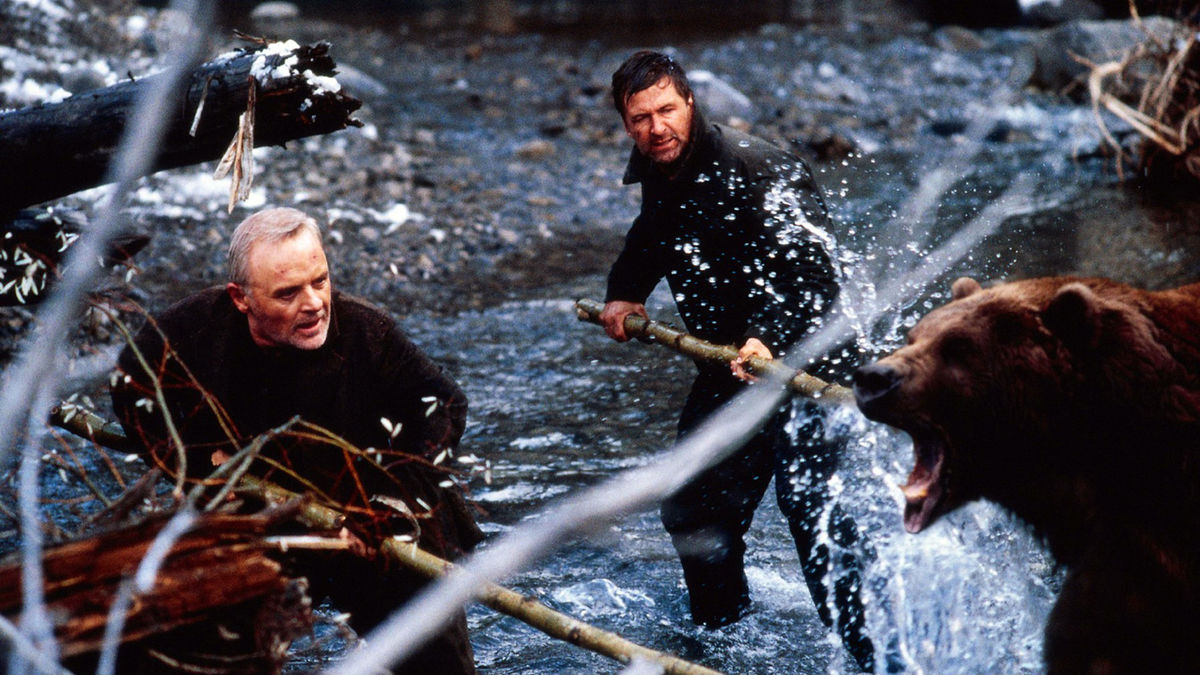
That’s before you even take into account the bear. Much of the film is taken up with Charles and Robert setting aside their differences to take on this killer creature, dodging its advances and finally laying a trap to slay it. Played by experienced acting bear Bart – who even gets an extra special credit all of his own – this creature serves as a superb embodiment of all the natural obstacles our heroes are facing, a running and clawed representation of the dangers of the wild made flesh. It also makes for a series of very tense confrontations.

What’s fascinating about the film though is that the real outback hero who emerges is not the jet-setting Robert, but the bookish and reserved Charles. This is one of the few films where a photographic memory and an ability to stay calm and collected make for practically superhuman skills. Hopkins is very good as Morse, a thoughtful man who surprisingly finds a greater sense of purpose and drive in the wilderness than he ever had in his business life. Mamet’s script delights in the titbits he has memorised, from building compasses to celestial navigation and the psychological requirements for staying alive in the wilderness.

Hopkins’ coolness is used to great effect – even if Charles seems an unlikely millionaire businessman – and contrasts wonderfully with Baldwin’s energy in the showier role as a weaker man. The Edge – originally titled by the even less inspired name of Bookworm – rather sweetly celebrates the virtues of wide-reading, education, curiosity and intellectual magpieism and shows how these qualities can be turned to life-saving effect. Charles turns out, to a certain extent, to be in his element – and without a doubt without him everyone would have died long before the inevitable rescue helicopter.

The Edge also covers a neat line in psychology. A constant refrain is that psychological collapse – a sense of giving up, rooted in ‘shame’ and assumptions that their fate must be deserved – is the key danger to survival. It’s a theme that the film constantly returns to (perhaps a little too much at times), but also ideas that I’m not sure survival films have focused on so keenly before. Usually in these suggestions gruffness and manly qualities are celebrated, but The Edge suggests that the wilderness is a great leveller and sometimes skills we did not expect become crucial to our survival. Sure, Charles sets about killing the bear with a ruthless determination – but his plan to do it is rooted in his learning and mastery of trivia.

The Edge doesn’t rework the wheel, but it’s a lovely piece of B-movie film-making, full of tension, fine dialogue and some impressive acting.

The Way Back (2010)

Harris, Sturgess and Farrell cross a great distance in Peter Weir’s The Way Back

Director: Peter Weir

Cast: Jim Sturgess (Janusz Wierszczek), Ed Harris (Mr Smith), Saoirse Ronan (Irena Zielinska), Colin Farrell (Valka), Dragos Bucor (Zoran), Alexandru Potocean (Tomasz), Gustaf Skarsgard (Andrejs), Sebastian Urzendowsky (Kazik), Mark Strong (Andrei Khabarov)

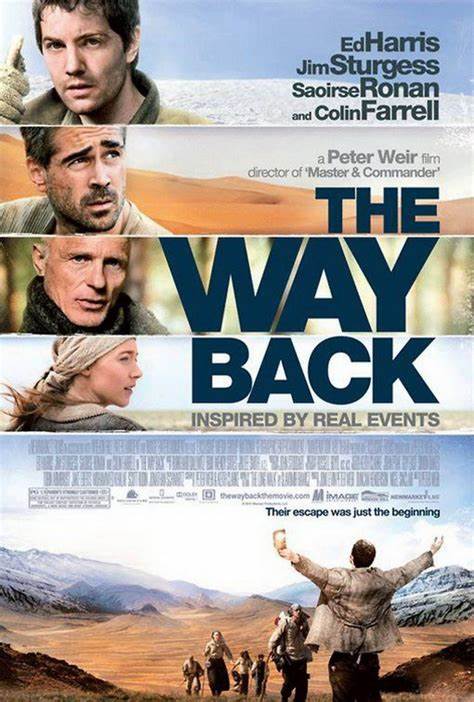
During the Second World War, Stalin spent almost as much time rounding up potential enemies of the state as he did fighting the Nazis. This was also his exclusive focus during the early years of the war when, in league with Nazi Germany, Russia invaded half of Poland. Polish officers were rounded up – many were massacred but Katyn, but some were sent to the gulags of Siberia. Among that number is Janusz (Jim Sturgess). But he is desperate to get home – so, with a collection of fellow prisoners, including American Mr Smith (Ed Harris) and hardened criminal (and pro-Stalinist) Valka (Colin Farrell) he escapes. Trouble is freedom is over 4000 miles away – through Siberia, Mongolia, the Gobi Desert and the Himalayas. To even contemplate the walk is staggering.

Which is more than you can say about the film. I never thought I would see a Peter Weir film that left me cold, but I now I have. How did Weir manage to make a compelling survival story into a film at times so unengaging you feel you have done the walk in real time? The real problem is the lack of characters. Halfway through the film the group encounters a young woman (played by Saoirse Ronan). She asks them what their background is – and they tell her (off-camera). And she tells them to Ed Harris. And he tells her his backstory off camera – and she tells it to Jim Sturgess. And there is the problem in a nutshell.

We’ve spent nearly an hour with this lot by then – and in that hour you’d struggle to know their names and certainly don’t know anything personal about them. We have no idea where they came from, what they lost or what they are yearning to return to. An hour during which it was hard to tell them apart (except for the more famous actors) but the film still wants me to invest in them fighting against the elements. Now, I know for many people, this isn’t be a problem. But for me it was an insurmountable obstacle.

I can admire the work that has gone into location shooting, make-up and costumes that show the ravages of this impossible journey. But, at the end of the day, if I know nothing about these characters and have no reason to invest in their fate, all the skill in the world won’t make this into a film I can invest in. Look at the great survival films – from The Flight of the Phoenix to another true-life (more of that later) story Apollo 13 – what makes them work is the dread that something awful might happen to the characters we care about. Without that feeling, it’s just pictures, nothing more. Weir’s mistake is to focus so much on how the Gulag crushes personalities and creates alliances of convenience, that he gives us no reason to bond with the characters.

The wispy, thin script gives very little for the actors to work with. Colin Farrell has the best part as a blackly comedic man of violence (and he drops out well before the end of the film). Mark Strong makes a big impact from a few short scenes as a prisoner who is all talk but no trousers. The others make little impression. Ed Harris does his trademark gravel, Saoirse Ronan adds much needed warmth (and provides a hugely needed audience surrogate figure – again far too late) but Jim Sturgess lacks the presence or force of character to carry the film. Force of character is missing throughout – you don’t get the sense of the strength of will needed to even undertake this, not to mention the psychological impact of this level of hardship.

It’s also oddly paced – you really lose track of how far or how long they have been travelling. Big time jumps take us from the first day of the escape to a cave in the forest which (we assume) they have spent weeks travelling to, reaching the edge of starvation. Then, before we know it they are at the border, then Mongolia. The film gets lost in a huge sequence in the Gobi Desert (for some reasons the characters always walk in the day and rest at night, the exact opposite of what anyone would do) – emerging with 12 minutes to go, bounding over the Himalayas in about 30 seconds (was it too difficult to film there?). The film caps with a bizarre “he walked forever” sequence, with superimposed walking feet over newsreel footage – a failed attempt to hammer home that Janusz needed to wait until the end of the Cold War before he could get home.

It’s nominally based on a true story. The author of the book it is based on is believed to have either invented or stolen the story from someone else and there is huge debate about whether it happened or not and if so who did it. This should have given Weir some freedom – but instead it seems to have given him too little to build on. Most damning in it I can’t find any reason in it to care whether they make it to freedom or not, instead the time dragging as much as the characters swollen feet. A terrible missed opportunity – and a rare misfire from a great director.

The Hunger Games: Catching Fire (2013)

Jennifer Lawrence and Josh Hutcherson head back into the area in The Hunger Games: Catching Fire

Director: Francis Lawrence

Cast: Jennifer Lawrence (Katniss Everdeen), Josh Hutcherson (Peeta Mellark), Liam Hemsworth (Gale Hawthorne), Woody Harrelson (Haymitch Abernathy), Elizabeth Banks (Effie Trinket), Lenny Kravitz (Cinna), Philip Seymour Hoffman (Plutarch Heavensbee), Jeffrey Wright (Beetee Latier), Stanley Tucci (Caesar Flickerman), Donald Sutherland (President Coriolanus Snow), Sam Claflin (Finnick Odair), Lynn Cohen (Mags), Jena Malone (Johanna Mason)

It’s a year on from Katniss (Jennifer Lawrence) and Peeta’s (Josh Hutcherson) victory at the 74th Hunger Games. They and the other victors live a life of relative luxury in the dictatorship of PanAm. Problem is Katniss’ humanity and defiance of the ‘rules’ from her victory have started to inspire whispers of discontent into open mutterings. When a “victor’s tour” fails to impact on her lustre, President Snow (Donald Sutherland) follows the suggestion of Games Maker Plutarch (Philip Seymour Hoffman) – let’s celebrate the 75th Anniversary by chucking two victors from each district back into the ring. As the only female victor from District 12, this means Katniss will either wind up dead – or be put into a position where she has to abandon her humanity to become the killer she never wanted to be. But is there another game going on inside the game?

Catching Fire is an entertaining, fast-paced, well made sequel to The Hunger Games that successfully broadens and deepens the franchise. Far from being a difficult middle chapter, it’s well structured to tell a pretty self-contained story that riffs on events from the first film without being enslaved to them. It also very sharply deepens the social and political commentary from the first film, widening our knowledge of PanAm and our understanding of its corrupt, murderous system.

Lawrence’s direction is punchy, pacey and provides plenty of emotional depth and scope. It’s a film that skilfully balances questions of trauma and the horrors of murder-for-entertainment, with poundingly exciting action sequences in the games themselves. In some ways Catching Fire is the only film in the series that ends (more-or-less) with a triumphant bang, and it’s possibly why the film is the most satisfying of the lot, with the cleanest structure. It also has the advantage of widening the outer edges of the world of the film, while still largely operating within the self-contained world of the games arena.

Within that, it also manages to keep us on our toes. Many of the same set-ups – both in the build-up to the games and the action in the arena itself – echoes or reflects what we’ve seen before. The film uses this to throw at us moments the surprise us – as allegiences are revealed – or provide opportunities for dark humour (such as the setpiece Katniss decides to use to showcase her skills this time round, markedly, darkly different from her archery display in the first film).

The film is entertaining and also thought-provoking. Within the confines of its 12A certificate, it doesn’t flinch from the oppressive horror of PanAm in the districts, where sudden executions and brutal beatings are an everyday occurrence. Similarly, it demonstrates even more the heartless opulence of the capital, a world of hedonism where no questions are asked about what props this whole system up.

And at the heart we have Katniss. Wonderful played, with a full-blooded emotional commitment from Jennifer Lawrence, Katniss is slowly become aware of her iconic status, but hasn’t changed dramatically from the at-times judgmental, prickly, abrasive loner she was at the start. She’s a reluctant figure-head for a new movement, but that’s what makes her both so effective and so moving. She’s not pretending or playing a hero – she simply does the right thing, because that’s what she believes she should do. Sure she makes a host of poor character choices, but that’s what genuine people do.

Lawrence’s grounded emotional realism in the lead, helps sets the tone for the whole franchise as something surprisingly gritty, dangerous and at times quite emotionally challenging. Hutcherson does fine work as the true heart of the film series, a decent, kind man who not only sees but also brings out the best in other people. Claflin is very good as a matinee idol victor who keeps us guessing on his motivations. Harrelson and Banks provide skilled depth to characters that could have been flamboyant cartoons. Sutherland enjoyably quietly munches some scenery as the dastardly Snow, while Hoffman coasts showily but effectively.

Catching Fire bursts along with a great deal of flair and lets us really see how despotic regimes like this operate. Katniss is manipulated into situations designed to fit a narrative that will cement the position of the regime. Ordinary people are corrupted by the wickedness around them. Humanity is seen as a dangerous quality. It’s intriguing and way more insightful than you might expect from a YA blockbuster. And its treated with a profound respect by everyone involved.

And it works because it also tells a cracking, entertaining story, revolving around richly drawn characters with fully fleshed out hinterlands and personal story arcs. For all it takes place in a dystopian future, it feels a real and grounded story. And its hard not to relate to a film where the central character, for all her flaws, is fighting for her right to not kill, maim and slaughter those around her for entertainment: who clings to her humanity despite all temptations to the contrary.

Catching Fire is also blessed with being the neatest, most straight-forward and cinematic of the stories (it’s the only film in the series that ends with anything near a triumphant bang rather than a searching question – for all that it’s a compromised triumphant bang). Told with verve, smoothness and pace it’s a very entertaining movie – and surprisingly rewarding.

The Hunger Games (2012)

Jennifer Lawrence takes aim against a corrupt system in The Hunger Games

Director: Gary Ross

Cast: Jennifer Lawrence (Katniss Everdeen), Josh Hutcherson (Peeta Mellark), Liam Hemsworth (Gale Hawthorne), Woody Harrelson (Haymitch Abernathy), Elizabeth Banks (Effie Trinket), Lenny Kravitz (Cinna), Stanley Tucci (Caesar Flickerman), Donald Sutherland (President Coriolanus Snow), Wes Bentley (Seneca Crane), Toby Jones (Claudius Templesmith), Alexander Ludwig (Cato)

“May the odds be ever in your favour”. They certainly were for The Hunger Games, the first adaptation of Suzanne Collins’ dystopian YA trilogy. It was one of many franchises trying to ride the success of the Harry Potter series – and easily the best (it’s vastly superior to, say, Twilight or the woeful Divergent). Shepherded to the screen by a confident Gary Ross, it’s a film that doesn’t shy away from book’s social politics and darkness, while also balancing that with complex and engaging characters. It stands up well to repeated viewings and never lets you forget it’s a film about teenagers involved in a brutal series of murderous blood sports.

In the future, after disasters and wars, the nation of Panem has been built. Twelve colonies are ruled from the capital. As punishment for a past rebellion, each year each district sends two tributes to the capital. These tributes will be feted, celebrated – and then pushed into an area and made to fight to the death in “The Hunger Games”, all of it transmitted on TV across Panem. To the winner, a lifetime of fame and comfort. To the losers – well, death. In the poorest district, District 12, Katniss Everdeen (Jennifer Lawrence) volunteers as tribute after her sister’s name is selected. Stubborn, surly, defiant and an expert archer, Katniss surprisingly finds herself capturing the public imagination – helped by a faked romance with her media-savvy fellow District 12 tribute (Josh Hutcherson’s Peeta). But in the ring will it be everybody for themselves? Or can Katniss keep hold of her soul?

The Hunger Games is rich material. Panem feels more and more like a mix between Gilead and Trumpian pomposity (the capital is a heavily stylised and artificial Rome-inspired centre of excess), in which life and death matters for very little. It’s a film that has astute things to say not only about how totalitarian regimes operate, but also how the oppressed often connive in their own suppression. So wrapped up is the population in the excitement of the Hunger Games, so invested in the results, that they’ve almost forgotten it is a tool of oppression. That the capital can only continue to exist if all the districts co-operate in following its orders and meekly supplying anything it asks – from food and resources, to teenagers for slaughter.

What this world needs is someone like Katniss. An individual who knows her own mind, who won’t play the game and will be herself. The film is brave in not softening the edges of this often prickly personality. Expertly played by Jennifer Lawrence, Katniss is compassionate and caring – but she’s also judgemental, untrusting, holds grudges and in person is often surly, resentful and impatient. But what makes her a hero, is her refusal to collaborate in softening the Hunger Games. She knows she is being manipulated to make a world feel better about itself – and she is repulsed by the idea of taking life needlessly and the slaughter of the weaker and more vulnerable tributes. Indeed, she will go to huge lengths to keep others alive in the games – something that helps to wake a population up to how they’ve been hoodwinked by bright lights to forget their own humanity. Her defiance is less about politics and more about simple human decency and being able to make her own choices – something a whole world has forgotten.

Even the people in the capital have forgotten that the Hunger Games exist to suppress not entertain. The film gets some delightful mileage out of its satire of blanket media coverage. The TV coverage is pure ESPN or Sky Sports, mixed with shallow chat shows. Stanley Tucci has a ball as a flamboyant anchor who lets no moral qualms even cross his mind as he banters with the tributes in interviews with the same excited ease as he will later commentate on their slaughter. Wes Bentley’s would-be Machiavel TV producer has been so drawn into the mechanics of his games, he’s stopped even seeing the combatants as human beings, just another set of ratings-tools he can use to advance his career.

It’s a neat commentary from the film on how we can be so beaten down and crushed by the everyday that we forget – or overlook – how it is both controlling our own lives and forcing us to rethink our own views on life. This is a world where people are being taught that life and death are not valuable, that murder can be entertainment and that everyday burdens are worth dealing with because you have a chance of being allowed to fight to the death for a shot at eternal comfort. It’s a deeply corrupt and savage system, and the film doesn’t flinch away from exploring it.

Alongside that, it’s an entertaining, gripping and involving film (if one that is a little overlong in places). The second half – which focuses on the games – is both exciting and terrifying in its (often implied – after all this is still a film that needs to be shown to kids) savagery. It encourages us to identify closely with Katniss, to experience the same terror she does as well as delight in her ingenuity and inventiveness to escape death and plan strikes against her brutal opponents. By the end of the film we’ve taken her to our hearts – for all we’ve seen how difficult a person she is – as much as the population of Panem have.

Ross’s film is a triumph of adaptation, and you don’t say that about many YA novels. Suzanne Collins’ adaptation of her own book captures its thematic richness, while compressing it effectively. There are a host of interesting actors giving eclectic performances, including Harrelson as Katinss and Peeta’s mentor, Banks and Kravitz as their support team, and Sutherland as the controlling dictator behind it all. The Hunger Games is prime entertainment, with some fascinating design work (the costumes and sets are spot on) and very well made. It’s a franchise to watch.

Apollo 13 (1995)

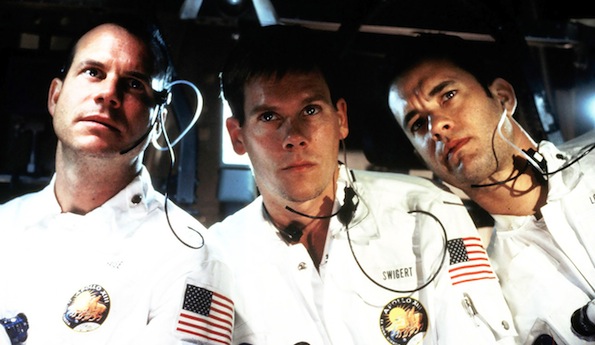
Bill Paxon, Kevin Bacon and Tom Hanks are stranded in space in Apollo 13

Director: Ron Howard

Cast: Tom Hanks (Jim Lovell), Kevin Bacon (Jack Swigert), Bill Paxton (Fred Haise), Gary Sinise (Ken Mattingly), Ed Harris (Gene Kranz), Kathleen Quinlan (Marilyn Lovell), Chris Ellis (Deke Slayton), Joe Spano (NASA Director) Xander Berkeley (Henry Hunt), Marc McClure (Glenn Lunney), Clint Howard (Sy Libergot), Ray McKinnon (Jerry Bostwick), David Andrews (Pete Conrad), Christian Clemenson (Dr Charles Berry), Brett Cullen (CAPCOM1)

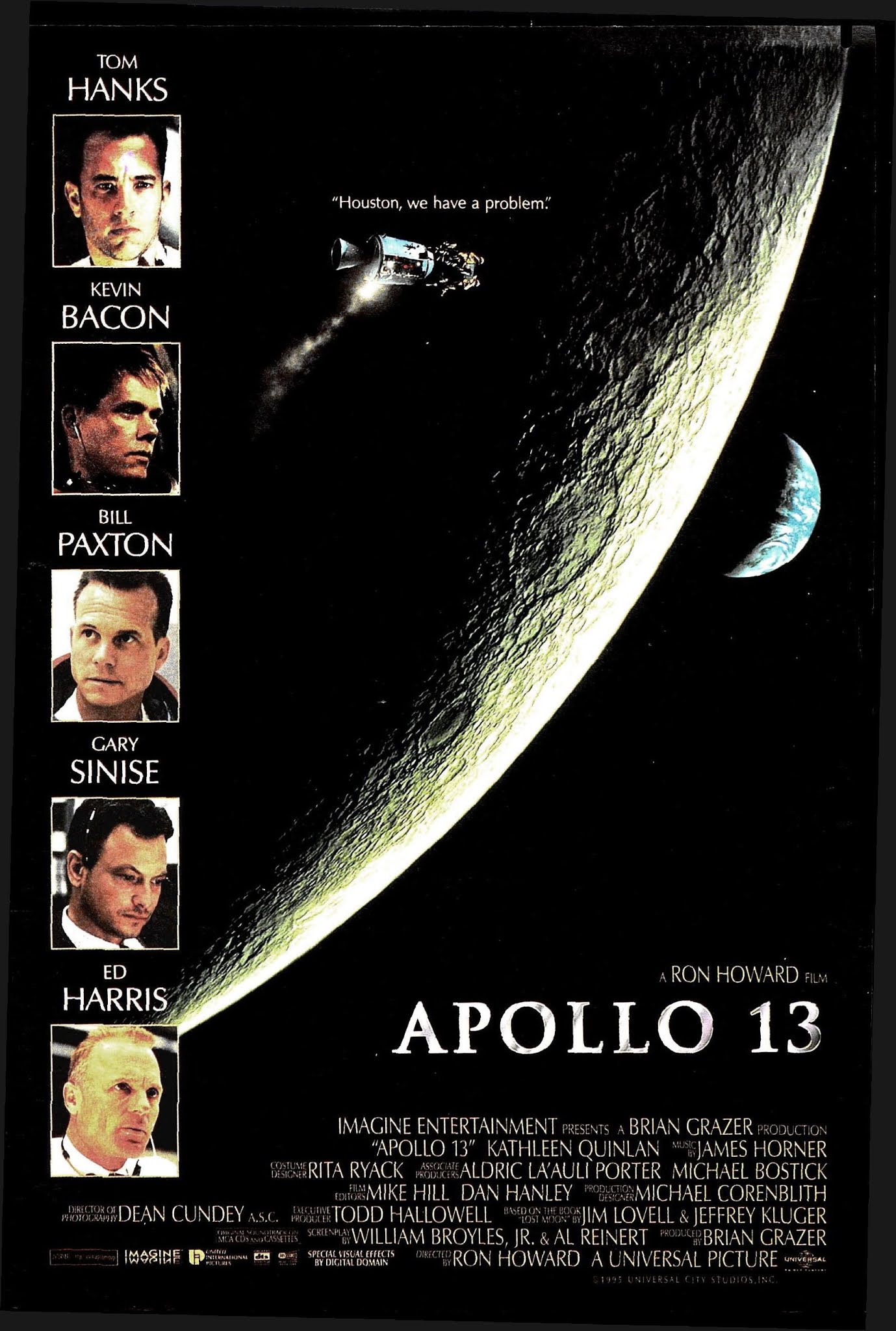
“Houston we have a problem”. Those calmly spoken words coat an ocean of disaster in Ron Howard’s brilliant reconstruction of the disaster-that-very-nearly-was, Apollo 13. Without a shadow of a doubt Howard’s finest film, this is brilliantly tense and hugely engaging that builds an edge-of-the-seat tension around a true story. You can’t watch it without being filled with breathless admiration for the ingenuity of those in mission control and the courage of those in space as they worked together to bring the mission home. Truly “Failure is not an option”.

On a mission to the moon, Mission Commander Jim Lovell (Tom Hanks) and crew Fred Haize (Bill Paxton) and late replacement Jack Swigert (Kevin Bacon) are left desperately trying to salvage their ship after an accident strikes. Meanwhile back in Houston, Flight Director Gene Kranz (Ed Harris) and replaced crewman Ken Mattingley (Gary Sinise) lead a dedicated team juggling every inch of mathematical, scientific and practical knowledge they have to bring the ship home.

Apollo 13 is a masterpiece of reconstruction. Every inch of the NASA space programme is reassembled in perfect detail. Every nut and bolt, from procedures to the interplay between the astronauts and Ground Control. There isn’t a single false note, and every single element of the production, photography and editing is carefully placed to support this total immersion in period. Howard’s technical direction is brilliantly done, intercutting with a fabulous sense of pacing between the crew in space and Ground Control back here on Earth. It becomes one of the most engrossing and involving true-life stories you can imagine.

I love this film. I love every second of it. Every single time I see it – and I must have watched it at least once a year since 1996 – I get wrapped up in the tension and, perhaps even more than that, the inventiveness needed to solve problems in space. The film throws conundrums at us time and time again. The command module needs to be restarted to land the ship – but only has enough power to keep a coffee machine running for a few hours. A vital course correction, that a computer could calculate and perform, needs to be carried out by hand. The weight of moon rocks needs to be replicated in the landing module. And, most brilliant of all, the NASA boffins need to work out literallyhow to fit a round peg into a square hole in order to replace a CO2 filter – using nothing but the pile of equipment on the spaceship.

These problems all need to be solved by people low on sleep, high on stress and – in three obvious cases – stranded, cold and alone in space, and each one is carefully explained by the film’s very natural but highly detailed script and then relayed into nail-biting efforts to solve them. (James Horner’s score also works wonders here, communicating the awe of space and our vulnerability in that black void expertly.) In no other film can the tearing of a plastic bag have you gasping at the impact it could have on life or death.

Added to the impact of this, is the engrossing excitement of watching brilliantly trained professionals tackle the sort of situations that would reduce you or I to sweaty panic. Other than a brief moment of recrimination between Haise and Swigert (authoritatively quashed by Lovell’s “Gentlemen, we are not doing this”), everyone stays more cool, calm and collected than you could possibly expect. This also means that flashes of urgency or emotion carry huge impact in communicating stress: when Libergot stresses powering down the ship is the only way for the crew to survive or Lovell is caught on radio ranting he is “well aware of the Goddamn gimbels” while trying to pilot a ship leaking oxygen through a barrage of debris to a soundtrack of alarms, the pressures they are trying to cope with come thundering home to us.

The extraordinary work of the actors also goes a long way towards the film’s success. If any film cemented Tom Hanks’ everyman quality, it was this one. His Jim Lovell is calm, controlled and extremely grounded, a professional with a realistic outlet, a devoted family man and overwhelmingly ordinary for all the extraordinary things he’s done. Hanks brings the role a huge authority and acres of empathy and relatability. He seems both vulnerable, human and professionally assured. I’d trade both his Oscar-winning performances for this one.

The whole cast follows his lead. Bacon and Paxton are very good as the rest of the crew, juggling moments of fear, frustration and black humour. Ed Harris became a star character actor overnight with his brilliant performance as Kranz, another committed professional who refuses to countenance failure and guides the ground team through super-human efforts, while keeping his own emotions carefully under control. Kathleen Quinlan is impressive as Lovell’s wife, keeping the morale of those left behind as high as she can while barely controlling her own fear. Gary Sinise’s Ken Mattingley channels his resentment at being benched from the mission into a Herculean commitment to bringing them home.

It’s that commitment on the ground that Howard’s film so brilliantly understands. A lesser film would have focused overwhelmingly on the courage of the astronauts alone, and heightened their struggles to pilot the spacecraft and survive. Apollo 13 understands above all that this was a team effort – and the casting and scripting feeds brilliantly into this. No one is the “hero”, no one “saves the day”. Every character focuses on their own small piece of the puzzle and has to trust all the others worked out. The film gives huge amounts of time over to the boffins and geniuses of Mission Control – all brilliantly played by a host of character actors – and its respect for these unsung heroes is as great as it is for Lovell and his crew.

Howard also understands exactly when to up the music, editing and effects and when to slow the film down and let events quietly play out. Moments in space where the actors have to quietly reflect, or when we check in on the fears and concerns of the families back home, contrast perfectly (and carry even more impact) when they sit alongside the scenes of failures and rushes to save lives. As for that re-entry scene… is there any more tense scene in a true story film than that long, long wait to see if Apollo 13 will return from space? There are certainly fewer moments that will get those specks of dust irritating your eyes – I get a lump in my throat just thinking about it.

Everything in Apollo 13 is spot on. I would go further and say I’m not sure there is a single wrong beat in it. It’s Howard’s masterpiece – his infamous snubbing for an Oscar nomination is inexplicable, his direction here is vastly superior to winner Mel Gibson’s work on Braveheart. It turns a true-life story into an impossibly tense, deeply involving, hugely emotional story. The actors – some of whom shot for weeks in a “vomit comet” plane to replicate weightlessness, an effect that works superbly – are outstanding. Every single technical aspect of the film is spot on. Its emotional impact is as absolute as the admiration and respect you’ll feel for the real NASA crews that guided this mission home. Apollo 13 is a classic. I can’t imagine anyone not finding something in it to like – not many films you can say that about.

Lifeboat (1944)

The survivors face the weather, the sea and their own suspicions in Hitchcock’s Lifeboat

Director: Alfred Hitchcock

Cast: Tallulah Bankhead (Constance Porter), William Bendix (Gus Smith), Walter Slezak (Willi), Mary Anderson (Alice MacKenzie), John Hodiak (John Kovac), Henry Hull (Charles J Rittenhouse), Heather Angel (Mrs Higley), Hume Cronyn (“Sparks” Garrett), Canada Lee (Joe Spencer)

Spoilers: If you can spoil a film made 76 years ago… but the ending will be discussed

The middle of the Atlantic at wartime. A ship has been sunk by a German U-boat, which was itself sunk in the exchange. A single lifeboat picks up survivors, a mixture of passengers, crewmen – and a German sailor from the U-Boat. Low on food and water, with only a faint idea of where they are, can they survive long enough to find either land or another ship? That’s even before we can overcome questions of trust – or not.

Taken from a scenario written by John Steinbeck, Alfred Hitchcock was originally attracted to Lifeboat because he fancied the idea of directing a film that was set in only one location. And a tiny one at that! Needless to say, such is the imagination and skill the film has been made with that you will soon forgot that it all takes place effectively in one tiny room. Instead, as the camera skilfully cuts and moves through the boat, finding intriguing angles and never once let the pace slip, you’ll be sucked in this intriguing story of survival and morality.

Lifeboat was attacked at the time precisely because of these difficult questions of morality. Unlike many other war films of the time, it wasn’t just interested in propaganda. Instead the German here – later revealed to be the captain of the U-Boat – is not only the films most charming and engaging character, brilliantly played by Walter Slezak, he’s also the only one that has any real idea about how to survive. Need a sailor? He’s best qualified. A navigator? The only man with a clue. Need to lop a gangrenous leg off? Willie can do it with a pen knife. His resourcefulness needs to be weighed in the balance though with his lies, manipulations and hording of supplies.

But the fact the film presents us with a Falstaffianly rogueish German, rather than a monster – and also makes him the most effective of the survivors – was a problem at the time. Combined with the fact that the representatives of the allies are a mixed and divided back. A chippy socialist sailor. A decent but ineffective radio operator. A jobsworth nurse, possibly carrying someone else’s husband’s child. An ambitious gossip columnist. An industrialist who assumes he should call the shots. And a black steward who even needs to take a moment to think about before they decide to treat him as an equal, or even use his real name. A unified and decisive group of allies, this ain’t.

The events of the film then develop in a host of challenging ways. Sure, our heroes eventually come together – but its in a murderous fury that sees them lynch Willie, beat him to death and throw him overboard. Willie saves their lives – but he also hordes water and then persuades the delirious Gus (whose leg he amputated) to throw himself overboard when Gus spies his secret water stash.

This lynching scene is the heart of the film – indeed most of the action is a slow, tension-filled, build towards it. And, for all that Willie is a seemingly unrepentant Nazi (dropping broad hints about having spent some time in Paris) who we are told ordered the shooting of survivors in the water, its hard not to feel some sympathy for him as Hitchcock cuts to a close up of his horrified eyes as he realises what the passengers are about to do. Just as the passengers, waking to find Gus gone and Willie assuring them it was for the best, take a on a monstrous inhumanity as they murder him.

Hitchcock described them later as a pack of dogs. Of the passengers, alarmingly it’s the two most decent (Hume Cronyn’s gentle radio operator and Mary Anderson’s nurse) who turn the most savage in the onslaught. Only Joe – perhaps remembering other lynchings he may have witnessed? – keeps a horrified distance from the slaughter. In a traditional propaganda film, as many critics wanted at the time, this would be a moment of triumph. The allies coming together to vanquish their common foe.

Instead, it intentionally leads a queezy and unsettling taste in the mouth. Hitchcock seems to be challenging us to ask just how we feel about this. Willie has done terrible, greedy, awful things. He’s got a lot of blood on his hands. But do we feel its right for these guys to murder him – and as brutally as they do here? (Hitchcock shoots the lynching at a distance, the passengers descending on Willie like a mob, his bloodied face emerging at one point before being dragged back in). There is nothing really triumphant about this. And, after the deed, no one seems sure how to process it. Rittenhouse even suggests Willie deserved his fate for his ingratitude after they hauled him from the water.

As safety is finally found near the end, it’s not clear what anyone has learned. The whole ghastly cycle looks like it might be repeated when a young German sailor is hauled onboard after another supply ship is sunk. Some passengers are ready to butcher him immediately – the sailor fortunately is armed. Sanity just about prevails, but already the passengers are beginning to revert, right down to starting to address Joe by the common short-hand name for a black steward, George.

But then at the same time, it’s not as simple as that. After all, these German sailors sunk a ship killing hundreds of people. During the first night on the boat a baby dies in his mother’s arms – the mother then throws herself overboard the next night, despite the passengers attempt to restrain her. Those deaths are discussed again at the end when the passengers obliquely wonder if they did the right thing. The film won’t say for sure, but leave it to you to decide. And it’s that rich sense of unease that helps make this a rather overlooked masterpiece for Hitchcock. A lot more than just a technical triumph, it’s a searching and questioning film.