Category: Terrible Films

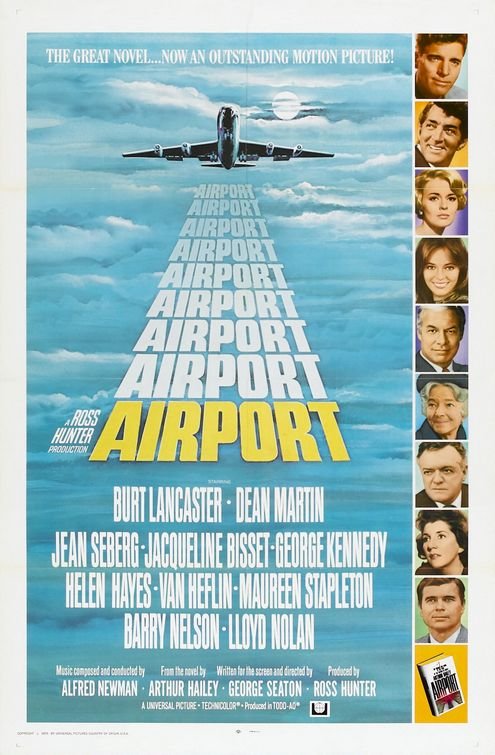
Airport (1970)

Airport (1970)

Disaster awaits in the sky in this ridiculous soap that is less exciting than Airplane!

Director: George Seaton

Cast: Burt Lancaster (Mel Bakersfied), Dean Martin (Captain Vernon Demerest), Jean Seberg (Tanya Livingston), Jacqueline Bisset (Gwen Meighen), George Kennedy (Joe Patroni), Helen Hayes (Ada Quonsett), Van Heflin (DO Guerrero), Maureen Stapleton (Inez Guerrero), Barry Nelson (Captain Anson Harris), Dana Wynter (Cindy Bakersfeld), Lloyd Nolan (Harry Standish), Barbara Hale (Sarah Demarest), Gary Collins (Cy Jordan)

A busy Chicago airport in the middle of a snowstorm. Workaholic Mel Bakersfeld (Burt Lancaster) doesn’t have time to prop up his failing marriage to his humourless wife: he’s got to keep the flights moving, clear the runways and solve the problems other people can’t. He’s not dissimilar to his brother-in-law Vernon Demerest (Dean Martin), who hasn’t got time for his plain-Jane wife at home when he’s got a flight to Rome to run and a saintly pregnant air hostess girlfriend Gwen (Jacqueline Bisset), to deal with. Tensions will come to a head when depressed former construction worker Guerrero (Van Heflin) joins Demerest’s flight, planning to blow himself up so his wife can profit from his life insurance. Disaster awaits!

“A piece of junk”. That was Burt Lancaster’s pithy review of this box-office smash that was garlanded with no fewer than ten Oscar nominations. He’s pretty much spot on. Airport is a dreadful picture, a puffed-up, wooden soap opera that never takes flight, stapled together with a brief disaster plotline that only really kicks in during the final act of the film and is solved with relative ease. Other than that, it’s all hands to the pumps to coat the film in soapy suds, which can be stirred up by the strips of wooden dialogue that fall from the actors’ mouths.

Seaton adapted the script from a popular low-brow novel, though it feels as if precious little effort went into it. It’s corny, predictable dialogue does very little to freshen up the bog-standard domestic drama we’re watching in a novel setting. Both lead actors juggle loveless marriages with far prettier (and much younger) girlfriends. Those girlfriends – Jean Seberg for Burt and Jacqueline Bisset for Dean – play thankless roles, happily accepting of their place as no more than a potential bit-on-the-side and very respectful of the fact that the job damn it is the most important thing.

The film bends over backwards so that we find Burt and Dean admirable, despite the fact that objectively their behaviour is awful. Burt treats his home like a stopover, barely sees his kids and seems affronted that his wife objects he doesn’t attend her important charity functions and doesn’t want the cushy job he’s being offered by her father. Just in case we sympathise with her, she’s a cold, frigid, mean and demanding shrew who – just to put the tin lid on it – is carrying on behind Burt’s back. We, meanwhile, applaud Burt for showing restraint around the besotted Jean Seberg, merely kissing, hugging and chatting with her about how he’d love to but he can’t because of the kids at home damn it!

He looks like a prince though compared to Dean. Only in the 1970s surely would we be expected to find it admirable that a pregnant girlfriend happily takes all the blame – the contraceptive pills made her fat and she knows the deal – begs her boyfriend not to leave his wife and then urges him to not worry about her. Dean’s wife doesn’t even seem that bad, other than the fact she’s a mumsy type who can’t hold a candle to Bisset’s sensuality. That sensuality is overpowering for Dean, who at one point pleads with her to stay in their hotel room because the taxi “can wait another 15 minutes”. Like a gentleman his reaction to finding out Bisset is pregnant, is to offer to fly her to Norway for a classy abortion (rather than the backstreet offerings at home?).

This soapy nonsense, with its stink of Mad Men-ish sexual politics (where men are hard-working, hard-playing types, and women accept that when they age out, he has the right to look elsewhere) is counterbalanced by some laboriously-pleased-with-itself looks at airport operations. Baggage handling. Customer check-in. Customs control checks. Airport maintenance. All get trotted through with a curious eye by Seaton. Just enough to make parts of the film feel briefly like a dull fly-on-the-wall drama rather than a turgid soap.

Soap is where its heart is though. Helen Hayes won an Oscar for a crowd-pleasing turn (from which she wrings the maximum amount of charm) as a seemingly sweet old woman who is in fact an expert stowaway. Van Heflin and Maureen Stapleton play with maximum commitment (Stapleton in particular goes for it as if this was an O’Neil play rather than trash) a married couple whose finances are in the doldrums, leading the husband to take drastic steps.

It’s all marshalled together with a personality-free lack of pizzaz by Seaton, who simply points the camera and lets the actors go through their paces, with a few shots of humour here and there. There are some interesting split-screen effects, but that’s about the last touch of invention in the piece. It’s mostly played with po-faced seriousness – something that feels almost impossible to take seriously today, seeing as the structure, tone and airport observational style of the film was spoofed so successfully in Airplane (a much better film than this on every single level, from humour, to drama even to tension – how damning is that, that a pisstake is a more exciting disaster thriller?)

It smashed the box office in 1970 and got nominated for Best Picture. But its dryness, dullness and lack of pace mean it has hardly been watched since. Although it can claim to be the first all-star disaster movie, it’s not even fit to lace the flippers of The Poseidon Adventure, which far more successfully kickstarted the cliches that would become standard for the genre (and is a tonne more fun as well as being a disaster movie – this has a disaster epilogue at best). An overlong, soapy, dull mess.

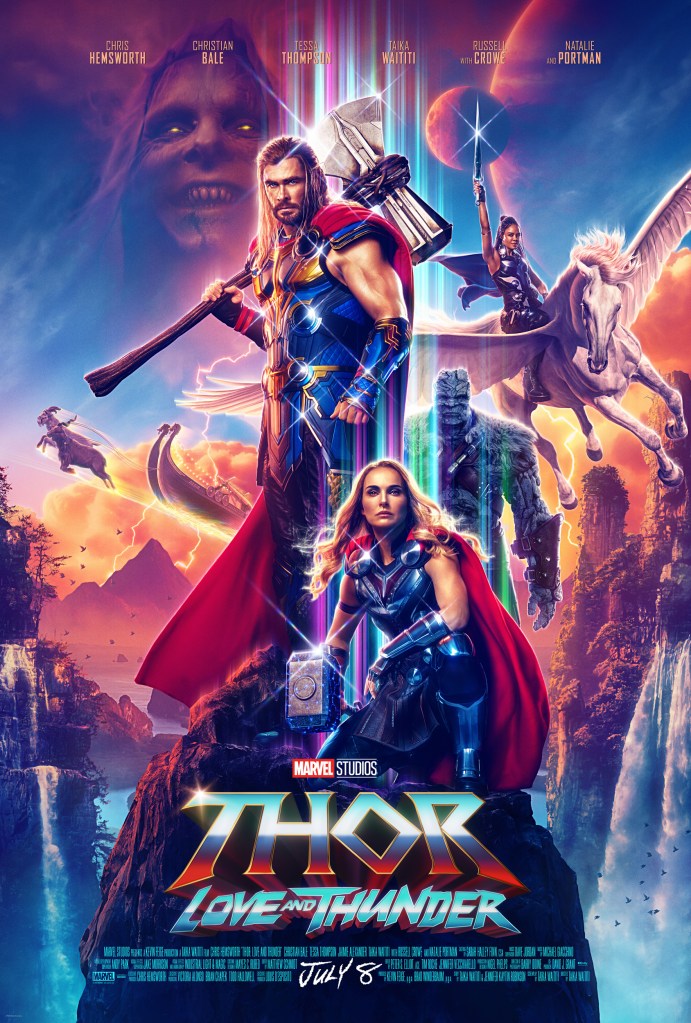
Thor: Love and Thunder (2022)

Thor: Love and Thunder (2022)

Injokes, backslappery and smugness abound in this terrible Thor adventure

Director: Taika Waititi

Cast: Chris Hemsworth (Thor), Natalie Portman (Dr Jane Foster/Mighty Thor), Christian Bale (Gorr the God Butcher), Tessa Thompson (Valkyrie), Jaimie Alexander (Sif), Taika Waititi (Korg), Russell Crowe (Zeus), Kat Dennings (Dr Darcy Lewis)

Okay. Part way through this desperately unfunny tonal mess I wondered: if I had to choose would I watch this again, or Thor: The Dark World? I can’t quite believe it, but I’d rather watch that functional, forgettable, mundane film. At least it doesn’t make me angry as it drifts past my eyes. And I say that as someone who loved Thor: Ragnarok. Thor: Love and Thunder is terrible. So, unlike Star Trek, it looks like even numbered Thor films are awful – so at least Thor Five should be a doozy.

Thor (Chris Hemsworth) is in a state of ennui – although that doesn’t stop him restoring his buff form after we last saw him as a coach potato in Avengers: Endgame. He doesn’t know what to do with his life: he has (and I can’t believe the film doesn’t make this obvious joke considering its jukebox score) “lost that lovin’ feelin’”. Will the arrival of bereaved father Gorr (Christian Bale), and his mission to butcher all Gods because they don’t answer your prayers, give him meaning? Or will it be the chance to finally rekindle his love for Jane Foster (Natalie Portman) when she unexpectantly lands back in his life? However, it’s not the Jane he remembers: unknown to him, she’s dying from cancer, but his old hammer Mjolnir is keeping her alive, transforming her into a female version of Thor.

Thor: Love and Thunder is a bit like attending a victorious Thor: Ragnorak after-show party. Everyone there thinks everything they say is like the funniest thing ever and the air rings to the sound of backs being slapped. It takes everything that it believes worked best in that film and dials it up to eleventy thousand. Waititi doubles down on his quirky, off-the-cuff, shoulder shrugging humour at every turn and you get the feeling that no one once tapped him on the shoulder and said “you know that’s funny to us on set, but are we sure that will be funny in the audience?”

Because, based on the audience I saw it with, it wasn’t. I think I chuckled about three times in the film. Which considering it takes every single bloody opportunity to tell a joke, is damning. Perhaps it fails to land because, unlike in Ragnarok or other Waititi films, its like he’s surgically removed anything emotional or gives a weight to the gags. He’s also sacrificed much of his trademark sweetness. Instead, this is full of incredibly knowing, tip-the-wink gags at the audience, as if trying to say “hey it’s okay, we can’t take this seriously, comic books are all silly, silly shit”.

And you know, that’s fine many people take these things too seriously. But what worked about Thor: Ragnarok was it balanced a quirky sense of humour with genuine stakes and real emotional quandaries. This however is just a tonal mess. We have an opening scene dealing with child death, that shifts swiftly into knock-about farce. A leading character dying of cancer sitting alongside a pair of screaming goats. It is revealed Jane is effectively draining her life source using the hammer (that it is keeping her alive and killing her at the same time). Here’s a chance to explore the cost of heroism and finding a purpose in life (after all isn’t Thor supposed to be depressed? Wouldn’t Jane make a good contrast here?). instead, the film constantly retreats to playing the humour card (worst of all unfunny humour!), as if Waititi perhaps thinks this genre stuff is silly and slightly below him.

Ragnarok allowed moments of impact: this film shits all over any moment of potential emotional reality. Hemsworth’s Thor used to be a guy with a strong moral purpose and seriousness, but allowed to stretch his wings with comedic sharpness. Now he’s a buffoon who interrupts a speech to distraught parents with gags. Any attempt to build an arc of a hero who is internally lonely and searching for purpose is constantly smashed by self-consciously irreverent humour. It says a lot that Thor’s axe Stormbreaker feels as much a character as anyone else – although the film is overly pleased with the gag of the axe being jealous of Thor’s doe-eyes at his old hammer.

The entire film feels like it’s been plotted out in about four minutes. Presumably Waititi was confident “hilarious” off-the-cuff inspiration would solve any problems. Christian Bale struggles manfully with his villain – but it’s like no one gave him the memo that the film was a piss-take. Tedious detours fill the plot – like an un-funny Guardians of the Galaxy cameo at the start, a tiresome trip to an orgy-tastic God planet and the screeching giant goats which feels like a joke whose punchline has been cut. A major plot point about a wish granting Eternity God is suddenly introduced to establish a secret plan for the villain. It’s like no one gave a damn.

Waititi doubles down on funny stuff that worked in small doses in Ragnarok by stretching it past any point of humour here. Liked Neill, Damon and Lesser Hemsworth playing bad actors in that film? Well, you get bucket loads of it here with Melissa McCarthy as a Fat Hela (that’s the joke: she’s fat). Liked Korg’s overly literal asides? Well, he’s in seemingly every second of the bloody film here, including narrating it. Russell Crowe pops up for a cameo that everyone clearly feels was hilarious but really looks like a big-name actor amusing himself with a borderline racist Greek accent. The film is crammed with this crap.

Hemsworth does okay I suppose, but in many ways the film feels as much of an ego-trip for him as it does Waititi. Natalie Portman gets to do some some fun things, but comedy isn’t her natural forte and she struggles with getting the zing in the dialogue that Tessa Thompson manages. It builds towards a big ending where Thor weaponises children and then the film lands on an utterly unearned emotional ending at a secret place – as if Waititi suddenly remembered his films work best when they have a heart – at the centre of the universe that is so easy to reach you wonder why people didn’t go there much earlier in this franchise. Even the final explanation of the title feels thrown in at the last minute and I’ve no idea what we are supposed to make of Thor’s character arc in this film.

The lack of heart is what is missing here. There is nothing heartfelt or emotionally true really in this. Nothing to give you warm feelings or to make you say “ahh”. Instead there are just endless, endless smug insiderish-gags. This is a piece of shit and the silent reaction it got from the full audience I saw it with says it all. A smug, tonal mess by a director who is over-indulged and unrestrained and forgets that humour works best when grounded with some sense of drama. I’d definitely rather watch Thor: The Dark World again.

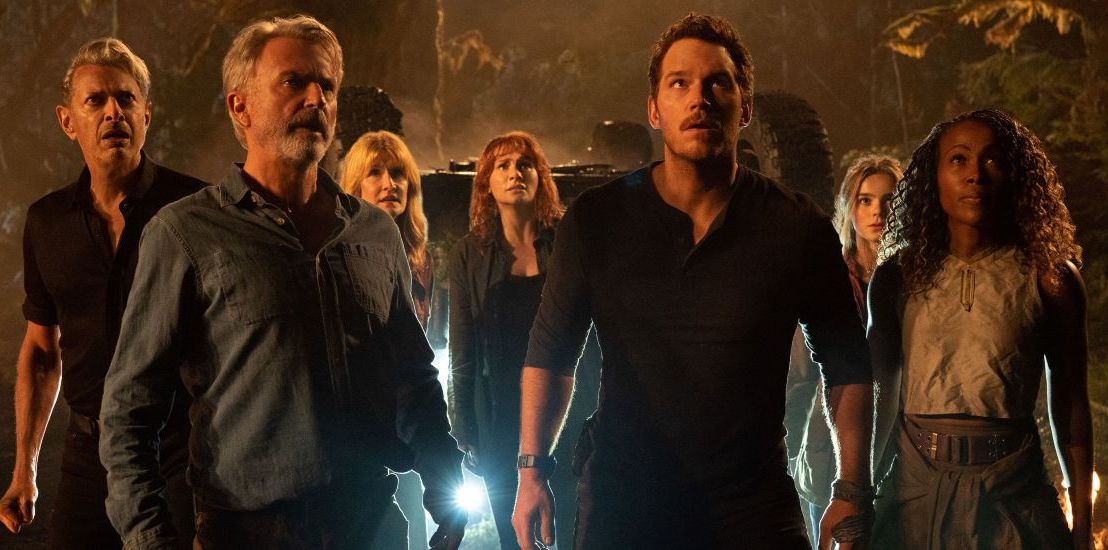
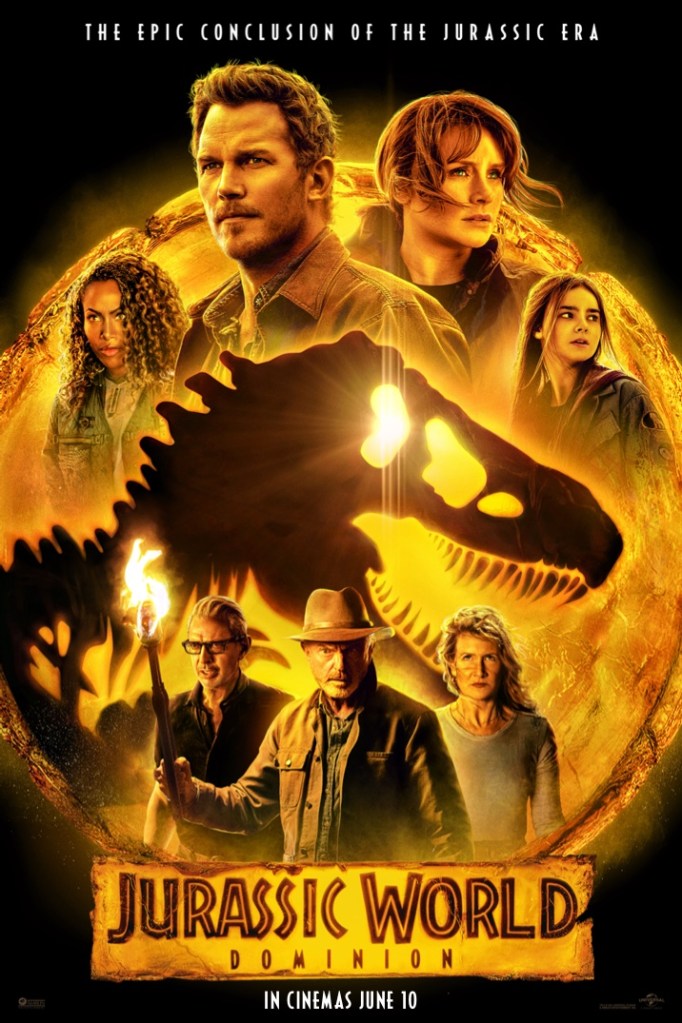
Jurassic World: Dominion (2022)

Jurassic World: Dominion (2022)

It squeezes so many characters in, it totally forgets to make room for plot, invention or anything new at all

Director: Colin Trevorrow

Cast: Chris Pratt (Owen Grady), Bryce Dallas Howard (Claire Dearing), Laura Dern (Dr Ellie Sattler), Jeff Goldblum (Dr Ian Malcolm), Sam Neill (Dr Alan Grant), Isabella Sermon (Maisie Lockwood), DeWanda Wise (Kayla Watts), Mamoudou Athie (Ramsay Cole), Campbell Scott (Dr Lewis Dodgson), BD Wong (Dr Henry Wu), Omar Sy (Barry Sembène), Justice Smith (Franklin Webb), Daniella Pineda (Dr Zia Rodriguez)

As I was leaving the cinema, I heard a twelve-year old talking about which of the dinosaurs in the movie was their favourite. Then they said: “it was a bit samey though wasn’t it?”. I’m not sure I can beat that precocious nail-on-the-head judgement. Nothing happens in Jurassic World: Dominion you’ve not seen many times before in the franchise. Underneath the flash, Jurassic World: Dominion is a tired retread, crowbarring in references from better films left, right and centre, all to hide that there are no new ideas here.

Owen Grady (Chris Pratt) and Claire Dearing (Bryce Dallas Howard) have dedicated their lives to protecting human clone Maisie Lockwood (Isabella Sermon) from the grasp of corporations. When she’s kidnapped by foot-soldiers of clearly-evil-corp BioSyn (they even have “Sin” in their name), they pull out all the stops to get her back from BioSyn’sNorthern Italy research compound. Meanwhile, Drs Ellie Sattler (Laura Dern) and Alan Grant (Sam Neill) are investigating genetically modified locusts which are destroying every crop in the Southern USA – except those using BioSyn seed. All roads lead to that Italian compound – where Dr Ian Malcolm (Jeff Goldblum) is employed as a contrarian philosopher – to try and stop BioSyn’s nefarious schemes.

You know what struck me when I wrote that summary? I didn’t use the word dinosaurs. The prehistoric beasties are pretty superfluous. Sure, they down a plane and our heroes dodge them in various places (BioSyn’s compound doubles as a dinosaur refuge). But, seeing as the last film ended with dinosaurs escaping into the wild and becoming part of our everyday lives… this sequel takes the concept nowhere. Bar an opening news report montage (showing, among other things, pterodactyls – yes, I know they’re not dinosaurs – stealing a bride’s bouquet) and a Star Wars style under-ground market where dino-pets and fighting-pit beasties are traded on the black market, Dominion finds almost nothing to do with this.

In fact, Dominion struggles to find anything to do at all. It’s an extremely loosely plotted mess of a film that feels like two vaguely (very, very vaguely) connected plotlines rammed together in a way designed to shoe-horn in as many legacy characters and call-backs as possible. Laura Dern gets the bulkiest (and only plot essential) role among the returning trio. Sam Neill feels dragged along for the ride (Grant serves literally no narrative purpose) and, while Goldblum gets most of the best lines (delivered in his trademark, improvisational oddness), Malcolm merely splits the role of “inside man” with another character so cursorily introduced and vaguely motivated he feels like he was only there because covid made some of the other actors unavailable for parts of the filming.

The legacy framing is so lazy that all three of these characters essentially wear the same costumes as they did in Jurassic Park. Everyone in universe seems to know who they are (Which I find highly unlikely) and the film bends over backwards to introduce clumsy links between them and the characters from the first two Jurassic World films in ways that feel forced.

The film slowly consumes itself with references back to previous films, linked by sequences that feel ripped out from other hits. Owen and Claire’s opening plotline plays out like an odd Mission: Impossible spy thriller, including a Bourne-ish roof top chase (with Owen haring away on his trademark motorbike from killer velociraptors – the film’s only exciting set-piece, and even that is ripped from other films) with Claire transformed into a semi-adept free-runner. The dino-market is essentially Mos Eisley, by way of that Kamono Dragon fighting pit from Skyfall. By the end a host of famous set-pieces from Jurassic Park and Jurassic World are effectively re-staged or openly referenced and props (such as Nedry’s shaving foam can) are reverentially pulled out.

Any interesting ideas raised are swiftly crushed. Maisie’s concern that, as a clone, she isn’t a real person is fascinating, but the film forgets it in seconds. The villain (a neat Steve Jobs parody from Campbell Scott) spends a fortune capturing Maisie – but when she escapes (thanks to a key to her cage being helpfully left on a table in front of her) he makes literally no attempt at all to recapture her. It’s stressed to us that the whole world is looking for Maisie and that if she is found it will be dangerous for her – by the end of the film she’s doing a press conference and no one gives a damn. The moral implications of a ‘mother’ cloning herself and curing her clone child of a life-ending disease in the womb, is thrown on the table and then ignored.

The whole film revolves around ridiculous coincidences. Villains run away and then helpfully return to ludicrously unsafe places, purely because the plot requires it. Stupid decisions are made right, left and centre. Plot armour ruthlessly protects the expected. The dinosaurs are just irrelevant set dressing: we are told no less than three times the Gigantasaurus is “the biggest hunter there’s ever been”: solely to build up an inevitable face-off with the T-Rex. The deadly locust plot is such a naked attempt to motivate shoe-horning in legacy characters, the film doesn’t even bother to explain what it’s about or what the baddies plan was.

At one point Laura Dern says something to the effect of “we shouldn’t live in the past, we should aim for the future”. Imagine if this slightly lumpen rehash of its better predecessors had done the same.

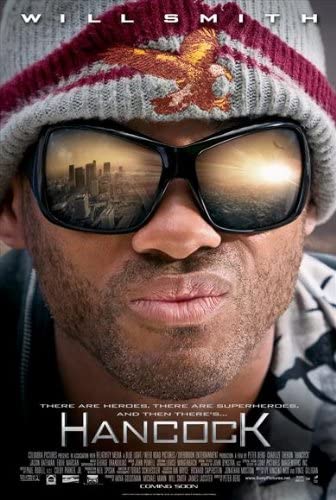
Hancock (2008)

Hancock (2008)

Will Smith goes against type as an arrogant superhero in this deeply flawed would-be satire

Director: Peter Berg

Cast: Will Smith (John Hancock), Charlize Theron (Mary Embrey), Jason Bateman (Ray Embrey), Eddie Marsan (Kenneth “Red” Parker Jnr), Jae Heard (Aaron Embrey)

Back in 2008, everyone was entertained by the idea that the most charming man in the world was pretending to be an arrogant, entitled arsehole. Sadly, in 2022, when Will Smith is synonymous with entitled public slapping, the joke feels a little different.

In Hancock, Smith plays the eponymous superhero, a drunken dickhead, who saves people without giving a damn about them or the millions of dollars of damage he causes while doing so. When he saves the life of PR man Ray (Jason Bateman) – wrecking a train in the progress – Ray decides to help Hancock change his image. His wife Mary (Charlize Theron) is less than happy about it – but is there a deeper mystery to her discomfort?

Needless to say there is: and the reveal of what it is marks a tonal shift in a messy film that never quite knows what it is. But that’s because the entire film is basically a sketch thinly stretched out over 85 minutes. What if Superman was real and also a complete arsehole? What would an irresponsible, drunken, unpleasant hero be like? And hell, wouldn’t we stop thanking him and instead start getting really pissed off when he trashes a freeway and several buildings, while chasing some trigger-happy bank robbers?

That’s basically the core of the film: setting up the unlikeable hero, watching him tell people to go to hell and use his powers against people who annoy him. See him get humiliated by going to prison (Ray’s genius PR idea to get people on Hancock’s side) and then eventually resolving a bank robbery with excessive, awkward politeness. It’s one joke. Don’t get me wrong, it’s a good joke. It would make a great recurring gag on Saturday Night Live or something. But it never manages to be anything more than that.

Peter Berg’s film radically shifts gear for the final thirty minutes or so. A second superhero is introduced, a poorly explained and illogical backstory is shoe-horned in and info dumps of character background start to get dropped in (the entire backstory, plot and motivation of Eddie Marsan’s nominal villain is explained in an overheard TV broadcast). What had been a farce suddenly turns into a clumsily intense relationship drama between two people with no chemistry. It ends in a final fight in a hospital which features blood, shooting, tears and a joke about a hand being sliced off. It’s all over the place.

Will Smith just about holds it together: and the fact that he managed to make this not-particularly-funny or rewarding film into the fourth biggest hit of its year is a tribute to what Box Office Gold he was at the time. It’s a decent role for him, and Smith does the humour well. But, after his frank autobiography on his dark side (not to mention that infamous slap), it feels less like Smith playing against type, and more him exposing parts of his own personality. But he carries the entire film with gusto, even if he can’t make the final tonal mess work.

Berg’s direction pitches between way-too-intense and flatly-comedy-free. He drills into emotion in the final act, as if he’s forgotten that this was supposed to be a super-hero satire – but totally fails to bring enough character or reality to the story for its seriousness to work. For the first half, he struggles to bring much personality to the film (I suppose that is Smith’s job). It becomes a film that raises the odd smile but, despite its very short length, outstays its welcome.

Bateman is good value as the do-good PR man (strangely, he’s introduced as a real hotshot, even though it seems he’s completely useless based on nearly everything we see him do). He has a strange chemistry with Charlize Theron, wasted in an incoherent part. No one else gets a look in.

Tonally, Hancock is a mess with a few good gags (Hancock casually tossing a beached whale back into the sea, hitting a yacht, is funny). Its novelty appeal in 2008 – “Look! Will Smith can be mean!” – has disappeared today. Nothing in it is remotely memorable, making a decent joke never anything more than functional. It falls apart in the final stretch as it reaches for a depth it isn’t strong enough to deliver. Can you believe this was one of the biggest hits of 2008? Has anyone really watched, or thought about it, since?

The Ten Commandments (1956)

The Ten Commandments (1956)

DeMille’s massive, camp epic sets the table for what we expect from Biblical epics

Director: Cecil B. DeMille

Cast: Charlton Heston (Moses), Yul Brynner (Rameses II), Anne Baxter (Nefretiri), Edward G. Robinson (Dathan), Yvonne De Carlo (Sephora), Debra Paget (Lilia), John Derek (Joshua), Cedric Hardwicke (Seti I), Nina Foch (Bithiah), Martha Scott (Yochabel), Judith Anderson (Memnet), Vincent Price (Baka), John Carradine (Aaron), Olive Deering (Miriam), Douglass Dumbrille (Jannes)

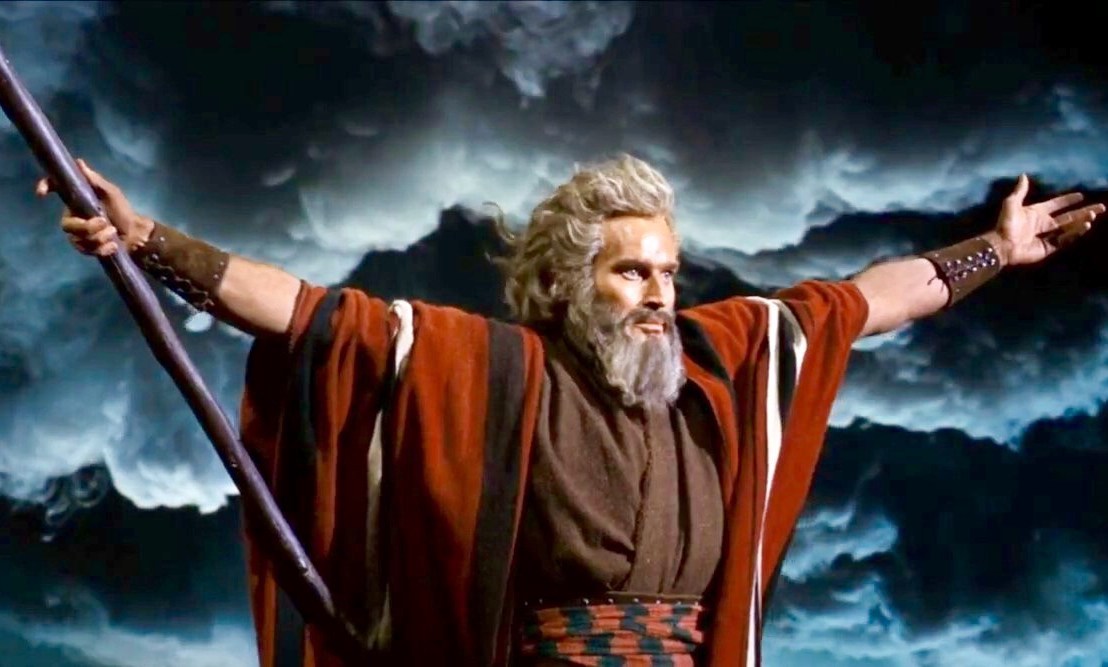
“Let my people go!” Close your eyes and think of Moses. Chances are you’ll see an image of Charlton Heston, arms spread wide, parting the waves to lead his people to freedom. Heston had been partly chosen for his resemblance to Michelangelo’s sculpture of the famous law-giver. It’s also a tribute to how Cecil B DeMille’s slightly ponderous, very-very-serious Biblical epic pretty much defined what we expect from Bible stories.

The Ten Commandments would be DeMille’s final movie (and for all its many flaws, it’s way more deserving of the Best Picture Oscar than the valedictory pat-on-the-back his penultimate film got). It’s basically a triumphal capturing of his self-important style, with sonorously devout voiceover and a faultless hero chiselled from marble an excuse to fill the screen with action, campy scheming and lots of sexiness. The Ten Commandments became a massive hit because it’s a rollicking pile of nonsense and something you could persuade yourself was “good for you” because it’s about the Exodus.

It’s a BIG film. DeMille delivers an opening direct-to-camera address, dripping with pompous self-satisfaction, where he piously tells us about the level of historical and Biblical research he’s carried out. The credits list a stack of professors, historians, religious experts and, last of all, the Holy Gospels as sources (presumably the Gospels’ writers got no cut of the vast profits). DeMille, as per his style, marshals thousands of extras and some huge (and distinctly sound-stage looking) sets to play out a series of tableaux, many of them rooted in classic silent-movie framing and techniques. Special effects abound to create plagues (disappointingly the film skips seven of them) and parting of the Red Sea. DeMille narrates with the grandiose aloofness of a Sunday School teacher.

It’s almost enough grandeur to make you overlook this pageantry covers a rather camp, frequently silly piece of entertainment. The film is ripe with buff actors striking poses: Heston does a lot of this during the first half, matched by Brynner (who worked out at length so as not to be shown-up). Opposite them, gorgeous Israelite and Egyptian babes fawn and flirt. The film is at least as interested in the love/hate relationship between Moses and Nefretiri as it is in the Word of God, not least because DeMille knows that this soapy stuff really sells.

Perhaps that’s why Anne Baxter plays Nefretiri with a level of campy purring that would be almost laughable, if you weren’t sure that she’s in on the joke. Relishing the chance to play a sex bomb – in costumes designed to stress her assets – Baxter simpers, flirts, drapes herself across Heston’s ram-rod (in every way but one of course – he’s righteous man of God) Moses and gets to utter lines like “Oh Moses, Moses, you stubborn, splendid adorable fool”. She mocks and cajoles Rameses into rejecting Moses’ demands, partly because she can’t stand Moses is immune to her charms, partly because she can’t bear the idea of Moses leaving Egypt (and her) behind forever.

Ten Commandments elevated Heston to the rank of the immortals. Few actors could carry the weight of films like this as well as he. His performance is in two acts. The first is the visionary, egalitarian adopted son of the Pharoah: the guy who builds the best cities, turns rival kingdoms into allies, gives the stuffy priests’ grain to the slaves (even before he finds out he’s one of them) and whom Seti (a haughtily British Cedric Hardwicke) would rather took over the kingdom than Rameses. Discovering his roots, he morphs over a (long) time into the white-haired, broad-shouldered prophet, speaking most of his lines in sonorous block capitals (“BEHOLD. THE POWER. OF GOD” that sort of thing). Very easy to mock, but only Heston could have played such woodenly written silliness with such skilful conviction.

He generously said he believed Brynner gave the better performance. Brynner does have the more interesting material. A playboy monarch who is true to his word and seems (at first) torn with how he feels about this adopted brother who overshadows him at every turn, Brynner adds a lot of light and shade to a character written as a pretty much straight villain. Moses is presented as such an imperious stick-in-the-mud, it’s a little tricky not to feel a bit sorry for the put-upon, inadequate Rameses, for all he’s a tyrant.

Heston was the only actor who went on location for a few key shots (the others all perform on sound stages or in front of green screens). Keeping things sound stage based allowed DeMille to have complete visual control over the set-ups. This suited his conservative camera movements and editing – most of the scenes take place in a few carefully extended mid-shots, that allow us to soak up the pretty costumes and the theatrical acting. The Ten Commandments is partly a flick-book of devotional pictures – so much so that a tracking shot into Seti’s face when he banishes Moses stands out for the amount of camera movement.

That doesn’t stop DeMille throwing in plenty to look at in frame. With Heston spending half the movie as (in some cases literally) the voice of God, John Derek’s Joshua carries the action torch: chiselled of chest, he’s introduced zip wiring to save Moses’ mother from being crushed by a mighty stone. Like most of the “good” characters he gets very little to actually work with: the decent Jews are either excessively pure or aged men of physical weakness who commentate on the wonders around us. Still, it’s better than the hilariously cheesy dialogue of the regular Israelites (“We’re going to the land of milk and honey – anyone know the way?”) that contrasts laughably with the Biblical pastiche Moses and the other principals speak in.

DeMille has plenty of fun with the doubters and naughty among the Israelites. Edward G Robinson goes gloriously over-the-top as quisling Dathan, blackmailing Joshua’s girl Lilia (a timid Debra Paget) into years of servitude and taking every single opportunity to undermine Moses’ leadership. It works as well: no wonder Moses gets so peeved – the slightest set-back and the Israelites seem ready to stone him. Dathan leads the final act Golden Calf orgy (DeMille’s voiceover tuts constantly, while letting us see as much of the action as the censor would allow) while Moses is up the mountain picking up the Word of God.

Robinson has the tone right though: the cast is stuffed full of OTT actors. Vincent Price plays a perverted Egyptian architect with lip-smacking glee. Judith Anderson jumps over the top as Nefretiri’s nursemaid. Nina Foch (one year younger than Heston!) plays Moses’ adopted mother with grandiose gentleness. They know this is a big, silly, pose-striking pantomime passing itself off as a piece of devotional work.

But that’s why its popular. DeMille knows that people don’t want to see a devotional lecture – or even really have to think that much about the rights and wrongs of an Old Testament story that sees the Lord strike down a load of kids with a murderous cloud (even Moses is torn by this for a minute). The Ten Commandments is huge in every sense, full of campy nonsense, pose-striking acting and a mix of stuff it’s taking very-very-seriously and campy ahistorical nonsense. It’s a winning cocktail that doesn’t make for a great film (or even, possibly, a good one) but cemented it as a landmark everyone recognises even if they haven’t seen it. In a way, making it one of Hollywood’s most magic epics.

Transformers: Dark of the Moon (2011)

Transformers: Dark of the Moon (2011)

Sexist, violent, crude and deeply disgusting. Transformers continues to make you weep for your childhood memories

Director: Michael Bay

Cast: Shia LaBeouf (Sam Witwicky), Josh Duhamel (Colonel William Lennox), John Turturro (Seymour Simmons), Tyrese Gibson (Robert Epps), Rosie Huntington-Whiteley (Carly Spencer), Patrick Dempsey (Dylan Gould), John Malkovich (Bruce Brazos), Frances McDormand (Charlotte Mearing), Kevin Dunn (Ron Witwicky), Julie White (Judy Witwicky), Alan Tudyk (Dutch Gerhardt)

I’m ashamed to say when I saw it in the cinema I sort of enjoyed it. Goes to show how the excitement of a trip out can make the most ghastly, horrible, vile piece of work feel like fun. Even at the time, I recognised enjoying Transformers: Dark of the Moon was like becoming engaged with the story-telling in a porno. Doesn’t change the fact it’s a crude exercise, pandering to your baser instincts.

The plot? Autobots. Decepticons. Blah, blah, blah. Don’t worry if you’ve not seen the previous films: this merrily contradicts them. In the 60s an Autobot ship crashes on the moon, the moon landings were all about exploring the wreckage. In the present day our “hero” Sam (a never more annoying, unlikable Shia LaBeouf) can’t land a job and the Decepticons hatch a plan to destroy the planet by bringing their homeworld Cybertron here. Former Autobot Boss Sentinal Prime betrays everyone. Optimus Prime doubles down on being a psychopath. It’s very loud and makes no sense.

Transformers: Dark of the Moon exposes Michael Bay’s aesthetics as those of a porn director. Everything is crude, huge, brash, obvious, tries to do as much work for you as possible and panders to your worst instincts. Dark of the Moon is shocking in almost every possible sense: from its crude sexism and leering camera, its revoltingly heavy-handed, end-of-the-pier, terminally unfunny comic relief, its overlong, explosive battle sequences (shot with the slavering longing of a pornographic gang-bang). Dark of the Moon is a revolting film, a disgusting perversion of what was a kids cartoon.

Can you imagine letting a child watch this? Let’s deal with its disgusting sexism first. Megan Kelly had been sacked between this and Revenge of the Fallen for denouncing Michael Bay’s working basis (I’ll admit calling him Hitler went too far). Every chance in the film to disparage her character is taken (two appallingly unpleasant tiny Autobots all but call her a bitch). She’s replaced by Rosie Huntington-Whiteley, introduced walking up-stairs, the camera starting at her feet and trailing up, lingering on her bottom (she’s wearing just a slightly-too short shirt). Later two characters will discuss “the perfect curves” of a car – while the camera pans up her body. Those are only the most egregious of the deeply uncomfortable sexual objectification of this poor woman.

How about its crude humour? Several actors enter a private competition to give the loudest, least funny comic cameo. Malkovich gurns and rants as Sam’s pointless, kung-fu obsessed boss. John Turturro does whatever he wants as a Transformers obsessed former-agent. Kevin Dunn and Julie White are eat-your-fist levels of unfunny as Sam’s parents. Worst of all is Ken Jeung as a Deep Throat style informer whose every scene is crammed with homophobic jokes about anal and oral sex. Remember, once upon a time this was for kids. All this alleged humour does is add to the already bloated run-time. You’ll suffer through every single word, because you certainly won’t miss it due to laughing. Bay’s idea of funny is if the joke is delivered LOUD by a wild-eyed actor, preferably accompanied by a whip-pan. He’d probably love Roy Chubby Brown.

The film has two of the least likable heroes perhaps ever placed on film. Shia LaBeouf must have genuinely hated himself by the time he made this. Perhaps that’s why he makes no effort to make Sam even one per cent likeable. Sam is a whining, petulant man-child, alternating between bitching about his job to bragging about his trophy girlfriend (whom he spends half the film whiningly chasing). In the first of these films, LaBeouf had a goofy charm. Now the character is just a deeply arrogant little prick, with major entitlement issues. LaBeouf shouts and screams throughout, but mostly just looks really angry at himself for even being there.

Then we come to the pièce de resistance: Optimus Prime. When I was a kid, this noble warrior was like the perfect Dad. Traumatised kids wept when he died in the animated movie. Revenge of the Fallen started turning him into a violent killer. This completes the journey. Bay probably thinks Prime is a bad-ass taking names. He’s actually a violent, psychopathic killer who arrives at a battle with the inspiring words “We will kill them all”. Prime allows the whole of Chicago to be destroyed (at the cost of millions of lives) to prove a point to the stupid humans. At the film’s end he reacts to Megatron’s offer of a truce by ripping out his spine and then executes Sentinel Prime by shooting him point blank in the head while Sentinel pleads for his life. Ladies and gentlemen: our hero.

It’s customary to say the special effects are good, so: the special effects are good. The violence is pornographic, shot often in slow-mo, with explosions, fast editing and huge noise filling the screen. Transformer bodies are mauled, beheaded, eviscerated. There are several rather chilling executions. Prime rips out the equivalent of heart, lungs, eyes and brains. Bay adds a reddish oil to the transformers, which looks like blood spraying up. Just like the humour, the action goes on FOREVER. The final Chicago battle takes up fifty minutes of buildings falling, brutal slaughter and triumphalist flag-waving. After repeated viewings it’s not just boring, it starts getting offensive.

Dark of the Moon is, quite simply, only just (only, only, only just) better than Revenge of the Fallen – and it says it all that it’s because it’s not as racist. In every other sense it’s simply revolting: violent, crude, sexist and homophobic. This is a horrible, horrible film made by a soulless director. It genuinely is like a beautifully shot pornographic film that wants you to respect the craft that’s gone into it while you finish yourself off. For a brief few seconds you might get sucked in – but you’ll certainly not be boasting about it afterwards.

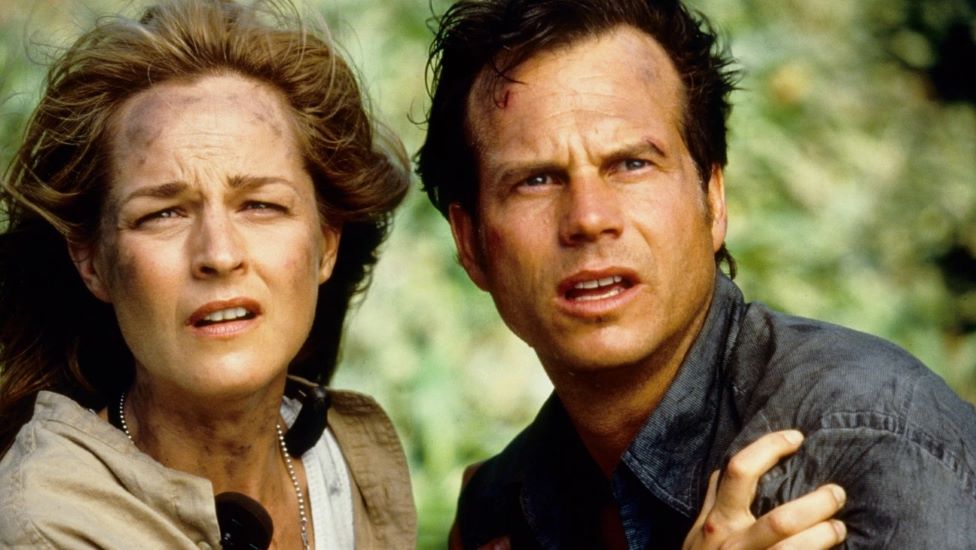
Twister (1996)

Twister (1996)

Cardboard characters try not to get blown away in this extremely silly disaster movie

Director: Jan de Bont

Cast: Helen Hunt (Dr Jo Harding), Bill Paxton (Dr Bill Harding), Jami Gertz (Dr Melissa Reeves), Cary Elwes (Dr Jonas Miller), Lois Smith (Aung Meg Greene), Philip Seymour Hoffman (Dusty Davis), Alan Ruck (“Rabbit” Nurick), Sean Whalen (Allan Sanders), Todd Field (“Beltzer” Lewis), Wendle Josepher (Haynes), Jeremy Davies (Brian Laurence), Joey Slotnick (Joey), Zach Grenier (Eddie)

In 1996 Twister blew through cinema screens with a vengeance, becoming the second most biggest hit of the year. Yes, you read that right. Stop me if I am wrong, but has anyone thought about, even for a second, this bog-standard disaster film since? Staffed almost exclusively by characters so lightweight a puff of wind would blow them away, never mind a tornado, the whole thing is full of sound and fury and signifies absolutely nothing at all.

Drs Jo (Helen Hunt) and Bill Harding (Bill Paxton) are trying to get divorced. He’s finally had enough of risking his neck on their joint passion for storm-chasing, deciding to jack it in for a lucrative life on the media circuit and marriage to relationship therapist Dr Melissa Reeves (Jami Gertz). He arrives in Oklahoma to get Jo to sign the divorce papers – but doncha know it, he gets sucked in to “one more job”, to road-test the storm measurement doo-hickey device he and Jo dreamed of making but she’s actually built. And, handily, one of those pesky twisters is on the way.

The doo-hickey – I’m really not sure what it’s meant to do – is the sort of ludicrous scientific device that only exists in the movies. It’s basically a huge metal cauldron full of marbles that needs to be placed in the path of a twister. It’s also – in a terrible design flaw – hugely fragile and unstable, constantly falling over at the worst possible time. There are apparently three prototypes, of decreasing quality, each a back-up of the one before – you have one guess as to how many of these they burn through in the film.

In fact, you can pretty much one guess almost everything that might happen. Will Jo finally come-to-terms with the death of her father in a storm? (That’s right – she has a “I’m passionate and obsessed because a twister killed my dad” backstory!) Will Bill realise Jo is the one for him, not fish-out-of-water big-city-girl Mel? Will Cary Elwes’ lip-smacking, moustachio-curling copyright-stealing storm expert get his (fatal) comeuppance? Will sweet Aunt Meg (and her dog) survive her tussle with the storm? That “it’s almost never happened” super-storm they talk about at the start of the film – do you think it’s possible our heroes will find themselves in the middle of it before the end?

All of this is shuffled in a film with a hideously over-loaded deck. Jo’s team consists of around eight assistants, none of whom have so much as a character between them. They are a feeble collection of archetypes: the geek, the shy one, the techie, the religious one and the loud-mouthed one (a role of flamboyant indignity for Philip Seymour Hoffman, yet to be recognised as a great actor and instead relegated to feeble comic relief roles). But then it’s not like the leads are that interesting either: she’s committed, passionate but gosh-darn-it puts the storm before her personal life. He’s trying to move on but doncha-know-it he’s just lying to himself that he doesn’t love the storm.

In fact, as this rather smug ex-couple riffed on in-jokes, storm facts and their shared love for their doo-hickey made of marbles I felt rather sorry for Mel. Obviously, we are meant to scorn Mel, with her hand-wringing profession of counsellor (as opposed to the macho jobs of Bill and Jo) and her reluctance to run into a massive twister. Actually, I think she’s rather sensible. Bill and Jo are both clearly insane and take suicidal risks. She puts up with her fiancé flirting with his ex far longer than most of us would and she is hugely patient with the polite scorn she’s treated with by Jo’s rag-tag band of tedious risk-taking geeks playing at being alphas. She hangs around far longer than anyone else would do, before departing after maturely and sensibly telling Bill he should stick with his first two loves (Jo and storms – maybe not in that order).

People aren’t watching these films for the character or plot though – just as well as the film doesn’t really have either – but the special effects. These are impressive, I suppose, as the storm rips through sets, throws CGI buildings around and generally makes for loud and impressive noise. The film has a sort of goofy wit at times – at one point a CGI cow is blown through the sky in front of the Hardings, mooing rather sadly.

There are some decent set-pieces, even though they are basically all the same set-piece repeated over and over again at a different scale (first the storm blows over a car, then a building, then a village, then most of a town while our heroes duck and cover their heads). Lots of it was done with practical effects, shot with an alarming lack of regard for safety – Hunt got an infection from being flung into a drain and she and Paxton were temporarily blinded by a burst of artificial lightning.

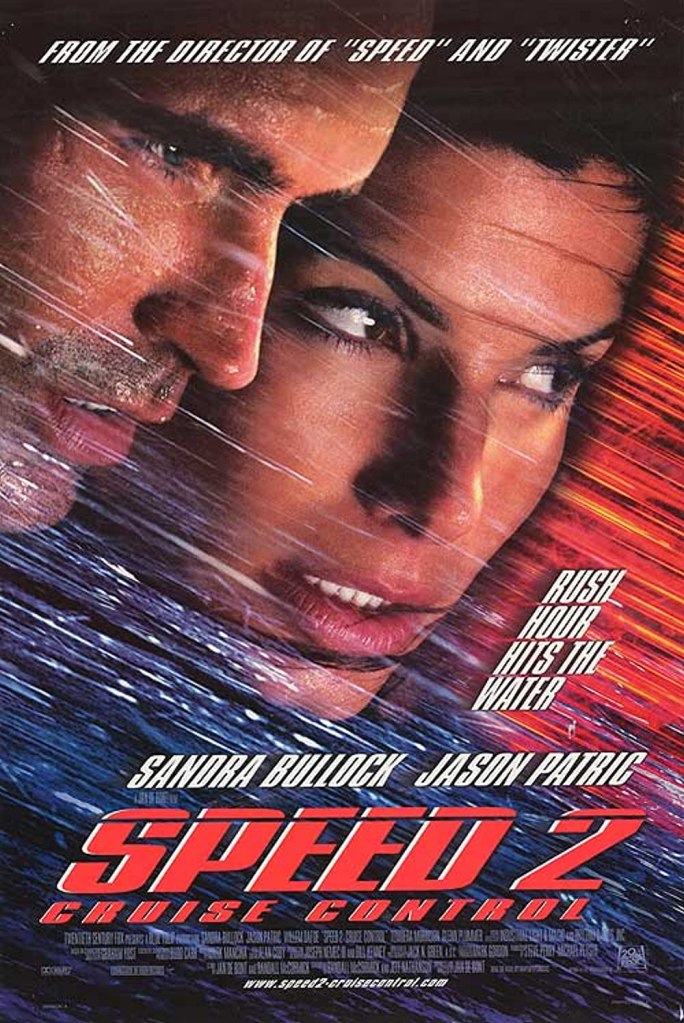
De Bont directs all this with a personality-free competence. The film is at absolute best less than half as good as his first film, Speed – and de Bont’s subsequent film, The Haunting, would be half as good again in a career of ever-diminishing returns. Twister offers nothing new or even particularly interesting, other than some wind special effects that are of passing curiosity value but nothing else. It’s almost quaint that, in 1996, this was seen as something earth-shatteringly impressive. Now it’s as fearsome a burst of raw natural power as a fart.

Eternals (2021)

Eternals (2021)

A cast of diverse actors are totally crushed in this pompous, dull Marvel film

Director: Chloé Zhao

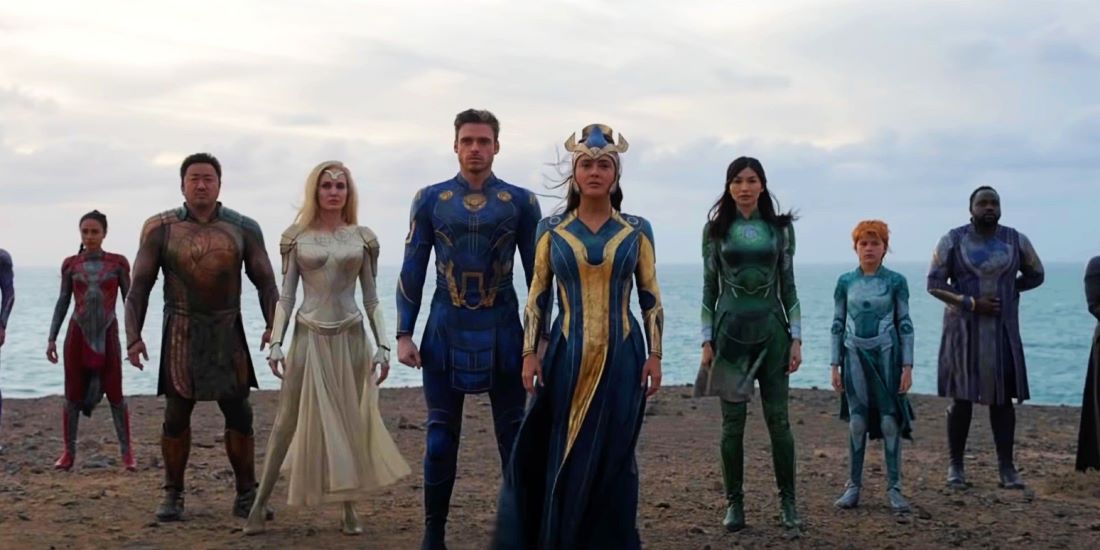
Cast: Gemma Chan (Sersi), Richard Madden (Ikaris), Kumail Nanjiani (Kingo), Lia McHugh (Sprite), Brian Tyree Henry (Phastos), Lauren Ridloff (Makkari), Barry Keoghan (Druig), Don Lee (Gilgamesh), Harish Patel (Karun), Kit Harington (Dane Whitman), Salma Hayek (Ajak), Angelina Jolie (Thena)

It must have seemed like a good idea at the time… Marvel had already turned one little known gang of superheroes into a huge hit with The Guardians of the Galaxy. World defining stakes had been the core of most of The Avengers films. An ensemble cast of diverse actors were pulled together with an acclaimed (and now Oscar winning!) director at the helm. They only forgot one thing: to make the final film interesting, engaging or feel in any way original.

Our heroes are a group of very serious God-like Aliens called Eternals, who have been sent to Earth thousands of years ago by even more God-like Celestrial Aliens to protect humanity from savage monsters called Deviants. By 1521, the Deviants are defeated and our heroes are left unsure of what to do. Ordered to never interfere in the events of humanity, they go their separate ways and settle down into life on Earth. But in the present day the Deviants return – and the Eternals start to uncover dark facts about their mission.

All of this takes place over a runtime which feels pretty bloody eternal itself. Essentially the film opens with an info-dump, then spends a couple of hours getting the gang back together (interspersed with occasional additional info-dumps) before the inevitable final-act smackdown to save the world. The stakes have arguably never been higher: but with the film’s indolent pace and thinly sketched characters it sure-as-hell doesn’t feel like it. There is a lot of uninvolving world-building and its ends up feeling every bloody minute of its epic runtime.

With its group of characters, essentially a loving family that has fallen out, this should really be an intimate, character-driven film. But it never balances the huge cast, the epic action and building relatable characters swiftly. Instead the Eternals rarely seem like anything more than heavy-handed sketches defined by basic character traits: a caring empath, a warrior princess, a slightly austere would-be-leader, a mentor destined to die, an eternal child frustrated about never growing up, a natural showman, a cold mind-controller, a deaf athlete and a gay guilt-ridden inventor. The cast (as very proudly trumpeted in its marketing material) is on paper the most diverse ever in Marvel. But it’s like simply making it representative was enough and they didn’t need to bother creating rich, engaging and multi-faceted characters.

All of them are squashed into a film that really feels like it could have been made by anyone. For all Zhao’s occasional indie visual beauty, this is totally free of authorial voice, with completely routine action set-pieces. There is the odd joke, but Zhao’s attempt to put her own mediative personality on the film only really ends up making the bits between the fights dry and boring. Put quite simply, Marvel seems to have rather crushed any life out of her. We get endless solemn moments, as characters watch with horror the results of the development in mankind they have encouraged (from the genocide of the Incas to the bomb at Hiroshima). These nearly always feel on-the-nose and obvious. It all stems from Zhao failing to make us care about these characters.

So, when they find out they have been betrayed by their masters – that their purpose is to fatten the Earth for feasting, not raise it in good health – its rather hard to feel the impact of the betrayal. The film isn’t even smart, or daring, enough to acknowledge that the same manipulative Gods who have used the Eternals have done the same thing to the Deviants. The film continues to treat these as wicked killers, when in fact they are as much victims as everyone else. Would it have killed Eternals to acknowledge this for a moment, to explore the implications of this more?

Especially since it’s so bloody long. It takes almost two hours for the film to bring the gang back together. Each reunion with a new Eternal is basically played the same – a brief bit of banter and then a horrified reaction as they discover the truth. Which means we basically see versions of the same scene play out six times, with diminishing levels of interest. Can’t these guys conference call?

There is no momentum to this ever. Where is the pace? Where is the urgency? The Eternals have been told they’ve only a few days to save the Earth, but they seem to spend most of it ambling around chatting and catching-up. Even when the end-of-the-world starts, most of them still sit around starring at the middle distance sadly and bemoaning their lot. This – and soft spoken intensity and lackadaisical wandering – are constantly used by the film as a short hand for seriousness, a self-importance the film wears very, very heavily.

All of the actors get crushed under the weight of the film. Nanjiani stands out pretty much as the only one having anything approaching fun while only Lee gets to show some sort of warm, uncomplicated human connection. Keoghan, Ridloff and Henry do decent work, but the rest of the cast seem hampered by how very, very, very serious they need to be all the time. One of them, of course, is a wrong ‘un (you can make a pretty decent guess early on which in it will be), but they turn out to be the dullest most stick-up-the-butt character of the lot. Despite the huge amount of time we spend with them, lead characters like Chan’s Sersei and Madden’s Ikaris remain enigmas we can’t be bothered to find out more about.

Eternals is pretty much a failure. It’s long. It builds an expansive universe with a series of clumsy lectures and fails to make any of these interesting. It’s got long battle scenes which feel like several other films. It’s got no personality or vibe to it. It sets up the odd interesting idea then takes it nowhere. It makes the end of the world a massive yawn, while telling you it’s a hugely important and daring film (it’s neither of those things). You end up feeling this might be the most forgotten Marvel film since The Incredible Hulk.

Sayonara (1957)

Sayonara (1957)

Racism gets exposed at clumsy length in this heavy-handed social issues drama

Director: Joshua Logan

Cast: Marlon Brando (Major Lloyd “Ace” Gruver), Patricia Owens (Eileen Webster), James Garner (Captain Mike Bailey), Martha Scott (Mrs Webster), Miiko Taka (Hana-Ogi), Red Buttons (Airman Joe Kelly), Miyoshi Umeki (Katsumi Kelly), Kent Smith (Lt General Mark Webster), Ricardo Montalban (Nakamura), Douglass Weston (Colonel Crawford)

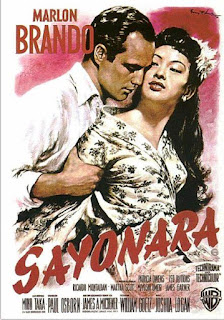
It’s post-war Japan and the American occupation forces have got very strict rules about what their soldiers are allowed to do with the native population: namely not marry them. Any suggestion of American soldiers finding themselves Japanese wives is frowned on at the very highest level. Something flying ace Major “Ace” Gruber (Marlon Brando) is about to find out when he’s transferred from shooting down commies in Korea. Airman Joe Kelly (Red Buttons) is determined to marry Katsumi (Miyoshi Umeki) – and nothing commanding officer Gruber or anyone else can say will dissuade him. Meanwhile, Gruber finds himself falling in love with Japanese actress Hana-Ogi (Miiko Taka) – and facing the exact same pressures to chuck her overboard as Kelly meets.

Sayonara is very much a Hollywood message film: that being interracial marriage is a fact to celebrate not condemn, with a subsidiary message focused on rehumanising the Japanese people for American audiences still holding strong memories of the Second World War. Like a lot of message films from the era though, its also slow, stuffy, self-important and more than a little dull – something its multiple Oscars can’t hide.

Shot on location, it often come across as a sort of Japanese travelogue which, for all its efforts to make the Japanese sympathetic, can only interpret them and their culture through a selection of cliches and generic expectations. The film is a parade of kimonos, lotos blossoms, tea ceremonies and geisha girls, all shot with a laboured flatness by Joshua Logan. Logan’s direction overflows with middle-brow earnestness, pleading for a little love and understanding, while shuffling together a series of stereotypical and predictable plot events. Logan also seems to struggle with the cinemascope frame, which frequently dwarves this intimate story.

It’s all told at a very slow pace: it’s remarkable that such a slim story manages to fill almost two and a half hours. Much of this is taken up with the romantic entanglements of Ace, half-heartedly engaged to General’s daughter Eileen Webster (a saintly understanding Patricia Owens, who practically asks to be thrown over), before a chance sighting on a bridge (of course it’s a soribashi bridge) leads to him falling head over heels in love with Hana-Ogi, hanging around the bridge every day and struggling his way through a Japanese phrase book so he can ask her out on a date (the dates, when they come, are like a travelogue of the most Japanese events you could imagine).

The languid lack of drive isn’t helped by Brando’s curious performance. Sayonara is the perfect example of what a mystifying actor Brando could be: here he was in a project that clearly meant a lot to him personally (he was a long-standing social campaigner), but he drifts through it with a lazy off-the-cuffness that suggests he’s only doing the film under protest. Only Brando could act in a passion project with such surly indifference (allegedly motivated by his lack of regard for Logan’s direction). Brando uses a non-descript Southern drawl, which he uses as an excuse to dial his mumbling up to 11. He slouches and ambles through every scene, barely raising his voice or lifting a finger unless it’s essential.

Because Brando seems so disengaged and bored by the whole thing (the only spark of energy he gives is when he playfully bangs his head on a low Japanese ceiling) it makes the film drag on without the stakes ever seeming to really mount. Ace is told repeatedly that he will have to chuck Hana-Ogi, but he shrugs it off with all the indifference of a laid-back hipster. I think Brando is straining to suggest that Ace has the soul of a poet, trapped inside his father-mandated time in West Point – there is a moment where he airily mumbles something about his dreams as a young man of finding something more. But the overall effect is more of an actor drifting through a long role with minimum effort.

You can’t say the same for Red Buttons, who plays Kelly with a great deal of commitment. Winning an Oscar, this first role was also his best, with Kelly having Button’s good-natured lightness but mixing it in with a fierce defiance and a touching pain when his wife suggests surgery to try and alter her facial features to appear more Western. Umeki also won a generous Oscar for a brief performance which gives her very little scope to do much beyond playing the quiet wife (I suspect the Oscar was partly for the film’s theme and reflects a weaker year of candidates). Miiko Taka is more impressive (and given more scope) as Hana-Ogi, all too aware of the pressures on her not to get involved, torn between her feelings and what she sees as her duty.

Sayonara as a whole though remains a flat, often rather uninvolving film that holds its liberal conscience so close to its chest that it manages to squeeze any trace of life out of it. Its liberalness only goes so far: Logan casts two Japanese actresses but has no concerns about recruiting a pale-faced Ricardo Montalban to play the only Japanese male with lines. It’s exploration of mixed-race relationships is solely focused on white guys marrying who they want. A truly daring film would have thrown in a flirtation between Montalban’s Japanese actor and Patricia Owen’s patrician General’s daughter. A Japanese man marrying the daughter of one of America’s own? Now that is a vision that would have really shook up 1950s America.

It’s not to be though. Instead, this is an overlong, overly serious, pleased with itself melodrama, coated in lashings of social awareness that is cursed with a languid central performance that helps make the whole film seem to drag on forever. Logan is unable to provide either any dramatic or political fire to the film and it settles all to often for safe, picture perfect shots of Japan. While you can admire the motives behind it, there is little to admire in the film itself.

The Matrix Reloaded and The Matrix Revolutions (2003)

The Matrix Reloaded and The Matrix Revolutions (2003)

Tension, drama and thrills… all go missing in these increasingly ponderous self-important sequels

Director: The Wachowskis

Cast: Keanu Reeves (Neo), Laurence Fishburne (Morpheus), Carrie-Anne Moss (Trinity), Hugo Weaving (Agent Smith), Jada Pinkett Smith (Niobe), Monica Bellucci (Persephone), Lambert Wilson (The Merovingian), Gloria Foster/Mary Alice (The Oracle), Helmut Bakaitis (The Architect), Harold Perrineau (Link), Ian Bliss (Bane), Harry Lennix (Commander Lock), Collin Chou (Seraph), Nona Gaye (Zee), Gina Torres (Cas), Randul Duk Kim (The Keymaker), Daniel Bernhardt (Agent Johnson)

If you ever want to study a crash-course in how not to make sequels to a genre redefining film, these might be the perfect examples. I’m going to break a golden rule here and review them both together, which I’ve not done for anything else so far in this blog. The flaws in these films are so interlinked, I think you have to almost treat the whole misfire as one single, dreadfully disappointing film. And I just couldn’t bear the idea about writing two articles about each of them.

It’s six months after the events of The Matrix. Neo (Keanu Reeves) is an invulnerable phenomenon in the Matrix. He and Trinity (Carrie-Anne Moss) are in love. Morpheus (Laurence Fishburne) is being dragged over the coals by Starfleet Command (I know it isn’t called that, but it might as well be) for disobeying orders. And even worse news than that: the Machines have found the location of Zion, the secret last human city in the world. And they plan to destroy it – in 72 hours. Neo must undertake one final mission in the Matrix to find the secrets that will prevent this destruction of the human race – and he’ll have to do it with only the support of his friends, as the rest of mankind decides to batten down the hatches and wait for the uncoming storm. But is there more going on here than we think? Is there more to Neo’s existence than meets the eye? Why is he being plagued with dreams of Trinity’s death? And what is going on with Smith (Hugo Weaving) who know seems to be acting as rogue agent, working against man and machine?

The answers are all eventually revealed, with maximum pomposity and self-importance, over the nearly five hours these sequels drone on, seemingly determined to drain out everything that anyone found cool about the original movie and leave it with a stuffy, pretentious, dull shell that won’t win any new converts over. Before these films, The Matrix was a franchise that would have a life in films, video games, anime and fan fiction for decades to come. After them, it was dead in the water.

Why? What did people like about the first film? They liked the action sure, and they liked the cool action and visuals and the anti-authoritarian nose thumbing. But those all really worked because we related to the characters, we saw that they were vulnerable, outmatched and in peril. In the real world they were plucky, brave resistance fighters. In the Matrix they were desperate rebels who could do really cool things. This all gets blown away here. In the Matrix, Neo is now so invulnerable, that fights are pointless: they are little more than dull displays of choreography with inevitable outcomes. Reloaded hammers home time and again Neo can do anything he likes in the Matrix. Fighting hundreds of clones of Smith at once? No problem. Flying faster than the speed of sound? Sure thing. Reworking the reality to suit him? It’s just a shrug of the shoulders.

This is a disaster to drama in two ways. Firstly, it drains all the peril out of any moment in the Matrix world because we know that there is no way Neo can get hurt – or that he will allow any of his friends to get hurt. Secondly, it means to get any tension Neo has to be somehow depowered or separated from everyone else. This happens three times over the films: Neo gets dispatched to China, flung into an underground station purgatory and blinded in the real world. When the film becomes reliant on continuously finding a way to put its hero out of the way (a blight that also often hits Superman on film), you know you are in trouble.

Where Neo is still vulnerable, is the real world where the films spend more and more time. Sadly, the real world is a tedious, uninvolving place. Remember in the first film where Morpheus seemed like a super cool, sage-like leader of a rebellion? Well in fact he’s just a cog in a large, stuffy command structure that takes all the worst, most uncool elements of Star Trek’s Starfleet and doubles down on it. Zion is a stereotypical sci-fi city, with characters dressed in flowing robes, quasi-uniforms or urban rags (that’s when they are dressed at all – Reloaded’s early doors rave/orgy rightly draw oceans of sniggers). The real human world isn’t a gang of plucky, anti-authoritarian types but a typical sci-fi, rules-bound society. The flair of our characters is stripped from them.

All this is wrapped in a package that doubles down on the stuffy, Bluffer’s Guide to Philosophy that popped up in the first film. There it added a bit of self-regarding intellectual heft to a film about people kicking each other and dodging bullets, here it’s the be-all-and-end-all. But the films are nowhere near as clever as they think they are: various characters parrot crudely scripted stances on everything from free will to determinism to the greater good. None of it is new or intriguing, and nearly all of it feels like the directors straining to show off their reading list.

It hits its apotheosis in Reloaded as the Architect (Helmut Bakaitis), the bearded brain behind the Matrix, lays out in a long speech how Neo is in fact a part of the Matrix programme designed to help the system reboot and refresh in cycles, an interesting idea totally crushed under the weight of needlessly long, incomprehensible words, phrases and Latin quotes that don’t sound smart, only like the speech was written out in plain English and then run through a thesaurus.

And it was a neat idea that our Messiah might actually have been created by the machines to help their prison renew itself. But it gets lost in the clumsy, pleased with itself delivery, in conversations about choice and free will (will Neo choose his destiny or saving Trinity’s life? Guess!) and the generally turgid plotting. This gets worse in Revolutions which finally seeps the life out of the franchise, with a video-game shoot-out at Zion (which makes no tactical sense), a trek by Neo and Trinity to commune with the machines and Agent Smith converting every human being in the Matrix into a copy of himself, in a vague philosophical comment on the death of individuality.

The worst thing about these films is that they are self-important, hard to enjoy and often more than a little silly. Fights take place at great length with very little tension. Reloaded does have a fab freeway car chase – but again it depends on Neo being absent for any tension to exist (and as soon as he turns up it’s all solved in seconds). Almost everything in the real world is stuffy, earnest and bogged down in the sort of uncool sci-fi tropes the first film stayed away from. Nearly anything in the Matrix involves watching a God like figure hitting things (including a bizarre ten-pin bowling effect when Neo knocks over a host of Smiths).

The actors struggle to keep up the genre-redefining cool that made the first film so popular. Fishburne looks bored (and rightly so, since his dialogue is awful and he’s given almost nothing to do in Revolutions) and Weaving treats the whole thing as a joke. Reeves is earnest, but frequently restrained by the dullness of his role as an almighty God. Moss has most of the best material as Trinity makes drastic decisions for love and faith. The rest of the cast struggle with either paper-thin characters, painfully over-written dialogue or a mixture of both.

The Matrix sequels managed to drain out everything that was great about the original. Where that was nimble, these were stuffy. Where these were anti-authoritarian, these laid out a dull and stereotypical sci-fi society. Where the first was gripping, desperate and adrenalin fuelled, this sees invulnerable heroes, extended runtimes and a frequent lack of peril. Worst of all Revolutions in particular feels like hundreds of other “sci-fi war films” and about a million miles from the actual revolution of the first film. It doubles down on nearly everything that was less good in the original and strips out the things that most impacted people. How not to make a sequel.