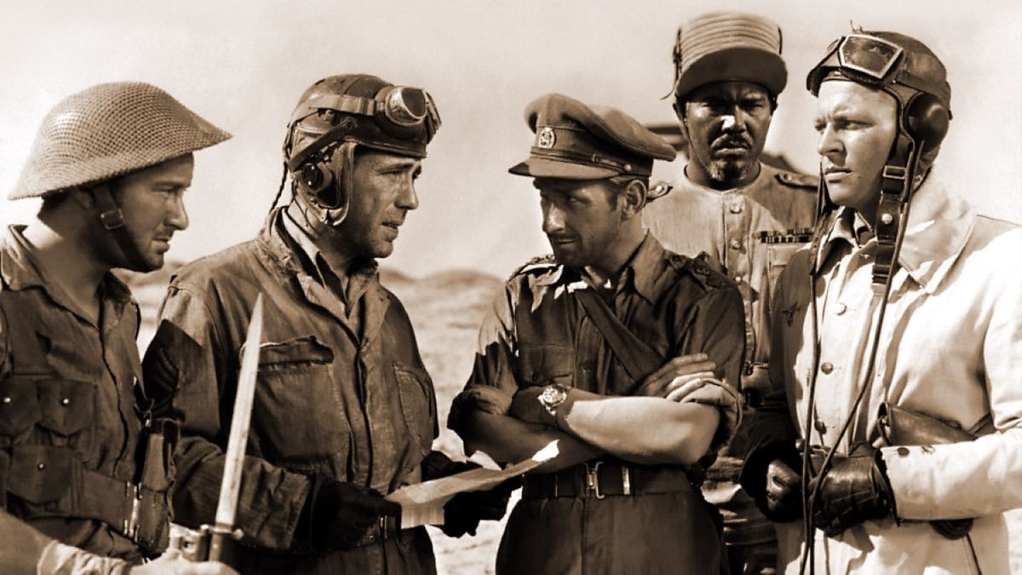
Category: War film

Westfront 1918 (1930)

Westfront 1918 (1930)

Wonderfully filmed, but grim and slightly too allegorical war film, sitting in All Quiet’s shadow

Director: GW Pabst

Cast: Fritz Kampers (The Bavarian), Gustav Diessl (Karl), Hans-Joachim Moebis (The Student), Claus Clausen (The Lieutenant), Jackie Monnier (Yvette), Hanna Hoessrich (Karl’s wife), Else Helle (Karl’s mother), Carl Ballhaus (Butcher)

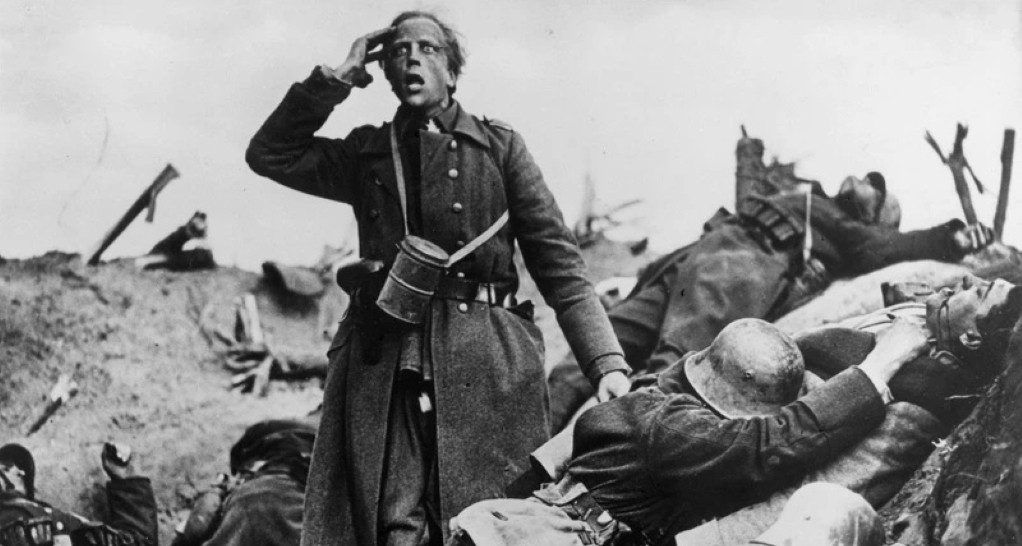
If there is one thing you definitely understand when watching Westfront 1918, it’s the impact of the First World War on ordinary Germans. Westfront 1918 is low on plot and is close to an experience film, following four regular soldiers ground down by the military campaign on the trenches, with horrific psychological and physical injuries which will leave most of them dead (or as good as). Our soldiers are Karl (Gustav Diessl), a husband who discovers his wife has found comfort at home in the arms of the local butcher, the young Student (Hans-Joachim Moebis) in love with Yvette (Jackie Monnier), a rotund Bavarian joker (Fritz Kampers) and the tightly-strung Lieutenant (Claus Clausen) under huge pressure.

The inescapable comparison Westfront 1918 lives with is to All Quiet on the Western Front (shot almost at the same-time). Unfortunately, the novel Westfront 1918 is based on is not as strong as Erich Remarque’s and the film goes for such an allegorical universality in its characters (most of whom don’t get names) that it doesn’t carry the same powerful emotional impact. All Quiet also shows its characters going from hope to disillusionment: what Pabst is going for, with unrelenting grimness, is to show disillusioned men stuck in a pointless slaughter, fighting a distant and faceless enemy.

All they is chaotic uncertainty and the suddenness of death. The story is topped and tailed with different types of incompetence and inadequacy. Our heroes, on a brief leave near the front, are forced to hit the basement after their occupied village is shelled by their own artillery (this fuck-up will be repeated again and again, to the exasperation of the Lieutenant as his men duck in the trenches from their own shells). The film climaxes in an over-crowded, shelled-out church acting as field hospital, with over-worked doctors and inadequate medical supplies struggling to save lives. Stressing how much this is a hell on earth, the camera pans past a shattered Christ statue in the rubble. This dance with death isn’t just pointless, it’s ineptly led.

The combat sequences are shot with a strikingly observant camera, soaking up the detail, the soundtrack (and the ground) constantly peppered with exploding shells. Pabst stages our arrival at the trenches in a striking tracking shot, stressing their narrowness and inhospitality and the flimsy protection they provide. The final battle that closes the film – a French tank advance against hopelessly outmatched Germans – includes brilliant stationary shots that hold a fixed view of the battlefield. In front of us march (and run) troops – but also, when troops are hit, their bodies slump and remain there in shot, sprayed with mud when shells explode. Slowly the frame fills with the detritus of war. It’s an extremely well-done capturing of the grimness of war.

Pabst’s film stresses the unfairness and dismissal of the ordinary soldier by the officers. Senior officers are based miles from the front, fighting a very different war: pushing troops around a map and enjoying fine rations, served by batmen. When the Student struggles into their presence with a message after a harrowing journey, they barely register his presence: he’s left slumped on the floor and only fed when the batman sneaks him some food. Everyone is not equal and the soldiers there is no point volunteering for things (the student has only taken on his hazardous mission in the hope he can steal away afterwards to see Yvette).

The homefront is equally troubled, crowds queuing for low rations and those left behind struggling with the loneliness and shame (as millions die a few miles away). Pabst’s film also treats those on the homefront as victims. When Karl’s wife is found in an adulterous twist with a butcher, Westfront 1918 gives as much sympathy to her loneliness and depression as much as it does Karl’s rage. In fact, if anything, Karl’s fury towards a woman he hasn’t seen in 18 months finding some comfort is held up as his character flaw, something he will spend time deeply regretting later. What does a passing moment like this matter when you could be killed at any time? Pabst’s argues we should stick together as Komarades, not turn on each other.

The film’s main weakness is the characters largely act as ciphers and universally representative figures. Westfront 1918 never quite manages to make them people we really care for in themselves, even as they fall. Which isn’t to say the tough moments don’t land: one character’s fate, drowned in a pool of mud, only his hand sticking limply out after death, is especially tough. The impact of death land (literally so in one shot which drains out the light to leave one character’s face literally looking like a skull) but, unlike All Quiet, we never quite feel like we fully know and understand these men.

This is perhaps why Pabst’s film is now most strongly remembered for its technical innovations. His first sound film, Pabst didn’t want his camera to be restricted into a stationary position so that a sound boom could pick up the sounds. He and cameraman Fritz Arno invented a sound-proof casing for the camera to allow them to move. In doing this, Pabst re-introduced much mobility to sound film-making.

Westfront 1918 is a film full of admirable film-making virtues and a strong streak of humanity. It doesn’t carry quite the same emotional impact as All Quiet – and it will always be remembered as that’s companion piece – but it has moments of haunting, virtuoso film-making. It’s view of war as a pointless grindstone inevitably led to it being banned by the Nazis. But it’s also sad to reflect that Pabst spent the next war (reluctantly) filming propaganda films for Joseph Goebbels. As Westfront 1918 tells us, life is cruel.

Decision Before Dawn (1951)

Decision Before Dawn (1951)

Tense war drama finds sympathy for the enemy, in an over-looked war film

Director: Anatole Litvak

Cast: Richard Basehart (Lt Dick Rennick), Gary Merrill (Colonel Devlin), Oskar Werner (Corporal Karl Maurer “Happy”), Hans Christian Blech (Sgt Rudolf Barth “Tiger”), Hildegard Knef (Hilde), Wilfried Seyferth (Henitz Scholtz), Dominique Blanchar (Monique), OE Hasse (Oberst von Ecker), Helene Thimig (Paula Scheider)

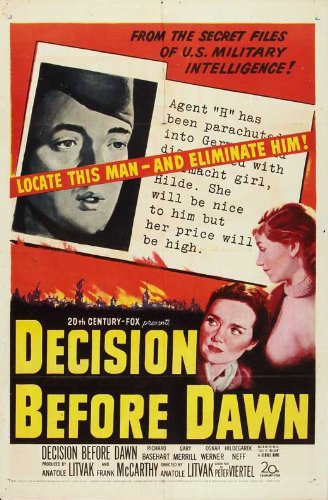
Decision Before Dawn tends to be remembered – if it is remembered – as an aberration in Hollywood history, one of the few films to receive only one nomination other than its Best Picture nod – with that nod generally put down to excessive Fox executive lobbying. I’d heard it described as a ‘fairly standard World War II film’ and expected it to be pretty disposable. But I guess I should have looked into things more: no less a director than Stanley Kubrick called it a hidden gem, claiming to have seen it five times. After a viewing, it’s hard not to think he might be right.

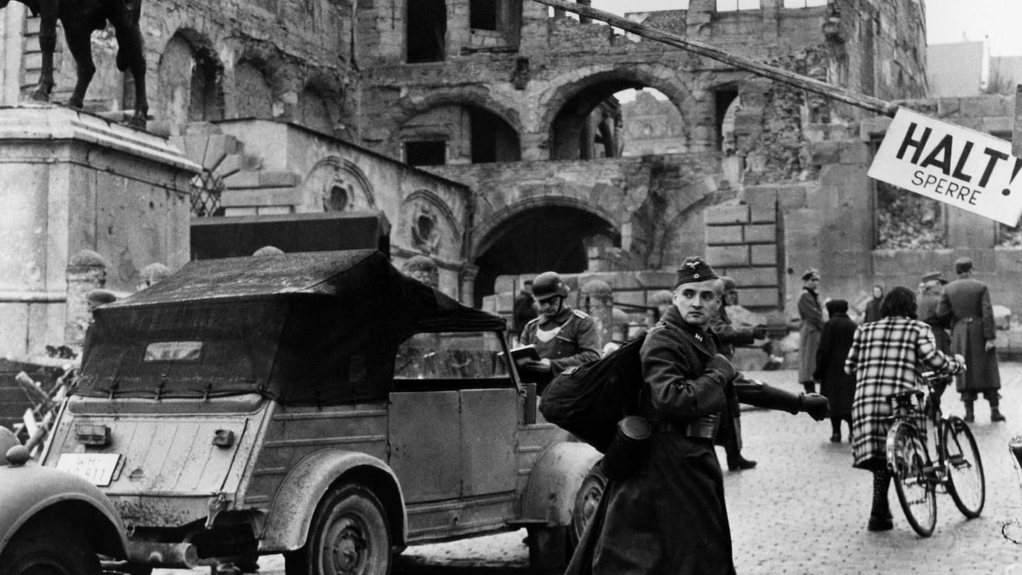
It’s a real, peeled-from-the-headlines tale. Shot entirely on location in Germany, in the very cities its characters are travelling through, still the bombed-out wreckage sites they were in 1944. With the assistance of (what was still then) the Occupying Powers, Fox and Anatole Litvak (himself a one-time refugee from the Nazis) recreated, to an astonishingly convincing degree, war-torn Germany six months before the death of Hitler, on locations littered with Germany military equipment. Everything in Decision Before Dawn feels astonishingly real because it largely is. When “Happy” tumbles through a bombed-out theatre or walks through bedraggled factories and grand houses converted to military bases, that’s the real thing.

Alongside this visceral sense of realism, is a surprisingly mature message. Helped by the presence of several German ex-pats, Decision Before Dawn casts a sympathetic eye over the Germans at a time when most of viewers would probably echo the initial sentiments of Richard Basehart’s scornful Lt Rennick: ‘they’re all just Krauts’. Rennick’s is part of an intelligence unit, tasked with ‘flipping’ German POWs and sending them back into Germany. Their two latest recruits couldn’t be more different: cynical Sgt Barth aka Tiger (Hans Christian Blech) motivated by earning a quick buck and thoughtful Corporal Maurer aka Happy (Oskar Werner) who believes Germany can only be saved when the madness of Nazism is defeated.

It’s Happy we follow when, after his recruitment, he is parachuted back into Germany and instructed to find the location of the XXth Panzer corp, while Rennick and Barth land further West to locate, and arrange the surrender of, a Wehrmacht Army Unit. Decision Before Dawn has already spent its opening act humanising erstwhile opponents via Happy. Happy is honest and principled with a strong sense of morality. He won’t lie to please his captors but he also won’t countenance the blind loyalty or bitter cynicism of his fellow prisoners. He is brave enough to save his country by ‘betraying’ it.

And it’s through Happy’s eyes we also see Germany. Many of his fellow POWs have no real love for Nazism; far from slathering fanatics, they are just guys knuckling down, wanting to stay alive. Behind-the-lines in Germany, the people Happy meets on his journey are striking in their everyday ordinariness. Decision Before Dawn’s most compelling sequences follow this ‘Pilgrim’s Progress’ through the Reich, where episodic encounters mix with moments of panic and terror as a Gestapo net draws tighter.

The only two true believers he encounters are a glasses-wearing (it still loves some of the cliches) relentless Gestapo officer, and a Hitler Youth kid who still swallows true loyalty to the Fuhrer because he doesn’t know anything else. The others, by and large, are ordinary people trapped in a nightmare, trying to carry on. From a senior officer who reluctantly executes a deserter days before he knows the army will surrender to a depressed widow trying to make a living turning tricks. They are among a parade of regular citizens who, other than that fact they are commuting through a war zone, could be no different from Americans in their everyday concerns.

This places much of the film’s success on the shoulders of Oskar Werner, making his English-language debut. Werner, himself a deserter opposed to Nazism, brings the role a quiet, deeply affecting sincerity, expertly breathing life into a man who lives by his own firm moral code. ‘Happy’ deplores the taking of life but will do so if there is a reason: that won’t involve poisoning a colonel or standing by during the lynching of a POW by his fellow prisoners, but he will turn a gun on a direct threat. Werner makes him a thoughtful, compassionate man while giving him a strong streak (a Werner speciality) of in-built martyrdom, that a feeling he is too strait-laced and honourable for this world.

By making our hero a German – and the character we follow for almost the whole movie (despite Basehart’s top billing) – Decision Before Dawn is invites it’s American audience to emphasise with the enemy. To learn, alongside Rennick, that they are not ‘all Krauts’ so that we and Rennick can both be appalled by the unfairness when a Corporal mutters this at the film’s. That’s quite a thing for an American film, a few years after the war. By giving us handsomely staged spectacle centred around a man most of the audience were primed to expect to turn traitor, rogue or coward is no mean feat.

Of course, not every German can be good. The other potential recruits (one of them a young Klaus Kinski) are not a promising bunch and ‘Tiger’ (a fine, weasily performance by Hans Christian Blech) is betrayed as selfish, cowardly and perfectly happy to sacrifice anyone and everyone around him to ensure his safety. Litvak’s film does acknowledge it’s easier for the Americans to relax their feelings for the Germans than many of the other nations of Europe. Dominique Blanchar’s OSS officer makes it perfectly clear that, while she likes ‘Happy’, she’s still a long way from every imagining a relationship with a German of any sort.

Decision Before Dawn is well-directed, Litvak easing expert tension behind-the-lines and wonderfully shot among the ruins of Germany. Its final resolution may seem a little pat and obvious – and Basehart’s Rennick is such a terminally dull character I can only assume a host of more famous actors turned it down – but there is a lot of rich, fascinating tension and excitement here. Putting it frankly, Decision Before Dawn is a very pleasant surprise: a unique and mature war film that deserves far more recognition.

Born on the Fourth of July (1989)

Born on the Fourth of July (1989)

Passionate polemic against Vietnam, with a committed central performance – tough, angry viewing

Director: Oliver Stone

Cast: Tom Cruise (Ron Kovic), Willem Dafoe (Charlie), Kyra Sedgwick (Donna), Raymond J Barry (Eli Kovic), Jerry Levine (Steve Boyer), Frank Whaley (Timmy), Caroline Kava (Patricia Kovic), Cordelia Gonzalez (Maria Elena), Ed Lauter (Commander), John Getz (Major), Michael Wincott (Veteran), Edith Diaz (Madame), Stephen Baldwin (Billy), Bob Gunton (Doctor)

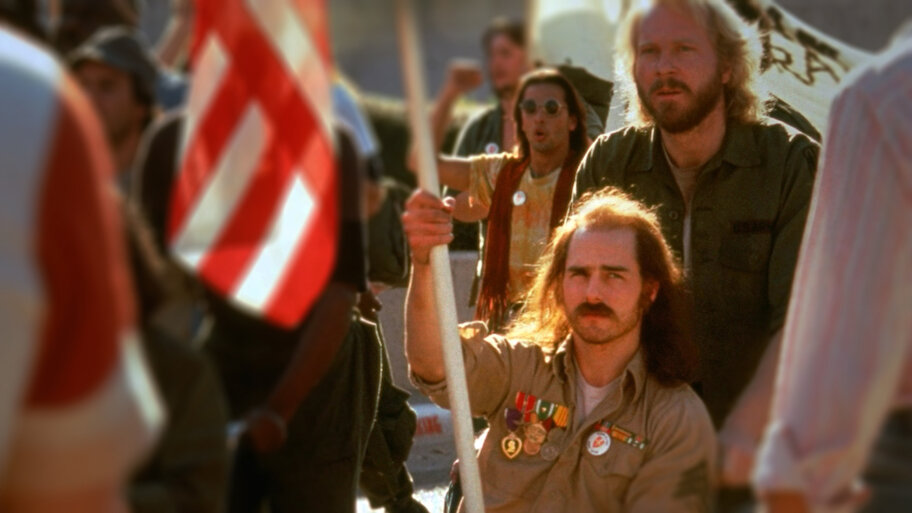
Ron Kovic and Oliver Stone shared the feelings of many of their generation: a deep and abiding feeling of betrayal about the war they were sold in Vietnam. Kovic entered Vietnam a passionate true-believer in the cause; he left a traumatised veteran, paralysed from the waist-down, facing a difficult journey of guilt and discovery that would lead him into a career of anti-war activism. Stone too left Vietnam, wounded and affected with PTSD. The two had collaborated on a screenplay of Kovic’s autobiography in the 70s, before funding fell through: Stone vowed he would make the film when he had the power: the success of Platoon and Wall Street gave him that.

It’s not a surprise, considering the understandable passion that went into it, that Born on the Fourth of July is a polemic. You can argue it’s a heavy-handed and virulent one: but then it’s hard to argue with the catastrophic impact over a decade of American foreign policy decisions had on generations across several countries. Could it have been anything else? Born can be an uncomfortable and relentless watch, and subtlety (as is often the case even in Stone’s best work) can be hard to spot. But is that a surprise when the whole film feels like a ferocious, cathartic cry of pain?

It follows a mildly fictionalised version of Kovic’s life (Kovic’s willingness to adapt his life, drew some fire at the time – particularly as he was considering a run for Congress) starting with his childhood, through his teenage enlistment, the shocking horror of Vietnam, his limited recovery in under-funded veteran hospitals, his growing discomfort with the attempt by some (including his passionately conservative mother) to celebrate sacrifices he increasingly feels were misguided and wrong, culminating in his joining the ranks of the same long-haired protestors he spoke of disparagingly earlier.

Through it all, Kovic is played with a searing intensity by Tom Cruise. Cruise was a controversial choice – seen as little more than a cocky cocktail juggling, jet piloting, superstar (despite measured, subtle turns in The Color of Money and Rain Man). It feels a lot more logical today, now that Cruise’s Day-Lewis commitment to projects is well-known. It’s a raw, open and vulnerable performance with Cruise expertly inverting the cocksure confidence of his persona (and the earlier scenes), to portray a man deeply in denial at his injuries (internal and external), with resentment, anger and self-loathing increasingly taking hold of him.

Kovic is a man who never gives up: be that a misguided (and in the end almost fatal) attempt to defy medical advice that he will never walk again, to embracing the anti-war cause with the same never-say-die attitude he signed up to the military with. What Stone and Cruise bring out, is the huge cost to Kovic of working out the fights worth having: from his student days training days on hand for a wrestling bout he loses, to is military career, to activism, it’s a long, difficult journey.

It’s a performance that understands the crippling burden of guilt. Cruise commits to Kovic’s rage, but always keeps track of the vulnerable, damaged, scared soul underneath. He never allows us to forget this is a man eating himself up, not with resentment at his injury, but guilt at his actions in Vietnam – from being part of a mission that pointlessly machine-gunned women and children, to his own accidental shooting of a fellow marine. As you would expect from Stone, Born’s view of Vietnam is bleak: pointless, disorganised missions, led from the rear by incompetent or uncaring officers, where the only victims are innocent civilians or GIs.

That’s perhaps the key about Born. Kovic is not motivated primarily by his injuries. Those are the results of the risks he chose and, to a certain degree, he accepts them. What motivates him is guilt: throughout he is haunted by the crying of the Vietnamese baby he was ordered to leave in the arms of its deceased mother while also struggling to accept his guilt at his friendly fire killing. These feelings fuel his self-loathing, and his anger rightly develops against the lies he was told that led him to commit those acts.

Stone’s film is unrelentingly critical of the mythologising of armed American intervention, and the assumption (often parroted by those who stay at home) that it can never be anything other than completely righteous. It’s a society where (as happens in the film’s opening) children play at soldiers, watch parades of veterans (the young Kovic fails to clock the flinching of these veterans – one played by the real Kovic – at rifle fire, seeing only what he wants to see) and, as young men, are sold tales of duty, sacrifice and heroism. Kovic is too young and fired-up to notice the reluctant pain of his veteran dad (a superbly low-key Raymond J Barry), clearly struggling with his own trauma.

Much as the film paints one of Kovic’s friends in a negative light – like a young Gecko he heads to college, states all this talk of Communism conquering the world is propaganda bullshit and sets up a burger chain where he brags about fleecing the customers and groping the female staff – it also can’t but admit that when it came to Vietnam, he was right. Similarly, Stone is critical of Kovic’s ambitious, apple-pie Mom (Caroline Kava, in a performance of infuriatingly smug certainty) who won’t hear a word against the war and demands achievement from her son, constantly stressing it must have been worth it.

It’s not a surprise one of Born’s most cathartic moment is when Kovic – Cruise’s performance hitting new heights of unleashed resentment – rails late-at-night at his Mom, calling out her upbringing of unquestioning patriotism and saintly conformity as nothing but an ocean of bullshit. It’s an outpouring that has been welling up since his return, looking for the right direction: snapping at protestors, doctors, his younger brother who dares to oppose the War. Born is about a man coming to terms with why he is so angry and finding the appropriate target: and it becomes the system that sent him on this journey, starting with his mother and onto his own government.

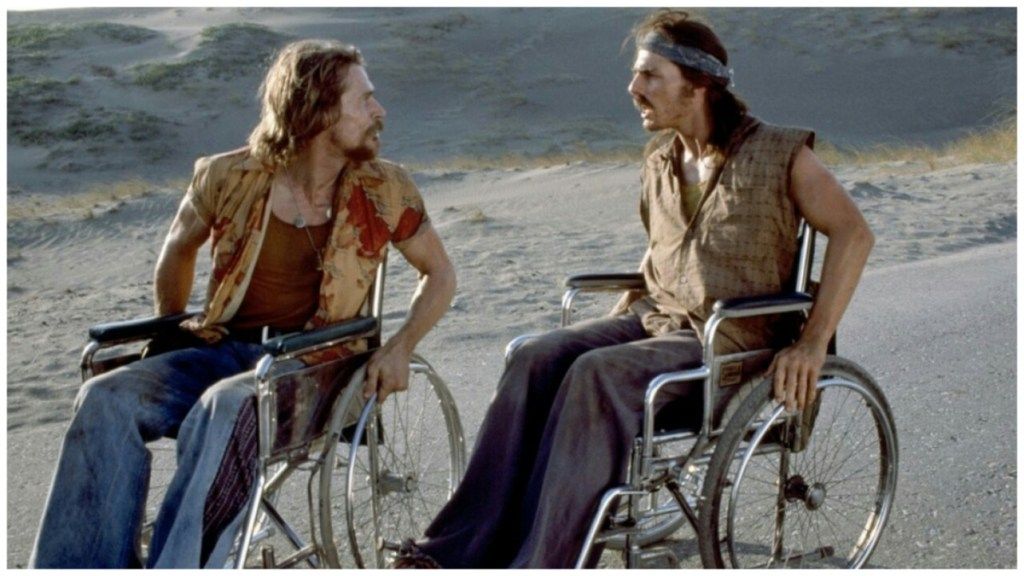
This would be the government that provides shabby hospitals, full of broken-down equipment, whacked out attendants and overworked, underqualified doctors.  Stone’s camera pans along wards piled with rubbish and rats. The conditions here are, in many ways, worse than the Mexican villa where Kovic finds himself struggling to re-adjust, surrounded by other paralysed veterans (among them Willem Dafoe, as a seemingly mentor-like figure with uncurdled rage just below the surface). Stone’s film never once loses its righteous fury at how a generation was let down by its leaders on every level.

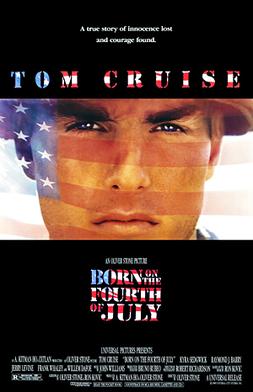
So it’s not surprising Born is a fiercely polemic work. And, yes, that does sometimes reduce its interest and make it an unrelentingly grim watch (Stone isn’t interested in putting any other side of the argument in here). But it’s extremely well made (Robert Richardson’s excellent photography uses tints of red, white and blue at key points to brilliantly stress mood) and you can feel the heart Stone (who won a second directing Oscar for this) put into it. Its impact comes down to how much you engage with the passionate, furious argument its making: connect with it and it’s a very powerful film.

Battleground (1949)

Battleground (1949)

Marvellously realistic, grunt’s-eye view of war, very well made and still carrying impact

Director: William A Wellman

Cast: Van Johnson (PFC Holley), John Hodiak (Pvt Jarvess), Ricardo Montalbán (Pvt Roderigues), George Murphy (Pvt “Pop” Stazak), Marshall Thompson (Pvt Layton), Jerome Courtland Pvt Abner Spudler), Don Taylor (Cpl Standiferd), Bruce Cowling (Sgt Wolowicz), James Whitmore (Staff Sgt Kinnie), Douglas Fowley (Pvt “Kipp” Kippton), Leon Ames (Chaplain), Herbert Anderson (Pvt Hansan), Denise Darcel (Denise), Richard Jaeckel (Pvt Bettis)

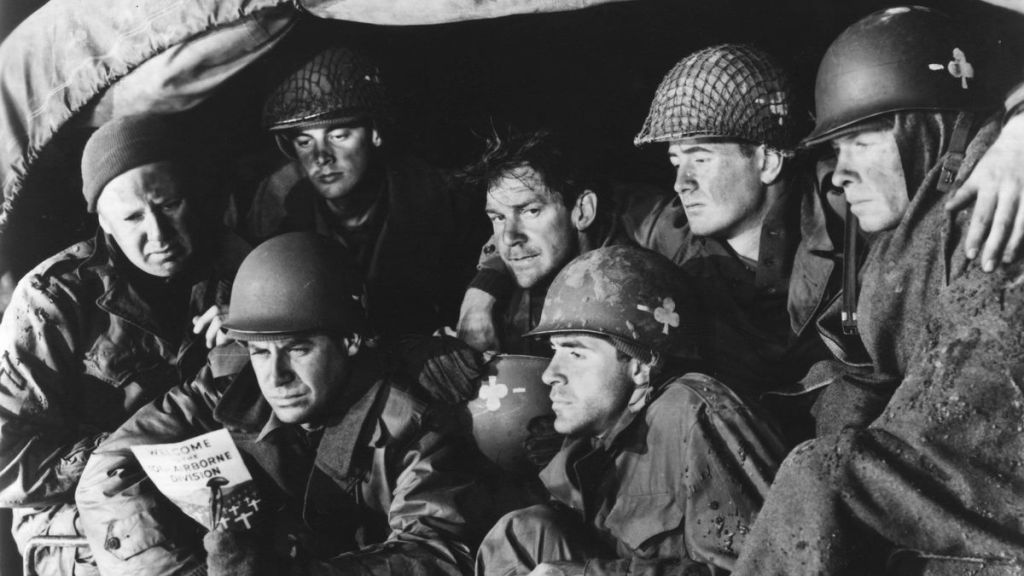
Apparently, the Hays Code would let bad language slide, if it was being used about War Heroes. Not many 40s film start with a credit crawl proudly calling its cast a bunch of bastards (in this case “the Bastards of Boulogne”). That’s our Battleground, the Battle of the Bulge, based on the experiences of screenwriter Robert Pirosh (who won an Oscar). Reflecting Pirosh’s experience, this is the Battle from the Grunt-eye-view, following a platoon of privates and sergeants pushed up from the rear to Bastogne, filling in the time between terrifying shelling and German advances, with grouching about everything from the food, to the lack of leave to the rotten army life.

As such, it’s not a surprise that Battleground proved a huge, multi-Oscar nominated hit (including Best Picture). Many in the audience surely saw their own war experiences reflected back at them: crappy rations, freezing cold fox-holes and the horrifying prospect of sudden death from the sky, that many American GIs knew from the war. Louis B Mayer believed the country was sick of war but producer Dore Schary persisted and was proved absolutely right.

It’s a film soaking in authenticity, that genuinely feels like it’s been filmed in the mist and snow covered chill of Boulogne rather than the sunny uplands of California (it’s cinematography won a deserved Oscar for Paul C Vogel). Director, William A Wellman, a decorated veteran from World War One, not only knew how soldiers thought, he was also grimly familiar with the mix of machismo, grit and terror on the front. Most of the cast were veterans, some only just out of uniform: and Battleground was the first film that put its cast through boot-camp to get them bonding like a company.

It’s a film rooted in the detail of army banter, with the same topics coming up time-and-again, in the distinctive language of the trenches. There is the insular togetherness of men who have seen a great deal of suffering and survived. Where a fellow soldier may get on your nerves but you’ll defend him to the death. The suspicion and dismissive attitude to replacement recruits until they have earned their chops. The delight in small moments of humanity also ring true: the Californian private thrilled at seeing snow for the first time, the protective way Van Johnson’s Private Holly guards and protects the eggs he’s dying to eat, the eager joy (and suppressed disappointment) when mail arrives (or fails to). These little touches make the characters feel real, their bonds feel lived in – and makes their moments of fear and panic all the more real.

And Battleground is perhaps unique in 40s war films for not judging soldiers when they show fear (in fact, when new recruit Layton confesses to being scared out of his wits, grizzled cynic Jarvess supportively congratulates him on joining a club everyone is a member of). When the men re-encounter Bettis, a man who ran at the first shelling, there is no judgement or condemnation towards him. After all, so many of them nearly did it themselves. All of them fear becoming a bleeding heap, sobbing for their mamas (as we see one of them do in a quietly affecting moment). Private Holly, our closest thing to a hero, twice nearly cuts-and-runs but both times circumstances and self-reproach see him disguise this with acts of bravery. Others may suspect the truth, but it’s what a man does that matters not why he does it.

Battleground gives a focus most war film never give. There are no generals, no sense of tactics or scale and precious little of the enemy. The Battle of the Bulge is a slog, sitting in a snow-filled pit trying not to die. Paranoia and fear is constant: news of German’s disguised as GIs lead to several awkward encounters, including a darkly funny scene of patrols demanding each other to name various pieces of American trivia to prove their bona fidas (even a senior officer). When they sit down to read the GI news, the men are mystified not only about who they are fighting (“Who is von Rundstedt?”) but even the name the press give the battle (“What’s the Bulge?”). Half of them have no idea where they are (opinion seems divided on Belgium or Luxembourg), few speak French and there is a sense that what the war is about matters less than surviving it.

Perhaps to combat this, in a potentially sentimental moment that Wellman and Pirosh manage to make feel uplifting, an army chaplin (well played by Leon Ames) assures the men ‘why they fight’ really does matter – and that if, later, people question the point of sending young Americans thousands of miles to die for strangers, then they know not of what they speak. In Battleground this sense of pride and honour, that what they are doing matters, is an essential battery recharge after weeks of freezing struggle: and it still carries real impact now, reflecting on what so many did for a cause larger than themselves.

Battleground’s cast is largely made up of MGM contract players seizing the opportunity to embody the sort of gritty, earthy parts so rarely available to actors serving in second-string roles or uninteresting leads in B-movies. Van Johnson’s Holly masks his fear with rumbunctious enthusiasm and exaggerated moaning. George Murphy gives a career-best turn as a determined veteran, ready to go home. John Hodiak’s Jarvess is a pillar of wisdom, Ricardo Montalbán’s Roderigues a burst of exuberant life. James Whitmore (Oscar-nominated) as Sergeant Kinnie practically defines Hollywood’s view of the grizzled, grouchy sergeant who secretly loves his men.

It all comes together very well and if Battleground feels overlong and even a bit repetitive at times, that’s to be expected considering it’s reflecting the experience of its characters. But there can be few 40s films as clear-eyed, realistic and unjudgmental about the pressures ordinary soldiers felt under extraordinary circumstances. That focused on the grim slog of surviving, over the glamour of conventional heroism in battle. And perhaps that’s why Battleground spoke to so many and feels so different.

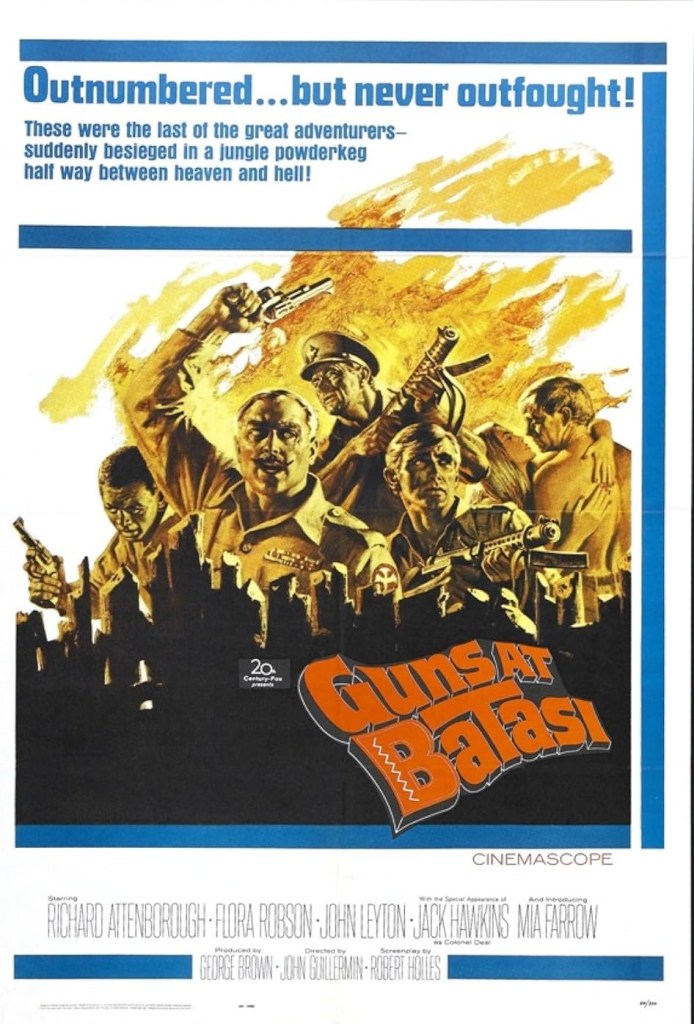
Guns at Batasi (1964)

Guns at Batasi (1964)

An excellent lead performance powers a solid film that slightly pulls it’s punches

Director: John Guillermin

Cast: Richard Attenborough (RSM Lauderdale), Jack Hawkins (Colonel Deal), Flora Robson (Miss Barker-Wise MP), John Leyton (Private Wilkes), Mia Farrow (Karen Eriksson), Cecil Parker (Fletcher), Errol John (Lt Boniface), Graham Stark (Sgt ‘Dodger’ Brown), Earl Cameron (Captain Abraham), Percy Herbert (Colour Sgt Ben Parkin), David Lodge (Sgt ‘Muscles’ Dunn), John Meillon (Sgt ‘Aussie’ Drake), Bernard Horsfall (Sgt ‘Schoolie’ Prideaux)

In the dying days of Empire, in an unnamed African nation, the British have agreed to a peaceful handover of power. Something that’s thrown out of kilter when an attempted coup takes place. That appals Regimental Sergeant Major Lauderdale (Richard Attenborough). His whole life has been keeping the peace in the colonies, making sure the mess is kept spick-and-span, drilling recruits, saluting portraits of the Queen and regretting he missed his chance to do his bit at Tobruk or El Alamein. A coup to him is nothing more than a mutiny, and harbouring the new overthrown government commander in the NCO’s mess from the troops looking to lynch him is both a matter of honour and (perhaps) a chance to fight his own little war preserving decency, honour and the British way.

Guns at Batasi is a fascinating slice of post-colonial film-making that succeeds as well as it does because it treats its lead character both as a sort of Blimpish moron and a tragic hangover whose Victorian principles are hideously out-of-step with the world around him. All of that is captured in Richard Attenborough’s rich, BAFTA winning, performance as he makes Lauderdale both faintly ridiculous (obsessed with neat collars, perfectly executed salutes and drill bullshit sitting) with an utter lack of interest in the world outside the parade ground and strangely likeable. He’s got a principled sense of right-and-wrong, a strangely affectionate regard for the soldiers he presses to the uttermost and an utter lack of cynicism or cruelty in his convictions.

It’s near career-best work by Attenborough, one well out of his wheel-house (at the time) of softly spoken eccentrics. In fact, he’s almost unrecognisable, transformed into a sort of walking bullet, rigid as his swagger stick and barking out his every utterance with a parade-ground bellow that emerges from a deep vocal bass. He’s a character soaking in absolute certainty, and Guns at Batasi gives him the dignity of letting him be both right and wrong without crowbarring in any moral judgement. Put bluntly, it trusts us to be intelligent enough to appreciate his determination to protect the lives of those under his care, just as we can feel uncomfortable at his parental attitude towards Africans.

Guillermin’s film places this bolted down man, absolutely certain of his understanding of the world, in two turmoils, one on-top of the other. Firstly, he’s the sort of bloke who wouldn’t have been out of place in the height of the Raj, barely able to believe that the British army (embodied by the decent, gentlemanly but subtly ineffective Colonel Deal expertly played by Jack Hawkins) doesn’t sweep everything before it anymore but has to negotiate with the locals. Secondly, he’s flung into the middle of a siege of the NCO’s mess, shepherding a mix of other sergeants, a young private (John Leyton) whose mocking 60’s swagger feels like he’s from a different planet and a painfully liberal visiting MP (Flora Robson) who feels Lauderdale is the problem not the solution.

Guns at Batasi builds its base-under-siege storyline very effectively, with Guillermin skilfully shooting a small set, interspersed with some well-staged action set pieces, not least Captain Abrahams (Earl Cameron) escape from his would-be lynch-mob. There is a neat sense throughout of a world pushing in on Lauderdale and his sergeants, from artillery pieces gathering on the lawn outside to an ever more searching series of questions for Lauderdale from the others about what exactly he thinks he’s preserving here. What’s well-handled about the film is you could see this as both Lauderdale making a stubborn stand that’s more about his pride than anything else, and a genuinely selfless noble attempt to save a persecuted man.

The film does slightly weight the deck in favour of Lauderdale. We warm to his witty sergeants-cunning to prevent the noble Abraham handing himself over to save lives (drafting a hugely wordy written order to do so, which he knows Abrahams will never stay conscious long-enough to sign). It’s hard not to sympathise with him, when the voice of liberalism is placed in the piously self-important lips of Flora Robson’s MP who insists, until she’s finally shown she’s terribly wrong, that coup lickspittle Lt Boniface (Errol John) isn’t the ruthless two-faced man-of-no-honour he so plainly is. It’s hard not to sympathise when Lauderdale tears Boniface off a titanic strip (a tour-de-force moment from Attenborough) or hard not to admire the professional pride in his duty to keep others safe.

If you could criticise the film, it gives less scope to putting into an explicitly critical viewpoint or giving much scope to Lauderdale’s probably less charming or attractive features. You could well imagine that, returning to Blighty, his attitudes could curdle into an unattractive ‘Britain First’ attitude. Sure, we are encouraged to see his obsession with perfectly ironed uniforms and the exact perfection of a salute as something quite silly. But he’s also a man who doesn’t question for a minute Britain’s inherent superiority or its right to dominate large chunks of the globe. But Guns at Batasi lacks a real character who challenges Lauderdale – even Leyton’s cheeky private ends up being adopted in an affectionate strict-fatherly way by the RSM, rather than someone who could really signpost Lauderdale’s relic nature or the potentially darker implications of his character. Just as the film treats the other sergeants lack of knowledge or interest in this country (right down to continually mis-pronouncing the local town as Battersea) as comedic rather than an insight into underlying complacent understanding as the world being a place run by and for the British.

But the film stands out as one of the best acting showcases Attenborough ever had, a swaggering role of bombast that he absolutely rips through while humanising it. There are great supporting turns from Horsfall, Herbert, Lodge and Mellion as wildly different types of sergeant and the film manages to be both quietly satirical, nostalgic and pack in some derring-do along the way. If it doesn’t quite manage to really seize on its potential, it’s still an interesting film.

HMS Defiant (1962)

HMS Defiant (1962)

Interpersonal conflict on the high seas, in this serviceable romp upon the high seas

Director: Lewis Gilbert

Cast: Alec Guinness (Captain Henry Crawford), Dirk Bogarde (Lt Scott-Padgett), Anthony Quayle (Vizard), Tom Bell (Evans), Murray Melvin (Wagstaffe), Maurice Denham (Dr Goss), Nigel Stock (Mdspman Kilpatrick), David Robinson (Mdspman Crawford), Bryan Pringle (Sgt Kneebone), Richard Carpenter (Lt Ponsonby), Peter Gill (Lt D’Arbly)

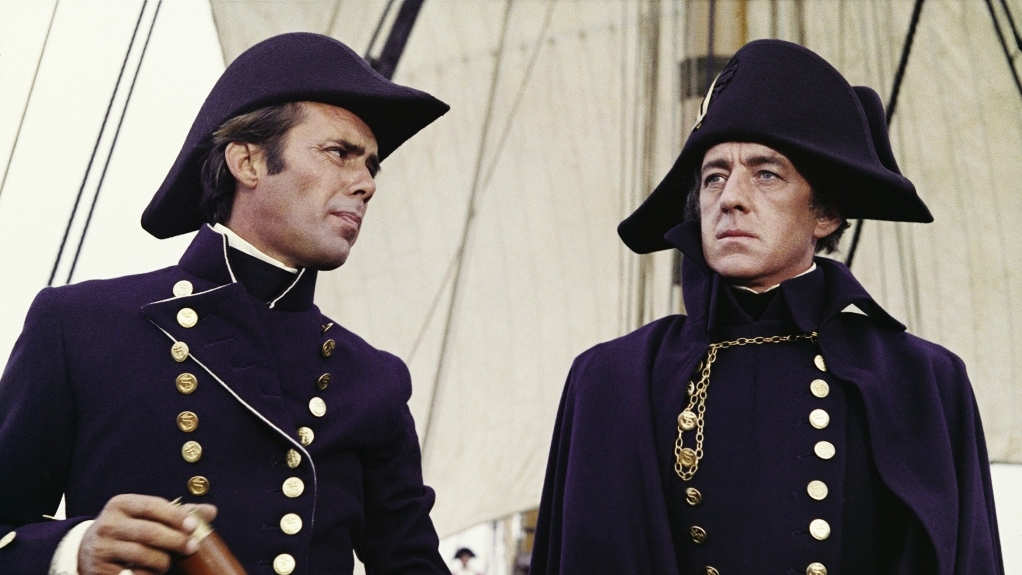
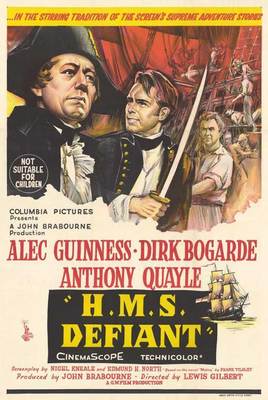
HMS Defiant, despite what its poster suggests, isn’t really non-stop rollicking adventures on the high seas. Instead, it’s about internal conflict: between officers and crew, between captain and first officer, between sailors and admiralty. In 1797, Britain is sailing into war with Napoleon and the press gang is seizing sailors off the streets. But no-one is getting paid fairly, something a proto-trade union of sailors led by Vizard (Anthony Quayle) is determined to sort out even if that involves mutiny. Mutinous thoughts abound on his ship Defiant, as stoic Captain Crawford (Alec Guinness) is engaged in a battle of wills with his ambitious and vicious first officer Lt Scott-Padgett (Dirk Bogarde), with Crawford’s son (a young midshipman on board) caught in the middle and paying a heavy price.

Interestingly, both of its two leads would probably have preferred it if the film had sunk to the bottom with trace. Guinness considered it one of the worst films he was involved in, while Bogarde saw it as little more than a pay cheque with sails, the sort of box-office he needed to do to pay for films like Victim. That’s harsh on a perfectly serviceable slice of Forrester-inspired nonsense, the sort of film that has become a staple of Bank Holiday TV. There is nothing wrong with HMS Defiant (God knows you’ll see a lot worse) and if it’s not inspired, it’s also not a disgrace.

It’s competently assembled by Lewis Gilbert, who ticks off the various nautical boxes with aplomb. Over the course of the film we get multiple floggings, a man falling from the yardarm (an all-too-obvious dummy), sails puffed with wind, cannon-firing action against the French, an amputation, cutlass-shivering feuds, grumbling below decks and a parade of fists slammed into hands behind backs. Everything you have grown to expect from Hornblower is here, all put together with an assured professionalism that means you are never anything less than entertained.

The action, when it comes, as ship goes against ship, is actually less interesting than the complex inter-personal dynamics on board. It’s perhaps one of the most interesting films in presenting a Naval ship as an insular little world, a sort of boarding school on the seas, with head boys and scroungers. At its heart is the clash between two potential headmasters: Alec Guinness’ decent Crawford, who leads through a sort of unimpeachable example of British reserve, and Bogarde’s Scott-Padgett a charismatic bully who is basically a sort of Flashman of the Seas.

They both have very different ideas of what the boat should be. Crawford sees it as a tool to deliver the Admiralties orders, with everyone fitting perfectly into their assigned role and never for a moment thinking outside it. Scott-Padgett sees it as an opportunity for social climbing, who feels since he’s uniquely special the rules shouldn’t apply to him and will go to all manner of petty ends to get what he wants, not giving a damn who gets hurt. Crawford would govern with a firm but fair hand, letting a cross word communicate his displeasure. Scott-Padgett walks around deck with a coiled rope in his hand to literally whip the sailors on, handing out thrashings like their going out of business.

He’ll also pick on the vulnerable, roping bullies like Nigel Stock’s ageing senior midshipman (a man who reeks of failure) to hand out beatings to those who can’t protect themselves. And, like the sort of unpleasant reader of men he is, Scott-Padgett works out the Captain’s pressure point is to line up Crawford’s son for as many beating as possible and subtly threaten more unless he basically gets his way on the ship. It’s a sort of under-hand dealing that the decent Crawford is totally unprepared for, a complete disregard for form and rules of conduct that’s outside of his experience.

It’s telling that Crawford has more in common with Vizard. Anthony Quayle, in the film’s finest performance, is cut from the same cloth: a reasonable man with a sense of fair play who feels a petition and a careful argument placed to the Admiralty will get everything he wants with no chance of violence rearing his head. It’s not that much of a stretch for the audience to guess he might be wrong, not least because his number two is the increasingly bitter, class-conscious Evans, played with a surly mean streak by Tom Bell. Not least since the quick to anger Evans is also happy for other men to take the rap for his actions and never considers anyone’s needs but himself. Vizard’s number two shares more than a few characteristics with his bête noire Scott-Padgett (one of many ways Vizard and Crawford are alike).

It leads to an inexorable show-down, with Bogarde’s patrician contempt and self-satisfied assurance like a red rag to everyone he encounters. (You could say HMS Defiant is an interesting warm-up for Bogarde before he tackled the satanic butler in The Servant). Guinness fares less well, probably because he has a much less delicious part, all to clearly struggling to raise any interest in the character he’s playing (HMS Defiant is one of the best examples of Guinness on terminally-bored autopilot, rarely stirring himself to do anything other than go through the motions).

But it’s still an entertaining film, in a Sunday afternoon sort of way (the exact time I watched it). There is something endearing about the sailors’ naïve plans to win their rights, just as there is something wonderfully pantomimically hissable in Bogarde’s odious lieutenant, a lovely embodiment of upper-class entitlement that literally makes every situation worse. Sure, nothing is re-invented, but as a vessel for some interesting character beats and some serviceable naval action, it more than holds water.

Sergeant York (1941)

Sergeant York (1941)

Patriotic flag-waver with a great performance from Cooper and plenty of genuine heart

Director: Howard Hawks

Cast: Gary Cooper (Alvin C. York), Walter Brennan (Pastor Rosier Pile), Joan Leslie (Gracie Williams), George Tobias (“Pusher” Ross), Stanley Ridges (Major Buxton), Margaret Wycherly (Mother York), Ward Bond (Ike Botkin), Noah Beery Jr. (Buck Lipscomb), June Lockhart (Rosie York), Dickie Moore (George York), Clem Bevans (Zeke), Howard Da Silva (Lem), Charles Trowbridge (Cordell Hull)

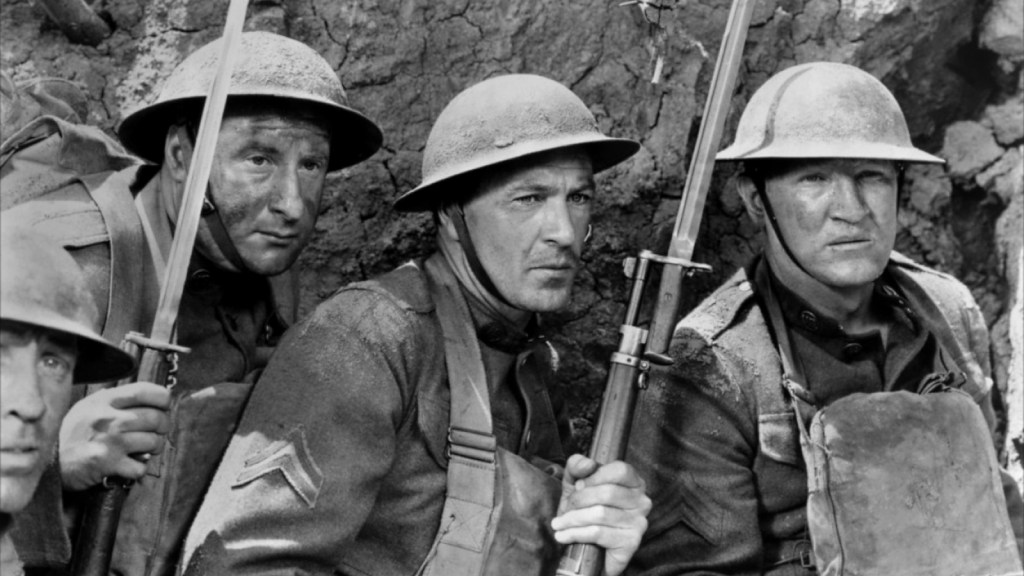
In 1941, after Japanese bombs landed on Pearl Harbor, America needed patriotic big-screen heroes. Few stood out more than Alvin York. A young man (over ten years younger than Gary Cooper) who had lived a youth of drunken rough-and-tumble before he found the light. When America joined the First World War, the 30-year-old York was called up. A gifted sharp-shooter, York was perfect for soldiering – but had to wrestle with his conviction to stick to the Commandments from the Good Book. Finding a solution to his moral quandary, York fought in France where his sharp-shooting instincts saw him almost single handedly capture a German machine gun embankment and 132 Germans (it’s an achievement that sounds pure Hollywood, but is in fact entirely true).

It’s an inspiring hero story that Warner Brothers bought to the screen at the perfect time, it’s release seeing tales of streams of young men walking from the cinema straight to the enlistment office. Producer Jesse L Lasky spent no less than twenty-two years attempting to persuade the notoriously publicity-shy and modest York (just as in the film, the real York couldn’t wait to leave the glitz and glamour of his triumphant homecoming behind and return to his fiancé, farm and work with the Church) to grant him the film rights to his life. York agreed only with the advance of Hitler, a hefty payment to his Church and a promise that no-less than Gary Cooper would play.

Cooper was reluctant – pointing out he was far too old to play this national hero – but really no other actor could have done it. Cooper won his first Oscar for the role, and it’s his understated sincerity and decency that really sells the film. He turns what could otherwise by a potentially cloyingly perfect man into someone utterly sympathetic and endearing. There is an aw shucks quality to Cooper, as he captures York’s modesty, his shrugging off his accomplishments as no more than his duty, his palpable discomfort with attention (be it from congressmen or his fellow Tennessee farmers commending his shooting) and a deep-rooted genuineness in his love for his beau Gracie (Joan Leslie giving a commendable performance of endearing brightness that helps you overlook she was 24 years younger than Cooper – thankfully she doesn’t look it).

Cooper’s performance powers a sprightly, very enjoyable film by Howard Hawks (who picked up his only Oscar nomination for this) that manages to transcend the danger of being an overbearing flag-waver. (Don’t get me wrong though – this film waves the flag so much, you can practically feel the strain in its arms). Hawks produces a film that in many ways owes as much to The Adventures of Robin Hood as an heroic All Quiet on the Western Front. Despite the patriotic focus being the final few Acts, as York carries out his act of astonishing heroism, the film’s real heart is in the opening half and the conversion of a man who is never-too-naughty into one who casts aside the demon drink, works hard to earn what he has, and puts his faith and the good of others before his own concerns.

Hawks shoots this part of the film with a palpable energy and a rough-and-tumble sense of humour. It’s there from the film’s opening as Walter Brennan (in a role he invests with all his wheezy, twinkly dignity) finds his sermon constantly interrupted by the gunplay of the drunken York and his buddies. There is a light humour when Margaret Wycherly – a little too ethereal for my taste as York’s saintly mum (although her casting does make York and White Heat’s Cody Jarrett siblings) – archly observes that, even when drunk, her son’s accuracy with a shooter is second to none. That’s the skill of Sergeant York there: in it’s end is it’s beginning, York is already deeply skilled and as his slightly embarrassed reaction shows when he sobers up, reformation is not a long journey.

A large part of the success is making York one of us. Striving to save the money he needs to buy the farmland of his dreams, Hawks provides a sweet montage of York undertaking no end of backbreaking, thankless work and returning home to tick off his slowly accumulating dollars under the smiling approval of Ma. When, after all his work, he finds the land has nevertheless been sold (because the owner never believed this previously idle lush could hold on to his hard-earned pennies), his outrage at the breaking of another man’s word is a clarion call to all of us who have played by the rules and been shafted. When his conversion comes, it’s not as out-of-the-blue as it could seem, but a logical conclusion for a journey we’ve watched him go on.

It’s undercut with scenes that drip with Hawksian skill. A marksmanship competition is crammed with a playful Robin Hoodesque skill. A bar-fight that the drunken York gets wrapped up in is so full of comedic tumbles and prat falls it’s hilarious. York’s constantly being fetched for various tasks by his kid brother is expertly played for subtle laughs. Alongside this, the romance between York and Gracie (and the off-screen slapping he hands out to a rival who treats her with disrespect) is beautifully handled.

The only real Hawksian touch missing is that little slice of cynicism, that ability to look under the skin of a legend (like with Wayne in Red River) and see a more flawed person. York basically is perfect, and in a film dripping with patriotism there can’t be any fault with either the army or the moral question of whether gunning down your fellow humans is alright in the service of your country. There is a version of Sergeant York where his commanding officer’s invitation that he take some time and read his way through the history of America (a replacement good book) was an act of naked manipulation of a guileless man. Or where we see the sort of guilt at his taking of life that the real York felt, play out across Cooper’s face. There’s none of that here.

In fact, after the vibrant, playful, heartfelt first few acts, you feel Hawks felt less interested in the war itself. There is a functionality about the final acts of Sergeant York as York aces his shooting tests on the range (although the flabbergasted reaction of his training officer and York’s apologetic manner at his failure to only manage five dead-on bulls-eyes on his first time using an army-issue rifle are funny). Hawks spices it up with York’s turkey-shoot metaphor, and a warm supporting turn from George Tobias (as a New Yorker soldier) and York’s gobble-gobbles to distract his German opponents. But, for all the realism of the trenches, there is an air of duty about this sequence.

But then Sergeant York works not because of the deed, but the man. And the film’s success in investing us in a man who could very easily have been all-too-perfect, in a playful and energetic first half works wonders. With a very fine, perfectly judged performance by Gary Cooper, this may not be Hawks most characterful work – but as the sort of film to showcase a man who inspires you to achieve acts of heroism, it hits the target perfectly.

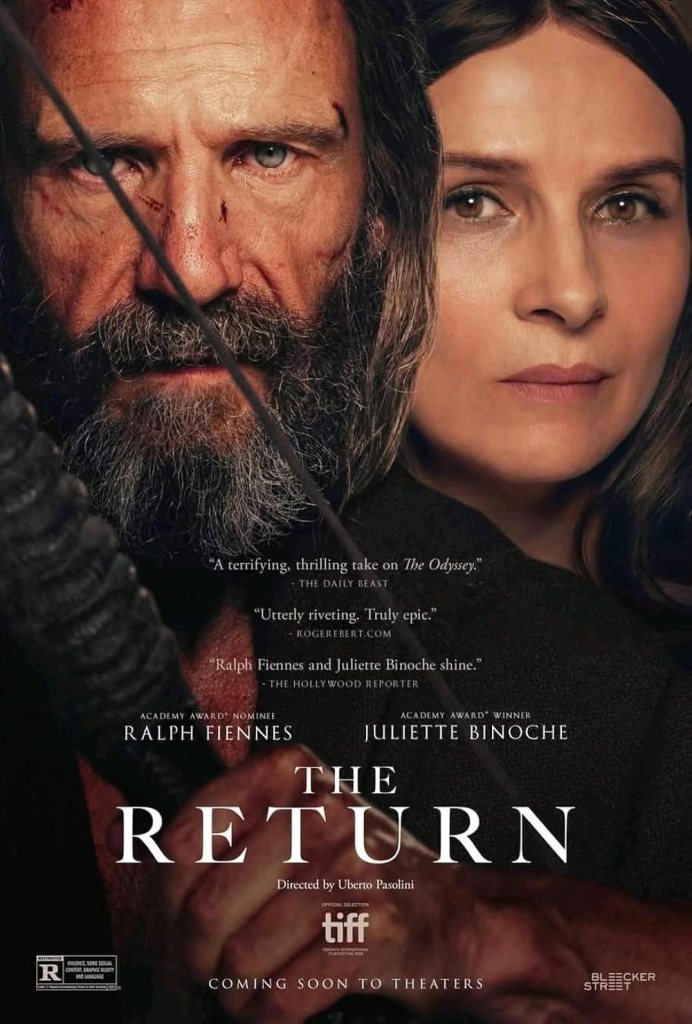
The Return (2025)

The Return (2025)

The Odyssey retold as an exploration of trauma and guilt in a rich and rewarding film

Director: Uberto Pasolini

Cast: Ralph Fiennes (Odysseus), Juliette Binoche (Penelope), Charlie Plummer (Telemachus), Tom Rhys Harries (Pisander), Marwan Kenzai (Antinous), Claudio Santamaria (Eumaeus), Ayman Al Aboud (Indius), Amir Wilson (Philoetius)

War can tear your soul apart, even if it’s become an ancient clash of legend: the memory of the deeds you did and the lives (both friend and foe) you left behind can haunt you. The pain of guilt and trauma swims behind the expressive eyes of Ralph Fiennes’ Odysseus in this unique adaptation of Homer’s famous tale of the longest journey home. A version that, as the title suggests, jettisons the journey itself (along with all those Gods) focusing instead on the spiritual journey a soul must take to come-to-terms with things seen and done and to face the consequences on those left behind. Pasolini’s film does this with expressive, melancholic beauty, bringing a unique vision to a story told many times before.

A shipwrecked Odysseus is washed, naked, up on the shore of his kingdom of Ithica – although its heavily implied this is an accident as he is clueless at first to where he is. In fact, lying naked on the beach, suggests the cunning old warrior has in many ways been born again: this time to face the pain of those he left behind. That doesn’t just include his wife Penelope (Juliette Binoche) waiting fruitlessly for years for word of his whereabouts, but also his bitter son Telemachus (Charlie Plummer) who deeply resents his absent father. It’s also the people of his kingdom, now poor and ravaged, the cream of a generation lost under his leadership, the island pillaged by a parade of cruel suitors for Penelope desperate to claim the kingdom. So great is Odysseus’ guilt he continues to conceal his identity – perhaps worried as much at confronting the truth about himself as he is the myriad people on the island with reason to hate him.

The Return replays Homer as an exploration of war trauma and PTSD. In many ways it has more in common with William Wyler’s The Best Years of Our Lives than Wolfgang Petersen’s Troy. No matter the era, it’s never easy for warriors to find a place in a world of peace they left far behind. Powered by a deeply affecting, sensitive performance from Fiennes, The Return centres a man beaten down by shame and regret, barely able to look others in the eye. This is the lasting impact of conflict. While the war at Troy is already being mythologised by the young, Odysseus’s stories focus on the ordinary citizens of Troy, who longed for peace and met their end in fire and blood. Fire and blood, what’s more, that he visited upon them.

Mix that in with the constant memory of the boatloads of Ithica’s finest young men, who have not returned with him, their souls lost in conflict and at sea. No wonder Odysseus feels solely tempted to forget himself, to become just another anonymous beggar. The Return is the tragedy of an incredibly smart, cunning man shamed that his gifts are harnessed best for death and destruction. In battle he is ruthlessly efficient, using the strengths of others against them, constantly identifying every possible advantage.

It’s a fate that he – and Penelope – fear may absorb their son. Telemachus, played with a frustrated petulance by Charlie Plummer, has watched his father’s kingdom fall apart, felt abandoned by both his parents (one to war, the other to stoic silent) and straining at the leash to do something to prove himself. If that means testing how far the parade of Penelope’s suitors will go, so be it – even if their patience with this boy becoming a man is wearing fatally thin. Tension hangs over The Return: will Telemachus follow in those footsteps Odysseus so bitterly regrets – will violence consume the next generation as much as the first?

What it will do is leave more victims behind. Juliette Binoche – with an instinctive chemistry, gives a deeply humane but fascinatingly cryptic performance – simmers with the never-ending pressure of trying to keep home and family together, very aware her own home is now awash with dangerous men she can only just control. Binoche is a tight-wound bundle of tension, suppressed fear and unacknowledged anger at her betrayal. This is a woman clinging to hope of her husband’s return, as it offers the only escape from the trap he has left her in – and if that means forcing his hand so be it.

Ithica has become a ragged island. Pasolini’s visuals for the film, influenced by Baroque artwork in its parade of barely-clothed nudes in rural settings and run-down classical wrecks, not only look gorgeously artful but successfully conveys the impression of a kingdom on its last legs. With everyone thinly clothed and living in shacks, Odysseus’ palace crumbling and lives being cheaply taken whenever the suitors fancy, it’s clear the world he left behind has disintegrated. The suitors are largely a gang of louts, increasingly fed-up with waiting (‘This fuckin’ place!’ Tom Rhys Harris’ Pisander petulantly whines at one point after getting lost in a futile chase through the maze-like woodland). They are fragilely led by Marwan Kenzai’s Antinous, whose tragedy is that he genuinely loves Penelope. In another life, indeed, you can imagine him making a considerate and kind husband if unreturned affection hadn’t made him bitter.

These ideas and concepts bring a fresh vision to The Odyssey, grounding this adaptation in a world of post-traumatic guilt and the horror of violence, devoid of gods and monsters. Fiennes, his body muscled up like a burnt and tanned roll of taut rope, is a warrior struggling against awakening. We all know eventually he will of course – but the enormous psychological burden of once again using your wit and ingenuity to efficiently slaughter other people is always palpable. It doesn’t matter if the targets ‘deserve’ it: the psychological damage remains the same.

The Return explores all the subtly, with beautifully measured performances from Fiennes and Binoche and impressive supporting turns not least from Claudio Santamaria as Odysseus’ old servant, shrewdly aware of his master’s identity earlier than he admits and determined to rouse the king to take responsibility for his actions. Sombre, wonderfully filmed and a compelling reimagination of the myth, it’s a unique view of Greek mythology that carries real emotional impact.

The Alamo (1960)

The Alamo (1960)

Wayne’s historical epic is a mediocre labour-of-love that takes a very, very long time to get to its moments of interest

Director: John Wayne

Cast: John Wayne (Col Davy Crockett), Richard Widmark (Col. Jim Bowie), Laurence Harvey (Col. William Barrett Travis), Richard Boone (General Sam Houston), Frankie Avalon (Smitty), Patrick Wayne (Captain James Butler Bohham), Linda Cristal (Graciela), Joan O’Brien (Sue Dickinson), Chill Wills (Beekeeper), Joseph Calleira (Juan Seguin), Ken Curtis (Captain Almaron Dickinson), Carlos Arruza (Lt Reyes), Hank Worden (Parson)

John Wayne believed in America as a Shining City on a Hill and he wanted films that celebrated truth, justice and rugged perseverance. To him, what better story of fighting against all odds and to the bitter end for liberty, than the Battle of the Alamo? There, in 1836, a few hundred soldiers and volunteers from the Republic of Texas bravely stood before an army of over two thousand Mexicans to defend the Texas Revolution’s independence from Mexico. Wayne put his money where his mouth was, pouring millions of his own dollars into bringing the story to the screen. Furthermore, he’d direct and produce himself, convinced only he could protect his vision.

The end result isn’t quite the disaster the film has gained a reputation for being – nor is Wayne’s directorial efforts as useless as his detractors would like. But The Alamo is a long, long slog (almost three hours) towards about fifteen minutes of stirring action, filled with pages and pages of awkward speechifying, hammy acting and painfully unfunny comedy. While a bigger hit than people remember, Wayne lost almost every dime he put in (he said it was a fine investment) and even a muscular series of favour-call-ins that netted it seven Oscar nominations (including Best Picture!) couldn’t disguise that The Alamo is a thoroughly mediocre film that far outstays its welcome.

Wayne collaborated closely with his favourite writer, James Edward Grant. Both had a weakness for overwritten speeches and there is an awful lot of them in The Alamo’s opening half as we await the arrival of the Mexicans. Wayne gets several speeches about the glories of the American way such as (and this is cut down) “Republic. I like the sound of the word…Some words can give a feeling that makes your heart warm. Republic is one of those words” or a musing on duty that takes up a solid five minutes (it’s ironic Widmark’s Bowie refers to Harvey’s Travis as a long-winded jackanapes, since Wayne’s Crockett has them both beat).

There is only so much portentous, middle-distance-starring talk one can take before you start twitching in your seat, even for the most pro-Republican viewer. With complete creative control, there was no one to tell Wayne to pick up the pace and trim down these scenes. So enamoured was Wayne with Grant’s dialogue, whole scenes are taken up with the Cinemascope camera sitting gently in rooms watching the actors pontificate about politics, strategy and duty at such inordinate length you long for the Mexicans to damn well hurry up.

For a film as long as this, there is an awful lot of padding. The first hour shoe-horns in an immensely tedious romantic sub-plot for the increasingly-long-in-the-tooth Wayne (who had been playing veterans for almost 15 years by now) with Linda Cristal’s flamenco-dancing Mexican. We know she’s a hell of a dancer, since we get several showcases for her toe-tapping skills as Crockett’s Tennessee volunteers wile away the evenings. There is a sexless lack of chemistry between Wayne and Cristel, re-enforced by Crockett’s gentleman-like rescuing of Cristel from a lecherous officer, and the whole presence of this sub-plot feels as like a box-ticking exercise to appeal to as many viewers as possible as does the casting of young heart-throb Frankie Avalon in a key supporting role.

This is still preferable to the rather lamentable comic relief from a host of Wayne’s old muckers, playing a collection of Good Old Boy Tennesse volunteers. These jokers swop wise-cracks, prat-falls, good-natured fisticuffs, but (inevitably) also drip with honour and decency. Chief among them is Chill Wills as Beekeeper, a scenery-chewing performance of competent comic timing that inexplicably garnered Wills an Oscar nomination. Wills made real history with an outrageously tacky campaign for the golden man, shamelessly publicly pleading for votes and including a full-page Variety advert (‘The cast of The Alamo are praying harder than the real Texans prayed for their lives in the Alamo for Chill Wills to win!’) that even Wayne denounced as tasteless.

Wayne believed the real Oscar nominee should have been Laurence Harvey as ram-rod stickler-for-form Colonel Travis, commander of The Alamo. He’s probably right (if you were going to honour anyone here), as Harvey’s abrasive style and stiff formality was a good fit for the role and he turns the brave-but-hard-to-like Travis into the most interesting character. He’s more interesting than Widmark’s rough-and-ready Bowie, who looks uncomfortable: he would have been better casting as Crockett. That role went to Wayne, after investors said his presence in a lead role was essential for the box office (reluctant as Wayne was, he still cast himself in the most dynamic, largest role).

There are qualities in The Alamo – and they are largely squeezed into the final thirty minutes as the siege begins in earnest. This sequence is very well done, full of well-cut action and shot on an impressive scale. The money is certainly up-on-the-screen – The Alamo built a set only marginally smaller than the actual Alamo and recruited a cast of actors not too dissimilar from the size of the actual Mexican army. (The only nominations The Alamo deserved were related to production and sound design, both of which are impressive). The relentless final stand is undeniably exciting – whether it’s worth the long wait to get there is another question.

The Alamo largely avoids vilifying the Mexicans. Their commanders may be little more than extras, but Wayne’s was aware that in the Cold War, allies were crucial so the film is littered with praise for the bravery, courage and honour of the Mexicans as battle rages (‘Even as I killed ‘em, I was proud of ‘em’ one volunteer muses). However, in many ways, The Alamo is incredibly simplistic and naïve about American history – especially the ‘original sin’ of slavery, the banning of which in Mexico was one of the main reasons for the Texans revolt. It’s hard not to feel it’s a bit rich for Wayne to make a big speech about freedom, when Crockett and co were literally laying down their lives for the Texan Republic’s right to keep slaves. The only slave in the film is so overwhelmingly happy with Bowie, he literally refuses his freedom and lays down his life to protect his master.

But then that’s because The Alamo is a proud piece of propaganda, celebrating a rose-tinted view of American History that avoids complexity and celebrates everyone as heroes. It’s not the disaster you might have heard about. It has its moments. But its still a dull, tedious trek.

The Lives of a Bengal Lancer (1935)

The Lives of a Bengal Lancer (1935)

Old-school adventure mixes with some slightly dated Imperial attitudes in a film that’s still good fun

Director: Henry Hathaway

Cast: Gary Cooper (Lt McGregor), Franchot Tone (Lt Forsythe), Richard Cromwell (Lt Stone), Guy Standing (Colonel Stone), C. Aubrey Smith (Major Hamilton), Douglass Dumbrille (Mohammed Khan), Monte Blue (Hamzulla Khan), Kathleen Burke (Tania Volkanskaya), Colin Tapley (Lt Barrett), Akim Tamiroff (Emir), J Carroll Naish (Grand Vizier)

Tales of adventure and derring-do in the British Empire were meat and drink for generations of schoolboys. Few adventures were as well known as The Lives of a Bengal Lancer, a stirring tale of three lieutenants in the Bengal Lancers who become fast friends while defending Queen and country. We’ve got decent, impulsive but luckless McGregor (Gary Cooper), upper-class joker Forsythe (Franchot Tone) and eager-to-please Stone (Richard Cromwell), whose also the son of commanding officer Colonel Stone (Guy Standing). They go up against Oxford-educated Mohammed Khan (Douglass Drumbille), who schemes to seize an ammunition shipment. Can our heroes face down dastardly natives, exotic tortures and desperate escapes? All in a day’s work for a Bengal Lancer.

The Lives of a Bengal Lancer was a big hit on release, despite sharing nothing except the title, location and general theme with the semi-autobiographical novel from former-lancer Francis Yeats-Brown. It’s rollicking adventure and the boys-own mateyness of its leads, sparked a wave of spiritual follow-ups set everywhere from the Canadian mountains to the deserts of Africa. It scooped seven Oscar nominations and was celebrated as one of the greatest adventures on screen. Unfortunately, it’s not as fondly remembered now with its uncritical celebration of colonial India, spiritual links to Kipling’s White Man’s Burden and the fact Hitler of all people named it his one of his favourite film, loving its celebration of how a few white men could ‘protect’ (control) millions of natives.

It’s fair to say you have to close your eyes to some of this stuff when watching The Lives of a Bengal Lancer today. Otherwise you might flinch at our heroes threats to various squirming, cowardly Islamic rebels that if they don’t confess they’ll be sown inside a pig skin (even in 1935, outraged questions were raised about this in Parliament). You need to roll with Douglass Drumbille blacking-up as the well-spoken Mohammed Khan (not just him: nearly all the Indian characters are men-in-face-paint and for good measure our heroes also black-up to disguise themselves). There isn’t a second’s questioning about the morality of Empire and the implicit suggestion runs throughout that the Indian people should be grateful the British were there to run their country for them.

But put all that to one side, and The Lives of a Bengal Lancer is still rather fun. One of the factors making it easier to bench your misgivings is that, really, this film isn’t really interested in India or the themes of Empire anyway. For starters, all three of our heroes are played by Americans making no effort to hide their transatlantic accents (McGregor is suggested as being ‘Scotch Canadian’, but a few words of Cooper’s awful Scottish accent makes you relieved he didn’t bother to keep it up). Any insight into British-Indian relationships is extremely brief. The film is clearly shot in California, in locations identical to the sort of Westerns Hollywood was churning out. And a Western is what Bengal Lancer really is.

Our three heroes do feel more like cowboys shooting the breeze for large chunks of the film rather than army officers. Although there have been criticisms of the leads – Cooper in particular, probably because an actor so iconically American feels strange as an oddly accented Brit – all three of give entertaining, complementary, performances. Cooper is strongly charismatic, rather charming in his earnest attempts to do the right thing and his luckless incompetence at anything that isn’t soldiering (a running joke sees him building up increasing tab in a series of ill-considered bets with the good-at-everything Forsythe). But when action comes calling, McGregor is courageous, quick thinking and selfless. It’s immediately clear why Cooper essentially replayed versions of this relatable role several times. Franchot Tone is equally fine as the witty, smooth Forsythe who never takes anything seriously until things are really serious. Cromwell does sterling work as the naïve Stone.

Most of the film works because we end up liking these three characters – just as well since most of the first half is essentially watching them go about their daily tasks: riding, cleaning horses, heading out on patrol, shooting the breeze in the barracks. There is a small character-led crisis over whether the ram-rod Colonel Stone (a suitably dry Guy Standing) will accept his puppy of a son, but the biggest action drama in the first half is a wild boar hunt that nearly goes terribly wrong. If we didn’t enjoy Forsythe and McGregor deliberately rubbing each other up the wrong way, between teasing and taking a big-brother interest in Stone, we’d struggle to enjoy the rest of the film.

The second half is where the real action kicks in. During a dinner where our heroes dress up in native garb to make nice with a local Emir, Bengal Lancer throws in a bizarre Mata Hari figure, in the mysterious Russian Tania (Kathleen Burke). It’s not a remote surprise she ends up being no-good, or that the disillusioned Stone is swiftly honey-trapped into imprisonment by Dumbrille’s vaguely-motivated smooth-talking villain (it’s hilariously ironic that the villain is the most cut-glass Brit in the film). McGregor and Forsythe don Indian disguise – against orders naturally – to do what men do, which is stand by their friends.

A parade of exciting set-pieces follow thick-and fast, culminating in an impressively staged battle with towers toppling in explosives, machine gun fire spattering left-right-and-centre and our heroes literally coming to blows over who gets to make a heroic sacrifice. We get there via dastardly torture – Bengal Lancer coined the famous “We have ways of making men talk line” – as Mohammed Khan employs bamboo sticks under the fingernails (thankfully shown largely in shadow and Cooper’s stoic grimaces) to get information from our heroes. It’s all part of these men being forged by fire into exactly the sort of hardened men-of-combat we need to protect a frontier.

The Bengal Lancers ride in towards the end like the cavalry, and the air of a Western in Red Coats sticks with Lives of a Bengal Lancer throughout. Sure, it combines this with the stench of White Man’s Burden and an attitude of edgy distrust of foreigners, but The Lives of a Bengal Lancer is also riotous, old-fashioned fun, well shot and charismatically played. It might be a rather slight action-adventure fable, and sure its politics have not aged well, but it is still fun.