Category: World War II

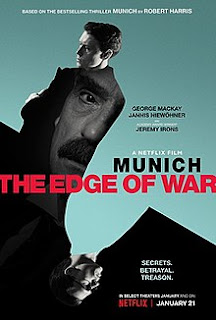
Munich: The Edge of War (2021)

Munich: The Edge of War (2021)

The backstory of history’s most famous empty promise is explored in this solid historical drama

Director: Christian Schwochow

Cast: George MacKay (Hugh Legat), Jannis Niewöhner (Paul von Hartmann), Jeremy Irons (Neville Chamberlain), August Diehl (Franz Sauer), Liv Lisa Fries (Lena), Sandra Hüller (Helen Winter), Alex Jennings (Sir Horace Wilson), Ulrich Mathes (Adolf Hitler), Anjli Mohindra (Joan), Jessica Brown Findley (Pamela Legat), Mark Lewis Jones (Sir Osmond Cleverly)

It’s 1938 and Hitler (Ulrich Matthes) wants the Sudetenland in Czechoslovakia. Will the British and French say no? The danger is, if they do, it will lead to a war only Germany is ready for. War is feared by Prime Minister Neville Chamberlain (Jeremy Irons), who remembers the horrors of the trenches. So, he flies to Munich to make a deal with Hitler. While there, a member of the British legation Hugh Legat (George MacKay) is contacted by an old friend, Paul von Hartmann (Jannis Niewöhner), a German diplomat now extremely disillusioned by the brutal Hitler regime.

Schwochow’s film is a handsomely mounted film version of Robert Harris’ best-selling thriller. Lots of critics called it a “What if” history film, which pretty much suggests people don’t understand what that term means. The film presents a pretty much a faithful (if compressed) version of the Munich talks, rather than some sort of alternative history. What makes it different is the revised angle it takes on Chamberlain – spiced up with a fictional plot about young diplomats trying to bring down Hitler.

Played with an avuncular, praetorian charm by a perfectly-cast Jeremy Irons, Harris book (and this film) presents Chamberlain not as a naïve idiot, duped by Hitler, but a man very much aware of the nature of his opponent, but who felt duty bound to do everything he could to safeguard peace. Chamberlain speaks with real emotion of the loss of a whole generation in the trenches and his fear that Britain is not ready for another war. Sure, Irons’ Chamberlain can also be arrogant and blinkered, convinced of his own cunning shrewdness, but he’s willing to risk his reputation for peace.

What he’s willing to sacrifice of course are the Czechs – and the film doesn’t give a lot of time (if any) to this screwed nation, that saw huge parts of its country split off and handed over to an aggressive power. The film would have been richer with more content around the debates and discussions at the conference and giving more time – as the novel does – to understanding Chamberlain’s strategic thinking. The film implies Chamberlain’s infamous bit of paper was his effort to clarify where blame for eventual war would lie – but it doesn’t allow us to understand more about what Chamberlain initially intended to gain from the conference or when he decided that he was unlikely to win any concessions from Hitler. We never see a moment of the negotiations, which seems a waste for a film that was designed to re-evaluate Chamberlain.

That’s partly because the film, like the book, gives a lot of time to its fictional plot. And like there, never seems to make this seem as vital or interesting as the historical storyline. Perhaps because, while the Munich storyline presents us with something we’ve not seen before, the fictional storyline feels familiar and derivative. George MacKay and Jannis Niewöhner do good work as slightly naïve young men who feel they can change the world, if they find a way to apply pressure at the right moment. But they feel like narrative devices to spice up the history, to throw in a bit of light espionage and peril to stop it being a film about a conference.

But everything feels familiar: clandestine meetings in crowded bars and pubs (surely anyone watching would hear everything?), meetings in parks, document handovers, pacey walks with people looking over their shoulder… It’s all handsomely done but it doesn’t feel fresh. And somehow, since we know (as this isn’t a What if… movie!) that it all end in failure (our heroes spend ages trying to get a copy of the Hossbach memorandum to Chamberlain who basically ignores it immediately) it doesn’t feel urgent enough.

And more interesting personal stories get short-changed. There is more than a hint of sexual chemistry between Hugh and Paul, that the film does more than hint at in performance, but doesn’t explore. Liv Lisa Fries as a young woman both men fall in love with, ends up shifted into a very stereotyped martyr role. There are some interesting ideas touched upon with the growth of a resistance movement to Hitler, but it never quite tells us enough to understand this. And the film shies away from being too bleak in its ending – even though the fates of both our lead characters must surely be a terminal one as they head into the war (given their chosen paths of anti-Nazi resistance cell and the RAF).

I wish the film – just as I felt when reading the book – had dropped most of its standard espionage sub-plot and instead had focused solely on Chamberlain. Especially with an actor as well-suited to the role as Irons. It would have allowed to focus exclusively on re-evaluating and exploring the motivations of those at the conference and the political and military difficulties they faced. Unfortunately, this gets diluted too much, which means we never quite get our perceptions challenged as much as they should. It’s a well-made film, but settles too often for being traditional rather than daring.

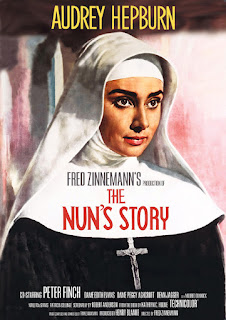
The Nun's Story (1959)

The Nun's Story (1959)

A nun struggles to balance faith and duty in this handsomely made, beautifully paced drama

Director: Fred Zinnemann

Cast: Audrey Hepburn (Sister Luke/Gabrielle van der Mal), Peter Finch (Dr Fortunati), Edith Evans (Reverend Mother Emmanuel), Peggy Ashcroft (Mother Mathilde), Dean Jagger (Dr van der Mal), Mildred Dunnock (Sister Margharita), Beatrice Straight (Mother Christophe), Patricia Collinge (Sister William), Rosalie Crutchley (Sister Eleanor), Ruth White (Mother Marcella), Barbara O’Neil (Mother Didyma), Colleen Dewhurst (“Archangel Gabriel”)

Gabrille van der Mal (Audrey Hepburn) has two passions in her life: her faith and a desire to heal the sick. Dreaming of combining these and working with native patients suffering from tropical diseases in the Belgian Congo, at 19 she joins an order of nuns who specialise in nursing. But the life of nun is far from an easy one, and Sister Luke (as she becomes) constantly struggles to square the circle of her faith, passion for medicine, ambitions and her natural antipathy towards authority. It’s a square she struggles with for almost twenty years, culminating in a crisis of faith during the German occupation of Belgium during World War II.

Zinnemann’s gracefully directed film, not surprisingly won the warm support of the Production Code Office, with its faithful depiction of the life and work of Nuns ticking all the boxes of a devout picture. However, The Nun’s Story is a more complex and intriguing film than this. While it finds much to praise in the self-sacrifice and devotion of the nun’s life, it isn’t afraid to look at how this institution (like many others) values obedience over innovation and praises submission over individualism. It stresses, in a way very few other films have done, how strikingly difficult it must be to lead your life in a religious devotion, and how much such orders (by their nature) demand we must put aside our natural inclinations.

Sister Luke is warned from the start by her doctor father (a genial Dean Jagger) that, with her stubbornness and independence, she is likely to find strictures on obedience hard to follow. He’s right. Superbly played by Audrey Hepburn (in her personal favourite performance), Sister Luke constantly finds it a near impossible struggle to submit herself to the authority of the order. Hepburn makes clear Sister Luke’s sincere faith, and her desire to belong, but also her unwillingness to accept that this might involve any compromise on her work as a nurse.

From the first she demonstrates she is unwilling to stop tending to a patient when the bell rings for her to attend prayer. She constantly reproofs herself for her inability to subjugate her personality to the requirements of her religious order. Training in tropical diseases at her medical college, she refuses a request from Mother Marcella to deliberately flunk an exam to prove her humility. As a ‘reward’, the best qualified nun in tropical diseases is dispatched to a sanatorium in Belgium to further learn obedience. Even when she is eventually allowed to work in the Congo it’s only in the “White’s Only” hospital (as they need the staff) and she is reproved for showing off when she makes much needed improvements to the hospitals working practices.

In many ways the film is a fascinating look at how hard it was for a woman to make a mark in the early 20th century. Clearly Sister Luke should have trained as a doctor – she graduates fourth in her class in tropical medicines – but that door was closed to her, and her only chance of working in Africa was as a member of a religious order. She ends up working in a system where she must constantly make difficult calls between her two passions (faith and medicine) – with her order placing devotion and obedience as the primary goal.

Not that the film is disparaging of religion. The devotion and goodness of the nuns is above question. Their ability to turn the other cheek and forgive is shown as an unparalleled virtue – even a shocking crime in the Congo is patiently forgiven. Many senior nuns are more than capable of balancing Sister Luke’s devotion to medicine with the orders demands. Mother Christophe (wonderfully and warmly played by Beatrice Straight) at the sanatorium, disagrees with the exam choice forced on Sister Luke and supports her to find a balance between her work and her order’s demand for obedience. Mother Mathilde (a matronly Peggy Ashcroft) in the Congo encourages her improvements – with the proviso she is told first. Others – such as Reverend Mother Emmanuel (a gently reserved Edith Evans) – consider it more important that Sister Luke dilutes her individualism in the order.

It makes for a fascinating film, that praises the devotion and self-sacrifice of religious orders, while not shying away from how rigid they often (by their very nature) are. Sister Luke in many ways is an ill-fit for being a nun. She can’t, or won’t, put her own beliefs about what is right second and she has an obstinance and pride (which she admits herself) that should really have ruled her out from the order in the first place. While the film doesn’t quite do enough to give as much space to her faith as it does her passion for medicine, it also makes it clear many characters – most astutely Peter Finch’s coolly professional Congo-based atheist doctor – recognise that she isn’t able to make the ultimate sacrifice that being a nun requires: the full submission of her own will.

Zinnemann directs this with a graceful, careful pace that finds many moments of quiet emotion amongst the imposing world of the order. The film is bookended by beautifully done sequences of departure and arrival, with possessions carefully left-behind and doors opening onto new and radically different worlds (the ending in particular plays out in a powerful silence). The film is beautifully shot by Franz Planer, with a wonderfully restrained score by Franz Waxman. It’s perfect material for this director, who was always strongest when showing the individual struggling within a system that demands they turn against their own nature.

The Nun’s Story is perhaps a little overlong and at times takes it stately pace a little too slowly. But it has a wonderful performance by Audrey Hepburn (who is in nearly every single frame), gorgeous location shooting and is directed with restraint and intelligence by Zinnemann. It also manages the difficult duty of finding things to both praise and criticise in the life of a religious order and both respects and questions the lifestyle and its rules. A middle brow film no doubt, but a fine example of highly skilled and professional Hollywood film-making.

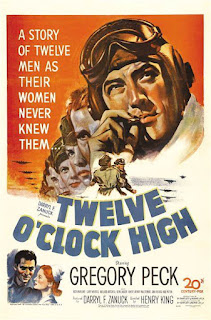
Twelve O'Clock High (1949)

Twelve OClock High header
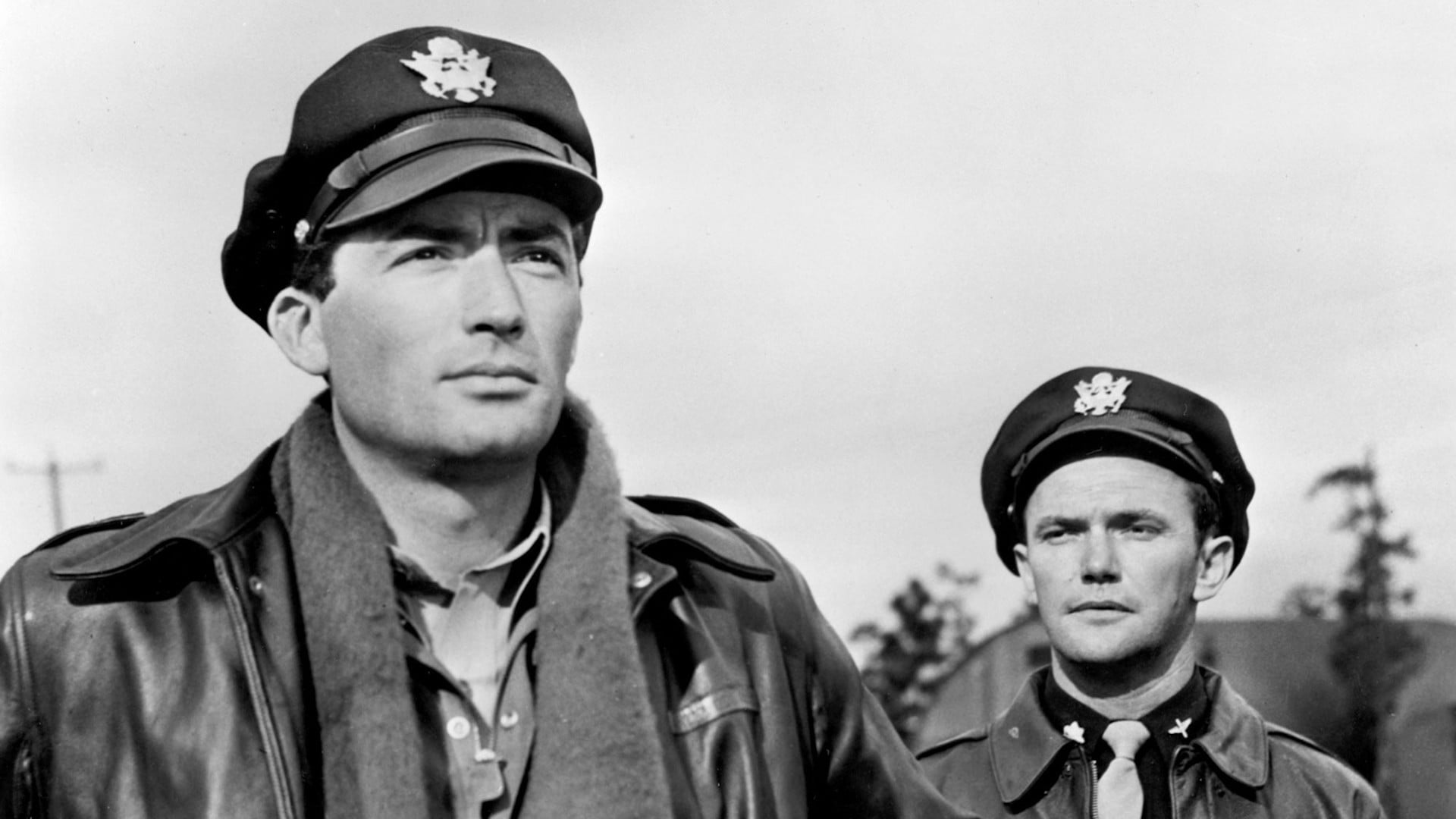
Gregory Peck takes on the burden of command in Twelve O’Clock High

Director: Henry King

Cast: Gregory Peck (Brg General Frank Savage), Hugh Marlowe (Lt Colonel Ben Gately), Gary Merrill (Colonel Keith Davenport), Millard Mitchell (Mj General Pritchard), Dean Jagger (Major Harvey Stovall), Robert Arthur (Sgt McIllhenny), Paul Stewart (Major “Doc” Kaiser), John Kellogg (Major Cobb)

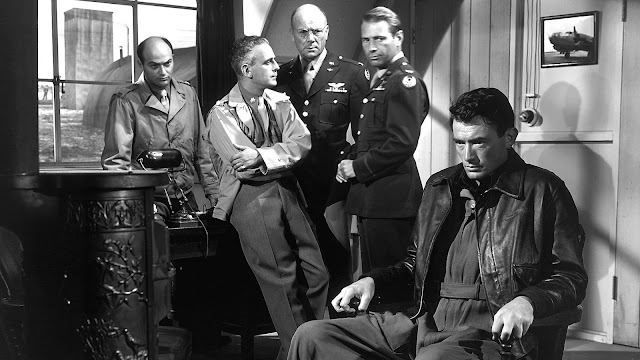
It’s tough at the top. Imagine how much tougher it would be if you job involved pushing people to their limits, and then a little bit further, in a job that puts their lives at daily risk? It’s the sort of burden commanders of American Bomber wings faced during the Second World War. It’s already got to Lt Colonel Keith Davenport (Gary Merrill), a decent guy and much-loved officer, who has grown so close to his men he can’t face sending them off to get killed over Europe any more. He’s replaced by Brigadier General Frank Savage (Gregory Peck), a by-the-book tough son-of-a-bitch who won’t tolerate men who can’t or won’t do their duty. But will the pressure of constant action, escalating casualties and a growing bond with his men also get to Savage?

With Peck at the top of his game, in one of his finest performances of stoical dependability and Lincolnonian authority concealing a carefully nurtured warmth and humanity, Twelve O’Clock High is a very different war film. Here the focus is much less on derring-do and heroism and more on the unbearable psychological pressure a life on the front lines brings. It’s all presented with a documentary style realism – so much so, that the film was used for decades in the USAAF as a training film on successful styles of command.

It’s about the impact that sustained trauma has – how it can make even the toughest man eventually paralysed by over-thinking, uncertainty and doubt. Davenport is a very popular CO – and good in the job in many ways – except the key one: he’s lost the ability to push the men and his willingness to sacrifice them. Essentially, in the nicest possible way, he’s damaging morale by letting the company reflect his own exhaustion, depression and amiable defeatism. He’s lost the ability to push men to want to achieve everything they can for the cause: meaning they are now doing the military equivalent of punching the clock, delivering the barest minimum an attack requires. Mistakes and errors are tolerated and, perversely, casualty rates are rising.

It’s what Savage is sent in to fix. Which he does by essentially blowing apart the cozy, boys-club feel of the Bomber Group. Air Exec, Lt Colonel Ben Gately (a great performance from Hugh Marlowe), is stripped of his command (for not leading from the front) and assigned to commanding the “The Leper Colony” a plane crewed by those Savage believes least likely to pull their weight. Drills are bought in and under-performance is no longer tolerated. Dropping out of formation for whatever reason – a move that puts the rest of the Bomber Group at risk – is punished harshly (a pilot is demoted to the “Leper Colony” for breaking formation to support another a plane, a decision that could have doomed the Group to death). Savage is the ultimate heartless drill sergeant.

Only of course he’s not: as Peck makes clear, the burdens of command weigh as heavy on him as they did on Davenport. But Savage is a professional who knows tough love is what’s going to keep most of the Group alive, accomplishing their missions and bringing the war to an end. And Savage’s policies work: the Bomber Group starts to achieve well above their previous performance. The pilots greet Savage by handing in a group transfer request, but by the time the request is heard by the army (Savage’s adjutant Stovall having delayed the requests with red tape) as a man they back the General. Savage gets then to take pride in themselves and their unit – so much so that, during their first strike on German soil, off duty men smuggle their way onto planes to be part of the mission. (Savage of course doesn’t let slip his pride, rebuking men for abandoning their posts on the base).

Underneath it all, Savage is starting to feel closer to his men. A young pilot, decorated but starting to get worried about flying, is mentored and encouraged by him. Gately responds to the tough love from Savage by aiming to prove to him he is indeed the best pilot in the squadron – winning Savage’s respect, not least when he flies several missions concealing a spinal injury. The pressure inevitably builds on Savage as he finds it harder and harder to maintain his professional demeanour while becoming closer and closer to his men (he even refuses a transfer back to his original job in HQ, as he feels the group isn’t ready for him to leave yet).

It all builds to one of the most famous breakdowns in film, as Savage goes from physically unable to climb into the cockpit to a confused state on the runaway and then catatonic until the Group returns home. This is beyond daring stuff for a 1940s Hollywood film, a true portrait of the effects of wartime pressure on a hero, which never once questions his competence and cowardice but in fact holds up the qualities that led to his breakdown as admirable ones. Peck plays all this with great power and control – and if Savage shrugs off his catatonic state later and the film doesn’t really explore the long-term impacts, the very fact that it showed someone as admirable, competent and professional as this suffering psychological damage from war was quite something.

It’s not a perfect film. King’s shooting style is often unimaginative and the film takes too long to get going – much of the first half an hour is a slow chug towards Davenport being relieved and Savage taking the post. More could be made of the impact of the war on the rest of the men on the group: it’s telling that only Jagger’s Stovell gets a scene where he also is allowed to let off steam against the pressure, getting drunk the night of a big raid, and he won an Oscar for it. But as something very different in Hollywood’s approach to the War, it really stands out as a companion piece to The Best Years of Our Lives.

The Longest Day (1962)

John Wayne leads the charge on The Longest Day

Director: Ken Annakin, Andrew Marton, Bernhard Wicki

Cast: John Wayne (Lt Col Benjambin Vandervoot), Henry Fonda (General Theodore Roosevelt Jnr), Robert Mitchum (General Norman Cota), Richard Burton (FO David Campbell), Eddie Albert (Col Lloyd Thompson), Sean Connery (Pvt Flanagan), Curd Jurgens (General Gunther Blumentritt), Richard Todd (Maj John Howard), Peter Lawford (Brig Lord Lovat), Rod Steiger (Lt Com Joseph Witherow Jnr), Irina Demick (Jeanine Boitard), Gert Frobe (Pvt “Coffee Pot”), Edmond O’Brien (General Raymond Barton), Kenneth More (Capt Colin Maud), Robert Ryan (Gen James Gavin), Red Buttons (Pvt John Steele), Christian Marquand (Cpt Philippe Kieffer), Jean-Louis Barrault (Fr Louis Rolland), Arletty (Mdm Barrault), Paul Hartmann (Field Marshall Gerd von Rundstedt), Werner Hinz (Field Marshall Erwin Rommel), Wolfgang Priess (General Max Premsel), Peter van Eyck (Lt Col Karl Williams Ocker)

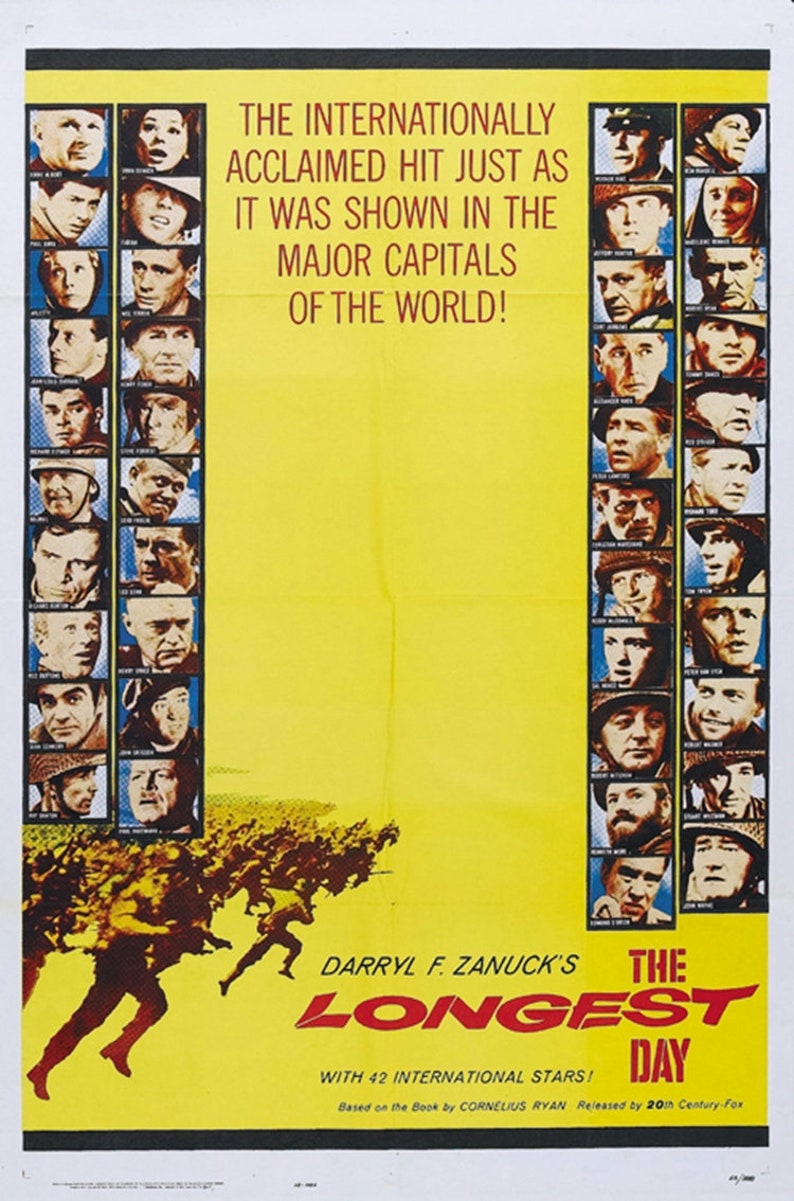
Darryl F Zanuck wanted to make the War Film to end all War Films. So, what better way than to restage D-Day itself, with a cast (as the poster brags) of 42 International Stars, playing out almost in real-time. It’s a grand ‘mock-documentary’ shot in black-and-white (so that actual war footage can be integrated into the film) and aims to show the perspectives of the four main combatants (the Americans, the British, the French and the Germans – with all their scenes played in their respective languages). Adapted from a definitive D-Day book by Cornelius Ryan, it makes for huge, now slightly old-fashioned, Sunday afternoon fun and one of the most iconic second world war films.

To make his dream come true, Zanuck left no stone unturned. Pretty much every single part is played by a ‘name’ actor (although, rather like Around the World in 80 Days, time has left some of them less recognisable than others) no matter how small the role. And I mean no matter how small. Many of the actors appear in no more than one or two scenes. Steiger chips in a brief speech as a Naval officer. Burton has two scenes as an RAF officer, one of the last of the “Few”. Fonda contributes a few minutes of heroism as Theodore Roosevelt Jnr. Robert Ryan briefs The Duke as General Gavin. Jean Servais makes a grand speech as a French Admiral. Gert Frobe doesn’t even speak as a (what else?) bullying German soldier. This parade of stars does though does mean you pay a lot more attention to every single part and it makes it a lot easier to keep track of who’s who.

It’s certainly a ‘producer’s’ film. Zanuck held complete creative control, splitting the directorial duties between three hired hands. Annakin directed all the British and French scenes (and most of the American ‘briefing room’ scenes). Martan, an experienced second unit director, was hired to shoot most of the battle sequences. Wicki looked after the German sequences. With the brief being to replicate the documentary style of actual footage, naturally this basically led to a film that doesn’t have the feel of being ‘authored’ (in the way, say, Saving Private Ryan does), but it’s functional shooting style and design does make it fairly easy to follow.

And it needs to be easy to follow, as this is a very long film indeed – and with the cast frequently changing from scene to scene, can become overwhelming. The quick changes of location – and the lack of time spent with any single character – often means it’s hard to connect to strongly to any of the individual characters. Most of the more prominent characters gain their personality solely from the actors playing them: so I don’t really know what the real Colonel Vandervoot is like, but I know his character here is basically ‘John Wayne’.

The more prominent roles in the script rely on these personality parts. Wayne probably has the largest individual role as the Paratrooper commander who breaks his ankle on landing, but doesn’t let that slow him down from hitting his objective. (Wayne also gets a great little speech, the sort of thing much missed in Ryan, where he praises Brit fortitude under the Blitz, which is a lovely moment of Allied brotherhood). Mitchum gets the juiciest action as General Cota, the highest-ranking soldier on Omaha Beach, who leads the first break out. At the other end of the ranking, Red Buttons brings charm and heartfelt emotion to the most memorable sequence as Pvt John Steele, the paratrooper who landed on top of the church spire at Sainte-Mère-Église, deafened by bells and forced to watch the rest of his platoon slaughtered on landing.

The scale is really what it’s all about. The recreation of the D-Day landings is stunning (the first boats, though, don’t hit the beaches until well over two hours into the film), and its genuinely hard to tell the difference between what is recreated and what is actual war footage. The film doesn’t shirk from showing the cost of war, or the slaughter on that beach (although of course, it looks reserved compared to Ryan). But the combat and operations elsewhere are also perfectly recreated. Richard Todd is very good as Major John Howard, in an expert reconstruction of the seizing of the Orne Bridges near Caen (in real life, Todd himself was one of the commandos serving under Howard and even has a scene where Todd as Howard talks to another actor as Todd).

These battle sequences make for compelling viewing. Slightly less so is the long build-up of the Allies to the attack. There are many, many scenes in various briefing rooms and for every delight (such as Jack Hedley’s briefing around “Rupert” a model paratrooper, dropped as a distraction) there are po-faced actors staring into the middle distance and discussing how important everything is. By far and away the most interesting content in the first half is less the Allies (waiting to leave) than the Germans (trying to work out how and where the Allies will arrive). These scenes feature a range of German officers, from the quietly resigned to die-hard, head-in-the-sand Fascists, and revolve around a series of fascinating debates on where, when or even if at all the Allied attack will come. With a cast of excellent German actors – Jurgens, Preiss, Hartmann, Hinz and Wolfgang Buttner are particularly fine – these scenes stand out as they present a perspective we don’t often get to explore. (Even though the film squarely accepts the German military view that the defeat was all Hitler’s fault and the army was completely blameless of any of the crimes of Nazism.)

After the slow-build, the explosion of tension and action is done really effectively. Sure, the film is long and episodic, but the ever-changing locations do frequently help with the pace. The film’s documentary style also lends it a great deal of authority that a more ‘fictional’ film would not have. After all, pretty much everyone in the film is ‘real’ and while the film could be seen as a collection of D-Day anecdotes, strange moments – such as a platoon of Germans and Americans passing each other on opposite sides of a low wall without noticing each other – have the ring of truth. The script was doctored by a host of major novelists and playwright (including Noel Coward) to brush it up, but really this is a producer’s triumph.

And it is a triumph for Zanuck. Everything he sought to do, he accomplished here – and the doubts that he could pull it off were moved as wrong, as those who doubted whether the Allied plan to cross the Channel would work. Hugely impressive in its staging, detailed in its recreation and with a cast of stars and top actors giving every scene a fresh bit of life, this makes for one of the all-time classic war films.

Midway (1976)

Charlton Heston fights in one of the great naval battles at Midway

Director: Jack Smight

Cast: Charlton Heston (Capt Matt Garth), Henry Fonda (Adm Chester W Nimitz), James Coburn (Capt Vinton Maddox), Glenn Ford (Rear Adm Raymond Spruance), Hal Holbrook (Comm Joseph Rochefort), Toshiro Mifune (Adm Isoroku Yamamoto), Robert Mitchum (Adm William Halsey), Cliff Robertson (Comm Carl Jessop), Robert Wagner (Lt Comm Ernest L Blake), Robert Webber (Rear Adm Jack Fletcher), James Shigeta (Vice Adm Chuichi Nagumo)

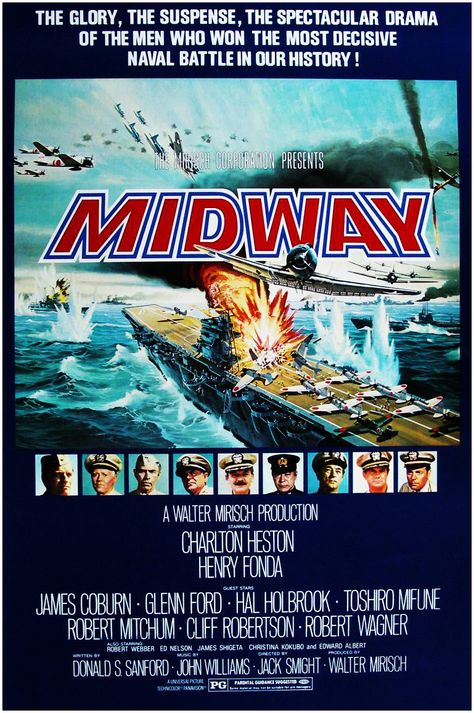
On 4th June 1942, the fate of the Pacific naval war was arguably settled. The Japanese plan to invade the American base on the island of Midway and, crucially, wipe-out the American aircraft carrier force, instead saw a near total US victory and all four Japanese aircraft carriers destroyed. The story is re-told here as a classic all-star Hollywood epic, with the first hour dedicated to the planning and the second hour to the events of 4th June.

After its – successful – run in the cinemas, Midway was re-edited into a two-part TV mini-series. To be honest, that feels more like its natural home. It’s competently directed by Jack Smight – but no more than that – and revolves around several scenes of star-actors pushing models around maps and less famous actors pretending to fly planes in front of blue-screen. The film makes a proud statement at the start of how it has chosen to use only actual archive combat footage to “honour those who fought” – but this actually, you suspect, was motivated more by the fact it’s much cheaper to purchase and clean up piles of stock footage than it is to shoot things afresh.

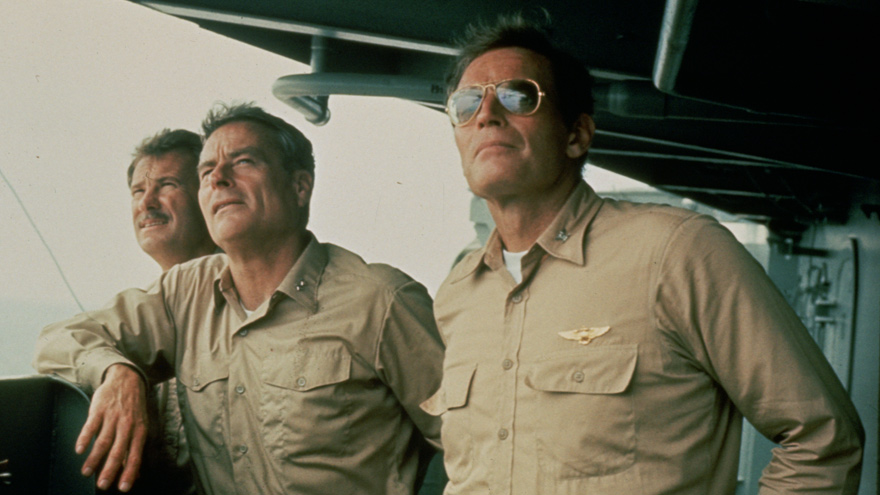
The main narrative covers the planning and the crucial day of the battle itself. A brief “human interest” story is introduced via Charlton Heston’s (fictional) Captain Matt Garth, an aide of Admiral Nimitz. Will Chuck improve his relationship with his fighter pilot son, who has fallen in love with a Japanese girl? Whadda you think? Saying that, this rather clumsy human-interest story (which features the only female character in the film) does make some interestingly critical points about the policy of internment against Japanese Americans – stressing both the injustice and explicit racism (American Germans and Italians faced no such fate) behind the policy.

In fact, Midway is very sympathetic in general to the Japanese – as Nimitz even says at the end, perhaps it was less a question of skill than luck that led to the final outcome. The Japanese navy is presented as an honourable and thoughtful opponent, respectful of human life and conducting the war via a code of honour (the kamikaze runs of cliché are completely absent). In particular Admiral Naguma (well played by James Shigeta, in possibly the film’s stand out performance) is a decent man caught-out continuously by horrendous luck and timing, who pays a heavy price. Midway is strong in stressing there is no leeway at sea – get caught out there and it’s the bottom of the briney for you.

The Japanese planning is even slightly tragic in its flawed assumptions – crucially they are totally unaware that their codes are broken and that, far from launching a surprise strike, they are actually sailing into something of a trap – while Toshiro Mifune brings a lot of nobility to Yamamoto even if all he really does is pensively stare at a series of maps.

On the American side, Fonda leads the way, giving Nimitz more than a touch of Fordian home-spun heroism. Heston’s presence does well to link together the various true-life characters and location. Most of the rest of the all-star cast are restricted to one or two scenes: Coburn rocks up to handover a report from Washington, Wagner briefly pushes models across a table in a planning room and (hilariously of all) Mitchum delivers both his tiny scenes from a hospital bed, coated in skin cream.

When the action gets going though, it’s done pretty well with the po-faced, stodgy seriousness these war-time later 70s epics nearly all seemed to have in common. The stock footage does actually look pretty good and the drama of the battle – and the tactics – are captured fairly well. It’s intermixed with some real ships and all scored with a great deal of punch by John Williams. It’s all really B-movie, TV-movie-of-the-week stuff but it’s also far from obviously flag-waving either, instead doing its best to be even-handed and even a little bit critical. You’ll learn what happened and also have a bit of fun into the bargain.

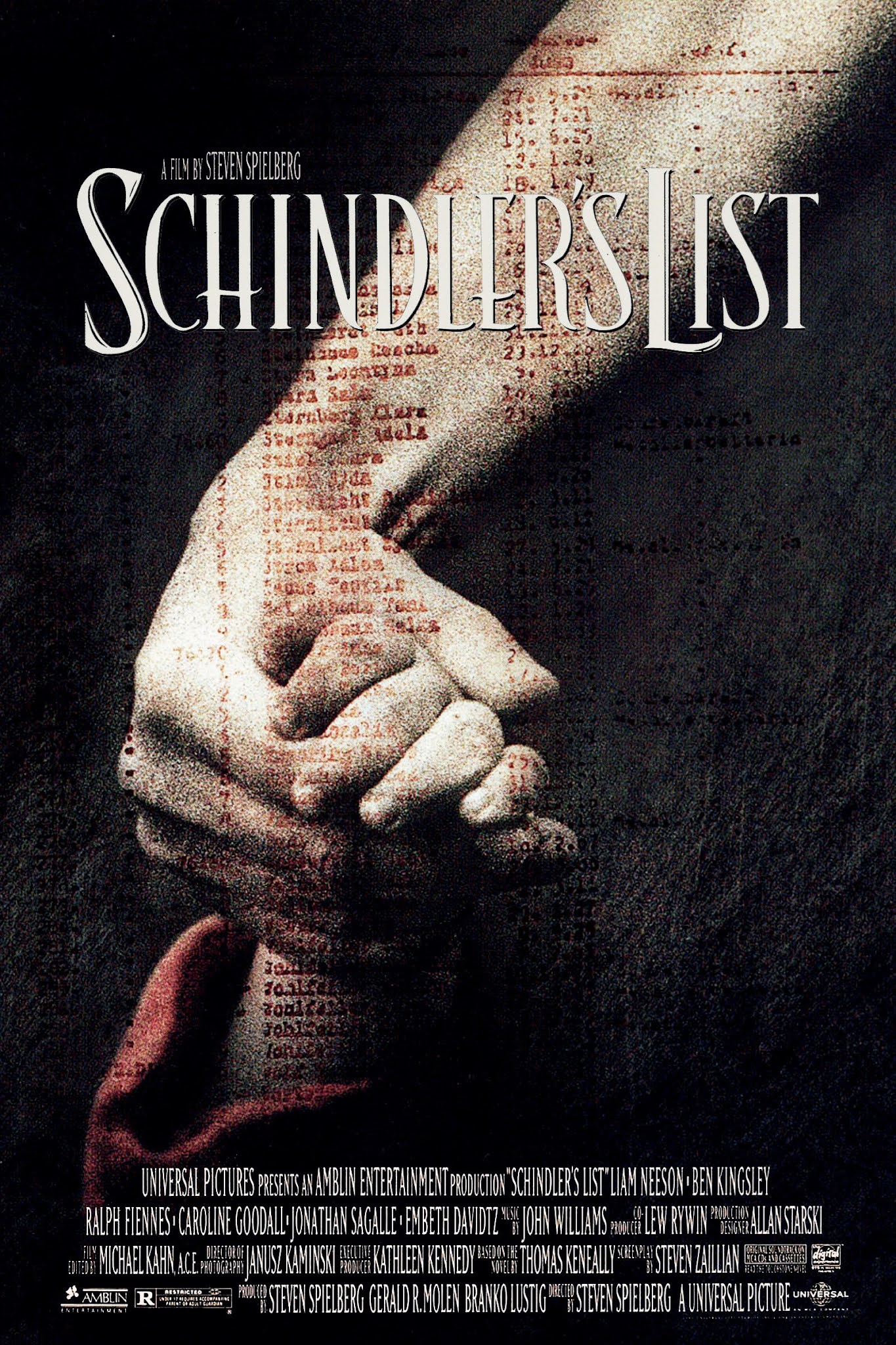
Schindler's List (1993)

Liam Neeson and Ben Kingsley excel in Spielberg’s masterpiece Schindler’s List

Director: Steven Spielberg

Cast: Liam Neeson (Oskar Schindler), Ben Kingsley (Itzhak Stern), Ralph Fiennes (Amon Goth), Caroline Goodall (Emilie Schindler), Jonathan Sagall (Poldek Pfefferberg), Embeth Davidtz (Helen Hirsch), Malgorzata Gebel (Wiktoria Klonowska), Mark Ivanir (Marcel Goldberg), Beatrice Macola (Ingrid), Andrzej Seweryn (Julian Scherner), Friedrich von Thun (Rolf Czurda)

It was the film Spielberg spent over a decade building up the courage to make. Schindler’s List not only marked a new era for him as a film-maker, it also helped a wider audience directly confront the horrors of the Holocaust. At a time when Holocaust denial was starting to rise, Schindler’s List straight-forwardly but powerfully placed the reality of this crime firmly in the eyes of the world. Schindler’s List today remains one of the most emotionally powerful Holocaust movies, the standard to which all others are judged – and peerless example of committed and passionate film-making.

Based on Thomas Keneally’s Booker-prize winning “non-fiction novel” Schindler’s Ark, the film is set in Krakow during the Second World War. As the German occupying force crowds the Jews into the overcrowded Ghetto in the first step of what will become systematic extermination, Oskar Schindler (Liam Neeson) arrives in town looking to make his fortune. Charming, gregarious and quick with a bribe, Schindler soon makes friends with senior SS members. Setting up an enamelware factory to supply the Wehrmacht, it is staffed entirely by cheap Jewish labour (supplied by the SS) and run by skilled Jewish accountant Itzhak Stern (Ben Kingsley) while Schindler handles ‘public relations’ (bribes and schmoozing) with the SS. But, over time, Schindler struggles more and more to close his eyes to the murder of the Jews – a fact made even more prominent with the arrival of brutal SS commander Amon Goth (Ralph Fiennes).

Schindler’s List is chillingly, shockingly honest in its depiction of the horrors of the Holocaust. But it’s easy to forget how cunningly and gently it eases you into the nightmare you are about to watch. This is after all a film that uses Schindler as its POV character. What we are experiencing is his perception of the Holocaust, and through that trying to grasp what could potentially have made this opportunist and profiteer into a humanitarian. As such, the film is careful to give a slow build to the monstrous genocidal fury of Nazism.

In fact, much of the first thirty minutes could almost play out as a sort of triumphant against-the-odds success of a morally flexible charmer. There are a surprising number of laughs in that opening thirty minutes, at Schindler’s chutzpah and weakness for a pretty face. The opening sequence is a delightful demonstration of his confidence: we know he has nothing but the clothes he stands up in and what cash he can scrape together when he enters a nightclub frequented by the SS bigwigs we needs to impress. When he walks in no-one knows who he is: by the end of the evening a waiter is dumbfounded another guest doesn’t know who Oscar Schindler is. Much of the first act is a chronicle of Schindler playing the angles, crossing the right palms with silver and charming left right and centre to make himself a somebody from nothing.

Imagine you didn’t know what the Holocaust was. You’d think this could be a very different film. There are clues: the unspoken loathing Ben Kingsley’s Itzhak Stern clearly feels for this man who smilingly hires cheap Jewish workers from the SS (the workers get nothing) to staff his factory. The fear any Jewish character expresses when confronted with a German officer. The desperation and dirt of the Ghetto. But, like Schindler, there is enough there for you to think “yeah, it’s tough on the Jews, but it’s could be worse, it’s not my problem”.

Schindler wants to be thought of as a good man, but deep down he knows he isn’t: you can see his discomfort when he’s thanked by a one-armed man Stern has inveigled into working in the factory. He already knows he doesn’t deserve thanks – guilt that expresses itself at anger against Stern for hiring a one-armed ‘machinist’ in the first place. After all he’s running a business here.

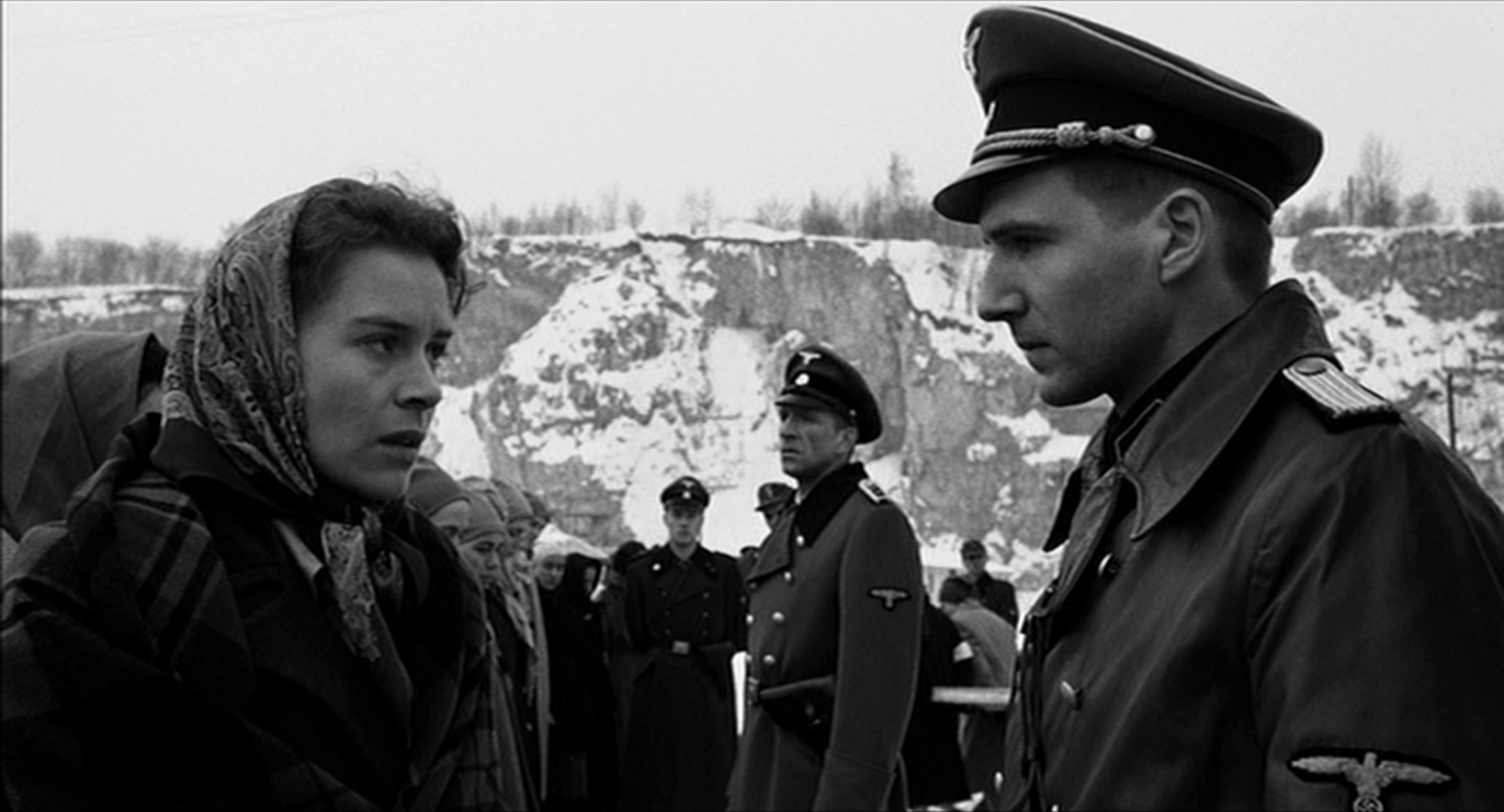
That one-armed man is the first death we see, executed at a roadside for not being able to shovel snow from the road. Any chance of turning your face away again is lost with the arrival of Amon Goth to liquidate the Krakow Ghetto and build a new concentration camp. Played with a bloated, dead-eyed sadistic sadness by Ralph Fiennes (Goth bitches constantly about his workload, drinks to excess and is as desperate to be liked as he is uncaringly brutal), Goth oversees acts of inhumanity that leave the viewer shocked and appalled.

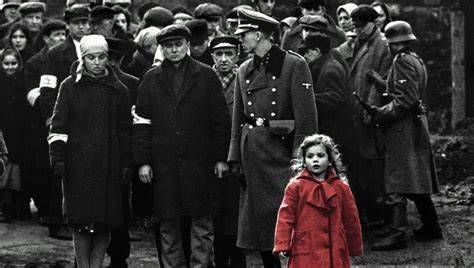
Spielberg films the liquidation of the Krakow Ghetto like a documentary observer and doesn’t flinch from the brutality: summary executions, dead bodies left in the street, the late night slaughter of any hiding in the Ghetto. Doctors euthanise their patients (who drink the poison with thanks in their eyes) before SS guards can machine gun them in their beds. Spielberg embodies this in a single red-coated girl (one of the few splashes of colour in the film), who walks through this nightmareish hell, witnessed from a hill by the horrified Schindler. Later the same red-headed girl will be wheeled on a cart of twisted, exhumed bodies to be thrown onto a bonfire of rotting corpses.

It’s but an entrée into the nightmare of Goth’s camp and the later hell of Auschwitz. In the camp, Goth snipers those not ‘working’ from the balcony of his hilltop villa. Anyone can be executed at any time. Selections see naked inhabitants of the camp running in circles, the weak pulled out to be dispatched to the death camps. Mountains of corpses are burnt, their ashes falling like snow on Krakow. Later, a misdirected train of Schindler Jews arrives in Auschwitz where human ashes form a constant mist. Terrified the women are stripped, their hair removed and herded into a shower room: the terror of this sequence alleviated only when water not gas falls from the shower heads. Spielberg shoots all this with a careful but horrific immersiveness, which never lingers on horrors but always acknowledges them while moving you onto the next terror.

You can criticise Schindler’s List for focusing on the few thousand who survived this senseless barbarism rather than the millions of dead – but the film offers a cause for hope. That, even when things are at their worst, people can decide to do good. Itzhak Stern (a beautifully judged, deeply humane performance from Ben Kingsley) calls the list “an ultimate good”, with everything around it evil. Faced with such horrors, perhaps we need to know that a man like Oscar Schindler can turn the skills he used to enrich himself towards saving lives: bribing officials, spinning stories, presenting a front to his SS partners of an uncaring businessmen while saving as many lives as he can.

Played with huge charm and authority, mixed with a fascinatingly unknowability by Liam Neeson, the film bravely never offers a definitive answer as to what turned Schindler into a man dedicated to others rather than himself. There is no single moment where he makes the conscious turn, instead the film presents the shift as a gradual but inevitable change: as the real-life Schindler himself said, in such a situation there was no other choice.

Schindler’s List isn’t perfect. Despite his best efforts, Spielberg’s sentimentality creeps in. Neeson’s final scene takes things too far, culminating in a blatantly manipulative breakdown, weeping that he did not do more – as if Spielberg is worried we didn’t get the point. Some moments lean into Hollywood convention, from Goth’s gun repeatedly misfiring when attempting to execute a worker (who survives) to Goth and Schindler cutting cards to decide the fate of Goth’s brutalised maid Helene (a sensitive and heartfelt Embeth Davidtz). But what it gets right far outweighs this.

Spielberg presents the Holocaust with unflinching emotion and a carefully controlled sense of moral outrage. Beautifully (some argued too beautifully) filmed by Janusz Kaminski in cool black-and-white with a sensitive score from John Williams, it introduced the Holocaust to an entire generation. No other director could perhaps have done that.

In a sense Spielberg’s career was building towards this, his mastery of cinematic language (this is a superbly edited film by Michael Kahn) utilised not for thrills but to illuminate one of the darkest hours of history. But with that, it also provides hope for humanity, perhaps the key to its emotional impact. The acting is sensational – Neeson has never been better, Fiennes is extraordinary, Kingsley far too easily overlooked as the film’s heart. Traumatising, horrifying but vital and essential, Schindler’s List brings to life with deep respect the worst of history.

Downfall (2004)

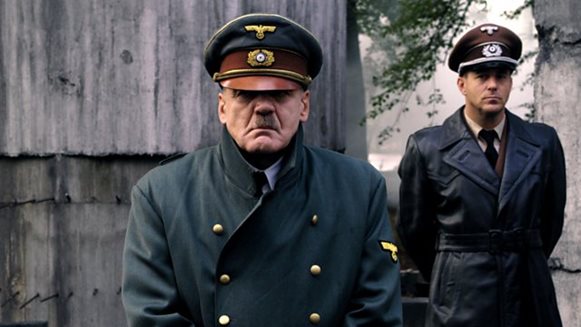
Bruno Ganz excels as Adolf Hitler in Downfall

Director: Oliver Hirschbiegel

Cast: Bruno Ganz (Adolf Hitler), Alexandra Maria Lara (Traudl Junge), Ulrich Matthes (Joseph Goebbels), Juliane Kohler (Eva Braun), Corinna Harfouch (Magda Goebbels), Heino Ferch (Albert Speer), Christian Berkel (Professor Ernst-Gunther Schenck), Matthias Habich (Professor Werner Haase), Thomas Kretschmann (Hermann Fegelein), Michael Mendl (General Weidling), Andre Hennicke (General Mohnke), Ulrich Noethen (Heinrich Himmler), Birgit Minichmayr (Gerda Christian), Rolf Kanies (General Hans Krebs), Justus von Dohnanyi (General Burgdof)

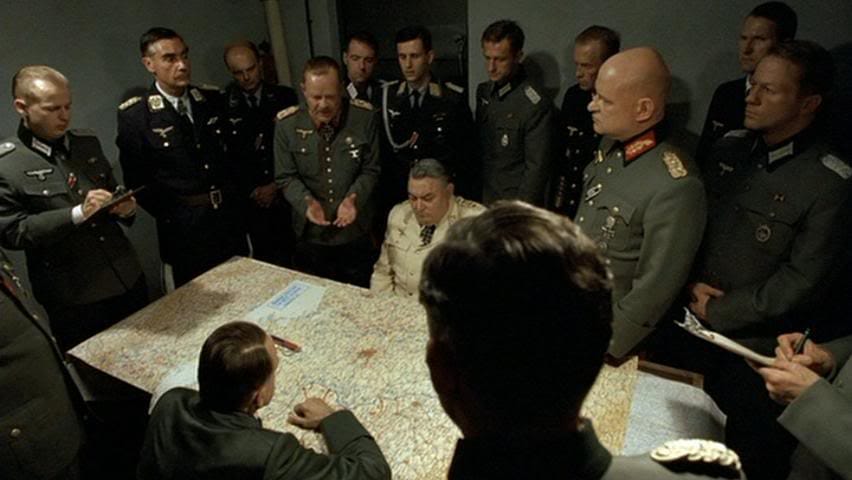
Few people had such an impact on the 20th century than Adolf Hitler. Countless dictators unleashed genocide and war, but few on Hitler’s scale. His dark presence lingers like a cancer on German history, an existential guilt the country has spent generations trying to exorcise. Chronicling the final days of Hitler in his Berlin bunker, told with cinematic verve and documentary realism, Downfall was the first German film to directly tackle Hitler. Perhaps it needed a German film to present a Hitler who felt real rather than an under-the-bed monster – and was able to look into his darkness, and the horror of his world, in a way few films have ever done.

Downfall was controversial on release for ‘humanising’ Hitler. Certainly, the film shows a man capable of consideration and even moments of warmth. But it’s never in doubt a man can be kind to a secretary or affectionate to a dog and still be a sociopath who greets news of young soldiers dying with the words “that’s what young men are for”. Can still be so wickedly egotistical he decides the entire German population should join him in immolation while manipulating with quiet emotional pressure as many of his followers as possible to join him in suicide. Watching the film, you cannot escape Hitler’s monstrous destructiveness, his complete lack of empathy and his instinctive, brutality.

Much as we might not want to face it, Hitler was human: a ruthless, megalomaniac and genocidal one. Part of the fascination of the film is watching those closest to him – Eva Braun, his secretaries, his immediate staff – try to reconcile the kinder private man they know with the one they hear screaming for his Generals to be shot and ranting about Jews and his desire to annihilate entire populations. At one point Eva Braun tells Junge that when saying those things “he is being the Fuhrer” – as if Hitler and the Fuhrer are some hideous Jekyll/Hyde monster.

Downfall charts the final spiral of Hitler as he goes through the stages of grief at his impending defeat. Self-confidence turns into carpet-chewing anger, when reality becomes unavoidable. Grief mixes with fury as Hitler blames everyone – his Generals, his followers and finally the German people themselves – except himself. Never once does the film offer the slightest shred of sympathy for Hitler, this nightmare being all his own creation, consuming him just as it consumed tens of millions before.

As Hitler, Bruno Ganz is quite simply phenomenal. Studying for months film of Hitler, Ganz captures his physicality perfectly – adding Hitler’s likely (undiagnosed) Parkinson’s, a twitching hand he constantly hides behind his back like a nervous expression of his doubt. In private conversation, Ganz’s Hitler is polite and even a little warm, but never anything less than a monster of self-absorption. His favourite topic is himself, and his quiet expectation that everyone should join him in death is matched only by his cold dismissal of those who fail to live up to his twisted standards.

This is nothing to his furious outbursts at those perceived to have betrayed him. His spittle-fuelled rants perhaps only come close to the true carpet-chewing bawlings Hitler was apparently capable of, but they are tour-de-forces of relentless fury and self-pity. Ganz plays Hitler with empathy, but makes it very clear Hitler was incapable of such an emotion himself. The suffering of others is nothing to him. He sheds tears over the death of his dog and barely bats an eyelid at the deaths of thousands: instead they are a perverse monument to himself.

Nazi Germany is the country he created, and Downfall is exceptional in showing how the last days of the Reich were like the final hours of a cult. Few things display this better than the Goebbels themselves. Ulrich Matthes chilling Goebbels is so consumed with devotion for his leader, weeping when ordered to survive and continue the fight, that he cannot imagine living without him. Like Hitler, his fury is reserved for the German people – to him the German people chose their fate and cannot complain that their throats are now being cut.

This is matched by the devotion of his wife Magda, played with a chilling, twisted sadness by Corinna Harfouch, so devoted to Nazism and Hitler she decides (with the logic of a twisted fanatic) her children should die rather than live in a world without them. In a quietly devastating, almost impossible to watch, scene she feeds them ‘medicine’ (actually a sleeping agent) – her eldest daughter, sensing something is wrong, resists desperately before being force fed – then silently breaks a cyanide capsule in each of their mouths, with a kiss to each forehead. Everyone in the bunker knows this happening, but no one stops her. In this cultish world, where death is normalised and suicide expected, it’s only natural.

The second half of the film is a rash of suicides. A German doctor, his hands filthy with the euthanasia programme, detonates two grenades at a dinner, killing his whole family. The Goebbels shoot themselves and order their bodies cremated in a grim echo of Hitler’s own fate. As survivors plan a breakout, an officer calmly states he’s not leaving and shoots himself in the mouth – no one bats an eyelid. Hitler hands out cyanide capsules like candy, the unspoken expectation constant.

This callous brutality and nihilistic embracing of death is constant during the grim, pointless, desperate battle for the city. Indoctrinated children are press ganged into the front-lines and then choose suicide over surrender. Lynch mobs prowl the streets, executing anyone not seen to be fighting – mostly old men, disabled veterans and anyone not holding a gun. The film never suggests the German people are victims, but suggests the final target of the Nazis was Germany itself.

The film is a long spiral into an anti-chamber of hell. After the opening half hour, the Russian advance means the action retreats almost entirely underground into the bunker. In this subterranean world, the cast slowly thins out as people seize their chance to flee, leaving only the most deluded, hard-boiled and fanatical. Generals may protest Hitler’s denunciations of the ordinary soldiers, but will pull their guns on anyone who even suggests the idea of surrender.

In a country where Hitler has encouraged a denial of reality, the scheming and jockeying for position continues even in this madness. Even those who see the end is here are still deluded: Himmler firmly believes a brief chat with Eisenhower will be enough for the SS to be entrusted with maintaining the peace against Bolshevism. Only Speer (played perhaps with too much sympathy by Heino Ferch, in the film’s one mis-step) is clear eyed about what is happening.

Downfall is relentless and eye-opening in destruction of the final days of the Reich. Its reconstruction and research is faultless and acting breathtaking. Framing the device through the experiences of naïve secretary Traudl Junge (an excellent Alexandra Maria Lara), we get a sense of how the scales slowly and painfully fell from the eyes of the German people. It’s atmosphere of oppressive claustrophobia and bleakness is expertly done, with events swiftly and awfully spiralling down into one where death becomes an unremarkable inevitability. No one could come out of this either admiring Hitler or seeing anything in Nazism other than a twisted cult that consumed its followers with the same blood-curdling carelessness it did its millions of victims. Hitler may have been a human, but Downfall makes clear he was never humane.

The Pianist (2002)

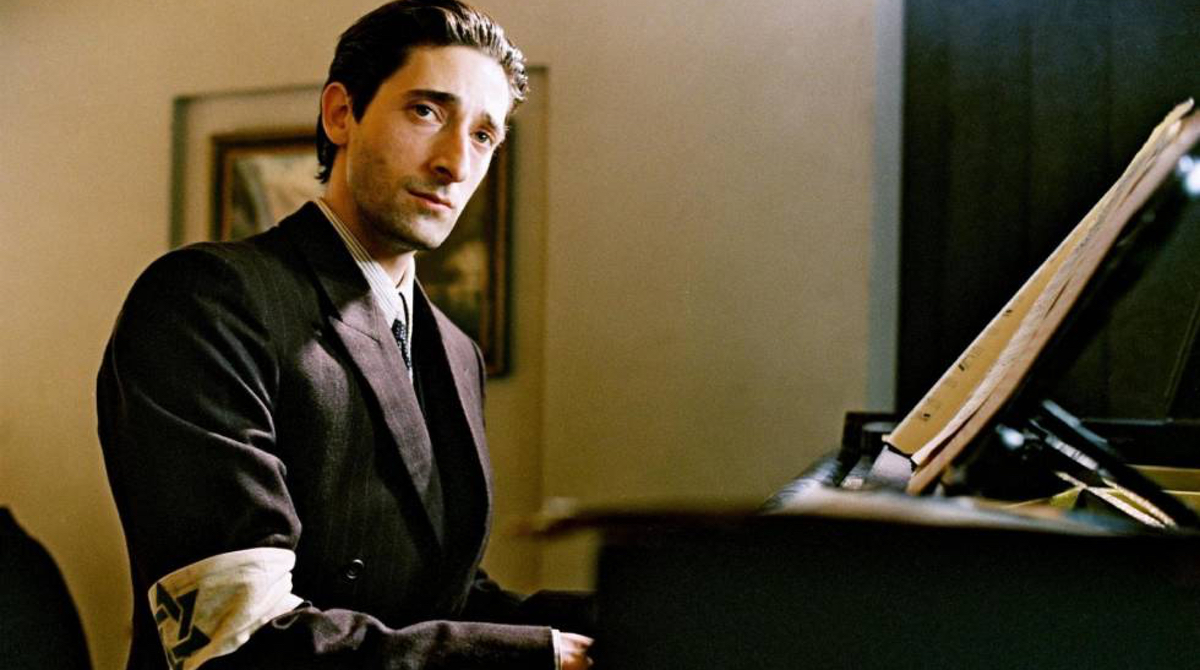
Adrien Brody is outstanding in the compelling The Pianist

Director: Roman Polanski

Cast: Adrien Brody (Wladyslaw Szpilman), Thomas Kretschmann (Captain Wilm Hosenfeld), Frank Finlay (Samuel Szpilman), Maureen Lipman (Edwarda Szpilman), Emilia Fox (Dorota), Ed Stoppard (Henryk Szpilman), Julia Raynor (Regina Szpilman), Jessica Kate Meyer (Halina Szpilman), Ronan Vibert (Andrzek Bogucki), Ruth Platt (Janina Bogucki), Andrew Tiernan (Szalas)

Few directors have as personal a link with the Holocaust as Roman Polanski. As a boy, he witnessed his parents deported to their deaths, surviving only by chance, escaped the Krakow Ghetto and was sheltered by a Catholic family. The lasting impact is clear to anyone who has seen a Polanski film and he avoided Holocaust projects for decades (including Spielberg’s offer to direct Schindler’s List). The Pianist was the film he made on this trauma. Perhaps because the experience of Wladyslaw Szpilman was, in many ways, similar to his own.

Wladyslaw Szpilman (Adrien Brody) is a famous Polish concert pianist. As the German occupation begins, Szpilman and his family face the cruel downward spiral of the new regime’s anti-Semitic policies. Very quickly, laws move from a ban on Jews in public places, to wearing Star of David badges to herded into ghettos. In the ghettos, life is a terrifying struggle, as the German occupiers shift from simple bullying to acts of random, indiscriminate murder. The whim of a German soldier decides whether you live or die. Szpilman’s family are eventually deported to Treblinka, but by a twist of fate Szpilman escapes – and finds himself hiding in Warsaw for years, sheltered by the Polish resistance, desperately trying to survive until the war ends.

Polanski’s film is heart-breakingly sincere and the documentary matter-of-factness it presents appalling, unjustifiable crimes gives great power to the whole film. It never blinks or looks away, and never offers false hope or sentiment. Only the terrible realisation that nothing can have any impact on whether you live or die: death could come from as little a thing as dropping a brick. People are plucked from lines and shot, speaking at the wrong moment is a death sentence and people in wheelchairs are tipped out of fifth storey windows.

There are moments where Polanski seems to be commenting on Schindler’s List’s touches of melodrama: that film featured a Jewish man saved from death by a German officer’s gun jamming – when the same thing happens in here, the German officer calmly stops, carefully reloads the gun, checks it and shoots his victim in the head. That’s the reality. The Pianist tracks all this with a traditionalist, stable camera and a marked restraint. There is no flair, or immersion, to any of this film. Instead, it grimly and calmly shows you each horror.

There is also no sense of fate or destiny. Szpilman survives – while every other Jewish character he encounters does not – not because of things he does himself, but because of chance, luck and risks taken by others. There is a powerful will to survive in Szpilman, but you can say the same for thousands of others. And, as the film demonstrates time and again, determination and desire to live won’t save you if a German officer decides to make an example of you.

Polanski’s film is honest and shocking in its presentation of the descent into brutality in the ghetto. The film chillingly presents the viciousness of what starts as bullying – the German officers who smack Szpilman’s father (a dignified Frank Finlay) around and force him to walk in the gutter – into killing-for-sport. Literally so: German officers turf out the occupants of a building, just for the ‘fun’ of shooting them down like rabbits in their car headlights as they run away.

While the first half of the film covers the horrors of the Ghetto – from over-crowding, to deportations to the increasingly open and random violence – the second half becomes a survival tale that owes a lot to the unsettling horror films of Polanski’s early career. Hiding in a series of apartments, knowing discovery will lead to instant death, Szpilman find himself in a terrifying city where the slightest sound will condemn him. After the noise of the ghetto, the silence of these apartments – and the long periods of silence from Szpilman himself – become increasingly overbearing, while also helping build the dread of discovery.

The only sound we hear are the piano concertos Szpilman is reduced to playing in his head. Frequently Szpilman’s hands move to play an imaginary piano. In one apartment, there sits a piano he can never play: nevertheless his first act is to open it and let his hands dance perfectly above the keys, imagining the music they produce. It’s a brilliant reminder of the ordinary life he has been forced to leave behind – and how, even when things are at their worst, we cling to the things that make us human.

As Szpilman weakens and grows pale in his apartment prisons, he witnesses both the Ghetto uprising of 1943 and the Warsaw uprising of 1944. Polanski treats this urban war with the same chilling matter-of-factness as the rest. From Szpilman’s window we see bodies fall and buildings burn. People slump dead in unusual, un-cinematic positions – a woman, shot in the back, falls to her knees and slumps forward – and with an abrupt, horrible finality. Only someone who has seen death in war, could film it like this.

When Szpilman finally emerges into Warsaw – a city Polanski has only let us see as Szpilman sees it, a few buildings, a street or two – he finds the city a burned-out ruin. It’s the first crane shot of the whole film, that until then has kept its formal angles down at the level Szpilman has experienced. The wreck of the city also matches Szpilman, now an emaciated, mute Beckettian tramp, clutching his only food, a can of pickles.

Despite all this, the film is full of good, brave people who help Szpilman, many of them in the Polish resistance. Most affectingly of all is the touch of hope the story offers – the last to help is a German pfficer (affectingly played by Thomas Kretschmann). The motives of this character are left vague – is it kindness, weariness with war, disgust at Nazism or just another whim – perhaps because all we know is this man, who helped many others as well, died in 1952 in a Soviet prison camp. For all that, seeing a good man in a uniform worn by so many murderers,  gives you hope something can come out of this wreckage.

At the heart is Adrien Brody, who gives a transformatively superb performance as Szpilman. Wry and dry at first, the film sees him being hollowed out into someone scared, desperate and finally emaciated and traumatised. Brody’s brilliance is in stressing there is nothing out of the ordinary to Szpilman beyond his piano playing. He has to learn to bear the guilt of having no choice but to walk away while his family are killed. But he never loses his humanity and dignity – even as a frazzled tramp, when finally allowed to play a piano, after a pause he launches into a performance of breath-taking cathartic release. It’s a superb performance.

The Pianist showcases the sadistic whim that drove the Holocaust. Death is not operatic, but functional, everyday and comes without warning. The film is unflashy, almost classical in its approach, carefully paced and un-melodramatic. But that reflects the lack of romance in war and the grinding terror and suffering of just surviving. By focusing on a single man’s story and experience, it helps us begin to appreciate that his story was just one of millions. That helps make The Pianist one of the most compelling, moving and brilliant Holocaust dramas ever made.

The Best Years of Our Lives (1946)

Harold Rusell, Dana Andrews and Fredric March find coming home can be as tough as war in The Best Years of Our Lives

Director: William Wyler

Cast: Myrna Loy (Milly Stephenson), Fredric March (Sgt Al Stephenson), Dana Andrews (Captain Fred Derry), Teresa Wright (Peggy Stephenson), Virginia Mayo (Marie Derry), Cathy O’Donnell (Wilma Cameron), Harold Russell (PO Homer Parish), Hoagy Carmichael (Butch Eagle), Gladys George (Hortense Derry), Roman Bohnen (Pat Derry), Ray Collins (Mr Milton)

Three men return from the Second World War. They’ve changed, but everything around them seems the same. How do they even begin to adjust when no one really understands what they’ve been through? The Best Years of Our Lives was a sensation when it was released, speaking to a whole country reeling from the shock of war. Many films focus on the gruelling experience of war, but few take on the struggle to find a place for veterans and help them reintegrate into normal life.

Our three veterans all meet at the airport, trying to home to the same small (fictional) city in the Midwest. Normally they would probably have never met: but war has given them a shared bond they will find hard to replicate back home. Al Stephenson (Fredric March) is a banker, who has developed something of a drinking problem to the surprise of his wife Milly (Myrna). Fred Derry (Dana Andrews) was a café worker who became an Air Force Captain – but finds that doesn’t interest employers back home. He also now has nothing in common with the flighty, flirty wife Marie (Virginia Mayo) he married before shipping out – and far more in common with Al’s thoughtful daughter Peggy (Teresa Wright). Homer Parish (Harold Russell) lost both his hands, replaced with mechanical hooks. Can he overcome the adjustments – and allow himself to be loved by Wilma (Cathy O’Donnell)?

What The Best Years of Our Lives explores brilliantly is how quick we are to praise heroes, but how slow we can be to offer them practical help and support. These problems aren’t just restricted to an unlucky one or two – the film goes out of its way to demonstrate the problem is universal. Our three leads are from different services, and radically different walks of life: an important businessman who served as a sergeant, a wash-out who found a purpose in the air force and an athletic sailor who returns without his hands. Rich or poor, it’s tough to find your place whoever you are.

Wyler shoots all this with a documentary realism, with extensive use of deep focus photography. It helps make this a frequently moving film. It sometimes feels like Wyler just captured real events. Flying home our heroes see “people playing golf like nothing happened”. They are all so nervous going home that both Al and Homer both suggest going for a drink rather than leave the cab they are sharing. Everyday problems about going to the office or looking for a job seem more affecting because we know they’ve come back from the war and don’t deserve knock-backs like this.

The heart of this film is Fred’s struggles to find some sort of purpose on civvie street. War offered more opportunities to him more than anyone else. He is a nobody who became a respected somebody. Now he can’t get a job in a department store. As a potential employer tells him, his CV is stuffed with irrelevant experience and his years out of the job market mean he’s fallen behind the rest. This is how a man with a chest full of medals, winds up serving ice cream and busting a gut trying to flog perfume to housewives who let their children run wild around his stand.

Dana Andrews is the heart of this film, giving a marvellous performance of great depth and sadness. Haunted by nightmares, Fred’s optimism drips away the longer he fails to find proper work. Perhaps most heart-breakingly of all, he increasingly makes himself the target of his dry wit. By the time he has surrounded to the indignity of taking back his old soda jerk job (and reporting to the spotty kid who used to be his assistant), Fred is disparagingly belittling his own wartime accomplishments.

If someone as matinee idol handsome, with a wonderful war record, as Fred can’t get ahead, what chance does anyone have? Fred’s wife (Virginia Mayo, marvellously smackable as this shallow girl) isn’t even interested in him, only the idea of him – begging him to wear his uniform (medals and all) for as long as possible so she can show him off like a new handbag. Fred is knocked back so many times, he comes to believe he deserves it. In a beautiful scene, late in the film, he walks through a field covered in old air force bombers. It’s a striking visual metaphor – one Fred is all too aware of – that he’s as much on the scrap heap as them.

The Best Years of Our Lives shows time and again how quick we are to forget. Al is hauled over the coals for offering a loan to a collateral-free GI who wants to start a farm. But Al feels a loyalty to men like this – and he recognises, unlike his superiors, there are qualities you just won’t find in a bank account. Homer is confronted at Fred’s workplace by an arrogant anti-Commie, who suggests the entire war was a waste of time, spent fighting the wrong foes. Calling Homer “a sucker” for losing his hands in the wrong war leads to a fight – and Fred losing his job for punching the guy out. Where is the sense of debt to these people?

Homer not only has to deal with disability – but also the metallic claws which get him all the wrong attention. The army trained him how to use the claws – but as Al observes, watching Homer’s awkward homecoming “couldn’t train him to put his arms round his girl”. They can solve the practical problem, but there is no support for actually coming to terms with the emotional impact.

Homer is played by real-life veteran paraplegic (and non-actor) Harold Russell, in a poignantly sincere, unstudied performance. It becomes even more heart-breaking, as his torment clearly rooted in Russell’s own experiences. When Homer demonstrates to Wilma how vulnerable he is without his hands –  if a door shuts, he’s trapped in a room, he can’t dress himself– it’s almost unbearably sad (O’Donnell is equally good in this scene). Russell’s simple, matter-of-factness is more moving than any histrionics.

The only plot that doesn’t get fully explored is Al’s implied drinking problem. He gets pissed the first night home (and his wife comments several times on his growing reliance). Everything to Al feels a little different – his kids are older, his bankwork seems stuffier. Today the film would dive more into Al’s probable survivor guilt. But Al makes a stand when others won’t to help his veterans – and March has a superb, low-key speech at a banquet in his honour where he vows to invest small loans into returning GIs. The film also gently probes – and in some ways leaves open – the ongoing problems he and Milly (warmly played by Myrna Loy) have had in their marriage, problems which Al’s absence and drinking have not helped solve.

Wyler pulls these threads together in a restrained style that largely avoids melodrama (though Hugo Freidhofer’s score is frequently overblown – Wyler apparently hated it). Instead, dilemmas are grounded in reality. Al might like Fred, but the last thing he wants is for Fred to get his daughter Peggy (Teresa Wright in a gentle, touching performance) caught up in a divorce. In a perfect example of Wyler’s restrained, documentary style, Al and Fred have a quiet man-to-man discussion, before Fred calls Peggy to see he can’t see her anymore. He does this in the back corner of the frame while the foreground shows Al listening to Homer and his uncle play the piano. It’s a perfect example of the way Wyler uses deep focus to give the film a fly-on-the-wall quality.

There is something extraordinarily modern about The Best Years of Our Lives. It feels calm and un-histrionic – and of course many veterans still struggle today. The camera feels observational and unobtrusive and the characters respond to situations in a very natural way. It’s also helped by the wonderfully natural acting. It all comes together in a film that is important without feeling like it’s trying to be important. An observant, sensitive exploration of the experience of veterans (made by a veteran), that never feels false and looks at our world with affection but realism.

Mrs Miniver (1942)

Greer Garson and Walter Pidgeon hold the homefront together in Mrs Miniver

Director: William Wyler

Cast: Greer Garson (Kay Miniver), Walter Pidgeon (Clem Miniver), Teresa Wright (Carol Beldon), Dame May Whitty (Lady Beldon), Reginald Owen (Foley), Henry Travers (Mr Ballard), Richard Ney (Vin Miniver), Henry Wilcoxon (Vicar), Christopher Severen (Toby Miniver), Brenda Forbes (Gladys), Clare Sanders (Judy Miniver), Helmut Dantine (German pilot)

Mrs Miniver was made when history was in flux: conceived at the height of the Blitz, shot and then parts re-shot either side of Pearl Harbor and released in 1942 after America had entered the war. A patriotic flag-waver, designed to build American sympathy for a Britain standing alone, it was a huge hit, won Best Picture and had a profound impact on Allied morale (Churchill called it more help to the War effort than a flotilla of battleships). It still carries an inspiring, cockle-warming charm and a hefty emotional punch, made even more affecting by the stoic determination (rather than hand-wringing emotion) every setback is met with.

In a small village just outside London, lives the Miniver family. Kay Miniver (Greer Garson) cares for her family in a large country house. She has three children with architect husband Clem (Walter Pidgeon). Their life is contented – and then war breaks out. Oldest son Vin (Richard Ney) joins the RAF – after falling in love with Carol (Teresa Wright), niece of the local grandee Lady Beldon (May Whitty). Clem joins the ships travelling to Dunkirk. Kay holds the domestic fort, protecting her family from air raids, facing down a German pilot and helping shepherd her small village through the trauma of air raids to something approaching a normal life.

Mrs Miniver is all about that stoic, British stiff-upper-lip attitude, of doing your duty uncomplainingly and quietly. As they said “Britain Can Take It”, and the film is a celebration of the nobility of perseverance. It’s designed to inspire and it does: it’s melodrama played with a low-key reserve, which is genuine and heart-felt. There is a reason Goebbels (and he would know) called this a “refined powerful propagandistic [tool]” – it makes you completely emphasise and relate to its characters. We share their moments of joy just as much as the profound tragedy of their losses.

And there is a lot of loss in Mrs Miniver – way more than you might expect, with the film’s final act throwing at least two painful gut punches you don’t expect. Tragedy touches all of us and war carries away the innocent and undeserving with as much eagerness as it does the militaristic. There seems to be no reason or justice to it – but instead the difficult acceptance of fate and the necessity of being part of a struggle larger than ourselves.

In a powerful speech that concludes the film, the vicar stands in the bombed-out ruins of his local church. It mirrors a scene near the beginning, as he regretfully but with quiet reserve announces the outbreak of war. Now he gives a rousing speech that this is war of all the people, against the tyranny that threatens us, where the dead our mourned but not forgotten. It’s a powerful speech (brilliantly delivered by Henry Wilcoxon), of the painful necessity of duty at the time of war that still stirs (it was distributed nationally by Roosevelt’s insistence).

The stoic, good-natured, supportive community, who protect each other and desperately try to maintain hope and nobility when death could strike at any time, contrasts firmly with the only German we see. A wounded pilot who gains entrance to Kay’s home at gunpoint. Kay calmly disarms him, feeds him and tends to his wounds (after all he is the same age as Vin) – he responds with a vicious speech of violent hate, bragging at the deaths the Luftwaffe have inflicted on Europe. It’s the only time her reserve really breaks, as she slaps him – and even for a moment seems to consider dispatching him. Her delayed shock is clear later when she casually smokes one of Clem’s cigarettes – a mixture of restrained shock, relief, horror and confusion across her face. It’s the closest direct danger comes – and the closest she comes to openly expressing rage and anger at the hand the world has dealt her.

The film revolves around Greer Garson’s (Oscar-winning) performance. Though it’s easy to see Kay as a sort of saint, that’s underestimating the huge burden Garson had: she effectively embodies an entire Homefront of scared people doing their duty. It’s a performance of stiff-upper-lipped warmth, her desperation, fear and protective nature clear in every beat. You can see it in her mix of distracted fear and pride when Vin announces he has joined the RAF, and the front of “everything will be alright” she puts on for the children during an air raid that tears her house apart.

Of course, that disaster is met with a “I always wanted to redo that dining room” fortitude by her husband, Clem. Pidgeon and Garson forged a partnership that would run through several movies here, and spark off each other wonderfully. Pidgeon gives a solid grounding to Garson, while she helps find warmth and humanity in an otherwise distant actor (Pidgeon lacks Peck’s – who he resembles in many ways – ability to convey warmth under reserved dignity). Pidgeon’s stirring sense of duty excels, not least during the Dunkirk sequence.

That sequence is very well executed, a small series of boats gradually growing in size until they fill the Thames. When duty calls, people respond with gusto and pride. Alongside this, normal life continues as much as possible: not even the war will stop the flower show. This remains a heart-warming centre piece – pinched for an episode of Downton Abbey – as Lady Beldon overrules the sycophantic judges and gives the prize to the deserving winner, local station manager Mr Ballard (Henry Travers, sweet but receiving a generous Oscar nomination).

The acting is pretty much spot on. Teresa Wright (Oscar winning) is endearingly genuine and vibrant as Vin’s wife to be (and Lady Beldon’s niece) Carol. May Whitty, channelling those grande-old-dames-with-hearts-of-gold, gets every beat right, from comedy to tragedy, Wilcoxon is marvellous. It’s all so heartfelt and earnest you can overlook the fact most of the (largely American and Canadian) cast go for cod-Brit accents or cliched working class vowels – just as you do the fact that neither the towns or countryside in the film looks particularly British (an opening sequence in London looks plain wrong in every sense).

And you can’t fail be stirred by its celebration of quiet determination and unshowy self-sacrifice. You can certainly argue that it’s not a work of art, like other films nominated that year for Best Picture. But, none of them would have (or continue to have) the emotional impact this has. Sure, it feeds off an American nostalgia for English-country-village life – but it does so with a noble cause. Well-acted, very well directed, it still inspires and continues to provoke pride today.