Seconds (1966)

Trauma abounds in dull, self-important conspiracy thriller Seconds

Director: John Frankenheimer

Cast: Rock Hudson (Tony Wilson), Salome Jens (Nora Marcus), John Randolph (Arthur Hamilton), Will Geer (Old Man), Jeff Corey (Mr Ruby), Richard Anderson (Dr Innes), Murray Hamilton (Charlie Evans), Karl Swenson (Dr Morris), Khigh Dhiegh (Davalo), Frances Reid (Emily Hamilton), Wesley Addy (John)

In the 1960s, John Frankenheimer directed a string of conspiracy and paranoia thrillers, the most famous of which was The Manchurian Candidate. Seconds follows on in that genre, but where The Manchurian Candidate is first-and-foremost an adventure story with a deeper soul, Seconds is a self-important piece of overt arty cinema that quickly outstays its welcome.

This is particularly annoying as, on paper, this is a great story. A business makes its living from selling new, younger bodies (and new carefree lives), known as “seconds”, to old, rich people so they can start afresh. One such man is depressed banker Arthur Hamilton (John Randolph), who is reborn as artist Tony Wilson (Rock Hudson). The one rule? They can’t tell anyone about the procedure or about their old lives, and must leave everything behind. Needless to say, the prospect of a new life is a hell of a lot better than actually getting it.

Seconds really should go from there into a fascinating exploration of truth and identity: instead it swiftly gets bogged down in arty camera shots, self-important philosophising about the nature of identity, and tediously over-extended sequences of Hamilton/Wilson trying (and failing) to come to terms with his new life. The entire film never shakes the feeling that it believes it is stunningly important and everything it does is making crucially important, profound points, and it quickly loses the audience. 

The basic problem with it, above all others, is that we are given no reason at all to care about Hamilton/Wilson in either of his two personae. John Randolph is so effectively beige as the original Hamilton, you genuinely end up not caring what happens to him. Nothing in either his life or personality sparks any interest, or any sense of loss. Pile onto that the fact that it seems to take an age for him to commit to having the operation in the first place and you have a rather slow, dragging half-hour opening with a character you care very little about. And that’s just the first act.

The point the film wants to make is that changing your face and your life cannot always change the man inside: that the basic unhappy discontent of Hamilton/Wilson isn’t going to be fixed by giving him Rock Hudson’s face. Sad people are going to be sad whatever. The fact that I have summed up all the ideas of the film in a few short lines tells you everything. The film takes over an hour to make the same statements, with Wilson as tedious a lead as Hamilton was. In fact, one of the main problems is that the most interesting characters by far are those on the edge of the film – from Will Geer’s seemingly benign, but deeply sinister exec running the business to Wesley Addy’s scarily omniscient butler, these side characters all offer a lot more interest than our lead.

Wilson ends up in a beach community, filled with a host of suspicious-looking people and staffed by company representatives determined to make sure Wilson doesn’t disgrace himself or blow the gaff. Hudson makes a decent fist of the job – many commentators have made the rather clumsy point that the famously closeted Hudson probably had more understanding of what it was like hiding your real identity than any other Hollywood star around at the time – but it can’t change the fact that he’s basically not that strong or compelling a performer. Or that, even in the new body, Hamilton/Wilson is still a pompous and dull stick-in-the-mud.

So even in a new skin the character is not one you can feel any investment in. The community sequences are as slow and overplayed as the opening half hour. We are never really clear what exactly Wilson/Hamilton finds so terrifying and unsatisfying about the community, or why he finds the idea of other “seconds” so deeply traumatising. The sequence is also cursed with a bizarre “grape crushing” ceremony, that plays out like a sort of Woodstocky orgy. I imagine it is meant to convey the sudden appeal of free living – but it’s so skin-crawlingly awkward and embarrassing in its staging that it makes Frankenheimer feel like a stuffy dad attempting to relate to the sexy young kids. 

Seconds is basically too dry and empty the majority of the time to really care about or enjoy. Frankenheimer – and in particular his cinematographer James Wong Howe – shoot the film with an inspiring and trippy inventiveness as well as a disconcerting surreality. The woozy black-and-white photography constantly mixes unsettling angles, disconcerting zooms and intense POV framing to leave you uncomfortable and on-edge while watching the film. While this artiness and theatricality does sometimes make the film feel like it’s trying too hard (and makes it feel very of its time) it does at least offer most (if not all) of the interest in the film.

Maybe part of the problem as well is that Seconds is an almost unbearably depressing film, with possibly the most horrifyingly grim ending you can imagine, shot with intense horror by Frankenheimer (I’ll also say that Hudson’s desperation and fear as he realises the final fate the company has in mind for him is brilliant). It’s not exactly fun viewing, but it’s so intense you have to admire it even while finding it terrifying. It’s one of the few moments where the film’s pretensions, and pride in itself, really pay off with the final product. 

It’s the problem all over with Seconds. There are moments in there you can admire – and you can totally see why it has been reclaimed by many now as a lost classic. However, it’s also really easy to understand why the film was a box office bomb, unloved by the cinemagoers and why it’s not very well known today. There is so little in there for you to feel an emotional connection to – its lead character is a bore and a cold fish, his love interest sinister, and huge chunks of the story are delivered with a puffed up pride at how clever the whole thing is. It’s a huge disappointment, considering its potential.

Mission: Impossible – Fallout (2018)

Tom Cruise gets the gang back together for high octane excitement in Mission: Impossible Fallout

Director: Christopher McQuarrie

Cast: Tom Cruise (Ethan Hunt), Henry Cavill (August Walker), Ving Rhames (Luther Stickell), Simon Pegg (Benji Dunn), Rebecca Ferguson (Ilsa Faust), Sean Harris (Solomon Lane), Angela Bassett (Erica Sloane), Michelle Monaghan (Julia Meade), Alec Baldwin (Alan Hunley), Vanessa Kirby (Alanna Mitsopolis/White Widow), Frederick Schmidt (Zola Mitsopolis), Wes Bentley (Patrick)

It’s probably not something many people would expect watching a Hollywood blockbuster, but part way through Mission: Impossible Fallout, as Tom Cruise motorbikes into a stream of traffic round the Champs-Élysées, I was reminded of Michael Crawford in Some Mother’s Do ‘Ave ‘Em. If there’s one thing these two have in common, it’s having a star willing to constantly go above and beyond to perform their own stunts. Which mainly makes you think as well that Crawford and Cruise are probably both a bit nuts.

Mission Impossible: Fallout picks up almost exactly where Rogue Nation left off. The villain of that film, Solomon Lane (Sean Harris), may be in custody, but the remnants of his organisation have reformed as The Apostles, chosen a new leader (known only by the pseudonym John Lark), and are trying to seize three nuclear warheads. Ethan Hunt (Tom Cruise) is deployed to stop them. During the mission, Hunt chooses to save the lives of his team rather than complete the mission – leaving the IMF force with a race against time to regain the warheads, and leading to clashes and alliances with enemies and friends old and new, including Lane and Hunt’s female counterpart Ilsa Faust (Rebecca Ferguson).

Mission: Impossible Fallout is big. By golly gosh it’s big. They aimed to make this the biggest and most stunt-filled, action-packed entry in the series – and they probably succeeded. More than any other film in the series, this one feels like a series of action sequences joined together by scenes of story and dialogue. Never has the overall aim of the villains, or their scheme, been so swiftly outlined – or essentially so inconsequential to the events we are watching. Do we need to know why the Apostles (an organisation we never even encounter in the flesh!) or Lane or any combination of the film’s baddies want to blow up three nuclear bombs in Kashmir? The film gambles that we won’t really care, that all we really care about is watching Hunt and co prevent them on a 15-minute deadline. It’s a gamble that the film more or less gets right.

The film also skims quickly, depending on you having seen the three preceding films so that it can spend time less on character re-establishment and more on those action scenes. It plays off emotions we have developed for the characters over previous episodes – and relies on us carrying across our knowledge of their past relationships. Alongside this, the film is crammed with callbacks to pretty much every film in the series – most prominently of all to Hunt’s marriage in the third film. This is a plot development, you feel, largely introduced to allow the characters to move on: it’s clear Hunt and Faust are the series intended romantic leads going forward (though Faust is never anything less than Hunt’s equal in all areas), so we need to know that Hunt isn’t cheating on a wife somewhere along the line, and that they have mutually decided to go their separate ways. The film accomplishes this – and also allows a few beats to suggest that, under the surface, all this Impossible Missioning has given Hunt the odd small emotional problem.

But not too many, as establishing Hunt’s decency is pretty central to the film. One of its themes is Hunt’s unwillingness to sacrifice any innocents or indeed anyone who doesn’t deserve it. This theme runs throughout the film, and is used to suggest that part of the reason Hunt so often instigates such insanely grandiose schemes is that he is completely unwilling to let the needs of the many outweigh the needs of the few: give him the choice of sacrificing one man to get nuclear warheads easily, or jumping through the sorts of insane loops, schemes and dangers this film throws him into, and Hunt will choose the hard option every time. (Of course I could also be mean and say that Cruise has developed a character whose only real flaw is that he cares too much.)

At least this makes him really easy to root for. Which is just as well, as Fallout throws Hunt front and centre. Perhaps more so than any film since the second one, the team feels like a one-man army. Hunt does everything difficult or dangerous – which means Cruise is dragging himself to take on a number of insane stunts, from HALO jumps, to driving against the Parisian traffic, to hanging off the bottom of a flying helicopter. Of course, we also get no fewer than six speeches praising Hunt to the heavens – but when Cruise is willing to go such insane lengths (one stunt famously left him with a broken ankle and shut down filming for eight weeks) you can’t hold it against him that much.

And like all the rest of the series, this is a very fun film. It takes a while for the sense of fun to really kick in – much of the first half-hour feels deathly serious – but eventually that sense of fun, of enjoying the lunacy, settles in and you start to run with it. A madcap chase over the roofs and office blocks of London that ends at the Tate Gallery is a perfect example of a sequence that mixes hi-jinks, death-defying stunts and tongue in cheek humour. 

And that’s really the secret of this franchise. It’s a mix of absurdly OTT action, incredible dangers, and death-defying stunts that its star throws himself into with an insane abandon all played with a certain lightness of touch. The series, for all its world-endangering excitement and merciless villains, also has a family feeling behind it. Hunt’s team is his family and it’s that warmth which underpins all the drama. Fallout is huge fun – in fact, if it has any real flaws it is that it is too big by the end, with an action sequence that never seems to end – and a great rollercoaster to climb on board.

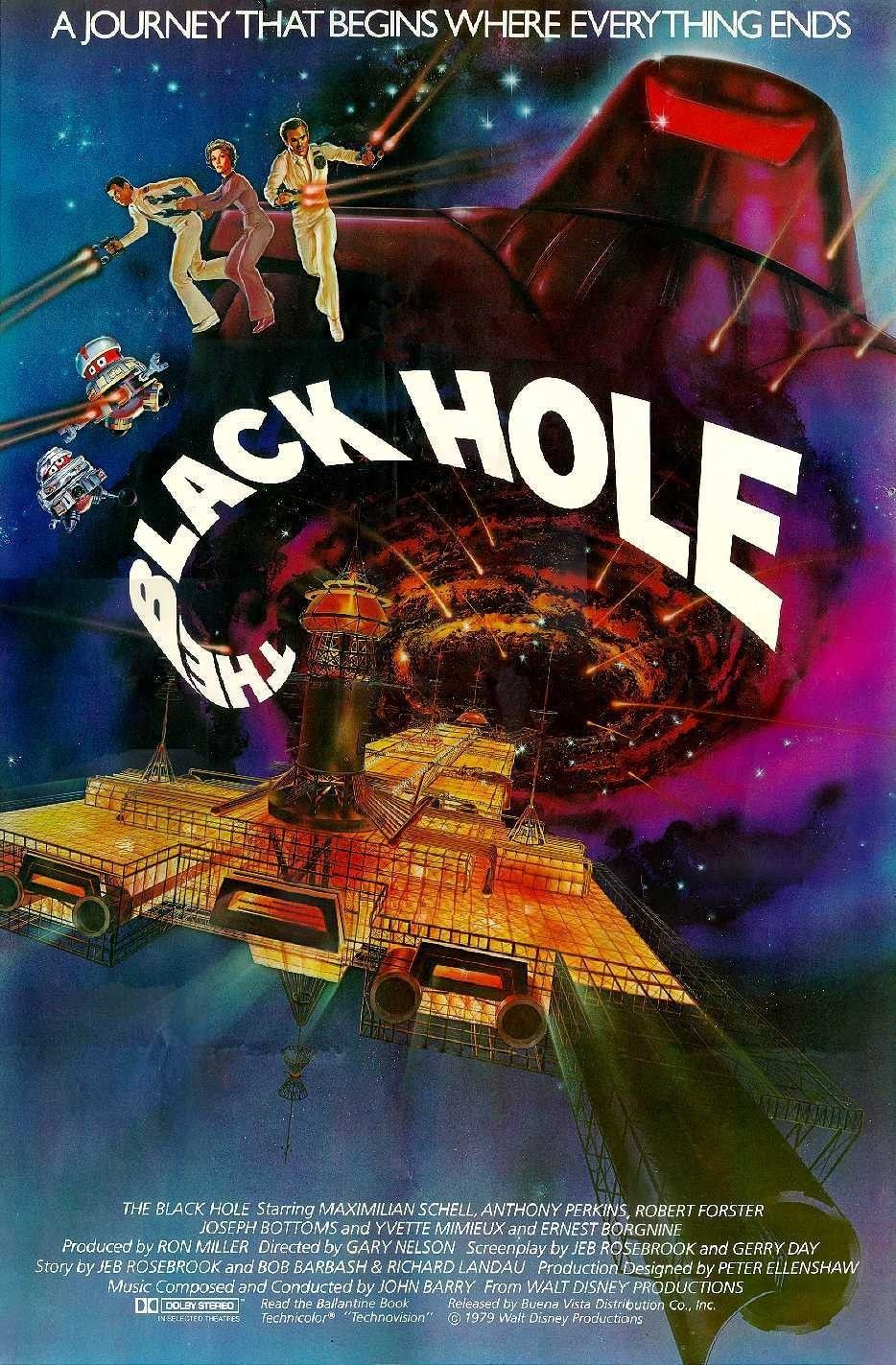
The Black Hole (1979)

Maximilian Schell in one of his quieter moment, planning a journey into The Black Hole

Director: Gary Nelson

Cast: Maximilian Schell (Dr Hans Reinhardt), Anthony Perkins (Dr Alex Durant), Robert Forster (Captain Dan Holland), Joseph Bottoms (Lt Charle Pizer), Yvette Mimieux (Dr Kate McCrae), Ernest Borgnine (Harry Booth), Roddy McDowell (VINCENT), Slim Pickens (BOB)

When Star Wars became a massive smash hit, every single studio assumed all they needed to do was to search out any damn space-set saga it could find, dress it up with a few Star Wars-feeling elements (usually shooting and funny robots) and, Bob’s Your Uncle, you would have a box-office smash of your very own. Well that turned out not to be the case – and Disney’s The Black Hole was a case in point.

At the end of a long mission, the crew of the USS Palomino is on the way back to Earth, when they discover a black hole with a spaceship hovering around it. The ship is the long-lost USS Cygnus, commanded by legendary genius Dr Max Reinhardt (Maximilian Schell). The crew are at first welcomed by the Cygnus – but is there a dangerous secret on board? You bet there is.

The Black Hole feels like several different types of story all very unsuccessfully stapled together.  There are elements in there of a 2001-style intellectual, “what does life mean” science fiction saga. But every time we start to get near those tones, up jumps a funny robot, or a bit of shooting, or an odd “haunted-house-in-space” sequence, or a mad scientist ranting. None of these stories, by the way, are particularly good or unique. They are all rather clumsily assembled. The tone of the film is also all over the place – so we get a comedy robot with funny bug eyes getting up to hi-jinks, closely followed by Anthony Perkins being ruthlessly killed by a drill (even if it is mostly offscreen blood and guts). Who is this film for? Too dark and grim for kids, too stupid and childish for their parents.

Robert Forster and Anthony Perkins look barely interested in the events around them (Perkins must have been wondering by this point in his life where it had all gone wrong). Ernest Borgnine plays the sort of blow-hard he could do standing on his head. Perhaps aware that most of the rest of the performers weren’t really engaged in it, Maximilian Schell acts for everyone. Never one to be afraid of going overboard, Schell’s wild-eyed enthusiasm leaves no scenery unchewed. It’s the sort of performance that seems to capture the wildly uneven tone of the film: so one minute Schell is a sort of space Byron, the next minute he’s literally slapping his head over the incompetence of his minions like some sort of Space Skeletor.

There really isn’t any actual plot in The Black Hole – it takes no more than about 40 minutes to hit the final “we gotta get off this ship” run around. There are some vague ideas bandied around about the spiritual meaning of touching the edge of God’s creation – but these barely get any air time. The last 30 minutes are a hurried dash through the ship, before we finally fly through the wormhole. This wormhole flight is left obliquely unclear (it’s crammed with odd imagery inspired by Dante), and I suspect there were more ideas in the original script that were cut when they basically decided to make this a kids’ film.

But then that’s like the whole film. It’s a 2001 wannabe that has been retrofitted into something as Star Warsy as possible. VINCENT and BOB are a low-rent R2-D2 and C3P0 (they even have basically the same personalities) and Dr Reinhardt’s robot followers are nothing more than imitation storm troopers with the Cygnus like some sort of Death Star. That’s not even mentioning odd touches, such as the ESP powers given to Kate McCrae. None of these elements fit well together at all. The special effects have dated very badly (surely they can’t have looked too impressive back then either?).

It’s also of course possibly one of the least scientifically accurate films ever made. Most of the black hole physics are errant nonsense (at least so I’m told, I’m not qualified to comment). But I know enough about science to know that if anyone ever spent as much time in the cold vacuum of space as most of these characters do, they would all be frozen and dead. Most of the last chase sequence sees the crew moving through the Cygnus as parts of the ship break off, with holes to space all over the place. One character even drifts out into space only to be dragged back in absolutely fine. I guess it’s for kids but it still immediately stands out as odd. 

And then there is that ending. As our heroes head down into the wormhole, the film makes a play for some sort of cult classic status. Angles distort and bend. Bizarre imagery is thrown at us. Reinhardt merges with his robot Maximilian and seems to go to hell. Angels fly across the screen. Lights and whizzbangs. What is going on? I don’t think the film knows: its the sort of cult classic stuff where it’s left open to the viewer to give it more meaning than it probably has. The final emergence from the black hole is a total let down – hard not to have a “what was all that about?” feeling…

The Black Hole is just, to be honest, a little too rubbish. I mean there are elements in there I don’t mind: some people hate VINCENT, but I find him probably the most engaging hero (that’s probably a pretty damning statement). Schell’s scenery chewing (“MAXIMILIAN!!!!!”) is reasonably entertaining. Some of the chasing around is fun. Villainous robot Maximilian is very well designed and looks creepy. But it’s not enough. There is too much damn nonsense everywhere. It’s a film with no spiritual or intellectual depth, which means when it does try to leave questions answered it merely frustrates rather than making you think.

John Wick 2 (2017)

Keanu tools up for my running, jumping and shooting in genial, but perfunctory, sequel John Wick 2

Director: Chad Stahelski

Cast: Keanu Reeves (John Wick), Riccardo Scamarcio (Santino D’Antonio), Ian McShane (Winston), Ruby Rose (Ares), Common (Cassian), Claudia Gerini (Gianna D’Antonio), Lance Reddick (Charon), Laurence Fishburne (The Bowery King), Franco Nero (Julius), Peter Stormare (Abram Tarasov)

It’s that age-old story: every time you think you’re out, they drag you back in. Well that’s what we get with John Wick (Keanu Reeves). Picking up where the last film stopped, Wick is approached by mafioso head Santino D’Antonio (Riccardo Scamarcio) who wants Wick to assassinate his sister, who has been promoted to head of the business over him. Eventually (after much pressure) Wick agrees – and quickly finds himself betrayed and on the run.

The first John Wick has a real charm about it, the sort of film you can really enjoy because tonally it gets itself absolutely spot on. It’s a lot of action fun, it manages not to take itself too seriously and it sets its hero up as someone very sympathetic who only goes on a rampage of violence under extreme provocation. The sequel attempts to double down on all of this and give us more of the same – but not always to the same impact.

Part of the issue is that there just isn’t the same engaging story at the heart of it. I totally understand John Wick in the first film, and completely got what it was that he was doing in the film – that essentially avenging his dog was about getting revenge on those who had taken the only thing he had left from his relationship with his wife. Here the lines are a lot more blurred – John basically saddles up under extreme provocation and blackmail and then basically spends the film killing people left, right and centre – first for someone else, then to get revenge for being betrayed back into this life (or something like that), and then finally because he’s just really pissed.

So that emotional grounding behind all the killing – and the thing that makes John Wick pretty likeable in the first film – gets lost. Instead he’s just a ruthlessly efficient killing machine – and while that is fun to watch, it’s not as immediately engaging as the first film. In fact, the second film (aiming to go bigger and better) is basically just three orgies of gunplay and violence, linked together by a few tongue-in-cheek dialogue scenes.

It’s another of those films made for YouTube clips. The action scenes can pretty much be watched and enjoyed without the burden of trawling through the nonsense plot, so you might as well hunt those down online and watch them alone. They’re really well done, extremely well shot and pretty exciting (if covered in claret). The rest of the film you can take or leave to be honest.

That’s despite all the best efforts of those involved. Keanu Reeves still brings a slacker charm to the role, even if it’s one that doesn’t stretch even his limited acting range. Ian McShane has a decent, fun turn as an influential member of a shadowy criminal organisation. We even get a rather dry Matrix reunion between Reeves and Fishburne. It’s very well directed and there are occasional good jokes.

However, it lacks a decent villain (Scamarcio as a Mafia baddie is singularly uninspiring), it goes on too long and, most of all, it’s just not quite as good as the first film. There the “world building” around the edges of the film was a fun aside from the action. Here it’s the focus – with strange councils and mystical rules all over the place – and that just doesn’t quite work as well.

John Wick 2 is fun, don’t get me wrong. But somehow it feels less charming and more bloated, something that is starting to feel itself a little too important and, in throwing more and more at the screen, means you lose the heart of some of the original.

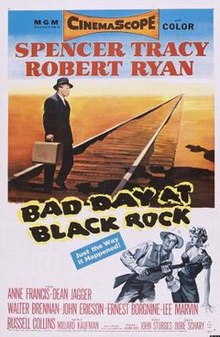
Bad Day at Black Rock (1956)

Spencer Tracy is the only just man in town, in brilliant modern Western Bad Day at Black Rock

Director: John Sturges

Cast: Spencer Tracy (John J Macreedy), Robert Ryan (Reno Smith), Anne Francis (Liz Wirth), Dean Jagger (Sheriff Tim Horn), Walter Brennan (Doc Viele), John Ericson (Pete Wirth), Ernest Borgnine (Coley Trimble), Lee Marvin (Hector David), Russell Collins (Mr Hastings), Walter Sande (Sam)

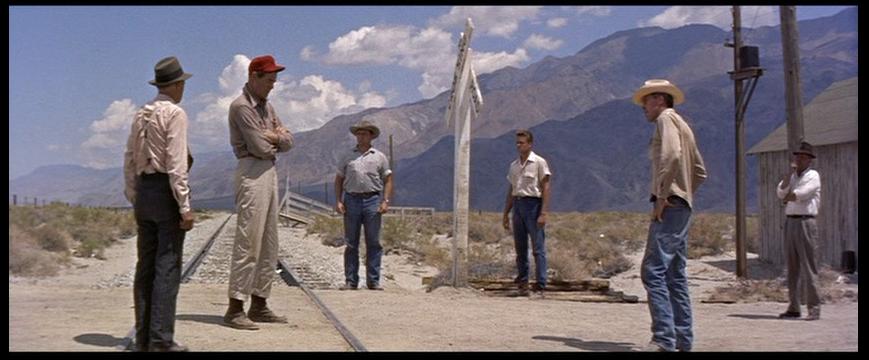
A man walks into a town. It’s a dust bowl town, looks like it’s just one street with a few buildings. The natives sit warily outside the bar and treat the stranger with suspicion. Trigger fingers are itchy. Is it the Wild West? No it’s 1945, but the new guy in town is about to find out just how unfriendly the American West can be. Just as well that, despite only having one hand, he’s more than capable of looking after himself.

Spencer Tracy, perfect as a man of rigid principles and certainties who won’t waver in the face of any intimidation, is our no-nonsense hero Macreedy. Arriving in town, he’s looking for Japanese-American farmer Komoko, father of a deceased colleague from the war, but no one wants to talk about where he is or what happened to him. Sheriff Horn (Dean Jagger) is an alcoholic who doesn’t want to know anything, the local doctor (Walter Brennan) doesn’t want to get involved and hotel clerk Pete (John Ericson) doesn’t want to give Macreedy a home. Macreedy is tailed on arrival by a couple of intimidating heavies (Ernest Borgnine and Lee Marvin – the go-to guys at the time for these sort of roles), and quickly works out the town is run by local businessman Reno Smith (Robert Ryan) – and any secrets it holds ain’t coming out easy.

Bad Day at Black Rock is a classic western, set in a time when the world of the West had been left far behind. American culture has a romantic longing for rural, small-town America, and the heroic past of the pioneers of the old West. Bad Day inverts a lot of this mythology: this America is horribly corrupt, unspeakably racist and hiding no end of dirty linen in its cupboards. In fact, small-town America is horrible, while the man from the big city represents all that is good – that in itself is quite a surprise turnaround from what you might expect from Hollywood.

In many ways it’s a very simple, very gripping, film. Macreedy’s arrival in the town sparks guilty consciences and sets the town bully, Reno Smith, into a quiet, panicked breakdown. We know watching it roughly where the film is likely to go. However, what Sturges does well is to invest this with so much attention. Huge chunks of the film involve both Macreedy and the men of the town, tensely trying to work out what is going on, or watching and waiting to see what opportunities there will be. It’s a film packed with moments of waiting or characters sitting and watching, talking around subjects rather than tackling the big questions they want to ask. It sounds slow but it actually builds up an extraordinary amount of danger and feeling of danger.

It’s a drama that works on the slow burn while also being a very short, snappily paced film. The best part of the first half-hour of the film is the careful establishing of the atmosphere, the relationships between the different characters, and the politics of this Western town. In the middle of this we have Macreedy, the man of mystery whom we know nothing about, who never seems to rise to the unfriendly intimidation he meets from every corner. You know that all this tension is going to erupt into something serious – but the film constantly leaves you guessing exactly how it will pan out and keeps you surprised about who ends up on which side.

You couldn’t get a better actor for this role than Spencer Tracy. There is something so rigidly determined about Tracy in this film, so adamantine and determined – the sort of man who operates in rights and wrongs, who even in this world of intimidation and terror tries to play by some sort of rules for as long as he possibly can. What’s so great about Tracy in this film is that he seems like both a stranger in black and a disappointed dad, with the people in the town constantly letting him down. The film also teases us for a long time – we suspect throughout that Macreedy is more dangerous and more capable of looking after himself than he appears. (It was Tracy who insisted, by the way, that Macreedy be made one-armed, as he thought it could give Macreedy an interesting vulnerability to overcome). 

The film makes us wait for its three action set-pieces: a car chase, a bar fight and a shoot-out. But it’s perfect in its patience, because violence always seems like it could burst out at any time. Marvin and Borgnine as the obvious heavies do great work as different types of overt muscle. Robert Ryan as the corrupt guy who really runs the town is especially good as a man who seems, under his dominance, to only just be holding onto his self-control, going to great lengths to prevent himself getting into trouble. It’s a point that Macreedy himself makes – deep down, Smith doesn’t have the guts to do his dirty work alone, and gets his strength from controlling others. All this delicate mixture of guilt and fear that bubbles under the surface of Smith is apparent in Ryan’s excellent performance.

But then no-one in the town is in control. Dean Jagger’s moral weakling sheriff is a drunk and a pathetic loser. Walter Brennan’s (very good) doctor wants to do the right thing, but lacks the guts to do it. John Ericsen’s hotel clerk knows he’s in the wrong, but isn’t brave enough to stand his ground. Their lack of control is in fact the root of the problem – Macreedy would never have suspected there were any dark secrets to uncover in the town if the people there hadn’t treated him with such overt suspicion. Sturges captures this perfectly (even if I think the Cinemascope width of shot isn’t perfect for a film that gets so much play out of claustrophobia and suspicion).

Politically the film is pretty simple – racism ain’t good you know – but as an example of brilliantly assembled Western tension and moral righteousness, mixed with a bit of action, adventure and claustrophobia, it works really well. Brilliantly directed, and very well written as a piece of expressive theatre, this is terrific with some wonderful performances. And front and centre is Spencer Tracy as the ultimate man in black, a man with moral certainty and courage, whom it’s impossible not to admire.

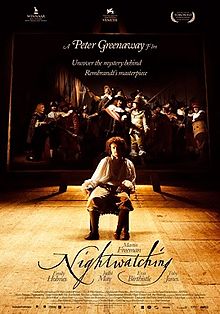
Nightwatching (2007)

Martin Freeman is the great artist Rembrandt van Rijn in this bizarre part drama part art lecture

Director: Peter Greenaway

Cast: Martin Freeman (Rembrandt), Eva Birthistle (Saskia van uylenburg), Jodhi May (Geertje Dircx), Emily Holmes (Hendrickje Stoffels), Toby Jones (Gerard Dou), Jonathan Holmes (Ferdinand Bol), Natalie Press (Marieka), Fiona O’Shaughnessy (Marita), Adrian Lukis (Frans Banning Cocq), Adam Kotz (Willem van Ruytenburch), Michael Culkin (Herman Wormskerck)

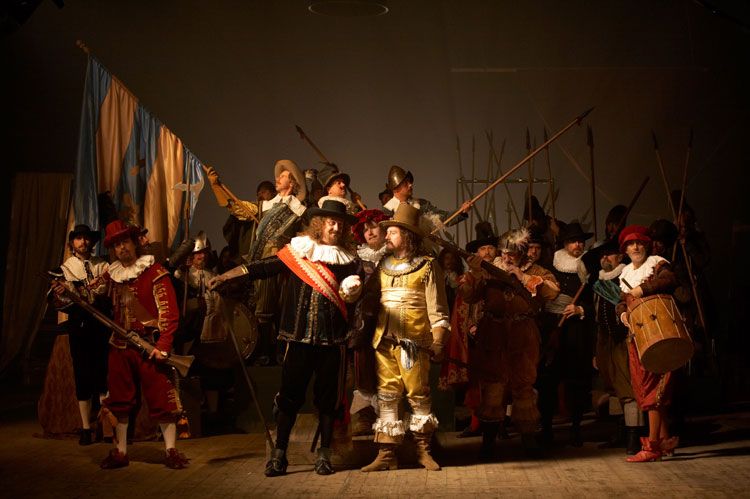
There are few artists who have such a distinctive visual style as Rembrandt van Rijn, perhaps the greatest of the Dutch masters. And there are few filmmakers with such distinctive style as Peter Greenaway. So this film is a sort of perfect marriage: Greenaway, the man who claims most of the world is visually illiterate and incapable of understanding the grace and depth of visual images (be they film or painting), taking the secret language of Rembrandt’s paintings.

Rembrandt (Martin Freeman) is hired to paint the Militia Company of District II. There is, however, a conspiracy in the company. Captain Hasselberg (Andrzek Seweryn), the original commissioner of the painting, is killed, seemingly in an accident, and replaced by Frans Banning Cocq (Adrian Lukis) and his lickspittle deputy Willem van Ruytenburch (Adam Kotz). Rembrandt believes the accident was in fact murder, removing Hasselberg so that the other members of the militia can profit in a financial deal with the British government (I won’t go into the details). Alongside this, the film also looks at the personal life of Rembrandt and his relationship with his wife Saskia (Eva Birthistle) and, after her death, his maids and mistresses, Geertje (Jodhi May) and Hendrickhe Stoffels (Emily Holmes).

Peter Greenaway is a visual stylist that’s for sure. The film takes place (apart from a few outdoor sequences in a forest) in a sort of representative set that looks a bit like a combination of a theatre stage and the bare framework of a Dutch interior painting. The camera frequently uses the width of the frame to squeeze in full-body shots of its characters, and the width and depth of the room, to try and replicate as much as possible the look and feel of these artworks. An early discussion of colour (and how to describe it) is illustrated by Geertje opening curtains in a representation of Rembrandt’s bedroom, with each colour (red-yellow-blue) in turn flooding the room from the open windows. The film looks distinctive and impressive, the costume design is meticulously researched, and the artful framing to ape the conventions and styles of Rembrandt’s painting is extremely well done.

What is less well done is the actual story itself, which is largely inert and frequently dull, and takes ages to outline what is, to be honest, a not particularly interesting conspiracy. It then intercuts this with scenes and moments from Rembrandt’s domestic life, but never ties the two of these together into something coherent. Too immersed in the details of the case to be the sort of dream-cum-fantasy of previous Greenaway films like The Draughtman’s Contract, and too preoccupied with the director’s narrative laxity to become a proper character study or piece of investigative fiction, the film rather uncomfortably falls between two stools becoming neither one thing or the other.

In fact, you almost sense Greenaway’s heart wasn’t really in it, that he really wanted to make Rembrandt J’Accuse, the companion art lecture illustrated with moments from this film, which really goes to town on his conspiracy theory. The details of the conspiracy (extremely hard to follow here) are at least easier to follow in Rembrandt J’Accuse, where they make a batty but enjoyable Dan Brownish argument – even if it is based on hands being drawn “without commitment” and elastic interpretations of visual language. To be honest, for all that Rembrandt J’Accuse is a bit odd – and that Peter Greenaway has an air of an ultra-pretentious Johnny Ball in his addresses to the camera – it actually makes a far more compelling piece of cinema than the narrative film it sits alongside.

Which is a shame because, as well as the design, there is a lot of good stuff here, not least in the performance of Martin Freeman. Cinema and TV’s eternal nice-guy gets to stretch himself fantastically as an electric, compelling genius overflowing with passion, ideas, intelligence and a chippy (frequently foul mouthed) confidence, mixed with an insatiable sex drive and nose-thumbing defiance. Freeman really gets the sense of a complex, earthy, fiery man who knows he is the smartest man in the room, and is extremely cocky with it – but also has a keen sense of justice and decency. It’s about a million miles away from Tim or Bilbo, and a big reminder that he is a hell of a performer.

Put Freeman in with the thrilling design and painterly flourishes of the film, and you’ve got sections that are really worth watching. Eva Birthistle is very good as his intelligent and articulate wife, as is Johdi May as his earthy, ill-tempered, sensual lover. Nathalie Press is heart-breaking as an illegitimate girl with a tragic life. Adrian Lukis is particularly smarmy and vile as the head of the militia. In fact, most of the performances are great.

It’s just the story is not. Moments of investigation are just building into something logical and coherent when they get interrupted by straight-to-camera addresses (very odd) from the members of the Rembrandt household explaining their personal situations. Just as we start to get invested in the loves of Rembrandt, we get thrown back into the dull conspiracy. When the two overlap, neither is really served. The story frankly isn’t interesting enough. That’s even before you have to wade through the inevitable Greenaway penchant for including as much full-frontal nudity as possible (Freeman and May in particular) and graphic sex in multiple positions and orifices. I mean, I get it, Rembrandt was a lusty guy but do we need to keep seeing it?

Nightwatching is a bizarre oddity – a vehicle for a commanding lead performance, with an actor cast way against type, that never decides whether it is some sort of biography of an artist or a secret-history-expose of a conspiracy forgotten by time. As always with conspiracy theories you suspect the obvious-but-dull is probably the truth – Rembrandt delivered a painting that was so radically different from the dull line-up paintings of this genre that it shook up the art world (not in a good way) and then he fell out of fashion, didn’t have a good understanding of money, and went bankrupt, rather than being destroyed by a shadowy Amsterdam cabal. Greenaway is so in love with his theories – and his usual lusty and psychological obsessions – that he ends up with something that is neither a drama or an art lecture but somewhere in the middle with the worst aspects of both.

Gorky Park (1983)

William Hurt investigates murder in Soviet Russia in ace adaptation Gorky Park

Director: Michael Apted

Cast: William Hurt (Arkady Renko), Lee Marvin (Jack Osborne), Brian Dennehy (William Kirwill), Ian Bannen (Prosecutor Iamskoy), Joanna Pacula (Irina Asanova), Michael Elphick (Pasha), Richard Griffiths (Anton), Rikki Fulton (Major Pabluda), Alexander Knox (The General), Alexei Sayle (Golodkin), Ian McDiarmid (Professor Andreev), Niall O’Brien (KGB Agent Rurik)

Martin Cruz Smith’s novel Gorky Park was a bestseller in the early 1980s. It looked at grim goings-on behind the Iron Curtain, a trio of grisly murders in Moscow’s Gorky Park (the bodies are faceless, toothless and fingerless to avoid identification). The murders are investigated by Arkady Renko (wonderfully played in this film by William Hurt), a chief investigator for the Moscow militia who feels out of place in the corruption of Soviet Russia, but is equally scornful of the consumerism of the West. The investigation delves into a complex web of Soviet relationships with American business and the dissident community, not least an American millionaire fur trader Jack Osborne (Lee Marvin), and a would-be defector and possible friend of the victims, Irina Asabova (Joanna Pacula).

What I loved about this film is the novel is a rather overwhelming 500+ pages, but this film is a brisk and pacey two hours – and I literally couldn’t think of a single thing missing. But then that’s what you get when you have a master writer adapting your screenplay. Gorky Park has Dennis Potter, perhaps the greatest British TV writer of all time – and this is a sublime script, which keeps the pace up, covers all the tense greedy wrangling of the villains, and also makes subtle and telling points about the Soviet system, all in a punchier and clearer way than the books. The dialogue is also absolutely cracking, ringing with a brusque, icy poetry, with a brilliant ear for a turn of phrase.

Filmed on location around Helsinki and Glasgow among other places, what the film misses in actual Russian locations (needless to say the Soviets were not keen to host the production of a film that showcased murder and corruption at the heart of their capital city), it makes up for with Apted’s taut direction and eye for the general crappiness of Soviet life. Everything is run down, everything is dirty, everything looks cold and unappealing, even the houses and luxury bathhouses of the party leaders look a bit middle-class and uninspiring. By the time (late in the film) that you find yourself in one of Osborne’s houses you are immediately struck by the quality of the furnishings – it’s literally a different world.

This atmosphere not only creates something a bit more unique, it also allows us to relax and enjoy the quality of Smith’s story. I found it overstretched in the book, but the film gives it an urgency and a sinister creepiness that grips your attention. Apted has a brilliant eye for the little tricks to survive living in a police state, from watching what you say, to carefully placing a pencil in a dialled telephone wheel to prevent bugs from activting. Every moment is well paced and nothing outstays its welcome. Characters are introduced with skillful brushstrokes, and the relationships feel real and lived in. With such strong dialogue, it’s also great they got such good actors to do it.

William Hurt takes on the lead, and he is perfect, affecting a rather clipped English accent (all the Russians speak with various regional or RP accents). With his unconventional looks (part boyish, part stone-like), he looks the part and he totally captures the yearning unconventionality of a character who deep down probably would be a true believer in a good society, but can’t believe in the corruption around him. Far from the stereotypical would-be dissident, Hurt makes him a man who loves his homeland, but not always the people running it. He’s exactly as you would picture Renko in the book – a guy who will go for justice with the bit between his teeth, a semi-romantic hero, no superman (he frequently is bested in combat), who is looking for something to love and believe in.

The rest of the cast are equally fine. Lee Marvin is cast against type as a suave, hyper-intelligent, manipulatively greedy businessman – although his reputation for playing heavies comes in handy when the gloves come off. Joanna Pacula mixes sultry Euro-siren with an urgent yearning for freedom. Ian Bannen is wonderfully avuncular as Renko’s supportive boss (extra points for Tinker Tailor fans that Bannen is reunited here with Alexander Knox, in a dark reflection of their Control-Prideaux working relationship from that series). Michael Elphick seizes on the part of the down-to-earth Pasha, Renko’s friend and comrade, a role greatly improved from the book (largely to give Renko someone to bounce ideas off).

Apted’s film has a great sense of tension and a wonderful feeling for Soviet Moscow’s dark underbelly. The mystery is increasingly gripping and involving as the film goes on – and, in a nice rug-pull, turns out to be about something totally different than what you might expect. Even the final shootout is assembled and shot with an unexpected vibe. It avoids any Cold War pandering – the main villain is a sadistic American allied with Russians, our hero a noble Russian who partners up with a salt-of-the-earth but decent American cop (Brian Dennehy, also very good). For a late night mystery thriller, with a touch of everything thrown in, you can do a lot worse than this. I enjoyed it far more than I expected. I’d almost call it an overlooked B-movie gem.

Close Encounters of the Third Kind (1977)

We Are Not Alone in Spielberg’s optimistic sci-fi classic Close Encounters of the Third Kind

Director: Steven Spielberg

Cast: Richard Dreyfuss (Roy Neary), François Truffaut (Claude Lacombe), Teri Garr (Ronnie Neary), Melinda Dillon (Jillian Guiler), Bob Balaban (David Laughlin), J. Patrick MacNamara (Project Leader), Josef Summer (Larry Butler), Robert Blossom (Farmer), Lance Henriksen (Robert)

If you had any doubt that Spielberg in his prime was a fundamentally optimistic filmmaker, then sit down and check out this warm, extremely personal, tale of mankind encountering aliens. It’s one of the very few films that Spielberg also wrote the script for, and every frame is full of his trademark yearning love of the unknown and the childish sense of adventure in us all. In an era where you couldn’t move for depressingly grey films about the corruption of America, Close Encounters is all about dreams and hope.

Throughout mid-West America in the present day, strange crafts covered in lights are seen in the skies by ordinary people like repairman Roy Neary (Richard Dreyfuss). The American Government is very aware of the presence of aliens – recently in the Mojave desert, plans and ships missing since the 1940s have recently reappeared in perfect condition. Led by their UFO expert Claude Lacombe (François Truffaut), the government does its best to control access to, and knowledge of, the aliens. However, Roy Neary and hundreds like him are unable to shake obsessive visions of a strange landmark they seem drawn to create in art. While Neary’s wife Ronnie (Teri Garr) is unable to understand his obsessions, Neary finds a kindred spirit in Jillian Guiler (Melinda Dillon), whose young son has been taken by the aliens.

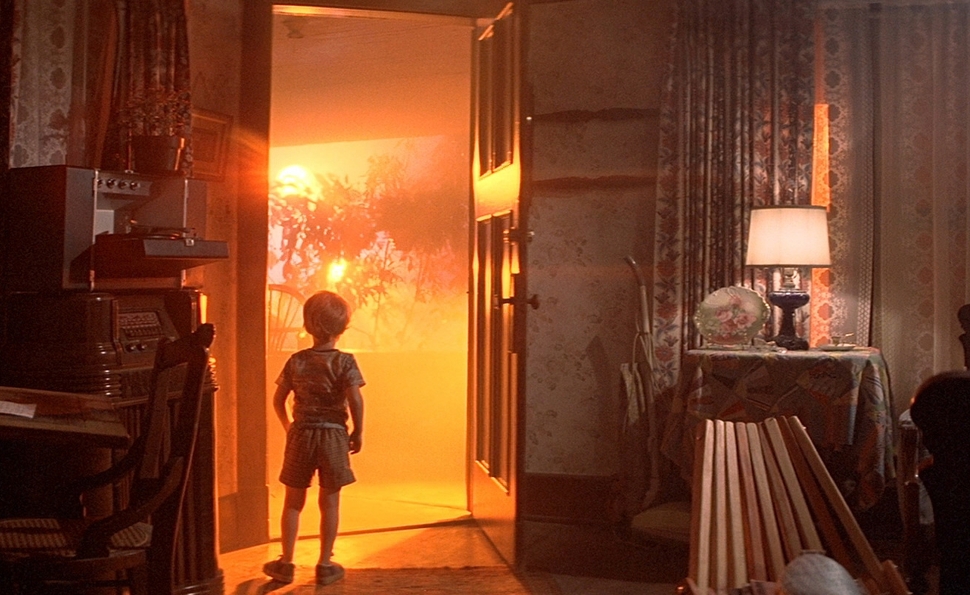
Spielberg has spoken about how, if he could take one image from one of his films to summarise his career, he would choose the one of young Barry Guiler opening the door to reveal an outside flooded with alien light. This also perfectly sums up the movie – a young, optimistic, innocent and instinctive reaction to something unknown but strangely wonderful. If that’s not Spielberg’s reaction – particularly at the start of his career – to the new and unusual I don’t know what is. The shot captures all these feelings, as well as being incredibly arresting and beautiful in itself. It places the viewer at the doorway (if you’ll excuse the pun) of hope and new possibilities in the future.

But then that is the whole film, a gentle exploration of what it might mean to discover we were not alone, especially if our alien visitors were unknowable but essentially benign. Plot-wise, very little happens. The aliens come, we puzzle out their message, the aliens come back. The last 30 minutes of the film are effectively an awe-inspiring light display as the aliens arrive. We learn nothing at all about what they want, what they are doing or what they wish to tell us. Instead it’s left entirely up to our own imaginations, and the magic is in finding our horizons broadened. Like Spielberg, the film is staring up at the sky and dreaming about the future.

And this all works extremely well. The cynicism of the modern age makes you want to knock Close Encounters, more than any other film in Spielberg’s cannon. You want to look at it like a cynical grown-up, to point out its romantic optimism and its gentle humanitarianism. You want to say that it’s unlikely that a government official with such control as Lacombe would be such a warm and wryly amused figure. You want to say that the army would probably be much more defensive in its attitude to the aliens. But the film is so swept up in its joyful discovery that you don’t mind.

Spielberg’s brilliance as a visual stylist here also works massively in the film’s favour. The striking images of the aliens travelling through the countryside or soaring through the skies are mixed with Spielberg’s mastery of the small scale and personal. He’ll compare the simple and homespun with moments of pure wonder and majesty. 

He can also brilliantly mix tension, wonder and fear. The scenes with the aliens intruding in the Guiler home, and later trying seemingly every entrance to the house to try and take Barry with them, are only a few degrees away from genuine horror. Watching the awe-inspiring arrival of the aliens, and their light show around a government facility in the wilderness, it’s hard know not to see how close this is in style, filming and design to the horrifying face-melting conclusion of Raiders of the Lost Ark.

All this optimism and yearning finds its expression in Richard Dreyfuss’ lead performance as Roy Neary. A deliberately average working man, with no desire to rock the boat, Neary is clearly a dreamer turned conformer, a man who still has a childish fascination with models, toy trains and Disney films. Perhaps this is why the aliens have a bigger effect on him than anyone else – it’s a chance for him to discover the sense of wonder and adventure you think he has probably left behind in adulthood. Dreyfuss sells playing a character who is essentially obsessive, manically building a model of the alien landing site, which involves trashing his house and scaring away his wife and kids.

Ah yes the wife and kids. If there is a problem with the film (and even Spielberg has acknowledged this) it’s that it’s very much a young man’s film. Neary’s wife and children are an encumbrance. Teri Garr, in a thankless role, is a nagging shrew who wants her husband (reasonably enough) to grow up and focus on supporting his family. His kids lack understanding or interest in their father. When they leave Neary, he seems (to be honest) not really that concerned – and their absence never troubles him again from that point. While I get Spielberg is focusing on the dreamer as a grown man, casting wife and children as problems that need to be overcome rather than people for whom he has considerable responsibility is something it’s harder to forgive the older you get. It’s easy to see Neary as more than a bit selfish.

Spielberg’s more conservative view of women and especially mother’s comes out in Jillian Guiler’s fierce maternal love for her child – needless to say she’s not fussed about the aliens, only in finding Barry. The kidnapping of Barry – harmless as it might be – is a sort of child-loss horror that feels even more unsettling today with our fears of what might happen to our children. But Dillon gives a good performance as the film’s mother figure, and does at least have the most emotionally true plotline, even if the film doesn’t want to touch the dark implications of her son’s kidnapping.

But this is a film about hope and dreaming, and when it focuses on that it does extraordinarily well. It’s a marvellous and visionary film, full of arresting and beautiful images. Truffaut, very good as the French UFO expert, I’m sure would have loved the film’s magical, old-school, hopeful Hollywood style. Spielberg is a clever and skilled director, with plenty of heart – even if he still at this point didn’t perhaps understand parenthood (something he himself has acknowledged) – and he crafted in Close Encounters a very personal film of an adult who still clings to childhood, who wants to look up at the skies and dream.

Magic Mike (2012)

Magic Mike: there are rare moments with most of the clothes on

Director: Steven Soderbergh

Cast: Channing Tatum (“Magic” Mike Lane), Alex Pettyfer (Adam “The Kid”), Cody Horn (Brooke), Matt Bomer (Ken), Olivia Munn (Joanna), Joe Manganiello (Big Dick Richie), Matthew McConaughey (Dallas), Adam Rodriguez (Tito), Kevin Nash (Tarzan), Gabriel Iglesias (Tobias)

The formula for Magic Mike is basically an all-boys Coyote Ugly mixed with a 1970s blue-collar social drama. But a blue-collar social drama where collars might be all the men are wearing. Based on Channing Tatum’s own experiences as a stripper back in the day (I’d be fascinated to find out how many of the things in this film Tatum got up to when he was a lad), Magic Mike follows the story of Mike Like (Tatum), a brilliant stripper who dreams of setting up his own bespoke furniture company (if that’s not an insight into the sort of eccentric film this is, you’ve got it there!). Meeting young Adam (Alex Pettyfer), he takes the kid under his wing and inducts him in the world of strip clubs. Adam gets a taste for the life, while Mike gets a taste for the company of Adam’s disapproving sister Brooke (Cody Horn). So mentor and mentee gradually find themselves drifting towards trouble.

Magic Mike is good fun mixed with some pretty standard low-rent crapsack world problems, as small-time crime and drugs intrude on the otherwise gentle world of professional male stripping. Magic Mike is essentially a sort of fairy tale, which wants to enjoy the dynamism of performing on stage while also casting a disapproving eye on its hedonism and emptiness. It’s the sort of film which wants to show what a great time you can have living that lifestyle in the short term, while also praising its hero for realising he wants more. You might think (and it has been sold and partially recut) into a hot stripping film, but deep down it wants to be a 1970s social issues drama. It just never quite gets there, because it doesn’t have the depth and can’t escape the cliches of coming-of-age dramas.

So it’s not exactly the most revelatory film in the world. What’s most interesting is that often in these films it’s the mentor who leads the mentee astray. Here, it’s the mentor who finds his life gradually being damaged by the mentee. Mike is basically a kind, decent guy who just hasn’t really grown up. Adam, whom he brings into the stripping world, is basically a shallow, lazy, increasingly selfish person who is only interested in himself. While deep down Mike knows that stripping and all its hedonistic temptations are only a means to an end, for Alex it is the end, and he wants to lead this sort of life forever.

Mike’s basic charm works so well because it’s rooted in Channing Tatum’s own charm as a performer. He has a sweet, puppydog quality as well as a fundamental little-boy-lost innocence, which should seem strange for a bloke who rips his clothes off and gyrates semi-naked on a stage in the laps of cheering women. But it makes sense. The show is a brilliant showcase for Tatum, not only showing his acting and performing strengths but also showcasing his dancing and movement skills. As well as, of course, his chiselled torso. The film front and centres a rather sweet will-they-won’t-they with Mike and Alex’s sister Brooke, played with a sweet firmness by Cory Horn. And there are a host of other excellent performances, not least Matthew McConaughey stealing scenes as club owner Dallas, hiding his greed under a domineering bonhomie.

The film stops frequently for elaborate stripping scenes in manager Dallas’  club. These are put together with real wit and engagement, and while the film never really explores the issues in stripping (no touching from the guests, performance enhancing drugs, the hedonistic openness etc. etc.) it does make a change to see the men of the film being treated entirely as sex objects and not the women (or at least not as much, this still being a film that opens with a semi-nude Olivia Munn). Soderbergh though has always been a proficient technician rather than the sort of intelligent artiste he would like us to think he is, so it’s a not real surprise that most of the film is more flash than depth.

So that’s perhaps why the film largely settles for being a standard “man needs to grow up and leave his old life behind” and “young buck goes out of control” story. The structure of this, and its air of kitchen sink drama as we see Mike struggle to get a loan to start his business, or deal with a stripping event gone wrong as Alex brings drugs to a private party, is something that contrasts nicely with the more dynamic stuff in the club. All this is pretty standard arc material – and Soderbergh’s film dodges really drilling down into some of the issues it touches on. 

Magic Mike is a fun film with a touch of depth, that wants to combine a character study with a study of its stars’ characterful bodies. It only touches upon some of its themes, and tells a fairly traditional story under all that. But it’s got a sort of charm, and it delivers its cliches with aplomb. But then I’m not sure I’m quite the target market for it.

The Man From UNCLE (2015)

Armie Hammer and Henry Cavill try, and fail, to get some zing out of The Man From UNCLE

Director: Guy Richie

Cast: Henry Cavill (Napoleon Solo), Armie Hammer (Ilya Kuryakin), Alicia Vikander (Gaby Teller), Elizabeth Debicki (Victoria Vinciguerra), Jared Harris (Adrian Sanders), Hugh Grant (Alexander Waverly), Luca Calvani (Alexander Vinciguerra), Sylvester Groth (Uncle Rudi), Christian Berkel (Udo Teller), Misha Kuznetsov (Oleg)

The Man From U.N.C.L.E.was a 1960s TV spy caper series, which I confess I’ve never seen an episode of but I’m reliably told (by my wife who has) that it’s all larks and fun. This Guy Ritchie remake, on the other hand, is a tonal mess that has no idea what the hell it is. Only Hugh Grant gets anywhere near to appearing in a caper movie – probably because he’s virtually the only member of the cast who might have grown up watching the original series.

Anyway, in the early 1960s Napoleon Solo (Henry Cavill) is an international master-thief turned CIA agent (this suggests his character is a whole lot more fun than he actually is). Ilya Kuryakin (Armie Hammer) is a KGB super-agent, dealing with issues of psychosis (yup more fun to be had there). This odd couple are ordered to team up and work with car mechanic (no seriously) Gaby Teller (Alicia Vikander), whose father is working with renegade Italian fascists, led by femme fatale Victoria Viniciguerra (Elizabeth Debicki), to build a new nuclear mastery over the world. Or something.

It should be a ridiculous, overblown, mix of Bond and high 60s camp. Instead it’s dreary, chemistry-free, largely uninvolving sub-Mission: Impossible high jinks that I’m not ashamed to say I dozed off during at one point. Would that I had slept through more of it. It’s quite damning when the most enjoyable thing about it is thinking about the accent Olympics going on (we have a Brit playing an American, an American playing a Russian, a Swede playing a German, an Australian playing an Italian, an Irishman playing an American…).

No matter which way the three leads are arranged, Cavill, Vikander and Hammer have no chemistry at all in any combination. There is precisely zero bromance between the two leads. Vikander and Hammer have a will-they-won’t-they romance that comes from absolutely nowhere and leads nowhere (set up for sequels that will never come). Cavill looks the part, but completely lacks the cheeky, self-confident, “I’m-enjoying-all-this” charm that the part requires – instead he’s flat and boring. Hammer has more of the winking-at-the-camera cool, but he’s saddled with a part that frequently requires him to burst out in hotel-room-trashing outbursts of anger. Vikander just looks a bit bored with the whole thing.

These rather joyless characters go through a series of action set pieces, none of which got my pulse racing, and all of which felt like off cuts from a lousy Mission: Impossible sequel. Car chases, fisticuffs, gun fights, explosions, boat chases – they all tick by with no wit or pleasure involved anywhere. In these sort of things, you need to feel the characters are such adrenaline junkies that they sorta enjoy the crazy antics they get thrown into – you don’t get any of that from these three.

Much as I like Elizabeth Debicki, she can do little with her underwritten part – I mean I get that the plot isn’t the main thing in a film like this, but they could have at least given our villain a character. Instead she is as cardboard cut-out as the rest of the storyline. The acting from the bulk of the cast is also really odd – some seem aware they are in a tongue-in-cheek spy film, others seem to think they are in an espionage thriller. It’s a mess. There are scenes of pratfall comedy followed by grim scenes of torture and violence. In one juddering moment of this spy romp, the flipping Holocaust is dragged in as a shorthand for identifying a character as an “ultimate villain” – which given he had our hero strapped to a chair and was about to torture him, I think we could all have worked out without exploiting genocide. Anyone else think pulling this appalling real world event (with photos!) into a stupid caper movie is really tasteless? Did no one watch this thing while it was being edited?

I will say the design is pretty good and it’s well shot. But compare this to the fun and games of Guy Ritchie’s Sherlock Holmes films (which this is obviously trying to emulate) and the total lack of chemistry at its heart becomes immediately clear. Hugh Grant is a complete relief when he turns up as he’s the only actor who actually looks like he is enjoying his part and wants to be there. It was a big box office bomb and it’s no surprise. No one is having fun, the spirit of the original series seems to have been completely lost, and the lead actors totally fail to bring the leading-man pizzazz the film needs. Perfect if you want a nap.