12 Angry Men (1957)


Henry Fonda must win over 12 good men and true in 12 Angry Men

Director: Sidney Lumet

Cast: Henry Fonda (Juror #8), Lee J Cobb (Juror #3), Ed Begley (Juror #10), E.G. Marshall (Juror #4), Jack Warden (Juror #7), Martin Balsam (Juror #1), Jack Klugman (Juror #5), Joseph Sweeney (Juror #9), John Fiedler (Juror #2), Edward Binns (Juror #6), George Voskovec (Juror #11), Robert Webber (Juror #12)

A young man is on trial for murder. The jury retires to consider. On the first vote, only one man (Henry Fonda) questions his guilt. The other jurors are convinced they are right – can Fonda turn them around?

Who hasn’t done jury service and dreamed of being Henry Fonda? 12 Angry Men is perhaps the most compelling courtroom drama ever, for that very reason: hardly any of us are judges or lawyers, but we’ve all got a decent chance of doing jury service. What would we do in this situation? How thoughtful would we be about the evidence? And, of course, that little stab of ego – could we be charismatic and persuasive enough to sway a room of people? I think this is why this film sticks with people and has become such a persuasive part of our popular culture – we all wanna be Fonda.

12 Angry Men is a film that I feel touches perfection. I thought quite heavily about whether I could identify any flaws in it at all: the closest I got at was the shot Lumet throws in of the suspect (a sweet looking kid). I suspect this shot was required so that the 50s audience could be confident that Fonda was crusading for someone who at least looked innocent (although it always makes me think, since so many of the other jurors make snap decisions, why doesn’t at least one of them look at that cute kid and think “he ain’t no killer…”). Aside from that, I don’t think there is a single mis-step in the filming, acting or writing of the film – and how many times can you say that?

Lumet is a director who doesn’t get a lot of public recognition. He subordinates his skills to the requirements of the story, rather than an auteur who imposes his style. This works perfectly for this compelling slow-burn. Lumet’s expert filming quietly lets the actors and dialogue stand front-and-centre, while cleverly using his camera language and shot choices to amp up the tension.

At first, Lumet uses wider and high angle shots, allowing us to get a sense of the room and the characters. But the real effect of this plays out over the rest of the film, as Lumet slowly moves to tighter angles at POV height, until the final sequences are played out over a series of close-ups cutting from juror to juror, at low angles. What this achieves brilliantly is to make the film feel tighter and more claustrophobic – the room feels like it’s actually shrinking in on the jurors as they argue. You can get a sense of it in the videos below, both early and later in the film.

The film also works so brilliantly because it offers a brilliant insight (and critique even?) of the legal system. The one legal professional we see is a bored judge. All references to the unseen lawyers mention either their showmanship or inadequacy. Even the jury system is subtly called into question: several of the jurors are motived more by prejudice and personal experience than by any analysis of the evidence. Others are flawed in other ways; #12 switches sides indecisively three times while #7 is so impatient and bored with the whole process, he follows the direction of the least resistance. Without #8, a decision would have been made with no discussion at all. Even the very process of taking the vote is shown to root many of the jurors down to “sides” and creates an atmosphere of competition that becomes as important as seeing justice done. And in a system of trial by your peers, only #4 in any way identifies himself as sharing the background of the man on trial. Is this a perfect system?

These ideas, though, are skilfully interwoven in the background of a gripping legal thriller. 12 Angry Men is completely objective. We never see the witnesses whose performance is the cause of such analysis. We never see the scene of the crime. We don’t have any confirmation at all that either side is right. It’s a film about the importance of reasonable doubt – and the need to be absolutely certain before sending someone to the chair. Fonda feels that doubt – and persuades the other jurors of it – but we never know if he was right or not. We never know if any of the suppositions in the jury room are true – the important thing is how high the possibility is that they might be true – and how much that affects our willingness to convict.

The film is one brilliant set-piece after another, as each piece of evidence is interrogated. I honestly can’t decide which one I like the most. What makes it work is the variation of how each case is presented. The film is as comfortable with the drama of #8 flinging a replica of the “unique” murder weapon onto the table, as it is with a careful dialogue-led dissection of the eyesight of a key witness. Who can resist Fonda limping around an approximation of the next-door neighbour’s flat to see if he can cover a certain distance within a certain time. It helps that the dialogue is incredibly rich – it has to convey a lot of information, but also manages to sketch out each of the characters so swiftly and carefully that each of them feels real.

And we’ve come all this way and not even mentioned the performances. Again, each viewing gives me a chance to appreciate a new performance: my eye was caught on this viewing by Robert Webber’s seemingly cool and collected advertising man, who has far less certainty than he projects. Needless to say each actor is brilliant. Fonda (who also produced) is the very image of moral authority – as well as a generous collaborator on the movie. Is this his best performance? It’s got to up there – #8 is a humanitarian, but he’s never smug or self-serving, just a man who feels a strong sense of his own obligation.

If Fonda is the superego, Cobb’s #3 (the primary antagonist, if there is such a thing) is the ego – raging, elemental, decisive, unshaken in his beliefs. Cobb’s performance veers the closestto a little too stagy, but it’s a character that demands it. His bluster and swaggering are vital to the character in order to make his later emotional collapse work as well as it does – and #3’s final emotional disintegration really rings true. It’s a ferociously intense performance.

Each actor gets his chance to shine. Voskovec’s sensitive immigrant has a wonderful speech on the responsibility of passing judgement. The most barnstorming speech is Begley’s racist outburst late in the film. It’s beautifully done as this loud-mouthed bully explodes with frustration, then slowly and even rather sadly collapses as he talks on and on, each sentence making him weaker and weaker, more defensive and vulnerable. But it’s never a scene about just one man – the reactions are as well judged as everything else. And I can’t tell you how much I love #4’s “I have [listened to you]. Now sit down and don’t open your mouth again” one-line response which caps the scene.

In fact just mentioning #4 brings on my love of E.G. Marshall’s performance in this film. #4 should be one of the least engaging characters in the film – coldly analytical, professional, assured and clear minded. But he’s always human, never an antagonist, but a respected citizen – the only one of the jurors who is motivated by judgement rather than prejudice. I love his calmness, his cool lack of regard for #3 and #10’s loud-mouthed berating, his patient, studied explanation of his convictions. I adore his calm puncturing and counterview of each point Fonda puts forward, until he is finally won over – and its his winning over which makes the film work. If this thoughtful, intelligent man has doubts, shouldn’t we all?

But I repeat they are all great. Jack Warden’s #7 is totally convincing as (the film’s real villain?) a man indifferent to right and wrong when compared to his own needs. Balsam’s decent but ineffectual #1 is the perfect mediocrity in above his head. Sweeney’s wry, observant and shrewd #9 is a delight (Sweeney was the only member of the original TV play to be retained). Fiedler’s #2 grows in moral force throughout, belaying his quiet appearance. Klugman’s #5 is quietly defiant and conflicted. Binn’s #6 reveals himself as a mild, humble and honourable man.

I think I could watch 12 Angry Men every week of the year. It’s brilliantly filmed (how could I not mention the oppressive rain soundtrack that accompanies the latter part of the film) and wonderfully directed. The script is simply perfect, Reginald Rose expanding and enriching his original TV adaptation. The acting is nearly flawless from all concerned. It’s, quite simply, a great movie. I simply can’t imagine anyone not reflecting on this movie when heading into jury service. It subtly comments on the legal system, but never gets bogged down in this, telling a gripping and compelling story about things we never see. It’s pretty damn near close to perfection.
Eye in the Sky (2015)


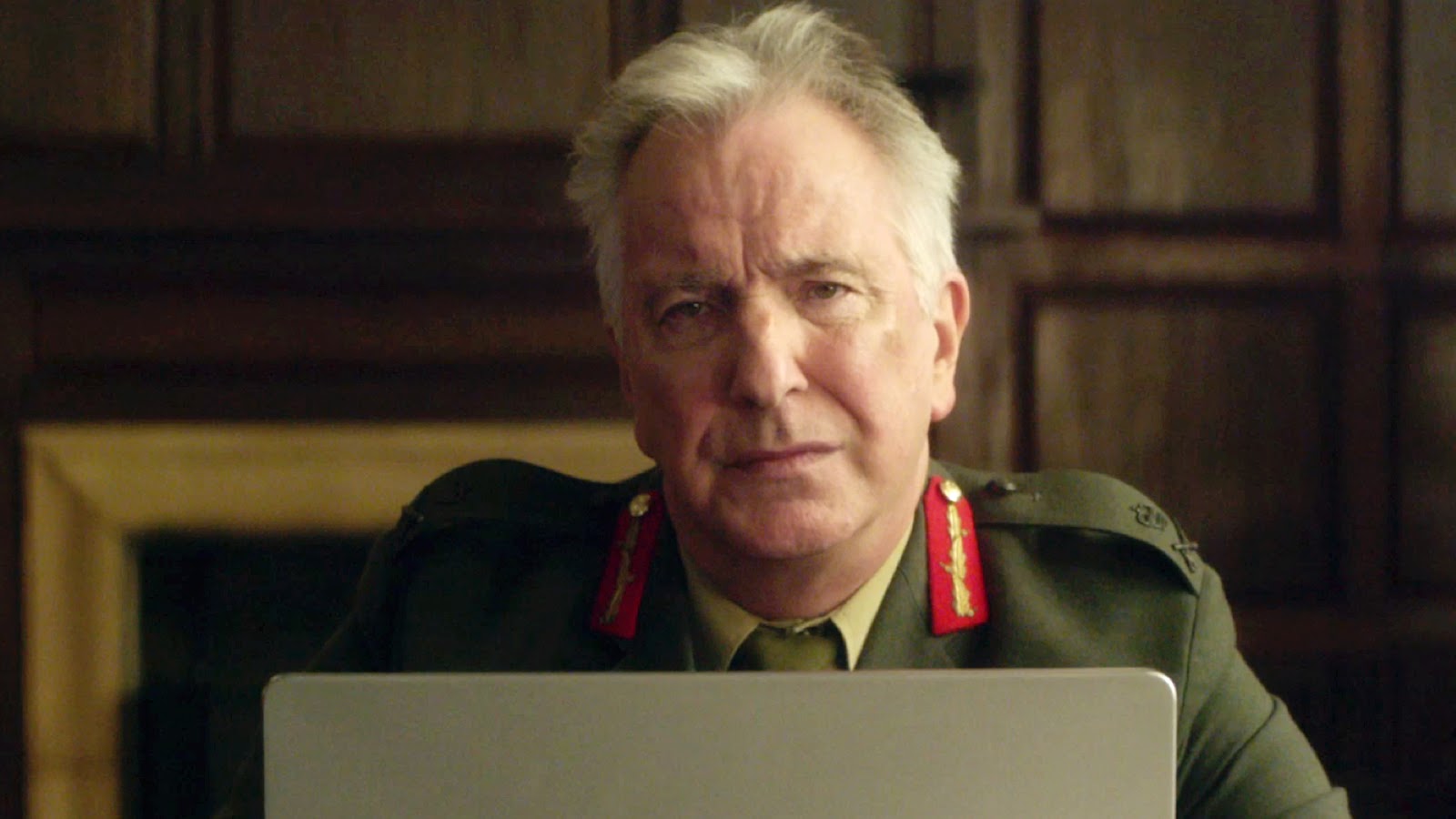
The great Alan Rickman is an exasperated General, in drone-strike moral fable Eye in the Sky

Director: Gavin Hood

Cast: Helen Mirren (Colonel Katherine Powell), Aaron Paul (Lt. Steve Watts), Alan Rickman (Lt. General Frank Benson), Barkhad Abdi (Jama Farah), Jeremy Northam (Brian Woodale), Iain Glen (Foreign Secretary), Monica Dolan (Angela Northman), Richard McCabe (George Matheson), Phoebe Fox (Carrie Gershon), Babou Ceesay (Sgt. Mushtz Saddiq), John Heffernan (Major Howard Webb)

As Shakespeare said, sometimes we are urged: “to do a great right, do a little wrong”. Eye in the Sky is a film about that dilemma. Numbers 2, 4 and 5 on the terrorist “Most Wanted” list are meeting in a house in Kenya. They are preparing suicide bombers. A series of attacks could be minutes away. A drone strike will probably save hundreds of lives. Seems obvious doesn’t it? Unfortunately, sitting in the fatality zone is an innocent young girl, just trying to sell bread. Take out the bombers and you’ll save dozens of other children – but you’ll almost certainly kill this one child.

Your initial reaction to this sort of situation would probably be “thank goodness that’s not my decision”. Problem is, you get the feeling many of our elective representatives feel the same: as the situation escalates (from capture, to kill, to controlled strike, to a certainty of civilian casualties) so does the buck-passing, from politician to politician all unwilling to make a call.

Guy Hibbert’s well researched and thought-provoking script combined with Gavin Hood’s taut direction make this a gripping conversation thriller about the impossibility of moral debates. Hibbert’s script brilliantly piles moral debate on moral debate – just as we accept the desirability of one action, the circumstances change with bewildering speed. Everything, from a change of travel plans to battery failure on a vital piece of equipment, amps up the pressure and makes the situation more morally unpalatable.

The buck-passing becomes almost a dark farce in this expert script. A put-upon civil servant is repeatedly sent to communicate with a string of senior leaders, from the Foreign Secretary to the Prime Minister. Later a crucial decision takes place over a conference call, with an ever-expanding series of international attendees. It’s like a deadly serious Yes, Minister, with Jeremy Northam’s junior minister a flummoxed and vacillating Jim Hacker.

The military seems equally divided – senior officers focus on the big picture, aware of the evil they must do but seeing it as a necessity to prevent worse acts, but the junior ranks actually executing the strikes push back with increasing distress. Mirren’s colonel pressures a sergeant into effectively falsifying a fatality prediction for the girl, to push her superiors into authorising the strike on this vital target. A shallower film would have played great play of this. But Hood and Hibbert never take that easy route.

The film also explores distance conflict. Nearly all the participants are based thousands of miles away, watching on screens and pushing buttons. Rickman’s General has a knock-out final speech about his first-hand experiences of the horror of suicide bombings – and compares this to the moral objections of the greatest opponent of military action in the film, who has watched it all play out with “coffee and biscuits”. Remote warfare is neither in itself good or bad – and those objecting to actions are not angels, just as those pushing for action have their own moral reasons for doing so, and the film demonstrates that amidst all this, the “right answer” (if there is such a thing) can be almost impossible to identify.

Conversation thrillers like this are dependent on the quality of the actors – so it’s lucky we’ve got a great cast here. A gimlet-eyed Helen Mirren is as tough as you’ve seen her as the field commander who suppresses all doubt in pursuit of the greater good. In his last on-screen role, Alan Rickman gives one of his best performances as a wry, humane general who has come to terms with the hideous moral cost soldiers have to bear. His increased exasperation at the procrastination of his political masters adds some black comedy, but he also gives the character a wonderful humanity (a prologue in which he struggles to buy his grandchild a present is not only wonderfully witty, but humanises the character immediately).

Few actors do tortured conscience under the surface better than Aaron Paul – and his drone pilot turned reluctant killer provides much of the moral force of the film. Paul’s sensitive and anguished divide between following orders and living with the knowledge he’s wilfully condemning a child to death is beautifully done. Barkhard Abdi grounds his field operative not only with much of the film’s more conventional derring-do, but also layers the character with dedication and selflessness.

Eye in the Sky is a marvellous piece of tense and layered film-making. It makes high drama out of moral quandaries, and really makes us pause to stop and think about the impact of our decisions both in a wider context, and a very painful immediate one. The professional military figures – even Mirren’s cold Colonel Powell – are motivated by a painful familiarity with acceptable loss, rather than gung-ho aggression. The politicians struggle to reach a decision not only through reluctance, but with empathy for their potential victims. It overeggs the pudding with its final shots of the young girl who has unwittingly been at the centre of a major international incident, but other than that it hardly puts a foot wrong.

Walkabout (1971)


The blistering heat of the Australian wilderness is the setting for Roeg’s profound and troubling film

Director: Nicolas Roeg

Cast: Jenny Agutter (White girl), Luc Roeg (Brother), David Gulpilil (Aboriginal boy), John Mellion (Father)

Some films are hard to read. Others delve gently into ideas so complex and obscure that they need patient attention to follow. And other films are so elliptical and enigmatic they almost defy understanding. Walkabout is such a film. What is it about? You could almost say “everything and nothing”. 

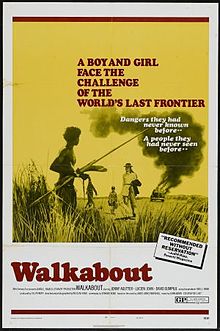
The surface story is strikingly simple. A 17-year-old girl (Jenny Agutter) and her much younger brother (Luc Roeg, the director’s son) are stranded in the Australian outback after their disturbed father first attempts to kill them (perhaps?) and then sets their car on fire and shoots himself. Quickly lost, with no idea how to get back to civilisation, they meet a young Aboriginal boy (David Gulpilil) on Walkabout. He saves them and agrees to guide them back to civilisation (perhaps?). But how far can cultural understanding go?

The story Roeg is telling underneath this bare-bones plot, though, is intriguing and troubling. Roeg uses the setting to explore the complex interrelationship between Western civilisation and the native civilisations it has displaced in many parts of the world. It’s also about ageing, sexual awakenings and the barriers (some of which we place ourselves) that prevent communication. This is all set in Roeg’s stunningly photographed, dreamlike representation of the Australian outback which is part surreal combination of cross-cuts and editing, part dark nature documentary.

It’s a haunting film where it’s never clear exactly what is happening, or what each of the characters is aiming to do ( “I don’t know” is a common refrain heard in the film). From the start, there is clearly something wrong with the Father in some way (with dark suggestions that he has too great an interest in his daughter’s burgeoning sexuality), but why does he turn partly homicidal (he puts little effort into pursuing his children) and then suicidal? The film gives no real clue.

This confusion about motives continues through the film. Does the Aboriginal boy really understand (or intend) the need to deliver the siblings back to civilisation? At one point he walks up a hill, is talked at by a white woman from a nearby settlement, then returns giving no indication he has discovered what they are searching for. Later he does the same after finding a road. Does he want to help? Or is he unwilling to let go of the spiritual closeness he can feel between the three of them?

Similarly, Agutter’s character undergoes a spiritual experience so profound, and yet so unsettling to her carefully conventional upbringing, she seems unable to process it. In the company of the Aboriginal boy we see her begin to relax and lose some of her carefully guarded inhibitions (this culminates in a famous naked swimming scene, which got the film in plenty of trouble in 2003 when the Age of Consent was raised to 18). But at the same time, she is never really able to communicate with the Aboriginal boy.

Her attempts to do so are almost laughably incompetent. While her younger brother develops a natural rapport using sign language, she is hopelessly wedded to verbal communication (she doesn’t even think to mime drinking when asking for water). In the outback, she clings far longer than the boy does to the accoutrements of civilisation in clothing and their radio. While she does relax, only at rare moments do we feel her humbled by the land around her. Their first moments together can be seen in the video.

Only for the briefest of brief moments, in an abandoned hut, do they meet briefly as equals – a silent moment of eyes meeting and a brief understanding of shared affection. It is shattered by her complete rejection shortly afterwards of the Aboriginal boy’s courtship dance – scared and confused (as much by her own obvious interest earlier), she pointedly ignores the dance, leaving the boy outside all night. The next day she and her brother are dressed in their school uniforms, as if nothing has happened.

Roeg’s final nihilistic observations – we may at points come closer together as a species, but we will only rarely ever be able to overcome the barriers we have created between ourselves. We may develop an immediate bond with people in extreme circumstances, but the closer we get to “normality” the quicker we reject those bonds and revert back to our ingrained behaviours.

This is all fascinating and deeply engrossing stuff – and it’s the sort of material you can reflect on over and over again. Roeg mixes this in with plenty of dark comparisons between our soulless modern world and the “savage” world of the Aboriginals – a comparison never flattering to the modern world. Roeg uses intercutting to point these up, particularly between the hunting of the Aboriginal boy, his respectful killing of a kangaroo, and our own mechanical slaughter and processing of meat. Now to be honest these sort of cutbacks are thuddingly dated and heavy-handed – the sort of holier-than-thou opinion making that quickly gets on the nerves.

A few of these sequences do work well. Near the end, the Aboriginal boy hunts when he is nearly crushed by a truck carrying two modern hunters. The truck skids to a halt and the hunters gun down several animals (the rather tiresome editing uses a series of still shots, crash zooms and distorted sounds) while the Aborigine looks on with confusion and disdain. In another sequence, the white woman the Aborigine met heads back to a settlement, where white men seem to be exploiting Aboriginal labour. She sits sadly on the bed staring into the distance. Moments like this, despite the often dated editorial tricks, do carry a real sense of the divide between two cultures.

Other sections of the film make similar points about the wildness of both the outback and the city world, but with increasingly dated and tired visual tricks – do we really need an umpteenth shot of maggots eating a corpse? Or more quiet pans along cold 1970s commercial surfaces? This is a shame, as the photography is beautiful. Roeg has an eye for a brilliant image – his shots of the Australian outback are some of the best use of sun and desert on film since Lawrence of Arabia. The film’s shots of the desert are simply stunning, with Roeg’s hypnotic series of images guaranteed to not only haunt your mind, but also to show an angle on the world you won’t have seen before.

Walkabout may be slightly dated in some of its production and editing techniques, but it’s a deeply thoughtful, unsettling work that asks profound and difficult questions about civilisation, life and death – the sort of film that rewards revisiting and reinterpretation. While many parts of it clunk in places, or have a distinct 1970s flashiness in their filmmaking, when it moves away from these rather clumsy ideas to deal with concepts that are more spiritual and intriguing, it’s a fascinating film.

Love is the Devil: Study for a Portrait of Francis Bacon (1998)


Derek Jacobi plays way against-type in dark art biography, Love is the Devil

Director: John Maybury

Cast: Derek Jacobi (Francis Bacon), Daniel Craig (George Dyer), Tilda Swinton (Muriel Belcher), Anne Lambton (Isabel Rawsthorne), Adrian Scarborough (Daniel Farson), Karl Johnson (John Deakin), Annabel Brooks (Henrietta Moraes)

Maybury’s film about the relationship between the painter Francis Bacon (a revelatory Derek Jacobi) and his lover, small-time crook George Dyer (Daniel Craig), is an overtly arty piece of cinema. It opens with Bacon mourning Dyer’s death – then flashes back to Dyer literally falling into the picture (Maybury films Craig falling through darkness over the credits) before crashing through Bacon’s skylight during a bungled robbery. Here to rob the joint, he ends up getting invited to bed. So Dyer stays on as live-in lover, model and odd-job man.

Maybury’s plans for making a film about Bacon looked like they had been scuppered early, when the Bacon Estate refused permission for a single Bacon to actually appear in the film (there are a few ersatz Bacons at the edges of frames). Maybury gets around this ingeniously: he effectively turns the entire movie into a massive Bacon painting.

Rarely have fish-eyed lenses been used so much. They are all over scenes here, distorting and ballooning faces. Maybury uses shots through pint glasses and lightbulbs to bend images. The lighting (brilliantly shot by John Mathieson) recreates the visual discomfort of Bacon’s work and his use of block background colours (particularly reds and browns). Famous Bacon flourishes are reproduced – lightbulbs and mirrors appear particularly prominently. We may not see Bacon paint, but we watch him paint himself (brushing his teeth with Vim, using spit to curve his eyelashes), all while staring into a three-surface mirror – becoming his own Triptych.

The tragic Dyer even dreams in Bacon paintings: haunted by a crouching flayed man on a diving board (a dark twist on the paintings Bacon would make of him after his death). Dyer even ends the film literally consumed by Bacon’s work – he exits his hotel room into a dreamy reconstruction of Bacon’s Triptych in Memory of George Dyer, effectively recreating the painting in motion before ending it slumped lifelessly forward. It’s a neat visual image for a theme that runs throughout – the weak, pathetic Dyer is consumed by Bacon so completely, he literally becomes a painting.

Triptych in Memory of George Dyer – the visuals and design of which are brilliantly recreated in the movie

Poor George Dyer. It’s hard not to feel sorry for such a weakling, hopelessly out of his depth. Craig’s performance as an incompetent, strangely innocent (“Do you actually make a living from painting?”) petty crook and alcoholic is perfect – a fine reminder of what a great actor he is. He’s mostly a silent passenger when Bacon socialises with the hoi polloi, but this makes it even sadder to see him attempt to take on Bacon’s “life of the party” expressiveness later when regaling his working-class friends, limply imitating Bacon’s “cheerio” as he downs another glass of champagne.

This film doesn’t shy away from the dark destructiveness of the relationship: or from exploring Bacon’s promiscuous sexual masochism, and his emotional sadism. Several sex scenes are modelled after Bacon’s paintings. The roughness of the sex is constantly at the forefront. If you’ve ever wanted to see a naked James Bond preparing to beat a prone, topless Brother Cadfael with a belt, then this is probably the film you’ve been waiting your whole life to see.

Many of the film’s successes are due to Craig – and to Jacobi, who is a revelation in the best film role of his entire career. Not only is he strikingly physically similar to Bacon, but he attacks the part with a waspish bitterness and cruelty, giving a dominant performance of Bacon’s selfishness and malice. The small moments of painting we see are performed more like fights then acts of creation. However, Jacobi allows enough moments of sensitivity – the hints of sadness and regret he feels after another act of dismissive cruelty, the small touches of affection intermixed with rejections. The film makes clear Bacon was an abusive partner, and Jacobi’s performance projects all the dark charisma you could possibly want.

So why isn’t the film better regarded? The answer is there at the top: this is an overtly arty film, in many ways a commentary on the artist and his work rather than a drama. Its visual dynamism is impressive, but wearing. It’s frequently not subtle – if you were in any doubt about Bacon’s semi-sexual arousal at violence, we get to see his jubilant reaction to blood being sprayed across his face at a boxing match. Later Jacobi waxes lyrical over the beauty of a car crash while the camera pans across twisted bodies. The edgy, distorting style and overbearing dirtiness of the action may be true to much of the tone and style of Bacon’s work – but it’s hardly a bundle of fun to watch.

Love is the Devil may get close to an understanding of what drove Bacon, and what lies underneath his art – but it goes about it a very self-important way, in a film that often feels a little too pleased with itself. Craig is very good, and Jacobi an absolute revelation – but it doesn’t change the fact that the film is almost deliberately alienating and difficult. Few other characters (including an unrecognisable Tilda Swinton) get much of a look in, and the claustrophobic focus finally starts to wear the viewer down. It’s a must for admirers of Bacon (though you’ll be hard pressed to admire the man after viewing this!), but it’s a film that delights a little too much in being difficult to watch.

The Winslow Boy (1999)


Nigel Hawthrone will stop at nothing for justice for his son in faithful literary adaptation The Winslow Boy

Director: David Mamet

Cast: Nigel Hawthorne (Arthur Winslow), Rebeccca Pidgeon (Catherine Winslow), Jeremy Northam (Sir Robert Morton), Gemma Jones (Grace Winslow), Guy Edwards (Ronnie Winslow), Matthew Pidgeon (Dickie Winslow), Aden Gillet (John Waterstone), Colin Stinton (Desmond Curry)

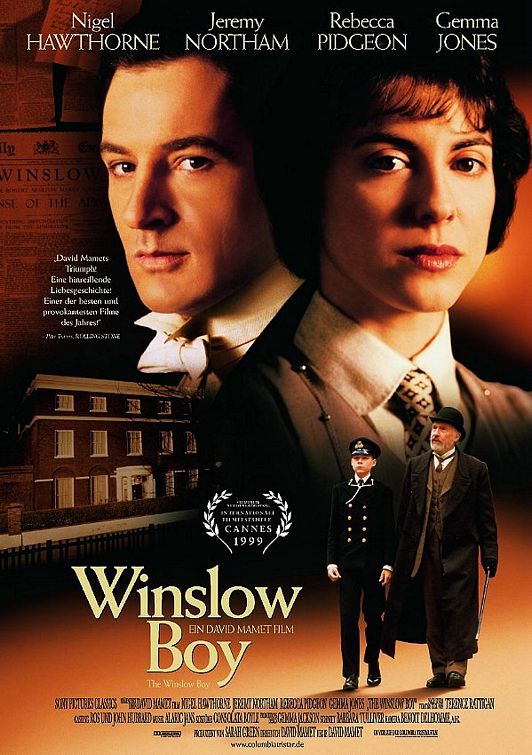
David Mamet surprised those who associate him with macho, alpha-male led drama with this sensitive and faithful adaptation of Terence Rattigan’s play. After his young son Ronnie is sent down from naval college for stealing a five shilling postal order, Arthur Winslow (Nigel Hawthorne, terrific) will stop at nothing to clear his name, supported by his suffragette daughter Catherine (Rebecca Pidgeon, excellent in a difficult role). They recruit Sir Robert Morton (an electric Jeremy Northam) to champion Ronnie’s case, as the scandal rocks the nation.

There can’t be many film adaptations of plays that so completely avoid “opening up” the play. The settings and dialogue of Rattigan’s original are kept largely as is. This means that – just as in the play – all the major dramatic events happen off-stage and are reported in dialogue. The campaign to clear Ronnie’s name? Apart from flyers and newspaper prints in Winslow’s home, you’re not seeing that. Morton’s advocacy of the case in the House of Commons? The smallest of scenes. The crowds outside the Winslow home? A faint echo on the soundtrack. The pivotal court case itself? Not a single shot. If ever a production made Rattigan feel more like Chekov, I’m yet to see it.

This theatricality is not necessarily a bad thing. I’ll admit it may create a film a bit too contained and low key for some. But catch this in the right mood and Mamet’s carefully considered staging brings many of its smaller moments and personal interactions into shape. Would a film full of triumphal courtroom scenes have so perfectly captured anti-climax and confusion that can come after an event that has dominated your whole life comes to an end?

This approach also allows the relationships to come front and centre – in particular the growing attraction between Catherine and Morton, treated lightly and subtly but with huge warmth. Catherine here mirrors the main plot. Her suitors are, in turn: an upright military careerist (whom she loves, but we care little for), a gentle non-entity (whom we like but she is bored by) and the imperious Morton – on the surface someone she shares few opinions with but, subconsciously, recognises a deep kinship with. Like the public reaction to the campaign, the attitudes of these people to Catherine represent the wider reactions happening off-camera. The Morton-Catherine story is a beautiful romance in which not a single word of overt, direct affection passes between the two characters, but volumes are increasingly spoken in each glance.

Mamet’s approach also allows plenty of stagy touches to translate really well to film. The film is clearly divided into acts, and each one returns us to the Winslow home, each time in less pomp than before (by the final scene it’s stripped down to bare essentials). Arthur Winslow is less and less sturdy each time we see him, the character shrinking ever closer to old age and infirmity. Each member of the family increasingly pays heavier prices, as their financial security is sacrificed (though Mamet certainly understands the characters’ very British acceptance of these turns in fortune).

The other major benefit is that the acting comes to the fore. I’m not sure Jeremy Northam has been better than he is here: the one downside of not staging the courtroom scenes is that we will never get to see Northam play them! His Morton is a perfectly pitched imperious upper-class professional, whose exterior hides a compassionate and selfless concern for “right”. The film’s most electrifying moment is his hostile examination of Ronnie, a dynamic verbal assault that rips into the film’s quiet austereness, crackling with tension. Northam is so good, at one point I am sure he muffs a line – but he carries it off with such brilliance (the austere man awkwardly burying his feelings) that Mamet keeps it in (take a look around 2:10 here and make up your own mind!). It’s also a beautifully real moment – the man of words, briefly revealed by them. This scene is, by the way, a masterpiece of unspoken emotions and affection (from both actors).


The other main performers are equally strong. Nigel Hawthorne mixes his cuddly avuncular wit with hints of the monomaniacal obsessiveness that leads Winslow to drain his resources, and strength, in pursuit of justice. While the film doesn’t always acknowledge the sometimes self-destructive effects of Winslow’s passion – and only hints at how much Winslow sees the accusation against his son as a personal affront, as if questioning his son’s honesty is questioning his own – Hawthorne keeps the character morally rigid yet sympathetic and understandable.

Rebecca Pidgeon, the director’s wife, is practically an open target for suggestions she only got the part through nepotism. Such views are unjust. While her accent seems a little forced, her performance as the slightly distant, intellectual, prickly and driven Catherine is spot-on. The crusade begins as her father’s obsession, which she shares. Their characters then evolve so naturally that you only realise at the conclusion that she has become the lead character, and the main driver of the crusade, for quite some time.

I’ve seen The Winslow Boy three or four times now. The first time I saw it I was thrown (disappointed) by its staginess, its surface stateliness. However, since then I’ve grown to appreciate its careful, respectful lack of showiness more and more. It’s an intelligent, well-handled adaptation, crammed with wonderful performances. Yes it’s sometimes a little too “Masterpiece Theatre”, but when it can deliver such stirring, and moving, moments as it does – well you could never refuse it a place in your heart. Let Right Be Done.

The Girl on the Train (2016)


Emily Blunt on a commute into danger in the underwhelming Girl on the Train

Director: Tate Taylor

Cast: Emily Blunt (Rachel Watson), Rebecca Ferguson (Ann Watson), Haley Bennett (Megan Hipwell), Justin Theroux (Tom Watson), Luke Evans (Scott Hipwell), Allison Janney (DS Riley), Edgar Ramirez (Dr Kamal Abdic), Lisa Kudrow (Martha), Laura Prepon (Cathy)

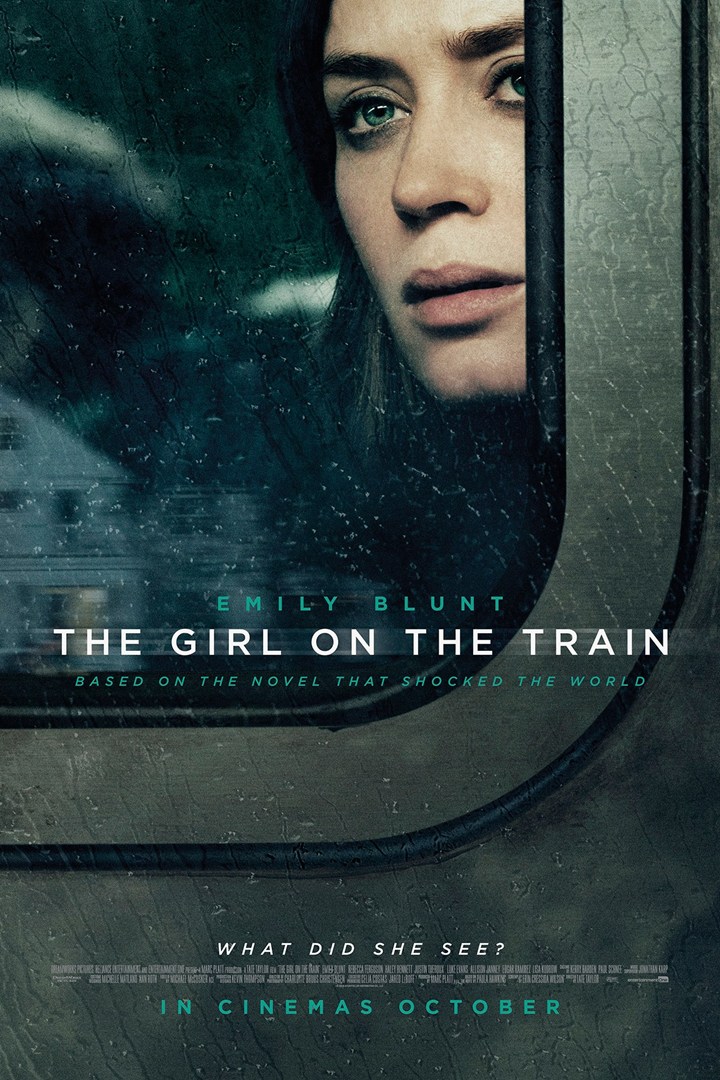
Rachel Watson (Emily Blunt) is a lonely, divorced alcoholic who takes the train into New York every day to spy on her husband (Justin Theroux) and his new wife (Rebecca Ferguson), whose house the train passes. However, she also becomes obsessed with the seemingly happy marriage of her ex’s neighbours (Luke Evans and Haley Bennett), who live an apparently Instagram-perfect life of coffee on the balcony and candlelit sex in their perfect living room (with the curtains conveniently left open – everyone leaves their curtains open in this film, no matter what they are doing). When the picture-perfect wife goes missing, she inveigles her way into their lives to try and help.

This is not a good film. It’s not a terrible film, but it’s a flat and lifeless one – a plot-boiler that simmers along without ever really getting exciting.  The story feels like it’s been pulled together from crumbs swept from the table of Gillian Flynn. It’s a hotchpotch mess, tangled, unclear and not that interesting. I can’t be the only person un-intrigued by the mystery of who shags who among the middle classes. Even a murder doesn’t spice it up. The small cast makes many mysteries obvious – when one character is found to be pregnant, but two of the three male characters we’ve been introduced to have been ruled out, you don’t need to be Poirot to work out who the father might be. Even the title is a call back to better thrillers, with its Girl with the Dragon Tattoo styled title.

The story drifts on and on, never really getting anyway or explaining anything properly. It doesn’t help that it’s mediocrely filmed. Look at the lean, compelling and sharp film David Fincher made of (the much better) Gone Girl. Then look at the murky, plodding, dull execution here. Particularly damningly it’s a shock to find out this is less than 2 hours, because it feels a hell of a lot longer.

The story has been switched from the book’s original London to somewhere outside Manhattan, which doesn’t help either. There is something quite small scale and domestic about the story that the sweeping vistas and huge houses of wealthy American suburbia don’t match up with. The very concept of the film – seeing into houses from commuter trains paused at signals – doesn’t even work removed from London’s architecture (the train in this film stops regularly on a huge expanse of track due to rail works that go on for ever and ever). Edgar Ramirez’s psychiatrist keeps the name Kamal Abdic (with its suggestion of middle Eastern roots) but now seems to be Mexican. Everyone in the film looks like a fashion model. Lots of other small moments just don’t make sense in the way they would have done in the original setting.

Emily Blunt is pretty good in the lead role, much better than the film deserves. Okay the drop-dead gorgeous Blunt doesn’t even remotely look like the overweight, sweaty alcoholic described in the book. But she nails her drunk acting, and carries the emotional heft of the film rather well, with an engaging vulnerability. She is, perhaps, even a little too engaging – the book’s original version of her character is apparently pretty unlikeable. The script trims away her needy obsessiveness, and creepy stalker tendencies. But Blunt is a little too likeable, and a little too sophisticated (despite prosthetic eyebags), to really convince as the pathetic Rachel. The switch to America doesn’t help here either – basically Brits make better losers than Americans tend to.

The rest of the cast are okay, but there is hardly a stand out among them. I have to admit I found Haley Bennett and Rebecca Ferguson (with their identikit blond hair dyes) hard to tell apart at times (this may be due to staying up all night watching the 2017 British election the night before).

By the end, when the killer is revealed (with a graphically suggestive flashback) you’ll find it hard to really care. In fact the final reveal is so clumsily put together all the implications aren’t clear at all. It’s a load of fuss about nothing. Taylor is trying to turn a pulpy novel into an arty thriller – but he doesn’t have the cinematic know-how to do it. He’s far too bland and middlebrow. Maybe that makes him a suitable match – a derivative director for a derivative book – but it hardly helps make this a good film. If he’d gone for a more B-movie approach, playing up the dark satire you could find in the story, then we could have had something interesting here. But he didn’t and we don’t.

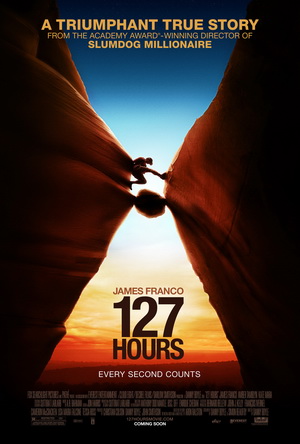
127 Hours (2010)

James Franco is literally stuck between a rock and a hard place in this mesmeric film from Danny Boyle
Director: Danny Boyle

Cast: James Franco (Aron Ralston), Kate Mara (Kristi Moore), Amber Tamblyn (Megan McBride), Clémence Poésy (Rana), Lizzy Caplan (Sonja Rolston), Kate Burton (Donna Ralston), Treat Williams (Larry Ralston)

Even people who’ve never heard of Aron Ralston, surely know this as “that film where James Franco cuts his arm off” (as my wife called it when I said I’d watched it). But, with the inspired direction of Danny Boyle and brilliant performance from James Franco, this is so much more than just a film about cutting an arm off.

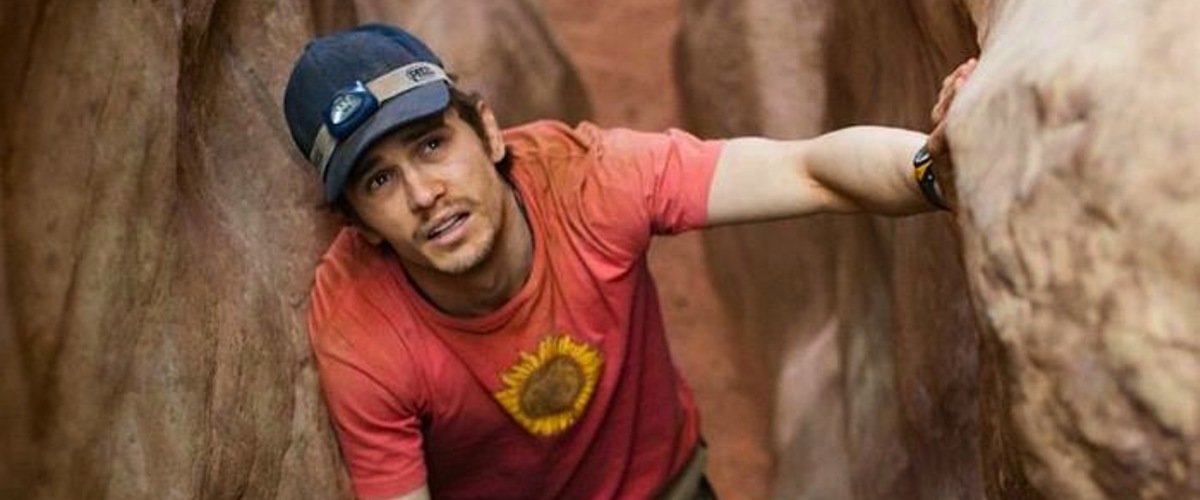
Aron Ralston (James Franco) is an adventurous free-spirit, who loves nothing better than solitary journeys in isolated places. He’s asking for trouble – and ‘Ooops!’ (as he puts) one day he gets it, falling into a crevice where his arm is crushed in place by a boulder. Ralston is trapped for 127 hours, with limited food and water and only the contents of his rucksack to help. There is no chance of anyone finding him for weeks. Eventually the only option left for Ralston is the unthinkable: to disconnect his body from his trapped (and already dead) arm.

Possibly only Danny Boyle could make a film as dynamic, visually exciting and fun as this, about a man who spends the entire time stuck behind a rock. Ralston is such a vibrant personality that Boyle’s visual inventiveness works perfectly for the material. Boyle finds a host of brilliant angles and editing tricks to film, not only Ralston’s trapped positon, but also the host of day dreams and (increasingly) hallucinations Ralston experiences.

The film doesn’t rush us into Ralston’s trap either. The first 20 minutes show Ralston’s life as he lives it – independent, friendly, adventurous and essentially focused on himself. It also shows us how exciting and fun exploring can be – something we really need to know, so as not to think “Why are you even doing this, you idiot!” later.

When the event happens (and the film mines a lot of good-natured tension as we constantly wait for it to happen) it’s both sudden and low-key. Ralston’s first reaction (and yes it’s partly shock) is surprised irritation. Then the film swiftly tightens in on the small world this adventurer is now restricted to. The crevice, the boulder, a strip of sky, the contents of his rucksack – all of which (despite his best efforts) are inadequate for getting him free. Boyle’s immersive skill in staging Ralston’s claustrophobic position is so great that you feel the same unnerved surprise as Ralston does when he is finally free, after watching him fixed in place for over an hour.

The film gets a certain dark humour from the foreknowledge almost anyone watching has. Some of the very first shots, show Ralston’s hand reaching into a cupboard looking for his pen knife (the want of which he later heavily regrets), the knife close to the camera, just out of Ralston’s casual reach. Later, there is an extra agony watching him chip away uselessly at the rock (with a utility knife he establishes is not sharp enough to cut his thumb), knowing every blow is making this knife blunter and blunter –making what we know he will have to use it for later harder and harder to do.

Ralston finds himself in an impossible situation (from his own hubris and overconfidence), but not only keeps hold of his sense of hope and humanity but also makes profound discoveries about himself and his life. That’s the focus Boyle keeps his story on – and each of the flashbacks and hallucinations focus on Ralston reviewing his past mistakes he’s made and reflecting (without heavy handed dialogue) on how (if he escapes) he could change his life.

A lot of the film’s success is based on James Franco’s exceptional performance. It’s is as alive and throbbing as the movie, and he really understands the charismatic fire in Ralston, the egotism and cockiness matched with resourcefulness and determination. He’s every inch the guy cocky enough to go it alone in the wilderness, and skilled enough to explore every angle for escape. He’s not an idiot, but not a hero – he’s a guy who grows to understand mistakes he has made, while never wallowing in self-pity, who can make the kind of calls most of us would find unthinkable.

As for that scene? Well yes it’s tricky to watch (to say the least), but not because it’s graphic or unpleasant – but because Boyle makes carrying out such an act so logical, so necessary, that you look down at your own arm and wonder if you would have the guts to do the same. The premonition Ralston reported of seeing his own yet-to-be-conceived son, giving him the determination to do the deed, is staged by Boyle with a dreamy lyricism. This is picked up in AR Rahman’s score, which slowly build in intensity to consume the scene. As Ralston cuts each of the nerve endings in his arm, the music jars in a way that tells us more about pain than any level of screaming would do.

So yes the central event is hard to watch – but this is not exploitative or gross-out. Instead it’s a rich, rewarding and engaging film, dynamically filmed – for a film about a guy trapped in one place, it constantly feels like it is on the move. It’s a story about the human spirit, and how we can conquer impossible odds – especially when we feel, as Ralston did, that he wasn’t doing this just for himself but for his family. Far from an endurance trip, this is a heartfelt and moving story that left me feeling uplifted. I think it might be Boyle’s best film since Trainspotting.

Denial (2016)


Timothy Spall as Holocaust denier David Irving in this misfiring courtroom drama

Director: Mick Jackson

Cast: Rachel Weisz (Deborah Lipstadt), Tom Wilkinson (Richard Rampton), Timothy Spall (David Irving), Andrew Scott (Anthony Julius), Jack Lowden (James Libson), Caren Pistorius (Laura Tyler), Alex Jennings (Sir Charles Gray), Mark Gatiss (Professor Robert Jan van Pelt), Harriet Walter (Vera Reich), John Sessions (Professor Richard J. Evans)

In 2000, historian David Irving (here played by Timothy Spall) was exposed as a Holocaust denier who forged and distorted historical records to help his pro-Hitler agenda. This came after his unsuccessful attempt to sue American historian Deborah Lipstadt (Rachel Weisz) for accusing him of Holocaust denial in her book Denying the Holocaust. The decision led to the destruction of Irving’s reputation, career and financial wealth. This film tells the story of this case. Lipstadt’s legal team are played by Andrew Scott (solicitor Anthony Julius), and Tom Wilkinson (barrister Richard Rampton). The publicity-hungry Irving famously acted as his own lawyer.

Denial has a fascinating story at its core, but bungles it by getting the focus wrong. Now I’ll admit I might know more about this trial than the regular guy-on-the-street. But the drama here was in the detail of the debunking of Irving’s denier bullshit. The film benches most of this, reducing Irving’s career of historical re-adjustments into a few simple sound bites. The fascination of this trial was the dissection of denier myths – but the film aims for more conventionally “drama”, by introducing a series of “could Irving win?” moments that never ring true. Not only does this detract from the drama – it also, arguably, makes it easier for Holocaust deniers out there to claim the film doesn’t give the appallingIrving a fair crack of the whip.

It’s a shame, as when the focus is on the facts of the case, it’s very good. Tom Wilkinson is excellent as the maverick Rampton, whose abrasiveness hides his humanitarianism. The drama skirts over the trial’s cut and thrust, but when it does tackle these moments it’s very interesting. The sequence where Rampton pins Irving to the floor over theories that the gas chambers were de-lousing stations for dead bodies (“then why are there bolts on the outside of the doors?”) or air raid shelters (“are we to imagine the SS running 2.5 miles from their barracks to a shelter in an air raid?”) are compelling, and far more interesting than anything else in the film. Even the Cliff’s Notes version of Irving and his views in this film is enough to repulse any sane viewer, and watching him skewered on the witness stand is fascinating and satisfying. There just isn’t enough of it.

One of the film’s greatest problems is pushing Lipstadt front and centre. This seems logical on paper but, as her lawyer says, “this trial is happening to you, it’s not about you”. Lipstadt was deliberately not part of the trial strategy, to keep the focus on Irving. But the film can’t accepts her “story” was to do nothing. It keeps wanting to give her a ‘Hollywood moment’, but the facts can’t provide one – so we get lots of scenes of Lipstadt jogging, or feeding her dog, or watching news reports – time that could have been much better spent elsewhere.

Despite this, Weisz’s performance is very good –she bravely makes Lipstadt prickly and hard to like . Similarly, Andrew Scott is excellent as Julius, but his character is poorly explained (“He’s using you for the publicity” Lipstadt is told – we see no indication for this anywhere) and his decision to exclude Holocaust survivors from the witness list to prevent them being harangued by Irving is botchily explained, the film not wanting to admit that this was a wise decision.

I feel a lot of the film ended up on the cutting room floor. Short scenes pop up now and again around paralegal Laura making you feel she must have been a more important character at some point. I feel huge parts of courtroom reconstruction got trimmed. I suspect there was more around Harriet Walter’s Holocaust survivor. Even Irving feels heavily trimmed – Spall is very good (and subtly vile, but with a persuasive old school charm) as the faux-historian, but the film needs more of him, if only to explore his views more, rather than just treating him like a demon.

That sums the film up: it’s ham fisted. Too much dialogue thunkingly introduces historical events or legal procedures. The film talks about the importance of research, but relies on characters “cracking the case” with flashes of inspiration. It handles the research trip at Auschwitz sensitively (and daringly, shows Rampton taking an aggressive questioning stance of the guides to prepare for the case) – but then the film can’t help throwing in Lipstadt imagining victims clawing at the gas chamber door for escape. I hated the final shot, lingering on the disputed holes in the gas chamber roof used to drop in Xyklon-B, as if we needed this to be confident that, yes, the Holocaust did happen.

I really wanted to like Denial, but it’s no more than an adequate dramatisation of a fascinating court case. It’s brilliantly acted, in particular the four principles. There is an interesting film to be made here about the increasing struggle we have with the abuse of free speech to give equal importance to views that are offensive or just plain wrong. But Denial never really becomes that film – instead it turns its fascinating historical event into a run-of-the-mill Hollywood tale of a plucky heroine vanquishing the bad guy.

In Which We Serve (1942)


Noel Coward takes command in stirring British wartime drama In Which We Serve

Director: Noël Coward, David Lean

Cast: Noël Coward (Captain E.V. Kinross), Bernard Miles (CPO Walter Hardy), John Mills (Shorty Blake), Celia Johnson (Alix Kinross), Joyce Carey (Kath Hardy), Kay Walsh (Freda Lewis), Michael Wilding (Flags), Leslie Dwyer (Parkinson), James Donald (Doc), Philip Friend (Torps), Frederick Piper (Edgecombe), Richard Attenborough (Young Stoker)

Only the British would make a wartime propaganda film about a sunk ship where over half the crew gets killed (the Navy nicknamed the film In Which We Sink). It says something about this endearingly muddle-headed country that the stories that appeal most to us are those that celebrate our struggles against adversity. It was filmed in the aftermath of the Battle of Britain but before the Battle of El Alamein – the British considered themselves safe from invasion, but still saw victory was a long way off. In that climate, the film’s attitude of knuckling down and doing your duty to achieve a distant dream must have resounded profoundly with millions of people.

Based on the early war career of Louis Mountbatten, this “story of a ship” revolves around the Torin, a destroyer captained by E.V Kinross (Noël Coward). The ship is dive bombed and sunk by the Luftwaffe, and the captain and survivors cling to a lifeboat, waiting for rescue. While they wait, the crew remember their lives back home in flashback – in particular the captain, CPO Hardy (Bernard Miles), and able seaman ‘Shorty’ Blake (John Mills). Can you imagine an American propaganda film with a plot like that?

It’s easy to mock a film like In Which We Serve today. Its stiff-upper-lipped, duty-led, hierarchical world has been lampooned countless times since Peter Cook’s pitch-perfect Bernard Miles impersonation in Beyond the Fringe. (Early in the film, watching Kinross at home, I remembered Eddie Izzard’s spoof: “Don’t go to the war Daddy / I must they won’t start without me…”). The first 30 minutes, with its clipped dialogue, fast-paced delivery and stiff-backed, formal playing style takes a while to tune into. But it’s worth it, as the establishment of this carefully controlled exterior is what makes the later sections, with strong emotions just below the surface, so moving.

Coward was of course primarily a man of the theatre, and this was his only original film script. His collaboration with experienced film-makers produced a stirring, skilfully crafted epic that reflects on several levels of British rank and society, and not only shows us “why we fight” but also “why we should fight”. Coward is credited as the principal director, but much of the direction (and the film’s skilfully constructed structure in the editing suite) comes from his co-director David Lean, here making his directing debut.

Lean’s expressive hand is clear in the brilliantly composed sequences on board the ship itself, both in action and at ease. An example of the fluid editing, is where the camera follows the progression of a missile through the ship, passed from crew member to crew member, each given some brief moments to show their quiet determination and resolve. Similarly, the sequences on the drifting lifeboat have a claustrophobic intensity about them. The flashbacks are carefully placed to allow our understanding of the characters and their backgrounds to grow each time.

The scenes back home are remarkable for their dramatic simplicity. Coward understood the stories that move are those of normal people. The sailors’ home lives – from the captain down – are domestic, calm, happy and above all normal. Very little happens: one sailor gets married, the captain plays with his children, the Petty Officer teases his wife. This regularity makes their courage under fire all the more stirring: truly ordinary people doing the extraordinary. Some critics have called Coward’s attitude to the working classes snobbish, but there is no disdain at all here – instead there’s a paternal admiration with genuine warmth.

This warmth extends even to a stoker who cuts and runs during action. It would be easy to use this moment to amplify the braveness of the others. Instead, in a moving speech to the men, the captain takes the blame onto himself for not supporting the young man earlier. The mortified stoker, in a wonderful little scene, struggles to express his shame to a barmaid, not in anger but in a quiet, confused guilt. The film never condemns or judges him – he is quietly shown returning to his duties. There is no explicit moment of redemption, just a sense of a man who has let himself down, resolving quietly to do better.

The opening sequence covers the lifespan of the ship – from its construction and commissioning, to its launch, early actions and sinking, with the implication of a nation coming together. Later scenes mix theatrical touches with documentary realism. A marvellous sequence covers Dunkirk, which feels incredibly real but also showcases a few wonderful flourishes, from Kinross’ speech praising the soldiers’ bravery to Shorty’s affectionately wry remark on the rivalry between soldiers and sailors. The final sequence brings us full circle, with the construction and launch of another battleship under Kinross’ command. We may lose a battle, but we are never beaten.

Coward takes on the lead role. To be honest, it’s a striking piece of miscasting that somehow works out – Noël Coward is no-one’s idea of a hard-nosed naval veteran. He lacks the range in particular for his scenes of domestic life, coming across as too detached and distant – particularly noticeable since his wife is played brilliantly by the radiant Celia Johnson, conveying layers of emotion under a controlled exterior. But, his quiet, buttoned-up professionalism and clipped Englishness work perfectly for the quietly emotional speeches he delivers. These he nails perfectly, his voice just giving the hint of cracking. It’s a curiously stagy, and in no way naturalistic, performance – but as a representation of a particular type of Britishness it’s perfect.

And Kinross is just the sort of man you would follow to the end – distant and authoritarian, but just and warm. Rescued from the ocean, he goes immediately to his men, moving quietly from wounded man to wounded man, collecting addresses, issuing quiet words of unexpressive comfort (“I’ll tell her you did your duty”). His closing speech (heavily based on Mountbatten’s own address to his crew) throbs with emotion just below the surface as he thanks his men – and it’s hard not to feel it as he shakes the hand of each man and is overcome with emotion, he can only nod a brief acknowledgement to his officers. Lean trains the camera on his back, as we see his shoulders seem to swell to support the pride, respect and love for his men. It’s peculiarly British, but this unspoken affection is hugely powerful.

The more naturalistic performances from the rest of the cast help to anchor the film – and also allow Coward’s more stylised acting to work effectively. John Mills is wonderful as Gunner “Shorty” Blake, a plucky, kind and witty man. He’s just the sort of unexpressive hero we’d all like to be, and his homespun love story with Kay Walsh is genuinely engaging and moving for its everyday normality. Mills also carries much of the film’s humour.

It’s the final sections of the film that really, really work. I can’t get through the scenes of the surviving crew being saved, the quiet courage of the dying men and the austere warmth of the captain, the speeches that burst with pride and respect under a reserved veneer, without feeling a lump in the throat. It’s a masterful piece of quietly powerful film-making, that pays off precisely because so much of what has gone before has been so normal. The fact that we’ve seen the lives of these people – and can see what, in their quiet way, they are fighting for – I found increasingly moving.

In Which We Serve is a wonderful piece of film-making, very well written by Coward and strongly directed (largely) by Lean. Coward himself, in the lead role, is far better at the speeches than as either a captain or husband, but the rest of the cast is excellent with Mills and Johnson both outstanding. It’s truly the stuff of spoofery in many ways today, but tune yourself up to the accents and the repressed Britishness and this is a heartfelt and deeply moving film. Perhaps one of the finest propaganda films you’ll ever see – and still so very British.

Solomon Kane (2009)


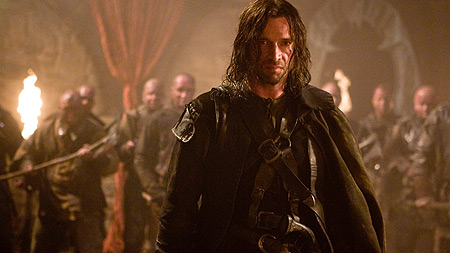
James Purefoy excels in cult-classic in the making Solomon Kane

Director: Michael J Bassett

Cast: James Purefoy (Solomon Kane), Max von Sydow (Josiah Kane), Pete Postlethwaite (William Crowthorn), Alice Krige (Katherine Crowthorn), Rachel Hurd-Wood (Meredith Crowthorn), Jason Flemyng (Malachi), Mackenzie Crook (Father Michael)

Solomon Kane was a pulp-magazine character from the 1920s. I’d never heard of him before – I imagine many others haven’t either – so bringing a film about him to the screen was always going to be a labour of love. That’s certainly what this film is. 

In 1600, Solomon Kane (James Purefoy) is a ruthless mercenary, but is confronted by a demon who tells him his soul is forfeit to the Devil. Horrified, Kane flees to sanctuary in a monastery, forsaking violence and devoting himself to God. After being expelled because the abbot has a dream, he encounters a Puritan family, the Crowthorns, and travels with them. Kane is deeply drawn to the Crowthorns – and when they are ambushed, the family killed, and daughter Meredith (Rachael Hurd-Wood) kidnapped by the servants of the sorcerer Malachi (Jason Flemyng), Kane swears to revenge the Crowthorns and rescue Meredith.

There’s something quite sweet and charming about Solomon Kane. It’s an old fashioned B-movie with a winning style. Is it going to rock any worlds? Probably not, but it’s got plenty of swagger and it makes a small budget go a long way. Bassett’s influences are pretty clear – everything from Witchfinder General to Lord of the Rings – but he shoots the film with a commendable energy. The visual flair is impressive, and successfully creates the feel of an England halfway between civilisation and the middle ages. Bassett also knows how to shoot an action scene, and the film is stuffed with fantastic sword fights that hit the right balance between brutality and dynamism.

Bassett also finds a fair amount of emotional heft in the story. The decision to focus a large chunk of the opening 45 minutes on Kane’s guilt and his attempts to make amends, make him a character we end up caring about. The “good family that wins our hero’s heart” cliché is exactly that, but it works very well here as Bassett takes his time and lets Kane’s bond with the Crowthorn family grow organically. All this patient establishment of Kane’s personality really pays off during the action of the second half.

It’s also helped a great deal by James Purefoy’s committed performance in the lead role. Purefoy has long since been a favourite of mine, who never really got the breaks to become a bigger star. His performance has the physicality and charisma, but Purefoy also adds in a Shakespearean depth to create a man desperate for redemption, carrying a pained heart very close to the surface. He dominates the whole film, setting the tone; and I suspect his dedicated performance encouraged fine work from the actors around him, despite almost all the other roles being little more than cameos. There are blockbusters whose leading actors are incapable of holding the screen as well as Purefoy does here.

Bassett’s B-movie spectacle is not perfect. The eventual explanation of why the Devil wants Kane’s soul is inexcusably garbled. Jason Flemyng is miscast as the demonic sorcerer Malachi, and his final confrontation with Kane lacks real impact (largely because Malachi has so little presence throughout the film) and devolves into a face-off with a dull special effects monster that looks rather like Megatron in the live-action Transformers films. There is a smaller-scale, personal ending in this film, but it gets crushed under the foot of the special effects. It’s a shame that a large portion of this film’s budget probably went on this.

Solomon Kane is structured, and plays, like a B-movie – but it’s proud of that. Its low budget demanded inventiveness and dedication from the cast and crew, all of whom delivered. The grimy design of the world is perfect, the story creates a good combination of action and emotion. Its story may be pretty clichéd, but it’s presented with great gusto – and has a terrific leading performance from a heavily under-rated actor in James Purefoy. More people deserve to see this – if this isn’t a cult classic in the making, I’m not sure what is.