Walk the Line (2005)


Reese Witherspoon and Joaquin Phoenix excel in this star-crossed lovers musical biopic

Director: James Mangold

Cast: Joaquin Phoenix (Johnny Cash), Reese Witherspoon (June Carter), Ginnifer Goodwin (Vivian Liberto), Robert Patrick (Ray Cash), Dallas Roberts (Sam Phillips), Shelby Lynne (Carrie Cash), Waylon Payne (Jerry Lee Lewis)

Walk the Line focuses on Johnny Cash’s early career, from 1955-1968, culminating in his live performance at Folsom Prison and the tour it kickstarts. The main element in this story is the long-running courtship/friendship/disagreements between Cash (Joaquin Phoenix) and June Carter (Reese Witherspoon) and their more-than-a-decade-long journey to turn an immediate attraction into a relationship. It’s a very endearing, well directed biopic with a lot of heart at its centre as well as capturing a great deal of the feeling behind the music.

The thing about biopics like this is that they have a standard format, particularly it for music stars: the difficult childhood, the early struggle for success, the glory years, the troubled years (addiction usually rears its head here) before a triumphant rebirth. Walk the Line doesn’t really stray away from this format at all. You also have to acknowledge it was made with the close co-operation of John and June’s son (a co-producer) so there possibility that maybe some of this has been improved for fiction (although there seems no doubt about the strength of the relationship at its centre), even if it doesn’t shy away from Cash’s womanising or addiction to prescription pills during this period.

Well I’m not sure if it is good history, but its damn good story telling. This is a hugely sweet romance, which carefully builds the ups and downs of its central relationship without coating the whole thing with treacle. I certainly found myself very moved by it and deeply invested in seeing the two lead characters finally embrace their feelings for each other. The film does a very good job of establishing the immediate attraction between both Johnny and June, while also carefully demonstrating why it took them so many years to finally be together. It does this without feeling contrived or manipulative, which is quite an accomplishment.

What’s also quite satisfying is that, throughout, Cash plays the “weaker” role – he is the needy one, the one who spirals into depression and moping after rejection, the one who thrives on attention and affection. These traits in his personality are a running theme in the film. It’s a piece of cod psychology to connect these to the death as a child of his older brother, but it makes sense: Cash in this film spends his life trying to find an emotional replacement for this loss, from his over-hasty first marriage to his alternatingly shy and overeager pursuit of June. I also felt that June’s mixed feelings over Johnny – guilt over the attraction, rejection of his sometimes childish behaviour, worry about the public perception of her failed marriages or being accused of being a home-wrecker – also make perfect sense as presented in the film.

If you want to criticise the depiction of the relationship, you could say that it fits neatly into the trope of the female character being hugely supportive and caring over the troubled male genius. However, I think it avoids this – it makes clear that June did consider some of Johnny’s behaviour (both flirting on stage and his drug-taking in particular) unacceptable. At the same time, it also makes clear her affection for him from the start – and in that situation who wouldn’t help someone they care for when he is at his lowest point?

Focusing as it does on the romantic relationship, this film is pretty close to a two-hander. Every scene features either Johnny or June and the majority include them both. Phoenix and Witherspoon are both sensational in the roles. Phoenix’s physical and vocal mannerisms are spot on, but he also seems to have a deep understanding of the feelings of guilt, loneliness and anger that bubble under the surface of Cash, as well as his childish enthusiasm and sweetness. Witherspoon is similarly radiant as June, showing the contrasts between her girl-next-door stage persona and the more complex person below the skin, intelligent and resourceful but anxious about the implications of starting a relationship. Both performances are something quite special.

Alongside all of this, the film is highly accomplished technically, particularly in recreating a series of live performances of Johnny Cash hits. Phoenix and Witherspoon, who do all their own singing, do wonderful vocal and physical imitations, capturing the vibrancy and energy of live performance. Somehow there is something extremely real about seeing Phoenix’s sweating face in close-up, animatedly covering Cry Cry Cry, which manages to get across the excitement of live performance in a way lip-synching couldn’t. The recreation of the era is brilliantly well done – the Folsom Prison sequence is a particular stand out. 

Of course this film is slightly formulaic, and yes it tells a pretty safe story of love conquering all – but damn it when it’s put together with as much heart and skill as James Mangold manages here, who gives a damn. This is very moving, stirring material and I defy you to watch the final 15 minutes without a big grin on your face.

Good (2008)

Viggo Mortensen and Jason Isaacs are conflicted brothers in arms in this all too familiar (in every sense) Nazi Germany story

Director: Vincente Amorim

Cast: Viggo Mortensen (John Halder), Jason Isaacs (Maurice Israel Glückstein), Jodie Whittaker (Anne), Steven Mackintosh (Freddie), Mark Strong (Philipp Bouhler), Gemma Jones (Halder’s Mother), Anastasia Hille (Helen Halder), Steven Elder (Adolf Eichmann)

Is there a more overused quote than Edmund Burke’s “All that is necessary for the triumph of evil is that good men do nothing”? It’s virtually become a cliché and can be heard spouted with chin-stroking smugness in everything from Law & Order episodes, opening title cards to crappy action films to the message-boards of the internet. If Good can have any claim to history (and it probably can’t), it can say that it’s the film of the phrase.

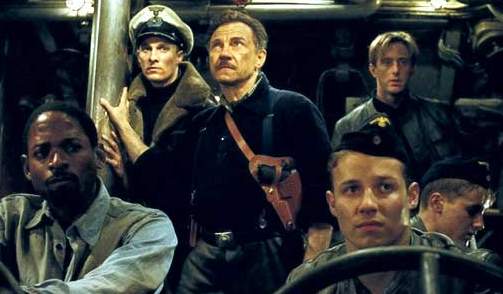
Our Good Man is John Halder (Viggo Mortensen). Our Evil is Nazism. Halder is a literature professor in 1930s Germany. He’s written a novel in support of euthanasia: this brings him to the attention of the party authorities, who need intellectual support for their own plans. Halder accepts an honorary rank in the SS – and from there it’s compromise after compromise that leads to the Holocaust. His good and bad angels are his new young wife Anne (Jodie Whittaker), who loves the advantages party membership brings, and his Jewish best friend Maurice (Jason Isaacs), whose situation goes from bad to worse.

It’s a very, very earnest film which wears its heart on its sleeve. Which is the main problem – the film-makers were clearly desperate to “tell it right” and stay true to the original play – but the whole idea comes across slightly outdated, obvious and far too familiar. Whatever point the play had to make when first staged in 1981, has now been said and done to exhaustion. Despite the care and attention, there now isn’t much originality or freshness. As such, it never really rouses any feelings.

The story it tells of its lead’s reluctant seduction into being an active Nazi can probably be charted fairly accurately without watching the film. The plot device of the Jewish friend feels too on the nose and obvious (compelling as Jason Isaacs is in the role), and the betrayals by inaction follow well-established patterns. The few moments of interest are shied away from – when Halder first puts on his SS uniform (to take grudging part in Kristallnacht) his wife is so aroused she performs oral sex on him: it could have been an interesting point about the sexual seduction of power and the brilliant design of Nazi regalia, but the film rushes over it.

I was also not sure about the device of Halder haunted by visions of various figures he encounters lip-synching to scratchy recordings of Mahler songs. You can guess where this going when you see the film, but it’s a device that is a little unclear. It’s meant to signpost moments of Halder’s moral disintegration (Halder flirts with his new-wife-to-be? The music. He accepts SS rank? The music. Congratulations from Goebbels? The music. He abandons his friend? The music.). It’s final reveal, an echo from Halder’s future trip to Auschwitz is interesting but not exactly profound or revealing – and the device is heavy handed in its use in any case. It’s clear Halder is a failed man and this device doesn’t tell us anything about that.

Despite the film’s predictability and lecturing, it does have good moments. Many of the scenes of Nazi brutality are shot with an affecting simplicity (I admired the cold, POV shooting of Halder’s visit to the arrival point of a camp implied to be Auschwitz), and much of the acting is on form. Mortensen holds the film together well as the deluded moral weakling blown by every wind; he avoids any temptation for histrionics and is happy to make his character detestable in his weakness (this is a film that challenges us to accept that we would probably be as cowardly as Halder is). This in turn gives more freedom for fireworks from Isaacs, who delivers a passionate and intense performance of angry powerlessness. Whittaker is impressive in a shallowly written part as Halder’s ambitious young wife. Mark Strong’s cameo as a suave party big-wig is great, as is Steven Mackintosh’s role as a genial SS officer, moaning about his career.

It’s got its moments but this is a stagy, talky film that tells a familiar old story without panache or originality. It settles for making the same point over and over again. It bravely offers no possible redemption for Halder at all, but his general story is so familiar it never engages as much as it should. Essentially the film’s script could just as easily have had its characters endlessly repeat Burke’s famous phrase – in fact, the one surprise in the film is that neither the quote nor Edmund Burke ever gets name checked. Very, very, very noble but lacks life.

Lawless (2012)


Brothers in crime. You can get a taste of the performances just from this still image.

Director: John Hillcoat

Cast: Shia LaBeouf (Jack Bondurant), Tom Hardy (Forrest Bondurant), Jason Clarke (Howard Bondurant), Guy Pearce (Marshal Charley Rakes), Jessica Chastain (Maggie Beauford), Mia Wasikowska (Bertha Minnix), Dane DeHaan (Cricket Pate), Gary Oldman (Floyd Banner)

Bootlegging, the Deep South, corrupt cops and the honourable code of criminals. It’s the sort of cocktail that’s made up dozens of films, some good, some bad, some ugly. This one definitely falls into one of the latter two camps.

It’s 1931, and the Bondurant brothers (Shia LaBeouf, Tom Hardy and Jason Clarke) run a moonshine business out of their Virginian countryside garage. One day the cops come a-calling, led by a corrupt US Marshall (Guy Pearce). They want a piece of the action. The brothers say no. So war breaks out…

Truth be told, this is actually quite a boring film – a pointless, clumsily constructed shaggy dog story that neither makes a point about the shabbiness of a bootlegging life of crime, nor challenges romantic assumptions about the small time crook challenging the system. There are a couple of random flashy scenes thrown in to allow the film-makers to demonstrate their technical expertise, but it’s all as weightless as a braggart regaling their guests at a dinner table. Hot air masquerading as a lungful of fresh stuff.

The performances dance between underpowered, over stretched and over indulged. Shia LaBouef doesn’t make his nominal lead a fully formed character. Jason Clarke makes no real impact in an underwritten role. Tom Hardy is the best of the bunch, but barely stretches himself as a bearlike family leader. Of the other major parts, Guy Pearce gives the kind of twitchy, pyrotechnical performance that is often mistaken for brilliant acting, all highblown showing off and no depth. Jessica Chastain and Mia Wasikowska are wasted playing contrasting love interests. Gary Oldman pops up for one scene as an overblown crime lord.

These performances drift along in the formless plot. There are nasty moments of violence that serve no purpose and don’t seem to tie into established characters personalities.  There are also poorly judged plot developments: at one point Jessica Chastain’s character is raped – mercifully off screen – an event never mentioned again. Characters are brutally dispatched; one has his manhood removed and posted to another character, others are strangled, shot or battered to death with spades. The violence continues on and off until the film ends with a confrontation scene between goodies and baddies. Nothing original or unique happens in this film – we’ve all seen it time and time again. There is no thrust to the story, no feeling that it is building towards a point or that a thematic point is being built. It’s just events happening for the sake of it.

Despite its flash and bravura crashes and bangs this is an empty, tedious movie that goes nowhere, says nothing and has no point. Nearly all the events of the film are predictable, from the fate of the villain to the crippled best friend (Dane DeHaan) who has victim written all over him from the first frame. Its surface sheen (it looks great, has a decent score etc.) and the look-at-me acting is enough to fool you for a moment into thinking “this must be a good film”. But it ain’t.

The Bourne Legacy (2012)


Even with two guns and Jeremy Renner’s face, Aaron Cross isn’t that interesting

Director: Tony Gilroy

Cast: Jeremy Renner (Aaron Cross), Rachel Weisz (Dr Marta Shearing), Edward Norton (Col. Eric Byer), Stacy Keach (Adm. Mark Turso), Dennis Boutsikaris (Terrence Ward), Oscar Isaac (Outcome #3), Joan Allen (Pamela Landy), Albert Finney (Dr Albert Hirsch), David Strathairn (Noah Vosen), Scott Glenn (Ezra Kramer), Donna Murphy (Dita Mandy), Michael Chernus (Arthur Ingram), Corey Stoll (Zev Vendel), Željko Ivanek (Dr Donald Foite), Elizabeth Marvel (Dr Connie Dowd)

What do you do when the people want more sequels to your film series but you can’t persuade the star and director (no matter how much money you offer) to make another film? Well you can either re-cast or you can put another character front and centre in a sequel. The Bourne Legacy goes for the latter approach and invents a new series of characters and shady CIA programmes so that we can put the old chase-and-fight formula back to work.

Aaron Cross (Jeremy Renner) has been mentally and physically enhanced as part of a series of CIA black ops, overseen by shady CIA bigwig Ed Norton. After the events of Bourne Ultimatum (which overlap with the first quarter of this film), the CIA cuts its losses and orders the deaths of all the agents (including Cross) and the scientists (including Rachel Weisz’s Dr Shearing). Of course both Cross and Shearing survive and go on the run. Despite the writing tying itself into knots to connect its story to the previous films, that’s the sum of the plot. Hardly gripping.

This strange historical curiosity spends the first half of its running time attempting to justify its existence. Extensive narrative hoops are jumped through and new footage carefully interwoven with clips from the previous two movies to try and suggest “a plot behind the plot”. It’s a mistake. No one needs to know why the film exists: we just want to get on with a cracking story. Instead we spend an inordinate amount of time unravelling this “sidequel” attempt at franchise expansion, meandering around unengaging and complex plotting that totally fails to engage the interest.

So long winded are these plotting gymnastics, it’s a good two-thirds of the way into the film before our villain becomes aware of our hero’s survival. Our hero never becomes aware of the villain (an unclear flashback is put into place so they share the screen) and only guesses at who is chasing him. This means the chase elements of the film never really click into place and lack anything for the viewer to invest in. The “hero” is an assassin whose objective is to keep hold of his enhanced intellect, obtained from drugs on the “programme”. Well good for him, but its hardly a sympathetic reason for us to root for him. He’s still an unrepentant killer.

This isn’t helped by the giggle-worthy flashback scenes of Jeremy Renner in his pre-enhanced state, where Renner seems to be aping Ben Stiller’s performance of Simple Jack in Tropic Thunder. In his enhanced state, Cross is fully aware he is an assassin and a willing volunteer – embracing the very dark secret Bourne was so ashamed of. Neither Cross nor Shearing ever have their actions questioned, or display any sense that they have done anything wrong – it seems clear that they would have continued their dirty deeds quite happily without the plot’s intervention. It’s fine to have morally compromised heroes in a film – but this film doesn’t seem to realise or comment on this at any point.

Whatever your views on the characters, the fact remains that this is a chase movie where the chase is not interesting, takes far too long to get started and never really gets the viewer feeling the tension. As an editor of action, Gilroy is no Paul Greengrass and the fight sequences have the same cold distance to them that the rest of the film has, a by-the-numbers series of clashes where it’s hard to really care what happens.

A brilliant cast of actors is totally wasted. Poor Jeremy Renner does his very best here – he has charm, he’s a charismatic performer, but this is a dull character who we are given no real reason to invest in. Rachel Weisz plays the sort of damsel distress (matched up with the “film scientist” trope) an Oscar winner surely can do without. Edward Norton as with so many other films makes his contempt and boredom with the film totally apparent. Allen, Finney and Straitharn have little more than single scene cameos. A host of great character actors (Isaac, Marvel, Stoll, Ivanek, Keach, Murphy) are totally wasted.

This is a dull, formulaic, unloved sequel that spends more time trying to place itself into the timeline of the previous movies than developing a storyline and characters we actually care about. It moves slowly from location to location, sprinkling in some inadequately filmed fights and chases, never once persuading us that we should care about anything that happens.

Sicario (2015)


Emily Blunt goes to war with the Cartels, not realising she’s just a pawn.

Director: Denis Villeneuve

Cast: Emily Blunt (Kate Macer), Benicio del Toro (Alejandro Gillick), Josh Brolin (Matt Graver), Daniel Kaluuya (Reggie Wayne), Maximiliano Hernández (Silvio), Victor Garber (Dave Jennings), Jon Bernthal (Ted), Jeffrey Donovan (Steve Forsing), Raoul Trujillo (Rafael), Julio Cedillo (Fausto Alarcón)

The War on Drugs. Smack a military title on it and it helps people think that there is some sort of system to it, that it carries some sort of rules of engagement. Whereas the truth is that it is a nebulous non-conflict where the sides are completely unclear and the collaborators are legion.

Sicario follows a shady covert operation, run by a combination of the FBI, the CIA, Columbian and Mexican law enforcement and, well, other interested parties. Kate Macer (Emily Blunt) is recruited to the task force because someone with her experience is needed, and finds herself working for maverick, almost pathologically unconcerned, CIA man Matt Graver (Josh Brolin). Graver, in turn, is working closely with a South American freelance operative (Del Toro) whose background and goals remain a mystery to Kate. Far from a clear targeted operation, Kate slowly realises the operation is effectively an off-the-books black op, which she has almost no control or influence over.

Villeneuve has directed here an accomplished, if rather cold, thriller. It denies its audience the release of action, the reassurance of justice or the satisfaction of integrity being rewarded. Instead the film takes place in a hazy never-world, never fully explained to either the viewer or Kate (our surrogate), where it gradually becomes almost impossible to tell who is working for whom and for what reasons – and there is a feeling that those in the film don’t know either.

The whole film has a sense of Alice in Wonderland about it (at the end of the film our heroine literally goes down a tunnel into a strange new land). Emily Blunt’s Kate seems at first to be on the ball, but events throughout the film demonstrate time and again that she is hopelessly out of her depth and little more than a fig leaf to enable her new bosses to bend laws to breaking point. Instead the world she finds herself in is dark, unsettling, confusing and lacks any sense of clear moral “sides”.

In fact, that is one of the most interesting things about this movie. It presents a female lead who is constantly manipulated and defeated throughout the film. Kate is in fact totally ineffective throughout and serves no real narrative purpose to the events of the film other than allowing those events to take place. At the same time, she’s strong-willed, she’s determined and she’s fiercely principled, as well as being an engaging character (helped immensely by Emily Blunt’s empathetic and intelligent performance).

This works so well because Kate represents what we would normally expect in a film – we keep waiting for that moment where she makes a successful stand, or blows the scandal open, or brings someone to justice – this never happens. Instead the film is a clear indication of the powerlessness of the liberal and the just in a world of violence, aggression and corruption – that people like Kate will always be steamrollered by people who are willing to smilingly do anything to achieve their goals and don’t play by any semblance of rules that we would recognise. In a more traditional film, she would end the film arresting some (or all) of the other characters with a defiant one-liner. Instead, she never lays a glove on anyone.

The flip side of her naïve optimism here is Benecio Del Toro’s nihilistic, dead-behind-the-eyes mysterious freelance operative. Del Toro is magnetic here, his character a dark mirror image of the role he played in Traffic, as if that character witnessed every kid he watched playing baseball in that film gunned down before him. He’s like a dark growly end-justifying-the-means shark, who conveys just enough of a flicker of paternal interest in Kate (does he see her as a reminder of what he used to be like?) to show there is someone still human in there. He prowls the edges of scenes before seizing the movie by the scruff of the neck in the final quarter with horrifying brutality.

Del Toro’s rumpled smoothness is a perfect match for the ink jet blacks and bright desert shine of this wonderfully photographed film. Roger Deakin’s cinematography is beautiful to look at and also rich with variation and imagination – from bleached out, hazy mornings to red dawns, from subterranean tunnels to neon lit nightclubs, Deakins presents images in striking new ways. The use of sound is also brilliant in the film – lingering, unsettling silences throughout slowly give way to Jóhann Jóhannsson’s beautiful spare score. There are fine supporting performances from Maximiliano Hernández as a doomed cop, sleepwalking through a corrupt life, Daniel Kaluuya, who is very good as an even more idealistic FBI agent who thinks he understands the world better than he does, as well as from Josh Brolin and Victor Garber.

Sicario offers no comfortable answers. In fact, it offers almost no answers at all. The world it shows us is one where there is no conventional right or wrong, only attempts to control the chaos. Our expectations as a viewer are so persistently subverted that it almost demands to be seen twice to truly understand what sort of story it is actually trying to tell. This helps to make it a cold and distancing film – but it lives in a cold, distant world where sometimes you reach the final frame and only then begin to understand who the baddies might have been and how you’ve only helped funnel the badness towards a controlled point rather than slow down or stop it.

Pretty Woman (1990)


Hard bitten businessman meets prostitute: of course romance blossoms. Happens all the time right?

Director: Garry Marshall

Cast: Richard Gere (Edward Lewis), Julia Roberts (Vivian Ward), Ralph Bellamy (James Morse), Jason Alexander (Phillip Stuckey), Héctor Elizondo (Barney Thompson), Laura San Giacomo (Kit De Luca)

In a parallel universe there exists a gritty prostitution drama Three Thousand. Al Pacino plays a cool, heartless besuited executive who picks up a prostitute, played by Diane Lane. The prostitute is bitter and cynical and addicted to cocaine. Pacino needs a female face and pays her top whack for a weekend’s work with one condition – no crack for a week. However, addiction and bad company are hard to shake off, and Lane’s prostitute succumbs to addiction once again and is turfed out on the street. Realising her life is in the toilet, she closes the movie by catching a bus to Disneyworld (her childhood dream to visit) – hoping that tomorrow “will be another day”.

But that’s a parallel universe, where writer J.F Lawton’s original screenplay Three Thousand emerged onto screens in line with his vision. In this one, Garry Marshall and Hollywood realised that the same story, with a heft of rejigging and a dollop of charm, could become a modern Cinderella story. So in this universe it became Pretty Woman, a charming romantic comedy where a besuited executive (Richard Gere), who has mislaid his soul but is still a charming hero, picks up a wholesome, sweet prostitute (Julia Roberts) – and they both change each other’s lives for the better.

I don’t think such a film would be a hit today. Can you imagine the online backlash? Can you imagine the bashing a film would get that presented prostitution largely as just another possible career choice for a girl in Hollywood? Flipping heck, we’re currently going through a backlash against Ryan Gosling’s character in La La Land, so goodness only knows what the Twitterati would make of Julia Robert’s Vivian Ward in this.

But despite everything, Pretty Woman gets away with it. Julia Roberts oozes so much charisma and joie de vive that you let slide the fact that she is not 1% convincing as a prostitute – or that despite living on the streets and being practiced at selling herself for sex, she remains wholesome and untouched by the nastiness around her. But then that’s par for the course for the entire film – it’s a bizarre fairytale that’s told with such swooping charm and playfulness, and with such an old-fashioned lightness of touch, that it makes you feel churlish to point out that it’s rooted in something profoundly troubling and unpleasant.

Not surprisingly given the character’s initial appearance as a prostitute, Vivian is a role that half of Hollywood turned down before Roberts said yes. But her star-making combination of girl-next-door charm and the perfect amount of sass makes her totally endearing.  She is brilliant. Equally Richard Gere gives a perfect low-key, Cary Grant style performance as the smirking executive. To be honest, he’s no closer to what a hard-bitten businessman would really be like than Roberts is to a real LA prostitute, but hell it doesn’t matter, you still come out of this movie wanting to give him a hug. As the guy sings at the end while our heroes embrace on the stairs, “This is Hollywood!”.

So despite the fact that it should really hit all your outrage buttons, and make you gag on its sentimentality, it’s funny, sweet and lovable enough that you just disengage your brain and go with it. The film does this because it taps brilliantly into the same class unease as we all feel – who hasn’t popped into a high class hotel or (most brilliantly of all) a high-class shop and felt (or been made to feel) “I don’t belong here…”. Despite its subject matter, it all feels endearingly old fashioned, like something from the 1930s. The old fashioned shooting style, the structure that owes a lot to fairy tales, the jaunty old school musical numbers, the restrained sense of sex – it’s all successfully mixed together to make us feel safe.

Away from the wonderful leads, Jason Alexander and Laura San Giacomo have the thankless tasks of showing us what big business sharks and Hollywood Boulevard prostitutes are probably really like, but handle them well. Hector Elizondo is marvellous as a cuddly hotel manager, part a sort of benevolent uncle to Vivian, part a smoothly charming and caring Henry Higgins (although of course, the idea that prostitutes are unknown at high class hotels is equally nonsense).

The film is old fashioned, demands you not think about it and has two perfectly cast, charismatic leads who rarely played these sort of parts better. It’s not remotely rooted in any sense of reality and don’t even begin to think about any sort of message this could send to anyone. Think about it – as millions and millions of people do – as a handsome prince sweeping a normal girl off her feet. Perfect cinematic comfort food.

Rashomon (1950)


Rashomon: “Everybody Lies” – Gregory House would love this film

Director: Akira Kurosawa

Cast: Toshiro Mifune (Tajōmaru, the Bandit), Machiko Kyō (The Samurai’s Wife), Masayuki Mori (The Samurai), Takashi Shimura (Woodcutter), Minoru Chiaki (Priest), Kichijiro Ueda (Commoner), Noriko Honma (Miko), Daisuke Katō (Policeman)

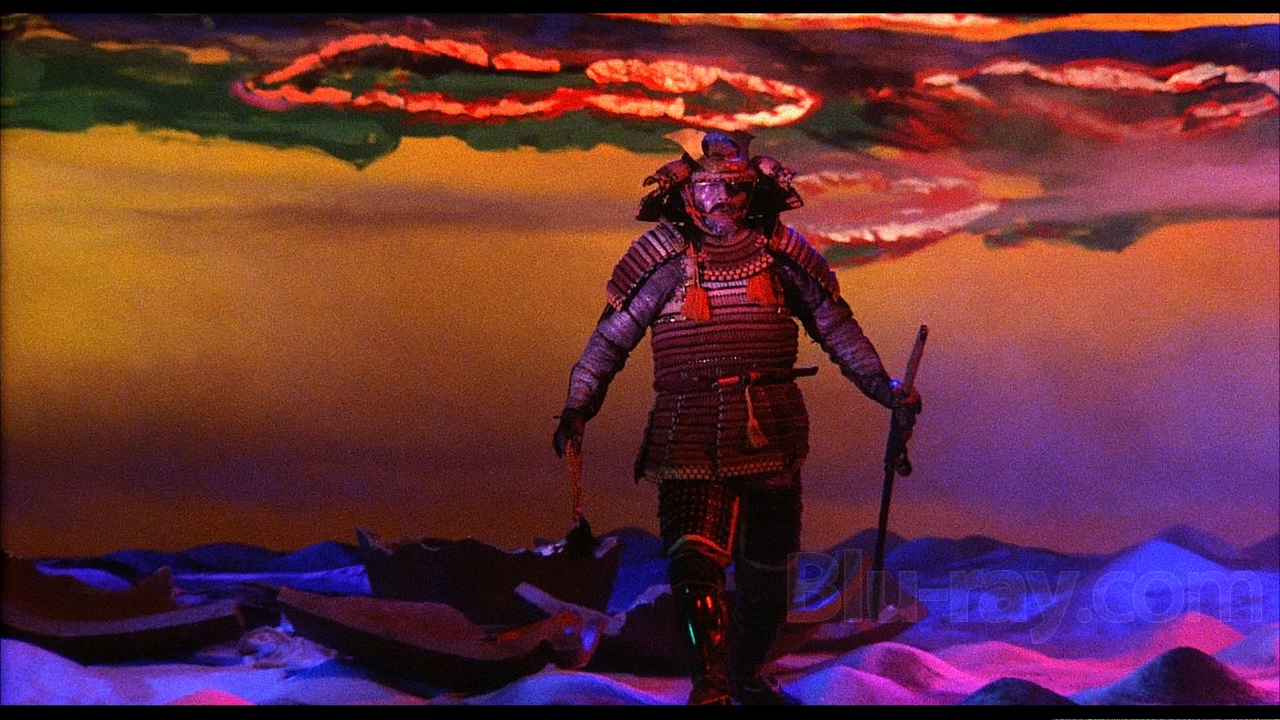
Rashomon is one of those films that Stuart Galbraith described everyone as “knowing it even if they haven’t seen it”. Its structure of unreliable narrators telling different versions of the same story has been employed on almost every single recurring drama that has been screened since its making. You’ve seen the Rashomon story, even if you’ve never seen the film.

In the rainy (no-one works with rain visually better than Kurosawa by the way) countryside, at an abandoned house (it’s called Rashomon, so even the title doesn’t really mean anything to the story) a Priest, a Woodcutter and a Commoner discuss a recent crime in the forest. A bandit, a samurai and his wife all met in the forest. The Samurai was killed. In the investigation, the Bandit, the Wife and the Samurai (via the Medium, imagine if Morse could call on her!) all tell different versions of the story, as does a surprise witness to the crime. Which story was true? Or were they all lies?

One of the main differences watching the original Rashomon now is that we have become so used to the concept of multiple versions of the same story being told that we expect a final answer to be presented. Most often now, the final version of the story is the true version and it allows us to understand for ourselves what was true and what was not in the other versions in the story. This is not the case here: there is no answer. The viewer will never know what happened in the glade: we are in the same position as a jury at a trial – we are presented with four compromised, conflicting stories and we need to select for ourselves what (and who) we choose to believe. The camera is as much of an unreliable narrator as the actual storytellers in the film.

Imagine what a, for want of a better word, head-f*ck this must have been back in the 1950s. They’d never seen anything like it before in a film. Characters might lie, but generally the camera never did. This was the time of Hays Code America, where criminals never got away with it, murderers were always revealed in the final frame and justice prevailed. Rashomon is nothing like this: there is no truth, just a series of lies or obfuscations, with the final story potentially as compromised as the rest. In a world where even a character as likeable as Alec Guinness’ in The Lavender Hill Mob has to end the film being hauled off to jail in chains, it must have been unsettling. People must have felt like the Priest does in the film: “Who can I trust? Where is goodness in this world?”

Of course, many theories have sprung up about what is going on here and what the actual story is – some theories place a lot of emphasis on the importance of the knife (Kurosawa indeed lets the camera linger strikingly on this knife, embedded in the ground, in version 1). Even the actors on set allegedly bugged Kurosawa for the solution – but the film isn’t about this. It’s about the lies we tell, and maybe why we tell them, not about the truth. The camera doesn’t even allow us to see the body (except from its POV) so we can’t even make a decision ourselves on the nature of the wounds to help us choose between the two possible murder weapons. The truth is effectively not even a character.

So Rashomon is a revolution in narrative terms – but is it good? David Thomson, in writing on Rashomon, pointed out that the device would work better in a story where everyone believed they were telling the truth. I have to say I think he is right. In fact, that is what I had expected – subtle variations in telling, or in delivery of lines, slight twists from story to story. Each story through is actually pretty much completely different (versions 1 and 4 are the closest to each other, but 2 and 3 are totally different) and that does rather rob the story of some depth. If everyone is just lying because they need or want to, that robs the idea of some strength. Anyone can make something up – but none of us can recall perfectly a moment and what everyone involved in that moment could be doing. A film that reflected on that would really have something to say – by removing this idea, I felt a little bit cheated. This might be tied into the modern expectation of there being some sort of mystery to solve here, but I genuinely think that’s a structure that works better and is more satisfying narratively – probably why that way of telling the story is more common today.

Away from the narrative through, Rashomon is the sort of technically assured, inventive film that’s technique has now been so absorbed into our visual language that we actually don’t notice it any more. But before this film, the sort of revolving tracking shots following the characters around the forest had never been attempted before. The shots looking up towards the sun, showing the light breaking through the leaves, had been thought impossible. Even the fact that the whole thing is shot outside is ambitious. The effect of the rain thundering down on the ruined house throughout the framing device is brilliantly done (apparently the water was dyed black so it showed up on the camera), perfectly reflecting the ambivalent mood of the men discussing the case.

Throughout the film, Kurosawa directs with a visual flair that roots the camera as a key player in the telling of the stories. Shots are cunningly arranged between versions to allow contrast and comparison, with the camera placed in subjective positions rather than objective ones, meaning we “see” in the stories only what the person telling the story would choose us to see. It feels very modern – and watching it you can see why many Japanese cinema aficionados moan about Kurosawa being acclaimed in the West primarily because he has had the most influence on Western film making because in turn he was very culturally influenced by Western film making in the first place. I’m no expert on Japanese film-making (like most people I’m largely limited to Kurosawa), but heck it’s pretty clear that he’s a master film maker.

The performances in the film have a high blown intensity about them that should totter the film into silliness but somehow don’t. Toshiro Mifune, objectively, overacts wildly but he’s such a gifted performer that it becomes a magnetic animalism, a sort of eyeball-searing dynamism. Kyō’s performance is perhaps a little too much, but its wildness and nerveless intensity gradually work within the story. Shimura, Chiaki and Ueda are terrific as the homespun average-Joes discussing the case.

Kurosawa’s Rashomon is an impressive technical and narrative accomplishment of its time, but it can never have the same impact when we watch it today, because it’s been integrated so completely into our story-telling and visual language, that watching it now you find it slightly hard to see what all the fuss was about in 1951. Watching it from a modern perspective, you can see elements of the film’s narrative that could have been done more effectively, and you wonder if it’s perhaps more of a short con played on the audience that works very well than a classic – but it is the first time anything like it was ever attempted, and for that reason, if for no other, it will live on in film history.

The Hobbit: The Desolation of Smaug (2013)


Martin Freeman does some good work in one of the rare moments where the film actually does a scene from the original book

Director: Peter Jackson

Cast: Martin Freeman (Bilbo Baggins), Ian McKellen (Gandalf), Richard Armitage (Thorin Oakenshield), Benedict Cumberbatch (Smaug/Necromancer), Evangeline Lilly (Tauriel), Luke Evans (Bard), Lee Pace (Thranduil), Stephen Fry (Master of Lake Town), Orlando Bloom (Legolas), Graham McTavish (Dwalin), Ken Stott (Balin), Aidan Turner (Kili), James Nesbitt (Bofur)

The Hobbit films are an interesting opportunity to watch a team try to recapture lightening in a bottle. The Lord of the Rings films were not just a hit – they were a cultural phenomenon and changed the lives of nearly everyone involved in their production. For many of the actors it will be the first line of their obituary. The Hobbit followed the same shooting plan (two years in New Zealand, three films shot back to back) but somehow it didn’t manage to recapture the same magic. It still made squillions of dollars of course, but it’s not as loved as the first trilogy.

Of course the main problem with this is that the three films were (let’s be honest) a rather bloated inflation of a pretty short kids’ book into almost 8 hours of film making. The Desolation of Smaug is one of the biggest victims of this aggressive padding, as action sequences are crammed into to fill up the running time, at the cost of those moments of character development that made the first trilogy such a rewarding investment (and even made the first film an enjoyable experience for all its faults).

This film is all too aware that it is a “big film” and a guaranteed box-office smash, so gives us the action it thinks the punters want. Strangely it all feels more like a contractual obligation (“Peter we need more Tolkien. Three more to be exact. Do what you have to do!”) – what it probably needed (as did the whole trilogy) is a new pair of eyes on it, a fresh take, rather than Jackson having to go back to the well. To be fair Jackson acknowledged this, and tried to hire Guillarmo Del Toro to direct the trilogy (still credited as creative consultant).

The action sequences in this film bizarrely expand moments from the book with overblown padding – they are invariably the duller parts of the film. In that I’ll include the ludicrous semi-comic barrel escape of the dwarves (turned from floating down the river to a chase orgy of Dwarves-Elves-Orc conflict) and the overextended attempt to dispose of Smaug in the Lonely Mountain (again marked by unbelievable acts of athleticism and derring-do which seem so out of step I wonder if we are meant to take them seriously). Add in the huge amount of action given to Jackson-favourite Legolas and we have an awful lot of dull, over-choreographed action padding out a very slim story (no more than 6 chapters of the original book). What the makers seem to feel are the film’s tentpole highlights are in fact the sags in the fabric.

It’s a shame because the moments where the film does hew more closely to the story of the book are easily the best bits. The confrontation between Bilbo and Smaug is the film’s real highlight (helped by Benedict Cumberbatch’s superb vocal work as the self-satisfied fire breather), and (with some tweaks) it’s pretty much straight out of the book. The material in Laketown is faithful enough to the tone of the book, while adding depth to its story and the life of the town so that you invest in its fate (Luke Evans does a good job with surprisingly little as Bard). The inclusion of Beorn the shapeshifter I could have done without (one for the fans) and stupid as the spider attack is, at least it was in the original book. But the more the film starts to focus away from the dwarf plotline and onto elf politics or the terribly vague rise of Sauron story, the less it holds your attention.

Bless him, by 2013 Jackson was probably the only person on the planet excited by seeing Orlando Bloom in a film. The acrobatic elf has all the depth and interest of a cartoon character, while his now heavily over choreographed fight scenes seem to be taking place in a different universe from the first trilogy. In fact, all the scenes involving the elves are deathly dull and add very little to the plot, little more than limp attempts to tie in the LOTR story more fully into The Hobbit. This focus on Legolas also steals screen time from the dwarves, making many of them little more than extras in their own story.

The problem with ramming so much action and extra plot in to link the films into LOTR is that we don’t get the time with the characters we need in order to feel the necessary concern for them. The main problem here is that there are too many characters. There are three people who can claim to be the lead in this film (Bilbo, Gandalf and Thorin). Behind them there are at least 10 prominent supporting characters and behind them at least another 12 small but important characters. That’s 25 characters the film needs to be juggle – in other words about 6.5 minutes each if you divide it equally. Jackson does a decent job with juggling these it has to be said – but it’s still way too many. I challenge any non-Tolkien fan to successfully identify pictures of all 13 dwarves without prompts.

It’s a shame as there are some very good performances in this. Martin Freeman continues to be perfect for the lead role, decent, brave and resourceful (but with small flashes of “ring addiction”); Ian McKellen of course just is Gandalf; controversial as her extended storyline is, I rather liked Evangeline Lilly’s performance; Ken Stott does a lot with limited screen time as Balin. Richard Armitage demonstrates his star charisma again as Thorin, a complex part he invests with a Shakespearean gravitas: in this film Thorin is at times kindly, stubborn, generous, selfish, patient, temperamental, a warm friend, a deeply suspicious comrade – Armitage holds all these threads together brilliantly. Honestly the guy is an absolute star.

Overall, I enjoyed Desolation much more than I remember doing in the cinema. Perhaps it helps that I’ve seen all three films, and understand more where this film is going. It’s still an overblown, overstuffed piece of work that doesn’t have the sense of soul that LOTR has. It mistakes high octane action for human interest and struggles to make all the characters in the film make an impression. A braver adaptation would have reduced the number of dwarves – but I can just imagine the riot from the book fans… What this film really is, of course, is 4-5 really good scenes, surrounded by padding to boost the running time – but those scenes (Smaug and Bilbo, Thorin confronting the people of Laketown, the few quiet talking bits) are very well done, and they just about make the film work. On repeated viewings you’ll find yourself drifting out to make a cuppa during the barrel chase. But you’ll certainly be in your seat when Bilbo first enters the Lonely Mountain’s treasure store. And its miles better than what was to come.

Catch Me if You Can (2002)


Leonardo DiCaprio lives out his fantasies in Catch Me if You Can

Director: Steven Spielberg

Cast: Leonardo DiCaprio (Frank Abagnale Jnr), Tom Hanks (Agent Carl Hanratty), Christopher Walken (Frank Abagnale), Nathalie Baye (Paula Abagnale), Amy Adams (Brenda Strong), Martin Sheen (Roger Strong), James Brolin (Jack Barnes), Nancy Lenehan (Carol Strong)

Conmen. You wouldn’t want to meet one but they don’t half make for great stories: largely because tell a great one. Watching cons has the same tension as watching a high-wire artist: will they slip? We all like to think we could fool people if we wanted to – and the movies give us a chance to watch someone else live those fantasies for us.

Frank Abagnale Jnr (Leonardo DiCaprio) was a teenager who was a natural at the arts of the short and long con, as well as an accomplished forger. The film tells the story of his late teens and early twenties when, as well as impersonating a senior paediatrician and a junior district attorney, Abagnale stole almost $3 million from Pan Am by impersonating a pilot and forging checks between 1963 and 1969. Hanks plays Carl Hanratty, the dedicated FBI investigator on the case.

What’s great about this film is that, by and large, it isn’t trying to be a lot more than an entertainment. In fact, Spielberg deliberately shoots the film in a low key, unflashy style that puts the focus on the story and acting. And there is something hugely entertaining about the chutzpah of conmen, particularly those who are only fleecing huge businesses, which this film really understands and taps into. It’s probably Spielberg’s funniest “comedy”.

It’s witty throughout with a sly sense of humour. In his roles as both doctor and lawyer, Abagnale is shown carrying out research by watching TV shows and reading pulp novels – and then repeating their clichés, to the bemusement of those around him (but he delivers it with such confidence it still works). I also enjoyed the fact that his chosen careers (air pilot, doctor, lawyer) are all approached with the same naive understanding a kid would have for what the job involves (and DiCaprio’s look of childish terror slipping past his adult facade watching a plane take off from the cockpit and when asked for his opinion on the treatment of an injured child at a hospital are endearingly genuine). The film is told with a great deal of bounce and lightness, taking on the structure of a Wil-E Coyote/Roadrunner chase cartoon, with Hanratty defeated several times by Abagnale’s confident sleight of hand.

The script does have depth to it, rooting Abagnale’s actions in his trauma from a broken family and witnessing his father’s humiliating fall into poverty after charges of tax evasion. The film suggests this to be the main motive for Abagnale’s actions – a misguided attempt to redeem his father and take back what was taken from him. This theme of a son trying to win his father’s respect gives the film a heft that balances the fluff – especially as it’s clear the son has taken many of the wrong lessons from his father’s life on the edges of legality. It’s helped in this respect by a wonderful performance of twinkly charm and fatherly pride by Christopher Walken, combined with a sly sense of roguishness.

Leonardo DiCaprio is the motor that really makes this film work. His boyish good looks are perfect for this and he has both the confidence to convince as a trickster and the vulnerability to be the young boy underneath. As such he has the lightness of touch that the story needs and the acting chops to convey the inner pain Abagnale is working so hard to soothe. He’s also effortlessly charming and endearing here, surely the perfect traits of a con man.

For the rest of the cast, Tom Hanks very generously plays second banana as the investigator and gives the role a strong sense of the surrogate father. Amy Adams in one of her first roles is wonderfully sweet as Abagnale’s fiancée, totally unaware that he is a 17 year old kid. Martin Sheen and Natalie Baye also give good performances.

The film is a light and frothy confection that shades in just the right amount of nuance and depth to make us care for its lead character. With John Williams’ zippy score and its luscious recreation of the late 1960s, it’s also a film in love with the vibrancy of the era. A terrific unpretentious entertainment, it’s not one of its director’s great works, but it might be one of his most joyful.

The Desert Fox (1951)


James Mason rides into action as a sympathetic Nazi

Director: Henry Hathaway

Cast: James Mason (Field Marshal Erwin Rommel), Jessica Tandy (Lucie Rommel), William Reynolds (Manfred Rommel), Cedric Hardwicke (Dr Karl Strölin), Luther Adler (Adolf Hitler), Everett Sloane (Gen. Wilhelm Burgdorf), Leo G. Carroll (Field Marshal Gerd von Rundstedt), George Macready (Gen. Fritz Bayerlein), Richard Boone (Capt. Hermann Aldinger), Eduard Franz (Col Claus von Stauffenberg)

It’s pretty astonishing when you think about it that less than six years after World War II ended, Hollywood produced a film about one of Germany’s leading generals which painted him in a largely positive light. Even more of a surprise is that this was a box-office hit. But then this film was designed to be a step towards reconciliation – especially with one eye on the Cold War and the need for Germany as an ally.

James Mason (brilliant in one of his most iconic roles) plays Rommel, with the film beginning just as the tide of war turns in Africa at El Alamein. Of course, this allows a lot of talk of Rommel being a noble fighter and brilliant general, without having to awkwardly show him chasing the Sixth Army across Africa! From his defeat to Montgomery (unseen but often referenced), Rommel slowly loses his faith in Hitler, realising the Fuhrer cares little for the lives of his soldiers. Gradually he becomes closer to the conspirators of the July 1944 bomb plot to assassinate Hitler. When it fails, he is given the choice: suicide and a hero’s funeral or execution as a traitor for him and his family.

The film is notable for opening with an exciting James Bond-style action sequence, a 1941 raid by British commandos on Rommel’s HQ (codenamed Operation Flipper), designed to grab the viewer’s attention – and to provide the action in a war film that otherwise has virtually no combat in it. It’s a terrific opening that immediately establishes the importance Rommel holds. The Desert Fox was one of the first films to use this device of an action prologue to open the story – the sort of thing James Bond has since mastered.

From there, Hathaway’s journalistic film (much of the World War II footage is reused from newsreels) is very smoothly and professionally directed, turning the last few years of Rommel’s life into a classic morality tale. Whether this is completely true or not (more recent research on Rommel suggests he was a much more enthusiastic early supporter of the Nazi party than suggested here), there seems little doubt that he was at the very least sympathetic to the July 1944 bomb plot. Rommel here is a man who sees the light too late – and pays a heavy price.

Nunnally Johnson’s well-researched and tight screenplay focuses on conversations and political manoeuvering, with Rommel presented as apolitical and straight shooting, clumsily working through debates he lacks the political sophistication to understand. Johnson’s script also provides excellent opportunities for sparkling cameos. Leo G. Carroll is particularly good as Rommel’s frustrated and cynical superior, but there are also stand-out performances from Everett Sloane as a lackey from High Command and a memorable cameo of controlled ranting extremity from Luther Adler as Hitler.

The film, though, is carried by James Mason’s subtle and sympathetic performance. Mason has the charisma, his upper class manner perfect for the military man, but he isn’t afraid to play both positive and negative. So we get his arrogance and wilful blindness, showcased in scenes where is passionate defence of Hitler is as much an attempt to persuade himself as others. But we also see his loyalty to his men and the tenderness of his relationship with his wife (played well by Jessica Tandy). Mason’s performance is compelling and soulful.

It’s not a perfect film. There are some slightly clumsy links at the start back to the source book written by Brigadier Desmond Young, who served in North Africa. Young cameos at the start in reconstructions of his meeting-at-a-distance with Rommel and his post-war research. Narration from the book is a worked into the film – and having heard the real Young speak, its mid-Atlantic tone is rather jarring. The narration often serves as a transition from event to event, but this is never completely smooth, meaning there are some odd jumps.

But it’s a very decent, very professionally done piece of film making. Its version of Rommel isn’t seen as the whole story today (there is a whole historiographical argument about the “Rommel Myth” of the man as an apolitical soldier or willing accomplice), but it’s very consistent within the film. Very well acted and scripted and very professionally directed, it’s a political film cunningly disguised as a war film, which does a very good job of creating the atmosphere of Nazi Germany and in re-creating historical events and has an excellent lead performance from James Mason.