Star Trek II: The Wrath of Khan (1982)

The Enterprise crew re-unite to face The Wrath of Khan

Director: Nicholas Meyer

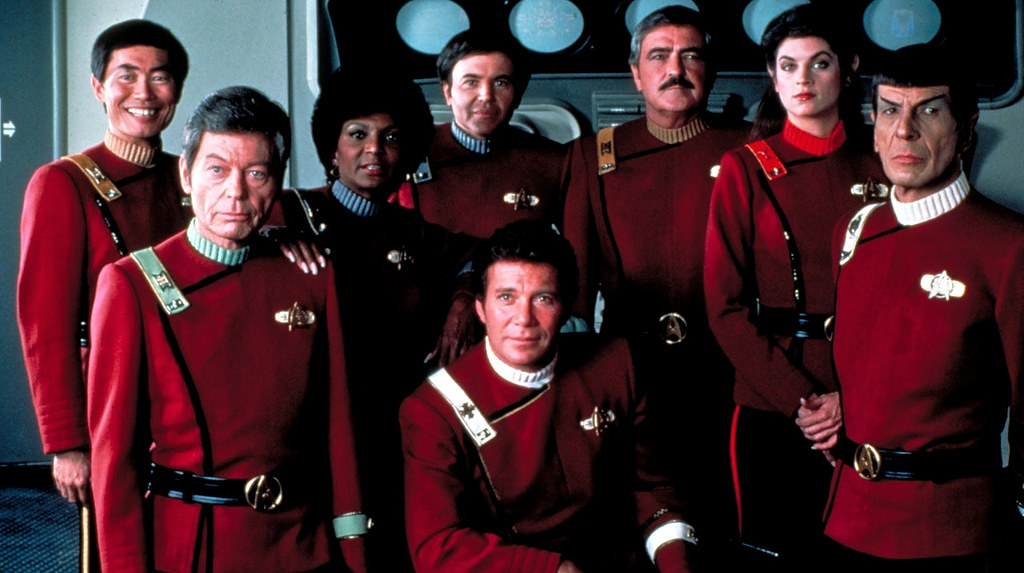
Cast: William Shatner (Admiral James T Kirk), Leonard Nimoy (Spock), DeForest Kelley (Dr Leonard McCoy), Ricardo Montalban (Khan Noonien Singh), James Doohan (Montgomery Scott), George Takei (Hikary Sulu), Walter Koenig (Pavel Chekov), Nichelle Nichols (Uhura), Bibi Besch (Dr Carol Marcus), Merritt Butrick (Dr David Marcus), Paul Winfield (Captain Terrell), Kirstie Alley (Saavik)
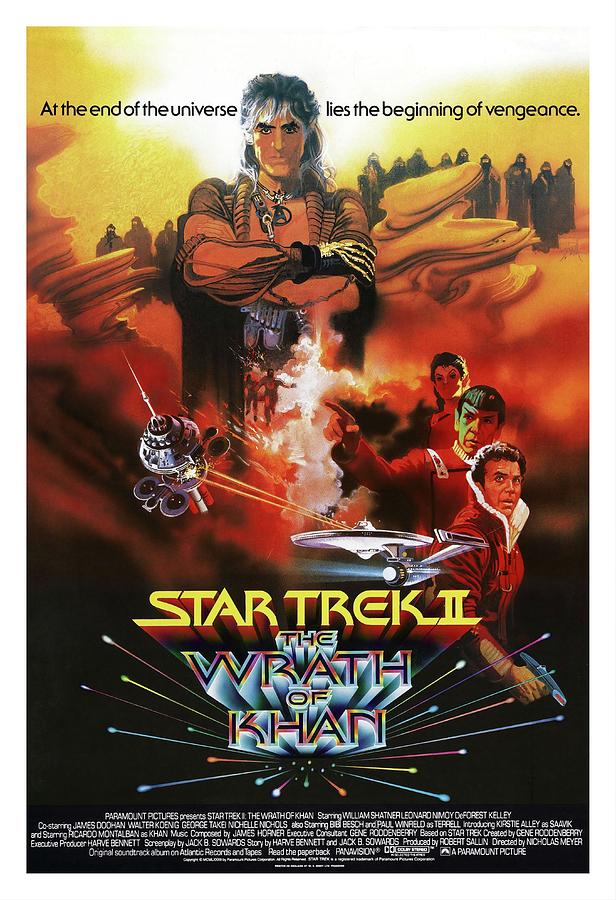
After the overblown, slow and tedious The Motion Picture, you’d have been forgiven for thinking that we had seen the Enterprise crew boldly go for the very last time. If there was going to be a sequel Paramount had very clear guidelines for what it wanted: more entertaining, exciting, don’t involve Gene Roddenberry and above all make it for a fraction of the price. I think it’s fair to say that the decision to bring producer Harve (“I could make three movies for the cost of that first one!”) Bennett and above all writer and director Nicholas Meyer on board, saved the franchise.

Neither Meyer or Bennett were familiar with the franchise in advance. But they did what those involved in the first film should have considered doing (looking at you Robert Wise!) – they went back and rewatched all the previous episodes and tried to work out exactly what people enjoyed about the show to begin with. And then tried to make a movie based around that. So first and foremost they decided they needed a villain – so after running through all the previous episodes they decided genetically-engineered superman Khan Noonien Singh, left abandoned on a planet with his followers after the episode Space Seed – was the best pick. Giving the film a simple “revenge” structure, it became a taught battle of minds and wills between Khan and the man he blames for all his problems – Admiral James T Kirk (William Shatner).

Star Trek II opens with an ageing Kirk, unsure of his place in the world while stuck in a desk job and scared about getting old. Running a cadet training voyage with his old crew, Kirk is called back into action after Starfleet loses touch with Federation scientists working on the Genesis device, a terraforming rocket that will help the Federation build new worlds and civilisations. The problems with Genesis are directly linked – without Kirk’s knowledge – with Khan’s (Ricardo Montalban) hijacking of the USS Reliantafter brainwashing the ship’s captain Terrell (Paul Winfield) and his first officer Chekov (Walter Koenig). Khan blames Kirk for the disasters that have taken place on the planet he was marooned on – and is determined to exact revenge on Kirk no matter the cost.

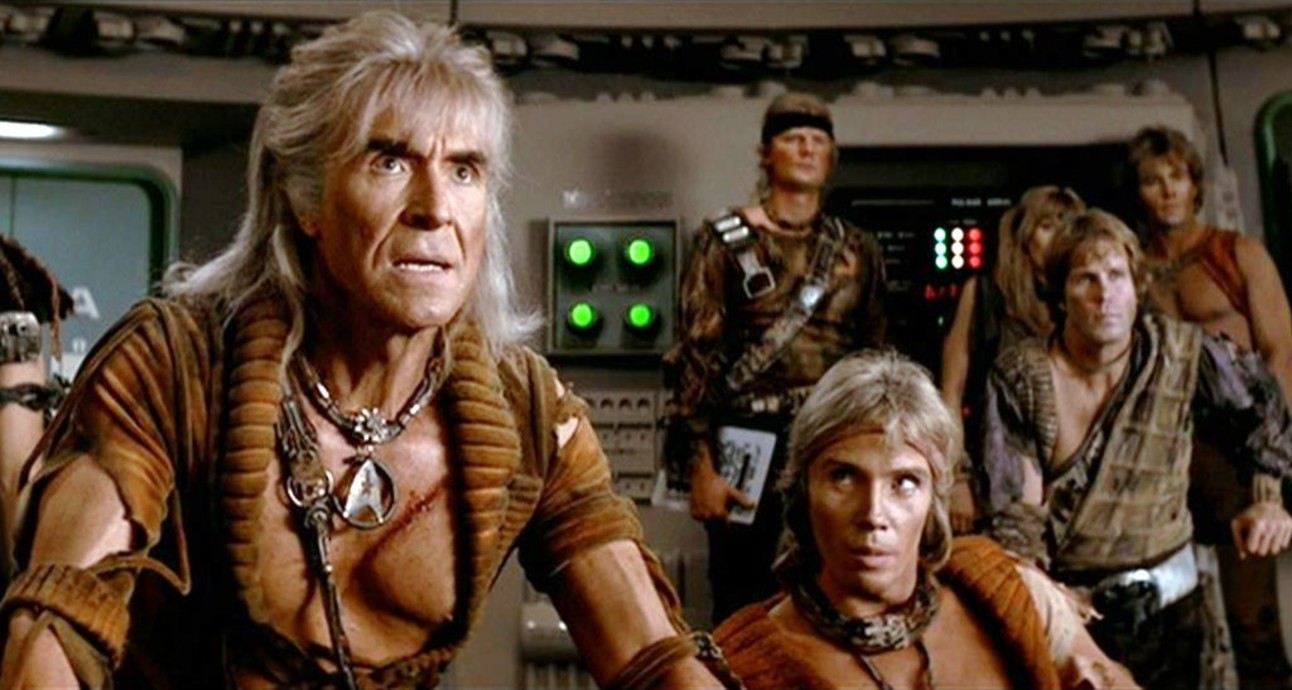
Unlike the dry Motion Picture, Wrath of Khan builds is action around a compelling, emotionally charged, story that gives each character a clear and relatable motive for their actions. Building a film about revenge may not exactly be in Roddenberry’s ideal for the 23rdcentury: but by heck it makes for a much better film. Because, if nothing else, while we may struggle to understand what the hell V’Ger wanted in the first film, everyone understands the dangerous obsession of revenge. It helps that the film has an excellent villain – a scowling, unbalanced but still strangely honourable and decent Khan, played with a grandstanding relish by Montalban who is clearly having a whale of a time. Despite never sharing the screen (or even being on set at the same time) Montalban and Shatner go at the rivalry and its impact on both characters with a real intensity that makes for compelling viewing.
Meyer also tightened and refocused the entire franchise. Roddenberry may have struggled with the increasingly naval view of Starfleet in this film – it’s at least twice referred to explicitly as the military – but Meyer recognised that if the franchise was partly Hornblower in Space, then why not redesign the film with that in mind. The ship is run with naval precision, including yeoman whistling to signal shifts and orders, uniforms that have a stylish naval formality to them, a greater focus on the ship’s movements being described in strictly naval terms – even the photon torpedo bays are prepped by enlisted men in what Meyer called his “running out the guns” sequences. This makes the entire operation not only easier to relate to, but interesting and entertaining in its own right.

It also adds huge tension to the duel that develops between the Reliant and the Enterprise that plays out part naval battle and late on – when battle turns to the Mutara nebula where systems and sensors work only intermittedly – part classic submarine drama, with Meyer practically throwing in depth charges. The battle scenes are filmed with simplicity and economy – but because the personal clashes between Kirk and Khan are so compelling and involving, they absolutely drip with tension, as these two go through move and counter move.

Meyer’s film is lean, engrossing and thrilling, and superbly well directed. It goes from skilled set-piece to set-piece, and never for a moment overlooks character. Unlike the first film, we get the moments of Kirk-Spock-McCoy discussing key themes together so beloved from the series, while most of the main cast also get their moment in the sun, most especially Walter Koenig who, as a brainwashed Chekov, gets more to work with here than he got in the whole original series. 

But this isn’t just an action adventure in space. Meyer’s literate and intelligent script has far more depth and thematic interest in it than the faux intellectualism of The Motion Picture. Taking as its starting point Kirk’s fear of on-setting age (the film opens with his 50th birthday, and McCoy’s gift of antique spectacles), it expands into an engrossing mediation of how we react to the impacts of our actions and lose-lose situations. Kirk has also to face the mortality of age and the impact of past actions – like his son (Merritt Butrick channelling Shatner’s impulsiveness) – coming back to bite him. All this while flying a ship of young cadets round – who need to shepherded into the risks of conflict. Khan meanwhile is confronted time and again with the damaging impact of his choices to follow revenge and obsession rather than settling for a winning hand.

Meyer gets his best work ever out of Shatner (allegedly after realising Shatner over committed to early takes, he made Shatner take multiple takes in order to focus his energy). This is a Kirk getting old, dealing with inner resentments and made to face up to the consequences of his actions – both with Khan and meeting the son he fathered. Shatner tackles all this with a world-weary resignation and touch of sadness that many felt were beyond him, while still making room for the fireworks that are his calling card (I suppose the famous “Khan!” was Meyer’s one major indulgence of Shatner’s exuberance).

However the other element the film is well known for is of course it’s tragic ending – the sacrifice of Leonard Nimoy’s Spock. Lured back to the film, but not convinced about ever returning, Nimoy agreed to the final reel shocker (although he enjoyed making the film so much he willingly agreed to leave the door open for Spock’s resurrection). It gives the film an emotional heft that none of the others in the franchise has. For the first time, our heroes would not magically escape unharmed to fly off onto the next adventure. Just as the film started with the cadets learning that sacrifice and facing a lose-lose scenario is a part of command (a lesson Kirk cheated on in his day, and a situation he has never faced or understood, as the film teaches him), so the film ends on the same beat. The ship can escape – but only if Spock takes a fatal radiation dose to restart the engine.

Both Nimoy and Shatner play the heck out of these scenes, probably the most emotional in the franchise – a low-key but deeply affecting moments of two old friends sharing their last moments together. It’s this successful switch into showing the real cost and loss associated with adventures like this that cap the thematic depth Meyer bought to the film.

Star Trek II succeeds on every count. Meyer’s intelligent script quotes and riffs everything from CS Forrester to Dickens via Moby Dick, while giving both heroes and villains deep and rich character arcs. It’s grippingly filmed – you wouldn’t believe how much cheaper it was than the first film, as it looks ten-times better with not a penny gone to waste – and hugely exciting. It carries real emotional force, and it’s hugely benefited by a fantastic score by a young James Horner. Even now it’s still the high point of Star Trek on screen – and probably a highlight of the franchise as a whole.

A Star Is Born (1954)

James Mason and Judy Garland deal with ups and downs in Hollywood in A Star is Born

Director: George Cukor

Cast: Judy Garland (Esther Blodgett/Vicki Lester), James Mason (Norman Maine/Ernest Gubbins), Jack Carson (Matt Libby), Charles Bickford (Oliver Niles), Tommy Noonan (Danny McGuire)

A Star is Born’s story had effectively been told twice already in Hollywood – once under the same title in 1937 and once before that as What Price Hollywood?, directed by none other than George Cukor. But Judy Garland’s husband Sid Luft saw the project was perfect for her. Luft thought the volatile Garland needed a director who could draw the best from her – and who better than Cukor, who worked with actors perhaps better than any other director in Hollywood. Cukor had been worried about repeating himself – but the chance to direct his first musical, first technicolour epic and work with Garland was too tempting.

The story is of course familiar. Esther Blodgett (Judy Garland) is an aspiring singer who – with quick thinking and performance nerves of steel – saves drunken Hollywood star Norman Maine (James Mason) from humiliation by involving him in a musical number at a charity event. When he sobers up, Maine goes to visit Esther to thank her – and is blown away when he hears her singing. Convinced she will be a major star, Maine arranges for a screen test with studio head Oliver Niles (Charles Bickford) and later pitches heavily for her to be considered as a last-minute replacement on the studio’s big new musical when the star drops out. Esther – or Vicki Lester as the studio renames her – becomes a major star when the film is a smash hit. But as her career goes up and up, Maine’s alcoholism and unreliability start to catch up with him and his own career hits the skids.

Cukor’s A Star is Born is a big, charming, impressive film that mixes emotional desperation with moments of joyous celebration. The film was not the box-office bomb it’s often believed to be (although it did do disappointing business) but, worried about its length, the studio cut the film several times during its release. The film we have today is a slightly neutered version, with several scenes reassembled by film historian Ronald Haver using audio, the odd clip and still photographs (it adds an impressionistic section of the film which you can’t imagine Cukor would have cared for) – but Haver did locate several missing musical numbers which add to the film’s impact.

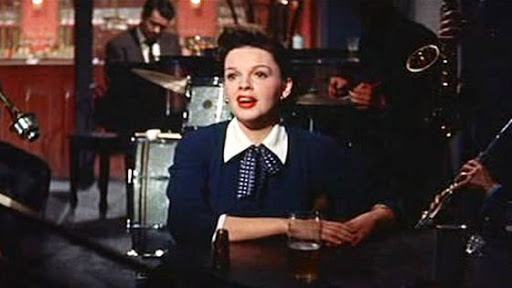
Garland sings all the numbers, and some of her best work ever is in this film. Her late night bar rendition of The Man That Got Away (the performance that wins Norman’s heart) is superb. I love the affectionate spontaneity of Someone at Last, Esther’s recreation to amuse Norman of the sequence she has spent the day filming in the studio. This scene is playful, sweet, funny and has a freshness not all the numbers have.

Some of the other numbers go on too long – and it’s hard to escape the feeling that they are in there solely because of Garland and not because they serve the plot. Because this isn’t really a musical as such, more of a romantic tragedy with the odd tune, with each number a performance. It works superbly because Cukor’s sympathetic direction draws some of her best work from Garland – and a truly superb performance from Mason. 

Cukor works particularly effectively with Garland who, in real life at this point, was far more similar to the destructive Maine (she delayed the film frequently with her absences and fluctuations in health). Garland is of course too old for the part – but it doesn’t really matter as she brings it such freshness, naturalness and emotional openness that you can persuade yourself that she’s a young ingénue at least ten years younger than she looks.

Garland was also surely helped by being paired opposite Mason. Not the first choice – that was Cary Grant – or indeed the second, Mason was hired as his professionalism and expertise could deal with Garland’s erraticism. Under Cukor’s direction he gives his finest work on screen here. His turns Maine into someone decent, charming, kind – but overwhelmingly self-destructive. His slightly slurred speech and ability to turn on a sixpence to anger makes for some of the best drunken acting you’ll ever see. But it works especially as we are desperate for Maine to kick the bottle. Because when he’s sober he’s the perfect husband and gentlemen. But Mason uses that to mine the deep tragedy of the character, his intense shame and self-loathing. The later sequences of drunken misbehaviour are heartbreaking (Maine’s drunken interjections at Esther’s Oscar-winning speech are almost unbearably painful to watch), and it’s all powered by Mason’s humanity in the role. It’s a truly great performance.

The film itself is perhaps a little slow and uneven around these performances. The musical numbers – whisper it – frequently slow the action down or grind the plot to a complete halt (none of them add anything to the story at all, and exist to showcase Garland). The film is so tightly focused on its two leads that it never develops any sub-plots to contrast with the main action. There is some light satire on Hollywood studios and their rapacious desire for more money – but not too heavy as the villain here is the odious press man (a weasly Jack Carson) while the studio head is a kindly, affectionate, fatherly figure who would never make a call based on business. The matter of fact way both stars have their names changed (the moment when Esther discovers Norman’s real name is a hilarious throwaway moment) is a neat gag. But the film takes a long time, frequently stopping for another Garland set-piece.

Perhaps the studio instincts were right that the film needed to be tighter – and some of the dialogue sequences reinserted by Haver hardly add much too the plot. Cukor’s direction is calm but assured though and the superb performances of the two leads make the film what it is. It looks fabulous with its technicolour depth, and it carries a genuine emotional force that pays off dramatically by the film’s conclusion. A Star is Born is uneven at times and overindulgent but it has more than enough going for it to reward the viewer.

The Life and Death of Colonel Blimp (1943)

Roger Livesey and Anton Walbrook are friends who war cannot divide in The Life and Death of Colonel Blimp

Director: Michael Powell, Emeric Pressburger

Cast: Roger Livesey (Clive Candy), Deborah Kerr (Edith Hunter/Barbara Wynne/Angela “Johnny” Cannon), Anton Walbrook (Theo Kretschmar-Schuldorff), Ursula Jeans (Frau von Kalteneck), James McKechnie (Lt “Spud” Wilson), David Hutcheson (Hoppy), Frith Banbury (David “Baby Face” Fitzroy), Muriel Aked (Aunt Margaret), John Laurie (Murdoch), Roland Culver (Colonel Betteridge)

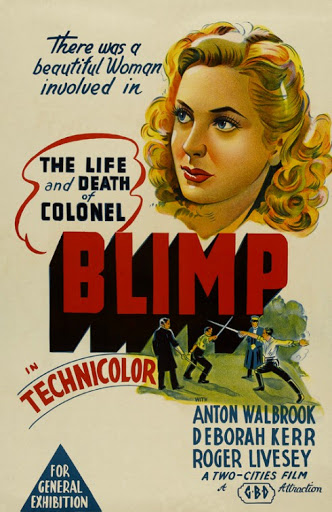
Is there a film that has better captured the curious state of being British than The Life and Death of Colonel Blimp? Could any other film makers than Powell and Pressburger take a doltish buffoon from newspaper comic strip, and turn him into a tragi-comic figure worth of Hamlet? Could any other film make a wartime propaganda film that features the most sympathetic depiction of the Germans anyone would see for decades to come? Winston Churchill was so scathing of the film that its US release was delayed for two years – and even then it was cut to ribbons. But then, I guess we knew already the guy wasn’t right about everything.

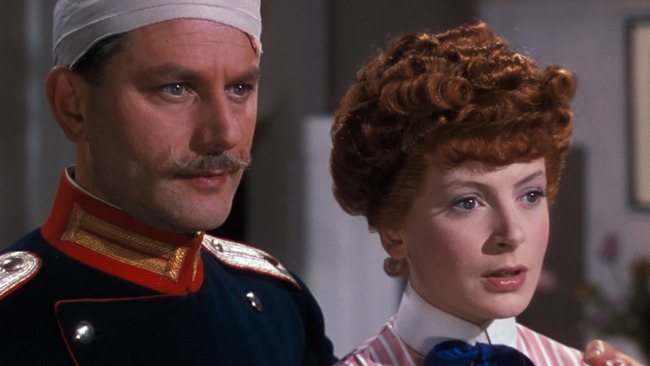
During the Blitz, Clive Candy (Roger Livesey) is a retired Major-General and now a senior commander in the Home Guard. Ambushed in a Turkish bath on the eve of a training exercise (by young officers keen to follow the German example of effective pre-emptive strikes), Candy rages at their dismissal of him as a relic from yesteryear. In flashback, we see Candy’s entire life over the course of the rest of the film. The film charts his military cross, from the Boer War to World War One and his life-long friendship with German officer Theo Kretschar-Schuldorff (Anton Walbrook), after both men are hospitalised after a 1902 duel over insults to the German military. Both men fall in love with the same woman, Edith Hunter (Deborah Kerr) although Clive realises it far too late – and their friendship ebbs and flows over the next forty years.

Powell and Pressburger’s film is, of course, quite beautifully made. The film has that distinctively radiant technicolour look of their most successful works, but it works so well because Powell assembles the whole so wonderfully. Powell knows when to hold a shot and when to look away and his judgement is never wrong. In the duel where Clive and Theo meet (Theo has been randomly selected to fight), the camera at first covers the detail of the prep, then moves to an over-the-head shot as it begins, before pulling out of the gymnasium and away, gliding into a long shot with Berlin sprinkled with snow. Because after all, the actual fight is immaterial to the sense of this being one event in the tapestry of life – and the moment of real importance being the friendship that came from it.

Then, much later, Powell does the exact opposite, holding a shot with powerful, emotional, simplicity. It’s 1939 and Theo is trying to remain in England – his wife having passed away, his sons being lost to Nazism and this adopted country being far closer to his old Prussian ideals of duty and fairplay. In a heartbreakingly low-key, simple speech – just exquisitely delivered by Anton Walbrook – Powell lets the entire speech play out in a single take, giving the moment room to breathe and magnifying its impact enormously – not least by the background extra who switches from shuffling his papers to listening intently to this heartfelt appeal.

It’s this mastery of technique that makes the impact of the film so wonderful – and helps it to masterfully capture the changing of an entire nation. Other the film’s forty years the entire world changes utterly, from one of simple truths where right is right and evils are punished, to the morally complex world of World War Two, where bending the rules and playing dirty might be just what is needed to defeat enemies with no principles. 

Candy is a man of unshakeable morals and ideals, who does not believe ends justify means and is determined that fighting honourably for defeat is far better than victory at all costs. It’s an idea the film affectionately praises, at the same time it sadly shakes its head and admits that such ideals were for the last century not this one. These are ideas Theo has captured far sooner than Candy – and Candy’s tragedy, among his many virtues, is that he always fails until it is almost too late to understand the truth of the world around him (be that politically or romantically).

It doesn’t matter really though, because we always know Candy’s heart is in the right place. In a sublime performance by Roger Livesey, this is a man with an upper-class bombast and a paternalistic regard for his duty and for others. His country and the ideals of that country come first and foremost – but it’s not about pushing those home. He will console honourable foes – as he does with Theo after World War One – and when the battle is over will be the first to say by-gones are by-gones. The film he is in a way a somewhat ridiculously old-fashioned character – but he’s always well-meaning, decent and honourable.

Candy also has the tragedy tinged sadness of not knowing what he wants until it’s too late. He doesn’t realise his affections for Edith Hunter, until she and Theo are telling him of their engagement (although we the audience are already well aware that Edith had feelings for him), and the look of realisation of a deep and lasting love that will last his whole life, is fabulously conveyed by Livesey in a perfect reaction shot. Candy will eventually marry Edith’s near doppelganger, but this unspoken love will last his whole life – and form another bond between him and Theo. Which in itself is what we like to think is a quality the British have at their best.

Along with that British fair-play that is so important to him, it also settles in the friendship between Theo and Clive. A friendship unaffected by tragedy or war (or at least not for long) and which, despite years apart, Clive frequently returns to with all the warmth and openness they first shared. These are bonds of loyalty forged on the playing fields, that operate on unspoken feelings (for a portion of their friendship Theo can’t even speak English). 

These are also the ideas and principles that Clive keeps alive in himself, even while the world becomes ever more bleak around him. He’s a character that never loses his essential positivity and kindness. Deaths or disappointed love are met with regret and then losing yourself in sport (whole years are hilariously shown to pass by montages showing Clive’s hunting trophies appear on walls). But always that British idea of (as Churchill put it) “keep buggering on”, and not letting infinite sadnesses and disappointments undermine or define you.

Powell and Pressburger use all this to make Candy not a joke – as the Lieutenant in the film’s prologue sees him – but as a deeply sympathetic and real man. It’s a film also about our disregard for the old, our failure to ever imagine that they were young. The flashback structure fills in this story beautifully. All this, and it’s not even to mention Deborah Kerr’s superb performance as all three of the women in this story, each subtle commentaries on the other and her return throughout somehow representing the perfect ideals that Clive and Theo are living to. The Life and Death of Colonel Blimp is about understanding how the “rules” of British behaviour are underpinned by a deeper sadness it’s almost a duty to hide – and it understands that better than almost any other film.

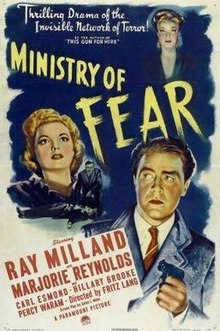
Ministry of Fear (1944)

Ray Milland and Marjorie Reynolds take on Nazi agents in Ministry of Fear

Director: Fritz Lang

Cast: Ray Milland (Stephen Neale), Marjorie Reynolds (Carla Hilfe), Carl Esmond (Willi Hilfe), Hillary Brooke (Second Mrs Bellane), Percy Waram (Inspector Prentice), Dan Duryea (Cost/Travers), Alan Napier (Dr Forrester), Erskine Sanford (George Rennit)

Neither Fritz Lang nor Graham Greene (the author of the original book) cared much for Ministry of Fear. Both of them thought that the film they ended up with was only a shadow of the original novel, with both of them largely blaming the script by Seton I Miller and the producers for turning Greene’s novel into a more simplistic B-movie. And yes the film is at heart just a B-movie, that races through a conspiracy thriller – and you’d have no idea that it ever came from Greene-land unless you were told so – but it’s put together with such professionalism that you admire its skill, even while it’s no Third Man.

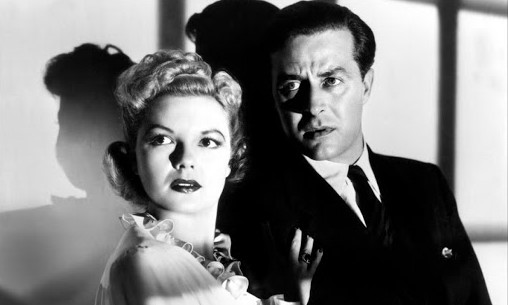
At the height of the Blitz Stephen Neale (Ray Milland) is released from an asylum only to find himself immediately embroiled in a load of shady goings-on with suspicious séances, hidden microfilm and Nazi sympathisers. Can the fragile Stephen get to the heart of it?

Ministry of Fear has a slightly dream like quality to it – probably because it’s a fragmented narrative that makes quick jumps from event to event, sometimes with very few links between them. Stephen emerges from an asylum straight into a charity fete, hence to a train, the centre of London and a séance, with all the speed of a logic-skipping dream. Everything is swift and somewhat low in logic. The plot of the film becomes sheer B-movie fluff, with the typical spy hijinks you might expect, lacking any of the complexity of the book. 

Greene was particularly disappointed by the deletion of the guilt Stephen feels around the death of his wife – and the film indeed skims over this very swiftly, leaving the reasons for Stephen’s being in an asylum in the first place largely unexplored and dispatched as swiftly from the film as possible. It’s not a film that has the time to explore the complexity of personalities of characters – instead it’s all about turning the content of the novel as much as possible into a high-flung spy thriller.

It’s why Lang was so disappointed with the script – and he became more and more dismissive of the film as he got older, claiming it to be bad film that he fell asleep in during a later showing – but he still bought to it a visual magic. The film is crammed with beautiful expressionistic images, present right at the start with Stephen watching a ticking pendulum through to some of its beautiful later images, in particular a shooting through a door that allows a beam of light to shine through a bullet hole in a door. Lang crams the film with striking images that help lift it above its B-movie roots.

Which is just as well because the general drift of the plot isn’t always that special, playing like the off-cuts from several Hitchcock films. Despite the artistry with which Lang presents it, he can’t hide the basically generic stuff that Greene’s book has been turned into. And its fast pace and logic jumps can perhaps find their root in the general contempt Lang had for the material he had to work with. Nothing in this feels particularly right – the England it presents is laughably wrong on several counts – while as always much of the mystery is reduced from the small cast list and tiny selection of possible suspects. 

There are some good sequences, don’t get me wrong. A séance is beautifully made and carries a fair degree of tension. The final confrontation with the architect of the misdeeds makes for a decent scene. It’s just a shame it’s counterbalanced with clumsy “this is what’s going on” scenes, such as Stephen’s briefing from British Intelligence. 

There are some good performances among the cast. Milland gives a well-judged performance of vulnerability, confusion and growing strength. He has just the right good-looking-but-not-drop-dead-handsome look to him to make him someone you can sympathise with but not completely trust (if the film hadn’t dropped some of the more interesting questions around Stephen’s guilt or innocence for past crimes this casting would have really worked to strengthen that). But he gives a fine performance. The array of suspicious characters around him are confidently performed, with Hillary Brooke a particular stand-out as a manipulative, seductive medium.

But Lang’s film is a covering of class and technique other soil that isn’t rich enough. The complexities of Greene has been lost and the film’s general plot and content doesn’t give much more than the sort of cheap thrills you could expect from a well-made B movie. With those involved this could have been more, but it never becomes a classic.

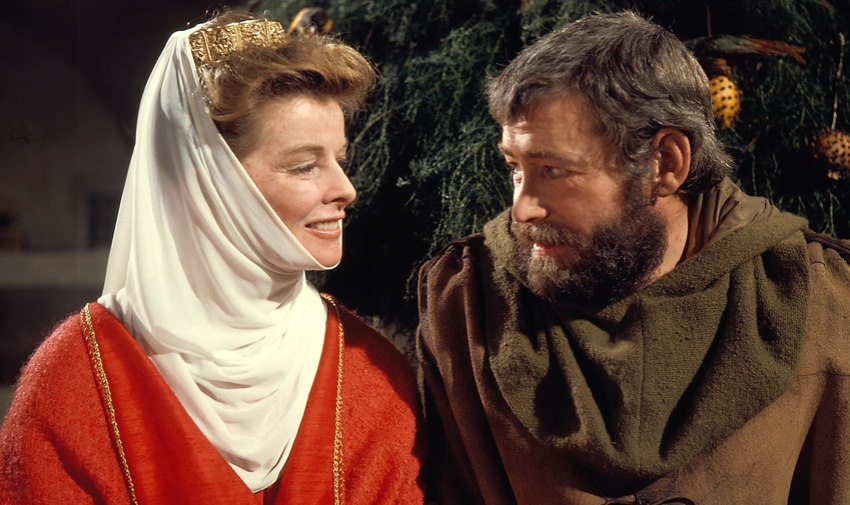
The Lion in Winter (1968)

Katharine Hepburn and Peter O’Toole are the feuding royals in The Lion in Winter

Director: Anthony Harvey

Cast: Peter O’Toole (Henry II), Katharine Hepburn (Eleanor of Aquitaine), Anthony Hopkins (Richard the Lionhard), John Castle (Prince Geoffrey), Nigel Terry (Prince John), Timothy Dalton (Philip II), Jane Merrow (Alais), Nigel Stock (Captain William Marshall)

James Goldman’s play The Lion in Winter did solid but not spectacular business on Broadway. But when it came to film, it surfed a wave of popularity for stories about British history and became one of the most financially successful films of its year, winning three Oscars (including for Goldman). Even more than that, it went on to be West Wing President Jed Bartlett’s favourite movie of all time. I think we know which prize is the most treasured.

Christmas 1183 (including an ahistorical Christmas tree and gift wrapped presents and all) and Henry II (Peter O’Toole), king of England and huge chunks of France, wants nothing more than family around him to mark the occasion. Problem is, this is possibly the more dysfunctional family ever. His Queen Eleanor of Aquitaine (Katharine Hepburn) has been under “home arrest” for ten years in her castle, and his children Richard (Anthony Hopkins), Geoffrey (John Castle) and John (Nigel Terry) seem to take it in turns to conspire against their father, their allegiances shifting faster than even they can sometimes follow. For added complexity, Henry is living with his late eldest son’s intended Alais (Jane Merrow) as husband and wife and her half-brother the new King of France Philip II (Timothy Dalton) is joining the family for Christmas. Over one night, this family will fight, feud and change pacts and allegiances until hardly anyone knows where the games end and the hate begins.

Anthony Harvey’s film is a stately, often wordy, faithful reconstruction of Goldman’s script that gives front-and-centre to the often scintillating dialogue between the family members, that leans just the right side of ahistorical (sample line: “Hush dear, Mummy’s fighting”) but frequently allows it’s top-of-the-line cast to let rip on some glorious speeches and dialogue duets crammed with ideas, wordplay, character and wit. Harvey therefore basically decides to sit back as much as possible and allow the actors do the work, using a mixture of medium shots and close-ups to bring the focus as much as possible to the Broadway-style staging or into the actor’s faces. He also uses the strength of the performers to allow for a series of long takes as they burn through pages of Goldman’s dialogue. The fact that there is hardly an interesting shot in the film, and its visual language never matches it’s verbal fire is a shame, but a price the film thinks worth paying.

And it matters little when Harvey is able to work as well with actors as he does here. All the performers are at the top of their game. Katharine Hepburn (winning her fourth Oscar, in a tie with Barbra Streisand in Funny Girl) has the perfect level of acute intelligence and imperious arrogance for Eleanor. But Harvey encourages from her a softness at crucial moments, that in-between the barn-storming speeches and verbal putdowns, Hepburn finds moments of quiet sadness and loneliness – a sense that sometimes ten years of imprisonment means she has had enough of all this – that are some of her most affecting work on screen. She’s hilarious but deeply moving – and totally believable as one of the most powerful women of the middle ages. 

She also is matched perfectly with O’Toole. Playing a 50-year old King at 35, O’Toole brings all the fire and charisma of his personality to the part, in a film where he perfectly balances the larger-than-life gusto of Henry II with his own personal disappointments, guilt and sorrow. O’Toole had already triumphed once as the charismatically brilliant king in Becket (for which he was also Oscar nominated, as he was here), but this performance is even better. Not only is his facility with the dialogue faultless, he also utterly convinces as the sort of awe-inspiring figure who dominates every room he’s in not just with force of character but the acuity and sharpness of his intellect. This might be his finest screen performance – and the one where he was most cheated of the Oscar (losing to a highly active campaign, criticised at the time, from Cliff Robertson in Charly).

To fill the cast out around these pros at the top of their game, Harvey raided British theatre to pluck some promising gems from British Theatre, more or less all of them here in their film debut. Anthony Hopkins is marvellously proud, forceful but just a few beats behind most of the others as a Richard who says what he means and sticks to it. Timothy Dalton is his polar opposite (and equally brilliant) as a Philip II who never says what he means and manipulates with a playful ease everyone he meets. John Castle (an actor who never had the career he should have had) is smugly unlikeable and coldly superior as the unliked middle-brother Geoffrey, while Nigel Terry is a snivelling punching bag as two-faced coward John. Jane Merrow is heartfelt and earnest as Alais, the only unquestionably kind and good person in this bunch.

These characters rotate sides and allegiances over the course of one evening, raging at each other like a medieval Who’s Afraid of Virginia Woolf? The brilliance of the dialogue never stops entertaining – although towards the end the film loses a bit of energy (it probably peaks with Henry’s loud double bluff of dragging the family in the middle of the night to a wedding he has no intention of seeing performed), perhaps partly because the film itself never really comes to flight as something cinematic. This is despite the decision to downplay the glamour – costumes are simple and look lived in (the cast wore them for hours off set to make them look lived in) and sets are far from pristine. It perhaps contributes to the slightly mundane feel of the filmmaking.

But the tricks are all in the dialogue and perhaps the film works best with an interval and a chance to take stock. There are several marvellous scenes, even if the constant feuding and side changing does wear you out after a while. But it’s a treat for the acting. Hepburn and O’Toole are simply at the top of their game, and the rest of the cast more than keep up with them. With an excellently imposing score from John Barry (also Oscar-winning), it’s a shame the film itself is a little too flatly and uninspiringly filmed with a murky lack of visual interest, but there are more than enough qualities for you to issue a pardon.

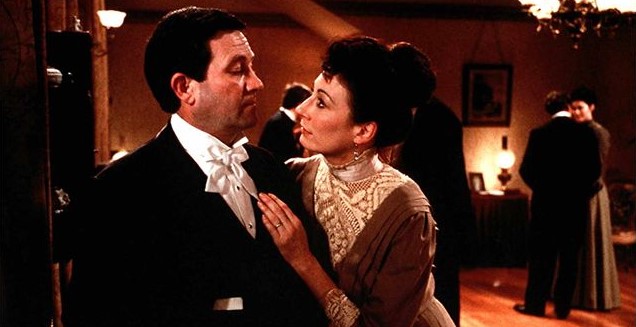
The Dead (1987)

Donal McCann and Anjelica Huston in a marriage with a past in The Dead

Director: John Huston

Cast: Anjelica Huston (Gretta Conroy), Donal McCann (Gabriel Conroy), Cathleen Delany (Julia Morkan), Helena Carroll (Kate Morkan), Rachael Dowling (Lily), Ingrid Craigie (Mary Jane), Dan O’Herlihy (Dan Browne), Marie Kean (Mrs. Malins), Donal Donnelly (“Freddy” Malins), Sean McClory (Mr. Grace), Frank Patterson (Bartell D’Arcy), Colm Meaney (Raymond Bergin)

John Huston’s final film was a long-standing passion project, anfaithful adaptation of James Joyce’ short story from The Dubliners. Huston had only a few months to live when shooting the film – he was hooked up to an oxygen supply for the course of its film-making and confined to a wheelchair. His children Anjelica and Tony (who wrote the screenplay) helped to nurse him through this final project. The final film makes for a beautiful wistful, heartfelt and tragically toned story that’s small in scale but carries great emotional force.  It’s a beautiful adaptation.

The film is set at a Christmas house party for family and friends, a regular thrown by two spinster sisters, Julia (Catheen Delany) and Kate (Helena Carroll) Morkan. The soiree – with recitals, dancing and wonderful meal – is an annual treat, with a regular guest list of family and old friends. The Morkan’s nephew Gabriel (Donal McCann) frequently serves as unofficial master of ceremonies – this year nervously checking and rechecking his after-dinner speech. However, at this year’s dinner Gabriel’s wife Gretta (Anjelica Huston) is caught-off-guard by a moving song, that brings back to her a flood of memories from her younger days of a late first love – a revelation of a past life that in their bedroom after the party, stuns Gabriel and causes him to reassess everything he thought he knew about his wife’s past and how his own life has been bereft of the sort of passion she has displayed over a memory.

The summary above essentially captures the entire story of this James Joyce tale that is short on events but deeply long on emotional meaning. Critics have sometimes said it can only be a shadow of the original – but it’s an adaptation not a replacement. Huston’s film is a gentle, unhurried, carefully presented chronicle of everyday lives and the emotional depth that’s can lie buried beneath them. The Dead is short on flash, but it has such warmth, love and respect for its characters, and vibrancy in its playing that it hardly matters that for almost an hour nothing (as such) actually happens. Instead, Huston and his actors so completely understand and communicate the warm bonds between its characters – from decades of knowing each other – and the entire party has such an air of truth to it you can genuinely just enjoy watching the characters enjoy it.

It’s full of perfectly observed moments that ring true – and all straight from Joyce. The younger men who attend the party, and duck out of a gorgeous piano recital for a quick drink, to return and lead vigorous applause at its end. The awkwardness of small talk between two people that don’t really know each other, but are too polite to turn away. The affectionate indulgence of the drunken son of an old friend (“sure, he’s not as bad as he was last year”) who is quietly not passed the port and leads a praise for Julia’s slightly-off-note singing that is so lavish it manages to be as touchingly well-meant as it is grin-inducingly embarrassing. Huston had a long-held regard for the warmth and generosity of Irish hospitality and feeling and this seeps into every pore of the film.

But the film is stuffed full of moments of simple, real-world pleasure crafted by a director who understood that the impact of the stories late emotional revelations depended on the everyday low-key presentation of the film’s first hour. And there is no end of delight be had from the Morkan sister’s tearful pleasure and pride at Gabriel’s sincere speech of gratitude at the dinner’s end (even if it is overladen with classical parables). Or in the quietly supportive way Gabriel goes about organising events for them in the house, from shepherding the tipsy Freddy to a bathroom to sober up to ending events by gently wakening Protestant Dan Browne at the party’s end from his drunken doze in the cloakroom. Around all these events is the conversation of people who have known each other for years and are comfortable to sink back into the patter of familiar themes.

All of which is then perfectly counter-pointed by Gretta’s quiet revelation of a past of passion and deeply held first love that she has never spoken of before – and causes Gabriel to certainly look anew at everything in his life. It’s a sad and delicate Proustian revelation of how the slightest nudges to our memory (in this case the soulful rendition of an old Irish song) can unlock sudden wells of feeling, making events from years ago suddenly seem as painfully recent as yesterday. 

For suddenly Gabriel moves from initial jealousy into a deep and abiding sadness at how nothing in his own life could ever have motivated such depth of feeling from himself – that frankly he has nothing in his experience to match the grief and unforced emotion his wife has displayed. It’s a very Joycian revelation in which the present and the future is readdressed in light of the past. Suddenly Gabriel must reflect that his life has been one of competent and forgetful mediocrity and that he himself will die – and that fate awaits us all, with the snow falling on us all living or dead, and that Gabriel will forever lack the emotional depth and poetry to express it.

The film’s elegiac qualities match perfectly with the end of Huston’s career – and maybe the sad regret of Gabriel is Huston judging whether he made an impact either. The film however is beautiful, recreating Ireland perfectly in California with a superb cast of Irish theatre stalwarts specially imported. Donal McCann is wonderful as Gabriel, Anjelica Huston quietly moving as his wife while the rest of the cast are faultless: from Cathleen Delany and Helena Carroll’s carefully judged spinsterish generosity to Donal Donnelly’s garrulously friendly drunkenness (perhaps motivated by the impossibility of living up to his mother’s – an imperious Marie Kean – high standards). The Dead may not capture all the depth and beauty of Joyce’s writing (what can?) but it captures more than enough to be a beautifully judged film.

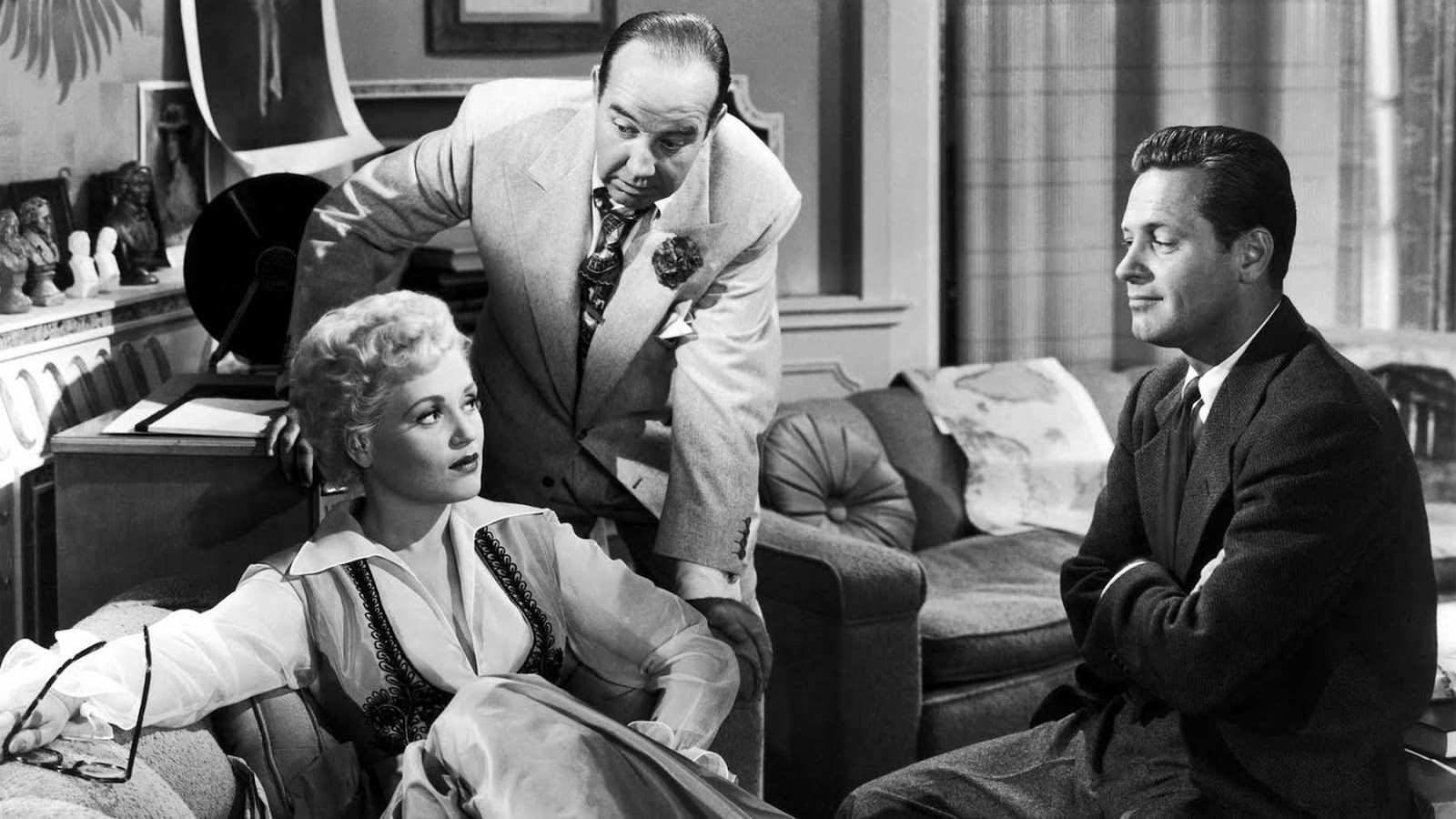
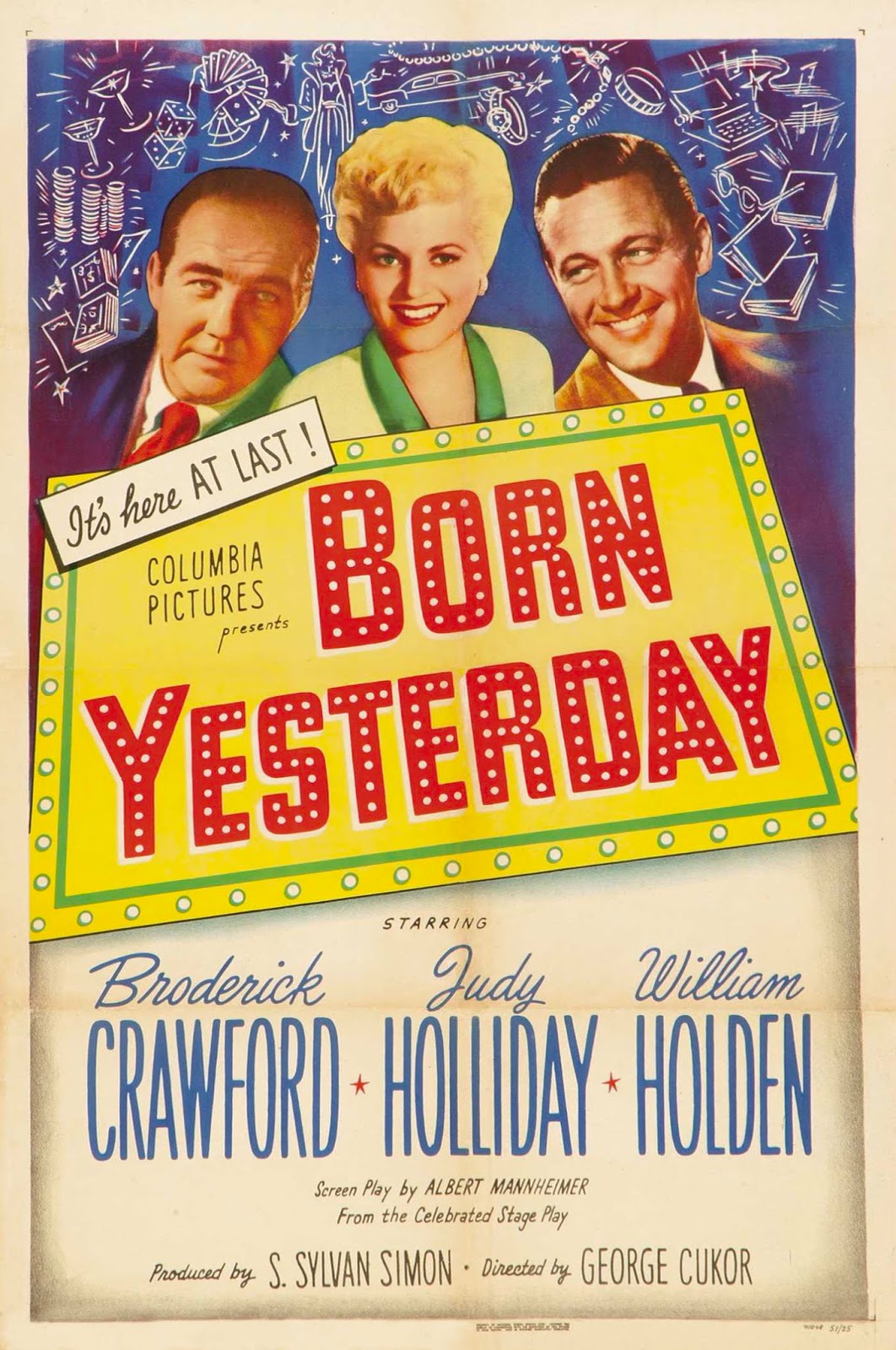
Born Yesterday (1950)

Judy Holliday gets a tutorial in class from William Holden – much to the chagrin of Broderick Crawford – in Born Yesterday

Director: George Cukor

Cast: Judy Holliday (Billie Dawn), Broderick Crawford (Harry Brock), William Holden (Paul Verrall), Howard St John (Jim Devery) Frank Otto (Eddie), Larry Oliver (Congressman Hedges)

Perhaps George Bernard Shaw should have tried to copyright the Pygmalion concept. After all no end of films and plays have tried their best to replicate the magic of having one working class classless type (usually the woman) learning how to use their own natural intelligence effectively by a wiser tutor (usually the man). Born Yesterday is a near text-book example of this – she’s as ill-informed as a young baby so might as well have been “born yesterday” y’see – that offers very little in the way of surprises, but a lot in the way of charm – most particularly from Judy Holliday who carries the entire the film with aplomb.

Harry Brock (Broderick Crawford) is a corrupt, uneducated businessman who has arrived in Washington to buy up a few congressmen. Brock may be a boreish bully, but he’s worried that his mistress, former Chorus-girl Billie Dawn (Judy Holliday), is so brash and ill-educated that she will show him up in front of his new political contacts. So he hires investigative journalist Paul Verrall (William Holden) to educate her. But Paul and Billie have an immediate romantic frisson – and as she learns about politics, literature and the state of the world Billie starts to realise that maybe all those shares she holds in her own name (for tax purposes) in Brock’s dodgy dealings might give her the chance to put his wrongs right.

Born Yesterday was an adaptation of Broadway hit that had made Judy Holliday a star. Written by Garson Kanin, bullying Harry Brock was allegedly based on Colombia Pictures head Harry Cohn. He clearly didn’t care when he smelt a hit – and even confirmed some suspicions by ordering Kanin to do re-writes of the rewritten script for no extra payment. Cohn had been deeply uncertain about bringing the unknown Holliday along for the ride (she had made only three small appearances beforehand) so Cukor cast her in a key role in Adam’s Rib (where Hepburn generously ceded many scenes to her) to prove Holliday could make it on the big screen.

Thank goodness she did make it to the film, as Holliday makes the film. Winning the Oscar – famously beating Bette Davis and Anne Baxter in All About Eve and Gloria Swanson in Sunset Boulevard – Holliday is superb in the role. Billie Dawn may be brassy, may be load, she might have the sort of screeching Brooklyn accent that sometimes feels like nails on a blackboard – but she’s not dumb. She’s smart – as she shows by repeatedly beating Harry with ease at games of gin rummy – she’s capable and she cares. She just hasn’t learned any better, and having spent her life being told that her opinions don’t matter, she’s decided to not mention them.

But Holliday shows Billie is a woman fast – and eager to learn – and a week or so with Paul won’t turn her into a genius, but she’s more than sharp enough to work out what’s wrong about her life and her sugar daddy, and to give her the oomph to do something about it. Holliday demonstrates this endearing growth of engagement and curiosity with a superb lightness – her comic timing is faultless – and a touching sweetness. 

The script gives Billie a hilarious tendency towards malapropism and her wide-eyed innocence and desire to do her best works wonderfully in getting us onside. While she is often the source of jokes she is never the butt of them, and Holliday makes clear her decency and sharpness is innate. She’s far from a dumb blonde – although she certainly looks and sounds like it – and watching her apply good-old fashioned Hollywood liberal ideas to confound boreish businessmen is good fun.

Her co-stars give sterling performances. Broderick Crawford channels his Oscar winning turn from the year earlier as corrupt bullying Willie Stark in All the King’s Men as the loud, bullying and dim Harry Brock. Throw-away lines suggest he has killed in the past – and at one point he strikes Billie – but he’s always a comic blusterer rather than a real threat. William Holden generously cedes much of the ground to Holliday as her Henry Higgins, although unlike that guy he’s humble, supportive and pleasingly democratic (quite the year for Holden, having also played a similar supplicant role in Sunset Boulvard).

Cukor directs with his usual lack of flash, quietly setting the camera in place and letting the actor’s go about their business meaning, for all the location shooting in Washington, this still feels very much like a Broadway piece. Cukor does skilfully manage to smuggle a lot under the censor wire – not least that Billie is clearly Harry’s mistress – and keeps a fine romantic tension between Billie and Paul, even if having the pair of them kiss early on does undermine some of the “will-they-won’t-they” magic.

But then basically this is a very straight forward film that just looks to entertain. There are some dirty dealings in Washington – but it’s all sorted out very easily and we are reassuringly told that there are only a very few bad apples in this barrel, and we can trust in the decency of our leaders. It’s no surprise who ends up with who, and no real revelations in character. The most surprising character in many ways is Harry’s disillusioned, self-loathing lawyer played by Howard St John, constantly on the verge of alcoholic self-disgust.

The film is really a showcase for its star though – and Holliday delivers with a terrifically entertaining performance that hammers home even more the sad fact that she passed away at 43 with only a handful of films to her name. Pygmalion Goes to Washington it maybe, but this is still a lovely epitaph to a talented actress.

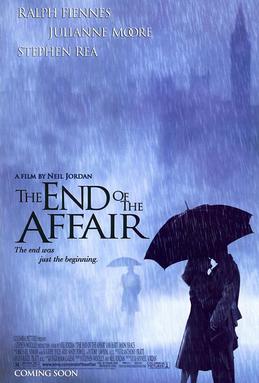
The End of the Affair (1999)

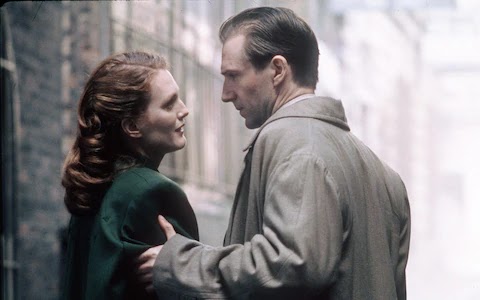
Julianne Moore and Ralph Fiennes in a doomed romance in The End of the Affair

Director: Neil Jordan

Cast: Ralph Fiennes (Maurice Bendrix), Julianne Moore (Sarah Miles), Stephen Rea (Henry Miles), Ian Hart (Mr Parkis), Jason Isaacs (Father Richard Smythe), James Bolam (Mr Savage), Sam Bould (Lance Parks), Deborah Findlay (Miss Smythe)

The End of the Affair is one of Graham Greene’s most autobiographical novels, based strongly on his relationship with Catherine Walston, wife of a friend in the civil service. Unlike the affair in the book, Greene’s continued for decades, long after the publication of the novel in 1951 (which had led to the husband demanding an end to it – a demand ignored). Greene’s novel recounts the dangerous passions of an affair, mixed with the powerful anxieties and uncertainties that the Catholic faith can have on relationships. Jordan’s film captures much of this – but in places fails to fully understand the spirit of Greene’s compelling novel.

Maurice Bendrix (Ralph Fiennes) is a moderately successful popular author, excused war service due to having injured his leg in the Spanish Civil War. In 1946, a chance meeting with Henry Miles (Stephen Rea), a staid civil servant brings back vivid memories of Maurice’s wartime affair with Henry’s wife Sarah (Julianne Moore). The affair ended abruptly for reasons Maurice cannot understand, and his love is twisting into jealous resentment. With Henry now concerned Sarah is having an affair – and seemingly unaware of Maurice and Sarah’s wartime relationship – Maurice takes it upon himself to hire Parkis (Ian Hart) a private investigator to find out more. The results though give him profound and affecting insights into both the present and the reasons for the end of his own affair with Sarah.

Jordan’s adaptation gets so much right, it’s almost more of a shame that it gets things wrong as well. The atmosphere of the film is simply perfect. It looks and feels exactly like a classic slice of Greeneland, with its dreary London, rain-soaked settings and gloomy period setting. Roger Pratt’s Oscar nominated photography is perfect for the tragic beauty of Greene’s work, and its matched with a sublime musical score from Michael Nyman that wrings every inch of emotion from the story.

Ralph Fiennes is also the perfect idea of a Greene hero – slightly imperious, bitter, arrogant with an air of prep school smugness mixed with an underlying sense of grim inferiority. It’s hard to imagine any other actor – maybe except Colin Firth – better suited to the slight air of dissolute, not obviously sympathetic world-weary struggle that a Greenian hero needs to exhibit. Fiennes barely puts a foot wrong and could have practically walked off the page.

Equally good is Julianne Moore, who nails a very English type of person, a woman determined to do her best and to set standards, but who carries just below the surface a deep well of emotional pain and sorrow that briefly is allowed to peek through. It’s a heart-rending performance of a person desperate for happiness, but hiding that longing under a veneer of acceptability, who sacrifices what she wants from life to meet the obligations of her faith. 

Because, it being Graham Greene, Faith is the big issue here – the idea of the private deals we make with God and the cost that those impose on us, the sacrifices of our own happiness in surface of something higher than ourselves. Greene’s novel intrinsically understand the eternal struggle felt in Catholicism to do the right thing, to accept the love of God into your life even if it means turning your back on more earthly loves and passions. How these journeys can be hard – unbearable even – but carry a level of reward in themselves. 

It’s that feeling for God – who Bendrix grows to believe has cheated him from happiness on earth – that powers his “diary of hate” that he is writing as the book opens. It’s an idea the film only fitfully engages with. Jordan deviates from the novel’s real intention at a key point, in particular “correcting” a dramatic error he feels Greene makes by having Sarah die “off camera” in the book, of a sudden cold, after confessing to Bendrix her reasons for ending the affair, her pact with God.

This narrative change allows a sequence in Brighton as the two reignite their affair – but it also undermines the tragedy of the book, that suddenness of loss, and also makes Sarah’s death feel like a tit-for-tat punishment for going back on her word. More to the point, the affair restarting has the air of an atheistic view of the Catholic complications here, an idea that these can be easily brushed aside because the “heart wants”. It’s to miss the point of Greene’s world thinking and undermine the small everyday tragedy in favour of something more conventional and “epic”.

It’s a major tweak that undermines the strength (otherwise) of Jordan’s work here – his directing and scripting is otherwise largely faultless. Other changes to the source clarify the message – I think changing Smythe (a gently but arrogantly certain Jason Isaacs) into a priest rather than an atheist Sarah is using to test her faith makes sense, even if it does suggest that she acts under the influence of someone else rather than on her own opinions. Making Bendrix a Spanish war veteran rather someone suffering the effects of a childhood illness adds a political and moral romanticism to the character entirely absent from any of the rest of his personality. But it’s fine.

Jordan’s film has many strengths. Its tone is excellent and it’s passion inspiring (the tender explicitness of the sex scenes landed it with a bizarre and controversial 18 certificate) and there are superb performances, not just the leads but Stephen Rea excellent as the meek but noble husband and some lovely comic work from Ian Hart as a haplessly efficient private eye. But the film slightly misses, in the end, the point of the novel – which is a real shame. If Jordan had stuck to the book, and its complex themes of guilt and grief and Catholicism we could have really had something here.

Star Trek: The Motion Picture (1979)

The Enterprise crew head to space in a tedious misfire that almost killed the franchise: Star Trek: The Motion Picture

Director: Robert Wise

Cast: William Shatner (Admiral James T Kirk), Leonard Nimoy (Spock), DeForest Kelley (Dr Leonard McCoy), James Doohan (Montgomery Scott), Walter Koenig (Lt Pavel Chekov), Nichelle Nichols (Lt Uhura), George Takei (Lt Hikaru Sulu), Persis Khambatta (Lt Ilia), Stephen Collins (Captain Willard Decker), Majel Barrett (Dr Christine Chapel), Grace Lee Whitney (Lt Janice Rand), Mark Lenard (Klingon Commander)

In the late 1970s the success of Star Wars meant every single studio was checking to find anything that could be turned into the next space-set mega-hit. Paramount’s eyes fell on a TV show that had been cancelled over ten years ago but had attracted a cult following. Hell it even had the word “Star” in the title! Quickly rejigging plans for a sequel TV series, instead Star Trek found itself heading towards the big screen. With a budget probably bigger than the amount spent making every single episode and two-time Oscar winning director Robert Wise calling the shots, what could go wrong?

Well as it transpires almost everything. Has there ever been a duller, flatter, less-engaging film that started a thirteen film franchise? Star Trek: The Motion Picture seems to have been made by people who looked at everything that made Star Wars a huge success and then decided “we ain’t going to do that!” Then they looked at everything that occasionally made the TV series self-important and hard to take seriously and said “We’re going to have some of that!” What we end up with a stupefyingly boring film that takes an immense amount of time to do almost nothing, with a story that might have made a passable 40 minutes of television into an empty and tedious two and a bit hours. Truly it was The Motionless Picture.

Anyway the plot, such as it was, features the now Admiral Kirk (William Shatner) taking back the reins of the newly revamped USS Enterprise to confront a giant cloud that is destroying everything it comes into contact with – and is on a direct course of Earth. Getting the old gang back together – including dragging Dr McCoy (DeForest Kelley) out of retirement and welcoming back Mr Spock (Leonard Nimoy), Kirk takes the place of the Enterprise’snew captain Willard Decker (Stephen Collins) and zooms out to encounter the cloud. What does the machine at the heart of this cloud want? Who is the mysterious creator that V’Ger wants to return to?

Where did it all go so wrong? The key problem lies with the script – and blame for that lies with Gene Roddenberry, Star Trek’s creator who took direct personal control of it. Determined that only he would control the Franchise’s future – after all it was his baby – Roddenberry rejected or minimised as much as possible many of the elements many of traditional film narratives (like villains, inter-personal conflict or the need for characters to ‘learn lessons’) for a science-fiction story he obviously felt dripped with importance. However, this shapeless machine like cloud searching for its “creator” tells us precisely nothing at all about the nature of faith or questions of identity. Because firstly V’Ger has no character and, secondly, the film takes so long to get this (almost three quarters of its running time) that there is no time to explore any of these themes anyway. 

No parallels are drawn between the questions V’Ger is asking, and issues the core characters are dealing with. It makes for a big airey expanse of nothing. We learn nothing about our heroes personalities from this adventure, and they in turn are so little affected by it that at the end of the film they jet off to some new random adventure. A potentially interesting idea about progress and faith gets completely lost – despite ample opportunities to have built contrasts between V’Ger’s loss of faith and the barely-explored crises that Kirk (back in command after five years) and Spock (struggling to work out if he should purge all his emotions) are experiencing. Instead no comparisons are drawn, no insights are made and all three crises either peter out completely or utterly forgotten. It’s part of the film’s failure to really make us engage with any of these characters, or to find a reason to care about them – like Roddenberry felt investment was pandering. It’s also The Emotionless Picture.

On top of which the film was obviously so thrilled with having the budget to include the sort of sweeping space vistas the show could only dream of, that a huge portion of the film was given over to watching these images draft past the screen. Slow, 2001-like pans across space vistas, around alien crafts and then through the trippy details of V’Ger’s inards clog up the film. But while Kubrick invested those with intense meaning, Wise makes them dull as ditchwater and as empty as light show. The bar is set early on with Kirk being given a long – almost four minute – silent shuttle tour around the exterior of the Enterprise. By the time the film is eating up almost ten minutes of the Enterprise flying through V’Ger, the actors have exhausted their “stare in wonder” faces and the audience are dozing off.

It’s not helped by the sub-par acting by all involved. Shatner and Nimoy give perhaps their worst, most lifeless performances in the history of the franchise. Perhaps they were caught between the mess of the script, the lifeless pace, the pressure of bringing these characters to the big screen – or perhaps the film just doesn’t give them anything interesting to do. Kelley gets a few moments of irascible charm, but the rest of the cast have barely got a few lines to rub together. Stephen Collins as Decker looks like he doesn’t really understand what he’s involved with, while Persis Khambatta looks more animated after her character has been lobotomised than she did intact.

The film drags on with a sonorous and stately pace, making no points at all and lacking any real thematic depth whatsoever. It’s not helped by Robert Wise’s lost direction. Wise prepared for making the 80th live-action entry into the franchise by watching precisely zero episodes of the show –and his utter lack of comprehension of what made the series popular in the first place perhaps explains why none of it made it into the film. There is no charm or wit here at all – everything is handled with such portentous importance it only draws attention to how little there is going on.

And it looks so bad as well. The overwhelming 1970s beige and muted colours that have been chosen for the new uniforms make it look as dull and disengaging as the words that are coming out of the actor’s mouths. It becomes even easier to notice the blandness of everything you are looking at that isn’t a matte special effect when you notice how full the script is with filler. Other a third of the film gone before the Enterprise leaves space dock. A tedious non-drama about problems going to warp (in a sequence of embarrassingly bad “slowed down” time disturbance as the ship falls into a wormhole). Almost two thirds gone before the crew make contact with V’Ger our nominal antagonist. A reveal about V’Ger’s origins and the identity of the creator that would have been shock only to people who had never seen an episode of the show before or had been living under a rock since about 1969. 

There are precisely two good things about the movie. Firstly the music is superb – Jerry Goldsmith’s themes for the film (re-used for The Next Generation) and other bits of music, especially his martial Klingon music, is so perfect, so brilliant it was used in the franchise forever more. Secondly the opening sequence with the re-designed Klingons nailed a look, design and language for them that would also stick for the rest of time and the sequence itself is pretty exciting. Other than that, there is almost nothing to recommend the film. 

As an advert for making someone want to watch any Star Trek ever again, it’s a disaster. Having gone way over budget, the series only returned due to loyal fans paying over the odds at the box-office. Roddenberry was dispatched from any future involvement, and the series bounced back with its best ever film with Star Trek II – which corrected all the script mistakes this one made.

Glory (1989)

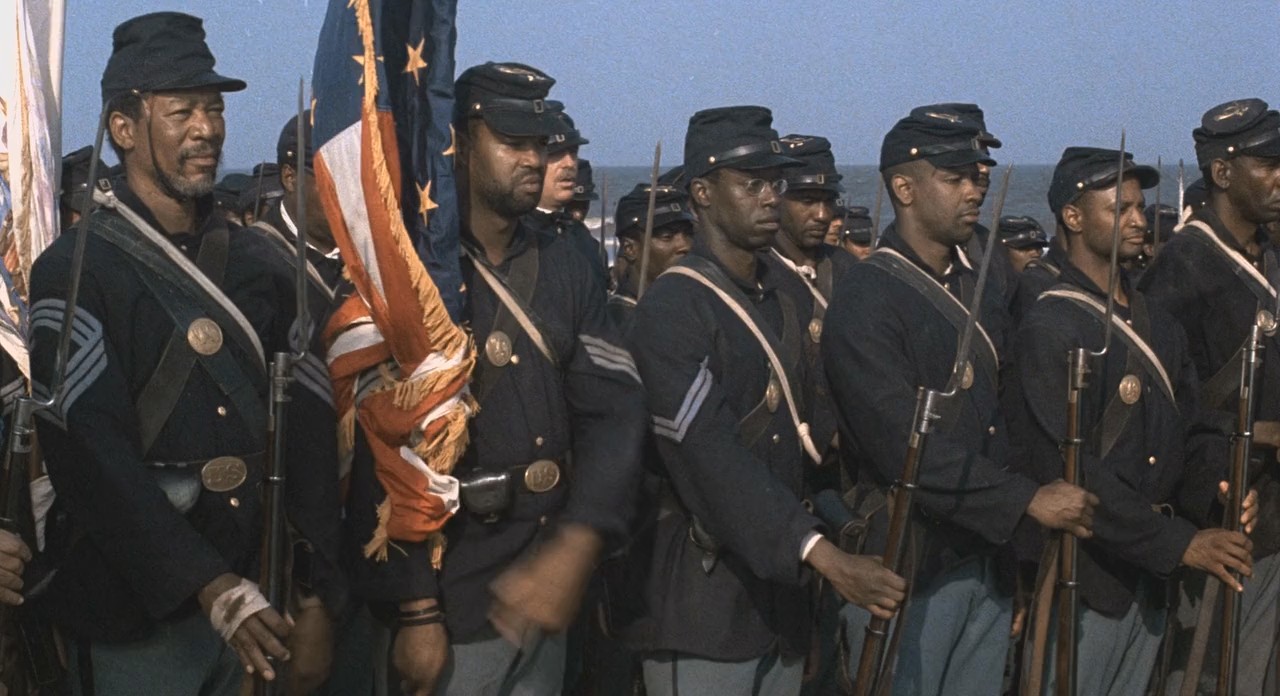
Morgan Freeman and Denzel Washington are among the first black American soldier in Glory

Director: Edward Zwick

Cast: Matthew Broderick (Colonel Robert Gould Shaw), Denzel Washington (Pvt Silas Trip), Cary Elwes (Major Cabot Forbes), Morgan Freeman (Sgt Major John Rawlins), Andre Braugher (Cpl Thomas Searles), Jihmi Kennedy (Pt Jupiter Sharts), Cliff De Young (Colonel James Montgomery), Alan North (Governor John Albion Andrew), John Finn (Sgt Mulcahy), Bob Gunton (General Charles Garrison Harker), Jay O Sanders (General George Crockett Strong)

The American Civil War started over slavery, but it took a long time for either side to admit it was a fight about slavery. Racism abounded on both sides, and it was a fight in which black Americans may have been the subject, but were rarely invited to join. Glory covers this point of history, and specifically the first all-black regiment and its struggle to be recognised as equal to the other regiments in the army. 

Wounded at the Battle of Antietam in September 1862, Robert Gould Shaw (Matthew Broderick) returns home to Massachusetts and accepts command of the first all-black regiment, which is currently being raised by abolitionists in the state. With his friend Cabot Forbes (Cary Elwes) as second-in-command (no one was progressive enough to actually allow black officers for the regiment), he recruits a wide range of black Americans, from free-man and bookish intellectual Thomas Searles (Andre Braugher) – an old friend of Robert and Cabot – to former slaves such as the wise John Rawlins (Morgan Freeman) and the resentful Silas Trip (Denzel Washington). Training is a struggle, with the army denying the regiment supplies and support, and it’s an equal struggle when they reach the front line to be recognised for duties other than looting and latrine digging. Will the Massachusetts 54th be given the chance to prove itself in the front line – and establish a black man can fight as hard and bravely as a white man can?

Edward Zwick’s beautifully filmed, carefully re-created historical epic set the tone for much of his future career. It’s an often overly-sentimental film straining for a very self-conscious sense of importance, weighed down by the pride at the “message” it is carrying. It often does hit the mark with presenting scenes that carry emotional force – but then seeing as it treats nearly every scene as being a “moment” that should move us (with James Horner’s choral manipulation working double time to get us experiencing feelings), it’s no wonder that it succeeds sometimes.

Which is not to say the message it presents isn’t an important one. Black Americans have often been pushed into the margins of American Civil War history. Or worst of all presented as the victims, reliant on the courage and bravery of the abolitionists of the North to save them from slavery in the South. Until Glory it was very rare for anything to push their stories front and centre – or to tell a story where former slaves were allowed to fight their own battles and choose their own destinies. 

It’s one of the strongest marks of the film: these are soldiers unlike any other, who enter battles with less concern about their own survival, and more about having the chance to live as freemen and to make a mark on the world. To show that they, and people like them, could do just as a white man could do. And if they had to die to do that, better to live a day on their feet as freemen then a lifetime on their knees. It’s the principle emotional message of the film, and something Zwick translates with some skill, even if he frequently overeggs the pudding while doing so.

However, with such a strong message, it’s a shame so much of the film is filtered through the experience of its white lead character. For many of the films of the 80s and 90s dealing with these issues – Cry Freedom, the Steve Biko biopic, with Biko as a supporting character to his white South African journalist friend, being perhaps the key example – it was essential to have a white man at the centre, as if worried that audiences couldn’t understand the story they were seeing unless they had it filtered through the perception of someone who looks a bit more like them.

Matthew Broderick takes on the lead role here of Shaw – with the film giving a significant slice of its running time to its coming-of-age theme of Shaw learning to become a leader of men – and while the character is meant to be callow and an unlikely Colonel, it doesn’t help that Broderick lacks the charisma for the part. Perhaps he is a little too lightweight an actor for such an enterprise, for a film that demands greater force of character (you can imagine Tom Cruise doing a much finer job in the role).  Similarly, the familiar beats of a young man learning how to lead feel trivial compared to the life-and-death issues facing his soldiers.

But too often Zwick’s film returns us to Shaw’s point-of-view, the narrative filtering so much of the action through his perceptions and decisions that the black soldiers become supporting actors in their own stories. Broderick is not helped by the soldiers being played by some of the finest American actors of the last 30 years. Braugher is fabulous in the thankless role of the bookish man who must grow a spine. Morgan Freeman established a persona – the wise and level headed older man, who will not let hate and fury define his life and his choices – that would last him for the rest of his career, and is superb (his Oscar nomination for Driving Miss Daisy is probably the only thing that led to him not getting a nod for this film).

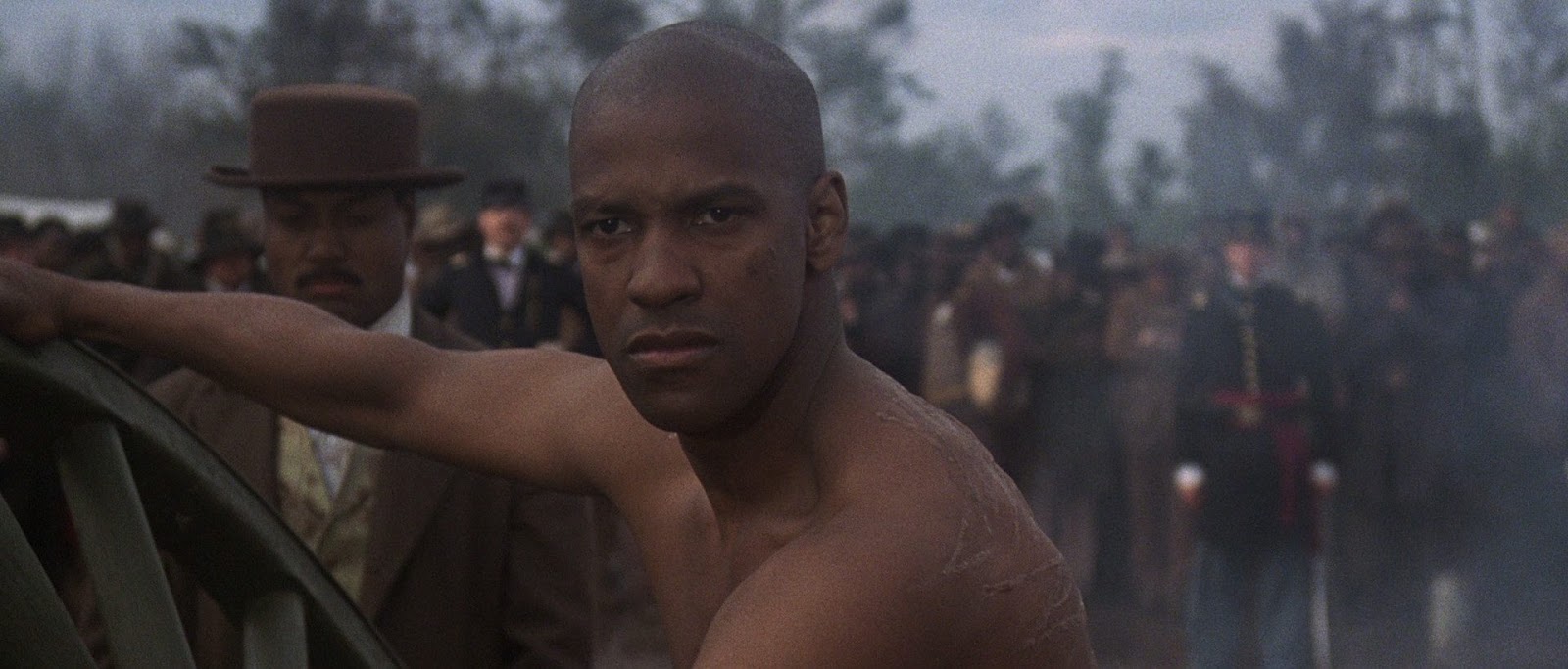
Denzel Washington took home an Oscar as the bitter, angry Trip – and it’s the sort of role an actor seizes with relish. Washington fills every frame with his rage at the system, his inarticulate, indiscriminate anger lashing out in every direction. It’s the fury of a man who has had all his choices taken from him in life, and would rather destroy things than run the risk of allowing himself to become committed to something, or form a bond. Washington probably won the Oscar alone for the astonishing scene where he silently, defiantly accepts a whipping (on a body covered with scars) for missing a curfew. He’s an elemental force of nature in the film.

There is plenty of strong stuff in Zwick’s work, but the film itself overplays its hand frequently. Moments of emotion are played so heavily to the hilt they sometimes fail to have an impact. It wants you to know at every turn that you are watching a film with an important social message – and the speechifying at points put into the mouths of the characters runs dry. While superbly made – veteran photographer Freddie Francis’ work is beautiful (and Oscar winning) – it’s a heavy-handed, overly pleased with itself film that knows all too well that it is about an important subject. While sometimes it lands – often in quieter moments, particularly those where Freeman and Washington are allowed to simply be human without overindulgent music cues hammering home the emotions – at others it comes across as too much.