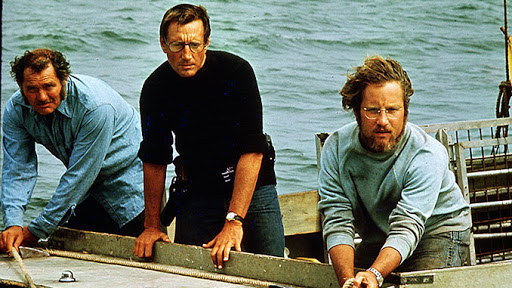
Fort Apache (1948)

Henry Fonda and John Wayne face off in John Ford’s Fort Apache

Director: John Ford

Cast: John Wayne (Captain Kirby York), Henry Fonda (Lt Colonel Owen Thursday), Ward Bond (Sgt Major Michael O’Rourke), Shirley Temple (Miss Philadelphia Thursday), John Agar (Lt Michael O’Rourke), Dick Foran (Sgt Quincannon), Pedro Armendariz (Sgt Beaufort), Miguel Inclan (Cochise), Victor McLaglen (Sgt Festus Mulcahy), Guy Kibbee (Captain Wilkens), George O’Brien (Captain Sam Collingwood), Anna Lee (Emily Collingwood)

Fort Apache was the first of Ford’s “cavalry trilogy”, exploring problems and personality clashes of remote cavalry posts in the middle of what used to Native American territory. Contrary to what you might expect, this is a complex, intriguing film that brilliantly explores tensions between very different ways of thinking and issues of class in America, which are so often overlooked. If it sells some of the tensions of clashing ideals down the river with an ending that fully endorses the myth over the reality, the fact the film makes clear that the idea of a well-meaning army all pulling together is a myth says a lot.

John Wayne is Captain Kirby York experienced, more liberal minded acting commander of Fort Apache. Aware of the difficult balance of maintaining good relations with the Apache tribe while protecting American expansionist interests, he’s perfectly suited for keeping the peace in the West. Unfortunately he’s replaced by Lt Col Owen Thursday (Henry Fonda), an arrogant, class-conscious – if polite and honourable man – who applies the letter of the law to all his dealings, so obsessed with rules (he protests “I’m not a martinet” while bemoaning the lack of proper uniform in the dust filled heat of the West) that he sees no reason to moderate even the most corrupt of the local officials who have driven the Apache to revolt, instead demanding the Apache submit. Disaster is on the cards.

Ford’s film revolves around the personality clash between York and Thursday. While both dutifully respect the chain of command, it’s clear that York has a closer bond and understanding with both the men under them and the complex considerations to balance when dealing with the Apache. Thursday, on the other hand, is an arrogant, prickly character, bemoaning his “demotion” from a field rank of General in the Civil War, to an “obscure” fort. A posting he is determined to escape from with an honour laden victory as soon as possible. 

With Ford’s romantic regard for the ordinary soldier and regular Joe, the sort of posh New-Englandish Thursday is a clear stand-out. A stiff-backed martinet, he never listens to others (he constantly needs to be reminded about names) and has a snobbish disregard for Lt O’Rourke (a callow John Agar) whose father, far from being officer class, is an Irish Sgt Major at Fort Apache. Thursday is notably uncomfortable at such Fordesque events as a NCO ball, or when talking with the men – he even looks unsettled in the desert, wearing full uniform and avoiding a hat in favour of an army cap with a dust-sheet attached at the back (no Ford hero would be seen dead wearing such a thing). 

The character works so effectively because he is played so delicately and skilfully by Henry Fonda. Cast against type – and looking older – Fonda plays Thursday as a frustrated man, terrified of failure who simply lacks the flexibility to adjust to situations. Rules instead are there to be followed in detail, regardless of his personal feeling. Corrupt government agent Meacham he treats with contempt, but he will defend his incompetent regime in Apache land to the death. With the Apache he can’t see past his own inbred ideas of superiority, treating them with a paternal disappointment, certain that they are no match for American cavalry might (spoiler, they certainly are). Fonda however keeps Thursday human, a flawed, rigid man dropped into a role he is ill-suited to and struggling to adjust.

John Wayne offers an equally careful performance as York. Unlike Thursday, York adjusts his actions and decisions based on situations and personalities, rather than enforcement of rules. Army regulations can be respected but applied with sense. Meacham to him should be hounded out of town as the root cause of all the problems. Cochise, the Apache chief, he treats with respect and honour – abiding by deals and attempting to compromise with him to find a peaceful solution (a negotiation Thursday of course torpedoes with his arrogance and intransigence). Wayne is often thought of as the action hero, but here Ford starts to explore his elder statesman quality, as well as his underlying decency and honour as an actor.

Other sub plots interweave neatly around this. John Agar’s young O’Rourke flirts with Thursday’s more liberal daughter (played brightly by Shirley Temple) – needless to say this relationship meets with no approval from Thursday. Thursday’s old colleague Sam Collingwood – now a time-serving captain at the Fort – is paralleled with him and York, as a time-server and mediocrity, a decent family man but lacking the will to do what he knows is right. Ward Bond provides both comedy and also a warm fatherly quality as Sgt Major O’Rourke, proud of his son and re-enforcing discipline on his (mostly Irish of course!) soldiers. 

And of course the action is handled extremely well. A chase sequence with Apache, cavalry and a wagon (under-manned and out-gunned, because Thursday believes a few men and rounds of ammunition should be enough to see off the Apache) is filled with excitement. And, of course, the film builds towards the inevitable disaster Thursday’s rigid mismanagement was always heading towards: a suicide charge against a well defended Apache position, fighting to defend a corrupt agent who Thursday and York both know should be replaced.

It’s a film that quite daringly shows that American’s “mission” in the West was often founded on corrupt officials, and that the military leaders were sometimes rigid, incompetent martinets who led their men to avoidable disaster. It’s shame then that the York – and the film – chooses in a flash forward at the films end to promote the idea of Thursday’s charge being a glorious defeat, rather than an avoidable disaster. And that, this printing of the legend, is important to protect the “why we fight” idea of America. It’s the downside of Ford’s love of the past, of the mythology of the West, that even in the end of a film about incompetence, it’s still seen as noble and important to protect people from the truth and promote the legend, than tell the truth. But then for Ford, protecting the memory of the ordinary soldiers who died is the key – and if that means never questioning the how or why, well then that’s a price worth paying. It’s an idea we perhaps have far less sympathy with today.

Top Hat (1935)

Astaire and Rogers dance Cheek to Cheek in Top Hat

Director: Mark Sandrich

Cast: Fred Astaire (Jerry Travers), Ginger Rogers (Dale Tremont), Edward Everett Horton (Horace Hardwick), Erik Rhodes (Alberto Beddini), Helen Broderick (Madge Hardwick), Eric Blore (Bates)

It’s got the sort of plot PG Wodehouse would consider a bit far-fetched. Due to a series of misunderstandings and mistaken identities (that the script executes quite a few linguistic gymnastics to keep in place, since a few words from someone would sort it all out in seconds), Dale Tremont (Ginger Rogers) falls in love with Broadway star Jerry Travers (Fred Astaire) but believes that he is in fact West End producer Horace Hardwick (Edward Everett Horton) who is married to her best friend Madge Hardwick (Helen Broderick). So, thinking Jerry is a cad, she decides to run away to Venice with her boyfriend, Italian dress designer Alberto Beddini (Erik Rhodes) – only for a confused and infatuated Jerry to follow.

Of course the entire thing revolves around Dale having never met Madge’s husband, and Madge never for a minute questioning the description of her husband (despite the resemblance he clearly bares to Jerry in how Dale talks to him) – or when Madge later “introduces” Dale to Jerry, not saying a word that could suggest they’re not married. But that’s classic farce here, and the light comedy works an absolute charm with mistakes, confusion and jealous clashes occurring at every moment. Top Hat is a superb piece of witty light froth, with some cracking lines and some great comic set pieces. 

And of course, its main attraction is some superb dancing from Astaire and Rogers in probably the highlight of their long collaboration with each other. The grace and skill of these two has to be seen to be believed – as does the natural synchronicity with which they move together. With Sandrich’s camera calmly and carefully tracing the lines of Astaire and Rogers’ movements, the viewer is invited to sit back and enjoy some of the finest dancing you are ever going to see. With music from Irving Berlin – and the songs are endlessly catchy – it makes for a perfect combination.

This is the film where Astaire first used top hat (of course!) and cane as part of a dance number. The play-within-a-film musical number “Top Hat, White Tie and Tails” is perhaps one of the finest displays of tap dancing in the movies, in which Astaire moves from moments of stillness into explosions of energy, mixing cane taps with foot taps, ending in a superbly funny sequence where Astaire uses his cane as a “tap powered machine gun” to playfully shoot out the chorus line behind him. It’s a set-piece that makes you believe that Hardwick’s West End show really is the smash hit you keep hearing it is.

That’s then followed by a parade of no-less than three superb dances that chart the progress of Dale’s and Jerry’s relationship – from flirtation in “Isn’t it a Lovely Day”, full of side-by-side steps that lead into a growing physical looseness, to the grand ballroom “Cheek to Cheek” which uses every inch of a huge Venice hotel set to see the two lovers come back together again after confusions (and which ends with the famous slap of Astaire by Rogers for making her fall in love with him, with Astaire’s dreamingly happy “She loves me!” after she departs). Finally the two come together for a final duet dance – after of course all the confusion has been cleared up – which is yet another triumph of two dancers working in perfect partnership. You can’t help be swept up in the excitement of watching these two masterful performers push themselves to the limits.

That’s not to overlook that the film also operates because of the charm of the two leads. Astaire is a dreamy, compulsive, slightly naïve man, passionate about the things he cares about. Rogers is a bit harder-edged, but increasingly find herself both drawn to Jerry and appalled at the guilt in believing she is falling for her friend’s husband, her shame mixed with her strong emotional attachment.

But then she also interprets some of Helen’s seeming ease with the idea of her husband flirting with another woman as a (surprisingly modern) go-ahead for all the flirting that follows. Certainly Helen doesn’t seem fussed at the idea of her husband contemplating playing away (for all that she later punches Horace for not telling her truth). Perhaps that’s because she recognises her husband is as camp as Christmas, with Edward Everett Horton living in like a bickering old married couple with Erik Blore as his equally camp butler Bates. These two bicker cattily comment on everything from each other’s clothes to their manners. 

Mind you Dale’s other love interest is an equally preening – and malapropism-prone Italian dress maker (Determined that “Woman shall wear my dresses no more!” after one particular moment of stress) played with wit by Erik Rhodes. It’s possible that with a lead as un-traditionally masculine as Astaire, it was thought best to make every other man in the film even less masculine than him. Either way, the film has a surprisingly modern air of sexual freedom in it, where husband swopping seems not entirely out of the question, and the Hardwick marriage (seemingly a marriage of convenience) might as well be an open one. Don’t often get that from a 1930s musical.

Astaire was critical of the script itself at first – it’s basically an exact rewrite of The Gay Divorcee, the Astaire and Rogers film from the previous year – but everything settles into one of the most triumphantly enjoyable and funny films the pair worked on, with Astaire at his most graceful and Rogers at her most dynamic. And the dancing is a joy that will last forever.

Once Upon a Time in the West (1968)

Fonda and Bronson prepare to face off in Leone’s epic Once Upon a Time in the West

Director: Sergio Leone

Cast: Henry Fonda (Frank), Claudia Cardinale (Jill McBain), Charles Bronson (“Harmonica”), Jason Robards (“Cheyenne”), Gabrielle Ferzetti (Morton), Paolo Stoppa (Sam), Marco Zuanelli (Wobbles), Keenan Wynn (Sheriff), Frank Wolff (Brett McBain), Lionel Stander (Barman), Woody Strode (First Gunman), Jack Elam (Second Gunman), Al Mulock (Third Gunman

Sergio Leone’s Westerns were always based, first and foremost, on his own love for the genre – and the great filmmakers, from John Ford onwards, who made them. Returning to the genre for the final time – putting on hold (for what turned out to be nearly fifteen years) his plans for a New York gangster film – Leone wanted to make his final, and ultimate, tribute to the Hollywood western. Collaborating with Bernardo Bertoloucci and Dario Argento (now there is an odd trio!) on the scripting, Leone’s final Western is a sweeping, grandiose, operatic Western littered with visual quotations from films he loved.

The story rather takes second fiddle to the general ambiance and visuals, but it never bothered Leone to have only the sketchiest of plots stretched across the many hours of his movies. The railroad is being built across America – changing the face of the West as it goes. Frank (Henry Fonda), hired gun of crippled railway tycoon Morton (Gabrielle Ferzetti), guns down farmer Brett McBain and his children. He had been sent to threaten them to clear off the land of Sweetwater. But why? And how will the return of McBain’s new wife Jill (Claudia Cardinale) – now heir to all of Frank’s holdings – affect their plans? And why does the mysterious “Harmonica” (Charles Bronson) – a shadowy gunman with no name have such an interest in events, and in Frank in particular? And will criminal gunman Cheyenne (Jason Robards) and his gang – blamed for the McCain killings – be able to establish their innocence?

The answers to all these questions come slowly – and often confusingly – in this long, slow but – as with many Leone films – engrossing Western, which features 3-5 minutes of Morricone build-up and extreme close-up before even the slightest action. This makes it very easy to mock, and perhaps by this point Leone had started to believe too heavily that he was an artist daubing in genre, rather than a purveyor of entertainments. Certainly, Once Upon a Time in the West is consciously weighted down with its own importance, it’s ominous sense of events heading to a pre-ordained conclusion and its half-hearted attempt to depict itself as sitting at a crossroads in American history, as technology squeezed out the old West.

But somehow you give Leone’s film a pass for all its many faults because it’s assembled with such unrivalled skill and breathtaking pizzazz. Sure the film is only half as smart as it thinks it is, but when at its strongest it offers unrivalled entertainment. Leone also mastered here his balance between the slow, tense, agonising build-up to violence – followed by its sudden and brutal enactment. 

Never is that more clear than in the film’s opening ten minutes which features three gunmen (among them Ford favourite Woody Strode and reliable minor bad-guy Jack Elam) waiting at a train station for what turns-out to be the arrival of Charles Bronson’s “Harmonica”. The three gunmen sit, waiting, in silence. Around them the everyday sounds of windmills, buzzing flies and dripping water builds and relapses with all the dread of distant thunder. Leone’s camera crashes in for long, intense close-ups, as if drilling down into the souls of these bored men, the camera studying every detail of their faces. After almost ten minutes – during which the credits roll – “Harmonica” arrives. And promptly shoots all three men dead in seconds. You know it’s coming, but the tension and expectation of this confrontation makes the entire sequence compelling. 

It’s a trick that Leone repeats time and time again. Effectively the whole film is only prolonged extension of this sequence – the inconsequential back-and-forth of the lacklustre plot all really about giving us a chance to drill down into the character of Henry Fonda’s bad-to-the-bone Frank, while we wait for the inevitable gunfight between him and “Harmonica”. Leone’s film is a triumph of mood, filled with sweeping beautiful camera shot and luxiously paced editing, all mixed down with some stunning scoring from Ennio Morricone.

Once Upon a Time echoes a fairy tale in its title, and that’s what it is. For all that Leone attempts to throw in plotlines around progress, the influence of big money and the new order leaving gunmen behind, really everything it knows about America is taken from movies. Leone litters the film with visual quotes from High Noon, Shane and dozens of others, most especially Ford (he even insisted in transplanting some of the scenes to be shot at Monument Valley, which led to merry hell trying to get the other Spanish-shot locations to visually match). The entire film unfolds like a dream. At about the half way mark in particular – this might be due to cuts to be fair – the narrative suddenly becomes almost deliberately unconnected, key events seemingly skipped over and sudden character reversals taking place. There is a rumbling sense of everything in the film being artificial and the characters themselves being manipulated by something larger than them (like a film director!).

This is further heightened by “Harmonica” himself. Played with an empty blankness by Charles Bronson – the camera zooms into his expressionlessly craggy face endlessly as if searching for meaning – “Harmonica” is an almost mystical presence. He’s always in the right place at the right time, seems to be the only person in the film who knows what’s going on and Leone even shoots him regularly sliding into frame, as if the camera has stumbled upon him at the least expected times. Perhaps Bronson’s lack of real character helped make him perfect for this near-mystical presence. It also fits in with the shamanic feeling of a film where frequently not much happens at great length, but the inconsequential moments of events are filmed with a pregnant importance.

Compared to him the other principles are painted in earthy tones. Robards makes his bandit – who switches allegiances and escapes from undefined imprisonment several times in the movie – a jovial, grimy figure with a rogueish temperament. Claudia Cardinale – in what passes for a strong female character at the time – is a whore with a heart of gold who may, or may not be willing to do anything to ensure her own survival (the film is unclear). Is she a ruthless woman using sex as a weapon? Or is she the sort of radiant Earth-mother that the new West needs? Or is she a bit of both? The film isn’t really sure.

What it is sure about is that Fonda’s Frank is the meanest of the mean. Looking lean and tough, Fonda revels in the chance to play a villain – and not just any villain, this grinning sadist is so mean the first thing he does is gun down a child on screen. Leone loved Fonda – and above all he wanted those “baby blue” eyes to be the thing the viewers see as unspeakable deeds take place, expecting the cry of “Jesus Christ, that’s Henry Fonda!” Frank is a bully and tirelessly ambitious, and if we never get a real sense of what motivates him, it’s balanced by Fonda’s charismatic viciousness in the role.

It’s a pointer though to the fact that this is not a film about the West – as always the strange mixture of accents, faces and locations never makes the film feel for one moment like a real slice of America – but rather a film that is aiming to reflect the romance of movies. It’s a piece of Americana, that is really a love letter to other films. Perhaps it’s one of the first post-modern films ever made? But really your appreciation of the film can only really be complete if you have seen a lot of Westerns. Then it’s fairy tale like logic, and Leone’s operatic style and languid pace suddenly make sense. It’s not a film deep in meaning, other than perhaps our own love for cinema and the story it tells.

Chinatown (1974)

Jack Nicholson struggles against the system – and loses – in Chinatown

Director: Roman Polanski

Cast: Jack Nicholson (JJ Gittes), Faye Dunaway (Evelyn Cross Mulwray), John Huston (Noah Cross), Perry Lopez (Lt Lou Escobar), John Hillerman (Russ Yelburton), Darrell Zwerling (Hollis Mulwray), Diane Ladd (Ida Sessions), Roy Jenson (Claude Mulvihill), Roman Polanski (Man with Knife), Joe Mantell (Lawrence Walsh), Burt Young (Curly), James Hong (Kahn)

“Of course I’m respectable. I’m old. Politicians, ugly buildings and whores all get respectable if they last long enough.” So says Noah Cross in the superlative Chinatown, the sort of the film you’ll want to start watching again the second it ends. Cross is of course a respectable businessman and an absolute monster. And his mantra applies just as much to Los Angeles as envisioned by Polanski and writer Robert Towne. It’s a corrupt, dirty place where terrible, appalling things are regularly allowed to happen but everyone pretends the place is fabulous. It’s such a sublime film, while also so bleakly, despairingly dark that you are surprised you fall in love with its excellence.

In 1937 private detective JJ “Jake” Gittes (Jack Nicholson) is hired – or so he thinks – by the wife of Water Board director Hollis Mulwray (Darrell Zwerling) to investigate his infidelity. When he does seem to uncover it, he founds not only was his client not Evelyn Mulwray (Faye Dunaway), but that shortly after his pictures appeared in the press (without his knowledge), Hollis himself winds up dead, having drowned in a dry river bed. What does this all mean? And how does Evelyn’s father (and Hollis’ business partner) Noah Cross (John Huston) play into this all? Gittes investigates further, to uncover shady schemes to manipulate the cities water supply for profit, under-handed business deals and unspeakable family crimes that leave lives shattered.

Polanski’s film has such a timeless wonder about it, perhaps because it was filmed with such careful and beautifully designed classicism that it has never dated. Seen at the time as a film told in the style of the classic film noirs (although it is of course full of blazing LA sunshine), but crammed with a darkness and corruption classic Hollywood shied away from it now seems to take its place as the most masterful of Hollywood mysteries. It’s recreation of 1930s detail is perfect, while its film making is restrained, controlled, unflashy but creates an atmosphere of simmering mystery and tension behind every frame. It’s a masterfully restrained piece of film-making that deals with matters of shocking horror.

And tension there should be as this explores the darkest underbelly of America. With Jerry Goldsmith’s sublime music score under every beat – riffing on classic Hollywood tunes, but with a haunting faded grandeur that suggests a whole melancholic world going to the wall – the film looks like classic, beautiful America but uses that to counter-frame terrible, heartless acts. LA is corrupt from top to bottom. Businessmen are asset stripping the city and its surroundings to line their own pockets. Wealth brings total immunity from all sorts of crimes, regardless of how foul they are. Even family ties are polluted by terrible lusts and greed. And for Gittes, Chinatown is representative of this – a one word reference to his career as a cop, where his ability to do any good at all was forever compromised by corruption.

Jack Nicholson’s performance as Gittes is central to the film’s success. He’s in every scene and the story is told entirely from his point-of-view – so much so that when he is knocked out, Polanski slowly fades out sound and picture. Nicholson is best known for his flamboyance, but here he brilliantly underplays too present a complex picture of an idealist disguised as a cynic. Gittes tries his best to coolly accept the world is what it is, and even that he is just trying to get what he can out of it. But he’s in fact a decent and honourable man with a deep-rooted sense of morality, who struggles in the world because it’s ill-suited for a guy who just wants to do the right thing. He has a sort of outdated charm and nobility about him, an almost courtly gentleness at times, and only lashes out in anger when he feels is either being lied to or his sense of honour impugned. He has a natural sympathy for the little guy and for all he may try to spin the sort of cynical Marlowesque dialogue, you don’t feel his heart is really in it. He is a dreamer who wants to believe.

And he’s totally ill-suited to this world he ends up with. Gittes uncovers every inch of the mystery – but nothing he does has any positive impact. He completely fails to protect anyone, his attempts to ensure happy endings end in disaster, he’s regularly beaten to a pulp (most famously having his nose slit by a cameoing Polanski as a weasily little hoodlum) and he’s at sea when dealing with most of the characters of the film. Even his carefully built emotional armour breaks down, leaving him vulnerable to making even more mistakes. There are perhaps few characters so ineffective – and again it’s a credit to Jack Nicholson’s charisma that he makes this character feel like such a proactive figure.

Gittes senses at all times that there is some dark secret underpinning all these events he encounters. But he’s too innocent to begin to suspect the horrors that Evelyn has put up with at the hands of her abusive father. Faye Dunaway brings a marvellous fragility and vulnerability to a character who transcends the traditional femme fatale. (Dunaway famously hated both Polanski and working on the movie). At first seeming imperious and even suspicious, the film slowly breaks her character down into a wounded and vulnerable woman putting on a front, determined to try and protect herself but doomed to forever be the victim.

And Noah Cross is the dark heart of this. Played with a sensational sense of gentility masking supreme corruption and greed by John Huston, Cross is genteel and polite while being ruthless and grasping. He also reveals himself capable of huge, destructive acts, indifferent to the pain this causes and utterly implacable in his vileness. Huston’s performance – he’s only in three scenes – embodies the terrible dark heart of America, where money and power it seems can let you get away with anything you want, no matter who knows. (And I love the way he persistently mispronounces Gittes name, turning it into a growling Anglo-saxon “Gits”.)

Robert Towne’s superb screenplay is perfectly paced and pieces together an intricate and fascinating plot where every small detail mounts together into a devastating whole. It’s a film that demands careful watching, and that revels in small details and character beats that gain greater impact the more you see the film. Brilliantly, the macguffin here is water – the control of a substance that should be a right for every man, becoming a superb metaphor for the theft from ordinary Americans of justice and their country. 

The film culminates – as you feel it must when watching it – in a nihilistic ending where evil triumphs and good loses out. “Forget it Jake – it’s Chinatown”, goes the famous closing line. It works so superbly, because in Towne’s and Polanski’s vision of America here, there is no chance of the right thing winning out if the powers that be would have otherwise. With Jake’s Chinatown career in the police force becoming emblematic of everything that’s wrong in American justice, sure it makes sense that his return there as a private eye would see the same outcome. Towne pushed for a more upbeat ending, but Polanski knew – correctly – that only the shock of murder could end this tale, especially a murder that would have no repercussions.

Polanski’s direction is faultless, cool, calm, wonderfully observant with a superb sense of the 1930s – the film looks beautiful – and using the sunlight and brightness of LA to stress that just because we can see clearly, doesn’t mean we understand what we are looking at. With one of the greatest scripts ever – and a superb performance by Jack Nicholson in one of his finest roles – this is one of the best mysteries in Hollywood history, a timeless classic.

Gandhi (1982)

Ben Kingsley excels as Gandhi in Richard Attenborough’s Oscar winning epic

Director: Richard Attenborough

Cast: Ben Kingsley (Mahatma Gandhi), Rohini Hattaggadi (Kasturba Gandhi), Roshan Seth (Jawaharlal Nehru), Pradeep Kumar (VK Krishna Menon), Saeed Jaffrey (Vallabhbhai Patel), Alyque Padamsee (Muhammad Ali Jinnah), Virendra Razdan (Maulana Azad), Candice Bergen (Margaret Bourke-White), Edward Fox (Brigadier General Reginald Dyer), John Gielgud (Lord Irwin), Trevor Howard (Judge Broomfield), John Mills (Lord Chelmsford), Martin Sheen (Vince Walker), Ian Charleson (Reverend Charles Andrews), Arthul Fugard (General Jan Smuts), Geraldine James (Mirabehn), Amrish Puri (Khan), Ian Bannan (Senior Officer Fields), Richard Griffiths (Collins), Nigel Hawthorne (Kinnoch), Michael Hordern (Sir George Hodge), Om Puri (Nahari)

In 1962, Richard Attenborough was approached by Motilal Kothari, an Indian civil servant, who believed Attenborough was the man to bring the life of Mahatma Gandhi to film. All this despite Attenborough having never directed a film. But the life of one of history’s greatest men, and passionate advocate of peace and non-violence, spoke deeply to the socially-engaged Attenborough who dedicated 20 years of his life to bringing the film to the screen, immersing himself in Indian culture along the way and winning the support of Nehru (until his death delayed the project again) and Gandhi’s family. The eventual film was a huge success, cementing the public perception of Gandhi and beautifully capturing both the importance of the story, and its emotional heart.

Opening with Gandhi’s assassination in 1948, the film covers in flashback his life from combatting anti-Indian prejudice in South Africa as a young, British-trained, lawyer to his return to India and long involvement in the campaign to win India its independence from the British Empire, stressing non-co-operation, his eventual success but also his failure to hold the Hindu and Muslim parts of the country together and his attempt as “father of the nation” to put an end to religious violence, a failure that will eventually lead to his assassination. 

Attenborough’s grand, epic film marshals thousands of extras to bring to life pages of history. At times events fly by with speed, but Attenborough never loses sight of the emotional heart of the story – both Gandhi and the status of Indians as not being masters in their own home. Attenborough directs scenes of real power, most strikingly a heart-rending peaceful march on a salt works (the tax on salt use being a major burden on many poor Indians) that culminates in line after line of peaceful Indian protestors walking calmly forward to be beaten down by soldiers. Despite being the grandest and largest of films, it allows questions of pure morality and decency to lie at its heart and, supported by a parade of British acting greats, keeps the Indians at the heart of their own story and the masters of their own destinies.

The film’s impact though may be directly connected to the gloriously transcendent performance of Ben Kingsley in the title role. For years it was believed the film could only work with a British actor in the title role – imagine how it would be received today if Gandhi had been played by (as it nearly was) a browned-up Anthony Hopkins or John Hurt (who famously told Attenborough he looked absurd). Instead half-Indian unknown RSC actor Ben Kingsley took the role. Kingsley so completely and utterly immersed himself in Gandhi – everything, the physicality, the morality, the voice, the intellectualism – that not only has he become so completely associated with the role but it’s hard to imagine anyone else playing it.

Ageing almost 50 years over the course of the film, Kingsley’s Gandhi is above-all moral, softly-spoken, observant and considerate – the very spirit of the original man seems to be up on the screen. Far from the sort of histrionics you might expect from a subject of an epic movie, Kingsley is not afraid to be quiet, gentle even underplayed. He completely understands that the charisma and power in Gandhi laid in his moral authority, not his speech-making, but his careful example-setting of even-handedness, patience and desire for peace. 

But Kingsley is also willing to show Gandhi as shrewd and stubborn, even while mixing it with both a deep pain at the loss of life. Kingsley is superbly good at the smaller quieter moments – he wrings heart-rending force from the loss of his wife (a similarly impressive and quietly authoritative performance from Rohini Hattaggadi), which partly works because the film quietly centres the truth and faith in their marriage. This is extraordinary work from Ben Kingsley, that seems to carry not just the entire film but the sense of a nation.

Attenborough though was a director who was at his best when working with actors, and his ability to coax truthful and heartfelt moments from quiet scenes are what gives the other sequences the emotional force to make them work. Attenborough seemingly called in every favour to assemble the supporting cast that backs up Kingsley, many of them juggling only a few scenes. Among the stand-outs we have a martially certain Edward Fox as General Dyer, an archly arrogant John Gielgud and a frustrated John Mills as viceroys, Trevor Howard representing decent British rule as an honest Judge and Martin Sheen as a reformist minded journalist. That’s to overlook dozens of others in small roles, all of them clearly committed to the intention of the project.

The film though allows the Indians themselves to take centre stage, even if it is easy to criticise some of the simplifications of many of the issues that would eventually culminate in partition. The film has a clear hostility towards the idea of religion, seeing it as the root of much of the violence that erupted in India in the last years of Gandhi’s life. While Roshan Seth is excellent as Nehru, the character is portrayed more as the faithful follower of Gandhi than the shrewd politician in his own right (it’s a role most of the other leading members of congress are also placed in). Alyque Padamsee carries a high level of charisma as Jinnah, founder of Pakistan – but the film can’t quite resist painting him into the corner as a semi-villain, ignoring Gandhi’s desperation to get Jinnah to invest in a united India.

It’s part of what has been seen since as the film’s more hagiographic stance towards Gandhi. Certainly later historiography has outlined a few shades of grey in Gandhi – although I would argue that seeing him as a man and not a saint only heightens (similar to Mandela) the awe at what he went on to achieve. The film’s whistle stop tour of Indian history – taking in every major event and personality, some in a matter of moments – looks particularly old-fashioned now with our current trend being biographical films that focus only on crucial moments, not the whole life. It adds a slight air of schoolboy history to the project, an unfortunate side-effect of the passionate earnestness with which the story is told.

But then even in 1982 – when it lifted 8 Oscars including Best Picture, Director and Actor and most of the technicals – it was seen as slightly old-fashioned. Attenborough has generously repeatedly said that he believed Steven Spielberg was more deserving of Best Director for ET. And it’s true that Attenborough was in many ways a producer at heart with these epics than an inspired director like Lean. His marshalling of crowds, finances and simply forcing the will together to make the picture – and to allow it to focus on Indians rather than Westerners – is a tribute to his organisational skills. His strengths as a director were more in performances, and as with many of his epic films the most memorable moments are smaller, intimate ones. The larger moments are shot with an assured professionalism rather than inspiration, but Attenborough understands how to wring emotion from moments and how to let character drive action.

Gandhi works above all because even today you can see it is a passionate labour of love, that everyone involved in clearly believed in passionately. It may well be that at times it is workmanlike or simplistic – and covers the sweep of history with an earnest completeness, even while it is unafraid to be critical certainly of the British – but it still invests it crucial moments with humanity, life and deep emotion. You can’t help but be moved by it – and you are instantly stunned by the sheer brilliance of Kingsley as Gandhi, one of those performances like George C Scott as Patton which seems more like the man than the real thing. Gandhi may be old fashioned, but that’s not a crime when the quality is still there.

Cape Fear (1991)

Robert De Niro terrorises his lawyer’s family in Cape Fear

Director: Martin Scorsese

Cast: Robert De Niro (Max Cady), Nick Nolte (Sam Bowden), Jessica Lange (Leigh Bowden), Juliette Lewis (Danielle Bowden), Joe Don Baker (Claude Kersek), Robert Mitchum (Lt Elgart), Gregory Peck (Lee Heller), Illeana Douglas (Lori Davis), Fred Dalton Thompson (Tom Broadbent), Martin Balsam (Judge)

Max Cady (Robert De Niro) is out of prison after 14 years. He went in as an ill-educated psychotic bum, sent down for the rape and assault of a young woman after his appalled lawyer Sam Bowden (Nick Nolte) buried evidence on her sexual history that might have lightened his sentence. He comes out as a self-educated, articulate and psychotic force of nature, not sorry for one minute and intent on making Sam and his wife Leigh (Jessica Lange) and daughter Danielle (Juliette Lewis) pay. 

Scorsese’s remake of J. Lee-Thompson’s deliberately Hitchcock-esque thriller sees the great director go one better by trying to channel Hitchcock’s style as closely as possible. Framing and editing decisions echo Hitchcock, its design apes as much as possible cinematographer Robert Burk’s lensing, Elmer Bernstein remixes the original film’s Bernard Herrmann score into something even more Hitchcockesque than the original. Scorsese throws in several of the master’s favourite themes, with sexual obsession and frustrated, working men forced to defend themselves in extreme situations. Combined with the sort of lavish violence and extreme imagery Hitchcock couldn’t use, we end up with something like an odd film-school experiment, by film students who have watched too many slashers. It’s grim, tasteless, overlong and troubling – and not in a good way.

The film adjusts Nolte’s character from a lawyer and witness against Cady into his corrupt lawyer (no matter that his corruption in this case was well intentioned). The film has a slightly unpleasant concern with modern worries about masculinity, with Bowden now concerned he is not “man enough” to defend his home – the film constantly passes subtle judgement against Bowden’s lack of physical prowess. It also readjusts Bowden into a weasel, corrupt at work and having an affair with a young attorney (whom Cady then beats and rapes later in the film, with a slightly queasy air that she is at least partly culpable by allowing Cady to pick her up in a bar beforehand). To be honest Bowden is hard to sympathise with, and his quest to assert his masculinity rather than rely on the law or hiring others to do his dirty work not really that pleasant. Frankly Nolte was never the actor to engage sympathies in the way original choice Harrison Ford (he wanted to play Cady) would do.

Cady himself is played by Robert De Niro, channelling heavily the original’s star Robert Mitchum (with lashings of The Night of the Hunter) as the sort of articulate psychopath so beloved by film. It’s fun to watch De Niro grandstanding as this sort of violent Tyrannosaur, weaving both psychological and shockingly violent games to unnerve and panic Bowden and his family. The film doesn’t give much scope to make Cady much more than a sort of comic-book monster, but De Niro does at least have moments of reflection in amongst his insanity. And there is a sort of admirable emotional intelligence in Cady’s knack of detecting the underlying tensions in the Bowden’s marriage and family life and exploiting these to torment the family.

The film’s most effective moments are the quieter ones, none more so than Cady’s quiet befriending/seduction of Bowden’s daughter Danielle behind her parents’ back. This culminates in a deeply unsettlingly seduction scene in Danielle’s school hall, where Juliette Lewis (extremely good) fascinatingly and bashfully becomes entranced with Cady’s interest in her teenage reading list and problems with her parents. The sexuality of the scene is possibly even more unnerving today and a highlight of the film – not least, ending as it does, with Danielle sucking Cady’s thumb before kissing him and leaving with the giddy, confused excitement of someone both scared and fascinated. Few other things in the film match this moment for psychological complexity – or the unsettling exploration of teenage sexuality overlapping with rebellion against domineering parents. 

Least of all the film’s overblown and final confrontation between the Bowden family and Cady, in which Cady rises from death no  less than three times and which stretches on forever, jettisoning all the small stock of goodwill the film had built up in its quieter moments. But then this is just part of a film that chooses the graphic and the overblown over calculated and chilling, every chance it gets. It’s a shame as there is a more chilling, psychological terror film – with Cady as a demonically clever opponent – struggling to come out here, but which keeps tripping into slasher territory with Cady as an invulnerable Michael Myers.

Perhaps Scorsese just thought of the whole thing as a sort of cineaste’s private joke? All the Hitchcock references, the careful apeing of styles, even the casting of the original’s leads in small roles (a joke further amplified by casting Mitchum as the police officer, while ultimate straight arrow Gregory Peck plays a lawyer even more corrupt than Bowden). But jokes like this don’t really make for long-term entertaining films, and Cape Fear is so full of basically horrible people doing horrible things to each other (in an increasingly Grand Guignol fashion) that after a while you more than cease caring about it. You start getting actively annoyed by it.

The Proposition (2005)

Guy Pearce is given a fateful mission in bleak Aussie Western The Proposition

Director: John Hillcoat

Cast: Guy Pearce (Charlie Burns), Ray Winstone (Captain Morris Stanley), Emily Watson (Martha Stanley), Danny Huston (Arthur Burns), David Wenham (Eden Fletcher), Richard Wilson (Mike Burns), John Hurt (Jellon Lamb), Tom E Lewis (Two Bob), Leah Purcell (Queenie), Robert Morgan (Sgt Lawrence), David Gulpilil (Jacko), Tom Budge (Samuel Stoart)

In the Australian outback at some point near the turn of the last century, a gang of ruthless killers are finally tracked down and killed by the police. The only survivors are Charlie Burns (Guy Pearce) and his younger brother Mikey (Richard Wilson). Charlie is offered a proposition by British émigré police captain Morris Stanley (Ray Winstone): find and kill Charlie’s other brother, the even more ruthless Arthur (Danny Huston), in nine days and Charlie and Mikey can go free. Will Charlie do it? And what view will Morris’ superiors take of his unusual decision? Either way violence and bleakness will ensue in the ruthless world of the Australian outback.

Scripted by Nick Cave – who also contributed the film’s sparse and haunting score – The Proposition is a dark, challenging and difficult film. It’s bleak, nihilistic and lacking in any real sense of hope or warmth. It presents a world where life is cheap and blood flows freely. All of this set in a wild, open-aired, dead, dry and dusty environment that in its gaping wildness and emptiness seems to consume the men who walk into it and leave them unhinged and capable of any depth of inhumanity.

How can there be any hope for mankind in all this? No wonder Stanley’s wife Martha (an intriguing performance of both optimism and disillusionment walking hand-in-hand from Emily Watson) tries to turn their house into a little slice of England, with a nice fence and traditional garden. It’s almost like she’s trying to slice something recognisable and safe from an environment that feels like it crushes everything it touches. It contrasts with every other ramshackle shack we see in the film, or dusty sandstone building – or the homes that most of the characters fashion among the rocks and the outback. What chance does civilisation have in this wild world?

It’s a world of ruthlessness where life is cheap. The local sport seems to be killing native Australians – something both police and gangs brag about. The native tracker used by the police – played by Walkabout’s David Gulpilil – quietly watches on as his drunken employers celebrate the (mercifully off screen) killing of a group of native Australians accused of murdering an Irish settling family. There is no pardon for him – later his throat is contemptuously slit by one of his fellows who now works as a sharp-shooter with Arthur’s gang. Hillcoat and Cave’s Australia has not a single touch of romance  or fellow feeling, but instead feels like a waiting room for hell.

Stanley is out of place here, not only by his Englishness, but also because his tough and pitiless policing is dwarfed by the cruelty he encounters. Ray Winstone gives one of his finest performances here as a toughened veteran who slowly realises he has only skimmed the surface of the brutality man can show man. Brutal and determined as he is, he has rules – and a wife he loves and a home he values – and that puts him at an utter disadvantage when going up against the amoral likes of Arthur Burns. Winstone’s Stanley also has a sense of fair play – he will struggle in vain to prevent a lethal flogging for Mikey that obsequious town mayor (a very good David Wenham) wants to inflict to placate the town. He frowns on the persecution of the indigenous people and treats his house servant well. Is it any wonder he isn’t remotely prepared for the bloodletting Arthur unleashes when he rides into town?

Danny Huston does excellent work as the poetic Arthur who lacks any touch of empathy. Softly spoken and chillingly calm at all times, with a lilting Irish accent, Arthur slaughters without any mercy and can charmingly undertake any level of depravity and violence. From mutilation to rape, from sudden slaughter to lingering sadism, worst of all it never seems to be personal with Arthur. More just a way of alleviating his own boredom with the world. Is there something about life in the outback that has turned Arthur slowly and quietly insane? Perhaps so, and it fits with Hillcoat and Cave’s nihilistic view of humanity as a destructive force with very little room for hope.

Guy Pearce’s Charlie perhaps offers what little hope we have – and even he is a murderer. Pearce does quiet, generous work in a reactive role, tipped pillar to post and dealing with conflicted family loyalties as well as some sense of right and wrong. Enough of a sense at least to believe wanton murder and destruction as practised by Arthur is too much. Pearce is a quiet, enigmatic figure in the film – perhaps a man struggling to work out where he sits. It’s a performance that cedes a lot of the fireworks elsewhere, with a moral conundrum that is almost deliberately elliptical, but striking nonetheless.

The Proposition is a tough and difficult film. It has a slightly disjointed narrative that at times skips gently over events or moves swiftly from one to another but missing connective events in between. It has the feel of a fever dream, the sort of bizarre tale you might throw together out of half-remembered nightmares. It allows wonderful opportunities for actors – all mentioned, and also John Hurt quite delightful as a drunken but deadly bounty hunter, his wizened looks perfect for the overbearing wilderness. Sure it’s a western that runs rampant with destruction, but it’s also a dark stare into the evil heart of man. It may end with a slight note of hope, but it’s an obscured and uncertain one and mixed in with more than enough suffering and destruction for the survivors.

The Proposition is still the finest film John Hillcoat has directed, and the best balance between compelling story telling and difficult nihilism.

The Program (2015)

Ben Foster is the disgraced Lance Armstrong in this functional but insight free biopic The Program

Director: Stephen Frears

Cast: Ben Foster (Lance Armstrong), Chris O’Dowd (David Walsh), Jesse Plemons (Floyd Landis), Lee Pace (Bill Stapleton), Guillaume Canet (Michele Ferrari), Denis Menochet (Johan Bruyneel), Dustin Hoffman (Bob Hamman), Edward Hogg (Frankie Andreu), Elaine Cassidy (Betsy Andreu), Laura Donnelly (Emma O’Reilly), Sam Hoare (Stephen Stewart)

In sports there has probably never been an icon who fell so far as Lance Armstrong. Stephen Frears’ film reconstructs the story of Armstrong’s – played by Ben Foster – career, from finding his natural build and ability isn’t enough to win the Tour de France, through cancer diagnosis and recovery and then into his record-breaking run of Tour victories, all achieved off the back of running a comprehensive and professional doping system, and his final fall from grace.

Frears’ film is well-made and stylish and good at capturing the freedom and excitement of professional cycle racing. It’s also a skilled reconstruction of its time period, and a fairly well structured chronicle of events, which it reconstructs from journalist David Walsh’s (played here with a fine sense of moral outrage by Chris O’Dowd) book Seven Deadly Sins. Walsh had written stories for several years questioning Armstrong’s achievements, and Frears’ film puts together the events and testimonies that convince Walsh of Armstrong’s cheating with a documentarian skill.

Where the film fails though is its lack of drama and, crucially, its willingness to use dramatic and creative licence to attempt an exploration of Armstrong’s personality. What drove this cancer survivor to abuse his body with a parade of substances? How did Armstrong balance his passionate campaigning for a cure for a cancer with the lie he was presenting the world of how he didn’t just recover from cancer, he used it as a springboard to become the greatest endurance athlete in the world? Basically, what the film doesn’t really try to do, is get inside the head of its lead character.

Instead, the film follows its title: The Program. There is greater interest in the how of this cheating regime, not the why. Now perhaps in real life Armstrong is the shallow, narcissistic bully he often seems here, obsessed with winning at all costs with no moral quandaries at all. But it hardly makes for entertaining or satisfying drama. Foster is a brilliant physical match – and he captures the ruthless forward-drive of Armstrong very well – but this is a film that doesn’t really scratch the surface of what made Armstrong. We never get a sense of his motivations – or really his reactions as the world tumbles around him.

There is a fascinating story to tell here, but it’s almost as if the film is worried about giving this sinner some feet of clay we can sympathise with (to mix a few metaphors). Instead Armstrong is all chilled front and nothing underneath, and his villainy is so central from day one that we get neither a satisfying sense of a hypocrite unmasked nor of a Promethean fall from grace. 

Actually, Frears may well have been more interested in making a film where Jesse Plemons’ Floyd Landis was a central character – the devout Christian persuaded to take part in the doping scheme, who becomes Armstrong’s successor only to be immediately discredited in a way Armstrong would not be for years. It’s the tragedy of Landis that really has dramatic potential – a decent man who is well aware what he is doing is wrong, but is too weak to not accept the easy path to glory. It’s this story that has real dramatic potential – and might well have made a better focus for the movie.

The Program isn’t a bad film. It captures the drama of its sport well, and it brings together the events that led to Armstrong’s fall with professional skill. But it’s more of documentary than a drama and to be honest there isn’t much in it that couldn’t be picked up better from actually reading Walsh’s book. There was a lot of potential here – but it needed a film more willing to explore and understand its central character rather than just condemn him as a monster and move on.

Crimson Tide (1995)

Denzel Washington and Gene Hackman face off under the water in Crimson Tide

Director: Tony Scott

Cast: Denzel Washington (Lt Commander Ron Hunter), Gene Hackman (Captain Frank Ramsey), George Dzundza (COB Walters), Matt Craven (Lt Roy Zimmer), Viggo Mortensen (Lt Peter Ince), James Gandolfini (Lt Bobby Dougherty), Rocky Carroll (Lt Darik Westerguard), Danny Nucci (PO Danny Rivetti), Lillo Brancato Jnr (PO Russell Vossler)

“The three most powerful people in the world: the President of the United States, the President of the Russian Republic and…the captain of a US ballistic missile submarine”. So boasts the film’s opening caption. This submarine drama explores the truth of that, during a clash of wills (and more) between Captain Frank Ramsey (Gene Hackman) and his XO Lt Commander Ron Hunter (Denzel Washington) over the launch of the sub’s nuclear missiles at a rogue Russian general. Ramsey has orders in hand. Hunter has a later, partial, order that may or may not be recalling the strike. Should the sub launch, or should they work to repair their radio and check the second message – possibly losing the narrow window of time they have to take out a rogue general’s missiles before he can launch them at America? Glad I don’t have that job.

Tony Scott’s submarine thriller is one of the best of the genre. It throws in all the clichés you would expect (the claustrophobia, the long dive, the game of cat and mouse with an enemy sub, the blips on the radar, the need to sacrifice someone to save the ship etc.) but presents them with a dynamic freshness (helped by Hans Zimmer’s exciting, award winning score). And at its heart it is a character study of two very different men, with very different styles of thinking and leading. Both rules are juicy, so it’s not surprising that two of the best actors in the game fill them out.

Denzel Washington is just about perfect as a Harvard-educated, committed soldier-thinker who believes in relating to the men as much as he does in firm order. Washington is careful not push Hunter towards being too cautious – under his command the Alabama bests a Russian sub in combat – and he may be alarmed by the impact of nuclear war but will reluctantly pull the trigger, but only once he is certain he has received the correct orders. A lot of the film depends on Washington’s natural moral authority, as well as his mix of forceful reserve and relatability. 

You need a big actor to not get steamrollered by Washington in those argument scenes – and few have the authority of Gene Hackman. Hackman is way too smart an actor to make the captain what he could have been in lesser hands – a trigger happy autocrat. Ramsey may be an old hand who believes in telling men what he wants and expecting delivery or a boot in their ass. But he’s not uncaring, he’s well-read, thoughtful, articulate and capable of acts of kindness and generosity. But he’s also a man rigid in his intent when he believes he is doing the right thing – and Hackman is always careful to establish that his intent on launching missiles is because he believes he is protecting innocent civilians back home.

The film becomes a compelling clash of tempers between two men who firmly believe they are both doing the right thing. The film is careful to throw up the fundamental lack of compatibility between the two from the start, even if it is tinged with respect. Their backgrounds, methods of discipline even ways of thinking about their role are different. There is an unspoken racial tension under the film, not because anyone in it is racist, but rather as Washington’s Hunter represents all round a newer America (an educated Black-American officer) that makes Hackman’s naval old hand feel like a relic of Cold War thinking.

But the film is, at heart, sympathetic towards both men, and probably places more blame on the system (an Admiral later reassures us both men were both right and wrong). Scott’s film with its expected flashy style (Scott loves the stark red lighting of the sub at alarm, mixed with the blaring greens of radar screens and the cool blues of sub interiors) gets a wonderful sense of the claustrophobia affecting decisions. Every character is a sweaty mess, while the sub seems to spend half the movie at an angle, forcing the crew to virtually pull themselves through it. 

The final hour takes place almost in real time, and covers the pressure cooker of men forced to make world-destroying decisions, cut-off under the ocean from any idea of what’s going on in the world, in extreme temperatures on little sleep. It’s a world of butch extreme masculinity – another way that makes Washington’s more cultured Hunter seem strangely other. Sweat pours off the men (the camera frequently focuses in on sweat-dripping faces). The officers of the ship generally come out badly, with Viggo Mortensen in particular a weak-willed man flip-flopping from side-to-side during the various changes of command on the sub. Many of the rest think little about what they are doing, and it’s telling Washington is largely supported by non-commissioned officers and regular sailors. Perhaps that’s where the true heart of America lies.

The film was written by a smorgasbord of writers (Robert Towne wrote much of the Hackman/Washington arguments at short notice, while Quentin Tarantino polished up much of the rest of the dialogue – no wonder it’s sprinkled with pop culture references). Initial support from the navy was cut off after Bruckheimer confessed the film was not about a HAL style computer trying to launch missiles, but a potential mutiny on a submarine and a feud between its two senior officers. Scott’s front-and-centring of the human drama between two great actors is what makes the film work – and take its place as one of the classic submarine movies.

To Catch a Thief (1955)

Cary Grant and Grace Kelly basically have a nice French holiday in To Catch a Thief

Director:  Alfred Hitchcock

Cast: Cary Grant (John Robie “The Cat”), Grace Kelly (Frances Stevens), Jessie Royce Landis (Jessie Stevens), John Williams (HH Hughson), Charles Vanel (Monsieur Bertani), Brigitte Auber (Danielle Foussard), Jean Martinelli (Foussard)

One of the nice things about being a powerful film director is, if you fancy a nice holiday in the sun, get a film greenlit in a nice location and settle in for a nice vacation. That’s perhaps the real story behind To Catch a Thief, a popular Hitchcock film that is, at best, a second tier entry in his CV – but has some truly lovely location shots of the French Riviera in it.

The film meanders through a plot that never really heads anywhere particularly interesting, other than crossing off some of Hitchcock’s familiar beats. Cary Grant coasts along as suave former French Resistance fighter and infamous jewel thief “The Cat”, now retired to a lovely vineyard on the French Riviera (presumably off the back of his ill-gotten gains). His French resistance past has basically made him immune from persecution, until a copy-cat thief starts to plunder the jewels of the rich. With Robie Suspect #1, who better to catch a thief than…another thief?

To Catch a Thief is so much about its style, its expensive Hollywood production standards and luxurious location shooting, that it almost forgets to have any substance at all. I suppose that doesn’t completely matter when this is very much one of Hitchcock’s entertainments – a luscious change of pace from his previous film Rear Window, which was all about confined spaces, voyeurism and seedy thrills. Here instead the focus is on beauty, charm and frothy comedy, with the plot unspooling so gently, that the final resolution is virtually thrown in as an afterthought.

Instead the focus is more on the extended game of flirting between Grant and Grace Kelly as daughter of wealthy American jewel owner Jessie Royce Landis. Grant was, of course, twice as old as Kelly (and only eight years younger of course than Landis, who played his mother four years later in North by Northwest), but the two make for a chemistry laden couple. (Hitchcock cheekily has one seductive late night conversation intercut – and end – with a fireworks explosion. No prizes for guessing what that symbolises). 

Much of this fire comes from Grace Kelly who, fresh from her Oscar win for Best Actress, is brimming with confidence. Clever, sexy and dangerous – she’s excited by Robie’s life of crime and loves the idea of joining him in a life of crime, don’t get many leading ladies of the time being as daring as that – Kelly oozes sex appeal and looks like she could eat Grant for breakfast. It takes all the experienced cool and charm of Grant – who adjusts the part so neatly into his wheelhouse, he feels like he could play the thing standing on his head – to keep up. Kelly is radiant and magnetic and walks off with the movie. So much so you wish it gave her slightly more to do. 

But then the plot of the film doesn’t give anyone much to do. Robert Burks (Oscar-winning) photography is lovely, really capturing the beauty and elegance of the French Riviera. But the events around it are nothing to write home about, an underpowered caper with little of the director’s energy and fire or his subversive creepiness. The identity of the copy-cat will be a mystery perhaps only to those who have never seen a movie, while the generally predictable beats in every scene make it feel like a hodge-podge pulled together from the offcuts of better films.

It’s got a lovely feeling of a holiday adventure for all and sundry. Plenty of French actors dutifully trudge through – although to a man their characters are either incompetent, bullies or crooks – with The Wages of Fear Charles Vanel clearly dubbed as a seedy ex-Resistance fighter turned restaurateur. It’s all very well mounted, entertaining enough and leaves almost nothing for you to digest after it’s finished.