Lady Bird (2017)

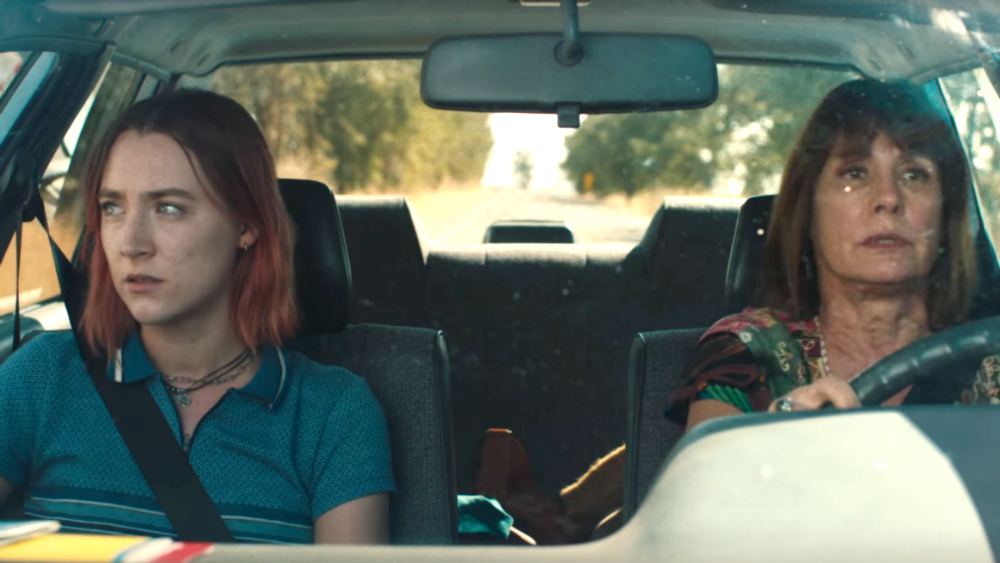
Saoirse Ronan and Laurie Metcalfe are mother and daughter with more in common than they think in Lady Bird

Director: Greta Gerwig

Cast: Saoirse Ronan (Christine “Lady Bird” McPherson), Laurie Metcalfe (Marion McPherson), Tracy Letts (Larry McPherson), Lucas Hedges (Danny O’Neill), Timothée Chalamet (Kyle Scheible), Beanie Feldstein (Julie Steffans), Lois Smith (Sister Sarah Joan), Stephen McKinley Henderson (Father Leviatch)

In Sacramento, California, in 2002 Christine “Lady Bird” McPherson (Saoirse Ronan) is a self-consciously assured teenager, constantly pushing to define herself as new and original, down to giving herself a new name (“Lady Bird”) and playfully enjoys pushing against the limits of what is acceptable at her Catholic school. She however butts heads with her mother Marion (Laurie Metcalfe), a hard-working nurse, supporting the family as her husband Larry (Tracy Letts) is unemployed and out-of-step skills-wise with the jobs market. Mother and daughter though are strikingly similar people, independent minded but with a streak of loving kindness.

It’s the relationship between these two characters that is the heart of Gerwig’s gently made coming-of-age (of a sort) drama. The key scenes that power the film are both the clashes and moments of fun between these two. There are feuds and angry words – but they often sit-by-side with a loving regard and a shared world perspective. Gerwig gets superb performances from both actors, with Ronan every inch the difficult teenager, full of promise but overwhelming with arrogance and mistakes that constantly hurt those around her. Metcalf is equally good as a woman weighed down with cares, who constantly makes time for others – and therefore finds her daughter’s lapses into selfishness all the more infuriating as they fly in the face of everything she values in life.

The film opens with a fight between these two that just seems to capture the moment. After a long drive to a perspective college, they finish an audiobook of The Grapes of Wrath both overcome with emotion from the stories end. Seconds after it finishes, Lady Bird goes to turn the radio on, her mother asks for a moment of reflection – and we are off from a shared emotional experience into a mother-daughter row. Setting the tone of how many of these will go – and the characters they display in the film – Lady Bird impulsively throws herself out of the car when she feels she is unable to come up with a decent comeback to a point. It’s a plaster cast she will wear for a large part of the film – and an example of the impulsive addiction to terrible decisions that seems to be constantly on the edge of ruining her friendships and chances.

A lot of this material is, to be honest, pretty standard stuff for movies of this genre. And Lady Bird herself is at times a rather irritating and even annoying lead character, one who seems to be constantly hurting people around her with very little regard for their feelings and seems to be continually forgiven regardless. Her treatment of her best friend Julie (a fine performance of endearing sweetness by Beanie Feldstein) sees her drop her and then pick her back up again with a suddenness that feels like it has missed the hurt and pain she has caused.

But then other parts work so well because the script approaches them with a quirky eye for a good joke and a sharp line. There are some very fine jokes among the script, a high point being a PE teacher turned drama director who directs his plays in the exact way he would plan out a football game. Little moments of character observation and behavioural ticks often strike home and frequently raise a smile.

But it also carries across the same observational honesty to less savoury attitudes of being a teenager. The selfishness, the feuding. Lady Bird’s sexual awakening of course happens with a self-obsessed arrogant would-be-poet aiming at a higher plane of intelligence (played with an assured arrogance by Timothée Chalamet). Lady Bird’s striving to constantly to be more or have more than she has always feels very teenager – life can’t just be what she has, she must need or be destined for greater things, or to improve in some way, to make it to the college she wants, to find some deeper meaning, to live a life that expands beyond her horizons and make her stand out.

But, the film suggests, she actually seems destined to become someone more like her mother –decent, kind, gentle, perhaps with a greater artistic calling, but fundamentally a thoughtful person. One early boyfriend – very well played by Lucas Hedges – who is revealed as unsuitable in a way not-at-all surprising when you consider he is the lead actor of the school drama group – is someone she accepts and comforts with a complete emotional openness. Her father’s travails in the job market is something she feels great empathy for. When returning to the company of her friend Julie, she is warm, caring and full of energetic affection.

It makes for a gentle and engaging film – perhaps nothing you haven’t really seen before, but presented with a lot of assurance and freshness by Gerwig, who is a director with an eye for the moving moment (a scene where Tracy Lett’s father sees his son go-up for the same job as him – a job for which the son is more qualified – is unmatched in its sad mix of acceptance and pride) and more than a taste for the eccentric comedy that brings spark to the drama. Powered by two excellent performances by Ronan and Metcalfe, Lady Bird may, like many teenagers, be difficult to like sometimes but has lots of promise.

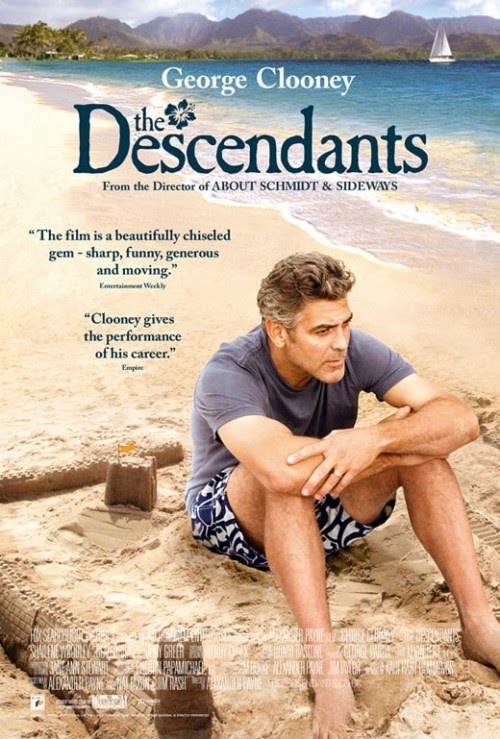
The Descendants (2011)

George Clooney is a family man dealing with difficulty from The Descendants

Director: Alexander Payne

Cast: George Clooney (Matt King), Shailene Woodley (Alex King), Amara Miller (Scottie King), Nick Krause (Sid), Beau Bridges (Hugh), Judy Greer (Julie Speer), Matthew Lillard (Brian Speer), Robert Forster (Scott), Patricia Hastie (Elizabeth King)

Anyone expecting a straight comedy hasn’t been familiar enough with Alexander Payne’s career. Payne’s movies are triumphant, slightly quirky, explorations of crisis in the lives and emotions of middle-aged, middle-class men. Few directors do it as well, bringing both a lightness of touch and a profound understanding of the tragedy that can underpin ordinary lives. He has an astute understanding of the pain of opportunities lost. And The Descendants is full of these, just as it is full of the hope you can gain from seizing new opportunities in the future.

Matt King (George Clooney) is a Honolulu attorney who is the last trustee representative in his vast family for a site of 25,000 pristine acres on Kauai. With the trust due to end, Matt is under pressure from his family to sell the land for hundreds of millions and gain them all their financial security. In the middle of this, his wife suffers a boat accident that leaves her in an unrecoverable coma. Matt has to rebuild the relationship with his two daughters Alex (Shailene Woodley) and Scottie (Amara Miller) as well as deal with the reveal this his wife was planning to leave him for her lover, a married estate agent Brian Speer (Matthew Lillard).

Payne’s film is heartfelt, low-key and a marvellous showcase for George Clooney who has probably never been better as the grieving and shocked Matt, struggling to come to terms with revelations about his own life that come completely out of the blue. In particular, his own realisation that he has left far too much of his family life to his wife, and his wife has in any case a less than perfect relationship with their two troubled children. Alex (Shailene Woodley) has a history of substance abuse and hell-raising while her sister Scottie (Amara Miller) is using bullying as a way of acting out. King, its clear, has let his connection with his family drift away with his consumption in his work, a character flaw that leaves him with a serious of painful revelations about his own failures.

These revelations are expertly acted by Clooney, who gives the part a rawness and edge beneath his natural charm that becomes deeply involving. He makes Matt both desperate, bewildered and confused as well as kind, decent and forgiving. Payne’s films never present easy solutions to problems, and frequently hold up their leading characters as being the root of their own troubles. It’s the case here as well, as King must learn to realise that many of the problems he is discovering in his family life come out from his own mistakes and lack of focus. How should he respond to his discovery of his wife’s infidelity? How should he decide to react when he discovers his wife’s lover had his own family? 

It’s never the easy choice, and it’s never a clean and easy solution that wraps everything up neatly. The problems we encounter will eventually require us to make intelligent, emotional decisions and accept there are no clean answers. When we meet Brian Speer, he’s not a bad guy just a bit weak. It’s the same throughout. Every character has depth and hinterland. Robert Forster as Matt’s father-in-law may seem foreboding and harsh – but then he is perhaps right to blame Matt for his daughter’s unhappiness, even while he never holds it too harshly against him. Alex’s spaced out boyfriend Sid (Nick Krause) suddenly surprises Matt with his emotional insight into family dynamics.

And of course, his daughters who seem tearaways are in fact far more mature and supportive than might have been expected. Shailene Woodley is excellent as Alex, a young woman who doesn’t blame but demands to be part of solutions, and supports her father to make the tough calls. And the moral problems keep coming, mixed with surrealist comic touches. It’s the sort of film where Matt can make a shocking realisation about his wife, and then return to his table in his restaurant to be assailed by a garish traditional music band.

Despite all this Payne’s film captures a sense of affection and warmth without succumbing to sentimentality or easy solutions. The sort of satisfying outbursts of pain and cathartic anger are largely avoided for far more mature and realistic feelings of joint responsibility for problems and an acceptance that what our lives become are what we make of them as well as other people. It’s a sort of complex avoidance of black-and-white solutions that help to make the film feel truly real and grounded. While not many of us need to worry about the pressures of making decisions that will make us millionaires, all of us have had to deal with our own mistakes leading to others making mistakes and the emotional fallout that this can bring. 

In the centre of Payne’s emotionally intelligent film are these excellent performances, with George Clooney hugely unlucky to miss out on an Oscar for his emotionally intelligent and rich performance here. Payne’s film takes the male mid-life and family crisis and subtly analyses from a host of positions and angles, not just the man itself. We can feel sorry for a bloke who has suffered blows but also see his own decisions have contributed to his position. It makes for a delightful and heartfelt film, which is beautifully made by Payne and superb showcase for intelligent, grown up film making.

The Collector (1965)

Samantha Eggar is held captive by Terence Stamp in the unsettling The Collector

Director: William Wyler

Cast: Terence Stamp (Freddie Clegg), Samantha Eggar (Miranda Grey), Mona Washbourne (Aunt Annie), Maurice Dallimore (Colonel Whitman)

A lonely butterfly collector wins the pools. He’s rich, he can have everything he wants – but he’s still an outsider who can’t get a girl. Surely if a woman would just get to know him he’d find love. So the easiest way of doing that is probably kidnapping the woman you had a crush on at school, locking her in a carefully furnished basement in your Tudor mansion house and just wait for her to fall in love with you. Sounds like a perfect plan right?

William Wyler’s adaptation of John Fowles’ best-selling literary first novel sees Terence Stamp as the maladjusted loner and Samantha Eggar as his victim. It’s fascinating reading about the film today and the attitudes and perceptions towards it. Today the film is chilling in the obsessive, dangerous, self-pitying self-justifications of Freddie Clegg. But in the mid-60s a number of reviewers commented on the pity they felt for the kidnapper, and even expressed that in many ways he was acting on fantasies every healthy man has had (they haven’t). Quite rightly the film comes across differently today, a far more unsettling and disturbing portrait than it did at the time.

Wyler’s direction is intimate and a fine mixture of the theatrical – with its often single locations and two-actor scenes – and cinematic, particularly in the way he subtly builds up a Hitchcockian level of tension around the possibility of discovery and escape for Miranda. Sure visually he is a little too much in love with the crash zoom on key items (chloroform for example in Freddie’s car), and devices that seem a little too obvious (like the use of black and white for the film’s only significant flashback) but he mounts the entire film with an unsettling claustrophobia that works very well.

Further he draws out two fantastic performances from the leads. Terence Stamp was not a natural choice for the shy, timid outsider turned abductor – he’s obviously way too handsome and physically assured for the role – but he marshals very well the blinded arrogance of a man who believes the whole world would march to his tune if it only stopped and listened. His Freddie Clegg is softly-spoken, polite and controlled – so much so you almost forget how insane he is. Stamp also does a remarkable physical performance, making himself seem shorter and less dynamic than he really is, his body language having more than the hint of the schoolboy about it. Domineering, controlling, bullying and totally incapable of internal analysis of his actions. 

You realise watching the films events unfold – and Freddie’s inability to analyse the emotional truth behind them – that he is alone because he fundamentally doesn’t understand human relationships. While many of the (male) film reviewers at the time found this strangely tragic, today it’s hard to feel anything but contempt for his cruel self-pity.

The more difficult role falls to Samantha Eggar as Miranda. Wyler’s attempt to get the best performance from here seems pretty kin to the abduction the character goes through in the film – she was kept in isolation on the film set, Stamp was instructed to not talk to her outside of shooting while Wyler constantly held the threat of dismissal over her. More than a few echoes of Hitchcock in that – and Wyler’s praise on the film’s completion for Eggar’s (Oscar nominated and Cannes Award winning) performance as more than a whiff of self-praise to it. But Eggar herself is superb as a woman who oscillates between panic, desperation, ingratiating kindness, anger, contempt and fear. Miranda is a woman who tries everything she can to get out of this situation, only to constantly butt heads against the twin devils of her countryside isolation and Freddie’s own lack of emotional and intellectual intelligence.

Because the film interestingly makes clear what a tedious and not-very-bright monomaniacal man Freddie is, compared with the educated and quick-witted Miranda. When she tries to engage him on a discussion about modern art, he is utterly incapable of beginning to appreciate artists such as Picasso (‘It doesn’t look real’), completely fails to grasp any of the ideas in The Catcher in the Rye (the book she suggests he reads) or their relation to him, and is drawn only towards the blandest, most traditional drawings that she creates while whiling away the time in captivity. He fanatically collects butterflies, rooms lined with framed specimens that he can discuss in detail but with no concept of their beauty. Every time Miranda tries to scratch the surface of Freddie to connect with him she constantly discovers he has no depths at all, he’s a little boy lost in the world who can’t understand why he can’t collect people with the ease he catches and kills butterflies.

Whether the film has some sympathy for Freddie is less clear. Maurice Jarre’s luscious score certainly seems to suggest we should feel something for this misguided guy, but today it’s almost impossible to do so. The film works just as well without those feelings of implied sympathy though, which is a tribute to Wyler’s even-handed and controlled direction. Certainly Miranda’s fear and oppression are easy to connect with.

Is this a Stockholm syndrome film? Miranda – an intelligent and cunning woman – quickly realises that while she is the victim, Freddie’s desire to be seen as sort of chivalric gentleman does give her some power over his treatment of her – he wants her to fall in love for real with him. How much does she start to feel sympathy for this misguided loner? Is there any hint of real feeling at any point in her eventual attempt to seduce him (I doubt it heavily watching the film, but I may be adding a modern perspective, as I suspect Wyler wants to leave a hint there – again the score supports this feeling a bit)? I’m not sure – but the film’s eventual ending does leave little doubt that Freddie is a dangerous man, and the world is a less save place with him in it.

The Collector isn’t perfect – and perhaps its attitudes have dated – but it still has a real skill to it, some wonderful scenes – and two terrific performances from its lead actors, who I think have never been better than they are here. Wyler’s last success – and you can see his debt to the later work of Michael Powell and Alfred Hitchcock in each frame, even while he fails to match either of them – it still makes for an unsettling, troubling and fascinating watch.

Joker (2019)

Joaquin Phoenix goes all out as Joker

Director: Todd Phillips

Cast: Joaquin Phoenix (Arthur Fleck), Robert DeNiro (Murray Franklin), Zazie Beetz (Sophie Dumond), Frances Conroy (Penny Fleck), Brett Cullen (Thomas Wayne), Glenn Fleshler (Randall), Leigh Gill (Gary), Bill Camp (Detective Garrity), Shea Whigham (Detective Burke), Douglas Hodge (Alfred Pennyworth), Marc Maron (Gene Uffland)

The mystic of Batman’s nemesis the Joker is his unpredictability, his other-worldly insanity laced with malicious viciousness and an anarchic sense of fun. There is a reason such an electric character has been the go-to for so many Batman related films – and why people are drawn time and time again to re-exploring him. With the DC Universe struggling, it makes sense that a stand-alone film around the most-popular, most-famous comic book villain of all time would be attractive. It’s been a massive success, but is it truly a good movie? I’m not so sure.

Arthur Fleck (Joaquin Phoenix) is a struggling professional clown in 1981 Gotham City, living with his invalid mother Penny Fleck (Frances Conroy). A run-down, dirty and no-good town with astronomical divides between the haves and the have nots, Fleck is a guy who can’t make the world work for him. Dreaming of a being a professional stand up and appearing on the popular nightly talk show hosted by Murray Franklin (Robert DeNiro), Fleck is actually a maladjusted, bitter outsider and fantasist who struggles to adjust to the real world. Will the idea of taking brutal vengeance on those around him, be eventually to tempting to resist? Hey: why so serious world?

Joker is a grim, trying and rather uninvolving film that even contained within a fairly tight two hours still feels like it drags on way too long. It perhaps feels like this because it signposts all its major narrative developments far too far in advance, meaning very little if anything surprises you. Fleck is essentially a time bomb waiting to go off, and everyone knows by the film’s final act he will do. The long wait to get there doesn’t really give us anything fresh or interesting to think about, other than presenting a comic book world mixed with the grimy atmosphere of classic Scorsese films. It’s a film made by people who love classic urban Hollywood films – but who seem unable to bring anything really fresh to a series of ideas better film makers have already had.

Instead it’s a film that relies heavily – in fact is completely dependent on – its inspirations, torn from comic books, other films and news bulletins. Your understanding of Fleck’s character arc is dependent on having some sort of visual image in your head for the Joker. Your appreciation of the film’s style and tone relies on you having seen Taxi Driver and King of Comedy. Your reaction to the sudden growth of flash-mob violence in Gotham depends on you knowing about these attitudes in the real world. The film largely fails to develop any of these ideas organically within itself or its own narrative, but instead throws them to the screen knowing that we will do the work of making them stick on our own with our past associations.

As the film doesn’t really try and build its own ideas, or really try to take ideas from anywhere else to really original places (apart from a few Joker developments which I’ll talk about later), for people who are familiar with its themes and inspirations, it just manages to make for a rather dull watch. The Joker character has been done better elsewhere, King of Comedy and Taxi Driver are films so full of depth and interest around maladjusted losers, stalkers and fantasists yearning for recognition, that this film’s showy coverage of the same ground come across as deep as puddle. Its political positions are so simple, basic and unchallenging that they might as well have come from a school essay. 

Both the film’s greatest strength, and its greatest weakness, is Phoenix’s lead performance. There is no question that this is a powerhouse performance, fully committed physically and emotionally. Phoenix has explored every inch of the psychological make-up of a misfit who believes the world owes him something and whose vulnerability eventually becomes twisted into a psychotic rage. As a portrait of the making of a school shooter (say) it’s a fascinatingly successful performance. But it’s also overwhelming. It’s so quirky, so twitchy, so detailed, so mannered it finally becomes too much. 

Finally, and this is perhaps intentional, it doesn’t feel like the Joker. When I think of that character, I think of one defined by joy. A twisted sense of joy, a psychotic killer’s joy, but joy nevertheless. Joy is something that never enters Phoenix’s interpretation for a second. This makes sense for the first three quarters of the film, but when the final push of the narrative takes us towards Joker territory, Phoenix’s character is still by-and-large the same tearful, desperate, tragic figure he was before. That doubling down on villainy, that “just let the world burn” anarchism is something completely missing from the performance. It makes the part something that is all impact but no real depth, no real development. It’s a showy performance of tricks and manners, impressive in its commitment but in the end empty and unaffecting.

It also means the film focuses almost completely on Fleck, meaning it has not time to develop its themes of urban clashes and rich vs poor narrative. Instead it just throws these ideas straight in to the film with no real introduction or context and trusts that we will do the work ourselves. It does the same with Fleck’s fantasies and obsessions. It’s no great surprise that all these dreams fail to pan out, and it’s no great surprise that killing ensues. All the victims of Fleck’s rage are completely predictable from the first few minutes, but Phillips film feels like it takes a very long time to get there. 

Joker does at least try to do something different, but Phillips film is more a scrap book of ideas and themes explored better elsewhere. Phoenix tries too hard and the film itself ends up telling a not very compelling story. In the end the character of the Joker is fascinating because the character is unknowable, unpredictable, a rootless force of nature. Giving him a back story weakens the character and makes him (and the film) less and less successful. And the general get-out-of-jail card the film holds (and plays) that all or some of this might just be happening in Fleck’s fractured mind isn’t clever, it’s just irritating.

The Missionary (1982)

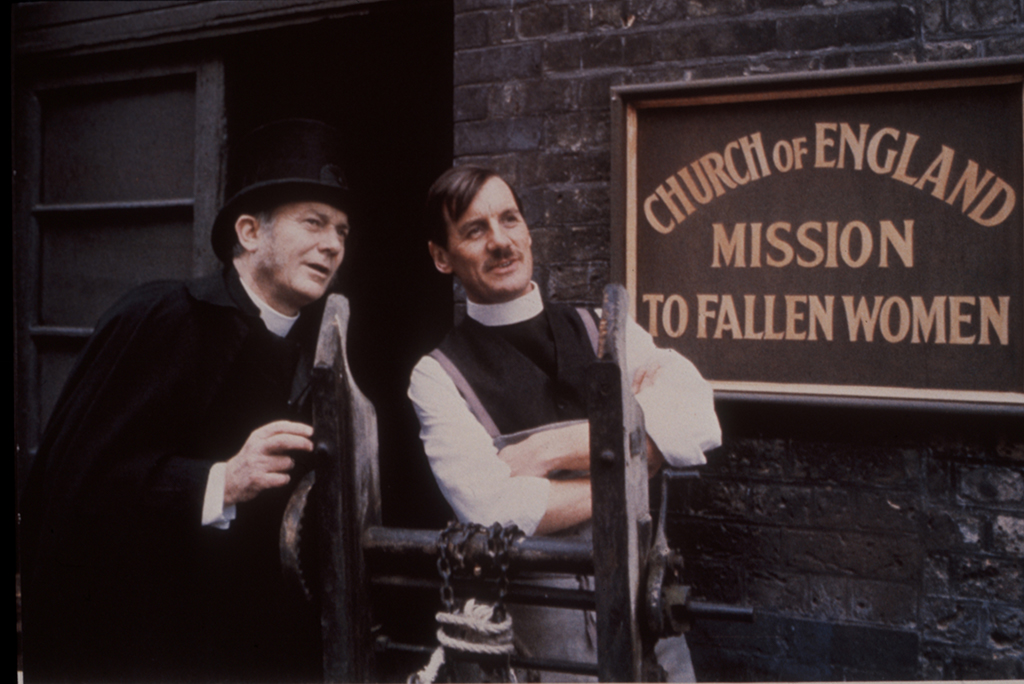
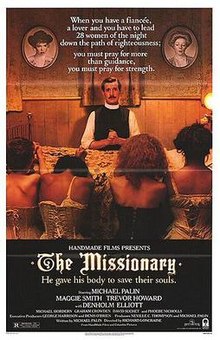
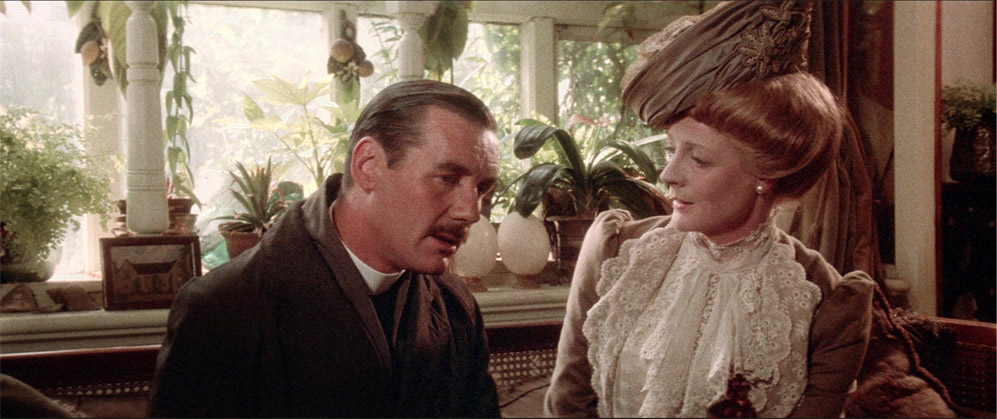
Michael Palin sets up a failed mission for change in The Missionary

Director: Richard Loncraine

Cast: Michael Palin (Reverend Charles Fortescue), Maggie Smith (Lady Isabel Ames), Trevor Howard (Lord Henry Ames), Denholm Elliott (Bishop of London), Michael Hordern (Slatterthwaite/Narrator), Graham Crowden (Reverend Fitzbanks), David Suchet (Corbett), Phoebe Nicholls (Deborah Fitzbanks), Roland Culver (Lord Fermleigh), Rosamund Greenwood (Lady Fermleigh), Timothy Spall (Parswell)

In the 1970s Michael Palin co-wrote (with Trevor Jones) a series called Ripping Yarns, affectionate half-hour spoofs of “Boys Own Adventures”, all starring Palin, told with a winning mix of affection, surreal gags and gentle humour. The Missionary is Palin expanding the concept into a full film, written by and starring the future Globe-Trotting Python. Palin plays the Reverend Charles Fortescue, who in 1902 returns from a mission in Africa (teaching the natives the date of composition of Magna Carta) to England and is asked by the Bishop of London to set up a mission in London to “save” prostitutes. Needless to say, things do not according to plan.

Palin’s script is full of some fabulous gags and a gentle, sometimes cheeky, sense of humour that gives you something truly entertaining every moment. If The Missionary does at times feel a collection of sketches and great comedic ideas and characters, rather than a fully formed filmic narrative, that matters slightly less when the jokes are as good as these. Sure, even Palin and Loncraine have said the final act of the film doesn’t completely work and largely fails to add actual narrative conclusion (it feels rather like the film required an ending, so this section was added to give it one), but it doesn’t really matter as much when the sense of fun is as strong as it is here.

Watching this on the recent re-mastered blu-ray from Indicator, this is also a beautifully made film, very well shot and framed by Loncraine with a cracking sense of pace. Visually the jokes work very well, and the push through from comic set-piece to comic set-piece that runs through the opening hour of the film is perfect. 

Palin also is perfect in the leading role, his sense of earnestness and decency, his slight air of a very-British innocence and bashfulness works in hilarious contrast to when (inexplicably to him) finds himself sexually irresistible to a host of ladies. Which sounds, when you write it, like a vanity project if ever I heard it, but never plays like it for a moment as there is a superb, slightly embarrassed, befuddled awkwardness about Palin (which I don’t think any other actor could have done as well) that makes the entire concept work an absolute treat.

It’s part of the extremely British atmosphere of the film, where sex is something deeply embarrassing and slightly shameful, something we are all far too polite to talk about or even acknowledge. Rather than the atmosphere of an end-of-the-pier show the film could have had, instead it has a very dry, rather touching attitude towards sex as something completely natural and everyday, that the repression of the English has elevated to something hugely awkward.

The only person who seems to be in touch with her true feelings and sexuality is Maggie Smith’s sexually liberal Lady Ames, a woman who knows what she wants and is determined to get it come what may. Smith is superbly funny in the role, a part she keeps just the right side of parody, making it very funny but also ring very true. This makes her a complete contrast to Fortescue’s intended (played expertly by Phoebe Nicholls) so repressed she cannot bear to be touched and obsessed with a complex filing system for storing and cross-referencing her fiancée’s letters.

All this happens within a series of sketches that are worth the price of admission themselves. Denholm Elliott has a few excellent scenes as a bullish Bishop, obsessed with sport who seems unable to speak in anything but sporting metaphors. Roland Culver plays a Lord who dies in the middle of an impassioned Fortescue’s pitch for funding, to the intense social embarrassment of his wife (Rosamund Greenwood, very funny). Best of all on the cameo front is Michael Hordern, who practically steals the entire movie as a butler utterly unable to successfully navigate around the gigantic house he works in.

Through this all rides Fortescue, a man with a barely acknowledged sexual drive, who bumbles from escapade to sexcapade with a bright-eyed innocence and determination to do the right thing, but constantly landing himself in trouble. It’s a charming, playful and very British movie and Loncraine and Palin get the tone just right. It’s perhaps a little too close to Ripping Yarns, a fabulous parody of a particular era (and type) of Britishness and British attitudes, and you feel it would be comfortable as a single 45 minute episode. But when the jokes are as cracking as they can be here – and Hordern apologetically leading Fortescue from room to room unable to work out where he is or how he can get to where they want to go, is a pleasure I could watch again and again – then you’ll cut it a lot of slack.

Unbroken (2016)

Jack O’Connell does fine work in the middlingly impactful Unbroken

Director: Angelina Jolie

Cast: Jack O’Connell (Captain Louis Zamperini), Domhnall Gleeson (Lt Russell Phillips), Garrett Hedlund (Lt Commander John Fitzgerald), Miyavi (Sgt Mutsuhiro “The Bird” Watanabe), Finn Wittrock (Sgt Francis McNamara), Jai Courtenay (Lt Charlton Cupernell), Luke Treadaway (Miller), Spencer Lofranco (Harry Brooks)

Angelina Jolie’s directing work doesn’t get the acknowledgement it perhaps deserve and it’s easy to think, watching the confident and imaginative framing of much of the film, that if, say, Brad Pitt had directed the film it might have got a more positive reaction from people. Anyway, perhaps part of the problem might be for all the extraordinary courage of Louis Zamperini’s life story, the general ideas behind the film are now so common in film-making that – and it feels terrible to say it – perhaps we are at last too familiar with these stories for them to have a real lasting impact. 

Louis Zamperini (Jack O’Connell) was an Olympic athlete, who set a world record for the fastest lap in his final lap of the 1936 Olympics 5000 metres final (despite finishing 8th overall). Signing up for service in the war, his bomber crashes and (after surviving 47 days in an open lifeboat in the Pacific) he is captured by the Japanese. There he experiences the brutality of the POW camps – and earns the enmity of Mutsuhrio Watanabe (Miyavi) one of the camp’s officers, who beats him mercilessly. But through it all his determination never wavers, neither does his humanity. He remains Unbroken.

The attraction of the resilience of the human spirit never wavers – and many of us suspect we would break, making our admiration and respect for those that don’t all the greater. That admiration is easily bound up in O’Connell’s wonderful performance as Zamperini, dripping charisma powered by kindness, humanity, decency and self-respect. O’Connell dominates the film, and is also the key to its successful moments – the camera always comes back to him, and his eyes wind up telling much of the story. Without him the film would struggle to make a real impact.

Which is part of the problem with it – it doesn’t make the impact you feel it should. Jolie’s direction is technically accomplished and very skilful, and the film is beautifully shot and filmed by Roger Deakins. There is barely a foot wrong anywhere in its make-up – but for some reason it doesn’t come together into something that carries real force. Maybe this is overfamiliarity with these stories, maybe this is too much professionalism and expertise crowding the emotion out, maybe it’s just that there isn’t enough story here for it to really work. But for whatever reason, this is a film that winds up leaving you colder than it should.

Its finest sequence coves the isolation on the boat, the struggle with sun and sea, without sufficient food or water, a marathon endurance test that claims the life of one of the three men who undergo it. Jolie’s film captures the strange claustrophobia of a tiny world – one lifeboat – in a huge expanse of nothingness. These scenes are compelling in a way the later prison camp scenes just aren’t. 

The camp scenes are of course tough and brutal in a way (although some have – perhaps justly –  complained that they are so beautifully and elegantly filmed that their impact is dramatically reduced, with every shot of the camp turned into some sort of renaissance-lit masterpiece) but they don’t hit like they should. Yes what Zamperini and the soldiers go through is dreadful and awful beyond measure, but nothing here seems to really capture that. It’s sort of something we understand but don’t wind up feeling from the film. 

Perhaps that’s because the one thing the film does capture really well is the powerless drift of POW life. The soldiers have no control over their fates and no way of escaping it, This all gets captured in the brutal bullying of Watanabe – but the film never manages to make either him or his rivalry with Zamperini compelling, leaving me unsure whether he was intended as a representative cipher of the appalling system rather than a real character.

Unbroken won’t exactly disappoint but it won’t exactly thrill either. While I do feel not enough credit is given to Jolie – and a male star would have got more praise – this is also a film that feels too much like a Hollywood prestige picture, too much like an important film straining for those Oscars. It forgets the heart and doesn’t engage our feelings.

Angels with Dirty Faces (1938)

Angels with Dirty Faces (1938)

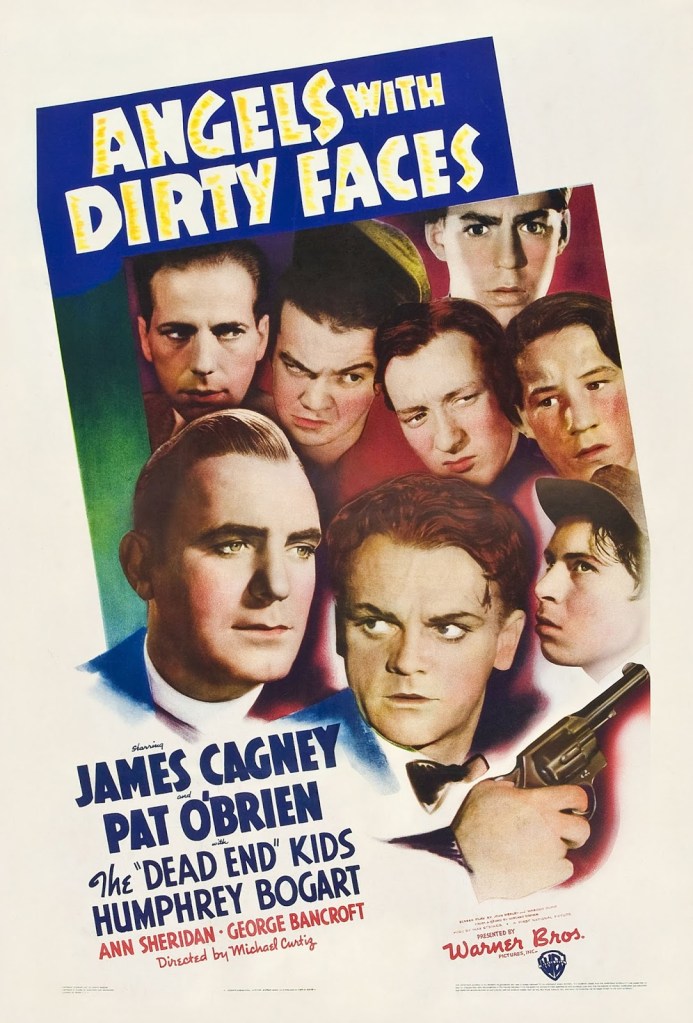
Cagney lets rip in this classic gangster film which is all about its barn-storming ending

Director: Michael Curtiz

Cast: James Cagney (Rocky Sullivan), Pat O’Brien (Father Jerry Connolly), Humphrey Bogart (Jim Frazier), Ann Sheridan (Laury Martin), George Bancroft (Mac Keefer), The Dead End Kids

It has perhaps the most famous ending of all gangster films. Faced with his final few minutes on Death Row, charismatic gangster Rocky Sullivan meets with his oldest friend, Father Jerry O’Connell. Rocky is a hero to the kids on the block, and Father Jerry pleads with him: go the chair yellow and just maybe you can help turn these kids away from a life of crime. No way Rocky is going to lose his pride – until the final few moments, when suddenly he collapses into a morass of whimpering fear and terror. Did he decide to listen to Jerry’s pleading? Or did he really go yellow after all?

It’s the question that you are meant to take from Angels with Dirty Faces, a superb example of the gangster genre, brilliantly directed by Michael Curtiz. And it works so well because quite simply no other actor in the history of film could have pulled it off as well as Cagney does. If you have any doubts about whether Cagney deserves to stand as one of the truly greatest film actors of all time, this film erases them. 

Cagney is simply superb as Rocky. Has there ever been a gangster who was so charismatic, so magnetic, so strangely decent in his way, who plays in the corrupt world of crime but has his own absolutely rigid moral code? Few other actors could have you so ready to believe he would ruthlessly pull the trigger at the drop of the hat, and yet would still be someone you’d consider inviting round for dinner. Every single scene hinges on his brilliance as a performer, and his interaction with each character is superbly judged. He is an unapologetic bad guy, a man who openly says that he isn’t sure he is capable of empathy in the same way as normal people, yet he also has a fierce sense of loyalty and doesn’t hesitate to take the rap for others or to put himself in harm’s way to protect those he feels loyalty towards.

It’s all part of the intriguing moral puzzle of the film, that rather bravely inverts the idea of good and evil that the Hays Code mandated. On the surface this is a Board approved plot of two kids from the wrong end of the block, one who ends up good one who ends up bad, with the bad one getting his comeuppance and the good saving souls all around. But scratch the surface and actually this is a film that is making far more subtle points about a world that is in shades of grey. For starters, the most faithful and loyal character in the film is the hoodlum Rocky. 

But more than that, the film stresses that the margin between priest and criminal is very thin indeed. Repeatedly it’s stressed that Jerry is only a priest – rather than a fellow criminal graduate of the reform system like Rocky – because he was able to run away faster from the police during their days of mayhem as tearaway boys. It only takes chance and a few lucky turns, and the priest owes his ability to find God and the good life solely because the criminal happily took the whole rap as a Kid. The priest and the criminal work almost hand-in-hand trying to encourage the local kids to engage more in their community (even if they are teaching subtly different lessons) and their friendship is unaffected by the events of the film. 

Much as the film is building a traditional narrative of crime being attractive but not in the end paying, it is also subtly suggesting that good and evil perhaps coexist in harmony more than we might think (or might be comfortable to acknowledge). Which brings us back to the title I guess: Jerry is an angel with a dirty face from his flawed childhood, but in a way Rocky himself is an angel whose face is covered with the muck of crime. Both characters have lives that have crime and misdemeanours behind them, even if they have eventually chosen different routes.

Curtiz’s film allows this commentary to bubble subtly and cleverly under a host of wonderful scenes and carefully composed sequences. The highlight of which might well be an extraordinarily well made extended shoot out scene, as Rocky faces his final show down with the cops after one crime too many. But it’s a peak of a series of superb sequences that make excellent use of framing and intent. Curtiz even makes the Dead End Kids – a group of, I’ll be honest, rather irritating child actors, whose fates I find it hard to get worked up about – reasonably engaging. There are several other fabulous performances, not least a wonderfully snivelling turn from Humphrey Bogart as a cowardly and corrupt lawyer with more than a few criminal connections.

It all comes back to that final sequence as events catch up with Rocky and the electric chair awaits. Cagney is simply brilliant in this scene, a perfect steel front of composure and pride that we are invited to question whether it cracks or he does so deliberately. Curtiz shoots the sequence in shadow play (apart from one shot of Rocky’s hands clinging desperately to a radiator) – to meet the Hays Code rules about what you could and couldn’t show on screen, the chair being a no – but it works superbly and Cagney’s powerhouse but also restrained performance nails it perfectly. While you like to think Rocky has done the “right thing” you can’t be sure – and it’s that question that hangs over it that helps cement this as a brilliant inversion of the black-and-white morals of the era: we like to think decency has prevailed, but maybe it’s all just being yellow after all…

The Last King of Scotland (2006)

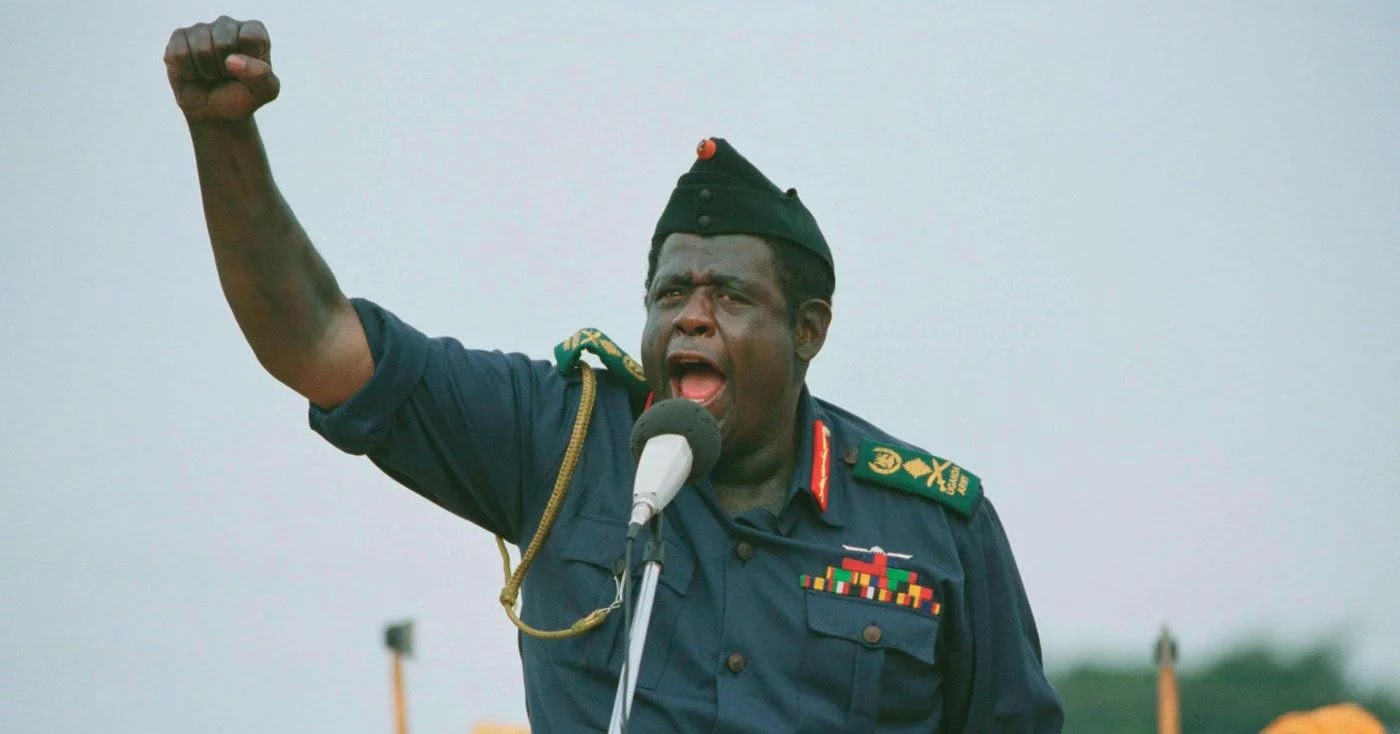
Forest Whitaker dominates as Idi Amin in The Last King of Scotland

Director: Kevin Macdonald

Cast: Forest Whitaker (Idi Amin), James McAvoy (Nicholas Garrigan), Kerry Washington (Kay Amin), Gillian Anderson (Sarah Merrit), Simon McBurney (Stone), David Oyelowo (Dr Junju)

Forest Whitaker won every award going for his performance as Idi Amin. A film can perhaps only begin to scratch the surface of what a megalomaniac nutjob Amin was, and the depths of his depravity and corruption. But The Last King of Scotland is perhaps less focused on that, and more on the pull that people as charismatically self-absorbed and larger-than-life like Amin can have on the weak-minded and, on a wider basis, how this can end up with him leading an entire country on a not-so-merry dance, everyone desperate to gain the love and approval of a single dominant personality.

That weakling is Dr Nicholas Garrigan (James McAvoy) a young medical graduate from Edinburgh, who is arrogant, cocksure over-sexed and over-here in Uganda, keen for adventure and to get as much sex and experiences in as he can while he’s over here. A gap-year student with a desire for the easy life, after a chance meeting Garrigan becomes chief-physician and confidant to Amin, a man with a deep love for Scotland and who likes to think of himself as a father to those around him. It takes Garrigan a long time to realise that this indulgent, if bad-tempered, charismatic father-figure  is in fact a brutal dictator, his eyes eventually opened by the experiences of one of Amin’s wives Kay (Kerry Washington) who pays a heavy price for mothering an epileptic and adultery. Will Garrigan escape from Uganda?

Macdonald’s film gets a brilliant sense of both the exotic appeal of Uganda at the time (and or Amin) and it’s heat-embroiled danger. The camera work is flooded with yellows and grimy details, that makes every scene feel like its bathed in heat (and later danger) as well as giving it a documentary realism (helped by its use of handheld and immediate footage). The story of the film itself is a fairly basic morality tale, but these stories work because of their universality and it’s clear that Garrigan’s selfishness, shallowness and self-interest is going to lead to a terrible awakening.

The film’s real strength is Whitaker’s tour-de-force as Idi Amin. Whitaker is an actor who has been straining at the leash for an explosive roll, and he gets one here. If ever there was a part that would allow an actor to let rip it’s the one, with Amin part Hannibal Lector, part decadent Roman emperor, a low-rent Hitler with an ego larger than his country. But the bombast and childish fury work because it is built within the framework of a sort of puffed-up magnetism, a charismatic “hail-fellow-well-met” bonhomie that suggests this guy could be the best fun in the room. So dripping in assurance and confidence is Amin that he becomes strangely attractive – and the sort of all-powerful force of nature that would have most of us smiling if we caught a word of approval from him.

The trick of the film is to front-and-centre this lighter, fun-loving aspect. It’s easy to enjoy it like Garrigan as Amin charms the audience as much as he does its lead character. Sure there may be violence at the margins, but good-old-Amin is just doing what needs to be done. He’s brilliant with the people. It’s funny when he on-a-whim appoints Garrigan to decide a major architectural pitch from several countries. He’s playful and enthusiastic. When he’s cross with people he seems at first more disappointed than angry. It’s only as the film goes on that we realise we have been gaslit as much as Garrigan, that Amin may be a fun guy but he also cares nothing for anyone and that the more his focus shifts away, the more we see his callous paranoia and lack of any moral scruples.

Certainly we start getting a sense of the ruthlessness he is prepared to exhibit to enforce his rule in Uganda and the brutality with which he will suppress any resistance. Aides killed in a failed assassination attempt illicit no sympathy. He feels no guilt or responsibility for anything he does. In one brutal moment he berates Garrigan for failing to counsel him against expelling all Asians from Uganda. When Garrigan protests he did, Amin only responds with “Yes, but you did not persuade me Nicholas!” the sort of inverted logic practised only by the insanely self-obsessed.

Whitaker’s performance powers all this, a magnetic masterclass in insanity, charisma and paranoia. He’s well matched by James McAvoy (the film’s real lead) whose performance is similarly a masterclass is shallowness and petty triteness. If anything the film is almost too successful in this. A Garrigan is such a little arsehole it takes quite a force of will to build up any sympathy for this serial shagger playboy. It’s capable to think as the fire turns on him that perhaps he deserves this – and the number of (mostly black) characters who lay down their lives to protect him starts to get a bit wearing after a while.

Because this in part is a film where actual Ugandans are not heard that much. The two principle characters we see are both victims: Kerry Washington in a thankless part as the attractive young wife you just know from day one Garrigan will climb into bed with and David Oyelowo as the sort of noble doctor you only seem to find in movies. For all its horror at Amin’s crimes, it’s still largely filtered through the eyes of a young, white, innocent abroad who sees up-front the dangers but the real victims of Amin, the Ugandans themselves, are clichés or elevated clichés.

While you could say that was not the point of the film, it still means we miss some of the real danger and psychopathy of the leading character, so absorbed are we in seeing the increasing peril of the white man caught up in it all. It’s why The Last King of Scotland doesn’t quite work as well as it should, any why it settles in the end for a being a morality tale plot-boiler about a monster at the heart of the forest, rather than a deeper and more intelligent film about the tragedy of an African state. It’s still enjoyable for all that, but it could have been more.

King Kong (2005)

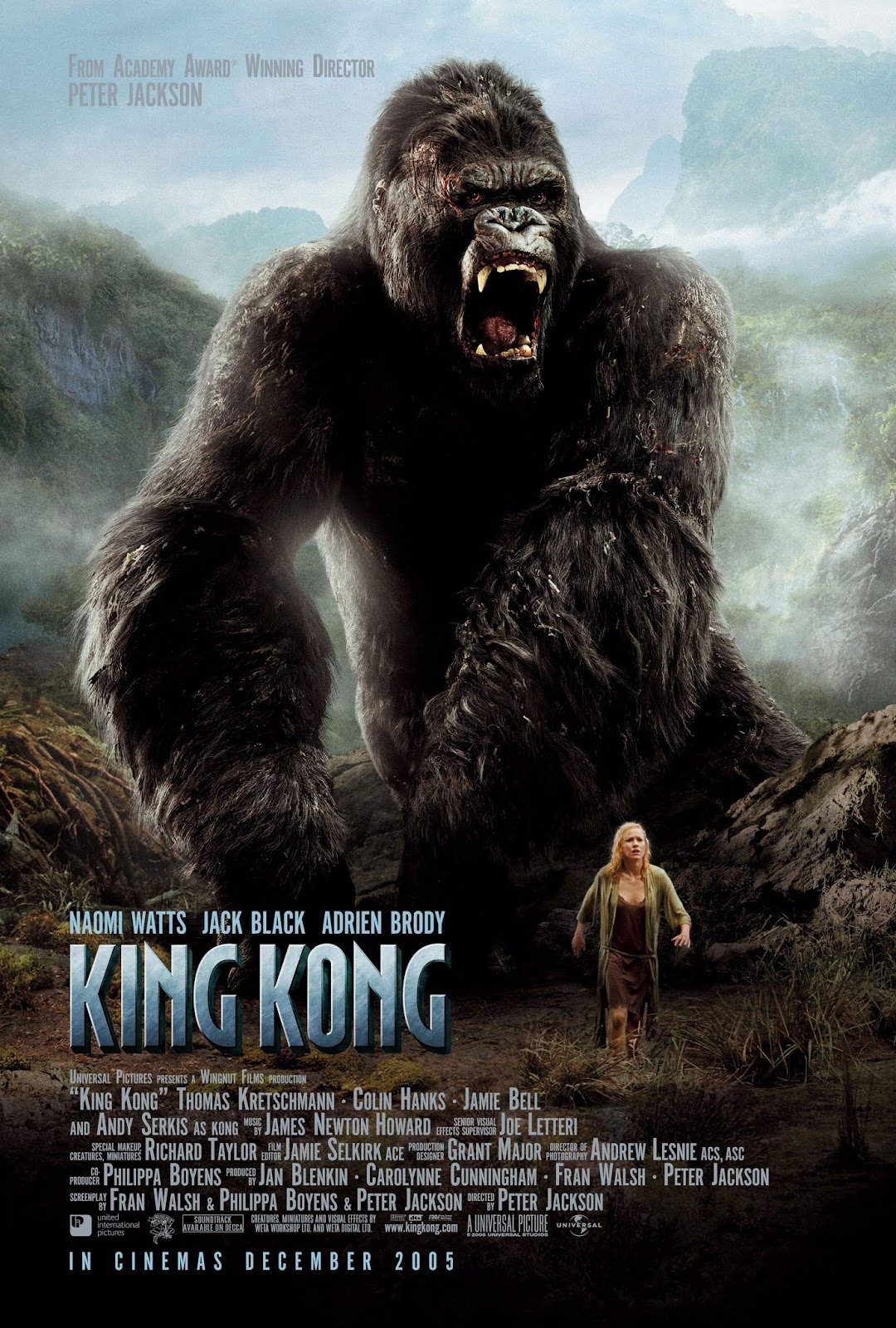
Naomi Watts and a mo-cap Andy Serkis bring to life Peter Jackson’s dream in King Kong

Director: Peter Jackson

Cast: Naomi Watts (Ann Darrow), Jack Black (Carl Denham), Adrien Brody (Jack Driscoll), Thomas Kretschmann (Captain Englehorn), Colin Hanks (Preston), Jamie Bell (Jimmy), Andy Serkis (Kong/Lumpy), Evan Parke (Ben Hayes), Kyle Chandler (Bruce Baxter), John Sumner (Herb), Lobo Chan (Choy), Craig Hall (Mike)

In the late 90s Peter Jackson was working hard on putting together the plans for his dream project. It was a complex project, with unprecedented special effects demands, a huge cast, a demanding shoot and a big budget. However, plans fell through, so Jackson decided to move his attention to that Lord of the Rings trilogy idea he had been banging around instead. Hot of the success of that little escapade, he delivered at last his dream: a huge remake of King Kong.

Carl Denham (Jack Black) is a ruthless film director, desperate to make the big epic that will dwarf all others. Pulling together a team including playwright Jack Driscoll (Adrien Brody) and vaudeville dancer Ann Darrow (Naomi Watts), he heads out on a ship for location shooting on the mysterious Skull Island. Arriving on the Island, they find that the savage natives aren’t the only dangers on an Island that has bypassed evolution. The crew find themselves hunted by dinosaurs, huge creepy-crawlies and other horrors all while they try to find and rescue Ann from the Island’s Alpha – a huge gorilla, King Kong (famously motion-captured by Andy Serkis). Led by Jack, who has fallen in love with Ann, dangers surround the crew – but is mankind, and the ambitious Carl, the real danger?

Time and public perception has not always been kind to Jackson’s labour of love. Perhaps coloured by the generally negative reception to his Hobbit films (which are a mess), perhaps also by the film being more of a gentle, sentimental film mixed with cartoon-splatter horror rather than the monster-mash B movie later Kong films have been, it’s generally remembered as a bit of a disaster. This is far from fair. Yes it’s overlong (hugely so at well over three hours – nearly twice as long as the original) and over-indulgent but it’s also quite a sweet, if rather tonally mixed, film that more or less manages to keep an audience entertained.

Unlike later films which have enjoyed Kong (or Godzilla) most when he smashes things – even if he is often the film’s hero or at least anti-hero – this Kong film is perhaps at its most contented when it is finding the humanity in the ape. As a 9-year old, Jackson talks about crying when Kong fell dead from the Empire State Building – and it is this engaging giant that he wants to bring to life here. Using Serkis – cementing his reputation here as the whizz of motion capture – to have a human literally inside the Gorilla, giving real expressions and genuine character to a giant ape was deliberate. The film’s most heart-felt – and quietest – moments both involve moments of gentle play or innocence from the Gorilla, either starring at a beautiful sunset (which he does both on the island and on the Empire State) or playfully slipping and sliding on a Central Park frozen lake, this is a monster that Jackson sees as a misunderstand soul, that bond he felt at 9 brought to the screen.

That’s the key between the bond that Ann feels with this beast who starts as potential killer, becomes protector, friend and finally a sort of romantic interest of a kind. Well played by Naomi Watts, Ann Darrow herself is a damaged soul, a bright-eyed, naïve dreamer with a dose of realism slowly entering her soul, who wants to entertain people but also to make her immediate world a better, warmer place. It’s natural that such a person would start to feel a deep bond with Kong, to learn to appreciate his gentleness and protectiveness, to put herself at risk to try and save his life. It’s a huge development of the character from scream-queen, and positions Ann (or tries to) as a more pro-active force in her own story.

And the ape responds to this, slowly revealing his own true nature as a potentially gentle giant, albeit one who is prepared to rip a few T-Rex’s apart to protect his love. He certainly ends up feeling more of an ideal partner for Ann than the other men in the film. Adrien Brody’s Jack Driscoll is a determined, principled and brave man but there is a touch of inadequacy to him, a surrendering of responsibility and a lack of proactivity in his make-up. While the early love story between the two characters is sensitively drawn, it tellingly can’t survive the events of Skull Island – at least not in the same way.

Mind you Driscoll is better than Denham, who is transformed in this film to a soulless monster interested only in his own greed for fame and power. Jack Black delivers what the script demands – even if the film is pushing on the edge of his range. As Black’s stock has fallen, so perhaps as some of the film’s – and the perception of his performance here. It doesn’t help that the idea of the ruthless film director seems to be a common trope for film director’s to explore (and interesting psychological question there!) so the character’s shallow lack of regard for anyone else, coupled with his fierce ambition to be the greatest showman around start to grate after a while. It’s a character lacking any depth.

But then that’s the case for most of the rest of the cast as well, who struggle to make room in a film that is overloaded with events and action to the detriment of its overall impact. Jackson’s heart may really lie in the quiet moments between beauty and beast – but he also loves an action scene. And King Kong has too many of these. Much of the middle hour of the film is given over to a never-ending parade of events on Skull Island, that after a while seize to have any real impact. As nameless crew members are crushed by boulders, or stampeding dinosaurs, or savaged by giant insects, or have their heads caved in by savage islanders (not surprisingly these H Rider Haggard style savages, with their lust for human sacrifice, drew more than a little criticism – and it hasn’t aged well) you start to feel your interest sagging. Kong’s brawl with three savage T-Rex’s is perfectly made in every respect, except for the fact it goes on forever.

Ambition lies behind every frame (all of them beautiful by the way) of this huge three hour epic monster picture – but it gets all so much that it buries the story. Like Kong himself, it touches the heavens only to fall tragically to Earth, trying to protect the thing it loves. Jackson wants to protect Kong from being just seen as a massive ape that hits things – but loses his way at times when Kong does little more than exactly that. It is still an intelligent and heartfelt film – but it struggles as well with being an uncontrolled play in the sandbox.

Charlie Bubbles (1968)

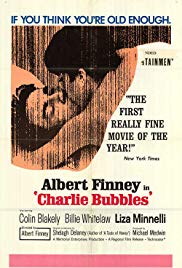
Albert Finney and Liza Minnelli deal with ennui in Charlie Bubbles

Director: Albert Finney

Cast: Albert Finney (Charlie Bubbles), Colin Blakely (Smokey Pickles), Billie Whitelaw (Lottie Bubbles), Liza Minnelli (Eliza), Timothy Garland (Jack Bubbles), Richard Pearson (Accountant), Nicholas Phipps (Agent), Peter Sallis (Solicitor), Alan Lake (Airmen), Yootha Joyce (Woman in Café), Wendy Padbury (Woman in Café), Susan Engel (Nanny)

In the late 1960s Albert Finney was possibly the biggest star in British cinema. It was a status that the private and reserved Finney found challenging – and fed heavily into his only directorial effort, Charlie Bubbles, an amiable and whimsical journey through the alienation that afflicts a successful northern writer, bored by the world of success in London but no longer at home in his working class roots. It’s a story that spoke to both Albert Finney and the film’s scriptwriter Shelagh Delaney.

Because writing is really just a hobby, not a viable career path as Charlie Bubbles (Albert Finney) is constantly reminded when he returns to his home in Manchester (“Are you still working sir, or do you just do the writing now?” queries an old friend of his father). Charlie is hugely successful but also hugely bored, wrapped in ennui and barely able to engage in his surroundings be that his wealth, his London settings, working class clubs he visits with fellow writer Smokey (Colin Blakely), the attentions of his enthusiastic secretary Eliza (Liza Minnelli) and his responsibilities to his ex-wife Lottie (Billie Whitelaw) and son Jack (Timothy Garland). (The poster by the way gives a hilariously incorrect idea of the plot as some sort of lothario drama).

The film largely doesn’t really have a plot as such, just follows the drifting lack of engagement Charlie feels for everything around him. It’s largely a showcase for some nifty heartfelt writing and some intriguingly imaginative direction from Finney. It’s actually a bit of a shame watching this that Finney didn’t direct another film, as he not only works well with actors but has an original eye for visuals. One scene is shot entirely through a bank of security cameras, others take interesting angles on everything from lunchtime meetings (with many too-camera addresses) to love scenes (shot with an efficient boredom that hammers home how little Bubbles seem engaged with it). 

It’s also a lovely little showcase for Shelagh Delaney, whose script is crammed with juicy little lines and playful moments, as Charlie struggles from event to event. It’s a very bitty and drifting storyline, that deliberately heads towards no particular destination. In that it reflects the aimlessness of Charlie’s own life. There is nothing particularly wrong with this, as the various sketches of which it is made up work rather well, particularly as they often engagingly switch from style and tone. There are a few other films I can think of that open with a ludicrous food fight between two friends, two guys pretending to be mannequins in a department store, a depressed man shooting pop guns at a video surveillance image, a Manchester United football game, an ex-wife catching chickens and finally the hero drifting away in a balloon.

How you go with this sort of thing really depends how much you engage with the action on offer or the whimsical style of the entire shaggy dog story. It also rather depends on how much sympathy you feel for someone burdened with immense wealth and fame from overwhelming artistic and critical success. The film gives some taste of this – staying with his ex-wife she is pestered by no less than three reporters arriving unannounced eager to hear the words of the boy wonder – but it’s pretty hard for us plebs to understand. Which I guess is the film’s point.

After all every time Charlie heads anywhere around his own working class roots in Manchester, he is met with either a snide insinuation that he has lost touch with his roots or a confused lack of understanding about the London lifestyle he has left behind. Charlie himself feels like he has no empathy for the wealth of London, but struggles to feel at home anymore in a world he has left behind. Interestingly he seems most comfortable in his ex-wife’s country cottage in the middle of nowhere.

Perhaps it’s hard to really understand the feelings you could have about the burdens of success without going through this sort of thing yourself. Finney certainly had – though it’s interesting that he the actor and he the director seem to be on a different page. While the film tries to have an engaging lightness about it, Finney’s own performance is weighted down and overly somber, so low-key as to be almost pushing against the tone of the film. Perhaps it’s a role Finney needed to take in order to get the film made – or perhaps he directed the film because no one else would – but even Finney himself was critical afterwards of his performance as being too heavy for the film.

It does mean however that the lightness and perfect touch of the rest of the actors are needed to balance him out. Liza Minnelli (in nearly her film debut) is superb as an effervescent young woman, delighted with things around her, warm and eager to engage with people around her. Billie Whitelaw is also great (and BAFTA winning) as Charlie’s ex-wife who he continues to share a vast amount of romantic and sexual chemistry with, for all she has no patience for his ennui and the intrusions his fame brings to her life.

The film drifts engagingly along, before finally departing with its star in a hot balloon into the sky. It’s the sort of whimsical fantasy that also feels like a commentary from those wrapped up in the surprising boom of kitchen sink drama British films, that brought fame and wealth to those involved, but also pulled them away from feeling comfortable and happy in their own roots. It’s perhaps hard to understand without having gone through an experience like that, but it works here because most of the rest of the film has an imaginative charm to it.