Tag: Action Films

Moonraker (1979)


Roger Moore is James Bond…IN SPACE!!!!

Director: Lewis Gilbert

Cast: Roger Moore (James Bond), Lois Chiles (Holly Goodhead), Michael Lonsdale (Hugo Drax), Richard Kiel (Jaws), Corinne Clery (Corinne Dufour), Bernard Lee (M), Geoffrey Keen (Defence Minister), Desmond Llewelyn (Q), Lois Maxwell (Miss Moneypenny), Emily Bolton (Manuela)
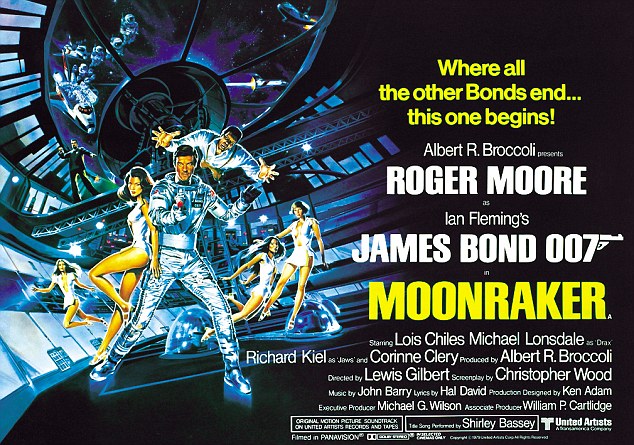
After The Spy Who Loved Me, the Bond producers had finally found a format that suited Roger Moore’s take on the role:  a comedic, tongue-in-cheek style, with Moore leaning on the fourth wall, winking at the audience. In fact, SWLM made so much money that this one feels almost like a remake rather than a new film – it’s got the same basic concept, the final sequence is pretty similar, the opening sequence again revolves around a daring parachute stunt, even Jaws pops up again. For a film that heads into truly unchartered physical territory for Bond (space!), it’s as familiar and derivative as Bond gets.

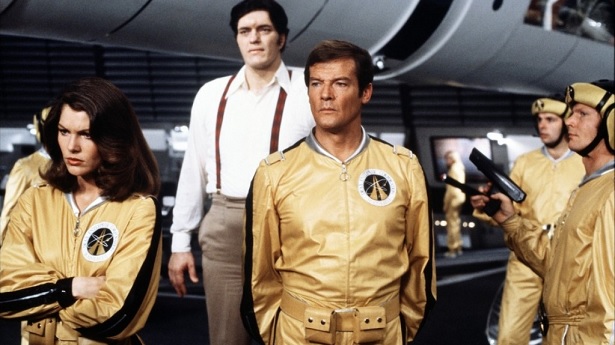
Bond (Roger Moore) investigates Hugo Drax (Michael Lonsdale), a shady businessman whose operations are expanding into space. After a string of exotic locales (a chateau in France! Venice! Mexico City! Brazil!) an evil scheme to destroy the world from space clicks into place. Bond has to take to the stars to take down Drax. Despite the criticism that will follow, this is probably near the end of Moore’s high point in the role – and in none of his future films was he quite as debonair and dashing as he is here.

If you ever needed evidence that the James Bond franchise looked at whatever was popular in the cinema at that moment in time and then ripped it off as quickly as possible in their next film, then it’s Moonraker. Surely never in anyone’s lifetime would they expect to see a film that could be tagged “James Bond…in SPACE!” but after the success of Star Wars that is exactly what they were served up. The idea is so completely silly that people wonder if you’ve made it up.

But, sigh, that’s what we get here. And it is beyond silly. The film climaxes in a space battle between the NASA Marines (don’t ask) armed with laser cannons (yes you read that right), duking it out with Drax’s own personal guard also armed with cannons (it really is as silly as it sounds). All this against a backdrop of Drax’s own personal Death Star. Afterwards, Bond has to shoot down three deadly missiles that will wipe out the population of the Earth. Naturally, his targeting computer doesn’t work for the final one, so Bond has to basically “use the force” to target and shoot it down. Star Wars in all but name right? Had the producers no shame?

It doesn’t help that Moonraker amps up the already jokey tone of SWLM to an overbearing degree. At least it was a formula that works with Moore, but so little is treated seriously that when they do something violent it sticks out tonally like a sore thumb. This is probably the only film I can think of in which a woman is ripped apart (off screen) by a horde of hounds, followed shortly afterwards by a pigeon performing a comic double take after an amphibious gondola sails through the middle of St Mark’s Square (don’t even ask). It’s a film that has no discipline, no control and no real consistency. It dances all over the place with no logic at all. It gets the balance wrong and instead of being tongue-in-cheek often comes across as overblown, heavy-handed and ludicrous.

In fact the plot, such as it is, is hard to follow because it’s almost an afterthought. It’s effectively a reheat of SWLM (repopulate the planet with a chosen elite), while the space battles are similar to the slow motion fights of Thunderball. Bond moves from location to location with only the barest logical links. Drax identifies Bond as a threat early on – but then continues to pull out a series of bizarre and unreliable schemes to eliminate him. The action sequences feel like versions of previous films in the series – and don’t get me started on the fact Bond still hasn’t learned that punching Jaws in his metal mouth is a bad idea (he does it three or four times in this movie). Everything moves forward with a restless momentum that never allows us to connect with anything that happens.

There is some decent potential here. The fight on the ski lift is pretty good. Michael Lonsdale has a psychotic chill about him that, in a better film, might have made him a memorable villain. In fact, Lonsdale is so grounded as a villain he feels wrong for a film that’s so silly. And it’s all the more surprising he has such an outlandish scheme – or that he hangs around with such a pantomime villain as Jaws. Jaws clearly returns due to popularity – and has been thoroughly neutered as a threat here. Even before he falls in love with a girl with pigtails and switches sides, he’s already an almost comic buffoon – even bashful about knocking off a Bond aide in front of witnesses.

It’s a film that can’t decide if it’s a thriller or a comedy. It probably leans more towards comedy – which is a shame as it’s not that funny. The hideously overplayed gondola sequence tells you everything you need to know about the film’s lack of wit. Its comedy is as overplayed and heavy-handed as some of the action can be – more likely to get you rolling your eyes than holding your sides. Saying that, it does have possibly the best final punchline of any of the films (“I think he’s attempting re-entry sir”) – the sort of joke you probably didn’t get when you first watched the film aged about 10. Other than that it’s like a series of gags told by people who aren’t really that funny.

Moonraker is the sort of bizarre freak of nature that you almost can’t believe exists. Leaving aside its amping up of the tongue-in-cheek formula into the realms of the bizarre, it’s basically a bit too stupid and unbelievable for even this franchise to pull off. Lasers? Space-stations? Space marines? Bond in space? I mean really? As a rip off of Star Wars it leaves a lot to be desired – and so long as these films take place in a world that is even vaguely linked to our own, plots like this just have the stench of bullshit.

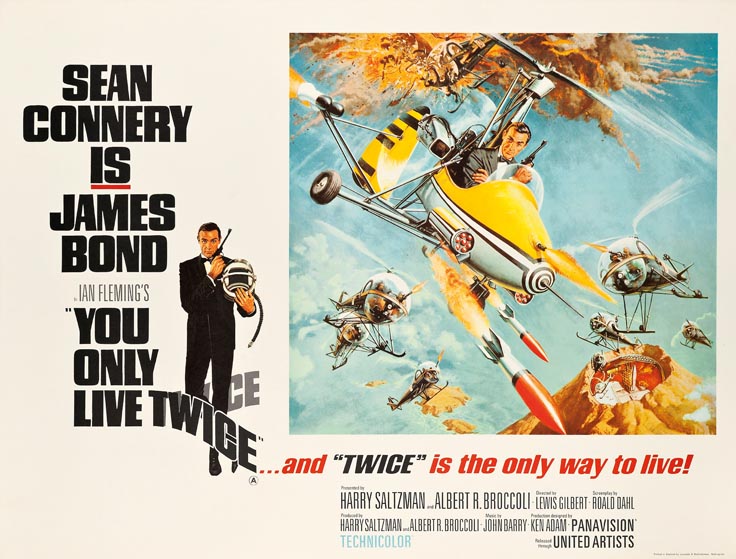
You Only Live Twice (1967)


I feel Connery’s attitude to the film comes across well in this image…

Director: Lewis Gilbert

Cast: Sean Connery (James Bond), Akiko Wakabayashi (Aki), Mie Hama (Kissy Suzuki), Tetsurō Tamba (Tiger Tanaka), Teru Shimada (Mr. Osato), Karin Dor (Helga Brandt/No. 11), Donald Pleasence (Ernst Stavro Blofeld), Bernard Lee (M), Lois Maxwell (Miss Moneypenny), Desmond Llewelyn (Q), Charles Gray (Dikko Henderson)

James Bond films: always fun, even when not that good. You Only Live Twice is probably the prime example. For many, many reasons, it isn’t actually very good but still remains strangely enjoyable just because, well hell, it’s Bond. 

Anyway YOLT revolves around naughty super villains SPECTRE nabbing US and USSR space missions, hoping to provoke a nuclear war between the two superpowers. Apparently they will profit handsomely from this – but how they see that happening in a nuclear wasteland isn’t clear. Anyway, James Bond (Sean Connery) fakes his own death and heads to Japan to investigate. Events peddle around Japan for ages, giving filmgoers the chance for some vicarious sight-seeing, before culminating in an all-out attack by Bond and a gang of ninjas on the hollowed-out volcano base of SPECTRE chief Blofield (Donald Pleasance).

YOLT is the moment Bond started to head full tilt towards the Moore-era of overblown, fantasy silliness. The plot is total bobbins (despite being repeated in The Spy Who Loved Me, Moonraker etc.) with both Russians and the US naturally continuing to suspect each other, even when each side loses a spacecraft (though I did like the fact that the actual astronauts together in captivity are shown to have far more in common than not). There is no logical reason for them to behave like this, even at the heart of the Cold War.

There is plenty of other nonsense here. Bond’s death is faked early doors for no reason (only the hopeless SPECTRE is in any way fooled). Bond meanders around Japan with even less subtlety than usual, with a series of clashes, fights and chases that make little real narrative sense at all. Later, again for no reason, (and almost unbelievable to watch today) he disguises himself as a Japanese man (PC alert ahoy, as Bond cuts his hair with a bowl and tans his skin. At least he doesn’t tape his eyelids back…). He also finds a kindred spirit in Tiger Tanaka, both of them treating a host of female servants as a shopping list for rumpy-pumpy.

As per many Bond films, the franchise clambers on top of a current fashion to feel hip and cool (but actually manages to feel fusty and stuffy). This time it’s the samurai craze, as Bond joins a sword-swinging, ninja training school. Yes, you read that right. But of course Bond also needs to get married before the attack: again why? His wife is of course offed seconds later, and Connery just about manages to look put out at this coitus interruptus (more on Connery later…)

SPECTRE themselves are hilariously incompetent. They are hoodwinked like children by Bond’s ludicrous faked death. They practically signpost their location by bumping off anyone who gets within about five miles of the place. Later, poor Blofield not only carefully talks Bond through the self-destruct button for his rocket, he also lets Bond take back his clearly gadget-concealing smoking case, blows away two sidekicks (one right in front of Bond) rather than eliminate Bond himself, then caps it all with sending the base itself to kingdom come. SPECTRE’s agents are equally useless, with Brandt too attracted to Bond to finish him off (and then deciding to tie him up in a plane, detonate a grenade in it and then parachute out to leave the plane to crash with Bond in it – needless to say Bond lands the plane with ease).

The terrific volcano set

The volcano base, however, is a triumph of production design – it’s staggering to think that everything you see on screen was built for real. It’s huge and iconic – and the battle scene between the aforementioned ninjas and SPECTRE goons that fills the final act of the film is hugely exciting, despite almost every single thing making virtually no sense. Incidentally the final battle’s structure is lifted almost completely for a similar sequence in The Spy Who Loved Me.

The problem is that everything else leading up to this feels like all involved are going through the motions – as if there wasn’t really anything fresh left to do or say in the Bond-verse. Need a glamourous location. Never been to Japan have we? Need some scuffles – not sure we‘ve done a roof top fight in long shot, let’s chuck that in. How about we kill Bond off for a few seconds – yeah never done that before. A super gadget needed? Bring on suitcase-assembled helicopter, Little Nellie. The final reveal of Blofeld is fun, but when you come back to watching the film you realise he’s as bland and identikit as Largo or Dr No – a pompous windbag who fucks everything up.

Stumbling through all this is a clearly bored Sean Connery. By this time, Connery was sick of the part (“I’ve always hated that damned James Bond, I’d like to kill him” he was to later say), and money was the only thing tempting him back. Connery coasts through the whole movie with the air of a man who would rather be anywhere else. There is no sparkle at all, just a weary going through the paces. He can barely raise a smirk, let alone a glimmer of interest in the events around him.

Bond turns Japanese. No they really did do this.

It’s the atmosphere of the whole film. Roald Dahl (yes that Roald Dahl) did the script – but he felt the book was pretty awful (one of Fleming’s duller efforts) so spiced it up with some new content. Problem was the suits basically demanded a certain quota of set pieces and a certain number of Bond girls. Trying to deviate from this template too much was far too difficult a challenge. Lewis Gilbert’s direction is professional but pretty uninspired: it sums up the whole movie.

Most of the acting is pretty non-descript. Donald Pleasance at least deserves some credit for making Blofield’s appearance iconic and for doing a nice line of whispering menace. Charles Gray is pretty good fun as a camp British contact (“That’s stirred, not shaken. Is that right?”) – though SPECTRE (true to form) confirm all his suspicions by knocking him off after less than minute or two on screen. Everyone else blends into one.

So, anyway, YOLT is really nothing special – a tired entry into a tired franchise, with an all too obviously disillusioned star and action beats that largely feel like retreads of things we’ve seen before (done better) in the series. But yet, but yet… Somehow enough of the old Bond magic keeps you watching. Sure Connery is indifferent and the action more a travelogue than a thriller – but the final sequence is exciting, Blofeld (for all his ineptitude) makes a decent enough villain, and while no-one really gets het-up about it, the stakes do feel fairly high. Stretches of the film are dull – but others work very well. You may only watch twice, but it will be fun enough.

The Legend of Tarzan (2016)


The Legend of Tarzan: The King of the Jungle takes on the MCU style. And loses.

Director: David Yates

Cast: Alexander Skarsgård (Tarzan/John Clayton III), Margot Robbie (Jane Porter Clayton), Samuel L. Jackson (George Washington Williams), Christoph Waltz (Captain Leon Rom), Djimon Hounsou (Chief Mbonga), Jim Broadbent (Lord Salisbury), Simon Russell Beale (Mr Frum)

Every so often you seriously wonder what the point of a film was. Are movie studios so desperate for a franchise that literally anything that has any kind of name recognition is considered a money-spinning franchise in the waiting? Welcome to the latest feeble attempt to jumpstart an epic franchise: the first (and surely last entry) in the Tarzan-verse.

In the late 1880s, the Belgians are carrying out terrible acts in Africa, spearheaded by ruthless Captain Leon Rom (a painting-by-numbers Christoph Waltz). To get hold of diamonds held by an H Rider Haggard gang of natives, he needs to lure Lord John Clayton III (better known as the legendary Tarzan) back into the jungle. But John (Alexander Skarsgård) has tried to put his life as the King of the Jungle behind him (for reasons never really made clear) and only once his wife Jane (Margot Robbie) is put at risk does he begin to reclaim what he has lost.

Was there any real demand for a Tarzan movie? Perhaps even more to the point, was there any audience for one? Since, I imagine, today most people only  on-screen Tarzan viewing experience was watching the Disney animated version, it’s hard to understand who the makers of this film imagined was going to engage with a confused, clichéd movie part dull origins story, intercut with a “rediscovering your roots” plot. And that’s the first of the major errors the film makes.

So determined is the film not to jump straight in with the context of who Tarzan is, that it keeps dribbling away from the actual plot to cram in small (confusing) moments establishing who his parents were, how he met Jane, how they left Africa etc. etc. etc. This stuff is far more interesting than any of the tiresome diamonds / kidnapped wife / White Man Saving Africa nonsense in the main plot, making all the “main” action feel like a sidetrack; not to mention that you’re several flashbacks in before you have any idea how Tarzan has ended up as a stuffed-shirt sitting in a clichéd London, slurping tea with his little finger extended, rather than swinging from vines in the jungle.

The film assumes a level of Tarzan-legend knowledge in its audience I sincerely doubt most viewers had, and the lag while you wait to catch up through the flashbacks is frustrating. The final product is a confused mess with no clear vision about what film it actually wanted to be. If it film wants to deal with the legend, why not just do that – and if it wants to introduce the origins, why doesn’t it just do that? Instead it’s neither one thing nor the other.

Mixed in with some feeble, faux superhero heroics is some clumsy post-colonial criticism of the Belgians’ terrible Congo record, but it goes nowhere in particular. A week on from watching it, I can’t remember what it was about at all. Stuff sort of happens, and there is a vague idea Tarzan is trying to save the Congo, but the film never kicks into gear. Events happen without any real narrative thrust – our heroes and villains literally meander down a river towards no-where in particular. It doesn’t help that almost every narrative beat in the film is completely predictable – this is the epitome of safe, uninspired film-making and storytelling, as if everything has been carefully honed in focus groups and committees.

A large part of the problem is Skarsgård’s lifeless performance in the lead role. Clearly bulging muscles and decent features were all the part really required, because there’s nothing in the way of character. He’s supposed to be a man who has lost touch with his past, confused and ashamed about his background. The film is building towards his emotional acceptance that his gorilla mother was his true mother. It’s a viable, if not especially original, plot – but it falls flat, simply because Skarsgård just isn’t interesting enough. His stilted performance conveys no inner pain or turmoil. Who cares who his mother was? Skarsgård doesn’t seem to, and neither did I.

It doesn’t help that all the rest of the actors (I mean all of them) are more interesting, eye catching presences. Jackson and Waltz are such seasoned pros they invest their paper-thin characters with their own charisma, though each of them could do what they are asked to here standing on their heads. Margot Robbie is actually rather radiant as Jane – even though she is never much more than a (defiant) damsel-in-distress.

The Legend of Tarzan is, at best, okay. It’s desperate to turn Tarzan into some sort of all-action superman, a competitor for the Marvel universe. But it focuses so much on trying to fill out the backstory and beef up the action that it fails to make a film with any characters in it we really care about. Instead this is the blandest, B-movie cornpuff you are likely to see and so instantly forgettable you’ll barely remember each scene as you watch it. It’s enjoyable enough but totally unsurprising, uninspired and fundamentally totally forgettable.

Mission: Impossible III (2006)


Tom Cruise and Kerri Russell take on a truly challenging assignment in Mission: Impossible III

Director: JJ Abrams

Cast: Tom Cruise (Ethan Hunt), Philip Seymour Hoffman (Owen Davian), Ving Rhames (Luther Stickell), Billy Crudup (John Musgrave), Michelle Monaghan (Julia Meade), Jonathan Rhys Meyers (Declan Gormley), Maggie Q (Zhen Lei), Keri Russell (Lindsay Farris), Simon Pegg (Benji Dunn), Eddie Marsan (Brownaway), Laurence Fishbourne (Theodore Brassel)

If there is one thing Tom Cruise does better than anyone in the movies, its run. Man, can that guy run well on camera. It’s not as easy as you’d think – watch people run in real life, and they probably look galumphing and awkward. But Tom looks as sleek as a gazelle. Every stride stresses his authority and unflappable coolness. I mention it because Tom does a lot of running in this film. The dénouement is basically him running over a mile and half, nearly in real time, a lot of it one long shot. 

JJ Abrams came to Mission: Impossible off the back of his successful TV series, Alias, in which Jennifer Garner’s undercover agent takes on a variety of disguises, working in a team, on a series of missions to get impossible-to-obtain artefacts against terrific odds. JJ Abrams carries the formula that worked so well in that series straight into this one.

The whole film plays out like an Alias movie. It even uses that series regular gambit of an opening scene throwing us dramatically into the story before flashing back “72 hours earlier”. Just like Alias, we have our lead trying to make a relationship work without saying what they do for a living, a family feeling in the team’s relationship, a geeky tech guy with a heart of gold, double and triple agents, glamourous locations – it’s everything an Alias fan could want, with Cruise’s Ethan Hunt essentially Sydney Bristow in all but name. This also brings out the best in Cruise, who looks like a man born again in the role.

Mission: Impossible: III is truly delightful, big-screen fun, rebirthing the series and placing team interplay firmly back at the centre, setting the tone and template the next two films have followed. Ethan Hunt (Tom Cruise) is in semi-retirement, training agents and planning to marry Julia (Michelle Monaghan). However when his young protégée Lindsay Faris (Keri Russell) is captured while investigating sinister arms dealer Owen Davian (Philip Seymour Hoffman), Hunt sets out to rescue her – and finds himself up to his neck in shady and dangerous goings-on.

Every action scene in the film is brilliantly entertaining (the mid-film drone assault is wind-it-back-and-watch-again exciting.). Of course, Cruise takes more than his fair share of the juicy moments – including a crazy jump off the roof of a Hong Kong building that has to be seen to be believed – but Abrams makes this a team movie in the way neither of the two previous films had been. Each member brings crucial skills to the table, and has moments to shine. Pegg takes the stand-out role of a witty, nerdy tech back at the base (sure enough his role was expanded later), but each feels an essential part of the story.

It also helps that the film has a terrific baddie to bounce off – the series has not had a better villain than Hoffman’s ice cold arms dealer. Sure Davian is pretty much a part Hoffman could play standing on his head – but he’s got just the right balance of rage and ruthless intellect.

If you want to see a single example of why this film works, take a look at that opening scene. Who could resist a film that opens with a scene as masterfully directed as this, sizzling with tension and ending with a smash cut to black over a gun shot and into the opening score? Hoffman and Cruise are excellent (Hoffman’s ice-cold control providing a great contrast to Cruise, who runs the gamut of defiant, furious, faux-reasonable, desperate and pleading), but it sets out the huge stakes for the film, it keeps us nervily waiting for the film to catch-up with what we’ve seen, and it tells us how vitally important what Davian wants is to him – and how desperate Hunt is to protect Julia.

Abrams has a perfect understanding of dramatic construction.  Everything in the film is carefully established and set-up, so we always understand the dangers and the threats. MI3 also uses its macguffin extremely well. What do we learn about “the Rabbit’s Foot”, the possession of which is of such vital importance? It’s small enough to fit in a suitcase, it’s stored in a round glass tube, it’s got a biohazard label and it’s worth millions. That’s it, but it doesn’t matter: Abrams establishes the most important thing – it’s dangerous and Davian wants it more than anything. Everything spins out from that with smooth efficiency.

The pace never lets up, but the characters and their relationships are never left behind. In particular Monaghan and Cruise’s relationship is skilfully established in surprisingly few scenes, and something we end up really rooting for. Abrams never goes overboard – the film is stuffed with action and excitement but never feels bloated or indulgent: the final confrontation is particularly effective because it is fairly small scale and is focused on the Hunts’ relationship.

Mission: Impossible 3 is one of the most joyful entries in a film franchise that deserves a lot of kudos for (by and large) focusing on plot, story and character alongside action sequences that have a feeling of tangible reality about them. It’s not completely perfect – a shock reveal about a turncoat in the IMF is hardly a surprise, considering the small number of candidates and the actors playing them – but it’s about as close as you can get to an endless enjoyable fairground ride.

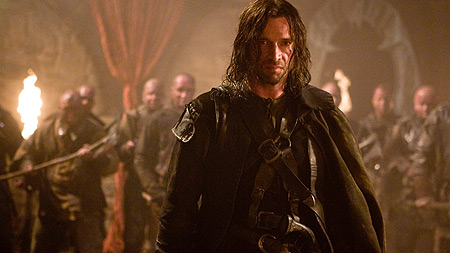
Solomon Kane (2009)


James Purefoy excels in cult-classic in the making Solomon Kane

Director: Michael J Bassett

Cast: James Purefoy (Solomon Kane), Max von Sydow (Josiah Kane), Pete Postlethwaite (William Crowthorn), Alice Krige (Katherine Crowthorn), Rachel Hurd-Wood (Meredith Crowthorn), Jason Flemyng (Malachi), Mackenzie Crook (Father Michael)

Solomon Kane was a pulp-magazine character from the 1920s. I’d never heard of him before – I imagine many others haven’t either – so bringing a film about him to the screen was always going to be a labour of love. That’s certainly what this film is. 

In 1600, Solomon Kane (James Purefoy) is a ruthless mercenary, but is confronted by a demon who tells him his soul is forfeit to the Devil. Horrified, Kane flees to sanctuary in a monastery, forsaking violence and devoting himself to God. After being expelled because the abbot has a dream, he encounters a Puritan family, the Crowthorns, and travels with them. Kane is deeply drawn to the Crowthorns – and when they are ambushed, the family killed, and daughter Meredith (Rachael Hurd-Wood) kidnapped by the servants of the sorcerer Malachi (Jason Flemyng), Kane swears to revenge the Crowthorns and rescue Meredith.

There’s something quite sweet and charming about Solomon Kane. It’s an old fashioned B-movie with a winning style. Is it going to rock any worlds? Probably not, but it’s got plenty of swagger and it makes a small budget go a long way. Bassett’s influences are pretty clear – everything from Witchfinder General to Lord of the Rings – but he shoots the film with a commendable energy. The visual flair is impressive, and successfully creates the feel of an England halfway between civilisation and the middle ages. Bassett also knows how to shoot an action scene, and the film is stuffed with fantastic sword fights that hit the right balance between brutality and dynamism.

Bassett also finds a fair amount of emotional heft in the story. The decision to focus a large chunk of the opening 45 minutes on Kane’s guilt and his attempts to make amends, make him a character we end up caring about. The “good family that wins our hero’s heart” cliché is exactly that, but it works very well here as Bassett takes his time and lets Kane’s bond with the Crowthorn family grow organically. All this patient establishment of Kane’s personality really pays off during the action of the second half.

It’s also helped a great deal by James Purefoy’s committed performance in the lead role. Purefoy has long since been a favourite of mine, who never really got the breaks to become a bigger star. His performance has the physicality and charisma, but Purefoy also adds in a Shakespearean depth to create a man desperate for redemption, carrying a pained heart very close to the surface. He dominates the whole film, setting the tone; and I suspect his dedicated performance encouraged fine work from the actors around him, despite almost all the other roles being little more than cameos. There are blockbusters whose leading actors are incapable of holding the screen as well as Purefoy does here.

Bassett’s B-movie spectacle is not perfect. The eventual explanation of why the Devil wants Kane’s soul is inexcusably garbled. Jason Flemyng is miscast as the demonic sorcerer Malachi, and his final confrontation with Kane lacks real impact (largely because Malachi has so little presence throughout the film) and devolves into a face-off with a dull special effects monster that looks rather like Megatron in the live-action Transformers films. There is a smaller-scale, personal ending in this film, but it gets crushed under the foot of the special effects. It’s a shame that a large portion of this film’s budget probably went on this.

Solomon Kane is structured, and plays, like a B-movie – but it’s proud of that. Its low budget demanded inventiveness and dedication from the cast and crew, all of whom delivered. The grimy design of the world is perfect, the story creates a good combination of action and emotion. Its story may be pretty clichéd, but it’s presented with great gusto – and has a terrific leading performance from a heavily under-rated actor in James Purefoy. More people deserve to see this – if this isn’t a cult classic in the making, I’m not sure what is.

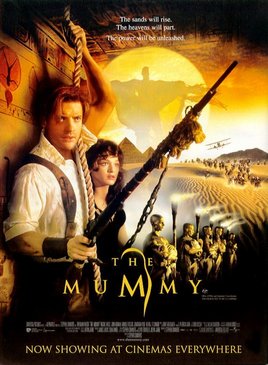
The Mummy (1999)


Brendan Fraser and Rachel Weisz face off against their undead nemesis in The Mummy

Director: Stephen Sommers

Cast: Brendan Fraser (Rick O’Connell), Rachel Weisz (Evie Carnahan), John Hannah (Jonathan Carnahan), Arnold Vosloo (Imhotep), Kevin J O’Connor (Beni Gabor), Jonathan Hyde (Dr Allen Chamberlain), Oded Fehr (Ardeth Bay), Erick Avari (Dr Terrence Bey), Patricia Velasquez (Anck-Su-Namun), Omid Djalili (Warden Gad Hassan)

The Mummy came out so many years ago that it’s being “rebooted” again as a Tom Cruise vehicle, as part of a Universal “Monsters Cinematic Universe” (oh dear God, even writing it sounds terrible). I’ve no idea what the new Mummyis like, but I am pretty certain it won’t match this film for fun, excitement, wit or (most of all) honest, gee-shucks B-movie charm.

In ancient Egypt, High Priest Imhotep is cursed and buried alive after his affair with Pharaoh’s mistress; should he rise again, he will do so as an unstoppable monster. Flash forward to 1926 and adventurer Rick O’Connell (Brendan Fraser) is hired by Egyptologist Evie Carnahan (Rachel Weisz) and her chancer brother Jonathan (John Hannah) to guide them to the hidden city of Hamunaptra. There, in competition with a rival American team of explorers, they find the body of Imhotep, read aloud from the book of the dead, bring Imhotep back to life – and all hell breaks loose.

I’ll say it straight out: I think you’ve got to have a pretty hard heart not to have a soft spot in it for The Mummy. Tonally, it’s one of the few Hollywood family-action films that doesn’t have any major miss-step. It’s a silly, rather warm-hearted, B-movie action with intensely likeable leads and a series of entertaining set-pieces. Every frame has been shot and framed like an epic, old-school adventure movie – and the plot knowingly runs with its clichés. It’s a film with literally no pretensions, which embraces its status as a piece of entertainment. And, I’d say, it succeeds magnificently at doing that.

It’s helped by a hugely charming performance from Brendan Fraser as a combination of Indiana Jones and Humphrey Bogart in The African Queen. Fraser’s got the chiselled good looks, but also a great deal of timing. The film gives him plenty of bon mots (“Patience is a virtue” Evie cries while decoding hieroglyphics; “Not right now it isn’t” Rick replies, staring at the hordes of possessed Egyptians heading their way) and he delivers them with a perfect 1930s matinee idol charm. It also helps that he has terrific chemistry with Rachel Weisz.

Weisz plays her part with a sweet comic charm, but adds a growing toughness to the character that prevents her from being a damsel in distress. John Hannah is pretty good value as her comic relief brother, while Oded Fehr makes such a great impression in limited screentime as the representative of a group of ancient guardians, you are surprised he hasn’t had more opportunities since then. Arnold Vosloo plays the Mummy with a tinge of sadness round the edges that humanises a man who is literally a monster.

Stephen Sommers directs the film with a witty sense of visual humour. This ranges from the obvious comedy (a 360 shot that takes in Evie knocking over a series of bookcases) to the satirical (he has a lot of fun with the gun-toting, ill-fated American explorers throughout the film). He also keeps the film barrelling along, without overlooking opportunities for character development. Despite the constant stream of action beats you always feel you understand exactly what motivates Rick and Evie – and their growing attraction to each other feels carefully developed.

Perhaps in a way The Mummy shows how films have changed in the last 17 years. When it was released, it was denounced as a big, dumb action film. However, compared to some of the fast-cut, poorly scripted rubbish churned out now, it looks rather sweet, well structured and focused more on character than on effects. As such it’s a really enjoyable and charming film, miles head of crap like Batman vs. Superman. Release exactly the same film today and I think many would call it a breath of fresh air, without the wearying self-important tone that weighs down so many modern blockbusters.

No it’s not a work of genius and no it’s not perfect. Omid Djalili’s character sails perilously close to racial stereotype. The killing scarab beetles in particular sometimes go marginally too far for its family audience. The special effects look a bit dated at points. Logically of course the plot barely stands up to thinking about: who on each curses someone with a terrible curse that makes them invincible and immortal? Why not just punish Imhotep by killing him badly eh?

Sommers is no master film maker – later Mummy films would largely fail to recapture this magic – but when he gets his boys-own, B-movie style bang-on, as he does here (and in The Rocketeer), he is a wonderful entertainment merchant, who makes engaging, entertaining films. No it’s not going to win any awards or trouble any top ten lists, but it’s always going to put a smile on your face.

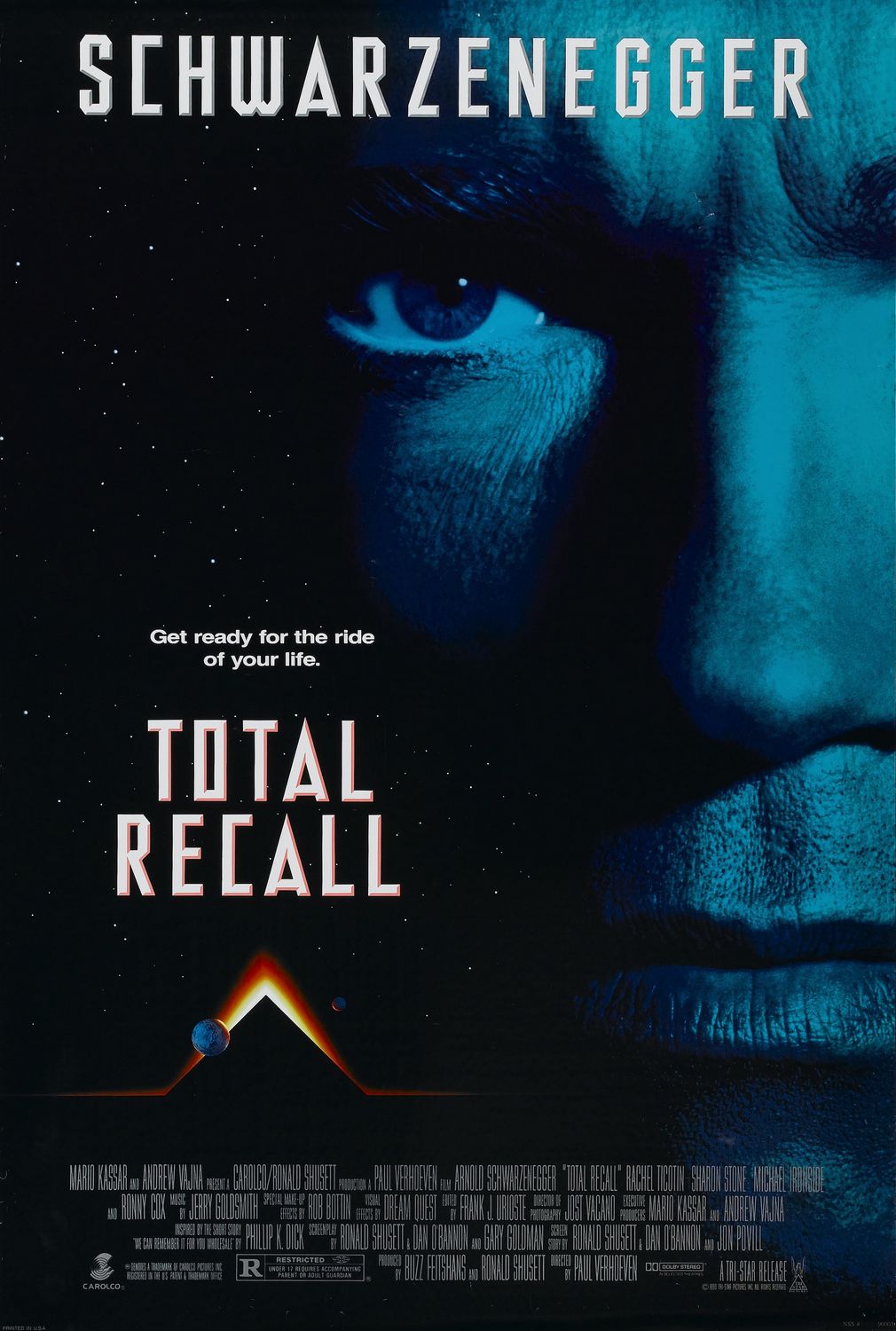
Total Recall (1990)


Arnold Schwarzenegger goes for a trip into his memories in Total Recall

Director: Paul Verhoeven

Cast: Arnold Schwarzenegger (Douglas Quaid/Carl Hauser), Rachel Ticotin (Melina), Sharon Stone (Lori Quaid), Ronny Cox (Vilos Conhaagen), Michael Ironside (Richter), Mel Johnson Jnr (Benny), Marshall Bell (George/Kuato), Roy Brocksmith (Dr Edgemar), Dean Norris (Tony)

Perhaps in 2084, they will look back on Schwarzenegger’s career and wonder what on earth we were all thinking. He was the figurehead of the 1980s fashion for muscle-bound leading men, defined more by physicality than acting ability. Since then, fashions have changed: movies are led by actors who go through hours of physical training, rather than weight lifters taking acting classes. Would Schwarzenegger be a star today? Quite possibly not: compare him to his nearest modern equivalent, Dwayne Johnson. Schwarzenegger doesn’t have an ounce of Johnson’s ability, wit or even charm. Would the world of Twitter embrace an often one-note performer with a paper thin range?

Schwarzenegger got where he was because, for all his lack of acting skill, he is a very clever man: he could spot a script and worked with people who got the best out of him. He turned himself into a brand: “Arnie” the pillar of strength, the master of the one-liner. It worked for films, it worked for politics. Which is all a long intro to say: in his best work, he put himself into decent roles in films from distinctive filmmakers, like Total Recall.

Total Recall is a semi-smart sci-fi action thriller, directed by Paul Verhoeven with his usual Dutch excess: part social satire, part wallow in extreme cartoonish violence and grotesque, Flemish-painting style imagery. Douglas Quaid (Arnie) is a construction worker in 2084, who dreams of escaping his humdrum life and visiting the Mars colony. He decides to visit Recall, a memory implantation centre which promises to give him memories of visiting Mars, with a twist: he’ll visit as a secret agent. However, the implantation reveals Quaid has hidden memories – he may in fact be rogue agent on the run, Carl Hauser. Before he knows it, everyone from his own wife (Sharon Stone) to a brutal intelligence operative (Michael Ironside) is hunting him with lethal force – and Quaid must head to Mars for answers about who he is.

Verhoeven’s sci-fi work adds a level of social satire to high concept stories. In Total Recall he mixes in his critical denunciations of big business and corporate ethics (also a major theme of Robocop) with an everyday acceptance of brutal violence that is so neck-breakingly, blood-spurtingly extreme in places it could only be social satire. Total Recall mocks our own ease with violence as entertainment, by setting itself in a world where the news broadcasts government troops machine gunning protestors (while a newsreader cheerily comments on the minimum use of violence), and the representatives of the Mars Corporation have literally no compunction or hesitation in inflicting huge numbers of civilian casualties in the crossfire.

A lot of this cartoonish violence spins out of the movie’s own playing around with the nature of reality. It leaves open the question of whether Quaid is really a spy in disguise, or if the film’s events occur only in his fractured brain suffering a terminal meltdown from an upload gone wrong. At Recall Quaid is promised his new fantasy memories will be full of action, he’ll get the girl and save the world. Needless to say he achieves all these things by the film’s end. Rachel Ticotin even appears on a screen in Recall as his “fantasy” woman. Is Quaid dreaming or not? It’s a question that is of more interest to viewers I suspect than the filmmakers (other than a few cheeky bits from Verhoeven), but it does tie in neatly with the almost dreamlike hyper violence Quaid dishes out: necks snapped, bodies spurting fountains of pinky red blood, dead bodies used as shields ripped to pieces by bullets. It’s all so extreme that it deliberately feels both not quite real and a mocking commentary on the bloodless action in other sci-fi films.

Schwarzenegger fits surprisingly well into all this. On paper, he’s completely miscast as an innocent discovering a hidden past, the future Governator anchoring a film with satirist leanings. But Verhoeven gets something out of Schwarzenegger in this film that works surprisingly well. Like James Cameron recognised, Verhoeven saw Arnie had a sort of upstanding sweetness amidst all the macho posturing. Arnie is surprisingly effective as Quaid, suddenly shocked at his capabilities for violence (as well of course or physically selling the action). Verhoeven taps into Arnie’s likeability (what other action star could sell “Consider this a divorce” as a punchline as he shoots his fake wife in the head?) and runs with it throughout the film.

As such, Schwazenegger makes a decent lead. It helps that he is willing to be a figure of fun at points. He wears a wet towel round his head to block transmissions. His face contorts ludicrously as he pulls an enormous probe from out of his nose. He infiltrates Mars dressed as an old woman. Most of this material fades away in the second half of the movie when Schwarzenegger reverts to the more typical heroic action (I suspect negotiations over the script shifted the film into a halfway house between a standard action movie and Verhoeven’s more satiric bent). But it’s all still there and helps humanise Quaid, so that we are on board with the slaughter he perpetrates later. Quaid is probably one of the best roles Arnie had – and Verhoeven does very well to fit a man so serious about himself into a world of self-parody. Saying that, the role is in some ways beyond Arnie’s reach – I’m not sure he is really plugged into or understands the dark comic tone of the movie, and he doesn’t really have the wit as a performer to do much more than deliver killer lines, certainly not to contribute to the dark satire Verhoeven is putting together.

As a whole the film doesn’t always deliver. Schwarzenegger seems at sea during scenes with his feisty, independent love interest played by Rachel Ticotin (this does her no favours, as her role hardly connects). Sharon Stone similarly has little chemistry with the Austrian Oak – although at least she has the second best role in the script as a vicious woman not afraid to use sex as a tool. The actual plot fits in nicely with the possibly dreamlike nature of what we are seeing, but the villain’s aims seem rather unclear, and the film lacks a strong enough antagonist (neither Michael Ironside or Ronny Cox have quite enough to make their thin characters come to life).

This plays into the film as being semi-smart: it’s a curious mix of smart and stupid. It’s got enough brains to poke a bit of fun at corporate America, and to make moral comments on our treatment of minorities (here represented by the mutants who inhabit Mars). On the other hand, it’s a schlocky action cartoon, that revels in ultra-violence while creating a world where, in universe, it is not considered extreme enough to comment on.

Total Recall is a fun movie that allows you to read more into it than is probably really there. Verhoeven peddles themes around the nature of reality, and introduces satiric comments on corporations and violence in the media that don’t hit home so heavily that they become wearing. I also have to say I like its empathy with the vulnerable and weak – the mutant resistance on Mars is engagingly grounded and humane, particularly in contrast to the ruthless heartlessness of Mars Corp. It’s not a masterpiece, but as a smarter piece of popcorn fun it works really well.

For Schwarzenegger himself, this was his final non­­-Terminator hit. Terminator 2 (a year later), an undoubted work of genius, was his high watermark. Three attempts since to relaunch the Terminator franchise (all with mediocre or worse directors), demonstrate Schwarzenegger’s awareness his time was fleeting and dependent on his roles rather than his skills. Total Recall was Schwarzenegger doing something completely different, to great success – but also one of his last hits-. His run of good scripts, and pulp premises, came to an end here – but it was a good end. California awaited!

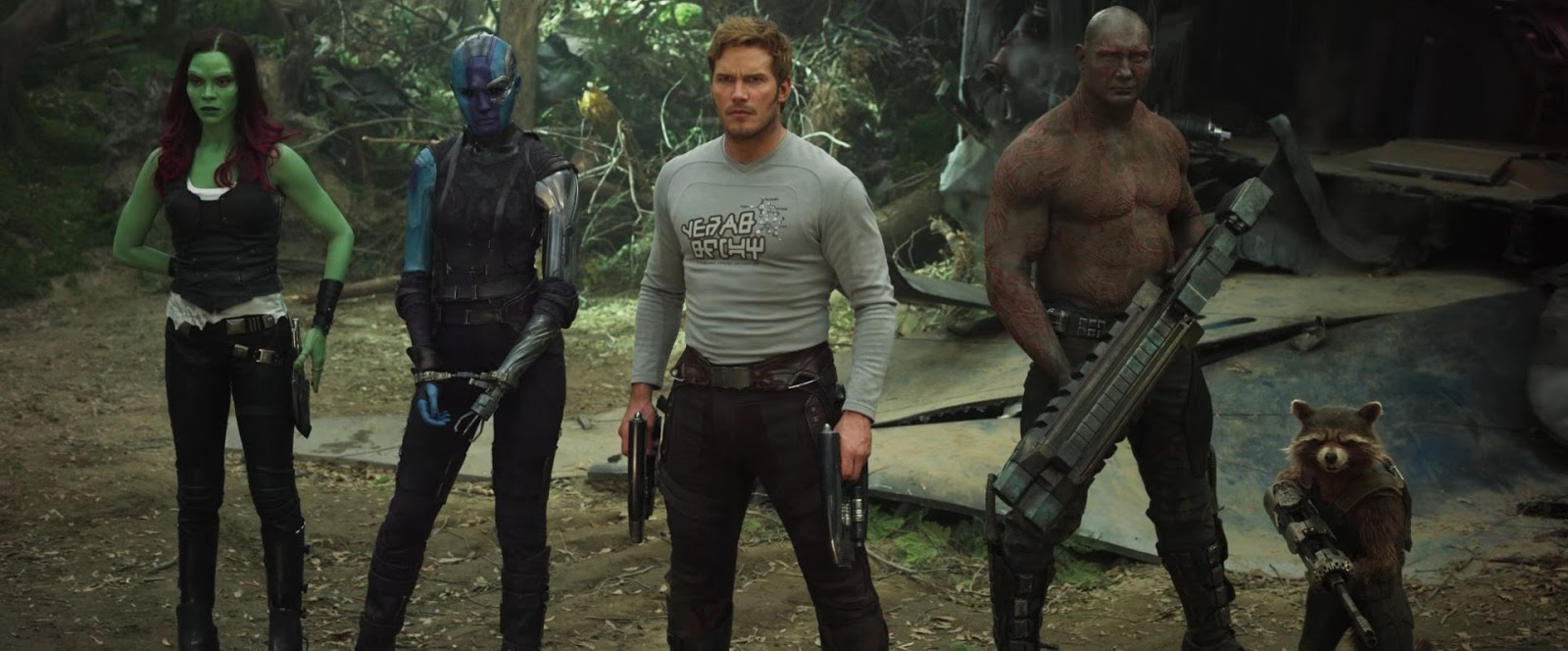
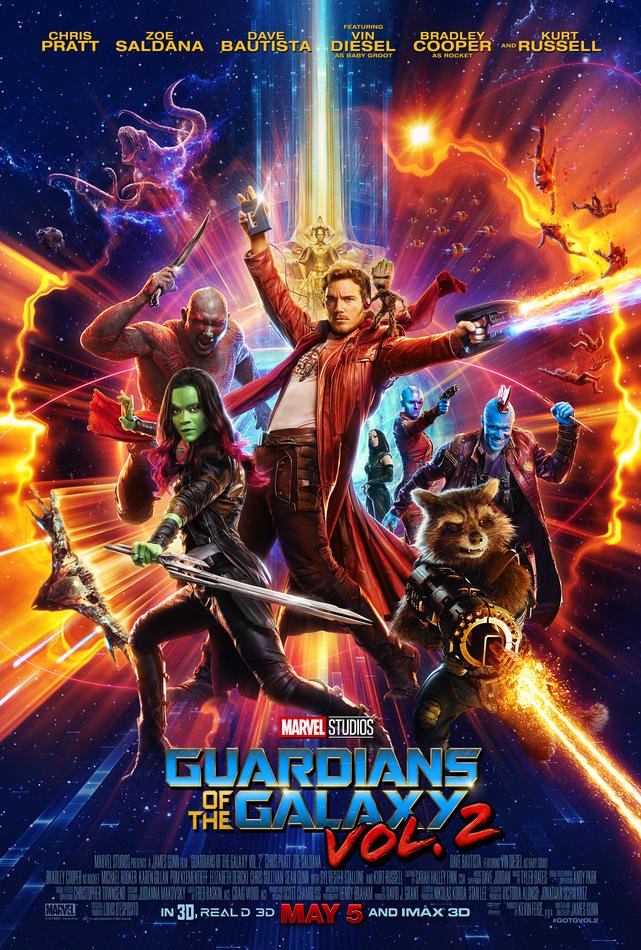
Guardians of the Galaxy Vol. 2 (2017)

Our heroes line up for action in a fun follow-up to a more fun movie

Director: James Gunn

Cast: Chris Pratt (Peter Quill), Zoe Saldana (Gamora), Dave Bautista (Drax), Bradley Cooper (Rocket), Vin Diesel (Baby Groot), Michael Rooker (Yondo Udonta), Karen Gillan (Nebula), Pom Klementieff (Mantis), Kurt Russell (Ego), Elizabeth Debicki (Ayesha), Sean Gunn (Kraglin), Sylvester Stallone (Stakar Ogord)

In 2014, Guardians of the Galaxy was expected to be Marvel’s first flop: an odd collection of ridiculous looking characters, from a comic book few had ever heard of. Instead, its oddball charm and wit made it one of the most popular in the franchise. This is the tricky second album, which has to deliver more of the same while trying to build on the first film.

Set a few months after the first film, the Guardians are left stranded on an alien planet after a job for elitist race The Sovereign (led by a drily witty Elizabeth Debecki) goes badly wrong. They are saved by Ego (Kurt Russell) who reveals himself as Peter Quill’s long-lost father. Quill (Chris Pratt), Gamora (Zoe Saldana) and Drax (Dave Bautista) follow Ego to his homeworld, while Rocket (Bradley Cooper) stays to repair the ship with their captive Nebula (Karen Gillan). While Ego’s world hides a range of dangers, Rocket and Nebula come under attack from Peter’s former guardian Yondo (Michael Rooker), whose pirates have been hired to capture the Guardians.

First the good things: this is a very entertaining film, packed full of funny lines and entertaining moments, solidly acted (with some stand-outs) by a cast who are able to communicate their enjoyment with the audience watching. Like the best of the Marvel films, it focuses on a core cast and establishes an audience bond with their characters very swiftly, and care about their fate. The focus of the film is actually skewed in favour of character over plot and action, which makes a nice change from many of these films (the action quotient is actually fairly low for a Marvel movie, and a large chunk of the film largely involves spending time with our heroes). It’s also admirable that the film doesn’t shy away from the fact that, to varying degrees, all of our heroes are in some way anti-heroes, or perfectly willing to perform selfish, dangerous or questionable acts for their own immediate gain (even if on the bigger issues their hearts in the right place).

It’s clear what type of movie you can expect right from the opening credits, where the camera focuses on (adorable) Baby Groot dancing to music in close-up, while (out of focus) our heroes combat a space monster in the background, each of them at key moments interacting with Groot in a way that demonstrates their character. It’s a lovely, witty way of opening the movie (perfectly scored to ELO’s Mr. Blue Sky) and firmly states that character and personality will be central. Baby Groot is, by the way, possibly the star of the movie, Gunn making sure the character isn’t overused or becomes wearing. The film gets the tone more or less right: it would be easy for this to feel like a private party we’ve been invited to watch, but it just about feels inclusive enough (and avoids smugness or self-satisfaction at its own wit) to remain charming and fun.

The focus is so much on jokes and fun that the actual plot of the movie is a little bit weak: a (predictable) villain reveal is made late-on, seemingly to give the film an antagonist. The actual plot content of the film is pretty lightweight. What plot there is, is nothing new (Daddy issues, spliced with Universe-in-peril) I’d also say that the films length is probably a bit too much – considering not a lot really happens, the film takes a long time to do it – it could do with a bit more discipline in the editing room, and a bit more willingness to trim out some of the material. This is, however, not a major problem –– and the film just gets away with it because it gets the character moments so right you simply enjoy spending time with this group, even if what they are getting up to is little more than a second-rate episode of Star Trek.

Where Guardians 2 falls a little bit flat is the wearily on-the-nose “emotional” sections of the script. While in the first film much of this goes unspoken, here several scenes are featured where the characters carefully spell out their feelings. The most egregious examples are an almost laughably overplayed game of catch between Peter and his Dad, and a terrible “everything spelled out” conversation between feuding sisters Gamora and Nebula. Whenever this film goes near this emotional content, its points land with heavy punches, while coating the content with sticky sentiment that gets “bad laughs” from the audience. The film has plenty of well-crafted and funny impact lines, but its script rushes through the areas where depth is needed, and doesn’t seem to trust the audience to understand the emotions that underlie the bickering between the characters, or that some of them may be tempted to do terrible things to fulfil their emotional needs. Only the final sacrifice of a character really works – and that’s because it is the only emotional connection that is quietly built in the background of the movie, rather than in the foreground.

But that’s probably a movie trying too hard for good reasons, rather than bad. There is more than enough here to recommend the film. Interestingly, Pratt’s Peter Quill is largely sidelined for chunks of the film (the fact that its nominal plot is all about Quill and he feels like a supporting role tells you how weak the plot is) so other members of the cast really stand out. Saldana has a slightly thankless role as the “Big Sister” of the group, but manages to bring a lot of unspoken depth to her role. Bautista provides excellent comic relief as Drax (though his lines are such gifts, it would be hard to screw them up), Baby Groot is very funny, Cooper’s Rocket has a juvenile, rebellious attitude that  that deserves a more interesting subplot. Surprisingly though, the film is repositioned more as a redemption journey for Michael Rooker’s space rogue Yondo, and Rooker delivers a surprisingly emotional performance as a confirmed killer and thief struggling with his conscience. Gunn allows him contemplative moments that really ring true within the chaos of most of the rest of the film, and this feels like one of the best displays of simple “acting” you’ll see in the MCU.

Guardians 2 is not a perfect film, and I suspect its weak plot, predictable and uninteresting villain, and often ham-fisted emotional moments will grate more and more once the exuberance of the ride has worn off on the second or third viewing. But it’s got a lot going for it: genuinely funny jokes, an intention to entertain which it largely succeeds in, some charming performances and enough action in it without letting that overwhelm the film. It’s a roller-coaster rather than a gift that will keep giving, and it lacks the first film’s well balanced plotting and world-building, but it’s entertaining and a great deal of fun (if 20 minutes too long) and the final reel’s sad events do carry an emotional weight (because they are based on largely unspoken feelings) that will stay with you after the film wraps. Not as fun as the first one – but still better than many others.

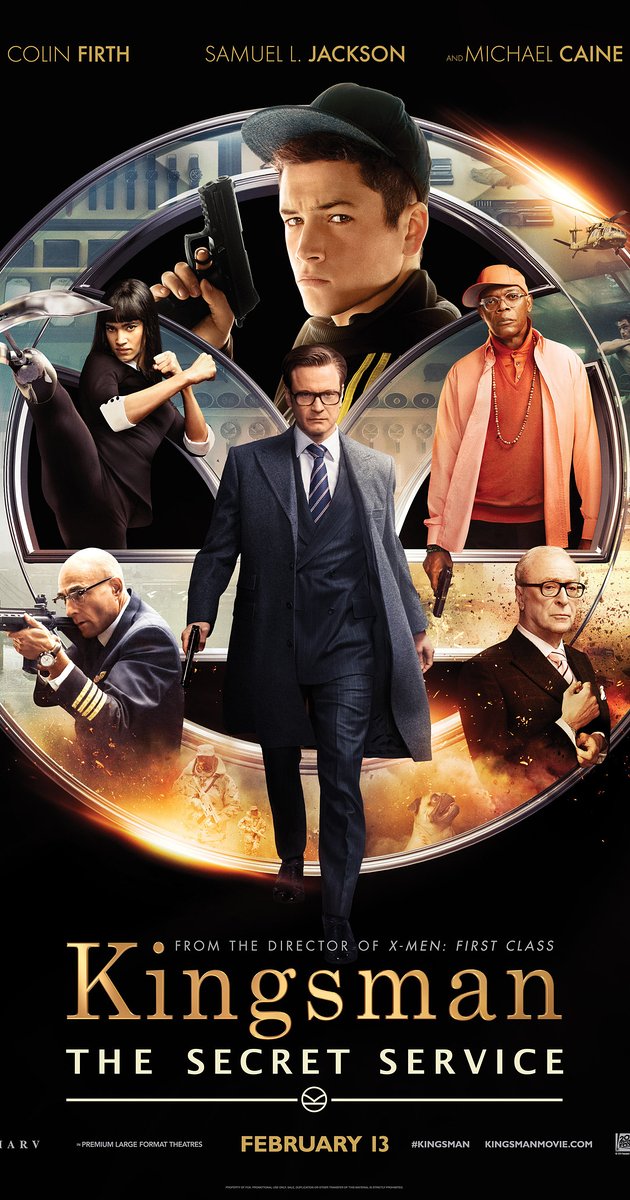
Kingsman: The Secret Service (2014)


Colin Firth means business in super-violent Bond spoof Kingsman

Director: Matthew Vaughan

Cast: Colin Firth (Harry Hart/Galahad), Samuel L. Jackson (Richmond Valentine), Mark Strong (Merlin), Taron Egerton (Gary “Eggsy” Unwin), Michael Caine (Chester King/Arthur), Sophie Cookson (Roxy Morton), Sofia Boutella (Gazelle), Samantha Womack (Michelle Unwin), Geoff Bell (Dean), Edward Holcroft (Charlie Heskith), Mark Hamill (James Arnold), Jack Davenport (Lancelot)

Okay Kingsmen. I’ll hit a beat later on which explores a major problem I had with this movie, but let’s talk about the rest of the film first shall we?

Firstly, Kingsmen is for the most part rather good fun (even if it is too long). It’s an excitable, teenage-focused riff on James Bond films that throws in ultra-violence and foul language alongside the overblown villains, insane plots and super-spy skills (all themselves amped up to 11). “Eggsy” (Taron Egerton) is a drifting, working-class young man from a council estate who is recruited as a candidate for super-secretive espionage firm “The Kingsmen” by Harry Hart (Colin Firth). Bucking against the system, Eggsy must prove himself against the privileged, public-school types he is competing against for a place. Meanwhile, Hart investigates sinister plans from tech billionaire Richmond Valentine (Samuel L. Jackson), aiming at reshaping the world to fit his own insane ideas.

Kingsmen basically has a teenage sensibility, with a “too cool for school” love for swearing and extreme (if comic book) violence. It deliberately sets itself out as a grimy, modernish, street version of Roger Moore’s Bond movies (at one point, Hart and Valentine even discuss “old spy films” – presumably copyright prevented a namecheck for Britain’s finest). The plot (and the cascade of exploding heads, satellites, sinister cross world signals, world leaders in danger etc.) all have the air of the sort of stupidity you found in Moonraker or The Spy Who Loved Me: the joke being that these fantastical elements have been mixed in with a sweary working-class hero and graphic violence. It has a pop-culture knowingness about it which it just (by the skin of its teeth) manages to prevent becoming too smug or self-satisfied.

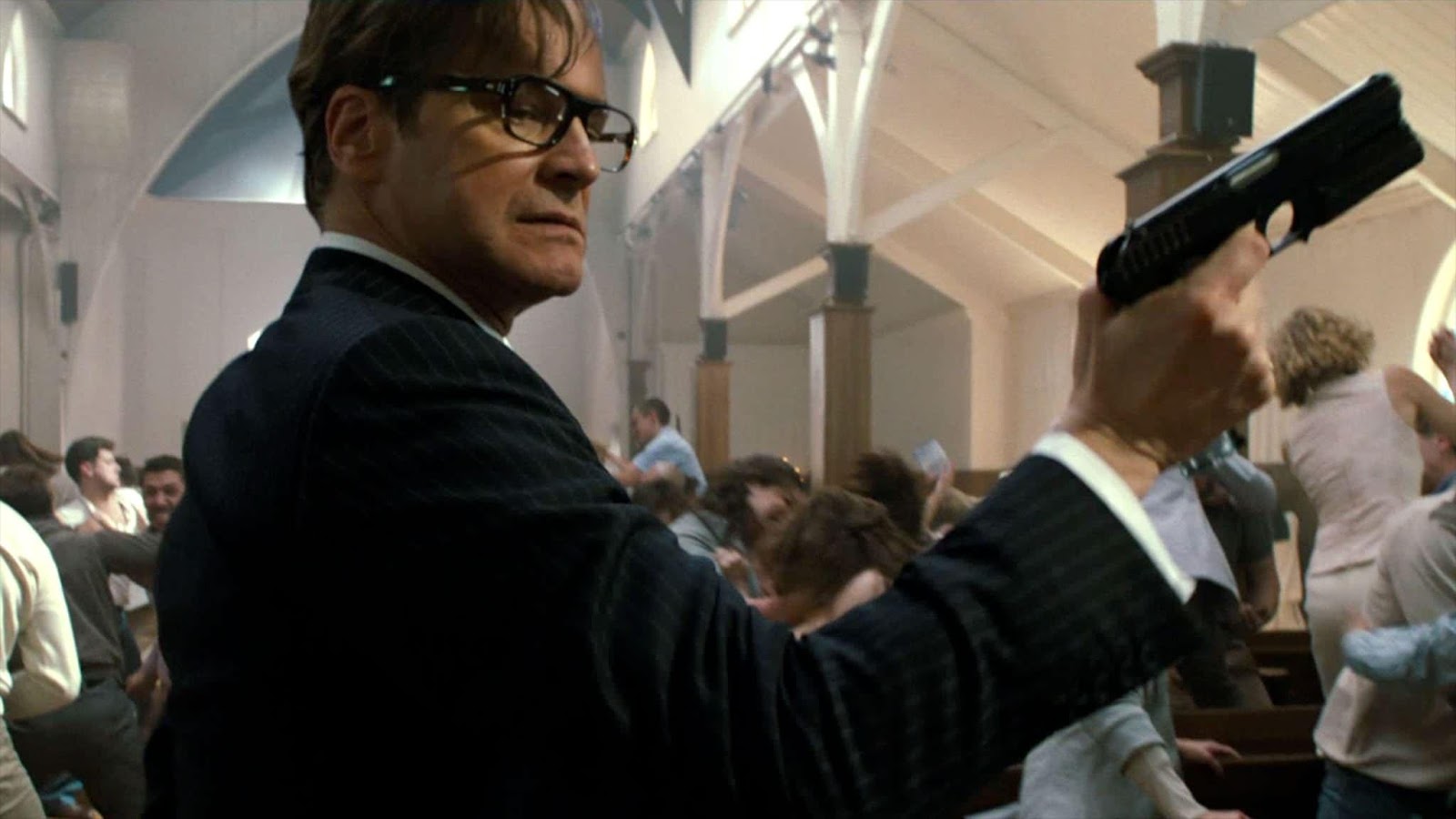
This is partly because it is so well made. The violence and fighting are rather well done in their overblown, excessive excitement. Vaughan shoots it with a loving camera, revelling in the dynamism and speed of his agents (and their ruthless efficiency) in a way that’s very hard not to find entertaining. Some interesting music choices also add an ironic commentary to the killing. Vaughan’s also to be commended for spotting the potential for ass-kicking super-spy in Colin Firth (even if Firth himself probably plays the whole film marginally too seriously). The film’s main set piece a jaw-droppingly violent but slickly made fight sequence in a church is probably the only thing it will be remembered for in ten years time – but is certainly worth remembering. The fighting is fun to watch – it’s a shame it’s not married with a wittier script, as if the wit of the visuals couldn’t be carried across to the dialogue in case we got bored.

Vaughan’s script also wants to fight the corner of the working class – although saying that, since every other working class character in the film except for Eggsy and his Mum are criminals, wannabe gangsters or thugs, it could just as well be fighting the corner of the “deserving poor”. Some rather obvious notes are hit during Eggsy’s training as he clashes with the chinless wonders that populate the Kingsmen candidates. It would perhaps work better if Eggsy himself was a more engaging and sympathetic lead – but as it is, the parts of the film without Firth (and Strong as a Scottish, grumpy Q) do drag a bit, which is unfortunate when your film is already over two hours long. It’s hardly Saturday Night and Sunday Morning but it pushes through its Pygmalion-plot line reasonably well.

For the most part, Kingsmen is stupid, teenage fun. It takes place in a spoof James Bond world of huge bases in mountains and plans to destroy the world that can only be foiled by dynamic acrobatic fighting. If you were a male teenager watching this it would probably be your favourite film ever. It’s probably a little too knowing and isn’t really as charming as it really needs to be to work really well, but it’s entertaining enough. I was happy to leave it like that. And then this happens quite late on in the film:

Now it’s important to remember when watching this, that the video contains all the interactions in the movie between these two characters. Now I suppose you could just say it’s a smutty joke that, like the rest of the movie, takes the elements of a Bond movie (“Keeping the British end up sir!”) and amps them up to 11. But it’s cruder and (in my opinion) too clumsy and sexist for that. Not only that, but it’s the sort of exploitative, sexualised rubbish that makes you suddenly address the entire film’s attitude towards women.

The film has five female speaking roles (at a push). Each of these roles fills a specific stereotyped, trope-based function. One is a victim in an abusive relationship (the mother). Another is a standard “hot action chick” (the villain’s henchperson). Another exists solely to die early on. The character in the clip only exists to provide the hero with anal sex as a reward. None of these characters serve any purpose in themselves, other than how they relate to the male characters of the movie. All of them to varying degrees require protection from a man, or exist purely to service his needs. The cliché of a physically-strong-but-still-really-hot woman being created in place of an actual character is so tired, I’ll just leave it here as I can’t be bothered to type up why this isn’t a good balance.

That leaves Roxy, Eggsy’s fellow candidate. On paper, Roxy is a strong female role – only of course she isn’t. There is the standard hand wave that she is “the best in the class” during training – but she’s also established as the only candidate to have a genuine fear (of heights) that she has to be coaxed through by the hero. Her role in the conclusion is conquering this phobia again. The subtle implication is that Eggsy to some degree sacrifices coming top of the class himself to support Roxy.

I’m sure this is all po-faced political correctness and I’m being the sort of humourless prig sitting among the “20% of offended people” Matthew Vaughn said should basically get a sense of humour. But I mean, come on. The last shot of the film is a woman’s naked bottom rearing towards the camera. And yes I know, I know, I know it’s all riffing on Bond films but at least there the heroine was a presence throughout the film. I actually would have much less of a problem if these two characters had spent at least some time throughout the film together – but jumping straight to anal sex? It’s too much. It also seems to be fighting battles of the 1960s. Overt class consciousness from the rich is terrible – but women? Nope they’re just there for the sexier times.

Leaving everything else aside, it’s not that funny a joke. It’s such a terrible joke it leaves a bad taste in the mouth. So what’s otherwise a decent, fun film chooses to end with its lead character invited to perform anal sex by a complete stranger. And how a film ends tells us something about the film we’ve just watched – and for Kingsmen it’s not good.

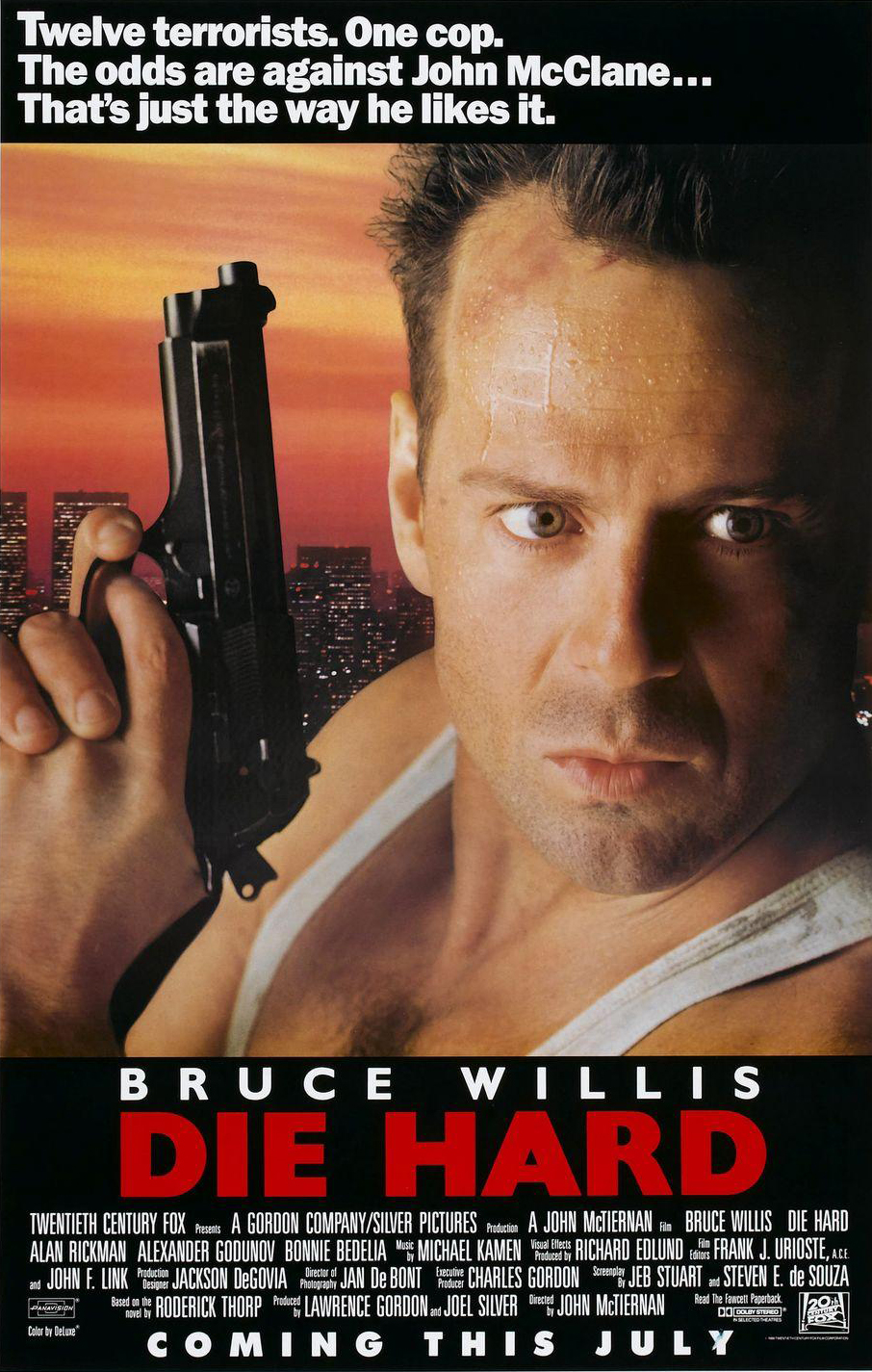
Die Hard (1988)

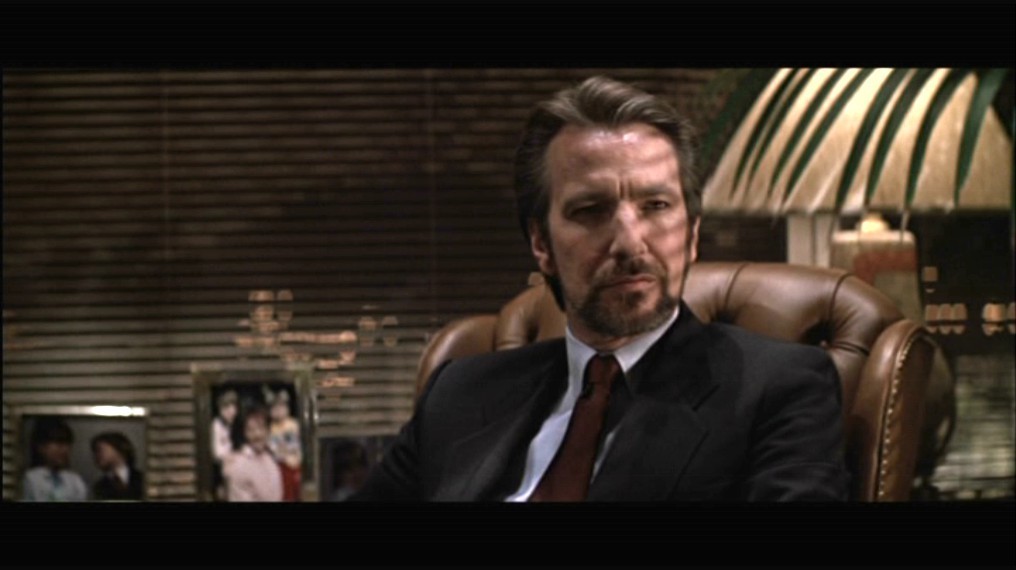
Alan Rickman sets the bar for all Hollywood villains in Die Hard

Director: John McTiernan

Cast: Bruce Willis (John McClane), Alan Rickman (Hans Gruber), Alexander Gudonov (Karl), Bonnie Bedelia (Holly Gennaro McClane), Reginal VelJohnson (Sgt Al Powell), Paul Gleason (Dwayne T. Robinson), De’Voreaux White (Argyle), William Atherton (Richard Thornburg), Clarence Gilyard (Theo), Hart Bochner (Harry Ellis), James Shigeta (Joseph Yoshinobu Takagi)

Is there a better action film ever made than Die Hard? In fact, I’m almost tempted to say: has a more influential film emerged from 1980s Hollywood than this masterpiece of tension, action, thrills and wry humour? Die Hard set the template for action: the structure of the hero and villain locked in a battle of wits, claustrophobic locations, one man (sometimes now a woman) against overwhelming odds… There is a reason so many films now have their plot explained as Die Hard on a [insert eccentric location or method of transportation here].

The plot is brilliantly simple and streamlined – so compellingly is the whole enterprise put together that you don’t notice that it was all being made up in the spot (the main hint of that being there is clearly no ambulance in the baddies’ arrival truck). If you don’t know the plot, where have you been since 1988? John McClane (Bruce Willis) is a cop who’s in LA to spend Christmas with his estranged wife Holly (Bonnie Bedelia). Joining her office party at Nakatomi Plaza, a massive skyscraper still partly under construction, their marital discord is interrupted by the building being seized by a group of European terrorists (or are they?) led by urbane sophisticate Hans Gruber (Alan Rickman). Now it’s all down to John, dressed in nothing more than a vest and trousers, without even any shoes to take on a dozen heavily armed baddies single-handed. 

Die Hard is a perfect storm – everyone involved was in the right place, at the right time of their careers, with material they were perfectly able to bend to their skills. There have been so many wonky thematic rip-offs of this film that a lot of credit should go to John McTiernan for setting such a brilliant template that proved irresistible to adapt. It goes without saying that the film is whip-sharp and rattling with tension, and that its action moments are brilliantly shot and choreographed. What makes Die Hardwork so well is that it puts character and performance at its heart. McClane is a character we can root for, a regular guy as far away from an Arnie or Sly superman as you can get; similarly Gruber is so charming and charismatic, part of you wants him to win.

Although there is plenty of blood and violence, McTiernan doesn’t dwell on it (watch the far more brutal Die Hard 2 for contrast), and there is no sadism in the editing. Instead, McTiernan invests the film with a lot of sly humour and wit – and he is not afraid to acknowledge that there is an illicit thrill in watching intelligent people like Gruber put detailed plans into place, executing them perfectly while running rings around the law. The use of Ode to Joy as Gruber’s personal theme tune is incredibly playful, and the film successfully positions itself in its narrative with Gruber as the protagonist and McClane the antagonist (with the difference that McClane is the character we root for) – as such, McClane’s reactive role in the plot constantly stresses his isolation and vulnerability, while Gruber’s control of the narrative positions him as a truly daunting opponent. A modern film would have kept the reveal of Gruber’s plan until the third or fourth reel – here Gruber tells us within five minutes of arriving that he’s there to rob the place; immediately we are connected with him and understand his aims, and understand the structure of the film coming up from the start.

The humour of the film is never heavy handed, and it’s perfectly balanced with the threat – Gruber and McClane are witty and dry but their characters are never undermined. The film never forgets its Christmas setting, which makes for a number of humourous contrasts (altogether now “Now I have a machine gun. Ho-Ho-Ho”). There is no comic relief as such, and every character serves a clear role in the plot – no fat on the bones here. I also really like the fact that the film at many points subtly undercuts machismo: the gung-ho FBI agents Johnson and Johnson are cocksure morons; as the SWAT team storms the building one of them stops to shriek “ow” after pricking his hand on a thorn. Sly comedy runs throughout – preparing to defend the building from the same SWAT attack, one of the terrorists glances around nervously before helping himself to some candy from behind a shop counter (because kidnap and murder are not a problem, but stealing sweets is really naughty). The film is packed with rich incidental moments like this that charm the viewer, even while bodies piles up and parts of the building go up in smoke.

Bruce Willis was also the perfect choice as McClane. Not only does he have the physical capability, but he has the acting skills. Long before he succumbed to the smirk or the grimace as his default settings when bored (watch Die Hard 5 – or rather don’t – to see the comparison between then and now), he makes McClane very real. Yes he’s confident and arrogant, but McClane is also laced with self-loathing (watch him beat himself up after his conversation with Holly) and under the surface he has a deep humanity, which dedicates him to saving lives (twice in this film he lambasts himself for not doing enough to save people). Willis not only takes a physical battering over the course of the film – don’t we all wince at the idea of running barefoot over a floor of glass? – but he’s also half the time desperately scared under the adrenaline, using wit and defiance as a defence mechanism. McClane does things in this film we could never do in real life (jump off an exploding building using a fire hose as rope – yup you’re dead) but Willis always feels like a regular guy – someone we can understand, relate too. He’s as far away from Arnie in, say, Predator as you can get.

Of course we’ve come all this way without mentioning arguably the film’s MVP, the incomparable Alan Rickman. Astonishingly, this was his first ever film, but Rickman is so perfectly brilliant in this film that I don’t think it’s an exaggeration to say every Hollywood villain since has been weighed against his performance here and found wanting. Rickman taps into a truth: wouldn’t we all love to be the baddie? Despite it all, Gruber is clearly enjoying himself throughout: to borrow a phrase, he’s an exceptional thief and since he’s moved up to kidnapping we should all be more polite. He’s also sharply intelligent, his invention and arrogant confidence that he has thought of everythingare actually rather thrilling – while his exasperation at both McClane and the inadequacies of his underlings are oddly charming. Rickman’s arch and clipped delivery turns lines into endlessly quotable bon-mots – he has a perfect sense of timing and says more with an arched eyebrow than other actors could with a page of dialogue.

The film’s master touch is to recognise early the strength of these two characters and to make the main duel not so much a physical fight as a battle of wits. Skilfully navigating the viewer around the building, Gruber and McClane execute move and counter move, both thinking fast on their feet while never losing sight of their main goals. The film also brilliantly allows them to engage in a running verbal battle via walkie-talkie, making their clash increasingly personal – and also allowing both characters to demonstrate their ingenuity. It also allows us to invest in the clash between them – and to make the sense of one-upmanship that runs through the film feel very alive.

The focus here has been on those two characters, who really drive the film – but every member of the rich supporting cast contributes hugely. Bonnie Bedelia is very effective in a difficult part as Holly – assertive, independent but never trying or tiresome (we see her point on McClane as well, who can be a jackass). Alexander Gudonov is perfect as the Han’s macho-but-short-sighted Number Two. William Atherton is gloriously vile as an exploitative reporter. Hart Bochner embodies the shallow, coke-fuelled, Masters of the Universe 80s as Ellis. Reginald VelJohnson adds a lot of humanity as the thoughtful Al Powell.

Okay there are one or two things wrong with the film (I’ve always found Al’s final use of his gun at the film’s end a bit uncomfortable, and I suspect from the conflicted messages of the soaring music and VelJohnson’s sad-faced acting that this was a tricky moment for the producers to get right). But this is an explosion of filmic joy that constantly rewards multiple viewings (god knows how many times I’ve seen this film). The action sequences never tire, the characters never lose their interest. I don’t think it’s a stretch to call it a masterpiece as well as a landmark piece of film-making.