Tag: Allison Janney

American Beauty (1999)

Kevin Spacey and Annette Bening excel in the dated Best Picture winner American Beauty

Director: Sam Mendes

Cast: Kevin Spacey (Lester Burnham), Annette Bening (Carolyn Burnham), Chris Cooper (Colonel Frank Fitts), Thora Birch (Jane Burnham), Wes Bentley (Ricky Fitts), Mena Suvari (Angela Hayes), Peter Gallagher (Buddy Kane), Allison Janney (Barbara Fitts)
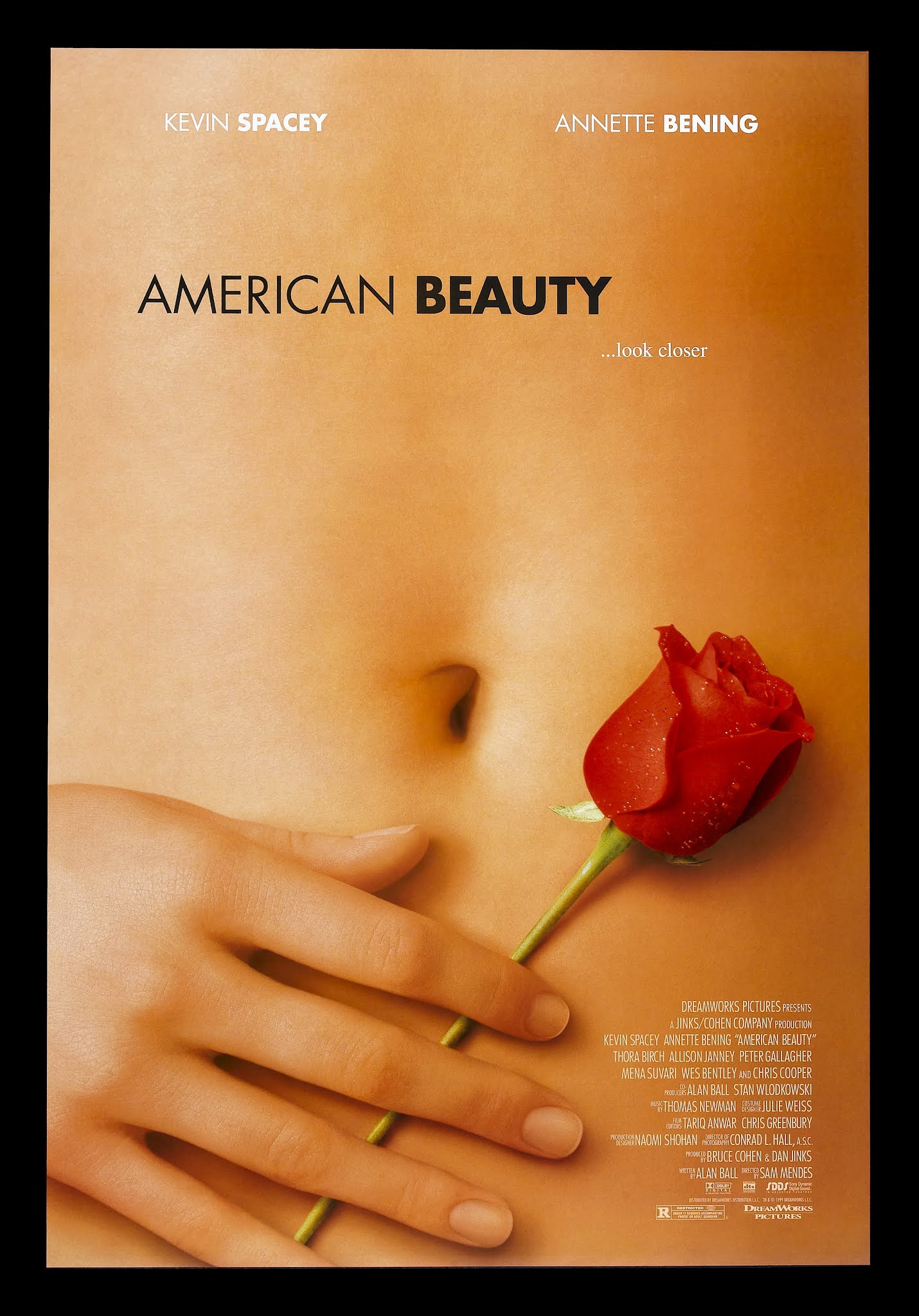
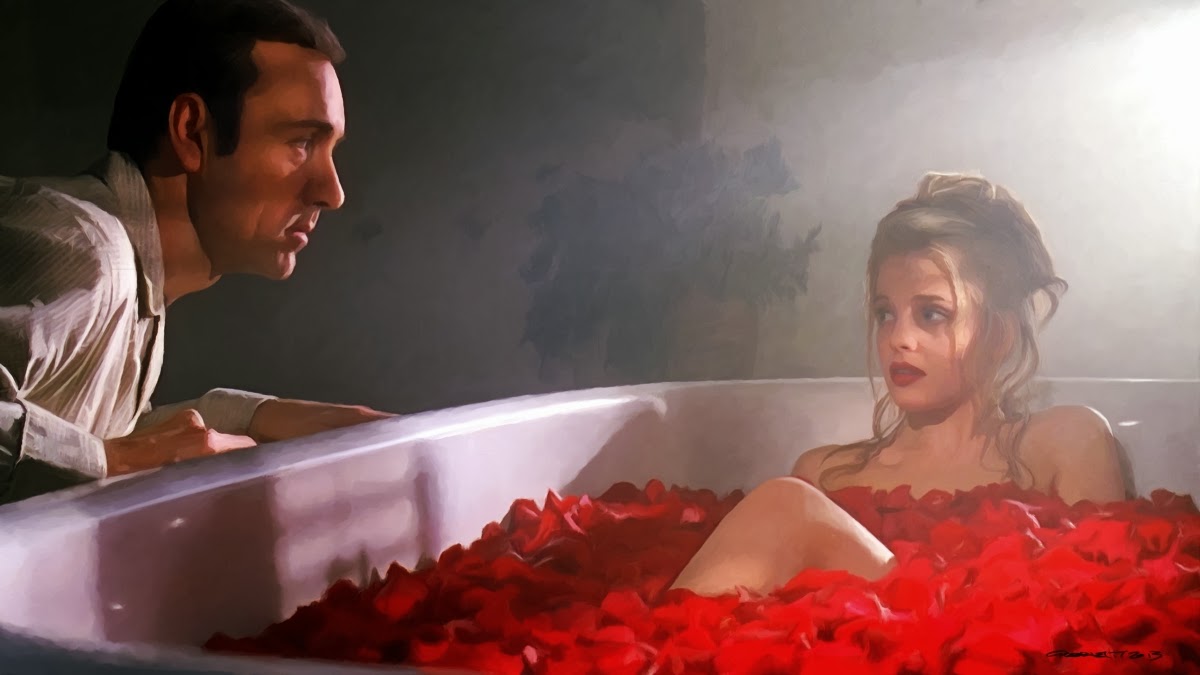
Time has not been kind to American Beauty – and I’m not just talking about Kevin Spacey. In 1999, what felt like a timely exploration of male-angst has, over time, looked less prescient and more like the last embers of a generation that thought they were The Graduate’s Benjamin but actually became his parents. Many of the sympathies of American Beauty now feel dated and slightly misguided, or obscure some genuine reflections on its characters. Its satire of consumerism feels trapped in the 90s. But it’s also very skilfully made, often funny, beautifully shot and you can see why it seemed like the next landmark masterpiece of American cinema, an Apartment for the modern age.

In suburbia, Lester Burnham (Kevin Spacey) is a middle-aged, middle-ranking magazine executive, tired of his life, unhappy in his marriage to Carolyn (Annette Bening), a fiercely ambitious real estate agent, and drifting away from daughter Jane (Thora Birch). He is snapped out of his ennui by his infatuation with Jane’s friend and fellow-cheerleader Angela (Mena Suvari). Next thing we know, Lester realises he hates his life, quits his job (blackmailing his boss on the way), buys the car of his dreams and takes a job flipping burgers – to the bewildered frustration of Carolyn, who starts an affair. Meanwhile Jane becomes intrigued by Ricky (Wes Bentley), the film-obsessed and drug-dealing son of their next-door neighbour, homophobic army colonel Frank (Chris Cooper). Oh, and it’s all narrated from beyond the grave by Lester – so we know it won’t end well.

“There is nothing worse than being ordinary” says Ricky at one point. It’s an attitude that underlies the film. American Beauty has that very showbiz attitude that the lives most ordinary people lead must be rather shallow and empty. That there can be no meaning in the life of suburbia, family and 9-to-5 that so many of us lead. A sharper film would have added depth and contrast to this – but American Beauty is a film that, for all its quality, is also very pleased with itself.

American Beauty’s debt to Billy Wilder is central to its DNA. It plays often as a mix of The Apartment and Sunset Boulevard, with Spacey skilfully channelling a twist of Lemmon as Burnham. Saying that, I can’t believe Wilder would have been as easy on Lester as Ball and Mendes are. Surely Wilder would have seen through the self-serving selfishness and sad delusion that underlie Burnham’s mid-life crisis, fuelled by his fears of emasculation.

It’s that fear running through American Beauty and – for all it looks at first like a satire on suburbia – what came out to me on rewatching is that parallel narrative of two men suffering familiar masculine crises. Burnham, the office drone, ignored at work, playing second fiddle to his wife at home. He doesn’t wear the pants anywhere – his wife chooses the music they listen to, the events they go to, she doesn’t even let him drive the car. Teenage dreams of rebelling disappeared. He’s forgotten what it feels like to be a man. Then there’s Colonel Fitts, the man’s man struggling with self-loathing due to his deeply repressed homosexuality. These are fairly conventional stories.

Lester’s story takes centre stage (even the name Lester Burnham is wimpy). Outstandingly played by Kevin Spacey, who was never better or more humane, Burnham is endearing, rather sweet, clutzy but still has that sharp-tongued Spacey sense of wit. The opening sequences perfectly capture Burnham’s Jack-Lemmonish awkwardness, repression, inadequacy and depression. But  if anything, Spacey is almost too sympathetic in the role, masking the selfishness and self-serving nature of Burnham’s mid-life crisis (which is what it is), urging us to celebrate his rules-bucking independence.  The film never gets to grips with the spark for all this being a sexual obsession with a teenage girl.

American Beauty never questions the sleazy corruption of Lester’s fantasy – and is perfectly happy with using his crush as a positive motivation for getting his mojo back, as well as frequently presenting Angela as a Lolita-esque fantasy. He holds back from sex with her when she confesses she is a virgin – but the film offers no “what am I doing” epiphany from Lester (or a realisation that he is about to sleep with someone literally young enough to be his daughter), instead turning this exploitative moment into an expression of some decency in Lester. Sure, it’s great that Lester realises his responsibilities eventually – but even in 1999, we all knew it was wrong for middle aged men to sleep with impressionable school-children.
The fact is that Election, released the year before, had more to say about exactly the sort of underperforming, thinks-of-himself-as-a-failure resentment of men of Burnham’s ilk – the difference being that Matthew Broderick’s Jim McAllister in that film is exposed as a bitter self-serving fantasist, which is what Burnham really is. Burnham’s dying moments may be full of reflections on his wife and daughter – but he ignores them or treats them with scorn throughout the film.

And there isn’t, I feel, a satirical note to this. Instead, the film roots for Burnham strongly, asking us to admire his late life rebellion. Maybe it’s the conservative in me – maybe it’s because I don’t much like The Graduate either – but I don’t feel it. Spacey is great – but Burnham is selfish and embodies a concern in certain men that career-minded women and suburbia were turning them from hunter-gatherers into hen-pecked losers. American Beauty is a direct development of the masculinity crisis films Michael Douglas specialised in throughout the 80s and 90s, of men lost in a world that isn’t 100% about them and what they want any more.

The film’s parallel plot of Fitt’s homosexuality crisis is even more familiar than Burnham’s and hits many expected bases – there are no real surprises here for anyone who has ever seen a film before. It largely works as it is so outstandingly sold by Chris Cooper, who gives a brilliantly rich and raw performance as Fitts.

But its faint whiff of predictability fits alongside a script that is often very rich on dialogue, but has a vein of pretention to it that makes the film feel it’s striving to be important. Ball’s dialogue too often undermines its own points with the stench of pretension. The teenagers in the film fall into broadly predictable cliché. The arty, dreamy ones are profound; the pretty one is shallow and flighty (although, to be fair, is shown to also be vulnerable and scared). Bentley’s character’s faux-artiste musings on the movements of a plastic bag are exactly the sort of pretentious ramblings Ball would later puncture so effectively with the college art classes in Six Feet Under. These scenes have dated terribly and ache with self-importance (and are ripe for parody).

But there is quality here, don’t get me wrong. Spacey is superb, Cooper brilliant. Annette Bening is pitch-perfect as a career-focused woman who lives her life through self-help mantras but is only just holding it together. It’s a shame that, just like Mrs Robinson, the film is so full of sympathy for its male protagonist that it has no time to empathise fully with its female lead.  Mendes directs with a stunning confidence for a first-timer, drawing brilliant performances from the actors as well as bringing a startling originality to the filming (in partnership with Conrad Hall as photographer).

But American Beauty never turns its “look closer” message on itself. It uncritically examines a particular masculine crisis and often makes points that are witty but simple. The final act becomes weighted down with a tiresome “whodunnit?” mystery. The acting, direction and much of the writing is frequently brilliant. But the film itself, as a whole, has not aged as well as we thought it might.

Primary Colors (1998)

John Travolta and Emma Thompson are definitely not the Clintons in Primary Colors

Director: Mike Nichols

Cast: John Travolta (Governor Jack Stanton), Emma Thompson (Susan Stanton), Adrian Lester (Henry Burton), Billy Bob Thornton (Richard Jemmons), Kathy Bates (Libby Holden), Larry Hagman (Governor Fred Picker), Stacy Edwards (Jennifer Rodgers), Maura Tierney (Daisy Green), Diane Ladd (Mamma Stanton), Paul Guilfoyle (Howard Ferguson), Kevin Cooney (Senator Lawrence Harris), Rebecca Walker (March Cunningham), Allison Janney (Miss Walsh), Mykelti Williamson (Dewayne Smith)

In 1998, America was engrossed in what seemed like a never-ending series of scandals around Bill Clinton, with Clinton facing impeachment. The news was filled with Clinton-Lewinsky Scandal catch-ups seemingly non-stop. Surely in the middle of that, a film that charted earlier scandals about Slick Willie would be a hit? Well Primary Colors proved that wrong. A thinly veiled portrait of the Clinton run for the White House, based on a novel written by Joe Klein who followed the Clintons on the campaign, it tanked at the box office. Possibly due to audiences having Clinton-fatigue – but also perhaps because it’s a stodgy, overlong and slightly too pleased-with-itself piece of Hollywood political commentary.

The film sticks pretty close to real-life timelines. John Travolta is Arkansas Governor Jack Stanton (Travolta does a consistent impersonation of Bill Clinton both vocally and physically during the whole film), who’s running for the Democratic Presidential nomination, supported by his (perhaps) smarter, ambitious wife Susan (Emma Thompson, doing a neat embodiment of Hillary without impersonation). Eager young black political operator Henry Burton (Adrian Lester) is recruited to help run the campaign – and finds himself increasingly drawn into the secrets of the Stantons, not least Jack’s persistent infidelities that seem to go hand-in-hand with his empathy and genuine passion for helping people. As scandal builds on scandal, the campaign to run for President becomes ever more unseemly.

Primary Colors asks questions that, to be honest, are pretty familiar to anyone who has ever seen a Hollywood film about politics. We’re presented with a Clinton-Stanton who wants to help America to re-educate itself in a modern world, who weeps with emotion when hearing a man recount his struggles with literacy (a fine cameo from Mykelti Williamson), who wants to rebuild America’s economy and build opportunities for all. And at the same time, he can’t keep it in his pants, is quite happy to dodge as much as possible the consequences of his actions, and is blithely disinterested in the impact his infidelities have on other people. Essentially the film wants to ask: at what point does a man’s personal behaviour and morals start to outweigh his good intentions?

It just takes a long time to ask it. A very long time. Primary Colors is a film that could easily be half an hour shorter, and you would miss very little. It’s a stodgy, overlong, smug drama that takes a gleeful delight in how clever it’s being making a film about the Clintons that-isn’t-about-them. It’s weakened as well by using an overly familiar device of putting a naïve and well-meaning audience surrogate character at its centre. We’ve seen this growth of disillusionment before, but Adrian Lester (in a break out role) fails to make Henry Burton a really interesting character – he’s little more than a cipher that we can project our views onto, and Lester is too reserved an actor to make him a character we can effectively invest in as a person. Instead he becomes a largely passive observer that more interesting characters revolve around.

Those characters being largely the Stantons themselves. John Travolta does a very good impersonation of Clinton, but he offers very little insight into the sort of person Clinton is, his motivations or his feelings. Like the character, the role is all performance and you never get a sense of how genuine his goals are and how much ambition is his main driver. As scandals pile up, Travolta is great at capturing Clinton’s sense of hurt that anyone would question his morals (even as his actions display his fundamental lack of them), but the role is short on depth. 

Emma Thompson gets less to play with as Hillary. In fact, she disappears from the second half of the film, after an affair plotline between her and Lester was cut completely from the film (something that makes certain scenes, where actors are clearly responding to this non-existent plotline, amusing to watch). But she manages to make the role something a little more than impersonation, delivering a whipper-sharp, ambitious woman who has buried her resentments about her husband’s betrayals under a wish to achieve a higher goal.

The rest of the cast deliver decent performances, but the stand-out is Kathy Bates as a long-time Stanton friend turned political fixer, who sees her idealisation of the Stantons turn to bitter disillusionment. Bates at first seems to be delivering another of her custom-made “larger than life” roles, but as the stuff hits the fan she layers it with a real emotional depth and complexity. It’s a caricature role that she turns into something real, a woman who feels genuine pain at seeing her deeply held political convictions and ideals being slowly disregarded by her heroes.

But then we get her point. Don’t we all feel a bit like that when we think back about Bill Clinton? The more we learn about his affairs and sexual scandals – and the more that #MeToo develops our understanding of how powerful men can abuse their power to take advantage of star-struck young women – the less sympathetic he seems. The film too suffers from some really out-of-date views of male sexuality. Billy Bob Thornton’s political fixer exposes himself early on in the film to a female worker, but this is shrugged off as “banter”, as opposed to a criminal offence – and the film largely avoids giving any air time to Stanton’s principal victim, the teenage daughter of a black restauranter whom he may or may not have impregnated. Stanton uses his power to gain sexual favours – one of his earliest acts is casually picking up a gawky English teacher who’s giving him a guided tour of her school (a funny cameo from Allison Janney) – but this is largely categorised as a personal weakness that doesn’t impact his suitability for the Presidency, something that feels more and more uncomfortable.

However, Primary Colors’ real problem is that it is overlong and a little bit too pleased with its intricate reconstruction of semi-true events. Although there are funny lines and decent performances, the film lacks any real zip and it gives no real insight into modern politics (other than perhaps deploring the compromises politicians must make) or the Clintons themselves. Instead it settles for telling us things we already know at great length and making safe but empty points about modern America. Far from exploring a Faustian pact where we accept deep personal failings in politicians because we believe that, overall, they could be a force for good, instead Primary Colors is all about turning shades of grey into obvious clear-cut moral choices.

I, Tonya (2017)

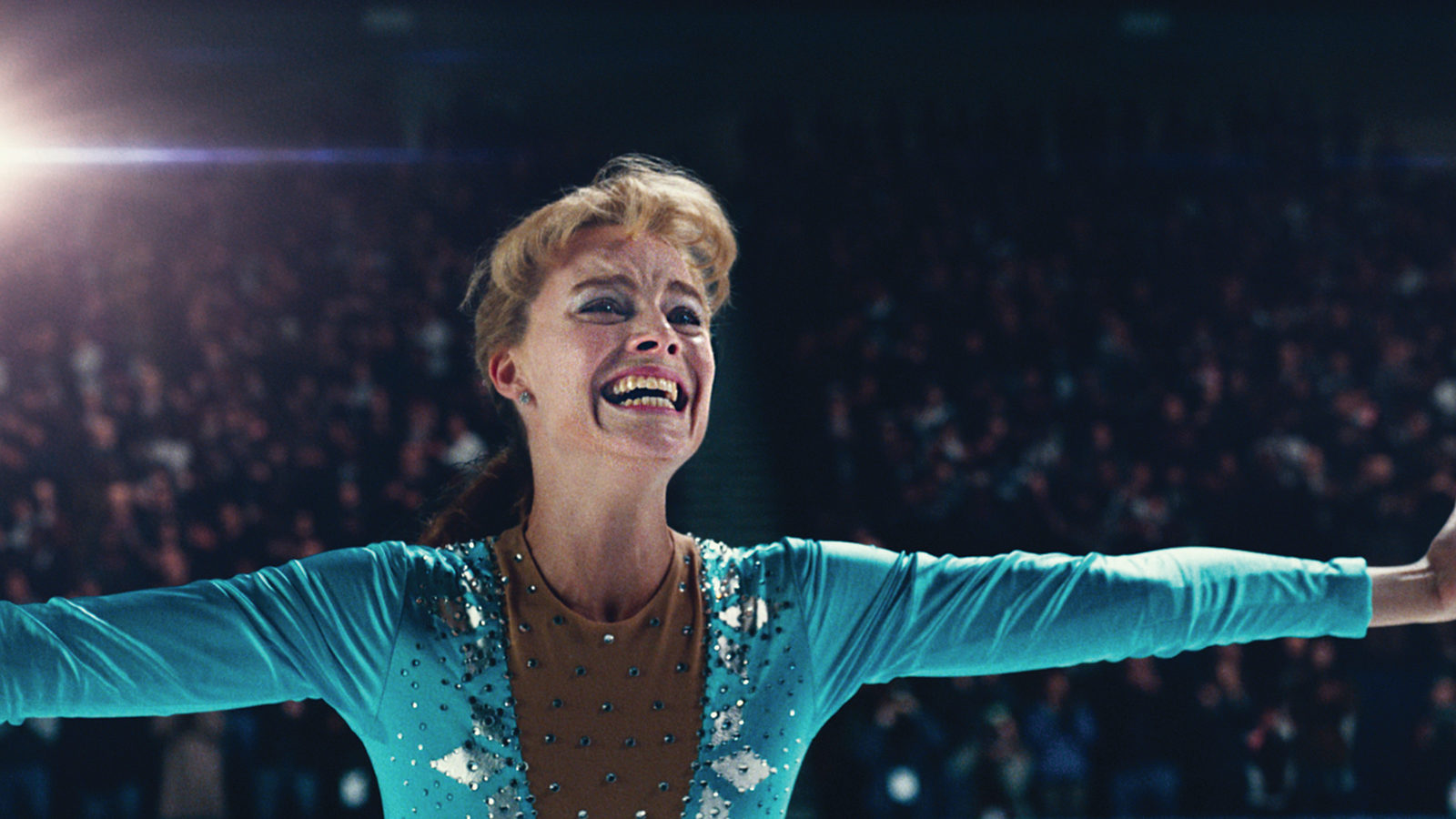
Margot Robbie triumphs as Tonya Harding in I, Tonya

Director:  Craig Gillespie

Cast: Margot Robbie (Tonya Harding), Sebastian Stan (Jeff Gillooly), Allison Janney (LaVona Golden), Julianne Nicholson (Diane Rawlinson), Bobby Carnavale (Martin Maddox), Paul Walter Hauser (Shawn Eckhardt), Caitlin Carver (Nancy Kerrigan), Bojana Novakovic (Dody Teachman)

In 1994, Tonya Harding (Margot Robbie) is the bad-girl of ice skating. From a working-class Portland background, with a domineering mother (Allison Janney), she struggles to be accepted in the upper-class world of ice skating. After some success, including becoming the first American ice skater to complete two triple axel jumps, she constantly finds success undermined by her own failings and indiscipline, and the influence of her wastrel, abusive husband Jeff (Sebastian Stan). When competing with rival Nancy Kerrigan for a place on the 1994 Winter Olympic team, Tonya encourages her husband to send Kerrigan threatening letters to put her off. What happens instead is an attack on Kerrigan that breaks her knee – and the fallout will have devastating consequences.

I,Tonya is much more than a film about an attack on a rival skater. Tonya (in the film) complains that the event (which she claims to have had so little to do with) has overshadowed her whole life, but that’s not a mistake the film makes. The film is instead a brilliant deconstruction of class and media in America. Tonya struggles in the world of ice skating because she comes from a working-class, trailer-trash background. This leads her to grow up with several chips on her shoulder, aggressively acting out against judges and fellow competitors, because she wants to belong but never feels she does. In a country that likes to pride itself that it doesn’t have the sort of class system the UK has, it’s a striking commentary on how Tonya completely fails to escape the impact of her poor, violent background – and uses it as a justification and excuse for everything that happens to her in the film.

Her background also makes it every easy for the media to cast Tonya as a villain, first as the difficult punk of ice skating, later as the Machiavellian arch schemer of a vile plot. The worst part of this is – like the reality stars of the 00s who would follow her – Tonya feels she needs to keep playing a role in order to “stay in the public eye”. In turn, the media – largely embodied here by Bobby Cannavale’s delighted media commentator, who gleefully recounts every key moment of the film in a smug series of talking head interviews – keeps the pressure on, puffing her up into whatever it requires her to be to fill a 24 hours news cycle. It’s surely no accident that the film ends with camera moving away from Jeff’s house, while news of OJ Simpson’s arrest plays on the television.

And why does Tonya fit herself into this role? Because, the film suggests, she is a victim who has confusingly absorbed her victim status into her personal relationships and self-value. Treated appallingly be her domineering mother, and hit constantly by her worthless husband, Tonya clearly believes that she is personally of very little worth. If she is so used to being an angry, raging punchbag at home, is it any wonder that she settles into that role publically? To the extent that, throughout, Tonya constantly sidelines or pushes away the more supportive people around her, like Julianne Nicholson’s (who is very good) dedicated coach.

The film handles this range of complex psychological and social themes with aplomb. In a neat touch, the film acknowledges that the events of its narrative are so controversial that everyone in it has a different view. The film is framed through a series of talking head interviews with the leading players (played by the actors) twenty years on. Each of them tells a contradictory version of the story and around the “incident”. The film, bravely, gives some weight to all these viewpoints. It’s brilliantly handled, as we see certain scenes from the perspectives of different characters, which makes them much easier to relate to. Gillespie also has a lot of fun with the film leaning on the fourth wall – frequently characters turn to the camera mid-scene for a few words of commentary, sometimes to stress a point, other times to deny the thing we have just watched ever happened. 

The eclectic and dynamic storytelling works an absolute treat, and Gillespie gets the tone absolutely right. While dealing with serious themes, the film is also blissfully funny. Much of the fourth wall humour is brilliant. While taking the characters seriously, the film is also written with a real dark wit. And (once you remind yourself that Kerrigan’s career was not seriously affected by the attack), the build up to the scheme itself, and the feeble cover up, is hilarious. Everyone in the chain of events is stupider than the person above them. Tonya is no genius, her weak husband is a clumsy fool, his friend Shawn an idiotic fantasist, the men hired to attack Kerrigan almost unbelievably stupid. The inevitable crumbling of the plot is hilarious in its disintegration.

It works as well because of the strength of the acting. Margot Robbie is superb as Tonya. She fills her performance with empathy for Tonya, but never lets her off the hook – Tonya never takes responsibility at any point for anything she does. Robbie gets the balance just right between the “little girl looking for love” vulnerability of Tonya, mixed with the bitterness and rage that always lurks just below the surface. She acutely understands the messed up psychology of someone who has been treated badly by everyone around her, and then finds it impossible to form a healthy relationship with the world.

On Oscar-winning form, Allison Janney rips into the sort of part that must have (rightly) looked like a total gift on the page. It’s a scene-stealing role: Harding’s mother is a foul-mouthed bully whose every other line is a zinging put down or resentment-filled burst of cruelty. Janney, however, keeps the part real: there is always a sense that somewhere in there, she genuinely feels she is doing what’s best for her daughter, even if her methods are completely misguided. Sebastian Stan is equally good as Tonya’s weak-willed, not-too-smart husband and Paul Walter Hauser is hilarious (as well as a remarkable physical match) as Shawn. 

I, Tonya is a very smart, very funny piece of social satire mixed with tragedy. While being very funny, it’s also sad and rather moving. It has some terrific acting in it and is directed with confident, but not overly flashy, aplomb by Gillespie. As a commentary on the media it’s well judged, and as a look at the impact of class at America it feels fresher than ever.

Spy (2015)


Melissa McCarthy takes on the bad guys in actually rather funny comedy Spy

Director: Paul Feig

Cast: Melissa McCarthy (Susan Cooper), Jason Statham (Rick Ford), Rose Byrne (Rayna Boyanov), Jude Law (Bradley Fine), Miranda Hart (Nancy B. Artingstall), Bobby Cannavale (Sergio De Luca), Allison Janney (Elaine Crocker), Peter Serafinowicz (Aldo), Morena Baccarin (Karen Walker)

Comedy is an unusual thing to write about, I often find. Unlike any other film genre, you know immediately whether it works or not, ‘cos if you ain’t laughing it probably ain’t working. Well the good thing is that Spy does work, as I certainly laughed. It’s actually a fairly well structured comedy, a smart parody of Bondish action films matched with the foul-mouthed crudity you get in the films from the Feig/Apatow stable.

Susan Cooper (Melissa McCarthy) is the cheery deskbound analyst who provides real-time data and intel to would-be 007 Bradley Fine (Jude Law). But after disaster strikes, Susan volunteers to go into the field to find out as much as she can about Rayna Boyanov (Rose Byrne), the daughter of a rogue arms dealer who is taking over the family business. Despite the concerns of her boss – and super-macho fellow agent Rick Ford (Jason Statham) – Susan proves surprisingly adept at espionage, disguise and above all action.

What Spy does well is that it feels like it’s been written and shot with a bit of discipline, rather than the over-indulged and forced “improvisation” that so often blights these sort of comedies. It feels more controlled, and therefore easier to engage with – we are watching a group of good actors tell a story, rather than a gang of comedians showing off. I think this is helped by the fact that most of the cast are not natural comedians, but instead actors delivering gags with skill. Feig also shoots the film with zip and punch – most scenes don’t drag on indulging forced banter.

Melissa McCarthy is very  good as the rather sweet lead, torn between the role she has given herself in life, and her own desire to use her capabilities. Her character delivers many of the comic moments of the film, but she’s not the joke – instead she is shown to be brilliantly proficient both as the “eyes and ears” of Jude Law’s suave Bond-spoof role, and also as the woman in the field. McCarthy’s comic timing is matched with an affection for her character that makes her likeable and easy to empathise with. What she creates here is a genuine character who grows and develops as the film progresses.

The film’s real weapon is the strong cast of proper actors giving expert comic turns. Rose Byrne is hilarious as an imperiously bitchy, foul-mouthed villain who makes every line into a thinly veiled (and often not veiled at all) insult. Jason Statham gives probably a career-best performance as a ludicrously macho secret agent bragging incessantly about a string of unlikely sounding exploits, while being barely competent in the field. Who knew The Transporter could do such a neat line in self-parody? Allison Janney’s foul-mouthed, impatient CIA boss and Miranda Hart’s ditzy surveillance expert offer similarly rich comic roles. These actors know that the trick of real comedy is to deliver well prepared punchlines with controlled efficiency rather than crummy flights of fancy.

Spy also works because it has an actual story, and mixes this effectively with action and hi-jinks that feel like solid spoofs of Bondish films but are also genuinely entertaining in themselves. It’s a plot that stands (more or less) on its own, rather than feeling like a shoddy framework to hang rude jokes on. As such, the rude jokes complement by the plot (rather than crushing it) and most land with a genuine chuckle. It’s also lovely to have a film that places female characters so front-and-centre, not as props or as “sexy fighting women” (I’m looking at you Pride and Prejudice and Zombies) but as confident individuals who know who they are and are not defined by their relationship to a man. McCarthy is terrific, as are the rest of the cast. This is a film you will definitely enjoy.

The Girl on the Train (2016)


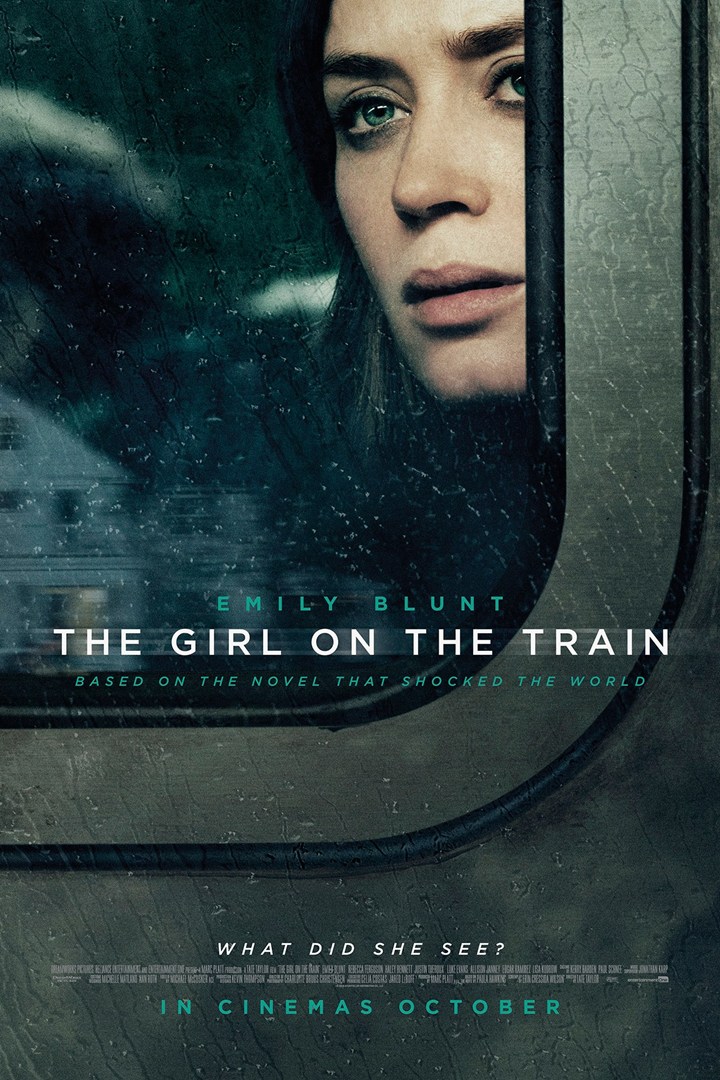
Emily Blunt on a commute into danger in the underwhelming Girl on the Train

Director: Tate Taylor

Cast: Emily Blunt (Rachel Watson), Rebecca Ferguson (Ann Watson), Haley Bennett (Megan Hipwell), Justin Theroux (Tom Watson), Luke Evans (Scott Hipwell), Allison Janney (DS Riley), Edgar Ramirez (Dr Kamal Abdic), Lisa Kudrow (Martha), Laura Prepon (Cathy)

Rachel Watson (Emily Blunt) is a lonely, divorced alcoholic who takes the train into New York every day to spy on her husband (Justin Theroux) and his new wife (Rebecca Ferguson), whose house the train passes. However, she also becomes obsessed with the seemingly happy marriage of her ex’s neighbours (Luke Evans and Haley Bennett), who live an apparently Instagram-perfect life of coffee on the balcony and candlelit sex in their perfect living room (with the curtains conveniently left open – everyone leaves their curtains open in this film, no matter what they are doing). When the picture-perfect wife goes missing, she inveigles her way into their lives to try and help.

This is not a good film. It’s not a terrible film, but it’s a flat and lifeless one – a plot-boiler that simmers along without ever really getting exciting.  The story feels like it’s been pulled together from crumbs swept from the table of Gillian Flynn. It’s a hotchpotch mess, tangled, unclear and not that interesting. I can’t be the only person un-intrigued by the mystery of who shags who among the middle classes. Even a murder doesn’t spice it up. The small cast makes many mysteries obvious – when one character is found to be pregnant, but two of the three male characters we’ve been introduced to have been ruled out, you don’t need to be Poirot to work out who the father might be. Even the title is a call back to better thrillers, with its Girl with the Dragon Tattoo styled title.

The story drifts on and on, never really getting anyway or explaining anything properly. It doesn’t help that it’s mediocrely filmed. Look at the lean, compelling and sharp film David Fincher made of (the much better) Gone Girl. Then look at the murky, plodding, dull execution here. Particularly damningly it’s a shock to find out this is less than 2 hours, because it feels a hell of a lot longer.

The story has been switched from the book’s original London to somewhere outside Manhattan, which doesn’t help either. There is something quite small scale and domestic about the story that the sweeping vistas and huge houses of wealthy American suburbia don’t match up with. The very concept of the film – seeing into houses from commuter trains paused at signals – doesn’t even work removed from London’s architecture (the train in this film stops regularly on a huge expanse of track due to rail works that go on for ever and ever). Edgar Ramirez’s psychiatrist keeps the name Kamal Abdic (with its suggestion of middle Eastern roots) but now seems to be Mexican. Everyone in the film looks like a fashion model. Lots of other small moments just don’t make sense in the way they would have done in the original setting.

Emily Blunt is pretty good in the lead role, much better than the film deserves. Okay the drop-dead gorgeous Blunt doesn’t even remotely look like the overweight, sweaty alcoholic described in the book. But she nails her drunk acting, and carries the emotional heft of the film rather well, with an engaging vulnerability. She is, perhaps, even a little too engaging – the book’s original version of her character is apparently pretty unlikeable. The script trims away her needy obsessiveness, and creepy stalker tendencies. But Blunt is a little too likeable, and a little too sophisticated (despite prosthetic eyebags), to really convince as the pathetic Rachel. The switch to America doesn’t help here either – basically Brits make better losers than Americans tend to.

The rest of the cast are okay, but there is hardly a stand out among them. I have to admit I found Haley Bennett and Rebecca Ferguson (with their identikit blond hair dyes) hard to tell apart at times (this may be due to staying up all night watching the 2017 British election the night before).

By the end, when the killer is revealed (with a graphically suggestive flashback) you’ll find it hard to really care. In fact the final reveal is so clumsily put together all the implications aren’t clear at all. It’s a load of fuss about nothing. Taylor is trying to turn a pulpy novel into an arty thriller – but he doesn’t have the cinematic know-how to do it. He’s far too bland and middlebrow. Maybe that makes him a suitable match – a derivative director for a derivative book – but it hardly helps make this a good film. If he’d gone for a more B-movie approach, playing up the dark satire you could find in the story, then we could have had something interesting here. But he didn’t and we don’t.

The Hours (2002)

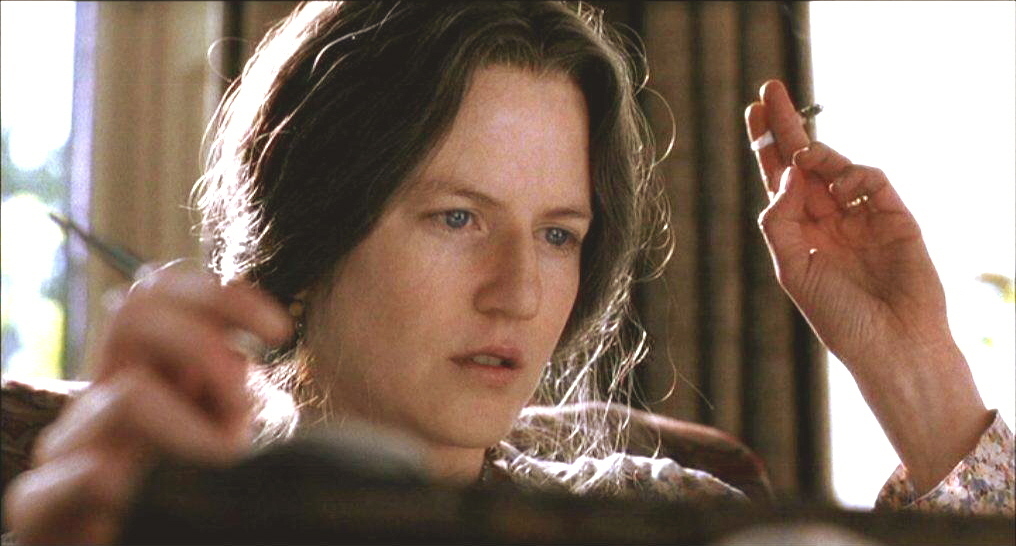
Nicole Kidman’s Oscar winning role produced a gallery of nose based puns, everyone convinced they could sniff out comedy gold

Director: Stephen Daldry
Cast: Nicole Kidman (Virginia Woolf), Julianne Moore (Laura Brown), Meryl Streep (Clarrisa Vaughan), Stephen Dillane (Leonard Woolf), Ed Harris (Richie Brown), Allison Janney (Sally Lester), Claire Danes (Julia Vaughan), Jeff Daniels (Louis Waters), John C Reilly (Dan Brown), Toni Collette (Kitty), Miranda Richardson (Vanessa Bell)

I remember when this film was released that it was garlanded with much praise as an intelligent and compassionate piece of filmmaking and a literate masterpiece. Well I’ve never seen it before and I have to say it holds up pretty well, even though it’s much more of a solid, impressive piece of professional film making than anything you might call a masterpiece.

The film covers three time periods each looking at one day in the life of three different women.  Inspired by Virginia Woolf’s novel Mrs. Dalloway, the day we see encapsulates in microcosm the life of each women. So we have Nicole Kidman as Virginia Woolf struggling to deal with depression while working on Mrs.Dalloway; Julianne Moore as a depressed 1950s housewife trapped in a suburban marriage; finally Meryl Streep as an editor in the 200s who has dedicated her life to looking after a poet friend who is dying of AIDS.

Each of these three plot lines are carefully intercut with both sharp scriptwriting and patient direction (Hare and Daldry’s stage experience here is a real boon for a concept that is actually quite theatrical). Although the opening sequence of the film suggests we might be in for a dizzying series of intercuts (the time period in this sequence switches almost every shot) it soon settles down into some well structured conversation scenes, moving almost in a cycle from our plot lines to another and only rarely directly cutting mid scene from time line to time line.

Of the plot lines I found Meryl Streep’s more modern day plot the most engaging and that Streep’s performance as the patient martyr carried the heart of the film. This was despite Ed Harris’ overblown performance as the dying poet, one of those two scene cameos that draw far more praise than they deserve. But this story has a tragic simplicity and Streep brings a lifetime of vicarious hopes and dreams out from every beat of the day.

Nicole Kidman however won the notice and awards as Woolf. Well deserved as these notices were, this is a more traditional part with clearer “award worthy” acting moments. While these are excellently done (Stephen Dillane is terrific as Leonard Woolf), the Woolf parts don’t quite link with the two other plot lines and, for me, didn’t carry the same emotional force that the tragedy of normal lifes did in the later plot lines.

Julianne Moore also does great work as a depressed housewife who lacks the emotional articulacy to fully understand her feelings, though the decision to introduce a direct link between the 1950s and 1990s plot lines later in the film does mean that the Woolf plot line feels even more like a slightly disconnected story. But this section of the film crackles with claustrophobia and Moore demonstrates the confused sexuality below the surface of Americana.I feel like I’ve been hard on this film, which is a very professional piece of work with some great performances and some real emotional high points. There are some great cameos from classy actors like Toni Collette, Jeff Daniels, Miranda Richardson, John C Reilly, Claire Danes and Allison Janney. It also is a very sensitive exploration of the pressure sexuality and emotions can press on people – even in the 1990s where homosexuality isn’t a dirty secret, Streep’s character still has more than enough confused emotional hang ups to sort out.

It’s a very good film but it’s so professionally done and smoothly assembled, the acting so sharp and on the money, that I’m not sure if there is as much heart behind the scenes in its making than appears on screen.