Tag: American Civil War

Lincoln (2012)

Daniel Day-Lewis gives on the great transformative performances as Lincoln

Director: Steven Spielberg

Cast: Daniel Day-Lewis (Abraham Lincoln), Sally Field (Mary Todd Lincoln), Tommy Lee Jones (Thaddeus Stevens), David Strathairn (William Seward), Joseph Gordon-Levitt (Robert Lincoln), James Spader (WN Bilbo), Hal Holbrook (Preston Blair), John Hawkes (Robert Latham), Jackie Earle Haley (Alexander Stephens), Bruce McGill (Edwin Stanton), Tim Blake Nelson (Richard Schell), Joseph Cross (John Hay), Jared Harris (Ulysses S Grant), Lee Pace (Fernando Wood), Peter McRobbie (George Pendleton), Gloria Reuben (Elizabeth Keckley), Jeremy Strong (John Nicolay), Michael Stuhlbarg (George Yeaman), David Costible (James Ashley), Boris McGiver (Alexander Coffroth)
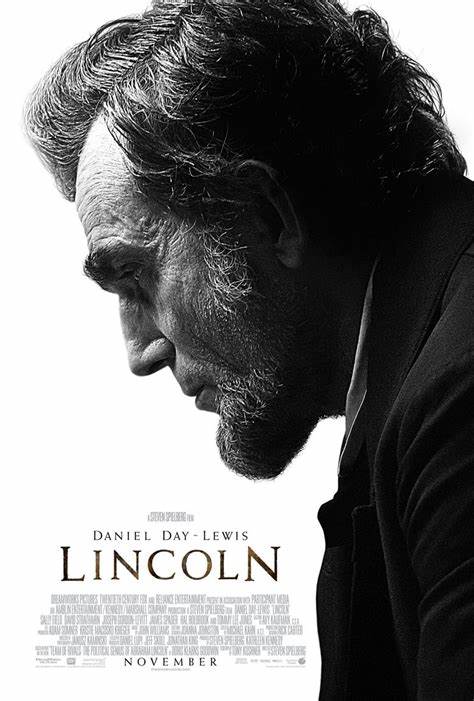
It took me three viewings until I felt I got Lincoln. Previously – in the cinema and the first time at home – I respected it. I admired the skill with which it was assembled. But I had found it hard to see it as much more than a critically acclaimed civics lesson, Spielberg at his most prestige. Returning to it the third time with the pressure well and truly off, suddenly I discovered a film I’d never seen before, an intensely dramatic telling of the perilous struggle to pass the Thirteenth Amendment to abolish slavery. A vibrant, beautiful and surprisingly intense story of how close Congress came to vetoing it. What had seemed a stuffy museum piece, instead came to life as a dramatic piece of cinema. It goes to show you should never be afraid to give something another go. Or two.

This biopic of Lincoln goes down a very modern route of avoiding covering the Great Man’s entire life. Instead it zeroes in on little more than a crucial month. It’s January 1865 – in what we know are the final months of the President’s life – and Abraham Lincoln (Daniel Day-Lewis) confronts a terrible choice. Civil war has torn America apart for year and peace may be on the horizon. But Lincoln fears a reformed America, with all its Southern slave states back in the fold, will find a way to end his Emancipation Proclamation and restore slavery to its height. To prevent this, Congress must ratify the Thirteenth Amendment to the Constitution ending slavery. But, with many in Congress worried that such an Amendment will end any chance of peace, Lincoln is in a terrible position. Should he sacrifice peace for abolition? Or vice versa? Either way, it will be a no-holds barred fight on the floors of Congress.

Spielberg’s film is near perfect in its shooting and editing, while its historical detail is brilliantly on-point. You couldn’t fault a moment of its making. However, what makes the film a success is the director’s skilful ability to combine graceful (even stately) old-fashioned film-making expertise, with a truly compelling sense of the passions and dangers we face when democracy is in action. And the overwhelming tension when the stakes are high and we have no guarantees of the end result. Another film – the stately civics lesson I once took the film for – would have shown the passage of the bill as a Whiggish inevitability, a progress filled march to a better world.

Lincoln isn’t like that. This is a film that shows politics then and politics now ain’t that different. For every principled man, there a dozen looking out for the main chance, marking time or who are too scared to worry about right and wrong. The Amendment is delivered not by impassioned oratory from the President. It’s carried by skilled floor management and the employment of a trio of political lobbyists with briefcases stuffed with cushy job offers in the rebuilt America.

Votes are brow-beaten out of people, threats and persuasion are used in equal measure. There is no winning people over with poetic oratory. At one point, Lincoln makes a simple and heartfelt plea for one congressmen to do the right thing: the guy votes against him. One of the film’s moments of triumph sees fervent abolitionist Thaddeus Stevens refuse to be provoked into expressing his true views on the floor, instead offering a statement that he does not believe in equality “in all things”, knowing any other answer will be used to build opposition against the bill. Is there any other film in American politics where one of the biggest cheer moments is one of our heroes compromising and spinning his true views into something far less threatening?

It’s all part of the film’s demystification of American history as not being something made from marble, but instead being real and true. If anything though, this sense of realism – of danger and the very real possibility of defeat – makes the final vote (a long sequence that almost plays out a congress vote in real time) both far more dramatic and also surprisingly moving. Because we appreciate every step of the backroom handshakes, fights, compromises and (let’s be honest) corruption and shady deals that got us here. And, more than anything, the film has made clear Lincoln is willing for this brutal war (the horrors of which, both in battle and bloody aftermath, intrude at key points in the film) to go on for as long as it takes, to ensure this Amendment.

Lincoln is the heart of the film: and it’s almost impossible to state how central Daniel Day-Lewis is to the film’s success. This is an extraordinary performance. I don’t think you can understate how venerated Lincoln is in the American memory. With his distinctive features and a permanent memory of him sitting like a marble God in the centre of Washington, it’s hard for many to imagine that this was ever a real man. But Day-Lewis has turned in a performance here that transforms Lincoln into a living, breathing man but never once compromises his greatness.

From the voice (a wispy lightness, a million miles from the deep, Shakespearean accent you would expect – and entirely accurate) to the ambling walk, to the film’s embracing of Lincoln’s eccentric monologing, his love of whimsy and jokes, his autodidact passion for language, his warmth and love for his family – and his righteous anger when frustrated by those who cannot see the big picture – this is extraordinary. Day-Lewis is compelling in a way few actors can be. His Lincoln is superbly human. Every moment is beautifully observed, but this is so much more than an actor’s tricks. His Lincoln is someone you can come out of the film convinced that he was talking to you, that you understand him as a human being not a cipher. I felt I knew and understood Lincoln more from watching this film than I ever had from a history book. It’s breathtaking.

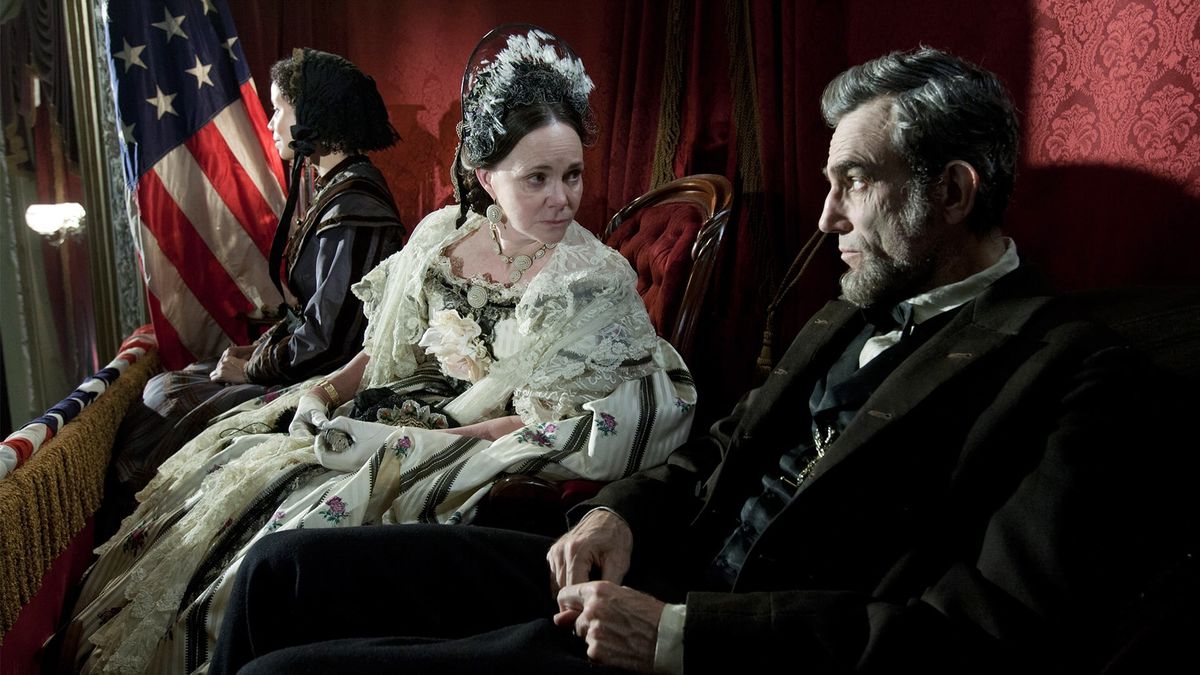
Of course it inspires everyone else in the cast to give their best. The at times difficult marriage between Lincoln and his wife gives some wonderful material for Sally Field (easily her finest performance in decades). Mary Todd Lincoln is aware she will always be a disappointment for her husband as a partner, but equally feels that her public mourning for this lost child speaks of a deeper humanity than her husband. Loyal if questioning, she’s also abrupt and clumsy enough at times to be a liability.

Tommy Lee Jones is exceptional as Thaddeus Stevens, prickly, difficult but also morally pure (the film has helped rediscover the unjustly overlooked Stevens). Previous Lincoln performers Strathairn and Holbrook give very good support. James Spader is great fun as colourful lobbyist. Joseph Gordon-Levitt is all restricted ambition as Lincoln’s son. Jared Harris shines in a few scenes as Grant. Gloria Reuben has a few beautiful moments as Mary’s confidante Elizabeth Keckley.

Lincoln is a film shot with all the prestige of an American Merchant-Ivory, in love with the power of democracy. But it’s also open-eyed on how a system like America’s works, and how perilous delivering “the right thing” can be. Emotional and engrossing, it’s powered above all by a towering sublime performance by Daniel Day-Lewis who might as well be the 16th President reborn. It took me three viewings to see the richness here – but I am so glad I stuck it out.
Glory (1989)

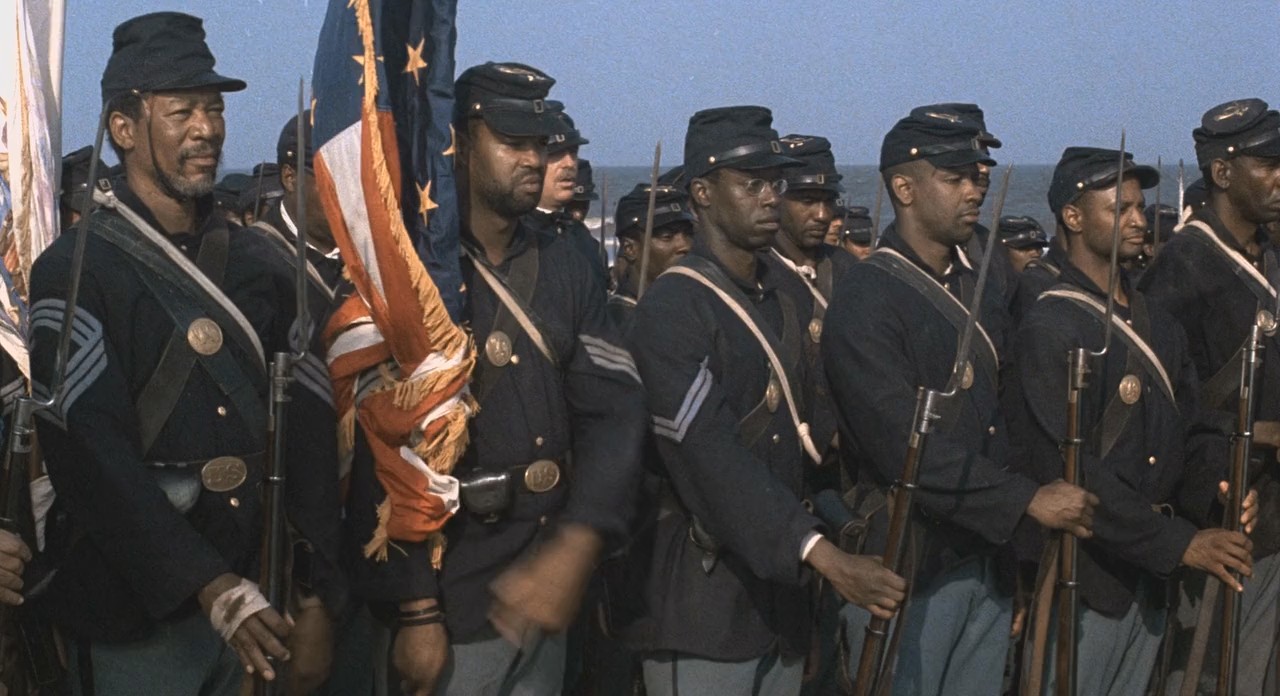
Morgan Freeman and Denzel Washington are among the first black American soldier in Glory

Director: Edward Zwick

Cast: Matthew Broderick (Colonel Robert Gould Shaw), Denzel Washington (Pvt Silas Trip), Cary Elwes (Major Cabot Forbes), Morgan Freeman (Sgt Major John Rawlins), Andre Braugher (Cpl Thomas Searles), Jihmi Kennedy (Pt Jupiter Sharts), Cliff De Young (Colonel James Montgomery), Alan North (Governor John Albion Andrew), John Finn (Sgt Mulcahy), Bob Gunton (General Charles Garrison Harker), Jay O Sanders (General George Crockett Strong)

The American Civil War started over slavery, but it took a long time for either side to admit it was a fight about slavery. Racism abounded on both sides, and it was a fight in which black Americans may have been the subject, but were rarely invited to join. Glory covers this point of history, and specifically the first all-black regiment and its struggle to be recognised as equal to the other regiments in the army. 

Wounded at the Battle of Antietam in September 1862, Robert Gould Shaw (Matthew Broderick) returns home to Massachusetts and accepts command of the first all-black regiment, which is currently being raised by abolitionists in the state. With his friend Cabot Forbes (Cary Elwes) as second-in-command (no one was progressive enough to actually allow black officers for the regiment), he recruits a wide range of black Americans, from free-man and bookish intellectual Thomas Searles (Andre Braugher) – an old friend of Robert and Cabot – to former slaves such as the wise John Rawlins (Morgan Freeman) and the resentful Silas Trip (Denzel Washington). Training is a struggle, with the army denying the regiment supplies and support, and it’s an equal struggle when they reach the front line to be recognised for duties other than looting and latrine digging. Will the Massachusetts 54th be given the chance to prove itself in the front line – and establish a black man can fight as hard and bravely as a white man can?

Edward Zwick’s beautifully filmed, carefully re-created historical epic set the tone for much of his future career. It’s an often overly-sentimental film straining for a very self-conscious sense of importance, weighed down by the pride at the “message” it is carrying. It often does hit the mark with presenting scenes that carry emotional force – but then seeing as it treats nearly every scene as being a “moment” that should move us (with James Horner’s choral manipulation working double time to get us experiencing feelings), it’s no wonder that it succeeds sometimes.

Which is not to say the message it presents isn’t an important one. Black Americans have often been pushed into the margins of American Civil War history. Or worst of all presented as the victims, reliant on the courage and bravery of the abolitionists of the North to save them from slavery in the South. Until Glory it was very rare for anything to push their stories front and centre – or to tell a story where former slaves were allowed to fight their own battles and choose their own destinies. 

It’s one of the strongest marks of the film: these are soldiers unlike any other, who enter battles with less concern about their own survival, and more about having the chance to live as freemen and to make a mark on the world. To show that they, and people like them, could do just as a white man could do. And if they had to die to do that, better to live a day on their feet as freemen then a lifetime on their knees. It’s the principle emotional message of the film, and something Zwick translates with some skill, even if he frequently overeggs the pudding while doing so.

However, with such a strong message, it’s a shame so much of the film is filtered through the experience of its white lead character. For many of the films of the 80s and 90s dealing with these issues – Cry Freedom, the Steve Biko biopic, with Biko as a supporting character to his white South African journalist friend, being perhaps the key example – it was essential to have a white man at the centre, as if worried that audiences couldn’t understand the story they were seeing unless they had it filtered through the perception of someone who looks a bit more like them.

Matthew Broderick takes on the lead role here of Shaw – with the film giving a significant slice of its running time to its coming-of-age theme of Shaw learning to become a leader of men – and while the character is meant to be callow and an unlikely Colonel, it doesn’t help that Broderick lacks the charisma for the part. Perhaps he is a little too lightweight an actor for such an enterprise, for a film that demands greater force of character (you can imagine Tom Cruise doing a much finer job in the role).  Similarly, the familiar beats of a young man learning how to lead feel trivial compared to the life-and-death issues facing his soldiers.

But too often Zwick’s film returns us to Shaw’s point-of-view, the narrative filtering so much of the action through his perceptions and decisions that the black soldiers become supporting actors in their own stories. Broderick is not helped by the soldiers being played by some of the finest American actors of the last 30 years. Braugher is fabulous in the thankless role of the bookish man who must grow a spine. Morgan Freeman established a persona – the wise and level headed older man, who will not let hate and fury define his life and his choices – that would last him for the rest of his career, and is superb (his Oscar nomination for Driving Miss Daisy is probably the only thing that led to him not getting a nod for this film).

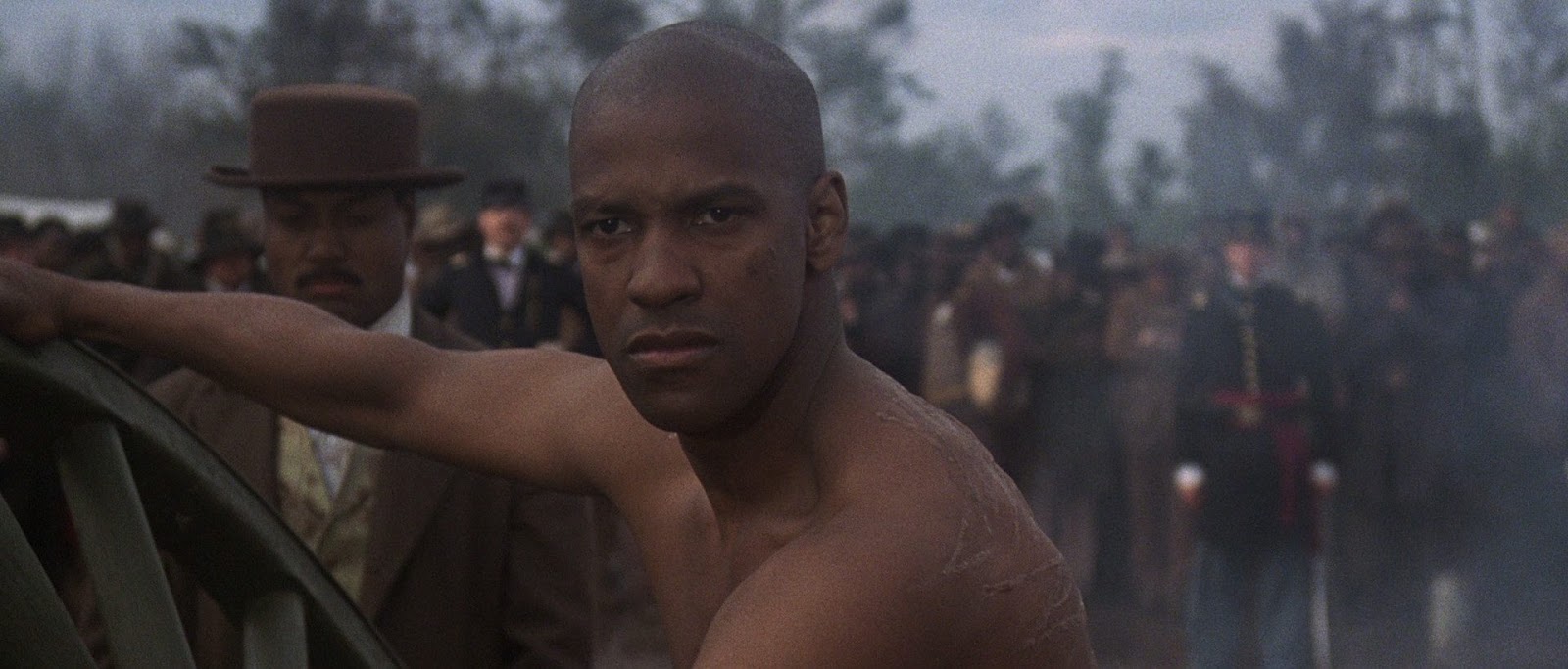
Denzel Washington took home an Oscar as the bitter, angry Trip – and it’s the sort of role an actor seizes with relish. Washington fills every frame with his rage at the system, his inarticulate, indiscriminate anger lashing out in every direction. It’s the fury of a man who has had all his choices taken from him in life, and would rather destroy things than run the risk of allowing himself to become committed to something, or form a bond. Washington probably won the Oscar alone for the astonishing scene where he silently, defiantly accepts a whipping (on a body covered with scars) for missing a curfew. He’s an elemental force of nature in the film.

There is plenty of strong stuff in Zwick’s work, but the film itself overplays its hand frequently. Moments of emotion are played so heavily to the hilt they sometimes fail to have an impact. It wants you to know at every turn that you are watching a film with an important social message – and the speechifying at points put into the mouths of the characters runs dry. While superbly made – veteran photographer Freddie Francis’ work is beautiful (and Oscar winning) – it’s a heavy-handed, overly pleased with itself film that knows all too well that it is about an important subject. While sometimes it lands – often in quieter moments, particularly those where Freeman and Washington are allowed to simply be human without overindulgent music cues hammering home the emotions – at others it comes across as too much.

The Beguiled (2017)

Nicole Kidman struggles to resist the charms of Colin Farrell in The Beguiled

Director: Sofia Coppola

Cast: Nicole Kidman (Miss Martha), Kirsten Dunst (Edwina), Elle Fanning (Alicia), Colin Farrell (Corporal McBurney), Oona Laurence (Amy), Angourie Rice (Jane), Addison Riecke (Marie), Emma Howard (Emily)

A remake of Don Siegel’s adaptation of the original novel, The Beguiled throws a feminist slant on a story of a confederate soldier, Corporal McBurney (Colin Farrell) who, in the later years of the Civil War, is found injured in the grounds of a girl’s school, where the women have continued to run the operation while the menfolk are consumed with (and by) the war. The school is run by the distant Miss Martha (Nicole Kidman), with the lead teacher Edwina (Kirsten Dunst) and five students of varying ages. All of the girls and women find themselves entranced (beguiled!) with the deceptively gentlemanly McBurney, whose true aims may be darker than assumed.

Sofia Coppola’s version of the story shifts the attention onto the women of the piece, and their plight and emotional journeys. This is a perfectly legitimate stance to take – and showing effectively a colony of girls and women in the 1860s living some sort of structured commune life is interesting and different – but Coppola’s film has a coolness and distance to it that ironically makes it far less than beguiling than it should be.

Beautifully filmed as the film is, it’s slow pace and meditative tone – as well as the rather obvious points it seems determined to make about male and female relations – actually serve to make the film less engaging than it should be. Wonderfully framed and painterly in its execution, with an effective mix of classical and 1970s style, it still never quite sparks into life.

The cast also struggle to bring a heartbeat to their characters. Nicole Kidman brings her customary reserve and elegance to a woman who has hints of a mysterious past that troubles her to this day, but the role remains distant and difficult to read – more than the film really requires. A clash or seduction between her and Colin Farrell’s corporal keeps promising dynamite but the explosions never really seem to come. Farrell laces his role with charm and a gruff masculinity, but the role misses a sense of his own darkness or manipulative nature until quite late, with the final act revelations making him appear more angry and bitter than the role really requires. It all kind of sums up the film that gets lost in its artifice and fails to uncover its heart.

The film, you could argue, does its best to beguile the audience with McBurney as the film’s character are. We are shown at every angle his vulnerability and tender politeness, and hidden from us for too long are his more manipulative elements. Coppola’s film becomes an intense study instead of sexual feelings and relations within a confined space. From sensual hand washes from Miss Martha, to intense declarations with lonely teacher Edwina, to not-so-innocent flirtations with the pupils, there is more than enough evidence that McBurney’s desire to stay may well be as much linked to seeing the school as having the potential to be his own private harem. The film’s failure in this intense sexual politics is that, while it captures moments of the simmer of attraction, it fails to really establish the danger that McBurney could suggest, as a violent man of action with complete control over a group of women.

Indeed the final moments of the film even suggest that the school itself may be a sort of siren’s bay – although lord knows McBurney is no Odysseys – which I found a rather confusing beat. Effective as the final images, or the film’s last supper betrayals, may be, they don’t carry quite enough wait because the film never quite nails the sexual tension it is aiming for, or the sensual danger it is trying to establish as a theme within the film. 

Other changes make less sense as well. Coppola deliberately changes the race of Edwina, from a mixed-race young woman to someone white enough to be played by Kirsten Dunst. While Dunst’s performance is fine, many of the themes of Edwina’s lack of confidence, her self-loathing, her feeling of having no place outside of the school, of being somehow less than other women are left in place. These themes of course make perfect sense for a mixed race woman in the 1860s who has landed a job through the connections of her father, but they make less sense for an attractive young schoolteacher with a privileged background. Coppola made the change because she felt that she could not do the theme justice, but she misses the fact that the very appearance of the character is the context needed for her to make sense.

The Beguiled is beautiful to observe and has its moments, but it never really comes to light the way it should. Thoughtful and poetic a director as Coppola is, she has created a film here that feels all artifice and no depth, that wants to paint a picture of the life of women in the civil war but never really has the energy and fire to make this come to life in a way to make the audience as engaged as they should be.

Young Mr Lincoln (1939)

Henry Fonda excels in the origins story as the Young Mr Lincoln

Director: John Ford

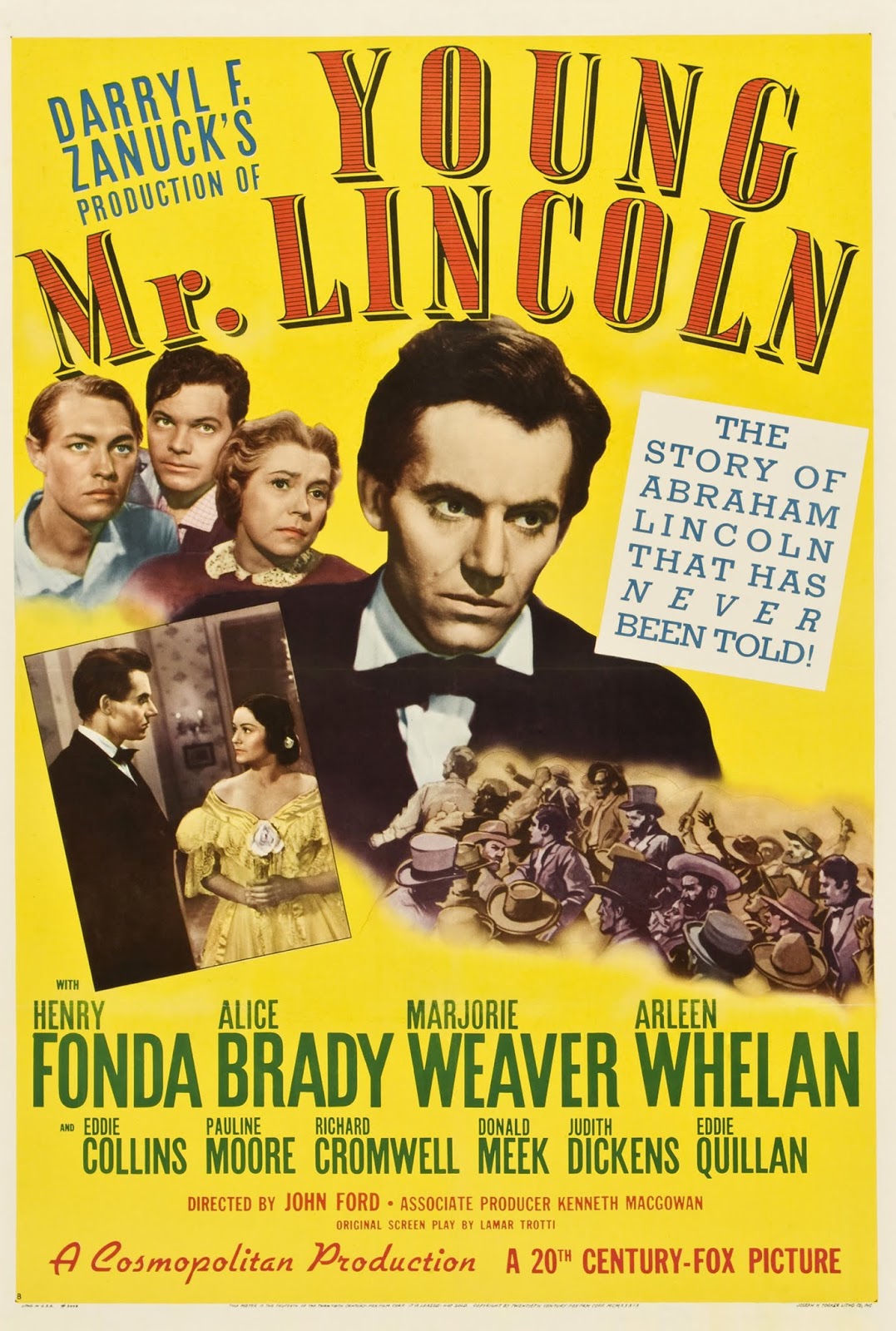
Cast: Henry Fonda (Abraham Lincoln), Alice Brady (Abigail Clay), Marjorie Weaver (Mary Todd), Arleen Weaver (Sarah Clay), Eddie Collins (Efe Turner), Pauline Moore (Ann Rutledge), Richard Cromwell (Matt Clay), Donald Meek (Prosecutor John Felder), Eddie Quillan (Adam Clay), Spencer Charters (Judge Herbert A Bell), Ward Bond (John Palmer Cass), Milburn Stone (Stephen A Douglas)

John Ford is often called the mythmaker of America, the director who perhaps contributed more than any other to building a romantic vision of America’s roots and past. As an explorer of the legends and mythology that underpinned his country, it’s perhaps no great surprise that he directed a film about the American revered more than any other since the Founding Fathers – Abraham Lincoln himself.

Playing out over 10 years, the film follows Young Honest Abe (Henry Fonda) from his days of autodidactism with a law book in Illinois, through his love for, and the death of, Ann Rutledge (Pauline Moore) and his arrival in Springfield to practice law (which he does with a shrewdness mixed with the wisdom of Solomon). The bulk of the film’s plot focuses in particular on him representing two brothers accused of murder in a courtroom trial, where Lincoln’s wit, wisdom and determination see justice done.

Okay reading that subplot, it’s pretty clear that this is a fairly rose-tinted view of The Great Emancipator. Henry Fonda had put off playing the role, as he felt it would be like hewing a performance out of marble. It’s hard for non-Americans to even begin to understand the reverence with which Lincoln is almost universally held in America, but it runs through this film like sugar through a stick of rock. Lincoln throughout the film is maybe an increasingly canny operator with a mastery of winning people over and playing crowds large and small, but he’s also always right, always does the right thing and always has a warm regard and love for genuine real people.

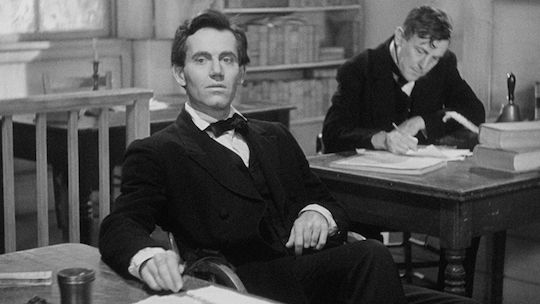
If you made the film today it would probably be called Abraham Lincoln: Origins, as Ford shows Lincoln building up all the weapons that would become central to his political artistry. Fonda starts the film gangly and physically awkward, finding it hard to know what to do with his height or long arms while giving speeches (Fonda wore platform shoes to increase his height). But even at the start his words are warm and genuine, even if his delivery is awkward. It’s something he masters to a far greater degree by the mid-way point of the film, when he skilfully diffuses a potential lynch mob with wit, gentleness, calm and a bit of righteous shaming. By the time he hits the courtroom, he’s overwhelmingly confident in his physicality and able to match it up with his oratorical brilliance and his skill at using seemingly rambling, inconsequential stories to suddenly hit home a sharp and painful truth.

Fonda’s impressive performance as Lincoln makes the film. Fonda gives Lincoln not just these positives but also hints at his sharpness of mind and his cunning. Negotiating a legal disagreement between two farmers (which he does with such skill that both end up paying him), he not only gives a fair sentence, but shows how he is not above manipulating men to achieve his ends (and, in biting one of the coins that he is given, that he may be honest himself but he’s not always trusting). He has a romantic regard for the mother of his clients (played very well by Alice Brady), but can still gently patronise her with his romantic ideal of her as an ideal American mother.

But when the push comes, Lincoln is a man of principle, wrapped in a skilful performance. The idea of mob justice is anathema to him, while Fonda makes clear he’s smart enough to not say that outright but to guide the crowd to agree with him. During the selection of the jury for the courtroom scene, he will accept men honest enough to say they favour hanging for the guilty, but turn down equivocators or those who believe they are better than the accused men. During the trial scene, he erupts in moral outage when the boys’ mother is pressured into naming one of her sons as the killer so as to save the other from the death penalty.

But he’s also a clever and brilliant player of the game, able to charm both the working classes and the rich, even if he’s not comfortable with either. During the trial scene, his quick wit and relaxation run rings around the government prosecutor (a good role of absolute convictions from Donald Meek) and he easily wins the crowd over with a series of gags and light touches that also carry with them a real, deep truth. Ford is also able to show his ambition – over the grave of Ann Rutledge he lets the fall of a stick decide whether he will continue his career or stay at home, and he all too clearly lets the stick lean over one way before letting it fall (he even acknowledges this himself).

Ford’s film is only very loosely based on actual true events – only the final coup Lincoln uses to win the case is really based on fact. The film is covered with smatterings of what look now like clumsy droppings in of key facts or persons from Lincoln’s life – from the cowpoke who plays “Dixie” (“Sounds like a song you could march to” is Lincoln’s comment) to Lincoln meeting future-wife Mary Todd, to his legal (and romantic) rival being none other than Stephen A Douglas his later rival for the presidency. There could have been a lot more, but afraid that it would make the film ridiculous, Ford kept these to a minimum by simply refusing to shoot them (such as a planned scene where Lincoln met John Wilkes Booth).

It all works because the audience knows who Lincoln will become, and it’s told with an earnestness and a certain amount of pace. Ford however really crafts a modern American myth and it even ends in a suitably epic scale: having won the case, Lincoln strikes off for a walk up a hill, trudging into the distance while a storm brews, heading onwards and upwards away from us and into his future. Sure it’s corn, but it works.

Cold Mountain (2003)

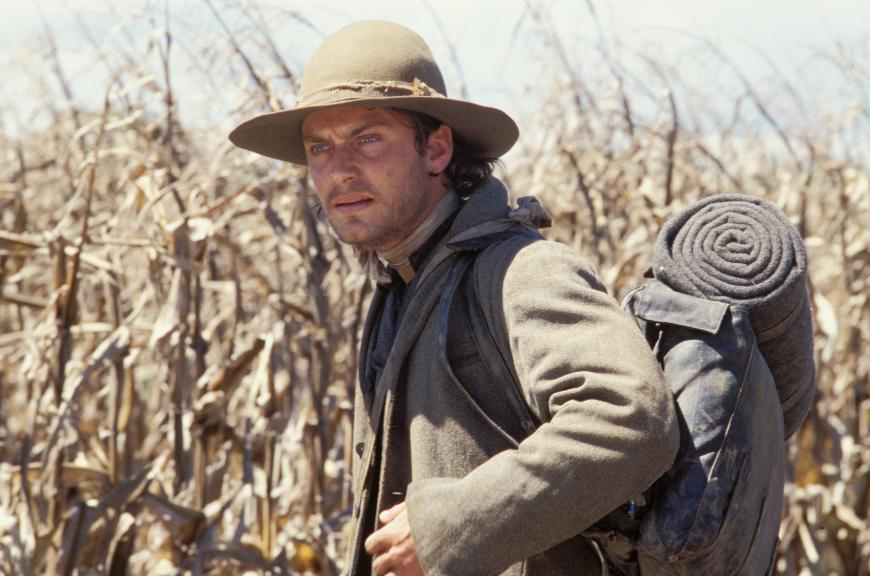
Nicole Kidman and Jude Law are souls in love separated by war in Cold Mountain

Director: Anthony Minghella

Cast: Jude Law (WP Inman), Nicole Kidman (Ada Monroe), Renée Zellweger (Ruby Thewes), Eileen Atkins (Maddy), Kathy Baker (Sally Swanger), James Gammon (Esco Swanger), Brendan Gleeson (Stobrod Thewes), Philip Seymour Hoffman (Reverend Veasey), Natalie Portman (Sara), Giovanni Ribisi (Junior), Lucas Black (Oakley), Donald Sutherland (Reverend Monroe), Cillian Murphy (Bardolph), Jack White (Georgia), Ray Winstone (Teague), Melora Walters (Lila), Charlie Hunnam (Bosie)

There was no difficult novel Anthony Minghella couldn’t adapt for the big screen. Cold Mountain is as beautiful and handsome a film as any he made, and his masterful scripting of a complex story is testament to his skill. So why is Cold Mountain not more loved? Is it because it’s almost too well made, too handsomely mounted, too literary and intelligent? Is it, actually, trying a little too hard? Is it a Cold Mountain itself, a giant structure of beauty but with an icy heart?

Based on Charles Frazier’s novel, set in the final days of the American Civil War, confederate soldier Inman (Jude Law), knowing the war is lost, deserts to return to the woman he loves, Ada Monroe (Nicole Kidman). The two of them have only spoken a few times but they feel a deep personal bond. During the years of war, poverty has hit preacher’s daughter Ada, although she has crafted a life-changing friendship with 18th century trailer trash Ruby Thewes (Renée Zellweger) which has helped her survive. As Inman’s odyssey home leads to him encountering a number of different vignettes that show the despair Civil War has brought to America, Ada struggles to survive and avoid the sinister attentions of home guard enforcer Teague (Ray Winstone).

There is so much to admire in Cold Mountain I want to start there. The photography is beautiful, and the film is assembled with a striking grace and skill. Walter Murch’s editing and sound design is perfect, with each shot of the film being fabulously composed and each carrying a specific message and purpose that contributes to the overall impact. The use of music – a collaboration between T Bone Burnett and Gabriel Yared – is perfect, a series of wonderful period compositions and impactful orchestral pieces. 

Everything about how Minghella captures the feel of the time, the mood of the South heading into war, and the disintegration of social conventions as the war takes hold and lays waste to the land, rings completely true. From the celebrations of the young men at the film’s start, to the increasingly haunted, tragic look of Jude Law’s Inman as he discovers new horrors at every point in his journey, you know war is hell. Minghella ironically opens the film with a catastrophic defeat for the North – but the slaughter disgusts Inman, and his burial under mounds of rubble during an explosion leads to a spiritual rebirths with Inman deciding senseless killing isn’t worth the candle any more. In a war of willing volunteers, how do we respond when these volunteers don’t want to keep fighting?

And why should they, as each of the various vignettes Inman walks through is a wasteland of moral collapse? From a sex-obsessed preacher (an amusing performance by Philip Seymour Hoffman) who has lost his morals to a tragic widow desperately trying to feed her baby (Natalie Portman, effectively stealing the whole show with an intense performance of utter desolation), everything Inman sees shows that nothing is worth all this. The film gets a very good sense of the drive that pushes Inman forward: constantly moving, he’s rarely seen sitting or resting. Each of the Odyssey-inspired stories gives him something to reflect on, or another opportunity for moral and emotional torment , from dragging bodies in a chain gang to avoiding the lustful advances of a group of hillbilly sirens who trap deserters for money.

Meanwhile, things ain’t much better on the homefront, where corrupt bullies like Teague (a slightly too obvious Ray Winstone) are enforcing their own law at the expense of justice. Poverty is also the impact of war, and poor Ada suffers hugely from this, as supplies run low and eventually out. Minghella’s swift and skilful establishment of character shows from the start how Ada is a stranger in a strange land, a middle-class town girl who is completely unsuited for country life and utterly unready to fend for herself when the chips are down without support. 

Is it any wonder in this world, that Inman and Ada cling to memories? Part of the film’s effect depends on how you respond to the romantic bond between these two clinging to a few brief moments (a few exchanges and one immensely passionate kiss on the day of Inman’s departure). It’s an old-fashioned, sweeping, love story and it depends on you relating to that old-fashioned mythic love story. I’m not sure that the film quite sells this as effectively as it could do. Somehow, perhaps because Inman is so insular and Ada a little too difficult to relate to, the passion between them can’t quite carry the sweep that the film demands, even as Minghella skilfully intercuts between them.

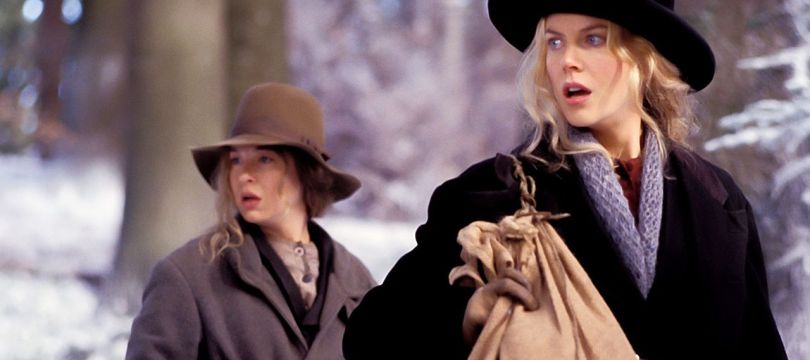
Nicole Kidman in particular feels miscast as Ada. Kidman is too intelligent, too determined and strong a performer to convince as a woman who is unable to look after herself and nearly succumbs to fear – she’s just not an actress I can picture cowering in fear in front of an angry rooster. Kidman does her best, but the character never really wins the sympathy that we need for the performance to work. Jude Law has much more to work with as Inman, brilliantly communication a whole world of feeling with very little dialogue. 

What works less well with Law is that his plotline just doesn’t quite grip enough. The vignettes are often entertaining, but feel like episodic sketches, and the sense of a building picture of the despair of the South doesn’t quite come into shape as much in practice as it does in theory. Frankly, after a while, you are ready for Inman’s journey to come to an end and for him to intersect with Ada’s plotline back at Cold Mountain (which is built around a consistent group of characters who engage our interest).

In the home front storyline you’ll be relieved with the entrance (almost an hour into the film) of Renée Zellweger’s blowsy Ruby, a loud-mouthed, trailer-trash woman with a heart of gold and a mastery of farming who effectively saves Ada’s life. It’s a loud, big, Oscar-winning performance from Zellweger that plays with being a little broad, but is skilfully balanced by the slow reveal that this personality is a cover that Ruby uses to hide her own pain. Added to this depth, her heart-warming presence carries such simple pleasure and colour compared to the more muted performances from the leads that you welcome it. 

Because Inman and Ada don’t quite work as a romantic couple. There is something slightly cold about them, slightly hard to relate to. And for all the intense and brilliant construction and filming of the film – and the mastery of Minghella’s writing and direction – it never makes them into the sort of classic romantic couple you care for. You want to connect with it more than you ever really do, and whether that is down to miscasting or the lack of intense chemistry between them I’m not sure, but it means Cold Mountain never becomes the great romantic tragedy it should be. You want a film this good to be as good as it feels – and it never quite is.

Dances with Wolves (1990)

Kevin Costner finds his inner peace in Dances with Wolves

Director: Kevin Costner

Cast: Kevin Costner (John Dunbar/Dances With Wolves), Mary McDonnell (Stands With A Fist), Graham Greene (Kicking Bird), Rodney A. Grant (Wind In His Hair), Floyd Red Crow Westerman (Chief Ten Bears), Tantoo Cardinal (Black Shawl), Jimmy Herman (Stone Calf), Nathan Lee Chasing His Horse (Smiles A Lot), Michael Spears (Otter), Charles Rocket (Lt Elgin), Robert Pastorelli (Timmins), Tom Everett (Sgt Pepper), Wes Studi (Toughest Pawnee), Maury Chaykin (Major Fambrough)

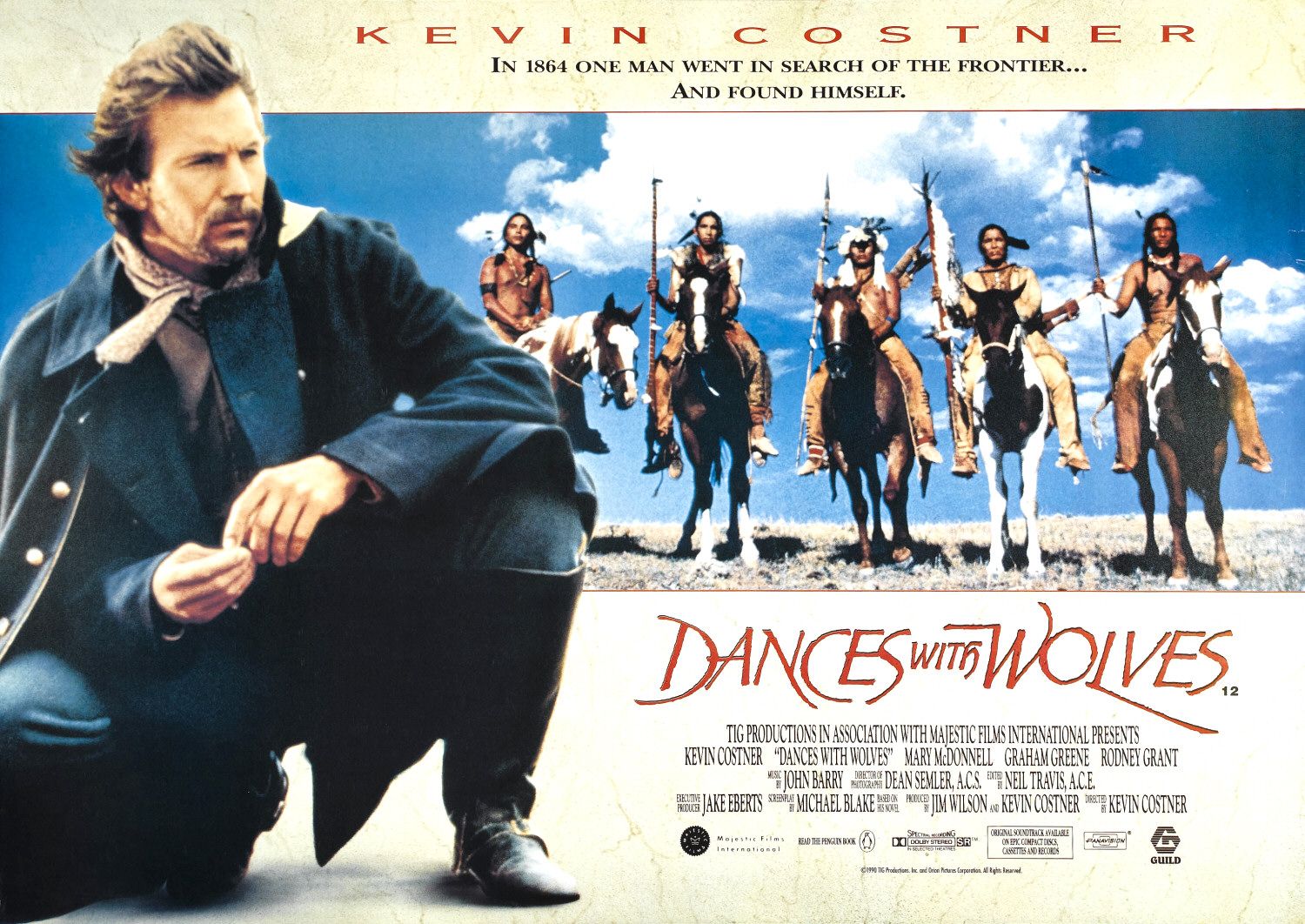
At the end of the 1980s, Kevin Costner was the biggest film star in the world, with a string of hits behind him. So he did what Hollywood stars before and since have done: cashed in all his chips and made the film he had to make. It would be long, it would be mostly in a foreign language, it would have no stars (other than himself) and – most poisonous of all at the time – it would be a Western. When the funding started to dry up, Costner even paid for the overtime out of his own pocket. Not for no reason was the project dubbed “Kevin’s Gate” by the sceptical media, eagerly expecting Hollywood’s golden boy to land on his face.

How wrong they were. Dances with Wolves not only made almost 20 times its budget at the box office, it changed many Americans’ perceptions of Native Americans – oh yes and it also won seven Oscars, including Best Director for Costner and Best Picture. Costner plays Lt. John Dunbar, a civil war veteran who (after an act of suicidal death-seeking foolishness to avoid having his leg amputated) chooses a posting to an abandoned fort in the middle of Sioux country. Forgotten by the army, Dunbar forages alone and comes to the attention of the Sioux. At first cautious around each other, Dunbar eventually befriends healing man Kicking Bird (Graham Greene) and finds himself cautiously welcomed into the Sioux tribe as a guest, finding love with Stands With A Fist (Mary McDonnell), a white woman raised by the Sioux. He begins to find the Sioux as kindred spirits.

Costner’s film is an expansive, heartfelt poem, a film in love with sweeping vistas and with an endearing, humanitarian view of the world, beautifully shot by Dean Semler and helped immensely by a wonderful, swelling lyrical score by John Barry – one of the best scores you are likely to hear. Costner dispels any doubts about his abilities to direct by throwing himself into a truly epic canvas – and some of the ideas here are reminiscent of Lean, in their beautiful use of the American plains. Within this large canvas, Costner tells an actually fairly simple, but also sweetly touching, story of the disillusioned man who finds himself in the wilderness.

If there is a flaw with Dances with Wolves it is that its story is so traditional and (in many ways) predictable. It’s understandable that the story introduces a white man to be our surrogate when encountering the Sioux. But it’s hard to shake the feeling of all that all-too familiar trope, the White Saviour. The primary good the Sioux serve in the film is to help Dunbar discover himself, to come to peace with himself. In turn, it’s Dunbar who increasingly becomes the tribe’s protector – helping them to find the buffalo, giving them guns and leading the defence against a Pawnee tribe attack, increasingly recognised as a “celebrity” in the tribe.

On top of that, Dunbar’s love interest becomes the only other prominent white character in the film. Again I understand that the film needed someone who was able to serve as a cultural and language bridge between Dunbar and the Sioux. But could there not have been some sort of narrative invention to make this female character a Sioux who had learned some English? It seems as if the film can only go so far – and showing a multi-racial relationship was probably that. Saying that, McDonnell is very good as the gentle Stands With A Fist, but it feels like a cop-out.

Costner’s own central performance gives everything the film requires. It’s a fairly simple role: the disillusioned soldier finding inner peace. The film plays very much into the attraction of the “noble savage” – the simplicity and honesty of the Sioux lifestyle being so much purer than the corruption of the “modern” world (needless to say, nearly all the white men in the film are truly awful people). But Costner brings his considerable charm to bear, delivering many of his lines with that slightly cocksure, shy grin he uses so well. The film suffers from its narration being delivered by Costner’s flat and unmodulated voice, but he’s perfectly fine in the role.

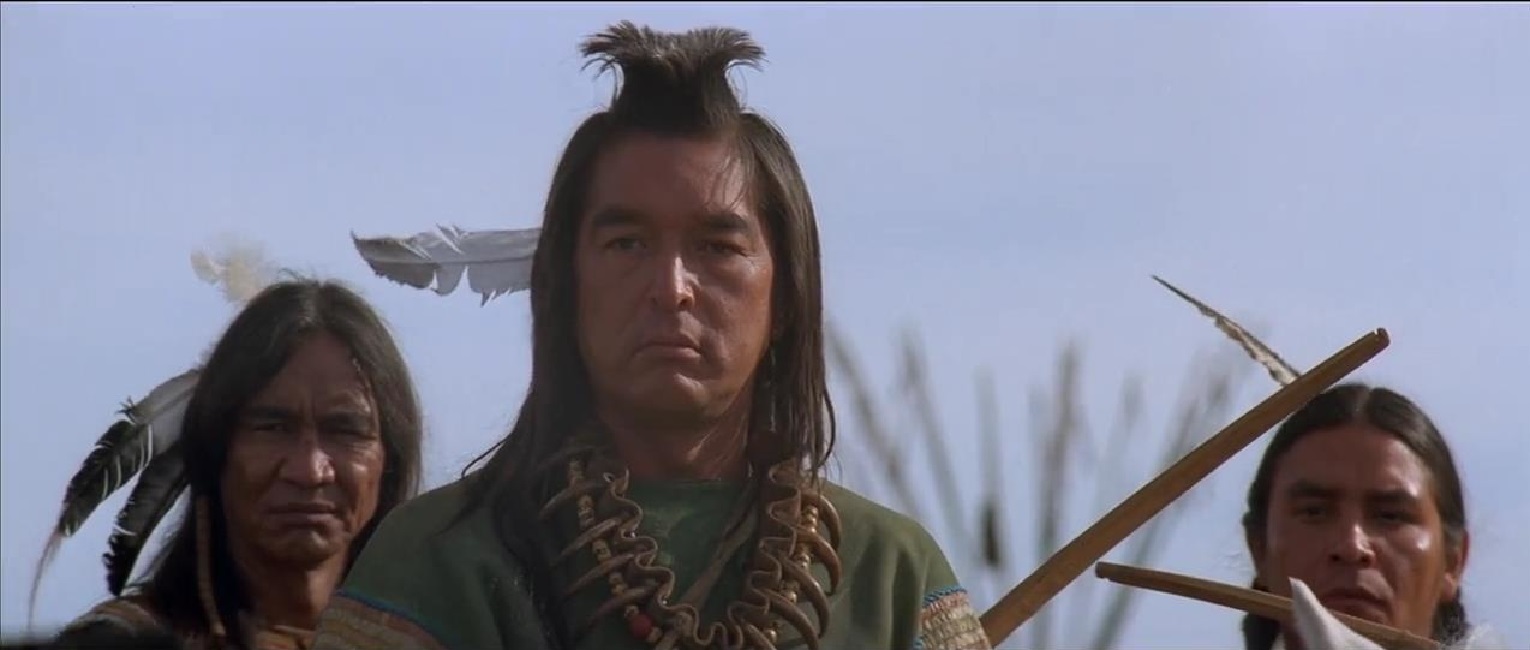
He plays it with an entirely straight honesty – and, for all its faults, this honesty makes the film work. The film goes overboard to humanise and provide empathy for the Sioux, as if wanting to correct generations of films that have cast Native Americans as dangerous savages. The Sioux are humane, generous, welcoming and dignified. Graham Greene has to carry much of this as medicine man Kicking Bird, and he gives a stirring, sympathetic performance, with equally fine performances from Rodney A. Grant and Tantoo Cardinal in particular.

The film delivers all its tropes and traditional structure with a straightforward, heart-warming simplicity – it really means that you go with the picture, and find yourself as drawn to the Sioux lifestyle as Dunbar is. Also, for all the criticism of the film’s narrative, it shouldn’t be forgotten what a warm reception it had from Native American groups, delighted to see their ancestors presented in such an empathetic light (the Sioux Nation later adopted Costner). And the film sensitively and brilliantly stages this way of life, with a series of beautifully done vignettes ranging from marriage to simple cooking and spending time around the fire.

The most stunningly filmed of these is the buffalo hunt, a soaring marvel of camera work, editing and horseback adventure. The film doesn’t let you forget the sequence before either, where the Sioux come across a series of buffalo killed for their hides by white hunters – in comparison to the complete use of the carcass (and limited numbers killed) by the Sioux. The buffalo hunt sequence is an exciting triumph – it’s probably responsible for several of the technical Oscars the film received – and it’s a tribute to Costner’s mastery of the visuals of the American West (even if, rumour has it, chunks of it were actually filmed by Kevin Reynolds).

Dances with Wolves is a very heartfelt and honest film – and its sincerity means it kind of gets away with its obvious flaws (and its great length). Costner wanted to make an important film and he does to a certain extent – but one which wears its importance fairly lightly, and makes a series of enriching humanitarian arguments that carry real weight. It’s in many ways an extremely accomplished retelling of a familiar story. But I found myself genuinely moved by the story it wanted to tell, and the questions it asks of its audiences. Is it a great film? Probably not, but it is a good one.