Tag: Ben Chaplin

Me and Orson Welles (2008)

Me and Orson Welles (2008)

A star-turn from McKay and a brilliant theatrical reconstruction makes a charming comedy

Director: Richard Linklater

Cast: Zac Efron (Richard Samuels), Claire Danes (Sonja Jones), Christian McKay (Orson Welles), Ben Chaplin (George Coulouris), James Tupper (Joseph Cotton), Eddie Marsan (John Houseman), Leo Bill (Norman Lloyd), Kelly Reilly (Muriel Brassler), Patrick Kennedy (Grover Burgess), Travis Oliver (John Hoyt), Zoe Kazan (Gretta Adler)
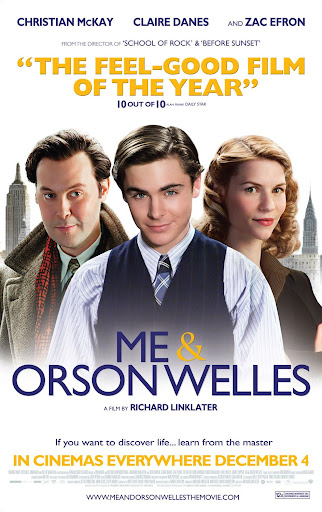
In the 1930s Orson Welles was the Great Man of American theatre, a genius blessed with Midas’ skill to turn everything he touched to Gold. He had conquered the stage and his success on radio transmitted his fame into households across America. All this and he was not even thirty. On top of his boundless charisma, creativity and magnetic leadership qualities, he was also vain, selfish, boundlessly ambitious and self-obsessed, seeing other people as little more than extras in his drama. It’s an exploration of the man central to Linklater’s Me and Orson Welles, combined with the film’s wonderfully fond exploration of that magical world behind the curtain in the theatre.

Me and Orson Welles charts Welles’ landmark Broadway production of Julius Caesar: a modern-dress marvel (‘the fascist Caesar’) that reimagined a sharply cut, pacey production set in a world of jackboots, black shirts and Nuremberg-esque beams of light. Welles (Christian McKay) was, of course, front-and-centre as Brutus with his Mercury theatre players (nearly all of whom followed him to Hollywood for Citizen Kane) all around him. Newest to the cast is 17-year-old Richard Samuels (Zac Efron), away from school, dreaming of being an actor and falling in love with older production manager Sonja Jones (Claire Danes). As the production stumbles towards the stage under Welles’ mercurial hand, Richard worships Welles and loves Sonja – but will his hero-worship survive sustained contact with Welles?

Linklater’s film is set in a gorgeous recreation of 1930s Broadway theatre, full of love for the greasepaint, backstage gossip and theatrical tricks that create a world on stage. It also features an astonishingly accurate recreation of this seminal production, staged and lit to perfection, which gets as close as we can to capturing some sense of the astonishing experience the first night audience had watching the sort of Shakespeare production they had never seen before (Dick Pope, harnessing his experience of recreation Gilbert and Sullivan in Topsy-Turvy deserves major credit for his cinematography here, perfectly capturing Welles’ pioneering use of light).

Welles’ flaws are slowly discovered by Richard Samuels – a charming, deceptively light and winning performance by Zac Efron. Samuels is at first bowled over by Welles charisma – and Welles enjoys the ego-trip of taking a star-struck young man under his wing, who he can tutor and mould (who, after all, doesn’t love having a disciple). What Me and Orson Welles interestingly does is to have its young lead slowly work out that Welles may be a genius – but he’s also a fundamentally, principle-free shit who never means what he says, doesn’t think twice about dropping people when they have served their purpose and largely sees conversation as a one-way street where Welles monologues and the other person listens (and certainly never, ever, contradicts – Welles never forgives correction).

But Welles dominates the film, like he dominated life. He’s brilliantly portrayed by Christian McKay in his first major film role. McKay, an unknown, was selected after Linklater was wowed by his one-man show about the Great Man. (Linklater refused calls from the producers to replace him with a more famous actor). McKay dominates the film in what is not only a superb capturing of Welles vocal and physical mannerisms, but also a capturing of his mix of utter charisma, God-given talent and overwhelmingly selfish egotism. McKay roars through every scene with the same force-of-character you imagine Welles had, bowling over everyone around him and shaping the world into what he wishes it to be. Problems of money, timing and people are waved away (or left to be fixed by Eddie Marsan’s put-upon version of John Houseman) and McKay’s Welles uses sheer force of will to turn every event, outcome and single moment into an intended triumph (whether it is or not). Me and Orson Welles brilliantly captures Welles ability to shape his world.

We see the way he overwhelms the personalities of those around him. People like Joseph Cotton (a superbly captured performance by James Tupper) both love him and know that’s he’s a selfish, arrogant git who doesn’t seem to care about anyone but himself. Others, like Ben Chaplin’s tortured George Coulouris, allow themselves to be mothered by Welles, even though they know his motivations are more for the show itself (and the glory that shall be Welles’). Welles is the guy who gives the same heartfelt pep-talk to multiple actors, and writes identical jovial thank-you cards to all on opening night. The guy who uses nicknames for those around him because it’s a way to subtly assert control. Linklater’s film recognises his genius, makes him overwhelmingly attractive in his gung-ho confidence, but – and this is the brilliant thing about McKay’s stunning performance – also exposes his deep character flaws.

It superbly captures his vanity, selfishness and self-occupation. Welles cares little for anyone, assuming he can brow-beat or overwhelm them to fulfil his wishes. That could be a set designer, furious at Welles hogging credit for his work in the programme (Welles promises this will be amended, forgets about it and then later – when it’s too late to do anything about it – bluntly says he has no intention of not taking credit). It could be the radio show he turns up to record, clearly having not read the script, walking in seconds before live broadcast and promptly improvising a superb monologue (based on The Magnificent Ambersons) which at first puzzles, frustrates and then stuns into fawning admiration his fellow actors. What’s clear is that this is the sort of behaviour you can only get away with when you are flying high and all is perfect – Welles after all would self-destruct like few others in the next few years, never again able to yield such charismatic power again.

Me and Orson Welles uses a familiar structure – a love triangle of sorts – to bring this to life. Claire Danes gives a marvellously winning performance as an ambitious and super-confident woman, trying to make her way in a male world, perhaps drawn towards young Richard because he’s more thoughtful than the rest of the men around her. (Me and Orson Welles makes clear we live in a world where the actors of the company feel comfortable taking bets on who can bed Sonja, while she is also accepts that Welles can use the women of the company like a room-service menu). Both she and Richard are perhaps the forerunners of those who will finally be pushed too far by Welles, that would leave him a perpetual outsider.

This is a fun musing on the personality of one of the greatest film-makers of all time, brilliantly set in a luxurious recreation of classic Broadway. Directed with pace and wit by Linklater, with a fine cast giving it their all (and a career-defining turn from McKay), Me and Orson Welles is light, frothy but fascinating work.

September 5 (2024)

September 5 (2024)

Well-made reconstruction of a seminal moment, that avoids all the awkward questions it raises

Director: Tim Fehlbaum

Cast: Peter Sarsgaard (Roone Arledge), John Magaro (Geoffrey Mason), Ben Chaplin (Marvin Bader), Leonie Benesch (Marianne Gebhardt), Zinedine Soualem (Jacques Lesgards), Georgina Rich (Gladys Deist), Corey Johnson (Hank Hanson), Marcus Rutherford (Carter Jeffrey), Daniel Adeosun (Gary Slaughter), Benjamin Walker (Peter Jennings)

There is only one thing we really remember about the 1972 Munich Olympics. This celebration of sport, meant to mark Germany’s re-emergence from the shadow of the Holocaust, saw 11 members of the Israeli Olympics team taken hostage and murdered by Black September, a Palestinian terrorist group. The entire kidnapping played out on international TV, the inadequacy of the German police response cripplingly obvious to millions of viewers around the world. September 5 focuses on the ABC Sports team that switched from covering Mark Spitz to one of the first primetime terrorist acts.

Journalists in films tend to either be heroic strivers after truth or scum-bag bin-searchers. September 5 is very much in the first camp, chronicling with documentary precision the professionalism and dedication involved in bringing this story to the world. The story is as terribly involving as the dreadful events it covers on fuzzy long-distance footage. But September 5 struggles when it tries to capture why it’s telling a story that has already been expertly told before (not least in Kevin MacDonald’s superb Oscar-winning documentary One Day in September). What point is September 5 trying to make, either about media or terrorism? It’s not clear to me.

Fehlbaum’s film is as expertly assembled as the swiftly cut-together sports action the team excelled at. The production and sound design faultlessly bring to life the atmosphere of a claustrophobic TV control room. It has a loving eye for the detail of how 70s television was made – you’ve got to admire the practical details of how live coverage was water-marked, clunky cameras were wheeled into position, squabbles were carried out over limited satellite windows and on-the-hoof re-wiring was made to hook up journalists on phones for live broadcast. A parade of strong actors deliver clipped professionalism and anxious strain – Sarsgaard, Magaro, Chaplin and Benesch are all great.

But it fumbles when it addresses the moral issues. Fundamentally, September 5 doesn’t know how to handle the complex ethical balance journalism straddles, between covering events like this and giving the terrorists exactly what they want. After all, as it’s pointed out, there’s a reason Black September targeted the most public event in the world (and why they made demands they surely knew Israel would never accept). They wanted mass coverage: and ABC gave it to them. By September 6, the whole world knew what Palestine was: it’s striking how many of the ABC crew are unfamiliar not only with the sort of fundamentals even a child today knows about the Middle East conflict but how some of them even have to double-check what exactly the word “terrorism” means.

On top of that, the extended media coverage, in some ways, even helped the terrorists. Not least their ability to switch on the TVs in their captured rooms in the Olympic Village and watch live footage of the Munich police’s ham-fisted preparations to storm the building. There is chilling realisation in the control room that the terrorists are also watching their coverage, but the debate about what to do in response to this is light. In fact, much of the conclusion is that the inept German police (who eventually burst into the control room, pointing machine guns wildly, demanding the feed is cut) are really to blame since they forgot to cut the building’s power.

Either way, September 5 doesn’t question the fact that the ABC team encouraged journalist Peter Jennings to remain hidden in the village so he could carry on phoning in live updates, or that they forged an ID for a junior member of the team so could pass as a US athlete and smuggle camera footage in and out of the park. Or that they tune into a police scanner to follow and report on the Munich police’s plans. It also skirts questions of ratings – a clear motivation to keep the cameras rolling – and how this meant ABC had an awkward intention overlap with Black September.

There is no question though that the crew care deeply about the athlete’s fate. Ben Chaplin’s character (an American Jew, who lost family in the Holocaust) goes farthest in constantly reminding the team they are covering the fates of real people here, urging restraint in the coverage. September 5 skirts overt commentary on the Middle East, but raises interesting questions over the characters’ (all of them old enough to remember World War Two) perceptions of Germany and the lingering guilt of that nation (very well captured by Leonie Benesch’s awkward translator).

But when given (false) confirmation that the attempt to free the hostages at the airport has succeeded, it’s the temptation of a scoop that sends the news out on the air. (This moment of mistaken celebration allows September 5 to squeeze in its moments of congratulation for the team’s excellent job before the tragic ending.) Sure, the characters look sickened when they realise their mistake – but does the fact they were given false information really matter more than the fact their motivation was because they wanted to break the story first?

September 5 never really explores these moral questions. It settles for stating them – as Benesch’s character does, describing how she and other reporters hustled at the airport for a scoop, while people literally died a few kms away. It ends with a confusing series of captions, stating this was the first time a terrorist attack was broadcast live and 900 million people watched. It’s hard to escape the feeling that the 900 million figure is being used to celebrate the coverage, rather than reflecting on the fact it taught terrorist groups large scale actions capture attention.

September 5 is on the brink of making a more interesting point, that this was a turning point where getting the story out was more important than the implications of telling the story: that transmitting sensitive information or being too quick to broadcast major headlines was the first stride on a slippery slope that led to the generally awful state of the media today. It’s not a point September 5 is interested in making.

Don’t get me wrong. The Black September attack was an atrocity and ABC’s coverage of its was expert journalism. But you can also argue it shows how journalists can disconnect what they are doing from its real-world impact. But September 5 is silent on how Black September’s success in turning their cause into international news. Or that, thanks it changed the playbooks of terrorist organisations all over the world. None of these interesting, but challenging, ideas get any airtime in this well-made reconstruction.

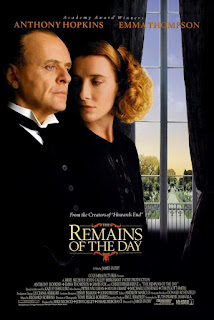
The Remains of the Day (1993)

The Remains of the Day (1993)

Hopkins and Thompson are marvellous in this masterful adaptation from Merchant-Ivory

Director: James Ivory

Cast: Anthony Hopkins (Mr Stevens), Emma Thompson (Miss Kenton), James Fox (Lord Darlington), Christopher Reeve (Congressman Jack Lewis), Peter Vaughan (Mr Stevens Snr), Hugh Grant (Reginald Cardinal), Michael Lonsdale (Dupont D’Ivry), Tim Pigott-Smith (Mr Benn), Ben Chaplin (Charlie), Patrick Godfrey (Spencer), Lena Headey (Lizzie), Pip Torrens (Dr Carlisle), Paul Copley (Harry Smith) Rupert Vansittart (Sir Geoffrey Wren), Peter Eyre (Lord Halifax), Wolf Kahler (Ribbentrop)

Kazou Ishiguro’s Booker-prize winning novel The Remains of the Day is one of my all-time favourites. So, it’s not a surprise I’m a huge fan of this masterful adaptation from the House of Merchant Ivory. I’m certain this is the apex of the team’s work. Mike Nichols had originally planned a film but, wisely, recognised when it came to making movies about repressed 1930s Brits, one team had a monopoly on how to do it best. Beautifully adapted by their regular screenwriter Ruth Prawer Jhabvala, The Remains of the Day is a wonderfully involving and deeply moving film.

Stevens (Anthony Hopkins) is a butler in a British country house purchased in 1956 by American Jack Lewis (Christopher Reeve). Keen to solve staffing problems (and for no other reason at all), Stevens journeys to the West Country to recruit the 1930s housekeeper, Mrs Benn nee Kenton (Emma Thompson). During the journey, he remembers his service for the previous owner, Lord Darlington (James Fox). An impeccable gentleman, Darlington dedicates himself to reconciliation between Nazi Germany and England, eventually tipping into an unwise dalliance with fascism and appeasement.

Stevens had no views on that though. In fact, he prides himself on his anonymity. The goal of his life is to maintain a dignified unobtrusiveness, ensuring the smooth operation of everything, leaving as little a mark as possible. Nothing can intrude on that: not his own feelings, the illness and death of his under-butler father (Peter Vaughan) and, above all, the unspoken romantic feelings between himself and Miss Kenton. The Remains of the Day is about duty and obsession and how a fixation on both can leave someone with little to show from a long life.

Stevens is living the lessons he learned from his father, an ageing powerhouse masterfully played by Peter Vaughan, who undergoes a physical collapse (from dripping nose to dropping trays) and bouts of forgetfulness, eventually dying on a night Stevens is too busy seeing to the sore feet of an illustrious French guest to spare a moment to visit him. It tells you everything about his character that this stiff-upper lipped commitment to duty is a source of pride to our hero.

There are few as curiously blank ‘heroes’ in literature than Stevens. The narrator of Ishiguro’s book is a dull, fussy, unbelievably cold man who has dedicated himself so fully to duty that he has let any emotional life wither and die on the vine – something he only realises far too late. It’s an immensely challenging role, bought to life masterfully by Hopkins. Hopkins astonishing skill here is to play all that repressed coldness on the surface, but also constantly let us see the emotion, longing and regret he is subconsciously crushing down play in his eyes and the corners of his mouth. Is Stevens even aware how much self-harm he is causing? It’s an astonishingly subtle performance.

So subtle in fact that the books conclusion – Steven’s tear-filled confession to a stranger late at night of all the mistakes he has made – was filmed but cut for being superfluous. Hopkins had done the lot, all the way through the movie, through acting skill. You can’t miss the struggle within him, not least the desperate, powerless longing he feels for Miss Kenton that, for oh-so-English reasons he can never admit to himself. Hopkins has the vocal and physical precision, but every gesture tremors with unspoken, barely understood longings. In fact, it’s a shock when he exclaims an angry “Blast” after dropping a bottle of wine (the real cause of his outburst being, of course, Miss Kenton’s announcement that she is getting married)

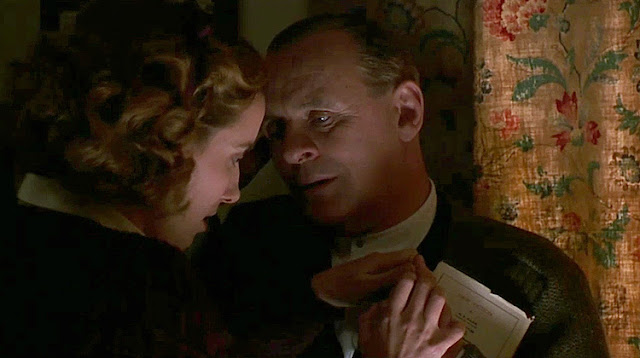
He and Miss Kenton conduct a professional relationship that blossoms into something like a friendship – but he consistently rejects her polite efforts to take it further. In the film’s most powerful scene, Miss Kenton enters his parlour and playfully tries to see the title of the novel he’s reading (a sappy romance). The playfulness tips into agonisingly awkward tenseness as Hopkins’ Stevens seems paralysed, his hand lingering inches from her hair but unable to bring himself to break decorum and fold her in an embrace – all while Miss Kenton continues her increasingly desperate semi-flirtatious banter. It of course ends with Stevens dismissing her: just as later he will take a snap of frustration as a signal to irrevocably cancel their late-night cups of cocoa together.

Emma Thompson is wonderful as a woman only marginally more in touch with her feelings and longings than Stevens is: aware that she, eventually, wants more from life, but unable to find the way of communicating the love she clearly feels for Stevens in a manner he can respond to. Instead, the two of them oscillate between a friendly, affectionate alliance and a discordant arguments (their only outlet for their passion), rooted in their inability to admit their feelings for each other. To further stress the point, both of them mentor young staffers (played by a very young Ben Chaplin and Lena Headey) who have the youthful “what the hell” to jack in all this for love.

Ivory’s wonderfully subtle film makes clear this is a turning point in history, the final hurrah for the this sort of deferential hierarchy. Stevens is the last of a generation of butlers, convinced that what their employers got up to had nothing to do with them – views not shared by Tim Piggot-Smith’s more grounded Benn, who chucks in his job working for a bullying blackshirt (who else but Rupert Vansittart?). Throughout the 1950s storyline, Stevens is constantly asked if he knew the infamous Lord Darlington (a sort of Lord Londonderry figure, hopelessly taken in by Hitler) – in fact, like Paul, he twice denies ever having known him.

And you can understand why, as the film has sympathy for Lord Darlington. As his decent, liberal god-son Reginald Cardinal (an excellent Hugh Grant) says, Darlington is a great asset for Germany precisely because he’s honest, well-meaning and motivated by a desire for peace. The fact that his leads him to consort with a host of Nazis, Blackshirts and the most appalling anti-democratic vestiges of the upper-classes (at one point, Stevens selflessly gives a performance of geopolitical ignorance so as to help demonstrate why men like him shouldn’t have the vote) is an unfortunate side-effect.

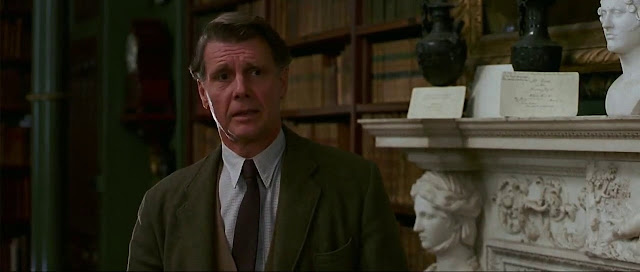
Played perfectly by James Fox, Darlington is misguided but genuine. As war approaches, he leads an increasingly hermit like life – camp-bed and paper-strewn, messy library – hosting conferences denounced by Jack Lewis (a fine Christopher Reeve) as a host of amateurs talking about a world they no longer understand. Beneath it all, Darlington is guided by fair play. So much so, it’s almost distressing to see him (under the influence of an attractive German countess) reading anti-Semitic pamphlets and sacking two refugee Jewish maids – an act he later regrets (far too late). This moment also reinforces Stevens’ compromised pig-headedness (not his place to judge!) and Miss Kenton’s fear to act (she’s horrified, but to scared of unemployment to hand in her notice).

All of this culminates in a series of scenes where emotions pour out of the actors, even while their words are banal and everyday memories and reflections. Ivory was never more confident and skilled behind the camera, and the film is a technical marvel, beautifully shot with a wonderful score from Richard Robbins. Hopkins is phenomenally good, simultaneously pitiable and smackable, Thompson is wonderful alongside him, Fox and Grant perfect – it’s a very well-acted piece. And a wonderfully perfect capturing of a classic modern British novel. No doubt: the best Merchant Ivory film.

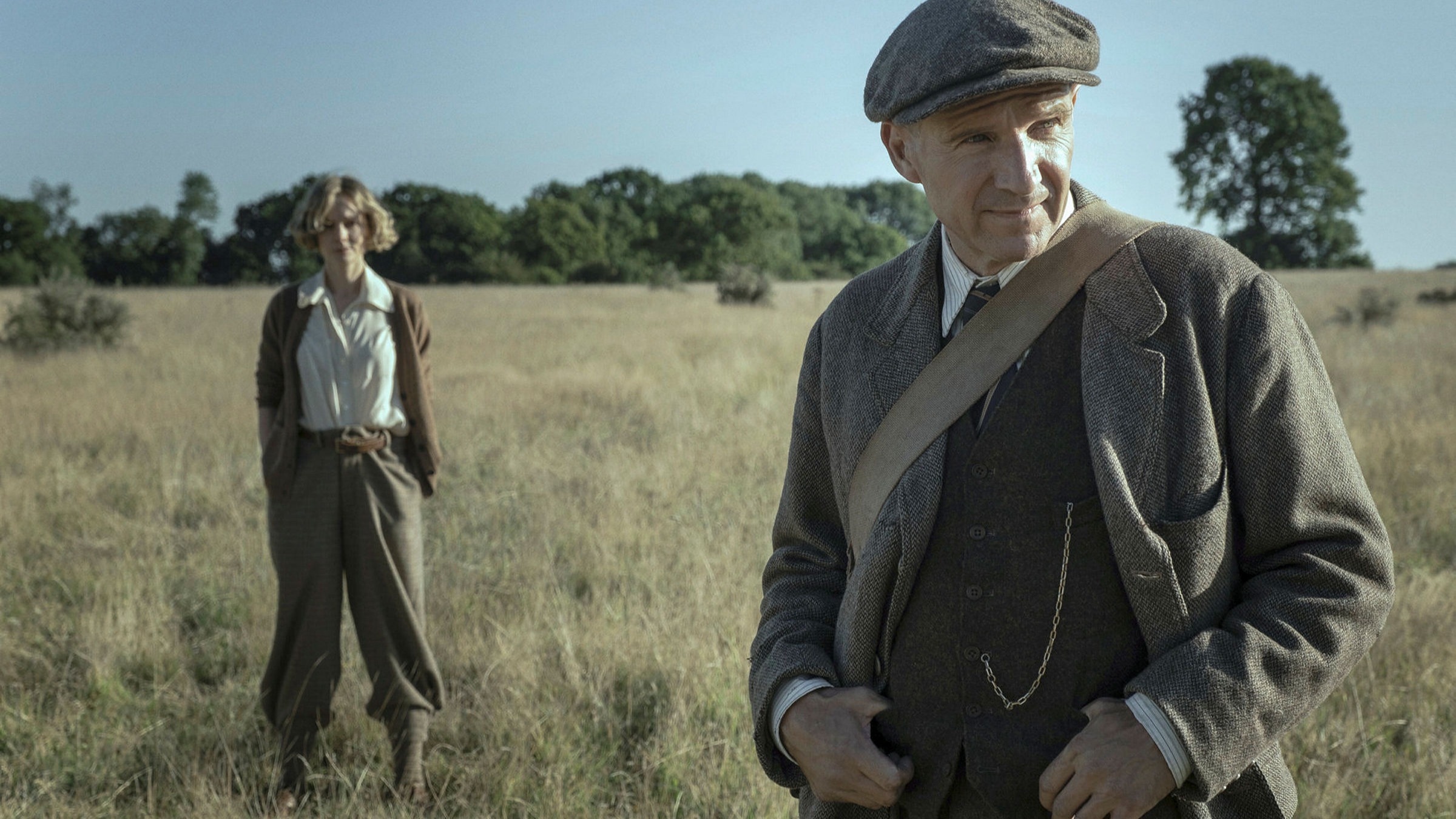
The Dig (2020)

THe Dig header
Ralph Fiennes plays an amateur digger who makes a huge discovery in the poetic The Dig

Director: Simon Stone

Cast: Carey Mulligan (Edith Pretty), Ralph Fiennes (Basil Brown), Lily James (Peggy Piggott), Johnny Flynn (Rory Lomax), Ben Chaplin (Stuart Piggott), Ken Stott (Charles Phillips), Archie Barnes (Robert Pretty), Monica Dolan (May Brown)

One of the greatest archaeological finds in British History, the Anglo-Saxon burial ship in Sutton Hoo revealed vast treasures and cultural insights that are very rarely glimpsed. Land-owner Edith Pretty (Carey Mulligan), a widow with a young son Robert (Archie Barnes), hires self-taught excavator Basil Brown (Ralph Fiennes) to investigate the curious mounds on her land. Brown discovers one of them holds the buried ship. But the dig is taken from his control by the British Museum, led by Charlie Phillips (Ken Stott): professional archaeologists who want to ensure the work is ‘done properly’. With tensions of class and profession, everyone must race against time to complete as much of the work as possible before the outbreak of the Second World War.

On the surface, The Dig is a charming, heart-felt reconstruction of a fascinating moment of archaeological history, mixed with engaging (but familiar) stories of a working-class amateurs being patronised by upper-class professionals. However, Stone’s film manages to have a richer second layer. With war approaching, and mortality constantly on the mind of most of the characters, it’s also a subtle investigation of legacy, the past and death itself.

Stone’s film develops this with its rich, poetic filming style. Beautifully shot in a series of gorgeous hazy hues, with dynamic use of low-angles and wide-angle lenses, Sutton Hoo is given an almost mystical beauty. Stone also makes extensive use of playing dialogue over images not of the conversation, but smaller moments in character’s lives, from casual meetings to cleaning shoes, that as such take on a profounder meaning. It’s a visual representation of how our legacy is often a snapshot of images and relics, moments that stay in the memory even when events (or conversation in this case) has moved on. It’s subtly done, but carries a beautiful impact.

Then of course, it’s not surprising legacy in on the mind. Each of the characters is at a tipping point in their own lives. Edith Pretty – so consumed with quiet grief over the loss of her husband that she is desperate for there to be something on the other side – is struggling with her own health, aware she will shortly leave her son an orphan. Her cousin Rory prepares for service in the RAF – service she fears will shortly leave him dead (the dangers of the airforce are clearly shown when a trainee pilot crashes and drowns near to the dig).

This connection to the briefness and intangibility of life pushes people to address their own choices. After all they are all standing in the grave of a man considered so important at that the time, a ship was dragged several miles to honour him – and today we have no idea who he was. Married archaeologist couple Stuart and Peggy Piggott confront an amiable loveless marriage (he’s gay, she’s falling in love with Rory) that shouldn’t define their lives. Basil has dealt with quiet grief at a childless marriage, and sees his work in astronomy and archaeology as his legacy.

These ideas are gently, but expertly, threaded together with a reconstruction of the key issues around the dig. Needless to say, the academics – led by Ken Stott at his most pompous – have no time for Basil’s home-spun methods. Basil’s predictions of the Anglo-Saxon tomb are constantly dismissed until he literally digs the ship up. Immediately he is benched to clearing soil (and only on Edith’s insistence is he allowed to remain at all) and later his name will be scrubbed out of the official record. It’s always the way with Britain – and a sign of how tenuous our legacies can be.

The personal stories are not always as well explored. The film has its flaws, not least the sad miscasting of Carey Mulligan as Edith. In reality, Edith was in her mid-50s when the ship was discovered. The film was developed for Nicole Kidman, but with her withdrawal Mulligan (twenty years too young) was drafted in. Sadly, nothing was changed to reflect this: meaning the characters years of spinsterhood before marriage lose impact (seriously how old can she have been when she married? She’s got a 12 year old son!). A softly underplayed romantic interest between Edith and Basil is also rather unsettling considering the vast age difference between them. (It’s better to imagine it as a platonic bond).

It’s still more engaging than the rather awkward love triangle the film introduces late on between the married Piggotts and Edith’s (fictional) cousin Rory. It’s fairly familiar stuff – the closeted gay Piggott, the growing realisation of this by Peggy and the obvious charm and gentle interest of Rory – and more or less pans out as you might expect, although at least with a dollop of human kindness.

The film’s other delight is the acting. Ralph Fiennes is superb as the taciturn Basil, a dedicated self-taught man who knows what he is worth, but struggles to gain that recognition. Fiennes not only has excellent chemistry with Mulligan and Barnes, he also suggests a quiet regret in Basil as well as a fundamental decency tinged with pride. For all that she is miscast, Mulligan does very good work as Edith while Chaplin, James and Flynn make a lot of some slightly uninspired material.

The Dig is at its best when asking quiet and gentle questions about life and when it focuses on the platonic romance between Basil and Edith. Directed with a poetic assurance by Simon Stone, it doesn’t push its points too far and gets a good balance between fascinating historic reconstruction and more profound questions of mortality.