Tag: Dane DeHann

Oppenheimer (2023)

Oppenheimer (2023)

Nolan’s masterful musing on the morality of science is both challenging and compelling

Director: Christopher Nolan

Cast: Cillian Murphy (J Robert Oppenheimer), Emily Blunt (Kitty Oppenheimer), Matt Damon (General Leslie Groves), Robert Downey Jnr (Lewis Strauss), Florence Pugh (Jean Tatlock), Josh Hartnett (Ernest Lawrence), Casey Affleck (Colonel Boris Pash), Rami Malek (David Hill), Kenneth Branagh (Niels Bohr), Benny Safdie (Edward Teller), Dane DeHaan (General Kenneth Nichols), Jason Clarke (Roger Robb), David Krumholtz (Isidor Issac Rabi), Tom Conti (Albert Einstein), Alden Ehrenreich (Strauss’ aide), Gary Oldman (President Truman), Jefferson Hall (Haakon Chevalier)
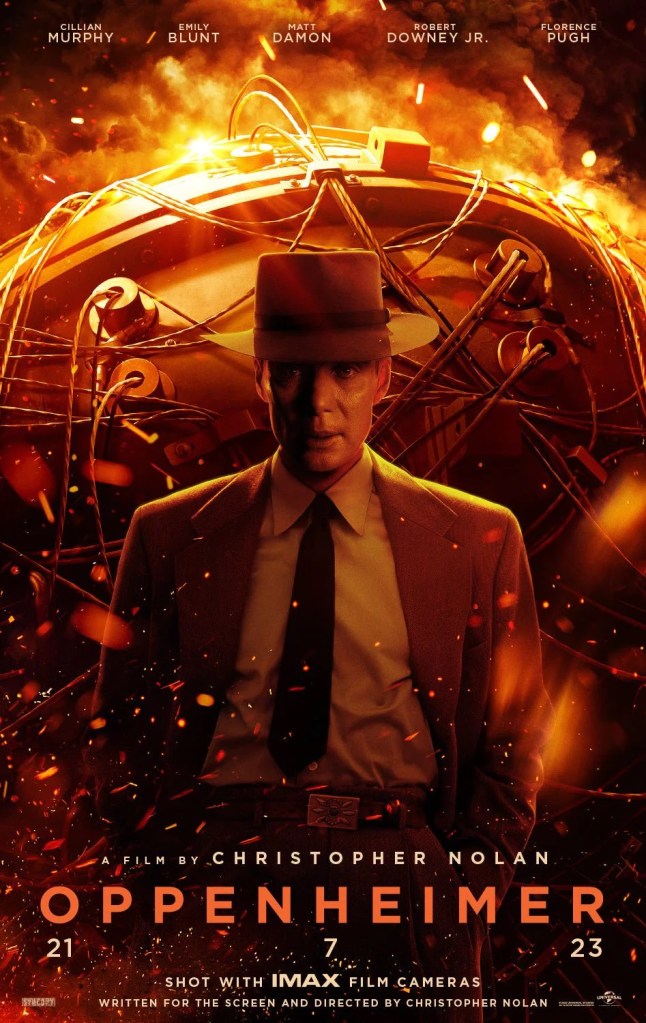
“I am become Death, the destroyer of worlds”. These words from The Baghavad Gita are synonymous with J Robert Oppenheimer, director of the Manhattan Project as he witnessed the destructive force of his creation, the atomic bomb. Fittingly, Nolan’s fascinating and ambitious film opens with a reference to Oppenheimer as Prometheus: the man punished for all time for stealing fire from the Gods. Oppenheimer uses everything from thriller to courtroom drama, to explore the moral responsibilities of science: if we can do a thing, does it follow that we must?

J Robert Oppenheimer (Cillian Murphy) is a Renaissance man and leading theoretical physicist who dabbled more than a little in left-wing politics. The woman he loves, Jean Tatlock (Florence Pugh), is a die-hard communist, the woman he marries Kitty (Emily Blunt) is a former party member, his closest friends are all members. Associations like these will later haunt him after he is approached by General Leslie Groves (Matt Damon) to use his organisational skills, political savvy and charisma to run the WW2 nuclear programme where maverick scientists work hand-in-hand with the army. Despite his position, Oppenheimer remains untrusted by many. In the aftermath of the war, these suspicions will be used by his opponents, among them Lewis Strauss (Robert Downey Jnr) ex-head of the Atomic Energy Committee, to bring about his downfall as Oppenheimer preaches disarmament.

Much like Dunkirk, Oppenheimer is told in two timelines, intersecting with scenes replayed from different perspectives in subtly different ways. In “Fission” we see Oppenheimer, effectively on trial in 1954 for his security clearance, recount his life story, chronological flashbacks taking us through the development of the bomb. In “Fusion”, shot in gorgeous black and white, we follow the 1959 senate hearings to confirm Strauss in a cabinet post, and see his reminiscences of Oppenheimer’s post-war struggles to control the monster he has unleashed.

Oppenheimer is a brilliantly made, cinematically adventurous film: you would, of course, expect nothing less from a distinctive talent like Nolan. Brilliantly intercutting multiple timelines, it’s a film that is as much an experience as a story. This is a behemoth, filled with moments of flair and breath-taking use of sound and vision to affect mood. In particular, the film’s oppressive sound design bears down on the viewer like the pressure of the bomb itself. This means moments when we are released from its grip carry real impact. As Oppenheimer – already plagued with doubt – triumphantly announces the successful use of the bomb, the war-like celebratory pounding of scientists’ feet disappears from the soundtrack leaving Oppenheimer’s words echoing impotently around the room.

The pounding score and epic, sweeping camerawork (even more striking, since so much of the film takes place in small rooms filled with conversation) help Nolan to build up Oppenheimer’s mythic status and simultaneously strip him bare. Literally so at one point as, when questioned on his sex life in his hearing, Oppenheimer is seen naked in the room (as exposed as he must be feeling) answering questions with a naked Jean Tatlock astride him, staring into his wife’s eyes.

Oppenheimer labours, with the best intentions, to create a weapon before the Nazis. In its middle act, Nolan’s film focuses on the propulsive excitement of creation. The thrill of obstacles being overcome and solutions being found. The joy of a diverse team coming together for a single goal. We find ourselves longing for problems to be overcome, swept up in the desire for the endgame, as anxious as the scientists when it looks like rain will prevent the vital first Trinity test of the bomb.
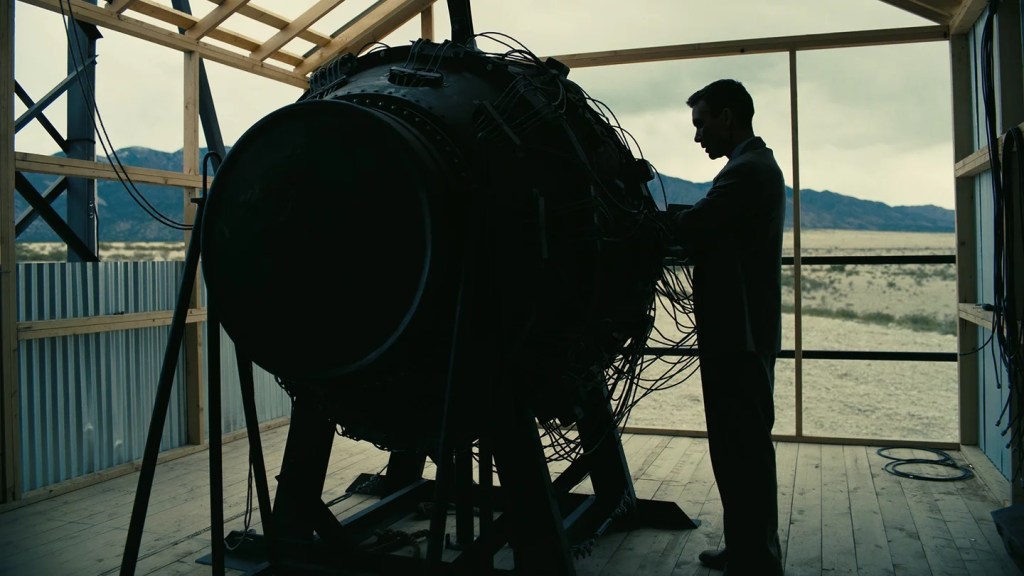
Oppenheimer feels the same. Powerfully, intelligently and magnetically played by Cillian Murphy, this is a man who is a host of flaws crammed with impossible genius. A charismatic room leader, who is awkward in personal interactions. A charmer who rudely fails to remember his brother’s girlfriend’s name at a party. An inspiring leader who alienates people with ease. Murphy captures every inch of Oppenheimer’s staggering intellect and delight in intellectual problems, just as he also embodies the man’s arrogance and crushing self-belief.

So, it’s as crushing to him as it is terrifying to us, when the bomb explodes and the realisation hits us. Nolan’s sensory experience of a film fades down to silence as Nolan lets the camera float across the all-consuming fire of the silent explosion (the noise only comes when the shockwave hits) and suddenly the chilling implication of this terrible weapon becomes clear. This is a device that will kill millions. Oppenheimer knows it: he slowly shrivels into haunted guilt, Murphy seeming to shrink into himself as he finally understands what he has done.

Images of nuclear destruction both obvious (ashen bodies and nuclear flashes) and subtle (the out-of-focus vibration of background around Oppenheimer, as if sensing an approach shockwave) will haunt him and us for the rest of the movie. While many scientists – foremost among them Benny Safdie’s bull-headed Edward Teller and Josh Hartnett’s WASPish but decent Ernest Lawrence – feel little guilt. But Oppenheimer, and we, can no longer avoid questions of moral responsibility raised by those such as Niels Bohr (a quietly effective Kenneth Branagh).

Are there some discoveries better not made? Because once the genie is out of the bottle, it cannot be stuffed back in again. In this new world every world power must always have more. More bombs, bigger bombs, better bombs. And it explains why, like Prometheus, Oppenheimer must be punished. The tool of his punishment being his communist sympathies, embodied in his yearning attraction to Jean Tatlock (an under-used Florence Pugh). Nolan’s film is very strong on the terrifying paranoia of the secret state, where every word or association can be collected into a terrible portfolio of witnesses you cannot question, evidence you cannot see, testimony you cannot hear.

“Why don’t you fight” cries his wife Kitty, played with a dynamic, intelligent forcefulness by Emily Blunt. I could have done with a third act built more around Blunt’s starkly honest betrayal of a woman ill-suited to being a wife and mother, trapped in a world where that is all women can achieve (and which also trimmed a few witnesses from Oppenheimer’s trial). Why doesn’t Oppenheimer fight? Nolan has his theories, carefully seeded and confidently revealed.
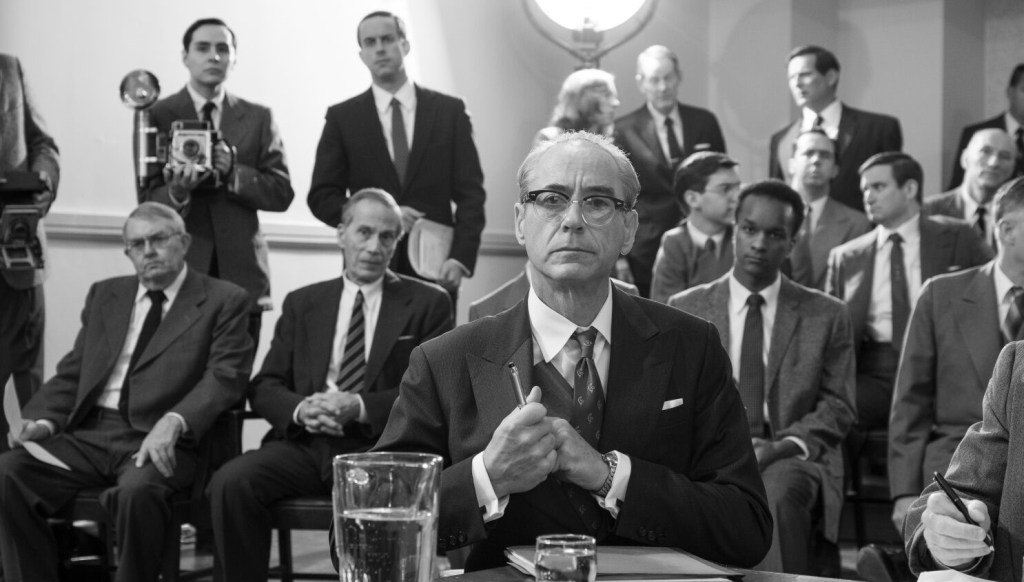
Oppenheimer’s post-war clashes cover much of “Fusion”, anchored by a superbly under-playing Robert Downey Jnr (his finest work since Chaplin) as the outwardly avuncular, but inwardly insecure and bitter Strauss, who sees Oppenheimer as the embodiment of all the elitists who turned their noses up at him (no matter that Oppenheimer himself is an outsider, in a world of science run by WASPish types like Lawrence). Nolan’s film explores how morality is forgotten in an environment so rife with paranoia that the slightest expression of doubt is seen as treason.

Nolan’s film needs its vast runtime to keep as many balls in the air as it tries to. It’s probably a few too many balls. I would have loved more on Oppenheimer’s outsider status, as a Jew in American science (its not mentioned that the J stands for Julius, despite his claims it stands for nothing). Similarly, I would have welcomed more time to explore Oppenheimer’s complicated emotional life, in particular the fascinatingly complex relationship of some love, a fair amount of mutual respect and a large measure of mutual convenience with his wife Kitty.

But the film’s chilling musing on the horrors science can accidentally unleash while focused on progress is superbly explored and leaves a lasting impact. It’s a feeling that continues to be sharply relevant while we struggle with the implications of AI. Was there a need for the bomb? Perhaps there was. Were we ready for the bomb? No. And it is the failure of anyone, including Oppenheimer, to even consider this until it was too late that is the coldest warning in Nolan’s epic film.

The Amazing Spider-Man 2 (2014)


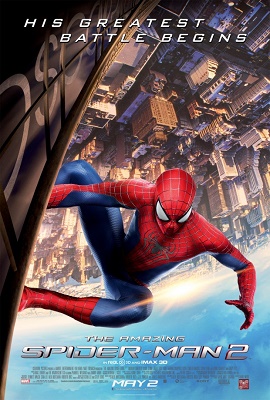
Spider-Man retreats in full flight from the shocking explosion of this film behind him

Director: Marc Webb

Cast: Andrew Garfield (Peter Parker/Spider-Man), Emma Stone (Gwen Stacy), Jamie Foxx (Max Dillon/Electro), Dane DeHaan (Harry Osborn/Green Goblin), Colm Feore (Donald Menken), Felicity Jones (Felicia Hardy), Paul Giamatti (Aleksei Sytsevich/Rhino), Sally Field (Aunt May), Campbell Scott (Richard Parker), Embeth Davidtz (Mary Parker), Marton Csorkas (Dr Kafka), Chris Cooper (Norman Osborn)

The Amazing Spider-Man 2 was set to launch a Spider-Manfranchise that “would last a THOUSAND YEARS!!!”. It didn’t. In fact this bloated, poorly constructed, overlong mess killed those plans stone dead. It says a lot that a film which took $709 million worldwide is considered a flop. But the reaction to the film was so mehthat there was no desire to see any further films about this Spider-Man. On every count the film is a catastrophic failure.

Peter Parker (Andrew Garfield) is enjoying the life of a super-hero, while struggling to maintain his relationship with Gwen Stacy (Emma Stone) due to his guilt over her father’s death. That sentence, by the way, demonstrates how schizophrenic this film’s tone is: a hero who loves life and simultaneously is plagued with guilt? He’s also obsessed by finding out what happened to his parents (killed off in a superfluous pre-credits flashback, setting up a mystery the film loses all interest in). At the same time, he must take on obsessive loner fan Max turned supervillain Electro (Jamie Foxx), and old friend Harry Osborn turned supervillain Green Goblin (Dane DeHaan).

After a so-so remake of Sam Raimi’s first Spider-Man, Sony seemingly decided to skip Spider-Man 2 and jump straight to a remake of the reviled Spider-Man 3. Many of that film’s disastrous mistakes are made again: romantic tension that never feels real, action sequences that feel like trailers and, worst of all, stuffing the film to the gills with villains (at least four characters can lay claim to being major primary or secondary antagonists). It also makes its own mistakes, chucking in endless references to a dull, confusing ‘mystery’ around Peter’s parents (that will never now be resolved).

On top of all that, there is something so nakedly grasping about Amazing Spider-Man 2 it’s almost impossible to love. It’s such a greedy film that almost every conversation and stray camera shot tries to set-up potential future movies (the low point being a camera pan down a room full of devices that will become the weapons of future baddies). The plot gets constantly drifts down side alleys as it frantically tries to establish enough plots for the studio to keep churning out films over the next five years. This also means it goes on forever without any real sense of impetus developing in the story.  The action is so nakedly shot with an eye on the trailer, that nearly each fight is literally shot with a crowd of people watching behind barriers, cheering events on.

Whatever happened to the trick of making a successful franchise being to make a good movie? Imagine a film focused on a single villain plotline, and played that off against a relationship drama (something like, say, Spider-Man 2). That might have been something worth seeing, that might have made you think “well I enjoyed that, I wouldn’t mind seeing another one”. But this film is little more than an extended trailer for films to come – it’s as soulless and empty as a piece of marketing puff.

Any ‘emotional’ moments are placed so blatantly as filler between the action that they carry no resonance. Does anyone give a toss if Gwen Stacy goes to London or not? Was anyone actually moved at all when she (spoiler!) dies at the end? For all of Spider-Man 3’s faults, at least when Harry Osborn went bad it resonated, as audiences had seen his and Peter’s relationship play out over two films. Here Harry is introduced, the next scene he and Peter openly say they are best friends, then they barely spend any further time together before Harry’s “shocking” volte-face. If the film can’t be bothered to spend any time earning it, why should I spend any time investing in it?

Andrew Garfield’s Peter Parker has his fans, but I’ve found him (in both films) an insufferable, cocky prick. Garfield is a very good actor, but his direction to play Parker as a young buck completely fails. His wisecracking persona works as Spider-Man, but falls flat as Peter, who never seems particularly sweet, relatable or endearing in a way Tobey Maguire managed so well. The parental plotline doesn’t help here either: having spent the first film not really giving a toss about the death of Uncle Ben, here he outright obsesses over his parents in a way that just doesn’t ring true, particularly as it carries with it an implicit rejection of Aunt May. His borderline controlling/stalkerish behaviour with Gwen Stacy is also pretty hard to stomach (he spends half the film telling her what to do, the other half either following her or openly stating he will never let her go – okay weirdo…)

It’s quite damning that despite all this, Garfield (and to be fair, Emma Stone) is the best thing in this lifeless pile of stodge. Jamie Foxx is so hilariously miscast as Electro it skewers the whole movie (surely part of the reason why he is in it so little). Foxx can’t resist showing the audience all the time that he (the actor) is far smarter, cooler and popular than the character – his contempt for the role drips off the screen. DeHaan overacts wildly as Harry, bested only by Giamatti’s cartoonish overblown shouting. Field cashes her cheque with professionalism as Aunt May.

People aren’t stupid. They can tell when they are being ripped off. And they can tell when a studio flings bangs and bucks at the screen with no heart and soul behind them, when a film’s been made by people who want to fleece fanboys, rather than create something that speaks to their love of the material. It’s the problem with both of these Garfield Spider-Man films (and to a certain extent Raimi’s last one). They are soulless, dead films made by committees. They listen to all the worst cries of the fans and then try to give them everything at once. They end up giving them nothing. Which is what this film is: a big, empty pile of nothing.

Lawless (2012)


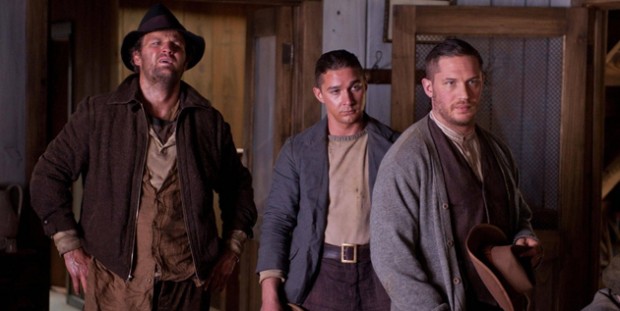
Brothers in crime. You can get a taste of the performances just from this still image.

Director: John Hillcoat

Cast: Shia LaBeouf (Jack Bondurant), Tom Hardy (Forrest Bondurant), Jason Clarke (Howard Bondurant), Guy Pearce (Marshal Charley Rakes), Jessica Chastain (Maggie Beauford), Mia Wasikowska (Bertha Minnix), Dane DeHaan (Cricket Pate), Gary Oldman (Floyd Banner)

Bootlegging, the Deep South, corrupt cops and the honourable code of criminals. It’s the sort of cocktail that’s made up dozens of films, some good, some bad, some ugly. This one definitely falls into one of the latter two camps.

It’s 1931, and the Bondurant brothers (Shia LaBeouf, Tom Hardy and Jason Clarke) run a moonshine business out of their Virginian countryside garage. One day the cops come a-calling, led by a corrupt US Marshall (Guy Pearce). They want a piece of the action. The brothers say no. So war breaks out…

Truth be told, this is actually quite a boring film – a pointless, clumsily constructed shaggy dog story that neither makes a point about the shabbiness of a bootlegging life of crime, nor challenges romantic assumptions about the small time crook challenging the system. There are a couple of random flashy scenes thrown in to allow the film-makers to demonstrate their technical expertise, but it’s all as weightless as a braggart regaling their guests at a dinner table. Hot air masquerading as a lungful of fresh stuff.

The performances dance between underpowered, over stretched and over indulged. Shia LaBouef doesn’t make his nominal lead a fully formed character. Jason Clarke makes no real impact in an underwritten role. Tom Hardy is the best of the bunch, but barely stretches himself as a bearlike family leader. Of the other major parts, Guy Pearce gives the kind of twitchy, pyrotechnical performance that is often mistaken for brilliant acting, all highblown showing off and no depth. Jessica Chastain and Mia Wasikowska are wasted playing contrasting love interests. Gary Oldman pops up for one scene as an overblown crime lord.

These performances drift along in the formless plot. There are nasty moments of violence that serve no purpose and don’t seem to tie into established characters personalities.  There are also poorly judged plot developments: at one point Jessica Chastain’s character is raped – mercifully off screen – an event never mentioned again. Characters are brutally dispatched; one has his manhood removed and posted to another character, others are strangled, shot or battered to death with spades. The violence continues on and off until the film ends with a confrontation scene between goodies and baddies. Nothing original or unique happens in this film – we’ve all seen it time and time again. There is no thrust to the story, no feeling that it is building towards a point or that a thematic point is being built. It’s just events happening for the sake of it.

Despite its flash and bravura crashes and bangs this is an empty, tedious movie that goes nowhere, says nothing and has no point. Nearly all the events of the film are predictable, from the fate of the villain to the crippled best friend (Dane DeHaan) who has victim written all over him from the first frame. Its surface sheen (it looks great, has a decent score etc.) and the look-at-me acting is enough to fool you for a moment into thinking “this must be a good film”. But it ain’t.