
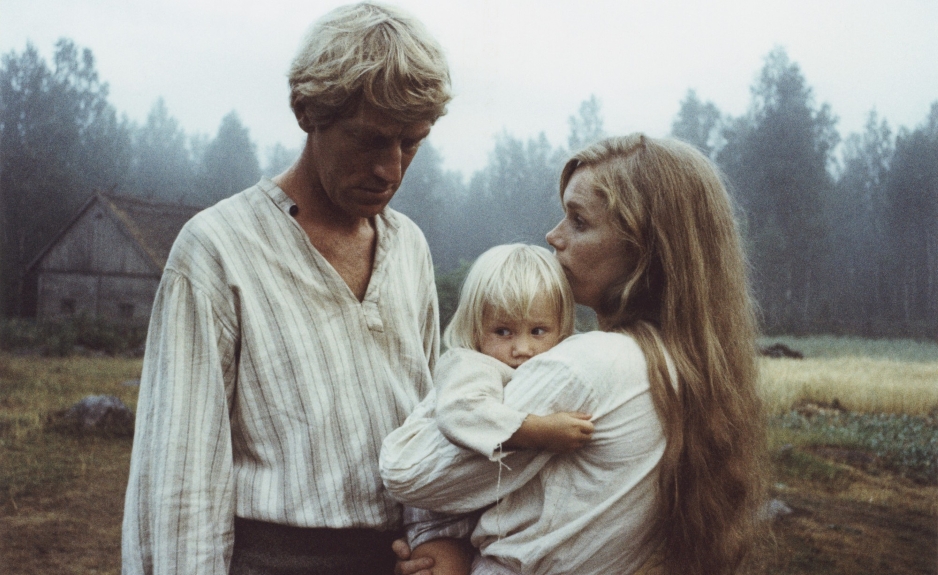
Troell’s magnificent double bill is a beautifully filmed tribute to the migrant story
Director: Jan Troell
Cast: Max von Sydow (Karl Oskar Nilsson), Liv Ullman (Kristina Nilsson), Eddie Axberg (Robert Nilsson), Allan Edwall (Daniel Andreasson), Monica Zetterlund (Ulrika), Pierre Lindstedt (Arvid), Hans Alfredson (Jonas Petter), Ulla Smidje (Inga-Lena Andreasson), Eva-Lena Zetterlund (Elin), Gustaf Färingborg (Brusander), Åke Fridell (Aron), Sven-Olaf Bern (Nils Nilsson), Aina Alfredsson (Märta Nilsson)
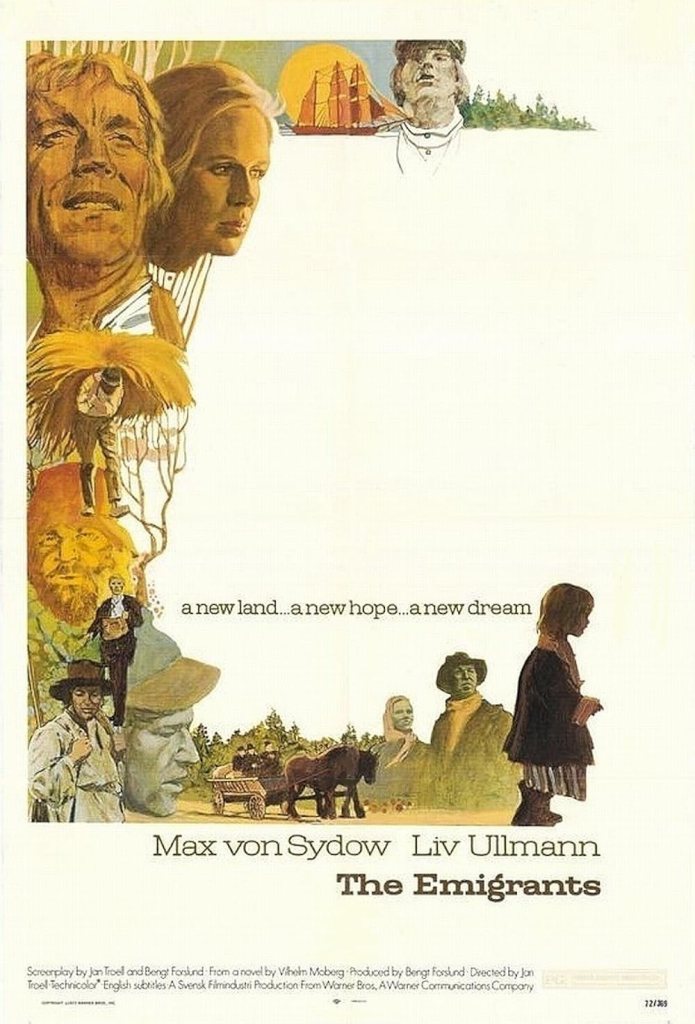
Imagine back-breaking labour made even heavier from centuries of tradition weighing you down. Wouldn’t you be thinking about finding a New Land? That’s what millions of people in the nineteenth century did, making journeys their parents and grandparents couldn’t even imagine. Leaving ancestral homes behind, crossing oceans and continents to claim a share of the American dream. It’s beautifully told in Jan Troell’s epic two-part movie, a poetically filmed, sensitive and absorbingly low-key and naturalistic film that pulls the viewer into people’s lives and its hypnotic spell.
The Emigrants introduces us to Swedish farmer Karl Oskar Nilsson (Max von Sydow) and his wife Kristina (Liv Ullman). Karl Oscar slaves over poor land in appalling weather, labouring desperately to turn rocks into crops. His brother Robert (Eddie Axberg) is treated like a slave by his employer and Kristina’s uncle and lay preacher Daniel (Allan Edwall) and his protégé, former prostitute Ulrika (Monica Zetterland), are treated like criminals by the church. No wonder this group joins the Swedish exodus to America, an epic, exhausting journey with a dream. The New Land picks up (almost minutes later) with the life Nilsson and his family build in Minnesota, facing new problems but always working relentlessly.
Adapted from best-selling novels by Vilhelm Moberg, Troll’s film is measured, stately and plays like a gorgeously filmed fly-on-the-wall documentary. It is reserved, unrelentingly unmelodramatic and in many ways utterly engrossing. Largely because it feels forever grounded in the realities of its story, which feels universally true. These are honest, hard-working and decent people – in many ways unremarkable – but struggling with things we all worry about, searching for a better life for themselves and their children, and working hard to get the best out of the hand life has dealt them.
And it’s frequently a rough hand. Troell’s film doesn’t shirk in showing the toughness of farming on terrible land in Sweden – just as it doesn’t romanticise the struggle of building a new farm in the undeveloped vastness of America. Much of the opening half of The Emigrants focuses on that back-breaking labour in rock-filled Swedish soil. Resources are stretched so much the family can’t even afford to feed a cat – the household pet bagged up and reluctantly tossed in a river. All the time, nature kicks our heroes in the teeth. Nilsson’s father labours to clear rocks from his land only to break his leg falling into the pit he’s dropping them into. The rain the family have been waiting for brings with it lightening that burns down the barn. The idea of making a success of this land feels as impossible to us as it does to the Nilssons.
Even worse is the parade of woes life around throws at them. The local area is firmly under the control of the Church. The parish priest, of course, lives in a well-furnished home and sanctimoniously tells his parishioners they should be content with their humble, unrewarding lot. Anyone challenging this, like Daniel with with his lay celebration of Christ, is treated as a dangerous dissident. Any idea that anyone should forge a life of their choosing is resolutely slapped down as if it’s a revolutionary act.
Nilsson states grimly that “no matter how hard we break our backs” success is impossible. Kristina, who throughout their lives will always be the more conservative but also more emotionally-driven (unlike the stoic Karl Oskar), is appalled by his ‘blasphemy’. But the death of their daughter – a moment of heart-rending tragedy in its simple grief, channelled in silent tears by Kristina and loving casket crafting by Karl-Oskar – is the tipping point. Their late daughter’s shoe will be a totem they cling to for the rest of the lives, both Nilssons clasping it close at moments of doubt or worry.
Leaving this world behind is a decision of impossible weight. Troell captures this in the carefully timed, wonderfully paced static shot that holds the Nilsson’s perspective as they look back at Karl Oskar’s parents gradually receding in the distance. The sudden cut to the sea is a powerful visual contrast to everything we have seen before, the camera capturing the sprawling vastness of the ocean so different from the closeness of the hilly land in the Swedish village. It’s a journey of lice, seasickness and sudden death each stressing the difficulties and dangers of this journey.
It also builds bonds. Our central relationship remains Karl Oskar and Kristina, beautifully played by Max von Sydow and Liv Ullman. Von Sydow really captures the world-weary decency in Karl Oskar, a man who works without complaint but with a strong sense of justice. Ullman is equally wonderful as a sensitive woman, whose life takes a dramatically different course than the one she imagines as a young woman dreaming on a swing (an image she will return to her in mind late in life), quick to judge, liable to lash out, but also fiercely loyal who comes to life in small moments of joy.
Her quick-to-judge manner makes her at first immensely hostile to Ulrika, with her background of easy virtue. But Ulrika’s warmth, genuineness and lack of guile – and her fortunate finding of Kristina’s lost child during the journey – builds an unshakeable bond between them. During their life in America, Kristina will see her as a sister and confidant, Ulrika’s blunt plain-speaking coaching her through medical troubles and also giving her moments of girlish joy (Kristina’s face, lit up with glee, wearing Ulrika’s floral wedding hat is a wonderful moment). Moncia Zetterland is superb.
If only Karl Oskar had the same relationship with his brother. But he distrusts Robert’s dreamy disposition, his flights of fancy utterly contrary to Karl Oskar’s muscular realism. He will defend his brother loyally against outsiders – confronting his abusive master with dangerous threats – but lambast him privately as a burden and a fantasist. Eddie Axberg is marvellous as Robert, a sensitive dreamer constantly unready for the world’s hardness. In The New Land, he chases Gold in California. Dreams, not to Karl Oskar’s surprise, doomed to disaster – a sequence of jerky editing, woozy camerawork and intimidating silence, so jarringly different from everything else in Troell’s films it feels as an oppressive Odyssey to us as it does to Robert (whose spirit it painfully breaks).
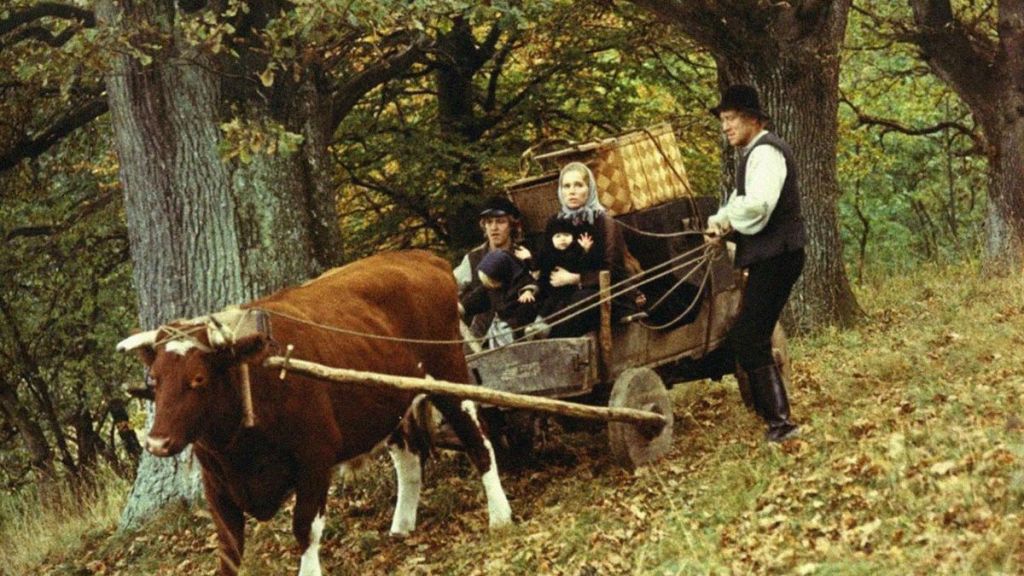
Life in America feels in many ways so different from life in Sweden, but in others the same. Trains feel as alien when they arrive, as the bustling streets (shot with hand-held immediacy) of New York. But The New Land is equally full of back-breaking labour. It opens with a montage of never-ending carpentry and woodcutting as Karl Oskar builds a home. Crops are crafted in snow. Everything from taking delivery of letters to cows is expensive. In a scene, surely lifted for Empire Strikes Back, Karl is even forced to gut a precious cow during a snowstorm to wrap his freezing son in its innards. The soil may be more fertile and the houses and fields may rise quicker, but the work doesn’t change.
The New Land also, bravely, makes room to show a touch of the experiences of the indigenous people whose land is now the property of men like Karl. The remains of these communities are frequently glimpsed, drifting from place to place on the horizon. There are several references to how many have grown dependent on charity. Karl finds the mummified body of an indigenous man frozen in the snow. He’ll even be bluntly told that, as a man who has bought (from the US government) ‘stolen goods’, he is an unwitting party to injustice. The New Land isn’t afraid to show the brutal killing of innocent Swedish migrants in the Dakota War, but it also delivers a chilling near-silent sequence of dozens of Dakota Sioux executed in the snow.
Both films remain heartfelt tributes to the bravery and endurance of migrants. What’s really striking, towards the end of The New Land is how old and worn out our heroes are compared to their actual ages (Kristina in particular looks closer to mid-50s than 40). The final coda reveals how their children have assimilated in American culture, with American names, forgetting their Swedish language and culture. Their parents have built them a new life – but at the cost of their old. It’s a sad grace note of the sacrifice of migration, in a stunningly beautiful and very moving pair of films.

