Tag: Emma Thompson

Good Luck to You, Leo Grande (2022)

Good Luck to You, Leo Grande (2022)

Questions of intimacy and sex are explored but not in depth in this theatrical two-hander

Director: Sophie Hyde

Cast: Emma Thompson (Nancy), Daryl McCormack (Leo Grande)

A widowed, retired former RE teacher “Nancy” (Emma Thompson), hires a high-class escort “Leo Grande” (Daryl McCormack) to explore the opportunities in life she feels she has missed: namely, any sexual experience that doesn’t involve functional, passion-free couplings with her deceased husband; the positions and acts she’s heard about that he considered “demeaning” to all involved; and, above all, something called an orgasm. Over multiple meetings, the fragile Nancy and the smooth, charming, but personally guarded Leo tentatively explore physical and emotional barriers.

Hyde’s film could very easily be a theatre piece. Largely taking place in a single location – the hotel room Nancy has hired for their meetings – across four “acts”, it’s a film that relies heavily on the skill and chemistry between the two actors. On that front, it’s very blessed to have such skilled performers who play off each other with such generous and dynamic performances.

They’re helped by a witty script from Katy Brand, crammed with good lines. Nancy is a fusspot, sheltered and deeply self-conscious, who approaches everything from a teacherly angle, including drawing up a sexual “checklist” for their session (“attainable goals” as she puts it). Her middle-class, middle-age hesitancy around sex as something to feel ashamed about casts its mark over everything she says and does (“I don’t like anything going in places where things are meant to come out”) and she can’t shake her own shame and fears that she is exploiting someone (she worries she feels like “Rolf Harris” – a reference that hilariously flies over the head of Leo).

It’s a gift of a role for Emma Thompson, who delights in the witty (if theatrical) dialogue, but also sells speeches full of personal discontentment, bitterness and profound regret. Her early nerves – with a little pinch of guilt – at hiring this sex worker, slowly tip into an outpouring of painful regrets. Nancy is a woman who has lived her life by strict rules – rules that have left her deeply unhappy and desperate for a meaningful intimate relationship with someone to confide in.

Thompson, in a way that I’m not entirely sure the film does, also understands that Nancy is not as nice a person as she might believe she is. Her sadness is often counterpointed with bitterness, rudeness and a tendency to judgementalism. It’s a defensive shield for her deep unhappiness within – but it also perhaps suggests why she is as lonely as she is. This is Thompson at the top of her game, effortlessly funny, heart-rending and frustrating almost from moment to moment.

Her unease, and near-Catholic guilt at sexual intimacy and satisfaction, contrasts neatly with the smoothly professional Leo. It can’t be easy for a young actor to go toe-to-toe with a heavyweight, but McCormack plays Leo with a huge subtlety. Eager to put Nancy at her ease in their first meeting, we see him carefully but skilfully move between several different, possible, personas in search of something she will like. Flashes of personal intimacy and friendship he gives her always leave you guessing how much is real, and how much settling on a persona for his client. Brief moments of thoughtfulness show Leo reflecting on his own past – issues that will come to the surface in later sessions. McCormack skilfully walks the tightrope of playing a man with an invented personality, who adjusts his persona from moment to moment to best please someone else.

The main delights of Good Luck to You, Leo Grande are in the (sometimes funny, sometimes sad, sometimes excruciatingly embarrassing) exchanges between these two, as Nancy constantly puts off what she paid for, partly due to not knowing if she wants it and partly being ashamed to ask for it. At its strongest moments the film uses this to explore our own societal feelings about the entwining between sex, shame and guilt.

After all, sex is something we all have very clear ideas about. And, just like we do with our bodies, often end up judging ourselves harshly against some imagined standard. The film gently argues that perhaps a world of high-class, shame-free, professional sex with someone who knows what they are doing – and can help a client enjoy something that many find quite stressful – might not be a bad thing. It says a lot that Nancy’s first assumptions about Leo tie into a fear that he might be being exploited or vulnerable in some way. It’s also interesting that Leo (at least as he claims – he of course may not be telling the complete truth) enjoys his work, because he sees it as a sort of ultimate people pleasing.

It would be a stronger film if it was able to do more of this thoughtful societal commentary. It never quite manages to really grapple with the issues it raises though, partly because it becomes a little preoccupied with the personal hang-ups of its characters (it would have also helped with Leo didn’t have his own past problems to deal with as well, which rather undermine part of the film’s point that we shouldn’t feel ashamed or that choosing a life like this isn’t always linked to past problems).

It also, by making it very clear that Leo is working at the very expensive end of the sex industry, perhaps takes a slightly rosy view of sex work, glossing over the risks and exploitation experienced by others in the industry with a couple of breezy lines. However, it’s also a very strong two hander, well-written with two excellent performances from McCormack and Thompson, both of whom are superb. It just could have been a little more.

The Remains of the Day (1993)

The Remains of the Day (1993)

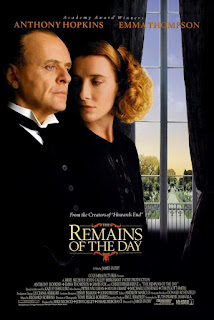
Hopkins and Thompson are marvellous in this masterful adaptation from Merchant-Ivory

Director: James Ivory

Cast: Anthony Hopkins (Mr Stevens), Emma Thompson (Miss Kenton), James Fox (Lord Darlington), Christopher Reeve (Congressman Jack Lewis), Peter Vaughan (Mr Stevens Snr), Hugh Grant (Reginald Cardinal), Michael Lonsdale (Dupont D’Ivry), Tim Pigott-Smith (Mr Benn), Ben Chaplin (Charlie), Patrick Godfrey (Spencer), Lena Headey (Lizzie), Pip Torrens (Dr Carlisle), Paul Copley (Harry Smith) Rupert Vansittart (Sir Geoffrey Wren), Peter Eyre (Lord Halifax), Wolf Kahler (Ribbentrop)

Kazou Ishiguro’s Booker-prize winning novel The Remains of the Day is one of my all-time favourites. So, it’s not a surprise I’m a huge fan of this masterful adaptation from the House of Merchant Ivory. I’m certain this is the apex of the team’s work. Mike Nichols had originally planned a film but, wisely, recognised when it came to making movies about repressed 1930s Brits, one team had a monopoly on how to do it best. Beautifully adapted by their regular screenwriter Ruth Prawer Jhabvala, The Remains of the Day is a wonderfully involving and deeply moving film.

Stevens (Anthony Hopkins) is a butler in a British country house purchased in 1956 by American Jack Lewis (Christopher Reeve). Keen to solve staffing problems (and for no other reason at all), Stevens journeys to the West Country to recruit the 1930s housekeeper, Mrs Benn nee Kenton (Emma Thompson). During the journey, he remembers his service for the previous owner, Lord Darlington (James Fox). An impeccable gentleman, Darlington dedicates himself to reconciliation between Nazi Germany and England, eventually tipping into an unwise dalliance with fascism and appeasement.

Stevens had no views on that though. In fact, he prides himself on his anonymity. The goal of his life is to maintain a dignified unobtrusiveness, ensuring the smooth operation of everything, leaving as little a mark as possible. Nothing can intrude on that: not his own feelings, the illness and death of his under-butler father (Peter Vaughan) and, above all, the unspoken romantic feelings between himself and Miss Kenton. The Remains of the Day is about duty and obsession and how a fixation on both can leave someone with little to show from a long life.

Stevens is living the lessons he learned from his father, an ageing powerhouse masterfully played by Peter Vaughan, who undergoes a physical collapse (from dripping nose to dropping trays) and bouts of forgetfulness, eventually dying on a night Stevens is too busy seeing to the sore feet of an illustrious French guest to spare a moment to visit him. It tells you everything about his character that this stiff-upper lipped commitment to duty is a source of pride to our hero.

There are few as curiously blank ‘heroes’ in literature than Stevens. The narrator of Ishiguro’s book is a dull, fussy, unbelievably cold man who has dedicated himself so fully to duty that he has let any emotional life wither and die on the vine – something he only realises far too late. It’s an immensely challenging role, bought to life masterfully by Hopkins. Hopkins astonishing skill here is to play all that repressed coldness on the surface, but also constantly let us see the emotion, longing and regret he is subconsciously crushing down play in his eyes and the corners of his mouth. Is Stevens even aware how much self-harm he is causing? It’s an astonishingly subtle performance.

So subtle in fact that the books conclusion – Steven’s tear-filled confession to a stranger late at night of all the mistakes he has made – was filmed but cut for being superfluous. Hopkins had done the lot, all the way through the movie, through acting skill. You can’t miss the struggle within him, not least the desperate, powerless longing he feels for Miss Kenton that, for oh-so-English reasons he can never admit to himself. Hopkins has the vocal and physical precision, but every gesture tremors with unspoken, barely understood longings. In fact, it’s a shock when he exclaims an angry “Blast” after dropping a bottle of wine (the real cause of his outburst being, of course, Miss Kenton’s announcement that she is getting married)

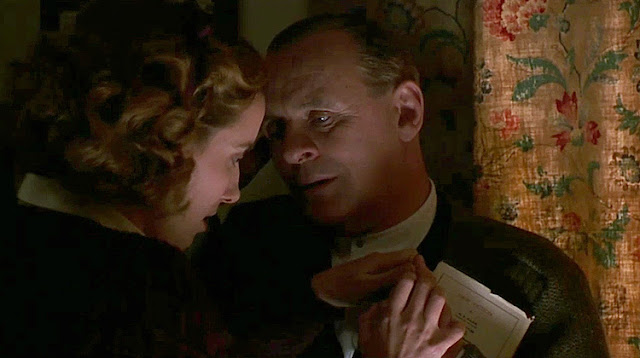
He and Miss Kenton conduct a professional relationship that blossoms into something like a friendship – but he consistently rejects her polite efforts to take it further. In the film’s most powerful scene, Miss Kenton enters his parlour and playfully tries to see the title of the novel he’s reading (a sappy romance). The playfulness tips into agonisingly awkward tenseness as Hopkins’ Stevens seems paralysed, his hand lingering inches from her hair but unable to bring himself to break decorum and fold her in an embrace – all while Miss Kenton continues her increasingly desperate semi-flirtatious banter. It of course ends with Stevens dismissing her: just as later he will take a snap of frustration as a signal to irrevocably cancel their late-night cups of cocoa together.

Emma Thompson is wonderful as a woman only marginally more in touch with her feelings and longings than Stevens is: aware that she, eventually, wants more from life, but unable to find the way of communicating the love she clearly feels for Stevens in a manner he can respond to. Instead, the two of them oscillate between a friendly, affectionate alliance and a discordant arguments (their only outlet for their passion), rooted in their inability to admit their feelings for each other. To further stress the point, both of them mentor young staffers (played by a very young Ben Chaplin and Lena Headey) who have the youthful “what the hell” to jack in all this for love.

Ivory’s wonderfully subtle film makes clear this is a turning point in history, the final hurrah for the this sort of deferential hierarchy. Stevens is the last of a generation of butlers, convinced that what their employers got up to had nothing to do with them – views not shared by Tim Piggot-Smith’s more grounded Benn, who chucks in his job working for a bullying blackshirt (who else but Rupert Vansittart?). Throughout the 1950s storyline, Stevens is constantly asked if he knew the infamous Lord Darlington (a sort of Lord Londonderry figure, hopelessly taken in by Hitler) – in fact, like Paul, he twice denies ever having known him.

And you can understand why, as the film has sympathy for Lord Darlington. As his decent, liberal god-son Reginald Cardinal (an excellent Hugh Grant) says, Darlington is a great asset for Germany precisely because he’s honest, well-meaning and motivated by a desire for peace. The fact that his leads him to consort with a host of Nazis, Blackshirts and the most appalling anti-democratic vestiges of the upper-classes (at one point, Stevens selflessly gives a performance of geopolitical ignorance so as to help demonstrate why men like him shouldn’t have the vote) is an unfortunate side-effect.

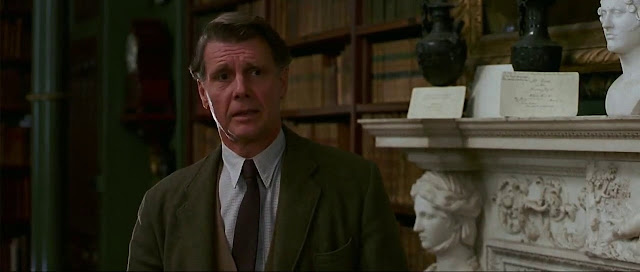
Played perfectly by James Fox, Darlington is misguided but genuine. As war approaches, he leads an increasingly hermit like life – camp-bed and paper-strewn, messy library – hosting conferences denounced by Jack Lewis (a fine Christopher Reeve) as a host of amateurs talking about a world they no longer understand. Beneath it all, Darlington is guided by fair play. So much so, it’s almost distressing to see him (under the influence of an attractive German countess) reading anti-Semitic pamphlets and sacking two refugee Jewish maids – an act he later regrets (far too late). This moment also reinforces Stevens’ compromised pig-headedness (not his place to judge!) and Miss Kenton’s fear to act (she’s horrified, but to scared of unemployment to hand in her notice).

All of this culminates in a series of scenes where emotions pour out of the actors, even while their words are banal and everyday memories and reflections. Ivory was never more confident and skilled behind the camera, and the film is a technical marvel, beautifully shot with a wonderful score from Richard Robbins. Hopkins is phenomenally good, simultaneously pitiable and smackable, Thompson is wonderful alongside him, Fox and Grant perfect – it’s a very well-acted piece. And a wonderfully perfect capturing of a classic modern British novel. No doubt: the best Merchant Ivory film.

Men in Black: International (2019)

Tessa Thompson and Chris Hemsworth struggle through the messy Men in Black: International

Director: F Gary Gray

Cast: Chris Hemsworth (Agent H), Tessa Thompson (Molly Wright/Agent M), Liam Neeson (High T), Kumail Nanjiani (Pawny), Rafe Spall (Agent C), Rebecca Ferguson (Riza Stavros), Emma Thompson (Agent O), Kayvan Novak (Vungus the Ugly)

Remember Men in Black? An amusing, odd-couple buddy movie about a secret agency patrolling alien activity on Earth. To be honest, the well was pretty dry after when the first movie ended. The formula – with original stars Will Smith and Tommy Lee Jones – attempted to recapture the magic twice with diminishing returns. This, surely final, attempt subs in the stars of Thor: Ragnorak for an over-long, neither terribly exciting nor funny movie that feels like it’s been assembled by an arguing committee.

Molly Wright (Tessa Thompson) encounters the Men in Black when they erase the memories of her parents (but accidentally leave hers intact) when she’s a child. As an adult she becomes obsessed with joining them, dedicating her life to building the skills the agency needs. Recruited by shrewd head of US operations Agent O (Emma Thompson) as Agent M, she’s shipped to the UK to join forces with their ace Agent H (Chris Hemsworth), under the direction of branch chief High T (Liam Neeson), to safeguard an alien dignitary. When the dignitary is assassinated, Agents M and H find themselves at the centre of a conspiracy that could destroy the whole world.

Tonally, Men in Black: International is a mess. At times it’s a farcical buddy movie, at others a darker action film. What it is all the time is overlong, meandering and only occasionally interesting. It stretches its slim action over nearly two hours (the first film was barely more than 90 minutes!), with the plot featuring so many diversions and chases down rabbit holes, that you are desperate to get back to the Eiffel Tower for the signposted showdown.

It doesn’t help that most of the events in the film are fairly predictable. You only need to have seen a film before to work out who the ‘surprise’ villain is. Every action scene – flipping heck nearly every joke – has been done in hundreds of films before. Anything remotely interesting – in some version of this film Agent H could have been a washout, coasting on his glory days rather than the stereotypical cocky-but-cool hero he is – has been ironed out. None of the dialogue sticks even vaguely in the head and not one of the punchlines lands.

Every scene is written with a perfunctory A-to-B quality. For example, at their first meeting Agent H is dozing at his desk, when Agent M approaches to ask to join his latest mission. She has a comprehensive briefing prepared for him (because she’s new and eager) which he shoves aside with a few off-the-cuff I’ll-read-it-later gags (because he’s a bog-standard action hero who acts on instinct). He claims he wasn’t dozing but meditating and sends her on her way. As she leaves, she tells him he has a “tell”: when he meditates he snores. This is neither particularly funny or enlightening, but because Agent H needs to be impressed for the film to continue, he is and recruits her. That’s a decent insight into the formulaic writing.

F Gary Gray tried to resign multiple times as the story he wanted to tell – something slightly darker about alien refugees on the run from a hideous force – was forced more and more into cookie-cutter Hollywood summer blockbuster fare by the producers. Fights like this perhaps explain why the motivations and actions of several characters make little sense. While Gray and the producers feuded over their cuts of the films, Hemsworth and Thompson allegedly then hired their own scriptwriters to re-write their dialogue.

It ends up an incoherent film, where it feels like some scenes were inserted by test audiences. For example, Rebecca Ferguson pops up for essentially a pointless cameo where she gains control of the macguffin. This long sequences only exists so we can get: a hot actress as an ex for Hemsworth’s character, a fight between Ferguson and Thompson (because Hemsworth can’t fight a girl, he fights the heavy – complete with lame Thor hammer joke), and an unneeded wrap up of a minor plot hole from the film’s opening. At the end they get the macguffin back again – but you could have dropped the whole sequence and got to the ending much quicker and lost nothing.

Hemsworth and Thompson do their best, although the film can’t decide whether to make them buddies or potentially romantic partners. Perhaps the confusion comes about from the actors’ obvious lack of sexual chemistry (they are much more believable as mismatched buddies). I actually feel both actors would have been better the other way around, rather than the lazy casting here. Hemsworth’s sweet earnestness and geeky charm under the muscle would be better as the newbie agent, while Thompson’s confidence and no-nonsense brusqueness matches the more the experienced agent. They do their best anyway, but they have some piss-poor material to work with.

It says a lot that the best moments of the film feature Emma Thompson coasting with snark through a few minutes of screentime. Liam Neeson seems an odd choice for a character clearly written as a posh English gent. Rafe Spall’s casting memo clearly told him he was in some sort of cartoon farce, so embarrassingly broad is his performance. The CGI chess pawn comic relief character does and says nothing that has even a passing relationship with the word “funny”.

Men in Black: International is a fairly dull, predictable, unimaginative franchise entry that, by trying to appeal to everyone with its derivative stunts and jokes, ends up appealing to no-one.

Sense and Sensibility (1995)

Emma Thompson and Kate Winslet are superb in probably the greatest Austen adaptation on film, Sense and Sensibility

Director: Ang Lee

Cast: Emma Thompson (Elinor Dashwood), Kate Winslet (Marianne Dashwood), Alan Rickman (Colonel Brandon), Hugh Grant (Edward Ferrars), Greg Wise (John Willoughby), Gemma Jones (Mrs Dashwood), Harriet Walter (Fanny Dashwood), James Fleet (John Dashwood), Robert Hardy (Sir John Middleton), Elizabeth Spriggs (Mrs Jennings), Imogen Stubbs (Lucy Steele), Hugh Laurie (Mr Palmer), Imelda Staunton (Mrs Palmer), Emilie Francoise (Margaret Dashwood), Tom Wilkinson (Mr Dashwood)

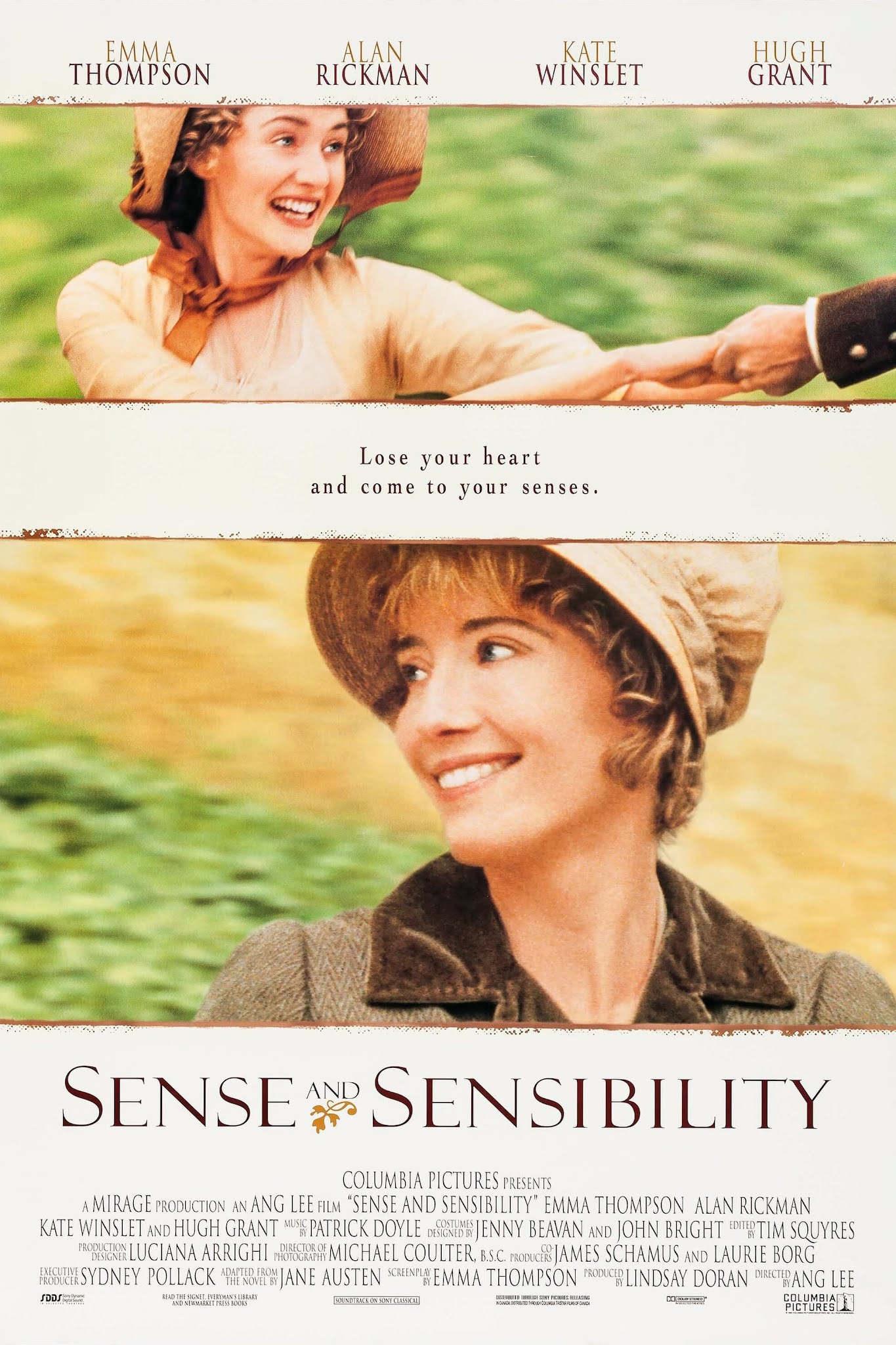
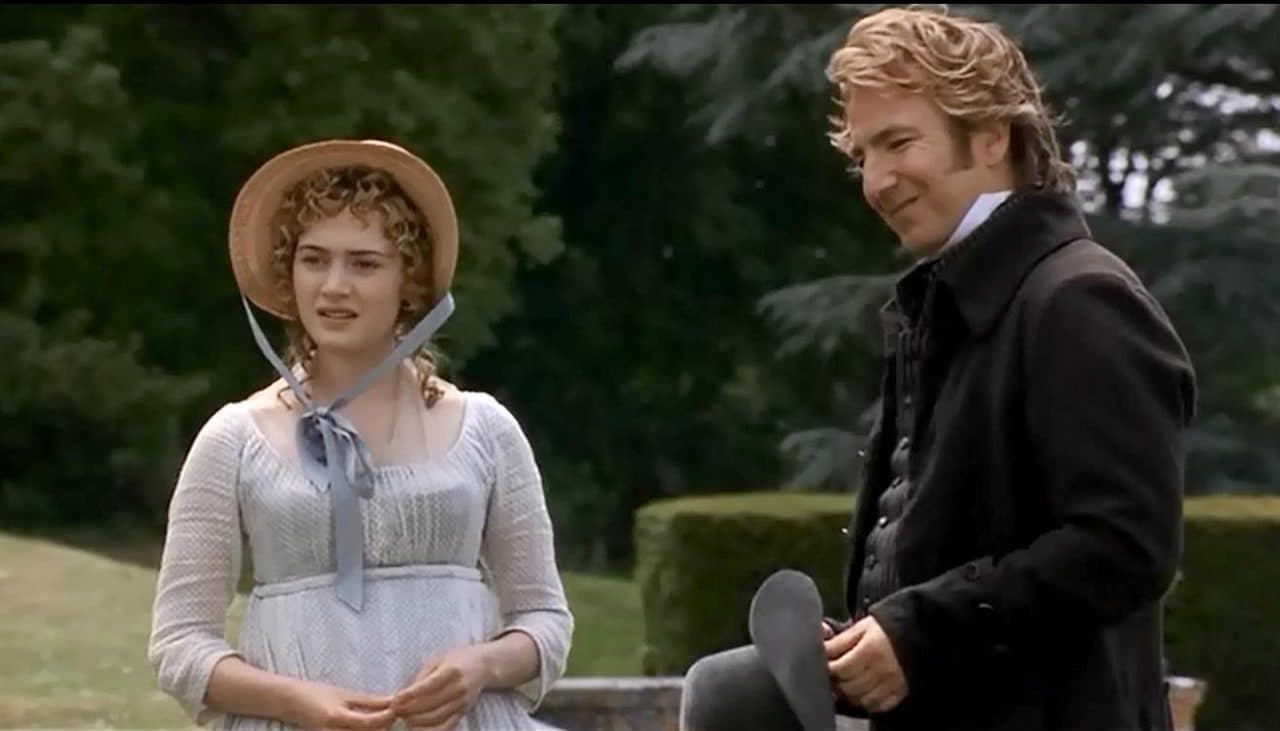
The world of Austen adaptations stands on two pillars – and both of them date from 1995. One is the BBC Pride and Prejudice, the other this luminous adaptation of Austen’s first novel, written by and starring Emma Thompson. It’s hard to pull together a review when a film pretty much plays its hand perfectly: and that’s exactly what Sense and Sensibility does. The film is a complete delight, in which Thompson takes surprisingly large liberties with many of the details of the novel, but brings to the screen a version that never once loses the spirit and heart of Austen’s work. It’s an immensely impressive achievement, and one of the finest literary adaptations ever made.

After the death of Mr Dashwood (Tom Wilkinson), the Dashwood estate passes into the hands of his son John (James Fleet) and John’s ambitious wife Fanny (Harriet Walter), leaving his second wife (Gemma Jones) and their daughters sensible Elinor (Emma Thompson), passionate Marianne (Kate Winslet) and giddy schoolgirl Margaret (Emilie Francoise) suddenly homeless. However, this does bring Fanny’s gentle and kind brother Edward Ferrars (Hugh Grant) into Elinor’s life, and an unspoken romance builds between the pair. There is passion in the air for Marianne at their new home, when she is rescued from a fall in the rain by the dashing Willoughby (Greg Wise). But are there secrets in the pasts of both men that could threaten the sisters’ happiness? And how did Willoughby’s life intersect with the reserved Colonel Brandon (Alan Rickman)?

Thompson’s superbly written script is a faultless adaptation that makes not a single poor choice, and expands and enriches several characters (in particular the three men) to great effect. Thompson not only brings much of the humour and wit in Austen to the fore – the film is frequently very funny – she also understands here truth and tenderness. Which is why the film is so beloved: it’s a film overflowing with empathy and heart for its characters which builds the emotional investment as skilfully as it does the comedy. It culminates in a proposal scene which I don’t think has ever not placed a lump in my throat.

To list all the excellent adaptation ideas would take forever so I’ll use one example. The film wisely expands much of the early character interactions, in particular deepening and exploring the early meeting between Elinor and Edward. A section that takes up barely one of the book’s (very short) chapters here fills the first 20 minutes of the film. It’s vital as it superbly establishes the natural warmth and intimacy between these two, and their perfectly complementing personalities.

It also allows Grant – in one of his most romantically winning performances – to display some deeply endearing light comedy, as well as establishing Edward as a thoughtful, sympathetic and decent man, who forms bonds quickly with all the family (especially young Margaret) through his genuineness. It also keeps us rooting for a relationship – and for a character – who the film often has to leave off screen for vast stretches, and leaves us in no doubt that his (later revealed) engagement to Lucy Steele (a woman he does not love, and who is interested in him solely for his position) comes from the same motives of decency, duty and the desire to do the right thing.

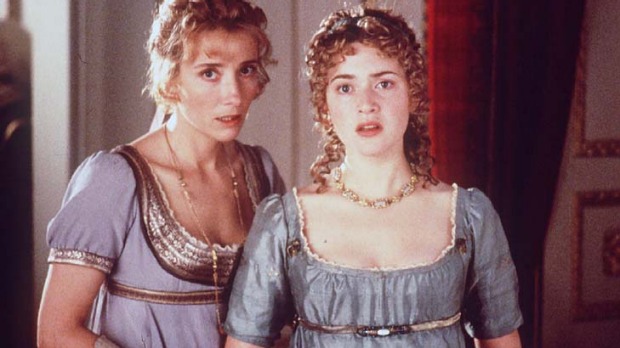
If that’s an example of one of Thompson’s most successful changes in her adaptation, she also unerringly identifies the things it’s most important to keep. Just like the novel, the film places the warmth of the sisters’ relationship at its heart. Helped by the natural chemistry and ease between Thompson and Winslet, the film carefully contrasts the personalities of these two sisters (one sensible and reserved, the other spontaneous and passionate) but takes no sides and also shows the sisters themselves are united by their love for each other. The film frequently features scenes of confidence and intimacy between the two, and continually brings us back to each other as the key relationship in their lives. It also shows how both need to meet in the middle ground: Elinor needs some of Marianne’s sensibility, just as Marianne needs to take on some of Elinor’s sense.

Although sense would not have necessarily helped Marianne uncover the dangerous selfishness of Willoughby. Perhaps the only wrong call in the BBC Pride and Prejudice (like most adaptations of that novel), is that it makes the rogueish Wickham insufficiently handsome and too blatantly smarmy from the start, tipping the audience the wink that this man can’t be trusted. Not so here, with Greg Wise giving Willoughby so much charm, regency handsomeness, dash and warmth that you would not imagine for a moment he could be anything but what he seems. He makes a clear contrast with Marianne’s other suitor, the older, more distant Brandon – superbly played by Alan Rickman – whose qualities of kindness and decency are hidden behind his coolness and lack of flash (Rickman is, again, wonderful here as a man hoping against hope for  a second chance at love).

But then the film is filled with perfectly cast actors. Thompson is a brilliant and natural fit for Elinor (even if she is too old for the part, something she acknowledged herself) giving her acres of emotional torment under an exterior she must keep calm and controlled for the sake of her family. Winslet became a star for her enchantingly free-spirited performance, grounded by a warmth and desire for the best for others that keeps the character from ever becoming irritating or overbearing.

Among the rest, there isn’t a bum note. Walter is hilarious as the washpish Fanny, Hardy full of bonhomie as Sir John. Elizabeth Spriggs is perfect as a gossipy old maid who is a pillar of strength when her friends are ill-treated. Hugh Laurie is hilarious in a gift of a part as the dry, cynical Mr Palmer whose nearly every line is laugh-out-loud funny, but who also proves his nobility in a crisis. Staunton is equally good as his flighty, mismatched wife. Imogen Stubbs brings out the simpering manipulative scheming of Lucy Steele perfectly.

The whole is bought together expertly by wonderfully paced and constructed directing by Ang Lee, whom it’s surprisingly easy to over-look. Lee was a considered an odd choice for the film – he barely spoke English at the time and was a stranger to Austen. But the film is an inspired match for him, tapping into his sensitivity, the warm eye he brings to families and their dramas, and also the observer’s wit he brings to social comedy and dynamics. Lee also brings an outsider’s eye to England – it’s a film that looks wonderful, but not simply romantic, with Lee not afraid of a stormy sky or a muddy street. Interiors are shot with a candlelit beauty, and there is a sense throughout of all this taking place in a real world. Patrick Doyle’s perfectly judged score also works wonders to help create the mood.

Sense and Sensibility is a masterful film and a, perfect adaptation of Austen. It’s hard to imagine that it will be bettered for some time. Indeed, like the BBC Pride and Prejudice, it feels like it has made all other adaptations of the book redundant. With a brilliant adaptation, superb acting, sensitive and insightful direction and a true understanding of the spirit and heart of Austen, this is one of the greatest adaptations ever made.

Last Christmas (2019)

Emilia Clarke and Henry Golding in a Christmassy romance with a twist

Director: Paul Feig

Cast: Emilia Clarke (Kate), Henry Golding (Tom Webster), Michelle Yeoh (“Santa”), Emma Thompson (Petra), Lydia Leonard (Marta), Peter Mygind (“Boy”), Rebecca Root (Dr Addis), Patti LuPone (Joyce), Ingrid Oliver (PO Crowley), Laura Evelyn (PO Churchill), Rob Delaney (Director), Peter Serafinowicz (Producer)

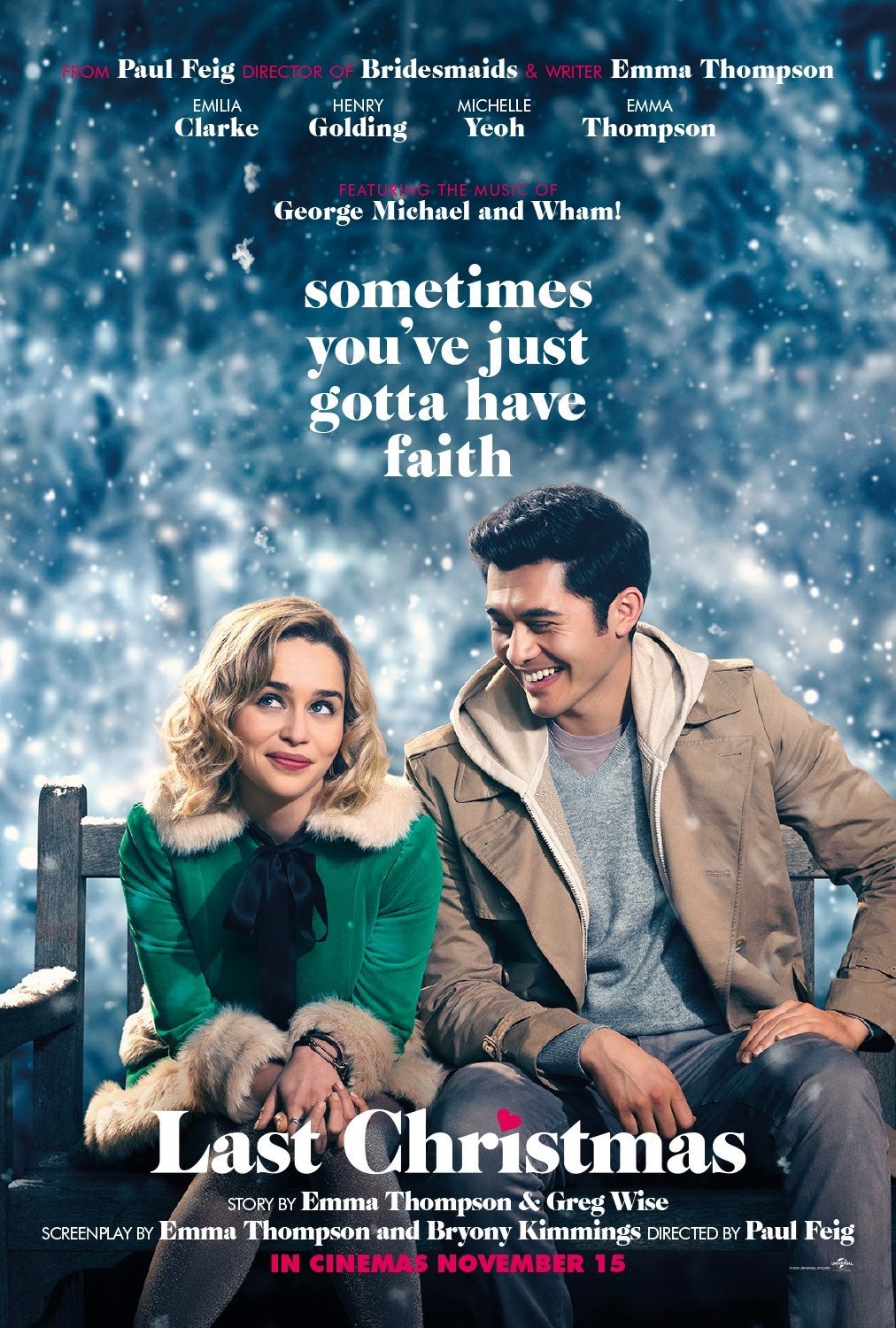
Last Christmas has been savaged by critics and held up by many like it was some sort of embodiment of everything that’s wrong with cinema. Jeez louise guys, take a chill pill why don’t you? Feig’s London based comedy, working with an Emma Thompson script, does exactly what it says on the tin – an It’s a Wonderful Life-inspired Christmassy story, that ticks all the Christmas boxes. It has no pretentions for doing anything else. And there is nothing wrong with that!

Kate (Emilia Clarke) is recovering from a heart transplant last year, and she’s heading off the rails. She takes no responsibility for anything, she’s selfish, lazy, demanding and making a car-crash of her life and health. Working as a full-time Elf in a Covent Garden Christmas store (run by Michelle Yeoh as “Santa”), Kate’s life is heading down the toilet until one day she meets Tom Webster (Henry Golding), an almost supernaturally decent guy, kind, considerate, friendly and caring. With his guidance can Kate start to turn her life around?

Well there is a twist in Last Christmas and, to be honest, it’s pretty easy to see coming. Anyone with half an eye on costumes or numbers of interactions will see it coming and anticipate what they are going to get. But you know, that’s fine. This is a film that knows what it is, a fairly unchallenging rom-com that’s spiced with a little touch of Capra-esque whimsy and a conventional morality tale of a selfish person turning round their life.

There are some good jokes, there are some reasonably charming performances, there is a good sense of fun driving through the whole film and it manages to capture at least a little touch of that Christmas-movie alchemy (a la Love Actually) where you can imagine people happily sitting down to watch it, in a light, fun, unchallenging way, for years to come. Its Feig’s offering for the Christmas movie cannon and it’s a perfectly acceptable entry. In fact its cosy predictability and familiar structure is pretty much a key part of its appeal. Because at Christmastime we don’t really want anything that’s going to stretch us or demand things from us. We kind of want to sit around and watch something a little predictable, a little fluffy but basically well-meaning and fun.

Emilia Clarke does a terrific job as light comedienne in the lead role, a role perhaps far more suited to her quirky, klutzy, off-the-wall charm than years of playing Daenerys Targaryen on Game of Thrones ever was. She throws herself into it here, happy to be silly, and shows both a good skill for pratfalls and also for drawing out a vulnerability from her character as well as being extremely charming. Henry Goulding makes a very good match as a character who could very easily tip over into smugly perfect, but again remains just the right side of charming.

Thompson writes herself a decent role as Kate’s Yugoslavian mother, a typical sort of nightmare domineering mother from films of this time, but laced with a sadness and isolation in the modern world and her adopted country. Moments that show the reaction of the characters to Brexit and the growing hostility to immigrants sometimes lean a little too heavily on the liberal conscience of the audience, but it fits in with the generally gentle, liberal attitudes of the film.

It’s a film that knows it’s a guilty pleasure, but it seems to have been designed to give you a sort of pre-Christmas glow. Catch it in the wrong mood and you will consider it one of the worst things you have seen. Take it in the right mood and you might even be charmed by it.

Saving Mr Banks (2013)

Tom Hanks and Emma Thompson clash on the making of Mary Poppins in Saving Mr Banks

Director: John Lee Hancock

Cast: Emma Thompson (Pamela Travers), Tom Hanks (Walt Disney), Colin Farrell (Travers Robert Goff), Ruth Wilson (Margaret Goff), Paul Giamatti (Ralph), Bradley Whitford (Don DaGradi), Jason Schwartzman (Richard M Sherman), BJ Novak (Robert B Sherman), Kathy Baker (Tommie), Melanie Paxson (Dolly), Rachel Griffiths (Ellie), Ronan Vibert (Diarmuid Russell)

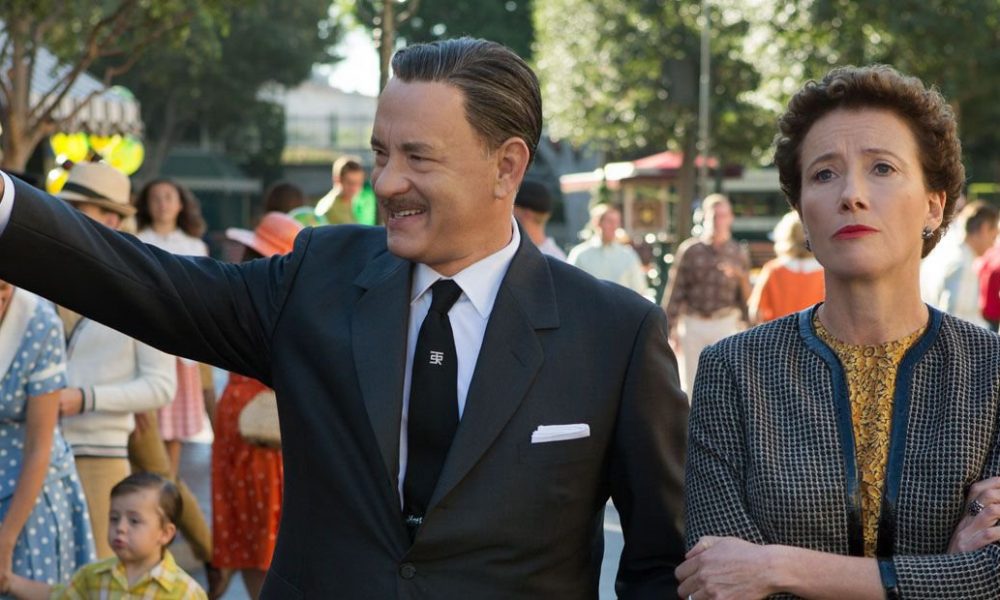
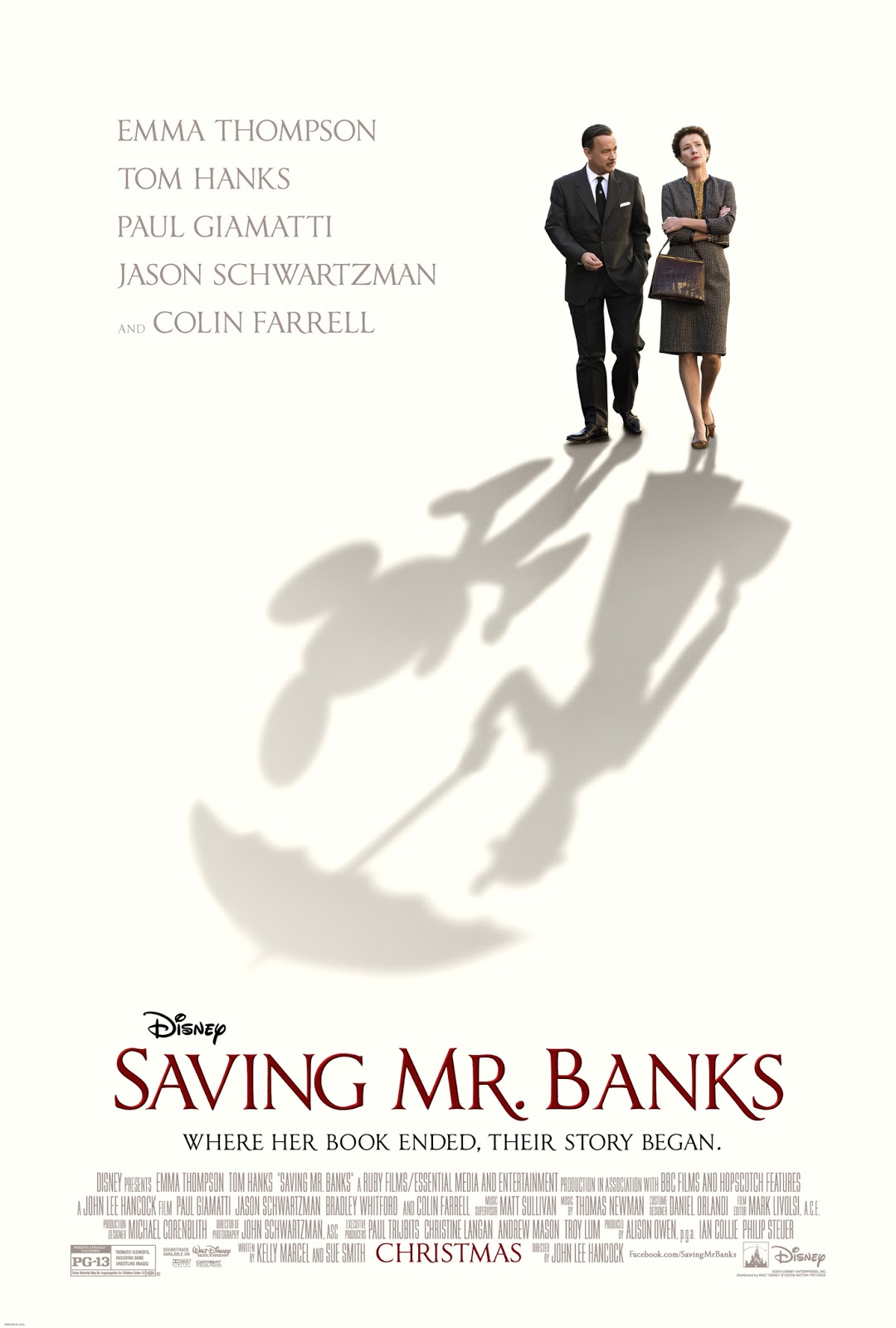
Walt Disney was a man used to getting what he wanted. And what he wanted more than anything was the rights to PL Travers’ Mary Poppins series. It was his kids favourite books, and he had promised them he would make the movie. It took decades – and Disney had to wait until Travers needed the money – but finally a deal was struck, with Travers having full script approval. So the hyper-English Travers is flown across the Atlantic to Los Angeles where she reacts with a brittle horror to every single suggestion from the Mary Poppins creative team, and distaste at the commercialisation of Disney’s enterprise. Based on the actual recordings (which Travers insisted on) from the script meetings, Emma Thompson is the imperious PL Travers and Tom Hanks the avuncular Walt Disney.

John Lee Hancock’s film is a solid crowd pleaser that, if it feels like it hardly delivers a completely true picture of the making of Mary Poppins, does put together an entertaining and interesting idea of the difficult process of creation and the tensions when writers (who don’t want to change a thing!) clash with film production companies. These problems being made worse by the clashing worlds of the loose, casualness and breezy friendliness of Los Angeles, and the intensely cold, buttoned-up Edwardianism of Travers, hostile to all shows of affection and any touches of sentimentality.

The film gets more than a lot of comic mileage out of these mixed worlds, with Travers’ every look of aghast, repressed, British reserve (“Poor AA Milne” she mutters while manhandingly a stuffed Winnie-the-Pooh toy out of her way, followed by “You can stay there until you learn the art of subtlety” as she dumps a massive Mickey Mouse cuddily toy against the wall of her bedroom) bound to raise sniggers at both her blunt hostility and cut-glass wit. Against this the American characters – all of them forced to dance to her tune – meet wave after wave of hostility with a practised American friendliness and warmth. It works a treat.

The film walks a fine line with its portrayal of Disney who is both a charming uncle figure and also a savvy and even ruthless businessman. Tom Hanks is spot-on with showing both sides of this man, making it clear how he managed to make so much damn money but also from how he managed to inspire such loyalty from many of his staff. Yes the film soft-peddles on many of Disney’s negatives – from refusing to show a single second of Disney smoking, to no mention of his active union-busting activities – but this is a film focused on Disney the impresario and negotiator. 

And what a person to negotiate with! That the film works is almost exclusively down to Emma Thompson’s imperious performance in the lead role. Thompson has a very difficult job here of turning someone so consistently rude, aggressive, arrogant and unpleasant as Travers (and over half of the film goes by before she says something nice to anyone) into a character we genuinely invest in, care about and laugh with as much as gasp at her rudeness. It’s a real trick from Thompson, adding a great deal if inner pain and vulnerability just below the surface, but only allowing a few beats of letting these feelings out for all the world to see. It makes for a performance that is superbly funny, hugely rude but also someone we end up caring about.

A lot of that spins from the careful recreation of Travers’ past in flashback, particularly her relationship with her father, Travers Goff (played with charm by Colin Farrell), an alcoholic bank manager in Australia when Travers was a child, who lived a life of irresponsibility mixed with bursts of playful, imaginative games with his daughter. It’s the realisation, by the elderly Travers, that her father was feckless and irresponsible that motivates her writing of Mary Poppins, the super-Nanny who flies in and saves not just the whole family, but specifically the father. Equally good in these sequences is Ruth Wilson as the despairing Mrs Goff.

It adds a sadness to the backstory of Travers – and an understanding of why she behaves the way she does – and the film also brings it round to a neat mutual meeting ground between her and Disney, who himself had problems with a father who drove him hard to achieve. It also explains Travers’ growing warmth to her chauffer, played by Paul Giamatti as a loving dad, the one person she demonstrates some affection to within the film.

It’s a film that wants to have its cake and eat it though, and it can’t resist adding a “happy ending” to the story of Travers finally accepting (even if she denies it) that she enjoys the Mary Poppins film and is moved by the saving of Mr Banks that it contains. In reality of course, Travers hated the film (though claimed some of it was passable) and refused Disney all permission to ever make any sequel. But that hardly matters here, to this fairy tale of saved souls which wants to see Travers saved – even if the truth was far more complex.

Primary Colors (1998)

John Travolta and Emma Thompson are definitely not the Clintons in Primary Colors

Director: Mike Nichols

Cast: John Travolta (Governor Jack Stanton), Emma Thompson (Susan Stanton), Adrian Lester (Henry Burton), Billy Bob Thornton (Richard Jemmons), Kathy Bates (Libby Holden), Larry Hagman (Governor Fred Picker), Stacy Edwards (Jennifer Rodgers), Maura Tierney (Daisy Green), Diane Ladd (Mamma Stanton), Paul Guilfoyle (Howard Ferguson), Kevin Cooney (Senator Lawrence Harris), Rebecca Walker (March Cunningham), Allison Janney (Miss Walsh), Mykelti Williamson (Dewayne Smith)

In 1998, America was engrossed in what seemed like a never-ending series of scandals around Bill Clinton, with Clinton facing impeachment. The news was filled with Clinton-Lewinsky Scandal catch-ups seemingly non-stop. Surely in the middle of that, a film that charted earlier scandals about Slick Willie would be a hit? Well Primary Colors proved that wrong. A thinly veiled portrait of the Clinton run for the White House, based on a novel written by Joe Klein who followed the Clintons on the campaign, it tanked at the box office. Possibly due to audiences having Clinton-fatigue – but also perhaps because it’s a stodgy, overlong and slightly too pleased-with-itself piece of Hollywood political commentary.

The film sticks pretty close to real-life timelines. John Travolta is Arkansas Governor Jack Stanton (Travolta does a consistent impersonation of Bill Clinton both vocally and physically during the whole film), who’s running for the Democratic Presidential nomination, supported by his (perhaps) smarter, ambitious wife Susan (Emma Thompson, doing a neat embodiment of Hillary without impersonation). Eager young black political operator Henry Burton (Adrian Lester) is recruited to help run the campaign – and finds himself increasingly drawn into the secrets of the Stantons, not least Jack’s persistent infidelities that seem to go hand-in-hand with his empathy and genuine passion for helping people. As scandal builds on scandal, the campaign to run for President becomes ever more unseemly.

Primary Colors asks questions that, to be honest, are pretty familiar to anyone who has ever seen a Hollywood film about politics. We’re presented with a Clinton-Stanton who wants to help America to re-educate itself in a modern world, who weeps with emotion when hearing a man recount his struggles with literacy (a fine cameo from Mykelti Williamson), who wants to rebuild America’s economy and build opportunities for all. And at the same time, he can’t keep it in his pants, is quite happy to dodge as much as possible the consequences of his actions, and is blithely disinterested in the impact his infidelities have on other people. Essentially the film wants to ask: at what point does a man’s personal behaviour and morals start to outweigh his good intentions?

It just takes a long time to ask it. A very long time. Primary Colors is a film that could easily be half an hour shorter, and you would miss very little. It’s a stodgy, overlong, smug drama that takes a gleeful delight in how clever it’s being making a film about the Clintons that-isn’t-about-them. It’s weakened as well by using an overly familiar device of putting a naïve and well-meaning audience surrogate character at its centre. We’ve seen this growth of disillusionment before, but Adrian Lester (in a break out role) fails to make Henry Burton a really interesting character – he’s little more than a cipher that we can project our views onto, and Lester is too reserved an actor to make him a character we can effectively invest in as a person. Instead he becomes a largely passive observer that more interesting characters revolve around.

Those characters being largely the Stantons themselves. John Travolta does a very good impersonation of Clinton, but he offers very little insight into the sort of person Clinton is, his motivations or his feelings. Like the character, the role is all performance and you never get a sense of how genuine his goals are and how much ambition is his main driver. As scandals pile up, Travolta is great at capturing Clinton’s sense of hurt that anyone would question his morals (even as his actions display his fundamental lack of them), but the role is short on depth. 

Emma Thompson gets less to play with as Hillary. In fact, she disappears from the second half of the film, after an affair plotline between her and Lester was cut completely from the film (something that makes certain scenes, where actors are clearly responding to this non-existent plotline, amusing to watch). But she manages to make the role something a little more than impersonation, delivering a whipper-sharp, ambitious woman who has buried her resentments about her husband’s betrayals under a wish to achieve a higher goal.

The rest of the cast deliver decent performances, but the stand-out is Kathy Bates as a long-time Stanton friend turned political fixer, who sees her idealisation of the Stantons turn to bitter disillusionment. Bates at first seems to be delivering another of her custom-made “larger than life” roles, but as the stuff hits the fan she layers it with a real emotional depth and complexity. It’s a caricature role that she turns into something real, a woman who feels genuine pain at seeing her deeply held political convictions and ideals being slowly disregarded by her heroes.

But then we get her point. Don’t we all feel a bit like that when we think back about Bill Clinton? The more we learn about his affairs and sexual scandals – and the more that #MeToo develops our understanding of how powerful men can abuse their power to take advantage of star-struck young women – the less sympathetic he seems. The film too suffers from some really out-of-date views of male sexuality. Billy Bob Thornton’s political fixer exposes himself early on in the film to a female worker, but this is shrugged off as “banter”, as opposed to a criminal offence – and the film largely avoids giving any air time to Stanton’s principal victim, the teenage daughter of a black restauranter whom he may or may not have impregnated. Stanton uses his power to gain sexual favours – one of his earliest acts is casually picking up a gawky English teacher who’s giving him a guided tour of her school (a funny cameo from Allison Janney) – but this is largely categorised as a personal weakness that doesn’t impact his suitability for the Presidency, something that feels more and more uncomfortable.

However, Primary Colors’ real problem is that it is overlong and a little bit too pleased with its intricate reconstruction of semi-true events. Although there are funny lines and decent performances, the film lacks any real zip and it gives no real insight into modern politics (other than perhaps deploring the compromises politicians must make) or the Clintons themselves. Instead it settles for telling us things we already know at great length and making safe but empty points about modern America. Far from exploring a Faustian pact where we accept deep personal failings in politicians because we believe that, overall, they could be a force for good, instead Primary Colors is all about turning shades of grey into obvious clear-cut moral choices.

Brideshead Revisited (2008)

Hayley Atwell, Ben Whishaw and Matthew Goode make for a bad revisitation to Brideshead

Director: Julian Jarrold

Cast: Matthew Goode (Charles Ryder), Ben Whishaw (Lord Sebastian Flyte), Hayley Atwell (Lady Julia Flyte), Emma Thompson (Lady Marchmain), Michael Gambon (Lord Marchmain), Greta Scacchi (Cara), Patrick Malahide (Mr Ryder), Felicity Jones (Lady Cordelia Flyte), Ed Stoppard (Lord Brideshead), Jonathan Cake (Rex Mottram), Joseph Beattie (Anthony Blanche)

There are some books that have been filmed definitively and you feel just shouldn’t be touched again. Perhaps the most definitive case is Brideshead Revisited. An 11-part, almost 13-hours-long, series from the height of the mini-series era, ITV’s 1981 Brideshead Revisited dramatised literally every page and every event of the just over 300 page novel, and did it with a perfect understanding of the book’s richness and complexity. So what hope could a film have – even if it is written by that man who had such a triumph with that other definitive production, the BBC Pride and Prejudice – Andrew Davies himself?

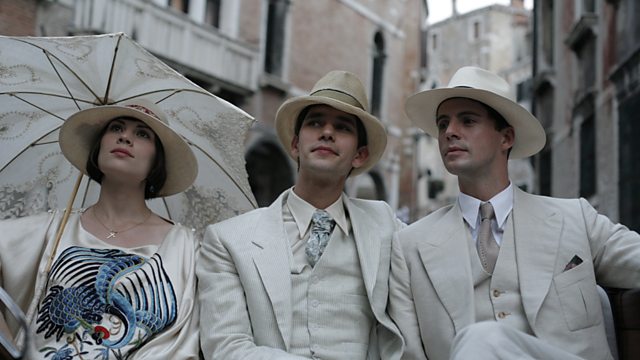
In the 1920s in Oxford, aspiring artist Charles Ryder (Matthew Goode) falls in with the bohemian set of fellow student Lord Sebastian Flyte (Ben Whishaw). Sebastian takes Charles to his family home of Brideshead, a beautiful, entrancing family estate. But Sebastian is an unhappy man, increasingly prone to drinking, conflicted about his family’s strong Catholic faith and his own sexuality. He’s also tortured by the growing love between Charles and his sister Julia (Hayley Atwell). Their domineering mother Lady Marchmain (Emma Thompson) attempts to guide the family as she wishes, but Sebastian’s alcoholism leads to a crisis. Years later Charles and Julia restart their relationship, only to find Catholicism and fate once again intruding to complicate matters.

Brideshead Revisited is a rich, sweeping, heartfelt and profound look at so many themes it seems impossible to cover them all in a single sentence. It touches upon questions of faith, class, politics, friendship, sexuality, love – all of them sensitively and intelligently explored by Evelyn Waugh. The TV series captured all these themes with an acute, empathetic emotional intelligence. This film, forced to telescope action into two hours, simplifies and sexualises the novel to make it as boiled down and simple as possible. While this probably makes for a decent, but nothing new, film for those who don’t know the novel, for those of us who do it’s nothing less than a total travesty.

Everything is made as straight-forward and basic as possible. Subtle suggestions from the novel are turned into blunt, simplified assertions that clang out of the actors’ mouths and hit the ground. This is especially clear in the character of Charles Ryder, a fascinating observer in the novel, both a snob and a romantic, capable of great warmth and kindness and also a distant indifference. Here, he’s little more than a social climber (his lower middle class roots are stressed), constantly being asked “What do you really want?” by other characters. His attachment to Sebastian, and introduction to the Brideshead house, seems based less on a magnetic friendship and more on his unspoken desire to be part of an “in-crowd”.

Ah yes, that relationship with Sebastian. Ben Whishaw’s performance as Sebastian is, quite simply, one of the worst realisations of an iconic character you are ever going to see. The novel’s Sebastian, is an impossible glamourous, handsome, slightly effete, but magnetically charismatic figure who effortlessly wins admirers and friends everywhere – so much so, that his intensely vulnerability, sadness and self-loathing that lead to his alcoholism are spotted way too late, and then hideously mismanaged. The character Whishaw plays here is so different, he’s effectively Flyte in name only.

It all stems from the film’s longing to put the book’s suggestion of a homosexual bond between Charles and Sebastian to the forefront. So we are made perfectly aware of Flyte’s feelings, and Whishaw turns the character instead into a stereotypical, limp-wristed, effete, tragic gay man struggling with a hopelessly unrequited love for Charles that pushes him over the edge to depression. Oh yes, it has to be unrequited love because we can’t have Charles show any homosexual inclinations. Particularly as the film is desperate to reposition Charles and Julia into a “love-at-first-sight” romantic couple from the start. So of course we have Charles twice rejecting sexual advances from Sebastian (once with the cold shoulder, the second time with an angry push). 

But in sexing up the content on the surface, the film totally kills the bond between the two characters. There is, frankly, no reason for Charles and Sebastian to be friends. Sebastian is from the start a slightly pathetic figure, so you never get a sense at all why Charles is drawn towards him. This then magnifies the feeling that Charles main motivation is the house (and Julia) and that he sees Sebastian as someone he must tolerate (and whom he later feels guilty about) rather than as a friend. Sebastian himself loses all his complexity, instead becoming a slightly pathetic, tragic, overlooked figure reduced to screaming at Charles “You only wanted to be my friend because you wanted my sister!” By pumping up the subtext, the film kills the central relationship of the book – and completely undermines the tragedy of Sebastian.

But then Andrew Davies was keen – as he stated himself in interviews – to reposition the novel as a conventional great romantic novel. Now it’s true that Charles calls Sebastian in the novel the “fore runner” for his feelings for Julia (and this relationship between Julia and Charles is, I will say, one thing the TV series didn’t quite nail), but in no way was she his main focus from the start. It makes Charles’ treatment (and, let’s be honest, leading on) of Sebastian crueller, and it also crudely simplifies the novel into a “love against the odds” story that we’ve seen a thousand times before. It drains the novel of one of the factors that made it original in the start.

So we end up with a Charles who basically, rather oddly, suffers the company of Sebastian but treats him as someone he wants to shrug off. We’ve got a romantic plot line between Julia and Charles that has been reduced to the most basic, cookie-cutter, Mills and Boon romance you can imagine. And the film still struggles through to attempt to deal with the book’s (perhaps) other major theme, religion. Catholicism, guilt and the power (and domination) of faith is key to the book – but here, it’s a crude subplot that positions religion as a sort of trouble-causing piece of mummery that gets in the way of happiness. Pretty much as far as you can get from Waugh’s understanding of the complex demands of faith, denial, guilt and love.

You could say it’s unfair to continually compare the film to the book and TV series. But not only is this meant to be an adaptation, but the film chose to shoot at Castle Howard in Yorkshire, just as the TV series did. So we see scenes play out, often in the exact same location as the masterful TV series. If the film doesn’t want to try and be original and find a new location, and visually apes the TV series as much as possible, it feels fair enough to compare it – and it find it wanting.

It’s a well-made film, I’ll give it that, and I like Adrian Johnstone’s score, but it’s turned an intelligent and absorbing novel into a sub-Merchant Ivory period prestige piece, with the focus on the lovely locations and the beautiful costumes rather than anything else. Performances wise, Matthew Goode is fine (but can’t escape the shadow of Jeremy Irons), but Hayley Atwell probably comes out best as a vibrant Julia (who gets, in a way, much more to do than the book gives her). For the rest, Emma Thompson gives a far too mannered performance as the domineering Lady Marchmain (here unquestionably a villain) and Michael Gambon coasts as the dying Lord Marchmain (who here turns up literally out of the blue at the end of the film to die).

Brideshead Revisited is an irrelevant piece of celluloid that brings nothing new whatsoever to the novel or the TV series. Worse it takes the key themes of the novel and subverts, ruins or mangles them in order to try and turn the story into a straightforward heterosexual romance. In doing so, it removes everything that makes the original interesting, unique or compelling – and makes people wonder why they should bother going back to the book – surely the worst offence of all.

Harry Potter and the Order of the Phoenix (2007)


Harry Potter and friends prepare to face the Dark Lord in Harry Potter and the Order of the Phoenix

Director: David Yates

Cast: Daniel Radcliffe (Harry Potter) Rupert Grint (Ron Weasley), Emma Watson (Hermione Grainger), Helena Bonham Carter (Bellatrix Lestrange), Robbie Coltrane (Hagrid), Ralph Fiennes (Lord Voldemort), Michael Gambon (Albus Dumbledore), Brendan Gleeson (Mad-Eyed Moody), Richard Griffiths (Vernon Dursley), Jason Isaacs (Lucius Malfoy), Gary Oldman (Sirius Black), Alan Rickman (Severus Snape), Fiona Shaw (Petunia Dursley), Maggie Smith (Minerve McGonagall), Imelda Staunton (Dolores Umbridge), David Thewlis (Remus Lupin), Emma Thompson (Sybill Trelawney), Julie Walters (Mrs Weasley), Mark Williams (Arthur Weasley), Robert Hardy (Cornelius Fudge), Tom Felton (Draco Malfoy), Matthew Lewis (Neville Longbottom), Evanna Lynch (Luna Lovegood), Katie Leung (Cho Chang), David Bradley (Argus Filch), Natalie Tena (Tonks), George Harris (Kingsley Shacklebolt)

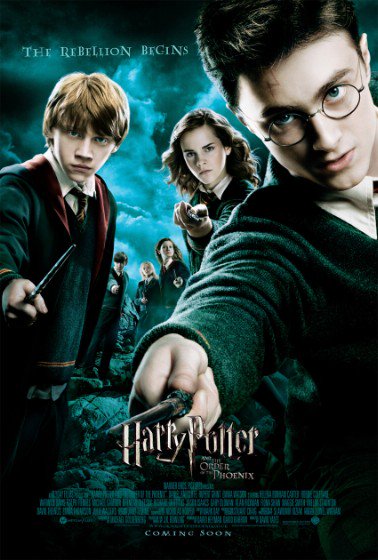
By the fifth film, the Harry Potter franchise was really on a roll – and a lot of the core creative team that would carry the series through to the final film were in place. It’s particularly striking how much a distinctive look and tone the series now had, that is both different from the books and a logical extension of them. It’s also the film where I think the series finally decided it would tell it’s own version of Rowling’s story, rather than an exact staging. 

Rather than simply tightening the plot of Rowling’s mammoth book, Order of the Phoenix decided to rework the story to deliver what it wanted to do. Vast amounts of Hogwarts material is ruthlessly cut, including large sections of Ron and Hermione’s sub-plots. The film streamlines the story, reducing Harry’s feelings of isolation in the story (the film instead centres the importance of friendship and loyalty). And despite turning one of the longest books in the series into the shortest film, this captures the sense of the book excellently. It clearly identifies the key themes that drive Rowling’s series and runs with these very effectively. This film, more than any others so far, shows the deep bonds of loyalty that connect not just the central trio, but also the other members of the school. The Dumbledore’s Army sequences have a wonderful sense of camaraderie about them – these people genuinely feel like a group of friends.

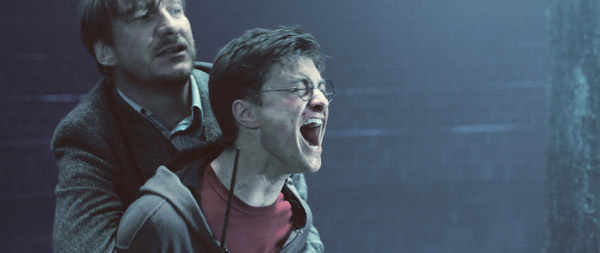
These sequences also give Daniel Radcliffe some great material to play with. Harry clearly would make a hell of a teacher – Radcliffe makes him encouraging and supportive, capable of drawing the best out of his students. Radcliffe does his expected excellent job all the way through this film. His ability to play scenes of grief and longing has increased dramatically – his reaction to the death of Sirius Black is really well done. But he also presents Harry as essentially a warm and caring person – exactly the polar opposite of the man Voldemort has become. It’s another terrific performance.

Order of the Phoenix was David Yates’ first film as a director of the series – Yates has gone on to direct all the subsequent outings in the Potterverse – and part of the reason he seems to have cemented the role is that he gives a perfect mixture of Columbus, Cuarón and Newell. He can juggle elements of Rowling’s story, he works very well with actors, he has enough creativity and vision as a director to present this world in interesting new ways. He’s a perfect combination of a number of skills from the previous directors – and he really runs with that legacy here.

Order of the Phoenix is a dark and gorgeously shot movie, with a tight story structure (it’s the only film not written by Steven Kloves, and Michael Goldenberg’s fresh take on the film I think really helps). Every scene has a painterly brilliance, and scenes simmer with tension and paranoia – Yates doesn’t lose track of the fact that Harry is being persecuted by the authorities for taking an unpopular stance on Voldemort’s return. 

Yates establishes his intention to turn this into a notably darker episode from the very start, opening with a vicious Dementor attack (redesigned to make them more fluid). This is followed quickly by a show trial at the Ministry. Then to a darker, gloomier Hogwarts now a den of unjust rules (the expulsion of Thompson’s gentle Sybil Trelawney is a particular fine heartstring-tugging moment), and cruel punishments. It’s a film that never allows us to forget death has entered Harry’s world. By the time we hit the final battle sequences in the Ministry of Magic, we know our heroes are putting their lives on the line. Scary as this is, we also appreciate the bonds of love that have taken them there all the more.

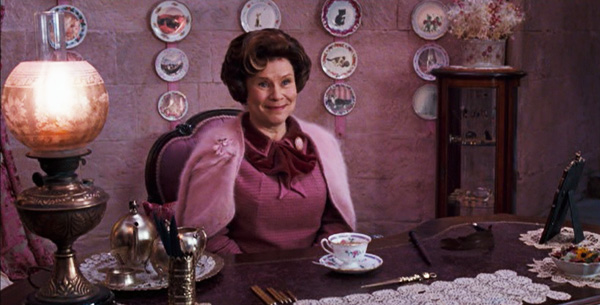
A lot of the creep and cruelty of the film emerge from Imelda Staunton’s Dolores Umbridge. Staunton is brilliantly cast as the twee ministry official who hides a ruthless viciousness, buttressed by a sociopathic conviction that whatever she does must be right. Staunton’s soft politeness is the perfect vehicle for showing Umbridge’s sadistic cruelty. Umbridge is the worst form of politician –blindly following the orders of any authority figure who can promote her on their coat-tails. The design of her character is similarly spot-on: she dresses almost exclusively in fluffy pink knitted suits, and her office is an explosion of pink, china plates and fluffy animal pictures. Staunton is almost unbelievably vile in her smug, condescending moral emptiness.

It’s further evidence of what a brilliant job this series did with casting. By this point, truly great actors were appearing in this film while sharing less than a dozen lines between them: Thewlis, Gleeson, Smith, Thompson and even Coltrane get remarkably little do in this film, but still seize your attention. Wonderful performances also come from the less famous names: George Harris gives a brilliant twinkly wisdom and gravity to Kingsley Shacklebolt while Robert Hardy (quietly excellent in the previous films) gets some more material to showcase his skills as the wilfully blind Fudge.

Of the other stand-outs, Helena Bonham Carter is brilliantly malevolent as the psychotic Bellatrix. Jason Isaacs gets some marvellous moments of smooth patrician wickedness as Malfoy. Gary Oldman is the ideal roguish father-figure as Sirius, the actor’s obvious bond with Radcliffe really coming across. Gambon is very comfortable now as Dumbledore, really showing the authority behind his Dumbledore’s eccentricity.

Then you have actors who dominate from mere minutes of screen-time. Fiennes again delivers in a short scene at the close of the picture. And then of course we get Rickman: he makes so much of such brief moments as Snape. He has probably the two biggest laugh-out-loud moments (both totally reliant on his delivery of non-descript words like “Obviously”). His occlumency classes with Harry showcase him at his best: trying to help, but unable to overcome his essential bitterness and resentment. These sequences are wonderfully contrasted with Harry’s comfort as a teacher to his friends: by contrast Snape is dismissive, impatient and unsympathetic.

The film finds moments of humanity and comedy throughout. Rupert Grint finally gets to show another side of Ron, as Ron matures slightly into a loyal wing-man , who makes it clear he will not countenance criticism of Harry in his hearing. And while this is a dark film, it’s also the one that deals with Harry’s growing romantic feelings for Cho – and he gets a beautifully played little romance that reminds us that Harry is (at the end of the day) still a nervous kid. It’s a film that understands friendship and love and their importance.

So it’s why the final battle sequence in the Ministry of Magic works so well. Tense and dangerous, we also root overwhelmingly for the courage of the kids. The work Yates had done on the wizard battles really pays off – they have a greater sense of choreography than ever before, while the apparating (in a trailing, misty, fast-moving cloud) really adds a fantastic visual element. Little shots work so well – I love the cut from Harry fighting alongside Sirius to his friends crouching behind a rock staring up at their friend in awe. It’s a beautiful reminder that what Harry is doing is so brave.

Of course, the film ends in the series’ first truly gripping wizard fight as we finally get Dumbledore taking on Voldemort. It was a great sequence in the book – and is translated wonderfully to the screen with a series of gripping visuals. There are brilliant beats throughout and we learn about the characters. We see Voldemort’s targeting of the defenceless Harry throughout, the way Dumbledore puts himself in the way of danger (including angrily throwing Harry backwards with magic when he steps forward). Above all you see Harry’s own courage (and his impulsiveness motivated by caring so much).

Order of the Phoenix is another excellent entry into a series that flourished and became richer the longer it went on. Yates showed that he was in tune with the fundamental ideas of Rowling’s writing and that he was able to marry excellent performances with impressive visuals. It’s brilliantly made – shot wonderfully, very well edited with a marvellous score – and is an impressive and muscular piece of film making. Very impressive.

Harry Potter and the Prisoner of Azkaban (2004)


Harry Potter friends confront wanted killer Sirius Black in Harry Potter and the Prisoner of Azkaban

Director: Alfonso Cuarón

Cast: Daniel Radcliffe (Harry Potter), Rupert Grint (Ron Weasley), Emma Watson (Hermione Granger), Julie Christie (Madam Rosmerta), Robbie Coltrane (Rubeus Hagrid), Michael Gambon (Albus Dumbledore), Richard Griffiths (Vernon Dusley), Gary Oldman (Sirius Black), Alan Rickman (Severus Snape), Fiona Shaw (Petrunia Dursley), Maggie Smith (Minerva McGonagall), Timothy Spall (Peter Pettigrew), David Thewlis (Remus Lupin), Emma Thompson (Sybill Trewlawney), Julie Walters (Molly Weasley), Mark Williams (Arthur Weasley), Tom Felton (Draco Malfoy), David Bradley (Argus Filch), Robert Hardy (Cornelius Fudge), Pam Ferris (Marge Dursley)

Well this is more like it. The first two films set the tone and established the universe. But Prisoner of Azkaban – filmed after a year’s break from the back-to-back filming of the first two films – is such a notable step-up in quality from the previous films, it completely stands alone as a marvellous piece of cinematic storytelling, not just as part of a franchise.

Why is this? Well I think the answer is pretty clear. After the solid, but unspectacular, direction from Chris Columbus, the reins were handed to a gifted filmmaker in Alfonso Cuarón. Harry Potter and the Prisoner of Azkaban has all the visual invention and dynamism the first two films lacked. Alongside that, Cuarón tells the story with a brilliant mixture of light and dark. For the first time, the adaptation also escaped the need to dramatise everything in the book onto the screen – this film is a good 20 minutes shorter than Chamber of Secrets but immeasurably superior.

Prisoner of Azkaban looks fantastically gorgeous, and is brilliantly shot. The production and costume design has been spruced up, to give the film a sort of steam-punk 1950s look, as if the wizarding world had slightly arrested a few decades behind the rest of the world. Cuarón was also one of the first directors in the series who seemed relaxed enough to let the children act like children – so we get scenes of them mucking around in the dormitory or dressed with a teenage coolness. Hogwarts becomes a castle of shadows and gloom, in a magical, wintry whiteness and Scottish Highlands shades of greens and blues. More than any of the previous films, its a world that feels ‘real’ and lived in. It’s a style that would dominate all the remaining films: Cuarón essentially set the tone for the rest of the series to come.

It also helps that Cuarón was blessed with perhaps the strongest of Rowling’s stand-alone stories, a tight and taut thriller that reaches a surprising conclusion and features playful use of things like time travel and illicit magic. Cuarón, however, really embraces the emotional core of that story, and allows all these characters to expand in richness and depth. Harry faces real torment and anger when confronted with the story of the death of his parents, and his desperate yearning to have some sort of connection with them is a key thread that runs through almost every scene.

The film highlights the growing flirtation and connection between Ron and Hermione. Hermione herself is increasingly shown as a level-headed, empathetic young woman, who really understands the feelings of her friends. Several other characters are allowed to show depths: don’t forget this is the film where we see Snape’s first reaction when confronted with a werewolf is to put himself between it and the children. Rickman, by the way, is brilliant in this film, giving us the first hints of the deep and abiding feelings Snape held for Harry’s mother in his bitter anger at Sirius.

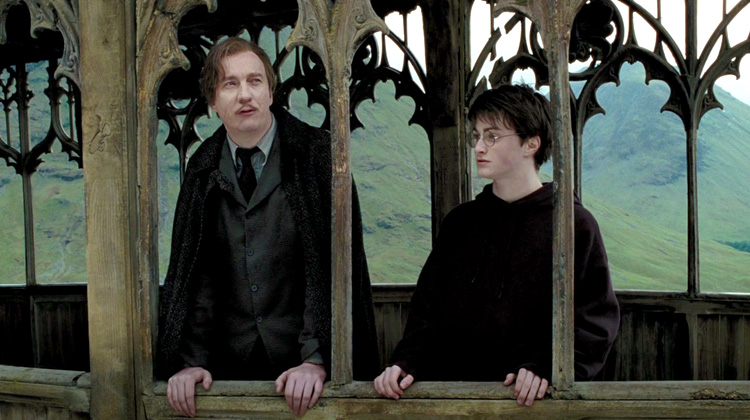
As always the film introduces some fantastic new characters into the mix. Gary Oldman is simply superb as Sirius Black, bringing to life his torment and rage, but most especially Blacks warmth and generosity (as well as his boyish enthusiasm). It was a major change of pace for Oldman, who has credited the film with changing his image in Hollywood away from one-note villain. Emma Thompson is very funny as (possibly) delusional divination teacher Sybil Trelawney. David Thewlis though waltzes off with the movie as a sad-eyed Remus Lupin, a man who clearly has known great losses. Thewlis plays Lupin with a caring, scruffy charm, an ideal teacher and mentor – generous but also firm when needed. It’s impossible not to end the film caring deeply for him. He’s terrific – it’s a real shame he never got another real showpiece scene in the rest of the franchise.

This is also our first introduction to Michael Gambon as Dumbledore – a replacement for the late Richard Harris. Gambon plays the part with a curious twinkly cheekiness, and a greater physical robustness, along with a faint Irish twang which feels like a homage to Harris. It’s a slightly uncertain start, but Gambon’s unusual, slightly-faded-hippie take on the part stands out from Harris’ austere wise-man very nicely. His lightness makes the moments of power all the more awe-inspiring. It also rather fits in with the tone of Cuarón’s slightly off-beat style.

Cuarón has a real eye for the offbeat gag – from a cleaner almost being blown away by a monster’s howl in the Leaky Cauldron, to the kids eating animal sweets in their dormitory, to Dumbledore’s off-camera delay tactics with Fudge (“Well it is a very long name minister” he says when asked to sign something), there are many delightful sight and sound gags throughout the film to make it a joy to discover. His balance of this with the heart of the story is brilliant: the inflation of Pam Ferris’ vile Aunt Marge is both brilliantly funny, but also clearly motivated by the revolting things she openly says to Harry about his parents. It’s a great balance the film pulls off time and time again.

The film is wonderfully structured and beautifully paced. It’s got a very clear five act structure, and thematic thread running through the whole film of grief and needing friends to help cope with this. The parts of the book that don’t contribute to this have been skilfully trimmed down. Cuarón then brilliantly interweaves set-piece moments, many of them introduced with an off-the-wall inventiveness, such as the umbrella dancing in the wind before the storm-swept Quiddich match (is there any health and safety in this school at all by the way?).

By the time you hit the final sequences, thanks to the film’s structure, you’ve no doubt about the revolting dangers of the Dementors. These spectral creatures are returned to again and again by Cuarón’s careful editing, as we see them drifting around the borders of Hogwarts, killing flowers and freezing lakes by their very presence. These terrifying creatures are the creepy stuff of nightmares – and Cuarón doesn’t flinch from this. It also makes Harry’s successful conjuring of a Patronus at the film’s conclusion a stirring and triumphant moment, a suitable triumphal ending to the film.

Cuarón’s direction of this film re-set the table for the entire franchise. Both Mike Newell and David Yates would follow in his footsteps, and present the world as Cuarón imagined it: dark blacks, and muted primary colours, as much a world of creepy, unsettling threat and danger, as it was of delight and wonder. From this point on the films would start to stand on their own feet, focusing on exploring the themes and emotions of Rowling’s story, rather than covering every scene. Prisoner of Azkaban is the best of the Harry Potter films and the most important landmark in the series. It’s not just a great Harry Potter film, or a great fantasy film or kids’ film. It’s a great film.