Tag: Gene Kelly

On the Town (1949)

On the Town (1949)

Hugely enjoyable musical, fast-paced, funny and crammed with excellent song-and-dance routines

Director: Stanley Donen, Gene Kelly

Cast: Gene Kelly (Gabey), Frank Sinatra (Chip), Betty Garrett (Hildy Esterhazy), Ann Miller (Claire Huddesen), Jules Munshin (Ozzie), Vera-Ellen (Ivy Smith), Florence Bates (Madame Dilyovska), Alice Pearce (Lucy Shmeeler)
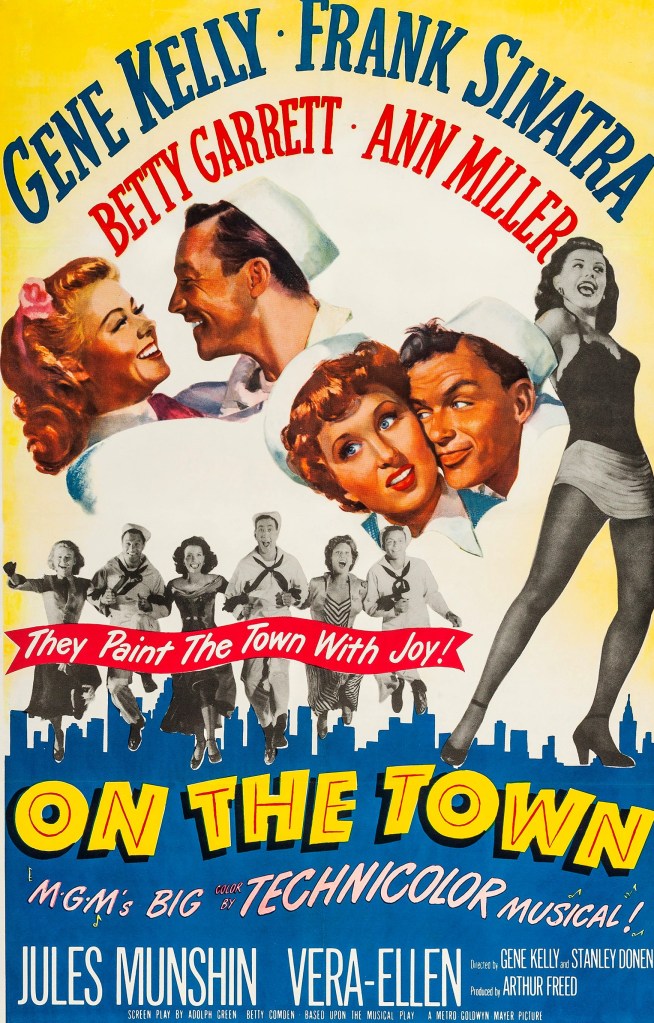
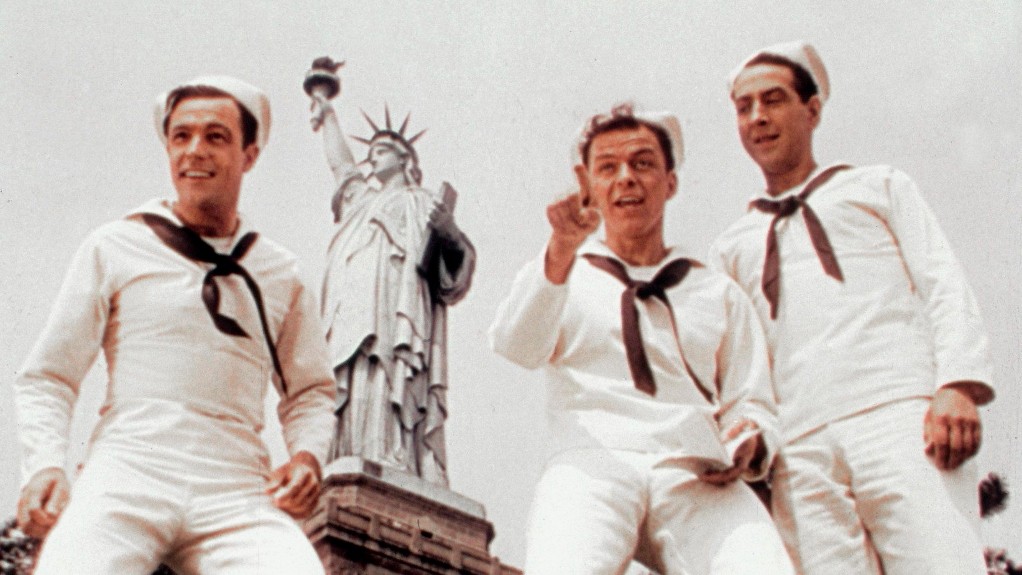
I assume Freed, Donen and Kelly re-watched Anchors Aweigh and said ‘There’s a good idea in here… but we can do better’. They certainly did with On the Town – and it surely helped that they seized on Leonard Bernstein’s hit Broadway musical with its book by Betty Comden and Adolph Green, for a pacier, funnier, more focused version of a very similar story. Once again, Gene Kelly and Frank Sinatra (now accompanied by third banana Jules Munshin) are sailors enjoying leave (this time in New York) and looking for romance. And they find it, with Gabey (Kelly) star-struck by Vera-Ellen’s Ivy Smith (who he mistakes for a celebrity), Chip (Sinatra) falling for flirtatiously voracious taxi-driver Hildy (Betty Garrett) and Ozzie (Menshin) inexplicably charming glamourous anthropologist Claire (Ann Miller). These three couples spend a fab 24 hours, getting in-and-out of scrapes and falling in love.

It’s all gloriously entertaining, zipping by in 90 pacey minutes with assured, dynamic and engaging direction by Stanley Donen that crams the film with zip and an enormous sense of fun. Donen’s first credit saw him handling much of the visuals and camerawork, while co-director Kelly took on the choreography. It made for a fantastic teaming, and it’s striking how much energy and visual panache Donen bought to the musical (again, compared to the more staid direction and visual compositions of Anchors Aweigh). Donen cuts the film tightly, never lets scenes out-stay their welcome, cuts tightly to the beat (the opening song New York, New York shifts excitingly from location to location during its performance) and crafting visual set-pieces that were exciting to watch (crane shots, tracking shots) while never compromising the view of the dancing.

On the Town also had the advantage of some fabulous source material. Interestingly, Freed and musical director Roger Edens were sceptical about whether Bernstein’s original score (with its artful repeated refrains) was accessible enough to appeal to audiences (not to mention many of the numbers in the musical were not a good fit for their cast). It was decided to junk a huge portion of Bernstein’s score (only four songs remain), a decision that led to him boycotting the film – but meant they could combine the best of his work with the sort of song-and-dance material that played to its star’s strengths.

And the film has several stand-out sequences, most notably of course that ‘New York, New York’ opening. Kelly and Donen pitched heavily to be allowed to shoot on location in New York and were granted ten days of location footage. It makes a huge impact to the number, allowing Donen to give it a grounded and vibrant mood. On the Town helped set the template for future films for fast-paced location shooting in bustling locations: driven by the fact Sinatra’s fame meant inconspicuous camera set-ups for quick shots was essential to avoid attracting crowds. (The only scene that shows the problems the film had with longer set-ups was the shot of the gang dancing in front of the Rockefeller centre, the balcony above the statue packed with rubber-necking fans).

There are also great song-and-dance scenes which utilise the strength of all the film’s performers. ‘Prehistoric man’ is suitably zany, ‘You’re awful’ a lovely song-showcase for Sinatra and Garrett, ‘On the Town’ and ‘You Can Count on Me’ fantastic toe-tapping showcases. It’s a parade of hugely engaging, dynamic musical numbers which are immensely fun to watch. It’s more than enough to make you forgive Kelly’s continued desire to prove himself a ballet dancer (On the Town shoves in a day-dream, silent ballet set-piece ‘A Day in New York’ which is an impressive showpiece for Kelly, even if it’s the only number that slows the film down rather than keeping the comic and narrative pace up).

On the Town also has a punchy series of funny lines, clever comic set-pieces and jokes from Comden and Green (it’s Dinosaur/Dinah Shaw mishearing gag is a real stand-out). Of course, narratively On the Town is completely barmy, much of the drama revolving around Ozzie’s accidental destruction of a Brontosaurus skeleton in the Natural History Museum and a resulting on-and-off again Keystone Kops style series of chases. The film zips along with such pace and wit that you happily swallow bizarre ideas (such as Ozzie, in a surprisingly vertigo inducing moment, hanging off the side of the top of the Empire State Building) and shameless coincidences.

But it’s knock-about fun and zany, nonsense plotting actually makes it all the more entertaining to watch. The film’s constant reminders of how far we into this strange 24-hour leave period works very well to give a sense of momentum to events and there is a more than a bit of Hays Code baiting naughtiness, not least in the clear implication that Chip and Hildy (in particular) and Ozzie and Claire spend most of the afternoon going at it great guns while claiming to Gabey that of course they spent the time searching the libraries and museums of New York for Ivy.

On the Town has its cast of musical stars nearly at their peak. Kelly’s dancing and choreography is energetically perfect as always and he fully embraces the charismatic romantic naivety of this would-be player Gabey. Sinatra is much more assured and comfortably witty than in many other musical roles. He also has excellent chemistry with Betty Garrett’s hilariously eager Betty. Ann Miller is wonderfully endearing and funny as Claire. Alice Pearce is surprisingly affecting in a role that initially suggests it might be a one-joke loser, as Ivy’s blousy single flatmate. Vera-Ellen may not have the charisma the role needs but is very sweet. Only Jules Munshin is trying too hard with some aggressively enthusiastic gurning.

Kelly later said On the Town might not have been the best musical they ever made, but it was the one when pretty much everyone involved was at the peak of their powers. He might well be right. On the Town is a slick, sleek and highly enjoyable confection that makes for perfectly entertaining Sunday afternoon viewing.

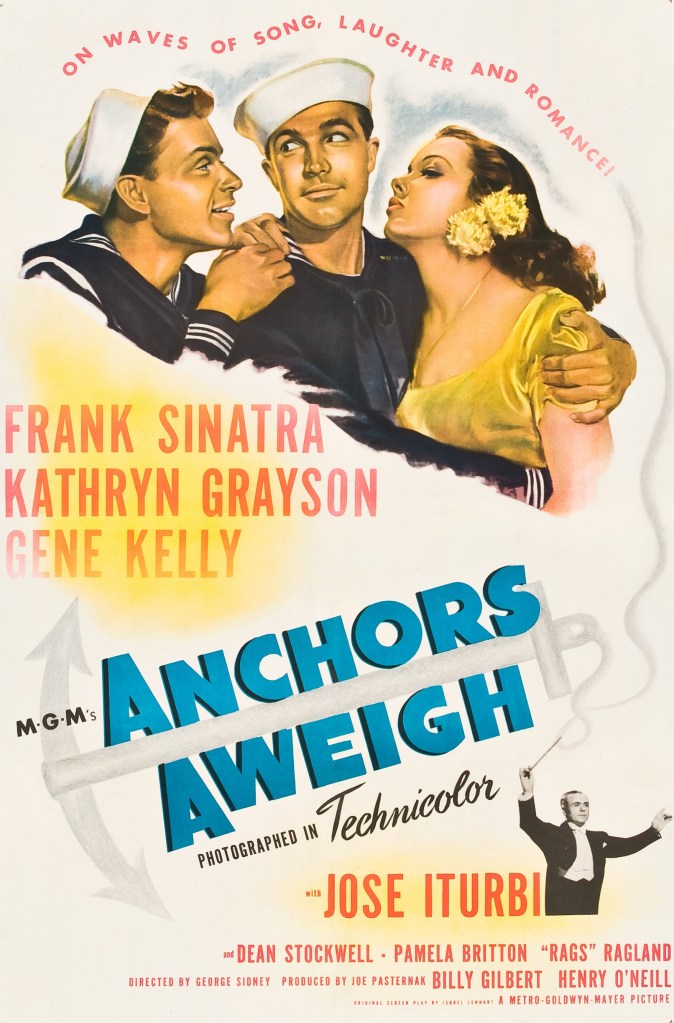
Anchors Aweigh (1945)

Anchors Aweigh (1945)

Classic musical frequently overlong and under-plotted with fun moments but dwarfed by later films

Director: George Sidney

Cast: Frank Sinatra (Clarence Doolittle), Kathryn Grayson (Susan Abbott), Gene Kelly (Joe Brady), José Iturbi (Himself), Dean Stockwell (Donald Martin), Pamela Britton (Brooklyn), “Rags” Ragland (Police sergeant), Bill Gilbert (Café manager), Henry O’Neill (Admiral Hammond)

US Navy sailors Clarence (Frank Sinatra) and Joe (Gene Kelly) win medals and shore leave all on the same day, and head to the streets of Hollywood looking for a good time. But, Cyrano-like, Joe finds himself helping Clarence court would-be Hollywood actress Susan Abbott (Kathryn Grayson), whom he secretly wouldn’t mind whispering sweet nothings to himself. Just as well the naïve, never-been-kissed Clarence finds an instant spark with café waitress Brooklyn (Pamela Britton). But can the boys deliver to Susan the audition they’ve promised with esteemed MGM musical director José Iturbi (playing himself)? And can true love find a way through?

It certainly can, but it takes a very, very long time for it to do so. Anchors Aweigh was a big hit, scooping several Oscar nominations (including Kelly’s only acting nomination). But today it feels like a self-indulgent pilot for far more successful (and considerably shorter) Freed musicals that followed. The concept of Sinatra and Kelly as shore leave sailors was recycled in On the Town while a peak behind Hollywood’s curtain was obviously used far more effectively in Singin’ in the Rain. Compared to these two, Anchors Aweigh feels bloated, massively over-staying its welcome while its incredibly flimsy plot is stretched out over two hours and twenty minutes (in that time you could watch most of both of its superior successors).

Anchors Aweigh is really a collection of short skits where the stars showcase what they do best: Kelly dances and Sinatra sings. Every so often they sing-and-dance together. The plot’s romantic shenanigans are solved easily and everyone ends with a beaming smile on their face. Instead, the film is almost exclusively remembered for its skits, most famously a very impressive fantasy sequence where Kelly dances with an animated Jerry (of Tom and Jerry fame). This five minutes or so of ingenious animation matched with Kelly’s charm and energy would make for a heck of a short film: which is what of course it really is, since it bears almost no connection with almost anything else in the film (Kelly is spinning a yarn about how he won his medal, suggesting he did it by teaching a lonely mouse king how to trip the light fantastic).

The finest points of this film are these sequences: but there are far too many of them, and many don’t match the same quality. On the positive side, we get some fine singing from Ol’ Blue Eyes, and Kelly and Sinatra dance two hugely enjoyable numbers together: We Hate to Leave where they tease their fellow sailors about all the great fun ahead for them on shore leave and I Begged Her a high-tempo number (which Sinatra took eight weeks to master) as the boys brag about all the wild-antics we know they didn’t actually get up to the night before. Kelly gets a showpiece paso-tinged tap dance themed around Zorro which provides the film’s most impressive athletic stunts. On the negative side, Iturbi is given the scope for too many classical concerto excepts which dramatically slows the action (such as it is) down.

Problem is there is no cement to hold these moments together. The central plot is so flimsy, slight and utterly unsurprising, so completely devoid of conflict or drama, it seems designed to lull you to sleep between the set pieces. It’s not helped by the general acting weakness of much of the cast. Sinatra at this time was a stunning singer and surprisingly competent dancer but a very mediocre actor – amusing as it is to see him play a timid virgin who can’t get a girl. Kathryn Grayson gives a solid but uninspired performance, hardly charismatic enough to make you believe both men would fall for her so swiftly. José Iturbi is wooden as himself. Pamela Britton is so low on charisma, you hardly notice the film doesn’t bother to give her character a name. In his first major role, Dean Stockwell actually shows promise, even if his character is the sort of melt-your-heart child many audiences secretly find nauseating.

The real star here is the third billed Kelly, who nails the persona that would carry him through many films: the charismatic, sometimes glib charmer with the knack for comedic facial reactions who hides hidden romantic depths under a smooth exterior. Kelly is the motor of the whole film, with just the right light comic touch to keep things going, not to mention throwing himself into the film’s most memorable sequences. Every scene showcases his ability to pull a parade of witty facial expressions from bemused to long suffering to sheepishly guilty to exasperated. He’s the finest thing in a mediocre film.

A mediocre film is what Anchors Aweigh is, assembled with the sort of bland competence that was George Sidney’s calling card (compare his work here to the imagination and energy that Stanley Donen bought to pretty much the same material). It’s chief amusement now is chuckling at how certain set-ups now come across: the completely innocent homoerotic undertones between Kelly and Sinatra (although the film winks at this, when Kelly’s attempt to teach Sinatra to woo a girl sees him drawing glances as he minces down the street imitating the girl-next-door); the fact that Kelly’s unseen girlfriend Lola really sounds like she might be a sex worker; the tone-deaf decision of the boys to discourage Susan’s older (and, to be fair, predatory) suitor by singing a song about how she is the equivalent of the town’s bike; how completely chill everyone is about letting two random sailors take a small boy home alone. To be honest giggling at how these particular mores have changed over time is more amusing than most of this otherwise over-long, under-plotted, thuddingly average film.

Hello Dolly! (1969)

Hello Dolly! (1969)

Bloated, miscast and over-produced musical that nearly sank the genre and studio

Director: Gene Kelly

Cast: Barbra Streisand (Dolly Levi), Walter Matthau (Horace Vandergelder), Michael Crawford (Cornelius Hackl), Marianne McAndrew (Irene Molloy), EJ Peaker (Minnie Fay), Danny Lockin (Barnaby Tucker), Joyce Ames (Ermengarde Vandergelder), Tommy Tune (Ambrose Kemper), Judy Knaiz (Gussie Grander), David Hurst (Rudolph Reisenweber), Louis Armstrong (Band leader)

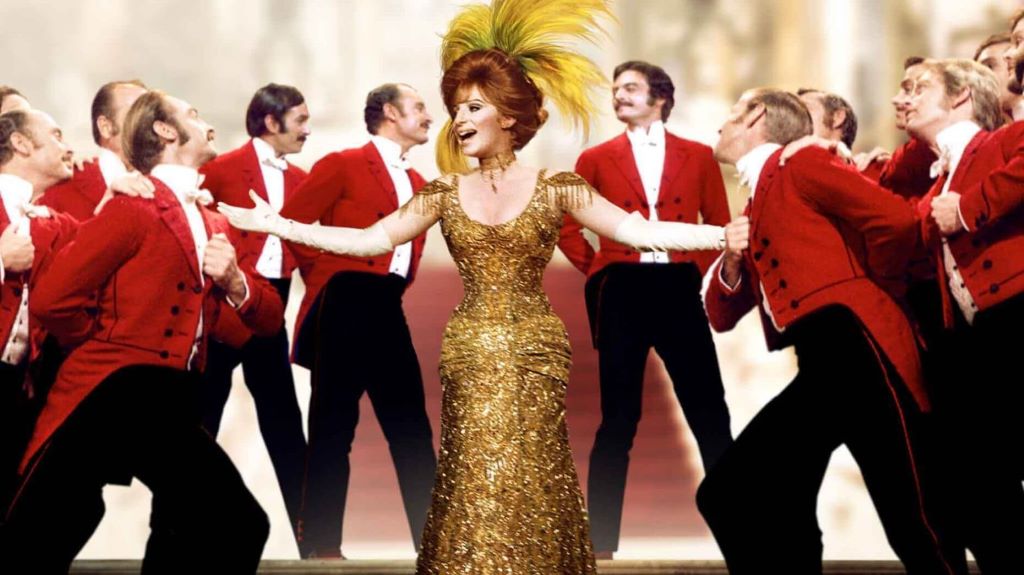
The old-fashioned musical had always been a winner for Hollywood. So, I guess it made perfect sense to pump $25 million (just over $200 million in today’s money) into Hello Dolly!. Reality didn’t agree though. Hello Dolly! was a massive box-office bomb which, despite its seven Oscar nominations (including Best Picture, due to intense studio lobbying) pretty much killed the traditional, Freed-style musical stone-dead. After this, musicals would have drama at their heart (like Fiddler on the Roof or Cabaret) and scale down the production numbers.

It also didn’t help that the mega-budget, colossal production values across its bum-numbing two-and-a-half hour run time ruthlessly exposed Hello Dolly! as a perilously slight story, in a way its years playing on Broadway hadn’t. Dolly Levi (Barbra Streisand) is a widowed matchmaker, hired by grumpy “half-a-millionaire” Horace Vandergelder (Walter Matthau) to find him a wife. However, Dolly rather fancies getting back into the game with Horace herself. Around them other parties flirt, such as Horace’s niece Ermengarde (Joyce Ames) with artist Ambrose Kemper (Tommy Tune) and his clerks Corenlius Hackl (Michael Crawford) and Barnaby Tucker (Danny Luckin) with fashion store owner Irene Molloy (Marianne McAndrew) and her assistant Minnie Fay (EJ Peaker).

I’ll grant the scale and sets are impressive. Whole streets and parks were built. Grand, elaborate costumes (some of Streisand’s costumes cost thousands and thousands of dollars by themselves) add wow factor. If you believe “more is more” Hello Dolly! is for you, it’s Oscar for set design well deserved. But as you watch Streisand hit a high note in long shot while an entire parade of thousands takes place around her, you start to realise you’ve not formed a bond with the characters. When we finally get them all in one place (a crowded restaurant in New York) the best part of thirty minutes is taken up with three massive numbers (Dancing waiters! Streisand’s entrance number! Comedy foot-tapping from Crawford! Louis Armstrong cameo!) that piles so much stuff on, that you almost forget what the scene was meant to be about in the first place.

What this probably needed to be is a tighter, American in Paris style romantic comedy, the sort of stuff Arthur Freed would have run out in 100 minutes with a few set pieces. Instead, it’s a bloated mega-production with colossal sets, 12,000 extras, widescreen soaking up the action and vast, never-ending dance numbers that fail to progress either story or emotion. After being bludgeoned by balletic leaps, you suddenly realise not only has nothing much happened, but you are being asked to invest in the future happiness of characters you barely know and often hardly even like.

It’s not helped by the chronic miscasting of the leads. Barbra Streisand was the hottest star in town – the studio was (correctly) convinced mega-stardom was inevitable after watching the rushes of Funny Girl – but she is wrong on almost every level for Dolly Levi. A part intended for a slightly-over-the-hill widower in her late 40s, was barely retrofitted for a glamourous diva aged 26. Streisand, clearly painfully aware she was wrong for the part, struggles to work out how to play it. Sometimes she’s coquetteish, other times she goes for a mother-in-law largeness, most of the time she ends up channelling Mae West sauciness. While her singing is (of course) outstanding, she never looks comfortable. Equally out-of-place is Walter Matthau, whose grouchy comedy style never meshes with the tone of the film (although he has a great bit of business with a walking stick which he hammers down onto a table with such irritated force it almost rebounds and hits him in the face).

It also doesn’t help that Matthau and Streisand all-too-clearly can’t stand each other (their closing kiss is hilariously awkward – try replicating their physical positions to see how unnatural and unromantic it is). On set Matthau felt Streisand was too big for her newcomer boots while Streisand saw him as envious of her star quality. The two frequently fell into heated rows: this at least meant they fitted in naturally on a set where almost no-one got on. Streisand and Kelly’s working styles (both being demanding perfectionists) proved incompatible, Kelly stopped speaking to the official choreographer who also stopped speaking to the costume designer.

With the leads struggling, most of the film’s charm actually relies on its secondary leads. Hello Dolly! is, actually, an effective showcase for Michael Crawford’s physical dexterity (some would say recklessness) and his sweet romance with Marianne McAndrew’s charming Irene Molloy is the film’s emotional heart. It’s a shame both their film careers effectively ended here (though Crawford would go on to greater things on stage). Their dance number Elegance is one of the film’s most engaging while their duet It Only Takes a Moment is the simplest filmed and most moving moment in the film.

Bloat and bombast overwhelms the rest. Although Kelly knows how to shoot dancing – effective camera moves and having the dancers move towards the camera, increasing their dynamism is very well done – he’s far less suited to the character moments which Stanley Donen and Vincente Minnelli excelled at. The gags very rarely land, either because the timing is off or the camera is so focused on getting the mammoth sets in that the bits of business look like minor irrelevances.

Fundamentally, Hello Dolly! bet the house on throwing all the budget on the screen to wow audiences the way something like The Great Ziegfeld had over thirty years ago. But audiences needed an emotional connection with what they were watching. Hello Dolly spectacularly fails to deliver on this. What we were left with is a very slight story about matchmaking, basically a chamber piece with about six characters, transposed onto the sort of epic backdrop that makes Gone with the Wind look humble. The mismatch never works and the entire enterprise eventually collapses under its own gravitational pull. A box office dud that nearly sank the studio, the musical would never be the same again.

An American in Paris (1951)

An American in Paris (1951)

Romance, love and a lot of dancing in this charming Best Picture winning musical

Director: Vincente Minnelli

Cast: Gene Kelly (Jerry Mulligan), Leslie Caron (Lise Bouvier), Oscar Levant (Adam Cook), Georges Guétary (Henri Baurel), Nina Foch (Milo Roberts), Eugene Borden (Georges Mattieu)

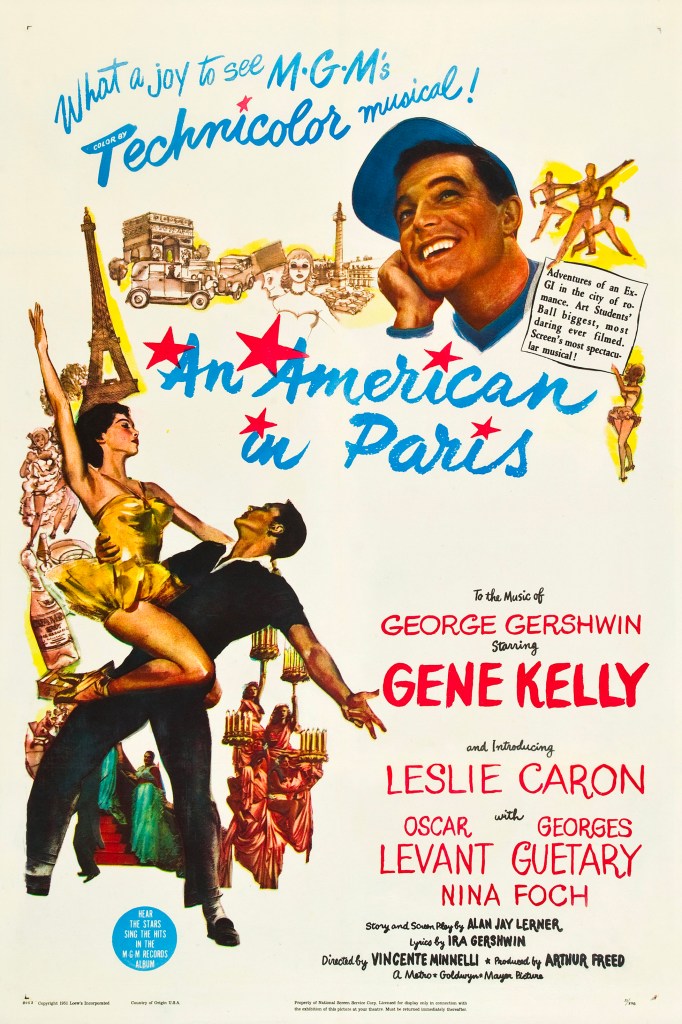
“This is Paris. And I’m an American who lives here!” Those are almost the first words you hear in this charming but light and frothy Best Picture winner. They are pretty much an indicator of the loosely constructed, lightly plotted film that unspools. With the rights to the back catalogue of Gershwin, a story was swiftly thrown together to give us a reason to watch Gene Kelly and friends dance and sing their way through them. Tapping into a post-war romanticism about the delights of Old Europe, An American in Paris is a hugely entertaining technicolour delight that blew audiences away.

That American is Jerry Mulligan (Gene Kelly), an ex-GI hanging around in Paris to try and make his dreams of being an artist like Renoir and Toulouse-Lautrec come true (one glance at his paintings is enough to know he has no chance). His best friend is fellow ex-pat, ageing ‘child prodigy’ pianist Adam (Oscar Levant). Adam’s friend is Henri (Georges Guétary), a famous French singer (and war hero!). Henri is engaged to Lise (Leslie Caron), who meets Jerry by chance, neither knowing who the other is. Doncha-know-it Jerry and Lise fall in love. All this while Milo (Nina Foch), a wealthy would-be patron, longs to make Jerry her companion. How will these romantic complexities play out?

The story is by Alan Jay Lerner, but it can’t have taken him more than a long afternoon to come up with it: two friends unknowingly love the same woman, which will she choose? There is the odd sparkling piece of dialogue, but really this is a showcase for three things: Gershwin, Kelly’s dancing and Paris. Pretty much in that order, since the film is almost completely shot on a Studio backlot  (there are some brief second unit shots of the actual locations). Kelly objected at first to the lack of location shooting (“Ever tried dancing on cobble stones?” a producer pointed out), but actually it works for a film that is basically a fantasia on the city of romance, at points literally taking place in dream-like Parisian streets.

Constructed on a huge set (with some ingenious technical effects to expand the heights of the buildings, like Jerry’s apartment) the film is basically one delightful dance sequence after another, shot with a technicolour richness by Minnelli. We get introduced to our three male leads – Jerry, Adam and Henri – in overlapping voiceover, their faces unseen, as the camera roams over their Parisian locale. (We also get a neat repetition three times of the same joke as a camera settles on someone who nearly fits their description only to be told “no that’s not me”).

From there they meet each other and burst into a richly dynamic all-singing, all-dancing rendition of By Strauss in a classic Parisian café, that uses every prop going.  (It later gets mirrored with an equally amusing ‘S Wonderful where, unknowingly, Jerry and Henri sing of their love for the same woman, while a stressed Adam who knows the truth puffs seemingly a whole pack of cigarettes at once). Not to be out down, as Henri describes his fiancée to the boys, we see Caron perform a series of ballet steps each of them styled differently to reflect the different facets of her personality.

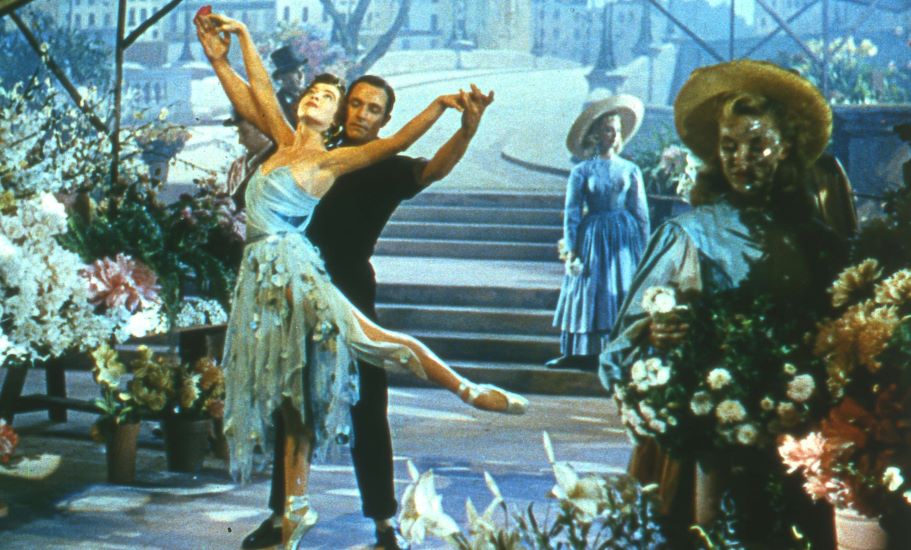
Kelly took on much of the choreography work and the film is a tribute to his grace. The man could move like almost no one else. One of the best bits of choreography in the film isn’t even a musical number: after his introduction Jerry gets out of bed in his tiny apartment and, with a stunningly witty musical grace, rearranges all the furniture from ‘night-time’ (bed) to ‘day-time’ (table and chairs). It’s just about a perfect bit of physical choreography, one of my favourite in the movies and at least as beautiful in its way (if not more so than) Jerry and Lise ballet stepping to Love is Here to Stay under a Parisian bridge. Not to complain about this number, which is a hugely influential routine of two dancers moving increasingly in rhythm with each other, shot with a luscious romantic beauty by Minnelli.

The numbers are so good, you give a pass to the fact that Jerry behaves like a bit of shit. His paintings are hilariously – and I believe intentionally – third-rate rubbish (he’d barely manage to land a job as a postcard painter), so its clear his aspirations to art are a fantasy. It’s also clear that Milo can’t seriously be interested him as an artistic prospect, as opposed to a bed one. Jerry of course knows this, but he still blows hard and cold on her with a slightly shabby selfishness. He’ll take her money for an apartment and whisk her away to a masked ball when he’s feeling low. But he’ll also flirt shamelessly with Lise right in front of Milo and her friends, and then act with a churlish “what’s the problem” harshness in the car with a tear-stained Milo on the way home.

I’m not sure how sorry the film wants us to feel for Milo, but one look at Nina Foch’s fragile face and her wobbling voice a few seconds away from tears as she deals with humiliation from her possible-boyfriend, always puts me on her side (at least at that moment). Jerry is borderline stalker in his pursuit of Lise, chasing her down in the café he has been bought to by Milo (after spending large chunks of the evening starring uncomfortably at Lise), dragging her into a dance and then pestering her later at her workplace into a late night meal. Just as well she loves him. Honestly if Kelly wasn’t so charming, you’d give Jerry a slap. Or a restraining order.

An American in Paris saves its final flourish for its last act: a seventeen minute ballet, taking place in a mix Jerry’s memories and wishes after it seems he and Lise will be kept apart for ever. Choreographed by Kelly, there isn’t anything else really like this in the movies (until La La Land stole the idea). Minnelli and Kelly sit in the ballet in a deliberately artificial Paris, essentially Jerry’s paintings bought to life and mixed with those of his artist heroes. This sequence is at times a little indulgent (some reviewers have unkindly compared Kelly’s desire to dance a ballet to a clown gracing us with his Hamlet) but it’s beauty and dynamism means it rewards investing in it.

Because Kelly and Caron (who is admittedly incredibly raw here as an actor) are wonderful dancers and the choreography here showcases them to perfection. Partially retelling the events of the film, partially telling its own romantic fantasia of a couple bought together and pulled apart, it’s a perfect mixture of several dancing styles and emotions and looks stunning, in its hyper-realistic design.

It makes for a unique ending to a classic musical that gets a bit overlooked – possibly because of the brilliance of Singin’ In the Rain that followed a year later, but was a flop compared to this mega-hit – but is an explosion of superb musical entertainment. Sure, the story is slight – only Nina Foch gets anything approach a hard-hitting role – but the joy is grand. Kelly is charm itself, Levant and Guétary very good in roles that riff on their personas and the whole thing will have you tapping toes and clicking fingers.

Inherit the Wind (1960)

Spencer Tracy and Fredric March go toe-to-toe in Stanley Kramer’s liberalism-on-trial movie Inherit the Wind

Director: Stanley Kramer

Cast: Spencer Tracy (Henry Drummond), Fredric March (Matthew Harrison Brady), Gene Kelly (EK Hornbeck), Florence Eldridge (Sara Brady), Dick York (Bertram T Cates), Donna Anderson (Rachel Brown), Harry Morgan (Judge Merle Coffey), Claude Atkins (Reverend Jeremiah Brown), Elliott Reid (Prosecutor Tom Davenport), Paul Hartman (Deputy Horace Meeker)

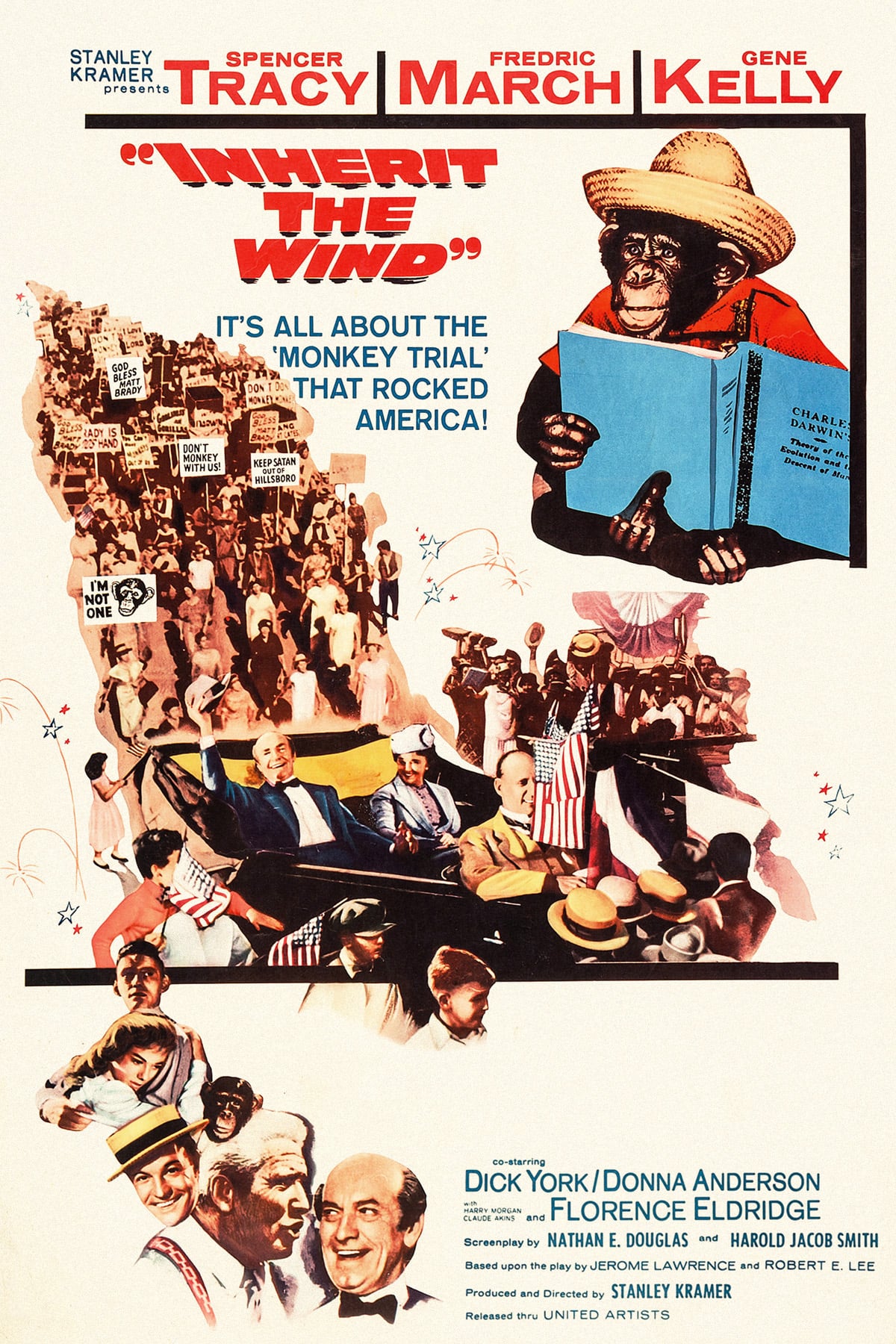
In 1960, Inherit the Wind was a parable. The teaching of Darwinism being illegal in a small town that defined itself by its faith couldn’t really happen today could it? So, the film used the concept as an angle to criticise the restrictions placed on free speech during the McCarthy years. The wheel has come full circle now: it’s no longer unlikely at all to imagine something like this happening. Indeed, versions of it have already taken place in America this century. This change does actually help the film look increasingly more prescient as time goes by.

A fictionalised version of the famous Scopes monkey trial (with most of the names changed, but many of the court room events fundamentally the same) a local schoolteacher, Bertram Cates (Dick Young), in a small Southern town is placed on trial for teaching Darwinism in his school. Staunch Christian and former Presidential candidate Matthew Harrison Brady (Fredric March) volunteers to put the case for the prosecution. Cates’ defence will be handled by the renowned liberal lawyer Henry Drummond (Spencer Tracy). Sparks fly in a courtroom and around the town, where many people are instinctively opposed to anything that can be seen to draw doubt on intelligent design.

Kramer’s films are often both praised and criticised for their rather heavy-handed liberalism. Inherit the Wind is no different. You’d be hard pressed to miss the message here about the dangers of intrusive laws designed to govern what we think and believe. Kramer’s film edges away from making criticism of fundamentalism too overt. Sure, the local preacher (a lip-smacking Claude Atkins) is a tongue-frothing “burn ‘em all!” maniac, only happy when stirring up an outraged mob. But on the other hand, Drummond is revealed to be a man of (liberal) faith – and, in an agonisingly heavy-handed final note, the film ends with him literally weighing The Bible and On the Origin of the Species in his hands then clasping them both together. You see – science and faith can work together!

While it’s easy to smile at Inherit the Wind’s striving for inoffensive liberalism, it means well and actually produces some effective court-room set-pieces. While its overlong – the sections outside of the court could do with trimming down and a rather shoe-horned plot with Cates dating the local preacher’s daughter (not helped by the blandness of both actors) promises much but delivers very little. What the film really works at is a chance for two seasoned performers to go at each other hammer and tongs in the court. Chances they both seize.

Spencer Tracy sets a template of sensible, liberal reasonableness mixed with a well-defined sense of right and wrong that would serve him well in a further three collaborations with Kramer. He brings Drummond a rumbled worldliness, a shrewd intelligence and a patient forbearance but never once lets us forget his righteous fury that this case is even happening in the first place. His courtroom performance hinge on a winning reasonableness that can turn on a sixpence into ingenious traps for witnesses. He’s a rock of decency in a shifting world and Tracy effectively underplays several scenes, making Drummond seem even more humane.

It also means that Tracy makes a lovely performing contrast with Fredric March’s firey passion as Brady. Sweating in the heat of the court, March’s Brady is overflowing with moral certainty and fury. March’s performance is big, but the character himself has a court-personae that depends on him appearing like an embodiment of God’s fury. It works because March gives Brady a quiet air of sadness. This is a man raging against the dying of the light – this case is his last hurrah. Brady is becoming yesterday’s news, but can’t seem to consciously accept this. In quieter moments, he is clearly a man of reflection and reasonableness – but (in a surprisingly modern touch) is all to aware that a raging public personae is what “sells”.

Kramer’s film is at its strongest when it lets these two actors go toe-to-toe. These moments aren’t just in the fireworks for court. Private scenes between the two show a great deal of mutual respect and even admiration. The two men are old friends. Drummond is very fond of Brady’s wife Sara (played excellently by Fredric March’s real life wife Florence Eldridge), who also regards him as a man of decency. They can sit on a bench at night and reflect on the good times. Brady may be a type of demagogue but he’s not a rabble rouser like the Reverend Brown (who he publicly denounces) even while he enjoys the attention of crowds. Drummond isn’t adverse to whipping up a bit of popular support – or enjoying the attention. It’s a fine contrast of two men who both similar and very different.

Aside from this, Kramer sometimes trips too often into rather obvious and heavy-handed social commentary. Gene Kelly is on good form in an over-written part as a cynical journalist – he sort of cares about justice, but only if its a good story and has only scorn for anyone else who believes anything. The film closes with a rather heavy-handed denunciation of his lack in belief in anything, compared to Brady’s faith. The script is at times a little too weak – Tracy and March sell the hell out of a vital confrontation near the end, playing “gotcha” moments that the script largely fails to deliver – but there is still lots of meat in there. Some of the staging and performances – including the extended pro-religion protests that pad out the run time – are a little too obvious.

But at heart, there is a very true and increasingly more-and-more relevant message in this film – and when its acted as well as this, it’s hard not to enjoy it.

Singin' in the Rain (1952)

Singin' in the Rain (1952)

The most beloved of all musicals gives you a burst of pure enjoyment no matter when it plays

Director: Stanley Donen, Gene Kelly

Cast: Gene Kelly (Don Lockwood), Debbie Reynolds (Kathy Selden), Donald O’Connor (Cosmo Brown), Jean Hagen (Lina Lamont), Millard Mitchell (RF Simpson), Cyd Charisse (Woman in the green dress), Douglas Fawley (Roscoe Dexter), Rita Moreno (Zelda Zanders)

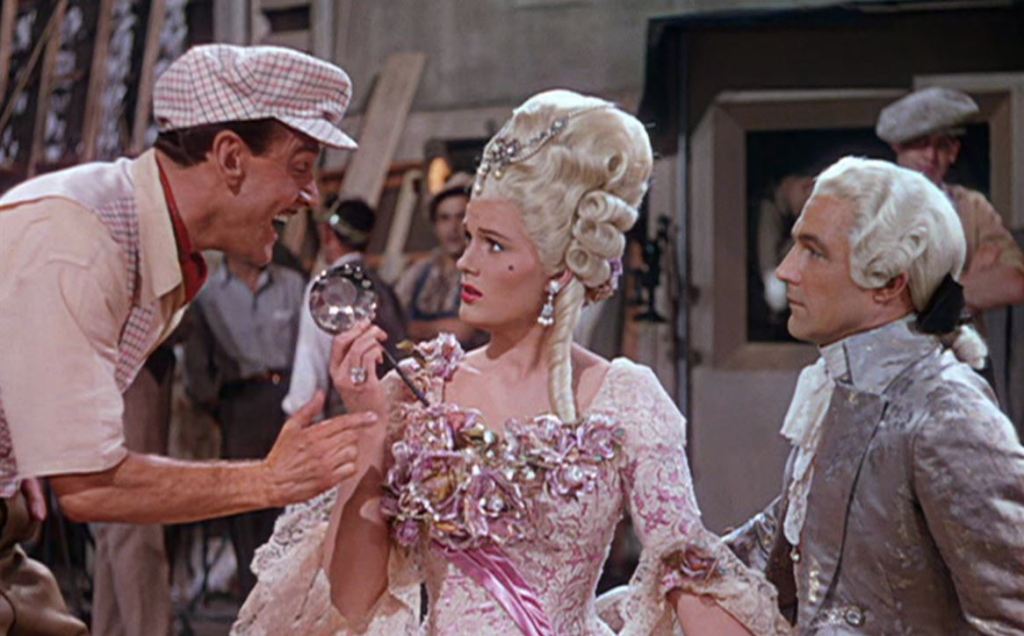
Is there a more loved musical than Singin’ in the Rain? Is there a more famous musical from Hollywood’s golden age? That second point is particularly interesting, as this was possibly the last of the big Hollywood song-and-dance films – most of the rest that followed were film versions of Broadway hits. Singin’ in the Rain also has that “late discovery” quality: inexplicably not nominated for Best Picture (or hardly any other Oscars), it was for many years considered a second tier musical behind works like An American in Paris. Now it stands tall over the lot of them.

Singin’ is a film assembled from a collection of songs MGM held the rights to. The songs were given to Kelly, Donen and the screenwriters with the instruction to “come up with a movie”. What they came up with was this delightful film-about-films. Don Lockwood (Gene Kelly) and Lina Lamont (Jean Hagen) are the biggest stars of the silent screen in Hollywood, whose careers are in trouble overnight when sound is introduced. He can’t really act and she has a voice like nails on a blackboard. But Lockwood can sing and dance – so why not make their latest film a musical? Especially since the talented Kathy Selden (Debbie Reynolds), who Lockwood has fallen in love with, can sing and act and can dub Lina’s voice. What could go wrong?

There are few more purely enjoyable films than Singin’ in the Rain. Nearly every scene has a moment designed to make you burst out in a smile, be it a cracking line of dialogue, a piece of prodigious dancing skill or the simple warmth and joy of the leading actors. Every second something delightful seems to happen. The entire film is an explosion of gleeful joy in the sheer exuberance of singing and dancing. Kelly’s choreography brilliantly uses everyday props and pieces of furniture to give the numbers an exciting everyday charm. It gives the songs an immediate “gotta dance” energy. How could you not like it?

Threading these songs around a structure of Hollywood taking on sound for the first time was a brilliant idea. The recreation of the acting styles and technology of Hollywood is brilliant. Lockwood is a hopelessly stagy actor, hideously artificial in his gestures, while poor old Lina Lamont is horrendously wooden with an awful voice, and a complete lack of any talent. Jean Hagen as Lina Lamont is in many ways the butt – but she’s so demanding, bullying and selfish we don’t mind that most of the jokes are on her.

The shift towards sound in Hollywood is actually interesting as well as hilarious. Where do we place the mikes? How should the actors get used to speaking into a mike? How do we cancel out the background sound? What do we do with loud props? One of the highlights is the screening of this film-within-a-film to an audience for the first time. All the terribleness Lockwood and Lamont gets revealed. In a particularly genius moment, the sound of the picture gets out sync with the picture, with the voices seeming to come out of the young actors’ mouths to hilarious effect.

Alongside this we get some of the finest song-and-dance routines in the history of the movies. Donald O’Connor is electric as Cosmo and his dance routine for “Make ‘em Laugh” is an astounding early pace-setter in the film: how does he do what he does here? O’Connor goes bouncing off walls, swirling in circles on the floor, springing from place to place without a single pause for breath. Most of this number (like many of the others) is done in one take with electric pace. And that’s the film just warming up.

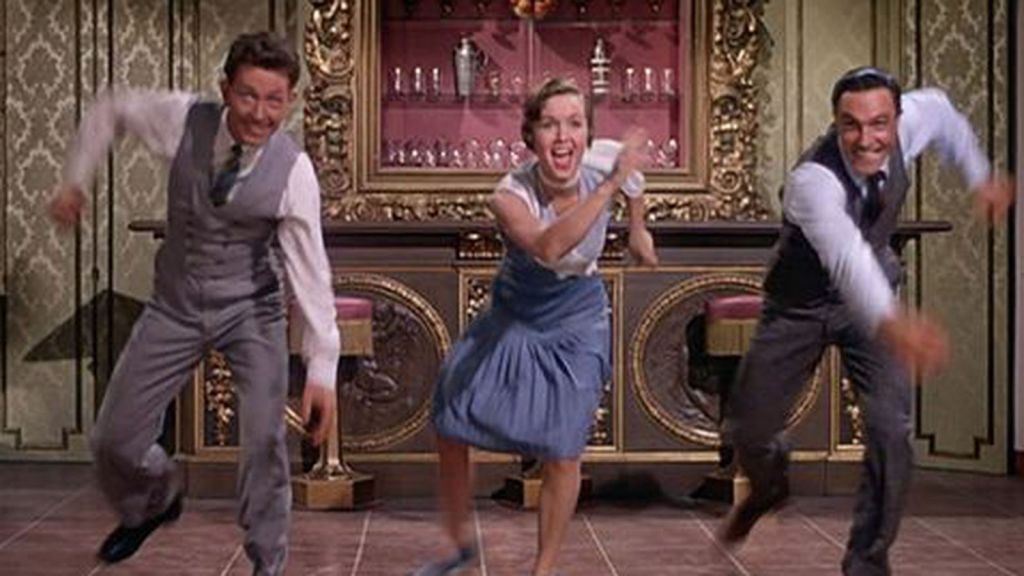
Debbie Reynolds famously described doing Singin’ as being (along with childbirth) one of the hardest things she’d ever done in her life. You can see that in ‘Good Morning’, another electric three-way number with herself, Kelly and O’Connor – she is pounding the floor to keep up with these two masters (and does a brilliant job). She was pushed to the extremes by Kelly who privately considered her a not quite strong enough dancer. Kelly dropped her from Broadway Ballet Medley, a complex ballet-heavy (as per all Kelly films from On the Town onwards – a sequence that I must confess I find a little dull). She’s still excellent – charming, sprightly, light, glorious fun – but it did mean Kelly re-worked the main number to showcase just himself.

Ah yes. ‘Singin’ in the Rain’. This sequence of the film is probably wedged in everyone’s mind. Even if they’ve never seen the film, people are familiar with Gene Kelly, soaked to the skin, dancing through puddles and swinging around lampposts. Kelly is of course marvellous in this sequence (hard to believe he was apparently suffering from the flu at the time) and the number has complete charm to it – that carefree vibrancy of realising you are falling in love. Especially as Lockwood’s ego is finally being put to one side in order to celebrate feelings he’s having for another person. But the whole scene is just sheer cinematic magic. And for something so famous, you never get tired of it. 

But then Kelly has pure star-quality here. Lockwood is a charming, handsome and smooth film star – but the film is happy to puncture his pomposity, or demonstrate in its opening sequence the self-aggrandising version of his early career (“Always dignity!”) with the reality of faintly embarrassing and dignity-free stage and stuntman work. Kelly is so charming you don’t mind that the film gives him an easy ride, considering Lockwood is actually quite selfish.

Singin’ in the Rain is pretty close to perfect. Even though I find some of the ballet stuff a little boring myself, it’s still filmed and shot with skill. It’s a pet discussion between film experts to ask how much of the film was directed by Kelly and how much of it was done by Donen. I guess it doesn’t really matter except to cinephiles, as the film is just beautifully directed: light, frothy, fun and with real technical expertise – the slow crane shot at the end of the famous number is justly famous. The pace is spot on, and the film is hilarious. Its understanding of filmmaking really pays off in the sequences that chronicle early film making.

So why did this film not get recognised at the time? Well to be honest, there were probably too many movies like this out at the time. It was a lot easier to miss in the crush of mega-MGM movies. It followed on the coat-tails of An American in Paris which had worn a huge number of Oscars (and was pushed back into cinemas in place of Singin’ in the Rain). Singin’ was still a big hit – but it perhaps needed film-fans to embrace it because it so perfectly married a love of Hollywood with the technicolour delight of 1950s musicals. Either way, Singin’ in the Rain is a delightful masterpiece which is guaranteed to pop a smile on your face. No matter the weather.