
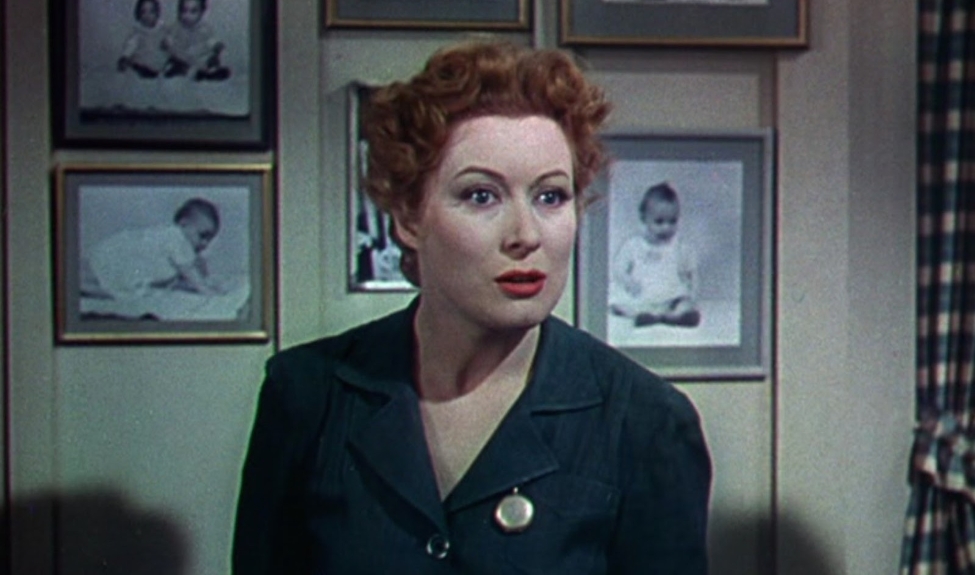
Tag: Henry O’Neill

Blossoms in the Dust (1941)

Blossoms in the Dust (1941)

Sentimental and straight-forward biography that tells a simple, unlifting story

Director: Mervyn Le Roy

Cast: Greer Garson (Edna Kahly Gladney), Walter Pidgeon (Sam Gladney), Felix Bressart (Dr Max Breslar), Marsha Hunt (Charlotte Kahly), Fay Holden (Mrs Kahly), Samuel S Hinds (George Kahly), Kathleen Howard (Sarah Keats), George Lessey (Mr Keats), William Henry (Allan Keats), Henry O’Neill (Judge Hartford)
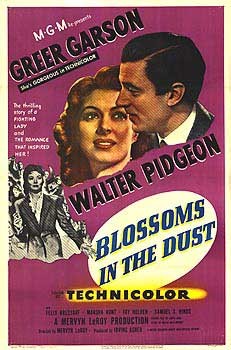
From the 19s0s, Edna Kahly Gladney (Greer Garson) was a Texas-based campaigner for the rights of orphans, pouring what money and time she and her husband Sam (Walter Pidgeon) had into the Texas Children’s Home and Aid Society, that dedicated itself to find homes for orphans. Even the death of her husband doesn’t stop Gladney from campaigning, lobbying to have the word illegitimate struck off birth certificates, since that was condemning children to a lifetime of frowns from Texas society.

The proceeds of Blossoms in the Dust went back into that Children’s Home so something good came from this sentimental, middlebrow biography. Made after an MGM publicist, who had adopted a child from Gladney, pitched the story to the studio, it became a cosy, box-office hit that helped cement Garson as the star-of-choice for the noble, suffering women’s film (the sort of role Norma Shearer would have grabbed five years earlier). It’s a slight, very safe and reassuring film that presents its march to inevitable triumph with an unchallenging hagiography-istic glow.

Of course, the real story of Edna was not quite tragic or satisfyingly neat enough, so the film invents several biographic details to beef up her motives. Now, the young Edna’s best friend (played with decency by Marsha Hunt) kills herself in shame, once her perspective fiancée’s heartless, posh family discovers her illegitimacy and unceremoniously tells her they don’t want her in their family, thank you very much. Secondly, Edna and Sam are given a fictional young son who exists purely to almost immediately die in a tragic sledge accident as a boy.

Of course, she will now care about illegitimacy and orphans – motivations established! Both events are so dramatically neat, it’s not a surprise they didn’t happen. Inserted, it seems, in case we objected that no one could care about the fate of children unless one happened to have lost one. The death of the boy is also so insistently sign-posted – repeated shots of his cuddly horse on its side leave us in no doubt he’s doomed the second he steps out of the door on a winter’s day – it’s impact for the viewer is almost washed away.

These tragic fictional events feel even more functional because, thanks to the film’s tendency towards sudden massive time jumps, by the time the next scene comes around years have flown by and any grief long-since shelved. No where is this more awkward than practically the next shot after the death of Gladley’s son, being Greer Garson laughingly pouring drinks at a society soiree. It continues thus: even the death of her husband Sam (Pidgeon exiting the film surprisingly at the half-way mark) is followed by a flash forward of Edna stoically but smilingly getting on with it. Blossoms in the Dust introduces tragedy throughout as a cheap motivation tool, but never once allows it to carry real, lasting impact.

Despite all these flaws, Greer Garson carries the film relatively well. Edna is the sort of part that requires middle-distance staring, mixed with can-do stiff-upper-lipness and a resolute determination to put the needs of others in front of her own (no matter how tempted she might be, in the case of orphan Tommy, to keep this child to herself rather than send him to a better home). Garson gets several barn-busting speeches at the injustices of the various systems set against the young and disadvantaged, which she delivers with aplomb. A particular fine moment is her railing – ever so politely of course – against the Texas Senate from the viewing gallery, announcing “there are no illegitimate children – there are only illegitimate parents!”. It’s fine, decent work that never stretches Garson, but is perfectly suited to her persona.

The story itself is fairly episodic. The Gladney’s wealth rises and falls, depending on the (dubious) business talent of her husband. There is a sweet moment, as they face bankruptcy, when thankful town residents buy from the auction of their goods a garish vase both Gladney’s were secretly glad to see the back of (“We’ll have to keep it now” a deeply touched Edna tells her husband). Orphans suffers various crises. A shallow single father falls over himself to hand his unwanted child over, and then takes Edna to court when he sniffs he can wrangle money out of the wealthier home the child has been sent to. No events really threaten the long-term, blissful sentimentality of the film and we are left in no doubt that Edna will ever choose herself over her work.

Blossoms in the Dust does have some rather uncomfortable racial politics. Every Black character in it is a faithful servant, deferring to their masters and happy in service. The Gladney’s servant Zeke is, of course, so thrilled to work with them he insists that he carries on doing so unpaid when they go bankrupt. A Black maid is so dim, she doesn’t realise washing a thermometer in hot water will affect its result. The Black characters are treated with the same paternal charity as the babies Edna cares for, which is of its time but still somehow a bit disappointing.

Aside from that though, this is a gentle, extremely sentimental – you might almost say icky – drama, shot with technicolour beauty by Karl Freund and decently directed by Mervyn LeRoy. However, it is also a purely functional, heart-string tugging crowd pleaser of a film, which desires to do nothing more than make us feel good about the fact the human race can still do decent things for other people without reward. Which is fine now and then, but not exactly challenging stuff.

Anchors Aweigh (1945)

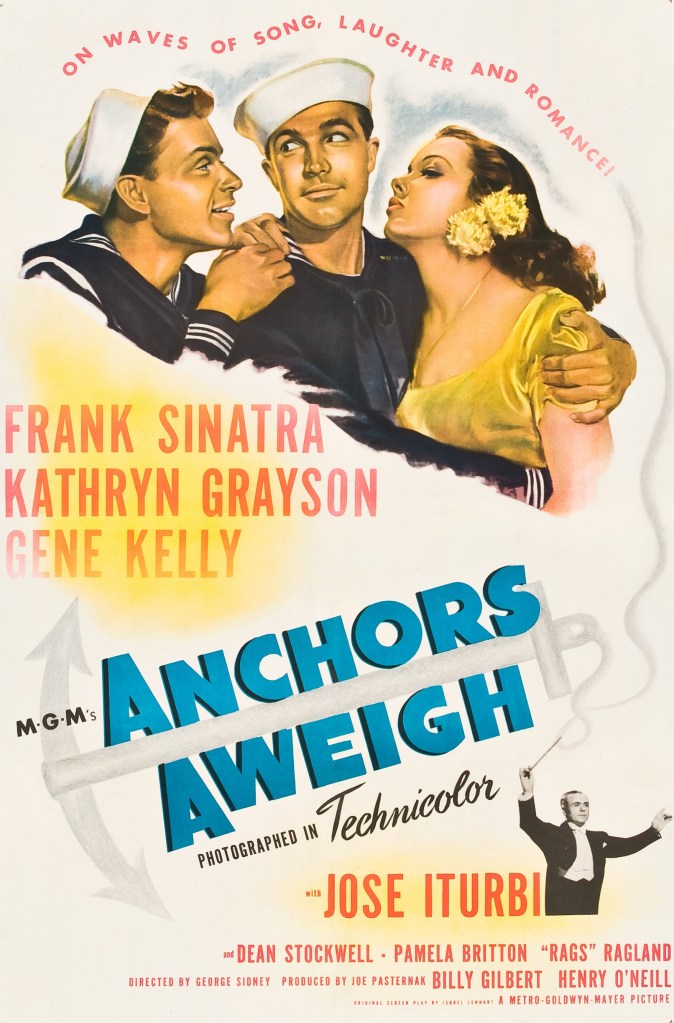
Anchors Aweigh (1945)

Classic musical frequently overlong and under-plotted with fun moments but dwarfed by later films

Director: George Sidney

Cast: Frank Sinatra (Clarence Doolittle), Kathryn Grayson (Susan Abbott), Gene Kelly (Joe Brady), José Iturbi (Himself), Dean Stockwell (Donald Martin), Pamela Britton (Brooklyn), “Rags” Ragland (Police sergeant), Bill Gilbert (Café manager), Henry O’Neill (Admiral Hammond)

US Navy sailors Clarence (Frank Sinatra) and Joe (Gene Kelly) win medals and shore leave all on the same day, and head to the streets of Hollywood looking for a good time. But, Cyrano-like, Joe finds himself helping Clarence court would-be Hollywood actress Susan Abbott (Kathryn Grayson), whom he secretly wouldn’t mind whispering sweet nothings to himself. Just as well the naïve, never-been-kissed Clarence finds an instant spark with café waitress Brooklyn (Pamela Britton). But can the boys deliver to Susan the audition they’ve promised with esteemed MGM musical director José Iturbi (playing himself)? And can true love find a way through?

It certainly can, but it takes a very, very long time for it to do so. Anchors Aweigh was a big hit, scooping several Oscar nominations (including Kelly’s only acting nomination). But today it feels like a self-indulgent pilot for far more successful (and considerably shorter) Freed musicals that followed. The concept of Sinatra and Kelly as shore leave sailors was recycled in On the Town while a peak behind Hollywood’s curtain was obviously used far more effectively in Singin’ in the Rain. Compared to these two, Anchors Aweigh feels bloated, massively over-staying its welcome while its incredibly flimsy plot is stretched out over two hours and twenty minutes (in that time you could watch most of both of its superior successors).

Anchors Aweigh is really a collection of short skits where the stars showcase what they do best: Kelly dances and Sinatra sings. Every so often they sing-and-dance together. The plot’s romantic shenanigans are solved easily and everyone ends with a beaming smile on their face. Instead, the film is almost exclusively remembered for its skits, most famously a very impressive fantasy sequence where Kelly dances with an animated Jerry (of Tom and Jerry fame). This five minutes or so of ingenious animation matched with Kelly’s charm and energy would make for a heck of a short film: which is what of course it really is, since it bears almost no connection with almost anything else in the film (Kelly is spinning a yarn about how he won his medal, suggesting he did it by teaching a lonely mouse king how to trip the light fantastic).

The finest points of this film are these sequences: but there are far too many of them, and many don’t match the same quality. On the positive side, we get some fine singing from Ol’ Blue Eyes, and Kelly and Sinatra dance two hugely enjoyable numbers together: We Hate to Leave where they tease their fellow sailors about all the great fun ahead for them on shore leave and I Begged Her a high-tempo number (which Sinatra took eight weeks to master) as the boys brag about all the wild-antics we know they didn’t actually get up to the night before. Kelly gets a showpiece paso-tinged tap dance themed around Zorro which provides the film’s most impressive athletic stunts. On the negative side, Iturbi is given the scope for too many classical concerto excepts which dramatically slows the action (such as it is) down.

Problem is there is no cement to hold these moments together. The central plot is so flimsy, slight and utterly unsurprising, so completely devoid of conflict or drama, it seems designed to lull you to sleep between the set pieces. It’s not helped by the general acting weakness of much of the cast. Sinatra at this time was a stunning singer and surprisingly competent dancer but a very mediocre actor – amusing as it is to see him play a timid virgin who can’t get a girl. Kathryn Grayson gives a solid but uninspired performance, hardly charismatic enough to make you believe both men would fall for her so swiftly. José Iturbi is wooden as himself. Pamela Britton is so low on charisma, you hardly notice the film doesn’t bother to give her character a name. In his first major role, Dean Stockwell actually shows promise, even if his character is the sort of melt-your-heart child many audiences secretly find nauseating.

The real star here is the third billed Kelly, who nails the persona that would carry him through many films: the charismatic, sometimes glib charmer with the knack for comedic facial reactions who hides hidden romantic depths under a smooth exterior. Kelly is the motor of the whole film, with just the right light comic touch to keep things going, not to mention throwing himself into the film’s most memorable sequences. Every scene showcases his ability to pull a parade of witty facial expressions from bemused to long suffering to sheepishly guilty to exasperated. He’s the finest thing in a mediocre film.

A mediocre film is what Anchors Aweigh is, assembled with the sort of bland competence that was George Sidney’s calling card (compare his work here to the imagination and energy that Stanley Donen bought to pretty much the same material). It’s chief amusement now is chuckling at how certain set-ups now come across: the completely innocent homoerotic undertones between Kelly and Sinatra (although the film winks at this, when Kelly’s attempt to teach Sinatra to woo a girl sees him drawing glances as he minces down the street imitating the girl-next-door); the fact that Kelly’s unseen girlfriend Lola really sounds like she might be a sex worker; the tone-deaf decision of the boys to discourage Susan’s older (and, to be fair, predatory) suitor by singing a song about how she is the equivalent of the town’s bike; how completely chill everyone is about letting two random sailors take a small boy home alone. To be honest giggling at how these particular mores have changed over time is more amusing than most of this otherwise over-long, under-plotted, thuddingly average film.