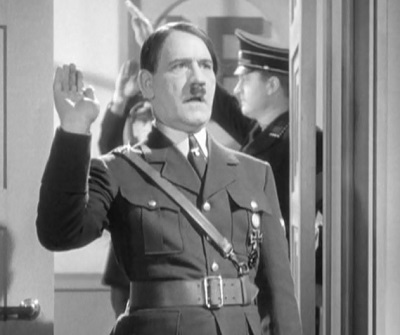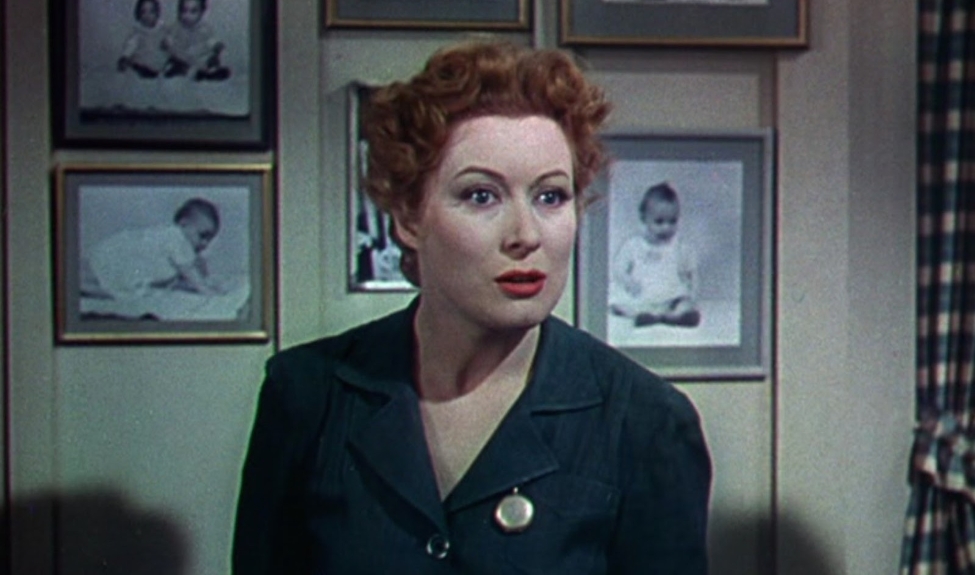
Tag: Felix Bressart

Blossoms in the Dust (1941)

Blossoms in the Dust (1941)

Sentimental and straight-forward biography that tells a simple, unlifting story

Director: Mervyn Le Roy

Cast: Greer Garson (Edna Kahly Gladney), Walter Pidgeon (Sam Gladney), Felix Bressart (Dr Max Breslar), Marsha Hunt (Charlotte Kahly), Fay Holden (Mrs Kahly), Samuel S Hinds (George Kahly), Kathleen Howard (Sarah Keats), George Lessey (Mr Keats), William Henry (Allan Keats), Henry O’Neill (Judge Hartford)
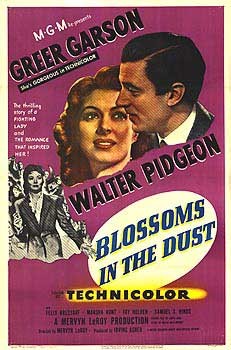
From the 19s0s, Edna Kahly Gladney (Greer Garson) was a Texas-based campaigner for the rights of orphans, pouring what money and time she and her husband Sam (Walter Pidgeon) had into the Texas Children’s Home and Aid Society, that dedicated itself to find homes for orphans. Even the death of her husband doesn’t stop Gladney from campaigning, lobbying to have the word illegitimate struck off birth certificates, since that was condemning children to a lifetime of frowns from Texas society.

The proceeds of Blossoms in the Dust went back into that Children’s Home so something good came from this sentimental, middlebrow biography. Made after an MGM publicist, who had adopted a child from Gladney, pitched the story to the studio, it became a cosy, box-office hit that helped cement Garson as the star-of-choice for the noble, suffering women’s film (the sort of role Norma Shearer would have grabbed five years earlier). It’s a slight, very safe and reassuring film that presents its march to inevitable triumph with an unchallenging hagiography-istic glow.

Of course, the real story of Edna was not quite tragic or satisfyingly neat enough, so the film invents several biographic details to beef up her motives. Now, the young Edna’s best friend (played with decency by Marsha Hunt) kills herself in shame, once her perspective fiancée’s heartless, posh family discovers her illegitimacy and unceremoniously tells her they don’t want her in their family, thank you very much. Secondly, Edna and Sam are given a fictional young son who exists purely to almost immediately die in a tragic sledge accident as a boy.

Of course, she will now care about illegitimacy and orphans – motivations established! Both events are so dramatically neat, it’s not a surprise they didn’t happen. Inserted, it seems, in case we objected that no one could care about the fate of children unless one happened to have lost one. The death of the boy is also so insistently sign-posted – repeated shots of his cuddly horse on its side leave us in no doubt he’s doomed the second he steps out of the door on a winter’s day – it’s impact for the viewer is almost washed away.

These tragic fictional events feel even more functional because, thanks to the film’s tendency towards sudden massive time jumps, by the time the next scene comes around years have flown by and any grief long-since shelved. No where is this more awkward than practically the next shot after the death of Gladley’s son, being Greer Garson laughingly pouring drinks at a society soiree. It continues thus: even the death of her husband Sam (Pidgeon exiting the film surprisingly at the half-way mark) is followed by a flash forward of Edna stoically but smilingly getting on with it. Blossoms in the Dust introduces tragedy throughout as a cheap motivation tool, but never once allows it to carry real, lasting impact.

Despite all these flaws, Greer Garson carries the film relatively well. Edna is the sort of part that requires middle-distance staring, mixed with can-do stiff-upper-lipness and a resolute determination to put the needs of others in front of her own (no matter how tempted she might be, in the case of orphan Tommy, to keep this child to herself rather than send him to a better home). Garson gets several barn-busting speeches at the injustices of the various systems set against the young and disadvantaged, which she delivers with aplomb. A particular fine moment is her railing – ever so politely of course – against the Texas Senate from the viewing gallery, announcing “there are no illegitimate children – there are only illegitimate parents!”. It’s fine, decent work that never stretches Garson, but is perfectly suited to her persona.

The story itself is fairly episodic. The Gladney’s wealth rises and falls, depending on the (dubious) business talent of her husband. There is a sweet moment, as they face bankruptcy, when thankful town residents buy from the auction of their goods a garish vase both Gladney’s were secretly glad to see the back of (“We’ll have to keep it now” a deeply touched Edna tells her husband). Orphans suffers various crises. A shallow single father falls over himself to hand his unwanted child over, and then takes Edna to court when he sniffs he can wrangle money out of the wealthier home the child has been sent to. No events really threaten the long-term, blissful sentimentality of the film and we are left in no doubt that Edna will ever choose herself over her work.

Blossoms in the Dust does have some rather uncomfortable racial politics. Every Black character in it is a faithful servant, deferring to their masters and happy in service. The Gladney’s servant Zeke is, of course, so thrilled to work with them he insists that he carries on doing so unpaid when they go bankrupt. A Black maid is so dim, she doesn’t realise washing a thermometer in hot water will affect its result. The Black characters are treated with the same paternal charity as the babies Edna cares for, which is of its time but still somehow a bit disappointing.

Aside from that though, this is a gentle, extremely sentimental – you might almost say icky – drama, shot with technicolour beauty by Karl Freund and decently directed by Mervyn LeRoy. However, it is also a purely functional, heart-string tugging crowd pleaser of a film, which desires to do nothing more than make us feel good about the fact the human race can still do decent things for other people without reward. Which is fine now and then, but not exactly challenging stuff.

To Be or Not To Be (1942)

To Be or Not To Be (1942)

Hilarious Lubitsch comedy that walks a fine line between the dark horrors and absurdities of Fascism

Director: Ernst Lubitsch

Cast: Carole Lombard (Maria Tura), Jack Benny (Joseph Tura), Robert Stack (Lt Stanislav Sobinski), Felix Bressart (Greenberg), Lionel Atwill (Rawitch), Stanley Ridges (Professor Alexander Siletsky), Sig Rumann (Colonel Erhardt), Tom Dugan (Bronski), Charles Halton (Dobosh), George Lynn (Actor Schultz), Henry Victor (Captain Schultz)

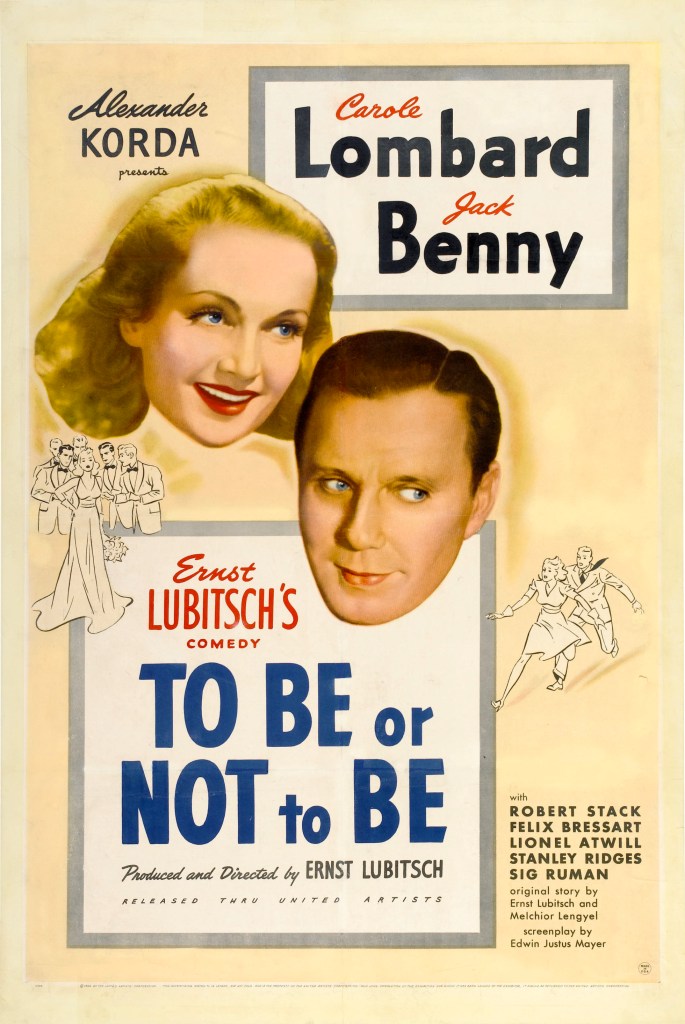
Is there a setting less likely for the famous Lubitsch Touch than war-torn Warsaw? To Be or Not To Be is a farce set at the most serious of times, sharp-paced, smooth and very funny. But it’s also about how the sort of playful, civilised class of eccentric free-spirits that Lubitsch excelled at can win through, even at the most dreadful of times against barely-sane bullies. What To Be or Not To Be does best – as well as make you laugh – is give you hope there is some light at the end of the tunnel.

The Turas – husband and wife Joseph (Jack Benny) and Maria (Carole Lombard) – are the (self-proclaimed) most famous actors in Poland. But the season 1939 is tough: their latest play Gestapo (a piss-take of course) is canned because the government is worried it might upset Hitler. Joseph revives his Hamlet and Maria uses the start of his ‘To Be or Not To Be’ soliloquy as the perfect time to entertain her current lover Lt Sobinski (Robert Stack) in her dressing room. Flirtations like this get left behind after the Germans invade, Sobinski flees to join the RAF and the theatre is shuttered.

For most of that, To Be or Not To Be fits neatly into the Lubitsch Touch. The Tura’s – with their fast-talking wit and casual attitude to sexual fidelity – are not a million miles from Trouble in Paradise’s con artists. Joseph’s principal concern isn’t that his wife might be walking out with someone else, but that someone is walking out of his performance (the worst fate imaginable!). The company are a parade of theatrical hams (Lionel Atwill’s grandiose Rawich can never resist padding his role) or spear-carrying dreamers, like Felix Bressart’s Greenberg (dreaming of Shylock). These are all denizens of Lubitsch Land, and it’s all wonderfully funny, soaked in Lubitsch’s love for actors and theatre.

But the world they are about to step into is entirely different. Lubitsch opens the film with a hilarious misdirection: first it seems Hitler (Tom Dugan) himself is walking around Warsaw, before cutting to Jack Benny in Nazi uniform (a sight so shocking to Benny’s Jewish Polish Dad, he walked out and had to be coaxed by his son back in to finish watching it). But the conversation we hear – with its parade of nervous ‘Heil Hitlers’, ridiculous bribing of a small child with a toy tank – is slightly too absurd and, by the time Dugan’s Hitler enters with a proud ‘Heil myself!’ it becomes clear we’re watching rehearsals for Gestapo (at the end of which Dugan’s Bronski heads out into Warsaw to prove he can pass as Hitler).

It’s a fabulous lead into what we can expect for the rest of the film, which sees the actors swopping identities and character with desperate abandon as they get trapped into an espionage plot. In Britain Sobinski is rightly suspicious of Polish exile Professor Siletsky (Stanley Ridges), largely because he’s never heard of Maria Tura. With Siletsky carrying information to Warsaw that could shatter the resistance, Sobinski smuggles himself back into Poland and loops the actors –especially Joseph – into a complex, improvised deception scheme to get the deadly information back, save the resistance and dodge the real Gestapo under ruthless but desperate Colonel Erhadt (Sig Ruman).

To Be or Not To Be ups its gear into one of the wildest, riskiest and outrageous farces of all time. Jack Benny is front-and-centre as the vain-but-decent Tura, roped into impersonating first Erhardt to Siletsky, then Siletsky to Erhardt, with the help and hindrance of the company (many of whom, especially Rawitch, still instinctively take every chance to expand their roles). Benny’s comic timing throughout is exquisite, using every inch of his gift for comic vanity, brilliantly bouncing from assurance to barely concealed panic (usually when his pre-prepared lines run out). While working overtime to do the right thing, neither he – nor Carole Lombard’s beautifully performed Maria – step to far from the sort of flirtatious, catty banter that wouldn’t be amiss in a Noel Coward comedy.

Lubitsch’s film is in-love with actors, showing them as instinctively decent and brave, while also being squabbling, competitive misfits either pre-occupied with themselves (from Joseph unable to imagine anything worse than a bored audience, to a rehearsing Rawich not even noticing he has walked into a light backstage) or dreaming of glories to come. Sure, he has fun with their reliance on a script – Joseph runs out of lines so quickly as Erhadt he is hilariously reduced to simply saying over and over again “So they call me Concentration Camp Erhadt”, inevitable raising the suspicions of Siletsky – but at the same time in this crazy, dangerous world, the theatre is a bastion of civilisation.

Civilisation is of course in danger from the worst of the worst. Lubitsch is the comic director, par excellence but he is not afraid to dramatically shift tone and style throughout. The war action, as shells rain up towards Sobinski’s plane, would not look out of place in an action film. Sobinski’s attempt to contact the resistance could be dropped in from a Hitchcock thriller. When a Fritz Lang-inspired chase of Siletsky through a dark theatre is called for, Lubitsch goes entirely straight. The subtle threats behind Siletsky’s attempted seduction of Maria are quietly chilling if you stop to listen (Siletsky is the only character neither funny or on some level ridiculous, as if he has walked in from a serious thriller). There are moments in To Be or Not To Be that are surprisingly tense: when guns are pulled, we know having seen them used earlier that lives are at risk.

The most controversial element of To Be or Not To Be is whether Nazi occupied Poland is a suitable topic for comedy – and lines from Edwin Justus Mayer’s exceptional script like “What [Joseph] did to Shakespeare, we are now doing to Poland” feel close to the bone today. Lubitsch was of course not to know that plans were already being formed forthe Holocaust. But he had been the literal face of Hollywood Jewish corruption in the Nazi’s deplorable The Eternal Jew and the vileness of Nazism was familiar to him. He acknowledged it with Siletsky, the dogmatic, obsessed Nazi (who even dies with the word Heil on his lips). Erhardt brags about the powers of life and death he holds and casually talks of torture and executions. To Be or Not To Be couldn’t picture the evils of mechanised death, but Lubitsch knew the people he was dealing with.

He also knew nothing punctures evil like mockery – and, like most bullies, many Nazis were small, pathetic people. Erhadt – superbly played as a wide-eyed, panicked middle-manager and deadly dispenser of punishments by Sig Rumann – might be dangerous, but he’s also a twitchy, clueless idiot, blaming his subordinate for all his mistake (it’s part of the film’s joke that Joseph’s suave Erhardt feels more convincing than the bug-eyed ignoramus himself). The Nazis are small-minded bullies, with their continued parroting of Heil Hitler and kneejerk obedience to orders (up to jumping out of a plane). Lubitsch treats Nazism seriously while showing how ludicrously puffed-up and stupid it is.

It’s a fine tight rope walk, which echoesThe Great Dictator – but without Chaplin’s heartfelt, fourth-wall plea for peace and understanding. To Be or Not To Be manages to make identity switching farce a sort of commentary on how the Nazis are incapable of questioning the reality they are ordered to accept. Lubitsch shows Nazism as a cult diametrically opposite to the more libertine, bickering and free-minded actors. As such, it’s a valuable reminder in war time that we can prick the pomposity of tyrants by hitting them where it hurts them most: in their pride.