Tag: Harriet Walter

Babel (2006)

Babel (2006)

Iñárritu’s grandiose film aims for a big statement about humanity, but settles for something simpler

Director: Alejandro González Iñárritu

Cast: Brad Pitt (Richard Jones), Cate Blanchett (Susan Jones), Gael Garcia Bernal (Santiago), Rinko Kikuchi (Chieko Wataya), Adriana Barraza (Amelia Hernandez), Kōji Yakusho (Yasujio Wataya), Boubker Ait El Caid (Yussef), Said Tarchani (Ahmed), Mustapha Rachidi (Abdullah), Elle Fanning (Debbie Jones), Nathan Gamble (Mike Jones), Clifton Collins Jnr (Border police officer), Peter Wight (Tom), Harriet Walter (Lily), Michael Maloney (James), Satoshi Nikaido (Detective Kenji Mamiya)

“Only connect” was the epigraph of Forster’s Howards End. It’s an idea Alejandro González Iñárritu attempts to bring to the screen in Babel. Across three countries, he shows how small events in one plotline have drastic impacts in others. It makes for an undeniably beautiful film-making experience – but also a film straining for import, that hectors and belabours obvious points and relies far more on random events occurring due to foolishness and stupidity than the vagaries of fate or humanity.

In Morocco, Abdullah (Mustapha Rachidi) buys a rifle from a neighbour to protect his goats. His young sons practice with it by taking pot-shots at a tourist bus. They hit Susan (Cate Blanchett), whose husband Richard (Brad Pitt) is left desperately trying to get her medical help in a remote Moroccan village. The incident means their nanny, Amelia (Adriana Barraza) with whom they have left with their children in the US, has to take them with her to Mexico for her son’s wedding, where events at the border spiral out of control. Meanwhile, in Tokyo, the original owner of the rifle Yasujio Wataya (Kōji Yakusho) struggles as a single father with his deaf teenage daughter Chieko (Rinko Kikuchi), who is dealing with grief and her burgeoning, frustrated sexuality.

I often find Iñárritu’s films a mixed bag. Babel is no different. There is a lot to admire here. There’s also just as much to be frustrated about. First the good. Iñárritu does an excellent job intercutting a film which moves from location to location and (it becomes clear) timeline to timeline, without ever confusing the audience or revealing plot details in one timeline until it becomes vital in another. We discover one entire storyline of the film takes place not in tandem but after the events of another plotline (which concludes where the other begins). The film is beautifully shot by Rodrigo Prieto, with Morocco unexpectantly filmed with a perfectly fitting dusty blue hue, Mexico in warmer tints that become oppressive and Tokyo with a sort of neon-noir.

The film’s first half does an excellent job of world and relationship building. Abdullah’s two young sons are head-strong, rash children entrusted with a weapon they lack the maturity to handle. The family’s desperation to hide their responsibility for the tragedy they have inflicted on Richard and Susan becomes terrifyingly engrossing – not least when we see the slap-and-trigger happy casual-brutality of the investigating forces. Similarly, Brad Pitt does a sterling job as a husband driven to ever-increasing desperation, impotent rage and grief as a husband powerless to help his dying wife in a remote village with poor communication and innumerable cultural barriers.

Iñárritu turns an intriguing eye on Mexico as a land met with looks of both wonder and terror by the Amelia two young charges. Young Mike is enthralled by the sights and sounds then sickened into tears when a game of ‘catch the chicken’ ends in a brutal decapitation. Amelia’s family is warm, friendly but also prone to thoughtless impulsiveness, made worse by a justifiable feeling of persecution from their wealthy neighbours across the border. The wedding though, for all the flashes of cultural confusion, is a vibrant and joyful event shot with a lyrical beauty.

The same poetic beauty extends to the Tokyo plotline, which is a sort of pilgrim’s progress for Chieko (excellently played in a superb mix of vulnerable and resentful by an Oscar-nominated Rinko Kikuchi) through a long few days in Tokyo. From feuding, aggressively, with referees at a volleyball, to clumsy attempts to seduce boys (alienated by her deafness) and, in one staggeringly awkward scene, a very much-older (and horrified) dentist, Iñárritu follow’s Chieko stumbling attempt to discover herself, leaving the revelation of the causes of her ennui for a final, near wordless sequence. Iñárritu experiments with sound, putting us into Chieko’s deaf isolation by draining sound in and out (noticeably in a late-night disco).

Communication and language are barriers for all the characters – hence the film’s grandiose title. Grandiose feels the word, as Babel makes a big swing making a relatively simplistic statement: the world would be a better place if we all listened to each other. Unfortunately, the script repeatedly falls back on tropes and narrative contrivances to make this message work. Two of the storylines – Mexico and the Moroccan family – hinge on aggressive, macho cops as disrupters. In a series of character developments I just don’t buy, Richard’s bleeding-out wife is treated as a tedious inconvenience by a busload of Brit tourists who essentially demand Richard leaves his wife to die so they can back to their hotel for dinner (I literally cannot imagine an entire busload of people behaving like this – god knows how the world responds to them when Susan’s bleeding out in a Moroccan village inexplicably becomes a major world news story).

There is also a half-hearted attempt to suggest guns are destructive forces. While it’s true a rifle purchase is the instigating factor – and Iñárritu makes a lot of one of the kids smashing up the rifle in a scene of heavy-handed import – it doesn’t really fly. Honestly, the main message I started to take out was that immature or stressed people make stupid, impulsive decisions in stressful situations. The kids shooting live ammunition at a tourist bus is an appalling act of immaturity. Santiago – a character set up as a time bomb from the start in an edgy performance by Gael Garcia Bernal – has a disastrous, impulsive meltdown bred out of booze and bravado at the Mexican border, that ruins the lives of everyone around him. Stranded in the desert, Amelia will make an equally disastrously poor decision with terrible consequences she can never turn back.

Eventually, Babel starts to feel like a film full of contrivances that mistakes ambitious range and variety of locations for actual depth. Essentially it has very little to say about the human condition other than looking for a little love or understanding. The four plot lines are fairly tenuously linked together, and impact each other only in the sense of each instigates the events of another. The film fails to create a tapestry of cause and effect and fails to weave its events back together for a conclusion. For all there are moments of effective tension and drama, and great deal of visual and visceral beauty, everything feels a little too forced, a little too on-the-nose.

That’s not to say there aren’t great performances or moments of great flair from Iñárritu. Adriana Barraza is fabulous as a proud mother and caring nanny, driven to her absolute limits. But it’s not as complex, revelatory or revealing as it thinks it is. It makes for a film that looks and feels like epic but carries only a simple and reassuring message.

The Last Duel (2021)

The Last Duel header1
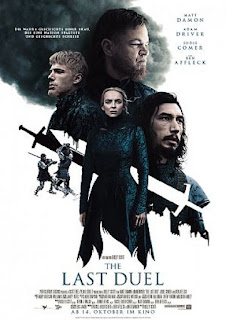
Adam Driver and Matt Damon fight The Last Duel in medieval France

Director: Ridley Scott

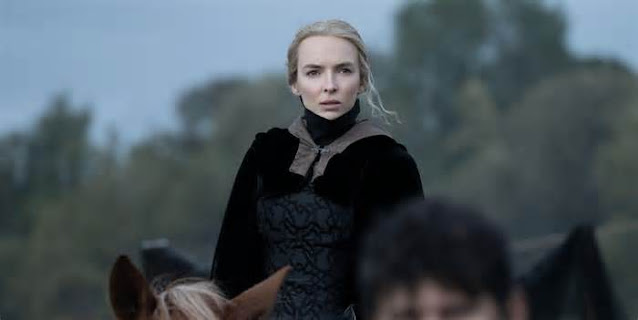
Cast: Matt Damon (Sir Jean de Carrouges), Adam Driver (Jacques Le Gris), Jodie Comer (Marguerite de Carrouges), Ben Affleck (Count Pierre d’Alencon), Harriet Walter (Nicole de Buchard), Alex Lawther (King Charles VI), Marton Csorkas (Crespin), Željko Ivanek (Le Coq), Tallulah Haddon (Marie), Bryony Hannah (Alice), Nathaniel Parker (Sir Robert de Thibouville), Adam Nagaitis (Adam Louvel)

The medieval era had its own solution for “He said, She said”. Let God decide via a fight to the death. After all, He would never let the injured party lose, would he? Scott’s The Last Duel is a dramatisation of one of the last French judicial duels, in December 1386, between Sir Jean de Carrouges (Matt Damon) and his former friend Jacques le Gris (Adam Driver), after Le Gris is accused of raping Carrouge’s wife Marguerite (Jodie Comer). Scott’s Rashomon-inspired film shows the events leading up to the duel from all three characters’ perspectives.

The three different stories we see are not radically different. Unlike Rashomon – which presented totally different versions of the same events, according to the prejudices or agendas of the storytellers – The Last Duel’s versions stress subtly different reactions or presents different fragments of an overall story. So, for instance, Le Gris and Carrouges remember different elements of a battle. Carrouges recalls the noble charge to save the innocent, saving Le Gris’ life in the final stages of combat. To Le Gris it’s a suicidal charge, in which he saves an unhorsed Carrouge’s life. After the rape, Carrouge remembers offering his wife sympathy; she remembers his anger and demand they have sex at once to “cleanse her” of the stain.

These mixed recollections work best when we see each of them remember a fateful reconciliation meeting between Le Gris and Carrouges (where Le Gris and Marguerite first meet). A wedge has been driven between them ever since Carrouges believed Le Gris cheated him out of both land and his father’s former position. When the two agree to try and put the past behind them, Carrouge asks Marguerite to give Le Gris a kiss of peace. He remembers her surprise and timidity. Le Gris remembers her as being quietly excited with a kiss that lingers. Marguerite remembers a kiss from Le Gris that lingers too long. Small moments like this are where the film is at its strongest, making its concept feel very relevant today in our world of accusation and counter accusation.

But these moments are few and far between. Most of the time there isn’t this subtle variation. Where the film is weakest is when we (frequently) see the same events, presented the same way, three times. While our perception of Carrouges changes – from the ill-treated noble he sees himself to the sullen, self-entitled whiner everyone else sees – our idea of Le Gris is fundamentally the same (blissfully self-entitled). Fundamentally, when we see events the first time, later versions only really tweak our perception of them rather than challenge it.

You can see this in the rape itself, which we first see from Le Gris’ perspective. The film shows Le Gris’ understanding of consent has been twisted by most of his sexual experience being court orgies with playfully protesting prostitutes. His pursuit of a genuinely unwilling Margeurite around her room echoes exactly the pretend-chases and “chat up lines” he’s used in those earlier scenes, so we understand it’s possible he doesn’t actually understand he’s raped her. But no viewer can see Le Gris’ version as anything other than rape. In fact, the only tangible difference when we see the event from her perspective is that her screams of “No” and “Stop” are louder and the camera focuses more on her anguished face. If the film is presenting any tension about whether this is a consensual encounter or rape, it ends the second we see Le Gris’ story.

This negatively effects the drama – and actually makes Marguerite’s version seem strangely superfluous. You start to feel we might as well see all three perspectives at the same time, as the narrative trick ends up adding little to the film – especially since the film categorically states Marguerite’s version is the truth. Why not just tell the whole film from her perspective in that case? It also doesn’t help that Marguerite goes last – which means until an hour into the film, the character we should be most engaged with and sympathetic towards has stood on the side-lines.

This is particularly unfortunate as the film is striving for a feminist message. The men are callous and self-obsessed, treating women as sex toys or assets – and are praised for it. Marguerite though is intelligent and principled, marginalised by her husband and condemned as a whore when she protests her rape. She pushes her case with determination, despite discovering she will be condemned to burn if Carrouge loses (he of course is only in his own honour). Her word is only good if backed a man, and she is powerless to defend her innocence.

It’s the lot of medieval women. Harriet Walter (rocking a bizarre appearance, straight out of David Lynch’s Dune) as Carrouge’s mother tells Marguerite the same thing happened to her, but she considered it pointless (and dangerous) to press charges. What we see of the judicial system is ruthlessly unjust and misanthropic, with women harangued to confess their guild for tempting men.

But it doesn’t quite click together. It’s a shame, as many scenes are highly effective. The rape – both times we see it – is alarming. The final duel is brilliantly shot and hugely tense, not least because Marguerite stands literally on the top of an unlit bonfire watching every blow. Scott’s shoots the film with the same blue-filtered beauty he gave to the early scenes of Kingdom of Heaven.

There is of course an oddness in seeing such American actors as Damon, Affleck and Driver in period setting. The accents are an odd mix: Comer basically uses her regular (non-Scouse) performance voice, Damon does a gravelly version of his own, Walter an American twang to match Damon, Affleck is halfway to plummy Brit, Driver flattens his Californian tones. Damon is pretty good as the sulky, surly Carrouge who gets less sympathetic the more we see him, Driver is suitably charming on the surface but selfish. Comer plays wounded injustice extremely well and brings a lot of emotion to a difficult role. Affleck has the most fun, flouncing around in a blonde wig as a lordly, hedonistic pervert who likes nothing more than belittling Carrouge.

The Last Duel is part way to a decent film, but it just lacks that little bit extra to make it really come to life. Its alternative versions of the truth don’t illuminate as much as they need to – even if they are at points pleasingly subtle in their differences. It has an admirable feminist message, but defers most of it to the second half of the film (were they worried about sidelining the famous male actors?) and it’s concern that we should not doubt Marguerite at any point does undermine its drama. Handsomely filmed, it doesn’t make the impact it should. Perhaps that’s why it was one of the leading box office disasters of the Covid Pandemic?

Sense and Sensibility (1995)

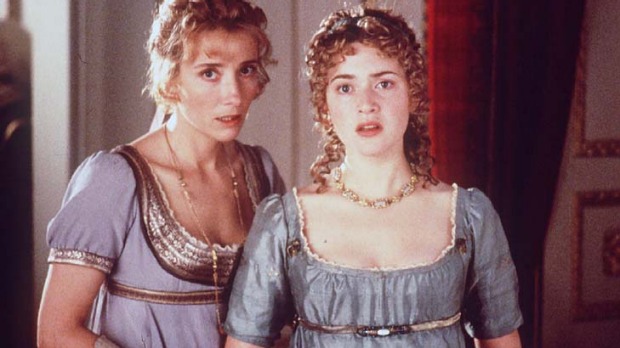
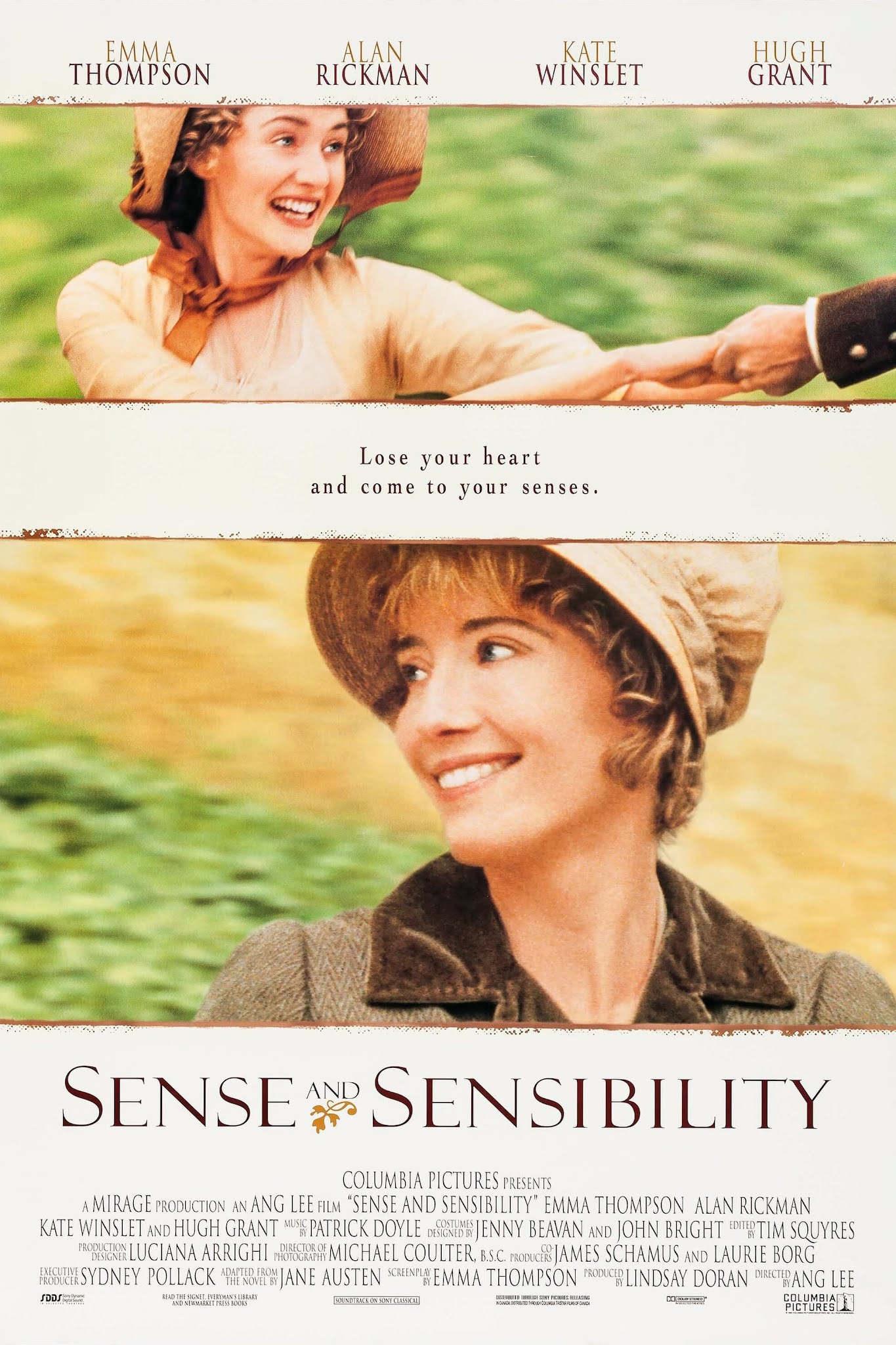
Emma Thompson and Kate Winslet are superb in probably the greatest Austen adaptation on film, Sense and Sensibility

Director: Ang Lee

Cast: Emma Thompson (Elinor Dashwood), Kate Winslet (Marianne Dashwood), Alan Rickman (Colonel Brandon), Hugh Grant (Edward Ferrars), Greg Wise (John Willoughby), Gemma Jones (Mrs Dashwood), Harriet Walter (Fanny Dashwood), James Fleet (John Dashwood), Robert Hardy (Sir John Middleton), Elizabeth Spriggs (Mrs Jennings), Imogen Stubbs (Lucy Steele), Hugh Laurie (Mr Palmer), Imelda Staunton (Mrs Palmer), Emilie Francoise (Margaret Dashwood), Tom Wilkinson (Mr Dashwood)

The world of Austen adaptations stands on two pillars – and both of them date from 1995. One is the BBC Pride and Prejudice, the other this luminous adaptation of Austen’s first novel, written by and starring Emma Thompson. It’s hard to pull together a review when a film pretty much plays its hand perfectly: and that’s exactly what Sense and Sensibility does. The film is a complete delight, in which Thompson takes surprisingly large liberties with many of the details of the novel, but brings to the screen a version that never once loses the spirit and heart of Austen’s work. It’s an immensely impressive achievement, and one of the finest literary adaptations ever made.

After the death of Mr Dashwood (Tom Wilkinson), the Dashwood estate passes into the hands of his son John (James Fleet) and John’s ambitious wife Fanny (Harriet Walter), leaving his second wife (Gemma Jones) and their daughters sensible Elinor (Emma Thompson), passionate Marianne (Kate Winslet) and giddy schoolgirl Margaret (Emilie Francoise) suddenly homeless. However, this does bring Fanny’s gentle and kind brother Edward Ferrars (Hugh Grant) into Elinor’s life, and an unspoken romance builds between the pair. There is passion in the air for Marianne at their new home, when she is rescued from a fall in the rain by the dashing Willoughby (Greg Wise). But are there secrets in the pasts of both men that could threaten the sisters’ happiness? And how did Willoughby’s life intersect with the reserved Colonel Brandon (Alan Rickman)?

Thompson’s superbly written script is a faultless adaptation that makes not a single poor choice, and expands and enriches several characters (in particular the three men) to great effect. Thompson not only brings much of the humour and wit in Austen to the fore – the film is frequently very funny – she also understands here truth and tenderness. Which is why the film is so beloved: it’s a film overflowing with empathy and heart for its characters which builds the emotional investment as skilfully as it does the comedy. It culminates in a proposal scene which I don’t think has ever not placed a lump in my throat.

To list all the excellent adaptation ideas would take forever so I’ll use one example. The film wisely expands much of the early character interactions, in particular deepening and exploring the early meeting between Elinor and Edward. A section that takes up barely one of the book’s (very short) chapters here fills the first 20 minutes of the film. It’s vital as it superbly establishes the natural warmth and intimacy between these two, and their perfectly complementing personalities.

It also allows Grant – in one of his most romantically winning performances – to display some deeply endearing light comedy, as well as establishing Edward as a thoughtful, sympathetic and decent man, who forms bonds quickly with all the family (especially young Margaret) through his genuineness. It also keeps us rooting for a relationship – and for a character – who the film often has to leave off screen for vast stretches, and leaves us in no doubt that his (later revealed) engagement to Lucy Steele (a woman he does not love, and who is interested in him solely for his position) comes from the same motives of decency, duty and the desire to do the right thing.

If that’s an example of one of Thompson’s most successful changes in her adaptation, she also unerringly identifies the things it’s most important to keep. Just like the novel, the film places the warmth of the sisters’ relationship at its heart. Helped by the natural chemistry and ease between Thompson and Winslet, the film carefully contrasts the personalities of these two sisters (one sensible and reserved, the other spontaneous and passionate) but takes no sides and also shows the sisters themselves are united by their love for each other. The film frequently features scenes of confidence and intimacy between the two, and continually brings us back to each other as the key relationship in their lives. It also shows how both need to meet in the middle ground: Elinor needs some of Marianne’s sensibility, just as Marianne needs to take on some of Elinor’s sense.

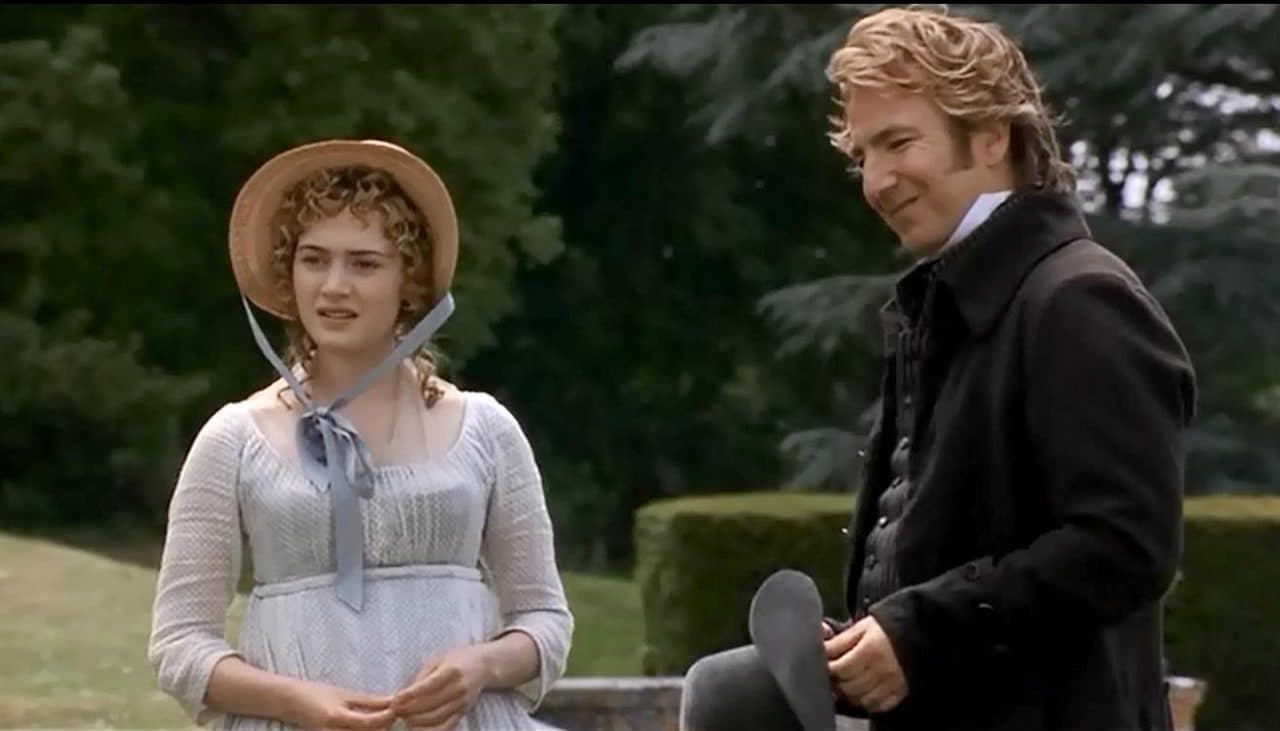
Although sense would not have necessarily helped Marianne uncover the dangerous selfishness of Willoughby. Perhaps the only wrong call in the BBC Pride and Prejudice (like most adaptations of that novel), is that it makes the rogueish Wickham insufficiently handsome and too blatantly smarmy from the start, tipping the audience the wink that this man can’t be trusted. Not so here, with Greg Wise giving Willoughby so much charm, regency handsomeness, dash and warmth that you would not imagine for a moment he could be anything but what he seems. He makes a clear contrast with Marianne’s other suitor, the older, more distant Brandon – superbly played by Alan Rickman – whose qualities of kindness and decency are hidden behind his coolness and lack of flash (Rickman is, again, wonderful here as a man hoping against hope for  a second chance at love).

But then the film is filled with perfectly cast actors. Thompson is a brilliant and natural fit for Elinor (even if she is too old for the part, something she acknowledged herself) giving her acres of emotional torment under an exterior she must keep calm and controlled for the sake of her family. Winslet became a star for her enchantingly free-spirited performance, grounded by a warmth and desire for the best for others that keeps the character from ever becoming irritating or overbearing.

Among the rest, there isn’t a bum note. Walter is hilarious as the washpish Fanny, Hardy full of bonhomie as Sir John. Elizabeth Spriggs is perfect as a gossipy old maid who is a pillar of strength when her friends are ill-treated. Hugh Laurie is hilarious in a gift of a part as the dry, cynical Mr Palmer whose nearly every line is laugh-out-loud funny, but who also proves his nobility in a crisis. Staunton is equally good as his flighty, mismatched wife. Imogen Stubbs brings out the simpering manipulative scheming of Lucy Steele perfectly.

The whole is bought together expertly by wonderfully paced and constructed directing by Ang Lee, whom it’s surprisingly easy to over-look. Lee was a considered an odd choice for the film – he barely spoke English at the time and was a stranger to Austen. But the film is an inspired match for him, tapping into his sensitivity, the warm eye he brings to families and their dramas, and also the observer’s wit he brings to social comedy and dynamics. Lee also brings an outsider’s eye to England – it’s a film that looks wonderful, but not simply romantic, with Lee not afraid of a stormy sky or a muddy street. Interiors are shot with a candlelit beauty, and there is a sense throughout of all this taking place in a real world. Patrick Doyle’s perfectly judged score also works wonders to help create the mood.

Sense and Sensibility is a masterful film and a, perfect adaptation of Austen. It’s hard to imagine that it will be bettered for some time. Indeed, like the BBC Pride and Prejudice, it feels like it has made all other adaptations of the book redundant. With a brilliant adaptation, superb acting, sensitive and insightful direction and a true understanding of the spirit and heart of Austen, this is one of the greatest adaptations ever made.

Atonement (2007)

Atonement (2007)

Moderately successful literary drama, that succumbs to tricksy showboating

Director: Joe Wright

Cast: James McAvoy (Robbie Turner), Keira Knightley (Cecilia Tallis), Saoirse Ronan (Briony Tallis, aged 13), Romola Garai (Briony Tallis, aged 18), Vanessa Redgrave (Older Briony Tallis), Brenda Blethyn (Grace Turner), Juno Temple (Lola Quincey), Benedict Cumberbatch (Paul Marshall), Patrick Kennedy (Leon Tallis), Harriet Walter (Emily Tallis), Peter Wight (Inspector), Daniel Mays (Tommy Nettle), Nonso Anozie (Frank Mace), Gina McKee (Sister Drummond), Michelle Duncan (Fiona)

The past is a foreign country. Sadly, it’s not always the case that they do things differently there. Instead, it can be a land of regrets and mistakes that we can never undo. Events that once seemed so certain, end up twisting our lives and shaping our destinies. A single mistake can mean a lifetime of never being able to atone. These are ideas thrillingly explored in Ian McEwan’s novel Atonement, one of the finest in his career. The same ideas carry across to this handsomely mounted adaptation, which looks gorgeous but often tries too hard to impress.

In 1935, the Tallis family owns a grand country house. Precocious Briony Tallis (Saoirse Ronan) is on the cusp of her teenage years, and believes she understands the world perfectly. A budding writer, her imagination, curiosity and romanticism overflow. But her youthful mis-interpretation of the romantic interactions between her sister Cecilia (Keira Knightley) and the housekeeper’s son Robbie Turner (James McAvoy)ends in a tragically mistaken accusation that destroys Robbie’s life. Five years later, Robbie serves as a private during the British retreat from Dunkirk, Cecilia is a nurse in London and Briony is training to become the same – their lives still shaped by those misunderstandings on that fateful night.

Atonement is a film I’m not sure time has been kind to. Released in 2007 to waves of praise (including Oscar nominations and a BAFTA and Golden Globe for Best Film), it has the classic combination of literary adaptation, period beauty and big themes. But re-watching it (and it’s the third time for me), the film rewards less and less. Instead, my overwhelming feeling this time was it was a tricksy, show-off film that – despite some strong performances, in particular from McAvoy and Ronan – strained every second to demonstrate to the viewer that Joe Wright belonged with the big boys as a cinema director.

Constantly, the emotional impact of the film is undermined because nearly every scene has an overwhelming feeling of being ”Directed”. Wright pours buckets of cinematic tricksiness and flair into the film – so much so that it overwhelms the story and drowns out the emotion. With repeat viewings this overt flashiness becomes ever more wearing. Scenes very rarely escape having some directorial invention slathered on them. Direct-to-camera addresses where the background fades to back (giving the air of a confessional). Events unspooling (and at one tiresome moment played in reverse) to illustrate time reversing to allow us to see events from a different perspective. Other visual images seem cliched beyond belief: a divine flash of light behind McAvoy while he struggles against death in Dunkirk or, worst of all, Nurse Briony talking about never being able to shed the guilt from her childhood actions while vigorously washing her hands.

Perhaps most grinding of all is the (Oscar winning) score from Dario Marinelli which hammers home the questionably reality of some of the scenes we are watching (or at least the creative filter that Briony is placing over them) by building in excessive typewriter whirs and clicks into its structure. It hammers home one of the film’s key themes: that at least part of what we are watching is based solely (it is revealed) on the recollections of the much older Briony, now a respected novelist. That perhaps, some of the events are her creative interpretation, wishes or even flat-out invention. This is a neat device, but perhaps one that could have worked better with a framing device to place it into context. Instead the reveal feels tacked on at the end – for all that this is the same approach McEwan takes in the novel (with greater effect).

But then, for all the film faithfully follows the structure of the novel (in a respectful adaptation by Christopher Hampton), too often its warmth and feeling get lost in the showy staging. Although part of the tragedy is that Robbie and Cecilia’s relationship is destroyed before they even get a chance to explore it fully, the chemistry between the two of them isn’t quite there and the film doesn’t quite communicate the bond between them being as deep as it would need to be. So much of this in the book was communicated through interior monologue – and the film refuses to take a second away from its flashiness to compensate for this by allowing the relationship between the two to breathe.

Instead Joe Wright prioritises his directorial effects. For all that his over five-minute tracking shot through the beach of Dunkirk is hugely impressive and dynamic – and it really captures a sense of the madness, despair, fear and confusion of the evacuation – this isn’t a film about Dunkirk. It is a film about a relationship – and using the same flair to make us fully buy into, and invest in, this relationship would perhaps have served the film better. It’s striking that, in the long-term, the most impressive scenes are the quieter ones: Benedict Cumberbatch’s chilling house guest’s subtly ambiguous conversation with Briony’s young cousins, or Robbie and Cecilia meeting in a crowded café after years and struggling to find both the words and body language to communicate feelings they themselves barely understand. In the long term, scenes like this are worth a dozen tracking shots – and demonstrate Wright has real talent behind all the showing off.

But the film is striking, looks wonderful – as a mix of both The Go Between and a war film – and in James McAvoy’s performance has a striking lead. McAvoy’s career was transformed by his work here – boyish charm with a slight air of cockiness under his decency, turned by events into fragility, vulnerability, fear and an anger he can’t quite place into words. Knightley gives one of her best performances – although, as always, even at her best she hasn’t the skill and depth of a Kate Winslet. Or a Saoirse Ronan for that matter, who is outstanding as the young Briony – convinced that she is right and that she understands the world perfectly, but as confused and vulnerable as any child thrown into a world that in fact she doesn’t comprehend.

Atonement has its virtues. But too often these are buried underneath showing off, ambition and tricksiness. Sadly this reduces its effect and leaves it not as successful a film as it should be.

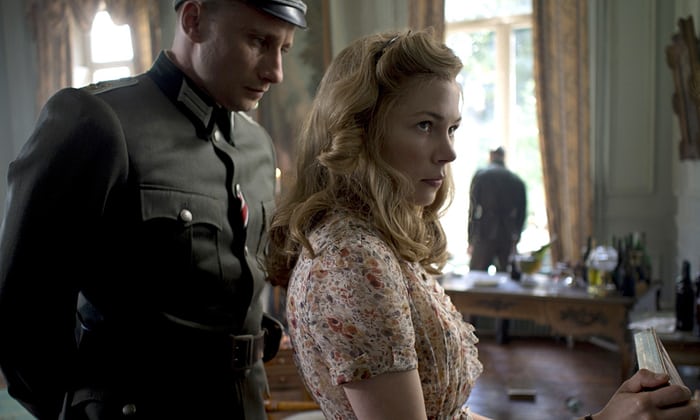
Suite Française (2015)

Matthias Schoenaerts and Michelle Williams love across the divide in this disappointing French Occupation epic

Director: Saul Dibb

Cast: Michelle Williams (Lucile Angellier), Kristin Scott Thomas (Madame Angellier), Matthias Schoenaerts (Oberleutnant Bruno van Falk), Sam Riley (Benoit), Ruth Wilson (Madeleine), Margot Robbie (Celine), Lambert Wilson (Viscount de Montmort), Harriet Walter (Viscountess de Montmort), Clare Holman (Marthe), Alexandra Maria Lara (Leah), Tom Schilling (Oberleutnant Kurt Bonnet), Eric Godon (Monsieur Joseph), Deborah Findlay (Madame Joseph)

The story behind the writing of Suite Française is compelling. Living in Nazi-occupied France, Irène Némirovsky began work on a five-novel series, Suite Française, which she intended to depict life in her homeland under German rule. She had only written two of the five books when she was arrested by the Gestapo as a Jew, and tragically died in Auschwitz. The books were written in a small notebook and kept by Némirovsky’s daughter while she moved from hiding place to hiding place evading the Nazis. Sixty years later, donating her mother’s papers to an archive, she deciphered the notebook and discovered the novels. They were published as a single volume to great success in 2004, regarded as an accomplished piece of literary fiction and a remarkable work of contemporary witness. 

The short summary of the novel’s richness and complexity provided by this film can’t really compete. Based on the second of the two novels, the story takes place in a small French village in 1940. Following the arrival of the Germans, officers are billeted in people’s homes: Lucile Angellier (Michelle Williams) and her mother-in-law (Kristin Scott-Thomas) are assigned sensitive musician Bruno van Falk (Matthias Schoenaerts), while their neighbours, farmers Benoit and Madeleine (Sam Riley and Ruth Wilson), are forced to accommodate bullying officer Kurt Bonnet (Tom Schilling). As hostilities between the French residents and the German occupiers grow, so does the attraction between Lucile and Bruno, but Bonnet’s pursuit of Madeleine threatens to ignite the simmering tensions in the community.

Suite Française manages to turn its promising material into a conventional, chocolate box wartime romance – you can’t help but think that it does a great deal of disservice to the original novel. It’s filmed in an unremarkable style (there are at best 1-2 imaginatively done shots and sequences) and poorly paced. With its short runtime (barely more than an hour and a half), it constantly feels rushed. Quite simply it’s a story about simmering tensions in a confined environment – it needed more time for us to get a sense of the drama building, of the resentments between the Germans and the French growing. Because the film is so short we don’t get that at all.

Most notably, in a film about a romance between a French woman and a German officer, there is no sense at all of the risks that French women who started relationships with German officers were running. Besides a few small throw away lines, there is no sense of the physical danger and the social stigma that would be applied to these women. Instead, the tension of Lucile falling for Bruno seems to be based more on whether her mother-in-law will discover that she’s considering cheating on her (absent, unfaithful) husband. Even Celine the promiscuous farmgirl (a wasted Margot Robbie in a terrible wig) doesn’t seem to be running any risks of reprisals from the villagers when she’s banging a German officer in the woods.

This, however, is where the film’s rushing undermines it. If it had allowed us to develop a sense of the resentment, shame and loathing the occupied French felt for their German oppressors, a feeling of the whole town being willing to close doors on anyone they perceive as being too close to the  Germans, we could have felt a real danger for Lucile in flirting with a dalliance with Bruno. As well as giving the situation a bit of stakes, it would have made it a lot more emotionally engaging too. We could have witnessed her inner conflict at considering a romance with the enemy, and the emerging feelings between them would have had the conflict of a forbidden love. Instead the film rushes us as quickly as it can towards getting Bruno and Lucile into a passionate clinch, at times taking giant unsupported leaps forward in their relationship, so when it arrives it packs no punch.

This passionate clinch undermines the film. If it wasn’t going to take the time to really build the relationship through lingering glances and brief moments, convincingly charting the journey from hostility and suspicion to a forbidden attraction, it should have cut the relationship down to being something that tempts them both but which they cannot express. Have these two recognise a deep bond between them, a bond that in another time would have brought them together but cannot in the time of war. It’s a film where the only physical contact between them should feel like a window on what might have been – not a passionate locking of lips and sexy fondle or two. Think how much more affecting that might have been.

It would also have fit the structure of the film far better. As Lucile finally finds herself having to choose a side – deciding whether to help a renegade hunted by the Germans or not – her decision to sacrifice her chance of love with Bruno might have worked much better. Similarly, Bruno having to revert to the soldier taking responsibility for the growing persecution of the villagers would have been more affecting. (It further doesn’t help that the film doesn’t give time for Williams and Schoenaerts to build up an effective chemistry.) By chucking them into a clinch as soon as it can, the film undermines its message and also manages to make itself feel more like “Mills and Boon in Occupied France” than the serious tragedy it could have been.

When the film finally focuses on the battles between the French and Germans in its final third, it’s much more interesting than the slightly tired romance. Here we get tensions, stakes, drama – and finally a sense of the danger that being in this situation could have. After the rather soft focus romance that comes before, it really seizes the attention.

Williams does a decent job as Lucile, Scott Thomas could play her austere mother-in-law with hidden depths standing on her head (the film fumbles the unexpected alliance between these characters late on). Schoenaerts is a bit wasted in an underwritten role but does good work. The best performances largely come from the second tier: Lambert Wilson is excellent as the local Viscount who wants to try and work with the Germans but quickly finds himself out of his depth. Harriet Walter is similarly strong as his wife, as is Ruth Wilson.

But Suite Française could have been so much better than the movie that it actually becomes. A film that focused on the dangers of occupation and the tensions of a small community would have been great. A film that rushes through a Romeo and Juliet style romance, without building the sense of forbidden love, is a film that just doesn’t work.

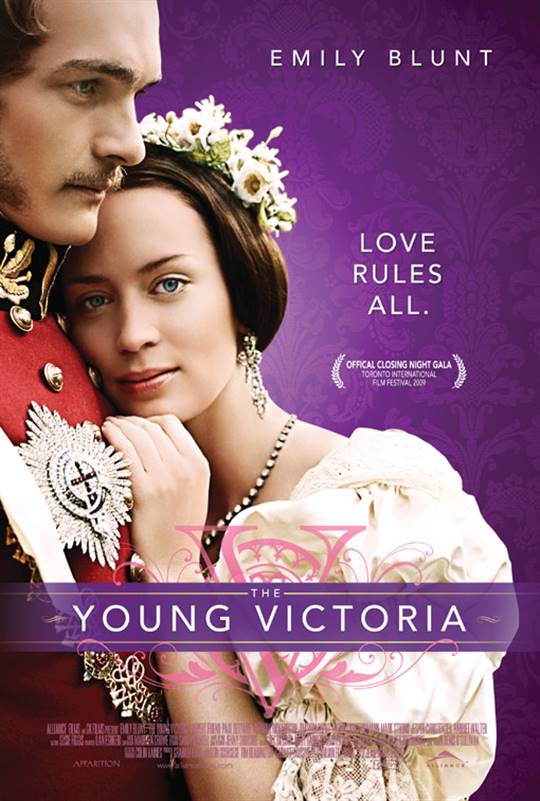
The Young Victoria (2009)

Emily Blunt and Rupert Friend play the royal couple in the cozy The Young Victoria

Director: Jean-Marc Vallée

Cast: Emily Blunt (Queen Victoria), Rupert Friend (Prince Albert), Paul Bettany (Lord Melbourne), Miranda Richardson (Duchess of Kent), Mark Strong (Sir John Conroy), Jim Broadbent (King William IV), Harriet Walter (Queen Adelaide), Thomas Kretschmann (King Leopold), Jesper Christensen (Baron Stockmar), Jeanette Hain (Baroness Lehzen), Julian Glover (Lord Wellington), Michael Maloney (Sir Robert Peel), Michel Huisman (Prince Ernest), Rachael Stirling (Duchess of Sutherland)

Now ITV’s Victoria exists, it’s a bit strange to go back and watch The Young Victoria. With the love today of long-form drama, and the time it can invest in things, it’s funny to see what the drama took almost 8 hours to do being crammed into an hour and a half here. But saying that, The Young Victoria is still an entertaining, luscious viewing experience which, while it has some strange ideas about certain events, is the sort of relaxing Sunday afternoon viewing that will take you out of yourself.

After the death of William IV (a slightly overripe Jim Broadbent), Victoria (Emily Blunt) is elevated to the throne. Finally able to shed the control of her mother’s (Miranda Richardson) domineering secretary Sir John Conway (Mark Strong), Victoria is determined to steer her own course. But she is surrounded by competing influences, not least from the charming arch-politician Lord Melbourne (Paul Bettany). King Leopold of Belgium (Thomas Kretschmann) dispatches his nephew Prince Albert (Rupert Friend) to England with the express interest of marrying Victoria and controlling her – but Albert and Victoria find themselves as kindred spirits, supporting each other to rule.

The Young Victoria is the epitome of prestige costume dramas. It looks fantastic, the cinematography is ravishing, the production and costume design exquisite. It’s pretty clear what the producers thought would sell the picture abroad. The royal regalia is pushed very much to the fore, and we get some wonderfully sweeping scenes, not least an impressively large-scale coronation. The soundtrack brilliantly riffs on Handel, and Julian Fellowes’ script mixes period regal style with a sweeping feeling of romance between Victoria and Albert.

The film actually does a very good job of repositioning Victoria as a young woman, and gives her a strong quality of self-determination and a desire to be herself in a man’s world. It’s really helped in this by the combination of imperial strength, girlish wilfulness and sharp intelligence Emily Blunt brings to the role. Blunt and the film also aren’t afraid to show that, however much Victoria had guts and determination, she was also quite a headstrong woman not above making emotionally led mistaken decisions. In fact, much of the drama spins out of Victoria learning to try and put these youthful crushes and prejudices aside.

Having said that, it’s interesting that the successful conclusion of the film centres on Victoria accepting that she needs the help of Albert to run the kingdom, and that she needs to remove competing influences for her affection – Melbourne and Lehzen – to focus her affection and loyalty on him. The film frames this as a winning romance and a successful partnership (which it was) – but it’s also vaguely creepy if you think about it. Mind you, since all the affectionate influences on Victoria are implied by the script to be at least partly motivated by self-interest, with the possible exception (eventually) of Albert, it manages to suggest this was for the best.

Albert’s background gets some interesting exploration here. He’s very much presented at first as the tool of Leopold as a means of controlling British politics. But he is far too independent, smart and noble to ever be the means of manipulation. Friend is very good here – his performance is quiet, authoritative but also heartfelt. Fellowes guilds the lily a bit to show his devotion by having Albert shot by a would-be assassin late-on in the film. Historically the assassin’s pistol wasn’t loaded, and Albert didn’t get shot (though Fellowes protests Albert didput himself in front of Victoria and that this intent is what’s important, not whether he was shot or not) but the moment does work – it gives the drama a boost and it’s undeniably moving.

While Albert is presented overwhelmingly sympathetically, interestingly Lord Melbourne gets quite a kicking. Paul Bettany is presented far more as a rival love interest than the sort of father-figure Melbourne was in real life (Bettany is probably 20 years younger than the real Prime Minister). Melbourne is shown as cynical, controlling, manipulative and overwhelmingly motivated by self-interest (a few more pushes and he would virtually become the film’s villain). He’s constantly contrasted negatively with Michael Maloney’s upright, honest Sir Robert Peel (one of my favourite statesmen of the 19th century so at least I’m pleased) – and his relationship with Victoria is one of self-promotion, which seems odd seeing as historically the two of them were so close. 

The film introduces other villains for us to hiss at. Kretschmann and Christensen do a good job as arch political schemers. Our real villain though is Mark Strong, who does a great job of scowling, controlling nastiness as the failed-bully Sir John Conroy. Strong’s performance works so well because he makes it clear that Conroy feels that his “Kensington System” (an attempt to manipulate and cow Princess Victoria into being a submissive puppet) is genuinely in her best interest, and that he genuinely cares for her. His partnership with Miranda Richardson as Victoria’s near-love-struck mother works very well.

The Young Victoriathrows in enough interesting character beats like this for it to really work as an enjoyable afternoon period-drama. With some great performances – Emily Blunt carries the movie brilliantly – and while some of the historical characterisation is a bit off, and other moments feel a little too chocolate box it’s a very entertaining, undemanding view., it’s great fun. The hardcore Victorian costume-drama fans will probably prefer Victoriafor the same story in more depth – but this film does it with great sweep (and doesn’t cram in Victoria’s stupid below-stairs plotlines!).