Tag: Ian McDiarmid

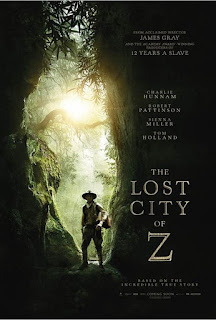
The Lost City of Z (2016)

The Lost City of Z (2016)

An obsessive explorer plunges into the Amazon in search of a lost city in this imaginative epic

Director: James Gray

Cast: Charlie Hunnam (Percy Fawcett), Robert Pattinson (Henry Costin), Tom Holland (Jack Fawcett), Sienna Miller (Nina Fawcett), Edward Ashley (Arthur Manley), Angus MacFadyen (James Murray), Clive Francis (Sir John Scott Keltie), Ian McDiarmid (Sir George Goldie), Franco Nero (Baron de Gondoriz), Harry Melling (William Barclay)
For as long as parts of a map so unknown, that all we write on them is “Here Be Dragons”, there have been explorers yearning to uncover their secrets. Exploring in the nineteenth and early twentieth century was a dangerous, sometimes fatal, call, as explored with a near-mystical thoughtfulness in James Gray’s ambitious film The Lost City of Z. Percy Fawcett (Charlie Hunnam) was the courageous soldier, whose whole life was a campaign to prove he had nothing in common with his disgraced father. Fawcett became obsessed with discovering the secrets of the Amazon, principally the existence of a lost civilisation built by the indigenous people of Brazil, which he called The Lost City of Z. It was to become a quest that would dominate his life.

Based on a true story, Gray’s film taps deeply into a Herzog-by-way-of-Lean view of the Jungles of South America, a place of great awe and danger which creeps inside the soul of Fawcett until, as one tribesperson says, he seems to be of both the West and the Jungle. Shot on location, the Jungle becomes a place of great beauty, but also unknowable mystery and menace. As Fawcett and his companions hack their way through it, on what could be a fool’s errand, their growing respect for it and the indigenous people, is matched only by their increased awareness of its dangers.

The Golden Age of Exploration is a difficult subject to tackle today, with many seeing (in some cases correctly) it as underpinned by a Westernised Imperialism, that earnestly believed the best thing that could happen to these lands (and the ‘savages’ who populated them) was that they should gratefully concede their land and culture to Western ‘civilisation’. Gray’s film is careful to show that Fawcett acknowledged he didn’t always understand the world he was in and learned some hard lessons. But the key difference is that acknowledgment and, as presented here, the humility and respect he recognised the rights and skills of the indigenous people. It marks him out from several of his contemporaries who see them only as contemptable savages and simpletons.

Indeed, Gray’s film positions Fawcett as an admirable egalitarian. His belief that the people of Brazil were not only capable of building in the Jungle, but that they could create an advanced society of pottery and irrigation ahead of those in the West is laughed out of court by many of his fellow members of the Royal Geographical Society (as we see in an involving debate sequence). While staying with a tribe in the Amazon, he marvels at their ability to cultivate and farm the land – something he had been assured was impossible. Encountering a tribe whose custom is to eat parts of their dead (so as to preserve their spirit in themselves), he reacts not with kneejerk disgust but understanding and respect.

The respect he shows for the environment and those he finds there is contrasted with the reaction of famed explorer James Murray, who joins him for his second expedition. Played with a puffed-up self-satisfaction and rigid believe in his own righteousness by Angus MacFadyen, Murray (a noted polar explorer) proves a serious handicap on the expedition. Unfit, unprepared for the tropical environment and treating all he encounters with hauteur, Murray slowly alienates the rest of the party by displaying the imperialist confidence Fawcett and his companions avoid. Stealing supplies, nearly overtipping a raft and ruining some of their stores, Gray uses Murray as the picture of the arrogant classic explorer and a great contrast with Fawcett, who swears thereafter to never again judge a man on his standing and reputation rather than on his character.

Gray’s film has rather a good ear for the pressures and hypocrisies of post-Edwardian Britain. The film opens with Fawcett successfully shooting a leading stag during a state visit by Archduke Franz Ferdinand. It’s a feat that wins him praise – but not any form of meeting with the Archduke since Fawcett is, as a Lord puts it, “unwise in his choice of ancestors”. It’s a stigma Fawcett has to deal with at almost every turn, from being pooh-poohed for his advocation of the Amazonian tribes to dealing with the criticism of the entitled establishment figures.

Gray marshals this all rather effectively, bringing the film into a neat balance of acknowledging modern issues with exploration while still giving an excellent idea of why motivated these men. It all plays out within a dream like aesthetic that leaves a haunting impression. During his first expedition, Fawcett emerges from the bushes into a make-shift opera house built in the jungle (how Fitzcarraldo is that?), on a plantation ruled by a Portuguese landowner dripping with the greed of his class (Franco Nero in a delicious cameo). During his time at home – and at the front during the First World War – elements of the jungle creep into frame, reflecting Fawcett’s longing to return to this mysterious exotic land which makes him feel alive in ways the stifling life at home never does.

Gray’s sense of atmosphere is so well done in the film – its mesmeric shots and sense of unreality will linger – that it’s a shame Charlie Hunnam isn’t quite the right actor to play the role (he took over from Benedict Cumberbatch, who would have been perfect for the obsession, decisiveness and desire to prove himself). Hunnam gives a solid performance, and he really understands the egalitarian humanity of Fawcett, who treats all men and women as equals. But there is a deeper unknowability and mystical longing in Fawcett that is beyond his grasp.

Interestingly, Robert Pattinson – here grimy, eccentric and almost unrecognisable as Fawcett’s best friend Henry Costin – would have been a better call. This is an intensity and soulfulness in Pattison that Hunnam can’t quite bring to Fawcett. Tom Holland gives a heartfelt performance as Fawcett’s hero-worshipping son and Sienna Miller a sensitive and intelligent one as his devoted wife. Clive Francis and Ian McDiarmid play with aplomb sympathetic senior RGS men.

There are many more virtues than faults in The Lost City of Z. The photography by Darius Khondji is wonderful – no one has filmed the jungle better since The Mission. Gray’s intelligent and thoughtful film addresses questions of colonialism and prejudice, while also not shying away from the danger and aggression of some of these tribes. The portrayal of Fawcett’s final expedition is wonderfully done, culminating literally in a dream like sequence where reality, hope and fate merge. It’s a fascinating film.
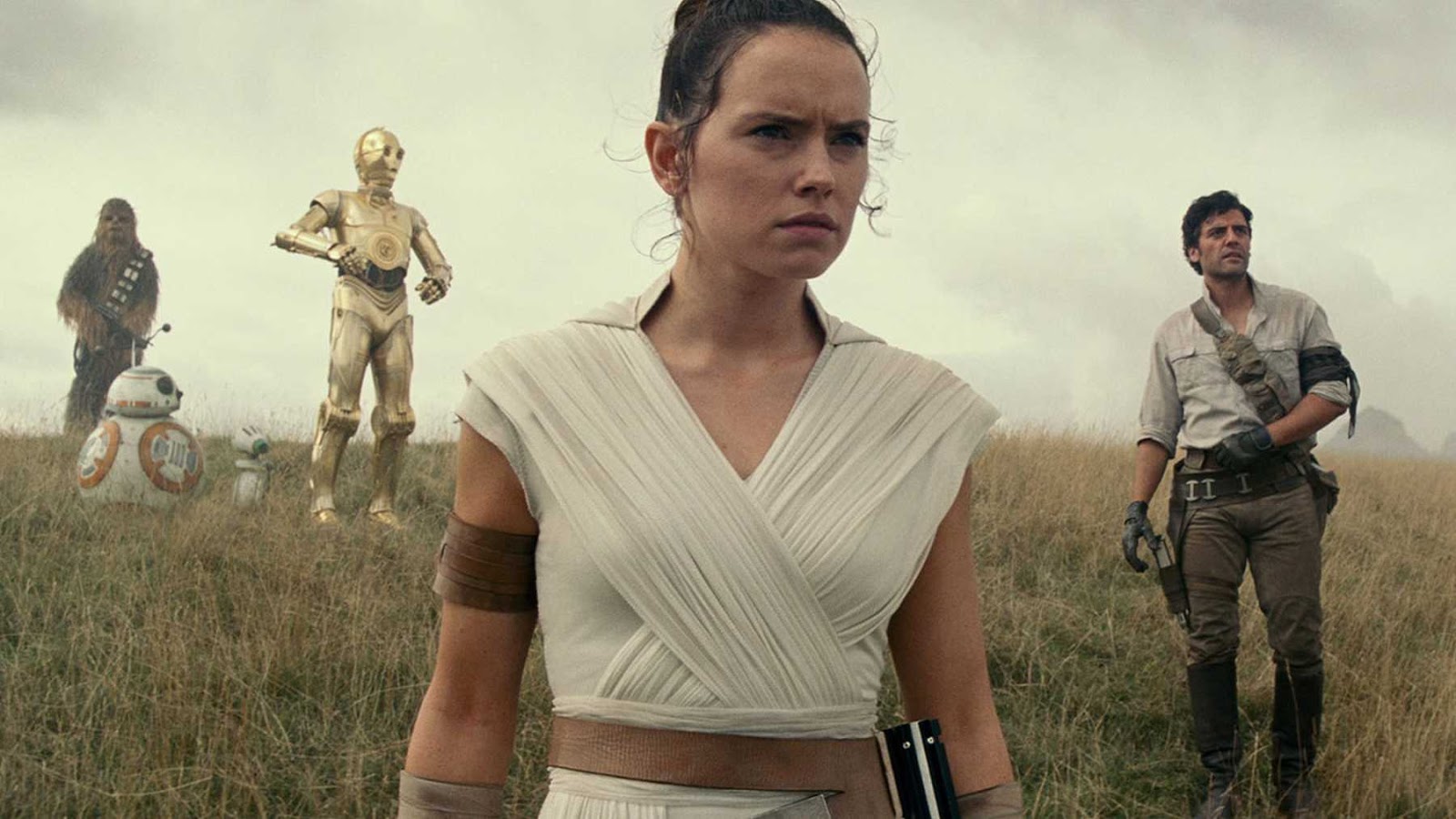
Star Wars: The Rise of Skywalker (2019)

Our heroes prepare for one final adventure in Star Wars: The Rise of Skywalker

Director: JJ Abrams

Cast: Carrie Fisher (Leia Organa), Mark Hamill (Luke Skywalker), Adam Driver (Kylo Ren), Daisy Ridley (Rey), John Boyega (Finn), Oscar Isaac (Poe Dameron), Ian McDiarmid (Palpatine), Billy Dee Williams (Lando Calrissian), Anthony Daniels (C-3PO), Naomi Ackie (Jannah), Domhnall Gleeson (General Hux), Richard E. Grant (Allegiant General Pryde), Lupita Nyong’o (Maz Kanata), Keri Russell (Zorii Bliss), Joonas Suotamo (Chewbecca), Kelly Marie Tran (Rose Tico)

When Disney took over the control of the Star Wars franchise, they had in mind an epic continuation of George Lucas’ space opera that would take in everything from more tales from the renamed “Skywalker saga” to standalone entries like Rogue One and Solo. Well, we are almost seven years into this journey now, and the series has delivered some hits but also the first flop Star Wars film (Solo) and the most divisive entry for the fandom ever in The Last Jedi. So where does Rise of Skywalker fall in its plans to cap the third (and they claim final, but let’s see…) trilogy?

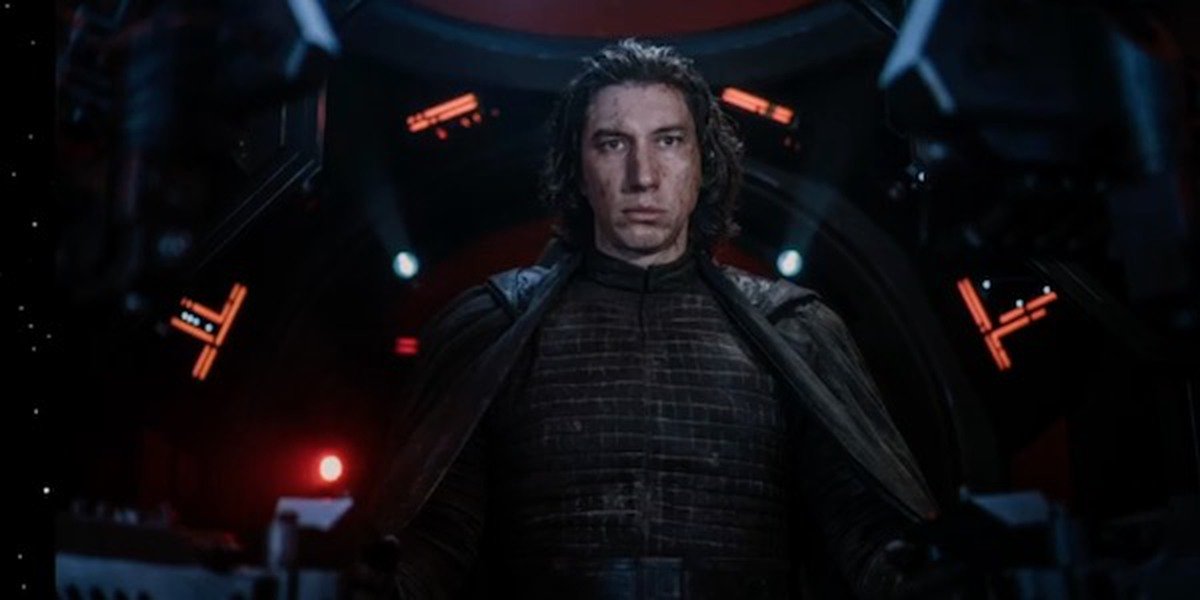
Set a year after The Last Jedi, the Resistance has rebuilt itself under the leadership of Leia Organa (Carrie Fisher), who has also been training Rey (Daisy Ridley) in the Jedi arts. Imagine their horror when a message from the not-so-late Emperor Palpatine (Ian McDiarmid) rings out across the Galaxy, threatening revenge. Kylo Ren (Adam Driver) has been searching for Palpatine and forms a deal – Palpatine will make him emperor of the galaxy, if Ren will kill Rey. Meanwhile Rey heads out into the galaxy with Finn (John Boyega) and Poe (Oscar Isaac) in a race against time to find the location of Palpatine and his armada, before the late Emperor can launch a deadly attack.

JJ Abrams’ return to the franchise is also a return to the fun-focused, action-packed, fast-paced explosion of entertainment and thrills that he offered with the excellent (and still best film in this new trilogy) The Force Awakens. It will excite you, entertain you, and offers some terrific work from many of its players, not least Daisy Ridley (who has grown and grown with each film as an actress confident in carrying a huge franchise) as Rey and Adam Driver as a morally conflicted Kylo Ren. JJ Abrams gently handles the death of Carrie Fisher, skilfully using off-cuts and deleted scenes from past Star Wars films to retroactively create a series of scenes using what dialogue they had from the actress to give her arc some sort of resolution.

It’s one of many things the film gets right here, along with its electric pace and sense of excitement, that never lets up and takes you on such a gripping thrill ride that you hardly notice that most of the film makes very little if any sense (so little sense, I didn’t really understand whether the baddies were the First Order, the old Empire or the Final Order or whatever they were meant to be). It’s a top-to-bottom piece of entertainment, designed to thrill the initiate and the casual fan and give all that you might want to the superfan.

In fact you could say it’s more or less a course correction from the deeply unpopular (with certain elements of the fandom, although its box office success was huge) The Last Jedi. Rise of Skywalker lacks all the iconoclastic “forget the past” attitudes of Rian Johnson’s film. In fact it goes out of its way to ignore as much as possible everything that happened in that film – to the extent that, apart from the growing bond between Rey and Ren and the initial training of Rey, you could more or less skip over it if you wished when viewing the trilogy. I’m not sure how I feel about this – or the fact that the franchise feels it has effectively side-stepped by-far-and-away the most interesting and different film it has produced in favour of a safe-return to familiar stories.

It does mean that Rise of Skywalker is a far less brave film than Johnson’s – and one that avoids doing anything new as well. Many elements from The Last Jedi are disregarded, and all the plot hooks that film are ignored are firmly, and hurridly, reinstated. It means that Rise of Skywalker rushes from revelation to revelation, from plot point to plot point, hardly stopping to draw breath, so eager it is to give the fans what it feels they want. It’s probably a testament to fan power – but also to the savviness of film producers, working out the vast majority of people will come and see any Star Wars film, but the hardened fans will only support a film that matches their agenda.

So it reckons the fans wanted to see answers to questions raised in Force Awakens, lots and lots of cameos and call backs, and plenty of action and space battles. So Rise of Skywalker is a film almost exclusively made up of these things. While there are flaws in this approach, it does mean that this film is a joyfully fun piece of excitement, with lots of great set pieces and some terrific gags among the screenplay. JJ Abrams is a wonderfully confident director of this sort of action, and while the film often feels like it never takes a second to really explain any of its plot dynamics, he is also able to create a narrative that is much more fun and exciting than The Last Jedi, for all its faults of pacing, narrative and characterisation.

What this film does the most is hammer home the bizarre fact that Disney set about making a franchise of three films – guaranteed three films! – with no coherent thought at all about how all these three films would work together either in terms of tone or plot. Now that all three are assembled there is no sense of them having any particular themes, or that they connect together to form an overarching story. The conclusions reached in this film are only faintly threaded in Force Awakens and all but contradicted in The Last Jedi. It’s this lack of planning that underwhelms the film – fun as it is, these are more like three loosely linked films rather than ones that progress one to the other, or feel connected to the original three films.

It’s of course made worse by the ignoring of The Last Jedi – Rose Tico, a character that film spent a lot of time building and establishing gets less than three minutes of screen time – and a re-focusing of the film on the “family of three” in Rey, Poe and Finn that mirrors the first film. This relationship is now far warmer and closer than we ever saw developing in Last Jedi (a film they never appeared in together until the final seconds) – and also laced with an odd, almost queer-baiting sexual tension, where they seem at times like a borderline thruple. (The film offers a cop out on LGBTQ people in Star Wars by having two background characters kiss at one point, a blink-and-you’ll-miss-it shot, cut in China.)

It’s part of a general lack of imagination in the film as a whole, which leans often on bringing back people from the previous trilogy and even sidelines the villains of the rest of the trilogy to shoe-horn back in Palpatine (a reintroduction that is barely explained – like much of the film – and also rather undermines the ending of Return of the Jedi) as the big-bad, and which again doubles down on many of the tropes of the first trilogy. JJ Abrams often mistakes bigger for better – and this film is big, with races against time, fleets beyond imagining, planet destroying tech that can be put into a single star destroyer, Sith powers that can stretch over thousands of miles etc. etc. He takes the same approach with the film, throwing so much of the old trilogy in that it becomes more of a surprise that stuff is missing rather than appearing (I was shocked Yoda wasn’t in this one).

But it’s what the film is going for, offering something safe and recognisable, something that is a thrill ride like you remember rather than the different path the trilogy seemed to be heading towards. There is nothing wrong with that of course at all, but it feels like a missed opportunity. For all its faults, The Last Jedi tried to do something new. This doubles down on the things it knows fans will love, and offers all the entertainment it suspects the casual viewer wants. And maybe that’s enough.

Star Wars Episode II: Attack of the Clones (2002)

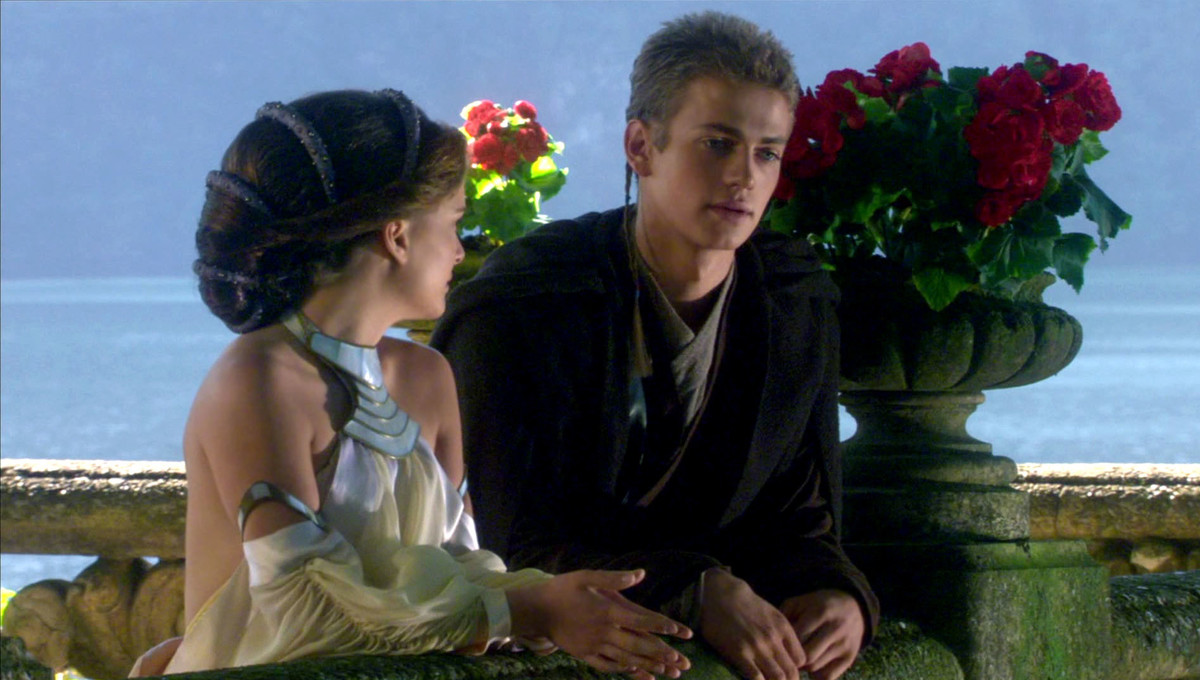
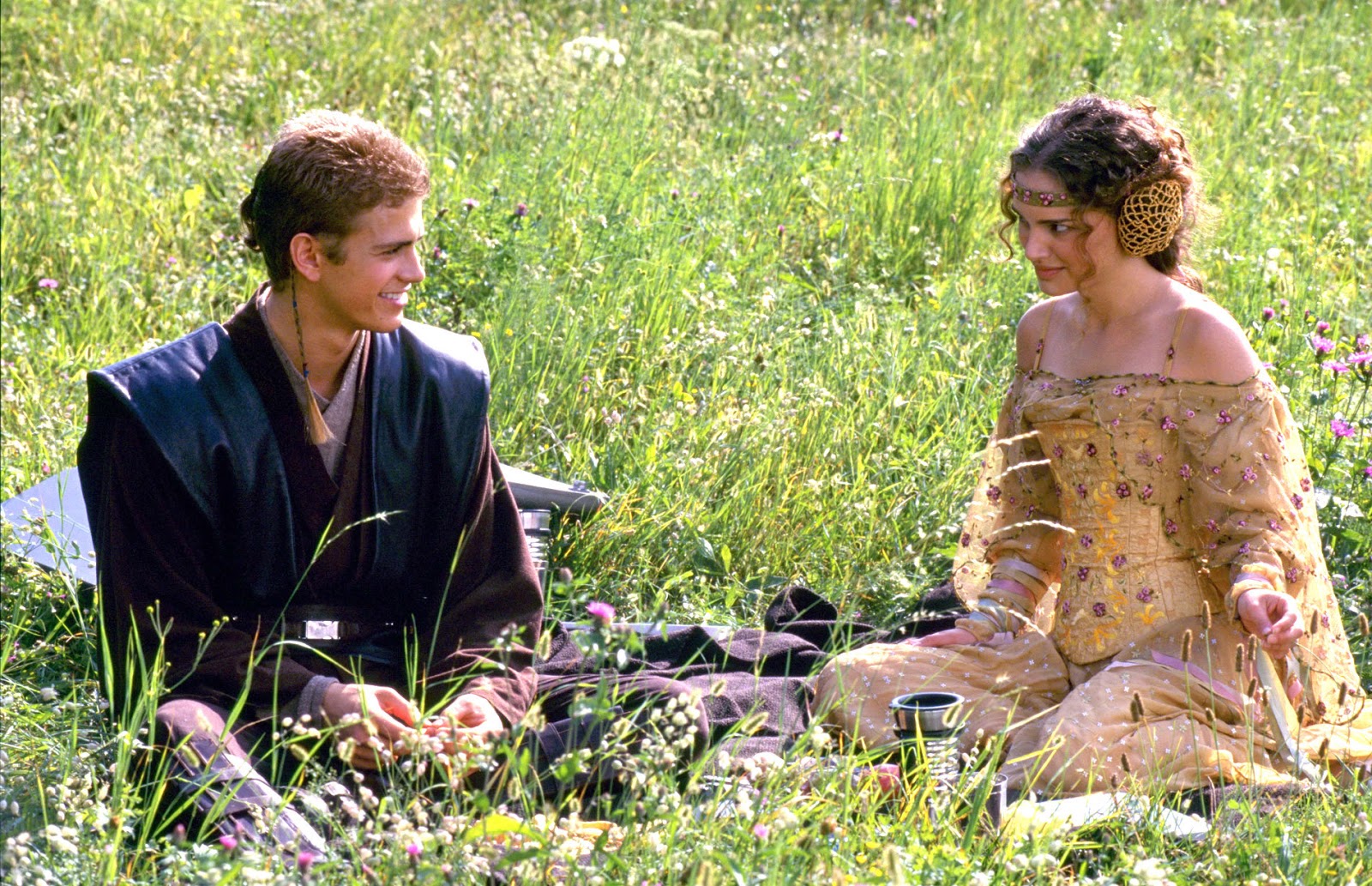
He hates sand you know. Anakin puts the moves on Padmé in Attack of the Clones

Director: George Lucas

Cast: Ewan McGregor (Obi-Wan Kenobi), Hayden Christensen (Anakin Skywalker), Natalie Portman (Senator Padmé Amidala), Ian McDiarmid (Chancellor Palpatine), Christopher Lee (Count Dooku), Samuel L. Jackson (Mace Windu), Temuera Morrison (Jango Fett), Frank Oz (Yoda), Anthony Daniels (C-3PO), Kenny Baker (R2 D2), Jimmy Smits (Bail Organa), Ahmed Best (Jar Jar Binks), Pernilla August (Shmi Skywalker), Joel Edgerton (Owen Lars), Silas Carson (Nute Gunray/Ki-Adi-Mundi)

Nothing could be as bad as The Phantom Menace. Surely? Well, umm, Attack of the Clones is pretty bad, but it’s not quite as stodgy and racist as the first one. It really isn’t. But don’t get me wrong, it’s still tone death, poorly written, crappily directed, poorly assembled, textbook bad film-making disguised under a lot of money.

Anyway, ten years have crawled by since Phantom Menace. Padmé (Natalie Portman) is now a senator campaigning against a revolutionary Separatist movement in the Republic, led by mysterious former Jedi Count Dooku (Christopher Lee). After a failed assassination attempt, Jedi Knight Obi-Wan Kenobi (Ewan McGregor) and his Padewan pupil Anakin Skywalker (Hayden Christiansen) are assigned to protect her. After another assassination attempt throws up a strange link to a mysterious planet of industrial cloners, Obi-Wan investigates leaving Padmé in Anakin’s care: but the two of them are falling in love, strictly against the rules of the Jedi order.

Sigh. Attack of the Clones is once again a mess, overly computer engineered, badly directed by a director with no knack for visual storytelling other than throwing special effects at the screen. It has a densely disinteresting plot about shady dealings around a mysterious Clone army that eventually the film doesn’t bother to resolve. Lucas shoots the entire film in a shiny, sterile, entirely computer generated environment that looks worse and worse the older the film gets. It builds towards a series of clashes at the end that have impressive spectacle on first viewing, but are hugely empty viewing experiences the more you come back to them. But all this isn’t even the film’s main problem.

First and foremost, the most egregious problem with this film is the romance at its heart. This romance, whose impact is meant to be felt through every film is to come, is as clumsy and unconvincing as anything you are likely to see. Not for one second are you convinced that this couple could ever actually be a thing. For starters Anakin is a whiny, preening, chippy rather dull man who over the course of the film murders a village full of people. Hardly the sort of character to make women swoon. On top of this, his romantic banter and tendency of staring blankly and possessively at Padmé has all the charm of a would-be stalker, mentally planning out the dimensions of the basement he’ll imprison his love in. 

Padmé is hardly much more engaging. Her way of handling this love-struck young man, who she claims she doesn’t want to encourage? To flirt with him in a series of increasingly revealing costumes, while constantly telling him “no we can’t do anything” – for unspecified reasons. But then as she says “you’ll always be that 12 year old boy to me” (Oh yuck George!). Portman looks she can barely raise any interest in holding Anakin’s hand, let alone conceiving future generations of Skywalkers. The desperate attempt to create a sense of “love across the divide” falls flat, flat, flat with all the sweep of a Casualty romance of the week. Put it frankly, we are never ever given any reason at all for us to think that they have any reason to be in love.

Despite all this the film desperately tries to throw them together into a series of clichéd romantic encounters, from candle-lit meals to gondola cruises around the lakes of Naboo. Jesus the film even throws in a flirtatious picnic (in which, true to form, Anakin espouses the benefits of totalitarianism, hardly the sort of thing to get a young girl’s heart fluttering!) followed by a roll around in the long grass after a bit of horseplay. To be honest it’s sickening and all the fancy dressing in the world never disguises the utter lack of chemistry between either characters or actors. And you’ll suffer with the actors who are trawling through the appalling “romantic” dialogue. The infamous “I don’t like sand. It’s coarse and rough and irritating and it gets everywhere. Not like here. Here everything is soft and smooth” sums it up – especially as Anakin ends it with stroking Amidala’s exposed shoulder possessively. Late in the film Padmé says “I’ve been dying inside since you came back into my life” – I know how she fuckin’ feels.

But then to be honest nothing really works in this simply terrible film. Of course a lot of the blame rests with Lucas whose overwhelming ineptitude as a writer and director is exposed in scene after scene. Most of the dialogue lacks any wit or lightness at all, constantly straining for a grandeur it can’t deliver and reads like George simply knocked out the first draft and left it at that. As for his directing: the camera positioning lacks any imagination what-so-ever. Most scenes that don’t have lightsabers feature characters sitting talking at each other to fill in plot details (I’m not joking here, there are so many different designs of chairs in this film it’s like strolling around IKEA). Sometimes George spices it up by having characters work slowly and aimlessly from A to B telling each other the plot (I’m failing to resist saying this is a pretty decent metaphor from the film).

The film shakes this up with a few action sequences which either tediously ape things we’ve seen before, but not-as-good (a chase through an asteroid field smacks of Empire Strikes Back) or having a computer game realism to them that never involves you. A prolonged sequence in a battle droid factory literally looks like a computer game from its hideously shiny lack of realism, to its logic, to the way George shoots it with the conveyor belt moving relentlessly forward visually like a dated platform game.

In fact computer game is a pretty good way of thinking about this film. When making this film, Lucas was convinced this would be the start of a new age: that only dull, traditional directors would be building sets and that all the cool kids would make everything in computers. Watching this film today in hi-def blu-ray does it no favours. Lucas’ computer generated sets (in most shots everything except the actors and their costumes are not real) look ridiculously shiny and unrealistic. There is no weight and reality to anything. Instead it all looks like some sort of bizarre, wonky computer visuals. How can you invest in anything in this film when even the goddamn sofa they are sitting on is a visual effect? How can anything have any weight or meaning? Compared to the lived in appearance of the Millennium Falcon, nothing looks realistic or carries any weight at all.

George Lucas isn’t really a director of action either. It’s hard not to compare the epic battles here with the style and substance of the (equally effects filled world) of Lord of the Rings being released at the same time. There, the battle scenes not only carry real emotional weight and peril but also have at least some sense of tactics and story-telling. This is just a collection of special effects being thrown at each other, like an exploding fart in a special effects lab. This makes for events that look impressive when you first see them, but carry no lasting impact: when you revisit the film, nothing feels important or dangerous or coherent – instead it’s just a lot of stuff happening, loudly.

This goes for the famous Yoda-Dooku light saber duel. Sure when I first saw this, seeing a computer generated muppet take on a stunt double with an octogenarian’s face super-imposed on his felt really exciting. But again, on repeated viewings, it’s just a load of wham and bang that kind of leaves you cold (not least because the fight is a showy bore-draw). It’s as ridiculously over-made and over stuffed as half a dozen other fights in the film. It’s almost representative of how crude these prequels are: a character always defined by his intellect and patience in Yoda reduced to a bouncy special effect for a moment of cheap “wow” for the fans. I’ll also throw in the lousy fan service of turning Boba Fett (a character who has a fascination for a lot of fans for no real reason) into an integral part of the Star Wars backstory – as if George intended this character at any point to be so popular, until he released the merchandising opportunities…

Lucas’ direction fails time and time and time again. Even small scenes fall with a splat or feature moments that get the wrong type of chuckles. The moment where Anakin embraces his dying mother? Forever ruined by the snigger worthy collapse of Pernilla August’s Shmi in his arms, looking like a primary school child miming playing dead (tongue out and all) in a school play. Obi-Wan and Anakin’s chase through the skies of Coruscant packed with “jokey” attempted buddy cop lines that never ring true. The film has even more skin crawlingly embarrassing scenes than Phantom Menace, from a sickeningly cutesy room of “younglings” learning Jedi skills to Obi-Wan’s bizarre encounter with a greasy alien in some sort of American diner. There is precisely one moment of wit in the film (Obi-Wan using the force to tell a drug dealer to “You want to go home and rethink your life”). Other than that – nope, it’s poorly made, poorly written, poorly assembled rubbish.

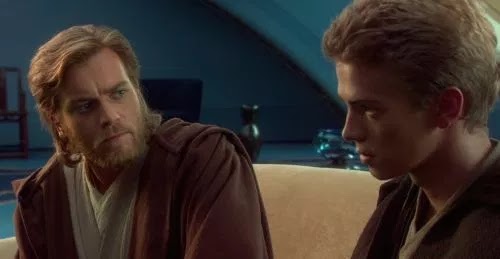
None of the actors emerge with credit. Pity poor old Hayden Christiansen, left to his own devices by Lucas’s inept, direction free, direction. But he is absolutely, drop-down, unreedemably awful in this film. In fact Anakin, far from being a jumping off point, was the death-knell of his career. Was there really no other young actor with charisma who could have stepped in to take this role instead? Portman fairs a tiny bit better, while at least McGregor, Jackson and Lee have enough experience to take care of themselves. But there is no sense of relationship between any of these characters. The two most important relationships Anakin has in the film contain no chemistry: he and Padme and he and Obi-Wan (neither of whom seem to particularly like each other).

Attack of the Clones could never be as disappointing as Phantom Menace (what could?) but it’s far, far, far away from being a good film. It’s got a simply terrible script, is directed with a dull flatness that all the CGI flair and shouting can’t distract you from. There is nothing in there for you to invest emotionally in. It’s built around a relationship that quite frankly doesn’t work at all on any levels. It builds to a random ending that feels like George ran out of ideas rather than because it meets any thematic reason. How could it all have gone so wrong?

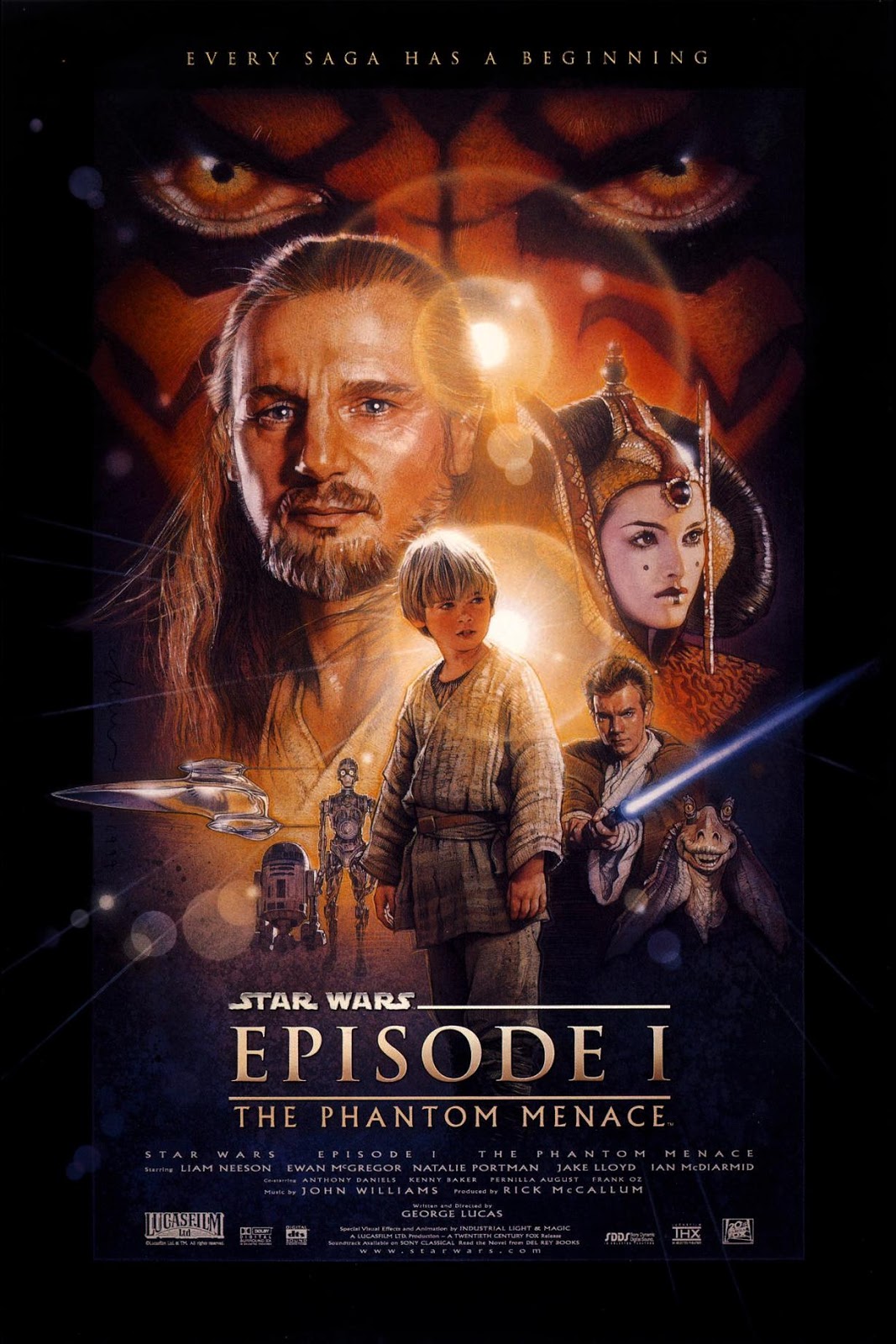
Star Wars Episode 1: The Phantom Menace (1999)

Jedi vs Sith – where did it all go wrong in The Phantom Menace?

Director: George Lucas

Cast: Liam Neeson (Qui-Gon Jinn), Ewan McGregor (Obi-Wan Kenobi), Natalie Portman (Queen Padmé Amidala), Jake Lloyd (Anakin Skywalker), Ian McDiarmid (Senator Palpatine), Anthony Daniels (C-3PO), Kenny Baker (R2 D2), Pernilla August (Shmi Skywalker), Frank Oz (Yoda), Ahmed Best (Jar Jar Binks), Oliver Ford Davies (Sio Bibble), Hugh Quashie (Captain Panaka), Samuel L Jackson (Mace Windu), Ray Park (Darth Maul), Terence Stamp (Chancellor Valorum), Kiera Knightley (Sabé), Silas Carson (Nute Gunray/Ki-Adi-Mundi), Brian Blessed (Boss Nass), Ralph Brown (Ric Olié)

Has there ever been a more disappointing film than The Phantom Menace? I don’t think any film has ever opened to so much hype and fan expectation. The Second Coming could have trouble competing with the expectations piled onto this first Star Wars prequel. Everyone thought it would be the film of the year. Until they saw it. No one thought it would be the film of the year after that.

Of course you should have sensed a disturbance in the force the second you read the opening crawl. The first sentence “Turmoil has engulfed the Galactic Republic” sounds promising right? Well let that expectation die as we hit the second sentence “The taxation of trade routes to outlying star systems is in dispute”. Not exactly a flight for the Empire with the Death Star plans is it? Perhaps only a multi-millionaire like George Lucas could have expected a storyline based around a tax dispute would get the pulses racing. 

But then this is a jumping off point for a seriously shambolic film experience. Phantom Menace is a total mess, an incoherent, poorly scripted, farce of a film, a terrible stumble through a dashed off storyline that makes no sense. Anyway, Naboo is a planet under siege from the Trade Federation. Jedi knights Qui-Gon Jinn (Liam Neeson) and Obi-Wan Kenobi (Ewan McGregor) are sent to negotiate but things quickly turn to violence and they need to flee the planet with its 14 year old (?) elected (??) Queen (???) Padmé Amidala (Natalie Portman). On the planet of Tatooine they encounter a 9 year old slave Anakin Skywalker (Jake Lloyd) with a natural instinct for the force. Qui-Gon wants to train him, while the Galactic Republic tries to resolve the siege of Naboo.

That’s sort of the story – but even writing it down seems episodic and vague. But then that’s everything in the film. Nothing is really clearly explained, and we are never properly introduced to who all the sides are in this film and what they might want. There is a complete lack of any real narrative sense at all. The antagonists and protagonists of the film are hard to define. In fact they are frequently a pile of two dimensional yawns. It’s pretty hard to care about any of them. I guess you feel a bond with Obi-Wan, but that’s based on old films – watch this and Obi-Wan is a do-nothing whiner. 

But all the characters are infected by this. George Lucas is completely unable to bring any characterisations to these people, his lines constantly falling flatly or crappily to the ground, while the actors themselves struggle to find anything to engage it. Harrison Ford famously told Lucas on the first film that “you can type this shit but you can’t say it” – and that’s pretty much nailed on for this film. There is not one single vaguely memorable line in this film. Rather you are struck every second with feeble lines that sound like they might have had depth (“There’s always a bigger fish!”) but when analysed for a second make no sense whatsoever. It’s no wonder Neeson seriously considered quitting acting after this film.

Yes these two characters will get it on in the next film. Yuck.

There isn’t a single character in the film to really invest in. There is no equivalent to your Han Solo, the witty outsider to puncture some of the grandaeur. Instead every character is a flat, po-faced, non-personality who spend all their time in the film very seriously going about their business, never explaining anything. The Jedi are particularly affected by this, written as serious stick-in-the-muds constantly lecturing and ticking off other characters. Qui-Gon Jinn makes a tedious lead character, who constantly gets in the way of the relationship building we need to see between Obi-Wan and Anakin. Because we know where the film series is going, spending time on Qui-Gon feels like wasted time. The backstory is to see the relationship build between Obi-Wan and Anakin – instead they hardly speak in the film, and we instead spend ages on Qui-Gon. It’s poor story-telling and wastes a film showing us unimportant back story rather than spending time on the core stuff. It’s bad enough that we have to waste one third of the prequel series on Anakin Skywalker: The Wesley Crusher Years (seriously has anyone, even a child, ever loved a film where a brattish, super kid is the hero? You won’t be shouting Yiipppeeee…)

Lucas isn’t a director of actors, he’d say the same. But he is supposed to be a master of visuals and special effects. This is a film where everything you could possibly imagine has been thrown at the screen. Each frame is full of complex business, every single section crammed with special effects. There is a lot going on visually all the time, but all of it comes across like an explosion in a colouring book. Unlike the effects of the original trilogy, nothing really feels real or carries any real weight. Instead you see every special effects shot in the film and see frames filled with clutter and shiny, computer generated weightless nonsense. Worst offender is the hideously overextended pod race sequence, like a particularly dull Formula One race, which carries no real stakes (as we all know the result) and, for all the high speed camera work and editing feels not one iota as thrilling as the speeder chase in Return of the Jedi.

On top of this, most of the interventions into the Star Wars backstory makes the original trilogy worse. This is the film that gave us midichlorians, some sort of magic alien thing that lives in blood and gives the Jedi the ability to use the force. The reaction to this midichlorian nonsense, undermining the mystique of the force into something that could measured like a top trump was so negative that it was mentioned at most once in the two sequels. Other areas got similarly scathed, not least turning Anakin Skywalker into the worst form of “gifted child”. I’m not even going to touch on the icky fore-knowledge we have about the fact that Anakin and Padme are going to get it on in the future, something that is hideous to think about.

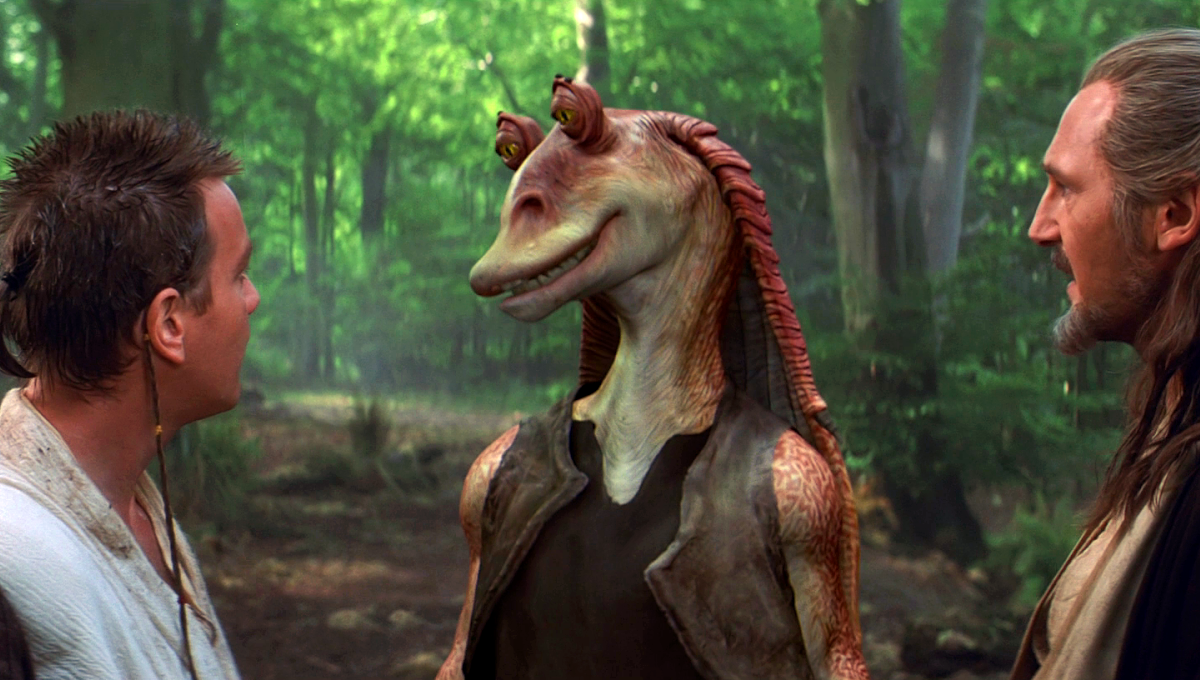
The most hated character in film history?

Lucas also fudged the new stuff he introduced in the film. The worst element: of course it’s poor old Jar-Jar Binks. I genuinely feel sorry for Ahmed Best, an actor whose career never recovered, who is just doing here what he was told to do. But Binks is the most irritating character possibly ever conceived for a hit blockbuster. An idiotic, comic creation designed for the kids who falls over, trips up, says stupid things and steps in shit he does nothing useful for the whole course of the film and tries to entertain kids who were way more interested in Darth Maul. Binks is almost irredeemable, every sentence enough to send everyone’s teeth on edge. 

Lucas trumpeted how much Binks was setting the trend of being the first major computer generated character. Lucas was incapable of guiding the actors to respond (or even look at) the correct spaces where Binks was standing. And Lucas was so pleased with it, he never stopped to think. Binks makes no sense. Like the rest of the Gungans he’s a joke. There is literally no reason at all for the Jedi to take him anywhere with them, particularly as he constantly gets in the way, causes trouble and offends people. Even in the “desperate” final battle, Binks prats about – compare him to the moments of tragedy and sacrifice given to the Ewoks in Jedi and you’ll see how bad this is.

Yes Watto loves Money. What? What’s the problem?

And of course he and the Gungans are shocking racist caricatures in their Jamaican accent. If you had any doubts that Lucas had no one saying no to him on anything, this film is stuffed with pretty shocking racist characters. Binks is terrible, but the villains of this place are the money obsessed Trade Federation, all with Japanese accents. On Tatooine, Anakin is kept by a greasy, fly ridden, money obsessed, big nosed, fly-covered alien Watto who looks, sounds and acts like a children’s version of The Eternal Jew. Did no one watching the film take a second and say “hang on this looks a bit dodgy…”

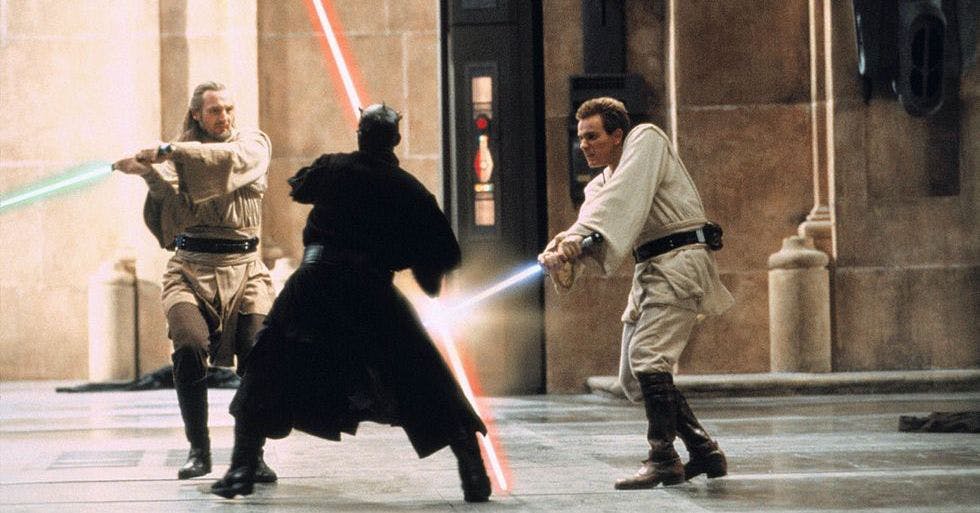
All of this nonsense finally comes together in a grand final battle which sums the whole film up, in a sequence where the tone shifts and changes all the time with no sense of a single person doing so intentionally. We have the Gungans comically fighting the droids in a series of awful little vignettes. We have the Queen chasing through the palace in a poorly explained subplot. We have a 9 year old child accidentally flying a ship into space and accidentally blowing up the baseship (Anakin saves the day without even realising it, the one thing that could make the child even more irritating than he already is). And we have the Jedi fighting Darth Maul in a battle that looks impressive at first but is in fact overly busy and overly choreographed. 

The Phantom Menace has few reasons to like it at all. You get bored with the story. You don’t invest in the characters. You don’t engage with the events. You don’t feel your pulse racing. The plot drifts from planet to planet with very little logic at all. The dialogue is terrible. The story telling is abysmal. The direction is flat. The film throws in moments that crap over the original trilogy. Lucas made is wait for decades – but then seems to have produced a film that he didn’t really want to do. It’s a truly dire film.

The Empire Strikes Back (1980)

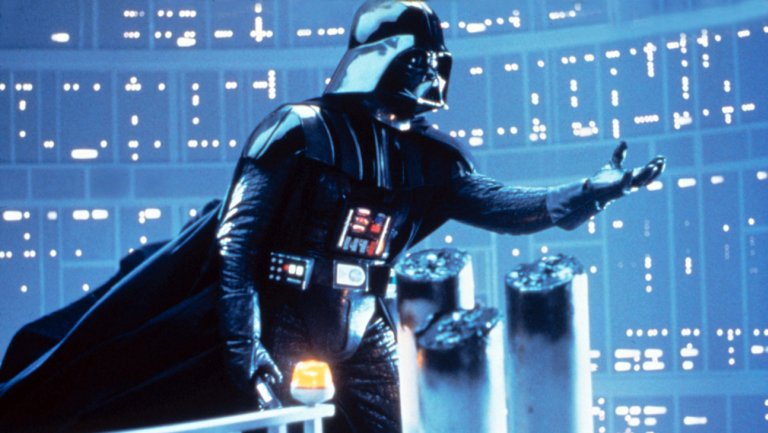
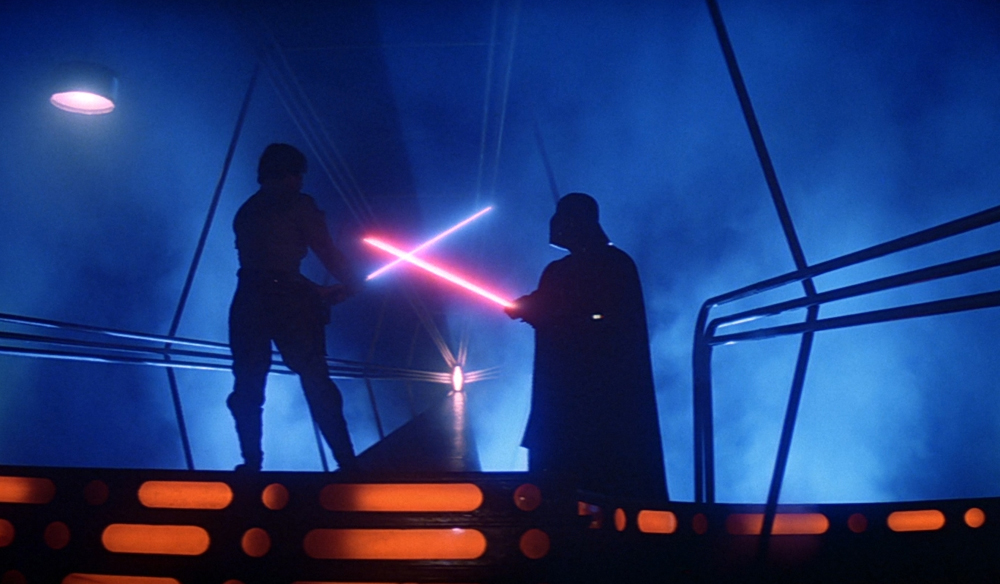
Darth Vader in the film that really made him an icon: the flawless The Empire Strikes Back

Director: Irvin Kershner

Cast: Mark Hamill (Luke Skywalker), Harrison Ford (Han Solo), Carrie Fisher (Leia Organa), Billy Dee Williams (Lando Calrissian), Anthony Daniels (C-3PO), David Prowse & James Earl Jones (Darth Vader), Peter Mayhew (Chewbacca), Kenny Baker (R2-D2), Frank Oz (Yoda), Alec Guinness (Obi-Wan Kenobi), Denis Lawson (Wedge Antilles), Kenneth Colley (Admiral Piett), Michael Sheard (Admiral Ozzel), Jeremy Bulloch (Boba Fett), Ian McDiarmid (Emperor)

As Star Wars sprawls into a massive Disney money-spinning franchise, for both fans and producers alike the original trilogy is increasingly becoming like Holy Texts, the events and characters of which must guide all future films. And of all these, none of them is holier than The Empire Strikes Back. It’s odd to think that the initial reaction to this sequel was a bit mixed at the time, since this is not only the very finest of all the Star Wars films, but also one of the best genre films ever made, one of the greatest sequels ever made – in fact one of the best, most consistently rewarding films you are ever going to see. It’s going to be loved forever, any critical view is almost superfluous. And the reason for that is surely linked to the fact that I’ve seen it hundreds of times and I still love every frame of it.

Anyway, nearly everyone must know the story. Some time has passed since the rebels successfully took out that Death Star. Now they are secure in a new base on the ice planet Hoth, being hunted by the empire in an operation commanded by the feared Darth Vader. When the Empire locates the base, our heroes are separated in the ensuing escape: Luke (Mark Hamill) is guided by the force and the ghost of his mentor Obi-Wan (Alec Guinness) to seek out the legendary trainer of Jedi Yoda (Frank Oz). Meanwhile, Han (Harrison Ford) and Leia (Carrie Fisher) are on the run in a malfunctioning Millennium Falcon, dodging Star Destroyers and eventually taking refuge in the Cloud City of Bespin, run by an old friend of Han’s, Lando Calrissian (Billy Dee Williams). But is this a safe refuge? And what is the secret reason why Vader is so determined to hunt down Luke?

So what is it that makes The Empire Strikes Back so damn good? Well it takes everything from the first film and deepens and enriches all the characters and themes that that film explored. While you could say Star Warsis the quintessential romantic space opera – part Western, part fairy tale legend – it’s also a feel-good fun ride. Empireis a rich, complex and endlessly rewarding film that takes all its characters and turns them into fully rounded and intriguing personalities. When you think about the turmoil and struggles each of them goes through in this film – from Luke, through Vader even down to C-3PO – it’s not hard to see why these characters have worked their way into the hearts of every viewer. We see them all go through huge amounts and we learn and discover things about them in every frame. It’s fascinatingly well done storytelling and brilliantly structured character building.

In fact the whole film is a triumph of investment. Even more than the first one, we get a real sense of the mighty ruthlessness of the Empire (staffed exclusively it seems by British character actors from 1970s TV), of its resources, its willingness to do anything. Even more than in the first film, the odds seem piled against the rebellion, with the limited ship, tiny fire power, the fact that our heroes spend virtually the entire film either running, hiding or captured – how can you not feel the pull of wanting to take up this romantic cause eh? 

Perhaps it works so well as Lucas handed over much of the on-the-ground-floor creativity over to other people (you only have the watch The Phantom Menace to see what happened when he took all these reins back up again). The witty, energetic, fun script – packed full of lines that trip off the tongue, and character moments that feel real and human – is by Lawrence Kasdan. Directing meanwhile is handled by Irvin Kershner, a middle-of-the-road director who taught Lucas at film school but here seems to transcend his abilities to deliver a true masterpiece, with all the thrill of a teenager finally given the keys to the big car. 

Kershner can handle all the spectacle, but like no other movie in the series Empire works because it’s rooted in the small-scale, in the reaction shot, in the camera soaking up the actors. There are so many shots of actors looking at things in this movie (I think they all have significant moments of this) while we see their thoughts and emotions play across their faces. Kershner never forgets that this is a story about people not about bangs and whizzes in space. In doing that, in making this a brilliant character drama, he really turned Star Wars into not just an adventure but a series where we invested heavily in these people. There is a reason why the modern films come back time and time to the characters from this film: Empire really made us care about them, turned them into family members, people we’d seen through highs and lows. We see them in a modern film and it’s like greeting long lost friends.

And it helps that the stars give their best work here. Harrison Ford may never have been so cocksure, so cool but also strangely vulnerable and lovable. While in Star Wars he was used to puncture the grandeur, here he’s got a put-upon vulnerability to him, a bravado in his courtship with Leia that hides his touchiness. Not to mention we are constantly reminded he’s a wanted man. Ford also gets massive comic mileage from his exasperation with the constantly malfunctioning Falcon. All this and he never looks flustered: “Never tell me the odds!” indeed! And he gets possibly the best loved line in the whole series with “I know”.

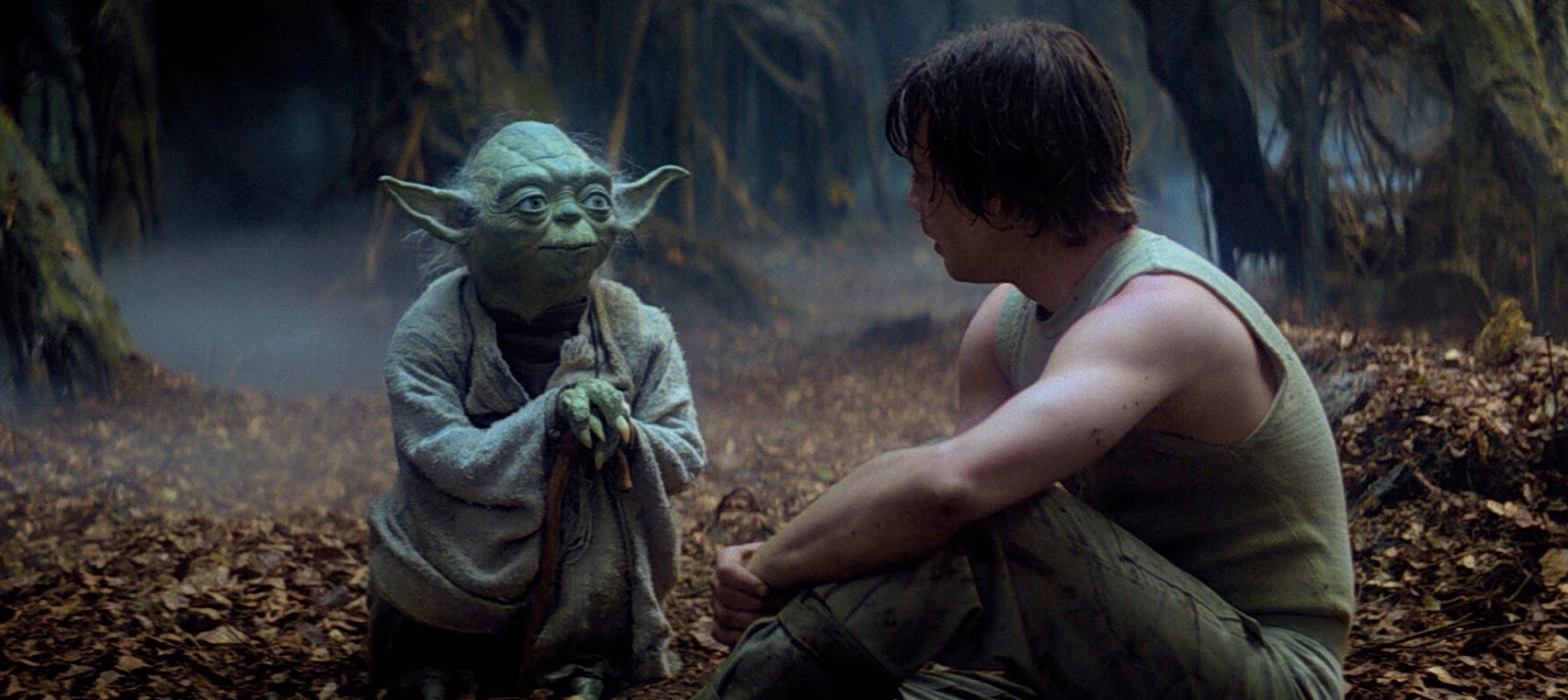
Fisher is equally good as a prickly Leia, who is afraid to let down the imperious commanding cool to let any hint of feeling and emotion show. Mark Hamill does a very easy to overlook job of emotional commitment as Luke Skywalker – particularly as he spends a large chunk of the film interacting only with a robot prop and a puppet. He sells the conflict Luke is feeling, the clash between doing action that feels right now and having the patience to build his skills. And of course, he sells the anguish of finding out that twist.

Ah yes the twist. Empire was perhaps one of the first films to impose such strict pre-production secrecy onto its key plot development. On set, only Irvin Kershner and Mark Hamill knew that Vader was Luke’s father (no spoiler warning – I think Lucasfilm have well and truly spoilt that one themselves). Dave Prowse, who was not trusted to keep it to himself, to was given a line around Obi-Wan killing Luke’s father (he must have been slightly surprised at Hamill’s reaction, which does seem a bit OTT to that news). But this moment again really, really, really works because it is both a surprise AND something that makes total sense. It doesn’t feel like hints have been dropped through the whole film in advance, but when you hear it you spot them all over the place. It’s also such a brilliant narrative rug pull it has also effectively powered the creation of the prequels and is still central to the new trilogy.

Away from all this, the film is also a masterpiece in pacing and action sequences. It took a lot of guts to put the major space battle at the start of the film, but it works an absolute treat – while also being something completely different from anything in the first film. It looks and feels really cool. And it contrasts perfectly with the smaller scale, more intimate desperation of the escape from Besbin that ends the film, matched with Luke’s battle with a never-more-imposing Vader. I’ll also mention as well that John Williams’ score for all these sequences is practically perfect in every way, adding no end of tension, emotion and excitement to all these sequences.

And it’s the fact that you get all this, mixed with a real, genuine investment in all the characters (good and bad), that really makes the film work in a way that no other Star Wars film has quite managed since, and that makes this the crown jewel in the franchise. It’s one of those serendipity projects where everything fell into place, everyone brought their best to it, and the stars aligned. It’s lightening in a bottle, and the franchise has used it ever since as its setter for everything from tone to plot developments. You will rarely find anything as fun, or widely loved, as this film.

Gorky Park (1983)

William Hurt investigates murder in Soviet Russia in ace adaptation Gorky Park

Director: Michael Apted

Cast: William Hurt (Arkady Renko), Lee Marvin (Jack Osborne), Brian Dennehy (William Kirwill), Ian Bannen (Prosecutor Iamskoy), Joanna Pacula (Irina Asanova), Michael Elphick (Pasha), Richard Griffiths (Anton), Rikki Fulton (Major Pabluda), Alexander Knox (The General), Alexei Sayle (Golodkin), Ian McDiarmid (Professor Andreev), Niall O’Brien (KGB Agent Rurik)

Martin Cruz Smith’s novel Gorky Park was a bestseller in the early 1980s. It looked at grim goings-on behind the Iron Curtain, a trio of grisly murders in Moscow’s Gorky Park (the bodies are faceless, toothless and fingerless to avoid identification). The murders are investigated by Arkady Renko (wonderfully played in this film by William Hurt), a chief investigator for the Moscow militia who feels out of place in the corruption of Soviet Russia, but is equally scornful of the consumerism of the West. The investigation delves into a complex web of Soviet relationships with American business and the dissident community, not least an American millionaire fur trader Jack Osborne (Lee Marvin), and a would-be defector and possible friend of the victims, Irina Asabova (Joanna Pacula).

What I loved about this film is the novel is a rather overwhelming 500+ pages, but this film is a brisk and pacey two hours – and I literally couldn’t think of a single thing missing. But then that’s what you get when you have a master writer adapting your screenplay. Gorky Park has Dennis Potter, perhaps the greatest British TV writer of all time – and this is a sublime script, which keeps the pace up, covers all the tense greedy wrangling of the villains, and also makes subtle and telling points about the Soviet system, all in a punchier and clearer way than the books. The dialogue is also absolutely cracking, ringing with a brusque, icy poetry, with a brilliant ear for a turn of phrase.

Filmed on location around Helsinki and Glasgow among other places, what the film misses in actual Russian locations (needless to say the Soviets were not keen to host the production of a film that showcased murder and corruption at the heart of their capital city), it makes up for with Apted’s taut direction and eye for the general crappiness of Soviet life. Everything is run down, everything is dirty, everything looks cold and unappealing, even the houses and luxury bathhouses of the party leaders look a bit middle-class and uninspiring. By the time (late in the film) that you find yourself in one of Osborne’s houses you are immediately struck by the quality of the furnishings – it’s literally a different world.

This atmosphere not only creates something a bit more unique, it also allows us to relax and enjoy the quality of Smith’s story. I found it overstretched in the book, but the film gives it an urgency and a sinister creepiness that grips your attention. Apted has a brilliant eye for the little tricks to survive living in a police state, from watching what you say, to carefully placing a pencil in a dialled telephone wheel to prevent bugs from activting. Every moment is well paced and nothing outstays its welcome. Characters are introduced with skillful brushstrokes, and the relationships feel real and lived in. With such strong dialogue, it’s also great they got such good actors to do it.

William Hurt takes on the lead, and he is perfect, affecting a rather clipped English accent (all the Russians speak with various regional or RP accents). With his unconventional looks (part boyish, part stone-like), he looks the part and he totally captures the yearning unconventionality of a character who deep down probably would be a true believer in a good society, but can’t believe in the corruption around him. Far from the stereotypical would-be dissident, Hurt makes him a man who loves his homeland, but not always the people running it. He’s exactly as you would picture Renko in the book – a guy who will go for justice with the bit between his teeth, a semi-romantic hero, no superman (he frequently is bested in combat), who is looking for something to love and believe in.

The rest of the cast are equally fine. Lee Marvin is cast against type as a suave, hyper-intelligent, manipulatively greedy businessman – although his reputation for playing heavies comes in handy when the gloves come off. Joanna Pacula mixes sultry Euro-siren with an urgent yearning for freedom. Ian Bannen is wonderfully avuncular as Renko’s supportive boss (extra points for Tinker Tailor fans that Bannen is reunited here with Alexander Knox, in a dark reflection of their Control-Prideaux working relationship from that series). Michael Elphick seizes on the part of the down-to-earth Pasha, Renko’s friend and comrade, a role greatly improved from the book (largely to give Renko someone to bounce ideas off).

Apted’s film has a great sense of tension and a wonderful feeling for Soviet Moscow’s dark underbelly. The mystery is increasingly gripping and involving as the film goes on – and, in a nice rug-pull, turns out to be about something totally different than what you might expect. Even the final shootout is assembled and shot with an unexpected vibe. It avoids any Cold War pandering – the main villain is a sadistic American allied with Russians, our hero a noble Russian who partners up with a salt-of-the-earth but decent American cop (Brian Dennehy, also very good). For a late night mystery thriller, with a touch of everything thrown in, you can do a lot worse than this. I enjoyed it far more than I expected. I’d almost call it an overlooked B-movie gem.

Sleepy Hollow (1999)


Rumours that Johnny Depp is tapping into his eccentric style are of course unfounded

Director: Tim Burton

Cast: Johnny Depp (Ichabod Crane), Christina Ricci (Katrina Van Tassel), Michael Gambon (Baltus Van Tassel), Miranda Richardson (Lady Van Tassel), Casper Van Dien (Brom Van Brunt), Jeffrey Jones (Reverend Steenwyck), Richard Griffiths (Magistrate Philipse), Ian McDiarmid (Dr. Thomas Lancaster), Michael Gough (Notary Hardenbrook), Christopher Lee (Burgomaster), Christopher Walken (The Headless Horseman), Claire Skinner (Beth Killian) 

Tim Burton’s films often take on a larger-than-life quality, an overblown fanciful journey into a world that is a few degrees off from our own. So a bizarre ghost story about a headless horseman lopping off bonces left, right and centre, in an isolated town that feels more like a construct from a series of other films than any sort of real place, probably suits him perfectly.

After a series of murders via decapitation in the small town of Sleepy Hollow, Iachobad Crane (Johnny Depp) is called from New York to investigate. An eccentric (what else, it’s Depp) moderniser, Crane believes in logic and forensic investigation and is having none of the fears of the townspeople that the murders are being committed by a headless ghost. However he soon changes his views…

This adaptation bears little or no resemblance whatsoever to the original source material, bar a few homages, one or two brief scenes and a few character names. Burton, indeed, seems to have no interest in it at all: what he is interested in doing is paying homage to high-blown Hammer horror films from the 60s and 70s. Whether you enjoy this largely depends on whether you were a fan of either Burton or this style of film-making going into it.

I found the film rather too arch throughout – from the stylised performances of the actors, through to the slight tongue-in-cheek tone. It’s not particularly scary at any point, despite the blood and gore – largely because nothing ever feels real, there’s no sense of dread or peril. Heads are lopped off with an almost comic athleticism, bouncing around floors or rotating on necks. Only one sequence – the murder of a family – carries any real sense of unease about it. The rest of the film is one not-particularly-witty black comedy, in which a lot of time and talent seems to be invested in something not particularly interesting.

Depp is of course perfectly suited to this, his “look at me” acting style springing to the fore as Crane. As usual he overloads the character with quirks and mannerisms, the sort of tricksy emptiness it’s easy to mistake for great acting. The rest of the cast go about their business with a trained professionalism. However, despite the array of British acting talent on display, in truth none of them make much of an impression, with the exception of a nice cameo from Alun Armstrong as a senior New York policeman, and Miranda Richardson who has fun with her role as a sinister housewife with hidden depths.

The awards attention for the film focused on its finest aspects – its look and design. The production design of the film is impressively constructed and the artificial look of the exterior sets actually fits in very nicely within the world of the film. Emmanuel Lubezki’s photography also looks fantastic, shooting the film with a slightly off colour, 70s style that adds a vibrant red to the large amount of blood on screen. Costumes and other technical aspects are also impressive. The film looks fantastically striking, like a brilliantly designed coffee table book – and has about as much plot as one. It’s my problem with Tim Burton – this whole “unique vision” of his, often seems to be an excuse for littering his films with in jokes, arch design and stylisation and leaving out the things we actually care about, like characters, emotion and drama.

In the end, it’s really not a lot more than a joke, a pastiche of a certain genre of film that seems much more like one for the fans than a joke that we can all take part in. I’m aware not liking it throws me open to accusations of not “getting it” or expecting more from it, but I basically didn’t really find the joke funny enough. Its arch style make it hard to relate to, and despite the clear enjoyment of all involved, not a lot of the wit behind the scenes is clear in the final product. With nothing to really invest in, a rather sudden ending and a mood throughout that is trying to be creepy rather than genuinely so. Don’t expect a retelling of its plot around a camp fire to awaken too many goosebumps.