Tag: James McAvoy

Atonement (2007)

Atonement (2007)

Moderately successful literary drama, that succumbs to tricksy showboating

Director: Joe Wright

Cast: James McAvoy (Robbie Turner), Keira Knightley (Cecilia Tallis), Saoirse Ronan (Briony Tallis, aged 13), Romola Garai (Briony Tallis, aged 18), Vanessa Redgrave (Older Briony Tallis), Brenda Blethyn (Grace Turner), Juno Temple (Lola Quincey), Benedict Cumberbatch (Paul Marshall), Patrick Kennedy (Leon Tallis), Harriet Walter (Emily Tallis), Peter Wight (Inspector), Daniel Mays (Tommy Nettle), Nonso Anozie (Frank Mace), Gina McKee (Sister Drummond), Michelle Duncan (Fiona)

The past is a foreign country. Sadly, it’s not always the case that they do things differently there. Instead, it can be a land of regrets and mistakes that we can never undo. Events that once seemed so certain, end up twisting our lives and shaping our destinies. A single mistake can mean a lifetime of never being able to atone. These are ideas thrillingly explored in Ian McEwan’s novel Atonement, one of the finest in his career. The same ideas carry across to this handsomely mounted adaptation, which looks gorgeous but often tries too hard to impress.

In 1935, the Tallis family owns a grand country house. Precocious Briony Tallis (Saoirse Ronan) is on the cusp of her teenage years, and believes she understands the world perfectly. A budding writer, her imagination, curiosity and romanticism overflow. But her youthful mis-interpretation of the romantic interactions between her sister Cecilia (Keira Knightley) and the housekeeper’s son Robbie Turner (James McAvoy)ends in a tragically mistaken accusation that destroys Robbie’s life. Five years later, Robbie serves as a private during the British retreat from Dunkirk, Cecilia is a nurse in London and Briony is training to become the same – their lives still shaped by those misunderstandings on that fateful night.

Atonement is a film I’m not sure time has been kind to. Released in 2007 to waves of praise (including Oscar nominations and a BAFTA and Golden Globe for Best Film), it has the classic combination of literary adaptation, period beauty and big themes. But re-watching it (and it’s the third time for me), the film rewards less and less. Instead, my overwhelming feeling this time was it was a tricksy, show-off film that – despite some strong performances, in particular from McAvoy and Ronan – strained every second to demonstrate to the viewer that Joe Wright belonged with the big boys as a cinema director.

Constantly, the emotional impact of the film is undermined because nearly every scene has an overwhelming feeling of being ”Directed”. Wright pours buckets of cinematic tricksiness and flair into the film – so much so that it overwhelms the story and drowns out the emotion. With repeat viewings this overt flashiness becomes ever more wearing. Scenes very rarely escape having some directorial invention slathered on them. Direct-to-camera addresses where the background fades to back (giving the air of a confessional). Events unspooling (and at one tiresome moment played in reverse) to illustrate time reversing to allow us to see events from a different perspective. Other visual images seem cliched beyond belief: a divine flash of light behind McAvoy while he struggles against death in Dunkirk or, worst of all, Nurse Briony talking about never being able to shed the guilt from her childhood actions while vigorously washing her hands.

Perhaps most grinding of all is the (Oscar winning) score from Dario Marinelli which hammers home the questionably reality of some of the scenes we are watching (or at least the creative filter that Briony is placing over them) by building in excessive typewriter whirs and clicks into its structure. It hammers home one of the film’s key themes: that at least part of what we are watching is based solely (it is revealed) on the recollections of the much older Briony, now a respected novelist. That perhaps, some of the events are her creative interpretation, wishes or even flat-out invention. This is a neat device, but perhaps one that could have worked better with a framing device to place it into context. Instead the reveal feels tacked on at the end – for all that this is the same approach McEwan takes in the novel (with greater effect).

But then, for all the film faithfully follows the structure of the novel (in a respectful adaptation by Christopher Hampton), too often its warmth and feeling get lost in the showy staging. Although part of the tragedy is that Robbie and Cecilia’s relationship is destroyed before they even get a chance to explore it fully, the chemistry between the two of them isn’t quite there and the film doesn’t quite communicate the bond between them being as deep as it would need to be. So much of this in the book was communicated through interior monologue – and the film refuses to take a second away from its flashiness to compensate for this by allowing the relationship between the two to breathe.

Instead Joe Wright prioritises his directorial effects. For all that his over five-minute tracking shot through the beach of Dunkirk is hugely impressive and dynamic – and it really captures a sense of the madness, despair, fear and confusion of the evacuation – this isn’t a film about Dunkirk. It is a film about a relationship – and using the same flair to make us fully buy into, and invest in, this relationship would perhaps have served the film better. It’s striking that, in the long-term, the most impressive scenes are the quieter ones: Benedict Cumberbatch’s chilling house guest’s subtly ambiguous conversation with Briony’s young cousins, or Robbie and Cecilia meeting in a crowded café after years and struggling to find both the words and body language to communicate feelings they themselves barely understand. In the long term, scenes like this are worth a dozen tracking shots – and demonstrate Wright has real talent behind all the showing off.

But the film is striking, looks wonderful – as a mix of both The Go Between and a war film – and in James McAvoy’s performance has a striking lead. McAvoy’s career was transformed by his work here – boyish charm with a slight air of cockiness under his decency, turned by events into fragility, vulnerability, fear and an anger he can’t quite place into words. Knightley gives one of her best performances – although, as always, even at her best she hasn’t the skill and depth of a Kate Winslet. Or a Saoirse Ronan for that matter, who is outstanding as the young Briony – convinced that she is right and that she understands the world perfectly, but as confused and vulnerable as any child thrown into a world that in fact she doesn’t comprehend.

Atonement has its virtues. But too often these are buried underneath showing off, ambition and tricksiness. Sadly this reduces its effect and leaves it not as successful a film as it should be.
The Last King of Scotland (2006)

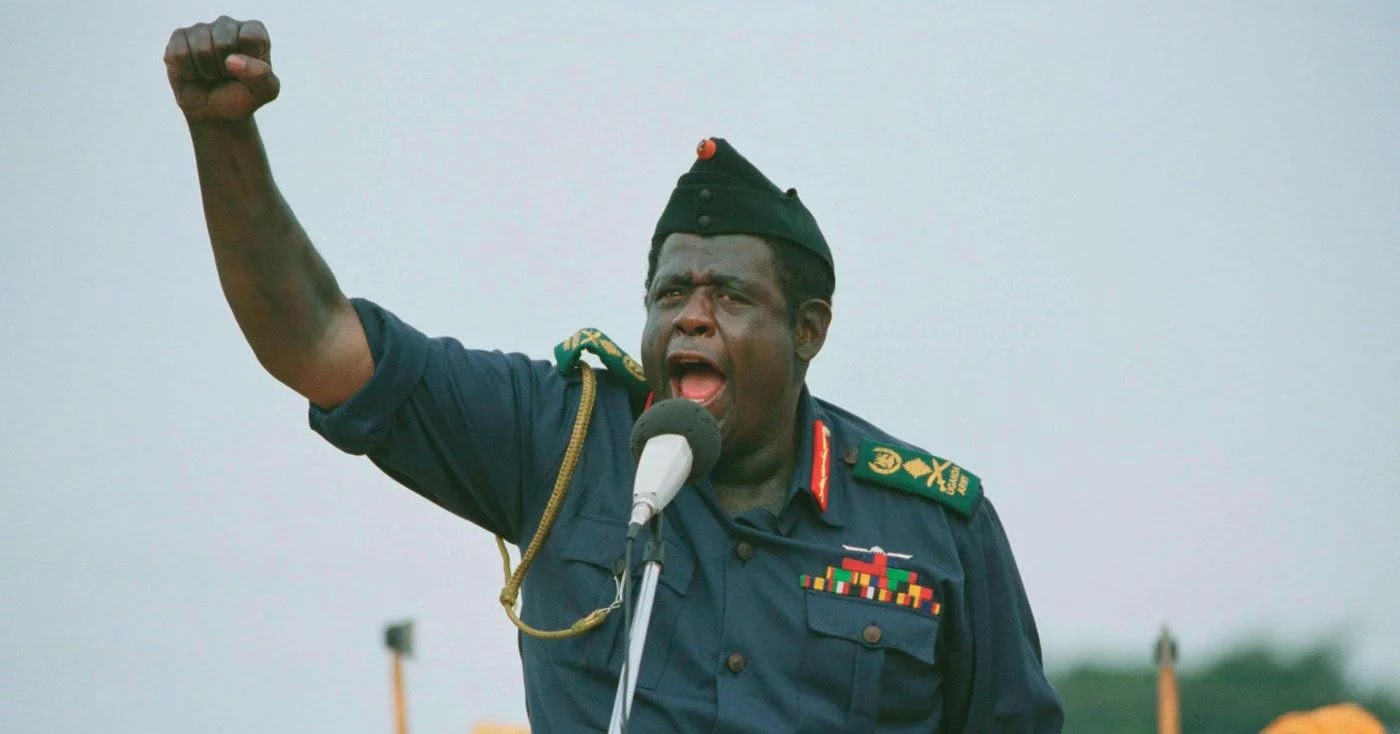
Forest Whitaker dominates as Idi Amin in The Last King of Scotland

Director: Kevin Macdonald

Cast: Forest Whitaker (Idi Amin), James McAvoy (Nicholas Garrigan), Kerry Washington (Kay Amin), Gillian Anderson (Sarah Merrit), Simon McBurney (Stone), David Oyelowo (Dr Junju)

Forest Whitaker won every award going for his performance as Idi Amin. A film can perhaps only begin to scratch the surface of what a megalomaniac nutjob Amin was, and the depths of his depravity and corruption. But The Last King of Scotland is perhaps less focused on that, and more on the pull that people as charismatically self-absorbed and larger-than-life like Amin can have on the weak-minded and, on a wider basis, how this can end up with him leading an entire country on a not-so-merry dance, everyone desperate to gain the love and approval of a single dominant personality.

That weakling is Dr Nicholas Garrigan (James McAvoy) a young medical graduate from Edinburgh, who is arrogant, cocksure over-sexed and over-here in Uganda, keen for adventure and to get as much sex and experiences in as he can while he’s over here. A gap-year student with a desire for the easy life, after a chance meeting Garrigan becomes chief-physician and confidant to Amin, a man with a deep love for Scotland and who likes to think of himself as a father to those around him. It takes Garrigan a long time to realise that this indulgent, if bad-tempered, charismatic father-figure  is in fact a brutal dictator, his eyes eventually opened by the experiences of one of Amin’s wives Kay (Kerry Washington) who pays a heavy price for mothering an epileptic and adultery. Will Garrigan escape from Uganda?

Macdonald’s film gets a brilliant sense of both the exotic appeal of Uganda at the time (and or Amin) and it’s heat-embroiled danger. The camera work is flooded with yellows and grimy details, that makes every scene feel like its bathed in heat (and later danger) as well as giving it a documentary realism (helped by its use of handheld and immediate footage). The story of the film itself is a fairly basic morality tale, but these stories work because of their universality and it’s clear that Garrigan’s selfishness, shallowness and self-interest is going to lead to a terrible awakening.

The film’s real strength is Whitaker’s tour-de-force as Idi Amin. Whitaker is an actor who has been straining at the leash for an explosive roll, and he gets one here. If ever there was a part that would allow an actor to let rip it’s the one, with Amin part Hannibal Lector, part decadent Roman emperor, a low-rent Hitler with an ego larger than his country. But the bombast and childish fury work because it is built within the framework of a sort of puffed-up magnetism, a charismatic “hail-fellow-well-met” bonhomie that suggests this guy could be the best fun in the room. So dripping in assurance and confidence is Amin that he becomes strangely attractive – and the sort of all-powerful force of nature that would have most of us smiling if we caught a word of approval from him.

The trick of the film is to front-and-centre this lighter, fun-loving aspect. It’s easy to enjoy it like Garrigan as Amin charms the audience as much as he does its lead character. Sure there may be violence at the margins, but good-old-Amin is just doing what needs to be done. He’s brilliant with the people. It’s funny when he on-a-whim appoints Garrigan to decide a major architectural pitch from several countries. He’s playful and enthusiastic. When he’s cross with people he seems at first more disappointed than angry. It’s only as the film goes on that we realise we have been gaslit as much as Garrigan, that Amin may be a fun guy but he also cares nothing for anyone and that the more his focus shifts away, the more we see his callous paranoia and lack of any moral scruples.

Certainly we start getting a sense of the ruthlessness he is prepared to exhibit to enforce his rule in Uganda and the brutality with which he will suppress any resistance. Aides killed in a failed assassination attempt illicit no sympathy. He feels no guilt or responsibility for anything he does. In one brutal moment he berates Garrigan for failing to counsel him against expelling all Asians from Uganda. When Garrigan protests he did, Amin only responds with “Yes, but you did not persuade me Nicholas!” the sort of inverted logic practised only by the insanely self-obsessed.

Whitaker’s performance powers all this, a magnetic masterclass in insanity, charisma and paranoia. He’s well matched by James McAvoy (the film’s real lead) whose performance is similarly a masterclass is shallowness and petty triteness. If anything the film is almost too successful in this. A Garrigan is such a little arsehole it takes quite a force of will to build up any sympathy for this serial shagger playboy. It’s capable to think as the fire turns on him that perhaps he deserves this – and the number of (mostly black) characters who lay down their lives to protect him starts to get a bit wearing after a while.

Because this in part is a film where actual Ugandans are not heard that much. The two principle characters we see are both victims: Kerry Washington in a thankless part as the attractive young wife you just know from day one Garrigan will climb into bed with and David Oyelowo as the sort of noble doctor you only seem to find in movies. For all its horror at Amin’s crimes, it’s still largely filtered through the eyes of a young, white, innocent abroad who sees up-front the dangers but the real victims of Amin, the Ugandans themselves, are clichés or elevated clichés.

While you could say that was not the point of the film, it still means we miss some of the real danger and psychopathy of the leading character, so absorbed are we in seeing the increasing peril of the white man caught up in it all. It’s why The Last King of Scotland doesn’t quite work as well as it should, any why it settles in the end for a being a morality tale plot-boiler about a monster at the heart of the forest, rather than a deeper and more intelligent film about the tragedy of an African state. It’s still enjoyable for all that, but it could have been more.

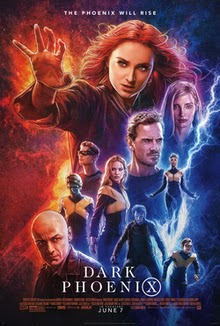
X-Men: Dark Phoenix (2019)

Sophie Turner does her best with a franchise that has finally seen better days in Dark Phoenix

Director: Simon Kinberg

Cast: James McAvoy (Charles Xavier), Michael Fassbender (Erik Lensherr/Magneto), Jennifer Lawrence (Raven Darkholme/Mystique), Nicholas Hoult (Hank McCoy/Beast), Sophie Turner (Jean Grey), Tye Sheridan (Scott Summers/Cyclops), Alexandra Shipp (Ororo Monroe/Storm), Kodi Smit-McPhee (Kurt Wagner/Nightcrawler), Evan Peters (Peter Maximoff/Quicksilver), Jessica Chastain (Vuk), Ato Essandoh (Jones)

As Dark Phoenix limps out of a cinema near you, losing the studio almost $100 million and finally consigning to oblivion for evermore an X-Men franchise that has lasted almost twenty years, it would be easy to think this must be one of the worst films in comic book history. It’s not. But then again it’s not the best. Dark Phoenix’s main problem is not really that it’s bad, more that it’s a bit meh. After umpteen films, I’m not sure there was anything new to show or tell about these mutant superheroes – and this film certainly failed to find it.

It’s 1992 and the X-Men are international heroes – something that may be going to the head of Charles Xavier (James McAvoy) who gets feted at major events and has a direct hotline to the President. On a mission into space to save a stranded space shuttle crew, powerful telepath Jean Grey (Sophie Turner) is hit by a strange cloud of glowing space power – and when she returns to Earth she finds herself struggling with a split personality, with a dangerous darker side of her personality taking control of her actions. It’s encouraged by a mysterious alien Vuk (Jessica Chastain) who wants the power in Jean Grey for her own ends. Can the X-men overcome conflict and tragedy to come together once again and save the world and Jean Grey herself from her demons?

Simon Kinberg finally takes the helm after producing and writing several other films in the series – although his promotion feels more like a failure to find anyone else interested in doing the job. General lack of real interest permeates the film, as if most of the stars only came on board because they felt an obligation to put a cap on the series. Jennifer Lawrence presumably came back in order to be killed off (no spoilers, it’s in all the trailers) while Michael Fassbender gives off the air of a man who’d rather be anywhere else. 

It’s not a huge surprise since the script goes through the motions, retelling a comic book storyline around Jean Grey’s “Dark Phoenix” personae that had already been done once (disastrously) already in X-Men: The Last Stand. Retreading the action here, this is certainly a better film (at least Simon Kinberg understands the characters and what makes them tick in a way Brett Ratner on that film didn’t) but it’s still a lot of the same story beats, similar types of location and brings it all together into a series of set pieces and moral conundrums that quite frankly we’ve seen before.

On top of which, Kinberg is not an imaginative enough visual stylist to make any of it look new. He’s not a bad director by any shot, but he’s a thoroughly middle brow one and he puts together a film that echoes and repeats stuff from the previous films in a way that never really feels fresh. Instead every single action beat or emotional moment feels like a quote from a previous film in the series, and never does the film really take fire and become its own thing.

This needed something special or new to bring the franchise roaring out in a blaze of glory. Instead it sort of meanders towards a resolution most people watching can probably already guess. Kinberg’s version of the story here also throws in several mistreads, most notably a plot line involving aliens and mystical clouds from space. Now I’m reliably told this fits with comic book lore. But much like in Spider Man 3 (remember that?!) when a blob of black alien space goo infected Peter Parker, introducing aliens into this series that has always seem grounded on Earth seems a bit – well – silly if I’m honest. Again it reminds you how slowly and carefully Marvel built up its universe stretching sand box. This ham-fistedly throws aliens of uncertain provenance into its world and somehow, despite this film featuring a hero who can shoot lasers out of his eyes, it feels a bit silly. 

It’s not helped that the aliens plot line is confused and their aims unclear or that Jessica Chastain looks non-plussed to be in the thing at all, as if she lost a bet or something. It does mean that we get a (reasonably) happy ending of our heroes coming together to fight an external threat – but even this feels like a tacked on reason to throw into the mix a clear antagonist, instead of dealing with the sort of shade-of-grey (no pun intended) antagonist who is also still sort of one of the good guys.

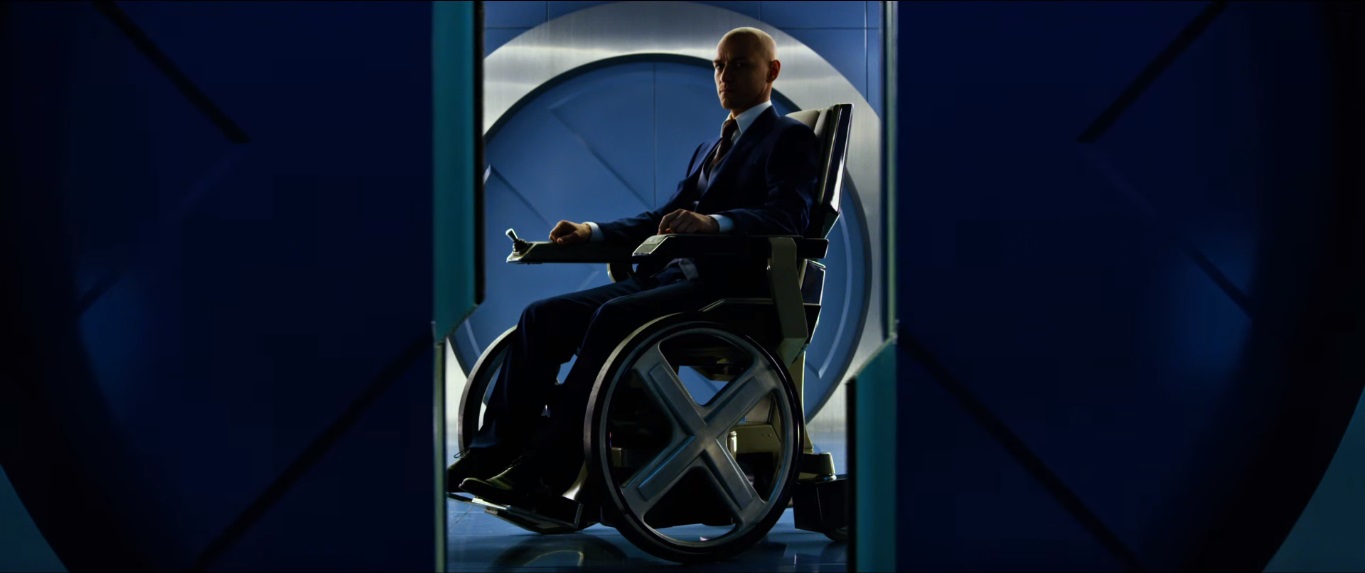
It’s telling that the film works best when it focuses more on character. Sophie Turner does a pretty decent job as Jean Grey, despite not being given masses to work with. James McAvoy enjoys the best storyline, of a Charles who has lost his way slightly and been seduced by fame – but deep down is still the humane, caring and loving character he has always been. It’s a new light to see the character in.

I think the main problem with this film is its lack of anything really original other than the odd beat like that. Everything as been seen before and, like X-Men Apocalypse despite the world-shaking events everything feels a bit rushed and lacking impact. Dark Phoenix is a decent enough entry into a long-running franchise and doesn’t short change you of the sort of thing you’d expect from an X-Men film. But that’s really it’s a problem. It’s a solid, average, okay entry into a long-running franchise but not the final hurrah the series needed to go out on an earth-shattering high.

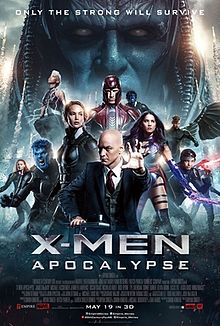
X-Men Apocalypse (2016)

Oscar Isaac destroys something else (again) in misfire X-Men Apocalypse

Director: Bryan Singer

Cast: James McAvoy (Charles Xavier/Professor X), Michael Fassbender (Erik Lehnsherr/Magneto), Jennifer Lawrence (Raven/Mystique), Oscar Isaac (Apocalypse), Nicholas Hoult (Hank McCoy/Beast), Rose Byrne (Moira MacTaggert), Evan Peters (Peter Maximoff/Quicksilver), Tye Sheridan (Scott Summers/Cyclops), Sophie Turner (Jean Grey), Olivia Munn (Psylocke), Kodi Smit-McPhee (Kurt Wagner/Nightcrawler), Alexander Shipp (Ororo Monroe/Storm), Lucas Till (Alex Summers/Havoc), Josh Helman (Colonel William Stryker), Ben Hardy (Angel)

Where do you go with a franchise when you are on at least your second timeline (maybe more, who knows?) and earth-shattering destruction has been done so many times before? At one point in this movie, our young heroes head to the cinema to watch Return of the Jedi – with a genre savvy conversation following on whether the third film in a franchise is always the worst. You’d like to think if you were going to pop such a hostage to fortune in the third film of your franchise, then you’d be busting guts to make this film as stand-out as possible. Doesn’t happen.

It’s 1983. Charles (James McAvoy) is still running his school with Hank (Nicholas Hoult). Raven/Mystique (Jennifer Lawrence – looking for every single second as if she is only there by contractual obligation) is saving mutants left, right and centre on the underground. Magneto (Michael Fassbender) is living incognito in Germany with a wife and daughter. All that is about to be thrown into chaos when Apocalypse (Oscar Isaac, trying his very best to make an impression under piles of make-up), the very first mutant, rises from imprisonment after thousands of years. The most powerful mutant in history, he decides the world is ripe and ready for the taking.

In X-Men: Apocalypse, not only is more not more, but the film churns out emotional character and relationship beats, covered to exhaustion in other movies. One glance at Magneto’s family and anyone who has ever seen a movie is going to know they are not long for this world. Raven and Charles no sooner appear in the same frame than you know the two of them are going to struggle to reconcile their past with their different viewpoints. We’ve seen it all before – and you feel, in the slightly disengaged performances, that the cast have had enough as well. Even Apocalypse, for all his world-altering power, basically has the same agenda as every mutant villain this franchise has ever had before: Mutant Superiority. 

Around these familiar plot beats, we get action that also feels culled from before. The film culminates in such earth-shattering destruction you really feel it should be more exciting, but instead it feels tediously familiar. How many times have we seen cities devastated like this? It’s such a cliché that the millions of people who must have died in the planet-wide obliteration that consumes the final third of the film don’t even merit a mention. It’s like the world treats this global destruction with the same meh that you feel a number of the film’s viewers do. 

But then the whole film has a weary sense of inevitability about it, of going through the motions. The plot makes little or no sense. Apocalypse is awoken by a cult we never hear from again, the whole film takes place in a few days, barely enough time to build up any sense of peril – but also somehow too short a time for the vast number of comings-together of different characters to feel natural. Characters from past films are thrown in willy-nilly, often for no real reason. So from the first scene we have Moira MacTaggert and Havoc back from the first film, then Quicksilver is back to repeat his bullet-time action from Days of Future Past (saying that, this sequence, as Quicksilver rushes to save people from an exploding mansion to the tune of Sweet Dreams, is the most vibrantly enjoyable moment in the film). We even get Stryker back, a character who becomes more and more of a cartoony villainous idiot each time he appears.

In between these points, the film frequently misses its beats. Apocalypse’s assembled group of mutant followers are assembled with such casual indifference (Apocalypse basically seems to pick up the first four mutants he meets) that their characters and motivations barely register. Obviously we know Storm is destined to be a goodie, so we get a few seconds of establishment that she is basically a goodie. Magneto gets his painfully predictable backstory (Michael Fassbender is by the way totally wasted in this movie, forced to repeat the same notes over and over again from the last two films). The other two barely make an impression – other than perhaps Olivia Munn’s unbelievably fanservice costume.

But it also makes more serious errors. A hideously distasteful moment sees Magneto destroy the whole of Auschwitz in a rage. There is, quite frankly, something more than a little stomach turning about the site of a real atrocity – where millions died – being blown away on screen like any other major landmark. Even more disgusting to have it serve as a shallow, over-exploited “he feels pain because he was in the Holocaust” moment. Other times in this series this link has worked – here it manifestly doesn’t.

About the only thing that really works here is the darker interpretation of Charles – McAvoy making it clear that events have made Xavier far more willing to go to dangerous ends to protect his family – and there is a neat replay of the first conversation between Xavier and Magneto from the very first film in the franchise, with the stresses all changed to show that their positions have developed in a far different way in this new timeline. But that’s the only real moment that feels new.

But I’ve still got a certain affection for these X-Men movies, and this isn’t the worst one they’ve ever made (that’s always going to be X-Men Origins: Wolverine), but it’s up there. It somehow doesn’t feel special, more like a film that had to be made for legal and financial reasons, rather than because there seemed like a decent story to be told, or something unique to be said. The rushed plot and lack of engaging characters make more sense when you think about it like that. It’s nothing special at all, and seems to pass in front of your eyes and then just as quickly out of your memory.