Tag: Joan Crawford

Grand Hotel (1932)

Grand Hotel (1932)

A hotel has an all-star check-in desk in this Best Picture winning drama

Director: Edmund Goulding

Cast: Greta Garbo (Grusinskaya), John Barrymore (Baron Felix von Gaigern), Joan Crawford (Flaemmchen), Wallace Beery (General Director Preysing), Lionel Barrymore (Otto Kringelein), Lewis Stone (Dr Otternschlag), Jean Hersholt (Head Porter Senf), Morgan Wallace (Chauffeur)
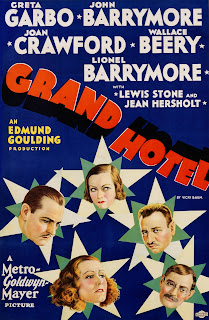
Grand Hotel: “People coming, going. Nothing ever happens”. Of course, despite those opening remarks by war-scarred veteran and permanent resident Dr Otternschlag (Lewis Stone), nothing could be further from the truth. In this, one of the first “All-Star-Extravaganzas” (every MGM mega-star in one movie!) the eponymous Berlin hotel is the host to an ocean of drama over the course of one twenty-four hour period. Scooping an Oscar for Best Picture (setting a surely-never-to-be-equalled record of being the only Best Picture winner to only be nominated in that category), Grand Hotel was a huge hit, and great-big-old-fashioned soapy fun.

Confidently directed by Edmund Goulding, the film threads together its plots very effectively, moving smoothly from star-to-star. The five stars take up nearly 90% of the dialogue just by themselves (with all those egos there wasn’t time for anyone else to have so much as a line) but what stars: three then-and-future Oscar winners and two legends in John Barrymore and Garbo.

Each of them has more than enough to sink their teeth into. Garbo is a maudlin ballerina, teetering on the edge of depression, who falls in love with Raffles-like jewellery thief Baron von Gaigern (John Barrymore). The penniless Baron – who steals to live – befriends Otto Kringelein (Lionel Barrymore), a deceptively spry old-man, suffering from a terminal disease and using his savings to see how the other half lives. Kringelein’s former employer Preysing (Wallace Beery) is desperately trying to negotiate a merger to save his job. His stenographer is would-be-actress-part-time-glamour-model Flaemmchen (Joan Crawford), who is flirting with the Baron and also befriends Kringelein. Inevitalby there are life-changing consequences.

If you are a sucker for grand, soapy, old-fashioned drama like this, you’ll find much to enjoy in Grand Hotel. The plots it peddles were pretty cliched and predictable even then, but they are delivered by a series of stars at the top of the game who invest the film with every inch of their glamour. They make the hodge-podge of stories work rather well, and the film even manages to pull out a late shock death that’s genuinely a surprise, both in its suddenness and brutality.

But then Grand Hotel is a pre-code film, so it’s not afraid to acknowledge sex exists and violence has nasty consequences. Crawford’s Flaemmchen is a confirmed flirt, not ashamed to accept an invitation to an ‘adjoining’ room with Preysing to secure her job. Neither is the supremely sexy Crawford (light, winning and possibly the best thing in the film) afraid to all but proposition the Baron. Not surprisingly Crawford was worried more censorious States would cut large parts of her role (she was right). But sex still runs through Grand Hotel: the Baron creeps into Grusinskaya’s room to rob her, and ends up sharing the night (and certainly not in separate beds).

As Grusinskaya, Greta Garbo gets possibly her most iconic line (“I want to be alone”) though her matinee idol pose-striking at times more than a little artificial today. However, what does come across is the power of her personality as a performer (like Marlene Dietrich at this time, there is something utterly fascinating about her). In other hands, the role (with its pity-me dialogue giving way to flashes of youthful, passionate abandon) would look a bit silly, but Garbo makes the whole thing work though force of personality alone.

She’s well matched with John Barrymore at the height of his powers as America’s greatest actor. Barrymore has a matinee idol swishness here, a relaxed romanticism that always makes us sympathise with him, even though he’s a self-confessed liar, cheat and thief. This gentlemen thief may be penniless, but he’s far from ruthless: he treats Kringelein with respect, is genuine in his feelings for Grusinskaya (although his repeated assurances that he will definitely make it the train station to meet her tomorrow is enough of a flag that something is bound to go wrong) and despises the bullying Preysing.

As Preysing, Wallace Beery plays the only unsympathetic character (naturally, despite the film’s German setting, he’s the only one with a Teutonic accent) with a bravado that dances just-this-side of OTT. By contrast, Lionel Barrymore (brother to John – and its very nice seeing these two play so many scenes together) is the film’s heart as a sweet, gentle and endearing old man who is just delighted to be living the dream, even if only for a few days.

It’s all shot in a revolutionary 360° set. The hotel foyer, where the film opens, was one of the first completely constructed sets (many films before constructed their sets like traditional proscenium theatre sets) and Goulding’s camera takes advantage of this in the opening sequence by moving fluidly in a series of long takes that introduces each character and sees them first interacting with each other. There are some other striking images, including a Jason Bourneish wall climb John Barrymore’s Baron carries out to bridge the gap between one balcony and another – although many of the scenes in hotel rooms go for traditional straight-on set-ups.

The film is focused on being a grand entertainment – and, to be honest, little more. Perhaps that’s why, despite being set in Berlin in 1932, there is no mention of any events in the country at that time. Even more surprisingly, there is no mention of the depression – despite it surely being a major factor in Preysing’s desperation, the Baron’s loss of his wealth and Flaemmchen’s need for a job. But that would add weight to a film that wants a light, fun tone. Grand Hotel has inspired a legion of Mills and Boon style stories. It might look an odd Best Picture, but it’s had plenty of influence.
Whatever Happened to Baby Jane? (1962)

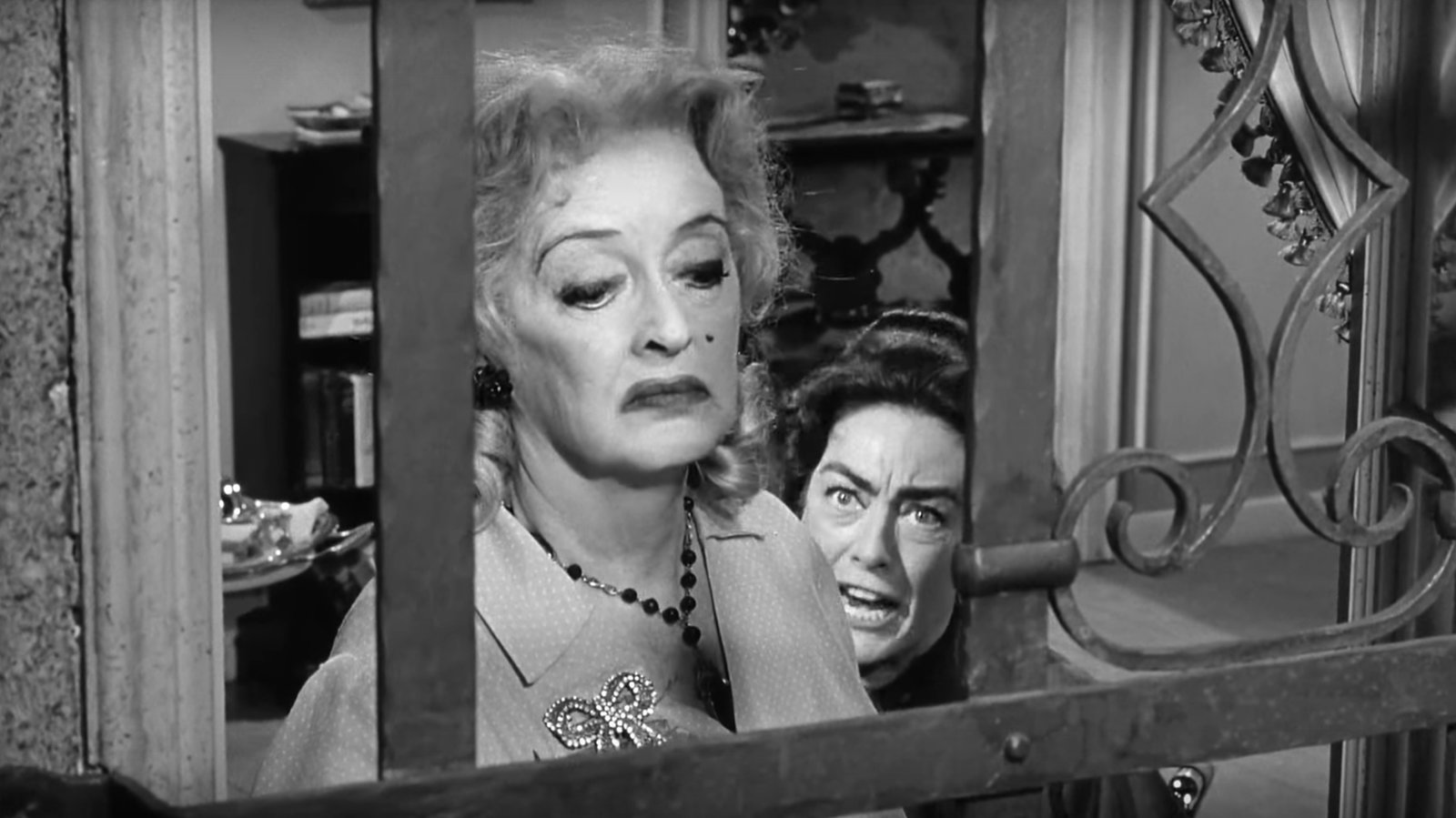
Bette Davis and Joan Crawford rant and rage in Whatever Happened to Baby Jane?

Director: Robert Aldrich

Cast: Bette Davis (Jane Hudson), Joan Crawford (Blanche Hudson), Victor Buono (Edwin Flagg), Marjorie Bennett (Dehlia Flagg), Maidie Norman (Elvira Stitt), Anna Lee (Mrs Bates), BD Merrill (Liza Bates)

Age isn’t kind on the careers of Hollywood actresses. Move into your 40s and the part offered quickly becomes “the grandmother”. It’s a fate that saw the careers of some of the greatest actresses of the Golden Years of Hollywood crash screeching to a halt. However, these actresses remained popular with many cinema goers. So it occurred to Robert Aldrich, why not throw a couple of them into the sort of roles that can riff on their careers and public images? Match that up with jumping on the bandwagon of films like Psycho and you could have a hit on your hands.

That’s what he got as well with Whatever Happened to Baby Jane. Jane Hudson (Bette Davis) is a former “infant phenomenon” on the stage, whose career fell apart as soon as she hit puberty. Her sister Blanche (Joan Crawford), on the other hand, grew up to have a promising career in Hollywood – which then collapsed when a late-night driving accident (which Baby Jane is widely believed to be responsible for) left her paralysed from the waist down. Now in middle age, Jane and Blanche live in domestic disharmony, Blanche trapped upstairs at the mercy of Baby Jane, whose longing to rebuild her career sees her head down an ever steeper spiral of insanity.

Whatever Happened to Baby Jane started a new genre in Hollywood – the freak hag-horror or psycho-biddy genre (those names alone show that at its heart this genre was basically demeaning) which saw Hollywood Grande Dames (frequently Davis and Crawford, though others got a look-in as well) parley their reputations into ever more formulaic riffs. Films like this quickly became cult viewing. Their extremes of make-up and performance, matched with the arch camp of the leading ladies hamming it up, made the genre extremely popular – and left films like Whatever Happened… far more fondly remembered than they deserve.

It’s popular to see Sunset Boulevard as a sort of precursor to this genre, a first try-out in taking an older era of Hollywood and turning it into a ghastly waxwork show. But Sunset still has affection  for what it shows (and above all captures the tragedy of the death of Silent Hollywood, treating its characters as people rather than freaks), while Whatever Happened has none, basically seeing the past as a parade of monsters, and these relics as waxworks to be mocked. There is no affection here for the past successes and glories of either star, instead we are invited to sit back and wonder at how far they might be willing to go to see bums on seats again. All of this to make money for the producers. Far from the art of Sunset Boulevard, this feels more like the exploitation of screen greats.

Although of course both stars were more than happy to get involved, even if they were less than happy working with each other. The background to the film, to be honest, often carries more interest than the very long, often slow, horror/black comedy during the film’s over-extended run time. Famously Davis and Crawford were long-standing rivals and their relationship over the course of making and promoting the film disintegrated into cheap one-upmanship and bitter recrimination. While the feud does probably give some edge to the screen antics, the very fact that it’s nearly the first thing people remember about the film probably tells you how memorable the actual experience is.

Davis throws herself into all this with creditable abandon. (She was Oscar nominated and Crawford wasn’t – although Crawford got the last laugh, having arranged on the night to collect the Oscar on behalf of eventual winner Anne Bancroft, performing on Broadway that night.) Davis designed the freakish but iconic look of Baby Jane, all painted face and little girl mannerisms, and her demented attempts to recreate her childhood act in her 50s (culminating in a bizarre and skin-crawling “Writing a Letter to Daddy” dance which was weird enough watching a 12 year old perform) can’t be faulted for commitment. Davis also manages to invest the bullying and cruel Jane with a deep sense of loss, regret and guilt (for her sister’s accident) that frequently bubbles over into resentment. It’s certainly a larger-than-life performance and Davis frequently dominates the film, even if the role is basically a cartoon invested with Davis’ own grace and glamour.

It doesn’t leave much for Crawford, whose Blanche is frequently left with the more po-faced, dull and reactive lines. Crawford doesn’t often make Blanche as sympathetic as you feel she should be – although the part plays into one of her strong suits of playing the martyr – and the film saddles her with a late act twist that doesn’t have enough time and development to really make much sense. However again you can’t fault her commitment, either to screams or to a scene where she attempts to climb down the bannisters of the stairs from her trap on the upper floor, where the effort, strain and pain on Crawford’s face are astonishingly real.

Those stairs dominate many of the shots of Aldrich’s serviceable and efficient direction – although he lacks any sense of the mix of cruel poetry and dynamite sensationalism that Hitchcock bought to similar material in Psycho. But it works nicely to give a sense of Blanche’s confinement and as a visual metaphor for the trap the house feels like. Aldrich also throws in a couple of other decent flourishes, not least as Davis’ lounge turns into a proscenium stage as she imagines returning to the big time.

But the film itself is, despite it all, lacking in any sense of kindness or warmth really for either its stars or old Hollywood. We are instead invited to gasp at them in horror, while the film drags on at great lengths, stretching a very thin plot (barely a novella) into over two hours of screen time. There are effective moments, but it’s a film that seems barely serviceable today.

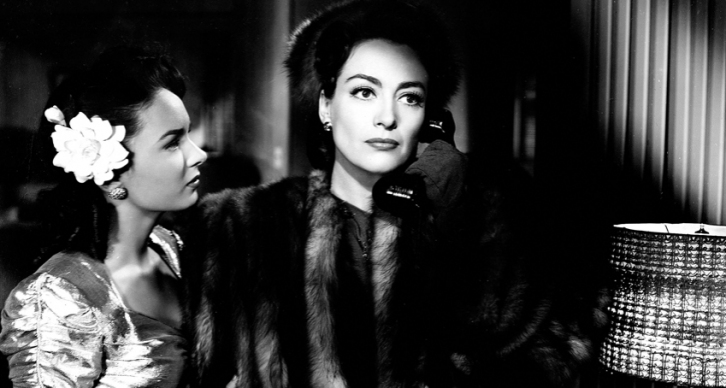
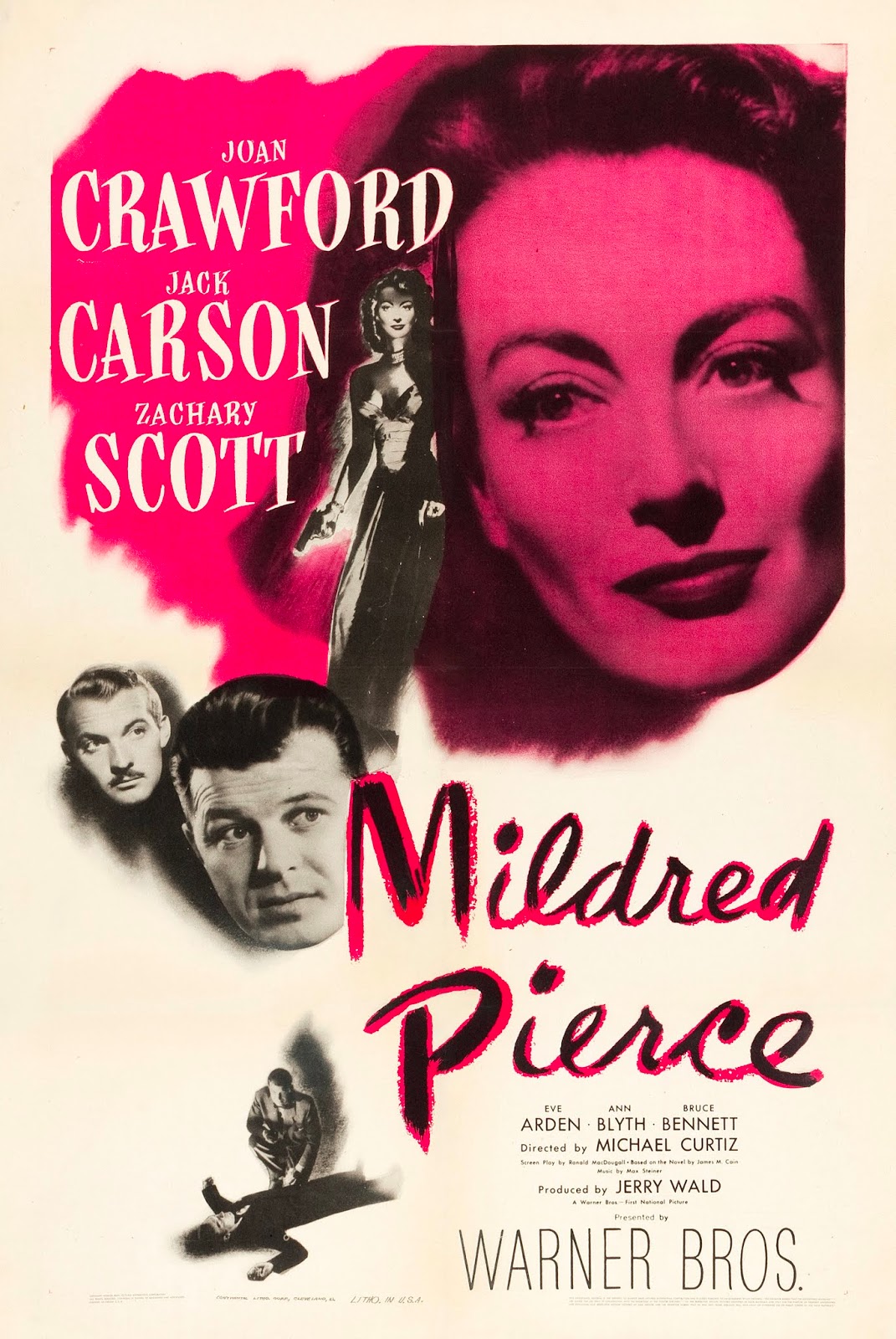
Mildred Pierce (1945)

Joan Crawford sacrifices everything for a daughter who doesn’t deserve it in Mildred Pierce

Director: Michael Curtiz

Cast: Joan Crawford (Mildred Pierce), Jack Carson (Wally Fay), Zachary Scott (Monte Beragon), Eve Arden (Ida Corwin), Ann Blyth (Veda Pierce), Bruce Bennett (Bert Pierce), Butterfly McQueen (Lottie), Lee Patrick (Mrs Maggie Biederhoff), Moroni Olsen (Inspector Peterson)

There are few things that classic Hollywood did quite as well as a melodrama. Adapted loosely from a James M Cain novel – its murder plot line is a flourish solely for the screen – this is a triumphantly entertaining picture that mixes themes of sex and class with good old-fashioned family drama. It’s got psychology and it’s also got the high-concept family feuding around the building of a restaurant business that you could find in Dynasty. Put simply, Mildred Pierce is a prime slice of entertainment.

After her second husband Monte (Zachary Scott) is shot dead, Mildred Pierce (Joan Crawford) is brought in by the police for questioning. After the collapse of her first marriage to Bert (Bruce Bennett), Mildred has expanded her home-baking business into a full restaurant chain, with the support of Bert’s old business partner Wally Fay (Jack Carson). Mildred’s goal is to provide for all the needs of her eldest child Veda (Ann Blyth), a selfish snob who despises her mother for having to work for a living. The tensions between self-sacrificing mother and demanding, unloving daughter, lead Mildred to take a series of disastrous personal and business decisions, culminating in her wastrel, upper-class, Veda-approved, second husband Monte going down in a hail of bullets. But who pulled the trigger?

The murder mystery plotline adds effective spice to this very well directed (Michael Curtiz is at the top of his game) melodrama. Full of domestic thrills and spills, it races along like a combination page-turner and soap, perfectly matching a deeply sympathetic, self-sacrificing heroine with a host of deeply unsympathetic wasters, chancers and bullies. It’s capped by giving our heroine possibly the least sympathetic child in film history, the deliberately selfish and greedy Veda. 

Sure you could argue that its psychology is either pretty lightly developed, or thrown in only for effect. It’s never clear when or why exactly Veda and Mildred’s relationship went south so completely, or where Veda’s deep resentment and ideas above her station come from. It also avoids looking at how Mildred’s complete devotion has probably completely spoiled a child who clearly needed to be told “no” a lot more, a lot sooner. But it doesn’t really matter as the film follows the logic of an event-filled plot-boiler, throwing revelations and cliff-hangers at you left, right and centre.

In the lead, Joan Crawford took on a role that many had turned down before her – stars at the time were not keen to be seen playing roles that suggested they were old enough to have mothered children as old as Ann Blyth. The decision to push for the role paid off as she netted an Oscar and it’s the finest performance of her career. A somewhat haughty actress, Crawford here demonstrates depths of vulnerability and tenderness as a much-put upon woman who, despite everything, will stop at nothing to give her daughter what she wants. Crawford dominates the film, her air of self-sacrifice never once tipping over into self-pity, even as the character so desperately seeks for the sort of love and affection that is denied her from those around her. 

Around her most of the cast – with the exception of Eve Arden’s entertaining, wise-cracking best friend (Oscar nominated) – are basically a bunch of sharks. None sharper than Ann Blyth’s (also Oscar nominated) sweet-faced but dead-inside daughter. Rarely has a display of more naked grasping, snobbish disdain ever been captured on film, matched with unapologetic greed. Veda has no compunction about the moral consequences of her actions and, like Zachary Taylor’s archly lazy Monte, is as interested in spending Mildred’s money as she is contemptuous of its source. 

Curtiz’s film constantly however plays with our judgements and expectations of people. Veda has more than her share of moments of pain and vulnerability as she shares some of the more painful travails of her mother. Similarly, Wally Fay (very well played by a roguish Jack Carson) oscillates between being a trusted confidante of Mildred, and a lascivious greedy creep. First husband Bert (a somewhat dry Bruce Bennett) starts as a love rat but may have more decency about him than anyone else (except Mildred).

The film is wonderfully shot in luscious black-and-white by Ernest Haller, in a dynamic noirish style. Water reflections lap across ceilings. Smoke from fires and cigarettes rises up and seems to dance and swirl in the light. There are some beautiful shots of faces – the camera work in particular perfectly locates a vulnerability in Crawford’s superior features – and there is a beautiful shot late on when two people caught in an illicit kiss roll their heads back from the shadows to emerge into the light. The entire design of the film is spot-on, and it looks and sounds fabulous today.

Mildred’s struggles make this a brilliant example of the stereotypical “women’s picture”, a tale of a woman struggling against all the odds to make her way in the world, with the twist that the daughter she is straining to support is a monster and the men she chases are feckless wasters. Mildred makes chronically terrible decisions throughout but for the best of motives – and part of the film’s appeal is that you are so invested in her fundamental decency you are willing her not to make the same mistakes again and again.

Curtiz’s melodrama is brilliantly enjoyable and never lets up. It’s also a feminist icon of a sort – Mildred is never punished for having a career, indeed she’s celebrated for it (and is far more savvy about it than nearly all the men). She leaves her husband, runs her own household, pushes for her own divorce all while protecting and providing for her child (not her fault the child ain’t worth it). Mildred Pierce is ahead of its time, and still a fabulously entertaining film.