Tag: John Payne

Dodsworth (1936)

Dodsworth (1936)

A marriage disintegrates in this richly mature, non-judgemental film one of the best of the decade

Director: William Wyler

Cast: Walter Huston (Sam Dodsworth), Ruth Chatterton (Fran Dodsworth), Paul Lukas (Arnold Iselin), Mary Astor (Edith Cortright), David Niven (Captain Lockert), Gregory Gaye (Kurt von Obersdorf), Maria Ouspenskaya (Baroness von Oversdorf), Odette Myrtil (Renée de Penable), Spring Byrington (Matey Pearson), Harlan Briggs (Tubby Pearson), Kathryn Marlowe (Emily), John Payne (Harry)

Marriage is tricky. In the hustle and bustle of everyday life, bringing up a family, running a business and rushing between social events, what if you don’t notice you don’t have much left in common? That’s the theme of Dodsworth, one of the most strikingly modern of 1930s films, that tackles the breakdown of a marriage in a surprising subtle way, avoiding the sort of moral punishment and condemnation you’d expect from the production code. Combined with sharp writing, fine acting and some fluidly creative direction from William Wyler, and you have an overlooked classic.

Dodsworth kicks off with the retirement of car entrepreneur Sam Dodsworth (Walter Huston). Having sold his successful independent factory to a major business, Sam is now effectively retired and suggests that he and his wife Fran (Ruth Chatterton) take that trip to Europe they’d always discussed but never had time to do. The trip, however, starts to reveal fractures in their relationship. Fran isn’t ready to ‘rush towards old age’ like she feels Sam, with his touristy longings and interest in engineering mechanics is. She wants to be part of society and feel the excitement of flirtations (and more) with rakeish European types (from David Niven to Paul Lukas to Gregory Gaye), while Sam ticks off the sites and sits in cafés. Sam, it turns out, has far more in common with Naples-ex-pat Edith (Mary Astor) – but feels duty bound to do whatever he can to preserve his marriage with Fran.

It’s all adapted from Sinclair Lewis’ doorstop novel, skilfully boiled down into a clear dramatic journey by Sidney Howard, from his own theatre adaptation (which also starred Huston). It becomes both slightly sad, watching two people drift apart, while also offering rich vestiges of hope of what the future can hold if you dare to take a chance. It mixes this with dry wit, scenes of compelling narrative interest and an insightful look at two people effectively going through different types of life crisis during a ‘once in a lifetime’ journey. Because nothing can disrupt your thinking about your own life more than changing nearly everything about it in one swift barrage of events.

It’s assembled into a richly involving whole by William Wyler, who lands the film just the right side of melodrama. From the opening shot, tracking towards Sam’s back as he leans against a window looking out over the factory which gave his life meaning, there is a quiet air of its characters living in denial of their own melancholy. Part of Sam is already wondering what on earth he’s going to do without his factory – its why he immerses himself in the most banal details of the sights they will see in Europe, or the engineering of their cruise ship.

Sam feels his journey will give him new opportunities, but it often sees him uncertain and slightly adrift, from not knowing how to tip waiters to finding his mid-Western mindset unable to compute the sexually liberal rules of European high society. Fran claims the journey abroad will mean leaving behind the oppressive parade of the over familiar social scene in their small town. It quickly turns out, she’s only be bored of their small circle not the glamour of social events.
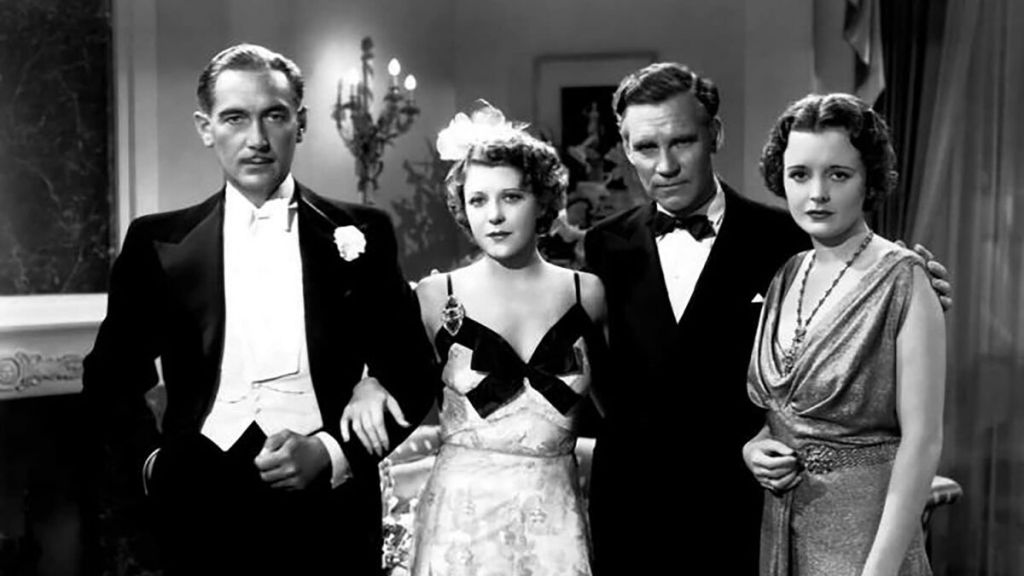
Sam is played with real skill and under-played grace by Walter Huston in one of his finest performances. He’s an overwhelmingly decent man, self-made, confident but hesitant and uncertain out of his element. There’s a fuddy-duddy quality to him you can understand Fran finding grating, but he’s also capable of genuine, unfiltered enthusiasm (watch his joyful spotting of a famous lighthouse during their journey – which hilariously he nearly misses while checking his watch – and the eagerness which he tries to share this with an irritated Fran and a politely bored Niven). What’s superb about Huston’s performance is the awkwardness, shyness and even timidity he brings to a successful man, the quiet air of confused anxiety behind Sam as his certainties melt away.

Both Sam and Fran are convinced everything between them is fine, constantly speaking (increasingly dutifully) about their love, as if trying to convince each other even as it starts to fall apart. Their home already feels invaded by their daughter and her husband, who absent-mindedly serves himself drinks from Sam’s cabinet. They’re in completely different mindsets. Fran is constantly embarrassed by her husband’s tendency to hickness. Sam feels Fran’s upper-class ‘friends’ wouldn’t look twice at her without the cash she can flash. Fran is horrified by Sam’s whimsical statement that they will soon ‘be a couple of old Grandparents’. She’s young at heart, being wooed and won’t give that up.

From a ship-bound flirtation with David Niven’s suave playboy where she seems shocked at his implication that they can take things further (Sam doesn’t help by telling her she only has herself to blame), she swiftly begins an all-but-open affair with Paul Lukas’ smooth gentleman (with Sam turning an embarrassed third-wheel blind eye) even sending Sam home to extend her holiday privately, while he fields awkward questions from their family and re-directs his inner fury at his public cuckolding into grumpy rants about other’s scrabble games covering his desk and fussily reaching for his Encyclopaedia to prove trivial discussion points.

By the time Ruth has convinced herself divorce will lead, inevitably, to a glorious new marriage with much younger aristocrat Gregory Gaye, she’s at the centre of an increasingly delusional mid-life crisis, full of false claims about her age and built on fantasies. Ruth Chatterton is very good, neatly bringing to life a woman who can’t face the idea of becoming old. The film (while siding with Sam) never fully condemns her for her behaviour – even if it maintains an American suspicion of her wealthy European upper classes. In fact, it’s very hard not to feel sorry for Fran when her lover’s mother (played by an imperiously shrewd Oscar-nominated Maria Ouspenskaya) punctures her delusions about the likely future of a relationship with her feckless son.

It’s all beautifully framed by Wyler. How can you not admire the lingering shot of Fran reading a telegram from Sam and letting Lukas’ Iselin set fire to it, the camera following the paper as the wind blows it across the balcony floor to disintegrate like the Dodsworth marriage? Dodsworth is full of such beautifully subtle moments, its imagery (and Oscar winning sets) wonderfully establishing a world in transit as much as the Dodsworths. Wyler also evens the score at points: Sam remains largely sympathetic, but its possible to be irritated by his naïve dullness, just while the frequently infuriating Fran is relatable in tragic fear that her life is behind her.

It’s this mature view of people drifting apart, making mistakes and not always being condemned that makes Dodsworth such a richly intelligent film. Sam would certainly by more happy with Edith (a very moving performance from Mary Astor), just as Fran would be better off without Sam. Dodsworth is largely refreshingly free of the sort of Puritan punishments other films dealing with similar themes would use under the Production Code. Instead Dodsworth is a superbly acted, directed and written melodrama with a serious tone that remains richly rewarding viewing.
The Razor’s Edge (1946)

The Razor’s Edge (1946)

A bubbling soap full of incidents, disguising itself as a meditation on philosophy

Director: Edmund Goulding

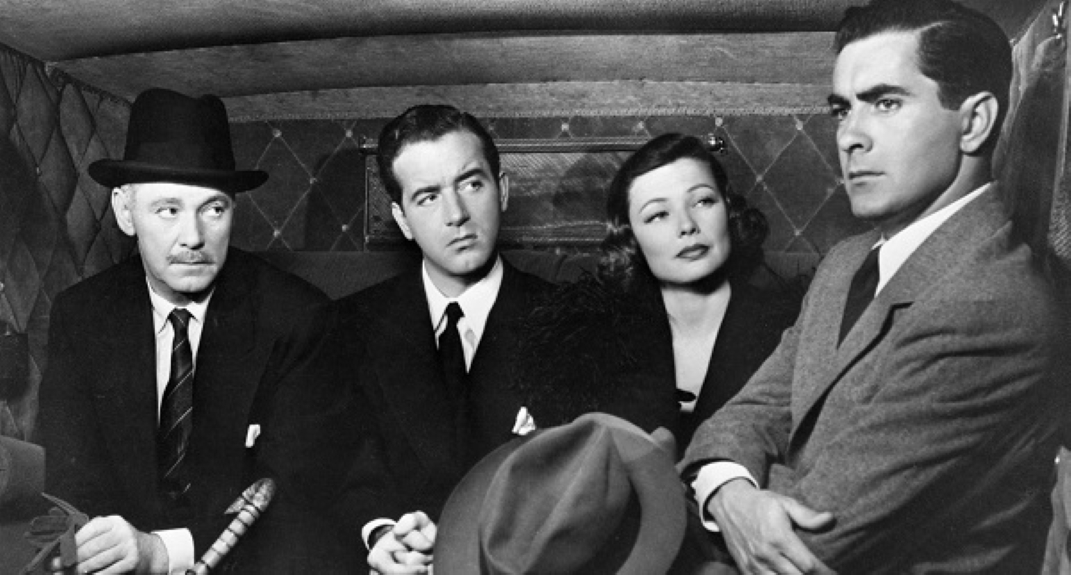
Cast: Tyrone Power (Larry Darrell), Gene Tierney (Isabel Bradley), John Payne (Gray Maturin), Anne Baxter (Sophie MacDonald), Clifton Webb (Elliott Templeton), Herbert Marshall (W Somerset Maughm), Lucile Watson (Louisa Bradley), Frank Latimore (Bob MacDonald), Elsa Lanchester (Miss Keith), Cecil Humphreys (Holy Man), Fritz Korner (Kosti)

“What’s it all about?”: a question asked long before Alfie and it’s the one asked by Larry Darrell (Tyrone Power) as he returns from World War One to Chicago. Suddenly those garden parties and country clubs all look rather empty and shallow. Larry is engaged to Isabel (Gene Tierney), but he’s not interested in office work and domesticity. He wants to live a little bit, to find out what life is about. Doesn’t he owe that to the man who died in the war to save his life? With just $3k a year (over $50k today, which must help), he heads for the artistic life in Paris. After a year apart, Isabel decides it’s for her (£3k a year? What kind of life is that!) and marries a banker so dull he’s literally named Gray (John Payne). Flash forward to 1929 and the Crash has upturned the lives of the Chicago bourgeoisie – perhaps Larry’s inner contentment will mean more after all?

Adapted from W Somerset Maugham’s novel – with Maugham as a character, played by the unflappably debonair Herbert Marshall – The Razor’s Edge is a luscious period piece with pretentions at intellectualism but, rather like Maugham, is really a sort of a soapy plot-boiler with a veneer of cod-philosophy. Not that there’s anything wrong with that – after all the suds in Razor’s Edge are frequently rather pleasant to relax in – but don’t kid yourself that we are watching a thoughtful piece of cinema. It’s closer in tone to Goulding’s Oscar-winning Grand Hotel than it might care to admit.

Our hero, Larry Darrell, should be a sort of warrior-poet, but to be honest he’s a bit of a self-important bore. Played with try-hard energy by a Tyrone Power desperate to be seen as a proper actor rather than action star, Larry has a blissful “water off a duck’s back” air that sees him meet calamity with a wistful smile and the knowledge that providence evens everything out. Be it the break-up of an engagement or the death of close friend, little fazes Larry who has a mantra or piece of spiritualist advice for every occasion. Bluntly, our hero is a bit of a prig whose middle-class spirituality has all the mystical wisdom of a collection of fortune cookies.

It’s no real surprise that the film’s weakest parts are whenever Larry engages with the vaguely defined collection of homilies and mumbo-jumbo he picks up about spirituality. All this culminates in an almost embarrassingly bad sequence in the Himalayas, where Larry stays under the clichéd tutelage of a shoe-polish-covered Cecil Humphrey as a Holy Man whose every utterance is a vague collection of Diet Yoda aphorisms. Larry, with all the self-importance of the financially secure middle class, returns to the West sublimely certain of his own higher contentment and rather patronisingly looking down on the rest of the characters as shallow, grasping bourgeoisie.

The Razor’s Edge’s insight into human spirituality essentially boils down to “step out of the rat race and you’ll be a better man” – again made much easier, since Larry “forsakes” worldly wealth but can still dapperly turn out to a fancy function in a perfect tux. To be honest it becomes a bit wearing to see the other characters treat him like a sage and more than a bit mystifying why Isabel remains stubbornly obsessed with him for her whole life.

But if she wasn’t, we’d lose a large chunk of the appeal of the movie. The Razor’s Edge’s philosophy may be paper thin, but as a soap it’s spot on. And the scheming, manipulative, vindictive, snobby and entitled Isabel is a gift of a part, seized with relish by Gene Tierney. Isabel wants Larry, not so much because of who he is but because he belongs to her, and she can’t believe he was willing to let her jilt him without a fight. The epitome of the self-obsession of the modern age that Larry has rejected, Isabel consistently puts herself first, clings to the luxuries of high living and can barely hide her bored disinterest in the tedious Gray (a perfect role for the solid but uninspiring John Payne). Isabel schemes and attempts seduction of the saintly Larry, and her hissable antics provides The Razor’s Edge with much of its enjoyable thrust.

Because as a soap is where this film is most happy. It’s actually very well staged and shot by Goulding, full of carefully considered camera moves (including a late “wham” line which we don’t see a character react to, leaving their response open to our interpretation) and skilfully using depth of plain to showcase a series of luscious sets and impressively recreated Parisian streets on sound stages. The Razor’s Edge has a lot of very professional Hollywood craft behind it.

Its event-filled sub plots also give a host of excellent scenes and fun dialogue to its supporting cast. Anne Baxter won an Oscar as the tragic Sophie, a bubbly socialite (and old flame of Larry’s) from Chicago, whose husband and baby are killed in a car accident, tipping her into years of alcoholism and (it’s implied) life as a “good-time-girl” in a seedy Parisian bar. Baxter seizes this role for what it’s worth, from initial charming naivety to tear-streaked discovery of her bereavement to fidgety attempts at sobriety after Larry decides to marry her to keep her on the straight-and-narrow (needless to stay, temptation is put in the way of the pacing, smoking, fist-forming Sophie by the blithely shameless Isabel). It’s a very effective and sympathetic performance.

Clifton Webb, at the time Hollywood’s leading waspish figure of camp, has an Oscar-nominated whale of a time as Elliot Templeton, preening but generous socialite, delighting the finer things in life (from fine wines to perfectly stitched dressing gowns) who provides a catty sounding board to Isabel and whose final hours are spent bemoaning being snubbed by a countess. Herbert Marshall delivers a perfect slice of British reserve and gently arch commentary as Maugham (the real Maugham prepared a script which was junked by the studio, ending his Hollywood career there and then), purring his dialogue with his rich, velvet tones.

It serves to remind you that The Razor’s Edge works best as an event-packed piece of social drama, which it swiftly becomes as deaths, tragedy, alcoholism, scheming and feuds pile on top of each other in the second half with the blissful Larry casting a quietly judgemental but kind eye over everything around him. For all its attempts to look into the human condition, this is where The Razor’s Edge is at its best: engaging supporting characters and a hissable villain, all leading to a series of juicy plot developments. For all its literary pretentions, it’s at best a shallow From Here to Eternity.

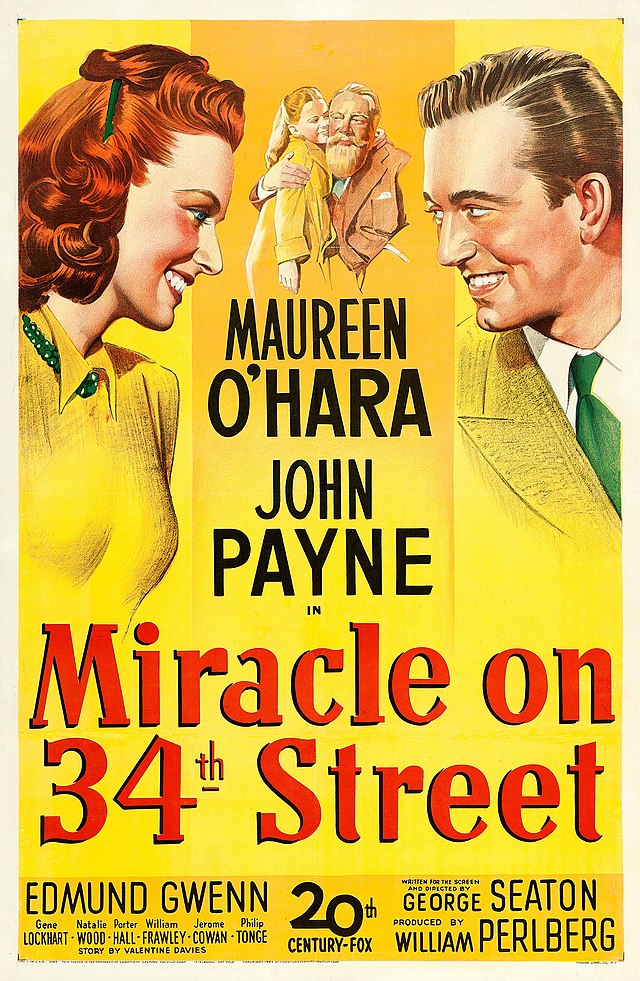
Miracle on 34th Street (1947)

Miracle on 34th Street (1947)

Warm Christmas fable will make you want to believe in Santa all over again

Director: George Seaton

Cast: Maureen O’Hara (Doris Walker), John Payne (Fred Gailey), Edmund Gwenn (Kris Kringle), Natalie Wood (Susan Walker), Gene Lockhart (Judge Henry X Harper), Porter Hall (Granville Sawyer), William Frawley (Charlie Halloran), Jerome Cowan (DA Thomas Mara), Philip Tonge (Julian Shellhammer), Henry Antrim (RH Macy), Thelma Ritter (Peter’s mother)

Santa Claus is a sweet little story we were told as kids, all part of buying into the magic of Christmas. How can we have been so silly as to think a jolly fat man with a red coat and flying reindeer delivered our Christmas presents? It’s the sort of fantasy adults are primed to burst like an over-inflated balloon. As a tribute to the earnest joy of believing in childish things, Miracle on 34th Street should also be the sort of thing the adult in us can’t wait to mock. Instead, its warmth and good-natured sweetness carries you along and makes you want to believe.

It’s the build-up to Christmas, and Macy’s in New York is working overtime to bring the magic to its customers (and turn a tidy profit). Macy’s Day Parade director Doris Walker (Maureen O’Hara) is relieved when Kris Kringle (Edmund Gwenn) takes the place of a drunken parade Santa and then occupies Santa’s Grotto in the store. Kringle is exactly the sort of guy you picture when you think of Santa – and, on top of that, claims to be Santa himself, much to the discomfort of Doris who doesn’t believe in all that stuff and certainly doesn’t want her daughter Susan (Natalie Wood) to. But when Kringle finds himself in court, fighting against being committed to an institution, with only Doris’ boyfriend Fred Gailey (John Payne) to defend him, can he prove there is a Santa Claus and it’s him?

Seaton’s film is an adorable delight which is funny and good-natured enough to avoid the trapdoor of sickly sentimentality. It’s a film about adults getting back in touch with the giddy delight of believing childish things. It flags up every cynical objection – and then gently suggests we’d be happier forgetting them. After all, what’s the harm in allowing ourselves in a few harmless flights of fancy – why should everything be measurable? Kris Kringle comes up against the hard-headed: harried mothers, businessmen, judges and lawyers and wins them over with his genuineness and warmth. He makes people want to believe – and doesn’t that, in a way, make him Santa?

It helps a huge amount that Edmund Gwenn is perfectly cast. Piling on the pounds and facial hair, Gwenn looks the part but also is the part. His performance is kind, considerate and bursting with warmth and good cheer. In a performance full of light, unforced playfulness, Gwenn gets the level of sweetness just right. A squeeze or two more and you would choke on the schmaltz of the whole conceit: but Gwenn is so adorable the audience wants to believe in him as much as the characters.

Especially as this Santa melts some of the cold commercialism of our modern Christmas. Miracle on 34th Street has a lot of good-natured fun at how Kris confounds the latent money-making of Christmas. On hire he’s instructed to memorise a list of preferred products to push on children. Instead he points mothers towards competing stores where they can get the exact gift they want or pick up better quality goods than at Macy’s. Of course, the concept proves so popular with customers that RH Macy is confounded by the goodwill it creates in his customers (and the huge sales it will lead to from their loyalty). Even other department stores start doing the same.

It’s one of the recurrent themes of the film: Kris brings out the best in people. Maybe not always for the right reasons: the shop-owners who want money, the judge who wants re-election. But it shows what benefit a little bit of good can have in the world. Kris also shows how little touches of consideration can change lives. There is a truly heart-warming moment where Kringle meets a Dutch orphan who simply wanted to meet Santa – although her adopted mother warned her Santa can’t speak Dutch. Much to her surprise, Kris launches into fluent Dutch, to the delight of the child. Miracle on 34 Street has several moments where the unstudied delight of children is captured to great effect, not least Natalie Wood’s delighted response to discovering the reality of Kringle’s beard (it also, to be fair, has several fairly cloying child actors).

Eventually the forces of darkness – led by Porter Hall’s twitch-laden store “psychologist”, whose bullying self-importance makes him the only person Kringle dislikes – insist we all put away childish things and chuck Kringle in an asylum. Miracle on 34th Street segues into a Capra-esque court-room drama (it’s hard not to detect touches of Mr Deeds Goes to Town) which pits Kringle’s home-spun honesty against legal cold professionalism. The clash becomes a delightful headache, as both the Judge and DA confront outraged children at home who can’t believe they are putting Santa on trial. It’s a great gag: who wants to be the judge who rules categorically Santa does not exist?

Alongside these gently amusing courtroom shenanigans (with John Payne doing an excellent job as Kris’ inventive lawyer) the film balances an endearing domestic plot. There is the inevitable will-they-won’t-they between Payne and O’Hara (if there is a bit of slack you need to cut the film today, it’s in Fred’s pushy wooing of Doris, including corralling Susan). But also, can O’Hara’s all-business professional, who’s raised her daughter with a Gradgrindish obsession with facts, melt her heart and allow both of them to believe a little bit? O’Hara handles this softening with all the consummate skill of a gifted light-comedian, while Gwenn’s delightful interaction with Wood’s precocious Susan, keen to access a world of imagination she’s never really known, is perfectly done.

it becomes a film about the power of believing. In our modern age we become expected to only base decisions on cold hard facts. Doris has taught her daughter to doubt imagination as a weakness to protect her from disappointment in the world (she is after all divorced, quite daring for a 40s family drama). But its also made Susan less likely to invest in faith, to open herself up to hopes and dreams. Its recapturing the ability to believe in something and be enriched by it that becomes one of the film’s richest messages.

It would be incredibly easy to poke fun at the good-natured naivety of Miracle on 34th Street, where businessmen are money-focused-but-decent and lawyers are amiably ready to indulge Kris with a smile. But it’s a film that zeroes in on an in-built nostalgia for simpler times in all of us. We’ve all been little Susan, sitting in a car desperately wanting to believe in the magical. It’s a film that demonstrates the eventual emptiness of cynicism, encouraging the audience to just put all that aside for 90 minutes and remember what it was like to be a child again. Throw in with that Edmund Gwenn as the definitive Santa and it might just be one of the greatest Christmas films ever made.