Tag: Joseph Mazzello

The Social Network (2010)

Andrew Garfield and Jesse Eisenberg bring the making of Facebook to life in Fincher’s modern American classic

Director: David Fincher

Cast: Jesse Eisenberg (Mark Zuckerberg), Andrew Garfield (Eduardo Saverin), Justin Timberlake (Sean Parker), Armie Hammer (Cameron Winklevoss/Tyler Winklevoss), Max Minghella (Divya Narendra), Brenda Song (Christy Lee), Rashida Jones (Marilyn Delpy), Joseph Mazzello (Dustin Moskovitz), Rooney Mara (Erica Albright), John Getz (Sy), David Selby (Gage)
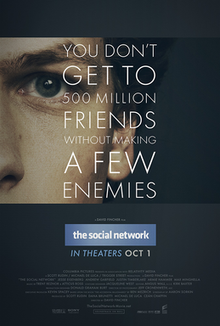
Nothing has changed our interaction with the world faster than the internet. And nothing on the internet has changed how we interact as much as social media. As it drives changes in the way we relate to other people, it’s a brave film that tries to capture this zeitgeist and turn it into an effective movie. The Social Network is a brave movie – and also a brilliant one, a defiantly modern and far-sighted movie that avoids being the sanctimonious message movie it could have become, by concentrating on personal relationships, drama and, above all, a strong and compelling story.

Its October 2003 and a 19-year old Harvard student Mark Zuckerberg (Jesse Eisenberg) gets dumped by his girlfriend Erica (Rooney Mara). So, he responds like many people today would – but not in 2003 – by writing a series of rude and angry blogs about her. And at the same time, he does something you and I wouldn’t be able to do – he builds overnight a campus website called Facemash that allows users to rate the attractiveness of female students. It’s a sensation – and a scandal.

Off the back of it, Zuckerberg is approached by the Winklevoss brothers (in a skilled double performance by Armie Hammer) to see if he’d be interested in building an elite social network, Harvard Connection, for them. Zuckerberg agrees – but did he independently already have the idea for Thefacebook, an elite social network for Ivy League students? Either way, with funds from friend Eduardo Saverin (Andrew Garfield) he builds the platform which is to become Facebook. Does it all end well? Since the story is framed around Zuckerberg in 2009, sitting in depositions while being sued by both the Winkelvoss brothers (“the Winklevi”) and Saverin, you can guess not.

Fincher’s film reflects its central character in many ways – cool, efficient, tightly wound, juggling intellectualism with simmering tension. It’s vibrant, fresh, razor-sharp, perfectly paced and superbly dramatic. It turns what could have been a terrifically dull story of very clever people typing lines of code into a whipper-sharp story of jealousies, rivalries and suspicions. It also brilliantly veers away from being a polemic. It could easily have made points – as many films have – about the “evils and dangers of that creepy thing the internet” or constantly reminded us how morally superior film-makers are to social media kingpins. It does nothing of the sort. Instead it’s a brilliantly insightful look at the birth of a phenomenon that also makes subtle, intelligent points about some of the behaviours that phenomenon led to. All while keeping us gloriously entertained.

A big part of the film’s success is in Sorkin’s superb script. The material is perfect for him. The character’s intellectualism fits with his pithy turn of phrase, while their perceptions of themselves as victims or on a moral crusade fits with his ability to write morality with empathy. It also helps that he is the master of crackling dialogue. The idea to structure the film around the depositions is also a master-stroke. Not just a reminder of what’s to come, it adds an air of artificiality to everything we see (perfect as well for Sorkin’s smarter-than-life dialogue) – after all, each scene is based on the filtered remembrances of people in the depositions. And all of them remember a subtly different story.

Sorkin and Fincher also manage to avoid having villains in play. It would be easy to make Zuckerberg a villain: many films would have done. But Zuckerberg here isn’t bad – it’s more that he’s tunnel-visioned, selfish and socially inept. Erica (a marvellous turn by Rooney Mara as the first victim of social media bullying) has a point when she says she dumping him not because he’s a geek but because he’s not really a nice person. But Zuckerberg’s actions – his betrayals as some read them – come not from vindictiveness but a shark-like moving forward that leaves people behind him. And he’s also, as the film is keen to show repeatedly, lonely. He has one friend – whom he sacrifices on the altar of his creation – and is ruthless at cutting people out of his life when they fail to meet the standards he has set them.

The film channels the skills of Eisenberg – whose range is not huge – perfectly here, in a role he was surely born to play. Eisenberg crafts his physicality in something hunched, oppressed and sullen while his flat voice is perfect for a man who expresses himself through his creation not his personality. He gives Zuckerberg both a ruthlessness, but also a strange lack of knowledge – constantly surprised that his actions have consequences that leave him alone. He makes him a true lonely god of the internet – the man who invented the biggest social networking centre in the world, but who doesn’t have a friend himself.

But it also makes clear that Zuckerberg lacks the usual flaws of his kind: he’s not interested, it seems, in money, riches, fame or drugs. To him, the prize is to do not to be seen to do. He makes a rich contrast with Sean Parker (a brilliantly charismatic Justin Timberlake), the creator of Napster, who briefly influences him but is primarily interested in the flash and bang that the retiring Zuckerberg isn’t. What he does have is the drive and ruthlessness that his friend Eduardo Saverin (a wonderful performance from Andrew Garfield as a marvellously sweet, but clearly naïve and out-of-his-depth man completely lacking the vision a project like Facebook needs) doesn’t have – and which makes Saverin unsuitable for thinking in the global terms Zuckerberg is.

And the film has little time for the Winklevoss twins. Played with chutzpah in a double role by Armie Hammer (who skilfully distinguishes both of them), Zuckerberg is right when he describes them as rich kids who had everything they ever wanted in life – and seem outraged that they can’t be given the rights to Facebook as well. As he points out they intended to do nothing other than come up with a concept. These rowers – in a witty touch their boat is sponsored by that dinosaur Polaroid – also represent the old elite under siege from new media. The entitled rich, who can’t comprehend that the world is being handed to them on a plate.

The film also makes for an intriguing meta-commentary on the growth of social media. From the trolling of Erica, through the bitter feuds and arguments, the he-said-she-said fighting of the depositions, and the quick shifts between friendship and rivalry, it also manages to capture the world of social media in a nutshell. The atmosphere where actions can explode in people’s perception, where statements you made years ago come back to bite you, where judgement and criticism are constant and the ability to communicate more easily also makes fights easier to start, seem more and more prescient.

Fincher’s film does this marvellously, with a wit and sense of dramatic flair that reminds me of a more grounded Network. Sure the scene at Henley-on-Thames is hand-in-the-mouth agonising for any British person to watch (it is littered with major errors from turn-of-phrase to its understanding of life in Britain), but when every other scene in it is perfectly done it doesn’t matter. Like any victory, Facebook has many people claiming to be its father. You could say the film about this film: superbly directed, a brilliant script and perfectly cast, it’s a triumph.

Jurassic Park (1993)

Jurassic Park header
Dinosaurs walk the Earth once more in Spielberg’s classic blockbuster Jurassic Park

Director: Steven Spielberg

Cast: Sam Neill (Dr Alan Grant), Laura Dern (Dr Ellie Satler), Jeff Goldblum (Dr Ian Malcolm), Richard Attenborough (John Hammond), Bob Peck (Robert Muldoon), Joseph Mazzello (Tim Murphy), Ariana Richards (Lex Murphy), Samuel L. Jackson (Ray Arnold), Wayne Knight (Dennis Nedry), Martin Ferrero (Donald Gernaro), BD Wong (Dr Henry Wu)

Can you imagine a more exciting film for a 12-year-old boy, than one with dinosaurs walking the Earth once more? And not the sort of rubbery dinosaurs, that we always knew were really models, in classic films. I was 12 when I first saw this film, and these animals really did look 65 million years in the making: they felt real, with roars that deafened the ears and footfalls that made the cinema shake. Dinosaurs are hugely exciting, awe-inspiring beasts. So much so you can forget many of them were also ruthless killers, with really sharp pointy teeth. It’s that mixture of awe and terror that Steven Spielberg understands so well in this exceptional blockbuster, like he mixed Close Encounters and Jaws together in a lab and then let it run loose.

Boffins have worked out a way to clone dinosaurs from frozen DNA, stuck inside prehistoric mosquitoes. Naturally, what else would you do with this discovery but use it to create the most exciting theme park ever seen. What could possibly go wrong? Avuncular billionaire John Hammond (Richard Attenborough) has built the park – and he wants scientists and archaeologists Alan Grant (Sam Neill), Ellie Satler (Laura Dern) and Ian Malcolm (Jeff Goldblum) to give it the thumbs up. Sadly however things are set for disaster during a long, low-staffed weekend when an act of industrial espionage by disgruntled employee Nedry (Wayne Knight) leads to all control over the par being lost and the dinosaurs turning on the guests.

The rights to Chrichton’s novel were sold before the book was published, and it’s classic Chrichton set-up of science trying to play God, and landing us all in a moral quagmire and massacre. But first though, let’s not forget how awe-inspiring dinosaurs actually. It’s a long wait until we see any more detail of one than a fearsome eye. But when we do, Jurassic Park knows that for that brief moment we are all children again. As John Williams’ triumphant theme thunders out, and the characters stagger with breathless, tearful excitement in its wake, a Brachiosaurus towers over the screen. Spielberg’s camera perfectly hammers home the sense of wonder at the size and beauty of this gentle giant. Sure science is arrogant, but then if it wasn’t we’d never reach the stars, right?

Spielberg’s film though isn’t just an awe-inspiring modern-day Planet Earth. Because the makers of this park also created plenty of fierce monsters, from the mighty T-Rex to the scarily smart and vicious velociraptors. And if the first half of the film is about the magic – that imperious brachiosaurus, a sleeping triceratops, a baby velociraptor emerging from its egg – the second half is about the horror of finding out what happens when man’s hubris comes back and (literally) bites him in the ass (and plenty of other places). Because when the Raptors get lose, suddenly this park isn’t magic, but a terrifying death-trap where the guests are the prey to out-of-control exhibits.

The second half of the film – from the moment the T-Rex bursts through its non-functioning electric fence to rip apart two jeeps (and of course eat a lawyer cringing on the toilet) – is a terrifying, giddy, exciting monster-chase, with a director who hasn’t delighted this much in the relentless horror of nature since Jaws. And Spielberg gets to play every game here. Huge dinosaurs stomping on cars. Velociraptors playing ruthless hide-and-seek in isolated power houses. Open spaces becoming terrifying hunting grounds and everyday ones like kitchens become terrible traps. What chance do human beings have when there are “clever girls” like the raptors running around?

Jurassic Park is singularly responsible for elevating the raptor, a previously largely unknown dinosaur, to the front rank of dinosaur fame. There is always a romantic appeal to the T-Rex. It’s the king after all, the biggest and the most famous – and its status in the public perhaps reflects the fact that the film sort of asks us to root for it. After all, it only eats the lawyer. And when the final act comes, it’s the T-Rex’s intervention that saves our heroes bacon. The real monsters are the raptors: supremely clever (they can open doors!), totally ruthless, they hunt in packs, they move super-fast and they look like a disturbing mix between bird, human and lizard. Spielberg makes them one of the most terrifying monsters in film, that more than live up to their extended build-up.

Spielberg directs the entire film with his usual devilish wit and fiendish mastery of the set-piece. The film draws some neat, if simple, story-lines for its human characters. Will Dr Grant overcome his aversion to children? Each of them gets a snippet like this. The actors are often (literally) in the shadow of the dinosaurs, but they are big part of communicating the sense of awe. Neill and Dern go through the motions with a certain charm. Goldblum steals most of his scenes as a rock ‘n’ roll physicist, riffing in the way only he can. Richard Attenborough reinvented himself from a career of creeps to cuddly grandad as a Hammond who shares nothing but his name with the book’s ruthless capitalist.

But the real stars are the dinosaurs. And even almost thirty years on, the special effects are really breath-taking here. These feel like real, living, breathing creatures, and Spielberg knows how to shoot them. Even today it still casts quite a spell. It’s telling that none of the sequels, except Jurassic World (which was made by the people who grew up on this film) gets near to matching the mix of magic and horror that this one hits. Sure, it’s a film so confident of success that it fills one scene with shots of the park merchandise (available in a shop near you now!), but then that’s because it’s got a master at the helm and the greatest attractions in 65 million years.

With its underlying plot of the dangers of mankind’s hubris – plus some rather witty criticism of how a park reliant on wild animals might have struggled to work anyway if the dinosaurs refused to emerge from the shadows of their huge paddocks for the tourists – Jurassic Park gives you something to think about, while still terrifying you with ruthless monsters. It’s a classic.]

Shadowlands (1993)

Debra Winger and Anthony Hopkins sublime in the moving Shadowlands

Director: Richard Attenborough

Cast: Anthony Hopkins (CS “Jack” Lewis), Debra Winger (Joy Davidman), Edward Hardwicke (Warnie Lewis), Joseph Mazzello (Douglas Gresham), John Woods (Dr Christopher Riley), Michael Denison (Harry Harrington), James Frain (Peter Whistler), Julian Fellowes (Desmond Arding), Peter Firth (Dr Craig), Roger Ashton-Griffiths (Dr Eddie Monk)

“We can’t have the happiness of yesterday without the pain of today. That’s the deal”. It’s a sentiment that runs through Shadowlands, a beautifully made, deeply heartfelt, incredibly moving tear-jerker based on the (largely) true story of how the man who invented Narnia, CS Lewis (Anthony Hopkins), fell in love very late in life with an American poet Joy Davidman (Debra Winger) only for her to succumb to cancer early in their marriage.

The story had a been a life-long investment from William Nicholson, who had developed the story first into a radio play, a TV drama (with Joss Ackland and a BAFTA winning Claire Bloom) and then a stage play (which won Nigel Hawthorne several awards in the lead role, including a Tony Award) and finally into this film. A wonderfully tender, profound and genuine exploration of the not only grief but the joy and delight that opening yourself up to love can bring you, Nicholson’s Oscar nominated script was brought to the screen by Richard Attenborough.

Looking back over Attenborough’s CV you immediately notice the vast majority of films he directed were massive, all-star, huge scope epics – A Bridge Too Far, Gandhi – which were as much triumphs of logistics and studio managements as they were displays of directing. Shadowlands is one of the smallest scale, most personal films he ever made – and it’s enough to make you wish that Attenborough had allowed himself to make more intimate chamber pieces like this. It’s a wonderful reminder, not only of how skilled he is at pacing and story-telling, but also what a sublime actor’s director he is. Dealing with material that in lesser hands could have become sentimental, Attenborough turns out a film that is realistic, tender, sad but also laced throughout with a warmth and (figurative and literal) Joy.

And of course the involvement of Attenborough also meant the involvement of his regular collaborator Anthony Hopkins. At the start of the 90s Hopkins was in such a run of form he could plausibly claim to be the best actor in the world. In all of this though, Shadowlands might be one of his finest accomplishments. Superbly detailed, perfectly restrained, gentle, tender, hugely vulnerable and intensily scared (under it all) of connecting with the wider world or allowing himself to feel genuine emotions, Hopkins’ CS Lewis is simply exceptional. With all the discipline of a great actor he never once goes for the easy option, but gently allows emotions to play behind his eyes (the eyes by the way that he can hardly bring himself to settle on other people until half way through the film). And those moments where he weeps – three times in the film, and each increasingly more emotional – are simply beautiful in every way from acting to filming.

Lewis is bashful and repressed, so it’s all the moving to see his face start to relax into excitement and joy when he spots Joy in the audience at a lecture he is giving, or him simply enjoying the intelligence and challenge that she brings to her conversation with him. Debra Winger as Joy Davidman matches Hopkins step-for-step, in a sublime performance of prickily New York attitudes at first out of touch in Oxford, but whose humanity shines through. It takes her time perhaps to feel the love Lewis does (but can’t admit too), but when she does start to feel more for Lewis, she has no patience for his repressed unwillingness to acknowledge them. On top of which, Winger is very funny in the role – she has little truck with the sheltered, clubbish snobbiness of some of Lewis’ friends and takes a wicked delight in shocking the stuffy, unchallenged intellectuals.

The chemistry between these two actors is sublime, and the slightly autumnal relationship between the two of them that builds feels wonderfully genuine. Nicholson’s script makes an astute examination of Lewis’ personality and Christianity. Throughout the film, we are brought back again and again to a lecture Lewis gives – with increasingly less and less disconnection – on why God allows suffering and pain in the world. Pleasingly Lewis’ faith in the film isn’t challenged – only his rather pleased-with-itself lack of doubt and his complacent lack of experience. Experiencing love and loss himself, makes him question the views he has held – and leads him to develop a richer, more genuine understanding of the world.

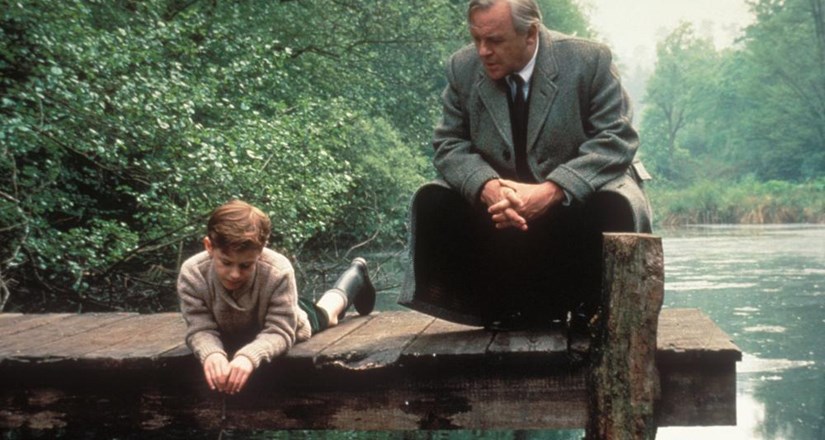
Which all makes the film sound very heavy, and it’s not. It’s a delightfully light done story that never once leans too hard on the tragedy. Instead it punctures several moments with touches of humour (much of it from Joy’s American clashes with high-table Britishness) and moments of sweet affection. The film gains a lot of balance from Edward Hardwicke’s delightful performance as Lewis’ Dr Watson-ish brother Warnie, a bluff ex-army officer turned academic who reveals himself over the course of a film to have a great deal of hidden love, affection and empathy. It also has a delightful performance from Joseph Mazzello as Douglas Gresham, a child performance that brilliantly avoids all cloying sweetness and feels very real as a shy, nervous boy dealing with his mother dying.

But then, Lewis is also a shy nervous boy (both he and Warnie never really got over the death of their mother as boys – a moment that both wordlessly acknowledge while observing Joy with her son at the hospital), and the film follows him becoming something more than that, a man wh has loved and lost and can deal with it. A neat subplot around James Frain’s difficult working-class student demonstrates his growing ability to relate and empathise with others. A large chunk of the film builds towards Lewis’ tearful outpouring of grief (a scene impossible to watch dry eyed), a reaction that seemed impossible in the opening moments.

But then that’s what the film is saying: We have to accept that the joy of loving people, the wonder and warmth that they bring to our life, will inevitably one day lead to us losing them. Allowing us to experience love and joy is counter balanced by the pain we will feel when they go. It’s a deal – and if it is a deal, it’s the price we pay for having our life enriched. Attenborough’s simply beautiful, romantic film covers all this gently and brilliantly: it’s a film to treasure and hold tight.