Tag: Lilia Skala

Lilies of the Field (1963)

Lilies of the Field (1963)

Nuns and a drifter find mutual respect (eventually) in this quaint, gentle drama

Director: Ralph Nelson

Cast: Sidney Poitier (Homer Smith), Lilia Skala (Mother Maria), Lisa Mann (Sister Gertrude), Isa Crino (Sister Agnes), Francesca Jarvis (Sister Albertine), Pamela Branch (Sister Elizabeth), Stanley Adams (Juan Acalito), Dan Frazer (Father Murphy), Ralph Nelson (Mr Ashton)

One day Homer Smith (Sidney Poitier) stops at a small Arizona farm to ask for water for his car. The farm is run by refugee Eastern European Nuns. Homer does a few repair jobs, teaches them a little bit of English and stays for dinner, assuming he’ll be paid in the morning. But the fearsome Mother Maria (Lilia Skala) tells Smith (or Schmidt as they call him) his presence is a gift from God and recruits him to build them a chapel, in return for food and lodging (but not money). Smith finds himself accepting – and, as the building work begins, finds a passion for the project building in him. Amen!

A humble “nice” film, based on a successful novel, Liles of the Field was shot in about two weeks by Nelson – who got the financial backing when Poitier agreed to play the lead. It went on to scoop a Best Picture nomination at the Oscars and a Best Actor Award for Sidney Poitier. To be honest there isn’t really anything in Lilies of the Field that you won’t see a hundred times before or since. Shot with an efficient (if Televisual) low-keyness by Ralph Nelson, it’s an inspiring tale about inspiring folks with a few laughs and smiles, set in a world that shows what we could achieve if mutual respect and decency were mankind’s watch-words.

Lilies of the Field is decisively a spiritual, feel-good film but it’s pleasantly told without any over-emphasis or lecturing, which allows it to remain a charming, engaging (if slight) watch. The story of the building of this small chapel in the middle of nowhere is as inspiring as seeing how a passion for the project gives Smith a focus and purpose he perhaps has lacked elsewhere in his life. But it’s also crammed with some charmingly loose scenes, such as Poitier playfully teaching the Nuns basic English phrases (far more useful than the ridiculous – and useless for everyday life – phrases the Nuns are learning from a record) and, later, the fundamentals of Gospel music.

Roughly in the centre is a rather sweet and well-drawn gentle struggle of wills between Homer Smith (an honest guy who expects an honest wage for an honest day’s work) and Mother Maria (a woman who has learned that you don’t get without asking again and again and again). These two feud using bible quotes (rather wittily, Mother Maria uses a massive embossed tone while Homer uses a well-thumbed pocket copy), butt heads on Mother Maria’s refusal to accept anything less than Smith agreeing to do the work gratis and Smith’s frustration at what he sees as her dictatorial stance. But, inevitably, respect grows between them over time (as it does in movies like this).

You could pretty much predict most of the beats in Lilies of the Field. Of course, the whole desert community rallies around to help. Of course, Smith and Nuns reach an understanding of mutual affection. Of course, the building contractor Smith works for part-time to keep himself in dollars (played by the director Ralph Nelson) overcomes his condescension to Smith to chip in. Of course, Smith falls in love with the chapel – and sees it as a chance to live his dream of becoming an architect. None of this should surprise you.

But it works because it’s all quite gentle and charming. A big part of this is down to Poitier’s performance. So many of his roles dripped with nobility and grandeur, that it’s really pleasant to see him cut loose and have some fun. This is surely one of the most relaxed performance Poitier ever gave, his Homer Smith loose-limbed, witty and relaxed, enjoying the comic banter and gracefully breaking into (dubbed) gospel singing. He has a natural and easy chemistry with the other actors – most of all Lilia Skala (also Oscar nominated) who is perfectly dry and starchy as Mother Maria – and keeps the whole enterprise just the right side of light and breezy. It’s Poitier getting a light, personality part very different from the roles he’s more associated with. He became the first black man to win an Oscar – and only the second person of colour after Hattie McDaniel.

The film has a few beats of racial tension: Nelson’s contactor condescendingly calls Smith “Boy” (much to his quiet anger) and there are references to prejudice. But what the film wants to celebrate is people coming together – which is what Smith, the Nuns and the (mostly) Latin American community do to winning effect. It does this with such honesty and simple pleasure that, for all its predictability and lack of narrative invention, it’s rather winning. It’s a simple, almost forgettable, little film – but when watching it you’ll at least feel heart warmed.

Ship of Fools (1965)

Simeone Signoret and Oskar Werner are just part of the kaleidoscope of humanity in Ship of Fools

Director: Stanley Kramer

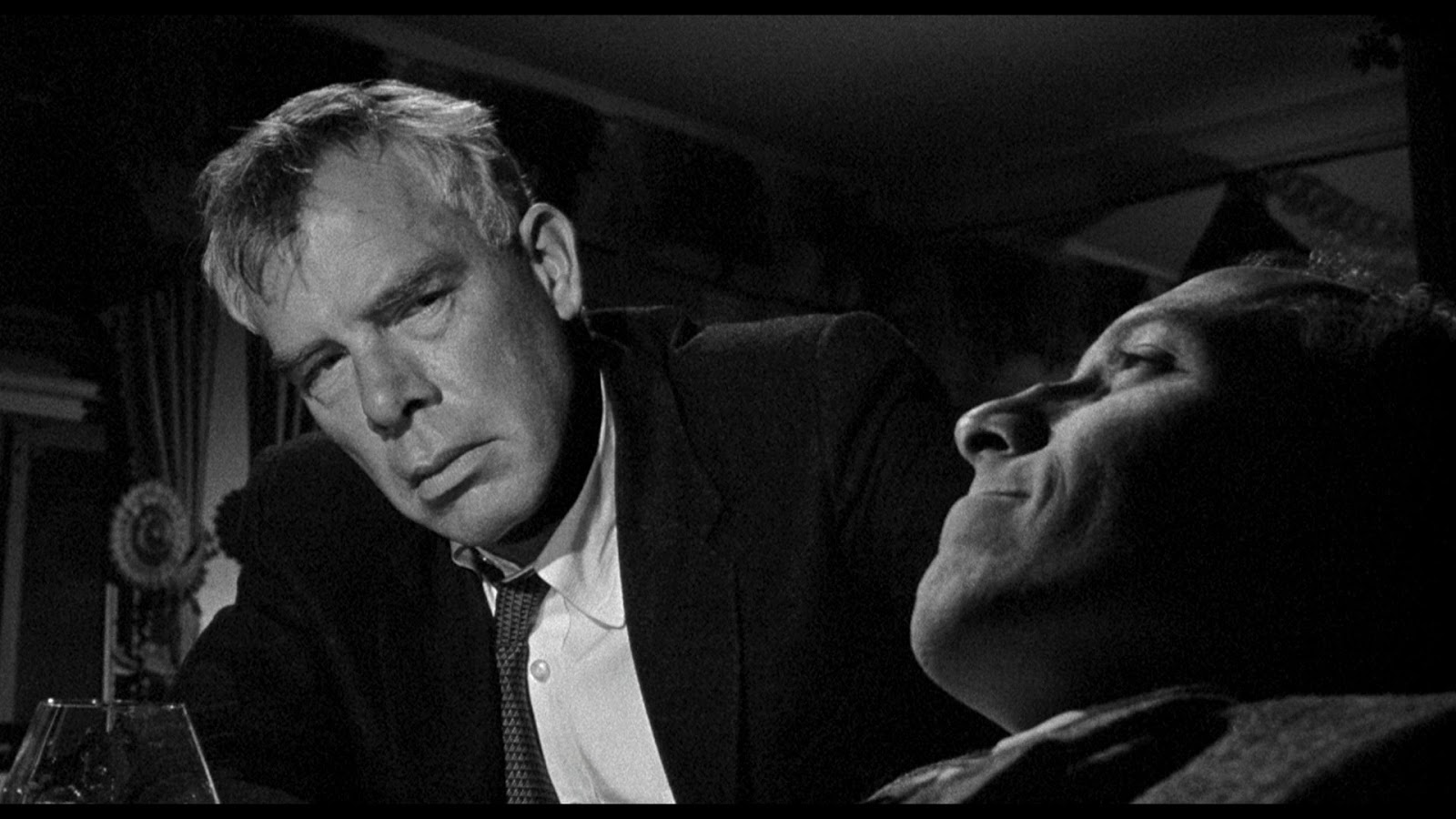
Cast: Vivien Leigh (Mary Treadwell), Simeone Signoret (La Condesa), José Ferrer (Siegfried Rieber), Lee Marvin (Bill Tenny), Oskar Werner (Dr Wilhelm Schumann), Elizabeth Ashley (Jenny Brown), George Segal (David Scott), José Greco (Pepe), Michael Dunn (Carl Glocken), Charles Korvin (Captain Thiele), Heinz Rühmann (Julius Lowenthal), Lilia Skala (Frau Hutten), Barbara Luna (Amparo), Christiane Schmidtmer (Lizzi Spokenkieker), Alf Kjellin (Freytag), Werner Klemperer (Lt Huebner)

Stanley Kramer was the man who went his own way in Hollywood. Struggling to find work after returning from the Second World War, he set up his own production company which quickly specialised in critically acclaimed “message” films. It’s the sort of film making that hasn’t always aged well. Kramer’s style hasn’t often either – even at the time he was seen as achingly earnest and worthy. Ship of Fools was the sort of perfect project for him: a massive best-selling novel about a huge subject, humanity itself. It was about big themes and it felt really important. It was perfect Kramer material.

In 1933, a ship sails from Mexico back to a newly Nazified Germany. On board, the passengers and crew blithely continue their own personal dramas and obsessions – it really is literally a “ship of fools”, as we are informed in the film’s opening by wry observant German dwarf Carl Glocken (Michael Dunn) who serves as an occasional chorus. On board: a faded Southern Belle (Vivien Leigh) desperate to recapture her youth; a failed baseball player (Lee Marvin) bitter that his career never took off; a young artist (George Segal) intent on only drawing serious subjects to the frustration of his girlfriend (Elizabeth Ashley); a bigoted, bullying Nazi (JoséFerrer) trying to start an affair with an attractive younger blonde (Christiane Schmidtmer); a Jewish jeweller (Heinz Rühmann) who thinks the Nazi party can’t be that dangerous; and ship’s doctor Willi Schumann (Oskar Werner) who finds himself increasingly fascinated with La Condesa (Simeone Signoret), a drug addict and a social campaigner being transported to prison in Spain. Truly, the whole world is on board this boat! (Or so you can imagine the poster saying).

The success of the individual moments in Ship of Fools rise and fall depending on the level of engagement you feel in each of these stories. It’s a curious mixture of tales, some of them dancing around deeper meanings, some playing like dark farce, some plain self-important rubbish. What’s abundantly clear is Kramer feels this is all leading towards meaning something, though whether he gets anywhere near expressing what this something is really isn’t clear. In fact the only real categorical message I could take about this is that humanity has a tendency to fiddle whole Rome burns – and that of course the Nazis are bad. 

There is an attempt to suggest a world in microcosm – and some have argued that the smorgasbord of characters are basically like facets of one person’s personality – but really what many of these stories are deep down are soapy pot-boilers, brought to life by good writing and fine acting. Kramer marshals all these events with a professional smoothness: there is something quite admirable about the fact he clearly sees the director’s role as more like a producer’s, someone there to service the story and actors more than to cover the film with flash. It might not make for something compellingly visual, but it is refreshing.

What Kramer is less successful with is the heavy-handed importance the film gives its serious moments. Most infamous is a moment when Glocken and Jewish trader Julius Lowenthal are sitting on the veranda, listening to the band while chatting about current affairs in Germany. “There are nearly a million Jews in Germany. What are they going to do? Kill all of us?” Julius jovially states – the band music obviously ends the second he stops speaking, filling the screen with a chilling silence. It’s the sort of moment that is supposed to make us feel the chill of the oncoming storm – but instead feels manipulative and portentous. Every moment like that lands in the same way – the film is delighted with its exploration of these shallow people, very pleased with knowing the Nazi destruction is on the way. 

This self-important bombast dates the picture more than anything else in it. Nothing dates as badly as pretension. It’s a film that feels like it’s been made very consciously to make you think, and which wears its attempt to capture every level of society – from poor Spanish workers to rich Nazis – very heavily. It also makes obvious points: naturally the only true act of self-sacrifice comes from a poor Spanish worker, while the rich passengers can scarcely look past their own concerns. 

When it isn’t being self-important, the film too often finds itself mired in soapy rubbish. The plotline featuring George Segal as a failing artist and Elizabeth Ashley as a frustrated girlfriend is tedious beyond belief, a slog through the worst kind of coupley drama that adds very little to the film. A further plotline around the companion of a wheelchair-bound intellectual, obsessed with an exotic dancer on the ship, could sit just as easily in Coronation Street as it could in a highbrow drama like this.

Despite all this, I have to say much of the acting is very strong – even if many of the actors are cast very much to type. Vivien Leigh, in her last performance, struggled with immense psychological difficulties during shooting, but brings a heartfelt realism to divorced Southern belle Mary Treadwell (an even more heartfelt version of her Blanche DuBois than in Streetcar). Kramer also allows her one of the film’s few moments of imaginative spontaneity when she suddenly bursts into a Charleston before stumbling back to her hotel room. 

Carrying a lot of the film’s emotional weight are Oskar Werner and Simeone Signoret (both Oscar nominated) as an unlikely romantic coupling. Werner brings great depth and sadness to the world-weary doctor who finds himself irresistibly drawn to Simeone Signoret’s Countess. Signoret channels her distant, fragile imperiousness from Les Diabloques and Room at the Top to marvellous effect as a woman struggling with an indolent drug addiction but who feels a genuine responsibility to the world. The quiet scenes between these two are the closest the film gets to touching some distant meaning, even if it never quite gets there – and again the points deep down are fairly straight forward.

For the rest of the cast, there is hardly a weak link. Heinz Rühmann, in his only English-speaking role, campaigned heavily for the role of Jewish trader Julius and he is magnificent. José Ferrer swaggers convincingly as bullying Nazi Siegfried, even if he is saddled with the most obvious, poorly written, character. Michael Dunn (also Oscar nominated) makes a lot of his role as charming chorus and commentator. Lee Marvin is terrific as the frustrated and bitter baseball player. Charles Korvin gives a lot of depth to the thoughtful and compassionate captain.

Ship of Fools has plenty of moments of enjoyment. But as a whole it’s always a little self-consciously important, too determined to push you to be aware of the messages it wants you to take home. As the final shot sees a camera crane inexorably down onto a swastika you feel smacked around the face with the film wanting you to know that the darkness was just around the corner. The dread of Nazism should hang over the film like a shroud but instead it feels so repeatedly stressed to us that it loses all impact. The film wants us to know that we know more than the characters, and goes out of its way to remind us so that we can pat ourselves on the back when we spot the irony. Despite much of the quality of acting and dialogue, it gets wearing after a while.