
Tag: Maria Bakalova

Mayday (2026)

Mayday (2026)

Branagh throws down big time in this unsurprising but fun popcorn buddy action flick

Director: John Francis Daley, Jonathan Goldstein

Cast: Ryan Reynolds (Troy “Assassin” Kelly), Kenneth Branagh (Nikolai Ustinov), Marcin Dorociński (Alexander Volkov), Maria Bakalova (Anna Ustinov), David Morse (Harold Kelly), Clark Johnson (Keith Hardwick), Wendy Crewson (Karen Meadows), Louis Cancelmi (Pete Sanders), Josh Hamilton (Dan Hennessey)
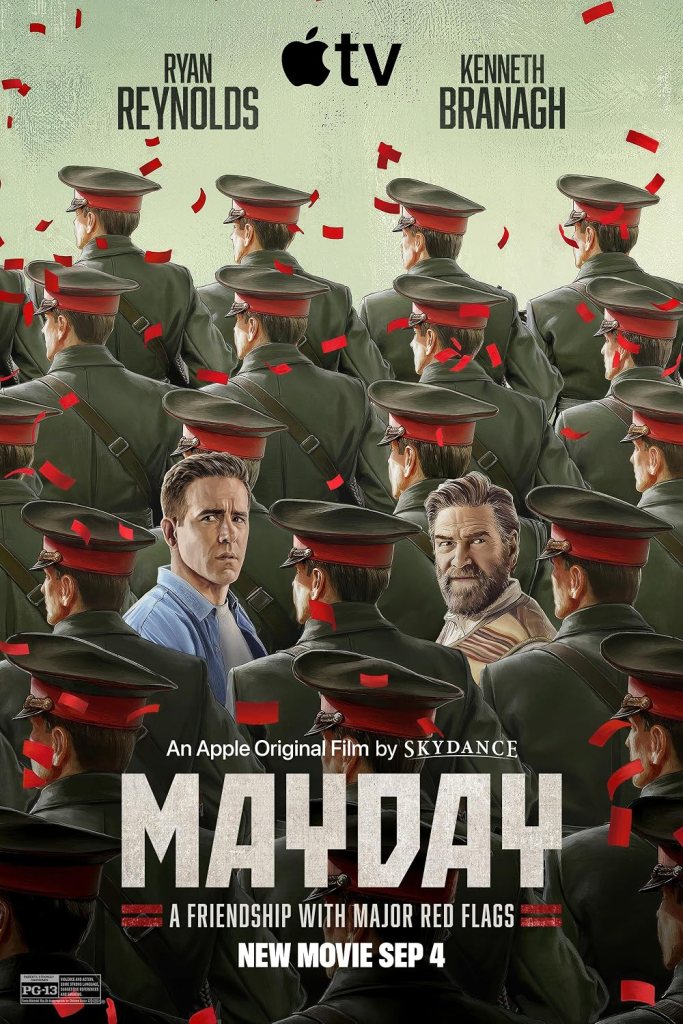
Did anyone have on their 2026 film-bingo card “Kenneth Branagh throws goons around in an action movie”? Saying it’s a big change of pace feels like an understatement, with Branagh confessing in interviews he was delighted to get the opportunity to do something so different. So we get to see the actor most associated with Shakespeare slamming punches and kicks into bad guys and also showing some mean comic chops mixing the banter with Ryan Reynolds.

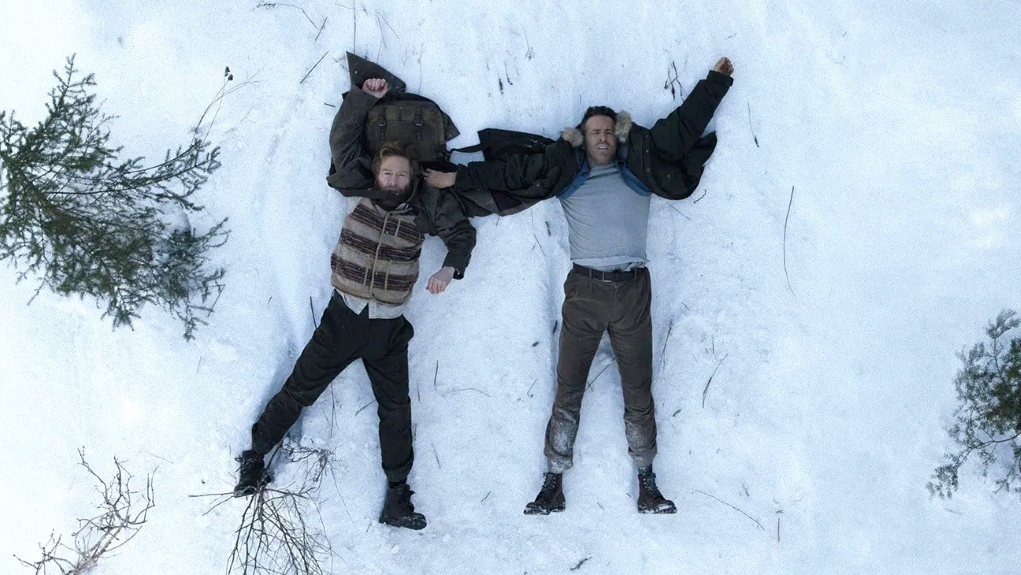
It’s 1987 and Reynolds is ace American pilot Troy “Assassin” Kelly, shot down over Russia during an off-the-books spy mission. The badly injured Troy wakes up tied to a bed in the home of Nikola Ustinov (Kenneth Branagh). Nikolai is obsessed with all-things-American (“I have not eaten McDonalds but I expect I would find it delicious”), his favourite film is Top Gun which he has seen multiple times on a dodgy bootleg VHS and having an American pilot buddy is his dream. He also, fortunately, is a deadly former KGB operative, willing to help Troy escape his former employers so long as Troy can deliver American passports for Nikolai and his estranged dissident daughter Anna (Maria Bakalova). Cue a buddy road-trip through the dangers of the Soviet Union.

Mayday delivers what you hope it will do: fast-paced, witty entertainment for a Saturday night, with two charismatic actors having a whale of a time bouncing off each other. Reynolds can nearly do this sort of off-the-cuff, improvisational cool in his sleep, expertly making Troy someone wittily cool but also brilliant at his job and deeply caring about his men and (dying) father. Few other actors are as comfortable with the casual quip, the gentle leaning on the fourth wall or leave us in no doubt about his competence even while he spends most of the film floundering out of his depth, limping around and bleating in limited Russian.

Reynolds is undeniable funny and charismatic, but he generously gifts much of the finest moments to Branagh. Covered with a Grizzily Adams beard (obviously referenced by Reynolds), Branagh’s under-appreciated gift for comedy is utilised to superb effect. He makes Dimitri hilariously endearing in his naive thrill at his American guest, or the dry enthusiasm he gives to subjects as diverse as McDonalds, Springsteen and Tom Cruise. But he’s also equally deadpan when discussing every single element of espionage spycraft, commenting on events around him (from fights to lovemaking) with a hilarious matter-of-fact laconic bluntness. Branagh’s sensitive eyes also show the vulnerability of a lonely man, plagued with guilt for his failures as a father.

And Branagh, it seems, can throw down. Mayday gives him multiple opportunities for impressively choreographed fights. From a bar-room brawl that uses snooker cues, bottles, arrows and anything else to hand to a machine-gun grabbing train dust-up to using everything from pens to seatbelts in various other fights. Mayday races from entertaining set-piece to entertaining set-piece, after its initial misdirection opening which suggests we might be in for a sort of lightweight Misery with Reynolds as a bed-strapped Jimmy Caan and Branagh as a genial Kathy Bates.

It’s all so entertaining and snaps along so pacily in just over 90 minutes, well-assembled with a witty series of shots and edits by directors John Francis Daley, Jonathan Goldstein that it almost doesn’t matter that the film truthfully has very little in it that is truly new. In fact, with its 1980s setting, it almost adds to the fun that this feels like a meta-riff on half a dozen other 80s buddy movies with Reynolds and Branagh playfully swopping the roles of Maverick and Goose between them depending on the situation. All of the film scenes could have been merrily ripped out of a studio rolodex of set pieces and character riffs, that sort of stuff that has powered hundreds of films before.

There are a few riffs on the distrust and flaws in both systems either side of the Cold War. Nikolai may love America and be deeply ashamed of the brutality of his own system, but he’s fairly clear-eyed that both sides are willing to push a propaganda view of the other. Troy, a firm believer that America is generally flawless and the USSR unquestionably wrong, has his viewpoint challenged throughout – from discovering his government’s sense of right and wrong is far from perfect to finding not all Russians are brainwashed commie fanatics. The villain – a smug Marcin Dorociński doing a lot with not a lot on paper – plans to use events to shatter Gorbachev’s Glasnost, leaving Troy in the unusual position of helping the system he started the film convinced was terrible.

But really Mayday is all about having good fun. And that’s generally what I had when watching it. It’s all familiar and, aside from the novelty of seeing Branagh do it, there isn’t much in its comedy, action, car chase or fighter pilot antics you’ve not seen before. It skirts around more hard-hitting stuff, such as the fraught relationship between Nikolai and his daughter – largely resolved through an off-screen conversation. The most daring thing in it goes largely unspoken: Reynold’s character is a hotshot fighter pilot at least in his forties with no girlfriend or partner, expresses no sexual interest in any woman in the film and has a faultless gaydar – is Reynolds winkingly playing the full subtext of Top Gun here?

Mayday is assembled with real light comic energy, by people who really know what they doing, to put together a film that’s not pretentious, outstays its welcome or trying too hard to anything other than pop a grin on your face. Which you’d be hard-pressed not to have at some point.

The Apprentice (2024)

The Apprentice (2024)

Heavy-handed anti-Trump message is made to almost work by two excellent performances

Director: Ali Abbasi

Cast: Sebastian Stan (Donald Trump), Jeremy Strong (Roy Cohn), Maria Bakalova (Ivana Trump), Martin Donovan (Fred Trump Snr), Catherine McNally (Mary Anne Trump), Charlie Carrick (Fred Trump Jnr), Ben Sullivan (Russell Eldridge), Mark Rendall (Roger Stone), Bruce Beaton (Andy Warhol)

No one has dominated recent global discussion more than Donald Trump. The Apprentice aims to expose how he was formed – inevitably, you can’t move for reviews referring to it as a Supervillain Origin Story – but really, it’s being sung for the choir and I’m not sure it really adds anything to the international conversation. I can’t imagine this film shifting the dial at all (which indeed it didn’t): if you hate Trump (and I am not a fan), it’s gonna confirm everything you think already and then some. If you are a supporter you’ll probably think it’s a shrill hatchet job. Both sides might well agree Abbasi’s film is a little hectoring.

Picking up in the late 70s, and running through the all-consuming Greed-is-Good Reaganite America, The Apprentice charts the friendship between up-and-coming would-be-property-mogul Trump (Sebastian Stan) and ruthless McCarthyite legend lawyer Roy Cohn (Jeremy Strong). Cohn takes Trump under this wing, teaching him his three rules for success (always attack, never apologise, always claim victory no matter what). Under this guidance, Trump becomes the figure of bombastic, selfish egotism we see today – while Cohn, afflicted with AIDS, shrinks under his protégé’s shadow.  

Watching The Apprentice I was reminded of Oliver Stone’s Nixon – and not in a good way. Stone is no supporter of Nixon, but his film is a surprisingly generous Greek Tragedy which plays fair with the 37th President, acknowledging his strengths as well as his chronic character flaws. The Apprentice abandons any attempt to do the same by the halfway point. Part of that may well be that Trump is an infinitely more shallow, less complex, less accomplished figure than Nixon. But if The Apprentice had dared to find anything a little deeper in Trump (his complex relationship with his family would have been good for this) it might have had more impact.

Instead, it’s a Faust story where the power balance shifts from Mephistopheles to Faust. At first Cohn is all powerful, tempting Trump with the power and influence to transform him from two-bit rent collector to king of the world. But the more confidence Trump gains, the more he dwarves Cohn. And the more Cohn is slowly eaten away by weakening powers and the AIDS he refuses to acknowledge he has, the smaller and more desperate he seems. It’s almost a succubus tale, with Trump draining Cohn so much he ends the film passing off his mentor’s mantras as his own invention.

The film’s most interesting section by far is it’s opening hour. It’s the only part that presents us with a Trump we don’t know already. In an excellent, Oscar-nominated, performance Sebastian Stan not only captures Trump’s mannerisms he also searches under the man’s shallow surface. Stan makes the young Trump bashful, eager-to-please, over-awed by power and nervous in high society. Seeing a naïve, fragile, uncertain Trump whose father doesn’t love him is genuinely interesting – especially since we all know the cast-iron certainty he has today. It could have done with more of this, trusting us to lay our knowledge of the man today on top.

The main factor that really lifts The Apprentice our two leads. Both Stan and Strong find an emotional depth and insight in their characters (while never absolving them) that makes them more three-dimensional than Abassi’s film wants to make them. Jeremy Strong is particularly superb (and also Oscar-nominated) as Cohn. Whipper-thin, tanned, his head aggressively jutting forward he resembles a sort of angry ferret. Strong brilliantly captures the vicious contradictions in Cohn – the Jewish antisemite, the gay homophobe – and his demonic, but Strong brilliantly unpeels Cohn’s weakness. Trump absorbs all Cohn’s vices (and then some), but none of his few virtues – personal loyalty, patriotism. Strong never makes Cohn sympathetic, but also displays his pain, unhappiness and possibly even guilt, as he realises this uncaring monster will even consume his creator. (Strong’s final scene of the dying Cohn confronting Trump’s indifference one last time is superbly played).

Abbasi’s film is well-made – the photography frequently degraded to appear like grainy camcorder footage – and its filmed with a handheld, pacey immediacy. It captures the excess Trump lives in, with its golden surfaces and more-is-more bling. All of this is aimed at exposing the future President as overwhelmingly self-occupied, amoral and cruel, interested only in himself and seeing morals. None of that is a major surprise and Abbasi is a little too delighted with pricking Trump’s fragile ego, portraying him as impotent, sniggering at his hair loss and weight gain (although this allows a neat gag, with Trump telling a doctor the body has a limited amount of energy so exercise is actually bad for you – something he refuses to accept is not true).

Trump’s treatment of Cohn is the tip of the iceberg of the depths of Trump’s personal behaviour the film gleefully shows. Trump’s penchant for self-aggrandising speeches, his kneejerk homophobia about AIDS (his fear of catching it by touch leads to him fumigating items Cohn has touched), his indifference about relationships (swindling his father and dropping his alcoholic brother) all get ample coverage. He pursues Ivana (a very good Maria Bakalova) with a passion then, having got her, treats her only as something he can brag about (particularly her ‘improved’ breasts), becomes jealous of her growing fame. It overplays its hand by dramatising the disputed rape of Ivana by Trump – a crime so serious you feel it should be beyond question and not be treated as part of a parade of personal faults, never to be referenced again.

But that’s because The Apprentice never knows when to stop. If it had the courage to expand its opening hour, to explore the malign effect of Cohn on this ambitious young man, with a coda showing the fall of Cohn in the shadow of the Trump we recognise – it would have been a more interesting film. Instead, it seems designed to hammer home a political agenda rather than provide drama or insight making it more heavy-handed and obvious than it needed to be. Aside from the two marvellous performances from Stan and Strong, there is actually very little really here.