

A marriage disintegrates in this richly mature, non-judgemental film one of the best of the decade
Director: William Wyler
Cast: Walter Huston (Sam Dodsworth), Ruth Chatterton (Fran Dodsworth), Paul Lukas (Arnold Iselin), Mary Astor (Edith Cortright), David Niven (Captain Lockert), Gregory Gaye (Kurt von Obersdorf), Maria Ouspenskaya (Baroness von Oversdorf), Odette Myrtil (Renée de Penable), Spring Byrington (Matey Pearson), Harlan Briggs (Tubby Pearson), Kathryn Marlowe (Emily), John Payne (Harry)

Marriage is tricky. In the hustle and bustle of everyday life, bringing up a family, running a business and rushing between social events, what if you don’t notice you don’t have much left in common? That’s the theme of Dodsworth, one of the most strikingly modern of 1930s films, that tackles the breakdown of a marriage in a surprising subtle way, avoiding the sort of moral punishment and condemnation you’d expect from the production code. Combined with sharp writing, fine acting and some fluidly creative direction from William Wyler, and you have an overlooked classic.
Dodsworth kicks off with the retirement of car entrepreneur Sam Dodsworth (Walter Huston). Having sold his successful independent factory to a major business, Sam is now effectively retired and suggests that he and his wife Fran (Ruth Chatterton) take that trip to Europe they’d always discussed but never had time to do. The trip, however, starts to reveal fractures in their relationship. Fran isn’t ready to ‘rush towards old age’ like she feels Sam, with his touristy longings and interest in engineering mechanics is. She wants to be part of society and feel the excitement of flirtations (and more) with rakeish European types (from David Niven to Paul Lukas to Gregory Gaye), while Sam ticks off the sites and sits in cafés. Sam, it turns out, has far more in common with Naples-ex-pat Edith (Mary Astor) – but feels duty bound to do whatever he can to preserve his marriage with Fran.
It’s all adapted from Sinclair Lewis’ doorstop novel, skilfully boiled down into a clear dramatic journey by Sidney Howard, from his own theatre adaptation (which also starred Huston). It becomes both slightly sad, watching two people drift apart, while also offering rich vestiges of hope of what the future can hold if you dare to take a chance. It mixes this with dry wit, scenes of compelling narrative interest and an insightful look at two people effectively going through different types of life crisis during a ‘once in a lifetime’ journey. Because nothing can disrupt your thinking about your own life more than changing nearly everything about it in one swift barrage of events.
It’s assembled into a richly involving whole by William Wyler, who lands the film just the right side of melodrama. From the opening shot, tracking towards Sam’s back as he leans against a window looking out over the factory which gave his life meaning, there is a quiet air of its characters living in denial of their own melancholy. Part of Sam is already wondering what on earth he’s going to do without his factory – its why he immerses himself in the most banal details of the sights they will see in Europe, or the engineering of their cruise ship.
Sam feels his journey will give him new opportunities, but it often sees him uncertain and slightly adrift, from not knowing how to tip waiters to finding his mid-Western mindset unable to compute the sexually liberal rules of European high society. Fran claims the journey abroad will mean leaving behind the oppressive parade of the over familiar social scene in their small town. It quickly turns out, she’s only be bored of their small circle not the glamour of social events.
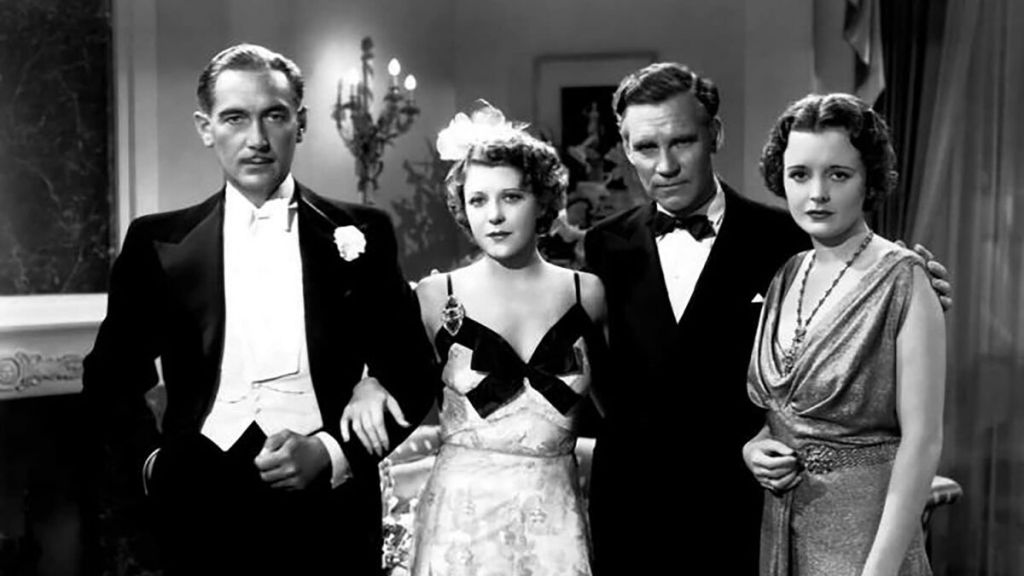
Sam is played with real skill and under-played grace by Walter Huston in one of his finest performances. He’s an overwhelmingly decent man, self-made, confident but hesitant and uncertain out of his element. There’s a fuddy-duddy quality to him you can understand Fran finding grating, but he’s also capable of genuine, unfiltered enthusiasm (watch his joyful spotting of a famous lighthouse during their journey – which hilariously he nearly misses while checking his watch – and the eagerness which he tries to share this with an irritated Fran and a politely bored Niven). What’s superb about Huston’s performance is the awkwardness, shyness and even timidity he brings to a successful man, the quiet air of confused anxiety behind Sam as his certainties melt away.
Both Sam and Fran are convinced everything between them is fine, constantly speaking (increasingly dutifully) about their love, as if trying to convince each other even as it starts to fall apart. Their home already feels invaded by their daughter and her husband, who absent-mindedly serves himself drinks from Sam’s cabinet. They’re in completely different mindsets. Fran is constantly embarrassed by her husband’s tendency to hickness. Sam feels Fran’s upper-class ‘friends’ wouldn’t look twice at her without the cash she can flash. Fran is horrified by Sam’s whimsical statement that they will soon ‘be a couple of old Grandparents’. She’s young at heart, being wooed and won’t give that up.
From a ship-bound flirtation with David Niven’s suave playboy where she seems shocked at his implication that they can take things further (Sam doesn’t help by telling her she only has herself to blame), she swiftly begins an all-but-open affair with Paul Lukas’ smooth gentleman (with Sam turning an embarrassed third-wheel blind eye) even sending Sam home to extend her holiday privately, while he fields awkward questions from their family and re-directs his inner fury at his public cuckolding into grumpy rants about other’s scrabble games covering his desk and fussily reaching for his Encyclopaedia to prove trivial discussion points.
By the time Ruth has convinced herself divorce will lead, inevitably, to a glorious new marriage with much younger aristocrat Gregory Gaye, she’s at the centre of an increasingly delusional mid-life crisis, full of false claims about her age and built on fantasies. Ruth Chatterton is very good, neatly bringing to life a woman who can’t face the idea of becoming old. The film (while siding with Sam) never fully condemns her for her behaviour – even if it maintains an American suspicion of her wealthy European upper classes. In fact, it’s very hard not to feel sorry for Fran when her lover’s mother (played by an imperiously shrewd Oscar-nominated Maria Ouspenskaya) punctures her delusions about the likely future of a relationship with her feckless son.
It’s all beautifully framed by Wyler. How can you not admire the lingering shot of Fran reading a telegram from Sam and letting Lukas’ Iselin set fire to it, the camera following the paper as the wind blows it across the balcony floor to disintegrate like the Dodsworth marriage? Dodsworth is full of such beautifully subtle moments, its imagery (and Oscar winning sets) wonderfully establishing a world in transit as much as the Dodsworths. Wyler also evens the score at points: Sam remains largely sympathetic, but its possible to be irritated by his naïve dullness, just while the frequently infuriating Fran is relatable in tragic fear that her life is behind her.
It’s this mature view of people drifting apart, making mistakes and not always being condemned that makes Dodsworth such a richly intelligent film. Sam would certainly by more happy with Edith (a very moving performance from Mary Astor), just as Fran would be better off without Sam. Dodsworth is largely refreshingly free of the sort of Puritan punishments other films dealing with similar themes would use under the Production Code. Instead Dodsworth is a superbly acted, directed and written melodrama with a serious tone that remains richly rewarding viewing.

 Movie Musings