Tag: Matt Damon

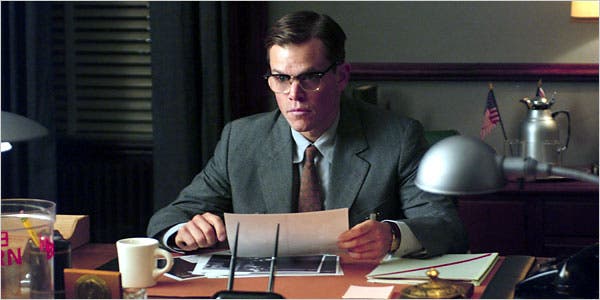
Oppenheimer (2023)

Oppenheimer (2023)

Nolan’s masterful musing on the morality of science is both challenging and compelling

Director: Christopher Nolan

Cast: Cillian Murphy (J Robert Oppenheimer), Emily Blunt (Kitty Oppenheimer), Matt Damon (General Leslie Groves), Robert Downey Jnr (Lewis Strauss), Florence Pugh (Jean Tatlock), Josh Hartnett (Ernest Lawrence), Casey Affleck (Colonel Boris Pash), Rami Malek (David Hill), Kenneth Branagh (Niels Bohr), Benny Safdie (Edward Teller), Dane DeHaan (General Kenneth Nichols), Jason Clarke (Roger Robb), David Krumholtz (Isidor Issac Rabi), Tom Conti (Albert Einstein), Alden Ehrenreich (Strauss’ aide), Gary Oldman (President Truman), Jefferson Hall (Haakon Chevalier)
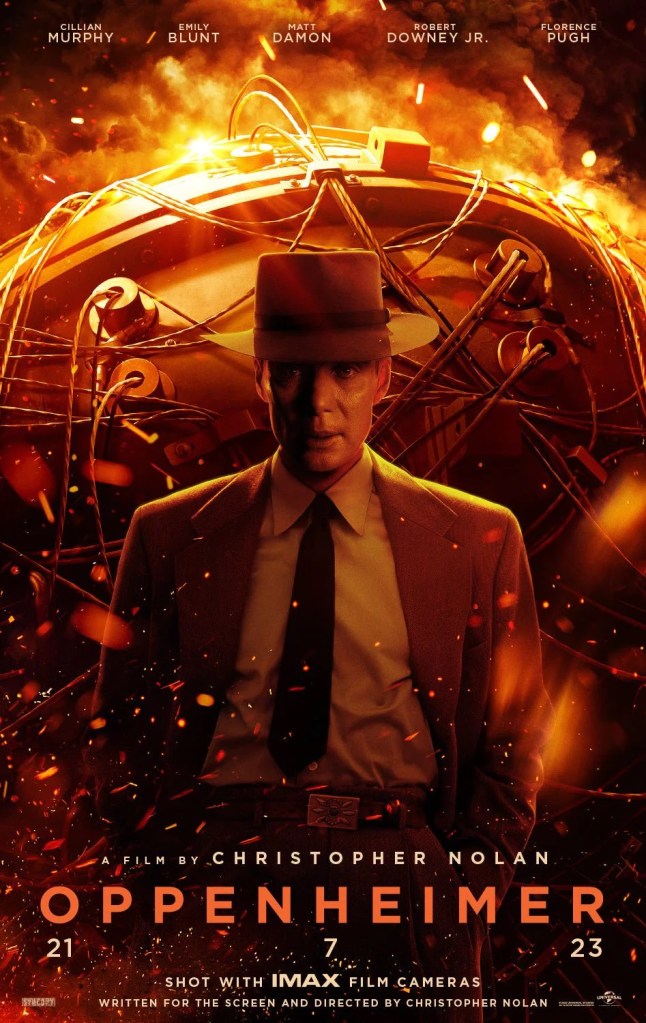
“I am become Death, the destroyer of worlds”. These words from The Baghavad Gita are synonymous with J Robert Oppenheimer, director of the Manhattan Project as he witnessed the destructive force of his creation, the atomic bomb. Fittingly, Nolan’s fascinating and ambitious film opens with a reference to Oppenheimer as Prometheus: the man punished for all time for stealing fire from the Gods. Oppenheimer uses everything from thriller to courtroom drama, to explore the moral responsibilities of science: if we can do a thing, does it follow that we must?

J Robert Oppenheimer (Cillian Murphy) is a Renaissance man and leading theoretical physicist who dabbled more than a little in left-wing politics. The woman he loves, Jean Tatlock (Florence Pugh), is a die-hard communist, the woman he marries Kitty (Emily Blunt) is a former party member, his closest friends are all members. Associations like these will later haunt him after he is approached by General Leslie Groves (Matt Damon) to use his organisational skills, political savvy and charisma to run the WW2 nuclear programme where maverick scientists work hand-in-hand with the army. Despite his position, Oppenheimer remains untrusted by many. In the aftermath of the war, these suspicions will be used by his opponents, among them Lewis Strauss (Robert Downey Jnr) ex-head of the Atomic Energy Committee, to bring about his downfall as Oppenheimer preaches disarmament.

Much like Dunkirk, Oppenheimer is told in two timelines, intersecting with scenes replayed from different perspectives in subtly different ways. In “Fission” we see Oppenheimer, effectively on trial in 1954 for his security clearance, recount his life story, chronological flashbacks taking us through the development of the bomb. In “Fusion”, shot in gorgeous black and white, we follow the 1959 senate hearings to confirm Strauss in a cabinet post, and see his reminiscences of Oppenheimer’s post-war struggles to control the monster he has unleashed.

Oppenheimer is a brilliantly made, cinematically adventurous film: you would, of course, expect nothing less from a distinctive talent like Nolan. Brilliantly intercutting multiple timelines, it’s a film that is as much an experience as a story. This is a behemoth, filled with moments of flair and breath-taking use of sound and vision to affect mood. In particular, the film’s oppressive sound design bears down on the viewer like the pressure of the bomb itself. This means moments when we are released from its grip carry real impact. As Oppenheimer – already plagued with doubt – triumphantly announces the successful use of the bomb, the war-like celebratory pounding of scientists’ feet disappears from the soundtrack leaving Oppenheimer’s words echoing impotently around the room.

The pounding score and epic, sweeping camerawork (even more striking, since so much of the film takes place in small rooms filled with conversation) help Nolan to build up Oppenheimer’s mythic status and simultaneously strip him bare. Literally so at one point as, when questioned on his sex life in his hearing, Oppenheimer is seen naked in the room (as exposed as he must be feeling) answering questions with a naked Jean Tatlock astride him, staring into his wife’s eyes.

Oppenheimer labours, with the best intentions, to create a weapon before the Nazis. In its middle act, Nolan’s film focuses on the propulsive excitement of creation. The thrill of obstacles being overcome and solutions being found. The joy of a diverse team coming together for a single goal. We find ourselves longing for problems to be overcome, swept up in the desire for the endgame, as anxious as the scientists when it looks like rain will prevent the vital first Trinity test of the bomb.
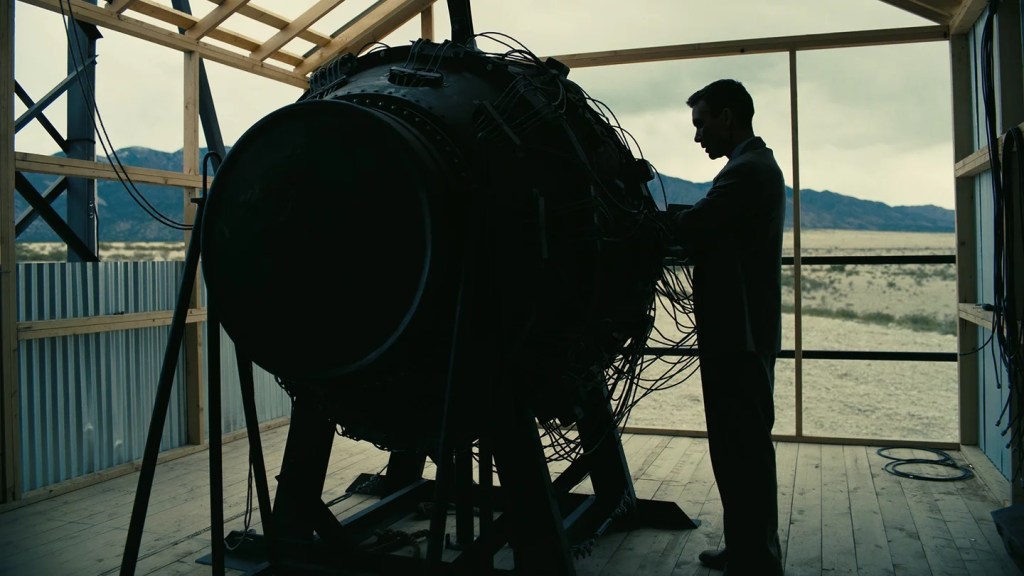
Oppenheimer feels the same. Powerfully, intelligently and magnetically played by Cillian Murphy, this is a man who is a host of flaws crammed with impossible genius. A charismatic room leader, who is awkward in personal interactions. A charmer who rudely fails to remember his brother’s girlfriend’s name at a party. An inspiring leader who alienates people with ease. Murphy captures every inch of Oppenheimer’s staggering intellect and delight in intellectual problems, just as he also embodies the man’s arrogance and crushing self-belief.

So, it’s as crushing to him as it is terrifying to us, when the bomb explodes and the realisation hits us. Nolan’s sensory experience of a film fades down to silence as Nolan lets the camera float across the all-consuming fire of the silent explosion (the noise only comes when the shockwave hits) and suddenly the chilling implication of this terrible weapon becomes clear. This is a device that will kill millions. Oppenheimer knows it: he slowly shrivels into haunted guilt, Murphy seeming to shrink into himself as he finally understands what he has done.

Images of nuclear destruction both obvious (ashen bodies and nuclear flashes) and subtle (the out-of-focus vibration of background around Oppenheimer, as if sensing an approach shockwave) will haunt him and us for the rest of the movie. While many scientists – foremost among them Benny Safdie’s bull-headed Edward Teller and Josh Hartnett’s WASPish but decent Ernest Lawrence – feel little guilt. But Oppenheimer, and we, can no longer avoid questions of moral responsibility raised by those such as Niels Bohr (a quietly effective Kenneth Branagh).

Are there some discoveries better not made? Because once the genie is out of the bottle, it cannot be stuffed back in again. In this new world every world power must always have more. More bombs, bigger bombs, better bombs. And it explains why, like Prometheus, Oppenheimer must be punished. The tool of his punishment being his communist sympathies, embodied in his yearning attraction to Jean Tatlock (an under-used Florence Pugh). Nolan’s film is very strong on the terrifying paranoia of the secret state, where every word or association can be collected into a terrible portfolio of witnesses you cannot question, evidence you cannot see, testimony you cannot hear.

“Why don’t you fight” cries his wife Kitty, played with a dynamic, intelligent forcefulness by Emily Blunt. I could have done with a third act built more around Blunt’s starkly honest betrayal of a woman ill-suited to being a wife and mother, trapped in a world where that is all women can achieve (and which also trimmed a few witnesses from Oppenheimer’s trial). Why doesn’t Oppenheimer fight? Nolan has his theories, carefully seeded and confidently revealed.
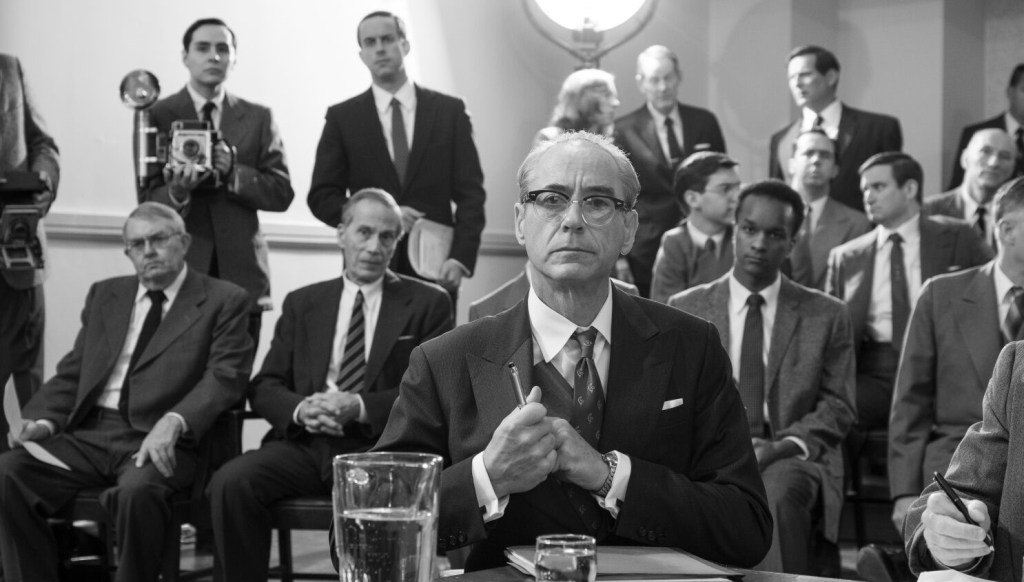
Oppenheimer’s post-war clashes cover much of “Fusion”, anchored by a superbly under-playing Robert Downey Jnr (his finest work since Chaplin) as the outwardly avuncular, but inwardly insecure and bitter Strauss, who sees Oppenheimer as the embodiment of all the elitists who turned their noses up at him (no matter that Oppenheimer himself is an outsider, in a world of science run by WASPish types like Lawrence). Nolan’s film explores how morality is forgotten in an environment so rife with paranoia that the slightest expression of doubt is seen as treason.

Nolan’s film needs its vast runtime to keep as many balls in the air as it tries to. It’s probably a few too many balls. I would have loved more on Oppenheimer’s outsider status, as a Jew in American science (its not mentioned that the J stands for Julius, despite his claims it stands for nothing). Similarly, I would have welcomed more time to explore Oppenheimer’s complicated emotional life, in particular the fascinatingly complex relationship of some love, a fair amount of mutual respect and a large measure of mutual convenience with his wife Kitty.

But the film’s chilling musing on the horrors science can accidentally unleash while focused on progress is superbly explored and leaves a lasting impact. It’s a feeling that continues to be sharply relevant while we struggle with the implications of AI. Was there a need for the bomb? Perhaps there was. Were we ready for the bomb? No. And it is the failure of anyone, including Oppenheimer, to even consider this until it was too late that is the coldest warning in Nolan’s epic film.

Good Will Hunting (1997)

Good Will Hunting (1997)

Therapy saves the day in this well-written and acted, but rather earnest drama

Director: Gus van Sant

Cast: Matt Damon (Will Hunting), Robin Williams (Dr Sean Maguire), Ben Affleck (Chuckie Sullivan), Stellan Skarsgård (Professor Gerald Lambeau), Minnie Driver (Skylar), Casey Affleck (Morgan O’Mally), Cole Hauser (Billy McBride), John Mighton (Tom), Scott Williams Winters (Clark)

Two unknowns, Matt Damon and Ben Affleck, made a sensation in 1997 with their script for Good Will Hunting. It turned them into stars and the two youngest Oscar-winning screenwriters in history. Good Will Hunting is a heartfelt, very genuine film crammed with finely scripted scenes and speeches. It’s also an unashamed crowd-pleaser, a paean to friendship and opening your heart, all washed down with a bit of Hollywood-psychotherapy magic. It’s a basically familiar tale, told and performed with such energy that it made a huge impact on millions of viewers.

In Boston, orphan Will Hunting (Matt Damon) has a fiery temper and a rap sheet as long as your arm. He’s content shooting the breeze with best friend Chuckie (Ben Affleck), but he is also a preternatural genius, an autodidact with a photographic memory able to solve complex theoretical problems in hundreds of fields. It’s why he effortlessly solves the impossible proof Professor Gerald Lambeau (Stellan Skarsgård) pins up on a board at MIT, where Will works as a janitor. Lambeau is stunned, bailing out Will from his recent clash with the police – on condition he also sees a psychiatrist to resolve his anger management. Will reluctantly attends sessions with Lambeau’s old room-mate Dr Sean Maguire (Robin Williams), a recent widower – and the two of them slowly grow a father-son bond, while Lambeau pushes Will to not waste his talents.

Good Will Hunting is directed with a sensitive intimacy by Gus van Sant, with the camera frequently placed in careful two-shot, medium and close-up to bring these characters up-close with the audience. It’s an emotional story of grief, unspoken rage and trauma – but it manages to largely not present these in a sentimental or overly manipulative way. It’s gentle, patient and tender with its characters, not shying away from their rough edges, with an empathy for their wounded hearts.

Nowhere is this clearer than in Will himself. Matt Damon gives a charismatic, emotionally committed performance, as utterly convincing in genius as he is a surly, fragile young man hiding emotional trauma. He’s charming and easy to root for. He takes down smarmy Harvard types with a barrage of erudite opinions, is often self-deprecating, fiercely loyal to his friends and categorically on the side of the little guy. But he’s also aggressive, rude and capable of violence. He gets into fights for no reason, arrogantly assumes he can understand everyone better than they can themselves, and uses his intelligence as a weapon to pin-point and apply pressure to weak points.

It’s what he does throughout the film, from launching attacks at prospective therapists (accusing an illustrious MIT professor of suppressed homosexuality and mockingly supplying a string of psychobabble cliches to another) to cruelly exposing the limits of Lambeau’s intellect (which the professor is all too aware of, having to work night and day to even touch Will’s starting point). He analyses and strips down insecurities with dazzling displays of verbiage. It’s funny when he recounts doing this to an NSA recruiter: it’s less so when he reduces girlfriend Skylar to tears as she tries to get close to him, cruelly breaking down her life and personality into digestible, cliched clumps.

It’s all about pain of course. Good Will Hunting is rooted in the familiar Hollywood cliché of inner pain only being “fixed” by therapy. As always in Hollywood, sessions start with confrontation and end with a tear-filled hug as breakthroughs (that in real life take years) are hit after a dozen sessions. Will of course is using his intelligence to fuel his defensiveness – abandoned and poorly treated throughout his childhood, he pushes people away before they can get to close and holds the few people he trusts as tightly as he can. He can’t believe people want to help or care for him: Lambeau must be jealous, Skylar must be lying about loving him, Dr Maguire must be a fool.

It’s Dr Maguire who sees the lost little boy under the domineering, intellectually aggressive, angry exterior. Robin Williams won a well-deserved Oscar for a part tailor-made to his strengths. Maguire is witty, eccentric, cuddly – but also, like many of William’s best parts, fragile, tender and kind. It’s a part that allows Williams to combine his emotive acting and comic fire: he can mix grief-filled reflections on the weeping sore that is the loss of his wife, with hilarious flights of fancy on her late night farting (yup that’s Damon laughing for real in those scenes). Maguire is no push-over though: he throttles Will when he goes too far mocking the memory of his wife and gets into furious arguments with Lambeau over their differing opinions on what’s best for Will.

That’s the film’s other major thread: male friendship. Will’s friendship with Chuckie is the film’s key romance, and Benn Affleck gives a generous, open-hearted performance (although one scene of fast-talking cool when Chuckie stands in for Will at a job interview feels like a scene purely written to give Affleck “a moment”). Both these guys are fiercely loyal to each other – but it’s Chuckie who knows Will is wasting gifts and opportunities he would die to have, and who loves his friend so much he wants him to leave. Refreshingly, the slacker friends aren’t holding Will back here (he’s doing that himself) – they care so much they are trying to push him away.

If the film has a weakness, it’s the romance plotline, which feels like a forced narrative requirement to give Will something to “earn”. Minnie Driver does a decent job as a spunky, cool Harvard student – the sort of dream girl who quotes poetry but also tells smutty gags to Will’s mates – but she feels like an end-of-the-rainbow reward. Their relationship is underwritten and she bends over backwards to forgive and reassure Will at every opportunity: my wife probably isn’t the only woman watching the scene where Will punches the wall next to Skylar’s head during an argument and felt that she probably needs to get the heck out. For all the film wants a grand romance, honestly the film would probably have been better if it had focused more on the friendship between Will and Chuckie (the true love of his life).

Good Will Hunting truthfully does little that’s original. Our hero struggles with his past, guilt, anger – but learns to become a better man through the magic, sympathetic ear of therapy. What makes it work is the confident writing, which never shies away from its hero’s unsympathetic qualities and the sensitive, low-key direction of van Sant (the film never uses crashing violin-like moments to overegg emotion). It’s also superbly acted across the board – Damon, Williams, Skarsgård, Affleck and Driver are all excellent. It’s a warm tribute to the power of friendship. In short it gives you a pleasant, engaging and easy-to-relate to story. And who doesn’t want that?

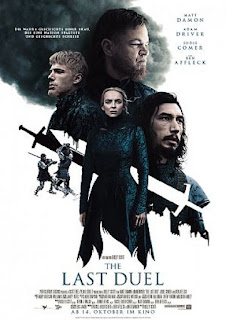
The Last Duel (2021)

The Last Duel header1
Adam Driver and Matt Damon fight The Last Duel in medieval France

Director: Ridley Scott

Cast: Matt Damon (Sir Jean de Carrouges), Adam Driver (Jacques Le Gris), Jodie Comer (Marguerite de Carrouges), Ben Affleck (Count Pierre d’Alencon), Harriet Walter (Nicole de Buchard), Alex Lawther (King Charles VI), Marton Csorkas (Crespin), Željko Ivanek (Le Coq), Tallulah Haddon (Marie), Bryony Hannah (Alice), Nathaniel Parker (Sir Robert de Thibouville), Adam Nagaitis (Adam Louvel)

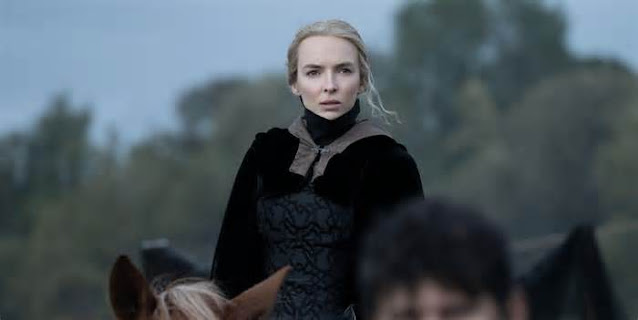
The medieval era had its own solution for “He said, She said”. Let God decide via a fight to the death. After all, He would never let the injured party lose, would he? Scott’s The Last Duel is a dramatisation of one of the last French judicial duels, in December 1386, between Sir Jean de Carrouges (Matt Damon) and his former friend Jacques le Gris (Adam Driver), after Le Gris is accused of raping Carrouge’s wife Marguerite (Jodie Comer). Scott’s Rashomon-inspired film shows the events leading up to the duel from all three characters’ perspectives.

The three different stories we see are not radically different. Unlike Rashomon – which presented totally different versions of the same events, according to the prejudices or agendas of the storytellers – The Last Duel’s versions stress subtly different reactions or presents different fragments of an overall story. So, for instance, Le Gris and Carrouges remember different elements of a battle. Carrouges recalls the noble charge to save the innocent, saving Le Gris’ life in the final stages of combat. To Le Gris it’s a suicidal charge, in which he saves an unhorsed Carrouge’s life. After the rape, Carrouge remembers offering his wife sympathy; she remembers his anger and demand they have sex at once to “cleanse her” of the stain.

These mixed recollections work best when we see each of them remember a fateful reconciliation meeting between Le Gris and Carrouges (where Le Gris and Marguerite first meet). A wedge has been driven between them ever since Carrouges believed Le Gris cheated him out of both land and his father’s former position. When the two agree to try and put the past behind them, Carrouge asks Marguerite to give Le Gris a kiss of peace. He remembers her surprise and timidity. Le Gris remembers her as being quietly excited with a kiss that lingers. Marguerite remembers a kiss from Le Gris that lingers too long. Small moments like this are where the film is at its strongest, making its concept feel very relevant today in our world of accusation and counter accusation.

But these moments are few and far between. Most of the time there isn’t this subtle variation. Where the film is weakest is when we (frequently) see the same events, presented the same way, three times. While our perception of Carrouges changes – from the ill-treated noble he sees himself to the sullen, self-entitled whiner everyone else sees – our idea of Le Gris is fundamentally the same (blissfully self-entitled). Fundamentally, when we see events the first time, later versions only really tweak our perception of them rather than challenge it.

You can see this in the rape itself, which we first see from Le Gris’ perspective. The film shows Le Gris’ understanding of consent has been twisted by most of his sexual experience being court orgies with playfully protesting prostitutes. His pursuit of a genuinely unwilling Margeurite around her room echoes exactly the pretend-chases and “chat up lines” he’s used in those earlier scenes, so we understand it’s possible he doesn’t actually understand he’s raped her. But no viewer can see Le Gris’ version as anything other than rape. In fact, the only tangible difference when we see the event from her perspective is that her screams of “No” and “Stop” are louder and the camera focuses more on her anguished face. If the film is presenting any tension about whether this is a consensual encounter or rape, it ends the second we see Le Gris’ story.

This negatively effects the drama – and actually makes Marguerite’s version seem strangely superfluous. You start to feel we might as well see all three perspectives at the same time, as the narrative trick ends up adding little to the film – especially since the film categorically states Marguerite’s version is the truth. Why not just tell the whole film from her perspective in that case? It also doesn’t help that Marguerite goes last – which means until an hour into the film, the character we should be most engaged with and sympathetic towards has stood on the side-lines.

This is particularly unfortunate as the film is striving for a feminist message. The men are callous and self-obsessed, treating women as sex toys or assets – and are praised for it. Marguerite though is intelligent and principled, marginalised by her husband and condemned as a whore when she protests her rape. She pushes her case with determination, despite discovering she will be condemned to burn if Carrouge loses (he of course is only in his own honour). Her word is only good if backed a man, and she is powerless to defend her innocence.

It’s the lot of medieval women. Harriet Walter (rocking a bizarre appearance, straight out of David Lynch’s Dune) as Carrouge’s mother tells Marguerite the same thing happened to her, but she considered it pointless (and dangerous) to press charges. What we see of the judicial system is ruthlessly unjust and misanthropic, with women harangued to confess their guild for tempting men.

But it doesn’t quite click together. It’s a shame, as many scenes are highly effective. The rape – both times we see it – is alarming. The final duel is brilliantly shot and hugely tense, not least because Marguerite stands literally on the top of an unlit bonfire watching every blow. Scott’s shoots the film with the same blue-filtered beauty he gave to the early scenes of Kingdom of Heaven.

There is of course an oddness in seeing such American actors as Damon, Affleck and Driver in period setting. The accents are an odd mix: Comer basically uses her regular (non-Scouse) performance voice, Damon does a gravelly version of his own, Walter an American twang to match Damon, Affleck is halfway to plummy Brit, Driver flattens his Californian tones. Damon is pretty good as the sulky, surly Carrouge who gets less sympathetic the more we see him, Driver is suitably charming on the surface but selfish. Comer plays wounded injustice extremely well and brings a lot of emotion to a difficult role. Affleck has the most fun, flouncing around in a blonde wig as a lordly, hedonistic pervert who likes nothing more than belittling Carrouge.

The Last Duel is part way to a decent film, but it just lacks that little bit extra to make it really come to life. Its alternative versions of the truth don’t illuminate as much as they need to – even if they are at points pleasingly subtle in their differences. It has an admirable feminist message, but defers most of it to the second half of the film (were they worried about sidelining the famous male actors?) and it’s concern that we should not doubt Marguerite at any point does undermine its drama. Handsomely filmed, it doesn’t make the impact it should. Perhaps that’s why it was one of the leading box office disasters of the Covid Pandemic?

Saving Private Ryan (1998)

Tom Hanks leads a platoon of men through incredible sacrifice in Spielberg’s landmark Saving Private Ryan

Director: Steven Spielberg

Cast: Tom Hanks (Captain John Miller), Edward Burns (Pvt Richard Reiben), Matt Damon (Pvt James Francis Ryan), Tom Sizemore (Sgt Mike Horvath), Jeremy Davies (Cpl Timothy Upham), Vin Diesel (Pvt Adrian Caparzo), Adam Goldberg (Pvt Stanley Mellish), Berry Pepper (Pvt Daniel Jackson), Giovanni Ribisi (Medic Irwin Wade), Dennis Farina (Lt Col Anderson), Ted Danson (Cpt Fred Hamill), Harve Presnell (General George Marshall), Bryan Cranston (Colonel), Paul Giamatti (Sgt William Hill), Nathan Fillion (“Minnesota” Ryan)

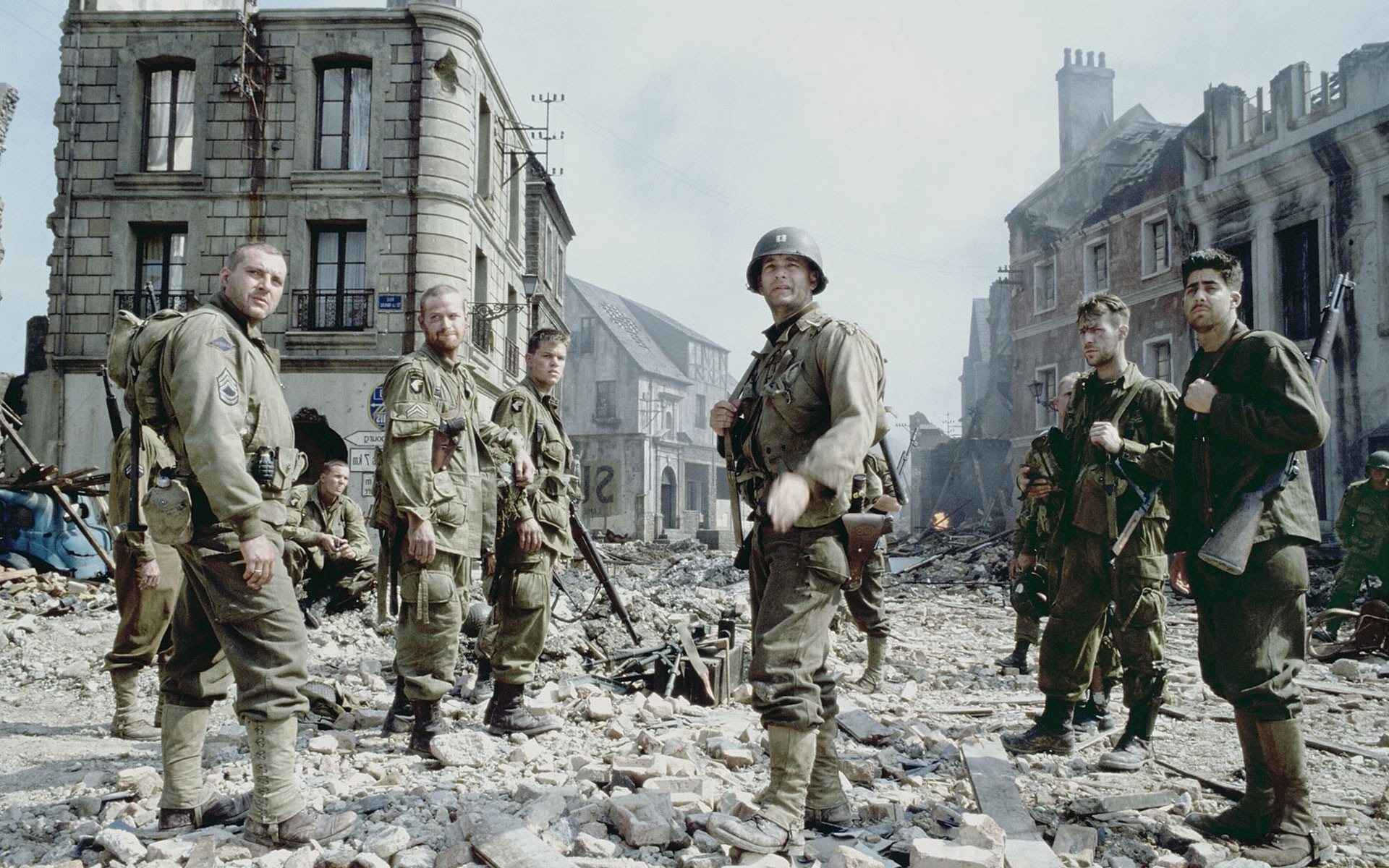
There are few films you can categorically point to as changing cinema. Saving Private Ryan is one of those films. Before it, there had never been a war film like it: afterwards there would not be war film uninfluenced by it. Spielberg turned the Second World War from the picturesque setting for an all-star epic, into something immediate, ground-level and utterly, terrifyingly all-consuming. The “boots on the ground” vision of war, that didn’t shirk once from capturing the horrific cost and terror of war and had no suggestion of adventure. Hollywood would look at war differently ever more.

From landing at Omaha beach on D-Day, the film follows a single week in the lives of Captain John Miller (Tom Hanks) and a platoon of soldiers, sent on a ‘public relations’ mission. Three brothers have all been killed in action, with their mother receiving notification of their deaths all on the same day. The top brass decide she has suffered enough and that her last remaining son James (Matt Damon) should be bought home. Problem is, he’s a member of the 101st Parachute Airborne – and no one is quite sure where he’s been dropped. Miller and his men are to find Ryan and bring him home – despite the resentment of his men that their lives at being put at risk to save one man.

Any discussion of Saving Private Ryan begins with that Omaha beach sequence.  It’s hard to even begin to understand the impact this sequence had on audiences in 1998. Quite simply, we’d never seen anything like it. Expectations before its release was that Spielberg was producing a crowd-pleasing, Dirty Dozen style men-on-a-mission film. No one expected a savage, brutally realistic vision of what warfare actually meant, with its brutal, swift and random death.

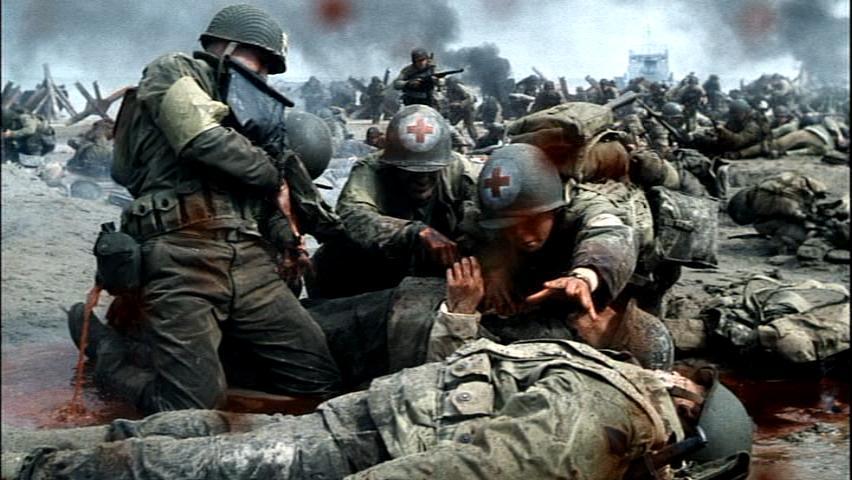
The sequence starts with Spielberg panning across the faces of soldiers in the landing craft Miller and his company are riding to the beach. He lingers on these faces – only for them to be promptly ripped to pieces by machine-gun fire the second the doors open. Omaha beach is a savage nightmare, the closest thing you can image to hell on earth. Machine gun bullets rip down relentlessly on the pinned down soldiers – and the camera throws us right in there with them.

With drained out colours, hand-held camerawork (some of it operated by Spielberg himself), mud, blood and sand spraying up into the lens, it’s all-consuming. The film’s sound design is awe-inspiringly good, every single sound (the splatter of sand, the thud of bullets ripping through flesh, the snap of rifles) builds into a shatteringly immersive crescendo with no respite. Spielberg doesn’t shy away from the horror. Bodies are mutilated by bullets. Heads are caved in. A soldiers walks the beach, carrying his own severed arm. Medics treat soldiers drowning in their own blood, crying for their mothers. Bullets claim the brave and scared alike.

You watch and you can’t believe anyone emerged from this alive. The cost of getting off the beach is seismic. The visceral horror doesn’t let up over the first 25 minutes as Miller’s company – suffering huge losses – struggles from landing craft, to beach, to storming the German defences. Our ear drums are assaulted by bullet sound effects, and every single step shows us some new horror. There are no long-shots, no cut aways and the only peace we get is when we share with Miller his tinnitus from narrow-escape explosions. The brutality is even-handed – after the massacre on the beach, the US soldiers show no mercy to the Germans (two of whom are gunned down surrendering and begging for mercy), officers urging their men to “let ‘em burn” as on-fire Germans fall from incinerated machine gun banks.

It’s extraordinary – and sets the tone. Combat is immediate, visceral, terrifying, brutal and always carries a heavy cost. The human body is infinitely fragile and every death – high or low – is met with fear, loneliness and regret. Veterans had to leave the cinema during screenings to compose themselves, and viewers were stunned into silence. You could watch Saving Private Ryan and feel you never even began to understand what war was until then – and that even with this taste you can still never understand it. It’s a brutal zero-sum game with only losers.

Any film would struggle to follow that: but Saving Private Ryan does a fabulous job of maintaining the dramatic force of its opening sequence before its book-end final battle, as the remains of the platoon join Ryan’s unit in a seemingly-hopeless defence of a vital bridge in a bombed out town (another grim, gripping and stunning slice of war with the added kick to the guts of watching people we have spent the entire film with being blown away and ripped apart by bullets).

Spielberg’s film explores what makes the cost of this worth it. It’s a film about the power of sacrifice: the sacrifices the men make to find Ryan, but on a larger scale the sacrifices this whole generation made for those that were to come. When Miller urges Ryan to “earn this”, he’s speaking to us all. Men like him died to give us the chance to make the world a better place. The sacrifices of this platoon for one man is all part of the same price this entire generation made for the ones that were to come.

And one of the things sacrificed is the rules of humanity. Prisoners are shot, unarmed men are killed – if you play this game, you play to win. Thrown into Omaha, the audience understand this – meaning we feel as little patience with translator Upham (a fine performance of out-of-his-depth-fear from Jeremy Davies), who whines about right-and-wrong, as his colleagues, who understand living-and-dying is the only issue out here anyone cares about.

Understanding this depends on relating to the soldiers – and the cast has been hand-picked for that. None more so than Tom Hanks, channelling his relatability into a home-spun, ordinary man forced into extraordinary and brutal situations that have left a shattering mark on him. With an intermittent tremor in his hand, Hanks embodies the stoic sacrifice of a generation. It’s a landmark performance. There are many fine performances in the film, Tom Sizemore (battling drug addiction and a promise of instant dismissal if he relapsed) perhaps the stand-out as his hardened sergeant.

If Saving Private Ryan has a fault, it’s that it falls into Spielberg’s sentimentality trap. Sometimes the man can’t help himself. The film is bookended by an old man visiting war graves – someone we discover at the film’s end is Ryan himself. As if somehow still not trusting us to get the message about sacrifice and horror the film has so effectively communicated, old-man-Ryan explicitly tell us, tearily asking his wife if he has led a “good life”. It’s a hammer-home the film doesn’t need and dents its final impact. (I’d also say the film has endless empathy for US Joes, but sees all the Germans as a ruthless swarm fighting an evil cause, although many of them were also as scared).

But these are quibbles in a film that does so much right – and which reinvented an entire genre. It’s one of Spielberg’s masterpieces, a stunning display of directorial skill and immersive film-making, and its impact never seems to lessen. It gets as close as any film can to showing us war – and yet it is still a million miles further away than most of us (thankfully) will ever have to get.

The Departed (2006)

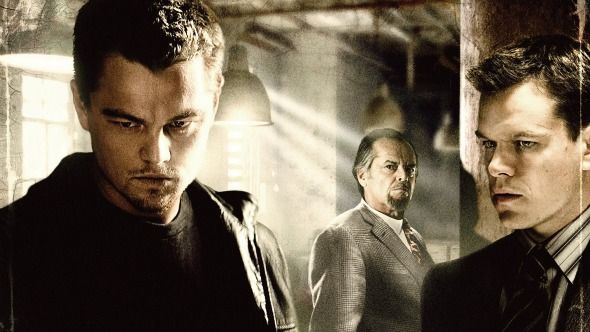
DiCaprio, Nicholson and Damon runaround in Scorsese’s cartoonish Oscar-winner The Departed

Director: Martin Scorsese

Cast: Leonardo DiCaprio (Billy Costigan), Matt Damon (Colin Sullivan), Jack Nicholson (Frank Costello), Mark Wahlberg (Sean Dignam), Martin Sheen (Captain Queenan), Ray Winstone (Mr French), Vera Farmiga (Dr Madolyn Madden), Alec Baldwin (Captain Ellerby), Anthony Anderson (Trooper Brown), James Badge Dale (Trooper Barrigan), David O’Hara (Fitzy), Mark Rolston (Tim Delahunt)

It’s one of those historical oddities that Scorsese finally won his Oscar for his lightest (comparatively speaking) most out-right entertaining film. I’ll confess I’ve never been a huge fan of The Departed. It won Best Picture in a year without a clear front runner, with the Academy feeling an overwhelming sense that Scorsese was ‘due a win’. The Departed is certainly entertaining, but as a great big, violent cartoon which feels like a different universe from the director’s real gangster masterpieces, such as Goodfellas, Mean Streets and Casino. The Departed also can’t hold a candle to Raging Bull, Taxi Driver and The Aviator (I know that last one is controversial). Still it may be just a bit of fun, but at least it is fun.

Boston is a city where the Irish community is split, between cops and robbers. Crime lord Frank Costello (Jack Nicholson) gets a man on the inside by pushing his protégé Colin Sullivan (Matt Damon) to train as a police officer so he can get tips from the inside. Simultaneously, Captain Queenan (Martin Sheen) recruits officer trainee Billy Costigan (Leonardo DiCaprio), an honest young man with a dodgy family, to go under cover in Costello’s gang. Both moles feed information on their ‘side’ to the other – but the stakes heighten as they both become aware of the others existence and race to unmask the other’s identity.

Based on a Hong Kong action film, Infernal Affairs (which has the same plot, but tells the story in about half the time). The Departed takes the basic template and ratchets almost everything up to an even more frenzied pitch. Scorsese throws in fast-cutting visual flair, makes effective use of montage and lays The Rolling Stones over the soundtrack (he really does love Gimme Shelter doesn’t he?). It’s hard to tell, watching The Departed, how much Scorsese’s tongue was in his cheek. This could very easily be a parody piss-take of Casino, with its bright-lights, extreme violence, effing and jeffing and toxic masculinity.

What is clear is that The Departed has all the logic of a playground game. Nothing ever feels particularly real, all emotions and personalities are dialled up to eleven. Big name actors have fun with big, chewable dialogue fully of sweary one-liners. There is barely any sense of a wider world, The Departed really being a chamber piece involving a few key characters, played out in a graphic novel style. In real life both Costigan and Sullivan would have been uncovered in seconds (it makes Line of Dutylook like a fly-on-the-wall documentary). If it has links to any Scorsese film, it’s probably Cape Fear, which was a similar heightened pastiche (of Hitchcock). Don’t get me wrong, there is a lot of fun in watching Scorsese essentially take himself off, and it’s nice to see him having fun, but the film’s constant resorting to foul-mouthed, cartoonish action means depths are missed.

For starters, the film touches on but never really dives into the complex divided loyalties Costigan and Sullivan feel for their sides. After years (at least I think its years, there is very little sense of timeline in the film) pretending to serve one master while actually serving another, you’d expect an exploration of loyalty being increasingly torn between these two masters. It’s not a sense that comes across in the film. Instead, both of them feel fear of their false master and resentment to the true master. Both want to retire – seemingly to the same (lawful) side. The film spends time on the psychological impact of the constant stress of living a lie – but its analysis of this is skin-deep, trauma exhibiting as a bubbling, unpredictable temper (especially with DiCaprio’s Costigan) rather than really giving us an understanding of the psychological trauma. All the final shots in the world of a rat crawling across a railing in front of the court house, doesn’t translate into insight.

The film also misses the mark in exploring the dangerous masculinity of this world. The intense male attitudes here – with the macho posturing and the constant use of sexual and homophobic slurs – are obviously part and parcel of this world. But you feel a smarter film would have unpacked this more, rather than using it for punchlines and chuckles. There’s only really one woman here – a female psychiatrist who (obviously) becomes involved with both men – and you feel more could have been made of how the destructive bloodshed of this film is at least partly powered by overgrown schoolboys on both sides burning the world down to prove their manliness.

But this film is designed as an entertainment, not the sort of insightful character study Scorsese has delivered in the past. And with its primary colour pallet and shots – like a character falling from a building, and low-angle Dutch angle shots of characters checking phones – that seem inspired by graphic novels, it’s clear that we are not meant to take things too seriously here.

That carries across to the performances, many of which are Grand Guignal in their excess. None more so than Jack Nicholson in a performance of such flamboyant “Jack-ness” that it will either delight you or make you wonder whether Scorsese gave him any limits at all. The cast is roughly split between the OTT and the method. Mark Wahlberg follows Nicholson’s lead as a foul-mouthed, permanently angry cop, with rigid morals (he was Oscar-nominated and gets most of the film’s funniest lines) while Baldwin showboats amusingly on the chewy dialogue. At the other end, Sheen brings a fatherly warmth to Queenan while Winstone mumbles a lot as Costello’s number two.

In the leads, DiCaprio brings an edgy, firecracker intensity to Costigan, a man who seems constantly on the edge of a nervous breakdown. Damon, by contrast, underplays rather effectively as the seemingly straight-laced Sullivan, letting the Boston accent roll around his tongue and riffing effectively off his “boy next door” looks. Vera Farmiga does decent work as the woman caught in the middle – even if she’s not 1% convincing as a trained trauma psychologist.

That doesn’t matter though in the heightened, cartoony posturing, blazing gun battles and operatic shouting that makes up the crazy world of The Departed. Scorsese lifting the Oscar for this is rather like David Hockney winning the Turner Prize for a doodle. I enjoyed it a lot more this time around, but it’s still a big, crude, graphic novel, something that looks and sounds clever., but is only a B-movie imitation of Scorsese’s finest work. The Departed is frothy but misses the mark when it aims for true thematic or character exploration.

Invictus (2009)

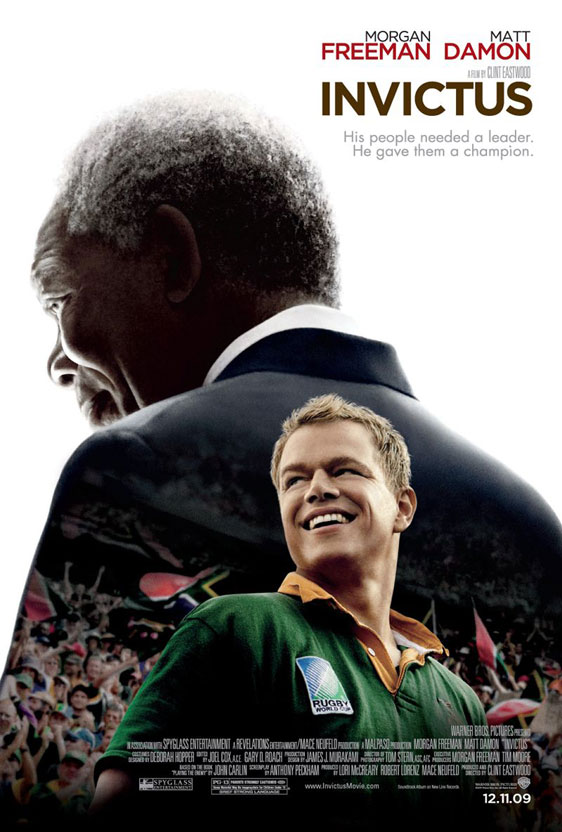
Morgan Freeman perfectly captures Nelson Mandela in Invictus

Director: Clint Eastwood

Cast: Morgan Freeman (Nelson Mandela), Matt Damon (Francois Pienaar), Tony Kgoroge (Jason Tshabalala), Adjoa Andoh (Brenda Mazibuko), Julian Lewis Jones (Eitenne Feyder), Patrick Mofokeng (Linga Moonsamy), Matt Stern (Hendrick Booyens), Marguerite Wheatley (Nerine Winter)

Sometimes, very rarely, a man emerges perfectly suited to his time and place. Perhaps there is no finer example than Nelson Mandela, who emerged from a hellish imprisonment for 27 years on Robben Island to become the first black President of South Africa. The man who could have sparked – and arguably would have had the sympathy of many if he had – a wave of policies that inflicted the same unfairness and injustice on the white population that they had poured onto the black for decades. Instead he chose reconciliation and forgiveness. Can you imagine many other political leaders saying when his people were wrong – and that as their leader, his duty is to tell them so? Invictus would be triumph even if it all it did was remind us of the vision and greatness of Mandela. Fortunately it does more than this.

Like many modern film biographies, the film focuses on a single moment or point in history to explore in microcosm a complex man and his dangerous times. When Mandela (Morgan Freeman) comes to power, South Africa is a country seemingly doomed to division. The whites fear and resent the new power the black population has. The black population is keen on vengeance after years of persecution. Mandela however knows there must be a new way: the hatred propagates only itself, and for the country to move on it must come together as one Rainbow Nation. But in this new nation, there are symbols that are particularly divisive. South Africa’s rugby team, the Springboks their green and gold colours a symbol of apartheid, are the most visible of these targets.

But Mandela understood that, to bring the country together, he must ease the fears of the white population that the end of the apartheid meant an apocalypse for everything they held dear. He pushes to preserves the Springboks name and their colours. He gives the team his backing, and enlists Springbok captain Francois Pienaar (Matt Damon) to help him. Because Mandela knows that the approaching Rugby World Cup, hosted in South Africa, is a glorious opportunity to show the world that the nation is solving its problems. And Mandela is shrewd enough to know that sport can bring people together in ways few other things can. Against all the odds, rugby will become the tool he will use to start the nation healing.

Eastwood’s film is sentimental in the best possible way. It presents a stirring true-life story with a simplicity and honesty that never overpowers the viewer or hammers them over the head. Eastwood also allows space to show in small but telling ways how dangerously divided this country is. From the Presidential staff who start packing up their desks the morning after Mandela’s win, convinced the new President will show them all the door (wrong), to the slow fusing together into one team of Mandela’s personal security staff (black) and their colleagues from the secret service (all white – many of whom arrested Mandela’s colleagues in the past). Even liberal whites like the Pienaar’s keep a black maid as a servant, while ANC party members push for a sweeping aside of every vestige of the old regime.

It’s a dynamite environment in which a single man can make a difference. And with a combination of the sort of patience you learn from 27 years living in a small cell, charm and an unbelievable willingness to turn the other cheek, Mandela is that man. While Eastwood’s film allows beats to remind us he is just a man – his difficult relationship with his family gains a few crucial scenes – the film is also unabashed in its admiration for this titan. And rightly so. Mandela’s smile, his humbleness and his determination to both do the right thing and to avoid provocation is awe-inspiring (his white security guards are stunned that he seems not to hear the abuse he is showered with when attending a rugby game early in his Presidency – he hears and sees everything, their black colleagues assure them).

Morgan Freeman is practically a Hollywood symbol of dignity and righteousness – if he can play God he can play Mandela – and his portrayal of the great man is a perfect marriage of actor and subject. Capturing Mandela’s speech patterns and physicality perfectly, he also brilliantly seizes on his character. This is a man who can put anyone at their ease, who humbly speaks of his excitement of meeting Pienaar, who we see putting hours into learning the names and backgrounds of every member of the South Africa Rugby squad. He’s a realist who knows that change needs time, political muscle and sometimes a willingness to cut corners and force the issue – but he’s also a man to whom principle drives all. Freeman’s Oscar-nominated performance is outstanding.

The strength of the film lies in the simple, stirring hope that it derives from seeing the struggle that even small triumphs need. As we see personal relationships begin to grow – from a security team that segregates itself in their office to eventually enjoying a kick-about together – and the growing sense of community in the nation as the world cup draws near, it’s hard not to feel a lump forming in the throat. The film doesn’t overegg this, but allows the moments to speak for themselves.

But it’s also a sport film – possibly the highest profile rugby film since This Sporting Life. The film recreates the drama of that World Cup very well – as well as the intense physicality of rugby as a sport. Matt Damon physically throws himself into it, as well as playing Pienaar with a natural ease carefully allowing his sense of national duty and awareness of being part of something larger than himself to grow (although an Oscar nod is still a little generous). The camera throws us wonderfully into the games, and the film largely manages to avoid the manufactured drama of the game (largely because what happened in real life was often dramatic enough!)

Invictus may not be the most revolutionary film ever made – and catch it in the wrong moment and you might think it was a sentimental journey – but it’s made with a matter-of-fact, low-key charm that I think manages to not overwhelm the heart. Instead it manages to produce a great deal of emotion from its carefully underplaying. With a fantastic performance from Morgan Freeman, it’s a wonderful tribute most of all to a very great man, who changed his country and the world for the better through the power of forgiveness – a power he was able to invest a whole nation with.

Ford v Ferrari (Le Mans '66) (2019)

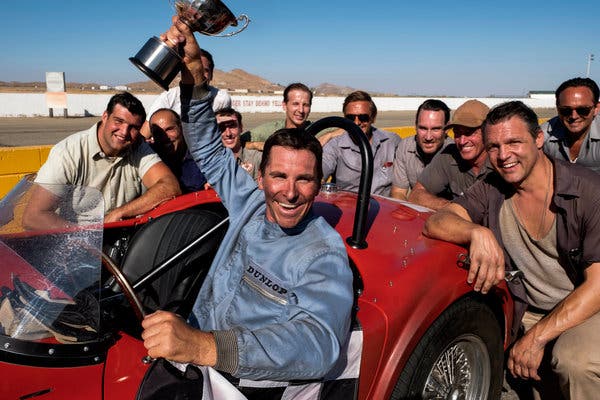
Christian Bale as maverick driver Ken Miles in the functional but fun Ford v Ferrari

Director: James Mangold

Cast: Matt Damon (Caroll Shelby), Christian Bale (Ken Miles), Jon Bernthal (Lee Iacocca), Caitriona Balfe (Mollie Miles), Tracy Letts (Henry Ford II), Josh Lucas (Leo Beebe), Noah Jupe (Peter Miles), Remo Girone (Enzo Ferrari), Ray McKinnon (Phil Remington), JJ Feild (Roy Lunn), Jack McMullen (Charlie Agapiou)

There are few more exhilarating things than going really, really damn fast. It’s a primal glee that James Mangold’s racing film Ford v Ferrari (or Le Mans ’66 as it seems to be known over here) taps into, roaring with exciting, fast-paced energy lashed onto a good old buddy movie as two plucky underdogs get the chance to overturn the champs and claim the title. It’s the story of any number of sports movies, but it still works here. It ain’t broke, after all.

It’s the early 1960s and the sales of the Ford Company are down: the baby boomers don’t want to be driving the dull, safe cars of their parents. They want something super sexy. Despite his hesitation Henry Ford II (Tracy Letts) is persuaded the best way to get that sexy image is to get a racing car – and if he can’t buy Enzo Ferrari’s (Remo Girone) company, then by hell he’ll spend whatever it takes to give Ford the best racing team in the world. Targeting the Le Mans 24 hour race, he recruits retired-driver-turned-designer Caroll Shelby (Matt Damon) to mastermind building a car – and Shelby recruits demanding, prickly, maverick Brit driver Ken Miles (Christian Bale) to help him design it and then drive the thing. But what to do when Miles’ blunt plain-speaking and individuality looks like it won’t make him the best spokesman for selling Ford cars?

On the surface Ford v Ferrari is pretty much your standard Sports film. Two teams, an underdog and a champion, a pair of mavericks who think outside the box, the struggle for success – met with initial failure before victory – all told through a familiar structure of brothers-in-arms, obstructing suits, supportive wives at home and plenty of carefully detailed expert recreation of sporting events. It’s a collection of familiar ingredients, but very well mixed together by Mangold (one of Hollywood’s finest middle-rank directors, a sort of heir to Lumet).

The real twist however is that the rivalry is not really about Ford and Ferrari. In fact the film might have been better titled Ford vs Ford. Because the main thing standing in the way of Shelby and Miles isn’t Ferrari – with whom they actually have a rivalry built on mutual respect – but with the bottom-line, sales-first suits who are backing them. It’s a parallel with everything where sales and the buck count more than anything, but you feel Mangold might well have related it most to Hollywood producers. What is Ken Miles, but the genius auteur director who the money-men just won’t trust to churn out the mass-market product they need to lift the share price? Henry Ford (very drily played by Tracy Letts) may have one visceral moment of excitement when placed in the passenger seat of a fast car – but fundamentally he doesn’t give a damn about the sport at all, except how it could help him shift a few more Mustangs.

Shelby and Miles’ struggles are not with the car, the engineering problems or Ferrari – they’re with the Ford VPS (in particular Josh Lucas’ incomparably smarmy Leo Beebe, a corporate man to his fingertips who probably bleeds stock tips) who want a product they can sell, far more than a product that can win. Obstacles are constantly thrown towards Shelby and Miles from their bosses – everything from engine design to race strategy receives a series of notes, comments and instructions from the Ford hierarchy. The choice of driver is most important of all – and they don’t want the demanding Ken Miles behind the wheel of their car. Because mavericks like that don’t sell Mustangs.

As Miles, Christian Bale gives a performance of pure enjoyment. Juggling a version of his own natural accent (which sounds odd – part cockney, part scouse – but works brilliantly) Bale gives the part just the right amount of that peculiar chippy Britishness, that resentment of people in authority, that hostile reaction to the stench of bullshit. Driven, determined but totally unwilling to suffer fools – exhibited almost immediately with him dressing down a prat who isn’t a good enough driver to handle the sports car he’s purchased – Miles is clearly never going to be the company man Ford wants. But with his passion for “that perfect lap”, his determination to work night and day to achieve that and – in a nice change – his warmth for his family and equal decision making with his wife (a slightly thankless part for Catriona Balfe) he’s a character you quickly take to your heart. It’s a great, charisma-led performance from Bale, who also gets nearly all the best lines.

It does suck a bit of the oxygen from Damon, who plays the straight-man as Shelby who is just as passionate but can (just about) speak Corporatese. With a Texan drawl, Damon does the legwork of the movie extremely generously, quietly driving many of the scenes and handling much of the more emotional arc of the movie. The two actors form a superb chemistry – peaking with a hilarious fight scene, your chance to see Batman clobber Jason Bourne with a loaf of bread (both actors, famous for muscular fight scenes, clearly enjoy a fight scene straight out of Bridget Jones). It’s a bromance that really works – and carries at certain points a genuine emotional force.

Mangold packages this material perfectly – and the racing sequences are brilliantly done, engrossing, speaker-shaking displays of racing, fabulously edited. The film itself is probably too long, and the sections away from the race track are sometimes so familiar in their structure and tone that they sometimes drag a little bit, as if the fierce momentum of the racing scenes can’t carry across to the rest of the film. But with fine performances and expert handling, this is certainly a number you’ll be happy to test drive.

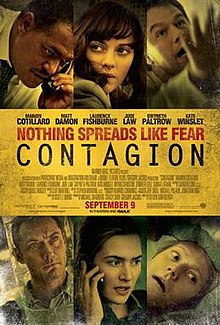
Contagion (2011)

Laurence Fishburne leads the drive to fight a pandemic in Soderbergh’s outbreak thriller Contagion

Director: Steven Soderbergh

Cast: Marion Cotillard (Dr Leonara Orantes), Matt Damon (Mitch Emhoff), Laurence Fishburne (Dr Ellis Cheever), Jude Law (Alan Krumwiede), Gwyneth Paltrow (Beth Emhoff), Kate Winslet (Dr Erin Mears), Jennifer Ehle (Dr Ally Hextall), Elliott Gould (Dr Ian Sussman), Chin Han (Sun Feng), Bryan Cranston (Rear Admiral Lyle Haggerty), John Hawkes (Roger), Enrico Colantoni (Dennis French)

It’s a fear that has gripped the world several times this century: the pandemic that will wipe us all out. It’s the theme of Steven Soderbergh’s impressively mounted epidemic drama, which mixes in an astute commentary on how the modern world is likely to respond to an event that could herald the end of times.

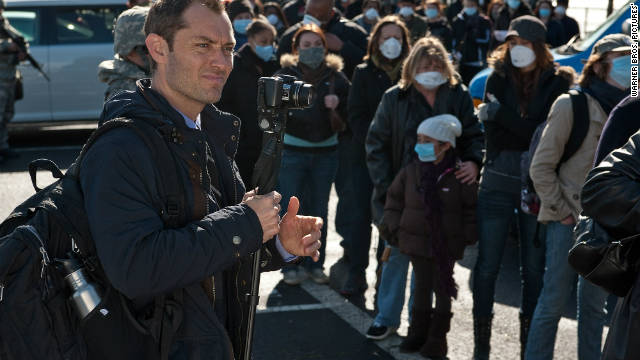
Beth Emhoff (Gwyneth Paltrow) is a businesswoman flying back to Minneapolis from Hong Kong (with a stopover in Chicago for a bit of rumpy-pumpy with an ex-boyfriend) who becomes Patient Zero for an outbreak of a virulent strain of swine and bat flu that proves near fatal for the immune system. While her stunned husband Mitch (Matt Damon) is immune, most of the population aren’t. Across the world, health organisations swing to action – from Dr Ellis Cheever (Laurence Fishburne) and Dr Ally Hextall (Jennifer Ehle) at the CDC, to Dr Erin Mears (Kate Winslet) running things on the ground in Minneapolis to Dr Leonara Orantes (Marion Cotillard) investigating for the WHO in Switzerland and Hong Kong. As populations panic, conspiracy-theorist blogger Alan Krumwiede (Jude Law) sees this as an opportunity for personal promotion and enrichment.

Soderbergh’s clinical filming approach makes for a chillingly realistic piece of cinema realitie, possibly one of the director’s finest films in his oddly-uneven career. Soderbergh presents events as they are, laying out the film like a giant Pandemic board. Captions regularly tell us what day we are on from initial outbreak, as well as the populations of the various cities the plot lands us in. The film is shot with a documentary lack of fussiness, and largely avoids either sensationalism or the sort of Hollywood virus clichés of films like Outbreak. It also succeeds in largely avoiding heroes or villains (even the usual baddies for this sort of film, Big Phama companies, are shown as part of a potential solution not the problem) – even the outbreak is largely an act of chance, prompted by mankind’s actions, but there is no reveal that shady suits or military types are behind it all.

Watching the film today in the light of Brexit and Trump it actually appears strikingly profound and prescient in its depiction of the knee-jerk paranoia and wilful blindness of internet and media pundits who believe every opinion is equal and valid regardless of expertise. Alan Krumwiede (a slightly pantomime performance from Jude Law, complete with bad hair, bad teeth and an Aussie accent perhaps intended to echo Julian Assange) all but denounces the views of experts as “fake news”, claims his opinions on the causes and treatment of the disease are as valid as the expert professionals (all but saying “I think we have had enough of so-called experts”), uses his unique hit count as evidence for the validity of his (bogus) conspiracy theories and makes a fortune peddling a snake-oil natural cure which he claims saved his life (and leads to millions of people ignoring the proper precautions and treatments recommended by the WHO and CDC). 

Soderbergh shows that this sort of crap is as much a dangerous pandemic as the disease itself, encouraging an atmosphere of fear and hostility. At the time it just seemed a bit snide to say “a blog is not writing, it’s graffiti with punctuation”, but today, as websites spout up presenting all sorts of horseshit as legitimate fact, this film looks more and more ahead of the curve in its analysis of a public disillusioned and untrusting of authorities can turn their attention and trust to a venal liar who claims to be a tribune of the people, but is interested only in lining his own pocket. 

But then that’s one of this film’s interesting psychological points. If there is an antagonist in this film, it’s human nature itself. The “wisdom of crowds” is continuously a dangerous thing, as areas devolve into rioting and looting. The bureaucracy of local and international governments causes as many problems as the disease: even as bodies pile up in Minneapolis, Kate Winslet’s on-site CDC crisis manager must bat away furious lackeys of the State Governor, demanding to know if the federal government will cover the extra medical precautions. Announcements of public danger are pushed back until after Thanksgiving, so as not to have a negative impact on the holiday. The decent Dr Cheever, who unwisely leaks news of a lockdown of Chicago to his fiancée, is thrown to the dogs by the government who need some sort of scapegoat they can blame the whole mess on.

If our enemies are red tape and the selfish rumour-mongering of the unqualified and the self-important, acts of heroism here are generally rogue moments of rule-benders. A scientist at a private pharmaceutical company continues his work after being ordered to destroy his samples (and then shares his crucial findings about the disease with the world, free of charge). CDC scientist Ally Hextall tests a crucial antibody on herself because there simply isn’t time to go through the lengthy trials needed (needless to say Krumwiede uses this as further evidence that the outbreak is a government stitch-up). 

Alongside all this, Soderbergh’s detailed direction and editing chillingly chart the spread of the disease. Having explained carefully how it can be spread by touch, the camera details every move of infected people, carefully lingering for half a second on every touched item, with the implication clear that everyone else who will touch these objects soon (such as door handles) will themselves become infected. The film pulls no punches in showing the grim effects of the disease (poor Gwyneth Paltrow!) and the resulting chaos as the pandemic progresses, with social structure breaking down, chaos only held in check by mobilising army forces and imposing curfews and a national lottery for cure distribution, with areas off-limits for those not carrying a wristband barcode identifying them as inoculated.

Soderbergh assembles a fine cast for this drama, helping to put human faces to characters who often have to spout reams of scientific and medicinal dialogue. Fishburne is particularly good as a noble and reasonable head of the CDC, who succumbs only once to putting his loved ones first. Matt Damon is the face of “regular joes” as a father going to any lengths to protect his last surviving child. As one reviewer said the “undercard” of the cast is particularly strong, with Jennifer Ehle perhaps the outstanding performer as the eccentrically driven CDC research scientist. Cranston, Gould, Han, Hawkes and Colantoni are also equally fine.

Soderbergh’s film was a bit overlooked at the time, but rewatching it again, the more I think it might be strikingly intelligent analysis of our modern world, ahead of its time in understanding how new media and human nature can interact with government and society, and how this can lead to a spiralling in times of crisis. One of his best.

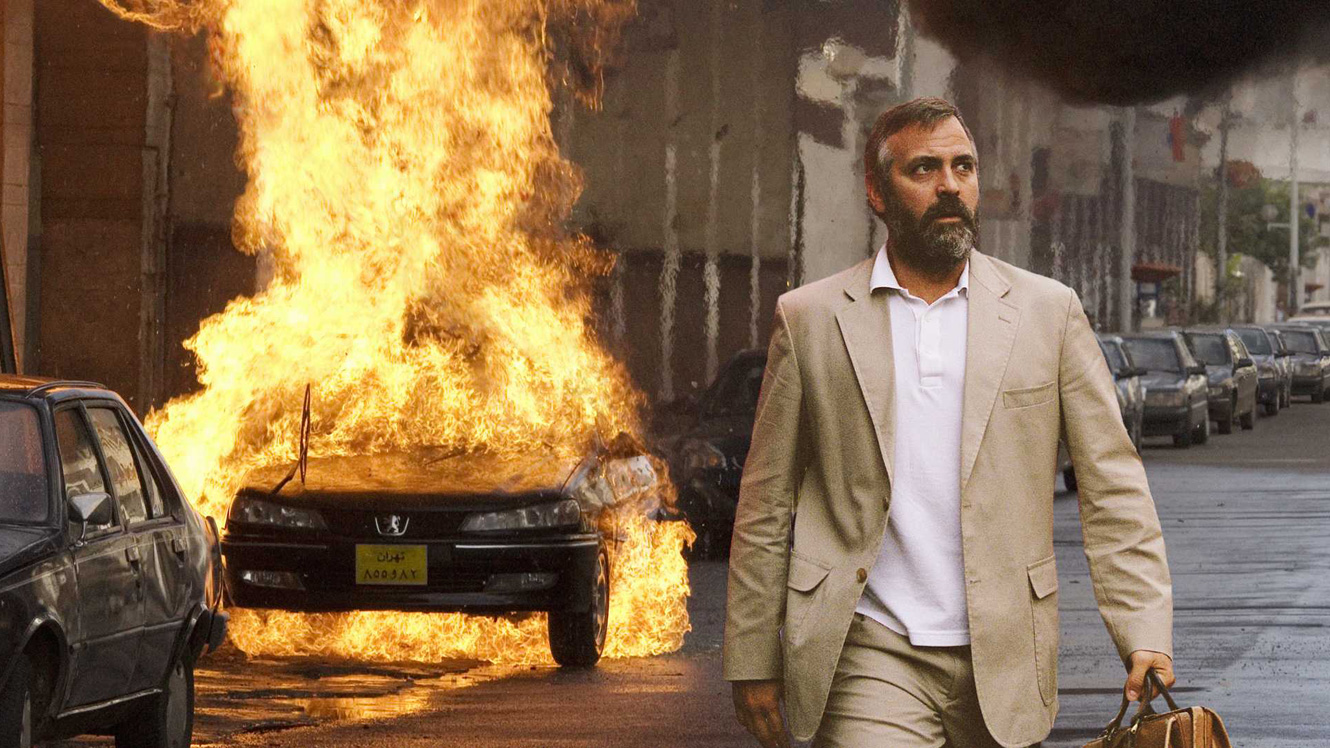
Syriana (2005)

George Clooney gets crushed by the corruption of major oil companies in Syriana

Director: Stephen Gaghan

Cast: George Clooney (Bob Barnes), Matt Damon (Bryan Woodman), Jeffrey Wright (Bennett Holiday), Christopher Plummer (Dean Whiting), Nicky Henson (Sydney Hewitt), David Clennon (Donald Farish III), Amanda Peet (Julie Woodman), Peter Gerety (Leland Janus), Chris Cooper (Jimmy Pope), Tim Blake Nelson (Danny Dalton), William Hurt (Stan Goff), Mark Strong (Mussawi), Alexander Siddig (Prince Nasir Al-Subaai), Mazhar Munir (Wasim Ahmed Khan), Nadim Sawalha (Emir Hamed Al-Subaai), Akbar Kurtha (Prince Meshal Al-Subaai)

The more I think about Syriana the more I think Stephen Gaghan was unlucky. If he had made this story today, you can be sure this would have become a ten episode series on HBO or Netflix. Instead, Gaghan made it into a film in the early 2000s. This means the bloated, over expanded plot gets crammed into two short hours at the cost of much of the emotional and political complexity it needs. Without this Syriana is an angry lecture, something that throws some interesting observations at the viewer, but basically resorts more often to shouting at them about how shit the world is. With its interlinking storylines and “serious” content it looks like intelligent filmmaking, but it’s more like a misguided opportunity.

Gaghan’s film follows four plotlines. Bob Barnes (George Clooney) is a CIA field agent, and expert on the Middle East, coming to end of his effectiveness as a field agent, struggling to get his superiors in Washington to understand the complexities of Middle Eastern oil politics. He is ordered to arrange the assassination of the eldest son of the Emir of a Persian Oil Kingdom Prince Nasir Al-Subaai (Alexander Siddig). Nasir is suspected of the States of harbouring terrorist sympathies. In fact he is a passionate reformer, desperate to modernise his country. Nasir is working with Bryan Woodman (Matt Damon) a representative of an American energy company, whose son is tragically killed by an electrical fault at one of the Emir’s estates during a business trip. The Kingdom is also being courted by a newly merged US oil company Connex-Killen for exclusive drilling rights – with attorney Bennett Holiday (Jeffrey Wright) tasked to ensure that nothing stands in the way of the merger and the riches that will follow. As these three storylines of political and economic oil matters interweave, migrant oil worker Wasim (Mazhar Munir) struggles to find work in the kingdom, and is slowly wooed by extremists.

Gaghan directs his own script and that might be his first mistake, as he is not a confident or imaginative enough director to craft something truly dramatic and engaging out of this highly researched, technical script. Instead, the script – or rather the research behind the script – drives events at every turn and leads to scenes that feel like they should be intelligent but tend to be actors reciting reams of dialogue and stats at each other. Combined with that, the film has a slightly smug preachy tone to it, desperate to let us know how shady and corrupt the world is and how trapped we are on a continual downward spiral of greed and corruption preventing us from improving and changing the world. It doesn’t always make for compelling viewing.

On top of that the complexity of the narrative is often mistaken for smartness, but often feels rather more like rushed and sudden execution of a story that doesn’t really have time to breath. Frankly the story that Gaghan wants to tell needed 8-10 hours of screen time and he doesn’t get it. Instead he throws everything and the kitchen sink into this sprawling study of oil based corruption. From Washington, to private oil firms, to intelligence agencies, to the cash rich families sitting on top of these oil geysers everyone gets a kicking as part of the same sordid mess that has led to the world being dominated by the rich and the regular guys of the middle east being left adrift and easy picking for extremists.

It feels like it should carry real weight, but it never really does because it’s hard for us to get a handle on what is going on half the time and even less harder to care once you realise the film has sacrificed character and motivation for the drive of putting together its polemical view of the world. The film is stuffed with actors, but its striking how few of the characters they play make an impression. Every part is played by a star – except of course for the inexplicable casting of jobbing 1980s Brit TV actor Nicky Henson as an arrogant oil exec, a casting so outlandishly out of place for an actor you are more likely to see in One Foot in the Grave that I kind of love the film for it – but none of the roles is really much more than a cipher.

That’s not to say there isn’t decent work. Christopher Plummer brings great heft and menace to a law firm Washington bigwig. Jeffrey Wright nailed so well playing this sort of on-the-surface meek functionary who quietly learns (albeit reluctantly) to play the game as well as the loudmouths that he has played the same role several times afterwards. Alexander Siddig owes much of his post DS9 career to his exceptional thoughtful and sympathetic performance as an Arab Prince whose forward-thinking is a disaster for the governments who want to keep using his state as an ATM. 

George Clooney won a generous Oscar (it was surely partly a compensation for not winning anything for Good Night, and Good Luck that year) but gets the meatiest role as Bob Barnes, the tired and cynical CIA agent who slowly begins to question the orders he is given and the world he has been working to build for his masters. His story contains the most actual drama, possibly why it stands out – poor George gets a rough ride here, tortured, arrested, bruised and blooded. It’s pretty straight forward stuff for an actor of his quality (Clooney plays it with a world weary outrage) but it’s also the most memorable storyline of a film straining at every moment to be important. 

It’s quite telling actually that the film’s most memorable speech is put into the mouth of Tim Blake Nelson’s oil executive (“Corruption is why we win!”) a character so lightly sketched out he barely appears other than making that speech. It’s a sign of the weakness of the film: characters serve purposes to the narrative and then disappear. These lightly sketched characters act out a lecture on world politics and economic-energy-driven corruption. Syriana needed room to breath in order to become a drama rather than a lecture. Instead it’s a decent workmanlike movie with ideas that it never manages to really express in a way that will make you care. When it tells you rich businessmen love money and powerful politicians love power you’re likely to basically say “yeah. I know. Tell me something new…”