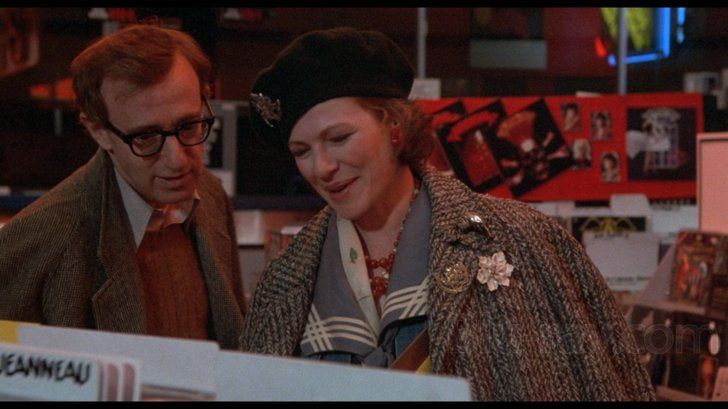
Tag: Max von Sydow

Awakenings (1990)

Awakenings (1990)

Decent performances from the leads can’t save a shamelessly manipulative, saccharine movie

Director: Penny Marshall

Cast: Robert De Niro (Leonard Lowe), Robin Williams (Dr Malcolm Sayer), Julie Kavner (Eleanor Costello), John Heard (Dr Kaufman), Penelope Ann Miller (Paula), Max von Sydow (Dr Peter Ingham), Ruth Nelson (Mrs Lowe), Alice Drummond (Lucy), Judith Malina (Rose), George Martin (Frank), Dexter Gordon (Rolando), Keith Diamond (Anthony), Anna Meare (Miriam), Mary Alice (Margaret)

There can be few things more terrifying than being trapped inside your own body, unable to engage with the world, but to be in a sort of waking coma for years. Imagine how wonderful – and how terrible – it might be if you briefly woke to normality, only to return to your catatonic shell? This actually happened to patients of Dr Oliver Sacks – here re-imagined as Dr Malcolm Sayer (Robin Williams) – in a Bronx hospital in 1969. Looking after catatonic survivors of the encephalitis lethargica epidemic of 1919-30, Sayer discovered they responded to certain stimuli: their name, music, catching balls etc. With an experimental drug he discovers he can restore the patients to ‘life’ – foremost among them Leonard Lowe (Robert De Niro), just a boy when afflicted – only to discover the effects won’t last and they are doomed to return to their coma-like state.

It’s such a terrible thing to think about that it even gives genuine emotional force to Awakenings an otherwise hopelessly manipulative, sentimental film that plays like a TV-Movie weepie. It certainly didn’t need the naked emotional manipulation that washes over the whole thing like a wave, with Randy Newman’s sentimental, tear-jerking score swells with every single heart-string tucking moment. Awakenings is so determined to make you feel every single moment it eventually starts to make the story less affecting than it really is. A simpler, less strenuous film would have been more moving rather than this film almost genetically engineered into ‘life-affirming’.

Everything in Awakenings feels like it is always trying too hard. Every moment is laid on for maximum emotional impact. Adapted from Oliver Sacks’ book chronicling individual cases, it presents a stereotypical Hollywood ‘feelings’ film, with lessons for all. Worse, there is a tedious ‘seize the day’ message that keeps ringing out of the film. The awakening is, of course, not only literal but metaphorical – the patients (and their doctors) ‘awoke’ to appreciate life and living more. It’s hard not to think at times there is something rather patronising about partially using Leonard’s brief experience as a lesson for Dr Sayer to stop being so damn timid and ask a nurse out on a date. As traumatic as it is for Leonard to return to his coma, at least Dr Sayer learned to live a little!

It’s a very fake attempt at a hopeful ending to an otherwise down beat true-story. Dr Sayer is a retro-fitted version of Oliver Sacks, sharing many of his characteristics – but not his sexuality or decades long celibacy – and the film presents him, as Hollywood loves to with geniuses, as a shy, awkward type who no-one of course could expect anything of. He combines this with quiet maverick tendencies, putting the patients first against the ‘numbers-first-risk-free’ obstructionist bureaucrats (represented, of course, by John Heard, though he does thaw a little) who run the hospital and poo-poo his ideas.

Awakenings is full of sickly moments of heavy-handed sentimentality – its opening shot of Leonard as a boy carving his name in a bench under the Brooklyn Bridge tells you immediately one of the first places he’ll go as an adult for a wistful smile – that keep trying to do the work for you. (Of course, all the nurses and cleaning staff offer up cheques to help pay for the patients drugs!) The story doesn’t need it. Just seeing the facts of these vibrant adults emerge for a brief time in the sun is moving enough. Leonard quietly, but with dignity, asking the hospital board for permission to go outside alone is more moving than watching him forcibly dragged from the door by porters or seeing him rant on the mental ward he’s been consigned to as a punishment. We don’t need Sayer to literally tell us some things are too sad for him to film, when we can see it on Williams’ face.

The leads are not always immune to the try hard nature of the film, but they do some decent work. De Niro (Oscar-nominated) brings a touching sweetness to Leonard, essentially a boy who wakes in the body of an adult. There is a genuine wonder in his eyes at the world around him – wonder that transforms into frustration at the continued restrictions placed on his freedom. There is something slightly studied about the physical effects (especially in the film’s final act) but De Niro understands that underplaying and quiet honesty is more moving than when the film pushes him towards grandstanding.

Williams is also very good – if at times a little mannered – as the quiet, awkward Sayer. With the less flashy – but potentially more complex role – he again shows how close humour is to pathos. It’s a performance with several little eccentric comic touches, but wrapped up in a humanitarian shell of earnestness that is quite affecting. It’s a shame that the film constantly undermines his restraint by using every conceivable trick of framing, scoring and composition to wring sentiment from him.

But then that’s Awakenings all over. You can imagine the script covered with annotations along the lines of ‘make them cry here’. And it worked with a great many people, the mechanical nature of the film working overtime to tickle the tear ducts. But the film’s utterly unnatural sense of artifice constantly prevents you from really feeling it. You are always aware of Marshall nudging you to remind you of the unbearable emotion and the tragedy of lives not lived. All easily washed down in a narrative structure as old as the hills – Sayer is an outsider who proves himself, he and Leonard fall out then come back together stronger than ever etc. etc. – that continually reminds you of its functional, manipulative nature.
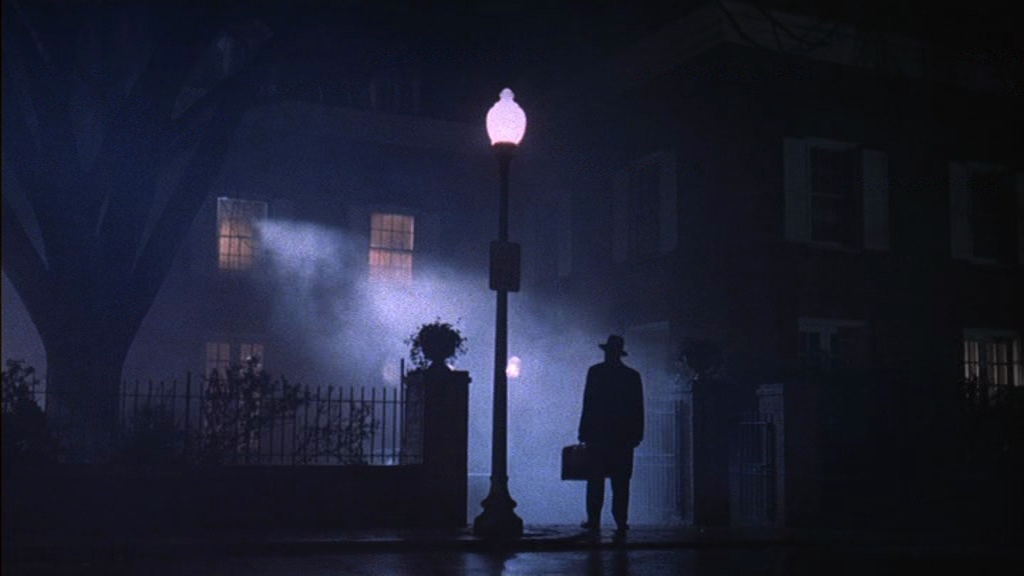
The Exorcist (1973)

The Exorcist (1973)

Unimaginable horrors seep into your mind in Friedkin’s hugely influential terrifying shocker

Director: William Friedkin

Cast: Ellen Burstyn (Chris MacNeil), Jason Miller (Father Damien Karras), Max von Sydow (Father Merrin), Linda Blair (Regan MacNeil), Lee J Cobb (Lt William F Kinderman), Kitty Wenn (Sharon Spencer), Jack MacGowran (Burke Dennings), Father William O’Malley (Father Joseph Dyer)

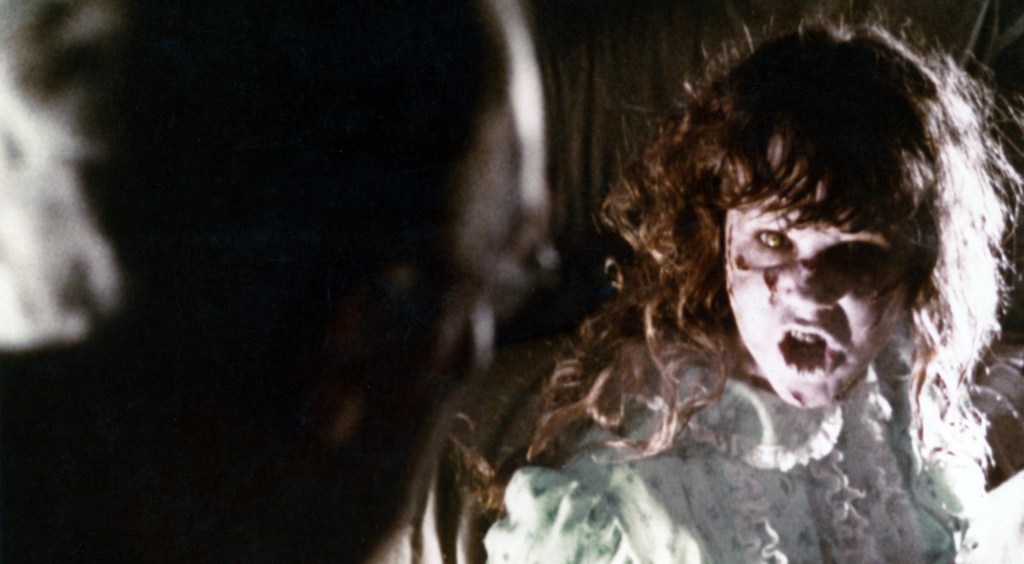
Growing up in the 90s in the UK it was easier to get your hands on a porno than a video copy of The Exorcist. For 12 years the film was banned because its influence was considered so insidious that it would inevitably lead to the corruption of the children who would (of course) dig out a copy to watch. Why was The Exorcist considered so powerful? After all no-one banned The Omen. Perhaps because there is something existential – unknowable, unexplained and unstoppable – at the heart of The Exorcist, while The Omen is a pulpy slasher about imaginatively bumping off Brit character actors. The Exorcist has a poetic nihilism, that reaches into your soul and takes a long-hard squeeze.

Hollywood actress Chris MacNeil (Ellen Burstyn) has problems. Her daughter Regan (Linda Blair) is growing increasingly unbalanced, suffering mood swings and saying the unsayable in grotesquely crude, sexual language. Doctors can’t find anything wrong with her. Above all they can’t explain her increased strength, contortions, the shaking of her bed and the freezing conditions in her bedroom. Could it be that Regan is possessed by a force darker than any we understand? After an unexplained death, Chris has no choice but to consult psychiatrist turned priest Father Damian Karras (Jason Miller) who reluctantly agrees that Satanic forces have taken control of Regan – and that an exorcism by himself and experienced Father Merrin (Max von Sydow) may be the only option.

Adapted from a chilling novel by William Peter Blatty (who also wrote the screenplay and produced), The Exorcist is an all-consuming experience film, directed with immersive power by William Friedkin. Everything in it is designed to unsettle, disturb and dig deep into the fears of the viewer. What could revile us more than a child, her body twisted into the features of a revolting, malign spirit, spouting revolting, bile-filled rants and revelling in a twisted, macabre sexuality? All this wrapped inside a film that makes your skin crawl with its coldness, precision and drained out colours, where sound is unpredictable, discordant and unnatural and which offers very few answers.

The Exorcist does this in spades. It’s methodical and quietly repetitive in aspects of its editing and framing, constantly using visual and audio association to build dread. Friedkin’s prowling camera glides constantly through the MacNeil’s luscious townhouse, gliding up the stairs to Regan’s bedroom to reveal new horrors. Friedkin builds the dread, his camera first studying the shock and horror on the faces of the characters, before cutting to reveal the terrors they are looking at.

We move from subtle moments – Regan’s Ouija board, through which she communicates with imaginary friend ‘Captain Howdy’, whose glider jumps unprompted from Chris’ hands. The moments of chilling flatness in Regan, such as when she tells a visiting astronaut he “will die up there”. The violent, uncontrollable, impossible shaking of her bed. Regan’s astonishing strength that can hurl people across rooms. All this builds us towards the real grotesqueness: her deformity, her sex-obsessed rantings, impossible body contortions and her revolting sexual defilement of a crucifix. It increases in immediacy, graphicness and in its breaking of social convention, until you get the feeling you watching something that can only be classed as a revolting, all-pervading, all-corrupting evil.

Evil is at the heart of The Exorcist. Friedkin superbly suggests a mystical, eternal clash between that and good at its heart. It’s opening sequence, with the discovery of the relics of the demon Pazazu in an Iraq is awash in suggestive menace: the percussive drum beat of the excavator’s tools, gusts of unexplained wind, the barking of battling dogs. A mist-filled skyline sees Merrin (and the granite faced von Sydow feels like a mythical figure) confronting a terrible statue of Pazazu. The moods –particular the audio features of this landscape – are echoed throughout the film, tying disparate locations together and subtly suggesting an age-long war that can never end.

That lies at the heart of The Exorcist’s ghastly appeal. Everything feels undefeatable, with regular streets and homes transfigured into places of inhuman dread. Little moments – a dog, a tramp, a train – take on echoes of sounds and sights associated with the demon. The brilliant repetitive use of Mike Oldfield’s Tubular Bells provides a mesmeric rhythm that always echoes the discordant tones of other sounds and sights. Friedkin plays this up with visual touches – subliminal imagery is used to flash horrors past us and the film plays with visions of suggestive unease. The demon similarly plays on underlying fears – of guilt, inadequacy and repressed desire – that it flings horrifically to the fore, through parroting the voices of others to changing its shape and appearance.

No wonder medicine is flummoxed. The Exorcist, considering its reputation, surprises for being such a slow-burn. It takes nearly two thirds of the runtime before the idea of the exorcism arises, during which we watch never-ending medical tests on Regan. Friedkin shoots these with a cold, impersonal professionalism (an angiography, with blood spurting from Regan’s neck, is almost unwatchable in its realism) which makes it feel even more powerless against the demon’s existential evil.

The Exorcist gently glides over narrative and logic gaps (not least the sudden onset of Regan’s worsening condition) because it retains a mystic power and the nightmare inducing dread of knowing exactly what is happening, but being unable to step into the film and tell the characters. It all leads perfectly into the exorcism scenes, when the film’s horror culminates in scenes of extraordinarily intensity, difficult to watch, with just the right amount of gore and suggestion.

Is The Exorcist about anything? That might be its greatest flaw. So enamoured is it with infecting us with dread, that it neglects to offer much that can give lasting spiritual or intellectual nourishment. Like a brilliantly constructed haunted house, it thrills but leaves you with little else to consider (other the costly struggle against evil). At heart, it’s a superbly well-made B-movie, a terrific horror-thrill ride where every single moment is masterfully designed to illicit an effect from the audience.

It’s helped by the superbly horrific make-up (not to mention von Sydow’s hugely convincing ageing) and effects whose practical realism increases their dread. Friedkin – at the height of his dictatorial auteurism – directed with little regard for cast and crew, focused on producing the desired effect. Guns were fired to illicit shocks. He slapped Father William O’Malley seconds before shooting a scene to make him look distressed. Burstyn and Blair both suffered lasting back injuries from being jerked around and the exorcism was shot in such refrigerator conditions, the actors couldn’t spend longer than fifteen minutes in the room.

But Friedkin’s determination to produce his vision through every means necessary worked. The Exorcist has a power few other films can dream of. The actors do their part: Burstyn’s increasingly raw pain and distress grounds it extremely well, Blair’s innocence makes her later horrors (voiced by a gravelly Mercedes McCambridge) even more disgusting, Miller is very good as the film’s eventual hero whose soul becomes a battle-ground, von Sydow invests Merrin with a rich hinterland.

They are framed with a film that is immediate, discordant and subtly grotesque. It leaves little to the imagination, but nevertheless encourages the mind to add its own horrors. It feels like the film itself can be a quiet demon, working its way inside to change you. It’s a horrific ride, and if it feels like it ends on a beat of grimness and desolation (despite Blatty’s intentions) that feels fitting for a film that may have little to truly say but affects viewers in a way few other films do. That’s why it was seen as having such power, because it invests deep, subliminal meaning and import to what could have been just (as its sequels are) an exploitation flick. That’s why it was banned.

Winter Light (1963)

Winter Light (1963)

Faith is thoughtfully questioned in Ingmar Bergman’s spare, bleak and striking masterpiece

Director: Ingmar Bergman

Cast: Gunnar Björnstrand (Pastor Tomas Ericsson), Ingrid Thulin (Märta Lundberg), Gunnel Lindblom (Karin Persson), Max von Sydow (Jonas Persson), Allan Edwall (Algot Frövik), Kolbjörn Knudsen (Knut Aronsson), Olof Thunberg (Fredrik Blom), Elsa Ebbesen (Magdalena Ledfors)

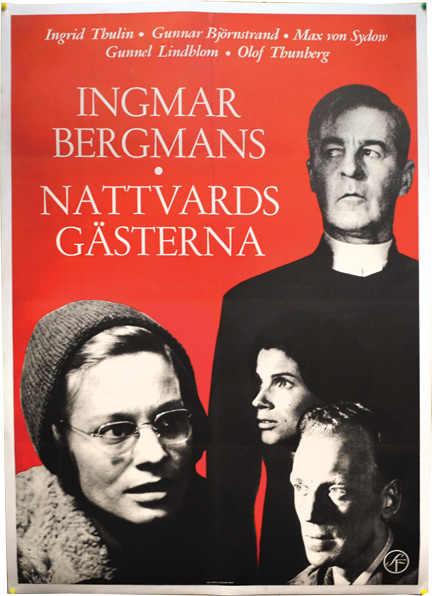
It would surprise many to hear Bergman held Winter Light in the highest regard among his films. An austere chamber piece, largely set in a cold, naturally lit church, it’s the middle chapter of his thematic trilogy on faith and it serves to correct any sense of hope left remaining from in Through a Glass Darkly. Winter Light – with its lead character a semi-biographical combination of Bergman’s father (himself a Lutheran Pastor) and Bergman himself – begins with a robotic preaching in a Church and ends firing up another such sermon to an empty Church. This is a world where, if there ever was a God, he has long since gone silent and disappeared over the horizon.

You could argue Tomas Ericsson is the most ill-suited priest in the history of cinema. He’s played with a peevish, grumpy lack of hope, inspiration or joy, self-loathing seeping from every pore by Gunnar Björnstrand in what might just be his finest hour. Björnstrand, more comfortable with comedy, struggled with this counter-casting (and his cold, which was written into the script), the bottled-up pressure of the role almost shattering his friendship with Bergman. Following a single afternoon in Ericsson’s life, Winter Light charts his complete disillusionment with his faith, his utter failure to provide spiritual comfort to parishioners and his mix of dependence, indifference and contempt for schoolteacher and some-time lover Märta (Ingrid Thulin), herself a needy, unhappy woman content to play second-fiddle to Tomas’ deceased wife.

Tomas’ faith in God has long since vanished. Winter Light is his own Gethsemane, a parade of painful events and conversations where he waits desperately for some sort of sign or word from the Almighty and is left instead wondering, like Christ, why God has forsaken him. Tomas has become bitter, self-obsessed and self-loathing, going through the motions with a dwindling congregation and unable to muster even the faintest bit of belief in the words that pass his lips.

Winter Light follows up ideas of Through a Glass Darkly (Tomas even talks of a “Spider God”, a destructive force at the centre of a world made of pain). There is an echo throughout of the idea that, if God is love, then letting love into your life (or acknowledging the existence of Love in the world) is proof enough that there is a God, even if he is now silent. If so, Tomas’ rejection of any form of love goes hand-in-hand with his rejection of faith. If he felt love, it was for his late wife – and her death matches the decease of his faith in God. Now he angrily slaps away offers of affection with the same contempt he addresses towards questions of faith.

That offer of love comes from Märta, a mousey teacher trapped under an unflattering hat, the bags under her eyes and spinsterish clothes. She’s played in a performance of sustained, emotive brilliance by Ingrid Thulin. Märta captures her feelings for Tomas – right down to her acknowledgement that she knows he does not love her – in a sprawling, stream-of-consciousness letter (which Tomas has delayed reading – and when he does, he scrunches it into a frustrated ball).

That letter is conveyed to us in a stunning, almost interrupted, seven-minute take where Bergman focuses the camera on Thulin in close-up who delivers the contents of the letter straight to camera. This is a tour-de-force from Thulin, by terms unblinking, honest, self-denying, pained, resigned, hopeful and frustratingly simpering, a masterclass that marks one of Winter Light’s most striking moments of directorial and actorly technique. Few actors could pull this scene off with the grace and emotional commitment Thulin brings to it – and still leave us understanding why Tomas later, with anger frustration, cruelly tells her he has simply had enough of her all-forgiving love.

There is no place for that sort of saintly, Christ-like, love in Tomas’ life. His focus remains his own self-loathing. When meeting with Jonas (Max von Sydow – even more carved from granite than normal, his fixed stillness contrasted with Björnstrand’s twitchy unease), who has come to Tomas for spiritual reassurance to help overcome suicidal thoughts, Tomas can only complain of his own lack of faith. Tomas fails utterly to offer any solace to Jonas, a further mark of his own failure as both a priest and human. Jonas’ suicidal misery at the dread of oncoming Armageddon in the nuclear age, becomes grist to Tomas’ own misery and our priest in turn feels no shame in turning to Märta immediately for reassurance and comfort.

The only person who seems to have considered the nature of faith is disabled sexton Algot (a marvellous performance by Allan Edwall). Algot reflects that the suffering on the cross was not Christ’s true sacrifice – after all that was over in hours. The real suffering was hearing God’s silence on that cross, of the horror of suddenly thinking your life’s work may have been a waste of time, that he evangelised for someone silent or indifferent or worse. It would tie in directly with Tomas’ own doubts – except it’s pretty certain Tomas isn’t listening to him.

Maybe that’s partly the problem. We don’t listen to God, because we no longer expect him to talk. At one point, Tomas asks why God has fallen silent while behind him light suddenly pours through the Church window. Is that a sign of a sort? If it is Tomas doesn’t look and when he does, he doesn’t think. Instead, he contributes to the silence of God – as the closest thing to his vessel he fails to listen, fails to help and focuses only on his own pain.

Winter Light is a gorgeous film, full of striking light and shade by cinematographer Sven Nykvist. It’s also a bleak, grim, hopeless film, the best hope it can offer being God might have been real but he’s long since turned his back on us, just as we’ve turned out back on him. It’s magnified when we reject the thing he might have left for us, love itself. Winter Light is intensely thought-provoking, but rivetingly intelligent in the way the best of Bergman is. Björnstrand is superb and Thulin is extraordinary, in a film that carries worlds of meanings in its spare 80 minute runtime.

Through a Glass Darkly (1961)

Through a Glass Darkly (1961)

Faith, family and femininity are put to the test in Bergman’s bleak meditation on religion and love

Director: Ingmar Bergman

Cast: Harriet Andersson (Karin), Gunnar Björnstrand (David), Max von Sydow (Martin), Lars Passgård (Minus)

Bergman’s Through a Glass Darkly marks a new era in the Master’s filmography. It was the first of three thematically connected films about faith and religion (although you could argue The Virgin Spring really makes this a quartet). It saw Bergman make a firm commitment to seemingly theatrical chamber pieces, with small, focused casts of trusted collaborators handling complex (joke-free) and searching themes. It was also first of his films set on Fårö, a place that would become so associated with him it would effectively be rechristened Bergman Island.

Through a Glass Darkly (Bergman’s second consecutive Oscar winner for Best Foreign Language Picture) is a brooding, intense chamber piece set entirely in a house and beachside jetty on Fårö. It’s a family reunion. Author David (Gunnar Björnstrand) returns to Sweden from Switzerland to see his children. They are 17-year old son and aspiring writer Minus (Lars Passgård) and Karin (Harriet Andersson), now married to respected older doctor Martin (Max von Sydow). The real purpose of the gathering is to monitor the recovery of Karin, a schizophrenic whose condition has (without her knowledge) been declared inoperable. Karin is drawn to obey the commands of voices only she hears which she believes emanate from an abandoned bedroom, covered in cracked wallpaper. There she believes God calls for her to join him on the other side of the wall.

There is much to admire about Through a Glass Darkly, not least the striking, haunting, cinematography of Sven Nykvist. In a film that takes place on an almost silent island – there is no music, other than a few bars of Bach on the soundtrack, and barely any natural sound, so much so that a late arrival of a helicopter seems (deliberately) like an almost demonic visitor – light becomes the main force. It beats down from the sun, wraps across rooms, seems to transform spaces in front of an eye (there is a beautiful stationary shot of it flooding an abandoned boat where Minus and Karin sit in shocked horror). It picks out every feature of the scarred wallpaper in Karin’s room and casts searching shadows and stark, interrogative beams across the character’s faces.

It greatly expands both the intensity and claustrophobia of a challenging chamber piece, exquisitely directed by Bergman. The acting of the four leads – three trusted collaborators and a newcomer – is faultless. Andersson, in particular, tackles an almost impossibly difficult character who we first meet as a carefree young woman and leave as a huddled, shattered figure hiding from the light behind sunglasses. Andersson’s raw and searching performance avoids all overblown histrionics, becoming a detailed and compassionate study of a woman losing control over her actions. Bergman holds the camera on her for long takes, while Andersson lets a multitude of emotions play across her face.

Björnstrand is equally impressive as a (disparaging) Bergman stand-in, an artist neglecting his children in a quest for perfection, coldly distant to others, guilty at his selfishness (at one point he excuses himself to privately weep at his inadequacy as a father, then returns unchanged) but quite happy to take what he can from his family to use in novels. von Sydow takes a quietly restrained role as a sombre, somewhat dour man, hopelessly in love with his wife but clearly little more to her (and he accepts this) than a surrogate father. Passgård more than matches them as a depressed teenager, yearning for approval and frustrated at learning how difficult life is.

Bergman’s family follows this complex and challenging family, which becomes a filter for understanding if love is where God is in our world. The family is distant and uncommunicative with each other – the opening scene sees them laughingly return from a swim, but the second any of them split into pairs for conversations, resentments about the others come bubbling out. Is any love here real or performative? And if it’s performative, where is love and therefore where is God?

In this world, has Karin’s schizophrenia may have emerged as an attempt to insert an acceptable love that is otherwise missing from her life. Her father is a cold-fish, who immediately announces at their reunion dinner he will soon leave for Yugoslavia, then produces a series of gifts “from Switzerland” all too obviously purchased at an airport and unsuitable for the recipient (such as gloves that don’t fit Karin). Her husband overflows with desire for her, but she can hardly raise a flicker of interest in him sexually and behaves him with more like an affectionate daughter.

The most affection filled relationship she has is also the most inappropriate. She and Minus have a relationship of physical intimacy, and she kisses and strokes him with an affection that from the start feels uncomfortably close. They confide in each other emotionally in a way they never would do with others, and Minus is the first witness of one of her schizophrenic breaks, invited by her to view the room she believes is a passageway to God. This unhealthy intensity builds, through confidences and whispered confessions into a terrible encounter in a ruined boat, where Karin is commanded by her voices to seduce Minus into crossing a terrible line.

Perhaps this is a search for love and meaning “to see but through a glass darkly” as St Paul wrote. Karin is searching endlessly for love – and therefore God – but her search seems fruitless. Her family only slowly adjust, she shatters her closest relationship and eventually even her visions in her wallpapered room tip into nightmares. Bergman never lets us see the visions Karin witnesses or hear the voices she does (this places more pressure on Andersson whose controlled and measured performance is more than capable of delivering on) but we see all the traumatic impact on her as they prove as incapable of delivering confirmation of love in her world as anything else.

It’s surprising, for a film which starts as a family drama and becomes a quietly nihilistic drama, that Bergman ends on a moment of hope as David and Minus share a moment of closeness. Bergman later said he regretted this, and the moment does feel forced at the end of a downbeat drama. It may be a reflection of the fact that Through a Glass Darkly, intriguing as it is, is perhaps a little too serious and leans a little too heavily into artistic intensity. It lacks the touches of warmth, hope and humanity that makes Wild Strawberries a masterpiece and at times hits its notes of intense brooding a little too hard (its more or less from here that the Gloomy Swede label stuck).

It’s frequently an artistic triumph, but in some ways I find it less complete than other Bergmans. It’s exploration of its themes of faith and love don’t always coalesce quite as sharply as I would wish. It strains a little too much for profound importance at the cost of some of its humanity and the characters – brilliantly performed as they are – feel a little too much like puppets in the hands of God-like Bergman, going as and when according to his needs. But then, a Bergman film that doesn’t quite make it, would be the crowning achievement of other directors – and Through a Glass Darkly haunts the mind, turning over and over again in your thoughts, for days after you’ve seen it.

The Virgin Spring (1960)

The Virgin Spring (1960)

Revenge, violence but also a touch of hope abound in Bergman’s haunting Oscar winning classic

Director: Ingmar Bergman

Cast: Max von Sydow (Töre), Birgitta Valberg (Märeta), Gunnel Lindblom (Ingeri), Birgitta Pettersson (Karin), Axel Düberg (Thin Herdsman), Tor Isedal (Mute Herdsman), Axel Slangus (Bridge-keeper), Allan Edwall (Beggar), Ove Porath (Boy)

Spoilers: If you can spoil a Bergman classic, the full content of the film is discussed below

If a film cemented Bergman as the master of misery, it was his Oscar-winning The Virgin Spring. On the surface, a grim fable of rape revenge shot in wintery horror, it’s hard to imagine most people nerving themselves to watch it based on a synopsis. But they would be missing out. The Virgin Spring is, for all its hard-hitting violence and cruelty, a surprisingly hopeful film. Like the best of Bergman, it’s profoundly challenging, searching and operates on multiple levels – but rewards the viewer with splashes of strange optimism that feel a world away when it opens. It’s one of his truly great films.

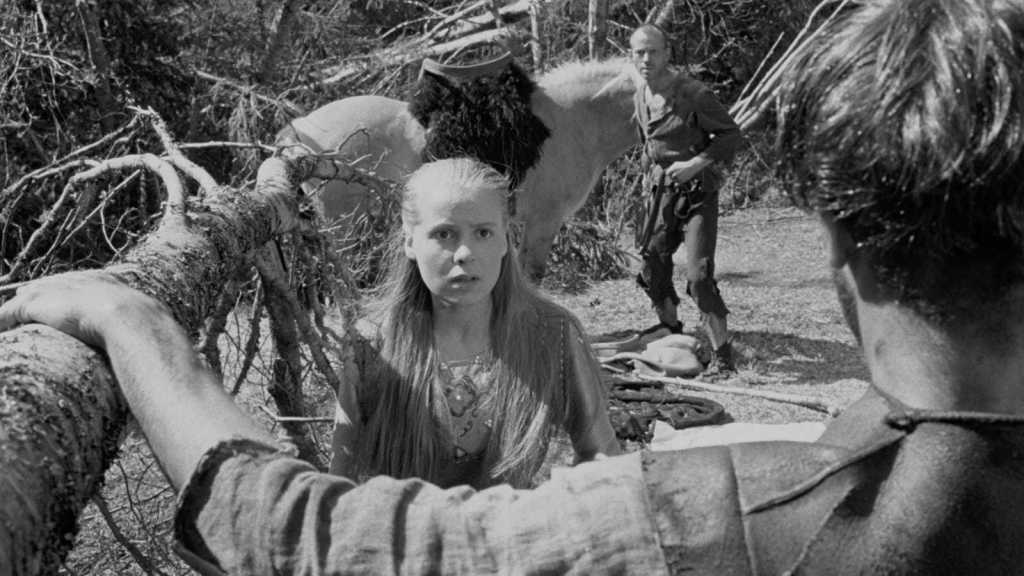
Set in medieval Sweden, Töre (Max von Sydow, magnificently, chillingly grief-stricken) is a prosperous and devotional Christian farmer, in a cooling marriage to Märeta (Birgitta Valberg). The light of his life is his daughter, the beautiful Karin (Birgitta Pettersson). One day, Töre tasks Karin to travel to the Church (half a day’s ride) to deliver some candles. She travels with Ingeri (Gunnel Lindblom – bitter, damaged and brilliant), a pagan servant girl, heavily pregnant and resentful. Along the way they two are separated and Karin meets with three peasant brothers in the forest, who share her meal with her before the two adult brothers (Axel Düberg, Tor Isedal) rape and murder her. The brothers walk on and take shelter that night in Töre’s hall. When he discovers their deed, he murders them all (even the innocent youngest brother, a boy) then, horrified, pleads to God for forgiveness. At which point a spring, bursts forth where Karin was killed.

Not exactly a bundle of laughs. But this is powerful, compelling film-making from Bergman. His influence on horror has been overlooked, but The Virgin Spring show how much he inspired everything from shlock to The Exorcist. This is a tense, unbearably so, film which twice draws out the long build-up to shocking violence in a way that would make Sergio Leone proud. Played out in a beautifully moody, bleakly cold and wintery visual style from Sven Nykvist (his first collaboration with Bergman) and often in an atmospheric mix of silence and natural sound, you can feel your stomach knot as the inevitable transgressive act looms ever closer.

The film pulls no punches, while never being exploitative. The rape and murder of Karin (excellently played with just the right mix of innocence and spoilt certainty by Birgitta Pettersson) unfolds with a cold matter-of-factness, as she slowly realises these men are far more dangerous than she imagined. The event is hard-to-watch for its simplicity rather than its graphicness, and for the cold indifference of its perpetrators who act on a whim. It takes place almost in silence and the killing (mercifully off-camera) is more because they don’t know what to do next. Mix that in with the terrified stares of Ingeri from afar, and the shell-shock of the younger brother (who vainly tries to bury Karin with dirt before running away), makes a scene devoid of sensationalism but terrible to watch.

It’s reflected in the film’s later act of violence. The brothers having tried to pass off Karin’s blood-stained dress as their (imaginary) sister’s, sell it to Märeta (who instantly recognises a garment she stitched herself, even as she’s asked to admire the handiwork), are locked in the hall while they sleep. Töre’s slaying of them, however, never feels triumphant. Instead, the Christian Töre abandons his faith to embrace pagan revenge. Like a priest before a blood sacrifice he dresses himself in butchery gear, discards a sword for a smaller knife, carefully prepares the room for the brothers to wake and then sits, idol-like, in his chair waiting. This is a damning ritualistic insight into how our faith – the faith Töre was so proud of – can drop away to reveal our vengeful simplicity below.

The fight that ensues feels like something from the nether-regions of hell. One brother is skewered, arms wide, to Töre’s chair. Another is stabbed under Töre’s body weight – shot in a way reminiscent of Karin’s rape, with the flames of the fire dancing between them and the camera – his body left to burn in the fire. Their brother – a child – runs to Märeta for protection, yet Töre hurls him against the wall breaking his neck. There is no triumph. Töre speaks not a word – the brothers die having no idea who he is. Töre is left starring at his trembling hands in shock, as if waking from a dream not recognising the man he has become who turned his back on every article of faith he held dear.

It’s a film that shows the impact of grief and trauma. From the terrified face of the youngest brother – shovelling dirt on a dead body with tear-stained eyes – to Töre’s shell-shocked realisation his daughter is dead. Deep down, people blames themselves. Märeta believes she is being punished for envying Karin’s closeness to her father. Ingeri believes she has cursed Karin to suffer the same shame as her. Töre, perhaps, feels guilt at his own semi-incestuous closeness with his daughter. Why else does he struggle to bring down with his bare hands a new-planted birch tree (in beautifully haunting medium shot), cutting branches from it to flay himself in a sauna before he takes his revenge? It’s both punishment for past and future sins.

This is also a film that challenges us to decide whether brutal revenge is justified. The build-up to the murder of the brothers is very similar to the murder of Karin. A long meal, shared, even with similar food – so similar that the innocent younger brother vomits at the memories it brings back. This young boy is the death of innocence in this world. Betrayed into crime by his vile elders then forced to pay a terrible price for a deed he was powerless to stop and left him deeply distressed. How can we really triumph in Töre’s killing, when we see it performed so violently at such a price?

Bergman tests throughout how far faith goes, and questions what power God has. The film opens with two pleas, to two very different Gods. Ingeri pleads to Odin to punish the virtuous Karin, who in Ingeri’s eyes is a working rebuke for her wedlock-free pregnancy. Töre prays to a Dürer style carved cross for God to keep their household safe. Only one deity delivers: and rightly Töre will plead at the film’s end “You see it God, you see it…you allowed it. I don’t understand you.” Töre has even mirrored the rapists, in murdering an innocent. He repents later, but is a heathen in the moment.

Paganism is strong in The Virgin Spring. But it is not good. Ingeri separates from Karin when she meets a half-blind bridge-keeper, in a house full of ravens, in the wood. The man ticks every box for representing Odin and conveys dark promises of powers beyond mankind. But he is a vile, Devilish figure who takes an impish delight in cruelty and mischief. Ingeri’s departure from him coincides with Karin’s encounter with her killers – as if these demonic sprites had been conjured up by Odin to punish Ingeri by providing her with exactly what she asked for.

Why then is a film so grim, so cold, so difficult and challenging also feel strangely hopeful? Odin has won and Töre has turned his back on Christian faith to embrace cold, merciless, pagan violence. But as Töre pleads for forgiveness a spring bursts forth from below the point where Karin’s head lay. Suddenly, water pours out of the ground. Light bathes the clearing from above. Ingeri washes her face and hands, cleaning symbolically the parts of her that made those pagan pleas. Suddenly, from nowhere, the film presents an intense moment of spiritual hope that I found surprisingly moving. Rarely has something so grim, felt so cleansing at its close. Perhaps viewers need the simple, honest refreshing splash of water to help themselves after. That’s what helps makes The Virgin Spring difficult, uncomfortable but essential.

Escape to Victory (1981)

Escape to Victory (1981)

The sort of odd movie pitch that could only have been made in the 80’s: it’s a POW film – but with footballers! And Stallone in goal! Cult nonsense, but fun.

Director: John Huston

Cast: Sylvester Stallone (Captain Robert Hatch), Michael Caine (Captain John Colby), Pelé (Cpl Luis Fernandez), Max von Sydow (Major Karl von Steiner), Bobby Moore (Terry Brady), Osvaldo Ardilles (Carlos Rey), Paul von Himst (Michel Fileu), Kazimier Deyna (Paul Wolchek), Hallvar Thoresen (Gunnar Hilsson), Mike Summerbee (Sid Harmor), Russell Osman (Doug Cluire), John Wark (Arthur Hayes), Daniel Massey (Colonel Waldron), Tim Pigott-Smith (Major Rose), Carole Laure (Renee)

It’s possibly the most bizarre idea in movies. An old-school, boy’s-own-adventure about POWs starring a Panini sticker album’s worth of footballers, led by Michael Caine and Sylvester Stallone playing the Germans (actually represented by a team of ringers from the New York Cosmos) in a ‘friendly’ football match in Paris. Oh, and it’s directed by John Huston. Who thought this one up?

Needless to say Escape to Victory is a cult hit. Caine plays professional footballer John Colby, his career interrupted by internment in a POW camp, challenged to an exhibition match by football-mad Major von Steiner (Max von Sydow). When von Steiner’s bosses turns the game into a propaganda vehicle, Colby is under intense pressure to pull out. When he refuses – not wanting to put his players lives at risk, some of whom (the Eastern European ones) have been rescued from labour camps – instead he is asked to accommodate a daring escape plan, led by American Robert Hatch (Sylvester Stallone) who joins as ‘trainer’ and back-up goalie. With the match scheduled, a plan is formed: the team will escape at half time. But will the players abandon the game, or will sporting pride kick in?

Well, what do you think? The whole film is a build up to the game. Are they really going to leave it at 4-1 to the Germans? The pedestrian opening two thirds of the film can pass you by. You certainly feel it passed John Huston by (if you ever want to see a great director do a pay cheque movie, watch this). The film settles into familiar rhythms of both genres (sports and POW movies) mashed together. For the latter; forgers, escape committees, roll-calls, daring escape attempts over and under wire, muttered attempts to board trains with fake papers are all dutifully ticked-off. Nothing unusual: the interest is all in the sports film.

And if you are going to make a sports film – crammed with training montages – who else would you hire than a dream list of footballers to perform them. And no footballer was more of a God-like figure than Pelé. Welcome to the only film the Greatest Player Ever made (as soon as he opens his mouth, you’ll see why). Alongside him England’s legendary World Cup winner Bobby Moore, charming Argentinian Ossie Ardilles (not trusted with a line), several other internationals from across Europe and (filling out the numbers) half a dozen players from Ipswich Town (though, to be fair, John Wark might just be the best actor). Most of the best parts involve watching these stars go through their paces.

Michael Caine – who only took the film so he could say he had genuinely played with Pelé – anchors all this reasonably well (even though, at 47, he looks noticeably out-of-shape considering he’s playing an international footballer at the peak of his career). The role of Colby is no stetch for him, but Caine conveys carrying responsibility rather well, and there is some decent material as he butts heads against the unhappy upper-class officers who want him to tell the Germans to shove it.

The officers – decent performances from Daniel Massey and Tim Pigott-Smith among others – point out the Germans won’t give them a sporting chance. But, this is the sort of film where boy’s own pride kicks in, and we get a classic ‘let’s show em’ attitude. This culminates, of course, in the half-time planned escape attempt being aborted as the players protest “We can win this!” and the side head back out for the second half (and, of course, glory).

It’s a big shout as our heroes take a heck of a drubbing in the first half. (This despite Caine’s ahead-of-his-time coaching advice to make the ball do the running, which sounds like tika-taka seventy years early – was Escape to Victory required viewing in Spanish football academies?). To the disappointment of von Steiner – our token ‘Good German’ played with his customary professionalism of von Sydow – who gave his word it would be a fair game, his superiors hire “a very good referee” who will “make no mistakes”. German tackles fly in un-punished, a dubious penalty is awarded and Pelé’s ribs are broken in a filthy foul forcing the team to play with ten men. Those dirty, cheating Germans! Thank goodness Bobby Moore scores to give them a chance.

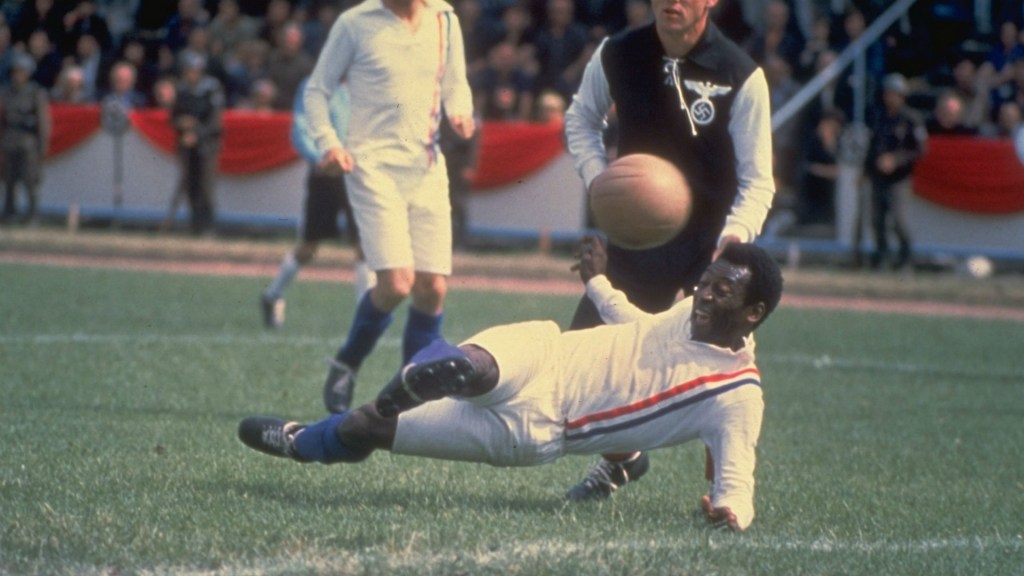
Every star player gets their moment in the spotlight, most of all Pelé who scores with a trademark bicycle kick. (I wonder if Pelé counted this one in his career goals record?) It’s a breath-taking piece of skill – von Steiner even proves his “Decent German” credentials by rising to applaud (to the fury of his fellow officers). Our heroes pull it back to 4-4 before having a goal disallowed for a false off-side (mind you it feels less inexplicable in an age where VAR chalks off goals for offside elbows). Then of course the Germans are awarded a penalty as the last kick of the game after a fair tackle by Ardiles.

And so, we come to Stallone. Perhaps the most inexplicable thing in this, the Italian Stallion at least convinces as a man who knows nothing about football. Looking trim, Stallone handles most of the POW and escape stuff (and a token romance subplot with a French resistance fighter) but of course space had to be made for him in the game. So, he plays as keeper (the team’s first choice keeper volunteers for Caine to break his arm so Stallone can be released from lock-up to play in the film’s most difficult to watch moment). Stallone wanted to score the winning goal, but was told that was unlikely for a keeper, so instead he saves the penalty to preserve the moral victory. Stallone mumbles his way through the film, feeling bizarrely out of place, but he was the big star.

Escape to Victory is a truly bizarre thing. But it’s got a fun football game in it and as sort of exhibition match it’s a bit of a treat. And watching it shortly after the passing of Pelé, it feels almost like a rather lovely tribute.

The Magician (1958)

The Magician (1958)

Illusion, faith and rationalism are all explored in Bergman’s fascinating musing on performance

Director: Ingmar Bergman

Cast: Max von Sydow (Albert Emanuel Vogler), Ingrid Thulin (Aman/Manda Vogler), Gunnar Björnstrand (Dr. Vergerus), Naima Wifstrand (Granny Vogler), Bengt Ekerot (Johan Spegel), Bibi Andersson (Sara), Birgitta Pettersson (Sanna), Gertrud Fridh (Ottilia Egerman), Lars Ekborg (Simson), Toivo Pawlo (Police Superintendent Starbeck), Erland Josephson (Consul Egerman), Åke Fridell (Tubal), Sif Ruud (Sofia Garp), Oscar Ljung (Antonsson), Ulla Sjöblom (Henrietta Starbeck), Axel Düberg (Rustan)

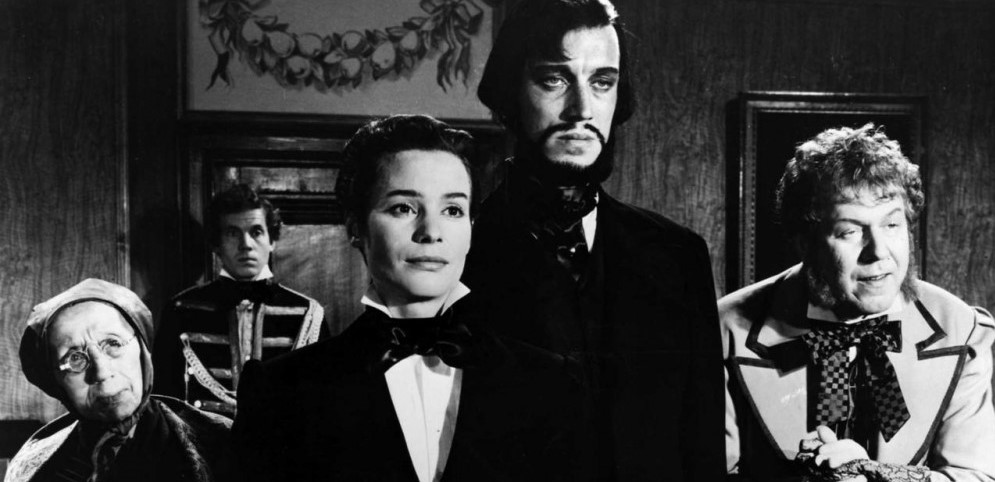
He who tells the truth may be the greatest liar. So thinks Mr Aman (Ingrid Thulin), in the carriage carrying him and the rest of Albert Emmanuel Volger’s Magnetic Health Theatre to a performance in a village in nineteenth-century Sweden. It’s fitting for Aman to thinking about it, since he’s actually Vogler’s wife Manda. The mute Vogler (Max von Sydow) claims powers of healing and mesmerism. But perhaps he’s making it up? If we peek behind the curtain, what is the truth?

Peeking behind the curtain is exactly what their clients want to do. The troupe is due to perform before a trio of rationalists, practically falling over themselves to debunk every step Vogler takes. Dr Vergerus (Gunnar Björnstrand) is a chilly health official who only believes what his own hands touch. Consul Egerman (Erland Josephson) wants to prove it’s rubbish to his wife Ottila (Gertrude Fridh), while Police Superintendent Starbeck (Tovio Pawlo) is a swaggering bully who just likes making people feel small. But can the imperious Vogler turn the tables on these would-be myth busters?

Bergman first struck upon the idea for The Magician after observing how much audiences at the theatre wanted to go backstage and meet the actors – and how they were invariably disappointed when they did at how everyday it was. Based on a GK Chesterton play, The Magician is a multi-layered musing on the relationship between performance and viewing, and the conflict between rationalism and faith. At heart it sympathises with the plight of the performer, presenting their work to an unsympathetic, uninterested, unengaged and unimpressed audience.

The theatre troupe look all sorts of glamourous, with the eccentric costumes and their intriguingly unknowable personae. They offer a carnival of the weird and wonderful that fascinates the rationalists, in spite of how much they want to debunk it. But, as they strip down the acts, they find plainer, simpler, less mysterious people below. Despite their eagerness to know how the trick is done, they are disappointed to find out. They barely watch the acts, or listen to the skill of the performers, because they are focused on unpicking the minutia and detail (Bergman having a pop at pretentious critical writing like the material here perhaps?).

Our rationalists are, to a man, an unpleasant, smug and often insufferable bunch. They have a clear world view and anything unscientific doesn’t fit in it: even God is “totally out of date”. Tovio Pawlo’s Starbeck is a crude, jumped-up bully, who feels barely more than a step or two higher up the social pyramid than Vogler. Egerman (a wonderfully nervy and insecure Erland Josephson) is so in awe of facts and statistics he can barely think for himself. Really controlling things is Dr Vergerus, a masterful performance of arrogance and self-satisfaction masquerading as open-minded scientific enquiry from Gunnar Björnstrand.

Far from inquiring, Vergeus’ mind is rigidly closed to anything outside of his world view. People are categorised and little more than objects of curiosity – he even speaks (ominously it turns out) of an eagerness to dissect Vogler. Flashes of the supernatural or inexplicable are met with blank terror which Vergeus swiftly covers with cold impassivity. He has made up his mind well before Vogler arrives. Like the rest of the rationalists, he preaches absolute truth but only on his own terms.

And perhaps he’s right to, in a way. The troupe are liars – but at least they are honest about it. They claim magical skills of healing and love potions (“what the bottle looks like and the colour” is far more important than the contents) which they merrily flog to the credulous. Their magic tricks are dressed up in elaborate costumes and quasi-mystical business. Their promoter Tubal (another impressive, bombastic performance for Bergman from Åke Fridell) shamelessly peddles exaggerated stories of their mastery. They may be a glamourous, but they are also cheap.

And then of course there is Vogler, who has practically dressed himself as a prop. Coated in pale make-up, Fu Manchu facial hair and a flowing black wig, von Sydow presents Vogler as an enigmatic showman. Bergman makes fabulous use of his riveting stare – surely he doesn’t need any flim-flam to hypnotise when he can glare at you like that. There is a sadness to Vogler though: his faith in himself has gone. Encountering a dying actor on the road (a neat cameo from Bengt Ekerot – and a nice call-back to his and von Sydow’s Seventh Seal team-up), Vogler’s face leans forward in fascination, curiosity and a strange longing as the actor faces death, as if he is longing to touch powers beyond once more. Manda is adamant his powers used to be real, but behind the contemptuous and defiant stare it’s unclear if Vogler knows where he is going.

Not that it matters. He’s still got the star quality to leave Mrs Egerman weak at the knees, desperate to seduce him to touch a part of his magic. And the powers are still there – even in their first meeting, Vegeus feels a flash of discomfort as Vogler’s fixed stare causes his mind to drift (a fear he dismisses in seconds). Its only as Bergman’s film strips down the performance qualities of Vogler – his costume, his make-up, his stage persona – and leaves an off-duty actor, that the dark fascination of his clients finally snaps all together into smug, rationalist contempt.

But that’s not before Vogler turns the table on Vergeus with an unsettling confrontation in a locked loft, after a performance seems to have gone disastrously wrong. It’s Vogler’s intimidating “real performance” to prove he and his troupe can still engross and deceive their audiences. This horror-tinged, mesmeric sequence of reflections, shadows, distant sounds and small movements is another reminder of what a master of the cinema of terror Bergman could have been (imagine he had joined von Sydow for The Exorcist!). It’s a superb sequence that almost shakes Vergeus’ faith in his certainty, before becoming another confirmation of how dismissive audiences are when they find out how the trick was done (no matter the impact it had on them at the time).

The Magician isn’t perfect. The middle of the film spends a little too long with the servants in the belly of the house (a Bergman trope of delight for the love of simple, everyday pleasures among the working classes). But its exploration of rationalism and artistry is fascinating. There are masterful performances (in addition to the earlier named, Ingrid Thulin is outstanding). But there is a lingering sense underneath that perhaps Bergman is gently accusing us of being little better than the rationalists, eager to know how cinema works but then talking it down when we find out. Which I suppose means a review of it rather makes his point.

Wild Strawberries (1957)

Wild Strawberries (1957)

An aged doctor reflects on his past regrets and failures, in Bergman’s strangely optimistic masterpiece

Director: Ingmar Bergman

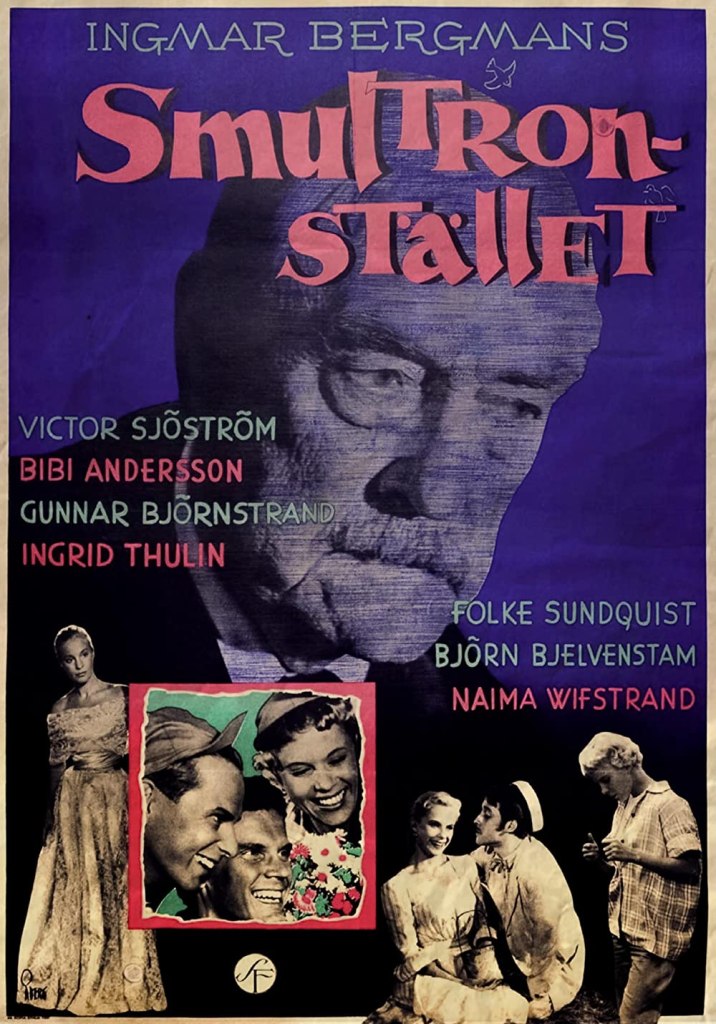
Cast: Victor Sjöström (Professor Isak Borg), Bibi Andersson (Sara/Sara Borg), Ingrid Thulin (Marianne Borg), Gunnar Björnstrand (Evald Borg), Jullan Kindahl (Mrs Agda), Folke Sundquist (Anders), Björn Bjelfvenstam (Viktor), Naima Wifstrand (Isak’s Mother), Gunnel Broström (Berit Alman), Gunnar Sjöberg (Sten Alman/Examiner), Max von Sydow (Henrik Åkerman), Ann-Marie Wiman (Eva Åkerman), Gertrud Fridh (Karin Borg), Åke Fridell (Karin’s lover), Per Sjöstrand (Sigfrid Borg)

Is anything in life more painful than regret? When we look back at our past mistakes, the things we wish had played out differently, the roads not taken, it’s difficult to accept there is nothing we can do about it. It’s the theme of Bergman’s beautiful, strangely optimistic Wild Strawberries (his third consecutive masterpiece, cementing him as one of the most distinctive, visionary directors in the world). Wild Strawberries is filmed with a virtuoso assurance, that still finds a genuine sense of optimism, despite the pain of the past.

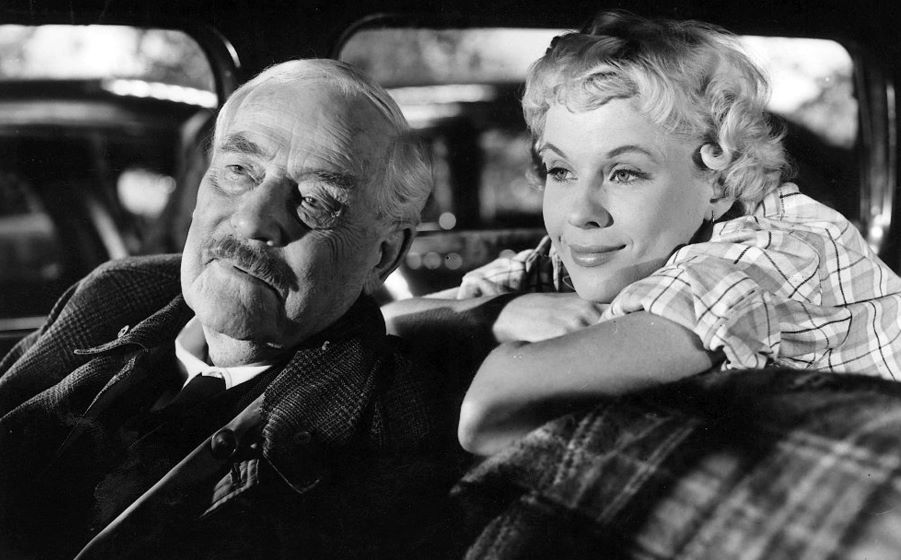
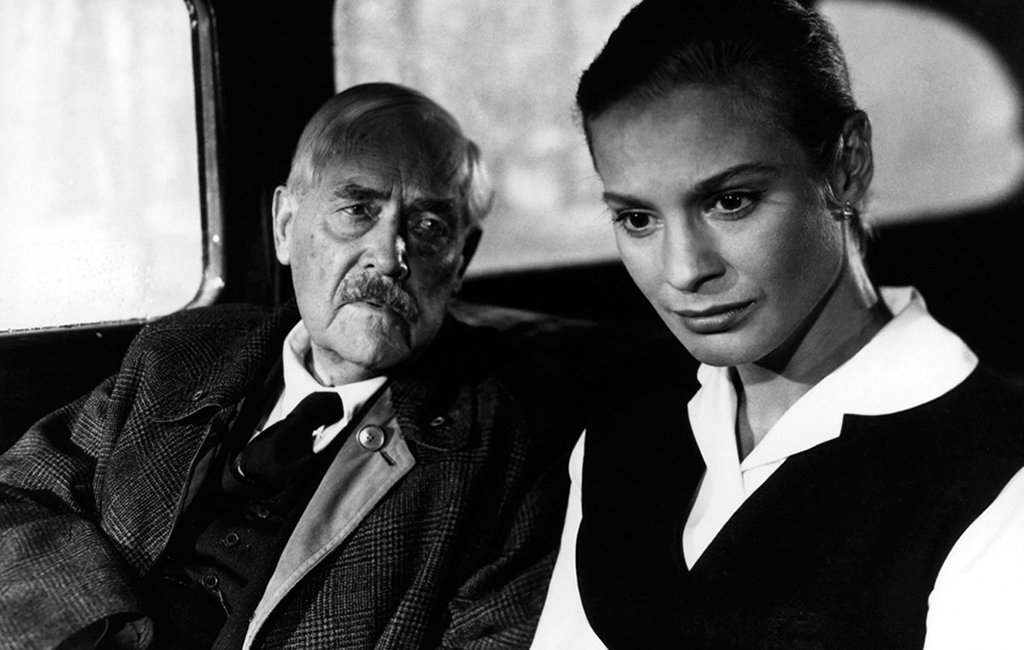
It’s about a long, single-day, road trip taken by famed, retired, medic Professor Isak Borg (Victor Sjöström, Sweden’s legendary father of cinema and Bergman’s idol) and his daughter-in-law Marianne (Ingrid Thulin). Isak is receiving an honorary doctorate in Lund but, after a bad dream, spontaneously decides to drive there. They drop by places with huge personal significance: the country chalet where he loved and lost his cousin Sara (Bibi Andersson) and the home of his mother (Naima Wifstand), who perhaps never really wanted him. Along they way they pick up a trio of young hitchhikers, one of whom, Sara (Bibi Andersson again), reminds him of his lost love. Will Isak come to terms with his regrets and failures?

The Wild Strawberries were collected by Sara on the birthday of her and Isak’s uncle. They are touch points in Isak’s memories, a reminder of the summer when Sara broke off her engagement with him to marry his more fun brother Sigfrid (Per Sjöstrand). Did that moment set Isak on the path of distant, judgmental coolness that defined his whole life? Or was he always bound to become who was, especially since his mother matches him for chilly distance? Is the cycle destined to continue, as Isak’s son Evald (Gunnar Björnstrand, full of cold nihilism) is just as austere as his father?

Bergman‘s radiant memory piece, explores all this without casting judgment. Wild Strawberries profoundly studies the regrets that come with facing your mortality. Isak becomes so lost in his memories, he literally becomes a silent witness in them. Sjöström’s beautifully expressive face lights up with a mixture of powerless pleasure, sadness and longing as he sees Sara once more – its implied the only woman (or indeed person) he has allowed himself to purely love.

What’s striking though, is that Isak’s memory of her – flirting with Sigfrid and then tearfully telling another cousin that Isak is so nice but… – is not a memory he can possibly have. He was never there: it can only be his supposition. It’s the same with the birthday party of his uncle (Bergman fills this with some great comedy, not least two gossipy pre-teens who talk simultaneously), an event he was not present at. Isak clings to these as memories, but they are imaginings. It’s not a card the film plays heavily: but Isak is, essentially, an unreliable narrator showing us his version of the past. It makes you wonder: are we all unreliable narrators of our own memories?

Is Wild Strawberries actually a dream piece? These recollections are daydreams, helping Isak accept his choices, and begin to find peace. The film opens with a striking surreal – and chillingly horror tinged – dream sequence that inspired hundreds of imitators: Isak walks an abandoned street, clocks lack hands, a faceless man collapses into water, a hearse overturns and when Isak investigates his own hand emerges to pull him in. (The unsettling artifice of this sequence is so masterful, it makes you realise Bergman could have become the king of terror if he’s wanted to).

A series of sequences take place halfway between dream and memory. In one he’s challenged by a cold and formal Examiner (a mirror of Isak himself?) with unanswerable questions, diagnosed with guilt and loneliness and then taken to witness his most vivid memory – watching his wife in the throws of passion with another man. The memory changes from reality to dream as Isak’s wife (an unsettling Gertrud Fridh) – who loathes him – sits up and dispassionately recounts their conversation later when she confessed/rubbed-his-face-in her infidelity. These aren’t straight memories.

Isak’s reminiscences creep up on him. It’s started by his daughter-in-law Marianne flatly telling him she can’t stand his aloofness and self-satisfied smugness. He seems unmoved: but does it prompt him to take her to the chalet of his childhood, to try and prove her wrong? Surely it can’t be a complete coincidence he awakes from a dream of Sara, by another Sara (Bibi Andersson brilliantly distinguishes between these two very different women, who both speak to repressed romantic yearnings in Isak) or asks for a lift? My private theory: I think Bergman is implying only Isak sees these two people as identical in appearance, like he plops past-Sara’s face on hitch-hiker-Sara’s body. It’s another walking semi-memory-dream.

Sara is one of several people prompting Isak’s reflection and changing our perceptions. Why did he become a man so detached he barely bats an eyelid when his daughter-in-law rubbishes him? A feuding couple the group pick up after a road accident – whose abuse of each other gets so personal and cruel, Marianne throws them out of the car – could almost be past versions of Isak and his wife. How miserable must his marriage have been? When Isak is feted as a doctor at a small village (a neat Max von Sydow cameo), how much does his sad observation that perhaps he should never have left further trigger his softening character?  As hiker-Sara talks about romance and opportunity, how much does this make Isak think about the staid, loveless respectability of his own life?

Our understanding of Isak is also partly filtered through Marianne’s perception of him. Ingrid Thulin is glorious as a woman whose marriage (to a knock-off prototype of his father) is on the rocks due to her husband’s callous loathing of the world. When she meets Isak’s mother, Thulin’s face radiates understanding of how this woman shaped Isak, who in turn shaped his son. As Isak begins to talk about his past and his fears, it prompts her own willingness to confide in him – something she would never have considered at the film’s start. As Marianne changes her perceptions, so do we.

Wild Strawberries benefits most of all from the wonderfully valedictory performance of Victor Sjöström. Bergman begged his mentor to take the role on, and it produces a cinematic wonder. Sjöström is in every scene and his face fills with such powerful emotion – from distraught regret to wistfulness to confusion to a peaceful radiance – that Bergman allows it to dominate the frame at key points. Its an unforced, gentle and underplayed performance with real emotional force.

Not least because, at heart, this is an optimistic film that tells us its never too late. Sure, we can regret mistakes and lost opportunities: but it shouldn’t close our hearts. Isak learns he has been wrong in closing his heart: there is life, warmth and happiness out there for the taking. It comes together in a final dream/memory, as Isak rediscovers a happy memory of his parents (all the more powerful for how few and far these must be) and Bergman’s camera (shot with majesty by Gunnar Fischer) trains one final time on Sjöström’s face and we understand that he has, at last, come to terms with his life. For a director famed as the master of misery, Wild Strawberries shows he could also frame a story of optimism, growth and understanding, making Wild Strawberries one of his most affecting movies.

The Greatest Story Ever Told (1965)

Greatest Story Ever Told header
Max von Sydow carries a heavy burden in Steven’s far-from The Greatest Story Ever Told

Director: George Stevens

Cast: Max von Sydow (Jesus), Dorothy McGuire (The Virgin Mary), Charlton Heston (John the Baptist), Claude Rains (Herod the Great), José Ferrer (Herod Antipas), Telly Savalas (Pontius Pilate), Martin Landau (Caiaphas), David McCallum (Judas Iscariot), Donald Pleasance (“The Dark Hermit”), Michael Anderson Jnr (James the Less), Roddy McDowell (Matthew), Gary Raymond (Peter), Joanna Dunham (Mary Magdalene), Ed Wynn (Old Aram), Angela Lansbury (Claudia), Sal Mineo (Uriah), Sidney Poitier (Simon of Cyrene), John Wayne (Centurion)

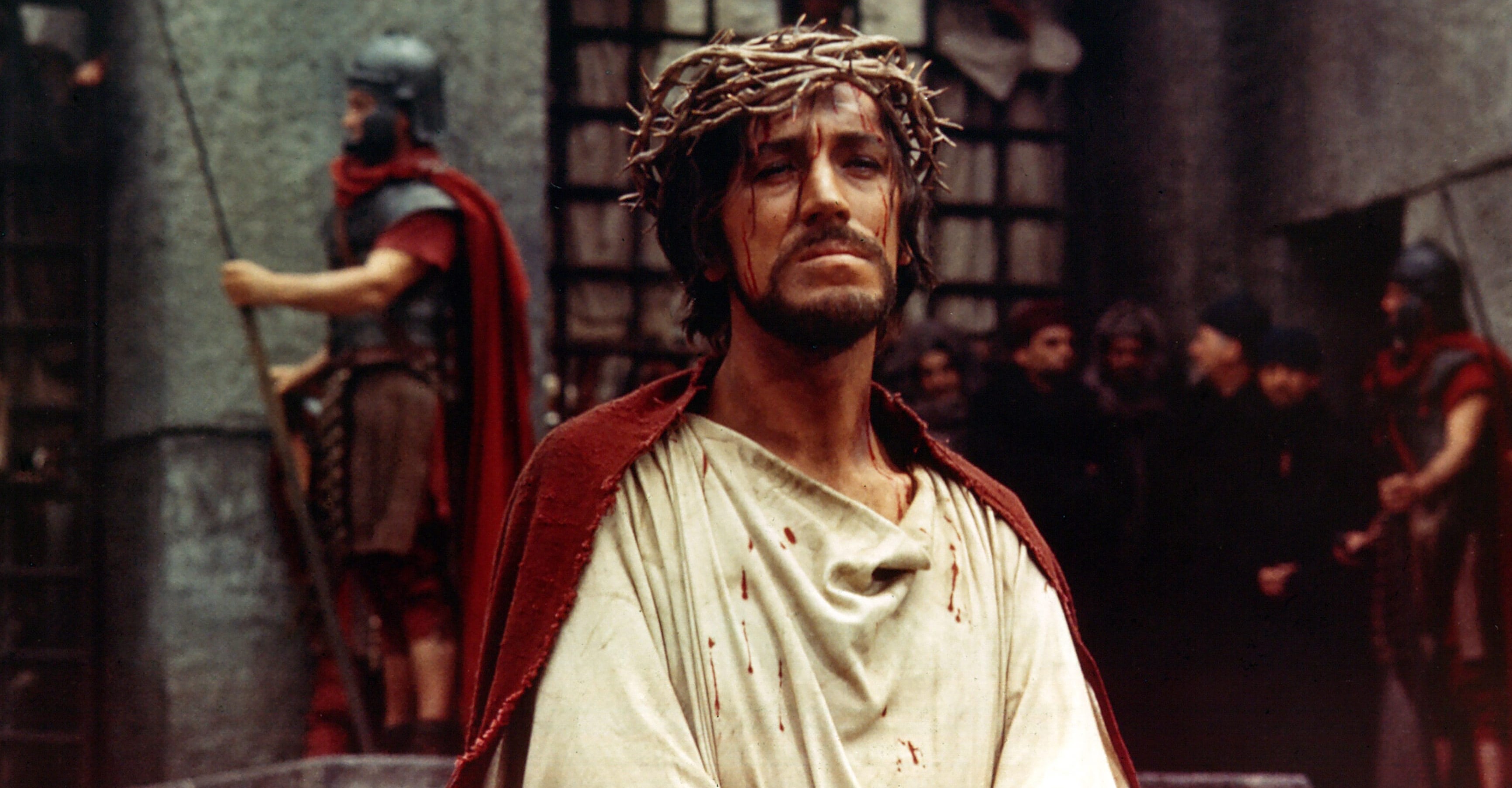
You could make a case to prosecute The Greatest Story Ever Told under the Trade Descriptions Act. In a world where we are blessed (cursed?) with a plethora of Biblical epics, few are as long, worthy, turgid or dull as George Stevens’ misguided epic. Just like Jesus in the film is plagued by a Dark Hermit representing Satan, did Stevens have a wicked angel whispering in his ear “More wide shots George, and even more Handel’s Messiah. And yes, The Duke is natural casting for a Roman Centurion…”. The Greatest Story Ever Told has some of the worst reviews Christianity has ever had – and it’s had some bad ones.

The plot covers the whole life of the Saviour so should be familiar to anyone who has ever seen a Gideon’s Bible. It was a passion project for Stevens, who spent almost five years raising the cash to bring it to the screen. When he started, the fad for self-important Biblical epics was starting to teeter. When it hit the screen, it had flat-lined. It didn’t help that The Greatest Story Ever Told was first released as an over four-hour snooze fest, laboriously paced, that managed to drain any fire or passion from one of (no matter what you believe) the most tumultuous and significant lives anyone on the planet has ever led. The film was cut down to about two hours (making it incomprehensible) and today exists as a little over three-hour epic that genuinely still feels like it’s four hours long.

Stevens gets almost nothing right here whatsoever. Self-importance permeates the entire project. The film cost $20million, double the largest amount the studio had ever spent. Ordinary storyboards were not good enough: Stevens commissioned 350 oil paintings (that’s right, an entire art gallery’s worth) to plan the picture (which probably explains why the film feels at times like a slide show of second-rate devotional imagery). The Pope was consulted on the script (wisely he didn’t take a screen credit). Stevens decided the American West made a better Holy Land than the actual Holy Land, so shot it all in Arizona, Nevada and California. It took so long to film, Joseph Schildkraut and original cinematographer William C Mellor both died while making it, while Joanna Durham (playing Mary Magdalene!) became pregnant and gave birth. Stevens shot 1,136 miles of film, enough to wrap around the Moon.

There’s something a little sad about all that effort so completely wasted. But the film is a complete dud. It’s terminally slow, not helped by its stately shooting style where the influence of all those paintings can be seen. Everything is treated with crushing import – Jesus can’t draw breath without a heavenly choir kicking in to add spiritual import to whatever he is about to say. Stevens equates grandeur with long shots so a lot of stuff happens in the widest framing possible, most ridiculously the resurrection of Lazarus which takes place in a small part of a screen consumed with a vast cliff panorama. Bizarrely, most of the miracles take place off-screen, as if Stevens worried that seeing a man walk on water, feed the five thousand or turn water into wine would stretch credulity (which surely can’t be the case for a film as genuflecting as this one).

What we get instead is Ed Wynn, Sal Mineo and Van Heflin euphorically running up a hilltop and shouting out loud the various miracles the Lamb of God has bashfully performed off-screen. Everything takes a very long time to happen and a large portion of the film is given over to a lot of Christ walking, talking at people but not really doing anything. For all the vast length, no real idea is given at all about what people were drawn to or found magnetic about Him. It’s as if Stevens is so concerned to show He was better than this world, that the film forgets to show that He was actually part of this world. Instead, we have to kept being told what a charismatic guy He is and how profound His message is: we never get to see or hear these qualities from His own lips.

For a film designed to celebrate the Greatest, the film strips out much of the awe and wonder in Him. It’s not helped by the chronic miscasting of Max von Sydow. Selected because he was a great actor who would be unfamiliar to the mid-West masses (presumably considered to be unlikely to be au fait with the work of Ingmar Bergman), von Sydow is just plain wrong for the role. His sonorous seriousness and restrained internal firmness help make the Son of God a crushing, distant bore. He’s not helped by his dialogue being entirely made-up of Bible quotes or the fact that Stevens directs him to be so stationary and granite, with much middle-distance staring, he could have been replaced with an Orthodox Icon with very little noticeable difference.

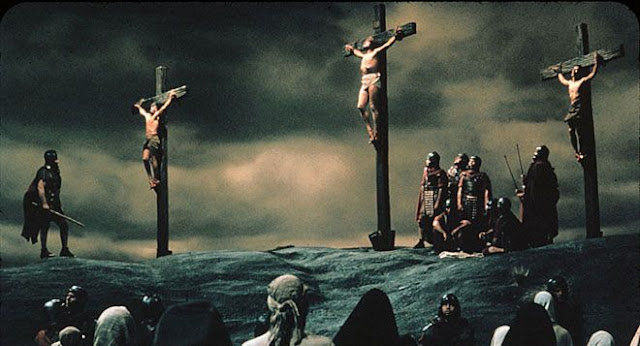
Around von Sydow, Stevens followed the norm by hiring as many star actors as possible, some of whom pop up for a few seconds. The most famous of these is of course John Wayne as the Centurion who crucifies Jesus. This cameo has entered the realms of Filmic Myth (the legendary “More Awe!”exchange). Actually, Stevens shoots Wayne with embarrassment, as if knowing getting this Western legend in is ridiculous – you can hardly spot Wayne (if you didn’t know it was him, you wouldn’t) and his line is clearly a voiceover. In a way just as egregious is Sidney Poitier’s wordless super-star appearance as Simon, distracting you from feeling the pain of Jesus’ sacrifice by saying “Oh look that’s Sidney Poitier” as he dips into frame to help carry the cross.

Of the actors who are in it long enough to make an impression, they fall into three camps: the OTT, the “staring with reverence” and the genuinely good. Of the OTT crowd, Rains and Ferrer set the bar early as various Herods but Heston steals the film as a rug-chested, manly John the Baptist, ducking heads under water in a Nevada lake, bellowing scripture to the heavens. Of the reverent, McDowell does some hard thinking as Matthew, although I have a certain fondness for Gary Raymond’s decent but chronically unreliable Peter (the scene where he bitches endlessly about a stolen cloak is possibly the only chuckle in the movie).

It’s a sad state of affairs that the Genuinely Good actors all play the Genuinely Bad characters – poor old Jesus, even in the story of his life the Devil gets all the best scenes. That’s literally true here as Donald Pleasence is head-and-shoulders best-in-show as a softly spoken, insinuating but deeply sinister “Dark Hermit” who tempts Jesus in the wilderness and then follows Him throughout the Holy Land, turning others against Him. Also good are David McCallum as a conflicted Judas, Telly Savalas as weary Pilate (he shaved his head for the role, loved the look and never went back) and Martin Landau, good value as a corrupt Caiaphas (“This will all be forgotten in a week” he signs the film off with saying).

That’s about all there is to enjoy about a film that probably did more to reduce attendance at Sunday School than the introduction of Sunday opening hours and football being played all day. A passion project from Stevens where he forgot to put any of that passion on the screen, it really is as long and boring as you heard, a film made with such reverent skill that no one seemed to have thought about stopping and saying “well, yes, but is it good?”. I doubt anyone is watching it up in Heaven.

Hannah and Her Sisters (1986)

Mia Farrow, Barbara Hershey and Dianne Wiest are Hannah and Her Sisters one of Allen’s finest films

Director: Woody Allen

Cast: Woody Allen (Mickey), Michael Caine (Elliot), Mia Farrow (Hannah), Carrie Fisher (April), Barbara Hershey (Lee), Lloyd Nolan (Evan), Maureen O’Sullivan (Norman), Daniel Stern (Dusty), Max von Sydow (Frederick), Dianne Wiest (Holly), Sam Waterston (David)

Hannah (Mia Farrow) is divorced from Mickey (Woody Allen) and happily married to Elliot (Michael Caine). Eliot is in love with Lee (Barbara Hershey). Lee is Hannah’s sister. Holly (Dianne Wiest) is considering dating Mickey. Holly is also Hannah’s sister. This whirligig of relationships is the heart of Hannah and Her Sisters, one of Woody Allen’s finest and certainly most humane films. Witty and heartfelt, it’s one of his sharpest scripts, crammed with acute observation and fine gags and is directed with a coolly introspective eye.

Allen splits the film into multiple sections, each opening (like the chapter of a novel) with a quote from the scene we are about to watch. Music plucked from Allen’s beloved classics (most often, and fittingly considering its romance theme, Bewitched, Bothered and Bewildered) frequently bridge scenes. Internal monologues is used often to allow us to explore the inner lives of the characters (the actors do a marvellous job reacting on screen to this internal thought process we are hearing).

The film uses a host of inspirations carefully mixed into Allen’s Manhattan Metropolitan middle-class milieu. The entire film has an autumnal Chekovian feel to it, with a rich sense of lives continuing ‘off stage’ as much as on. While the title obviously echoes Three Sisters, it’s study of romantic and intellectual entanglements overlaps with Chekov, as does the film’s love of wordplay. There are also, of course, echoes of Bergman (with gags) both in the film’s episodic structure but also its framing device of three Thanksgivings dinners, reflecting Bergman’s triumphant Fanny and Alexander.

The most effective thing about the film, in addition to its wit, is the surprising warmth it feels for the characters. Not always in an Allen film does one find the sympathy and empathy so widely spread – there is usually at least one character who is the target for the writer’s scorn. But here, no major character is presented as either the butt of snide humour or sneers. Even von Sydow’s pretentious artist is capable of searing emotional pain, and its hard not to sympathise with him as clients enquire whether his art will fit with their home décor. Each scene carefully balances the perspectives of multiple characters to allow us to relate to what each of them is going through. It’s possibly the largest cast of fully-rounded characters in an Allen film, and his most generous film.

It’s a film that avoids judgement over its characters, despite the frequently terrible and morally troubling things they do. It’s a film that understands the heart is an uncontrollable but resilient muscle, which doesn’t always guide us to the right or the easy things. Of course today, with Allen, you think it’s probably not a surprise he had sympathy with a group of people engaged in relationships that often involve profoundly betraying others. But at least her understands the irresistible urge people have to continue doing things they shouldn’t.

It’s hard not to overlook that the film’s least explored character (despite her multi-layered performance) is Mia Farrow’s Hannah. Poor Hannah, the still, moral centre of the film, is betrayed by both her husband and her sister (to their mutual guilt). Allen leaves her in ignorance – even though she knows something is wrong – and while Allen acknowledges what Elliot and Lee is doing is wrong, he mitigates things by making clear Hannah’s decency and generosity makes her overwhelming. While we see the impact a sudden distance from her husband has on Hannah (in a great shot she talks to him while he is off camera in another room, making her look like she is talking to a wall), Hannah is one of the few characters we don’t get the insight of an internal monologue for, and that feels like an easier way for Allen to maintain our sympathies for others.

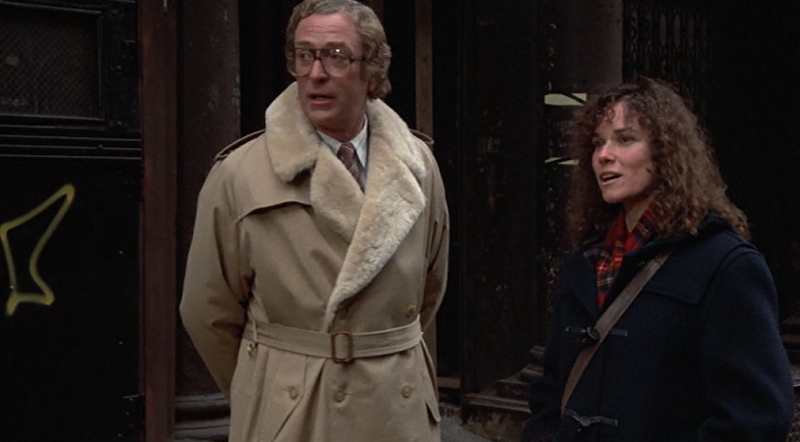
The person whose internal monologue we hear the most is her conflicted husband Elliot. Hannah and Her Sisters may be unique in that it has two characters who are clear Allen substitutes. While Allen plays one, Caine is the husband (who looks alarmingly like a prediction of future developments in the Allen-Farrow relationship). Caine is superb, not least because he turns lines you can hear could be delivered with an Allenesque twitchiness, into ones crammed with utter emotional genuineness.

For all that he is a cheat, Elliot is strangely guileless and rather sweet, plagued with guilt and also giddy as a schoolboy, begging Lee to read an ee cummings poem that carries special meaning for him. Caine makes Elliot a genuine human character, a flawed man trying to avoid hurting people (but causing pain everywhere). If Branagh in Celebrity (with his distracting Allen imitation) showed how much of a slave to Allenesque delivery you can become, Caine shows how heartfelt simplicity and underplaying can bring out deeper emotion from Allen’s dialogue. Allen also rather brilliantly directs this abashed dance of attraction: from Caine’s internal monologue telling him to play it cool, moments before he kisses Lee, to the camera framing Frederick’s sketches of a naked Lee directly in Elliot’s line of sight while he tries to think of literally anything else.

Caine also matches superbly with Barbara Hershey, excellent as a woman who feels trapped in her life and drawn to Elliot despite herself. Lee’s current relationship is with Frederick, wittily played in a near parody of Bergmanesque brooding by Max von Sydow, who takes a late lurch into real vulnerability, a pretentious artist who is part-lover-part-tutor and is disconnected from the real world, Lee is virtually his only link left with it. Frederick is clearly a tutor and surrogate parent, as much as a lover to Lee – and that attraction to a figure who can take responsibility in her life is clearly something she’s attracted in Elliot. The slow, guilt-ridden coming together of Elliot and Lee – and the slow deflation of this fling – is the emotional heart of the movie.

The film’s other two arcs provide more of the gags. Woody Allen gifts himself some of his finest comic moments as Hannah’s hypochondriac ex-husband (the second Allen stand-in) undergoing an existential crisis after he discovers he is in fact not dying of a terminal disease. Dianne Wiest is similarly excellent (and also Oscar winning) as Hannah’s unsuccessful sister Holly, a would-be actress too insecure to find success. Wiest is not only funny, but also vulnerable and affecting, as she tries to find her place in the world. In many ways Wiest plays a third version of Allen here, as she becomes a neurotic writer channelling her real life into writing (to the consternation of her sister).

Changing reality into scripts is the only thing awkward about Hannah and Her Sisters today. Hannah and her extended family (and many children) are a thinly veiled portrait of Farrow’s own family (Hannah’s mother is even played by Farrow’s real life mother Maureen O’Sullivan). Like Allen and Farrow, Mickey and Hannah needed to adopt and foster children. And of course Eliot’s affair with Hannah’s sister eerily mirrors Allen’s own affair with Farrow’s adopted daughter, and the film’s sympathy for Elliot sometimes seems like an unsettling excusing of Allen’s future conduct. That’s not even mentioning one of the film’s earliest jokes is Allen’s character complaining about the cutting of a child molestation skit from his Saturday Night Live-ish show (“what’s the problem half the country’s doing it” quips Allen, a joke that doesn’t work today for so many reasons).

But put that aside because, whatever your opinion of Allen, Hannah and Her Sisters is one of his finest films. It’s expertly shot and directed with a real unobtrusive ease (Allen’s innate understanding of this Manhattan world contrasts sharply with how at sea he is in his European movies). The acting is spot on. As well as being very funny, the moral conundrums the film explores are sympathetic and witty, as are the flawed human beings behind them. Possibly his best film.