Tag: Michael Gambon

A Dry White Season (1989)

A Dry White Season (1989)

A passionate, clear-eyed and largely unsentimental denunciation of Apartheid, the best of its kind

Director: Euzhan Palcy

Cast: Donald Sutherland (Ben du Toit), Janet Suzman (Susan du Toit), Zakes Mokae (Stanley), Jürgen Prochnow (Captain Stolz), Susan Sarandon (Melanie Bruwer), Marlon Brando (McKenzie), Winston Ntshona (Gordon), Thoko Ntshinga (Emily), Leonard Maguire (Professor Bruwer), Gerard Thoolen (Colonel Viljoen), Susannah Harker (Suzette de Toit), Andrew Whaley (Chris du Toit), John Kani (Julius), Richard Wilson (Cloete), Michael Gambon (Magistrate), Ronald Pickup (Louw)

The late 1980s saw a small wave of films denouncing the horrors of Apartheid in South Africa, a racist system founded on cruelty and injustice. Many of these films struggled with either being overly earnest or turning their (inevitably) white lead character into a saviour figure. A Dry White Season is perhaps the best of trend, perhaps because it focuses on a fictional story rather than real history (instantly gaining it the sort of dramatic latitude drained out of Cry Freedom) and directed by Euzhan Palcy, the first Black woman (then aged only 32) hired by a major studio, with a cast of the cream of Black South African actors, who knew all too well this world. A Dry White Season is also notable for its critical view of white South Africans who, bar a few exceptions, are presented as tribalist blind-eye-turners, furious at anyone who shakes their world view.

Ben du Toit (Donald Sutherland) is the epitome of smugly complacent Afrikaner (Sutherland even has a plump false belly, to hammer home his cosy self-satisfaction). A former rugby star, teaching white history in a private school, to him the system is always fair and if a Black man is arrested he must have done something wrong. That’s shaken when school gardener Gordon (Winston Ntshona) asks him for help, first after his barely-a-teenager son is beaten by police then again when the same son dies in custody after a protest. Ben’s first reaction is to shrug and say nothing can be done: the scales fall from his eyes when Gordon asks the wrong questions and is in turn murdered in custody by brutal Captain Stolz (Jürgen Prochnow). Working with campaigner Stanley (Zakes Mokae), Ben finds his entire world view falling apart as he is compelled to uncover the truth – to the fury of his wife, daughter, in-laws and colleagues who increasingly see him as a traitorous boat-rocker.

A Dry White Season doesn’t shirk on the violence of Apartheid. It says a lot that an early truncheon-wielding police assault on a township, and the scarred backside of Gordon’s son soon feels everyday. The student protest – many of its attendees literally no more than children – is met with lethal force from white soldiers carrying machine guns, indiscriminately shooting down children at point-blank range. Gordon is waterboarded and brutally tortured. Anyone who crosses the security forces faces violent assassination or fatal beatings. Palcy unflinchingly shows this horror – and frequently cuts away from atrocities to shots of the du Toit’s enjoying their wealthy, contented life of sports and garden parties. The impression is clear: underneath this contented life for the whites is a brutal, violent, repressive system supressing all rights for the many.

Palcy brings the sort of perspective perhaps only a Black film-maker could. There is no attempt in A Dry White Season to shelter the audience. Instead, we are exposed to the worst the system has to offer. Palcy adds impact with her casting of several extraordinary South African actors. Ntshona, Mokes and Kani among others had all experienced this themselves (Kani lost an eye in a police beating). Their performances are superb. Ntshona’s simple, honest bravery is deeply moving while Ntshinga is heart-breaking as his wife. Kani drips moral authority as a solicitor. Best of all Mokae’s activist Stanley is a superb portrait of warm, world-weary wit barely covering a life of fury.

What’s really refreshing is we expect the white characters to feel shame or guilt as the truth edges into their lives. This doesn’t occur: in fact, bar Sutherland’s du Toit and his young son (the same age as Gordon’s child – the film opens with the two of them playing together) all the white characters furiously protect the system. Sides are firmly picked and no blurring of the lines is tolerated. His daughter (Susannah Harker at her most Aryan looking) just wants him to shut up and stop spoiling things. Richard Wilson’s avuncular headmaster can’t hide his anger at du Toit’s ‘treason’. The police’s deference evaporates the second du Toit asks the wrong questions about the wrong people.

Even du Toit’s wife – memorably played with a raw harshness by Janet Suzman – progresses through irritation, horror to outright disgust at du Toit. Suzman – a South African who fled the country and long campaigned against Apartheid – pours all her anger into a show-stoppingly racist speech where she claims Black people are dangerous and don’t deserve any rights, that the Afrikan’s own South Africa and any violence against Black people doesn’t matter so long as the whites continue to live well. She represents a system supporting a boot stamping on Black faces for the rest of time.

It takes time for du Toit to realise there is no justice. Even after Gordon is murdered, he is convinced a trial will reveal the truth. He is of course, fantastically wrong – the trial being rigged from the start to produce a ludicrous suicide verdict. The trial is conducted by human rights lawyer McKenzie, played in a show-stopping cameo by Marlon Brando. Coming out of retirement to support the project (and working at union rate), Brando flexes his muscles one last time to deliver a charismatic, witty turn as a shambling Rumpole-like barrister who knows from the start his only result will be making the powers-that-be faintly embarrassed at their blatant injustice. If Brando’s support didn’t extend to learning his lines – he’s blatantly reading them from off cue cards or having them funnelled to him through a visible ear-piece – he’s still a stand-out in a sequence that makes abundantly clear just how complicit the whole system is in murder.

Sutherland – a fine performance of stunned, sad-eyed bemusement – makes du Toit a well-meaning men who realises he can never go back to his old life after peaking behind the curtain. It’s a nice touch in A Dry White Season that he never becomes a conventional white saviour: most of his actions lead to disaster, he’s reliant on Mokes’ Stanley and (other than his son) he fails to persuade anyone. But what chance does he have? Placy even shows many Black people have given up. At least one of Gordon’s torturers is a Black police officer and Gordon’s son and his friends open the film berating Black workers in a boozer that their apathy only props up the system. After Gordon’s death, a Black priest counsels turning the other cheek. But then the courage needed to protest is immense: Stanley smilingly states he long-ago accepted he was a dead man and it’s that which keeps him going.

A Dry White Season ends with a touch too much melodrama and a slightly too ‘Hollywood’ ending – but then it’s so relentlessly depressing that even a small victory is a relief. But, in the main, while sometimes rough and ready, it actually presents an important message with real dramatic force, stuffed with fine performances and a brutally realistic view of South Africa. It does give us some hope for the future: the only other white persuaded is du Toit’s young son: and it’s the young who are only hope for long-term change.

The Insider (1999)

The Insider (1999)

Mann’s finest film is a chilling breakdown of the insidious strength of corporations

Director: Michael Mann

Cast: Al Pacino (Lowell Bergman), Russell Crowe (Dr Jeffrey Wigand), Christopher Plummer (Mike Wallace), Diane Venora (Liane Wigand), Philip Baker Hall (Don Hewitt), Lindsay Crouse (Sharon Tiller), Debi Mazar (Debbie De Luca), Stephen Tobolowsky (Eric Kluster), Colm Feore (Richard Scruggs), Bruce McGill (Ron Motley), Gina Gershon (Helen Caperelli), Michael Gambon (Thomas Sandefur), Rip Torn (John Scanlon), Cliff Curtis (Sheikh Fadlallah)

For decades we persuaded ourselves smoking was problem-free. Then, when we finally decided sucking tar into your lungs several times a day probably didn’t go hand-in-hand with good health, Big Tobacco bent over backwards to argue they didn’t believe for one minute nicotine was actually addictive. This lie – they were improving the hit to increase the customer base – was blown upon by corporate whistle blower, and former B&W employee, Dr Jeffrey Wigand (Russell Crowe).

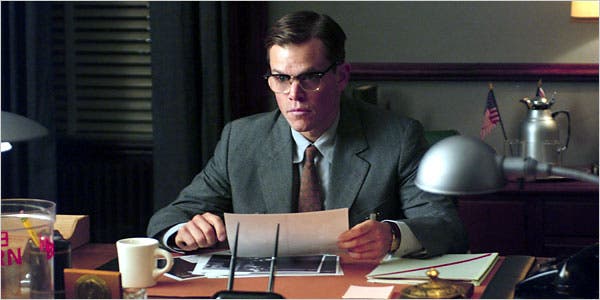
But the battle over the reporting of the story also exposed the fault-lines in corporate-owned media companies, as Wigand’s 60 Minutes interview was canned by a CBS network terrified of legal action imperilling a corporate sale, much to the fury of crusading producer Lowell Bergman (Al Pacino) who spent months bringing Wigand in only to see him brushed aside. The Insider charts these two stories merging into each other: the deadly campaign of intimidation and smears against Wigand, segueing into the caving of CBS in the face of legal threats with Bergman left furious, betrayed and turning his campaigning fire against his own employers.

This all comes grippingly to life in Michael Mann’s superb slice of All the President’s Men inspired-reportage, turning this 1996 TV-and-business scandal into a sleek, intelligent thriller that takes a chilling look at how corporate America rigs the game in its own favour with impunity. The Insider is as rightfully furious at the dirty-tricks and menace of the tobacco companies, as it is at the subtly insidious way corporate interests pollutes news reporting. It does this while also presenting its two heroes as flawed men with more in common than they might think: competitive alpha males, both prone to taking rash, destructive actions in fits of head-strong self-righteousness, caring about their own moral code over the needs of others.

The Insider splits into two clear acts: the agonising decision of Wigand to blow the whistle on corporate malfeasance, in the face of immense personal and professional pressure and Bergman’s subsequent struggle to deliver on his word and get Wigand’s confession on air. The first half offers the more traditional heroics – and the more overt hero-and-villain structure, but increasingly I find the second half, of news shows being dictated to by their paymasters more-and-more unsettlingly prescient, becoming increasingly relevant the older the film gets.

But that first half makes for a compellingly tense pressure-cooker view. It’s powered by an excellent performance by Russell Crowe (effortlessly convincing as someone twenty years older, and collecting his first Oscar nomination). Crowe makes Wigand principled but prickly, brave but confrontational and at times frustratingly self-righteous. His moral qualms are finally sharpened into action his fury at the blunt-intimidation from B&W’s sinisterly avuncular CEO (a masterful cameo from Michael Gambon – one of the great single-scene performances in movies) and its implication that he cannot trusted to stick to his NDA. Wigand barely involves his wife (a tightly-wound Diane Venora) in his decisions, only mentioning his dismissal in passing and deciding to appear on 60 minutes (a decision that will shatter their lives) unilaterally.

But Wigand also has higher motives. He wants to be able to look his daughters in the eye, having sold-out to burnish the dirty-deeds of B&W with his scientific skills. He’s rightly affronted by the lies Big Tobacco has sold the public and undergoes enormous sacrifices (financial, marital, professional, legal, death threats and a public smear campaign) to see things through. Mann’s cool mix of starkness and shadows, full of drained out colours and greys, is perfect for a world where Wigand is shadowed by strangers at a driving range, receives bullets in his mailbox and searches late at night for who has left footprints in his garden. Crowe superbly conveys a man acting out of an increasing sense of moral imperative, struggling desperately to hold himself together under immense pressure.

This section of the film – especially with its clear antagonist – plays as a superb personal and political thriller, Mann expertly conveying lurking menace. In 1999 the second half of the film, the struggle to actually broadcast Wigand’s interview, was often seen as slightly underwhelming. But actually it shows a different type of danger: less overt and heavy-handed corporate power with its legal injunctions and bullying FBI guys hoping for a cushy retirement job with the corporation, more how these corporate masters assert control in quiet, less direct ways to decide what we hear or see.

Our journalists have no fear when confronting criminals or terrorists – The Insider’s prologue establishes this with Bergman and host Mike Wallace not flinching in the face of gun-toting Hezbollah fighters guarding the Sheikh they have arranged to interview. But they face far greater threats to their integrity when confronted with lawyers and corporate directors (effectively embodied by Gina Gershon and Stephen Tobolowsky as uncaring suits) whose threats are indirect and insidious. Wigand’s interview could imperil the sale of CBS and the bonus of the corporate suits, and in that scenario journalist principles can go hang. Christopher Plummer is, by the way, superb as the charismatic Wallace, who caves to pressure then convinces himself he hasn’t, a super-star of the airwaves who loses part of his wider integrity trying to protect his position.

And doesn’t the idea that corporations can squeeze the life out of journalistic stories feel even more chilling today? After all, virtually every single news outlet out there is owned by a major business, all with their own agendas. Can we really believe they’ve not all made calls on gets reported, based on what their shareholders might think? Mann’s film skilfully – and rather chillingly – shows how quickly they can re-work the agenda. It leaves Lowell Bergman raging (as only Al Pacino can) against the betrayal of trust he’s being forced to make towards Wigand.

Crowe’s pressure-cooker performance stole many of the headlines on release but The Insider also benefits from an excellent Pacino performance. Utterly committed to his principles and – just like Wigand – utterly unwilling to compromise them even an inch, no matter the cost, Bergman will pick up the windmill-tilting banner, and charge with it at his own paymasters. No one can rip through speeches quite like Pacino, but he gives Bergman a real genuineness, grounded in a fundamental decency, whose righteous anger is underpinned with world-weary disbelief that it’s come to this.

It grounds an excellently studied breakdown of a journalistic turf war. The Insider plays like All the President’s Men, if Woodward and Bernstein had been spiked after they nailed the story. Mann demonstrates the influence in The Insider’s crisply immersive photography that employs depth of frame and gyroscopic deep-focus, as well as in the crisp editing and the film’s mesmerising emersion in the complex details of building a story. Combine that with a gripping conspiracy thriller on the machinations of ruthless corporations and The Insider makes for a compelling film.

Judy (2019)

Judy (2019)

A star turn is the only thing of note in this empty, uninsightful biopic

Director: Rupert Goold

Cast: Renée Zellweger (Judy Garland), Jessie Buckley (Rosalyn Wilder), Finn Wittrock (Mickey Deans), Rufus Sewell (Sid Luft), Michael Gambon (Bernard Delfont), Richard Cordery (Louis B Mayer), Darci Shaw (Young Judy Garland), Bella Ramsey (Lorna Luft), Royce Pierreson (Burt Rhodes), Andy Nyman (Dan), Daniel Cerqueira (Stan), Gemma-Leah Devereux (Liza Minnelli)

By 1969 Judy Garland (Renée Zellweger) was homeless, broke and stuck in a pill-and-alcohol fuelled depression. Desperate to provide a home for her children, she flew to London for a five-week booking at the Talk of the Town nightclub. Judy sees her, pushed beyond her physical and emotional limits, as she struggles to complete the run – or even get on stage – marrying the feckless young Mickey Deans (Finn Wittrock) and flashbacks to her memories as a Hollywood child star (Darci Shaw), under the punishing “mentorship” of studio head Louis B Mayer (Richard Cordery).

All this gets mixed together in Goold’s uninspired, sentimental and rather empty biopic that never really gets to grips with Garland’s personality, so desperate is it to shoe-horn her into a bog-standard narrative of redemption mixed with personal tragedy. Garland, I’m sure, would have hated it: she always pushed back against the idea that her life had been tragic (which this film whole-heartedly embraces) and the portrayal of her as a constantly misunderstood victim, generously one-sided as it is, boils her down into someone with no agency or control at all in her life.

As such, the most effective parts of this film are the flashbacks to her childhood, filming Wizard of Oz, living off diet pills so she can’t put on weight and working 18-hour days. All under the direction of a monstrously calm Louis B Mayer – a terrific performance of amiable, grandfatherly menace from Richard Cordery – who pleasantly tells her she is a dumpy child who must work like a dog to get ahead and owes everything to him. If the film gets anywhere to understanding Garland’s psychology, it’s in these scenes – I’d rather they’d made it about this than her swan song in England.

In the 1969 sections, the film continues to try and communicate that a life of constant work and pressure left Garland an emotional, physical (and possibly mental) wreck. It puts us on her side, stressing her vulnerability and desperation which she covers with brittle, demanding behaviour. But it’s too squeamish to show too much of her popping pills and downing more than the odd glass of vodka – despite the fact she’s clearly intoxicated for large parts of the film. It only briefly looks at how crippling anxiety affected her unwillingness to rehearse and implies her time in London was a lengthy period of unending servitude rather than a five-week booking singing her greatest hits (the film is hugely vague about timelines to increase the feeling of Garland’s powerlessness).

The film isn’t even smart enough to give us moments where other characters get a glimpse of the fragility under Garland’s prima donnai-sh petulance. Despite her treating both of them as a mix of underlings and informers, Jessie Buckley’s minder and Royce Pierreson’s pianist inexplicably become friends to the star part-way through the film. There is no scene to transition this, no moment of fragile tenderness they witness that makes them understand there is more to this demanding person than they initially thought. Instead, it feels like the narrative requires them to like her just as the audience is supposed to, so whoosh they like her.

The one affecting sequence sees a lonely Garland bumping into two gay fans (Andy Nyman and Daniel Cerqueira) and rather sweetly asking if they would have dinner with her (they are of course thrilled). Back at their apartment, they cook a disgusting looking omelette, play the piano and she listens as they are tearfully talk about their life of persecution in homophobic Britain. It’s gentle, sweet and the only time we (or she) get a real sense of what Garland means to people – these fans idolise her as a symbol of hope. Even this scene is undermined by (a) it not having any lasting impact on Garland as soon as it finishes and (b) these characters being shoe-horned into a blatantly emotionally manipulative ending almost unwatchable in its cloying feel-good-ish-ness.

The one thing the film has going for it is a committed, pitch-perfect performance by Renée Zellweger who captures the vocal and physical mannerisms perfectly. She won every award going including the Oscar. It’s an impressive study and she plays the moments of pain as committedly and rawly as the gentle, tender moments. She does everything the film asks of her, and it’s not her fault that it asks so little of her. There is no dive into Garland’s personality, no questioning that any of her ills were self-inflicted, no criticism for her not turning up for gigs where customers have paid a fortune to see her, no attempt to explore other perspectives on the impact of her actions or how she has become the woman she is.

Instead, Judy meanders towards its semi-feelgood ending without ever really letting us feel we’ve understood much about either this woman or her difficult life, other than framing her as a victim from a life of exhausting show-biz exploitation. Told within a story that is low on drama, pathos or humour, you end up wondering what point it was trying to make in the first place.

Paddington (2014)

Paddington (2014)

Michael Bond’s lovable bear makes an almost perfect screen-transition in this heart-warming tale

Director: Paul King

Cast: Ben Whishaw (Paddington Bear), Hugh Bonneville (Henry Brown), Sally Hawkins (Mary Brown), Madeleine Harris (Judy Brown), Samuel Joslin (Jonathan Brown), Julie Walters (Mrs Bird), Nicole Kidman (Millicent Clyde), Peter Capaldi (Mr Curry), Jim Broadbent (Samuel Gruber), Imelda Staunton (Aunt Lucy), Michael Gambon (Uncle Pastuzo), Tim Downie (Montgomery Clyde)

If there is one thing we need in troubled times, it’s kindness. Few characters are as overflowing with warmth and decency as Michael Bond’s Paddington Bear. First introduced in 1958, the lovable marmalade-consuming little bear all the way from darkest Peru is never anything less than kind and decent – even as the well-meaning bear gets himself into a string of catastrophes.

Paddington is one of the most universally beloved figures from post-War British culture – surely no surprise he was the perfect tea-party guest for that other beloved icon of the same period, the Queen. The pressure was on for a Paddington film – could it match the tone of the books? The answer was an over-whelming yes. Paddington is an endlessly heart-warming triumph, which it is impossible to watch without a warm glow building inside you, and a goofy smile on your face.

Explorer (Tim Downie) discovers a species of intelligent, marmalade-loving bears in darkest Peru. Forty years later, after a terrible earthquake, a young bear travels to find a new home in London. He meets the Brown family – overly cautious father Henry (Hugh Bonneville), caring Mary (Sally Hawkins) and their children Judy (Madeline Harris) and Jonathan (Samuel Joslin) – who take him into their home and name him Paddington after the train station where they found him (his bear name being unpronounceable). Paddington (Ben Whishaw) works hard to settle in with his new hosts – but danger looms from an ambitious Natural History Museum taxidermist (Nicole Kidman) who longs to make Paddington the centrepiece of her collection.

Directed with a great deal of unobtrusive flair by Paul King, Paddington is a truly endearing film about the triumph of opening your heart to strangers. The Brown family don’t realise it, but they are in need of a burst of kindness in their lives to help bring them together. They get it in spades with Paddington. The film captures perfectly the little bear’s personality. This is Paddington exactly as you remember him: polite, decent, kind and hilariously accident-prone. King’s film also gets the tone exactly right – there are no pop-culture references or rude gags (although there are a few subtle double-entendres of a sort) and the film is set in a timeless mix of 1950s London and today.

The film’s CGI Paddington is gorgeously designed – a wonderful rendering of the bear’s appearance tailored with more realistic fur, but still the same as the book– and perfectly voiced by Ben Whishaw. Whishaw was a late replacement – Colin Firth voluntarily withdrew, as he felt his voice was ill-matched to this naïve, gentle young bear – but his light and gentle tones convey all the warmth you need. It’s a superb performance, humane, kind and deeply funny, and so well suited you suddenly realise in your head Paddington always sounded like this.

King creates a series of gorgeously handled set-pieces to showcase Paddington’s possibilities for well-intentioned mayhem. On his first night in the Brown household, he duels with toothbrushes, mouthwash, toilet flushes and showers, culminating in flooding their bathroom with a swimming pool’s worth of water. He gets mummified in sellotape, slips up in the kitchen and causes several marmalade-sandwich involved disasters (most hilariously a marmalade baguette-pneumatic tube mix-up). But he always means well: a caper-filled set-piece through the London streets sees Paddington finally collide with a man he’s trying to return a dropped wallet too – allowing someone we’ve known all along to be a pickpocket to be apprehended by the police.

The Brown family’s home – already a beautifully designed dolls-house made real, with a tree blossom mural that changes to reflect the mood of the scene – comes to life with Paddington in it. (Watch how the colours of their clothing change depending on how much Paddington is part of the family or not). Mary (a wonderfully warm Sally Hawkins) is already eager for him to stay. Judy and Jonathan (superbly sparky performances from Madeline Harris and Samuel Joslin) are quickly won over by him. It’s only Mr Brown – a performance of perfectly judged fussy, pinickity, rule-bound caution and stuffiness by Hugh Bonneville which flourishes into something warmer – who is unsure. But then this is a man so obsessed with his risk analysis job, he prevents his children from doing anything (34% of all childhood accidents happen on the stairs!) and has forgotten how to have fun.

Watching Mr Brown slowly warm to Paddington is a huge part of the film’s charm and warmth. Who could imagine the man who tries to leave him at the train station (and urge his family not to catch the bear’s eye, muttering “stranger danger”) would later be dressing up as a Scottish cleaning woman to help him infiltrate the Geographer’s Guild building? (This sequence is a little comic physical and verbal tour-de-force Bonneville.) It’s a larger part of the film’s wider – and most rewarding – message: the importance of treating migrants to this country with respect and care.

The pro-migration message is throughout the film – and the film is a fabulous reminder to many of what we have gained from those who have come to this land from across the seas, from NHS staff to political leaders to entertainers. Paddington’s journey to London – in a small boat, then sneaking past customs – is all-too-familiar.  Next door neighbour Mr Curry (a comically ingratiating Peter Capaldi) voices many of the “concerns” of anti-immigrant communities (let one bear in and who knows how many will follow?). Even Mr Brown voices worries about bears telling you sob stories to win your trust. The important message here is the value migrants bring us. A recurring calypso band reminds us of parallels with the Windrush generation. It’s not spoken but Jim Broadbent’s antique shop owner’s accent and memories of arriving on a train in London as a child clearly mark him as a Kindertransport child. Paddington has a subtle and truly important message for people: when we open our arms to people, we gain as much as they from the exchange.

Paddington throws in a few moments of darkness: the shock death of Uncle Patuszo is surprisingly affecting and Nicole Kidman’s taxidermist is possibly the scariest villain you’ll see in a kid’s film this side of the child catcher. But in some ways this enhances the warmth even further. By the film’s end you’ll feel your own life has been enriched by the small bear’s presence as much as the Brown’s has. We need him in times like this.

Amazing Grace (2006)

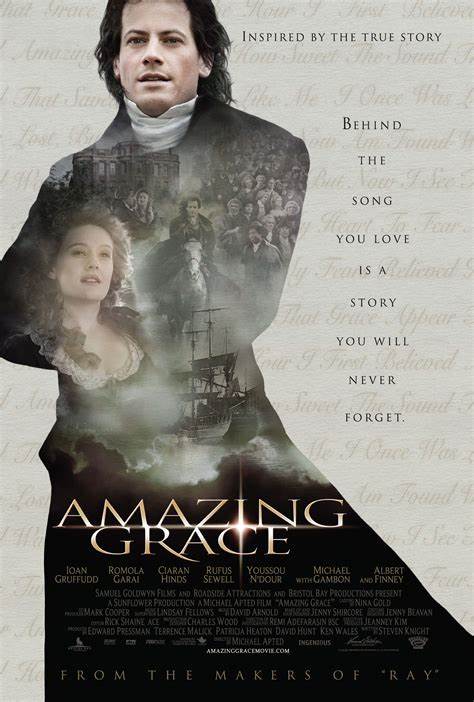
Ioan Gruffudd in full flight in the conventional but charming Amazing Grace

Director: Michael Apted

Cast: Ioan Gruffudd (William Wilberforce), Romola Garai (Barbara Spooner), Benedict Cumberbatch (William Pitt the Younger), Ciaran Hinds (Banastre Tarleton), Albert Finney (John Newton), Michael Gambon (Charles James Fox), Rufus Sewell (Thomas Clarkson), Youssou N’Dour (Olaudah Equiano), Toby Jones (Duke of Clarence), Nicholas Farrell (Henry Thornton), Sylvestra Le Touzel (Marianne Thornton), Stephen Campbell Moore (James Stephen), Bill Paterson (Heny Dundas), Jeremy Swift (Richard)

From 1782 to 1807 William Wilberforce (Ioan Gruffudd) fought a long – sometimes lonely – campaign to end the slave trade (and eventually slavery – the film confuses the two, with slavery continuing in much of the Empire for over twenty more years) in the British Empire. During that time, he competed with vested interests, parliamentary rivals and accusations of being a radical at a time when Britain was at war with Revolutionary France.

Michael Apted’s old-fashioned film covers this, hitting every beat you would expect for a biographical drama. It uses a traditional framing device of starting in the middle of the story: Wilberforce in 1797, depressed, hooked on laudanum and out of hope, revitalised by meeting Barbara Spooner (Romola Garai) who will become his wife. This makes for a perfect narrative tool as it means she can ask him questions like “tell me what happened” which serves as a neat entrée into a whole host of flashbacks sketching out in the swiftest means possible the history of abolitionism.

Amazing Grace could have been made in the 1930s, so closely does it hue to the classic rules of biopics. It’s practically a structural brother to The Life of Emile Zola, a hagiographical portrait of an (admittedly outstanding) man which shows the expected arc of moral awakening, early success, tricky mid-point, the sad years, getting the band back together for one final big push ending in friends and foes alike coming together to hail his accomplishments. It’s all threaded together with a script that carefully moves through every event, simplifies history down and sometimes wears its research rather heavily.

You can’t argue that it isn’t well-meaning and heartfelt, but its simplicity (and the careful traditionalism of its shooting) makes it look more like a well-made TV special than an actual movie. But if you are a sucker for such things, as I am, it has more than enough to engage you. It also makes a compelling case about the horrors of the slavery and allows a few moments of spotlight to fall on former slave turned abolitionist Olaudah Equiano (well played by Youssou N’Dour). It certainly has its heart in the right place, its passionate liberalism and sense of moral outrage very clear.

Gruffudd – his skill for playing reluctant moral authority and duty honed from playing Hornblower – is good as Wilberforce, his obvious investment in the subject matter clear. Garai doesn’t have much to do other than tee up flashbacks, but does it with charm. Many of the rest veer on the side of fruity: Hinds and Jones scowl effectively as slave-owning senior lords (for some reason they sit in the House of Commons; Jones is even playing a Duke for goodness sake!). Gambon twinkles as only he can as Charles James Fox. Finney hams up lustily as the blind John Newton. Best of all though are Sewell as an eccentric Thomas Clarkson and Benedict Cumberbatch in an early sign of star-quality as the morally divided, reserved but decent Pitt the Younger.

It all comes together into something that seems tailor-made for Sunday afternoons. Nothing wrong with that – and not every film needs to reinvent the wheel – and since it wears its heart so openly on its sleeve, you can’t help feeling warmth towards it. It’s a Spark notes look at history – and glosses over the fact that slavery itself continued for decades – but as hagiography it’s endearing and as a feel-good biopic it succeeds at what it sets out to do.

Victoria and Abdul (2017)

Victoria and Abdul
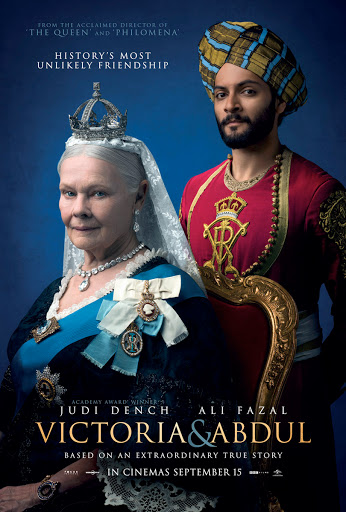
Judi Dench and Ali Fazal forge an unlikely friendship in the tame heritage flick Victoria and Abdul

Director: Stephen Frears

Cast: Judi Dench (Queen Victoria), Ali Fazal (Abdul Karim), Tim Pigott-Smith (Sir Henry Ponsonby), Eddie Izzard (Prince Albert), Adeel Akhtar (Mohammad Bakhsh), Michael Gambon (Lord Salisbury), Paul Higgins (Dr James Reid), Olivia Williams (Baroness Spencer), Fenella Woolgar (Harriet Phipps), Robin Soans (Lord Stamfordham), Simon Callow (Giacomo Puccini)

In the last decade of her life, Queen Victoria (Judi Dench – who else?) makes an Indian servant, Abdul Karim (Ali Fazal), one of her closest friends and advisors. As Victoria and Abdul become closer, the rest of the court are outraged – bad enough that the Queen is spending all this time with an over-promoted servant, but an Indian as well?!

The fundamental events of Victoria & Abdul are true. There was a man called Abdul Karim – and Victoria did raise him from servant to a confidant. He did cause conflict in the royal household and was finally sent back to India after her death, after surrendering most of his papers. But Victoria & Abdul repackages this friendship into a cosy, Sunday-afternoon entertainment, bereft of depth. And carefully works on the rough surfaces to make the story smooth and easy to digest.

The film is clearly trying to ape the success of Mrs Brown – a far more intelligent and emotionally complex (if similarly heritage) film that looked at Victoria’s previous all-consuming friendship with a male servant, John Brown. But that film didn’t close its eyes to the negatives of such relationships, as this one does. It made clear royal attention can be fickle – and being elevated above others can help make you your own worst enemy. In that film, after a honeymoon, the friendship declines into one of residual loyalty but reduced affection. It’s a realistic look at how we might lean on someone at times of grief, but separate ourselves from them later. Victoria & Abdul takes only one lesson from Mrs Brown: that a close bond between monarch and commoner is heart-warming.

The film in general is in love with the idea that if the Queen could only speak directly to her people, the world would be a better place. It presents a Victoria stifled by court procedure who knows very little about her empire and is constrained by the courtiers around her. It wants us to think that if the Queen took direct rule, she’d be kinder, wiser and more humane. That this figurehead symbol could craft a better British Empire if she was an absolute monarch.

Unfortunately, it doesn’t work. This romantic view of “Victoria the Good” is comforting stuff, but undermined even within the film by our introduction to the Queen at a royal dinner, where Victoria stuffs food down herself so quickly that mountains of untouched food goes uneaten on the plates of the other diners (as all plates are removed the moment she is finished). And despite being told that the Koh-i-noor diamond was stolen by the British (to her surprise), she still doesn’t think twice about wearing it later in the film while in the midst of her Indian passion. And while the real Victoria loathed the racist attitudes of some at her court, she still clearly sees herself as a paternalistic mother figure for India, which could of course never be able to make its own decisions about things.

Not that the film is interested in tackling more complex ideas of the position of India and its independence. It’s similarly confused by Abdul himself. In a more interesting film, Abdul would have been partly naïve servant and partly charming rogue. He very carefully spins an invented story of himself as a teacher and thinker (he’s actually a clerk from a fabric office) and it would have been interesting to see his building of a relationship with Victoria at least partly being based on self-gain. He certainly gains an awful lot from her – from his own carriage on her train to a home and his own servants. It would have been possible to have this side of him and still have his loyalty and friendship to the Queen being genuine. But it’s too much for the film to tackle.

An Abdul who was consciously playing a role of exotic thinker might have come across as a scam-artist – but would have given the film a lot more to play with, when the royal court is full of people positioning and presenting themselves for influence. Adeel Ahktar’s fellow-servant Mohammed even suggests in one scene that this is what Abdul is doing – and good luck to him. But the film is scared that this could be seen as endorsing the court’s fears about Abdul. So the character is neutered into nothing: he becomes exactly the sort of empty “exotic”, free of opinion and character, that filled out the extras list of a 1940s epic. He has no agency, never makes any decision or expresses any opinion. And his feelings for Victoria are presented as totally genuine which, combined with his foot kissing, turns him into someone who looks and feels really servile.

This is because the film wants to tell the story of a perfect friendship, with the British upper classes as the hissable baddies (never mind that no one is more upper class than Victoria). Never mind that Abdul’s action will indirectly condemn Mohammed to death in the British climate – or that while Abdul rises, Mohammed becomes his servant, still consigned to sleeping on the floor of his railway carriage. We learn nothing about Abdul. How did this clean-living saint become riddled with the clap? Why did he die so young? Did he really think nothing of the riches and honours Victoria showered him with? We don’t have a clue.

Instead the film keeps it simple with goodies (Victoria and Abdul) and baddies (almost everyone else). The most politically astute character, Mohammed, disappears and never allows things to get unpleasant. Jokes of the courtiers standing around aghast saying things like “Now he’s teaching her Urdu” are repeated multiple times. They’re fun, but it substitutes for dealing with the real issues.

It all has the air of ticking boxes. Frears’ direction is brisk, efficient and free of personality. Dench is great, but she could play this role standing on her head while asleep. Pigott-Smith (in his final role) is fine but Farzal has nothing to work with and Izzard provides a laughable pantomime role of lip-smacking villainy as the future Edward VII. The finest performance – handling the most interesting material – is from Ahktar. He’s the only character who seems to place what we see here in any form of context. Other than that, this film is just a string of very comforting heritage ideas, thrown together with professionalism but a total lack of inspiration.

The King's Speech (2010)

The King's Speech (2010)

A King struggles to speak in this Oscar-winning heart-warmer that really works

Director: Tom Hooper

Cast: Colin Firth (King George VI), Geoffrey Rush (Lionel Logue), Helena Bonham Carter (Queen Elizabeth), Guy Pearce (King Edward VIII), Timothy Spall (Winston Churchill), Derek Jacobi (Archbishop Cosmo Lang), Jennifer Ehle (Myrtle Logue), Michael Gambon (King George V), Freya Wilson (Princess Elizabeth), Ramona Marquez (Princess Margaret), Anthony Andrews (Stanley Baldwin), Eve Best (Wallis Simpson)

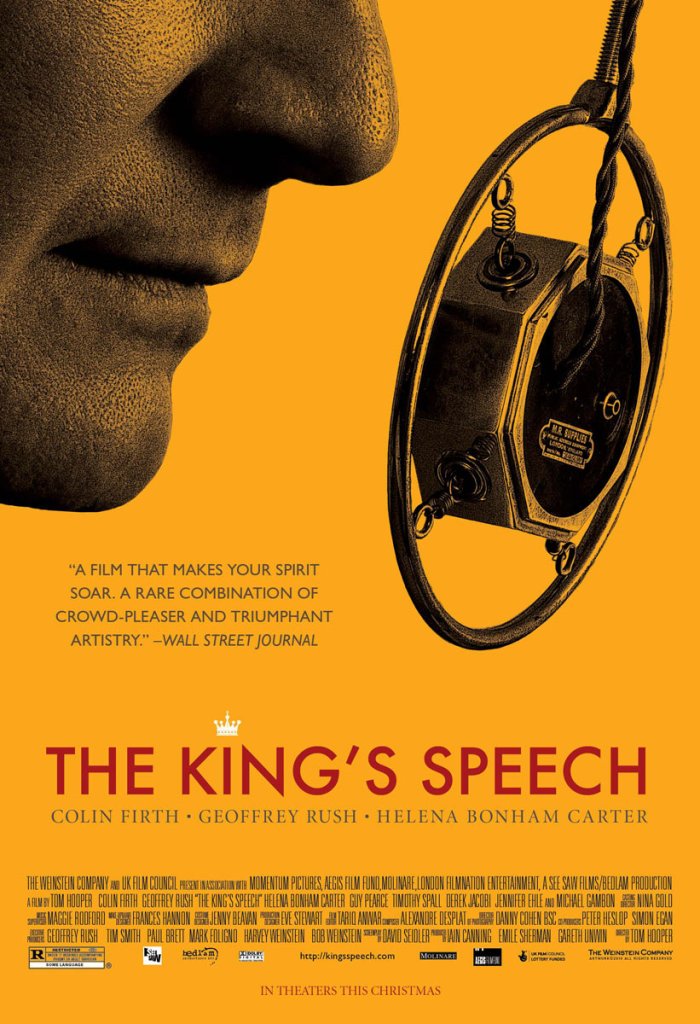
It can be very hard to imagine the fear and pressure of not being able to trust your own voice. In a world where communication is valued so highly, what terror can it bring if you can’t easily express the thoughts in your own head? It’s a fear perfectly captured in the Oscar-winning The King’s Speech. Because in a constitutional monarchy, what purpose does the King have, but to be a voice for his people? And if the King can’t speak, how can he hope to fulfil his duty? The King’s Speech uses its empathy for those struggling with a condition many find easy to mock and belittle, to create an emotionally compelling and deeply moving story that is a triumph not of overcoming an affliction, but learning how it can be managed and lived with.

In the 1930’s Prince Albert, Duke of York (Colin Firth) is second-in-line for the throne. But unlike his charismatic brother David (Guy Pearce), he’s a tense man uncomfortable in the spotlight, whose life has been blighted by his stammer. As pressure grows from his father George V (Michael Gambon) to take on a more public role, he and his wife Elizabeth (Helena Bonham Carter) begin the process of consulting doctors for “a cure”. But the answer might lie with a former actor turned speech therapist Lionel Logue (Geoffrey Rush), whose techniques are as much psychological as they are practical. As he and the future George VI begin to work together, a tentative friendship forms as the taciturn king begins to open up about his feelings and find real friendship for the first time in his life.

The King’s Speech delivers a well-paced, beautifully written (an Oscar winning script from David Seidler) moving story of two unlikely outsiders who find themselves as unlikely kindred spirits. While it’s easy to see its Oscar win for Best Picture as a triumph of the academy’s conservatism (and there is a case to make, with the film’s heritage style and rather conventional structure and story-telling), but that would be to overlook the emotional impact it carries. I’ve seen the film several times now, and each time I find a lump forming in my throat as it sensitively and intelligently tackles themes of depression, isolation and fear and builds towards the heart-warming achievement of a man who learns his afflictions don’t have to define him.

Hooper (who scooped the Oscar for Best Director) draws superb performances from his actors, as well as bringing his own distinctive style to the film. He had already shown with his TV miniseries John Adams that he could shoot period material with all the immediacy and energy of more modern subjects, and it’s what he does here. His unique framing – with the actor’s often at the edges of the frame, in front of strikingly character-filled surfaces – not only grounds the drama in reality, but also captures a sense of the characters own personal isolation, helped by the frequent intimately-close shots. It helps the film avoid throughout from falling into the “heritage” trap, and instead feel (for all its royal family trappings) like a personal, intimate and real story.

And the intimacy is what makes it work so well – especially since so many of the scenes are made up of two characters sitting and talking, gently but with a slowly peeling honesty, about their own thoughts and feelings. The film is hugely successful in building up our empathy for the often over-looked struggles those who stammer go through. The terror that everyday events can bring. The burden of not mastering your own voice. The anger not being able to express yourself can bring. The resentment of how others can perceive your condition as anything from an irritation to a joke to something that with just a bit of help and effort you could brush aside like a sore toe.

The film has drawn praise for its depiction of stammering – although I am reliably told by an friend with an expertise in such things that the film’s connection of stammering with psychological trauma is old-fashioned and far from proven. But it realistically shows the burdens both it, and a troubled childhood, can bring and draws attention and sympathy to the condition in the best possible way.

A lot of this is helped by Colin Firth’s outstanding, Oscar-winning, performance in the lead role. From first seeing him, his George VI is a buttoned-up man with tension pouring out of every pore, who has chosen taciturn aggression as a defensive alternative to actually having to speak. Firth’s observance of mechanics of stammering is spot on (I wonder if he consulted Jacobi, who has had more than his own experience acting a stammer!), but above all he captures the deep pain, frustration and fear it can bring to a person. Firth’s King is a man who has lived a life feeling coldly shunned by most of his family – an upbringing he is clearly working hard to correct with his sweetly loving relationship with his own children. He’s bitter and angry – not only struggling to understand and express these emotions, but allowing them to crowd out his natural warmth, kindness and generosity which emerge as he opens up to Logue, and experiences genuine friendship for the first time.

Firth sparks beautifully with Geoffrey Rush who is at his playful and eccentric best as Logue. A warm, witty and caring man with a sharp antipodean wit and playful lack of regard for authority (the film mines a lot of fun from Logue’s playful teasing of the stuffed shirt nature of monarchy and the British class system), Rush’s performance is excellent. Just as the King has been dismissed by others for his stammer, so Logue has been dismissed as an actor for his Aussie accent and is scorned by his colleagues for his unconventional methods and lack of qualifications. But, by simply listening to a man who has been lectured to his whole life, who is frightened of himself and his situations, he helps him find a voice (in, of course more ways than one). Rush’s performance is essential to the success of the film, both as the audience surrogate and also a character with his own burdens to overcome.

Backing these two is a superbly judged performance of emotional honesty, matched with that take-no-prisoners bluntness we grew to know in the Queen Mother, from Helena Bonham Carter. The rest of the cast is equally strong. Pearce offers a neat cameo as a bullyingly selfish Edward VIII. Jacobi is overbearingly pompous as the face of the establishment. Jennifer Ehle is wonderfully playful as Logue’s put-upon wife. Andrews contributes a neat little turn as Stanley Baldwin.

Historically the film telescopes events for dramatic purposes. In fact, the future King’s therapy had started almost a decade earlier. Timothy Spall’s Winston Churchill – a rather cliched performance – is converted here into an early supporter of George VI during the abdication crisis (in fact Churchill’s outspoken support for Edward VIII nearly destroyed his career). Baldwin has been partly combined with Chamberlain. Other events are simplified. But it doesn’t really matter too much. Because the emotional heart of the story is true – and the relationship between these two men, and the positive impact they had on each other’s life is what make the film so moving.

Culminating in a near real-time reconstruction of the King’s speech announcing the outbreak of the Second World War – a brilliantly handled, marvellously edited and shot sequence with masterful performances from Firth and Rush – the film is an emotional triumph. Sure, it hardly re-events the wheel, with its struggle to overcome adversity story line and tale of royalty bonding with commoner – but it hardly matters when the rewards are as rich as this. With superb performances all round, in particular from Firth, Rush and Carter and sharp direction of a very good script, this is a treat.

Gosford Park (2001)

Cruelty, snobbery and viciousness – just another night at Gosford Park

Director: Robert Altman

Cast: Eileen Atkins (Mrs Croft), Bob Balaban (Morris Weissman), Alan Bates (Mr Jennings), Charles Dance (Lord Stockbridge), Stephen Fry (Inspector Thompson), Michael Gambon (Sir William McCordle), Richard E. Grant (George), Derek Jacobi (Probert), Kelly Macdonald (Mary Maceachran), Helen Mirren (Mrs Wilson), Jeremy Northam (Ivor Novello), Clive Owen (Robert Parks), Ryan Phillippe (Henry Denton), Kristin Scott-Thomas (Lady Sylvia McCordle), Maggie Smith (Constance, Countess of Trentham), Emily Watson (Elsie), Claudie Blakely (Mabel Nesbitt), Tom Hollander (Lt Commander Anthony Meredith), Geraldine Somerville (Lady Stockbridge), Jeremy Swift (Arthur), Sophie Thompson (Dorothy), James Wilby (Freddie Nesbitt)

We’ve always fancied ourselves that when Brits make films in America – think John Schlesinger’s brilliant analysis of New York hustlers in Midnight Cowboy – they turn the sharp analytical eye of the outsider on American society. But do we like it when America turns the same critical eye on us? Gosford Park is a film surely no Brit could have made, so acutely vicious and condemning of the class system of this country, without the hectoring that left-wing British filmmakers so often bring to the same material, it’s just about perfect in exposing the hypocrisy and cruelty that undermines our class system. You’ll never look at an episode of Downton Abbey the same way again.

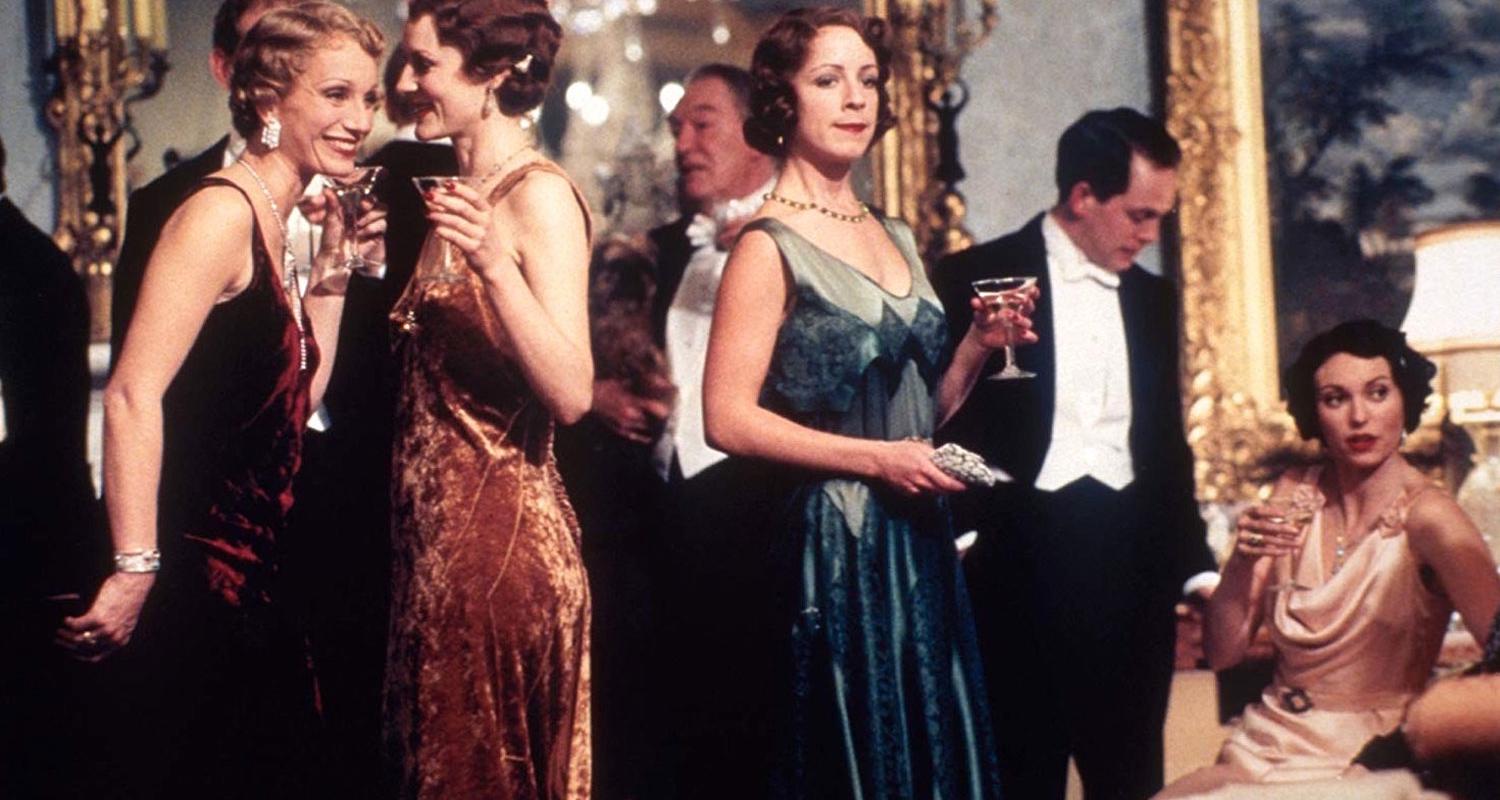
In November 1932, Sir William McCordle (Michael Gambon) hosts a shooting party at his country house. McCordle is almost universally despised by his relatives and peers – most especially his wife Lady Sylvia (Kristin Scott-Thomas) – but tolerated as his vast fortune from his factories basically funds the lives of nearly everyone at the house party. While the upper classes gather upstairs, downstairs the servants of the house led by butler Jennings (Alan Bates) and housekeeper Mrs Wilson (Helen Mirren) order the house to meet the often selfish and thoughtless demands of the rich. The house is rocked midway through the weekend, when a murder occurs overnight. With motives aplenty, perhaps the new maid Mary (Kelly Macdonald) of the imperious Countess Trentham (Maggie Smith) has the best chance of finding the truth.

First and foremost, it’s probably a good idea to say that this is in no way a murder-mystery. Robert Altman, I think, could barely care less about whodunit. While the film has elements that gently spoof elements of its Agatha Christie-ish settings, Altman’s interest has always been the personal relationships between people and the societies they move in. So this is a film really about the atmosphere of the house and most importantly how these people treat each other. Altman despised snobbery, and in a world that is fuelled by that very vice, he goes to town in showing just how awful and stifling so many elements of the class system really were.

“He thinks he’s God Almighty. They all do.” So speaks Clive Owen’s Robert Parks, valet, of his employer the patrician Lord Stockbridge (Charles Dance, excellent). You’ve got the attitude right there: the rich see themselves as a different species to those pushing plates around and cleaning clothes below stairs. The idea of there being anything in common is laughable. Slight moments of casual conversation between servant and master in the film are governed by strict laws and carry a quiet tension. 

It’s so acute in its analysis of the selfishness, snobbery, cruelty and arrogance of the British class system that each time I watch it I’m less and less convinced that Downton Abbey (the cuddliest version of this world you could imagine) creator Julian Fellowes had much to do with it. This film is so far from the “we are all in this together” Edwardian paternalism of that series, you can’t believe the same man wrote both. All the heritage charm of Downton is drained from Gosford, leaving only the cold reality of what a world is like where a small number of people employ the rest.

Upstairs the hierarchy is absurdly multi-layered. Everyone is aware of their position, with those at the top of the tree barely able to look those at the bottom in the eye, let alone talk to them. The rudeness is striking. Maggie Smith (who is brilliant, her character totally devoid of the essential kindness of her role in Downton Abbey has) is so imperiously offensive, such an arch-snob, she can only put the thinnest veil over her contempt when she deigns to speak to her inferiors. Her niece, played with an ice-cold distance by Kristin Scott-Thomas, embodies aloofness, selfishness and casual cruelty.

Ivor Novello (Jeremy Northam, superb) – the one real person in the film, and a film star – is treated like a jumped up minstrel player, with characters falling over themselves to make snide comments about his career. His guest Morris Weissman (an excellent Bob Balaban), a Hollywood film producer, is treated with similar contempt – when reluctant to divulge details of the film he is in England researching (a Charlie Chan film) for fears he will spoil his plot, the Countess bluntly informs him “oh, none of us will see it”. Later, as Novello plays the piano (essentially singing for his supper) only the servants are pleased – most of the upper classes endure it under sufferance (“Don’t encourage him” the Countess says when there is a smattering of applause). You can see why, after only a few hours in the house, Weissman whispers to Novello: “How do you put up with these people?”

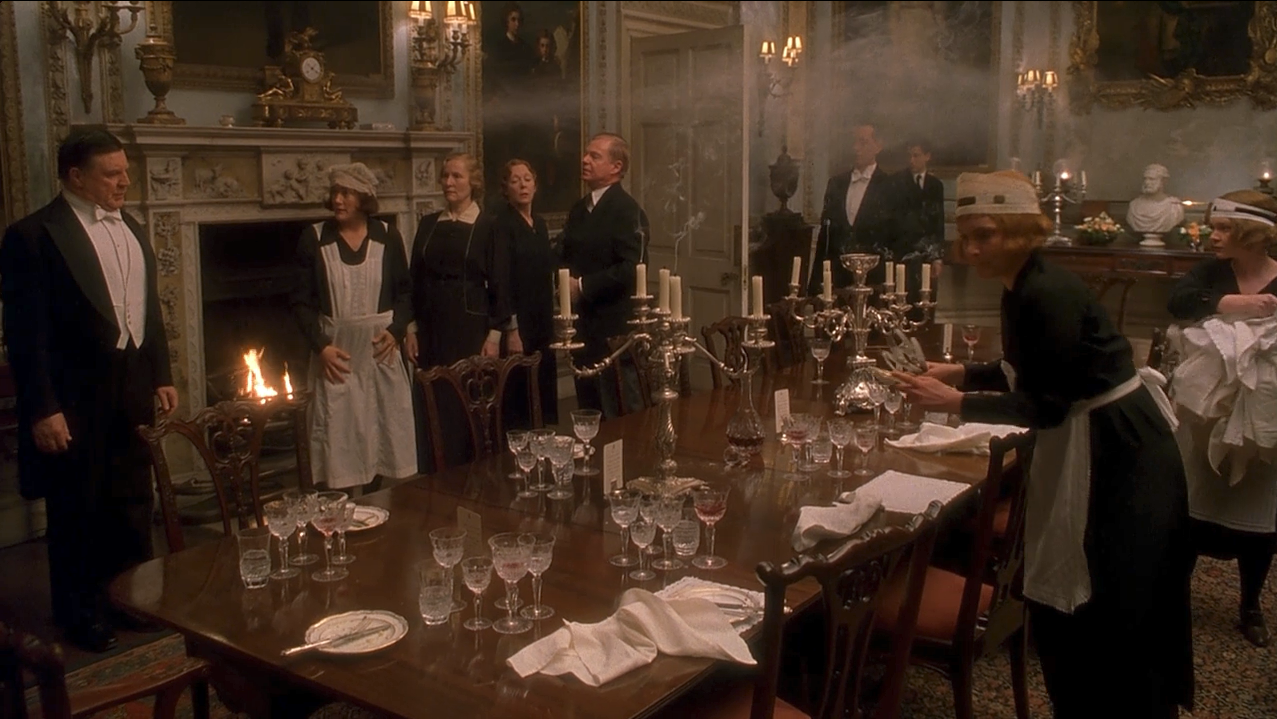
The servants themselves are bits of furniture, or barely acknowledged at all. Altman doesn’t shoot a single scene without a servant present, but this often hammers home their irrelevance to the upper classes (it’s made even more effective by seeing actors like Bates, Jacobi, Grant, Macdonald, Owen and Watson essentially being treated as extras). There are no bonds between upstairs and downstairs at all. Any upset witnessed on either side is responded to with silence. When Emily Watson’s Elsie (a brilliant performance of arch awareness of her place) momentarily forgets herself and speaks out at the dinner table, it’s treated like she has crapped on the floor – needless to say her career is finished.

The servants however echo the pointless rituals and ingrained hierarchy of their masters below stairs. For ease (!) the house servants insist the visiting servants are only addressed by the names of their employers not their own names. At their dinner table, their seating reflects the hierarchy of their employers. Many of the servants are more grounded and “normal” than the upstairs types, but they are as complicit in this system continuing as anyone else. They simply can’t imagine a life without it, and accept without question their place at the bottom rung of the house. 

Ryan Phillippe, later revealed as an actor masquerading as a servant (for research), immediately shows how hard it is to move between the two social circles. The servants despise him as a traitor who may leak secrets about their views of the employers. The guests see him as a jumped up intruder, even more vulgar than Novello and Weissman. His later humiliation is one of the few moments that see both sides of the social divide united (it’s fitting that it is an act of cruelty that reinforces the social rules that brings people together). 

The focus is so overwhelmingly on the class system – with Altman’s brilliant camera work (the camera is never still) giving us the sense of being a fly-on-the-wall in this house – that you forget it’s a murder mystery. Here the film is also really clever, archly exposing the harsh realities of the attitudes held by your standard group of Christie characters. Dance’s Lord Stockbridge in a Christie story would be a “perfect brick” but here we’ve seen he’s a shrewd but judgemental old bastard. The film throws in a clumsy Christie-style incompetent police detective, played by Stephen Fry. This is possibly the film’s only real misstep as Fry’s performance touches on a farcical tone that seems completely out of step with the rest of the film. But the Christie parody is generally wonderful, exploding the cosy English world the public perception believes is behind Christie (even if the author herself was often darker than people remember!).

It’s a hilarious film – Maggie Smith in particular is memorable, from cutting down her fellow guests, to judgementally tutting at shop-bought (not homemade) marmalade – but it’s also a film that creeps up on you with real emotional impact. Kelly Macdonald is very good as the most “everyday” character, who takes on the role of detective and has superb chemistry with Clive Owen’s dashing valet. But the film builds towards a heart-rending conclusion – a conclusion that, with its reveal about the darker side of Gambon’s blustering Sir William, feels more relevant every day – that shows the secret tragedies and dark underbelly of these worlds, with a particularly affecting scene between Atkins and Mirren (Mirren in particular is such a peripheral figure for so much of the film, that her final act revelations and emotional response carries even more force).  It’s heart rending.

Gosford Park is a film continually misremembered as either a cosy costume drama or a murder mystery. It’s neither. It’s a brilliant analysis of the British class system and a superb indictment of the impact and damage it has had on people and the country. Hilarious, brilliantly directed by Altman with a superb cast – it’s a masterpiece, perhaps one of the finest films in Altman’s catalogue.

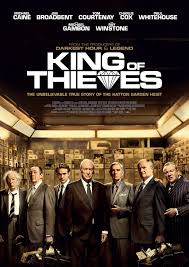
King of Thieves (2018)

Michael Caine leads the Old Lags on one last hurrah in the misjudged King of Thieves

Director: James Marsh

Cast: Michael Caine (Brian Reader), Jim Broadbent (Terry Perkins), Tom Courtenay (John Kenny Collins), Charlie Cox (Basil/Michael Seed), Paul Whitehouse (Carl Wood), Michael Gambon (Billy “The Fish” Lincoln), Ray Winstone (Danny Jones), Francesca Annis (Lynne Reader)

In 2015, a group of old lags robbed a safety deposit company in Hatton Garden. Over the Easter weekend, the gang broke while the facility was empty, drilled through a wall, climbed into the safe and cleared out almost £14 million in cash, diamonds and other goods. The crime captured the public imagination largely because the robbers, bar one member of the gang, were all over 60. This country has a certain nostalgia for rogues, and a tendency towards a condescending affection for the aged. In real life, the only thing remotely charming about these hardened criminals, many of them with extremely violent backgrounds, was their age.

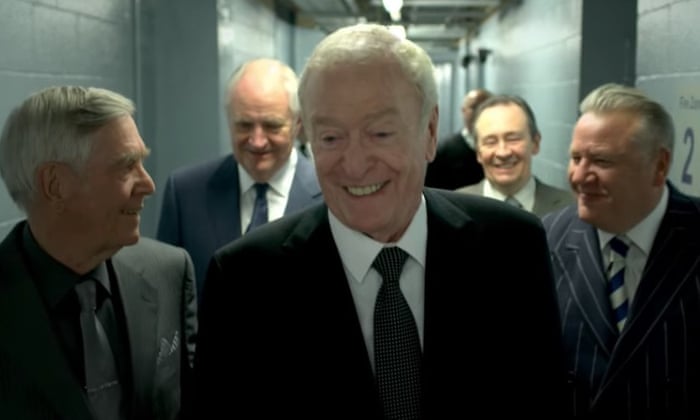
James Marsh pulls together a great cast of actors for his heist caper. Brian Reader, the brains behind the operation, is played with gravitas by Michael Caine. Terry Perkins, the man who cuts Reader out of the profits, is played by Jim Broadbent. Tom Courtenay, Ray Winstone, Paul Whitehouse and Michael Gambon play the rest of the lags while Charlie Cox is the young tech expert who brings the possibility of the heist to Reader’s attention. With a cast like this, it’s a shame the overall film is a complete mess from start to finish.

I watched this film after first watching ITV’s forensically detailed four-part series, Hatton Garden, covering the heist in full detail. That drama was far from perfect, but it was vastly superior to this. The main strength of Hatton Garden was that it never, ever lost sight of the fact that this was not a victimless crime. Real-life small businesses went bust due to property lost in the heist. Families lost priceless, irreplaceable heirlooms. Items of hugely sentimental value have never been recovered. Lives were damaged. On top of that, Hatton Garden stresses the grimy lack of glamour to these thieves, their greed, their paranoia, their aggression and their capacity for violence. Far from charming rogues, they are selfish, greedy old men who fall over themselves to betray each other and are clueless about the powers and abilities of the modern police force.

King of Thieves occasionally tries to remind people that these were hardened career criminals. But it also wants us to have a great time watching actors we love carry out a heist against the odds, like some sort of Ocean’s OAPs. James Marsh never manages to make a consistent decision on the angle he is taking on these men or the crime they carried out. It’s half a comedy, half a drama and the tone and attitude towards the burglars yo-yos violently from scene to scene. The end result, basically, is to let them off with a slap on the wrist.

“It’s patronising” rages Reader at one point at the media coverage of the crime, annoyed at how it stresses their age as if that somehow makes it a jolly jaunt. Never mind that the film does the same. The score contributes atrociously to this, a series of jazzy, caperish tunes that echo the 60s heydays of these violent men (Reader and Perkins had both stood trial for murders, and were lucky to get off) punctured with some cheesily predictable songs. Tom Jones plays as our heroes comes together, and Shirley Bassey warbles The Party’s Over as things fall apart. The old men banter and bicker about the confusions of the modern world like a series of talking heads from Grumpy Old Men and the general mood is one of light comedy.

The film does try and darken the tone in the second half, post-robbery, as things start to fall apart and tensions erupt in the gang. Here we get a little bit of the mettle of the actors involved in this. Jim Broadbent, in particular, goes way against type as Perkins’ capacity of violence (even at a diabetes-wracked 67) starts to emerge. Tom Courtenay’s Kenny Collins emerges as manipulative liar, playing off the robbers against each other. Ray Winstone sprays foul language around with a pitbull aggression. Even Michael Caine roars a few death threats, furious at being betrayed by the gang.

But it never really takes, because the film never throws in any sense of the victims of this crime. Blood is never drawn in this slightly darker sequence of the film. Even the clashes between the gang are played at times for light relief. Anything outside the gang is ignored. The victims? Who cares. The cops? There is barely a policeman in this film who has a line.

The film undermines the whole point it might be trying to make – that these were dangerous men – by succumbing to romanticism at its very end. As the captured old lags await trial, we first see them laughing and joking with each other as they prep for court and then, as they walk towards the dock, the film throws up old footage of the actors from the 60s, 70s and 80s, stressing their romanticism. Look, the film seems to be saying: these were criminals, but they were old fashioned criminals, remember when Britain used to make its own underdog crims instead of being awash with hardened, violent gangs? It’s hard to take. And it’s like the whole film. A tonal mess that finally absolves the robbers who ruined lives and who still haven’t returned almost £10 million of ordinary people’s goods. King of Thieves isn’t charming. It’s alarming.