Tag: Neil Patrick Harris

The Matrix: Resurrections (2021)

The Matrix: Resurrections (2021)

We saddle up one more time for this belated sequel, which does enough to be the second-best film in the franchise

Director: Lana Wachowski

Cast: Keanu Reeves (Thomas Anderson/Neo), Carrie-Anne Moss (Tiffany/Trinity), Yahya Abdul-Mateen II (Morpheus/Agent Smith), Jessica Henwick (Bugs), Jonathan Groff (Smith), Neil Patrick Harris (The Analyst), Priyanka Chopra Jones (Sati), Jada Pinkett Smith (Niobe), Toby Onwumere (Sequoia), Max Riemelt (Sheperd), Brain J Smith (Berg), Erendia Ibarra (Lexy), Lambert Wilson (The Merovingian), Christina Ricci (Gwyn de Vere)
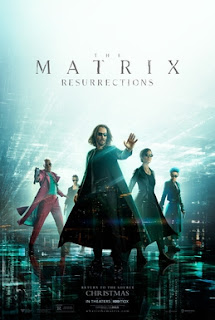
Thomas Anderson (Keanu Reeves) is the most famous games designer in the world. His award-winning game The Matrix revolutionised the genre, but now he needs to make a sequel. But Anderson is juggling all sorts of depression, chugging blue pills like there’s no tomorrow in order to keep back disturbing feelings and sensations that there is more to that Matrixconcept than he remembers. Was it in fact closer to reality? Why is he so drawn to Tiffany (Carrie-Anne Moss) the woman he sees in his coffee shop? Why is he unsettled by his business partner Smith (Jonathan Groff)? Should he follow the White Rabbit?

Bringing The Matrix back is a tough ask. It’s been well over twenty years since the first film revolutionised action and sci-fi – and then the two sequels managed to progressively strip out any of the fun, romance and wonder from the original. Now Resurrections attempts to put it all back in again. It’s a noble attempt – and this is easily the second-best Matrix film – but there is still an air of obligation about the whole thing.

It’s hard to escape that feeling from the on-the-nose opening act, which literally includes dialogue from Smith to Anderson to the tune of: ‘Our parent company, Warner Brothers, say they want a sequel to The Matrix and they’re going to do it with or without us, so we might as well come up with an idea’. Partially set in a new Matrix where the events of The Matrix form the basis of an award-winning game everyone knows by heart, characters constantly riff excitedly on how some events in this film parallel those in the first film (always the first film). There is a spit-ball planning session at Anderson’s workplace, where his design team bounce phrases like “Guns. Lots of Guns” at each other or playfully mime out bullet time. I suppose this relates to Wachowski’s experience of having the Studio for years demand a fresh new Matrix film. But it is a little on-the-nose.

The self-reverential nature of the film continues throughout. From an opening that sees Hacker Bugs (a very good Jessica Henwick) watch a simulation of the opening of the first Matrix film – with a few changes – a mixture of homage and nostalgia runs through the film. As an alliance of humans, machines and programmes try to free Anderson/Neo from his new Matrix cage, they ease him in by playing (on huge projector screens) iconic scenes from The Matrix. Anderson’s flashes of memory, as things start to fall in place, are full of flashbacks to the earlier films. When Neo arrives in the real world, he finds himself in a dystopian future where he is a celebrity, and the events of his life are as much a part of this world’s folklore, as memories of the plot of the original trilogy is in the minds of my generation watching the film.

It’s quite a tribute that the film manages to keep all this self-reverential stuff balanced and neither becoming too annoying or collapsing in on itself. It does so because Wachowski manages to keep it playful. She’s clearly learned from the legacy of the two Matrix sequels, that puffed themselves up so much they burst. This features some discussions around truth, reality and choice but keeps them low-key and free of sequel’s aura of pomposity. It wisely (and plot logically) depowers Neo so that he is no longer completely invulnerable. It again makes him an outsider, fighting against a dominant system that seems to hold all the cards. And it puts at its heart a battle of two people to be together.

It’s also lovely to see Reeves and Moss back in these roles, which they fit back into with a charming ease and comfort – and also to see that their chemistry still exists. The plot of the film is at times garbled and even poorly communicated – it is very hard at times to understand why things are happening or what the rules are in this new Matrix (and its particularly hard to understand the plot around Smith, and how, if at all, he is restrained within this Matrix). But what you do understand is the emotional imperative that lies behind these characters actions – in a way that was often lost in the two original sequels.

The film also manages to keep more than its share of inventive action set-pieces. While its ending – a motorbike chase through a city where the whole population is turned against our heroes – feels very reminiscent of other things we’ve seen, earlier set-pieces use a lot more invention. In particular there is a very neat innovation of doors that jump thousands of miles – and see the characters move from one orientation to another as they pass through them. A chase through these allows for some dynamic movements and more than enough of the gravity defying bouncing and gunplay the franchise is famous for. New actors do very good jobs, in particular Henwick and Yahya Abdul-Mateen II as a new version of Morpheus and Jonathan Groff as a twist on Smith.

But Resurrections feels like a dutiful film and it’s laced with the odd clunky scene (none more so than a reappearance of Lambert Wilson, ranting direct to the audience about social media) and the odd gap in logic and plot definition. Its main problem is that it never feels essential. To bring the franchise back after all this time, into a world where its cultural cache has declined, you feel it needed to do something really special or redefining. It doesn’t really do this: it seems more interested in riffing on the past rather than building a future. It’s a reassuring film that hews closely to the plot and structure of the original film (deliberately so, with the characters even refencing similarities) that isn’t going to scare or annoy the fans – but also (and the film’s box office failure supports this) also not going to win over new converts. But it’s still the second-best film.
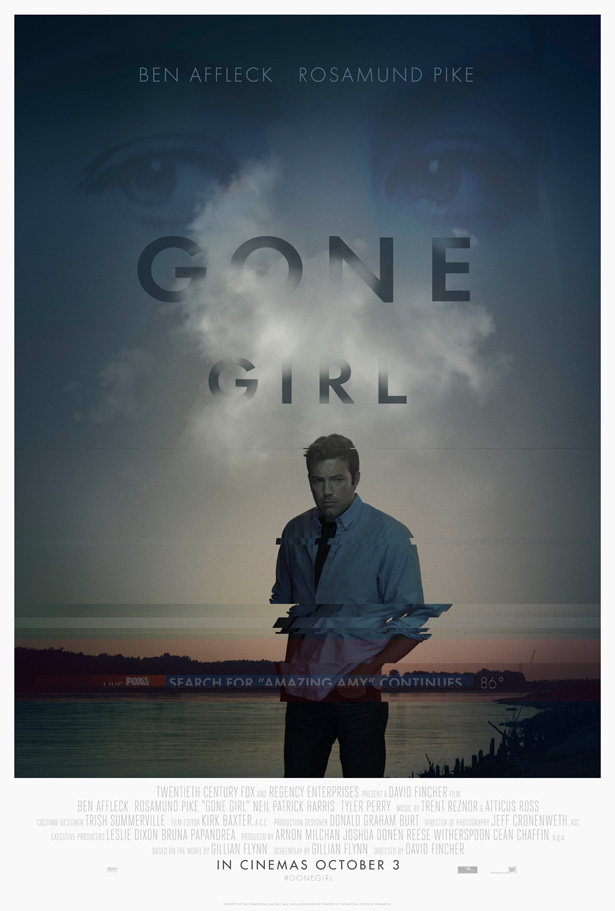
Gone Girl (2014)

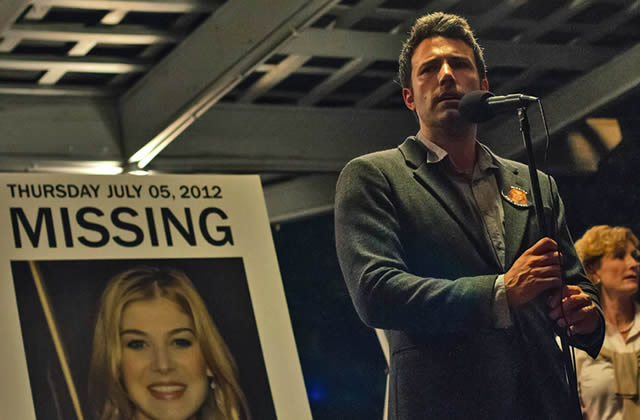
Rosamund Pike is the Gone Girl leaving husband Ben Affleck in a difficult mess

Director: David Fincher

Cast: Ben Affleck (Nick Dunne), Rosamund Pike (Amy Elliott Dunne), Neil Patrick Harris (Desi Collings), Tyler Perry (Tanner Bolt), Carrie Coon (Margo Dunne), Kim Dickens (Detective Rhonda Boney), Patrick Fugit (Officer James Gilpin), Missi Pyle (Ellen Abbott), Emily Ratajkowski (Andie Fitzgerald), Casey Wilson (Noelle Hawthorne), Lola Kirke (Greta), Boyd Holbrook (Jeff), Sela Ward (Sharon Schieber), Lisa Banes (Marybeth Elliott), David Clennon (Rand Elliott)

In our modern media age, we’ve got massive expectations for how people are meant to behave. With so much of our perception of life filtered through the internet and films we’ve seen, we are reassured when we see behaviours we expect to see, and disconcerted when we see those we haven’t been trained to see. Not distraught enough at your wife going missing? Well you must have done it then!

That’s the problem that faces Nick Dunne (Ben Affleck) in this chilling, intricate adaptation of Gillian Flynn’s best-selling book. Nick’s wife Amy (Rosamund Pike) goes missing in mysterious circumstances, possibly a kidnap, possibly a kidnapping gone wrong. The case becomes a media sensation, but the problem is Nick just isn’t expressive enough, won’t play the role of weeping husband. Instead he’s calm, distant and polite. So naturally rumour swirls that he did it – particularly after more and more manufactured evidence rears up to suggest he might have done. But does Amy have darker secrets than anyone might even suspect? Well to say any more would be a spoiler.

Fincher’s film is a tour-de-force of deliberately cold, polished looking perfection – which is designed to reflect back the surface perfection of the Dunnes’ deeply flawed marriage. Fincher’s film is in many ways a jet black social satire, using its almost outlandish shocks and twists to involve the audience in that “oh-no-they-didn’t!” way, in the same way that the Dunne media story fascinates the people in the movie.

“What have we done to each other?” Nick asks in voiceover early in the film, and it’s the question the film tackles obliquely: how much of the flashbacks to the relationship we see between Amy and Nick is real and how much springs from unreliable narration from Amy’s diary? Two handsome people living the American dream, but how much of it is an invented or projected narrative? Is their whole life a performance they are living for themselves and for others? Poor old Amy is even already semi-fictionalised person, a parents using her life as inspiration for a beloved children’s book character Amazing Amy.

So when Amy goes missing, the strain on Nick is very different from what you might expect. Rather than being consumed with grief, he feels wearied and dutiful about continuing a performance of a marriage which has long since ended. Nick’s actually too honest for this world – he won’t put on a show of how he is supposed to feel, he can only try not to make too much of a show of what he really feels. The mystery that builds around his and Amy’s marriage is born in this blunt honesty, of someone who won’t be what people want him to be. Of course that doesn’t stop Nick from being selfish or even a whiner.

Fincher mixes this intelligent commentary on society with, to be honest, the sort of bizarre extremism and bunny-boiling antics that make you unsurprised to hear he was inspired by Paul Verhoeven while making the film. It’s a film that shifts gears notably in the second half to become an increasingly gothic horror-thriller. A lot of this is powered also by Rosamund Pike’s excellent performance as Amy, a woman who seems almost completely cryptically unknowable, whose whole life has been a performance, and for whom taking on a series of roles and personalities is clearly not a challenge. Needless to say the person she turns out to be, and what she is capable of, is completely different from what the film leads you to expect.

It’s no surprise that a relationship featuring a person like Amy could go as south as the Dunnes’ has, but then Nick is hardly a saint either. Ben Affleck is just about perfect casting as a sort of All-American charmer gone to seed, a prickly fellow who wants privacy but also partly grows to enjoy the drama that surrounds him, once he works out the game he is playing. Fincher’s deliberately distant, smoothly clean-surfaced film frames modern day aesthetic perfection all round this seemingly dream couple.

The whole film is a nightmare vision of a love match gone wrong, of the after-effects of a beautiful story that has spiralled out into disappointment and everyday mundane life. And that struggle to keep the romance going in the familiar is at least something many of us can understand right? So it’s enjoyable to see that matched up with the freaky, semi-gothic blood and guts the film serves up in the second half, and the almost surreal Grand Guignol plot developments that power that half of the film (shot and scripted by Fincher and Flynn with a brilliant mixture of tension, horror and black comic delight at its extremity).

Like many Fincher films, there are several delightful performances. Pike is a revelation in a gift of a role, Affleck very good channelling his life lived in the spotlight. Carrie Coon is a stand-out as Nick’s exasperated, down-to-earth and loving twin sister. Kim Dickens is authorative and questioning as the police detective investigating the case, and Tyler Perry assured and cool as a hot-shot lawyer. Playing way against type, Neil Patrick Harris is pretty unforgettable as a slightly self-satisfied rich kid still holding a candle for Amy after all these years.

But the main success of the film is the whipper-sharp coldness of its execution, the cool tension Fincher ekes out of every moment, and the violent, Vertigo-ish obsession he gets out of every moment. Gone Girl works because it’s at first a chilling what-if story of a man in a media storm, which becomes a sort of black comedy so extreme that it pulls a delighted audience in to gasp at audacious characters getting away with outrageous things. As a black comic thriller it’s delightful.rela

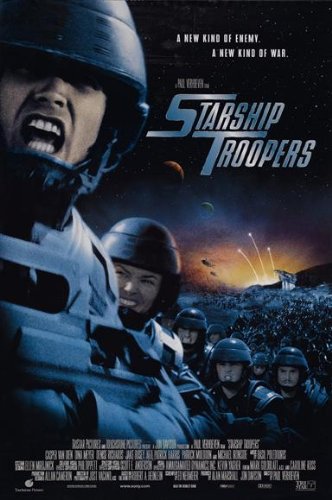
Starship Troopers (1997)


Earth’s military might goes up against space bugs in Paul Verhoeven’s militaristic satire

Director: Paul Verhoeven

Cast: Casper Van Dien (Johnny Rico), Dina Mayer (Dizzy Flores), Denise Richards (Carmen Ibanez), Jake Busey (Ace Levy), Neil Patrick Harris (Carl Jenkins), Patrick Muldoon (Lt Zander Barcalow), Clancy Brown (Sgt Zim), Michael Ironside (Lt Jean Rasczak), Seth Gilliam (Cpl Sugar Watkins)

Every so often, a film uses the tropes of bad films so well, and makes such effective satirical digs, that people initially miss the point of what the film is trying to do. This is pretty much what happened with Paul Verhoeven’s Starship Troopers. On the surface a terribly acted, deeply stupid sci-fi actioner about soldiers killing space bugs, Verhoeven actually created a sharply intelligent, wry satire on the very bombastic militaristic fascism it seems to celebrate. This satirical bent was missed not only by the critics, but also the producers of the straight-to-video sequels the film spawned.

In the 23rd century, mankind has reached the stars. But it’s done so by creating a militaristic, aggressive society, where the young are encouraged to join up to the military in order to become “citizens”. Leaving high-school, hotshot would-be-pilot Carmen Ibanez (Denise Richards) joins up – followed by her boyfriend Johnny Rico (Casper van Dien), in turn followed by Dizzy Flores (Dina Mayer), the girl in love with him. Joining the ground soldiers, Ricco and Flores find themselves as the point of the spear in mankind’s war with the Arachnids (the Bugs), a race of (it becomes clear) intelligent and savage insects on a distant planet.

Starship Troopers isn’t really like anything else: it might well be Verhoeven’s American masterpiece, the perfect mix of his love for extreme gore, violence and sex (filmed with lashings of comic colour and playful glee) with keen social satire, the very ideas he had explored in everything from Robocop to Total Recall. At first glance, Starship Troopers serves up the all-action, gun-toting space battle excitement you would expect from its genre. But Verhoeven not only ramps everything up to 11, he also laces the dialogue and action with a keen satirical bent that hammers home the underlying theme of how war essentially (as Verhoeven puts it) “makes fascists of us all”.

The action is regularly interrupted by propaganda newsreel footage, which stresses the importance of sacrifice for the military effort. The military training camps are almost obsessively focused on brainwashing and reducing the young people in them to cogs in the machine, with safety and welfare as very much a secondary concern (the death of a recruit in an exercise is a concern only because it shows careless leadership rather than because of the death itself). Everyone in the film seems to be a perfect physical specimen. Military lives are thrown away through a combination of arrogance (they’re just bugs, this will be easy!) and incompetence, but never with any feeling of responsibility or expression of regret (though the media works hard to adjust all casualty figures wildly downwards).

The film fires shots at everything in the industro-military complex. The foreign policy of this world is ludicrously aggressive and jingoistic. Despite the spin of the propaganda, it’s pretty clear that humanity has started the war itself. The army is like Hitler’s wet dream – sleek perfect bodies, suicidal self-sacrifice, a complete lack of questioning of any orders or directives, a willing acceptance of corporal punishment. This attitude of violence and unthinking aggression is at every point of society – newsreel footage shows children holding guns with grinning soliders, who then proceed to hand out live ammunition. Later children are shown stomping cockroaches, to cries of the “the only good bug is a dead bug!”. Trials are routinely praised for the brevity (one day between arrest, conviction and execution!). It’s a terrifying world.

What Verhoeven does so well is that, while aware of the multi-leveled nastiness of the world of Starship Troopers, he also makes it a pretty effective straight-war movie. It’s exciting and the action quotient is high. Just like the soldiers in the picture, it’s very easy to see the bugs as faceless opponents which it is easy to feel little regret over killing. The battle scenes are high scale – and of course blackly comic in their extreme gore and bloodlust. But you can still enjoy the action – which is why the film works so well as satire. And also perhaps why so many at the time missed the point. Verhoeven makes this as an enjoyable B-movie, by really effectively using the tropes of B-movies. He turns the trashy B-movie into a sort of art exhibit.

That surely also explains some of the casting. I’m not sure how many of the actors are in on the joke. Certainly Casper van Dien and Denise Richards seem blissfully unaware of the satirical bent under the film. These two wooden actors trot through the sort of banal, by-the-numbers plot arcs and dialogue that fill films like these, with van Dien’s jaw as chiselled as granite and Richards grinning no matter the content of the scene. But their honest woodenness is perfect for the film: a smarter actor would have wanted to tip the wink to the audience, but these guys play it totally straight without even a hint that they are aware of the message underneath.

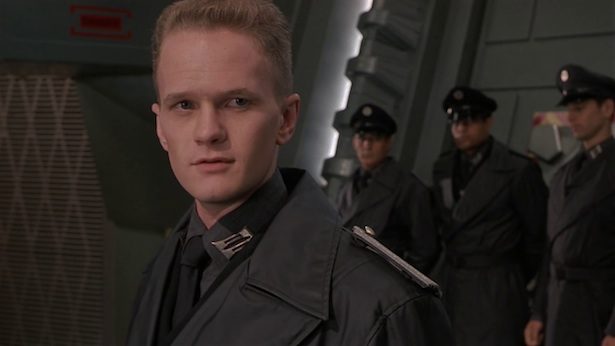
The more satirical element is left to other members of the cast: Michael Ironside has great fun as an almost absurdly fanatical solider, first introduced as a teacher lecturing his students on how the state must come before everything else and violence is the solution to all the world’s problems. Neil Patrick Harris tips a slight nod to the audience as a young man who rises so swiftly through the ranks that by the time we reach the end of the film, he’s a Gestapo-coated secretive colonel. He fits right into the grey militaristic, Nazi design of the military. You can watch all this stuff and simply enjoy the silliness – teenage boys will love this. And when they mature they’ll realise how awful the world it’s presenting is.


Starship Troopers is the ultimate military satire, a film that pushes every single fascist, militaristic society cliché to the limit. The news comes only from state propaganda. Military training involves brainwashing, maiming and slaughter. Education praises anger and violence as a solution to all problems. Verhoeven shoots this all with a grandeur, that pushes the celebration of militaristic violence to the max. 

It’s a film which is brave enough to make its militaristic sequences exciting, to shoot and cut this fascist wet dream with a stirring sense of excitement underpinning all the action. At the end you can celebrate the small victory our heroes celebrate in what is clearly going to be an ongoing war – until of course you realise it’s the victory of a Nazi organisation. The fascist world of the future may bring us sexual and racial equality – but that’s because it’s worked out everyone is needed to feed the grinder. It’s a super-smart satire film that disguises itself as a completely trashy action flick. It’s actually rather brilliant.