
Tag: Nia DaCosta

The Marvels (2023)

The Marvels (2023)

Messy sequel, that splits the focus between a host of unfamiliar characters and rushes from set-piece to set-piece

Director: Nia DaCosta

Cast: Brie Larsen (Carol Danvers), Teyonah Parris (Monica Rambeau), Iman Vellani (Kamala Khan), Zawe Ashton (Dar-Benn), Gary Lewis (Emperor Dro’ge), Park Seo-joon (Prince Yan), Zenobia Shroff (Muneeba Khan), Mohan Kapur (Yusof Khan), Saagar Shaikh (Aamir Khan), Samuel L. Jackson (Nick Fury)
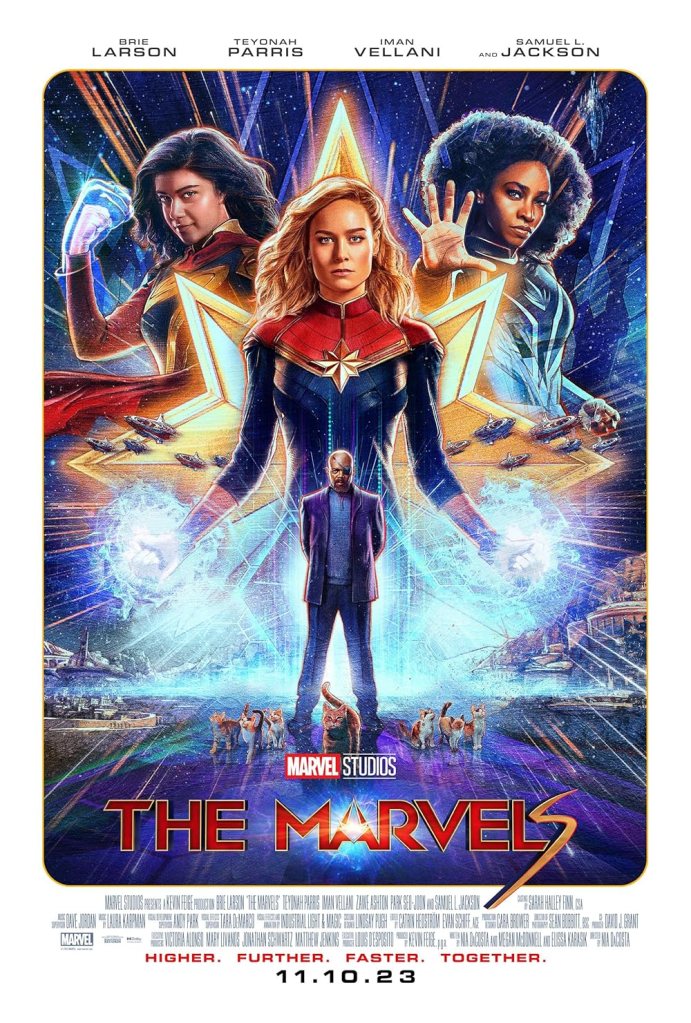
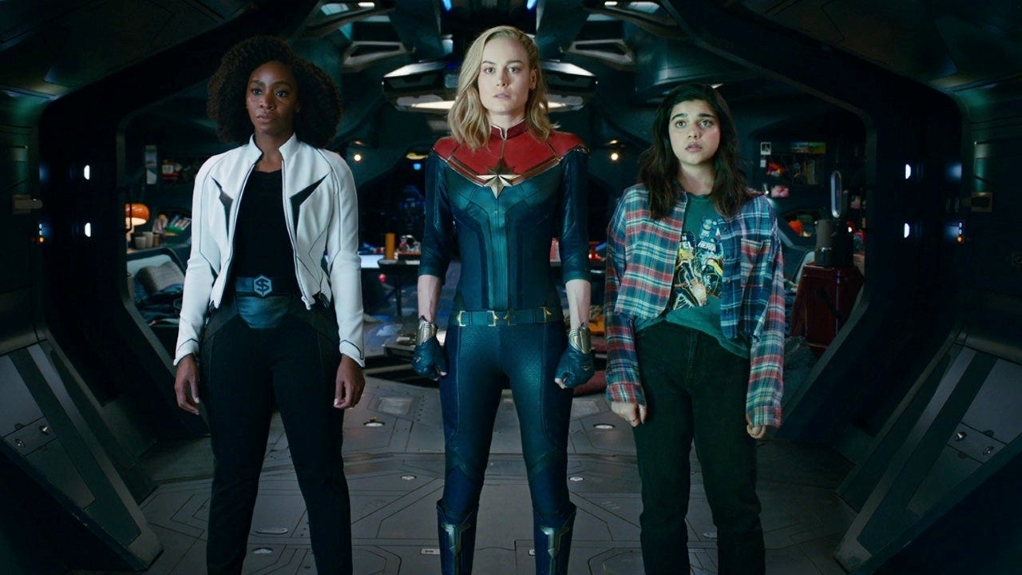
The Marvels carries some heavy baggage, being the first flat-out, unarguable mega-flop in the whole Marvel Franchise. It’s a follow-up to Captain Marvel, a film that itself drew a lot of fire from the knuckle-dragging depths of the internet for daring to have a woman in the lead role. The Marvels has no-less than three women in lead roles – although that split focus hardly helps it. After an accident in space, Captain Marvel (Brie Larsen), her honorary niece Monica (Teyonah Parris) – who grew up while an ageless Carol was lost in space – and New Jersey wannabe-hero Kamala Khan (Iman Vellani) find themselves teleporting into each other places when they use their powers. Not helpful, when they are fighting to stop a radical leader (Zawe Ashton) of Carol’s old enemy the Kree from destroying a series of planets to restore her own.

That split focus is a big part of the problem with The Marvels, a light-and-breezy fast-paced piece of comic book adventure, so slight that a puff of wind could blow it away. Honestly, it’s hard to imagine there were any discussions about Thor, Captain America or Iron Man having to share the spotlight (and title!) in their first sequels with two other heroes. It’s hard not to feel that Captain Marvel is a supporting player in her own movie (the real POV character is Iman Vellani’s very charming Ms Marvel), struggling to find airtime for her own plot arc, character dilemmas and actions to come into shape.

That split focus is surely partly why The Marvels flopped. With the franchise becoming ever more sprawling, it sometimes feels like you need a PhD to follow the ins and outs of who all these characters are and how they relate to each other. The Marvels never quite knows whether it should be introducing or not Carol’s two co-leads, both floated in from Disney+ TV shows. It says a lot that the final trailers for The Marvels became info-dump recaps of these two shows, and the origins of these heroes, desperately trying to assure people they could enjoy the film without seeing the shows. You can, you just might not really know who or what everyone is.

The Marvels feels like a film cut down to the bone to try and salvage entertainment from its carcass. You can’t help but feel a great deal of plot and context has been trimmed off into the bin while every single inch of the fight scenes (and these are shot with a great deal of dynamism by Nia DaCosta) has been left in.  This makes The Marvels feel, almost more than any other film in the franchise, like a relentless rollercoaster to nowhere. Something thrilling or barmy happens every few minutes – from gravity defying fights to worlds exploding, to our heroes visiting a planet where everyone only communicates through song and acts like they are in a Disney Broadway spectacular – but it never quite hangs together. You never quite manage to land on why things are happening or why you should care. And the film hopes that you’ll be so entertained by moments like its lifting of ‘Memory’ from Cats for a key sequence that you won’t particularly mind.

Most unfortunately, the biggest cuts affect Carol and the villain’s plot line. It’s only late on that we discover Carol has effectively caused a catastrophic disaster on the Kree home-world that led to a decades long brutal civil war in the crumbled aftermath. Perhaps because The Marvels is terrified that we might sympathise less with Carol for essentially unilaterally deciding to take revenge on her past tormentors and accidentally triggering a series of catastrophic war crimes, both her guilt for her actions and the justified anger from the Kree (who see her as a sort of Hitlerian figure of mass destruction), it dials down and fudges these facts and tries to keep the material off-screen or buried in busy scenes. This also means Zawe Ashton’s villain is reduced from a woman seeking to re-build her lost homeland to a typical anger-filled baddie with a planet destroying weapon who we unquestioningly can’t sympathise with.

The Marvels tries to find some clumsy room instead for a plot line where Carol feels awkward around her guilt for not seeing Monica in about thirty years. This however get similarly fudged, not least since (good as Teyonah Parris is as a reserved, by-the-book astronaut with superpowers) Monica is a character largely dropped into the film with very little context who it’s easy to forget was even in the first film. Brie Larsen is also, as is the case throughout the film, given barely a second of interesting dialogue or reflective pause to even begin to try and sell these feelings, so determined is the film to fly hell-for-leather towards the next set-piece.

If there is a star, it’s Iman Vellani as Kamala Khan – not least because she gets all the best lines and Vellani’s winning ability to breathe naïve excitement into any single moment (who wouldn’t be thrilled at suddenly flooring bad guys with your heroes?) is incredibly endearing. Since we spend large chunks of this film seeing things entirely from her perspective – and her family get bucketloads of screen time as well – it’s hard not to start to feel the film is about her. Especially since Captain Marvel’s own emotional conflicts, moral failings and attempts to make amends have been so thoroughly de-fanged in editing.

The Marvels isn’t a terrible film. It’s just also not a very memorable one, a well-assembled, well-oiled piece of franchise IP that will entertain you on a Sunday afternoon (which is when I watched it). But it will barely scratch the surface of your memory.
Hedda (2025)

Hedda (2025)

An imaginative Ibsen reworking that works brilliantly in some places but doesn’t make enough of an impact

Director: Nia DaCosta

Cast: Tessa Thompson (Hedda Gabler), Nina Hoss (Eileen Lovborg), Imogen Poots (Thea Clifton), Tom Bateman (George Tesman), Nicholas Pinnock (Judge Roland Brack), Finbar Lynch (Professor Greenwood), Mirren Mack (Tabita Greenwood), Jamael Westman (David), Saffron Hocking (Jane Ji), Kathryn Hunter (Bertie)

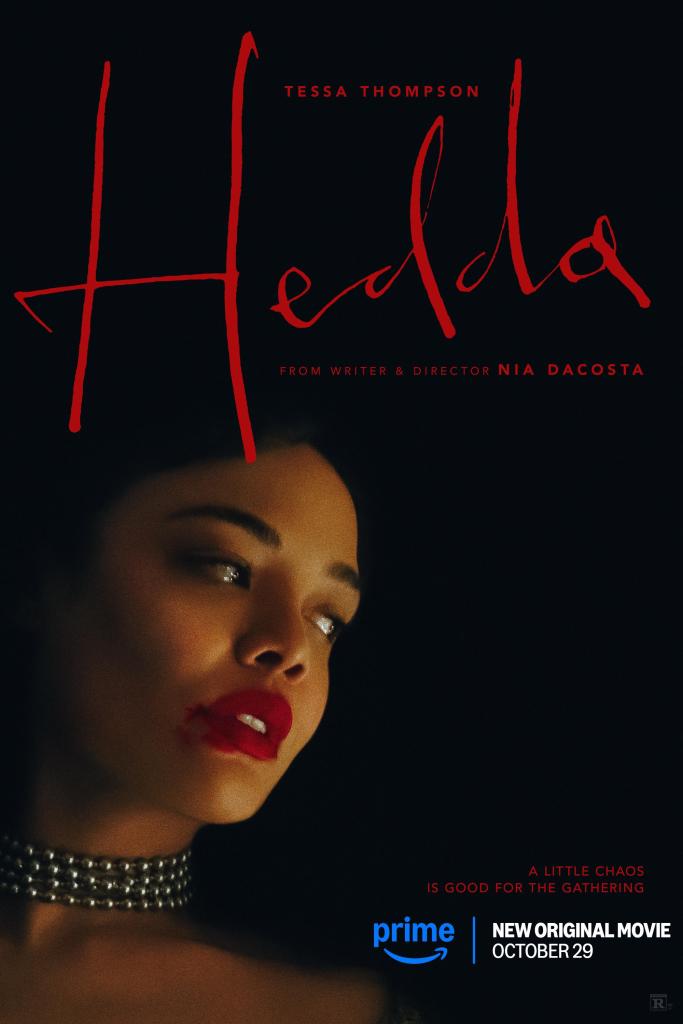
Ibsen’s Hedda Gabler is pretty much the closest you get to a female Hamlet: complex, multi-layered, torn between envy and vulnerability, selfishness and frustrated yearning, independence and stupefying domesticity. y Nia DaCosta’s intriguing adaptation mixes in some fascinating ideas but never quite lands with the force and energy it needs to really impact the audience.

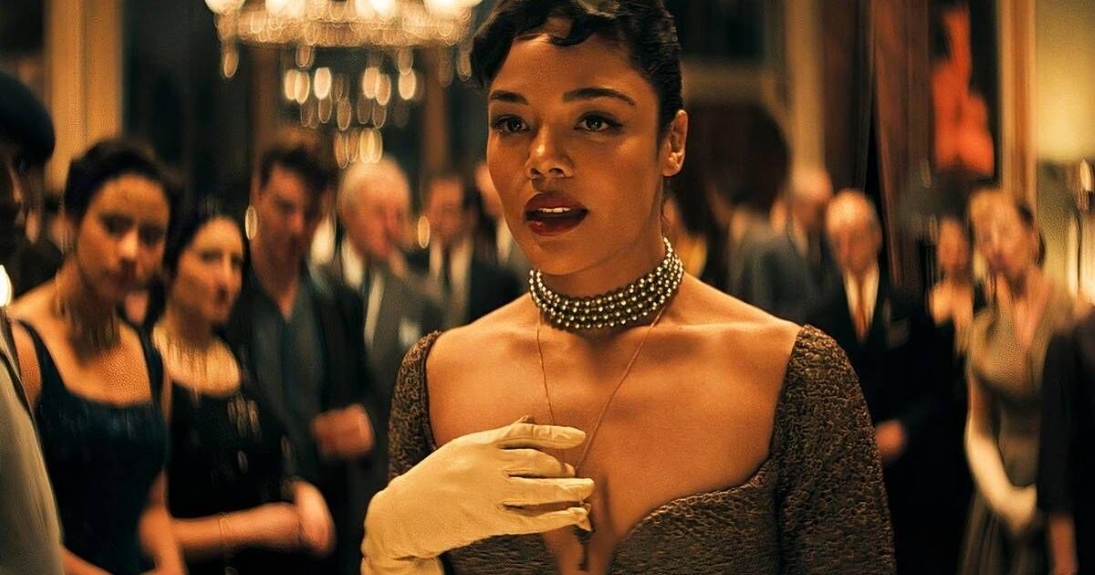
DaCosta moves the action from nineteenth-century Sweden to a house party in 1950s England, in the palatial home of debt-ridden academic George Tesman (Tom Bateman) and his austerely cool wife Hedda Gabler (Tessa Thompson). George is making a desperate pitch for a professorship to repay his debts to sinister Judge Brack (Nicholas Pinnock), who seems more interested in getting payment-in-kind from Hedda.

Hedda affects a distanced, disinterested manner – until the arrival of her old flame Eileen Lovborg (Nina Hoss), with her new partner Thea (Imogen Poots) in tow. Eileen and Thea have written a revelatory new book (currently only one draft copy exists) that places Eileen in the driving seat for gaining George’s professorship. Shaken, Hedda instigates a campaign to destroy Eileen, based either on desperation, deep jealousy or self-loathing, that plays out during the increasingly debauched, night-long party.

There are so many good ideas in Hedda, it’s disappointing that the final product is so curiously uninvolving. DaCosta’s film, sharply directed with a lovely ‘bright young things’ flair mixed with some Du Maurier gothic menace, looks fabulous and confidently mixes intense character study with illicit sex, dramatic gunshots and desperate fisticuffs. The transplanting of Ibsen’s original to a new setting is surprisingly smooth and the idea to compress the whole story (which takes place over a couple of days in the original) to a single night does at points give it a propulsive energy, especially as characters’ inhibitions increasingly fracture under the influence of drink.

The best innovation in Hedda is translating Hedda’s old lover Eilert Lovborg into Eileen. This switch opens up a rich vein of possibilities which the film embraces in its most successful moments. Hedda has turned her back on her own sexuality to claim a place in society: a sexuality Eileen flaunts in front of her male peers, her costuming an intriguing fusing of styles. Hedda’s envy of Thea taking her place now has the double tinge of knowing that Thea – who has left her family and become more of an intellectual partner than Hedda ever was – is also a braver, more committed person than Hedda.

It also blows open even further the cosy, drawing-room, closed-shop nature of this world, where George and the peers he is so desperate to appeal to withdraw to private rooms for clubbable drinks and smutty gossip about girls. Professor Greenwood (a reptilian Finbar Lynch) drags around a trophy wife (Mirren Mack) whom he treats with indifference right up until exploding in fury at her cuckolding him. Judge Brack (a vilely smooth Nicholas Pinnock) alternates between patronising women and looming like a predator over them. George stands out as a genuinely decent man here, respectful of Eileen and uncomfortable with overt masculinity, but even he still sees Hedda’s place as tending to hearth and home rather than a true equal.

This theme of sexual politics comes roaring into life thanks to Nina Hoss’ magnetically charismatic performance, embodying Eileen with a swaggering, intellectual confidence that hides a deeper fragility that’s only just keeping her on the wagon. A wagon she spectacularly falls off (due to Hedda’s prodding) in an attempt to show she can be one of the boys, culminating in an attempt to barnstormingly dominate a room, drunkenly unaware (despite George’s efforts to warn her) that her lake-water soaked shirt is clinging suggestively to her body to the slathering delight of her male audience.

Hoss’ performance is brilliant, collapsing from assured distance, via frantic nervous energy, into wild-eyed desperate vulnerability. Charting an opposite course is Imogen Poots, very good indeed as Thea who feels like one of life’s doormats (not helped by the hideously unflattering dress Hedda insists she wears) but who reveals deep strength of character and determination. The film’s finest sequences revolve around these two, who offer the film’s most intriguing and best-explored modernisation. Credit also to Nicholas Pinnock’s marvellously predatory Judge Brack and Tom Bateman’s decent-but-timid George, a man so sheltered that raucous sex jokes fly obliviously over his head.

It’s unfortunate that the film stumbles more with its portrayal of Hedda. I’m not sure Hedda manages to really grasp the conflicting depths of its lead character. Tessa Thompson gives a committed performance, but it’s hard not to feel the English accent vocally constrains her (why not just let her use her own?) and the film rarely gives her a chance to fully explore the character’s depths. We should feel there is an explosive cauldron of feelings under Hedda’s surface, but only rarely (if at all) does the film ever manage to pierce it, rarely getting to grasp with the character’s conflicting impulses, settling more for an Iago-like drive to destroy, based on jealousy.

Hedda also misses a slight trick, I feel, by not playing up Hedda’s potential outsider nature in 1950s England via her race. (There is a throwaway comment on her ‘dusky skin’, but in a film of colour-blind casting, with the most powerful character played by a Black actor, it doesn’t land.) And making Hedda a bohemian contemptuous of high society doesn’t sit well with her obsession with her father’s status, or her desire to control her high surroundings.

It contributes to a film that never quite manages to come to life as it should, because we never quite understand our lead character, whose coldness and distance extends to us as well as the characters. In a film awash with good ideas, it’s a fatal flaw, and Hedda never quite catches fire emotionally or thematically as it should, because Hedda herself is curiously underserved and under-explored.

PS: Years ago, I played George Tesman in a production of Hedda Gabler where Tom Bateman played Eilert Loveborg. He was (of course!) brilliant, and it was a personal delight to see him as Tesman here (as well as a little odd, I won’t lie!), just one of many perfectly judged performances he’s given in his career.