Tag: Russell Crowe

Nuremberg (2025)

Nuremberg (2025)

Terribly handled drama that accidentally deals a favourable hand to a leading Nazi

Director: James Vanderbilt

Cast: Rami Malek (Dr Douglas Kelley), Russell Crowe (Herman Göring), Leo Woodall (Sgt Howie Triest), Michael Shannon (Justice Robert Jackson), Richard E Grant (David Maxwell Fyfe), John Slattery (Colonel Burton C Andrus), Mark O’Brien (Colonel John Amen), Colin Hanks (Dr Gustave Gilbert), Wrenn Schmidt (Elsie Douglas), Lydia Peckham (Lila), Lotte Verbeek (Emmy Göring)

If one thing captures what a miserable failure James Vanderbilt’s Nuremberg is it’s this: if Herman Göring rose from the bowels of whatever Hell he currently resides in and saw it, he’d probably freaking love it. The misguided history lesson has a political and moral message that is obscured and fudged, its points either lost or delivered with thudding obviousness. But the one thing it’s consistent in doing is presenting the most infamous Nuremberg defendant as a fiendishly clever Hannibal Lecter, multiple steps ahead of everyone, whom the film allows to fudge (without sufficient correction) his responsibility for the Holocaust and who goes down due to his loyalty to his lost leader. Ye Gods.

Vanderbilt’s film is an old-fashioned film that simultaneously gives a spotlight to the relationship between Göring (Russell Crowe) and psychiatrist Douglas Kelley (Rami Malek) and attempts to tell the entire history of the set-up, planning, prosecution and judgement of one of the longest trials in history. It succeeds at neither of these things, and does so while cramming dry, exposition-heavy dialogue into its actors’ lips (the sort of speeches where people launch into lists of the Nuremberg Laws or the trial’s legal framework). Much of it is dramatically inert – at least those parts you’ll be able to see through the film’s impossibly murky camerawork (I expected the lights to shoot up in the courtroom in a standard ‘truth-bought-to-the-light’ cliché, but even here it’s hard to see).

The material around the trial set-up essentially takes a fascinating subject – the wrangling of four allies (three of whom didn’t really trust the fourth) to create a legal framework for an international tribunal never attempted before – and makes it dull as ditchwater. Michael Shannon does his best as Justice Jackson, architect of the trial, but the vast majority of his scenes are little more than exposition (his best is a meeting with Pius XII, whom he effectively blackmails into supporting the trial, in recompense for Pius’ lack of action against the Nazis). Richard E Grant adds a little flavour, even though this film’s whisky-from-a-teacup Maxwell Fyfe (in reality, a stern man in his 40s) feels more like Grant-101 than a real person.

While the trial is a drag, the rest is a farce. Rami Malek flails as Douglas Kelley, in a poorly written role. I suspect, based on the film’s final ham-fisted scene, the intention was to suggest Kelley got too close to Göring and bought a little of what he was selling until the scales fell from his eyes during the trial (and the Holocaust evidence). That Kelley would serve as a dark warning that even the brightest can get seduced by charismatic Nazis. This would have added real fire to the film’s closing vision of Kelley as a drunken Cassandra, desperately railing on US public radio that it could happen here. But clearly someone was worried positioning our hero as someone who admired Göring for a while was going to be hard for regular viewers to sympathise with.

Instead, we get a clumsy dance, where its repeatedly stressed Kelley is only getting close to Göring because he wants to exploit him for a best-selling book. That his sticking up for Göring (including giving credence to Göring’s argument that he couldn’t possibly know about the Holocaust, because that was Himmler’s department) and being nice to his wife and child was all part of this.

It then awkwardly tries to have this cake and eat it, by suggesting Kelley also realising the trial is about real people not just turning a buck. It spectacularly lacks the skill to pull this off. Even worse, it hilariously keeps providing evidence that Kelley is a terrible psychiatrist. Göring manipulates him with ease and, in the real low-point, we cut from Kelley blithely saying he spoke to previously-depressed prisoner Robert Ley and he seemed calm – straight to the aftermath of Ley’s grisly suicide.

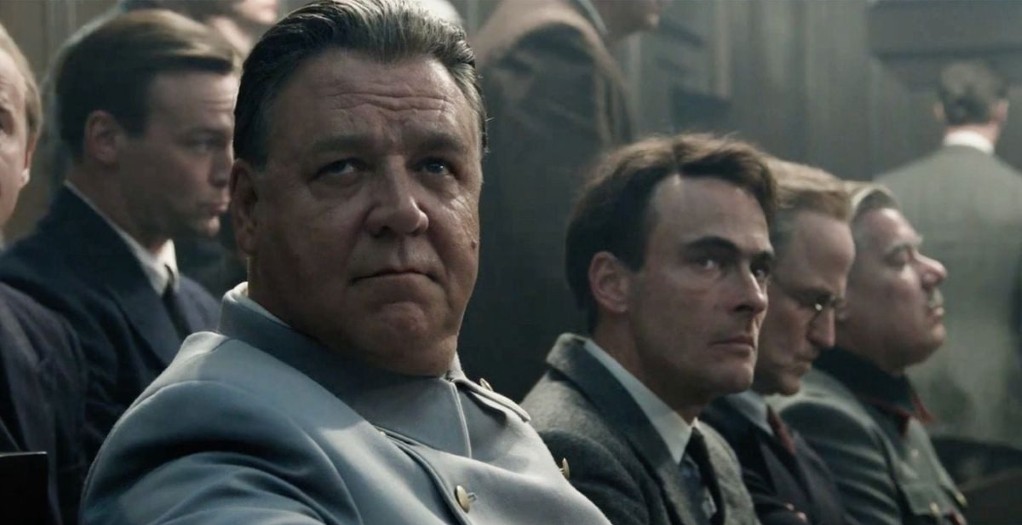
This is as nothing to the film’s strange admiration for Göring. Not helped by Russell Crowe giving the film’s best performance, it feels like Vanderbilt never realises how quietly favourable the cards he gives Göring are. (It even actively absolves Göring of antisemitism, arguing he was just an opportunist supporting it for advancement.) He has all the best lines and dominates his scenes. The film draws attention to his fiendish cunning (allowing himself to be captured so he can manipulate the trial, hiding his ability to speak English etc.), shows him effortlessly running rings around everyone he talks to, weaning himself off a pills addiction through will alone… It wants the sort of Hans Gruber like villain who controls the whole trial from his cell.

It undersells small moments, such as Göring’s nervous reaction before, and complete denial after, the Holocaust film played in the trial. Even worse it gives Göring wiggle-room, unquestioned, to deny his responsibility for the Holocaust. Let’s not beat about the bush: Göring signed the order authorising it. In the real trial, his charisma butted up against the damning facts of his involvement from everything from petty art thefts, to murder of allied airmen, setting up the Gestapo and ordering the Holocaust. Nuremberg is brave enough to show Jackson’s real-life poor cross-examination of Göring – but allows Göring’s weasel words on a debatable mistranslation of his order on the Final Solution to go unexposed for the bollocks it was.

The film’s ‘gotcha’ moment in the trial is feeble, reduced down to Fyfe getting Göring to say he continued to support Hitler. This is played as the key moment that would turn Germany away from the Nazis, but surely was hardly off-putting to many in a country that had almost literally fought to the death for Hitler less than year earlier. Göring would call it loyalty – another thing he’d be thrilled the film showed him displaying.

It gets worse. A final shot of the executed Nazis’ bodies is in such staggeringly poor taste I almost can’t believe I saw it: laid out exactly like Holocaust victims, they are driven in the back of a van to be incinerated in a concentration camp. I can see Vanderbilt was going for “poetic justice” – but it’s awful. After that gut-punch, watching a drunken Kelley in a coda all-but-say ‘Watch out Trump’s-a-comin’ and he’s a Nazi!’ almost feels okay (except of course it’s awful in a different way, as subtle as every other point in the film).

Nuremberg is terrible. It’s at its best when it’s merely slow and boring. At its worst when it borderline admires Göring. If you want to watch this story, search out the 2000 mini-series Nuremberg with Alec Baldwin as Jackson and a (possibly) career-best Brian Cox as Göring (Cox, and the series, succeed in showing him with surface charm, smart, but full of vicious cruelty and staggering bombastic overconfidence). Don’t watch this.

The Insider (1999)

The Insider (1999)

Mann’s finest film is a chilling breakdown of the insidious strength of corporations

Director: Michael Mann

Cast: Al Pacino (Lowell Bergman), Russell Crowe (Dr Jeffrey Wigand), Christopher Plummer (Mike Wallace), Diane Venora (Liane Wigand), Philip Baker Hall (Don Hewitt), Lindsay Crouse (Sharon Tiller), Debi Mazar (Debbie De Luca), Stephen Tobolowsky (Eric Kluster), Colm Feore (Richard Scruggs), Bruce McGill (Ron Motley), Gina Gershon (Helen Caperelli), Michael Gambon (Thomas Sandefur), Rip Torn (John Scanlon), Cliff Curtis (Sheikh Fadlallah)

For decades we persuaded ourselves smoking was problem-free. Then, when we finally decided sucking tar into your lungs several times a day probably didn’t go hand-in-hand with good health, Big Tobacco bent over backwards to argue they didn’t believe for one minute nicotine was actually addictive. This lie – they were improving the hit to increase the customer base – was blown upon by corporate whistle blower, and former B&W employee, Dr Jeffrey Wigand (Russell Crowe).

But the battle over the reporting of the story also exposed the fault-lines in corporate-owned media companies, as Wigand’s 60 Minutes interview was canned by a CBS network terrified of legal action imperilling a corporate sale, much to the fury of crusading producer Lowell Bergman (Al Pacino) who spent months bringing Wigand in only to see him brushed aside. The Insider charts these two stories merging into each other: the deadly campaign of intimidation and smears against Wigand, segueing into the caving of CBS in the face of legal threats with Bergman left furious, betrayed and turning his campaigning fire against his own employers.

This all comes grippingly to life in Michael Mann’s superb slice of All the President’s Men inspired-reportage, turning this 1996 TV-and-business scandal into a sleek, intelligent thriller that takes a chilling look at how corporate America rigs the game in its own favour with impunity. The Insider is as rightfully furious at the dirty-tricks and menace of the tobacco companies, as it is at the subtly insidious way corporate interests pollutes news reporting. It does this while also presenting its two heroes as flawed men with more in common than they might think: competitive alpha males, both prone to taking rash, destructive actions in fits of head-strong self-righteousness, caring about their own moral code over the needs of others.

The Insider splits into two clear acts: the agonising decision of Wigand to blow the whistle on corporate malfeasance, in the face of immense personal and professional pressure and Bergman’s subsequent struggle to deliver on his word and get Wigand’s confession on air. The first half offers the more traditional heroics – and the more overt hero-and-villain structure, but increasingly I find the second half, of news shows being dictated to by their paymasters more-and-more unsettlingly prescient, becoming increasingly relevant the older the film gets.

But that first half makes for a compellingly tense pressure-cooker view. It’s powered by an excellent performance by Russell Crowe (effortlessly convincing as someone twenty years older, and collecting his first Oscar nomination). Crowe makes Wigand principled but prickly, brave but confrontational and at times frustratingly self-righteous. His moral qualms are finally sharpened into action his fury at the blunt-intimidation from B&W’s sinisterly avuncular CEO (a masterful cameo from Michael Gambon – one of the great single-scene performances in movies) and its implication that he cannot trusted to stick to his NDA. Wigand barely involves his wife (a tightly-wound Diane Venora) in his decisions, only mentioning his dismissal in passing and deciding to appear on 60 minutes (a decision that will shatter their lives) unilaterally.

But Wigand also has higher motives. He wants to be able to look his daughters in the eye, having sold-out to burnish the dirty-deeds of B&W with his scientific skills. He’s rightly affronted by the lies Big Tobacco has sold the public and undergoes enormous sacrifices (financial, marital, professional, legal, death threats and a public smear campaign) to see things through. Mann’s cool mix of starkness and shadows, full of drained out colours and greys, is perfect for a world where Wigand is shadowed by strangers at a driving range, receives bullets in his mailbox and searches late at night for who has left footprints in his garden. Crowe superbly conveys a man acting out of an increasing sense of moral imperative, struggling desperately to hold himself together under immense pressure.

This section of the film – especially with its clear antagonist – plays as a superb personal and political thriller, Mann expertly conveying lurking menace. In 1999 the second half of the film, the struggle to actually broadcast Wigand’s interview, was often seen as slightly underwhelming. But actually it shows a different type of danger: less overt and heavy-handed corporate power with its legal injunctions and bullying FBI guys hoping for a cushy retirement job with the corporation, more how these corporate masters assert control in quiet, less direct ways to decide what we hear or see.

Our journalists have no fear when confronting criminals or terrorists – The Insider’s prologue establishes this with Bergman and host Mike Wallace not flinching in the face of gun-toting Hezbollah fighters guarding the Sheikh they have arranged to interview. But they face far greater threats to their integrity when confronted with lawyers and corporate directors (effectively embodied by Gina Gershon and Stephen Tobolowsky as uncaring suits) whose threats are indirect and insidious. Wigand’s interview could imperil the sale of CBS and the bonus of the corporate suits, and in that scenario journalist principles can go hang. Christopher Plummer is, by the way, superb as the charismatic Wallace, who caves to pressure then convinces himself he hasn’t, a super-star of the airwaves who loses part of his wider integrity trying to protect his position.

And doesn’t the idea that corporations can squeeze the life out of journalistic stories feel even more chilling today? After all, virtually every single news outlet out there is owned by a major business, all with their own agendas. Can we really believe they’ve not all made calls on gets reported, based on what their shareholders might think? Mann’s film skilfully – and rather chillingly – shows how quickly they can re-work the agenda. It leaves Lowell Bergman raging (as only Al Pacino can) against the betrayal of trust he’s being forced to make towards Wigand.

Crowe’s pressure-cooker performance stole many of the headlines on release but The Insider also benefits from an excellent Pacino performance. Utterly committed to his principles and – just like Wigand – utterly unwilling to compromise them even an inch, no matter the cost, Bergman will pick up the windmill-tilting banner, and charge with it at his own paymasters. No one can rip through speeches quite like Pacino, but he gives Bergman a real genuineness, grounded in a fundamental decency, whose righteous anger is underpinned with world-weary disbelief that it’s come to this.

It grounds an excellently studied breakdown of a journalistic turf war. The Insider plays like All the President’s Men, if Woodward and Bernstein had been spiked after they nailed the story. Mann demonstrates the influence in The Insider’s crisply immersive photography that employs depth of frame and gyroscopic deep-focus, as well as in the crisp editing and the film’s mesmerising emersion in the complex details of building a story. Combine that with a gripping conspiracy thriller on the machinations of ruthless corporations and The Insider makes for a compelling film.

Thor: Love and Thunder (2022)

Thor: Love and Thunder (2022)

Injokes, backslappery and smugness abound in this terrible Thor adventure

Director: Taika Waititi

Cast: Chris Hemsworth (Thor), Natalie Portman (Dr Jane Foster/Mighty Thor), Christian Bale (Gorr the God Butcher), Tessa Thompson (Valkyrie), Jaimie Alexander (Sif), Taika Waititi (Korg), Russell Crowe (Zeus), Kat Dennings (Dr Darcy Lewis)

Okay. Part way through this desperately unfunny tonal mess I wondered: if I had to choose would I watch this again, or Thor: The Dark World? I can’t quite believe it, but I’d rather watch that functional, forgettable, mundane film. At least it doesn’t make me angry as it drifts past my eyes. And I say that as someone who loved Thor: Ragnarok. Thor: Love and Thunder is terrible. So, unlike Star Trek, it looks like even numbered Thor films are awful – so at least Thor Five should be a doozy.

Thor (Chris Hemsworth) is in a state of ennui – although that doesn’t stop him restoring his buff form after we last saw him as a coach potato in Avengers: Endgame. He doesn’t know what to do with his life: he has (and I can’t believe the film doesn’t make this obvious joke considering its jukebox score) “lost that lovin’ feelin’”. Will the arrival of bereaved father Gorr (Christian Bale), and his mission to butcher all Gods because they don’t answer your prayers, give him meaning? Or will it be the chance to finally rekindle his love for Jane Foster (Natalie Portman) when she unexpectantly lands back in his life? However, it’s not the Jane he remembers: unknown to him, she’s dying from cancer, but his old hammer Mjolnir is keeping her alive, transforming her into a female version of Thor.

Thor: Love and Thunder is a bit like attending a victorious Thor: Ragnorak after-show party. Everyone there thinks everything they say is like the funniest thing ever and the air rings to the sound of backs being slapped. It takes everything that it believes worked best in that film and dials it up to eleventy thousand. Waititi doubles down on his quirky, off-the-cuff, shoulder shrugging humour at every turn and you get the feeling that no one once tapped him on the shoulder and said “you know that’s funny to us on set, but are we sure that will be funny in the audience?”

Because, based on the audience I saw it with, it wasn’t. I think I chuckled about three times in the film. Which considering it takes every single bloody opportunity to tell a joke, is damning. Perhaps it fails to land because, unlike in Ragnarok or other Waititi films, its like he’s surgically removed anything emotional or gives a weight to the gags. He’s also sacrificed much of his trademark sweetness. Instead, this is full of incredibly knowing, tip-the-wink gags at the audience, as if trying to say “hey it’s okay, we can’t take this seriously, comic books are all silly, silly shit”.

And you know, that’s fine many people take these things too seriously. But what worked about Thor: Ragnarok was it balanced a quirky sense of humour with genuine stakes and real emotional quandaries. This however is just a tonal mess. We have an opening scene dealing with child death, that shifts swiftly into knock-about farce. A leading character dying of cancer sitting alongside a pair of screaming goats. It is revealed Jane is effectively draining her life source using the hammer (that it is keeping her alive and killing her at the same time). Here’s a chance to explore the cost of heroism and finding a purpose in life (after all isn’t Thor supposed to be depressed? Wouldn’t Jane make a good contrast here?). instead, the film constantly retreats to playing the humour card (worst of all unfunny humour!), as if Waititi perhaps thinks this genre stuff is silly and slightly below him.

Ragnarok allowed moments of impact: this film shits all over any moment of potential emotional reality. Hemsworth’s Thor used to be a guy with a strong moral purpose and seriousness, but allowed to stretch his wings with comedic sharpness. Now he’s a buffoon who interrupts a speech to distraught parents with gags. Any attempt to build an arc of a hero who is internally lonely and searching for purpose is constantly smashed by self-consciously irreverent humour. It says a lot that Thor’s axe Stormbreaker feels as much a character as anyone else – although the film is overly pleased with the gag of the axe being jealous of Thor’s doe-eyes at his old hammer.

The entire film feels like it’s been plotted out in about four minutes. Presumably Waititi was confident “hilarious” off-the-cuff inspiration would solve any problems. Christian Bale struggles manfully with his villain – but it’s like no one gave him the memo that the film was a piss-take. Tedious detours fill the plot – like an un-funny Guardians of the Galaxy cameo at the start, a tiresome trip to an orgy-tastic God planet and the screeching giant goats which feels like a joke whose punchline has been cut. A major plot point about a wish granting Eternity God is suddenly introduced to establish a secret plan for the villain. It’s like no one gave a damn.

Waititi doubles down on funny stuff that worked in small doses in Ragnarok by stretching it past any point of humour here. Liked Neill, Damon and Lesser Hemsworth playing bad actors in that film? Well, you get bucket loads of it here with Melissa McCarthy as a Fat Hela (that’s the joke: she’s fat). Liked Korg’s overly literal asides? Well, he’s in seemingly every second of the bloody film here, including narrating it. Russell Crowe pops up for a cameo that everyone clearly feels was hilarious but really looks like a big-name actor amusing himself with a borderline racist Greek accent. The film is crammed with this crap.

Hemsworth does okay I suppose, but in many ways the film feels as much of an ego-trip for him as it does Waititi. Natalie Portman gets to do some some fun things, but comedy isn’t her natural forte and she struggles with getting the zing in the dialogue that Tessa Thompson manages. It builds towards a big ending where Thor weaponises children and then the film lands on an utterly unearned emotional ending at a secret place – as if Waititi suddenly remembered his films work best when they have a heart – at the centre of the universe that is so easy to reach you wonder why people didn’t go there much earlier in this franchise. Even the final explanation of the title feels thrown in at the last minute and I’ve no idea what we are supposed to make of Thor’s character arc in this film.

The lack of heart is what is missing here. There is nothing heartfelt or emotionally true really in this. Nothing to give you warm feelings or to make you say “ahh”. Instead there are just endless, endless smug insiderish-gags. This is a piece of shit and the silent reaction it got from the full audience I saw it with says it all. A smug, tonal mess by a director who is over-indulged and unrestrained and forgets that humour works best when grounded with some sense of drama. I’d definitely rather watch Thor: The Dark World again.

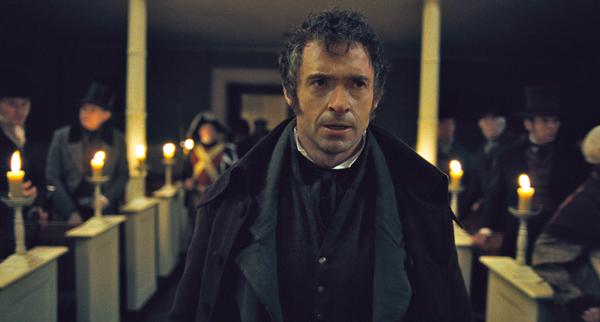
Les Misérables (2012)

Hugh Jackman runs for years in Tom Hooper’s controversial Les Misérables adaptation

Director: Tom Hooper

Cast: Hugh Jackman (Jean Valjean), Russell Crowe (Inspector Javert), Anne Hathaway (Fantine), Amanda Seyfried (Cosette), Eddie Redmayne (Marius), Helena Bonham Carter (Madame Thenadier), Sacha Baron Cohen (Thenardier), Samantha Barks (Eponine), Aaron Tveit (Enjolras), Daniel Huttlestone (Gavroche)

Of all the behemoth musicals of the 1980s, Les Misérables may just be the best. An entirely sung adaptation of Victor Hugo’s door-stop novel, it’s been thrilling sold-out global audiences ever since 1985. It ran on Broadway for 16 years and never stopped playing in the West End. Plans to turn it into a film have took decades, with its scale always the problem (not least since musicals spent a large chunk of the 1990s as far from sure bets at the Box Office). Finally, it came to the screen, with an Oscar-winning director who supplied the ‘fresh new vision’ a show that had been staged literally thousands of times needed. That vision has its merits, but it’s also divisive.

The story follows Jean Valjean (Hugh Jackman), a convict imprisoned for nineteen-years for stealing a loaf of bread. He is persecuted by his nemesis Javert (Russell Crowe), a rigid policeman who believes a man can never change. On parole, Valjean is an outcast but his life is changed forever after encountering a Bishop (played by original West End Valjean, Colm Wilkinson) who claims he had gifted the silverware Valjean had in fact tried to steal. The Bishop charges Valjean to live his life for the good of others. Eight years later he has become a respected mayor of a small town. But his past starts to catch up with him as Javert arrives as the new chief of police. Will helping Fantine (Anne Hathaway), the mother of illegitimate child Cosette (growing up to become Amanda Seyfried), lead to his secret being revealed?

Tom Hooper has a difficult challenge taking on Les Misérables. There can be few people around who haven’t heard at least some of the songs – and no musicals fan who probably hasn’t at a minimum watched a concert version, if not the show itself. How do you even begin to make one of the most famous musicals of all time fresh? Hooper chose a new approach that would up the intimacy and drama, fore-fronting emotion over scale. It also allowed him to fuse his unconventional framing with the raw, hand-held camera work of John Adams, his hit HBO miniseries.

So, Les Misérables, unlike many other musicals was to be all-sung live by the actors, rather than separately recorded and lip-synched on set. The camera would fly into their faces and almost interrogate the actors as they performed, capturing every emotion passing across their face. It would be up-close and intimate. What in the theatre works as a series of powerful, theatre-filling, ballads would be repackaged into something very personal. At times it works extremely effectively.

Having the actors sing live, means all the power of the performances they gave in the moment are captured. Emotions are dialled up, with songs often delivered through cracking voices or snot-filled nose sniffs. This has a particularly huge benefit for Anne Hathaway, whose deeply heartfelt, devastating rendition of I Dreamed a Dream is delivered in a single shot close-up that turns the song into a powerfully raw song about trauma (this sequence alone probably ensured Hathaway won every major gong going). It’s the same with Jackman: Valjean’s Soliloquy in particular plays off the raw guilt, shame and self-disgust Jackman lets play across his face while later Who Am I gains even more impact from the fear, hesitation, regret and moral determination Jackman injects into it, cracked voice and all. Perhaps not a surprise the two most confident performers benefit the most.

The downside is that, repeating the same visual technique for every single song, does make the film at times rather visually oppressive and repetitive. Even the large group numbers sees the camera drill into the faces of the individual singers, rather than offer us any wide shots. In fact, the wide shots in the film are so few you can almost count them on one hand. While Hooper’s approach uses the close-up to present the songs in ways theatre never could (good), it does mean he sacrifices the scale and beauty cinema can bring (less good).

You actually begin to think perhaps Hooper doesn’t really like musicals that much. His vision here is to turn Les Misérables into more of an indie film than an adaptation of West End musical. Choreography isn’t, to be fair, a major part of the stage production, but theatrical spectacle is, and that’s almost completely missing. Some of the most powerful, hairs-on-the-back of the neck power of the big numbers has been sacrificed for grinding the emotion out (Jackman at points speaks some of the lines rather than singing them). Musically, Samantha Barks’ marvellous rendition of On My Own is the only song in the film I would listen to out of context. It makes the show different – but more variety and more willingness to embrace the spectacle of the show – mixed with the intimacy of the solo numbers might have added more.

Les Misérables is still however very entertaining: after all it can’t not be when it has some of the best songs in the business. The acting is extremely strong. Jackman is perfectly cast: he not only has the vocal range and strength, but also the acting chops to bring to life a character who goes from red-eyed fugitive to caring and dutiful surrogate father. Hathaway is hugely affecting as Fantine, vulnerable but also with a deep resentment. Redmayne is hugely engaging and charismatic as Marius. Barks is excellent, Seyfried gives a lot of sensitivity to Cosette and Carter and Cohen are fun as the Thenadiers. The only mis-step is Crowe, who has the presence for the role but notably lacks the vocal strength for a notoriously difficult role.

They all provide some of the most intimate renditions of these songs you’ll ever see and the film unarguably offers a take you will have never seen before, even if you had sat through every single one of the thousands of stagings. It works better for solos than group numbers (which, with their kaleidoscope of voices all in different locations are hard to replicate on screen anyway), and it’s a well the film dips into far too often, but when it works, it really does. Les Misérables divides some – and on repeated viewings its repetitive visuals make it feel longer, with the second half in particular flagging – but Hooper does something a West End show can’t do. It might well have been better if it has used more of the things cinema cando (scale, sets, mise-en-scene – it’s hard to picture an actual image from the film that isn’t a close-up) but a film with actors as good as this and songs as affected as these will always work, no matter what.

A Beautiful Mind (2001)

Russell Crowe struggles with reality as Math’s genius John Nash in A Beautiful Mind

Director: Ron Howard

Cast: Russell Crowe (John Nash), Ed Harris (William Parcher), Jennifer Connelly (Alicia Nash), Christopher Plummer (Dr Rosen), Paul Bettany (Charles Herman), Adam Goldberg (Richard Sol), Josh Lucas (Martin Hansen), Anthony Rapp (Bender), Judd Hirsch (Professor Helinger)

There is nothing Hollywood likes more than a man overcoming adversity. Make him a troubled genius and that’s even better. Throw in a supportive wife who bends over backwards to help him and you’ve got the dream Hollywood scenario. You can bet Oscars will follow – and they certainly did for Ron Howard’s A Beautiful Mind, which hoovered up Best Picture, Best Director, Best Adapted Screenplay and Best Supporting Actress (it probably would have also nabbed Best Actor if Russell Crowe’s personal behaviour hadn’t turned him from idol to Hollywood’s most unpopular actor).

The film is a romantically repackaged biography of John Nash (Russell Crowe), a pioneering mathematician whose life was turned upside down by his diagnosis with schizophrenia in the 1960s. Even before then, Nash had become increasingly preoccupied by delusions and fantasies, many of them revolving around “secret government code-breaking work” for a bullying CIA Agent (Ed Harris). Slowly coming to terms with his diagnosis, with the help of his loving wife Alicia (Jennifer Connelly), Nash must learn to put aside the things he knows he are not real, while trying to rebuild his life.

Ron Howard’s film is assembled with his usual assured professionalism. It is never anything less than effective, what it never quite manages to be is inspired. Perhaps because it’s a very standard Hollywood biopic. It effectively presents the life of its troubled genius as something very easily digestible, hitting all the beats of suffering, determination and eventual triumph you could expect when the film starts.

This makes for exactly the sort of middle-brow filmmaking made with absolute professionalism that, if you turn your head and squint a bit, can be made to look like Oscar-winning art. That seems incredibly harsh on the film: but there is really nothing particularly “new” about anything here: in many ways, it could have been made almost exactly the same in the 1940s (and it would probably have won an Oscar then as well).

That’s not to say it’s a bad film. Howard’s direction is sharp and exact, and he stages the film very well, drawing very good performances out of the cast. The film is good at immersing us in Nash’s delusions, particularly in the first hour of the film (it’s not until the hour mark that anyone overtly states there is anything wrong with Nash beyond eccentricity and social awkwardness). Howard shoots the fantasies totally straight: in fact if you had managed to avoid knowing what the film is about, you can totally imagine being tricked into thinking it’s a genuine spy thriller.

With that though, the film gives you just enough hints. Take a beat and look at Nash’s CIA actions and they don’t make much sense. A secret code that involves him tearing pages out of thousands of magazines and pinning them up around his office connected with bits of string (standard filmic language for the obsessive nutter)? The CIA injecting a number implant into his arm? A dead drop at a posh house which requires letters to be sealed with wax? The film gives us the hints that Nash is more troubled than just awkward around people, but doesn’t lay it on too thick. And at least one plot reveal that something we have seen was in fact a Nash-delusion the whole time is so skilfully presented that it surprised me (and I know surprised several other people).

The film is also strong on schizophrenia and delusion. Reworking Nash’s real-life auditory hallucinations into visual fantasies (including imagined buildings and people) works really effectively for film. It also really opens up for us the horror of how difficult living with something like this might be. How would you feel if you could never trust the world you saw around you? What if you discovered things that were central to your life turned out to be fantasies? That people you had built relationships with were not real? That’s a traumatic emotional burden, and the film is very strong at building your empathy with Nash.

It’s also helped by Crowe’s very effective performance in the lead. Shy, buttoned-up, physically awkward, his eyes always cast down, body slouched and voice an embarrassed mumble, Crowe brilliantly embodies a nervous outsider whose problems fitting in only magnify his growing dependence on fantasies that place him at the centre of the world. There is a touching vulnerability about Crowe here that so rarely gets seen. A big part of the film’s success is due to his performance.

Jennifer Connelly also makes a great deal of her very traditional role as the supportive wife, bringing just the right level of assurance, spark and warmth to the role. Connelly carefully shifts the character from flirtatious confidence to heartbroken but supportive wife. But she doesn’t lose track of Alicia’s own frustrations at living with a medicated, unresponsive husband – even if, of course, any regrets she may have about the way her life turned out are overcome swiftly.

Which of course is completely different from real life where, for all her support, the couple divorced. Nash also had a baby (which he didn’t acknowledge) with a nurse he had an affair with. But these are real life complexities that have no place in a crowd-pleasing biopic like this. Similarly gone are Nash’s possible flirtations with bisexuality, his experiments with drugs or his flashes of violence. Added in are an entirely invented “pen gifting” Princeton ceremony and Nash’s Nobel prize acceptance speech where he gives thanks to his loving wife (in real life no such speech happened and the couple were separated). But that’s not the story this film wants to tell, so truth can go hang.

Perhaps these, post-diagnosis, difficulties are why the final third of the story – which sees Nash casting aside the invasive treatments to overcome the power his delusions have over him through willpower alone – is the least involving part. After all, they had to drop most of the actual real-life events that happened (see above). But there simply isn’t as much drama in watching someone quietly adjust to rebuilding a career in maths as there is in seeing them struggle.

Perhaps as well, because maths is a pretty difficult to bring to the screen. The film falls back into many accepted visual tropes – you’ll see a lot of writing on windows – and explains Nash’s theory of co-operative dynamics with a bar-and-booze based conversation around pulling girls in bars. That’s about as far as engagement with maths and understanding his theories goes – but we take it as read that Nash is a genius because he acts like one, people tells he is and he writes lots of big equations on boards.

A Beautiful Mind offers few real surprises (except for one) and presents a story that Hollywood has basically been making for decades. Things from real-life that don’t fit the story have been cut out, to make this as conventional a film as possible: the troubled genius and the loving wife behind him. It’s very well played (as well as Crowe and Connelly, Paul Bettany is brilliantly charismatic as Nash’s eccentric college roommate) and directed with a professional skill. But it’s also a very safe and even conservative film that has skill but not inspiration.

The Water Diviner (2014)

The Water Diviner (2014)

Crowe’s enjoyable debut is traditional but heartfelt with a well-meaning message

Director: Russell Crowe

Cast: Russell Crowe (Joshua Connor), Olga Kurylenko (Ayshe), Dylan Georgiades (Orhan), Yılmaz Erdoğan (Major Hasan), Cem Yılmaz (Sergeant Jemal), Jai Courtnay (Lt Colonel Cyril Hodges), Jacqueline McKenzie (Eliza Connor), Isabel Lucas (Natalia)

Russell Crowe’s directorial debut is a heartfelt, well-meaning, if rather traditional movie that explores the lasting impact of one of Australia’s deepest national scars, the Gallipoli campaign. Joshua Connor (Russell Crowe) is a water diviner who, in 1919, after the death of his wife, travels to Turkey wanting to bring home the remains of their three sons who all died on the campaign. He finds the country to be far more complex than the enemy nation he had expected, with the Turks themselves struggling with occupation. With the help of Lt Colonel Hodges (Jai Courtenay) and the Turkish Major Hasan (Yılmaz Erdoğan), Connor discovers two of his sons’ bodies – and hears rumours that his third son may in fact still be alive somewhere in Turkey. Meanwhile, a bond is forming between Connor and hotel owner Ayshe (Olga Kurylenko) and her son Orhan (Dylan Georgiades).

Crowe’s film in many ways tells a very traditional morality story: deep down, despite all the ways we’re different, we are all the same, and the biggest part of coming to terms with anything is taking the decision to move forward and put it behind you. The film bravely attempts to engage with this national trauma, that saw tens of thousands of ANZAC troops ruthlessly (and arguably pointlessly) sacrificed in an ill-planned Turkish campaign. Rather than just presenting the ANZACs as victims, it builds sympathy and empathy with the Turkish side and points out violence and crimes on both sides, from executing prisoners to equivalent casualty lists (including pointing out that the Turks were defending their home from invasion).

It brings this home by filtering this experience through one personal story. Connor is a man who has lost everything to this campaign, who has sacrificed his sons and has every reason to blame the Turks for his loss. But, bar one moment of provoked rage, his natural decency and quiet humility cause him to quickly see these former enemies as people as scarred by war as him. It’s a note the film repeats constantly. The characters we are intended to relate to – such as Connor and Lt Colonel Hodges – frequently treat the Turks with respect (which is returned), while more bitter figures are shown as blinkered and misguided.

Of course, the film can’t resist capturing this détente in a personal relationship, showing the growing intimacy between Connor and Turkish war widow Ayshe. It’s a gentle, but not at all surprising romance – a shame that there is such an age gap between Crowe and Kurylenko – but it does at times feel like a slightly on-the-nose personal reflection of growing understanding between Turks and Aussies.

It’s arguably unnecessary anyway, since a more engaging relationship develops between Connor and Yılmaz Erdoğan’s honourable and slightly world-weary Major Hasan. The very image of the worthy opponent, Hasan is practically human decency made flesh, a man who goes out of his way to help Connor’s quest and becomes the human face of a Turkish army that suffered as many losses as the ANZAC forces. The warmth between these two characters is really the emotional heart of the film, for all it tries to interest us in a will-they-won’t-they romantic relationship elsewhere.

The film is not without flaws. It’s been pointed out that it makes no reference to the Turks’ atrocious actions during the war towards Armenians and Greeks (indeed some dirty Greek vagabonds make an entry late on as final-act baddies). While this isn’t a film trying to tell that story, a single line of acknowledgement – even if it was dismissed by a Turkish character – would have gone a long way.  To speed up the search for his sons’ bodies, Connor is given some sort of loosely defined Shamanic power connected to his ability to find water (later he has vision in his dreams) – it’s a bit of magic that the film could do without. The film introduces several clumsy obstructive Brit officer characters (because nothing brings Aussie and Turk together like a loathing for arrogant Brits!), that serve as script-required roadblocks, either uninterested or fanatically intent on stopping Connor as the scene requires.

But fundamentally this is a very earnest and straightforward plea for understanding and forgiveness that doesn’t reinvent the wheel, but is a decent piece of storytelling. Crowe directs the thing with assurance (helped by some beautiful if slightly chocolate-box photography from Andrew Lesnie), contributing a low-key, reserved performance of quiet emotion. There are decent performances throughout: it’s great to see Jai Courtenay get a proper acting role, while Erdoğan is the stand out as Major Hasan. As a gentle Sunday afternoon would-be-epic it more or less fits the bill exactly.

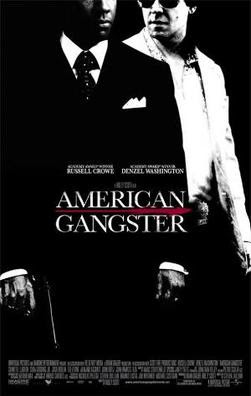
American Gangster (2007)

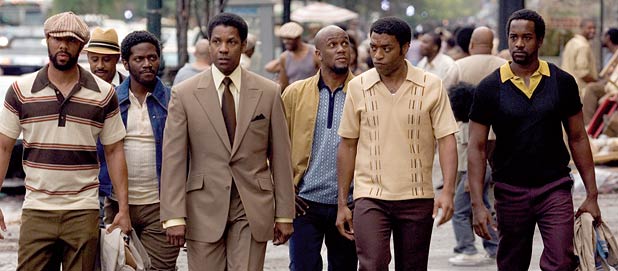
Denzel Washington leads his brothers in a life of crime in American Gangster

Director: Ridley Scott

Cast: Denzel Washington (Frank Lucas), Russell Crowe (Richie Roberts), Chiwetel Ejiofor (Huey Lucas), Josh Brolin (Detective Trupo), Lymari Nadal (Eva), Ted Levine (Captain Lou Toback), Robert Guenveur Smith (Nate), John Hawkes (Freddie Spearman), RZA (Moses Jones), Yul Vazquez (Alfonsa Abruzzo), Malcolm Goodwin (Jimmy Zee), Ruby Dee (Mama Lucas), Ruben Santiago-Hudson (Doc), Carla Gugino (Laura Roberts), John Ortiz (Javier J Rivera), Cuba Gooding Jnr (Nicky Barnes), Armand Assante (Dominic Cattaneo), Joe Morton (Charlie Williams), Idris Elba (Tango), Common (Turner Lucas), Jon Polito (Russo), Ric Young (Chinese General), Clarence Williams III (Bumpy Johnson)

In 1970s New York there was only one organisation that ran crime: the mafia. The idea that anyone else could get a look in was unthinkable: to the cops, the government and the criminals themselves. Frank Lucas (Denzel Washington) was the guy who was going to shake that up: a resident of Harlem and former right-hand man of crime boss “Bumpy” Johnson (Clarence Williams III), Lucas saw an opening to bring in cheap, high-quality drugs from Vietnam (hidden in the temporary coffins of deceased servicemen). With this product he could take over crime in New York – and run it as he thinks it should be run, with the mentality of a FTSE 500 company and a gun. Frank is helped by the fact no one knows who he is. But that is all about to change as honest cop Richie Roberts (Russell Crowe) sets up a task force dedicated to finding, and arresting, the drug kingpins in New York. He’s as surprised as anyone to find the trail leads to Harlem.

Based on a true story, Scott’s American Gangster is assembled with Scott’s usual professionalism and assured touch, using top actors in well-assembled, well-shot scenes. It’s glossy, entertaining and enjoyable. But it’s not quite inspired or stand-out. Despite everything, it doesn’t really show us anything new and lacks either the fire of inspiration or the sort of poetry and energy the likes of Spike Lee, Quentin Tarantino or Steve McQueen could have bought to it. It tells an interesting story, but manages to be pretty much by the numbers – albeit those numbers are flashed up with as much pizzazz, drama and entertainment as you could wish.

The most interesting themes are questions of class and racial politics. The film’s version of Frank Lucas is successful because he runs his crime empire not like a gang but like a company. He dresses plainly and simply, so as not to draw attention (unlike the flamboyant criminals played by Idris Elba and Cuba Gooding Jnr). He talks in terms of supply and demand, brand loyalty and being a chairman. In one particularly well managed scene, he pontificates to his brothers on his ideology of business, excuses himself to walk across the street and shoot a rival in the head, then returns to calmly finish his breakfast. It’s the ideas of Wall Street applied to gangster crime. Lucas is all about bringing a smooth, modern, professional thinking to crime – but with the gun still up his sleeve.

But another reason why Frank Lucas needs to be as professional as he is, is because he’s loathed by all other parts of the criminal system. It’s a system that is racist from top-to-bottom, where black men are unwelcome as anything other than foot-soldiers. The elite criminals – most of them tracing many generations back to Sicily – smile at Frank for his money, but never see him as an equal. Even the government can’t begin to imagine a black man could be running such a huge empire – Robert’s AG boss spews out a racist diatribe, rubbishing any idea that a black man could achieve something the Mafia has failed to do. Frank though is just as wary of the flashy ostentatiousness of most black criminals in New York, telling his brother that the quietest man in the room is the most powerful.

It’s those brothers who Frank relies on – only family can be trusted. They’ll also be his Achilles heel. Because even his most competent brother (played by a sharp Chiwetel Ejiofor) is as much a liability as he is a good lieutenant. His brothers are innocents turned by their brother into tools for his crime empire. Frank hands out beatings to cousins who are unreliable. He’s bitterly disappointed when his nephew chucks in a baseball career because crime looks more fun. As his mother – an impassioned performance from an Oscar-nominated Ruby Dee – tells him, the rest of the family looks to him and follows his lead. There is a clear tension between this family – whose benefactor is also its corrupter – but it doesn’t quite come into focus.

This is partly because the film is covering a lot, and partly because it finds itself falling a bit in love with Frank Lucas. Not surprising when the part is played by Denzel Washington at his most magnetic – if strangely not quite as energised as you might expect. Washington gives Frank a dignity and cool that the real Frank – by all accounts a much cruder, ruder, less able man – never had. The film doesn’t really want to explore the darker side of Frank. Instead it invites us to sympathise with him, as an outsider made good. To feel sorry for him when he makes a fatal error (wearing an ostentatious fur coat to the Ali/Frasier “Fight of the Century” – an act that blows his carefully preserved anonymity). The film doesn’t want us to feel the damage of the drugs Frank is pouring into New York, since it might damage our respect for his triumph against the odds.

The barriers that Frank has to overcome – from arrogant Mafia kingpins, to local crime lords and corrupt cops (Josh Brolin has fun as a prowling bullying detective) – are in the end more interesting than the procedural struggles of Russell Crowe’s Richie Roberts (on solid form). Roberts is also given a rather cliched (and fictional) custody battle that hardly justifies its screentime. The cops definitely get the short end of the stick – and a stronger film might have focused just on Frank Lucas and really explored the struggles of a black man in white crime world, dealing with racism and trying to apply Wall Street ideals to street violence.

American Gangster doesn’t quite succeed with its dark commentary on the American dream – but it’s as entertaining as you could hope and while it lacks in inspiration, it’s also hard to find too much fault with. One of Scott’s most solid works, with a charismatic Washington doing decent work.

Gladiator (2000)

Russell Crowe dominates in Ridley Scott’s Oscar-winning Gladiator

Director: Ridley Scott

Cast: Russell Crowe (Maximus Decimus Meridius), Joaquin Phoenix (Emperor Commodus), Connie Nielsen (Lucilla), Richard Harris (Emperor Marcus Aurelius), Oliver Reed (Proximo), Derek Jacobi (Senator Gracchus), Djimon Hounsou (Juba), Tomas Arana (General Quintus), Spencer Treat Clark (Lucius Verus), David Schofield (Senator Falco), John Shrapnel (Senator Gaius), Rolf Moller (Hagen), Tommy Flanagan (Cicero), David Hemmings (Cassius)

When Gladiator hit the big-screen the swords-and-sandals epic genre was dead. A relic of the early days of technicolour Hollywood, where the widest possible screens were designed to tempt audiences away from the television and into the movie theatre, Roman epics were often seen as stodgy things, usually carrying heavy-handed Christian themes while gleefully throwing as much of the decadence of the empire on the screen as possible. Gladiator changed all that, bringing an emotional and psychological complexity to the genre, as well as a rollicking good story and some brilliant film-making. An Oscar for Best Picture confirmed the genre was back.

In 180 AD General Maximus Decimus Meridius (Russell Crowe) commands the final battle of the Roman forces to conquer the German tribes and bring them under the control of the Emperor Marcus Aurelius (Richard Harris). The humble, dutiful and principled Maximus is a natural leader and the son Marcus Aurelius wishes he had, rather than the son he has the insecure and ambitious Commodus (Joaquin Phoenix). When the Emperor decides that Maximus not Commodus will succeed him – with the brief to restore the Roman republic – Commodus murders the Emperor. When Maximus refuses to give Commodus his loyalty, the new Emperor sentences him and his family to death. Maximus escapes, although he is badly injured, but arrives too late at his home to save his wife and son from death. Collapsing, the General is taken by slavers, healed by fellow slave Juba (Djimon Hounsou) and sold to the North African Gladiator school of Proximo (Oliver Reed). Maximus will play the Gladiator game – because he longs to have his revenge on Commodus.

Gladiator is superbly directed by Ridley Scott, who perfectly mixes the epic scale of the drama with the intimate, human story at its heart. The film looks absolutely fantastic from start to finish, with the superb visuals backed by a breathtakingly beautiful score by Hans Zimmer and Lisa Gerrard that skilfully uses refrains and themes to instantly identify the core emotions in the audiences mind. These themes are associated with emotional beats that immediately plug us into the interior thoughts and emotions of the characters. 

It works because of the emotional truth at its heart. Basically it’s a love story between a man and his dead wife, and isn’t afraid to explore the depths of love that we feel for those closest to us and our pain of their loss. Maximus’ wife and child are represented in silent flashbacks and by two small icons Maximus carries with him on campaign. When, late in the film, he is reunited with these items his raw, tearfully quiet joy carry as much force as any real reunion would do. What drives the film is less a drive for revenge – although there is no doubt this is a motivator for Maximus – but of a continued sense that he must fulfil all his duties (in this case restore the Republic as his surrogate father wished) before he can return to his wife and son (i.e. die).

It’s that which makes the film so easy to invest in emotionally, and which makes Maximus (a hardened killer) so easy to relate to. If he was just a raging man out for revenge, the film would carry a leaner harsher look. But he is instead a man motivated by love, who yearns to be with his family again. Mortality hangs over the entire film – the first shot of the film, famously of the hands in the wheat, have buried themselves in the consciousness because we can all relate to a man who longs to lay down his labours and be with the people he loves. Christianity doesn’t appear too much in Gladiator (unlike older Hollywood Roman epics) but faith is there in spades. And Maximus will do nothing that will jeopardise a reunion with his family in heaven.

This deeply involving story of a man who remains faithful to the memory of his wife – and Scott wisely removed any love plot with Lucilla, which would have felt like cheatingso strongly does the film build Maximus’ love for his wife – that audiences are happy to go with the film through all the violence that follows. Gladiator hit the sweetspot of having something for everyone, from emotion to action. And the action is brilliant. The opening battles is hugely impressive, from its scale to the imaginative interpretation of Roman tactics. It’s trumped by the more raw and ragged action that comes in the Gladiatorial ring, as Maximus transfers his brutal efficiency at war into the ring for the amusement of the crowd.

Like all Gladiator films and series the film successfully has its cake and eats it – so we get a sense of the horror of people fighting to the death for our entertainment, while also heartily enjoying watching our heroes kick ass. The sequence that uses this most effectively, as Proximo’s outmatched Gladiators follow Maximus’ strategic experience and military training to defeat a group of deadly chariot fighters, would-be a stand out in any movie.

The film further works due to the assured brilliance of the Oscar-winning Russell Crowe in the lead role. Crowe exudes natural authority as a general – he genuinely feels like the sort of man that first his soldiers and then his fellow Gladiators will follow to the bitter end. Crowe also dives deep into the soulful sadness at the heart of Maximus, the romantic longing and the searing pain of the betrayal and murder of his family. It’s a performance of immense, small-scale intimacy that also never once gets over-shadowed by the huge spectacle around him. I’m not sure many other actors could have pulled it off.

But the whole cast is extremely strong, Scott encouraging great work across the board. Joaquin Phoenix in particular takes the villain role to a bravely unusual place. His Commodus, far from a sneering Caligula, is in fact a weak, anxious, jealous even strangely pitiable man, so insecure and riven with envy for others that he becomes twisted by it. But we never lose a sense of the humanity at his heart, the sense of a little boy lost, scared by the world around him. It makes sense the Connie Nielsen’s Lucilla – walking a difficult line as a character who has to play both sides – could both fear and hate him but still love the fragile little brother she still senses in him.

Scott’s trusting of experienced pros – many you feel hungry for an opportunity like this – is clear throughout the whole cast. Richard Harris was pulled out of a career slump and reinvented here as an elder statesman, with a wry, playful and eventually moving performance as Marcus Aurelius. Scott’s biggest risk was pulling Oliver Reed from a life better known for drinking bouts to play Proximo. Playing his best role for almost thirty years, Reed reminded us all for one last time that as well as a chat-show joke he was also a powerful and dominant performer, his Proximo a snarling scene stealer. Reed’s death – his final scenes completed with special effects – made this a better tribute than he could have ever imagined.

There are few feet placed wrong in Gladiator. As an action spectacular it’s faultless, but this works because of the truth and love at its heart. It creates an epic that is emotionally involving as it is exciting to watch. The reconstruction of Rome is hugely impressive and Scott paces the film perfectly, letting its force grow along. You never once feel thrown by its scope, and so completely does it wrap you up that, as it becomes more operatic in the final act, the film is never at risk of losing you. It deserves to be remembered with the best of the Hollywood epics.

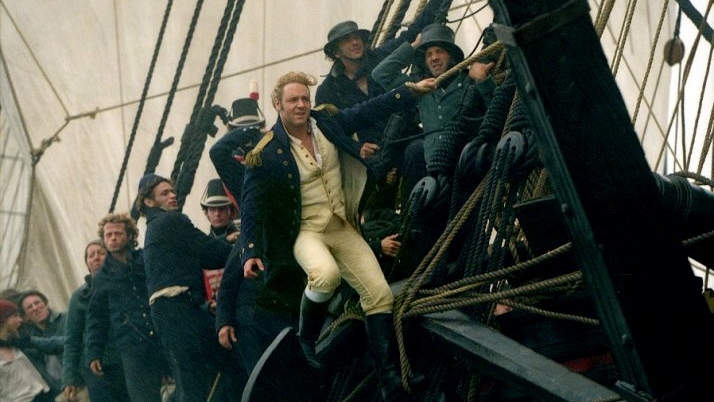
Master and Commander: The Far Side of the World (2003)

Russell Crowe captains in the marvellous Master and Commander: The Far Side of the World

Director: Peter Weir

Cast: Russell Crowe (Captain Jack Aubrey), Paul Bettany (Dr Stephen Maturin), James D’Arcy (First Lt Thomas Pullings), Robert Pugh (Master John Allen), Max Pirkis (Midshipman Lord William Blakeney), Max Benitz (Midshipman Peter Myles Calamy), Lee Ingleby (Midshipman Hollom), Richard McCabe (Mr Higgins), David Threlfall (Preserved Killick), Billy Boyd (Barret Bonden), Bryan Dick (Joseph Nagle), Joseph Morgan (William Warley), George Innes (Joe Plaice), Mark Lewis Jones (Mr Hogg)

There’s a reason so much of our everyday language comes from naval terms. There was a time when Britannia ruled the waves: and for almost as long we’ve had a history of stories of great fictional sailors. If your archetype is Hornblower, then following close behind is Patrick O’Brian’s 21-novel sequence following the career of Captain Jack Aubrey and his surgeon/spy friend and colleague Stephen Maturin. There have been many, many attempts to bring this series to the screen, but you could never have expected that the eventual film would be as triumphant as this. I saw this film on my birthday years ago – the same day I was thrown a surprise birthday party – and I enjoyed it so much that just seeing that would have been treat enough, even without the surprise party (which was also marvellous).

It adapts elements from several O’Brian books – principally elements of the first, Master and Commander,and the tenth, The Far Side of the World, (hence the unwieldy title). The film throws us into the mid-point of Aubrey’s (Russell Crowe) career, with the captain of the Surprise tasked with protecting British interests in the Southern oceans from the onslaught of the French ship Acheron during the Napoleonic wars. Early skirmishes find Aubrey and the Surprise on the back foot, out-matched and out-gunned by the more modern, sleeker, more powerful French ship (quickly known as “the Ghost” by the crew, stunned at her ability to catch the Surprise on the hop). As well as following Aubrey’s struggle to best the Acheron, the film also explores the complex relationships on board during the dangerous mission, and specifically Aubrey’s close friendship with Stephen Maturin (Paul Bettany), ship’s surgeon, naturalist, sceptic and his confident.

Peter Weir’s film is, I’ll say it here, a masterpiece of both boys-own adventure and action, but also of the intriguingly warm and human relationships (and also the stresses and strains) that come when you throw a group of nearly two hundred men in close confines together for months at a time. It’s also a masterclass in authentic world creation. You can see in seconds the time, effort, research and imagination that have gone into recreating the world, the rules and the structure of the ship and its crew – and it has paid off in spades. There is not a foot put wrong, either in the recreation of the ship described in the books (the early shots of the film, the camera panning through the decks of the ship, capture everything from the geography of the ship to the names of the individual cannons) or the world of the navy. 

Weir’s film is technically superb. The photography is beautiful, the sound and editing totally immersive. Weir understands the detail counts for nothing, if the actual action of sailing, the dramatization of man’s struggle with the wind and water, isn’t engrossing. Not a single sequence in the film that shows the ship at sea – struggling with wind, tides, storms, fog and mist – falls flat. You feel like you are there, being buffeted by wind and rain, living every beat of the dangers the men face from the elements. The professionalism and skill of the sailors is brilliantly captured by the actors – who practically lived as sailors for the months of filming – and, with the music superbly worked to complement the adversity the sailors overcome, the scenes of naval skill are brilliantly done. I love them – it almost makes me want to become a sailor (almost). 

Master and Commander also works as a superb study of men, and brilliantly brings to life the two heroes from the book. Russell Crowe is wonderful as Aubrey, the film expertly using his charisma. Aubrey is a natural leader who adjusts and adapts his style to meet the needs of the men he deals with. He’ll share pun-filled gags at the dining table about his personal encounters with Nelson – but follow it up with a sincere anecdote of Nelson’s patriotism when he sees that something else is needed to avoid disappointing a young midshipman. With some men he’ll take a firm line, with others he will try words of encouragement. He’s an inventive and flexible thinker, able to adapt his plans and ways of working to meet new challenges and shows no pride or rigidity in his planning.

We also find out much about him from his genuine, heartfelt friendship with Stephen Maturin, his intellectual surgeon. Embodied damn-near perfectly by Paul Bettany, in one of those performances that feels like the character has literally walked from the pages of the book. Maturin and Aubrey’s friendship gives the film its heart. Genuinely close, with the one often teasing the other (usually around naval rules and regulations, around which Maturin displays a playful lack of understanding) they also speak freely to each other, and with honesty. When Maturin feels Aubrey is pushing the crew too hard in his obsession to best the Archeron he will speak up; when Aubrey feels the need to remind Maturin that a promised naturalist trip to the Galapagos will need to be cancelled due to the demands of war (“We do not have time for your damn hobbies sir!”) he feels no reluctance to say so. It’s a friendship that bobs and weaves through the tensions that come from almost permanent contact, but it’s a true, very strong bond that sees both men going to great lengths in the film to make sacrifices of the things they hold dearest for the sake of each other. 

And we see a lot of how they think in their shared mentorship of young midshipman (barely a teenager) Lord Blakeney, played with a superb assurance by Max Pirkis. From Aubrey, Blakeney learns the confidence, authority and flexibility needed for command. From Maturin he learns the intellectual curiosity and humanity that broadens and widens his horizons. It’s a reflection that, as a team, the two men make one marvellous man. 

Weir’s film also shows that the pressures of command and responsibility, worn so lightly (it seems at times) by Aubrey, can also crush men. As if in contrast to Blakeney’s growing confidence, the film also throws in Midshipman Hollom (played with tragic weakness by Lee Ingleby), a man approaching his thirties who has missed all the opportunities to become the man he would want to be. Nervous, weak, eager to please but insecure and uncertain of himself – exactly the qualities that automatically alienate sailors yearning to put their faith and trust into a leader – Hollom is a man who can listen to everything Aubrey has to say about becoming a leader, but has not the strength of character to implement it. And, strikingly, the film also shows that this weakness alienates not only the men who look to him for leadership, but also his companions and even (to a degree) Aubrey himself. In a single storyline, the weaknesses and dangers of this self-contained world (and the impact it can have on people) are superbly captured.

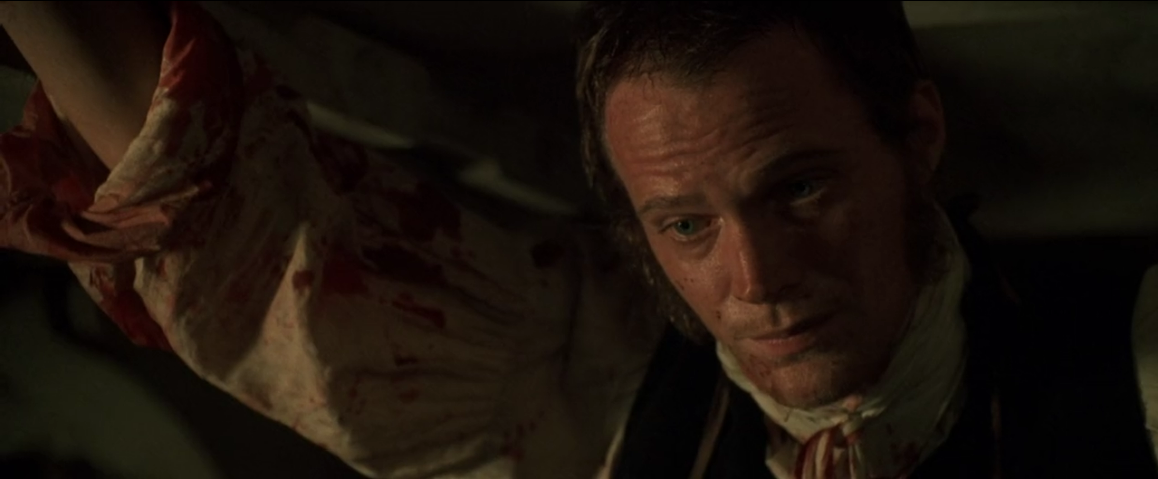
The film works alongside all this because its sense of adventure, of derring-do, of gripping, fist pumping bravery, skill and excitement of high-seas adventure grip the audience completely. There has never been a better film made about naval warfare or ships at sea (and there probably never will be). Mix that in with a superb story of personal relationships and men under pressure at sea (and the cast is uniformly brilliant), with sacrifice and also good fellowship at every turn, and you’ve got a simply faultless film. Master and Commander failed to launch a new franchise – and that has to be one of the greatest losses to film history that I can imagine. Weir’s direction is simply superb, Crowe and Bettany are perfect and the film is a brilliant adventure. I could watch it every day and never get tired of it.

Body of Lies (2008)

Russell Crowe and Leonardo DiCaprio fail to master the Middle East in Ridley Scott’s spy thriller Body of Lies

Director: Ridley Scott

Cast: Leonardo DiCaprio (Roger Ferris), Russell Crowe (Ed Hoffman), Mark Strong (Hani Salaam), Golshifteh Farahani (Aisha), Oscar Isaac (Bassam), Ali Suliman (Omar Sadiki), Alon Abutbul (Al-Saleem), Vince Colosimo (Skip), Simon McBurney (Garland), Lubna Azabal (Cala)

Ridley Scott is a bit of a curate’s egg as a director. You can always expect a film with a certain visual flair, as well as a story that attempts to tackle big themes and engaging topics. However, it doesn’t always produce an end result that really grips or feels like something that particularly stands out from the crowd. That’s what you end up with Body of Lies, a film that constantly feels like it is on the cusp of saying something important or interesting about the relationship between East and West, but constantly falls back on the sort of spy movie tropes it initially feels like it wants to debunk.

In the Middle East, Roger Ferris (Leonardo DiCaprio) is a dedicated CIA operative, with an intricate knowledge of the cultures and issues of the region. He constantly finds himself frustrated and undermined by his boss Ed Hoffman (Russell Crowe), based in Langley, who is constantly willing to sacrifice long-term gains for short-term political pay-offs. Assigned to Jordan, Ferris begins an investigation into a terrorist cell, working closely with head of Jordanian security Hani Salaam (Mark Strong) – but Hoffman’s intercessions increasingly cause tension.

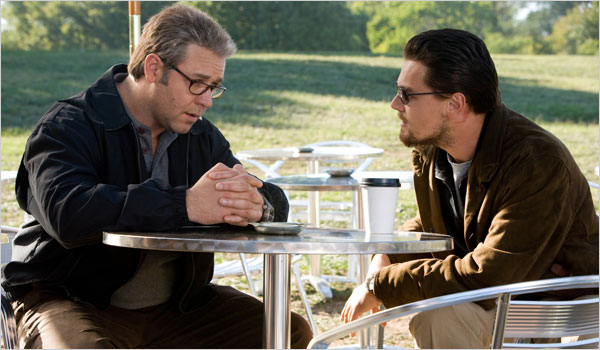
Scott’s film is stylish and well assembled, with a great sense of pace and place. The contrasts between DiCaprio on the ground (in the dirt, facing dangers and tackling everything from terrorists to rabid dogs) and Crowe back in the States (rarely if ever seen without a hands-free phone set dangling from his ear, viewing everything at a distance with no understanding of the intricacies) is well drawn. The sense of complete cultural misunderstanding and lack of connection between East and West is established early, and attempts to cross it generally lead to disaster. The patience and expertise of the Jordanian security forces is contrasted constantly with the more slap-dash, hasty efforts of the CIA to meet the same goals. It’s all set for something quite interesting.

But then the film somehow doesn’t quite come together. Its episodic structure increasingly stretches out as action moves back and forth from Jordan to Langley and back again. A particularly wild scheme by Ferris (which, to the viewer not the film, suggests he is as incompetent and reckless as Hoffman) turns the film towards the sort of kidnap/torture/nick-of-time-rescue plotline that wouldn’t look out of place in 24 or James Bond. Basically, the plot turns on the film transitioning from something with a genuine political statement to make into the sort of disposal rent-a-spy-thriller that you forget pretty quickly. 

DiCaprio gets a lot of “big” moments to juggle with, as well as a rather forced romance with a Jordanian nurse (something that he and Golshifteh Farahani play very well, but seems to have wandered in from an even more conventional film) but the film works hard to paint him as the “hero” who knows better than his superiors, despite the film chronicling a string of mistakes. Crowe enjoys himself as self-important windbag behind a computer, as uncaring as the institutions he represents.

The real star of the show however is Mark Strong, excellent as the suave head of Jordanian intelligence, seemingly the only character who has any understanding about what is going on. With a cool sharpness, slightly playful politeness and a slight chill of threat, Strong is the film’s most interesting character. There is a striking point made here that the most effective person in the film is a Jordanian spy chief with a mixed reputation – but the film largely shirks the possibility of really using this to demonstrate how out-of-their-depth the CIA agents are, as if worried that flagging up their manifest incompetence at every turn would sell badly Stateside.

It’s part of the film’s general lack of soul behind the skill of its construction. I know Scott is deeply interested in these themes of East vs West and the culture clashes that develop from it, but it just doesn’t come out here at all. There was a film to be made here about how the war on terror has thrown the CIA and the West into a setting they don’t understand, playing by rules they haven’t been briefed on. But all too often the film instead settles for telling us the same-old-same-old, padding out its runtime with spy story clichés and thriller plotting. Scott himself even uses visual tricks – surveillance drone shots and 24 style action – which suggest that somewhere along the line his heart wasn’t really in it. Body of Lies could have been a really interesting thriller about the world today. Instead it’s just another spy thriller about the war on terror.