Tag: Sam Worthington

Avatar: The Way of Water (2022)

Avatar: The Way of Water (2022)

Cameron’s film makes a huge splash despite its soggy plotted, flooded run-time

Director: James Cameron

Cast: Sam Worthington (Jake Sully), Zoe Saldaña (Neytiri), Sigourney Weaver (Kiri Sully), Stephen Lang (Colonel Miles Quaritch), Kate Winslet (Ronal), Cliff Curtis (Tonowari), Jamie Flatters (Neteyam Sully), Britain Dalton (Lo’ak Sully), Timothy Jo-Li Bliss (Tuk Sully), Jack Champion (Spider), Bailey Bass (Reya), Filip Geljo (Aonung), Duane Evans Jr (Rotxo), Edie Falco (General Frances Ardmore), Brendan Cowell (Captain Scoresby), Jermaine Clement (Dr Ian Garvin)

After thirteen years it finally arrived. The sequel to a film that seemed to leave no cultural impact, Avatar. People were convinced it would flop. But they say that about all Cameron films. And, if anyone should have learned anything from Terminator 2, Titanic and Avatar it was don’t bet against Cameron. If Avatar 2’s purpose was to make an awful lot of money, it has succeeded in every level. If its purpose was to make a strong and entertaining film… I’m not so sure.

About the same amount of time has passed on Pandora and Sully (Sam Worthington) and Neytiri (Zoe Saldaña) have raised a family of four children, including Kiri (Sigourney Weaver) born from the avatar of their friend Grace. They have also raised Quaritch’s son ‘Spider’ (Jack Champion) among them. Then the humans return… a bloody war begins, with Sully leading a guerrilla campaign. The company resurrects Colonel Quaritch (Stephen Lang) as a Na’vi super soldier to fight on their own terms. After Spider is captured, Sully and his family flee to live among the Metkayina, a sea-living tribe. But they can’t escape the war and its dangers.

As Avatar: The Way of Water is garlanded with praise and Oscars nominations, I feel like we are all part of a wide conspiracy of silence. So desperate are so many to keep viewers handing over their cash at the box office, that a film completely designed to be seen on the big screen (and this really is) is being praised to the skies by some as a masterpiece. It is not. It’s not even the best Avatar film. Instead, Avatar 2 is a visually impressive but hellishly long, predictable re-tread of the first film that stuffs the eyes with CGI wonders but leaves not a jot for the heart.

I was reminded part way through the overlong runtime that Cameron once made imaginative, thrilling sequels that completely reset the table. Aliens reinvented a haunted house horror movie as a pulsating action film. Terminator 2 turned a chase story into ramped up family story that mused on destiny. Avatar 2… basically tells exactly the same story, but with a familiar generational family conflict storyline and lots of water. It has the same environmental messages and anti-corporation vibe. When this lands, it works. A whale hunt is shot in terrifying detail, a giant mother whale creature brutally trapped and eviscerated for a small cannister of fluid extracted from its brain. This is also probably the most effective sequence and the one that moved me the most.

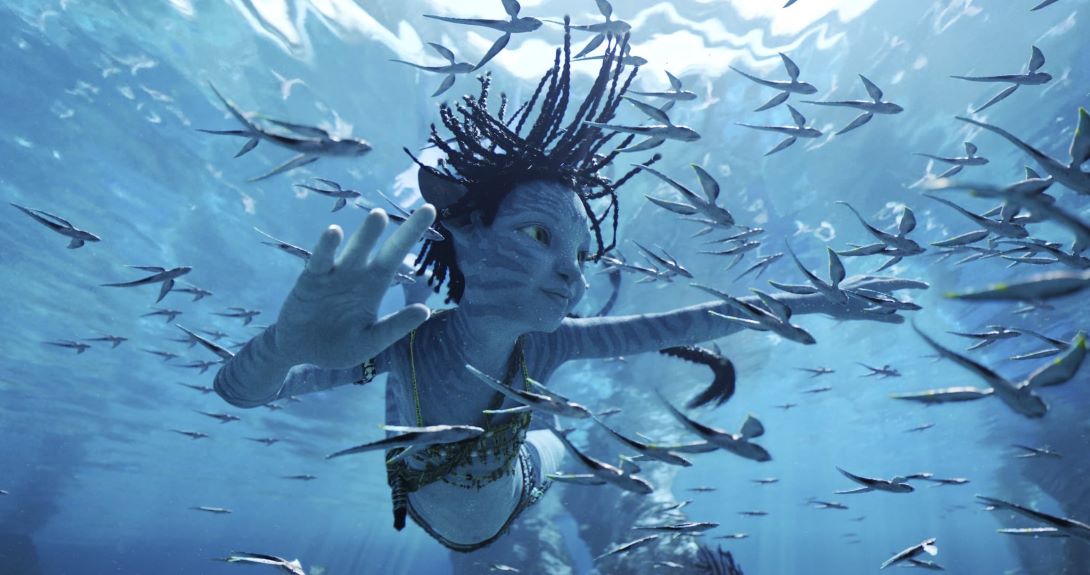
The effects do look impressive. There is no denying that, and the motion capture that turns the actors in blue giants is totally convincing. These Na’vi look and feel like flesh and blood beings. The visual imagination that creates this world, with its sweeping vistas and eclipse-kissed sky not to mention the myriad exotic creatures that populate it are stunning. If Avatar 2 deserves praise it’s for that. Pretty much every single frame looks like it cost a million dollars.

Unfortunately, it often also has a sheen of unreality. I became desperate for something real to appear on screen. But when only one character out of ten is not an effect, you don’t get much of that. On top of which the decision to film in slick, blur-free 48 frames per second means everything glides across the screen with the perfect-focused quality of a videogame. Don’t know what I mean? Try looking at things around you while moving your head at moderate speed. What do you see? Blur. Blur is real. The perfect focus of this world clues you up in every second that nothing in it is real.
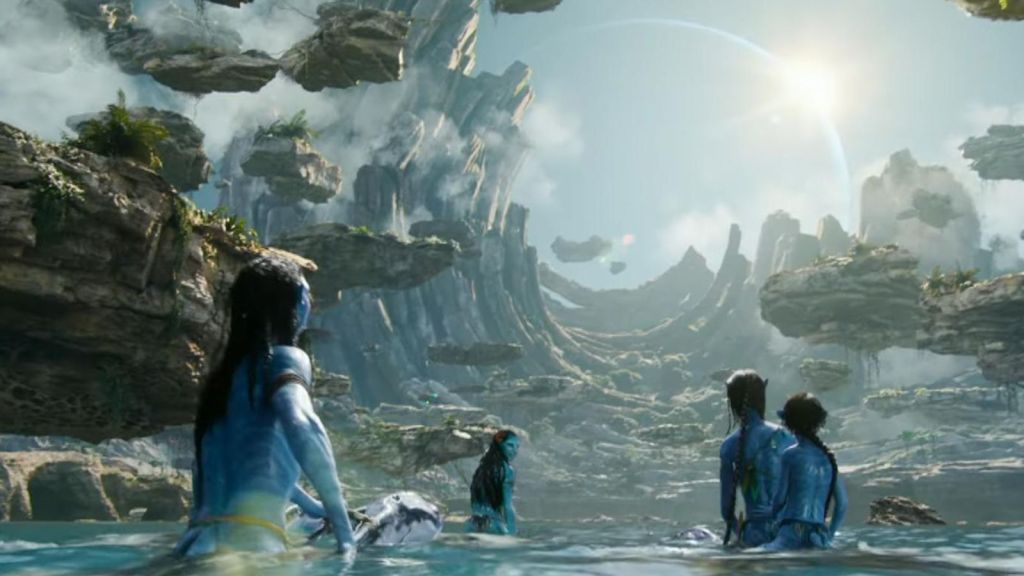
The lack of reality eventually starts to remind you of The Phantom Menace. In fact, the only thing really separating this from that disaster is that James Cameron is a master director of epic, visual cinema. The film-making here, as a technical exercise , is beyond reproach. And few directors shoot action scenes with as much skill and raw excitement as Cameron. I can’t fault anything about that, even while I struggled to care as they dragged out over a huge chunk of time.

But Cameron’s weakness as always been the writing. He is a flat and unimaginative writer of dialogue – the Na’vi dialogue is awful flicking from ponderous (“We Sully’s stick together. That is our greatest weakness. And our greatest strength!”) to painfully bad (the number of “Bros” and “Dudes” from the Na’vi teenagers is fist-bitingly awkward, like your Dad trying to be down with the kids).

That’s not mentioning the fact that it’s so similar to the first film. The earth people return, war starts and eventually our heroes travel to a new part of Pandora where, just like Jake in the first film, they go through a training montage to learn the “way of the water”. This takes up most of the middle act. That’s not forgetting the huge number of themes and characters reshuffled and represented.  We build towards a clash very similar to the first film at the end. Nothing here feels fresh, everything feels like a retread. Our villain is resurrected as a Na’vi but, despite almost being defined by his racism in the first film, he doesn’t bat an eyelid at this.

There is a vague attempt to transfer Sully’s “torn between two cultures” storyline to Spider. But this character remains terminally under-developed and the film’s attempt to explore the father-son dynamic between him and Quaritch is so rushed, you wonder if Cameron was interested (odd since it’s crucial to the final act). Instead, we get a huge amount of generational clash in the Sully family, with Jake butting heads with his second son who struggles with being “the spare” (oddly appropriate right now), a hot head who gets everyone in trouble. These play out with a reassuring predictability, so much so that if I asked you to guess the fates of those involved you probably could.

There are bizarre logic gaps. Quaritch and his soldiers have been resurrected to destroy the Na’vi resistance – but instantly drop this for a personal vendetta against Sully (no one seems to care about the resistance after the first half an hour). When Spider is captured, Sully and gang don’t give a damn or even consider rescuing him. Sully doesn’t want to put the forest Na’vi in danger by staying – but doesn’t care about moving that danger to the water people.

Above all it’s frankly hellishly long, fully of trivial culture clash stuff and just the fact that the people in at are giant and blue or that it looks fabulous doesn’t make it good. Instead, Avatar 2 is a re-tread that feels like its treading water, spinning plates and repeating rather than reinventing. I’d rather watch the original again which, while it wasn’t inspiring, at least felt new.
Avatar (2009)

Avatar (2009)

Cameron’s monster-hit is an exciting slide of traditional story-telling, that had less cultural impact than you might expect

Director: James Cameron

Cast: Sam Worthington (Jake Sully), Zoë Saldana (Neytiri), Stephen Lang (Colonel Miles Quaritch), Sigourney Weaver (Dr Grace Augustine), Michelle Rodriguez (Trudy Chacón), Giovanni Ribisi (Parker Selfridge), Joel David Moore (Dr Norm Spellman), CCH Pounder (Mo’at), Wes Studi (Eytukan), Laz Alonzo (Tsu-tey), Dileep Rao (Dr Max Patel)

Why is Avatar so easy to mock? It’s the second biggest box office hit ever (Cameron holds slots two and three with this and Titanic:only Avengers: Endgame grossed more). But its cultural impact feels wide but not deep. As FOUR more Avatar films start to arrive from 2022, the question remains: why has no-one really talked about Avatar since 2009?

Perhaps it’s because there isn’t really much new or unique in Avatar, beyond the magic of its visuals and the magnificent showmanship of Cameron. For all the striking blue design of the aliens, their story was too reminiscent of too many other things. The script lacked punch, distinctive lines and unique characters. There was little to quote and few truly original pivotal moments that could be embraced by our cultural memory. Narratively and structurally, it’s all a little too safe, predictable and conventional.

 Avatar partly became a “must see” cinematic event, because it was the film that finally nailed 3D. Maybe it is the best 3D film ever made. I don’t know, I’ve only ever seen it in 2D. To be very fair, Cameron doesn’t fill the film with crappy shots of things pointing at the camera. Instead, concentrating on telling a cracking (if predictable) story and filling the screen with beautiful, imaginative imagery that works in any dimension.

Avatar’s imagery is so striking because it’s set on the magical alien world of Pandora. In 2154, with Earth’s resources depleted, mankind has struck out into the stars – and Pandora is a rich seam of an insanely valuable mineral called unobtanium (chuckles presumably intended). Pandora is a carefully balanced biosphere, peopled by exotic animals and 10-foot, blue-skinned natives called the Na’vi. Pandora’s atmosphere is poisonous to humans, so scientists – led by Dr Grace Augustine (Sigourney Weaver) – use Na’vi “avatars”, operated by genetically matched humans, to explore. The mission is carefully balanced between science and financial exploitation by a sinister corporation, backed by mercenary army, led by the fanatical Colonel Quaritch (Stephen Lang).

Into this magical set-up drops paraplegic ex-marine Jake Sully (Sam Worthington), taking the place of his dead scientist brother because he is a genetic match for a freshly grown Na’vi avatar. With this warrior background, Jake is welcomed by the Na’vi, becoming an ambassador to the people. But Jake’s loyalties split as he finds a purpose in Na’vi life he has long since lost on Earth – and as he falls in love with Na’vi warrior Neytiri (Zoë Saldana). When the company decide to destroy the Na’vi’s home to gain access to the rich unobtanium deposits beneath, which side will Jake back?

It’s not hard to guess. At heart, Avatar fits very neatly into a series of Dances with Wolves-esque films, in which a wounded and lost (white) soldier finds a spiritual peace and solace with a native people, eventually rising up to fight for their rights against his own people. Avatar also finds roots in The Mission, with the scientists as the missionaries fighting alongside the natives (although with much better results), the conclusion of Return of the Jedi and Cruise’s The Last Samurai. Not to mention more than a few stylistic and plot echoes from Cameron’s own Aliens (you can even hear them at several points in Horner’s score), from technology (those stomping war suits) and cocky marines lost in a world they don’t understand (except this time, we love to see them killed off).

Avatar doesn’t challenge you, presenting its humble message of environmentalism and peaceful co-existence within a familiar framework where military forces and corporations are very bad and enlightened missionaries and Indigenous people are good. It entertains because it’s told with such skill. Cameron, while never the greatest screenwriter in the world, knows how to marshal his clichés and standard narrative tricks into something exciting and involving.

It also helps that the stock characters he creates a played with such forceful engagement by the actors. Stephen Lang is a growlingly hateable racist, delighting in the prospect of genocide, while Giovanni Ribisi’s corporate boss is a snivelling opportunist who couldn’t care less about the impacts of his actions. Opposite them, Sigourney Weaver gives huge weight to a fairly standard irritated-boss-turned-mentor role as the head scientist, Sully’s bridge to learning the Na’vi way. As Sully, Sam Worthington is not the most charismatic performer but he has an earnest intensity and emotional honesty that helps us invest in his pre-Pandora misery and his growing love of his adopted home.

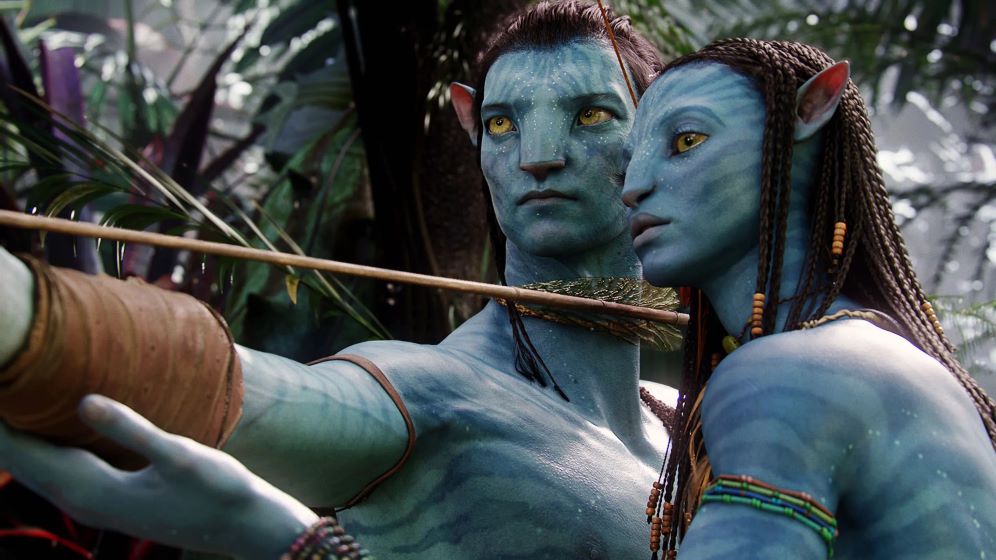
Cameron’s greatest achievement though is the vision he creates for the Na’vi. All are played by actors using cutting-edge (and still impressive now) motion capture. Cameron builds a whole world for these people: a language, belief system, culture and bond with the environment. Sure, it’s heavily inspired by Indigenous American culture, but it feels real. Its bought to the screen with grace and tenderness and gains a huge amount from Zoë Saldana’s committed and emotionally open performance as Neytiri. Cameron so successfully builds a bond between audience and the Na’vi that you feel your heart wrench to see mankind tear their beautiful world apart.

It’s that emotional connection Cameron successfully builds that helps make the film work. After all we’ve all seen effects stuffed films before, but they don’t all become monster hits. And if the film was a dog, all the 3D magic in the world wouldn’t have helped. Few directors have as much skill with threading emotional bonds within the epic as Cameron. He shoots Avatar with a stunning majesty, carefully placed shots and graceful, almost traditional, editing help to build a sense of magic and wonder around the awe-inspiring alien vista. Avatar has a lot of action, but it never feels like just an action film: it’s a relationship drama, inspired by the beauty of its setting, with action in it.

More people have mocked Avatar with comparisons to the visually and thematically similar Fern Gully: The Last Rainforest than have actually seen Fern Gully. Narratively it does little new or unique and offers very little surprises. But its visuals are stunning and Cameron’s superb direction knows how to engage you. Clichés last because they carry a sort of truth: Avatar uses these truths to help you invest in a gripping, if conventional, story. But it’s also why its impact over time has been so slight – there aren’t any new ideas for viewers to tie themselves to and almost nothing that stands out as a unique cultural reference point – even if the conventional plot helped make it a short-term monster hit. But it’s also why it still makes for enjoyable rewatching.

Hacksaw Ridge (2016)


Andrew Garfield embodies true heroism in Mel Gibson’s war drama

Director: Mel Gibson

Cast: Andrew Garfield (Desmond Doss), Vince Vaughn (Sergeant Howell), Sam Worthington (Captain Glover), Luke Bracey (Smitty Riker), Teresa Palmer (Dorothy Schutte), Hugo Weaving (Tom Doss), Rachael Griffiths (Bertha Doss), Ryan Corr (Lieutenant Manville).

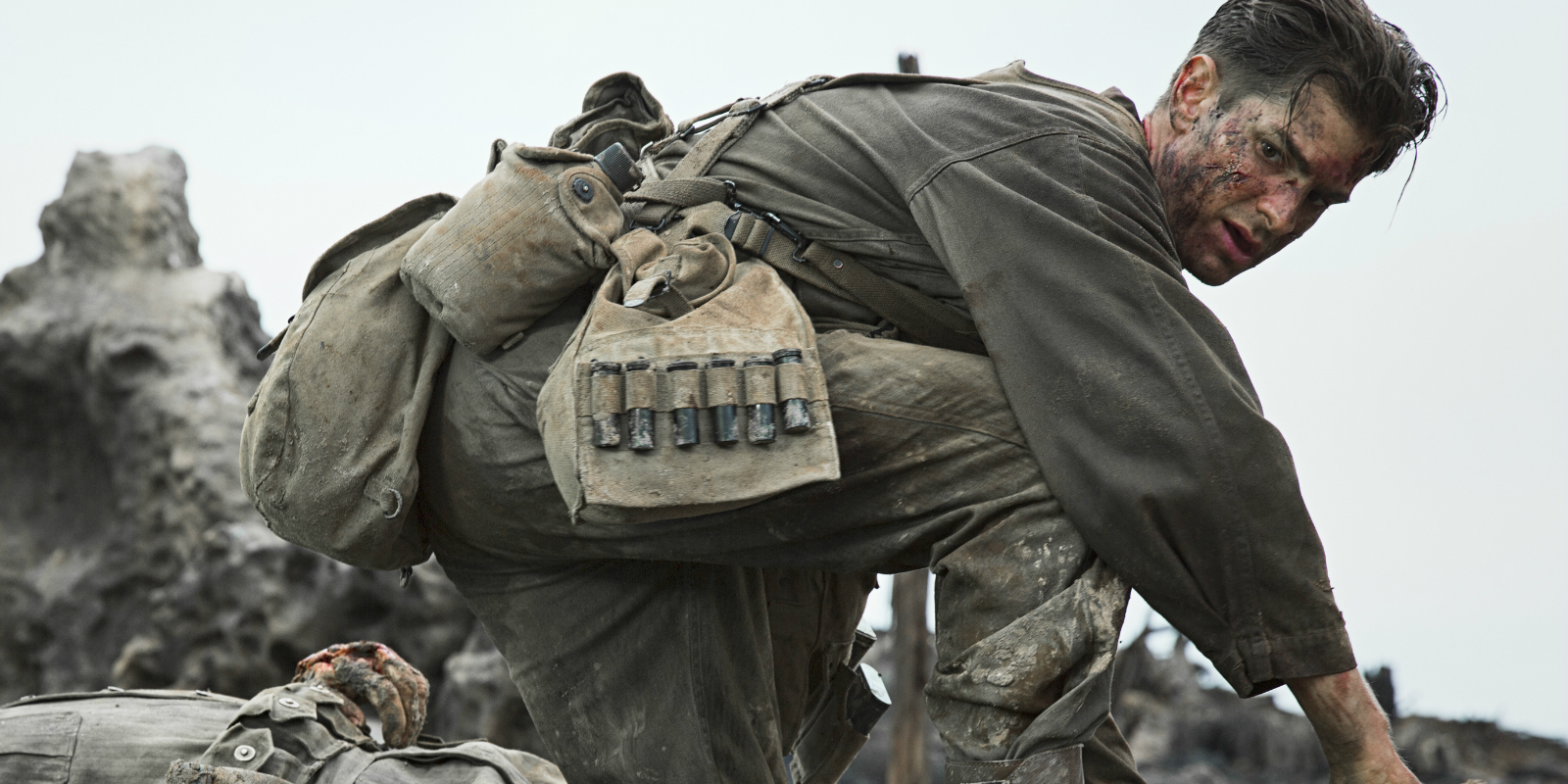
There is a slight odour hanging over Hacksaw Ridge. Few Hollywood superstars fell as hard and as far as Mel Gibson has done in the past few years. As such, the fact that this film has been such a critical and commercial hit is being seen as redemption. While I’m not sure any film could really be that, it’s certainly a clear expression of many of the things that made him a successful superstar – a  carefully made blockbuster that tells a simple story, in a way that mixes sentiment and violence, built around a hero it is impossible not to admire and respect.

Desmond Doss (Andrew Garfield) is a young Virginian, deterred from violence early in his childhood, who volunteers for service in the Second World War, willing to do everything he can to support the war effort except hold a rifle and take a life. Instead, inspired by his fiancée (a nurse) he wants to serve as an army medic – to do his bit for his country, while standing by his principles. Needless to say his decision is not greeted warmly by his army comrades – but  at the Battle of Okinawa, as his unit goes into service, he proves his heroism saving lives during the Battle of Hacksaw Ridge.

Firstly, before going any further into the merits of the film, Andrew Garfield’s performance in the lead role is extraordinarily good in its simplicity, straightforwardness and aw-shuckscharm. Never once does his guilelessness and honesty ever become wearing – instead (and Gibson’s direction helps) he is a man you immediately root for, who you can respect without him feeling perfect. It’s a terrific performance, respectful and admiring but also real. Gibson’s camera showcases his heroism in an unfussy way, avoiding too many directing flourishes – which makes these scenes of life-saving all the more inspiring. A perfect match of actor and role.

There are also plenty of fine supporting performances – Hugo Weaving is very good as Doss’s  shell shocked father, barely able to understand his emotions, with Rachael Griffiths similarly good as his caring mother. Sam Worthington gives perhaps a career best performance as Doss’ captain. Even Vince Vaughan, while sometimes trying too hard as a gruff sergeant, quickly settles into giving one of his finest performances. Teresa Palmer is very sweet as Doss’ fiancée. In fact, there is not a bad performance in it.

But what of the film? Perhaps only Mel Gibson could direct a film that is simultaneously a celebration of pacifism and an endorsement of righteous war. This is perhaps one of the most visceral war films you are likely to see, with bullets ripping bodies in half, the camera unflinchingly recording every injury in gory detail. Say what you like about Gibson, but as an ‘experience’ film maker he is extraordinarily good – he knows how to immerse the audience in ways few others do. He also brilliantly shows both the terror of combat and the courage of soldiers. His staging of the war is tense and gripping, without being sensationalist. In fact, I don’t hesitate to place its depiction of war up there with Saving Private Ryan, combining the savagery of combat with the uplifting courage of a man who only went there to save lives.

Surprisingly one of the strengths of Gibson’s film-making is that he is a very simplistic story teller. His films are morality tales of right and wrong. His heroes, be they William Wallace or Jesus Christ, have overcome burdens to build peaceful homes before a call of duty shatters their world. In a way, that makes Desmond Doss a perfect match for him. The structure of the film, and the familiar beats in the first half of the film, ticking off influences on Doss’ life with a straightforwardness bordering on cliché, all work because they are presented with a guileless genuineness. Gibson successfully establishes a character who feels like an ordinary man who goes on to place himself in an extraordinary position.

Gibson’s simplicity as a story-teller has its drawbacks in the presentations of the antagonists in the film. The Japanese are presented as little better than a faceless horde, a fanatical band of killers, consumed with ruthlessness and lacking all sense of moral decency. Of course, that is to be expected from seeing the film solely from the Western side. But it sits slightly uncomfortably in a film that want to endorse Doss’ values. There are touches of even-handedness – a moment where Doss treats a terrified Japanese soldier in a bunker, or references to a few of the enemy that he lowered off the cliff (although Gibson isn’t afraid to have a soldier bluntly state “They all died” when asked what happened to them). But in a film that claims pacifism is something to admire, showing one half of the conflict as almost universally unfeeling monsters doesn’t always sit right.

This conflict between pacifism and righteous war, is one the film struggles with throughout. If anything it wants to have its cake and eat it too. It wants us to acknowledge the principle of pacifism as a good thing. But it’s also almost scared of being accused of presenting any idea that might be accused of detracting anything from the heroism of the generation that fought the Second World War.

How Doss squared his moral beliefs with helping the men alongside him to carry on killing is none of my business. It’s certain Doss is a far wiser, braver and kinder man than I could ever hope to be, and his actions were genuine, decent, honest and in keeping with his personal morality. I don’t understand his thinking, but that doesn’t matter and the film knows it doesn’t  matter, that we don’t need to completely understand to respect. The film wisely avoids any hokey scenes where Doss explains his convictions. It presents what Doss did as a fact, and says to us “here it is”. The man was involved in a hellish war, but he did what he believed was the right thing to do, and he saved dozens of lives doing it. If we can celebrate the actions of the men on the Normandy beaches fighting Nazism, or the pilots of the Battle of Britain, then we certainly can salute Gibson for bringing to the world’s attention this honourable, decent, brave and above all genuine man.

For all his faults, this film proves Gibson is a first rate filmmaker. Here,  he has made a moving war film that, although it seems to be trying to be many things to many people, still manages to contain a moral message and highlights a man who deserves to be remembered. It may have confusion at its heart about its true attitude towards war – but I believe it does have that heart in the right place, is trying to send a positive message to the world, and is a highly impressive and compelling piece of filmmaking.