Tag: Social issues

Us (2019)

Lupita Nyong’o prepares to take on the dreaded Us

Director: Jordan Peele

Cast: Lupita Nyong’o (Adelaide Wilson), Winston Duke (Gabe Wilson), Shahadi Wright Joseph (Zora Wilson), Evan Alex (Jason Wilson), Elisabeth Moss (Kitty Tyler), Tim Heidecker (Rosh Tyler), Yahya Abdul-Mateen II (Russel Thomas), Anna Diop (Rayne Thomas), Madison Curry (Young Adelaide)
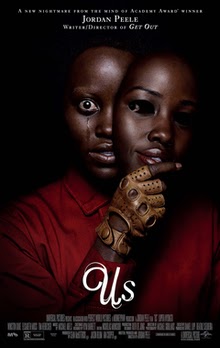
Jordan Peele’s Get Out is a tough film to follow. Smart, socially aware, funny, scary and haunting, it’s both one of the best horror films in years, and also one of the finest films made about modern America. It means his follow-up has some tough shoes to fill. Us perhaps doesn’t quite fill them as well, but judged on its own terms it’s another example of what a witty, skilled and intelligent film-maker Jordan Peele is and how skilfully he is able to both defy and define genre tropes.

The less you know about the plot the better, but Lupita Nyong’o plays Adelaide Wilson, a woman returning with her family to spend a holiday at Santa Cruz beach. While her husband Gabe (Winston Duke) and children Zora (Shahadi Wright Joseph) and Evan (Jason Wilson) are filled with excitement about the trip away, Adelaide fears returning to the location where she traumatically got lost one night in a hall of mirrors and encountered what felt like a doppelganger of herself. But as strange coincidences begin to mount up on their holiday, Adelaide begins to fear her whole family may in fact be in great danger…

Us mixes moments of unbearable tension with beats of almost slapstick humour. But, like Get Out, it’s also a film that leaves you grasping at the implications of its setting and ideas and opens up an ocean of possible interpretations and meanings. There is no chance at all Jordan Peele is a one-hit wonder, because this film is a blindingly good, brilliantly made chiller/thriller that stays with you once you leave the cinema. 

It has such an impact largely because Peele is such an immersive and mesmerising director. His mastery of the tricks and turns of the genre are obvious, but what really makes this go the extra mile in effectiveness is his brilliant understanding of cinema. The camera work here is superb: he knows exactly how long to let a shot linger, exactly how a slow zoom or pull out can build tension and fear to such excellent effect, how the right choice of music can give a scene anything from an ominous Omen­-like terror to a streak of black comedy (there is one musical choice that is so perfectly hilarious and yet bleakly dark that it will have you laughing out loud despite the horror of the scene it accompanies). Us is a superbly made film by a master movie-maker, with every moment giving some imaginative flourish or striking image.

Us is also a film that works because of its depth and the humanity of its characters. Each character is given establishing moments – big and small – that immediately ring true and allow you to understand and relate to that person in seconds. Peele’s horror comes not from blood and guts – which is present but never exploitative (this is a million miles away from a mindless slasher) – but from watching people we have grown to care for and like going through ghastly events. A prolonged home invasion sequence is almost unbearable to watch in the chilling hopelessness of the family caught up in it: and it works because the empathy we have built up for these people allows us to put ourselves immediately into their shoes. The film has a brilliant understanding of our universal fears, from not being safe in our homes to being powerless to protect our children, and uses these for great effect.

The second half of the film (thankfully!) doesn’t continue this unbearable, stomach pulling dread (if it did you wouldn’t be able to watch it) and probably segues more into science-fiction-thriller territory. Not that that’s a problem as the film remains gripping and compelling throughout. It also delves further into the fascinating themes that Peele is confident enough to place on the table without feeling the need to hammer home an interpretation or meaning for the viewer. There are questions here throughout about the underbelly of America, the unspoken questions of class that run through the country. “We are Americans” the ‘villains’ of the film proudly state at one point – and the more we learn about them, the more we understand about why they cling to this idea of belonging. And of course why they feel the way they feel about their country.

What is class in America? How is this nation divided by the haves and the have nots – and how does it affect the decisions people make about their lives? What impact does commercialisation and the need to both have things and to be part of something have on us? What in modern America can both bring us together and drive us further apart? These are questions that run throughout the film – without clear cut answers – but challenge you to think for yourself.

The performances in amongst all this are brilliant. Lupita Nyong’o probably won’t get the awards recognition she deserves here for an extraordinary performance of empathetic gentleness and distress hardening into a grim determination to do whatever is necessary to protect her family. Nyong’o has a double role in the film, and this second performance is equally wonderful, a triumph not only of physical acting but also of tortured psyche. Winston Duke is equally good as a lovable doofus of a husband, while Wright Joseph and Evan Alex give exceptional performances as their children. 

Peele throws in a late narrative twist – effectively signposted throughout – which challenges many of our assumptions about what we have been watching, but doesn’t distract from the social questions he has been tackling throughout the film in a subtle way. Once again his narrative control is flawless and the depth he can suggest behind horror tropes is staggering. Us is perhaps more of a fairground ride than Get Out, more about the terror of being chased and the black comedy of ordinary people fighting back with extreme violence, but it’s a damn entertaining one and leaves you with more to think about the longer you reflect on it.

BlacKkKlansman (2018)

Adam Driver and John David Washington infiltrate the KKK in Spike Lee’s brilliant, thought-provoking, political message film BlacKkKlansman

Director: Spike Lee

Cast: John David Washington (Detective Ron Stallworth), Adam Driver (Detective Philip Zimmerman), Laura Harrier (Patrice Dumas), Topher Grace (David Duke), Jasper Pääkkönen (Felix Kendrickson), Ryan Eggold (Walter Breachway), Paul Walter Hauser (Ivanhoe), Ashlie Atkinson (Connie Kendrickson), Corey Hawkins (Kwame Ture), Michael Buscemi (Jimmy Creek), Robert John Burke (Chief Bridges), Fred Weller (Patrolman Andy Landers), Harry Belafonte (Jerome Turner)

BlacKkKlansman feels like it would make great material for a comedy film. The true story of the first black cop in Colorado, who in the 1970s tricked the Ku Klux Klan (over the phone) to give him membership of the party, working with a white colleague for face-to-face meetings. Hard to believe but, as this film says, “Dis Joint is based on some fo’ real, fo’ real shit”. And the film has more than its share of comic beats. But Spike Lee is far smarter, and far more worried about where America is going, to simply make a film that turns the KKK into a gang of idiots. Instead this becomes a dark, terrifying vision not just of what America was but what it is.

Ron Stallworth (John David Washington) is that first black cop. Ambitious and keen to do his bit, he points out that he is perfect for some undercover work – and after first investigating some of the civil rights movement (and falling for Black Student Union Leader Patrice Dumas, played by Laura Harrier) he is motivated to turn his attention to the Klan. Cold calling local organiser Walter (Ryan Eggold), he quickly finds himself welcomed to the Klan (who are of course completely unaware of his race). Working with fellow undercover detective Zimmerman (Adam Driver), a more relaxed Jewish cop, who can handle the face-to-face meetings, Stallworth opens an investigation into extremism in the far right, with their main target being Grand Wizard David Duke (Topher Grace).

Spike Lee’s film starts as a clever balance between exploring the central comedy of this set-up – the black cop busting the KKK – and an exploration of the racial tensions that were barely concealed in America in the 1970s. Stallworth experiences a parade of suspicion and resentment of the police from his fellow African-Americans, while some of the responses from the police officers range from suspicion to outright racist distrust. It’s his brilliant handling and understanding of the racial tensions in America that power the movie – and give it the impact and importance it undoubtedly has.

The comic timing in much of Washington’s phone calls with various hard-right racists is spot on, and the film gets laughs from the gullibility and foolishness of the Klan (Duke talks at length about how he can always tell the difference vocally between a white man and a black man). But Lee knows that extremism like this fundamentally isn’t a joke – and it’s certainly not in this film, which wraps up a part cop-caper, part undercover thriller with a sharp political message.

Because no matter how stupid the KKK are, we are left in no doubt about how dangerous, violent and vile they truly are. The racist language, the repeated use over and over again of every insulting term imaginable for African Americans and Jews, the prolonged fantasy talk about lynchings and murders, the amount of guns these people have available to them, the mix of suave “public face” racists and the violence-as-a-first-resort hicks and hillbillies that follow them… It’s beyond alarming, its’ terrifying. And Lee is quite clear – give any of these people even the slightest piece of endorsement and encouragement, and they would gleefully enact another Holocaust. There ain’t nothing funny about that. 

Instead, scene after scene of Adam Driver’s undercover cop interacting with this human slime shows no amount of humanity or empathy can be found at all among this appalling crowd of people. You feel the terror of these people and Lee fills every scene with a mounting tension and horror that slowly strangles (fittingly) the initial comedy of the set-up. But then that is part of Lee’s extraordinary work on this film, an angry blast of politically motivated invective wrapped up in an entertaining story. Lee makes it clear that we are kidding ourselves if we think racism is a problem of the past, or something that can be easily wrapped up (it’s easy to see why he was so pissed off that Green Book, a far more cosy, reassuring and hopeful film about racism, scooped best picture). The film ends with an alarming flash forward to shots from Charlottesville, reactions to the murder of Heather Heyer and shots of Trump mindlessly talking about “very fine people on both sides”. The message “America First” is shouted as proudly in the 1970s plotline as it is in the real life footage of 2017.  Hammering home Lee’s fears that the KKK have never had a warmer environment to work in than they do today.

Lee’s film does struggle when it comes to the plot that he builds around the events of the film. The film makes clear that in many ways the whole investigation was for nothing and produced no lasting results: it unearthed KKK sympathisers in key government departments (all of whom were “sent to Alaska” in the words of Stallworth) but was then abruptly closed down. While this real target is referenced in a throwaway scene or two, a late fictionalised bomb plot by the KKK – which of course revolves around Stallworth’s fictional black power girlfriend – doesn’t quite ring true and feels slightly out of place.

But the real aim of the film is Lee’s political message, and on that score this film is powerful, sticks in the mind and leaves a lasting impression. Lee’s direction is also a brilliant mixture of flash and sensitively filmed set-pieces. There are superb cameos from Harry Belafonte (in a heartfelt speech) telling a story of historic lynching, and Corey Hawkins as articulate, passionate activist Kwame Ture. Both these sequences stand out, with Lee’s controlled direction knowing when to move the camera and when to hold it and let the power of the words and emotions do the work.

The cast all give outstanding performances. Driver is chameleonic (and Oscar nominated) as the cop who moves naturally between his own liberal views and his easy approximation of racism. Washington is brilliant in the lead role as the dedicated lawman, willing to prove himself among the racists of his own department. Grace and Eggold stand out as two different types of the face of “acceptable” KKK. Lee’s film builds on these performances with his own passion to create a truly lasting and important piece of filmmaking. Never believe the world has changed: this film reminds us immediately that cozy stories that talk of “how far we’ve come” are fairy tale fantasies that distract us from the danger of a racial lynching being just round the corner.

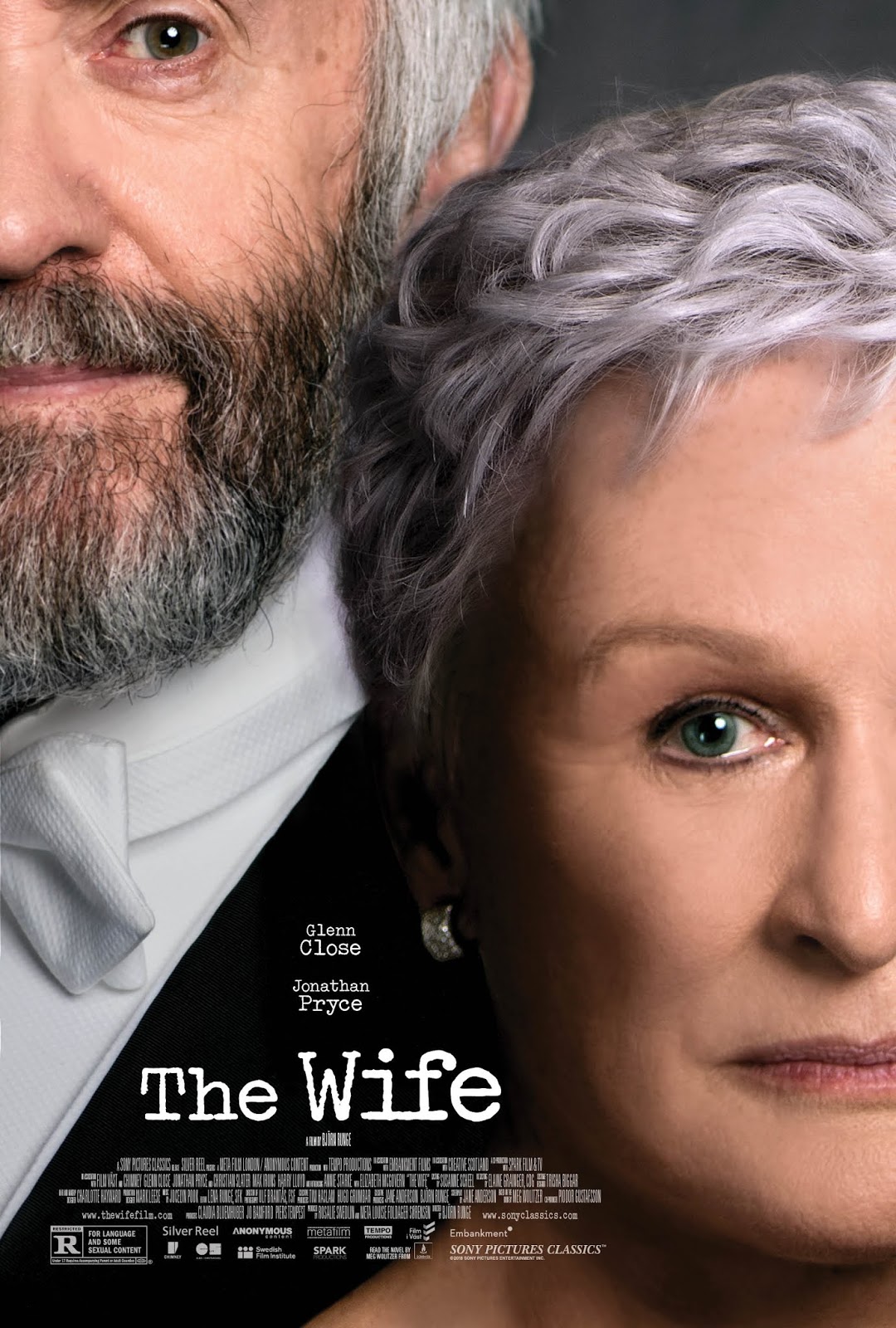
The Wife (2018)

Glenn Close is the supportive but perhaps secretly resentful Wife of novelist Jonathan Pryce

Director: Björn Runge

Cast: Glenn Close (Joan Castleman), Jonathan Pryce (Joseph Castleman), Christian Slater (Nathaniel Bone), Max Irons (David Castleman), Annie Starke (Young Joan Castleman), Harry Lloyd (Young Joseph Castleman), Elizabeth McGovern (Elaine Mozell)

The old cliché used to be: behind every successful man, there’s a woman. The Wife explores just such a woman – and uses this story for a brilliantly structured, tightly written exploration of the tensions and sacrifices that underpin a partnership (and relationship) where the man is the sole public figure. In 1992, Joe Castleman (Jonathan Pryce) is a hugely successful novelist, being honoured with the Nobel Prize for Literature. Standing beside him at all times is his wife Joan (Glenn Close), silent, supportive, taking care of all her husband’s needs. But as her husband is surrounded by praise and flattery, has her patience finally begun to snap?

Much of the attention for The Wife has focused on Glenn Close’s performance as Joan. And while her performance is superb, there is much more to this film than that. This is a well written, brilliantly acted, carefully shot relationship drama that manages to explore interesting details about how sexism, gender expectations and the patriarchy turn some brilliant, intelligent and gifted women into ciphers who must hide their skills under a bushel. The Wife is an engrossing, small scale drama that leaves you with a lot to think about.

Runge’s camera is slow and subtle, carefully zooming into parts of the scene that don’t seem at first to be central, but are revealed to be so. Many of these moments centre around Joan, a woman quietly at the edge of scenes, ignored by people, responding only when required. She calmly follows her husband’s lead, while quietly tending his needs (reminding him of appointments, making sure he takes his medicine, apologising for his abruptness). 

This sort of framing requires a lot of quiet, “reaction” acting from Close – and she excels at this. Close’s performance is a masterclass in subtlety, her face a mask of micro-reactions that leave the viewer guessing at all times exactly what she is feeling about all of the events she witnesses. No scene covers this better than when she listens in on the line as her husband is informed of his Nobel prize – her face slowly, carefully, unreadably changes from delight and pride to something far more equivocal, her face frozen in a look of – well is it anger, horror, frustration? It’s impossible to tell. After that, the entire film is a study in interpreting the exact feelings this woman has for the behaviour of, and praise for, her husband. What does she feel about this? What does she really think? How far does loyalty to her husband stretch?

Muck-raking, sensationalist would-be Castleman biographer Nathaniel Bone (a wonderfully sleazy Christian Slater) has a good idea that there is a lot of anger there – and gambles in a series of offers and interjections that Joan’s loyalty only stretches so far. How far is she responsible for the literary success of her husband? Flashbacks carefully woven into the film show in the early sixties the young Joan (played very well by Close’s real life daughter Annie Starke) as a promising literary writer who falls under the influence of her charismatic professor, young Joe (Harry Lloyd a slightly awkward fit as the arrogant bohemian writer). In the boorish, Mad Men-ish 60s, Joan feels her chance of being recognised as a writer in her own right is close to zero – indeed she’s told to forget it altogether by a bitter former alumna of her Ivy League college, played archly by Elizabeth McGovern – so decides hitching her star to Joe, a promising potential author, seems the best option.

But how much of that promise can Joe actively achieve? And how much of a literary as well as a personal partnership is this marriage? And has Joe lost all track of this? It’s easy to overlook how essential Jonathan Pryce is to the success of this film, but his Joe is a wonderful creation, a bombastic, larger-than-life, selfish even slightly childish figure, everyone’s idea of the great artist, living the cliché of constant praise and a series of seductions. Pryce’s Joe is a domineeringly unattractive figure who slowly reveals his own emotional fragility wrapped in dependency – and the scenes with him and Close (that take up much of the movie) first hum with unspoken tensions and then later throb with the cathartic release of these feelings. 

Those scenes when they come – and you can tell they’re coming from the start – are fantastic. Close is on the top of her game here, utterly believable as a woman who over the course of a few days slowly begins to question every decision she has ever made in her life. What Close does so brilliantly though is to show the balance, the lack of certainty, the mixed feelings she has – that people who in some way infuriate her, also provoke great love in her. Pryce is just as fabulous as her equally aggrieved husband. There are moments in these late scenes that tip into melodrama and cliché – but the general thrust of the scenes is so strong, you feel it gets away with it.

Runge has directed a marvellous low-key piece of work that feels like it would make an excellent play. It raises questions on the place of women in the 20th century – and the film’s setting is crucial, as a Joan growing up 10 years later might well have had a very different life – and the film has a brilliant eye for the everyday sexism and patronising assumptions made by people about the wives of ‘great men’. Powered with two brilliant central performances, this film deserves to be seen as something much more than just Close’s vehicle to possible (but sadly not to be) Oscar glory.

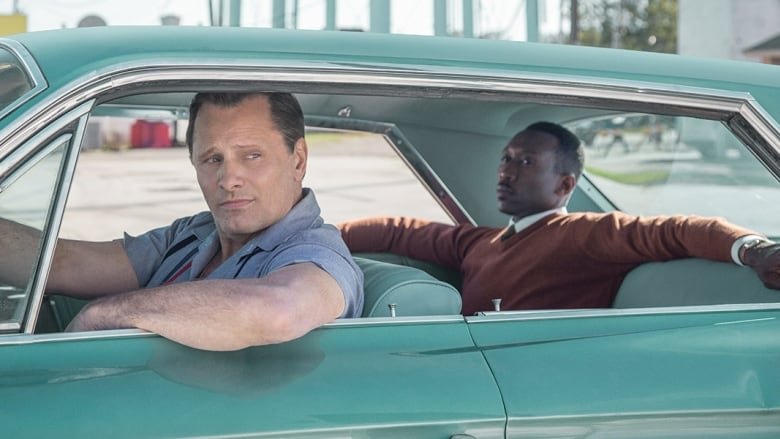
Green Book (2018)

Viggo Mortensen and Mahershala Ali are Driving Dr Shirley in Green Book

Director: Peter Farrelly

Cast: Viggo Mortensen (Frank “Tony Lip” Vallelonga), Mahershala Ali (Don Shirley), Linda Cardellini (Dolores Vallelonga), Dimitar Marinov (Oleg), Mike Hatton (George), Iqbal Theba (Amit), Sebastian Maniscalco (Johnny Venere)

So here we are with a film that might as well be called Driving Dr Shirley. A gentle, ambling, Sunday-afternoon piece of film-making with a rudimentary message, a simplistic world-view and two very good performances at its heart doing all the lifting. Twenty years ago this would have swept the Oscars. As it is it had to settle for just three, including Best Picture, an award that already feels like a triumph of comfortable mediocrity, especially considering Spike Lee’s striking BlacKkKlansman takes such a profound and challenging view of the same issues.

Set in 1962, Green Book follows the “true-life” (heavily disputed by Shirley’s family) friendship between virtuoso classical pianist Don Shirley (Mahershala Ali) and the Italian American Copocabana bouncer Frank “Tony Lip” Vallelonga (Viggo Mortensen) he hires to be his driver for a tour around the deeply racist Deep South states. Can two such different people, over the course of a road trip, find they have more in common they think? You betcha.

Green Book is practically the definition of unchallenging viewing. It tells a lovely, gentle story about two lovely people who, while dealing with the problems of racism in 1960s America, basically have a lovely time bar a few scraps. The film coasts through with a Edward Hopperish nostalgia-tinged views of 60s America peppered with a dash of racist unpleasantness from the people they meet along the way. All this is told with an anecdotal casualness – you can totally tell that the film was inspired by Tony Lip’s son wanting to turn his Dad’s old stories into a film.

And he creates a film where Tony Lip is the hero, and the world of the racist South only truly comes into focus through this white man witnessing the prejudice his black friend must endure (with dignity). While it’s good to have an anti-racist film – however much this film largely focuses on the genteel, country club racism of the upper classes and never dares to go anywhere near the lynch mobs and murders of the Deep South – this is a film that never dives deep with anything and in the end wraps up the instinctive racism and suspicion of Tony’s family in a neat bow and a family dinner with the whole cast. To this film, progress is the name of the game and racism a problem that we are well on the way to solving (again the contrast between this and Spike Lee’s work is really, really striking).

Since the whole film is told from the perspective of Tony – and since the film makers never bothered to consult with Shirley’s family at all, basing all their research on only one side of the story – we never get a real feeling of knowing exactly how Don Shirley might have felt about the attitudes he dealt with, or the reasons behind why he chose to undertake a tour of the Deep South to deal with them, or what he hoped to gain from it. In what should be his own story, he’s a supporting character.

Worse than this, it’s Don who largely seems to need to learn lessons. A dignifed, rarified, dandyish, upper-middle-class near-snob, it’s Don who the film suggest doesn’t understand black culture. It falls to Tony to teach him about everything from black culture: Don’s never heard of Aretha Franklin or Little Richard, never eaten fried chicken, and is deeply uncomfortable around any other black person he meets (unlike Tony’s easy rapport with his fellow drivers, all black). There is a fascinating film to be made here about a man who was at multiple different junctions of minorities – an upper-class black man out of touch with his fellows, a gay man in 1960s America, a black man in the Deep South – but the film doesn’t want to tell that story. I’m also going to leave it out there that only very short shrift is given to black culture (defined by 3-4 things) or Don’s argument that not all black people ipso-facto should like the same things.

Tony on the other hand doesn’t really need to learn anything. An opening scene has him uncomfortably throwing away two glasses used by black-handymen working in his home. But this is literally the last racist action or thought he has in the film – and seems like something that comes completely out of left field. He has no objection to working for Shirley, gets on fine with black people, reacts with increasing anger to racially tinged threats and insults etc. I can understand a son writing a script about his father not wanting to show anything unsympathetic, but the glass scene clumsily sets up an obstacle in Tony’s character that never needs to be overcome.

Instead Tony’s real problems with Shirley are based around class. He thinks he’s a snob. As soon as Shirley lightens up a bit, Tony treats him fine. He even happily accepts his homosexuality and playfully accepts some tutoring to improve his gentility. Tony is an overwhelming force for good who rarely says or does anything remotely unsympathetic.

Farrelly’s film is simple and forgettable in the extreme, but it’s enjoyable enough and passes the time. This is largely because of the two leads. Mortensen’s performance skirts around parody but has such larger than life joie de vivre you hardly mind. He’s very funny and also rather endearing and utterly convincing. Ali mixes in some genuine emotion and loneliness in amongst the more obvious class-based imperiousness. It’s enough that you wish we had got to see that slightly more interesting story under the surface. Green Book is utterly unchallenging and totally gentle. Nothing wrong with that, but it will fade from your memory as soon as the credits roll. Except with its bizarre Best Picture win it’s now a permanent piece of film history.

Blue Collar (1978)

Yaphet Kotto, Harvey Keitel and Richard Pryor are working joes who want to stick it to the man in Blue Collar

Director: Paul Schrader

Cast: Richard Pryor (Zeke Brown), Harvey Keitel (Jerry Bartowski), Yaphet Kotto (Smokey James), Ed Begley Jnr (Bobby Joe), Harry Bellaver (Eddie Johnson), George Memmoli (Jenkins), Lane Smith (Calrence Hill), Cliff DeYoung (John Burrows), Lucy Saroyan (Arlene Bartowski), Chip Fields (Caroline Brown)

America doesn’t really have a director like Ken Loach. It’s one of the points raised on Indicator’s excellent (and essential) blu-ray release of Paul Schrader’s near Marxist drama about blue-collar car workers in Detriot. There aren’t many (or indeed nearly any) American films I can think of that take the stance of the working man like this one – or as angry, pissed off, furious and, in the end, as lacking in hope as this one. Which makes it sound like the sort of film you’d run a mile from actually seeing. Well you’d be wrong: this is a blistering, intelligent, witty drama crammed with brilliant scenes and great performances. On so many levels it’s something really quite special. It’s a shame no one saw it (I blame the publicity campaign – I mean look at that rubbish poster that basically suggests you are in for Pryor stand up routine).

In a car factory in Detriot, our heroes work in varying jobs on the production line. All of them are unhappy with their lot and feel they get precious little support (or concern) from the union that runs the shop floor. Zeke (Richard Pryor) is furious at the lack of equality and opportunity, as well as defrauding the inland revenue with a (literally) childish scheme to try and make ends meet. Jerry (Harvey Keitel) is drifting through his life, unable to afford the dentistry bills to give his daughter the braces she needs. “Smokey” (Yaphet Kotto) is an angry proto-anarchist who just wants to stick it to the man. When the three of them realise there is a safe (probably) full of cash in the union office, they decide to steal it. However, rather than cash, they find the safe full of accountancy records of the union’s dodgy money laundering arrangements with organised crime. The men decide to offer to sell it back to the union – and open up for themselves a world of trouble…

Blue Collar is a hard to categorise film. It’s a brilliant hotch-potch of several genres. It opens like a workers film, crammed with an angry wit (the opening half hour is very funny) with several scenes that acutely skewer the petty clashes of working life as well as the corner-cutting financial desperation of men trying to make ends meet. The opening scenes have the edge of a raw black comedy to them, mixed with observational realism. Then the film subtly changes over, becoming first through near-caper (the hilariously bungled attempt to steal the safe), into politics as the union and the men begin to shift alliances, into a straight classic 1970s conspiracy thriller (complete with late car chase and an outre death for one of the characters) before finally wheeling back round into a tub-thumbing condemnation of the “divide and conquer” plans of the ruling classes. 

That’s a lot for any one film to try and squeeze into a less-than-two-hour runtime, but Schrader manages it with aplomb, juggling this mix of styles and genres with such effective skill that you almost don’t even notice as the film grows increasingly darker and more dangerous as it progresses. The eye it has for the rhythms of factory life seems perfectly judged, and the mixture of hacks, place men, agitators and uncaring union men feels absolutely perfect. It also brilliantly captures, in his dialogue, the natural force (and crudeness!) of working men’s conversation, with a brilliant ear for the semi-articulate astuteness and poetry it can reveal. 

Schrader builds the pressures up in the film subtly and brilliantly, so that it seems both sudden and perfectly natural as the three men begin to buckle and turn on each other. This is where the Marxist message of the film starts to come in: even when working men have the whip-hand, their superiors will find a way to make them turn on each other, to make them unable to throw off the shackles that bind them as they are unable to work together. On top of this Schrader throws in a brilliant analysis of everyday racism and racial tension (all the union reps and their foremen are of course white), and there is an unspoken edge of racial divide in every conversation – indeed racism is just one of many weapons, the film argues, used to turn working men against each other. This really comes out in the film’s final scene, where two characters who had only warmth and affection for each other at the start are driven to turn on each other with an onslaught of racist fury.

Of course that clash probably carries a lot of its force from the fact that the three leads couldn’t stand each other on set. Pryor, Keitel and Kotto were each told that they were effectively playing the lead in the film and were unaware until signing on of the presence of the other actors. This billing tension was fuelled by their incompatible working methods: in particular Keitel, a theatre trained actor, preferred multiple rehearsals before takes while Pryor, a stand up comedian, preferred minimal or no rehearsal – and usually peaked on the second or third take. Throw in the drugs (that Pryor certainly was indulging in) on set and the three actors reached the point where they could barely stand to be in the same room together (one of the film’s best sequences, a single shot where they sit on the sofa for a long take and plan their next move, was only filmed because the three actors arrived separately, didn’t speak until the camera rolled, and then immediately left).

Did this edgy fury boil over into their performances and give them an extra fire? Certainly I don’t think any of them were better than they were here. Kotto has such an electric, bubbling fury to him, an anarchist’s delight at danger, that he feels like a force of nature. Keitel hadn’t been so gentle, reserved and bemused by the world for years, as an oppressed everyman. But the real electricity comes from Richard Pryor is a goddamn revelation as Zeke. What Schrader did so brilliantly here was to capture all the fire, energy and angry of a typical Pryor stand-up performance and channel it into a dramatic structure. An early Zeke rant against the unions is essentially a Pryor stand-up performance, and Pryor’s whole performance buzzes with an improvisational energy.

Zeke is the film’s key character. At first he seems the weakest and most desperate of the three men, the one most likely to fall into the role of victim. But as the events take hold of the three men, his character deepens and develops to reveal a shrewdness, a realism and even a coldness that the other men don’t possess. Unlike them, he sees events not as a chance to make a quick buck but as a genuine moment to change his life for the long term. And, underneath this, an understanding that as a black man opportunities for him are going to be few and far between. An electric confrontation between him and Jerry late in the film on Zeke’s porch hums with his fury driven realpolitik, Zeke’s understanding that opportunities are there to be seized and that sometimes the price paid is high.

Blue Collar gave Schrader a break-down when he made it. But its’ a masterpiece of political cinema, largely because it never really feels like a political film. Instead it feels above all like a domestic drama of friendship marred that explodes into a thriller., But it’s the understanding of the social situation of these men, of the reasons behind their actions and the intelligent analysis behind it, that makes it really work. It also gives you characters who feel real and in whom you invest, blessed as well (for all their clashes) with three career-best performances from the leads. It’s a brilliant film and in a just world should be seen as a landmark piece of film making.

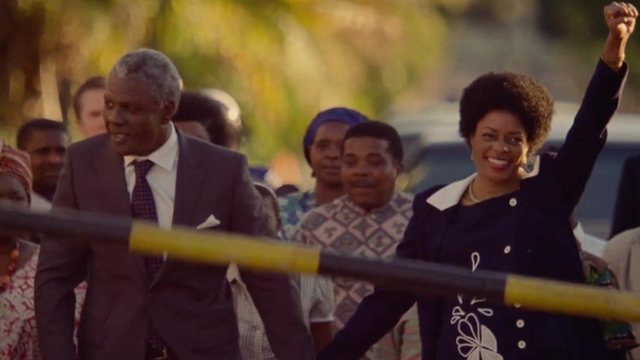
Mandela: Long Walk to Freedom (2013)

Idris Elba and Naomie Harris reconstruct the life of Nelson Mandela in illustrated slide-show movie Mandela: Long Walk to Freedom

Director: Justin Chadwick

Cast: Idris Elba (Nelson Mandela), Naomie Harris (Winnie Mandela), Tony Kgoroge (Walter Sisulu), S’Thandiwe Kgoroge (Albertina Sisulu), Riaad Moosa (Ahmed Kathada), Zolani Mkiva (Raymond Mhlaba), Jamie Bartlett (James Gregory), Simo Mogwaza (Andrew Mlangeni)

In the 1980s, hagiographic epic biopics that aimed to tell the story of the subject’s whole life were all the rage. In fact they were frequent Oscar behemoths. It’s easy to imagine that, if it had been released 20 years earlier, Mandela: Long Walk to Freedom would have been garlanded with awards for its attempt to capture every major moment in Nelson Mandela’s life from birth to his becoming President of South Africa. Sadly for the film, it wasn’t.

The fashion nowadays, for biographical films about major figures like Mandela, is to make a focused story about one key incident in their lives and from that build up an understanding of what made the man. Spielberg’s Lincoln focused on the immediate struggle to get the abolition bill passed. Du Vernay’s Selma looked at Martin Luther King’s involvement in the Selma marches. Eastwood’s Invictus looked at a newly-elected Mandela trying to use the Rugby World Cup to bring a nation together. Mandela: Long Walk to Freedom ironically goes the opposite way and tries to sprint through every single event of Mandela’s life. Doing so, it manages to be a less affecting, less involving and less engaging film than Invictus.

The rush is so intense to get through events that every scene feels like it has been cut down to deliver the vital bullet points and nothing more. Scenes rarely go over a couple of minutes, and most are comfortably under a minute. The general structure of most of them is roughly the same: a character will argue with Mandela (if black) or say something distasteful or racist (if white), Mandela will say something wise and inspiring that sounds like a direct quote from the book. Cut to the next scene.

This means that events fly by with little context and no real understanding. In fact, it feels like without having read the book and boned up on South African history in advance, most of it will mean nothing to you. Years can go by with a single snip of the editor’s scissors. Clashes and riots – particularly in the final third of the film – take place, but we are given no idea why or what the root causes of them were. 

Other events skim by so quickly that they lose all meaning or dramatic impact – in about 15 minutes of the film we cover Mandela arriving at Robben island, ill treatment and contempt from the guards, Mandela’s resolution that they will gain the right to wear proper trousers as a step towards being treated as humans, abuse from the prison governor, Mandela learning to control his anger, the prison governor leaving, a new governor arriving off camera, the regime lightening and finally the prisoners celebrating getting their trousers. If you think that sounds rushed here, imagine what it feels like watching it. All the narrative links between the scenes are severed – how did Mandela win the right to wear trousers? We have no idea. It sounds like a little thing, but it’s symptomatic of the problems of the film. 

This is despite a promising start, with a young Mandela fighting for justice and against prejudice in the courts of South Africa (winning cases because the racist whites refuse to be questioned by a black lawyer). The film is quite daring in showing the warts and all of the younger Mandela – his affairs, his ill-treatment of his first wife, his flirtations with violence – and there are flashes later on in the increasingly troubled relationship with his second wife, Winnie. But it soon loses these humanising touches under the pressure of ticking off events.

Justin Chadwick’s direction is largely flat – hamstrung as well by the film being cut so tightly to the bone. He fails to add any real epic sweep to the story, and largely struggles to convey the huge social and political issues that were tearing South Africa apart. As such, he’s often forced into holding a largely static camera in place to capture the four or five speeches that form each scene.

The  main bright spark in the film is the two lead performances. Idris Elba captures Mandela’s mannerisms and voice perfectly, but also brings a real humanity and empathy to the role – he largely manages to defy the film’s attempt to turn Mandela into a lofty marble carving of a man, not letting the human realism of his story escape. It’s a performance that feels very real and human – which is a far harder achievement than it sounds. Naomie Harris is all fiery radicalism and growing fury as Winnie (even more striking since she starts so young and naïve). One of the film’s real disappointments is that it rushes so fast through events that we never get a real, clear picture of the turbulent ups and downs of their marriage (the film is reduced to throwing some Mandela dialogue on his feelings into voiceover).

When the film finally ends it feels more like a sprinter with a stitch, too worn out to run any further through more years, than because it feels like it has made a point. It really wants to be Gandhi – but that film, despite its school-boy history faults, was patient, well paced, more focused and (crucially) an hour-plus longer. Mandela: Long Walk to Freedom compounds its feeling of being old-fashioned with being rushed and confused. For all Idris Elba’s admirable efforts, Mandela deserved better.

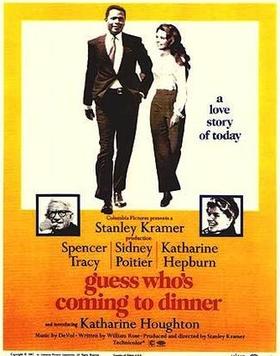
Guess Who's Coming to Dinner (1967)

Hepburn, Tracy, Poitier and one awkward meal: Guess Who’s Coming to Dinner

Director: Stanley Kramer

Cast: Spencer Tracy (Matt Drayton), Sidney Poitier (John Prentice), Katharine Heburn (Christina Drayton), Katharine Houghton (Joey Drayton), Cecil Kellaway (Monsignor Mike Ryan), Beah Richards (Mrs Prentice), Roy E Glenn (Mr Prentice), Isabel Sanford (Tillie)

Stanley Kramer’s films today are quite easy to knock. In fact, to be honest, they were pretty easy to bash back then. Kramer was a man with immense social conscience, and his films carry the same liberal agenda. They were about “Big Themes” and they had a “Message” that they very much wanted the viewer to take home with them. You can see why so many of them were littered with Oscar nominations. Guess Who’s Coming to Dinner is perhaps the most famous of his liberal films, and while we’d love to think the theme it covers today – interracial marriage – isn’t still an issue, I  think many people would say it still was.

Joey Drayton (Katharine Houghton) returns to the home of her liberal parents – Matt (Spencer Tracy) a newspaper editor and Christina (Katharine Hepburn) an art gallery owner – with Dr John Prentice (Sidney Poitier) whom she announces as her new fiancé, after a whirlwind romance in Hawaii over the past two weeks. Her parents, Matt in particular, are hit for six – and their doubts are shared by John’s parents (Beah Richards and Roy E Glenn). Can the older generation overcome their concerns to celebrate the happiness of the younger? 

Guess Who’s Coming to Dinner is a sensitive, very carefully handled film, whose liberal earnestness practically drips off the film. It’s so hand-wringingly liberal in its outlook it’s almost impossible not to mock it a little bit. Not least because John is so ridiculously overqualified – a professor of medicine, one of the world’s leading experts on tropical diseases, a nominee for the Nobel Prize – that you can’t help but wonder what he sees in her not vice versa.

This over-qualification was, by the way, an intentional move by Kramer, who was keen that the onlypossible objections to John could be the haste of the engagement and the colour of his skin. It’s the latter point that becomes the main discussion point, with some hand-wringing concerns around the attitudes of the wider world, and Matt Drayton in particular being moved to question whether he can practise the liberal agenda he preaches. It’s no real surprise to say that eventually all the characters sit down to the eponymous dinner in blissful harmony, but the film is delivering a positive message here.

You could say that it would have been more daring to make John, at the very least, a middle ranking accountant or something at least. But, let’s be honest, at the time this film was made interracial marriages were literally illegal in 17 US states (as the film name checks). Saying that though, the possibility that a BAME male may feel uncomfortably out of place in liberal White America has hardly gone away. It’s one of the reasons why I think the film still works and carries a message today – because if we want to think that these problems have gone away completely today, we are kidding ourselves.

Therefore, however right-on the film may be, it’s still relevant today and it’s still got something to teach us. The world we live in now may well have pushed some of the views and issues expressed in this film underground – we certainly don’t (I hope!) bandy around the word “Negro” as often this film does – but they are still there. So Kramer’s hopeful message of reconciliation and overcoming knee-jerk prejudice is still one that packs a punch. It’s that message that brought such an amazing cast on board, not least Spencer Tracy and Katharine Hepburn as the Drayton parents. Tracy was extremely ill at the time of the film’s production – he died 17 days after filming completed. Tracy was so fragile – as can be clearly seen at several points – that he could only film for three hours in the morning, and only on intermittent days. The film was only made with him because Kramer, Hepburn and Tracy agreed to take no up-front fee, as Tracy could not be insured to finish the film. Hepburn in particular – Tracy’s partner for over 20 years – nursed him through the film, helping with his lines and carefully watching to make sure he was not overcommitted. Not a single shot of Tracy was taken on location due to his ill-health, and a number of scenes were cleverly shot to avoid Tracy having to be on set as often as possible.

Despite all this, Tracy is magnificent. His underlying warmth and humanity work so well for the part that you constantly warm to him, even while you are as frustrated as many of the other characters  with his lukewarm reaction (bordering on hostility) to the wedding. You totally feel empathy for his situation, while at the same time wanting to give him a slap in the face. And man Tracy knows how to react – he is marvellous in a scene with Richards, where all he does is stand, half turned away from the camera and listen. But in this scene you see Drayton think and reassess everything he has considered in the last 24 hours.

But the whole film is building towards the final 10 minutes, which is nearly a complete Tracy monologue – and this is extremely emotional, not least as we are watching a great actor, aware he is dying, knowing that this is his last acting moment, talking emotionally of his love for his fictional wife, while his real life partner of 26 years sits tearfully in shot. It’s that extra level that really creates the emotional force.

Very good as Hepburn in, it’s clear in many scenes that her mind is more on Tracy than her performance – but she still has many wonderful moments, with similar emotional force. She also has one of the film’s funniest moments, where she imperiously dismisses a gallery colleague for barely hiding her racist disgust. Hepburn won the Oscar but stated she had never watched the film, finding the memory of making it far too raw.

The rest of the cast are also good – you can tell their commitment to the film – with Poitier conveying both human decency and firmness of character. Kellaway is very good as the only person in the film who expresses open-minded joy at the union. Richards has a wonderful emotional speech about the value of love, while Glenn conveys all the awkward frustration of a father who cannot understand his son. 

Guess Who’s Coming to Dinner is a very worthy film – and boy it knows it – but it’s got a sort of innocent idealistic purity about it. Its makers clearly believed that they were making a film that would contribute towards changing attitudes in society. And for all its heavy-handed liberalism, you can say it did to a certain extent – but not as much as it would like to. For that reason, there is a sort of additional poignancy to watching it, knowing that an issue the film makers clearly hoped would be gone for good in 30 years would in fact still be with us 50 years on. So for all its flaws, you can’t help but respect and even feel affection for it.

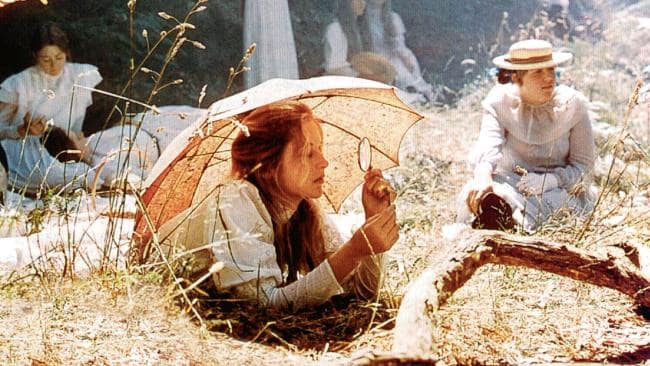
Picnic at Hanging Rock (1975)

Three girls go up a rock and are never seen again in Peter Weir’s masterpiece Picnic at Hanging Rock

Director: Peter Weir

Cast: Rachel Roberts (Mrs Appleyard), Anne-Louise Lambert (Miranda St Clair), Dominic Guard (Michael Fitzhubert), Helen Morse (Mlle de Poitiers), Margaret Nelson (Sara Waybourne), John Jarratt (Albert Crundall), Wyn Roberts (Sgt Bumpher), Karen Robson (Irma Leopold), Christine Schuler (Edith Horton), Jane Vallis (Marion Quade), Vivean Gray (Miss McGraw), Martin Vaughan (Ben Hussey), Kirsty Child (Miss Lumley), Jacki Weaver (Minnie)

Is there any film as haunting and elliptical as Picnic at Hanging Rock? An impenetrable puzzle shrouded in mystery and wrapped in an enigma, it’s the ultimate “mood” film, where everything you understand in the film has be teased out from its sidelines and the unspoken motivations. It’s not going to be for everyone: Peter Weir tells a story on the feature-length Blu-ray documentary (longer than the film) of the response of one US distributor when he saw the film: “[He] threw his coffee cup at the screen at the end of it because he had wasted two hours of his life – a mystery without a goddamn solution!” That’s a fair comment – but accept that this mesmeric film is somewhere between mystery, hynoptic trick and ghost story and you’ll find treasure in it.

Based on Joan Livesey’s novel (which many believed to be true – a fate that also faced the film when it was released), on St Valentine’s Day 1900, a group of girls from a finishing school head to the Hanging Rock in Victoria for a picnic. Three of them (and one of their teachers) walk up to the rock and simply seem to disappear. The subsequent search by the authorities is baffling – and the impact on those left behind is brutal. 

There is barely any real plot in Picnic at Hanging Rock but it’s not a film about that. It’s all about the mood, the creeping sense of menace, and the general uneasy dream nature of the story. Everything follows a woozy dream-like logic – and the atmosphere is built upon by the use of panpipe music and skilful use of classical music. Weir’s film is a masterpiece of ghostly, unsettling spookiness with the rock itself as some unknown mystical source at its centre – the first shot of the film shows it slowly appearing in the mist, as if it has somehow been transported there from some fantasia land outside of the normal.

Weir’s film became the most influential film of Australian cinema, and its tone set many of the key thematic points followed by later films of what became known as the “Australian New Wave”. It explores uneasy balances in Australia between the wildness of the country – and indigenous people’s beliefs and culture – and the social structures from the British residents who had claimed the land. Picnic also explores the beginnings of a split between long-standing Australian residents and those clinging to the upper class Brit lifestyle of the motherland. Weir’s film – with its brilliant photography – lingers on the nature surrounding the rock. Not only the rock itself, with its odd formations and strange structure, but also the animals and the environment about it. There is something unknowable, wild and untamed about these surroundings – something mankind can’t control or understand.

Weir shoots the film with a lush impressionism – everything has a hazy unreality about it – and the dreamy nature of the film is built on with the dark hints of sexual feeling bubbling under the surface. The girls are all on the cusp of discovering their own sexuality – and there are plenty of open suggestions of same-sex crushes, of growing awareness of their sexual natures among the girls. It doesn’t stop with them either – the adults are equally drawn towards unspoken desires (left very much open to interpretation). Weir gets some perfect visual representations of the stonking repression forced on top of all these feelings, not least a wonderful shot which shows several of the girls standing in a line tightly doing up each other’s corsets.

And that perhaps, it’s hinted, is what happens on the rock when the girls disappear. Trance-like, they walk towards a gap in the rock and seem to disappear. What drew them there? Lead girl Marian (a perfect performance of ethereal other-worldliness from Anne-Louise Lambert) even seems dimly aware in the opening scenes that she is bring drawn towards something. The only girl who isn’t drawn towards the mystic is more repressed, dumpy Edith – whatever the force is that calls the other girls, it leaves her panicking and screaming. What’s going on? Something dark, sinister – and you can’t help but think sexual.

And what does that mean for those left behind? A mess. Rachel Roberts (a late casting replacement for Vivien Merchant, and famously awkward around the girls on set) is very good as the distant, draconian headmistress of Appleyard Academy (basically a sort of finishing school for posh girls). The regime she runs at the school is a mixture of oppressive and discriminate, with punishments handed out according to Mrs Appleyard’s personal feelings about the students rather than any reflection of their own behaviour. Part of the film’s story is the fracturing of her own personality that happens as response to the disappearance – her collapse slowly into a sort of paranoid insanity, powered by drink. What dark secrets is she hiding? (The film hints that she has more knowledge than she should have of at least some of the darker events of the story, but never reveals how much or indeed why.) 

But then the whole cast are dealing with problems they scarcely seem to understand. There is a curious – perhaps homosexual bond – between Dominic Guard’s repressed English teen and John Jarrott’s earthy, ultra-Aussie outbacker (a very good performance from Jarrott in a character that could easily have fallen into stereotype). Perhaps that’s why Guard’s character is drawn constantly back to the rock – and also why he too seems to have such an overwhelmed reaction to it.

The sole character in the film who feels most capable of expressing their emotions is the school’s French teacher Mlle de Poitiers. Played exquisitely by Helen Morse – she gives the warmest, most engaging performance in the film – she is the only character who seems able to get in touch with her emotions, unfiltered by too much repression. Perhaps it is no coincidence that as a “double foreigner” (French among the Brits in Australia) she is less affected by the rules around her. Either way, she becomes a perfect audience surrogate, as slowly horrified and confused by the actions she sees around her in the college as the viewer is. Morse is fabulous in these scenes, from a burst of emotion when reunited with a character she thought lost, to quietly watching Mrs Appleyard’s disintegration late in the film.

But the real star is Weir’s masterful direction of the mood of this film. Like that distributor said, there isn’t any plot as such – vital events happen off screen, and there is the distinct feeling that you are only being told half the story – but despite that, the film is compelling. So much is conveyed in the mood, the tensions, the style of the film that you are invited to bring your own interpretation to events. That makes it a continually rewarding piece of cinema – it invites you to make your own answers. 

This juggling of atmosphere to make something so enigmatic is so crucial to the film’s success that the recent mini-series remake effectively continued the trick (with a few extra insights into Mrs Appleyard), and contained arguably even fewer answers over its 5 hours than this did in 2. But Weir’s brilliantly made, beautifully shot, eerily unforgettable film rightly takes its place as (perhaps) the greatest Australian film ever made: it’s a film that is about Australia, and about the tensions, confusions and mysteries of that country. Brilliant.

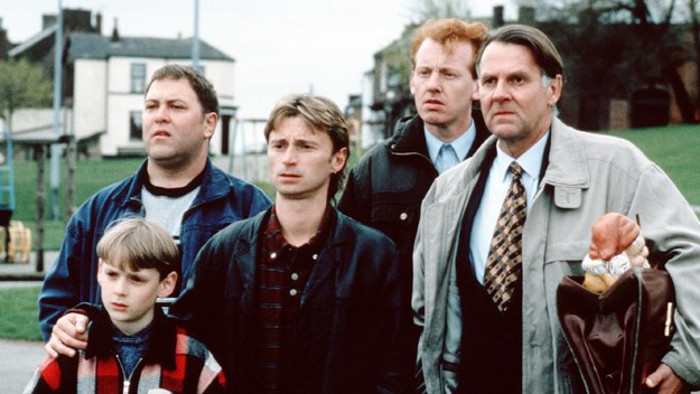
The Full Monty (1997)

Steelworkers from Sheffield have no options but to turn their hand to stripping, in British phenomenon The Full Monty

Director: Peter Cattaneo

Cast: Robert Carlyle (Gaz), Mark Addy (Dave), Tom Wilkinson (Gerald), Lesley Sharp (Jean), Emily Woof (Mandy), William Snape (Nathan), Steve Huisan (Lomper), Paul Barber (Horse), Hugo Speer (Guy)

In the summer of 1997, Britain was a depressed place. The country was in the middle of an intense mourning for the death of Princess Diana. Perhaps that’s why a film all about overcoming despair and to turn it into heart-warming triumph suddenly gripped the whole nation and emerged from nowhere to become the most successful British film of all time. No one expected a film about Sheffield strippers to do that.

The economy has dropped out of the Sheffield steel market, and hundreds of people are out of work and desperate. Gaz (Robert Carlyle), a genial waster, needs £700 to pay his child maintenance and not lose access to his son Nathan (William Snape). Dave (Mark Addy) has serious self-image problems, his disgust at his own weight is leading him to push away Jean (Lesley Sharp), the wife he can’t believe loves him. Gerald (Tom Wilkinson), their ex-foreman, is so ashamed of losing his job he hasn’t told his wife that he’s been unemployed for six months and is facing financial ruin. Together with three other men with no other options, they decide one way to get money quick is to follow the example of the sell-out male-strippers at the local working club – with the unique selling point that they will go “the full monty”.

It’s been nearly a decade since I saw The Full Monty. Over-exposure made it an easy film to feel a bit sniffy and dismissive about, like it was a happy accident that the film came from nowhere to achieve staggering success. But that’s hugely unfair. Watching it back now, it’s amazing how much it’s a comedic film grounded in a sense of desperation and pain, and then how brilliantly it uses this to create empathy for its characters, and how wonderfully this helps you to share their joy and triumph when they are finally taking control of their own destinies.

The Full Monty emerged from a troubled production history. It was hugely difficult to find funding for the film. It took years to get the filming sorted, and casting was difficult – in a parallel universe Nicholas Lyndhurst and Russ Abbott played the lead roles. Robert Carlyle has described the making of the film as being totally chaotic (he further claimed he was convinced the film was “pish” and heading for disaster). The first cut was met with such negativity from the distributors that it nearly ended up direct-to-video, until the producers begged for one more shot at editing the film. But then it emerged as one of the most widely loved UK films of the 1990s, eventually being nominated for four Oscars (Picture, Director, Screenplay and a win for Best Score). That’s what I call a turnaround!

It’s also strangely fitting for the film itself. The opening footage showing a prosperous and bustling Sheffield in the 1960s is a perfect set-up for the Sheffield of the 1990s with unemployment rampant, and our characters confined to endless days of drifting around the city and failing to gain any benefits from a workshop at the unemployment office. Every frame of Cattaneo’s well shot film stresses the relative bleakness of the environment, the run-down world the characters inhabit, and that sense that all promise is missing from the future of this city.

In the middle of this, the film doesn’t shy away from looking at – with plenty of jokes – plenty of themes which are hardly your default expectations for a comedy movie. We’ve got depression, self-loathing, body-image, fathers’ rights and suicide: if that’s not a comic gold on paper I don’t know what is!  However, what is so perfect about the film is how well it judges the tone when dealing with these themes. Simon Beaufoy’s script is warm, humane and above all immensely empathetic. Never – not once – are any of these characters the butt of the humour. While we may see the dark comedy that can occur, we never laugh at the characters.

The script gets a perfect balance between all this desperation and pain and well-worked, down-to-earth, honest and affecting humour. It’s also genuinely funny, with several stand-out gags. As an interesting side note, perhaps the film’s most famous comic moment – the boys standing in the dole queue, involuntarily practicing their routine when Hot Stuff starts playing in the radio – nearly didn’t make the film, as the producers felt it was unrealistic. Just as well they left it in, as it perfectly captures the mood of the movie.

On top of which, the film taps into the human bonds that can grow in adversity. One of the film’s principal delights is seeing this odd bunch slowly begin to come together like a family. We see them confide in each other, listen to each other’s problems, accept each other for what they are. It’s a film about the triumph of the human spirit and the rewards that can come from opening your heart to other people when all seems lost.

It further helps that Simon Beaufoy’s script draws such terrific performances from the actors. Carlyle (for all his doubts about the film) plays Gaz with a perfect, low-key, commitment and empathy. Carlyle in many ways makes the film work as well as it does because he plays the truth of each scene and is willing to be the film’s loadstone. He plays every moment truthfully and is as effective showing Gaz’s chancer wasterness as he is at allowing the real pain and fear Gaz feels at the prospect of losing his son.

The film also changed the careers of Addy and Wilkinson, turning the two into character actor superstars. Addy is fabulous as the self-loathing Dave: having had problems myself with being concerned about my own image, seeing the psychological damage Dave inflicts on himself through his own inadequacies is very moving, and perfectly played by Addy – who also brings a great deal of comic mastery to the film. Wilkinson is perhaps the pick of the bunch as the seemingly proud and haughty Gerald, who hides intense fragility and pain under the surface. He has a truly affecting breakdown scene after a job interview gone wrong – and the reaction acting to this from Carlyle and Addy is also by the way marvellous. It’s a terrific (BAFTA winning) performance.

And then you hit the final stripping scene – and all that empathy the film has been building pays off, because the triumphal dance and strip down is hugely heart-warming. After seeing the men go through such difficulty and despair it’s really affecting and joyful to see them finally take control of their own destinies. How could you not be wrapped up in it? How could a whole nation not take the whole thing to their hearts? Put out of your mind all those thoughts that this can’t be that good, or that we were all mistaken in 1997: this is genuinely very good, thought-provoking and hilarious stuff.

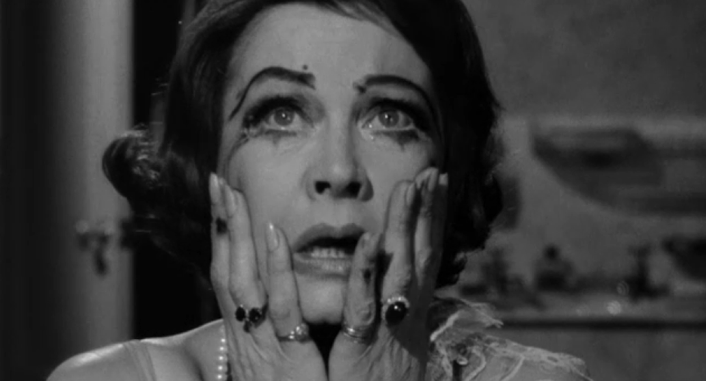
Ship of Fools (1965)

Simeone Signoret and Oskar Werner are just part of the kaleidoscope of humanity in Ship of Fools

Director: Stanley Kramer

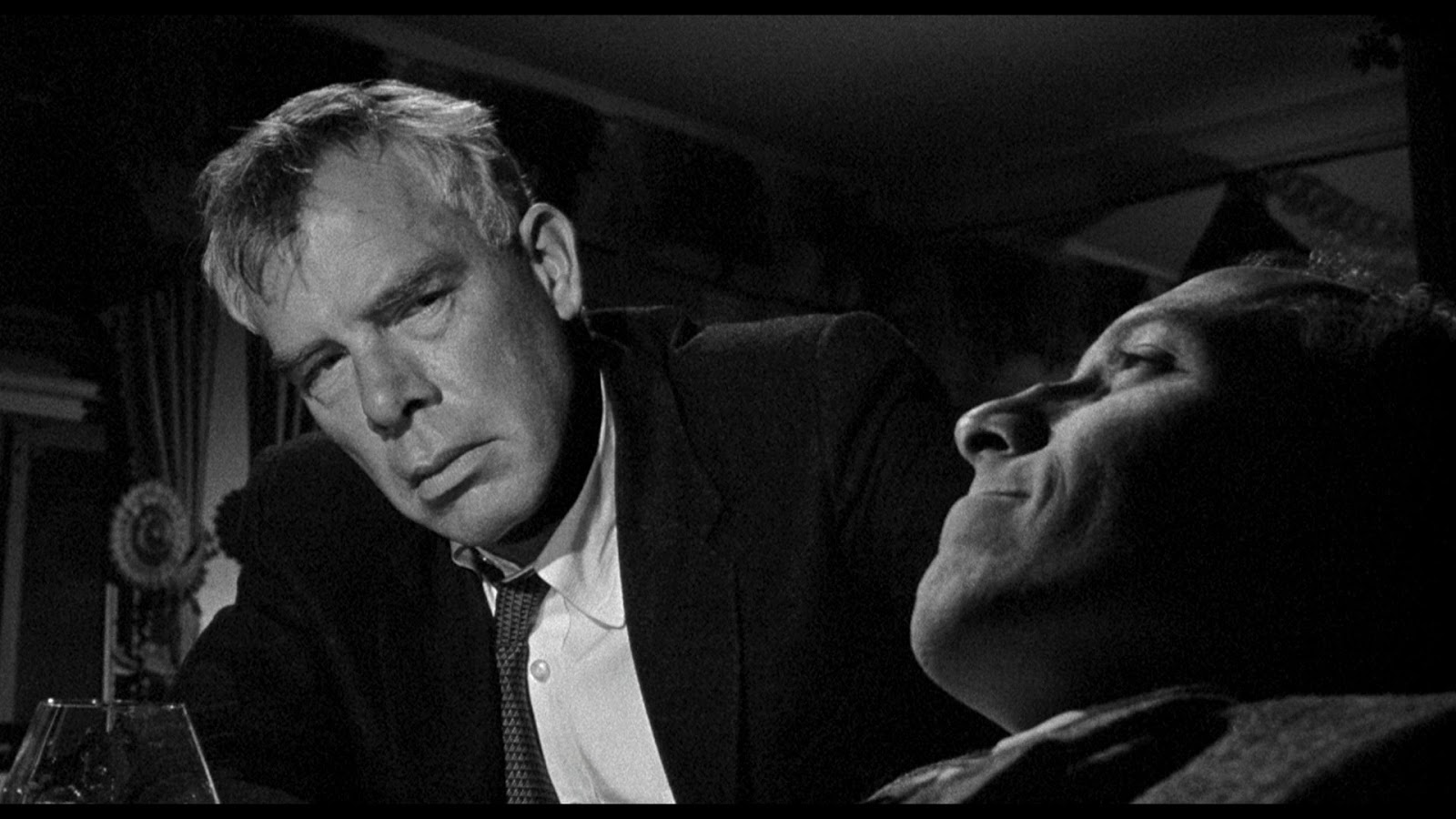
Cast: Vivien Leigh (Mary Treadwell), Simeone Signoret (La Condesa), José Ferrer (Siegfried Rieber), Lee Marvin (Bill Tenny), Oskar Werner (Dr Wilhelm Schumann), Elizabeth Ashley (Jenny Brown), George Segal (David Scott), José Greco (Pepe), Michael Dunn (Carl Glocken), Charles Korvin (Captain Thiele), Heinz Rühmann (Julius Lowenthal), Lilia Skala (Frau Hutten), Barbara Luna (Amparo), Christiane Schmidtmer (Lizzi Spokenkieker), Alf Kjellin (Freytag), Werner Klemperer (Lt Huebner)

Stanley Kramer was the man who went his own way in Hollywood. Struggling to find work after returning from the Second World War, he set up his own production company which quickly specialised in critically acclaimed “message” films. It’s the sort of film making that hasn’t always aged well. Kramer’s style hasn’t often either – even at the time he was seen as achingly earnest and worthy. Ship of Fools was the sort of perfect project for him: a massive best-selling novel about a huge subject, humanity itself. It was about big themes and it felt really important. It was perfect Kramer material.

In 1933, a ship sails from Mexico back to a newly Nazified Germany. On board, the passengers and crew blithely continue their own personal dramas and obsessions – it really is literally a “ship of fools”, as we are informed in the film’s opening by wry observant German dwarf Carl Glocken (Michael Dunn) who serves as an occasional chorus. On board: a faded Southern Belle (Vivien Leigh) desperate to recapture her youth; a failed baseball player (Lee Marvin) bitter that his career never took off; a young artist (George Segal) intent on only drawing serious subjects to the frustration of his girlfriend (Elizabeth Ashley); a bigoted, bullying Nazi (JoséFerrer) trying to start an affair with an attractive younger blonde (Christiane Schmidtmer); a Jewish jeweller (Heinz Rühmann) who thinks the Nazi party can’t be that dangerous; and ship’s doctor Willi Schumann (Oskar Werner) who finds himself increasingly fascinated with La Condesa (Simeone Signoret), a drug addict and a social campaigner being transported to prison in Spain. Truly, the whole world is on board this boat! (Or so you can imagine the poster saying).

The success of the individual moments in Ship of Fools rise and fall depending on the level of engagement you feel in each of these stories. It’s a curious mixture of tales, some of them dancing around deeper meanings, some playing like dark farce, some plain self-important rubbish. What’s abundantly clear is Kramer feels this is all leading towards meaning something, though whether he gets anywhere near expressing what this something is really isn’t clear. In fact the only real categorical message I could take about this is that humanity has a tendency to fiddle whole Rome burns – and that of course the Nazis are bad. 

There is an attempt to suggest a world in microcosm – and some have argued that the smorgasbord of characters are basically like facets of one person’s personality – but really what many of these stories are deep down are soapy pot-boilers, brought to life by good writing and fine acting. Kramer marshals all these events with a professional smoothness: there is something quite admirable about the fact he clearly sees the director’s role as more like a producer’s, someone there to service the story and actors more than to cover the film with flash. It might not make for something compellingly visual, but it is refreshing.

What Kramer is less successful with is the heavy-handed importance the film gives its serious moments. Most infamous is a moment when Glocken and Jewish trader Julius Lowenthal are sitting on the veranda, listening to the band while chatting about current affairs in Germany. “There are nearly a million Jews in Germany. What are they going to do? Kill all of us?” Julius jovially states – the band music obviously ends the second he stops speaking, filling the screen with a chilling silence. It’s the sort of moment that is supposed to make us feel the chill of the oncoming storm – but instead feels manipulative and portentous. Every moment like that lands in the same way – the film is delighted with its exploration of these shallow people, very pleased with knowing the Nazi destruction is on the way. 

This self-important bombast dates the picture more than anything else in it. Nothing dates as badly as pretension. It’s a film that feels like it’s been made very consciously to make you think, and which wears its attempt to capture every level of society – from poor Spanish workers to rich Nazis – very heavily. It also makes obvious points: naturally the only true act of self-sacrifice comes from a poor Spanish worker, while the rich passengers can scarcely look past their own concerns. 

When it isn’t being self-important, the film too often finds itself mired in soapy rubbish. The plotline featuring George Segal as a failing artist and Elizabeth Ashley as a frustrated girlfriend is tedious beyond belief, a slog through the worst kind of coupley drama that adds very little to the film. A further plotline around the companion of a wheelchair-bound intellectual, obsessed with an exotic dancer on the ship, could sit just as easily in Coronation Street as it could in a highbrow drama like this.

Despite all this, I have to say much of the acting is very strong – even if many of the actors are cast very much to type. Vivien Leigh, in her last performance, struggled with immense psychological difficulties during shooting, but brings a heartfelt realism to divorced Southern belle Mary Treadwell (an even more heartfelt version of her Blanche DuBois than in Streetcar). Kramer also allows her one of the film’s few moments of imaginative spontaneity when she suddenly bursts into a Charleston before stumbling back to her hotel room. 

Carrying a lot of the film’s emotional weight are Oskar Werner and Simeone Signoret (both Oscar nominated) as an unlikely romantic coupling. Werner brings great depth and sadness to the world-weary doctor who finds himself irresistibly drawn to Simeone Signoret’s Countess. Signoret channels her distant, fragile imperiousness from Les Diabloques and Room at the Top to marvellous effect as a woman struggling with an indolent drug addiction but who feels a genuine responsibility to the world. The quiet scenes between these two are the closest the film gets to touching some distant meaning, even if it never quite gets there – and again the points deep down are fairly straight forward.

For the rest of the cast, there is hardly a weak link. Heinz Rühmann, in his only English-speaking role, campaigned heavily for the role of Jewish trader Julius and he is magnificent. José Ferrer swaggers convincingly as bullying Nazi Siegfried, even if he is saddled with the most obvious, poorly written, character. Michael Dunn (also Oscar nominated) makes a lot of his role as charming chorus and commentator. Lee Marvin is terrific as the frustrated and bitter baseball player. Charles Korvin gives a lot of depth to the thoughtful and compassionate captain.

Ship of Fools has plenty of moments of enjoyment. But as a whole it’s always a little self-consciously important, too determined to push you to be aware of the messages it wants you to take home. As the final shot sees a camera crane inexorably down onto a swastika you feel smacked around the face with the film wanting you to know that the darkness was just around the corner. The dread of Nazism should hang over the film like a shroud but instead it feels so repeatedly stressed to us that it loses all impact. The film wants us to know that we know more than the characters, and goes out of its way to remind us so that we can pat ourselves on the back when we spot the irony. Despite much of the quality of acting and dialogue, it gets wearing after a while.