Tag: Thrillers

Apocalypto (2006)


Rudy Youngblood is on the run in Mel Gibson’s Mayan experience epic

Director: Mel Gibson

Cast: Rudy Youngblood (Jaguar Paw), Dalia Hernández (Seven), Jonathan Brewer (Blunted), Morris Birdyellowhead (Flint Sky), Gerardo Taracena (Middle Eye), Raoul Trujiilo (Zero Wolf)

In the early 1500s, the Mayan civilisation is at its final peak before its collapse. However, it is a civilisation built on human sacrifice and exploitation. A peaceful village is brutally attacked by Mayan soldiers, who take the women to be sold into slavery and the men to be sacrificed to the sun. Jaguar Paw (Rudy Youngblood) manages to save his wife and child, but is captured and taken to the Mayan capital where he struggles to survive, escape and find his family.

Setting a film in the long gone Mayan civilisation, in an entirely dead language, with no stars is a brave choice for any film-maker. So you have to tip your hat to Mel Gibson, for all his undoubted unpleasantness, that he was brave enough (or powerful enough) to put the project together. It could have been a grand folly but, thanks largely to Gibson’s undoubted prowess as a film-maker, it’s a relentless experience movie, with moments of horror expertly mixed with terrifying edge-of-the-seat tension. It’s a clear sign that, for all his personal issues, Gibson is a very fine director.

The chase, when it comes in the final third is unrelenting, and brilliantly shot and edited. Gibson uses a range of different cameras, from those mounted on Youngblood, to tracking shots, to aerial shots to throw us into the middle of the action. Trees blur by, the soundtrack pounds, the camera doesn’t let up. Gibson also knows to throw in quieter moments – pause points, moments to take breath for both the pursuers and the pursued. Jaguar Paw carries a dreadful wound – and runs on the same level of adrenalin as the film provokes in its audience.

Of course, it’s also, as per a Gibson film, very bloody stuff. Faces are bludgeoned. Bodies are cut to pieces. A jaguar literally rips a man’s head apart. The film wants us to experience this bloody world first hand. As a piece of film-making, it’s addictive in its unremitting violence and tension. It’s also compelling how the odds slowly change throughout the chase – like a Die Hard in the jungle, the further the pursuit heads into the jungle, the greater confidence Jaguar Paw possesses, and the more he is able to turn the tables on his pursuers. This also highlights the savage danger of nature itself – the jungle is full of potential dangers, from jaguars to hornets to poisonous animals.

It’s far from perfect of course. The script is dire – the subtitled content we read if often terrible clunky. The opening sequence is a long series of jokes about eating a wild pig’s bollocks. There are strange anachronistic turns of phrase – at one point a collapsing tree nearly takes out the convey of slaves, leading Zero Wolf to shout “I’m walking here!”. If you were in any doubt about the essential crudeness and simplicity of Gibson’s sense of humour, you only really need to read the subtitles.

But because the film is subtitled and feels like a brave piece of film-making, it’s very easy to assign a depth to it that the film doesn’t really have. It is, to all intents and purposes, an 80s action film transposed to an ancient civilisation. It would like to think it has some profound message about the nature of man. But it’s largely an experience movie that throws you into an old civilisation and wants you to vicariously feel the suffering of its central character. It’s Gibson at his most visceral, throwing us into worlds of violence, tapping into elemental feelings of pity and horror. 

I guess there are themes in there about the universal corruption and cruelty of great civilisations, with their violence, greed and cruelty – and we know the conquistadors are just round the corner. But other than presenting this as is, the film doesn’t make too much of an effort to draw real contrasts with our world. It is what it is. The audience is there to feel the fear and the horror of the innocent villagers being fed to the Mayan human sacrifice machine. Any pretence to this being a profound movie on top of that is just that: a pretence.

But Gibson can shoot the hell out of a film, and this is tense, engrossing viewing – largely because you’ve not really seen anything else really like this. The scenes at the Mayan sacrifice temple are horrifyingly hypnotic in their orgy of death. Our villagers have a chilling powerlessness in the face of this death machine that awakens all our feelings of vulnerability and sympathy. Violence and murder is shown to be central to Mayan civilisation – and it might not carry that thematic idea forward too much, but at least it’s an interesting suggestion.

But Gibson’s primary purpose here is to make a high-octane chase movie – an actioner, set in a primitive civilisation, where human beings on foot carry all the energy of the chases, and the stakes feel impossibly high. You have to admire Gibson’s power as an immersive film-maker, and the unique vision he presents, difficult as it can be to watch. It’s something truly unique, often shockingly so. And if it is, at heart, part chase part slasher with slightly more depth, it’s also something you can’t imagine many other directors having the chutzpah to put together.

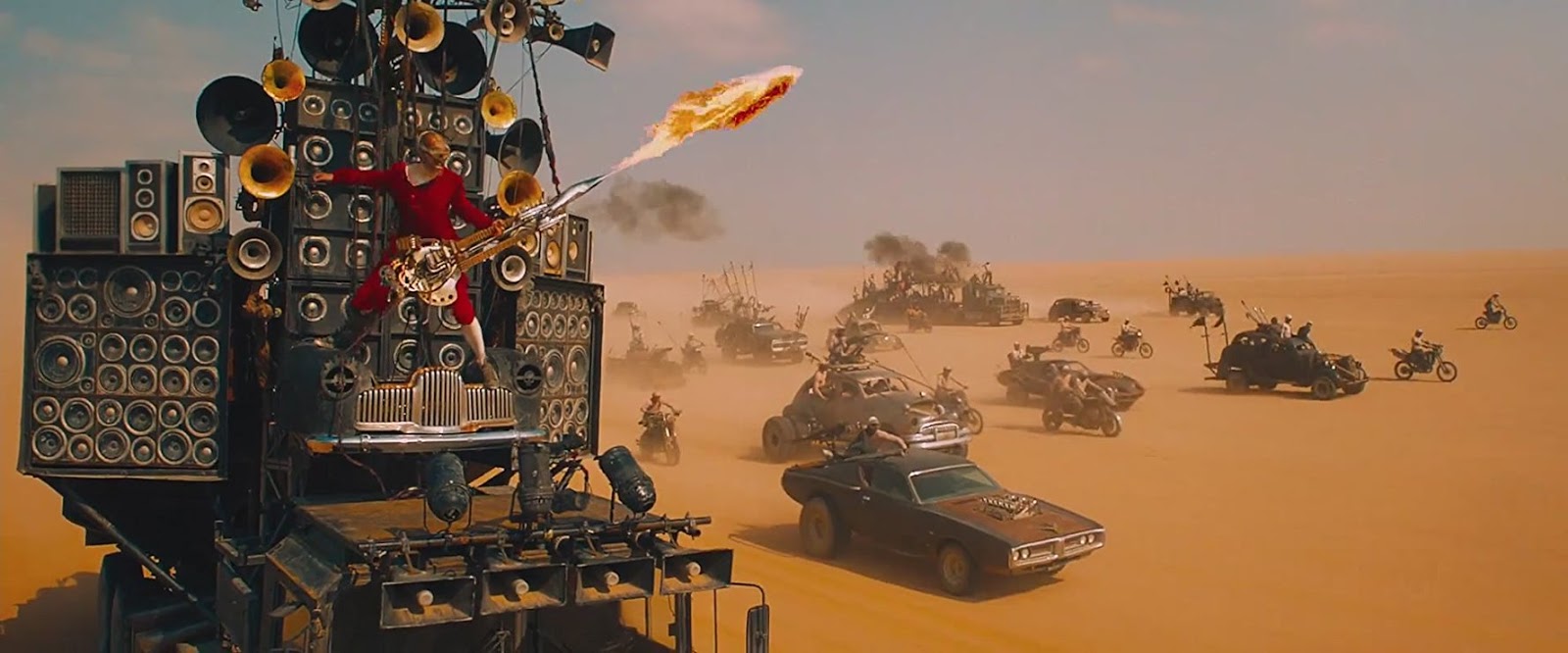
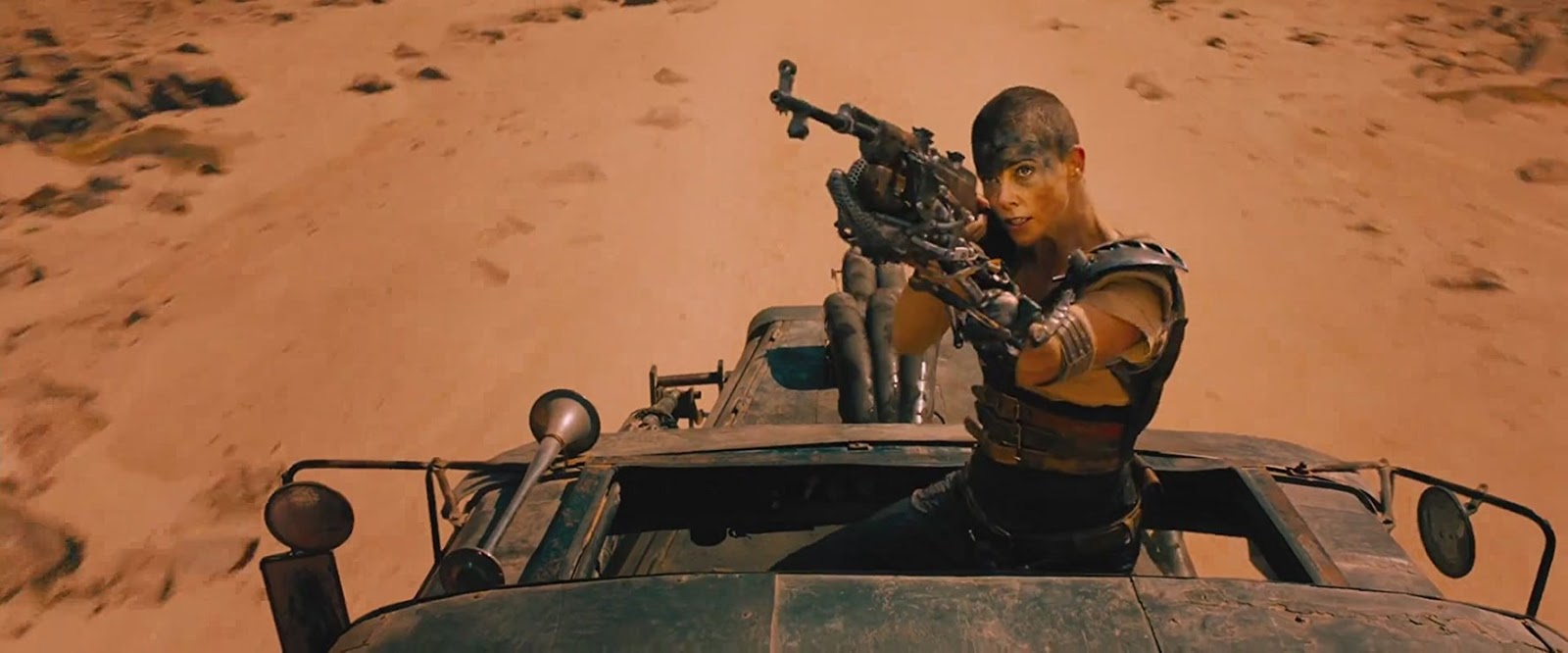
Mad Max: Fury Road (2015)


George Miller’s Mad Max: Fury Road – a crazy car chase film

Director: George Miller

Cast: Tom Hardy (Max Rockatansky), Charlize Theron (Imperator Furiosa), Nicholas Hoult (Nux), Hugh Keays-Byrne (Immortan Joe), Rosie Huntington-Whiteley (The Splendid Angharad), Nathan Jones (Rictus Erectus), Riley Keough (Capable), Zoë Kravitz (Toast the Knowing), Abbey Lee (The Dag), Courtney Eaton (Cheedo the Fragile), Josh Helman (Slit)

Sometimes films seem designed to give you a visceral thrill, to throw you into an experience and see whether you sink or swim. To pull off that sort of hard-edged momentum, you need a film-maker skilful enough to create an addictive energy that never slackens and never gives you a second to question the film while it’s going on. Mad Max: Fury Road has such a director in George Miller, and its demented, high-octane excess, married with a film-making style that felt modern, vibrant and grounded in reality, surprisingly made it one of the most acclaimed films of 2015.

In a post-apocalyptic future Australia, the world is a ruined desert and basic requirements like water, greenery and fuel are more valuable than anything. In a rocky outcrop, cult-leader Immortan Joe (Hugh Keays-Byrne) rules one of the few populations by controlling access to the water. “Road warrior” Max Rockatansky (Tom Hardy) is captured by Immortan Joe’s warriors and put to work as a “blood bag” to transfuse into Immortan Joe’s warriors. However, this coincides with a planned escape by Immortan Joe’s wives (the few remaining women capable of conceiving children). Led by road warrior Imperator Furiosa (Charlize Theron), the women flee to find a mysterious paradise in the wilderness. Cue an almighty chase and running battle between Furiosa’s road carrier and Immortan Joe’s forces, desperate to reclaim the wives.

Mad Max: Fury Road is a bizarre, extreme, surreal thrill ride, a high-octane road chase, crammed with action, thrills and dynamism. It’s directed with extraordinary vibrancy by George Miller, who makes it fresh and scintillating. Miller crams the action and design with an explosion of style. Everything is amped up to 11, from the look to the characterisations and motivations. But what makes this such a well-directed film is that Miller shoots much of it with careful, professional clarity: so many other films would be cut with a frantic craziness, but this has a polished traditionalism to it. Basically Miller knows the actual content of the story is “insane” enough that he doesn’t need to gild the lily with bizarre, swooping camera angles or choppy editing. 

That’s partly why this film has had such a strong positive reaction. While being insanely OTT, it’s actually quite an old-fashioned piece of film-making, and it looks like a lot of it was shot for real on location, using real practical stunts. This may or may not be the case, but it certainly looks like this. And in an era where so many action films are about superheroes, and crammed with special effects, to have a world where things feel grimy and real, where the objects we are watching feel like they exist, is like a breath of fresh air. The design throughout the film accentuates this sense of reality. It makes things feel like they have depth and force. It immediately adds stakes to the action.

That action takes place in a unique looking world. The visuals in this film are crazy. The design of Immortan Joe’s half-nude soldiers, with their silver paint aerosol and petrol smeared faces, is terrifyingly cultish. The look of the many different vehicles is immediately striking, with each being clearly of the same world, but each distinctive in look, like some Wacky Races. The steampunkish mix of cobbled-together remains of technology to create the cars and trucks is brilliantly done. It’s a film that looks like nothing else, and shot with radiant streaks of yellows and blues, mixed with scenes shot in almost painterly black and white. It’s an explosion of style, but not straining too hard to force itself upon you like so many films do. 

The film also has a simple structure and storyline, that allows it to focus on the action. It’s slick, steamlined and very focused. The villains are clear, and their motivations easy to understand. They are presented with a certain depth, but their essential villainy is easy to have a gut instinct against. This also helps us bond with our heroes – despite the fact that most of the wives have only the most briefly sketched of characters. But we totally understand their position, fear and desire for freedom. Just as the film is a primal explosion of “fight or flight”, so are the feelings our heroes carry. Everyone can relate to them.

It’s also great that this is an action film where the women largely drive (literally!) much of the action. The film may have the Mad Max name on it, but the true lead of the film is Furiosa. It’s her actions that drive the film, it’s her conflicts that are at its heart, the film is her journey and Max is largely along for the ride (again literally!). Charlize Theron is very impressive in the lead, a strong warrior woman, but also someone with a buried poetic soul and a clear emotional arc. Tom Hardy delivers as the grizzled Max, but this is very much Theron’s film.

Mad Max: Fury Road is an exciting and engrossing film. But it’s made with such professional inspiration on the visuals that it invites people to read into it a lot more depth than I think is actually there. It’s got such old-fashioned control and brilliance to it, while being so explosive and vibrant, that it’s tempting to read into it a thematic complexity. Let’s be honest, this is a chase movie. It’s a hell of a chase movie, but it’s a chase movie.

It may be set in a world of post-apocalyptic totalitarianism, but it’s not trying to tell us anything hugely original about what such a world may be like. It creates such a world with huge inventiveness, but it’s not an enlightening film. Similarly, this is a film that places women at the centre of its action, but I’m not sure you could call it a film that has much to say about feminism. Most of the women in this film are still defined primarily by their breeding abilities. Furiosa may be the leader, but most of the rest of the women are under her protection. The film does something different with gender, but it also does a lot of quite traditional things. 

It’s really tempting to see great symbolism in such a dynamic and striking piece of film-making. But thematically there isn’t much there. Miller directs a film that is brilliant too experience, so brilliant you expect there to be more at its heart. In truth there isn’t really – it’s largely what it appears to be on the tin. There’s nothing wrong with that though. You just need to know what you are going to get. This is not some great game changer of a motion picture, that will reinvent and reposition the genre. It is a skilfully made and compelling chase movie, where a group of people run to a point, turn around and head back, being chased all the way. It’s shot with a near poetic, old-school brilliance – but it’s still just a chase movie. Accept it as that – a high-octane action thriller – and you will be swept away. Look to it for the thematic depth some have claimed it carries and you will be disappointed.

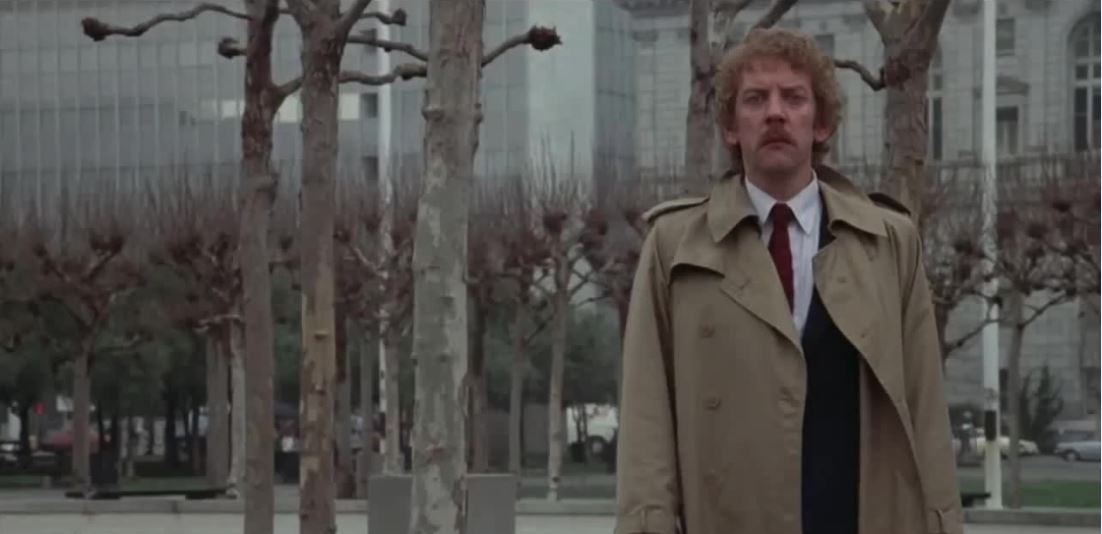
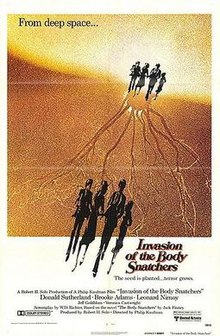
Invasion of the Body Snatchers (1978)


Donald Sutherland is lost in the soulless world of Invasion of the Body Snatchers

Director: Philip Kaufman

Cast: Donald Sutherland (Matthew Bennell), Brooke Adams (Elizabeth Driscoll), Leonard Nimoy (Dr David Kibner), Jeff Goldblum (Jack Bellicec), Veronica Cartwright (Nancy Bellicec), Art Hindle (Dr Geoffrey Howell), Don Siegel (Taxicab Driver), Kevin McCarthy (Running Man)

Sometimes, as we look around our office-based world, it’s hard not feel that most of it is taking place on a weary treadmill. That we are going through the motions with no engagement or feeling, that we are all cogs in the same machine. Invasion of the Body Snatchers, like all great science fiction films, taps into this sense of individuality being lost in our modern age, and mixes it with a brilliant dose of Cold-War paranoia. Like much brilliant science-fiction, it offers a window on our world that makes us pause and reflect on our own lives.

Matthew Bennell (Donald Sutherland) is a health inspector (has there been a less sexy job for a hero?) in San Francisco. One day his colleague Elizabeth Driscoll (Brooke Adams) confesses to him that her boyfriend, dentist Geoffrey (Art Hindle), has changed so much that he feels like a completely different person. Turns out she’s not alone in the city – many people are reporting their loved ones have become distant and changed. While Matthew’s friend, celebrity psychiatrist Dr David Kibney (Leonard Nimoy), laughs off their concerns, Jack (Jeff Goldblum) and Nancy (Veronica Cartwright) Bellicec are keen to listen – especially when they find a copy of Jack growing in their home. Can the people of San Francisco really be being replaced by copies in an alien invasion?

Invasion of the Body Snatchers is not just a great remake, it’s a great piece of film-making in its own right. It takes the ideas of the original and ramps them up into a Nixon-era paranoia fest, to create a creepy and unsettling film. It’s a film that perfectly understands the one thing all people value, perhaps more than any other, is their individuality and ability to feel and experience emotions. These are the two things the Pods take from you – in all other respects, the people are unchanged, they’re just unfeeling drones. 

What Philip Kaufman does really well is fill the film from the start with unsettling moments, and hints that things are wrong. The film opens with eerie visuals as the Pods arrive from space and slowly infect the vegetation of the planet. Unusual camera angles and lingering shots pick out people in the frame, behaving suspiciously robotically. Robert Duvall has a wordless (uncredited) cameo as a priest on a creaking swing in a playground – the sound and visuals both insanely unnerving, especially considering Duvall’s wordless intense stare. 

Pod people go about their work of taking over the earth with a relentless, eerie silence. Do they cling to silence so much, so that their piercing screams when they detect a rogue human can be heard? Late in the film, we see several instances of Pod people, freeze, point rigidly at an unconverted human, and then let out an inhuman shriek (it’s unsettling beyond belief). When pursuing humans, the run with a wild pack abandon. Throughout the film, the camera hovers on moments or scenes, asking us to wonder what’s going on. A floor cleaner mindlessly moves his cleaner across the floor and the camera lingers on him for what feels like ages – is he a pod person? Or is he just an ordinary Joe going about his work? Kaufman sprinkles moments like this throughout the film.

He and screenwriter WD Richter also tap into a sadness of the late 1970s – the world of the hippie, where it felt the world might change, is passing. Matthew, David and Jack all feel like old college buddies – you can imagine the three of them hanging out at Woodstock. Jack and Nancy have clung to their hippie lifestyle, but are reduced to running a mud-bath and trying to peddle Jack’s poetry to the bored and uninterested. David has repackaged himself into a soulless, impossibly vain and self-important TV psychiatrist, dishing out cod-advice and lapping up praise at swanky book launches. Matthew is a slightly grubby civil servant. Kaufman and Richter do a great job of suggesting the younger, more idealistic roots of these characters with minimal dialogue and action. It adds a rich theme to the film – are the Pod people and their mechanical, soulless routine just where the human race is going anyway? Is it any coincidence that the invasion takes places in hip San Francisco?

Kaufman shoots the film with an eerie off-kilterness, helped a lot by Michael Chapman’s excellent cinematography. Ben Burtt’s soundscape is also brilliant – from the creak of the swing at the start and the shriek of the Pod people, to the deafening silence late in the film of the almost completely converted San Francisco, as the Pod People go through the motions of their old lives, devoid of emotion. The design of the pods, and the growing replacement humans, is horribly eerie. This creepiness helps hammer home the sense of paranoia as more and more people are replaced by Pod people – leaving us, like the characters, constantly questioning who is “real” and who isn’t? Who can we trust?

Donald Sutherland is the perfect lead for this – he has both a slightly ground-down world-weariness but also a strong sense of maverick individuality. He’s an interesting, challenging actor and he’s very easy to empathise with. A lot of the film’s emotional force comes from the deep friendship (which could perhaps be more) between him and Brooke Adams (also very good). Leonard Nimoy offers a subtle inversion of his Spock persona, taking elements of Spock’s logical coldness and inverting them for both maximum smarm and creep. Goldblum and Cartwright are just about perfectly cast, with Cartwright especially good (and reaffirming her scream-queen skills) as a woman with a surprisingly sharp survival instinct.

Kaufman’s Invasion of the Body Snatchers is easy to overlook in the list of great American 1970s thrillers due to being both (a) a remake and (b) a science-fiction film. But this is an unsettling investigation of an America on the verge of changing from one type of generation to another. It’s unsettling, intriguing and gripping – wonderfully made and very well acted. It’s a film that understands paranoia, isolation and our love of our own individuality more than many others I can think of. It’s one of the great American 1970s films.

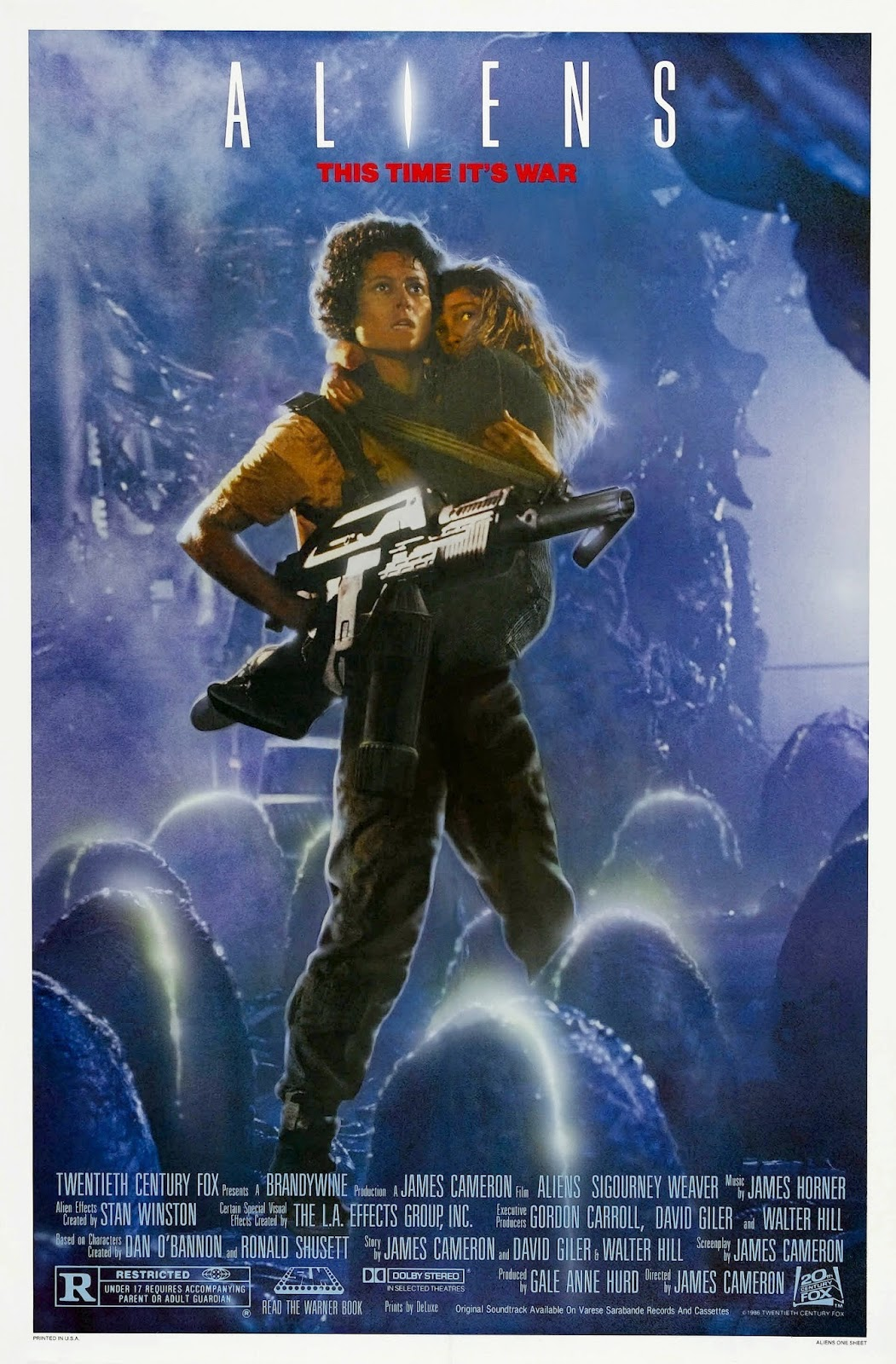
Aliens (1986)


Sigourney Weaver takes on the terrifying alien hordes in Aliens

Director: James Cameron

Cast: Sigourney Weaver (Ellen Ripley), Michael Biehn (Corporal Dwayne Hicks), Paul Reiser (Carter Burke), Lance Henriksen (Bishop), Carrie Henn (Newt), Bill Paxton (Private Hudson), William Hope (Lieutenant Gorman), Jenette Goldstein (Private Vasquez), Al Matthews (Sergeant Apone), Mark Rolston (Private Drake)

When any list of greatest-sequels-ever-made is put together, you get the familiar names: Godfather Part II, Toy Story 2, The Empire Strikes Back – but no such list is complete without James Cameron’s groundbreaking Alien sequel, Aliens. In fact, Aliens is so bloody good no list of great action films, science fiction films or even war films is complete without it. 

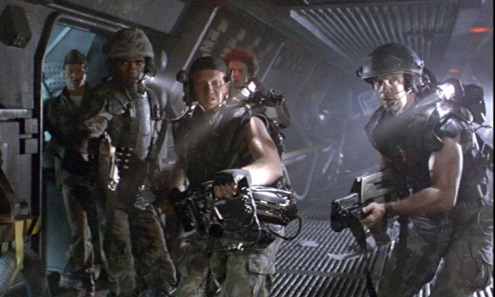
Set 57 years after Alien, Ripley (Sigourney Weaver) is awakened from hypersleep and returns to Earth. Her warnings of the hideous Alien threats on LV-426 go unheeded by the soulless Weyland-Yutani company – until all contact is lost with the terraforming colony there. At which point, company man Burke (Paul Reiser) recruits a troop of marines to head to LV-426 on a rescue mission. However, the over-confident marines find themselves on a devastated base with only one survivor, a traumatised young girl called Newt (Carrie Henn), and are quickly out of their depth fighting against a ferocious enemy whose tactics and motivations they don’t understand. 

Can this really only be the second large-scale movie James Cameron ever made? The guy may be (allegedly) a demanding, perfectionist dick, but you are left in no doubt of his mastery of genre film-making – or the thematic depth and emotional weight he can bring to what in the hands of thousands of other film-makers would have been a cheap-shock, monster-schlock thriller. Aliens is quite simply magnificent, one of the best Hollywood films you are likely to see. I’ve seen it I don’t know how many times, but it never, ever loses its impact. It’s always gripping, the action is always compelling and it never ever fails to scare and thrill you. 

Cameron’s trick is that he is so good at build-up. Nary a single Alien is seen on screen for the best part of an hour. Instead Cameron invests time in establishing the characters and their relationships. We begin to understand each of the marines as individuals. We feel our empathy for Ripley grow as we discover she has lost her daughter while in hypersleep, that she still feels traumatised by the events she witnessed, but that she has a strength of character, integrity and will that helps her weather the storms she has endured. You understand these characters so well – and the world that they inhabit – that when they start getting torn apart by slathering xenomorphs, it carries real weight and impact.

All the weapons the marines have and their tactics are carefully explained. We spend a good 15 minutes in the base itself before any Aliens arrive: the entire complex is quickly established as basically a huge haunted house. The wonderful production design makes it feel like the industrial zone on The Crystal Maze if a desperate hand-to-hand battle had been fought there (it’s also great that Cameron leaves what actually happened there to our imagination). Cameron has a mastery of small details – so the marines’ motion detectors have an electronic bleeping that increases in intensity as movement gets closer. It’s a brilliant tension builder that works time and again. The over-confident marines also makes their later fear all the more realistic and strangely affecting.

Then of course when things do kick off, it goes absolutely mental. Not for nothing is poor Hudson (a career establishing performance of bravado hiding fear from Bill Paxton) screaming “It’s game over man! GAME OVER!” after the first foray into the Alien nest. Paxton by the way has a perfect part in this film – every single line is endlessly quotable, largely because of his pitch-perfect delivery (I love “What so you mean they cut the power? They’re ANIMALS man!”), and despite being a cocky blow-hard, you end up loving him. Jenette Goldstein is similarly excellent as an almost impossibly hard-as-nails marine – she’s full of good advice, such as “Just nerve gas the whole fucking nest”.

The rest of the film is a helter-skelter of high octane, perfectly paced action. Every single sequence in this film is a stand-out, with stakes that feel impossibly high. Cameron really understood just how terrifyingly, inhumanly, remorselessly brutal the Aliens are – they are relentless and brilliantly single-minded, as well as having a ruthless cunning. They look and sound incredibly unsettling, and their darker, more animalistic design works wonders. It’s actually amazing, considering how this film is over 30 years old, that the Alien effects look better here than in Ridley Scott’s Alien: Covenant. Technically this film hasn’t aged a day – even the model work makes the film look real and lived in, rather than electronic and shiny.

James Horner’s score is sombre, unsettling and foreboding. It makes brilliant use of near ambient sound, before building into crashing, threatening crescendos in sequence with the action. Mix that in with the film’s brilliant sound design, and you’ve got a marvellous soundscape. The Aliens sound unnatural in their hissing fury. The military equipment is just the right side of futuristic and modern. The lighting is a dark mixture of shadows and reds. Everywhere seems unsettled. The editing is hugely influential – fluid, calm, brilliantly communicating the story and the geography of the action, everything.

Cameron’s greatest triumph, though, is to ground the story so well in a sense of family. The marines, for all their arguments and feuds, are a functional family unit – part of the reason William Hope’s useless Gorman struggles is because he doesn’t have the confidence to impose himself on such a tight group. But the real family theme is the mother-daughter relationship between Ripley and Newt. This is a bond that grows throughout the film, and feels really genuine and warm. It’s also a relationship that gives an emotional basis for all the actions we see. Cameron recognised that we can all relate to a basic family and that protecting this against the Aliens is what defines us in relation to them.

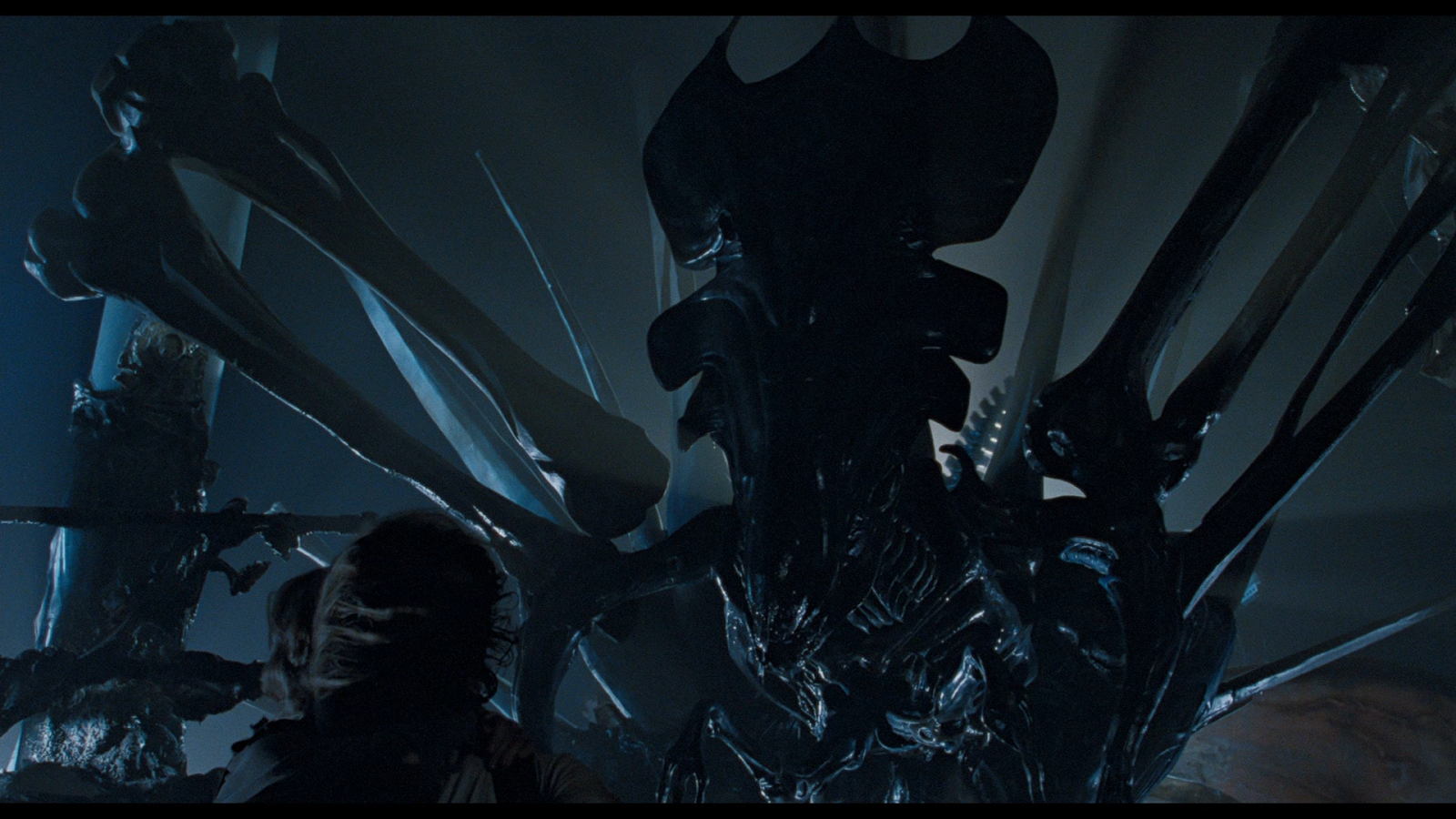
Of course, it also allows some clever thematic contrasts later when we are introduced to the Queen Alien. While it would be easy to blame this film for the tired cliché of the “Alien Queen” which we’ve seen time and time again, it’s used really well here. The Aliens may be conscienceless killers, but they’re still someone’s children: and we get a really neat contrast between Ripley and the Alien Queen’s determination to protect their children (as well as the best use of the word “Bitch” until Molly Weasley in Harry Potter).

The film’s secret weapon however is Sigourney Weaver’s outstanding performance in the lead. Not many actors get Oscar nominations for sci-fi or action films: Sigourney Weaver is one. And she deserved it because this is an iconic performance. Ripley isn’t an action hero – she’s strong and resourceful and she survives because of that. She’s not skilled at expressing herself or communicating – largely because it’s clear she’s suffering from PTSD. She completely fails to win over the corporate board with her story, and it’s clear the marines don’t hold her initial briefing in high regard. But even before they arrive on the planet, she’s beginning to win their respect. By the time of the initial encounter, her principled, strong-willed, sensible resourcefulness effectively makes her the expedition’s leader. 

Alongside this, Weaver does a fantastic job with Ripley’s growing maternal feelings towards Newt – the bond between these two is immediately clear, and her maternal protection of Newt becomes one of her core motivations. With Weaver, Hicks and Newt we end up with a strange family at the centre – a curious closeness that makes the film feel unique. It adds a strong emotional core to the film, and gives Weaver a depth to play with that enlightens her relationships throughout the film – she’s clearly got a strong protective feeling, and her desire to protect the marines is as much a part of this as her feelings for Newt.  It’s a terrific performance, full of feeling and strength. She fully deserved the Oscar nomination – arguably she could have won.

Aliens is one of those landmark films that never lets you down. Cameron’s direction of it is pitch-perfect, there’s hardly a fault in the whole film. It’s a masterpiece of design and construction and totally gripping from start to finish. It’s not only one of the best sequels of all time, as a purely enjoyable and affecting piece of cinema it may well be superior to the original. Even more than the first film, it made Ellen Ripley one of the great iconic characters of cinema. It will never get old and it’s never going to get tired. If you haven’t seen it, you really, really should.

Nocturnal Animals (2016)


Amy Adams does a lot of reading and thinking in Tom Ford’s intriguing part thriller, part strange romance, part memory saga Nocturnal Animals

Director: Tom Ford

Cast: Amy Adams (Susan Morrow), Jake Gyllenhaal (Edward Sheffield/Tony Hastings), Michael Shannon (Detective Bobby Andes), Aaron Taylor-Johnson (Ray Marcus), Isla Fisher (Laura Hastings), Ellie Bamber (India Hastings), Armie Hammer (Hutton Murrow), Laura Linney (Anne Sutton), Andrea Riseborough (Alessia Holt), Michael Sheen (Carlos Holt)

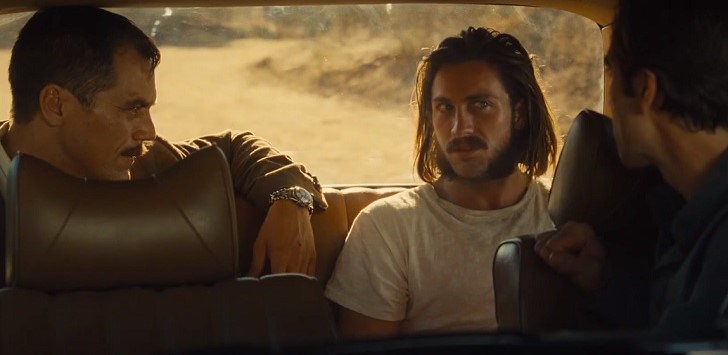
Susan Morrow (Amy Adams) is a society wife, running art galleries and married to an increasingly uninterested husband (Armie Hammer). One day she receives a copy of a manuscript from her ex-husband, Edward Sheffield (Jack Gyllenhaal). The book, while sensitive and from the heart, is also terrifying and visceral, and speaks to her in a way few things in her life have. It makes her begin to question her own choices. We see the story of the novel played out – Tony Hastings (Gyllenhaal again) and his wife (Isla Fisher) and daughter (Ellie Bamber) are waylaid late at night on an abandoned road by a violent local (Aaron Taylor-Johnson) – tragedy ensues.

It would be easy to say Nocturnal Animals is a stylish film that favours beauty over substance. But that would be untrue – Tom Ford has crafted a dynamically structured, intriguing puzzle, open to (and ripe for) discussion and reinterpretation over and over again. The film teases us with uncertainty and ambiguity, but it manages to avoid slipping into heavy-handed pretension. It leaves us with things unsaid, presenting parallel narratives and inviting us to mix and match them to create our own understanding. Ford’s skill is to not always present a definitive answer for how the book plot we are watching is meant to reflect on the plotline of the real world.

Ford is really good at distinguishing between the fiction and the reality. The world of Edward’s story is heightened in nearly every way, in a broad Western setting, while Morrow’s “real world” is cooler and contained, set in chilly apartment rooms or icy modern galleries or homes. The intercutting between the two is skilfully done, perfectly paced, never confusing or jarringly pulling us suddenly from one reality to another. The film avoids making obvious visual crossovers and links between the two (bar once – a moment that doesn’t really work), leaving the interpretation up to the viewer.

The story-within-a-story has a heightened tension, sometimes difficult to watch, not least in the road-rage incident that opens it. This sequence is almost unbearable in its whipper-cracker tension, with a threat of physical and sexual violence in every moment. The horror is almost palpable, sold a lot by Gyllenhaal’s struggles to control his panic and fear. Taylor-Johnson plays the demonic bully with an overblown operatic intensity, a hyper-real flamboyance that works well because it serves as a contrast with the grounded elements in the real story. It also adds to the sense of horror throughout this whole chilling sequence. Who hasn’t felt fear of being pulled over in a road in the middle of nowhere by terrifying, aggressive young men?

But all the elements of the story-within-a-story are cleverly balanced literary flourishes, carefully designed to appear just a little too close to “drama”, than those of the real world. Michael Shannon – a hard-boiled slice of charisma, he’s very good – is basically a stock character, repackaged with depth, but very much the sort of character you would find in a film rather than real life. Gyllenhaal’s Hastings similarly has the sort of moral conundrum and intense grief that feel that they belong more to a character from literary fiction than real life. The events of this story have a ferocious hyper-real intensity to them. Events in the story-within-a-story has a carefully constructed sense of dramatic irony.

By comparison, the “real world” is almost deliberately low-key and humdrum –minor affairs, and small but telling secrets, lives that are stuck in dull ruts or unimaginative cul-de-sacs. Amy Adams gives a complex and fascinating performance, much of which is essentially her reacting to things she is reading. It’s a performance that reeks of regret, of a woman unhappy in the choices she’s made, but too in love with the advantages they’ve brought to risk changing. She’s so set in the conventionality of life she seems unable to even imagine using her independence to break free.

The film teases us by misleading us about the parallels between the characters in the real world and those in the story. Ford playfully implies at first what we are watching may be partly true, and invites us to wonder what may be invention and what might have actually happened in real life. Alongside that, he also uses the double casting of Gyllenhaal to demonstrate the self-identification writers have for their characters. How much does Sheffield see himself in Hastings – and how much do the events that occur to Hastings, suggest a self-loathing in Sheffield? Again it’s all left to our own invention and imagination. We get flashbacks to past events in the real world that serve to both broaden our understanding and make us question our preconceptions. 

The film builds towards a conclusion that is equally open. Despite its horrendous content in the story-within-a-story, there is a romantic longing in this film, a sense of a life not lived – and a hope for the future. The final sequence is completely open to interpretation – you could equally see it as hopeful (as Ford sees it) or bleak (as most audience members do) – I probably incline more to the latter, but that might just be me. Everyone though will think something a little different depending on what they see, and how they interpret it – the film doesn’t labour the points it makes or push you too far in any direction.

Nocturnal Animals is an intriguing experiment in form and content that works extremely well. It’s powered by some terrific performances and shot with grace and beauty by Ford. This is Ford really flexing his muscles as an artist of film, and he borrows liberally from Lynch to Hitchcock. Ford has a brilliant eye for composition and form and his editing is masterful. He gives his work a lyrical musicality, a sense of balance and rhythm – he’s also a fine, subtle writer and avoids the crudity of the showman. He’s a fine film maker, and Nocturnal Animals is an intriguing, at times hard to watch, but fascinating film that grabs hold of you and doesn’t let go.

Fargo (1996)


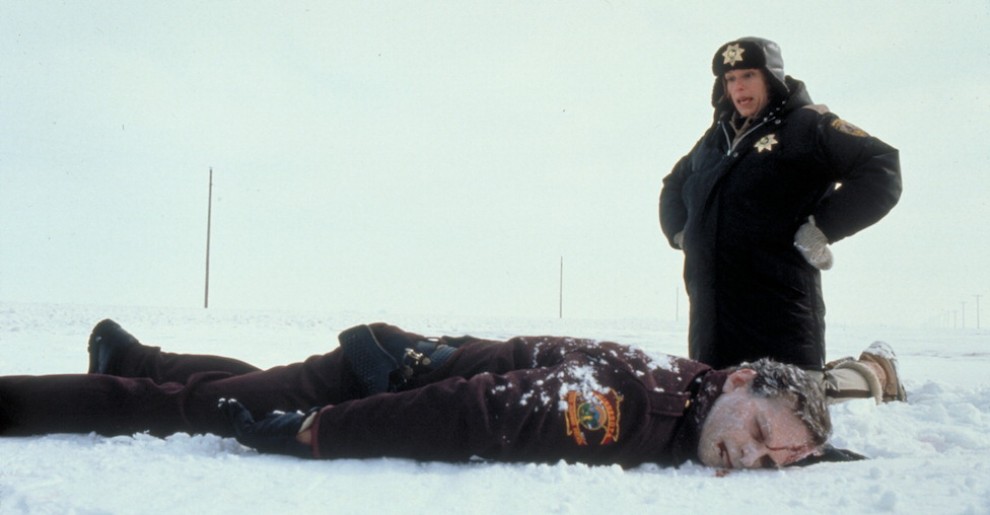
Frances McDormand investigates one of many pointless slaughters, in the Coen’s bleak but fantastic Fargo

Director: Joel and Ethan Coen

Cast: Frances McDormand (Marge Gunderson), William H. Macy (Jerry Lundegaard), Steve Buscemi (Carl Showalter), Peter Stormare (Gaear Grimsrud), Harve Presnell (Wade Gustafson), John Carroll Lynch (Norm Gunderson), Steve Reevis (Shep Proudfoot), Kristin Rudrüd (Jean Lundegaard)

Sometimes you see a film and, for whatever reason, you expected something totally different. It can throw you when something is so different from your expectations. With Fargo I had been led to expect a comedy. A comedy with dark undertones, but a comedy never the less. Fargo is in fact such a blackly, violently, grim piece of work – with lashings of dark comedy – that I was completely turned off by it. Watching it again, understanding the quirky blackness and nihilistic optimism (yes that’s right!) it contains, I appreciated it more and more as the masterpiece it is.

In Minneapolis, Jerry Lundegaard (William H. Macy) is a down-on-his luck car dealer, heavily in debt, who arranges for two small-time criminals (Steve Buscemi and Peter Storemare) from Fargo, North Dakota, to kidnap his wife, splitting the $80,000 ransom (while telling his wealthy father-in-law the ransom is actually $1 million). However, the kidnapping quickly gets bogged down in an escalating cycle of murder and violence, and events quickly spin out-of-control. All this is investigated by heavily-pregnant and relentlessly positive police chief Marge Gunderson (Frances McDormand).

Only the Coens could have made film that is so nihilistic, in which life is so cheap and death so meaningless, but yet at the same time strangely hopeful and life-affirming. Because even after all the horror and casual murder that fills the film, its heart remains the warmth of Marge Gunderson. The film continually returns to the simple affection of her relationship with her husband (a hugely sweet John Carroll Lynch). Even her pregnancy (and their obvious, unshowy delight in it) suggests a hopeful new world, moving away from the horrors of this one. It’s a genuine, emotional heart at the centre of the story, which grounds all the violence and mayhem.

And there is a lot of violence. The film is punctured at several points by brutal and unexpected killings. The body count is extraordinarily high (seven people die during the film, which considering the cast is so small and the running time so tight is pretty darn high). The camera doesn’t shy away from the horrific after-effects of killing – the suddenness, and the cold grimness of the bodies left behind. The killing is often random and pointless, with several bystanders suffering: at one point the camera pans past a parking attendant, in the wrong place at the wrong time, slumped dead on the floor of his booth. And all of this over some money. Well, that and the fact that Peter Storemare’s thug is a psychopath.

All this disaster of course spins out from the feckless vacancy of William H. Macy’s Jerry Lundergaard, a sad-sack loser and overtly “nice guy” who you feel has been an unimpressive, quietly resentful failure his entire life. Macy has never been better, not only making Jerry empty and desperate but also quietly bitter and frustrated. He’s never actually that sympathetic – there is an un-empathetic shallowness in him. David Thomson described him as “a scoundrel, and in the end amiability is as nothing.” Even when he’s being humiliated, you can’t really warm to him. There are several brilliant sequences where Lundergaard’s anger and resentfulness bubble under his “Minnesota-nice” attitudes – be that facing his over-bearing father across the dining room table, or furiously scraping at his car in the ice.

That “Minnesota-nice” accent and rhythm of speaking, its impeccable good manners, are the source of a lot of the films fun and warmth. Every character around the edges of the drama is sweetly optimistic, scrupulously polite and positive. It’s part of the Coens’ genius to set such a cold and violent drama within the confines of a world which is upbeat and positive. There is a brilliant contrasting comedy to the harshness of the world against the gentle happiness of Minnesota. It’s endlessly endearing and sweet.

The centre of this is Frances McDormand as Marge Gunderson, perhaps one of the quickest and sharpest investigators you’ll see in drama, able to compartmentalise the brutality of crime from the warmth of her home life. McDormand is simply excellent, the beating heart of the movie, despite the fact she doesn’t even appear until it is almost a third of the way in. Her gentle but astute investigation of the crime is marvellously Miss-Marple-like in its sharpness. But she extends the same shrewd and generous understanding of human nature to her personal life: there is a marvellous sequence where, having agreed to meet an old friend from college, she gently lets him down after recognising the lonely divorcee wants something very different from the meeting. That’s not surprising, considering the gentle supportiveness and love in her relationship with her husband gives the film a constant respite of humanity.

Marge may see the world of violence, she may even be able to live in it sometimes, but she doesn’t really understand it. And that’s not surprising because the Coens’ plot here revolves sort of around money, but it’s mostly around mistakes, fuck-ups and confusion. It just so happens that a number of the people involved are dangerous, proud, devoid of conscience or all three. It’s a disaster of epic proportions. But it spins out of no planning, just events going out of control. Jerry’s father in law (played excellently by Harve Presnell, a truly imposing slab of masculinity and the prototype bully) is of course far too controlling and arrogant to not take matters into his own hand by playing hardball with killers.

And those killers are both excellent. It’s a perfect role for Buscemi – scuzzy, fast talking, weaselly – with a look of panic behind the eyes. He’s a small-time hood, out of his depth, who makes some terrible mistakes and resorts to killing and violence. He’s a perfect match with Peter Storemare’s softly spoken, chillingly blank killer who goes about “cleaning up” any mess with a ruthless simplicity.

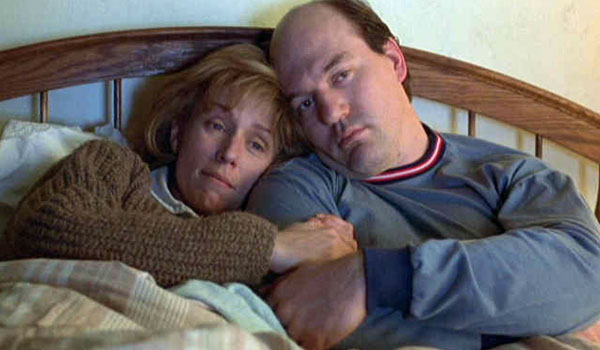
But that’s the thing about this film. It might be full of ruthless people and killers, but it ends with Marge and her husband, together in bed, spending time together. They have a future and it’s one of simple family values and hope. There may be mindless, terrible killing out in the world – senseless violence that goes nowhere and means nothing – but there is still the warmth of family relationships, the charm of simple home values. It’s a nihilistic film where life is cheap – but it leaves you with a warm and happy feeling.

It’s also of course marvellously made – if you had any doubt about the Coens’ mastery of cinema, watch this – it’s superbly edited and brilliantly paced. It’s a perfect length, short, sharp and achingly profound. It’s also marvellously shot by Roger Deakins. I hated Fargo when I first saw it. But re-watching it twice since then, it’s a marvel. A truly unique and deeply wonderful film.

Les Diaboliques (1955)


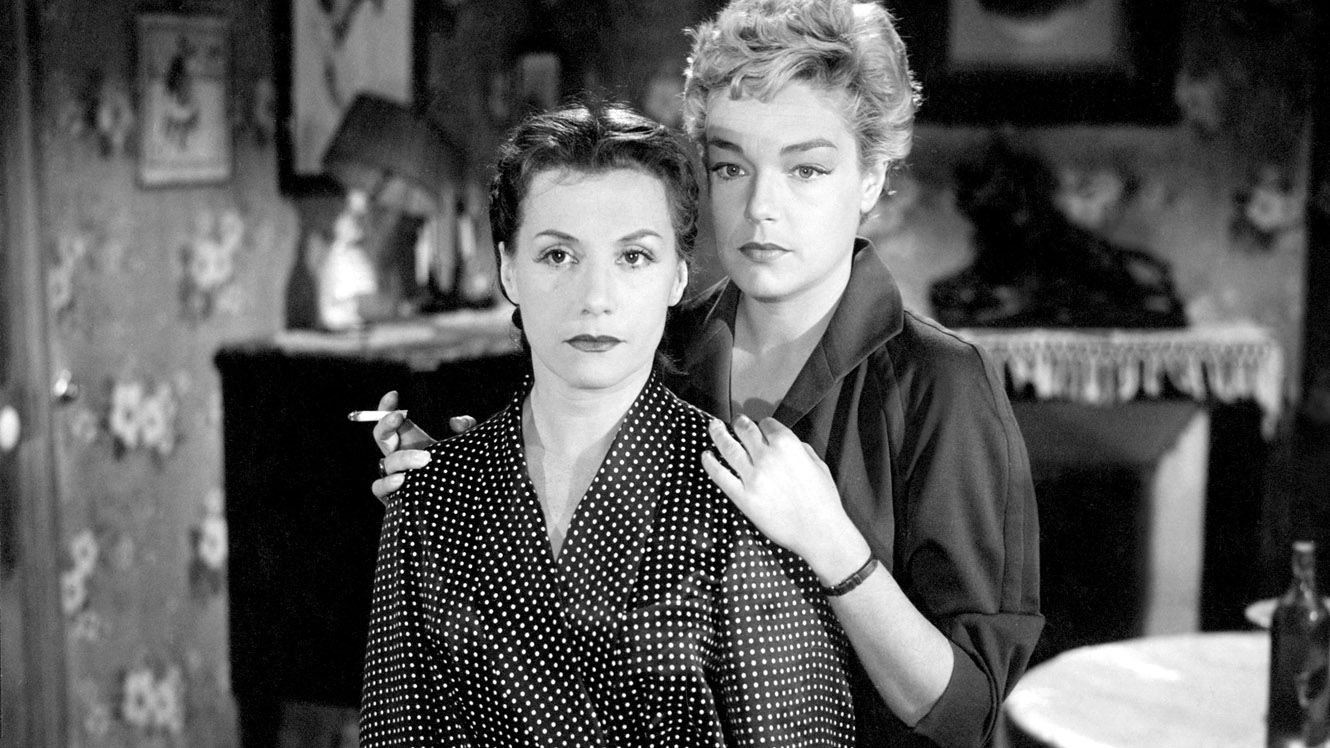
Véra Clouzot and Simeone Signoret plot murder in twisty thriller Les Diaboliques

Director: Henri-Georges Clouzot

Cast: Simeone Signoret (Nicole Horner), Véra Clouzot (Christina Delassalle), Paul Meurisse (Michel Delassalle), Charles Vanel (Alfred Fichet), Jean Brochard (Plantivaeu), Pierre Larquery (Drain), Michel Serrault (Raymond)

Clouzot is one of those fine directors, less prominent today in the list of the great artists of cinema. This might be because, unlike some of his contemporaries, many of his films were unashamed thrillers, Hitchcockian suspense tales, rather than the serious, artistic films we associate with French cinema. Les Diaboliques is the most popular of these films, a part mystery, part horror drama which slowly builds a confusingly terrifying picture of murder, danger and betrayal.

Christina (Véra Clouzot) is the wife of Paul (Michel Delassalle), a sadistic, bullying nightmare of a man. Together they run a boarding school, set up by her inheritance, but their marriage is a disaster. Paul is openly conducting an affair with fellow teacher Nicole (Simone Signoret). Nicole, however, is as disgusted and contemptuous of Paul as Christina – and she eventually persuades her that they should consider ridding themselves of Paul, with a temptingly simple scheme. However, things swiftly go against their plans…

Les Diaboliques is a compelling psychological thriller cum horror story, a creepy slow-burn of suggestion and paranoia that unfolds a bizarre whodunit mystery, which unnerves and constantly leaves you guessing. The story unfolds at a measured, inexorable pace. Clouzot’s camera is a quiet and carefully placed observer, taking in the events that occur in this hellishly cruel school with a calm directness, a cool minimalism that lets them speak for themselves.

And it’s a pretty hellish school. Paul is a brutal tyrant and bully, the teachers and students alternating between fear and loathing for him. He treats his fragile wife (struggling with a heart condition that could end her life at any moment) with a casual disregard and cruelty. Poor Christina is so put-upon and crushed, she seems wearily accepting of her husband’s constant affairs intermixed with cruelty. Even his mistress (an imperiously cold, harshly determined Simeone Signoret) can’t stand him. The whole school seems to have felt the effect of Paul’s personality – its run down, crushed, disheartened. The other teachers are either disinterested, faintly criminal or both. Is it any wonder wife and mistress want to murder him?

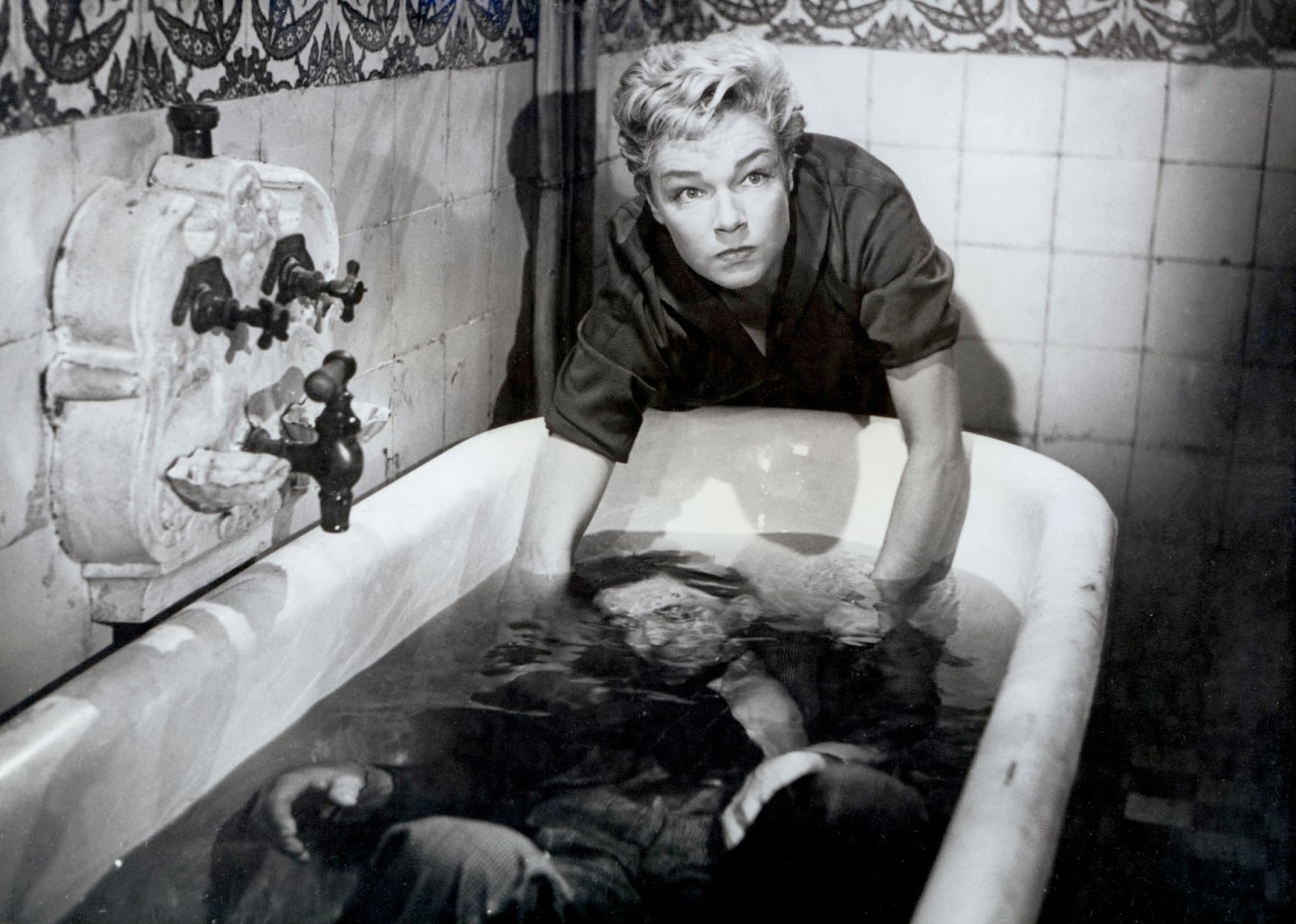
The murder, when it comes (and it’s the best part of half way through the movie) is almost blandly low-key. Clouzot even partly intercuts it with next-door neighbours complaining about the hot water being run late at night, the sound disturbing their radio quiz – unaware that it’s filling the bath so the two women can drown a drugged Paul. The flat where the crime occurs is as low-key and shabby as most of the rest of the film’s locations. 

Fascinatingly, what emerges increasingly are the lesbian undertones to the relationship between Nicole and Christina. Their intimacy is a major part of the build-up to the murder – their conspiratorial closeness seems as much as a careful seduction of Christina by Nicole as it is two like-minded souls coming together (this feeling, by the way, really comes into play as the film reach its conclusion). As events spiral out of control, Nicole becomes more and more of a protective, husbandly figure over the fragile Christina (an intriguing performance of vulnerability from Clouzot’s wife Véra), their physical and emotional closeness making them feel more and more like lovers dispatching a husband, rather than allies of convenience. It’s an intriguing subtext to the film, that I feel will make it of more and more interest as time goes on.

Events certainly do spiral out of control, as the body carefully placed in the swimming pool by the murderers (hoping to give the impression that Paul has accidentally drowned) is never discovered. Is it in the pool at all? Is Paul dead? Or has someone taken the body? A string of increasingly unnerving deliveries and visitations occurs – is Paul somehow speaking from the dead? Or are forces unknown manipulating the killers to disaster? Clouzot lets these events slowly build, avoiding the temptation to sprinkle clues or – more importantly – to give the audience more clues than the characters. We are only ever shown what Christine and Nicole see and only get the information they get.

This is where the film introduces its fourth primary character, retired detective Alfred Fichet. Fichet’s ambling, scruffy, seeming absent-mindedness makes him an eerily accurate forerunner of Colombo (at one point he all but says “just one more thing”). He rolls from place to place, clearly much sharper than he appears – it’s an impressively charismatic performance from Charles Vanel. He manages to work out what has happened (or perhaps what is happening) before the end – but moves too slowly in order to prevent disaster. But he changes the dynamic of the film in an intriguing way – shaking the film up 2/3rds of the way in, a tribute to the invention of its writing.

The final reveal of the plot is tinged with a horrifying terror – shot with an intense, watery fear that is guaranteed to haunt the memory. To say more is to reveal too much of an excellent act four twist. But it’s a sequence that you will find hard to shake from your mind – and one that you later realise the whole film was building towards. It’s what has led many people to call this film partly a horror story.

Clouzot’s film is a fine twisty thriller, even if at times it feels a little too in love with the mechanics of its tricks and plot mechanisms than it is with emotion and character. But it creates some intriguing and effective characters (including some small cameos) and it feels like a film that genuinely teaches us about the casual cruelty and selfishness that drives so many of our actions. There are many, many lies told in the film – even the children at the school casually lie – this is not a film that has a high opinion of the human race. 

Les Diaboliques has been called the greatest Hitchcock film Hitch never made. Hitch might well have brought a bit more flash and punch in its style (Clouzot is not the most inventive user of the camera here, with most shots very safe). But I’m not sure he could have improved its sense of creeping inevitability and grim claustrophobia. It still packs an inventive, clever and intriguing punch even today.

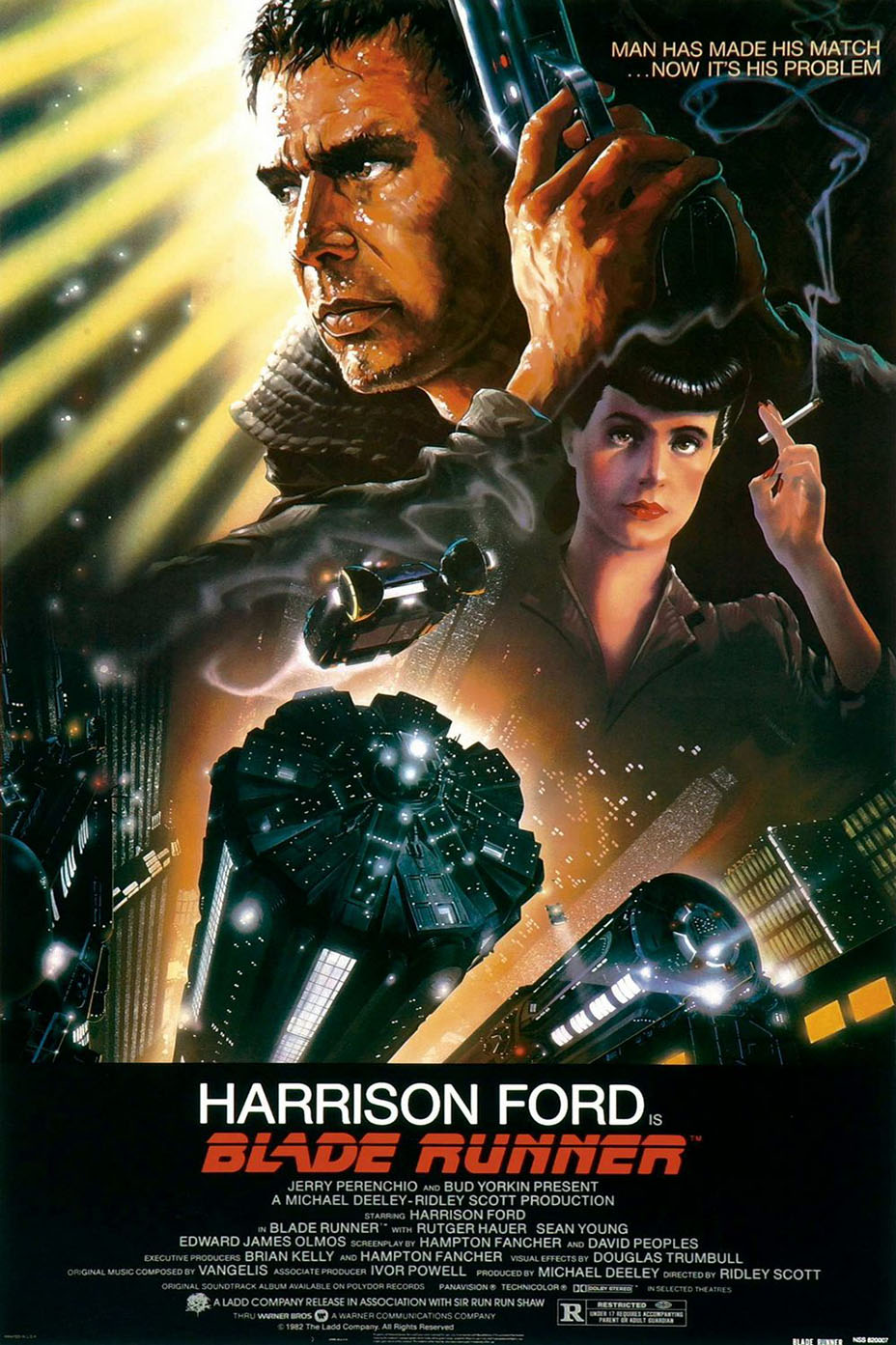
Blade Runner (1982)


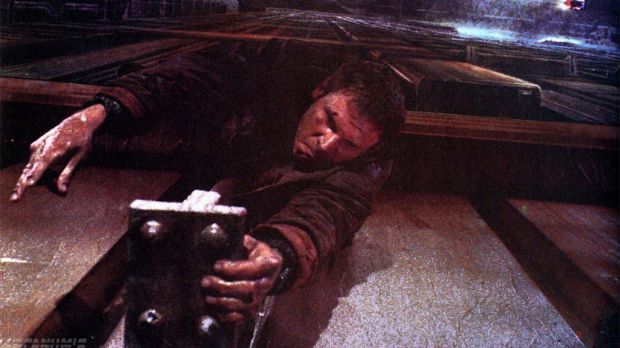
Harrison Ford hangs on for dear life in Blade Runner

Director: Ridley Scott

Cast: Harrison Ford (Rick Deckard), Rutger Hauer (Roy Batty), Sean Young (Rachael), Edward James Olmos (Gaff), M. Emmet Walsh (Harry Bryant), Daryl Hannah (Pris Stratton), William Sanderson (JF Sebastian), Brion James (Leon Kowalski), Joe Turkel (Dr Eldon Tyrell), Joanna Cassidy (Zhora Salome)

Everyone knows Blade Runner surely? And everyone has a viewpoint on its central mysteries. Why for a film largely ignored on release? Because as well as being tight and engaging, this is a rich thematic film, crammed with mystery and enigma. And there are few things more engaging than a film that succeeds in being as open to interpretation as possible.

In 2019 a dystopian, polluted Los Angeles is a launch pad for the wealthy to head out into the new colonies in the stars. Off-world, the unpleasant tasks are carried out by artificial humans known as replicants. Replicants are banned from returning to Earth – but a group of five led by soldier Roy Batty (Rutger Hauer) have come to Earth looking to extend their pre-programmed limited lifespans (no more than five years). On Earth, Rick Deckard (Harrison Ford) is reinstated as a Blade Runner, an agent whose job is to ‘retire’ (i.e. kill) replicants on Earth. Deckard is reluctant, having an increasing distaste for his work, but begins to hunt and eliminate the replicants.

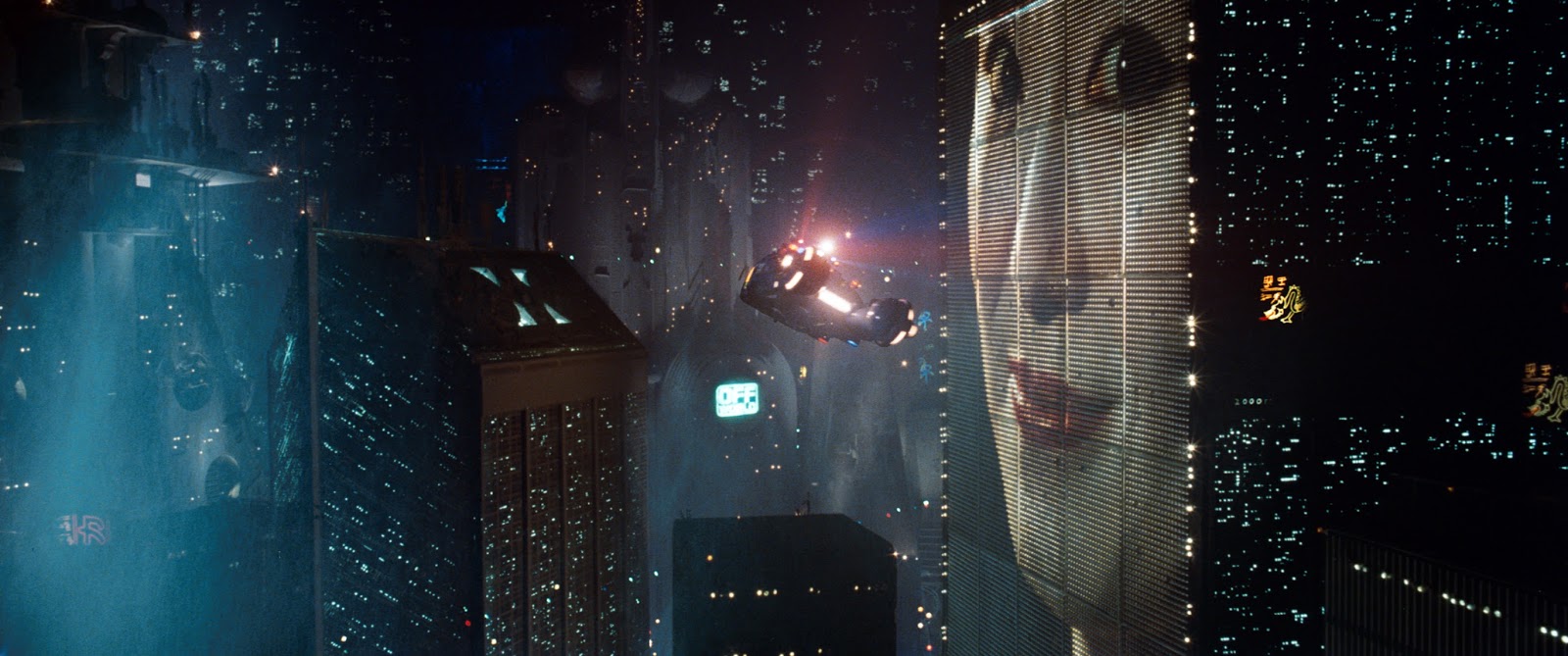
Blade Runner may be one of the most influential science fiction films ever made. Its look and style influenced virtually every other dystopian future you’ve seen in any other film since. Tall, run-down buildings. Overbearing corporate advertising. Flashing neon lights. Terrible weather. Everything dark all the time. Poverty and degeneracy on every corner. You’ve seen it in every dystopian future since. Visually, the film is a landmark, a testament to Ridley Scott’s graphic artistry.
But that wouldn’t be enough for Blade Runner to last the course. When released it was perhaps too elliptical and hard to categorise – equal parts dystopian thriller, noir detective story, sci-fi morality tale, dark romance – for audiences to really understand. Certainly the studio didn’t. After disastrous test screenings, it was re-cut. So began a fable of slice and dice that made Blade Runner perhaps second only to Brazil in the annals of re-versioned films.

The release included an overtly “happy ending” (bizarre images of our heroes driving into a blissful countryside, totally at odds with the rest of the film) and a disengaged voiceover from Harrison Ford that eradicated all the film’s subtlety. This was the only version for 10 years until a “Director’s cut” was released. This removed these elements, retooled scenes and introduced the famous “unicorn dream” sequence (of which more later). Fifteen years after that, Scott finally found the time to work on a “Final cut” which presented the film as Scott had intended it – with all its mysteries and questions intact. Has there been any other film with so many different “official” versions?

Anyway, was it worth the struggle? Certainly. While you could argue it is predominantly a triumph of style, Scott laces the film with a sense of mystery and profundity that makes it a rich and rewarding viewing experience. It’s a trim detective thriller that also questions the nature of humanity. It is a perfectly formed elliptical mystery, an archetypal cult film that engrosses the viewers to such an extent that 30 years later there is still a healthy debate about what the film means.

Humanity is =the key issue. The human characters are functional, cold, distant and unengaging. The hunt for the replicants (who are basically slaves) is brutally and unremorsefully executed. The replicants have been designed to learn and grow but cruelly had their lives capped to stop them taking advantage of this. Their world is polluted, tawdry, soulless and lost.

Meanwhile, the replicants exhibit far more (whisper it) humanity than the aloof human characters, ]despite the fact we are repeatedly reminded they cannot feel empathy. Clearly this is not completely true. And, the film argues, if an artificial human can display loyalty, fear, love, anger and pain, what actually is the difference between that and a “real” person. If a replicant can only be identified after dozens of questions in a test, can they really be that different from a human being?

Questions about this coalesce around Deckard. If the film has remained such a part of cultural discussions, it’s partly because of the fun of theorising about his true nature. Is he a replicant? Scott’s insertion of Deckard’s unicorn dream (implying the origami unicorn left by Gaff at the film’s end shows Gaff knows Deckard’s dream, meaning the dream is an implant in an artificial mind) very much suggests so. There is a case to be made either way, both of which work.

Deckard’s ruthless replicant hunt is deliberately juxtaposed with their own warm feelings. Deckard grows in humanity and reluctance as the film progresses – is this him becoming more human, or is it is humanity emerging? His coldness and reserved hostility contrast with the vibrancy of Batty, Pris and the replicants. In many ways, he fits in as the quintessential human in this world – a vague discomfort with what he is doing, but no real hesitation about continuing. Thematically, it makes more sense if Deckard is human – that he represents dehumanisation (and gradually realising it) while the replicants become more human.

However, clues are sprinkled throughout that Deckard is not what he appears. His distance from other characters. The treatment he receives from his co-workers. The photographs that fill his apartment (replicants enjoy photos as it gives them a sense of a past). His bond with Rachael. His relentlessness – and the fact that he is clearly considered expendable by the police. Then there is the rich irony: the best way of hunting down replicants is to create a hunter replicant. Either way, it’s a debate and conversation that sustains the film – and allows multiple interpretations of every scene.

It’s a debate that feeds into the main theme of the film: humanity, free will and our God complex. Batty, the dying replicant searching for new life, confronts his maker – a distant, arrogant man with no interest in his creation. And kills him. But Batty feels more human than any other character. He shows more affection, frustration, anger and grief than anyone else. His last words (the famous “tears in rain” speech) had such cultural impact because it has such poetic joy and depth to it. They are lines enthused with a desire to live, a romantic vitality. It’s the most poetic moment in the film and it comes from someone who isn’t “real”. What more sign do we need that the replicants are human? If we can create poetry in a machine, does it stop being a machine?

Empathy is the quality the replicants are judged on – but as we see replicants dispatched with little sense of regret, and then witness Batty and Leon’s grief for their fallen comrades, or Pris’ ease with man-child Sebastian, the lack of empathy from humans is all the more clear. Deckard is a fascinating character as he falls between two stools – either a human who has buried empathy, or a replicant discovering empathy. Strange and disjointed as the relationship between Deckard and Rachel is (and there is an uncomfortable moment where Deckard gets too physically forceful) it fits into this – are these two artificial people discovering the ability to bond? Or is it an emotionally stunted human finding himself drawn towards someone who feels more real than the other humans?

What makes the film work is that it doesn’t hammer home, these issues. It allows us to make our own minds up. It frames the action within a noirish detective thriller, laced with mood and awesome visuals. It’s sharply and sparingly written, with real intelligence. For all its discussions about humanity, it does feel at times a cold film – but it’s so rich in suggestion and implication that it doesn’t really matter. Yes you could argue the implication and playful suggestion imply more depth than actually exists, – but the film gets away with it, because it works so well.

Rutger Hauer gives easily the finest performance as Batty (he allegedly wrote the famous speech on the day). Batty is the most vibrant and dominant force in the film, who goes on the most engaging emotional arc. For me the dark secret of the film is Harrison Ford is slightly miscast– he’s aiming for moody, Bogartish disillusionment, but he comes across more disengaged (he’s strikingly better in Blade Runner 2049). I think Ford struggled with the character – it’s a role better suited to a John Hurt or James Caan, rather than Ford’s more conventional (if world-weary) magnetism – he’s not a natural fit for a bitter cynic. Olmos, Cassidy, Walsh, Sanderson and James give strong support.

Blade Runner is a visual triumph and a rich experience. Its story is compelling, but the real richness is the thematic layers under its skin. Scott created a film open to interpretation, and that’s what really grabbed the imagination. It marries mystery with curiosity and avoids pretension, becoming intriguing and engrossing. Scott has rarely made a film with such intense ideas and poignant confusion before. You could argue the final cut leans too far one way in the central mystery, but there is more than enough eerie richness under that – helped by Vangelis’ unsettlingly grand score – to keep people viewing and talking about it for another 30 years.

Hell or High Water (2016)


Chris Pine and Ben Foster carry out a series of personally motivated bank robberies in Hell or High Water

Director: David Mackenzie

Cast: Jeff Bridges (Marcus Hamilton), Chris Pine (Toby Howard), Ben Foster (Tanner Howard), Gil Birmingham (Alberto Parker), Marin Ireland (Debbie Howard), Katy Mixon (Elsie), Kevin Rakin (Billy Rayburn)

In West Texas, two brothers – divorced father Toby Howard (Chris Pine) and his ex-con brother Tanner (Ben Foster) – carry out a series of early morning raids on branches of the Texas Midlands Bank. Their robberies are investigated by Texas Ranger Marcus Hamilton (Jeff Bridges) working his last case before retirement, and his partner Alberto Parker (Gil Birmingham). The brothers however are motivated by more than just a desire for money – and these motivations drive them to ever more desperate and dangerous actions.

Hell or High Water is a fine piece of skilled professional film-making. The story is tightly scripted, and Mackenzie’s direction marries up a modern outlook with the style of a classic John Ford western. But, for me, it reaches for a thematic richness that isn’t quite there. It’s in the same territory as No Country for Old Men but it never achieves that film’s complexity. It creates characters we care about, and the story keeps us gripped, but it lacks that certain extra dimension that profoundly moves us. It tries to tell itself (and us) that it’s a profound exploration of themes around life and death, but it never really reaches these feelings – its grasp is less than its reach.

But it’s still a hugely enjoyable and impressive movie. Mackenzie’s direction is superb, detailed and smooth, and he is able to bring to life both the drama and the action. The story has an old school heist quality, with our gangsters sort of proto-Robin Hoods, naïve enough for us to invest in their actions, but dangerous enough for us to understand why events spin outside their control. Sheridan’s script is full of punchy lines and genuine emotional weight. The plot line gets a bit bogged down in the ins and outs of the reasons why our ‘heroes’ are doing what they are doing, but there is an emotional truth to it that really works.

The film also creates a wonderful sense of Texas as a land that seems to have only just moved on from the Wild West. Everyone in the film seems to be either packing heat or wearing a Stetson (or both). Genuine cowboys guide cattle across a road. The rangers have an old school gruffness about them, staking out banks from across the road in saloon bars that don’t seem to have moved on from the days of Wyatt Earp. At the slightest sign of danger, ordinary people reach for their guns and start shooting. Everything takes place in dusty countries, or rural feeling towns. I can barely remember seeing a computer or mobile phone. The whole film feels slightly out of step with the modern world.

It also draws some very fine performances from its actors. Chris Pine may never have been better than as reluctant bank robber Toby. Toby is a classic western outsider, a man who is working to protect his family and preserve their future – often by dangerous means – but accepts that this family life he is building has no place for him in it. Pine brings the part a finely judged sadness, a sense of a man without a place in the world. Ben Foster is equally good as his firecracker brother, a damaged anarchist at heart whose love of impulsive danger will have fatal consequences.

The heart of the movie though is Jeff Bridges’ ranger, a marvellous portrait of gruff-old school machismo. Bridges invests this role throughout with a humane decency, an anger at the distress and violence. His friendship with his partner Alberto (a touching Gil Birmingham) provides much of the affectionate heart of the movie, their good natured joshing and banter a continual source of humour. Bridges’ world-weary, out-of-time quality matches perfectly with the timeless mood of the movie. It’s a beautifully judged, simple, unshowy performance.

It’s a beautifully judged combination of crime and family thriller, while its ability to balance the old-school feeling and aesthetic of West Texas with a punchy modern-feeling tale of the greed of bankers, works extremely well. It’s got a dark Butch Cassidy feeling to it, and the film’s focus is tightly kept on the four leads, allowing the audiences understanding of them to grow and develop. By the conclusion of the film, your loyalties will be firmly divided between both the law and robbers, summed up best by a beautifully played elegiac final scene, laced with regret, sadness and tension.

But despite all this, it never quite breaks out of its pulpy roots to become something else in the way that No Country for Old Men manages to do. Wonderful character study as it is, it feels like a film that wants to make a broader, spiritual comment about the American way and modern masculinity. It doesn’t quite manage to do this. I don’t feel that this film really succeeds in suggesting it is about much more than what’s on the surface.

But that doesn’t matter so much, when the surface is so strong and as well directed, acted and written as this. If Hell or High Water is, at the end of the day, just a smart cops-and-robbers story, it’s certainly one that’s full of freshness and intelligence and grips your interest from start to finish. In a world where Hollywood churns out over-promoted average films, it stands out as something far more heartfelt, expertly crafted and hugely enjoyable.

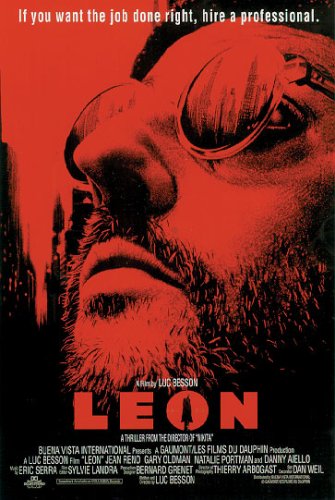
Leon (1994)


Jean Reno teaches Natalie Portman the ways of death in classic romantic thriller Leon

Director: Luc Besson

Cast: Jean Reno (Leon), Natalie Portman (Mathilda), Gary Oldman (Norman Stansfield), Danny Aiello (Tony), Michael Badalucco (Mathilda’s Father), Ellen Green (Mathilda’s Stepmother)

Luc Besson is an interesting film-maker, part visionary, part pulpy stylist. He has undeniable talent and visual flair, but far too often wastes this on trashy and juvenile comic book films, with a teenager’s preoccupations rather than a focus on story and character. One of the few exceptions to this is Leon, a film that marries his vibrancy with a heartfelt story.

Leon (Jean Reno) is a professional hitman working in New York, a dedicated professional with the stunted emotional maturity of a young teenager. One day the family of his next door neighbour is ruthlessly slaughtered by demented, drug-dealing cop Norman Stansfield (Gary Oldman), leaving only precocious 12-year Mathilda (Natalie Portman) alive. Despite his concerns about involving himself in the world, Leon takes Mathilda in – and these two outcasts develop a deep emotional bond, part mentor-pupil, part father-daughter, part celibately romantic.

In many ways, Leon should be an uncomfortable viewing experience. It’s a film that explores the growing emotional and sexual awakening of two characters, one of whom is a 12 year old girl, the other a hitman in his 40s. In fact it’s hard to imagine it even being made today by a Hollywood studio (it was controversial enough at the time). However, it works because the characters are so skilfully established. The 12 year old is precociously mature emotionally and sexually for her age, the man is so emotionally stunted and childlike in his outlook on the world he effectively feels like a 14 year old. The sexual interest is all from the girl, and is constantly batted gently aside (with a confused lack of understanding) by an adult who doesn’t understand the adult world and its feelings. As such, the film manages to side-step the creep factor and turn itself into a sort of touching fable.

It further works because our two leads give such terrific performances. Jean Reno perfectly understands Leon’s childish appreciation of the world, his touching faith in other people (his father-figure Tony is clearly swindling him), his simple delight in things (his wide-eyed appreciation of Singin’ in the Rain is very endearing). He’s naïve and has a child’s lack of understanding of violence and its impact. He’s focused so tightly on his narrow world, he’s clearly never developed any real emotional understanding of the wider world. Reno creates a character who is a seasoned killer who feels like a under developed teenager – emotionally and sexually he’s pretty close to being a 12 year old himself. His interest in Mathilda is rooted more in an elder brother/sister relationship. You get the feeling sex has never even really entered his mental equation. It’s a masterful performance, effortlessly cool but also stirringly real, sweet, vulnerable.

Equally brilliant is Natalie Portman’s enthralling performance as Mathilda. She creates a character who is sexually daring, seemingly far more adult and savvy than Leon in many ways, but is still recognisably a vulnerable child. She’s spiky and defiant, but this hides a deep rooted sensitivity and a desperation for love and affection. Her continued expression of sexual interest in Leon is as much rooted in a desire to feel part of a genuine caring family unit as it is some desire to initiate sexual contact. Her performance is perfectly nuanced and searingly real. Portman also feels both simultaneously adult and childish, so she never feels as out of place.

The film also works because it feels like a slightly unworldly drama. The rules of this world seem slightly fairy-tale like. It happens in a dreamy New York, with shady gangster chiefs, corrupt cops and hitmen moving serenely from location to location, with seemingly no intrusion of “real” people into this equation. The world seems oddly off-kilter, a self-contained fantasy where Leon is some sort of gentle ogre and Mathilda an Alice in Wonderland. While it’s set in a real place, Besson’s film feels like a sort of violent bedtime story. It becomes harder for sex in this context to seem threatening.

Instead, despite the killing and slaughter, this is a sweet and even slightly sentimental love story, about two souls who have an inherent understanding of each other. It’s a deep bond that transcends their ages and social conventions. Besson really understands this, and it’s what motivates and powers the film. They switch roles between child and adult smoothly: So one moment Leon is almost fatherly, teaching the basics of sniper work to Mathilda, the next she teaches him to read. There are undertones of sexuality, but the feeling is that neither of these characters really understands the complexities and realities of sex, because one is too young and the other is too emotionally immature.

Besson’s film making around this is sublime. The film is stylish beyond belief, the camera and editing fluid and dynamic. Action scenes hum with tension and excitement. The violent confrontations (of which there are many) are brilliantly done. Besson draws extraordinary, heartfelt performances from the two leads and creates a wonderfully moving fantasy-tinged world. His invention and pulp style brings a unique feel to what is a heartfelt, rather tender story. It’s a perfect marriage of style and content, where both complement each other. The story feels heartfelt, the execution gives it a swaggering extra dimension.

The tender reality of Reno’s and Portman’s performances – and the marvellous gentleness which Besson films this with – allows other parts of the film to go fully over-the-top. This is not least the case with Gary Oldman’s ramped-up-to-eleven Stansfield, a Grade A nutter. Oldman leaves nothing in the dressing room here, completely letting rip. In a way a performance of such utterly demented excessiveness should be absurd. But with the other performances feeling so genuine, and Besson’s fairy-tale styling, means Oldman feels a perfect part of this world, the dark monstrous heart of a corrupted land. In any other context it wouldn’t work, but here it really does.

Leon is a very tender, exciting and emotionally moving film – a great example of stylish film making married to a genuinely moving storyline between two people who feel like realistic, three dimensional characters. Both the style and the heart of the story complement each other perfectly. It’s a terrific piece of film making, with three performances at the heart each on their own way a stand-out. It must surely be Luc Besson’s finest ever film – and a height he’s very rarely ever reached again.