Tag: Thrillers

The Parallax View (1975)


The assassination game is grimly played out in Pakula’s groundbreaking conspiracy thriller.

Director: Alan J Pakula

Cast: Warren Beatty (Joseph Frady), Paula Prentiss (Lee Carter), Hume Cronyn (Bill Rintels), William Daniels (Austin Tucker), Walter McGinn (Jack Younger), Kelly Thorsden (Sheriff L.D. Wicker), Earl Hindman (Deputy Red), William Joyce (Senator Charles Carroll), Bill McKinney (Parallax Assassin), Jim Davis (Senator George Hammond), Kenneth Mars (Will Turner)
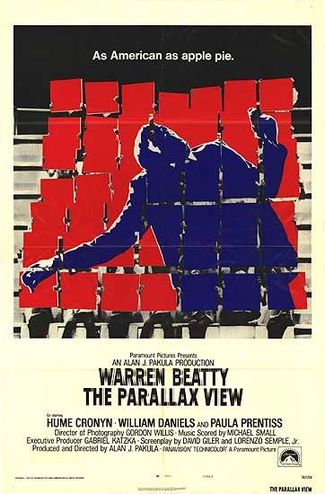
The 1970s. The decade that made the conspiracy theory popularly accepted. We all love them now – but the 1970s, with its growing disillusionment, was when it first became fashionable to openly question the reality placed before us. The Parallax View is perhaps the greatest conspiracy film ever made, an “experience” movie that captures the mood of the time so well because nothing in it is real, but everything about it feels like it could be real.

The film opens with the assassination of a reforming senator at the Space Needle in Seattle. A senatorial enquiry reports the act was the work of a lone gunman. Three years later, reporter Joe Frady is tipped off that many of the witnesses have been killed in “accidents”. Looking for a big scoop, Frady launches a one-man investigation. This suggests the assassin was someone else entirely, recruited by Parallax, a corporation in the business of identifying and training possible assassins. Or is it? Too late, Frady realises what he has got himself into.

The Parallax Viewis an unsettling, haunting piece of film-making with an impossibly glum view of the world as one where the goodies don’t have a hope in hell. It works despite (because of?) its lack of conventionality: it’s an investigative film where the investigator finds almost nothing out. It’s a tense thriller with no real plot. It tricks us throughout into thinking Frady is completely in control, when he is just a rat in a maze. It’s a film about plot rather than character, but it actually has very little plot as such in it. It’s more like an experience, an immersion in the shady underbelly of America. 

Pakula’s direction is masterfully controlled. Every shot is carefully organised. Every scene builds the complete picture. There is no fat on the film at all: everything we see is relevant. Sequences crackle with tension – most famously, a sequence where Frady finds himself on a plane he knows is carrying a bomb: wordlessly he scrambles desperately for a method to communicate this to the staff. The final sequence at a rehearsal for a senatorial rally is also nearly wordless, but is shot and edited with a relentless inevitability in it, Frady a powerless onlooker.

Warren Beatty gives an intriguing performance as Frady. He isn’t afraid to make Frady slightly unsympathetic: an arrogant loner, nowhere near as clever as he thinks he is. His investigation is, when you look at, hilariously ill-prepared and blindly headstrong. He goes up against the system with little more than a complete faith in his pluck and resourcefulness. It’s not enough. Beatty has a cocky hipsterish quality, which only occasionally cracks when he realises he is in over his head. His attitude is summed up perfectly when he is confronted by a drunk cop in a bar: the cop tells him he’s got a hair like a girl; yup, replies Frady with casual defiance and contempt, that’s right I’m a girl. This is more infuriating than any angry retort would be – cue a barfight. It’s a nice, unflashy performance, full of subtle observances, that allows the plot to be the central character.

Gordon Willis was one of the leading photographers of the 1970s and created the visual language of the era’s best films (he also shot The Godfather and All the President’s Men). His photography became synonymous with an impression of the era as one of muddy colours and oppressive architecture, with well chosen streaks of colour throwing these into perspective. His framing throughout the film is exquisite. Events are framed to throw the principal characters into the corners of the frames. Unusual angles show buildings and architecture as oppressive monoliths. Long shots are combined with deep focus to give striking images – my favourite is a long shot from the roof of an air hanger, as a dead man’s golf buggy continues its unguided path, crashing quietly and slowly through tables and chairs. An interesting breakdown of the visual language of the film can be found here.

Sound is also brilliantly used. The score is practically the dictionary definition of spare. Silence is wonderfully used. Background noise dominates several scenes. Life and death events happen silently, lost among the sound of the world around them – whether that be waterfalls, parades or political speeches played over loudspeakers. The effect throughout unnerves and disorientates. It’s all part of the film’s device: the plot is actually extremely simple and the film is a punchy hour and a half. The key thing is the unsettling experience of watching the film, not revelations about our world like in, say, JFK. There is no mystery as such to unravel. Instead we are thrown into this world with no helping hand to guide us through it.

I have to mention the extraordinary assassin recruitment film Frady is brought in to watch by Parallax. It’s a fascinating triumph of editing, a deeply disturbing arrangement of images that slowly switch from positive to negative, subliminally building a message of the need for the individual to take decisive action. I won’t go into all this now – a well-written breakdown of its meaning is here.

And Frady is being tested. His arrogance, his go-it-alone independence, his lack of real relationships or friendships make him (unknowingly) a perfect Parallax subject. Unnervingly we are given no idea of Parallax’s aims. We never learn anything about them and why they do what they do. Are they in it for the personal gain? Are they hired guns? Is their whole programme not about recruiting assassins but recruiting plausible patsies to cover for the real hitmen (that certainly seems to be the impression from the film’s bleak ending)? It’s all left up to the viewer to decide from the scant evidence supplied.

What is clear is that The Parallax View is a deeply troubling film, which presents a haunting and disturbing image of a country where justice is dead and power talks. The film is bookended by a senate commission in session (seemingly floating towards the camera in a brilliant camera effect), giving almost identical reports on assassinations. It’s a chilling film, where even the heroes are not particularly sympathetic or heroic and where hope and change are distant dreams. It’s perhaps the perfect 1970s film.
Sicario (2015)


Emily Blunt goes to war with the Cartels, not realising she’s just a pawn.

Director: Denis Villeneuve

Cast: Emily Blunt (Kate Macer), Benicio del Toro (Alejandro Gillick), Josh Brolin (Matt Graver), Daniel Kaluuya (Reggie Wayne), Maximiliano Hernández (Silvio), Victor Garber (Dave Jennings), Jon Bernthal (Ted), Jeffrey Donovan (Steve Forsing), Raoul Trujillo (Rafael), Julio Cedillo (Fausto Alarcón)

The War on Drugs. Smack a military title on it and it helps people think that there is some sort of system to it, that it carries some sort of rules of engagement. Whereas the truth is that it is a nebulous non-conflict where the sides are completely unclear and the collaborators are legion.

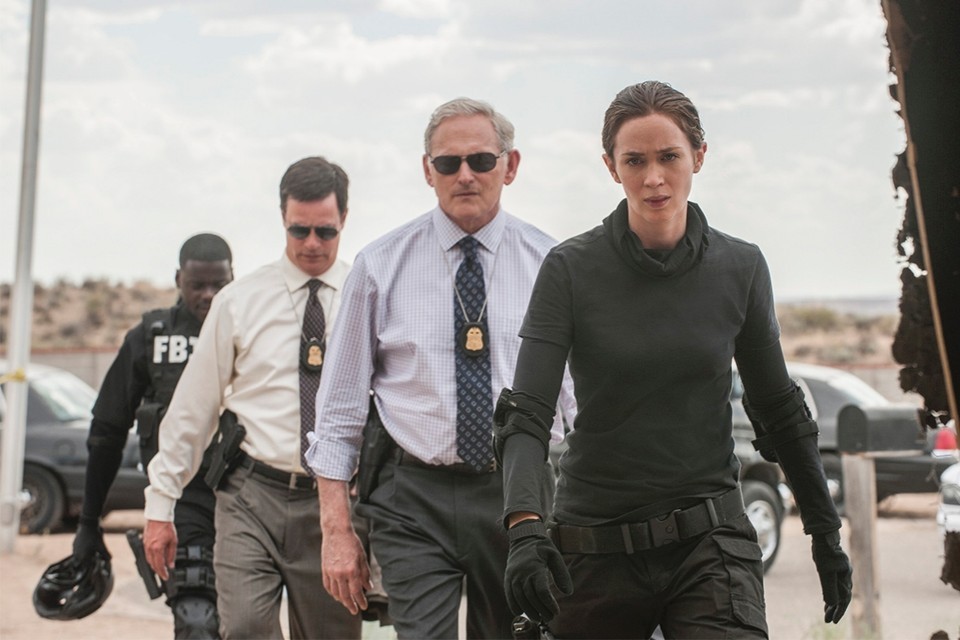
Sicario follows a shady covert operation, run by a combination of the FBI, the CIA, Columbian and Mexican law enforcement and, well, other interested parties. Kate Macer (Emily Blunt) is recruited to the task force because someone with her experience is needed, and finds herself working for maverick, almost pathologically unconcerned, CIA man Matt Graver (Josh Brolin). Graver, in turn, is working closely with a South American freelance operative (Del Toro) whose background and goals remain a mystery to Kate. Far from a clear targeted operation, Kate slowly realises the operation is effectively an off-the-books black op, which she has almost no control or influence over.

Villeneuve has directed here an accomplished, if rather cold, thriller. It denies its audience the release of action, the reassurance of justice or the satisfaction of integrity being rewarded. Instead the film takes place in a hazy never-world, never fully explained to either the viewer or Kate (our surrogate), where it gradually becomes almost impossible to tell who is working for whom and for what reasons – and there is a feeling that those in the film don’t know either.

The whole film has a sense of Alice in Wonderland about it (at the end of the film our heroine literally goes down a tunnel into a strange new land). Emily Blunt’s Kate seems at first to be on the ball, but events throughout the film demonstrate time and again that she is hopelessly out of her depth and little more than a fig leaf to enable her new bosses to bend laws to breaking point. Instead the world she finds herself in is dark, unsettling, confusing and lacks any sense of clear moral “sides”.

In fact, that is one of the most interesting things about this movie. It presents a female lead who is constantly manipulated and defeated throughout the film. Kate is in fact totally ineffective throughout and serves no real narrative purpose to the events of the film other than allowing those events to take place. At the same time, she’s strong-willed, she’s determined and she’s fiercely principled, as well as being an engaging character (helped immensely by Emily Blunt’s empathetic and intelligent performance).

This works so well because Kate represents what we would normally expect in a film – we keep waiting for that moment where she makes a successful stand, or blows the scandal open, or brings someone to justice – this never happens. Instead the film is a clear indication of the powerlessness of the liberal and the just in a world of violence, aggression and corruption – that people like Kate will always be steamrollered by people who are willing to smilingly do anything to achieve their goals and don’t play by any semblance of rules that we would recognise. In a more traditional film, she would end the film arresting some (or all) of the other characters with a defiant one-liner. Instead, she never lays a glove on anyone.

The flip side of her naïve optimism here is Benecio Del Toro’s nihilistic, dead-behind-the-eyes mysterious freelance operative. Del Toro is magnetic here, his character a dark mirror image of the role he played in Traffic, as if that character witnessed every kid he watched playing baseball in that film gunned down before him. He’s like a dark growly end-justifying-the-means shark, who conveys just enough of a flicker of paternal interest in Kate (does he see her as a reminder of what he used to be like?) to show there is someone still human in there. He prowls the edges of scenes before seizing the movie by the scruff of the neck in the final quarter with horrifying brutality.

Del Toro’s rumpled smoothness is a perfect match for the ink jet blacks and bright desert shine of this wonderfully photographed film. Roger Deakin’s cinematography is beautiful to look at and also rich with variation and imagination – from bleached out, hazy mornings to red dawns, from subterranean tunnels to neon lit nightclubs, Deakins presents images in striking new ways. The use of sound is also brilliant in the film – lingering, unsettling silences throughout slowly give way to Jóhann Jóhannsson’s beautiful spare score. There are fine supporting performances from Maximiliano Hernández as a doomed cop, sleepwalking through a corrupt life, Daniel Kaluuya, who is very good as an even more idealistic FBI agent who thinks he understands the world better than he does, as well as from Josh Brolin and Victor Garber.

Sicario offers no comfortable answers. In fact, it offers almost no answers at all. The world it shows us is one where there is no conventional right or wrong, only attempts to control the chaos. Our expectations as a viewer are so persistently subverted that it almost demands to be seen twice to truly understand what sort of story it is actually trying to tell. This helps to make it a cold and distancing film – but it lives in a cold, distant world where sometimes you reach the final frame and only then begin to understand who the baddies might have been and how you’ve only helped funnel the badness towards a controlled point rather than slow down or stop it.

The Odessa File (1974)


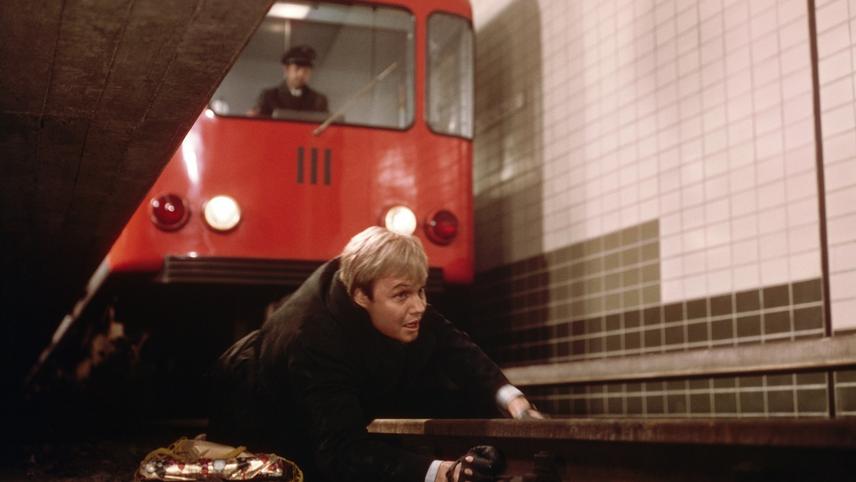
Jon Voight narrowly misses a train in The Odessa File

Director: Ronald Neame

Cast: Jon Voight (Peter Miller), Maximilian Schell (Eduard Roschmann), Maria Schell (Frau Miller), Mary Tamm (Sigi), Noel Willman (Franz Bayer), Derek Jacobi (Klaus Wenzer), Shmuel Rodensky (Simon Wiesenthal), Peter Jeffrey (David Porath), Klaus Löwitsch (Gustav Mackensen), Kurt Meisel (Alfred Oster), Günter Meisner (General Greifer)

One of the best thriller writers in the game is Frederick Forsyth. He never gets quite the credit he deserves, probably because he’s a very safe writer and he has certain character formulas which he reuses over again. But what his plots lack in depth, they more than make up for in the gripping intensity and extreme readability. A Forsyth plot barrels along and doesn’t let you rest for a minute.

The Odessa File is an adaptation of Forsyth’s journalistic style thriller, exploring the shady world of former Nazi war criminals, now hiding in new identities in positions of influence throughout the German republic. Set in 1963, Peter Miller (Jon Voight) is an idealistic young investigative journalist, who finds the diary of a recently deceased Holocaust survivor. Horrified by the stories of the Holocaust, Miller decides to hunt down the “Butcher of Riga” Eduard Roschmann (Maximilian Schell playing a real war criminal), a renegade Nazi recently spotted alive by the writer shortly before his death.

The Odessa File is an episodic film that carefully follows Miller’s investigation, at first alone, later as an undercover operative for Israeli intelligence. Each scene takes us step-by-step closer towards the final target (Roschmann), which means each scene introduces new characters and locations. The one consistent note we have is Voight, who is pretty good as the driven, idealistic (and arrogant) Miller, and he holds the film together rather well. Each of the tense set-ups works well as a self-contained little story, although it does mean that the overall arc of the film is less engaging than it should be. However, you are invested in wanting the investigation to succeed.

This is partly because the black and white flashbacks to the Holocaust are surprisingly effective from a film from the 1970s. Atrocities are implied and sensitively shown, in an unsensational way, but remain very affecting. Schell’s bombastic acting style also really works as a fanatical and sadistic Nazi (it also works very well in the film’s final confrontation). Combine this with the well-written, unembellished readings from the diary (good work from Cyril Shaps as the voiceover artist) and the film very sensitively establishes its anti-Nazi credentials early on.

Where it doesn’t really work is its whole Odessa plot. The shadowy group of Nazis proves laughably easy to penetrate. The network is then blown wide open seemingly within hours. There is a sub plot about the Nazis supplying missiles to Nasser to fire at Israel which is totally unclear (it has something to do with the factory Roschmann is now running). In fact, the whole organisation’s structure is unclear and the film lacks a real face for its antagonists. The film barrels along fast enough that you don’t notice it too much when viewing it, but reflecting on it afterwards everything makes slightly less sense, and the contrivances become far more glaring.

Other than Miller (whose motives the film is deliberately obscure about) not many of the other characters get a look in. In particular the female characters are little more than ciphers or “stop reading about the Holocaust and come to bed” girlfriends. The Nazis are all pretty interchangeable, although Noel Willman brings a nice sense of menace to a Nazi fixer. The strange intermixing of real and imaginary characters (including Simon Wiesenthal) is also a little odd.

But the story is exciting enough, and Voight’s earnest performance makes you care about Miller enough, that you’ll enjoy watching it. It’s not a classic like The Day of the Jackal (a perfect cinematic expression of Forsyth’s forward motion as a writer) but it’s going to keep you entertained for a couple of hours.

SPOILERS AHEAD FROM HERE!
I also think the final revelation of Miller’s motives is bungled and undermines the anti-Nazi message. It turns out Miller is primarily motivated by concluding Rorschmann murdered his father during the war. This immediately trivialises the horrors of the Holocaust – yeah, it was bad, but you can’t expect someone to go to all this trouble to hunt a bad man for that alone can you? It’s a problem in the book as well, but at least there, more weight is given to Miller’s anger at the war. Here he drops a few lines about the evils of Nazism, but it never quite snaps together.

This is a good, decent, sharp thriller – but it has its chances to be more than that, and it misses them.


Mr. Brooks (2007)

Kevin Costner goes for a ride, accompanied only by his imaginary friend. We’ve all done it. Right?

Director: Bruce A. Evans
Cast: Kevin Costner (Earl Brooks), William Hurt (Marshall), Demi Moore (Detective Atwood), Dane Cook (“Mr. Smith”), Marg Helgenberger (Emma Brooks), Danielle Panabaker (Jane Brooks), Ruben Santiago-Hudson (Detective Hawkins)

Apparently when Kevin Costner read the script he thought it was the best script he had read in years. This probably says more about Kevin’s choices since the early 1990s than it does about the script itself but this is still a decent enough thriller with an interesting twist on the psychopath killer story.

Costner’s Mr Brooks is a successful business man and loving family man who also happens by night to be a serial killer. The twist being throughout that he is accompanied in his crimes by his imaginary friend, played with creepy relish by William Hurt. Brooks is consumed by guilt from his “addiction”, visiting AA and constantly claiming he is ready to quit. The film opens with an unexpected curtain being left open during a carefully prepared murder, leaving Brooks open to blackmail from an eye witness with a taste for trying this murdering lark.

The film is performed with such guilty and gleeful relish by Costner and Hurt that it’s incredibly easy to be swept up by its momentum and to forget that out hero is a serial murderer. The film is very careful to give centre stage to the invention and intelligence of its anti-hero which, combined with Costner’s fundamental likeability as a performer, are very attractive traits for any viewer. Only at a few points is the darkness of Brooks explored, most prominently from Costner’s near orgasmic sigh and shoulder roll after committing the first murder of the film. Otherwise the viewer is as seduced by this dark world as Brooks himself has been.

A sub plot about Brooks daughter possibly inheriting her murderous inclinations is much less interesting but does allow Costner to offer an amusing twist on the straight-as-an-arrow American heroes he made his career playing. But it never engages as much as the strange will-he-won’t-he dance Brooks has with his blackmailer  (a fantastic performance of scuzzy bravado hiding cowardice from Dane Cook). Demi Moore also gives a surprisingly effective performance as a hard as nails career copper chasing down the murders.

But it’s the performances of Hurt and Costner that really lift this film up into the higher reaches of the second tier of psychological thriller, along with the neat concept of the childhood imaginary friend gone completely over to the bad. Hurt in particular is terrific, in a performance that is part raging id monster part caring big brother. A dark guilty pleasure I’m not surprised it is slowly gaining cult status.