Tag: Warren Beatty

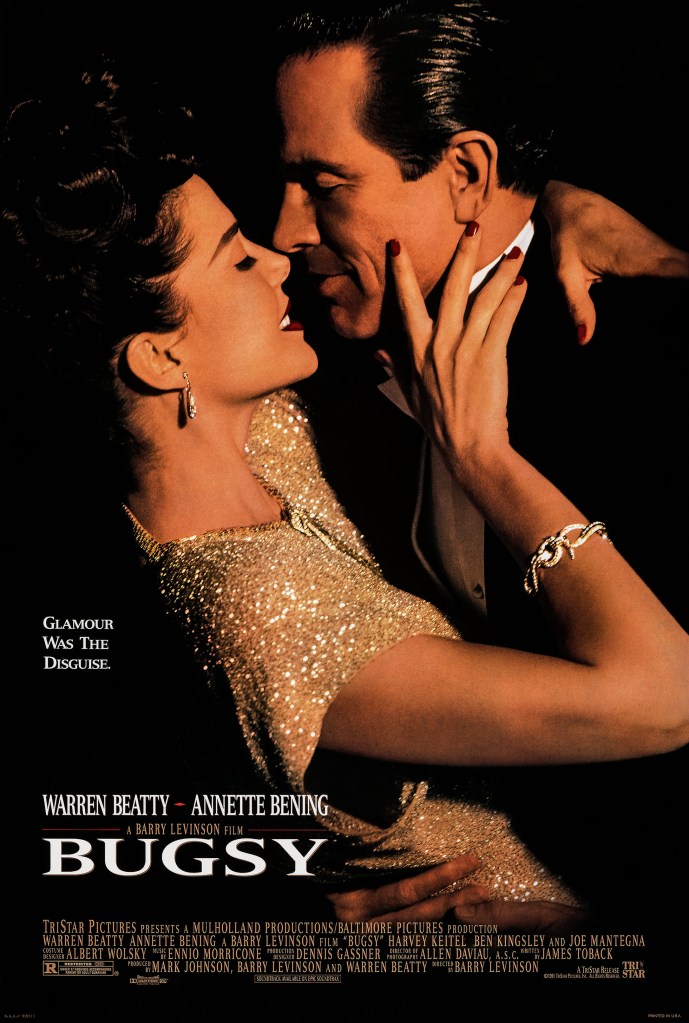
Bugsy (1991)

Bugsy (1991)

Old school glamour is the order-of-the-day in this luscious but slightly empty gangster film

Director: Barry Levinson

Cast: Warren Beatty (Ben “Bugsy” Siegel), Annette Bening (Virginia Hill), Harvey Keitel (Mickey Cohen), Ben Kingsley (Meyer Lansky), Elliot Gould (Harry Greenberg), Joe Mantegna (George Raft), Bebe Neuwirth (Countess Dorothy de Frasso), Bill Graham (Charlie Luciano), Lewis van Bergen (Joe Adonis), Wendy Phillip (Esta Siegel), Richard C Sarafian (Jack Dragna)

Las Vegas: the city of dreams for gangsters. As Ben (“Bugsy” – but don’t call him that) Siegel (Warren Beatty) tells a room full of gangsters when he’s pitching for their investment, like a hyper-violent Dragon’s Den: build the largest city in a state, you own the state, own the state and you own a slice of America. Imagine how the money can come rolling in then. It’s fair to say the mobsters aren’t so certain – and maybe Las Vegas would never have been a huge success if Bugsy had run it rather than being whacked – but God knows their investment paid out millions of times over.

The dream of building Las Vegas is at the centre of Beatty’s passion project (in this one he just played the lead and produced, dropping a couple of hyphens compared to Reds), a Golden-hued, romantic biopic of notorious gangster (and killer) “Bugsy” Siegel. Siegel sees what no-one else could see: how a city in a law-lax desert could become a mecca for gamblers, and crime could reap the profits. But the project goes millions over budget – not helped by girlfriend Virginia Hill (Annette Bening) creaming millions off the top. Trouble is Bugsy’s investors aren’t the sort of guys who shrug their shoulders at failed investments.

You can see what attracted Beatty to Bugsy. For all it’s about gangsters, I couldn’t escape the feeling Beatty sees Bugsy as something akin to a fast-talking movie producer. Bugsy spins elaborate stories for his backers of how their investment will pay-off, builds fantasies on a huge scale, won’t accept any compromise (a load-bearing wall should be knocked down if it’s blocking the view of the pool!), pouring his heart-and-soul into every detail of his vision. It doesn’t feel a world away from the same control-freak energy Beatty poured into Reds (Bugsy is basically financier, manager, backseat architect and marketing man for his dream).

Bugsy feeds a lot off the fascinating two-way admiration street between Hollywood and gangsters. Beatty’s Bugsy is enamoured with Hollywood, even shooting a (terrible) test reel to try and break into the movies. He’s thrilled to be hanging around with old pal George Raft (a muted Joe Mantegna), who seems equally jazzed to hook up with notorious criminals. Hollywood laps up the notoriety of criminals, both on-screen and off. For his Flamingo launch, Bugsy wants to stuff the place with stars (to his fury, bad weather prevents them arriving), and schmoozing celebrities is at least part of what is going to make the City of Sin such a fun place.

Levinson’s film is shot with a romantic lusciousness, a sepia-tinged nostalgia that wants you to soak up the glory of the costumes, sets and the cool of being a quick-witted gangster who gets all the best girls. It’s very different from the real Bugsy, a brutal killer with a huge capacity for violence. The film tries its best to match this, but can’t escape the fact that Beatty is way more suave and charming than Bugsy deserves. For all we’re introduced to him gunning down a cheating underling – and we see him brutally beat others for bad-mouthing Virginia or using his loathed nickname – he never feels like a brutal criminal, but more like a flawed, romantic dreamer with a temper.

It’s hard not to compare Bugsy with the best works of Scorsese from the same era. Goodfellas knew that, under the surface glamour, this was a dog-eat-dog world and that there was no romance at the end of a bullet. Casino (which followed a few years later, a sort of semi-sequel) sees the true vicious sadism and greed at the heart of this city-building operation, while Bugsy sees it more as a lavish dream and a tribute to a sort of visionary integrity. Even seeing Bugsy gunned down in his own home by a sniper, doesn’t carry  with it the sort of inevitability it needs. As Scorsese understands, this way of life is like playing Russian roulette forever – eventually the chamber is going to be full. For all Bugsy literally plays roulette, it never feels like he’s playing with fire, more that he’s reaching slightly beyond his grasp.

Perhaps Levinson doesn’t quite have the vision to make the film come to life or stamp a personality on it. It feels like a film that has been carefully produced and stage-managed to the screen – and Levinson deserves credit for marshalling such an array of commanding personalities together to create such a lavish picture. But it’s muddled in its message. Is Bugsy actually worth making a film about? What are we supposed to understand from this: was he a killer out of his depth, or an unlucky dreamer? Bugsy wants him to be both, but fails to make a compelling argument for either.

Beatty is impressive in his charisma though, for all he never quite seems to have the edgy capacity for instant violence the part needs. He does capture Bugsy’s desire for self-improvement, from the Hollywood dreams to the eternal elocution lessons he repeats over-and-over like a mantra. His desire for glory even manifests as a bizarre fantasy that he is destined to assassinate Mussolini. It also perhaps explains why he’s drawn to Virginia, a would-be starlet. Annette Bening gives arguably the most impressive performance (but, inexplicably, was practically the only major figure involved in the film not to pick up an Oscar nomination) as a woman who is an unreadable mix of devoted lover and selfish opportunist, leaving us guessing as to her real intentions and feelings.

There is good support from Keitel (hardly stretching himself as Bugsy’s number two Mickey Cohen), Kingsley (an ice-cool but loyal Meyer Lansky, unable to stop Bugsy destroying himself) and, above all, Elliott Gould as Bugsy’s hopeless, pathetic best friend. Bugsy though, for all it’s entertaining, feels like a mispackaged biopic that wants to turn its subject into a romantic figure, unlucky enough to be rubbed out before he could be proved spectacularly right. This soft-soap vision doesn’t ring true and misses the opportunity the film had to present a more complex and nuanced view of the era and its crimes.

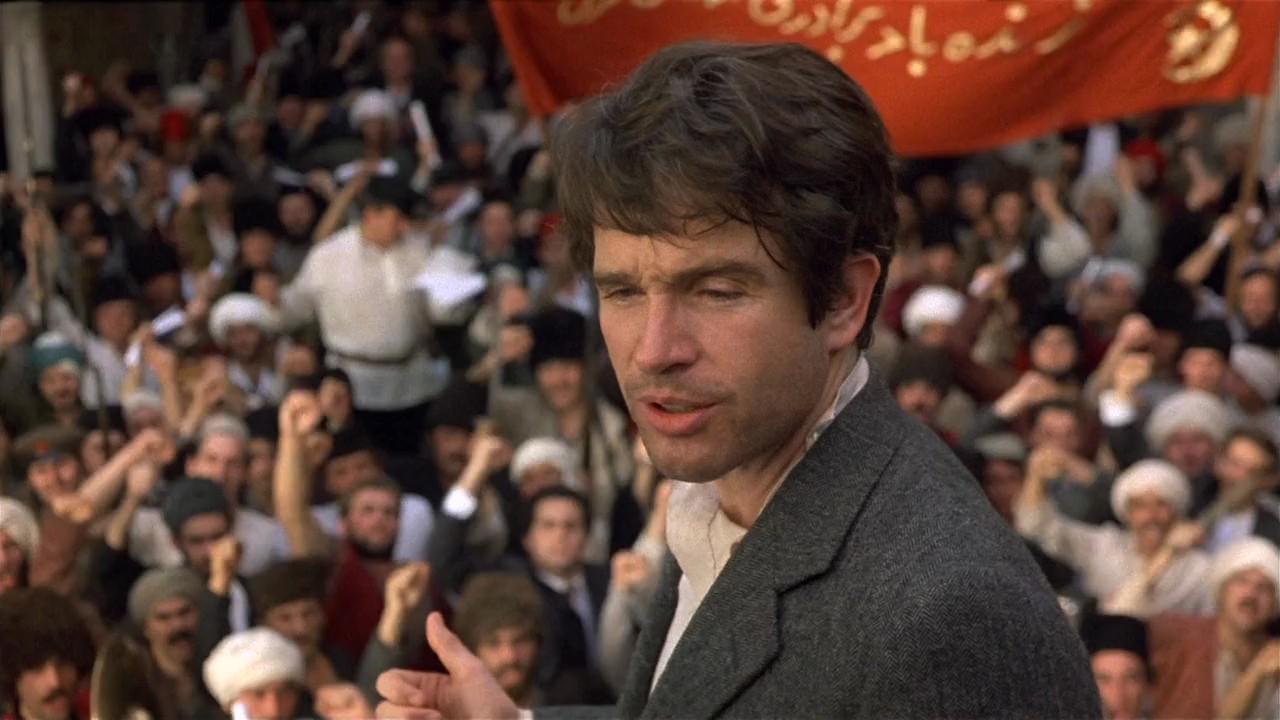
Reds (1981)

Reds Header
Warren Beatty brings his passion to life in Ken Loachesque Reds

Director: Warren Beatty

Cast: Warren Beatty (John Reed), Diane Keaton (Louise Bryant), Edward Herrmann (Max Eastman), Jerzy Kosinski (Grigory Zinoviev), Jack Nicholson (Eugene O’Neill), Paul Sorvino (Louis C Farina), Maureen Stapleton (Emma Goldman), Nicolas Coster (Paul Trullinger), William Daniels (Julius Gerber), Jan Triska (Karl Rodek), Gene Hackman (Pete van Wherry)

Reds is the film only Warren Beatty could have made. Imagine the pitch meeting: I want to make a three hour long biopic about American communists, with the hero being the only American buried in the Kremlin, and I need $30million dollars to do it. Only Beatty had the force of personality to get major companies to invest greenbacks into a film celebrating a man who would have happily cheered their demise. Reds is a tribute above all to the dedication of its multi-titled director and his refusal to compromise. It’s a big piece of serious minded, educational but also dramatic and romantic storytelling. Not many people could have pulled it off.

In 1915 Louise Bryant (Diane Keaton), a young would-be journalist and suffragette, meets and falls in love with left-wing journalist John Reed (Warren Beatty). The two of them tun off together to Reed’s bohemian circle in Greenwich Village, New York then to Massachusetts, becoming the centre of a community of anarchists, socialists and artists. Their mutual love is damaged by affairs – in particular Bryant’s heartfelt affair with the sensitive Eugene O’Neill (Jack Nicholson) and Reed’s own (off-screen) infidelities – but is rekindled as they are swept up in the Russian Revolution, an event that motivates Reed to try and build a similar communist party in America (with very little success). But, when Reed is trapped in Soviet Russia, how far will Bryant go to reunite with him?

Beatty’s dream of making a film on Reed’s life had been knocking around in his head since the 1960s, but it took the success of Heaven Can Wait in 1978 for him to finally have the muscle to get the film made (when Studio execs, having signed the deal, begged him to consider another subject Beatty stuck to his guns). He originally planned only to produce: that quickly expanded into also writing the script (with Marxist British playwright Trevor Griffiths, a hilarious personality mismatch with the Virginian millionaire Beatty), then directing it and finally, to be completely sure the project went where he wanted it to go, playing Reed as well. It would result in Beatty joining the short list of people nominated in four different categories for one film at the Oscars (but he won only Best Director, Reds losing out the big one to Chariots of Fire).

The real strength of Reds is probably Beatty’s producing. This is a huge epic, filmed across multiple countries in Europe (standing in for each other and for America), marshalling a vast number of sets and locations. Much like Attenborough’s Gandhi, it’s a film directed with a smooth, professional competence, but stage-managed to the screen with the flair of a master producer. Each department was staffed by an expert: Vittorio Storaro shot the film with a Golden Age beauty; Stephen Sondheim contributed to the score; Dede Allen assembled thousands of hours of footage, and dozens and dozens of takes of every scene, into a coherent, pacey movie that effectively balances politics and romance.

In many ways, Reds is like the mirror image of Lean’s Doctor Zhivago (it even has a late train ambush set-piece, chugging through the Spanish wheat fields, that could have come out of Lean’s epic). That film was a romance-for-the-ages that used politics and revolution as a backdrop. Reds uses romance and personal stories as a context-setting background, to push to the forefront politics and revolution. This is perhaps the most earnest and impassioned exploration of the history of American left-wing politics in film history. Giving a lot of time  – particularly in its second half – to scenes made-up entirely of impassioned socialists sitting in a room arguing at each other over the minutia of party rules and ideology, this is the sort of epic Ken Loach would have been proud of making.

The politics are also genuinely interesting, quite a feat in itself. Beatty is unafraid to look at the fundamental weaknesses of Western left-wing politics: its own worst enemy is always itself. People who agree on 90% of the issues, swear themselves to become life-long enemies because of differences over the remaining 10%. In one dynamically filmed sequence, Bryant is a frustrated and resigned observer as Reed oversees the split of the American Socialist Party into no less than three factions, two of which set up rival claims to be the “official” Communist party of America.

Not that Reds has any sentiment for Russia: Beatty is savvy enough to know (I wonder if Griffiths was?) that the USSR is about a million miles away from ideal. Factionalism is just as prevalent there, with the difference being the main faction happily uses, suppresses and crushes the others. Reed’s time in Russia sees him becoming increasingly disillusioned and homesick, as he realises a dictatorship isn’t made palatable just because it’s a Communist Dictatorship. As the representative of that system, author Jerzy Kosinski makes for a grippingly stone-faced and ruthless Zinoviev, brow-beating any deviation from the party line.

Beatty makes all this political theorising and left-wing political infighting palatable, by framing it carefully around a genuine romance between Bryant and Reed. For all the unconventionality of their open-ish relationship (their feelings on this change from infidelity to infidelity), these are two people who share a deep and lasting bond on both an emotional and a political level. Both skilled writers, we are shown time and again that they bring out their best work from the other and that when they are focused on each other, they have a mutual understanding few can hope to match.

As Bryant, Beatty (who was in a relationship with her at the time – which didn‘t survive the epic shooting schedule) cast Diane Keaton. It’s a stroke of genius – and this is certainly Keaton’s finest performance. In a way no other role has allowed her, this looks past Keaton’s comedic skills and allows her to match her intelligence and spark with a woman who challenged norms, as a skilled writer and journalist. Keaton can play heart-rending emotion just as well – her breakdown fury at discovering Reed’s infidelity is fully-committed without being OTT – and she’s perfect as the increasingly disillusioned observer of left-wing failures. She believably flourishes from a woman uncertain of who she is to become a determined intellectual willing to cross continents to find what she wants. It’s a brilliant performance, smart, sharp and moving.

Beatty fronts-and-centres her so much, he slightly short-changes himself – playing Reed he doubles down on the boyish charm and enthusiasm (and he feels really young here), making Reed an enthusiastic, vulnerable, naïve figure. We just don’t quite get a real sense of who he is beyond that. You can’t say the same for Nicholson’s Eugene O’Neill, delivering a remarkably low-key, restrained and sensitive performance. He’s loving, emotionally vulnerable and eventually devastated, in one of his finest acting performances. Maureen Stapleton won the Best Supporting Actress for her Earth-mother anarchist Emma Goldman, the cuddly aunt of firey, confrontational anarchic politics.

Reds is marshalled by Beatty into an epic that powers along effectively. The first half of the film gets its narrative balance right: contrasting personal and political growth with a backdrop of War and Revolution. The second half leaves a little too much to chew, a vast amount of political debate rushed through with a series of increasingly short and sometimes disconnected scenes. Beatty balances the narrative with extensive “witness” interviews, from real-life contemporaries of the characters. (These are never identified, which is a bit of shame as it never allows to really know what their perspective was). It adds a feeling of earnestness to a project that gets an effective balance between politics and the personal, between showmanship and details and between scale and intimacy. While it is more of a producer’s film – and rushed in its second half – than a triumph of directorial imagination, it’s still an impressive – and informative – achievement.

Lilith (1964)

Jean Seberg lures Warren Beatty and Peter Fonda into a psychologically dangerous web in Lilith

Director: Robert Rossen

Cast: Warren Beatty (Vincent Bruce), Jean Seberg (Lilith Arthur), Peter Fonda (Stephen Evshevsky), Kim Hunter (Dr Bea Brice), Anne Meacham (Mrs Meaghan), Jessica Walter (Laura), Gene Hackman (Norman), James Patterson (De Lavrier), Robert Reilly (Bob Clayfield)

Movies have long had a fascination with mental illness – in particular the impact of mental illness on women. Lilith is an intriguing, elliptical, somewhat cold but intriguing film that looks at the impact isolation, loneliness and seclusion can have on people and how these damaged psyches can sprawl out and cause further pain and suffering for others. However, it’s also a difficult, unclear and occasionally hard to like film, that deliberately clouds so many of its points in a veil of doubt and uncertainty that it’s difficult to really embrace it.

Returning from an undisclosed war (possibly Korea), Vincent Bruce (Warren Beatty), a lonely, slightly troubled young man, drifts into a job as a counsellor at a private mental hospital, under the supervision of Dr Brice (Kim Hunter). Bruce is empathetic and keen to understand and help the patients, but he finds himself slowly drawn towards Lilith Arthur (Jean Seberg), a sensual and seductive patient at the institute. Encouraged to spend more time with Lilith – as only Vincent seems able to draw her out of a fantasy world to engage with the real one – he increasingly finds himself infatuated with her, increasingly bending any personal or professional ethics to fuel his emotional and sexual need for her.

Just in case you are in any doubt from reading that, it’s pretty clear from early on in the film that the real person in need of help is Vincent. Played with a methody introspection and brooding insecurity by Beatty (he impassively and wordlessly drifts through several scenes or merely watches, and only rarely shows any emotional engagement), Vincent is frequently framed by Rossen alone, lost in the centre and sides of frames, or walking seemingly aimlessly forward. The camera often drifts towards him, if only to stress his lack of real engagement with the things he is seeing in front of him. His obsessive qualities are there from the very start, with his fixations switching between his mother, a former girlfriend (played with a flirtatious seductiveness by Jessica Walter) and finally settling, overwhelmingly, on Lilith whom he follows with the glazed eyes of a potential killer. Beatty struggled with the part – and I can see why, as our central character is such a distant cipher that he becomes someone very hard for the audience to invest any interest in.

Lilith herself is an intriguing if, it seems, unknowable character – almost impossible to tell if she is a truly destructive force or someone who simply behaves as she feels in the moment with no understanding of the impact her actions have. She is frequently callous and cruel, and then will revert to sadness, vulnerability and insecurity. She looks for love – or at least affection and loyalty – at every turn, but then also seems unable to understand any personal relationship except through the filter of sex. Starting the film placing an erotic spell around sensitive fellow patient Steve (Peter Fonda, vulnerable and rather sweet) she quickly switches all her efforts to wrapping Vincent in a web of enchantment (as the film rather clumsily stresses to us in a scene where a doctor explicitly compares her to a spider).

Lilith is increasingly seen as an unsettling, indiscriminate figure. No sooner does Vincent become her lover, than she begins flaunting a sexual relationship she is having with another female patient. (Lesbianism was quite radical for a film at the time). Even more surprisingly the patient is a staid, rather imperious middle-aged woman (played imposingly by Anne Meacham), and the relationship seems to be partly conducted to get a rise (of one sort or another) out of Vincent. Earlier, Lilith flirts disturbingly and erotically with a very young child (who seems disturbed) – although the viewer is perhaps even more disturbed by Vincent’s blank watching of the whole scene. At every point we are reminded of Lilith’s erotic allure – and the framing of the film, and its beautiful photography by Eugene Schufftan helps to create this mystic image. Lilith is often shown behind grills and bars earlier on, before she emerges into the outside world and one enchanting image sees her kissing her reflection in a lake, the very act reducing the reflection to shimmering ripples on the surface: can anyone know her?

The part leans on being borderline sexist, the idea of the enchanting, liberated woman as somehow being a dangerous (almost evil) threat to the safety and mental security of the men around her, deliberately endangering the decent world with her sexual openness. It largely manages to avoid this due to the performance of Jean Seberg, who gives Lilith a vulnerability and suggestions of deep psychological trauma that underpin her surface sexuality, flirtation and predatory nature. It’s no surprise that she is so completely able to overwhelm the repressed, inverted Vincent, or that he becomes such a willing slave to her whims and spur-of-the-moment suggestions.

Much of this disintegration of Vincent underpins the second half of the film, as he and Lilith engage in a dance that ends up having overwhelmingly negative consequences for each of them and for many of those around them. Intriguingly, Rossen’s vision of this mental institute as a more bohemian organisation suggests that the staff all seem aware of (and even tacitly encourage) the relationship – although whether this is part of a treatment or some sort of bizarre other motive is unclear. However, all this doesn’t help to make either character one we really care about, or make the story crystallise into something that carries real impact.

That captures the central problem of the film – Rossen deliberately builds the story with an elliptical sense of mystery in which the actions and motives of characters remain deliberately unclear, and the world they live in takes on elements of the dreamlike fantasy world that Lilith herself sometimes lives in (complete with her own language). Events seems to move with little sense of time. There are surreal interludes, not least an extended sequence where Vincent takes Lilith to a jousting competition (yes you read that right). It’s perhaps all a part of understanding how the personalities of the two lead characters slowly collapse over time into themselves, but it also serves to keep a distance between the film and the viewer. The final tragic outcomes are predictable from the very start of the film, but there is still a certain power to them. As a study of what slow mental disintegration may look like, Lilith is an intriguing little picture, but basically a little too hard to invest in emotionally to carry real impact.

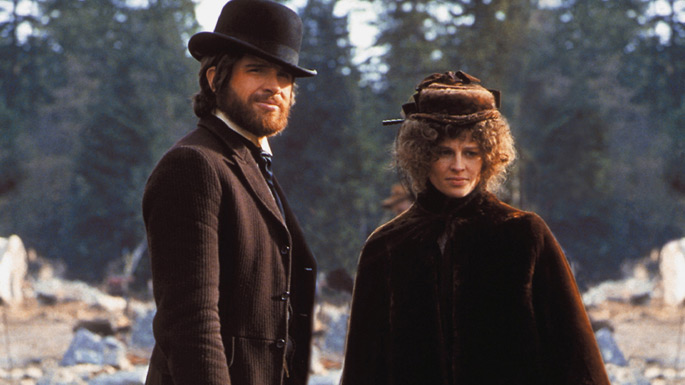
McCabe and Mrs Miller (1971)

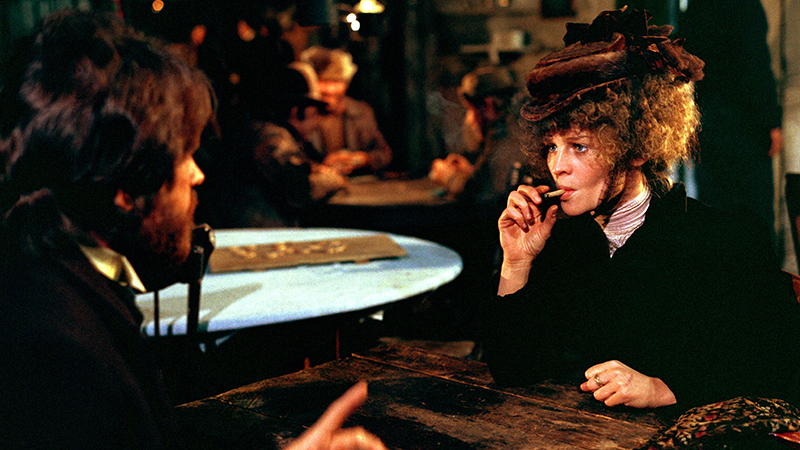
Warren Beatty and Julie Christie fail to conquer the Wild West in Altman’s revisionist Western McCabe and Mrs Miller

Director: Robert Altman

Cast: Warren Beatty (John McCabe), Julie Christie (Constance Miller), RenéAuberjonois (Sheehan), Michael Murphy (Eugen Sears), Antony Holland (Ernest Hollander), Bert Ramsen (Bart Coyle), Shelley Duvall (Ida Coyle), Keith Carradine (Cowboy), Hugh Millais (Butler), Corey Fischer (Reverend Elliot), William Devane (Clement Samuels), John Schuck (Smalley)

The Western is such a familiar genre of Hollywood film-making that you can be pretty familiar with nearly all the concepts that  it contains – from the stranger in town through to the final shoot-out. All these familiar tropes were just challenges though for a film-maker like Robert Altman: how do we make a Western that features all these, but then completely twists and subverts it all into something that also feels like a product of the 1970s rather than the 1870s? Well Altman runs with all this in McCabe and Mrs Miller, his successful anti-Western.

In Washington State in 1902, John McCabe (Warren Beatty), a conman and card sharp, rides into Presbyterian Church, a town so small it’s named after its only prominent building. McCabe’s skills at cards quickly make him rich, and as the town’s mining fortunes grow so do his. He sets up a gaming and cat house in the town. Constance Miller (Julie Christie) is a cockney opium addict with experience of running whorehouses and she quickly partners with McCabe, promising that she can raise his profits tenfold. All goes swimmingly – until big business heads into town and makes an offer to buy out McCabe’s holdings (and the whole town) for redevelopment. When McCabe says no he quickly finds himself in over his head.

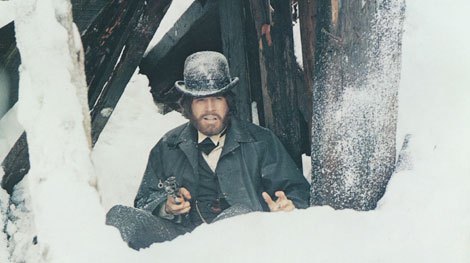
Altman’s film combines all the techniques that he had been experimenting with throughout his career into a perfect storm of Altmanesque technique. He and Vilmos Zsigmond, his skilled cinematographer, deliberately “flashed” the film to slightly over-expose it, giving the picture a slight sepia hue like a series of old photos. The camera leisurely roves around like curious spectator to the film, letting itself catch moments of interest here and there – sometimes refusing to focus on events that feel, by rights, that they should be centre of the film. It gives the film a real lived in feeling, while also making it look slightly like a historical record of true events. Either way, as the cold hits Washington State, it looks beautiful – candle-lit interiors mixed with coldly blue exteriors of snow and ice-covered surroundings.

But those visuals are as nothing compared to Altman’s experiment with sound. Sticking rigidly to the script was hardly ever Altman’s way and it’s certainly not here. In rehearsals, the actors felt free to experiment with and rework a script that had already been through the hands of several writers. Altman kept this loose, free-flowing, improvisational tone in the final film. As the camera roves round, so does the microphone, picking up snatches of conversation here and there – sometimes giving us a mixture of conversations from which we need to pick out what to listen to. In addition to that, most of the actors deliberately mumble their lines – or happily deliver them from mouths clutching cigars or chewing food. Anarchic is almost the right word for it – Altman doesn’t want to tell you what to listen to, and is more interested in getting across the atmosphere of the scene rather than the facts and figures. It takes some time to get used to – and at points is highly frustrating – but it creates its own mood. 

And this mood is very different from what you might expect from a Western. There is a distinct lack of glamour here. This world of Presbyterian Church is dirty, grimy and lacking in any moral fibre or real sense of right and wrong. The church itself is respected but largely ignored by the citizens, who are far more interested in drinking, screwing and gambling. When violence occurs it is ignored as much as possible or – as in the final shoot-out that ends the film – it happens around people so wrapped up in their own concerns (from domestics, to a large fire) that they barely notice it happening. Needless to say, for those in the fire fight, there are no rules to be played by at all. People are shot in the back, shoot down innocent bystanders, and play by no rules whatsoever, stalking and shooting opportunistically.

McCabe is a perfect hero for this very different kind of Western. As played by Beatty, he is a cocksure coward nowhere near as clever, confident or controlled as he thinks he is. Arriving in the town, he seems like the height of glamour in his bearskin coat, and he swiftly masters the simple townsfolk with his tall tales and charisma. However, the more people who intrude on this world, the more quickly it emerges that McCabe has very little clue about what is going on, is easily cowed and has only the barest understanding of how the world works. Meeting with a lawyer, one scene later he is parroting a (completely misunderstood) version of the law that he has heard from there. Meeting with the “muscle” from the corporation, he deflates like a balloon, desperately making offers hand over foot. Beatty is very good as this puffed up coward, confused and constantly living a front but out of his depth in the world.

Julie Christie’s Mrs Miller is far more worldly than him, immediately able to recognise the dangers and understanding exactly the sort of men McCabe is dealing with. Mrs Miller’s opium habit is a quietly understated obsession, one the other characters seem unaware of, but which the viewer alone seems to know about. It raises questions of course – is this meant to imply perhaps some of what we see is a drug induced fantasy? But it doesn’t impact otherwise the relationship she develops with McCabe, part meeting of partners, part a protective relationship with Miller guiding McCabe.

The rest of the cast is stuffed with a series of Altman regulars, all of whom deliver fine performances. The stand-out is Hugh Millais, an English writer making his acting debut, who is simply sublime as the articulate and ruthless chief heavy sent by the company to intimidate McCabe.

For the film itself, your enjoyment of it is largely going to be affected by how easily you plug into its style of storytelling. There is very little story for much of the first half of the film, instead events continue in a loose and undisciplined style, but the second half delivers a more focused story of ambition pushed too far, and culminates in an impressively filmed ruthless shoot out. It is perhaps more of a film that is about the atmosphere and the style than the story, but as a redeveloped Western that carries across the style of the grimy 1970s it works extremely well. At first I thought I would never get into it, but by the end I found myself wrapped up in the story it was telling. Visually and performance-wise it’s superb. Altman is an acquired taste, but acquire it and you will be richly rewarded. 

Coda: Much like The Long Goodbye I watched this film about a week ago at time of posting and I find myself thinking over several sequences in it again and again with ever more admiration. When watching it I felt it had been over promoted by critics. Now I increasingly think it might be something very special indeed.

Bonnie and Clyde (1967)

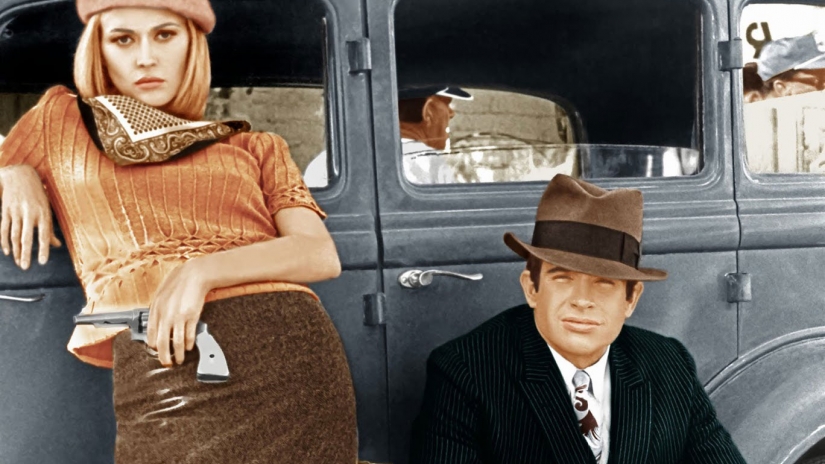
Faye Dunaway and Warren Beatty are the shallow, violent romantics Bonnie and Clyde

Director: Arthur Penn

Cast: Warren Beatty (Clyde Barrow), Faye Dunaway (Bonnie Parker), Michael J Pollard (CW Moss), Gene Hackman (Buck Barrow), Estelle Parsons (Blanche Barrow), Denver Pyle (Marshal Frank Hamer), Dub Taylor (Ivan Moss), Gene Wilder (Eugene Grizzard), Evans Evans (Velma Davis)

Bonnie and Clyde can lay claim to being one of the most influential American films ever made. It came out of a seismic cultural change in America, as old style Hollywood royalty faded out and a new generation stormed the barricades to make films that felt rougher, rawer and told complex stories in shades of grey. 

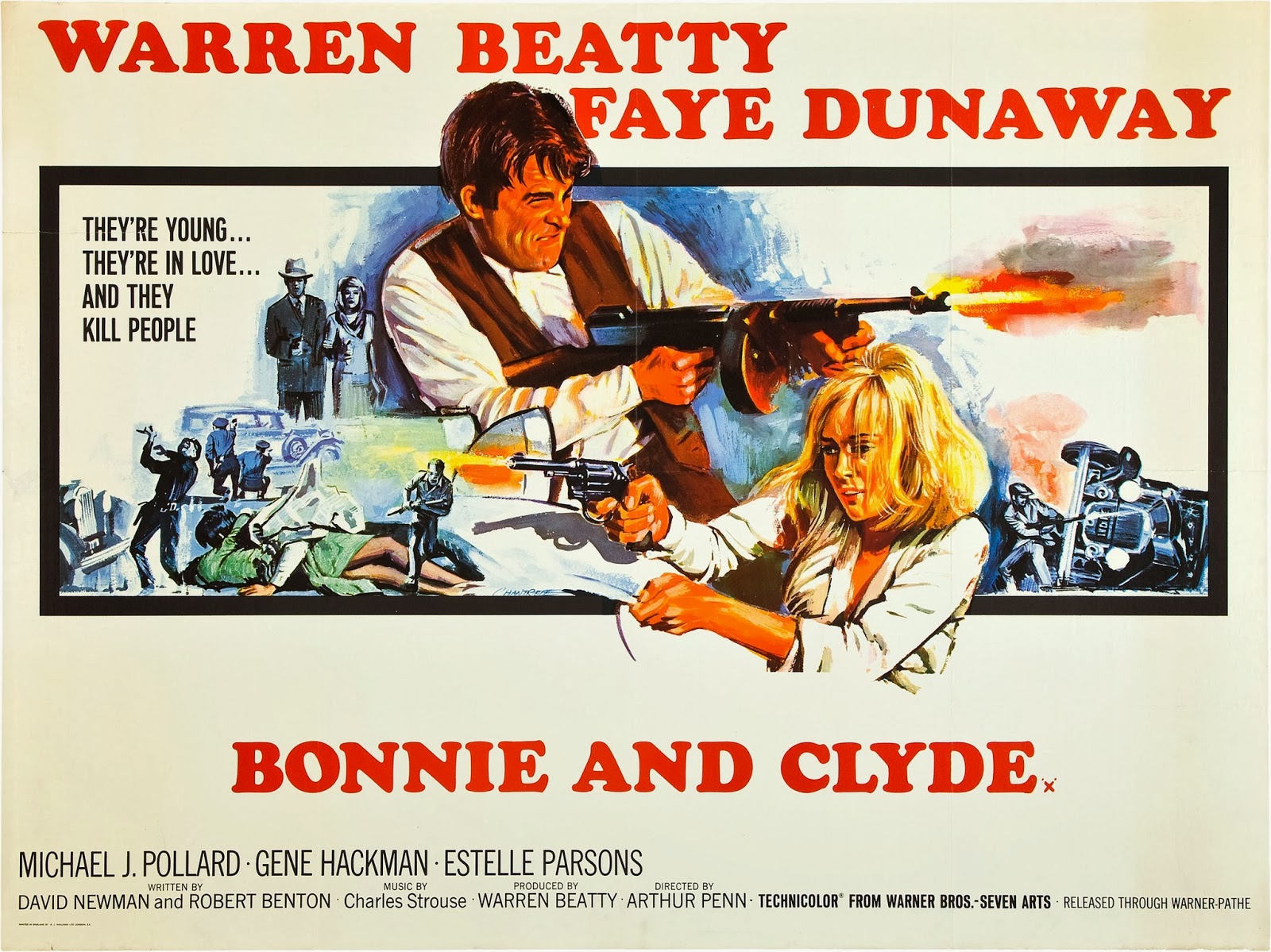
Clyde Barrow (Warren Beatty) and Bonnie Parker (Faye Dunaway): drifting youngsters, not interested in accepting a conventional life. They want to go where they please and take what they please. And if some people get hurt – well they can justify that to themselves. As the poster famously said: “They’re young. They’re in love. And they kill people”. In a deliberately disjointed narrative, where time is unclear, the two meet, head out together, commit crimes, stay on the run and are eventually killed by law enforcement. The story is simple – it’s the telling of it that matters.

Bonnie and Clyde latches on to a counter-culture vibe that was growing in strength at the time. But what the film does so brilliantly is subvert this. It invites us to identify to with the romantic, Byronic yearnings of its heroes, who see themselves as free spirits, living a life of idealistic, unconstrained excitement. But the film also has a clear eye on the trail of violence they leave behind them, their lack of regard for this and the impact on the victims. Because make no mistake, these dreamy killers get more and more violent as they go on.

The film turns these two killers into would-be celebrities – guys who want to project a certain image of themselves to the world (down to mailing the papers photos and poems about themselves). They enjoy the notoriety and their self-proclaimed mythology. Clyde walks into banks and gleefully announces he’s with the “Barrow gang”, as if half expecting someone to ask for his autograph. Later in the film, as Clyde reads their press coverage out loud, with CW Moss like a star-struck groupie, the film never forgets the two of them were basically nobodies, who wanted to feel like somebodies.

And it lets you enjoy the romance of this. There is something fairy-tale like in the film about Clyde picking up Bonnie from outside of her home, taking her into town for flirting and robbery. The whole film continues this dreamy logic, with time jumps and scenes that don’t necessarily link up directly with each other. 

But then the violence takes over. Wow is Bonnie and Clyde a film that lets you know about the impact of bullets. Gun shots don’t just maim or wing, they rip bodies apart. The japey feeling of their bank robberies gets dispelled about half an hour into the film when Clyde shoots a bank teller in the head from point blank range (“him or me”, he later tells his brother). The gang are so incompetent, that the film is frequently punctured by shoot-outs in which no mercy is shown to anyone. 

This is of course hard for the gang to reconcile with their self-image as Robin Hoods, so they mostly forget about it. Clyde won’t steal money from ordinary people (though he’ll happily steal cars, or beat a grocery store clerk into a coma). They playfully tease and taunt a captive US Marshal – until he spits in Bonnie’s face at which point violence ensues. Only at points do the gang seem to have the slightest idea of the dangers: after kidnapping Gene Wilder’s nervy car-owner and his fiancé, a happy-go-lucky Evan Evans (both excellent), merry conversations in the car with the gang are suddenly halted when Wilder admits he’s an undertaker – Bonnie immediately demands they are thrown out and the next shot is her weeping in a field. She doesn’t seem to understand the connection, but we can.

The film is superbly put together. Warren Beatty produced the movie practically from its inception. Robert Benton and David Newman’s script was intended as a French New Wave film – evident in its looseness, its lack of old-school values, its violence, its focus on naïve dreamers who choose the easy way out – but Beatty took the script, re-crafted it with Robert Towne (billed as special advisor) and decided the film needed an American director, not a Truffaut or Godard. He brought on board Arthur Penn, and the two worked together (fought together) closely to bring this radical, edgy, jittery, electric film to the screen. 

Penn and Beatty pushed themselves to some of their best work. Beatty is terrific as the vainglorious Clyde – whose determination in crime is matched by his impotence in the sack (the film wisely doesn’t overplay Clyde’s impotence as an ironic theme, but lets the audience draw its own conclusions). He also produced the film expertly. Penn’s direction is sublime, marrying the finest elements of French New Wave cinema with old-style Westerns.

The film is restless and energetic, and intermixes moments of fun and frivolity among the gang with ominous danger and violence. The camera jitters and shakes, while throwing us into the action – the film is masterfully edited – while at other points sailing on like a neutral observer. The film has a neat satiric edge, and Penn uses banjo music masterfully to ironically contrast with much of the action we see on the screen. The characters – all of them – seem to spend so much time talking about their press coverage because they have so little to say to each other. Even the lovers only really seem to find a moment of quiet devotion shortly before their death. It give you violence as entertainment, but also tells you effectively and quietly how appalling and dangerous violence is.

The acting is similarly extraordinary. Beatty is wonderful, as is Dunaway as an impossibly young, romantic Bonnie who adapts with alarming swiftness to killing and robbing. Michael J Pollard is excellent as the slightly simple, eager young car mechanic who hero-worships the couple. Hackman and Parsons are both excellent as Barrow’s older-but-not-wiser brother, and his wife who seesaws between resentment, fear and an imperious delight in her new-found infamy.

Penn’s brilliant film deconstructs the mythology of criminals to show the emptiness underneath, their shallow self-regard and lack of insight. It does this while still managing somehow to remain affectionate towards these two murderous dreamers. Bonnie and Clyde is a sublime modern Western, a commentary on fame, a dissection of violence and a great black comedy. Shot with youthful energy and an influential lack of traditionalism, it’s a film that always feels modern and necessary.

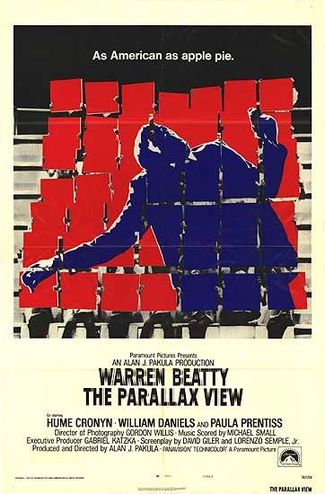
The Parallax View (1975)


The assassination game is grimly played out in Pakula’s groundbreaking conspiracy thriller.

Director: Alan J Pakula

Cast: Warren Beatty (Joseph Frady), Paula Prentiss (Lee Carter), Hume Cronyn (Bill Rintels), William Daniels (Austin Tucker), Walter McGinn (Jack Younger), Kelly Thorsden (Sheriff L.D. Wicker), Earl Hindman (Deputy Red), William Joyce (Senator Charles Carroll), Bill McKinney (Parallax Assassin), Jim Davis (Senator George Hammond), Kenneth Mars (Will Turner)

The 1970s. The decade that made the conspiracy theory popularly accepted. We all love them now – but the 1970s, with its growing disillusionment, was when it first became fashionable to openly question the reality placed before us. The Parallax View is perhaps the greatest conspiracy film ever made, an “experience” movie that captures the mood of the time so well because nothing in it is real, but everything about it feels like it could be real.

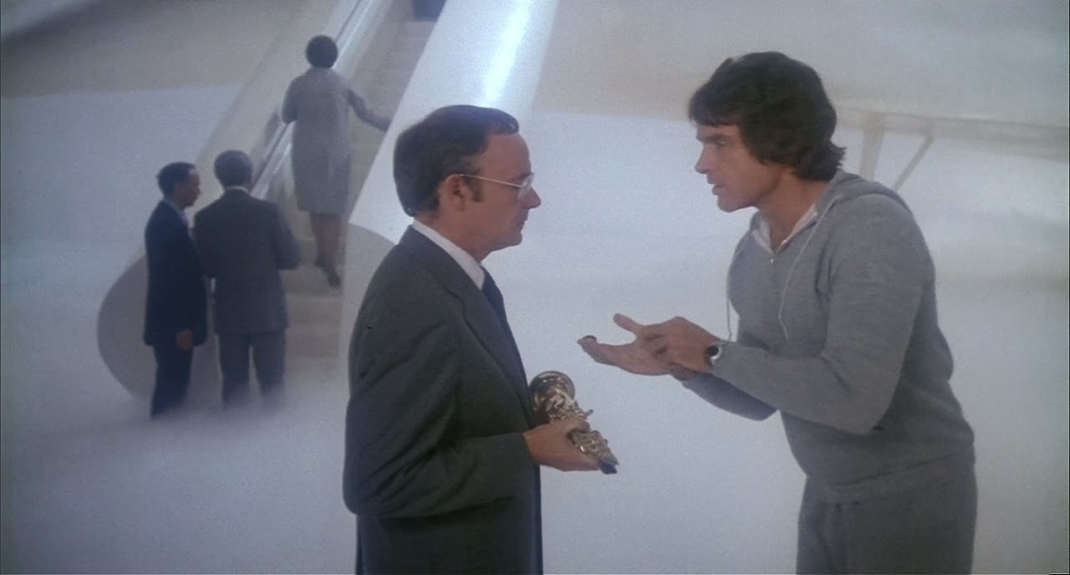
The film opens with the assassination of a reforming senator at the Space Needle in Seattle. A senatorial enquiry reports the act was the work of a lone gunman. Three years later, reporter Joe Frady is tipped off that many of the witnesses have been killed in “accidents”. Looking for a big scoop, Frady launches a one-man investigation. This suggests the assassin was someone else entirely, recruited by Parallax, a corporation in the business of identifying and training possible assassins. Or is it? Too late, Frady realises what he has got himself into.

The Parallax Viewis an unsettling, haunting piece of film-making with an impossibly glum view of the world as one where the goodies don’t have a hope in hell. It works despite (because of?) its lack of conventionality: it’s an investigative film where the investigator finds almost nothing out. It’s a tense thriller with no real plot. It tricks us throughout into thinking Frady is completely in control, when he is just a rat in a maze. It’s a film about plot rather than character, but it actually has very little plot as such in it. It’s more like an experience, an immersion in the shady underbelly of America. 

Pakula’s direction is masterfully controlled. Every shot is carefully organised. Every scene builds the complete picture. There is no fat on the film at all: everything we see is relevant. Sequences crackle with tension – most famously, a sequence where Frady finds himself on a plane he knows is carrying a bomb: wordlessly he scrambles desperately for a method to communicate this to the staff. The final sequence at a rehearsal for a senatorial rally is also nearly wordless, but is shot and edited with a relentless inevitability in it, Frady a powerless onlooker.

Warren Beatty gives an intriguing performance as Frady. He isn’t afraid to make Frady slightly unsympathetic: an arrogant loner, nowhere near as clever as he thinks he is. His investigation is, when you look at, hilariously ill-prepared and blindly headstrong. He goes up against the system with little more than a complete faith in his pluck and resourcefulness. It’s not enough. Beatty has a cocky hipsterish quality, which only occasionally cracks when he realises he is in over his head. His attitude is summed up perfectly when he is confronted by a drunk cop in a bar: the cop tells him he’s got a hair like a girl; yup, replies Frady with casual defiance and contempt, that’s right I’m a girl. This is more infuriating than any angry retort would be – cue a barfight. It’s a nice, unflashy performance, full of subtle observances, that allows the plot to be the central character.

Gordon Willis was one of the leading photographers of the 1970s and created the visual language of the era’s best films (he also shot The Godfather and All the President’s Men). His photography became synonymous with an impression of the era as one of muddy colours and oppressive architecture, with well chosen streaks of colour throwing these into perspective. His framing throughout the film is exquisite. Events are framed to throw the principal characters into the corners of the frames. Unusual angles show buildings and architecture as oppressive monoliths. Long shots are combined with deep focus to give striking images – my favourite is a long shot from the roof of an air hanger, as a dead man’s golf buggy continues its unguided path, crashing quietly and slowly through tables and chairs. An interesting breakdown of the visual language of the film can be found here.

Sound is also brilliantly used. The score is practically the dictionary definition of spare. Silence is wonderfully used. Background noise dominates several scenes. Life and death events happen silently, lost among the sound of the world around them – whether that be waterfalls, parades or political speeches played over loudspeakers. The effect throughout unnerves and disorientates. It’s all part of the film’s device: the plot is actually extremely simple and the film is a punchy hour and a half. The key thing is the unsettling experience of watching the film, not revelations about our world like in, say, JFK. There is no mystery as such to unravel. Instead we are thrown into this world with no helping hand to guide us through it.

I have to mention the extraordinary assassin recruitment film Frady is brought in to watch by Parallax. It’s a fascinating triumph of editing, a deeply disturbing arrangement of images that slowly switch from positive to negative, subliminally building a message of the need for the individual to take decisive action. I won’t go into all this now – a well-written breakdown of its meaning is here.

And Frady is being tested. His arrogance, his go-it-alone independence, his lack of real relationships or friendships make him (unknowingly) a perfect Parallax subject. Unnervingly we are given no idea of Parallax’s aims. We never learn anything about them and why they do what they do. Are they in it for the personal gain? Are they hired guns? Is their whole programme not about recruiting assassins but recruiting plausible patsies to cover for the real hitmen (that certainly seems to be the impression from the film’s bleak ending)? It’s all left up to the viewer to decide from the scant evidence supplied.

What is clear is that The Parallax View is a deeply troubling film, which presents a haunting and disturbing image of a country where justice is dead and power talks. The film is bookended by a senate commission in session (seemingly floating towards the camera in a brilliant camera effect), giving almost identical reports on assassinations. It’s a chilling film, where even the heroes are not particularly sympathetic or heroic and where hope and change are distant dreams. It’s perhaps the perfect 1970s film.