Tag: John Schuck

Star Trek IV: The Voyage Home (1986)

Star Trek IV: The Voyage Home (1986)

The gentlest and least action-filled of all the Star Trek films is one of its most successful outings

Director: Leonard Nimoy

Cast: William Shatner (Admiral James T Kirk), Leonard Nimoy (Spock), DeForest Kelley (Dr McCoy), James Doohan (Montgomery Scott), George Takei (Hikaru Sulu), Walter Koenig (Pavel Chekov), Nichelle Nichols (Uhura), Catherine Hicks (Dr Gillian Taylor), Mark Lenard (Sarek), Jane Wyatt (Amanda), Robin Curtis (Saavik), Brock Peters (Admiral Cartwright), John Schuck (Klingon Ambassador), Robert Ellenstein (Federation President)

Most people’s Bingo cards probably didn’t have “biggest Star Trek hit film is about saving Whales”. In fact, when I told my wife this was the plot of Star Trek IV (which she had, resignedly, agreed to watch on a Saturday night) she immediately assumed I was pulling her leg. I guess this might also be what Paramount thought when Nimoy and Nicholas Meyer pitched this: time-travel with comedy for the crew, no villain, no battles and not a single photon torpedo fired in anger. There wouldn’t even be a proper love interest. But the formula was such a surprise hit, Paramount tried to repeat the trick again with Star Trek V and promptly fell flat on their faces.

After the events of Star Trek III, Spock is back from the dead and the crew are heading home to face the music after their riot of breaking orders, sabotage, theft and blowing up the Enterprise from the last film. (Since they’ve also not changed clothes since the start of that film, they must also be a bit whiffy). Before they arrive back though, Earth is thrown into chaos by a mysterious probe whose powerful signal is draining the planet’s power. Turns out the probe is trying to contact Humpback whales – which mankind hunted to extinction in the late twentieth century. Kirk, Spock and the crew take their stolen Klingon bird of prey on a perilous time-travel slingshot round the sun back to 1986, to grab a pair of whales and bring them back to their present. But of course, it’s not that easy.

There is something very refreshing about Star Trek IV, one of the entries in the series that really attempted to go its own way. It manages to pull this off pretty well, the crew settling into the fish-out-of-water comedy of being stranded in modern San Francisco without inducing eat-your-fist levels of embarrassment in the viewer (not a trick the franchise managed in other lighter entries, such as Insurrection and of course Star Trek V). Perhaps it’s because, by and large, the cast don’t overplay or force the comedy too much and the mix of both apocalyptic dread in the future and horror of the butchery of whales in the present counterbalances the comedy rather well.

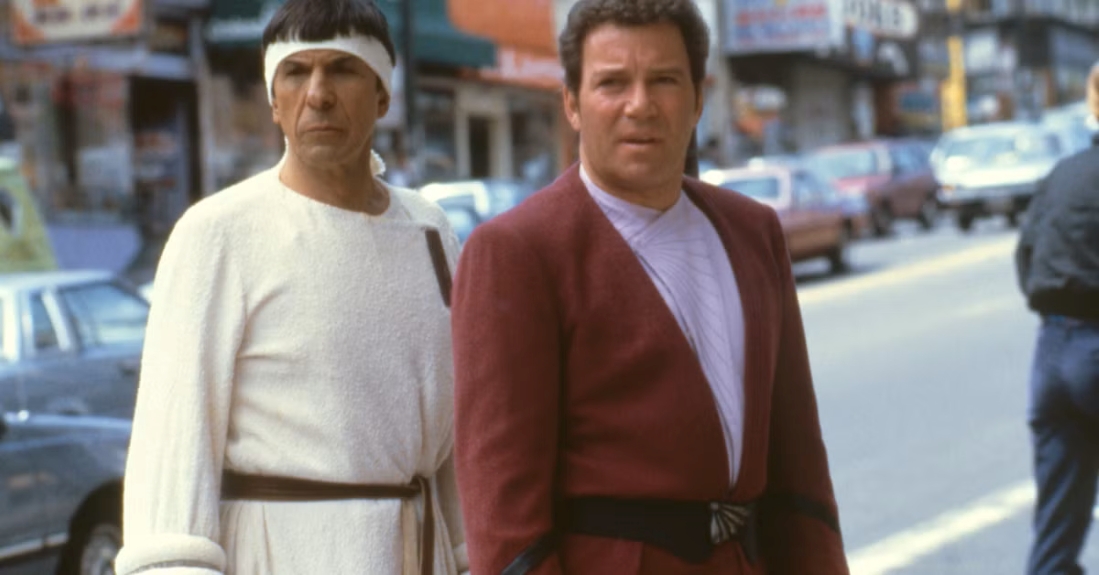
In fact, Nimoy proofs to have a deft touch (he went straight from this to directing Three Men and a Little Lady and he was pretty much button-holed as a comedy director from hereon). He latches onto the rare chance for a Star Trek film to go fully on location – surely a nice change from the blatantly papier-mache sets of the Genesis planet in Star Trek III – neatly capturing the slightly dazed characters, dodging traffic in busy San Francisco streets, grabbling with the complexity of using money and struggling with the parade of “colourful metaphors” that pepper Twentieth century speech.

There is a pleasingly family-friendly quality to all this, continued with the missions Star Trek IV splits the crew up to achieve. Each of these is well-tailored to cater to the strengths of characters and actors. Naturally, Russian-accented Chekov winds up hunting for “nuclear wessels” to re-power the ship, including a desperate chase across decks of the real battleship USS Enterprise. Nimoy also captures some neat observational comedy with Chekov and Uhura plaintively asking non-plussed passers-by for directions to a Naval base (including a blank faced cop, and a flustered extra who parrots back the naval base name in her confused directions – Koenig nailing the polite exasperation of Chekov’s bemused response).

In addition, we get a Scotty struggling to understand why he can’t talk to computer and then not caring when he hands over future technology secrets in return for free plexiglass for a whale case (timelines be damned!). Or an increasingly grouchy McCoy railing against medieval medicine in a cutting-edge hospital, subtly handing over kidney restoring medicine to an ailing granny. And, of course, Kirk and Spock chasing down whales, shouting down road hogs (“double damn ass on you!”) or neck-pinching rude punks on buses and struggling to work out when to tell the truth and when to lie.

The whale part of the Star Trek IV works rather well. Shots of the butchery of whales is quite chillingly graphic, Spock’s mind-meld with whales George and Gracie (during an unauthorised swim in the aquarium pool they live in – met with slack jawed despairing shock by Kirk) stresses the animals intelligence and empathy (these whales are not just tools to do with as our heroes please). It’s easy to see why the film helped the cause of Greenpeace no end, especially since George and Gracie’s near-fatal encounter with a ship of scruffy whalers is genuinely tense as we dread seeing a harpoon in the side of an animal we’ve grown fond of. Catherine Hicks also gives a nicely judged performance as a passionate whale expert, who also manages to see through the crew’s (not particularly well disguised) bullshit.

That’s not to forget the destructive impact of the probe in the future, as its distinctively intimidating “froom-froom” boils oceans, scorches skies and leaves starships (crewed by an ahead-of-its-time diverse series of officers) drifting in space. It’s a neat metaphor for the results of mankind’s thoughtless impact on the planet. But also, its genuinely quite exciting, just as is the crew’s risky flash back in time to the past, Takei sonorously reporting their ever-increasing speed as the ship shakes. A final attempt to save the whales from a sinking Klingon bird-of-prey does feel like it’s been chucked in to give Shatner some final act heroics. But you can cut it some slack, considering that its genuinely tense.

Above all, Star Trek IV shows that you can make a successful Star Trek film without trying to make it as much like Star Wars as possible. This is the sort of conundrum the show used to deal with all the time, cleaning up our own mess and learning lessons along the way. It also allows the cast to relax and to be genuinely engaging, without drowning us in cringe-worthy comedy. Star Trek IV is what it needs to be: a really accessible way to get into the show, that riffs on things you’re likely to be familiar with, without needing a PhD in the show’s canon. Mix that in with a well-judged (Oscar-nominated) score by Leonard Rosenman that gets the tone just right between playful and epic and the fact that all that location shooting means the limited special effects budget could be used to ace effect, and you’ve got one of the best of the franchise.
McCabe and Mrs Miller (1971)

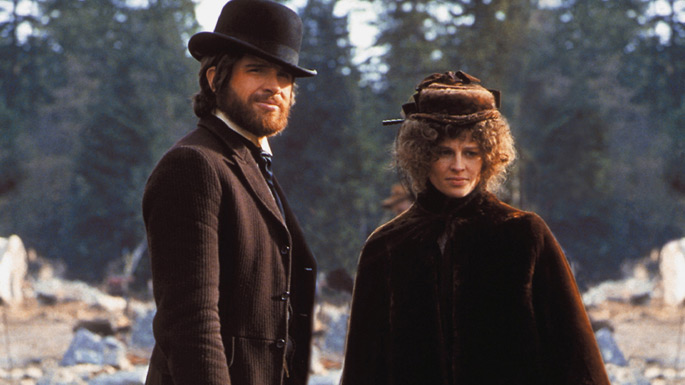
Warren Beatty and Julie Christie fail to conquer the Wild West in Altman’s revisionist Western McCabe and Mrs Miller

Director: Robert Altman

Cast: Warren Beatty (John McCabe), Julie Christie (Constance Miller), RenéAuberjonois (Sheehan), Michael Murphy (Eugen Sears), Antony Holland (Ernest Hollander), Bert Ramsen (Bart Coyle), Shelley Duvall (Ida Coyle), Keith Carradine (Cowboy), Hugh Millais (Butler), Corey Fischer (Reverend Elliot), William Devane (Clement Samuels), John Schuck (Smalley)

The Western is such a familiar genre of Hollywood film-making that you can be pretty familiar with nearly all the concepts that  it contains – from the stranger in town through to the final shoot-out. All these familiar tropes were just challenges though for a film-maker like Robert Altman: how do we make a Western that features all these, but then completely twists and subverts it all into something that also feels like a product of the 1970s rather than the 1870s? Well Altman runs with all this in McCabe and Mrs Miller, his successful anti-Western.

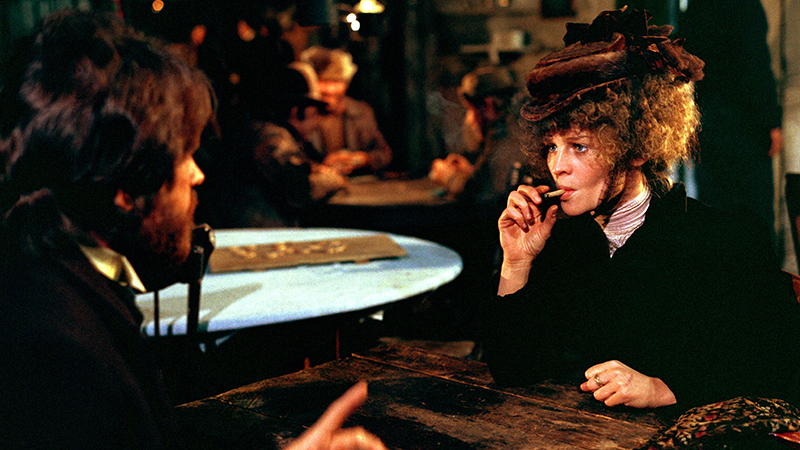
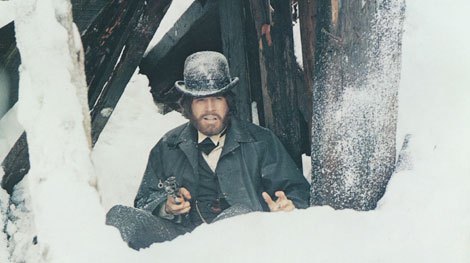
In Washington State in 1902, John McCabe (Warren Beatty), a conman and card sharp, rides into Presbyterian Church, a town so small it’s named after its only prominent building. McCabe’s skills at cards quickly make him rich, and as the town’s mining fortunes grow so do his. He sets up a gaming and cat house in the town. Constance Miller (Julie Christie) is a cockney opium addict with experience of running whorehouses and she quickly partners with McCabe, promising that she can raise his profits tenfold. All goes swimmingly – until big business heads into town and makes an offer to buy out McCabe’s holdings (and the whole town) for redevelopment. When McCabe says no he quickly finds himself in over his head.

Altman’s film combines all the techniques that he had been experimenting with throughout his career into a perfect storm of Altmanesque technique. He and Vilmos Zsigmond, his skilled cinematographer, deliberately “flashed” the film to slightly over-expose it, giving the picture a slight sepia hue like a series of old photos. The camera leisurely roves around like curious spectator to the film, letting itself catch moments of interest here and there – sometimes refusing to focus on events that feel, by rights, that they should be centre of the film. It gives the film a real lived in feeling, while also making it look slightly like a historical record of true events. Either way, as the cold hits Washington State, it looks beautiful – candle-lit interiors mixed with coldly blue exteriors of snow and ice-covered surroundings.

But those visuals are as nothing compared to Altman’s experiment with sound. Sticking rigidly to the script was hardly ever Altman’s way and it’s certainly not here. In rehearsals, the actors felt free to experiment with and rework a script that had already been through the hands of several writers. Altman kept this loose, free-flowing, improvisational tone in the final film. As the camera roves round, so does the microphone, picking up snatches of conversation here and there – sometimes giving us a mixture of conversations from which we need to pick out what to listen to. In addition to that, most of the actors deliberately mumble their lines – or happily deliver them from mouths clutching cigars or chewing food. Anarchic is almost the right word for it – Altman doesn’t want to tell you what to listen to, and is more interested in getting across the atmosphere of the scene rather than the facts and figures. It takes some time to get used to – and at points is highly frustrating – but it creates its own mood. 

And this mood is very different from what you might expect from a Western. There is a distinct lack of glamour here. This world of Presbyterian Church is dirty, grimy and lacking in any moral fibre or real sense of right and wrong. The church itself is respected but largely ignored by the citizens, who are far more interested in drinking, screwing and gambling. When violence occurs it is ignored as much as possible or – as in the final shoot-out that ends the film – it happens around people so wrapped up in their own concerns (from domestics, to a large fire) that they barely notice it happening. Needless to say, for those in the fire fight, there are no rules to be played by at all. People are shot in the back, shoot down innocent bystanders, and play by no rules whatsoever, stalking and shooting opportunistically.

McCabe is a perfect hero for this very different kind of Western. As played by Beatty, he is a cocksure coward nowhere near as clever, confident or controlled as he thinks he is. Arriving in the town, he seems like the height of glamour in his bearskin coat, and he swiftly masters the simple townsfolk with his tall tales and charisma. However, the more people who intrude on this world, the more quickly it emerges that McCabe has very little clue about what is going on, is easily cowed and has only the barest understanding of how the world works. Meeting with a lawyer, one scene later he is parroting a (completely misunderstood) version of the law that he has heard from there. Meeting with the “muscle” from the corporation, he deflates like a balloon, desperately making offers hand over foot. Beatty is very good as this puffed up coward, confused and constantly living a front but out of his depth in the world.

Julie Christie’s Mrs Miller is far more worldly than him, immediately able to recognise the dangers and understanding exactly the sort of men McCabe is dealing with. Mrs Miller’s opium habit is a quietly understated obsession, one the other characters seem unaware of, but which the viewer alone seems to know about. It raises questions of course – is this meant to imply perhaps some of what we see is a drug induced fantasy? But it doesn’t impact otherwise the relationship she develops with McCabe, part meeting of partners, part a protective relationship with Miller guiding McCabe.

The rest of the cast is stuffed with a series of Altman regulars, all of whom deliver fine performances. The stand-out is Hugh Millais, an English writer making his acting debut, who is simply sublime as the articulate and ruthless chief heavy sent by the company to intimidate McCabe.

For the film itself, your enjoyment of it is largely going to be affected by how easily you plug into its style of storytelling. There is very little story for much of the first half of the film, instead events continue in a loose and undisciplined style, but the second half delivers a more focused story of ambition pushed too far, and culminates in an impressively filmed ruthless shoot out. It is perhaps more of a film that is about the atmosphere and the style than the story, but as a redeveloped Western that carries across the style of the grimy 1970s it works extremely well. At first I thought I would never get into it, but by the end I found myself wrapped up in the story it was telling. Visually and performance-wise it’s superb. Altman is an acquired taste, but acquire it and you will be richly rewarded. 

Coda: Much like The Long Goodbye I watched this film about a week ago at time of posting and I find myself thinking over several sequences in it again and again with ever more admiration. When watching it I felt it had been over promoted by critics. Now I increasingly think it might be something very special indeed.