Tag: William Holden

Love is a Many-Splendored Thing (1955)

Love is a Many-Splendored Thing (1955)

Very thin romantic drama that finds very little to offer beyond it’s set-up of “love across the divide”

Director: Henry King

Cast: William Holden (Mark Elliott), Jennifer Jones (Dr Han Suyin), Torin Thatcher (Humphrey Palmer-Jones), Isobel Elsom (Adeline Palmer-Jones), Murray Matherson (Dr John Keith), Virginia Gregg (Anne Richards), Richard Loo (Robert Hung), Soo Yong (Nora Hung), Philip Ahn (Third Uncle)

In 1940s Hong Kong, Eurasian Dr Han Suyin (Jennifer Jones) works at a respected hospital and carefully balances her relationship with the Chinese and Western expat communities. All of which is shaken up when she falls in love with American journalist Mark Elliott (William Holden). As China’s civil war sees the country turn Communist – and with war rumblings in Korea – can this love across the divide survive prejudice, Mark’s estranged wife and the disapproval of her friends?

Love is a Many-Splendored Thing was a box-office hit and scooped no fewer than eight nominations (including Best Picture) in a weak year at the Oscars. It won two of them for its main virtues: the lush, romantic score from Alfred Newman and its title song (which became a massive hit). Aside from that, it’s a very slight romance (with a tragic ending) based on Han Suyin’s autobiographical novel (Suyin, who sold the rights because she needed the money, refused to watch it).

It’s very much a film of its time. The focus is at least as much on the locations and wide-screen framing as it is on story (it was made slap-bang in the middle of the era when these were considered cinema’s unique selling point over TV). Before the script was even completed, a second unit team was dispatched with the stars to shoot wordless sequences on location, all to capture that Hong Kong atmosphere. Writer John Patrick and director Henry King’s job was then to build a narrative framework using as many of these as possible, inspired by the book.

What they came up with is as conventional as they come: essentially, two charming, attractive Hollywood stars meet, flirt, fall in love and face the consequences. Despite the earth-shattering events around them, very little intrudes into the story. The outbreak of Chinese Communism gets name checked a few times – one of Suyin’s colleagues at the hospital is a proud Commie – but only a few moments are spent on considering the impact this might have on Hong Kong or the expat community. Similarly, the Korean War might as well have been started by people who just wanted to drag William Holden away from romantic bliss.

Love is a Many-Splendored Thing has its chances to really tackle the racial element of this relationship. But bar a few small moments, it mostly avoids this. Sure, Suyin loses her job for largely unspecified reasons (the implication is there that it’s for crossing this racial divide), and she gets dragged across town to get a ticking off from the grand doyen of the expat community for flirting with a white man (although this could just as well be for the fact he’s separated but still married). But her Chinese family mostly accept Suyin’s relationship with little complaint, and far more easily than they do her cousin’s relationship with a foreigner (guess it’s because Mark is such a top bloke). The whole issue feels slightly swept, awkwardly, under the carpet – which just doesn’t feel true. For all its patronising heavy-handedness, at least Sayonara two years later really engaged with this theme.

But then, maybe it’s because Jennifer Jones doesn’t even look remotely Asian. Reportedly unhappy with her make-up, its toned down to such a subtle extent that honestly half the time she doesn’t look that different than she does in any other role. I suppose, today, we should thank our lucky stars they didn’t go the whole yellow-face hog, but it does look odd considering everyone else of even remotely Asian descent is played by an Asian-American actor.

Despite this, Jones is actually rather good as Suyin: intelligent, sensible and very surprised to find herself falling in love with someone so socially unsuitable for her as Mark appears to be. She’s compassionate, witty and knows her own mind, and if Jones is given a few too many speeches explaining Asian culture to Mark (or rather to the viewer), at least she delivers them with grace and gravitas. Holden is also good, even if he could play this dashing romantic role standing on his head.

Fascinatingly both stars, despite their convincing on-screen chemistry, couldn’t stand each other. As well as having incompatible working styles – Jones was details oriented, Holden more instinctive – they failed to bond personally. (Jones reported she ate garlic to annoy famed lothario Holden, while Holden claimed a bunch of flowers he purchased Jones to clear the air were literally thrown back in his face.) It, surprisingly, doesn’t come across on screen, and the film’s strongest moments by far are the romantic ones between the two leads.

Fortunate, as that’s the meat of a film that barely has anything else on its bones during its swift runtime. King directs with a professional competent flatness that doesn’t give any additional life to the project. Aside from some decent romantic moments atop the couple’s favourite hill and a swimming sequence (obviously imitating From Here to Eternity but without an ounce of that film’s dynamism and sexiness) there is little to keep drawing you back.

Love is a Many-Splendored Thing settles for being a reassuring, lightweight romance, in which two handsome people, in luscious locations, fall in love. It offers very little outside of that, so basically your enjoyment of the film will be decided by how much that sort of thing wins you over. If you want more from your romances, it’s not for you.

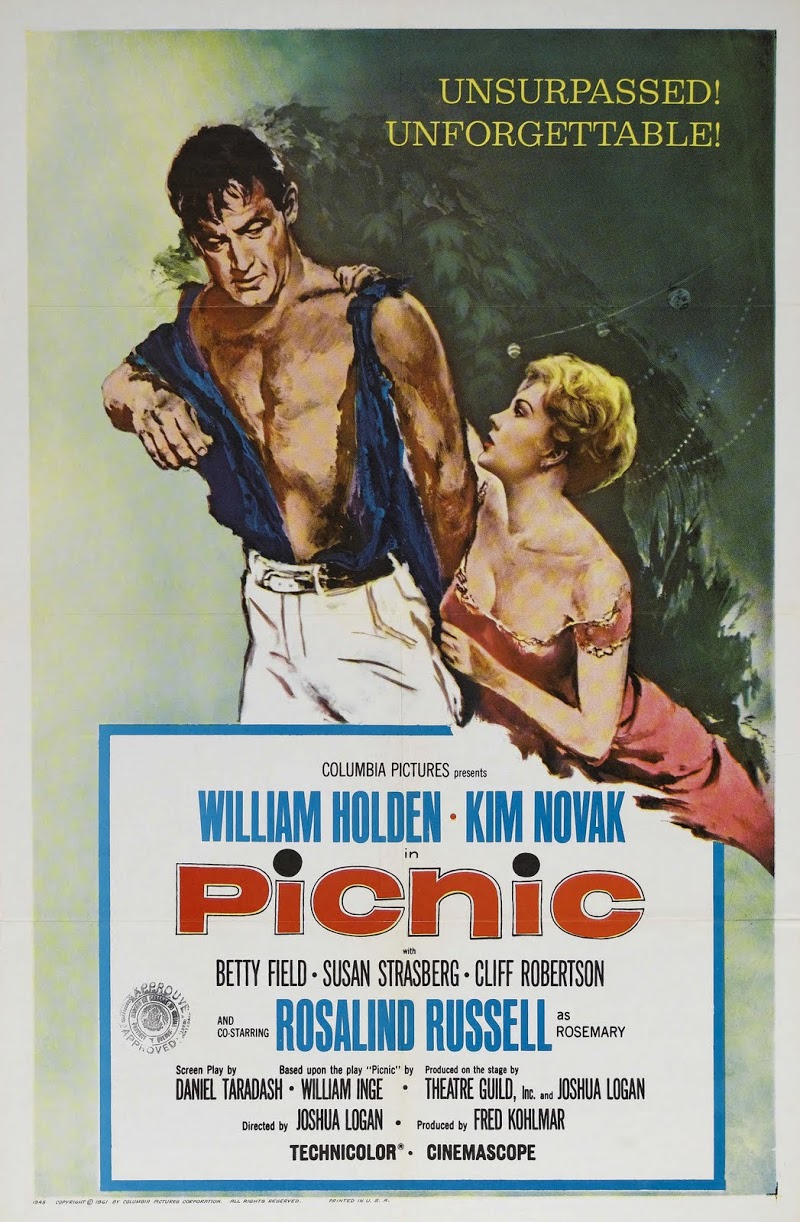
Picnic (1955)

William Holden stirs up a small-town – and Kim Novak – in Picnic

Director: Joshua Logan

Cast: William Holden (Hal Carter), Kim Novak (Madge Owens), Rosalind Russell (Rosemary Sydney), Betty Field (Flo Owens), Susan Strasberg (Millie Owens), Cliff Robertson (Alan Benson), Arthur O’Connell (Howard Bevans), Verna Felton (Helen Potts), Reta Shaw (Irma Kronkite)

In a small Kansas town in the early 1950s, everything is sweet as apple pie. But under the surface, tensions bubble – and it only takes a stranger changing the status quo to make them explode. In William Inge’s Pulitzer-Prize-winning play – bought to the screen by original Broadway director Joshua Logan – that stranger is Hal Carter (William Holden), failed sportsman, actor and college drop-out, drifting into town looking for a new start from old friend Alan (Cliff Robertson). But Hal, an amiable screw-up, quickly puts himself in the middle of a love triangle between Alan and his girlfriend Madge (Kim Novak), the local beauty tired of being judged only by her looks.

All this eventually explodes into a series of furious confrontations where the true colours of various participants are revealed. In the 1950s Picnic looked like a criticism of the cosy conservatism of small-town America. But today, it actually feels more than a little nostalgic for the lost innocence of those times. Sure, some people in the town are less than sympathetic, or their lives have been crushed by the expectations of others. But generally, with its pastel colour palette and its generally fundamentally well meaning characters, it now feels a rather reassuring watch.

Like many films that pushed the envelope at the time, it also looks rather tame today. The film is strong on demonstrating the impact of the sexuality of a topless Holden on the women of the town – nearly all of whom go weak at the knees. But generally, the film’s sexual content now looks remarkably safe and gentle. A sense of powerful longing for something missing from their own lives does comes across strongly – Russell’s Mrs Sidney, worse for wear from drink, ends up feebly trying to pull up Holden’s trousers to look at his legs while dancing. But the sexual outbursts largely restrict themselves to that and a few passionate clinches.

Logan’s film throws in a few big visuals (such as the closing helicopter shot as a bus drives out of town) and clearly enjoys its location shooting, but remains stage-bound. Several scenes translate across exactly to backyard locations, the same sets in all but name that appeared on stage. It also struggles to fill the cinemascope screen, for all that James Wong Howe’s photography has a certain Autumnal beauty to it (you won’t see any vibrant greens, reds or yellows). In addition, many of the actors go for somewhere between naturalism and a mannered Broadway show-boating.

Perhaps the main issue is that film dwarves this slight and intimate story. Moments of intimacy that on stage you feel carry impact – heartfelt declarations and tortured confessions – don’t carry nearly so much on screen. In fact, the story ends up feeling rather slight and even predictable: the drifter has depths, but the town unfairly turns against him, the old-maid schoolteacher is deeply frustrated, the local beauty juggles depression, the good natured son of the local bigwig is a self-entitled bully. None of this really feels revelatory and, on screen, easily drifts by with little impact.

Logan’s stagy style also has a mixed impact on the acting with some going for a cinematic underplaying, and others inspired by a theatrical grandness to embrace the big moments. Leading the way in that camp is Rosalind Russell who gives a strong performance as the frustrated schoolteacher, but frequently allows herself to go a little too far in moments of emotional outburst. It’s particularly noticeable as she’s paired with Arthur O’Connell (reprising his Broadway role, and getting an Oscar nomination) who underplays with a quiet wit and honesty.

One of the film’s principle problems are with the two leads. William Holden gives a fine performance – fun-loving and kind but also cutting a rather sad and tragic figure behind the bonhomie – but is blatantly too old for the role. Hal is probably meant to be in his 20s – Holden was 37 and, with his craggy face, actually looks older. While it does add a level of Hal being increasingly irresponsible for his age, the part really means a charismatic youngster dripping sex appeal (think James Dean – Paul Newman was turned down for the part). Opposite him the inexperienced Kim Novak does, at times, give her line readings a striking genuineness but at others comes across as slightly wooden.

A stagy and slightly old-fashioned watch today, Picnic was nominated for several Oscars, but increasingly looks rather like a celebration rather than a gentle criticism of the small-town values it depicts.

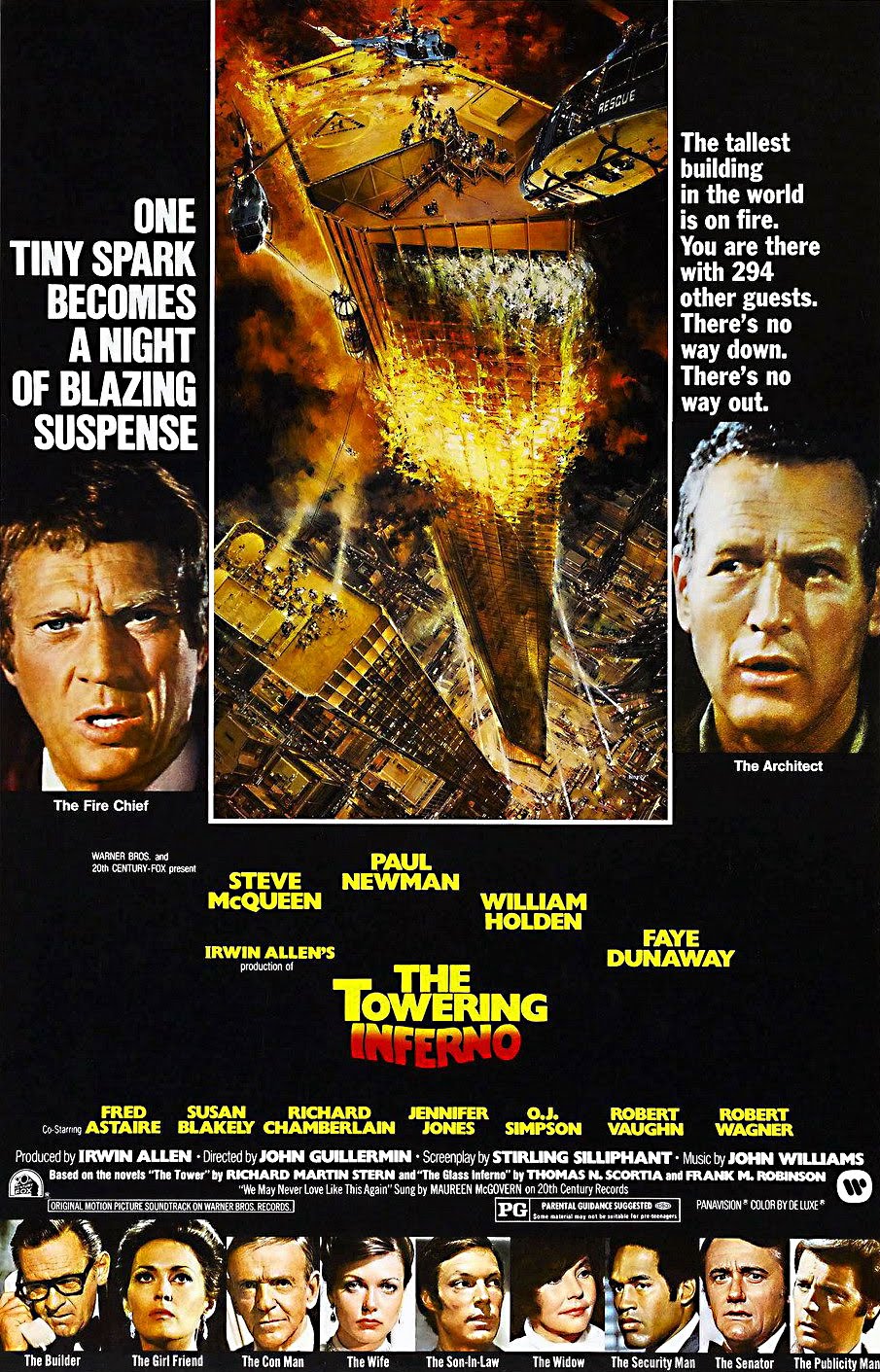
The Towering Inferno (1974)

Newman and McQueen tackle a huge blaze in The Towering Inferno

Director: John Guillermin, Irwin Allen

Cast: Steve McQueen (Fire Chief Michael O’Halloran), Paul Newman (Doug Roberts), William Holden (James Duncan), Faye Dunaway (Susan Franklin), Fred Astaire (Harlee Claiborne), Susan Blakely (Patty Duncan Simmons), Richard Chamberlain (Roger Simmons), Jennifer Jones (Lisolette Mueller), OJ Simpson (Harry Jernigan), Robert Vaughn (Senator Gary Parker), Robert Wagner (Dan Bigelow), Susan Flannery (Lorrie), Shelia Matthews Allen (Paula Ramsay), Jack Collins (Mayor Ramsay)

Architect Doug Roberts (Paul Newman) flies into San Francisco for the grand opening of The Glass Tower, the newly constructed tallest building in the world which he has designed for developer James Duncan (William Holden). A celebration with the rich and famous is planned – too bad Duncan’s rogueish son-in-law Roger Simmons (Richard Chamberlain, smarming like his life depends on it) has saved a few dollars by stuffing the building with sub-standard wiring. Surely the world’s largest building can’t catch fire? You bet it could – and only heroic Fire Chief Michael O’Halloran (Steve McQueen) has the expertise to put it out.

The Towering Inferno was the peak of the “all-star disaster” genre. It was bought to the screen by Producer (and “Master of Disaster”) Irwin Allen, and pretty much ticks all the boxes you expect from the genre. A star at every turn! A huge running time! Constant denials that anything could go wrong (of the “This building can’t burn down!” variety)! Kids in peril! Death-defying stunts! A brave pet! An elder statesman of Hollywood risking life and limb! A scoundrel we can boo! A tear-jerking death! The Towering Inferno pretty much has it all, and it plays every single beat with the sort of po-faced seriousness that was already starting to look a bit silly by 1974.

Films like this work because audiences – as we’ve seen time and time again – never lose their taste for watching things get trashed. In the 1970s every studio wanted its own mega-budget disaster film. The Towering Inferno’s real uniqueness is the story behind its making – two studios had competing “Skyscraper on Fire!” projects but, instead of competing, pooled their resources to make one mega hit. So, Warner Brothers The Tower and 20th Century Fox’s The Glass Inferno became this.

Irwin Allen was handed the keys – because no-one did it better – and each studio contributed a star. McQueen and Newman spent almost as much time negotiating equal terms as acting in the movie. Both were paid 10% of the gross and agreed they would have exactly the same number of lines (many of Newman’s final scenes sees him perform stunts wordlessly, as he burned through his allotted lines during the 40 minutes he spends on screen before McQueen turns up). The billing was negotiated carefully: their names would appear on screen together with Newman slightly higher, but McQueen’s name to the left (both could therefore claim they were “first billed”).

Their interest in the film pretty much ended there. Newman was famously disparaging of what he called “a piece of shit” and the only time he did something purely for the money. He coasts through on those blue eyes and twinkly grin. Eager that his character be absolved of responsibility (he has designed a tower that will claim 200 lives!) Newman’s architect is continuously absolved of any responsibility by the rest of the cast and leads on saving lives. McQueen grabbed the better role as the all-action fire-chief, riding in after 45 minutes (thus wisely missing out the tedious build-up of the soapy plot lines), takes charge and does nothing but manly action, but he also looks like someone going through the motions.

But then they know the things that will be remembered are the set-pieces. As flames stretch up the building, our star names dodging explosions, climbing up shattered staircases, dodging collapsing ceilings and taking on vertigo-inducing heights, it’s hard not to be excited. As in all disaster films, the disaster takes a strong moral stance. Of all the characters who die only one ‘doesn’t deserve it’. Aside from that, the actors playing philanderers, swindlers and bastards inevitably bite the dust, while the upstanding and noble pretty much see their way to the end.

The disaster sequences are impressive – and the fire-effects are really well done. Allen directed the ‘action sequences’ – aka the only bits of the film you really remember – while Guillermin handled ‘the acting’ (the dull, soapy, badly written bits you forget). The cardboard characters (no wonder they catch fire so easily!) could have had their personalities scribbled on the back of a stamp, and are pretty much dependent on the charms of the actors playing them. Fred Astaire’s gentle conman (the sweetest grifter you’ll ever meet) is a ludicrous character, but works because of Astaire’s twinkle-toed charm (Astaire grabbed a wave of affectionate awards nominations). Jennifer Jones plays off him rather well in the film’s ‘heroic elder statesman of Hollywood’ role, as a woman who puts herself at huge risk to save two kids (and their deaf mum) from immolation.

But pretty much all the character-based stuff in Towering Inferno is ludicrously silly, with some strikingly bored actors (Faye Dunaway looks like she wants to be anywhere else) but it hardly matters as we are there to watch the world burn. Which it does to spectacular effect, and the reassuringly, camp predictability of the film’s events is endearing – and raises a few good-natured laughs (you have to laugh at something like this, even though it wants to take itself so seriously). The Towering Infernowas the largest of all the disaster flicks of the 1970s. Allen shoehorns in a few points about fire safety in tall buildings for the ‘serious bits’, but his heart is in consigning most of the second tier of his all-star cast to dramatic, firey deaths. Overlong, very silly but rather sweet.

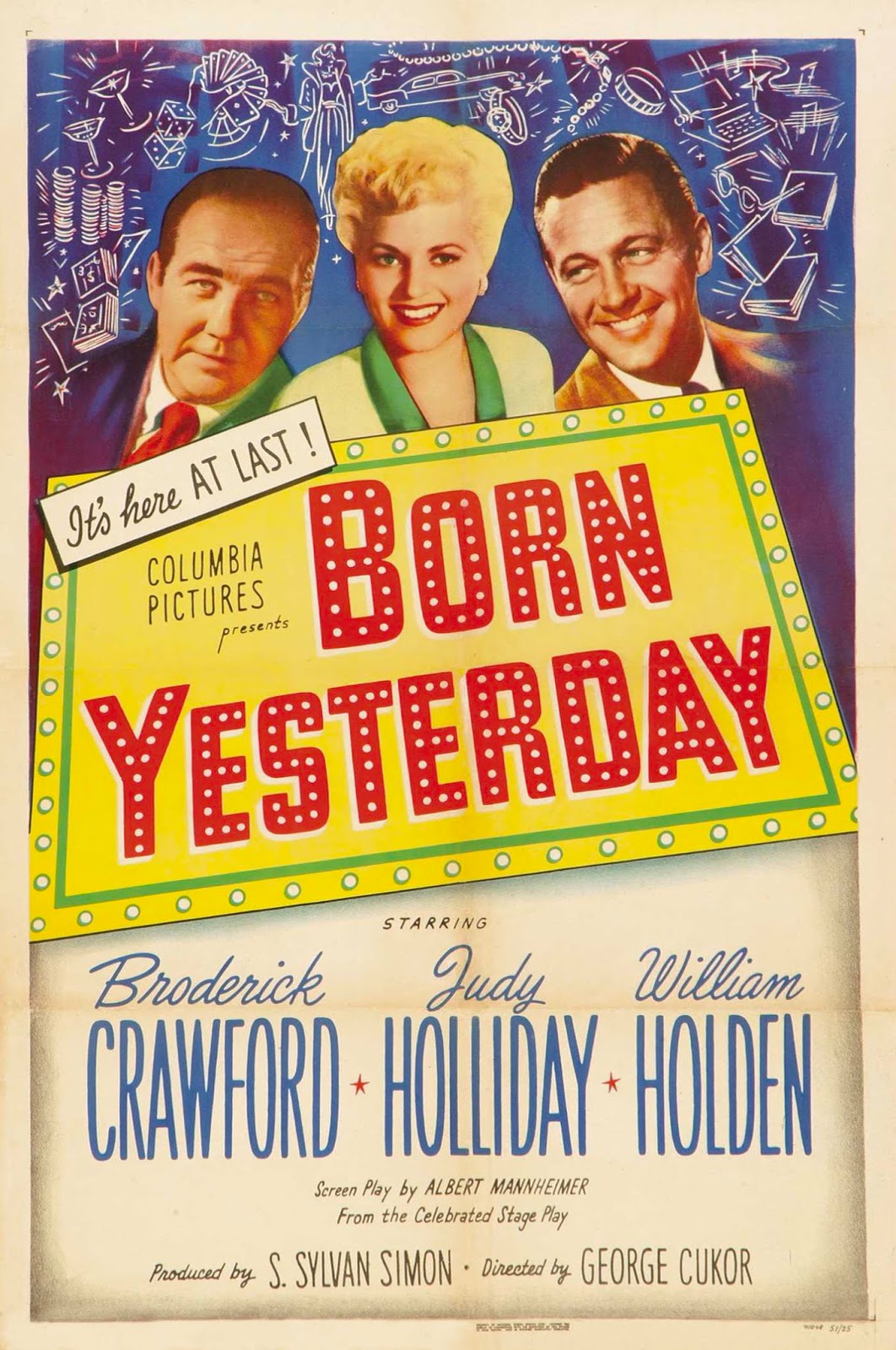
Born Yesterday (1950)

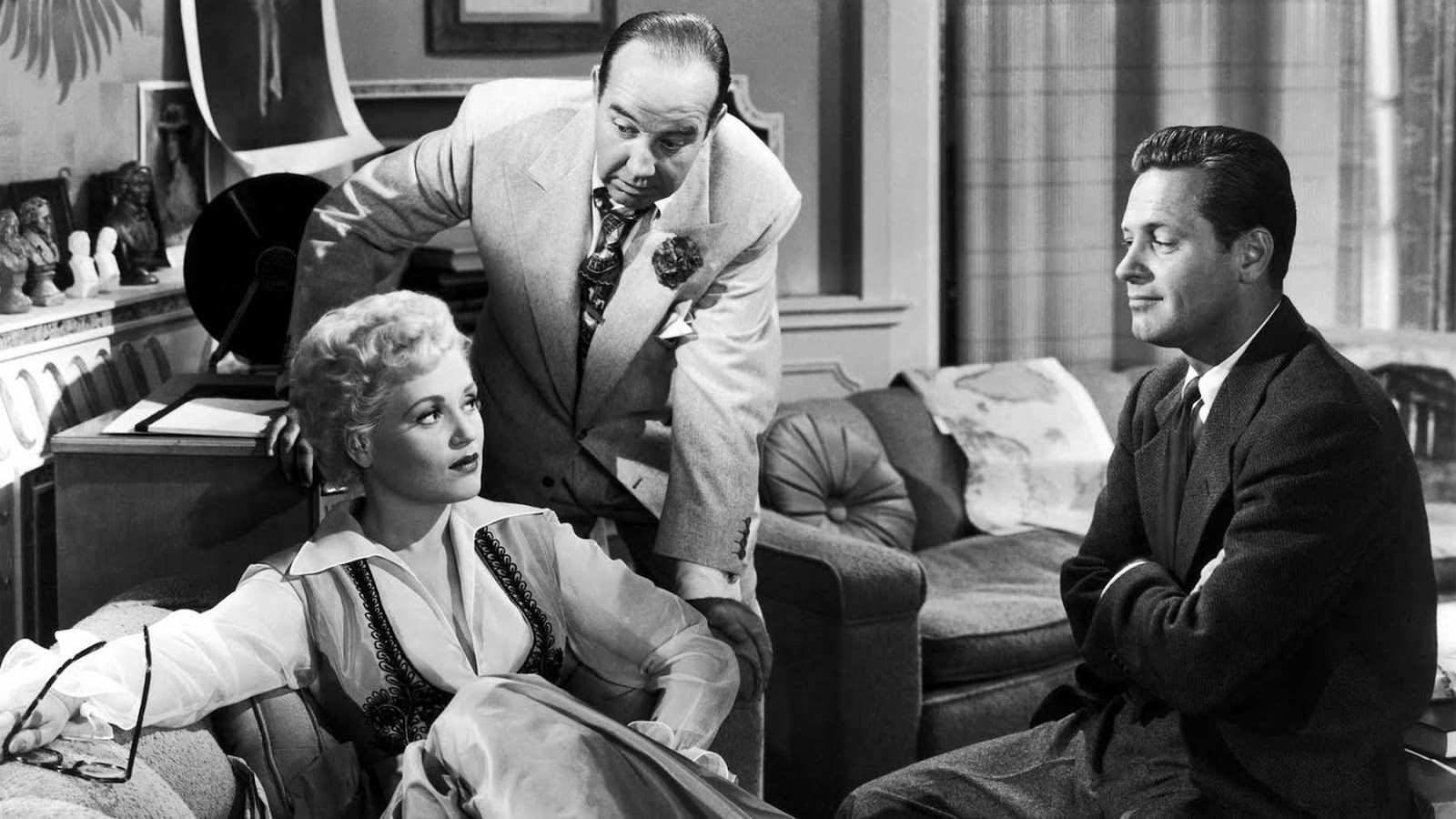
Judy Holliday gets a tutorial in class from William Holden – much to the chagrin of Broderick Crawford – in Born Yesterday

Director: George Cukor

Cast: Judy Holliday (Billie Dawn), Broderick Crawford (Harry Brock), William Holden (Paul Verrall), Howard St John (Jim Devery) Frank Otto (Eddie), Larry Oliver (Congressman Hedges)

Perhaps George Bernard Shaw should have tried to copyright the Pygmalion concept. After all no end of films and plays have tried their best to replicate the magic of having one working class classless type (usually the woman) learning how to use their own natural intelligence effectively by a wiser tutor (usually the man). Born Yesterday is a near text-book example of this – she’s as ill-informed as a young baby so might as well have been “born yesterday” y’see – that offers very little in the way of surprises, but a lot in the way of charm – most particularly from Judy Holliday who carries the entire the film with aplomb.

Harry Brock (Broderick Crawford) is a corrupt, uneducated businessman who has arrived in Washington to buy up a few congressmen. Brock may be a boreish bully, but he’s worried that his mistress, former Chorus-girl Billie Dawn (Judy Holliday), is so brash and ill-educated that she will show him up in front of his new political contacts. So he hires investigative journalist Paul Verrall (William Holden) to educate her. But Paul and Billie have an immediate romantic frisson – and as she learns about politics, literature and the state of the world Billie starts to realise that maybe all those shares she holds in her own name (for tax purposes) in Brock’s dodgy dealings might give her the chance to put his wrongs right.

Born Yesterday was an adaptation of Broadway hit that had made Judy Holliday a star. Written by Garson Kanin, bullying Harry Brock was allegedly based on Colombia Pictures head Harry Cohn. He clearly didn’t care when he smelt a hit – and even confirmed some suspicions by ordering Kanin to do re-writes of the rewritten script for no extra payment. Cohn had been deeply uncertain about bringing the unknown Holliday along for the ride (she had made only three small appearances beforehand) so Cukor cast her in a key role in Adam’s Rib (where Hepburn generously ceded many scenes to her) to prove Holliday could make it on the big screen.

Thank goodness she did make it to the film, as Holliday makes the film. Winning the Oscar – famously beating Bette Davis and Anne Baxter in All About Eve and Gloria Swanson in Sunset Boulevard – Holliday is superb in the role. Billie Dawn may be brassy, may be load, she might have the sort of screeching Brooklyn accent that sometimes feels like nails on a blackboard – but she’s not dumb. She’s smart – as she shows by repeatedly beating Harry with ease at games of gin rummy – she’s capable and she cares. She just hasn’t learned any better, and having spent her life being told that her opinions don’t matter, she’s decided to not mention them.

But Holliday shows Billie is a woman fast – and eager to learn – and a week or so with Paul won’t turn her into a genius, but she’s more than sharp enough to work out what’s wrong about her life and her sugar daddy, and to give her the oomph to do something about it. Holliday demonstrates this endearing growth of engagement and curiosity with a superb lightness – her comic timing is faultless – and a touching sweetness. 

The script gives Billie a hilarious tendency towards malapropism and her wide-eyed innocence and desire to do her best works wonderfully in getting us onside. While she is often the source of jokes she is never the butt of them, and Holliday makes clear her decency and sharpness is innate. She’s far from a dumb blonde – although she certainly looks and sounds like it – and watching her apply good-old fashioned Hollywood liberal ideas to confound boreish businessmen is good fun.

Her co-stars give sterling performances. Broderick Crawford channels his Oscar winning turn from the year earlier as corrupt bullying Willie Stark in All the King’s Men as the loud, bullying and dim Harry Brock. Throw-away lines suggest he has killed in the past – and at one point he strikes Billie – but he’s always a comic blusterer rather than a real threat. William Holden generously cedes much of the ground to Holliday as her Henry Higgins, although unlike that guy he’s humble, supportive and pleasingly democratic (quite the year for Holden, having also played a similar supplicant role in Sunset Boulvard).

Cukor directs with his usual lack of flash, quietly setting the camera in place and letting the actor’s go about their business meaning, for all the location shooting in Washington, this still feels very much like a Broadway piece. Cukor does skilfully manage to smuggle a lot under the censor wire – not least that Billie is clearly Harry’s mistress – and keeps a fine romantic tension between Billie and Paul, even if having the pair of them kiss early on does undermine some of the “will-they-won’t-they” magic.

But then basically this is a very straight forward film that just looks to entertain. There are some dirty dealings in Washington – but it’s all sorted out very easily and we are reassuringly told that there are only a very few bad apples in this barrel, and we can trust in the decency of our leaders. It’s no surprise who ends up with who, and no real revelations in character. The most surprising character in many ways is Harry’s disillusioned, self-loathing lawyer played by Howard St John, constantly on the verge of alcoholic self-disgust.

The film is really a showcase for its star though – and Holliday delivers with a terrifically entertaining performance that hammers home even more the sad fact that she passed away at 43 with only a handful of films to her name. Pygmalion Goes to Washington it maybe, but this is still a lovely epitaph to a talented actress.

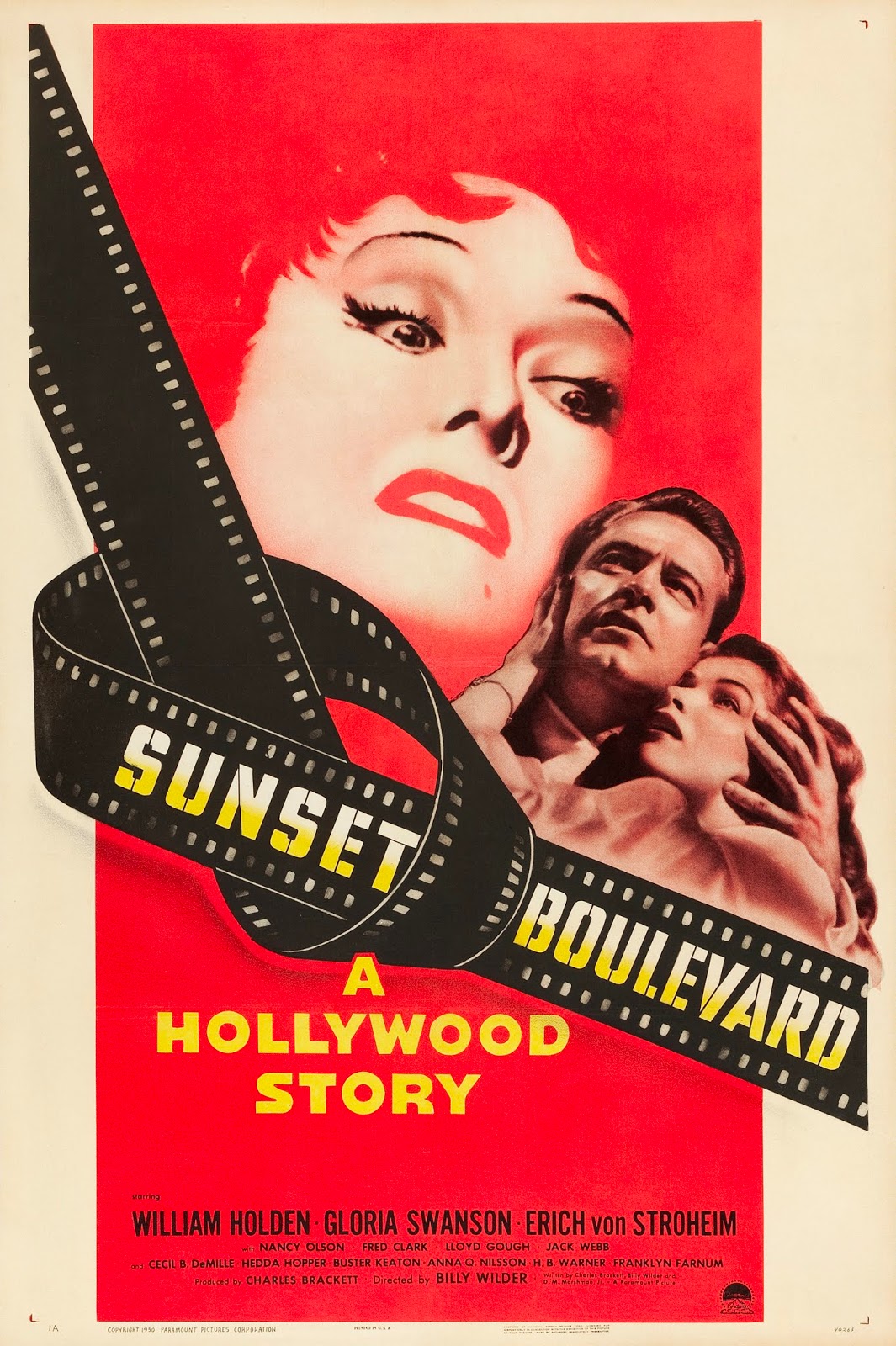
Sunset Boulevard (1950)

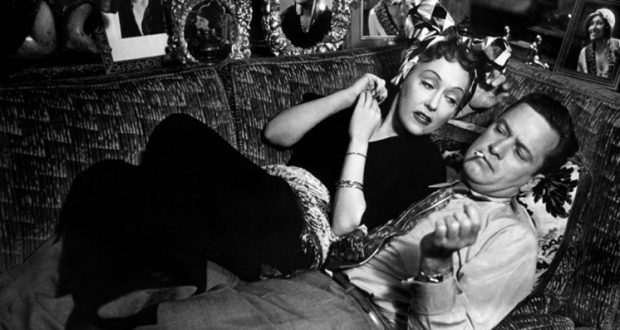
William Holden falls under Gloria Swanson’s spell in Billy Wilder’s superb Hollywood satire Sunset Boulevard

Director: Billy Wilder

Cast: William Holden (Joe Gillis), Gloria Swanson (Norma Desmond), Erich von Stroheim (Max von Mayerling), Nancy Olson (Betty Schaefer), Jack Webb (Artie Green), Fred Clark (Sheldrake), Robert Emmett O’Connor (Jonesy), Lloyd Gough (Morino); as themselves: Cecil B. DeMille, Hedda Hopper, Buster Keaton, Anna Q. Nilsson, HB Warner

Imagine if Charles Dickens had been born a hundred years later. He would surely have headed to Hollywood – and if he had, surely would have written something like Sunset Boulevard. Because who is Joe Gillis but another shallow Pip, dreaming of fortune and wasting his brains, who turns up at Satis House but stays on to become Miss Havisham’s live-in lover? Sure Wilder is more cynical and bitter than Dickens, but I guess even optimist Dickens killed off Little Nell so maybe he too would have had Joe Gillis end (and start) the film face-down in a swimming pool with three bullets in his back?

The cops arrive to find Joe (William Holden) exactly like that, while we hear Joe’s acidic commentary outlining exactly how this state of affairs came about. Joe is a screenwriter in Hollywood (he’s in the second tier of a second tier profession in the movies) who can’t get his latest script made for love nor money. Dodging the debt collectors set on reclaiming his car, he pulls into the drive of a mysterious house. It’s the home of Norma Desmond (Gloria Swanson), a forgotten silent film star who now lives out her days in her mansion, dreaming of her past glories and planning for a return to stardom that will never come, tended to by her loyal butler Max (Erich von Stroheim). Joe is roped in first to rewrite the (terrible) script she has been working on for her comeback, and then to become her live-in lover. But can such a situation survive Hollywood’s cold heart and Joe’s own self-loathing and desires to restart his screenwriting career in partnership with ambitious young studio script reader Betty Schaefer (Nancy Olson)?

Billy Wilder’s poison-pen love letter to Hollywood skewers the coldness at its heart. It does this with a triumphant mix of the grotesque and the heartfelt, the surreal and the coldly realistic, an insider’s guide to the world behind the magic of film-making and a story about those shut out of that very world. Hollywood is a shallow, bitter town where you’re either top of the bill or no-one at all. Would people from any other profession write such a bitter denunciation of their job that is also laced with affection and love? Maybe it has something to do with this being a unique profession which you have to love to enter, but once there you work with people who see it as a business.

The smell of desperation is there from the start, with Joe peddling his dreadful sounding baseball movie The Base Is Loaded to a polite but uninterested producer. Dropping a host of names and accepting any number of changes to the story (including changing it into an all-female sporting musical), Joe might once have had a talent but, as he says, “that was last year, this year I need money”.  William Holden was a late choice for Joe, but he is perfect in the part, capturing the air of the self-loathing cynic, a man bright enough to understand he’s shallow, a hack and desperate for any touch of the fame and fortune Hollywood can bring him.

Just like Pip, Joe is a young man who feels he is entitled to a life he scarcely seems to be qualified for. No wonder he settles into a life as Norma Desmond’s gigolo – it may well damage his sense of masculine pride to be an emasculated house-boy, but my God the suits are nice. And what talent does Joe even really have anyway? The script he is peddling barely seems to have any merit at all, and his extensive polish of Norma’s vehicle is still so alarmingly bad it never even gets the slightest consideration from Cecil B. DeMille. But Joe can’t let it go because he’s like a moth drawn towards those bright Hollywood lights.

And those bright Hollywood lights have consumed forever Norma Desmond. Wilder pulled Gloria Swanson out of an enforced semi-retirement to play the silent screen siren, whose career her own so closely parallels. It’s easy to remember Norma as a sort of Psycho-ish grotesque, a demented Miss Havisham living in her own crazy patchwork world of memory and delusion. Swanson certainly channels brilliantly the expression and body language of silent cinema into the part, and Desmond’s use of the sort of exaggerated gestures from that era in everyday life hammers home how her life hasn’t moved on from her glory days. 

But that would be to overlook the immense skill in Swanson’s performance. Norma may be sad, desperate, probably more than a little unhinged – a larger than life Miss Havisham to whom the “the pictures got small”, but she’s also a real person. Swanson makes it clear she genuinely loves Joe, she’s generous when she wants to be, devoted in her own way and immensely fragile. She takes a delighted pleasure in entertaining – a sequence of her reliving her glory days for Joe’s amusement (he couldn’t give a toss, making it all the more painful), capped with a charmingly delightful Chaplin impersonation shows a Norma who loves entertaining, loves putting a smile on people’s faces. Sure she’s obsessed with fame and desperate to reclaim it, but she’s also deep-down a real person.

But then that’s part also of Wilder’s romantic look at cinema. He can totally understand the bitter, destructive “business” part of it, but he still loves the show. His insiderish film is full of loving tributes to old Hollywood. Norma sits and watches real film footage of the real Gloria Swanson. The visit to Paramount Studios delights not only with its “backstage pass” feel, but also in the excitement with which the ageing extras and stage hands greet Norma. Norma’s weekly card games are staffed with genuine silent movie stars like Buster Keaton. Cecil B DeMille even pops up as himself (on the set of his film Samson and Delilah), kindly trying to guide Norma out of the studio even as he lacks the guts to tell her that her dream of a comeback is stillborn.

So how can you not feel sorry for Norma, who is clearly locked up in her haunted house on the outskirts of town, a million miles from reality, surrounded by endless reminders of her past glories. It’s so all-encompassing it traps Joe as well – at one point Wilder shows him trying to storm out, only for his pocket watch to literally get caught on the door. This place of dreams is staffed by the butler Max, a beautifully judged performance of Germanic chill mixed with doe-eyed devotion from Erich von Stroheim, also playing a dark version of himself as Norma’s pioneering former director (and husband) now reduced to protective butler. The entire house is a mausoleum without any escape.

The only character who seems truly positive is Nancy Olson’s wonderfully sweet Betty Schaefer, passionate about crafting a career for herself in the cinema. But even she is ruthlessly ambitious, a woman quite happy to consider jilting her fiancée for Joe’s attentions and has her eye on the price of success. She may have the talent, but she’s also got the sharpness.

Billy Wilder’s film brilliantly explores all these divides and contradictions in Hollywood and its history. Because what is Hollywood but a town that pays lip service to the past, but only has eyes for the future? Particularly with women. Female stars have a short shelf life and then they are dispatched. Poor Norma is still glamourous, still clearly has star quality – but as far as Hollywood is concerned she may as well be a million years old. No wonder Joe, used to these attitudes, is so ashamed to be kept by her – a woman he constantly refers to as a middle-aged friend. 

The dialogue, as you would expect from Brackett and Wilder, is superb from top to bottom with zingers and well-constructed dialogue exchanges so well placed they will survive for as long as there are movies. The film is beautifully shot by John F Seitz – part gothic horror, part dark romance, part neo-realist. Its pacing is perfect, its four act construction perfectly put together. All four of the principals (all Oscar nominated, none winning) are pitch perfect, sketching out characters that feel real and mixed with tragedy and loss as much as they are larger-than-life otherworldliness.

It’s the mixture of the freak show and the heart, in the massive Havishamesque estate, that marks this out as Hollywood does Dickens. The astute understanding of central characters, with enough depth to understand their shallowness, the grotesques that revolve around them but still have their humanity, it’s all there. Wilder mixes it with his own Hollywood emotions and his dry wit and cynicism to create a damn near perfect movie.

The Wild Bunch (1969)

William Holden and Ernest Borgnine lead The Wild Bunch into one last adventure

Director: Sam Peckinpah

Cast: William Holden (Pike Bishop), Ernest Borgnine (Dutch Engstrom), Robert Ryan (Deke Thornton), Edmond O’Brien (Freddie Sykes), Warren Oates (Lyle Gorch), Ben Johnson (Tector Gorch), Jamie Sánchez (Angel), Emilio Fernandez (General Mapache), Strother Marin (Coffer), LQ Jones (T.C.)

SPOILERS: Discussion of The Wild Bunch is pretty much impossible without discussing its ending – but then it does have a pretty famous ending. Well you’re warned…

It’s easy to look back the Wild West with rose-tinted glasses. To remember it as being when the American spirit was at its best and a romance ruled. To basically take the “Wild” out of the picture. Peckinpah’s The Wild Bunch is all about putting that “Wild” front and centre, a stunning exploration of the closing days of the Wild West that replaces sentiment and nostalgia with violence and a group of men who know nostalgia is just the vanity of hardened, brutal killers.

In 1916 Pike Bishop (William Holden) is the leader of a notorious gang of criminals, ruthless killers all, wanted by the law – and the rail company they have been robbing for years – at any price. Pike’s latest bank job winds up being a trap, with a deadly shoot-out taking place in the middle of a town (with the population lethally caught in the crossfire) as the rail company tries to kill Pike’s crew, their efforts led by Pike’s former partner Deke Thornton (Robert Ryan), forced to work against Pike or return to the hellish jail at Yuma. The massacre sees only a few members of the gang survive – Pike, his best friend Dutch (Ernest Borgnine), the Gorch brothers Lyle (Warren Oates) and Tector (Ben Johnson), Mexican gun-slinger Angel (Jamie Sánchez) and old-timer Freddie Sykes (Edmond O’Brien). The gang flees to Mexico, with Deke and his posse dispatched on their heels by the furious railway company. In a Mexico ripped apart by civil war, the gang are hired by would-be warlord General Mapache (Emilio Fernandez) to hijack guns from the American army – but there are other dangers when Angel has friendly contacts with the Mexican revolutionaries.

Peckinpah’s film is a stunning exploration not only of the dying dreams and way of life of old men in the West – Pike, Deke, Dutch and Freddie are all old men while the Gorch brothers are hardly in the first flush of youth – but also the endemic nature of violence. Peckinpah’s film is unfailingly brutal in its depiction of violence, an infection that runs through every level of society. Everyone from the children – the film opens with a gang of children laughingly feeding two scorpions to a mass colony of ants, before setting all the animals on fire (look in vain for the “no animals were harmed in the making of this picture” message) – to the men themselves. The film’s opening shoot-out – a technical marvel and also a masterpiece of slow tension building by Peckinpah – is shocking in its brutality.

Unlike Leone, to whom violence is shocking in its suddenness, Peckinpah slows down the action so that we can see (and feel) the horror of each bullet. The Wild Bunch set some sort of record – in its final shoot-out sequence – for blood squibs used. It’s not a surprise after watching the opening shoot-out between the Bunch and the railway forces. With the Bunch using a passing Temperance march to cover their retreat, bullets are fired indiscriminately, killing passers-by and men from both sides alike. No one, aside from a furious and appalled Deke (the only character who has suffered himself from violence in prison) expresses a moment’s guilt for this massacre.

But then Pike and the bunch are hardened killers to a man. Pike cares nothing for the members of the gang lost – even forgetting until late on that he left a man guarding the bank staff while the gang rode out of town – and when a wounded survivor can’t ride and agrees that Pike should finish it, he doesn’t pause for a second. Any ideas of these men as being rogues or there being any charm to living a life on the margins of the law are rapidly dispelled. 

And this violence isn’t just an American thing – it dominates life in Mexico as well, where the drunken, bullying General Mapache is a brutal would-be dictator, whose soldiers frequently terrorise, steal from and murder the villagers around them. In Mexico, the gun is law even more than the US, and these guys have even closer to being criminals in uniform, just as Deke’s posse could just as easily be working with the Bunch as against them.

So what motivates these men? What is brilliant about Peckinpah’s film is acknowledging that these violent killers may feud and fight, but they are still stretching for some sort of meaning in their life. These are world-weary old men with little to live for, who are trying to work out what – if anything – is left in their lives. And that life has to have some sort of code, some sort of grounding basis, even if everything else is up for grabs. Pike says when you “side with a man, you stay with him and if you can’t do that you’re finished”. It’s a flexible rule for these guys – and they frequently shirk it in the film when events are dangerous – but it’s a code they need to believe they would keep.

It’s that code that comes into play late in the film as Angel falls increasingly foul of Mapache’s anger and whims. It takes the gang a while to stand by it, but when they do it’s also partnered by a sad realisation that for these old men what else is there? Their lives have been ruled by the gun and shoot-out after shoot-out. Peckinpah views the West with no nostalgia, but he understands that men need to view their own lives with nostalgia at times, to understand that they may yearn to point at something and say that was what their lives were for.

And what else is there? Everyone in the film knows it’s over. They’re old men, and the world is moving on and leaving them behind. At one point the gang look on at wonder at a car owned by Mapache, and the Gorch brothers flat out can’t believe in the existence of an aeroplane. The modern world is ending the world of these guys, and Pike knows it: “We need to start thinking beyond our guns” he says at one point, but offers no solutions at all about what that might be. The modern world is the real deadly bullet that’s taking out the gang: in the final shoot-out, the key weapon even turns out to be a modern machine gun, spraying death at a level ordinary shooters can’t even begin to match.

That final shoot-out sees all these themes come together brilliantly. It could almost be a rebuttal of Butch Cassidy and the Sundance Kid (released the same year) that sees our heroes captured in romantic sepia freeze frame, charging into certain death against the Bolivian army. Here we effectively see the battle, with additional machine guns and thousands of blood squibs as the Bunch take on Mapache’s army in fury at Mapache’s murder of Sanchez. In a furious shoot-out lasting almost ten minutes, it’s a blood bath as the Bunch mow down dozens and dozens of Mapache’s army while themselves being repeatedly shredded by bullets, adrenalin alone keeping them going. Peckinpah even has the final fatal bullet that takes out Pike coming from a child soldier.

But the Bunch are taking this suicidal last stand because it’s their last –  their only – chance to have stood for something, to have a code they stuck by. To stand by their partner and if that means going down in a hail of bullets, at least there is some sort of glory to it. And besides – what else have they got? The modern world has drained all purpose from their life, so why not at the end wordlessly agree to leave behind the greed that has dominated their lives and die for something?

Peckinpah’s film is simply brilliant, fabulously made and brilliantly shot and edited. The cast of pros is simply excellent. Holden’s world-weary faded glamour now leaving only a cold ruthlessness and a wish that he had more to show for it is perfectly partnered with Borgnine’s easy-going sidekick who wants to do the right thing but needs to find the reasons. Ryan is excellent as a guilt-ridden Deke, who finally has begun to understand the impact of violence. The rest of the cast also excel. The Wild Bunch may be the least nostalgia infected Western ever made, a grim reminder that the West really was Wild. But it’s also a stunningly well-made and challenging picture.

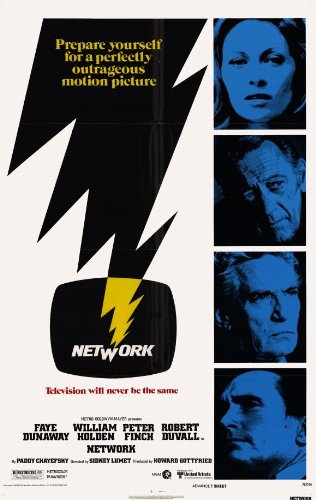
Network (1976)

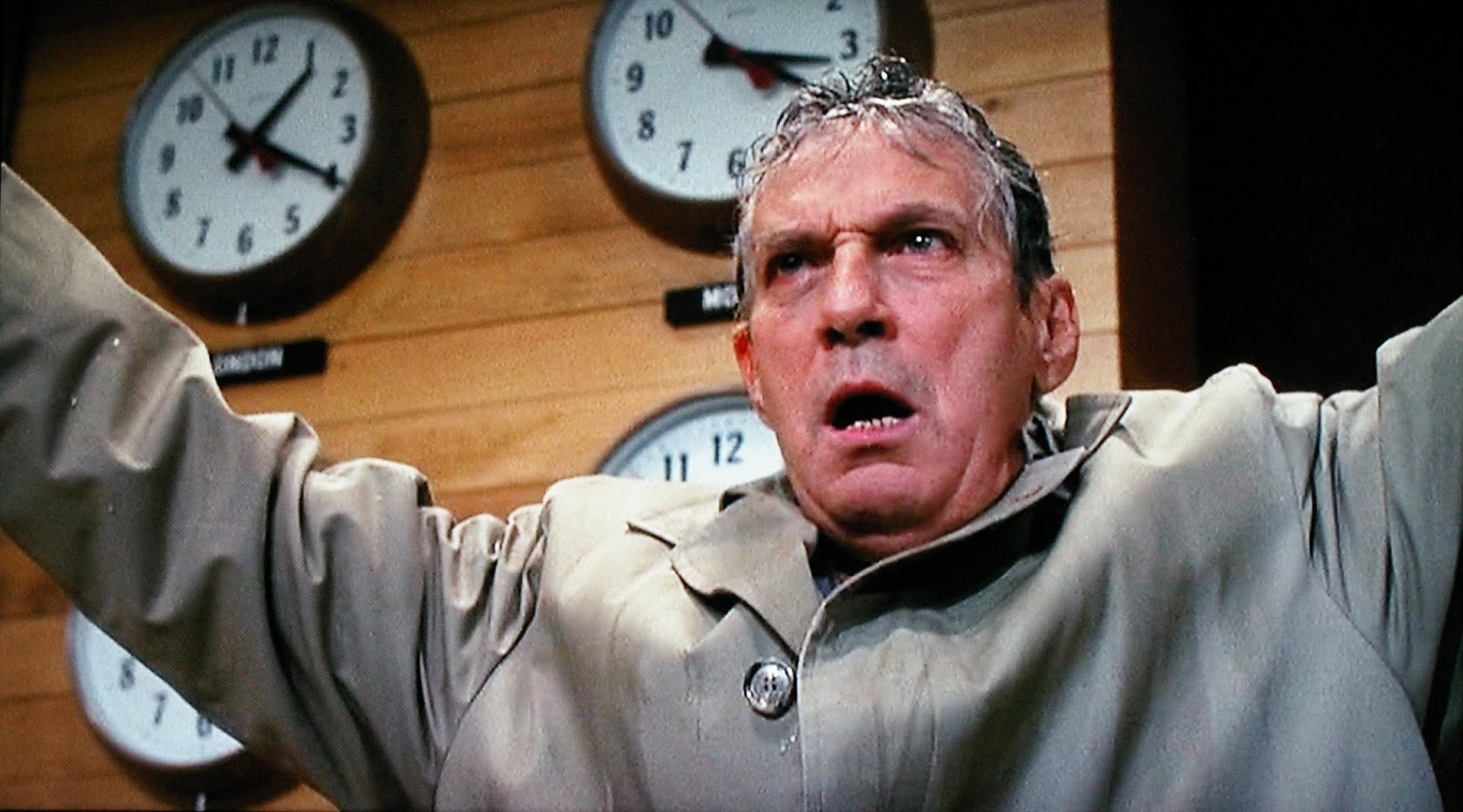
Peter Finch rants and raves in media satire masterpiece Network

Director: Sidney Lumet

Cast: Faye Dunaway (Diana Christensen), William Holden (Max Schumacher), Peter Finch (Howard Beale), Robert Duvall (Frank Hackett), Wesley Addy (Nelson Chaney), Ned Beatty (Arthur Jensen), Beatrice Straight (Louise Schumacher), Jordan Charney (Howard Hunter), William Prince (Edward Ruddy), Lane Smith (Robert McDonough), Marlene Warfiedl (Laureen Hobbs)

Is there any movie ever made that has been more prescient than Network? So spot-on was its vision of television becoming pushed to extremes by its obsession with ratings that when it was screened a few years ago for a group of teenagers in America, they allegedly didn’t realise it was meant to be a satire. I’m also pretty sure you would have to go a long way to find a better written movie – it’s no surprise that this has been converted into a successful play, it’s basically one already.

In the 1970s, UBS is a struggling TV network trying to find a niche among the giants. Its news show is losing its timeslot in the ratings – which is bad news for its respected anchor Howard Beale (Peter Finch). Informed he will be fired due to falling ratings, Beale goes on air and casually announces he will blow his brains out live on air next week. When this sends the ratings rocketing, the network sends him back on air, encouraging him to speak his mind more rather than just report the facts. When Beale suffers a full blown breakdown, his anti-establishment rants touch a public nerve and Beale becomes a ratings smash – with the news show taken over by ambitious Diana Christensen (Faye Dunaway), Head of Entertainment, who turns it into a bizarre light entertainment show, with the increasingly unhinged Beale the main entertainment. It’s perfect for everyone – so long as the ratings hold…

Network could so easily have become a shrill, OTT satire. Writing down the plot summary there, it even reads like that – a big, stupid, pleased-with-itself film that hits its points hard and where every character is a grotesque caricature. But that’s not the case here. This is a brilliantly written film – Paddy Chayevsky is surely one of the greatest writers in film history – a fiercely intelligent piece of satire, which most importantly crafts its characters with empathy and understanding. Some of them may be larger than life, and some of them may do things that are just this side of heightened reality, but at heart they all feel real. The film is shot through with heart and a sense of realism that underpins the razor sharp satire.

And that satire is all around the world of television. So astonishingly prescient is the film about the rise of reality TV, ratings obsessed and lacking in real soul, that many of its jokes pass by almost unrecognised today. Respected news producer Max Schumacher’s throwaway line about an hour of network TV drama being made up of films of car chases (and crashes) from the police? Done to death already. The idea (again unthinkable in the 1970s) that a news anchor could litter the air with their own opinions on the news and current affairs – half the anchors in America now run their shows like editorial pieces. The concept that the public could be entertained by watching someone clearly not completely normal, throwing crazed statements at the camera – it could only be a fantasy right? A TV network completely in thrall to its corporate masters, following the line from the bosses? Yup surely that could never happen.

What Chayevsky does so well is turn these into masterpieces of rhetoric. Some of the greatest speeches ever written in film appear here, and they work because not only do they showcase some superb writing, but also every moment is crammed with ideas and real genuine feeling. Howard Beale may well be as mad as hell and not going to take it any more – but he articulates his reasons for feeling this with an acute emotional reality. Schumacher’s paens to the changing world of television, and his own lost place in it, are beautifully done. Diana’s ratings obsessed spewing of TV related facts and figures is sharply underpinned by our awareness all the time of the emotional reality of her near-inevitable emotional breakdown (surely only a few years at most down the line).

Given these lines, the acting is extraordinary (it won three of the acting Oscars in 1967). There isn’t a duff beat or performance in this film, and the delivery of the high-blown dialogue is simply outstanding, brilliantly directed by Lumet who was always a highly skilled director of actors. In fact, Lumet is often easy to overlook here, but his understanding of the material, and handling of its message and delivery, is a big reason for why it never becomes overbearing or trying. Away from the leads, he also gets superb performances from Duvall (chilling and on the verge of rage in every scene as the corporate suit who really calls the shots), Beatty (who had basically one speech, worked a day, and got an Oscar nomination) and Straight as Schumacher’s wife (who went one better than Beatty and won the Oscar for her one scene – the shortest Oscar-winning performance ever at just a few minutes).

Peter Finch won a posthumous Oscar for his role in this film – ill health restricted his “mad as hell” speech into only two takes (an extraordinary thought when you watch it). Beale is a gift of a part, an intelligent, compelling piece of showmanship – but Finch’s gift is to make the part feel real and human under the genius dialogue. The early scenes showcase Beale clearly struggling with depression, under the smiles, and already starting to crack. I love the way Lumet often frames Finch during these scenes – in group scenes he’s often to the edge of events, and he only slowly comes to the fore to gain a close up. Heck most of his first outburst on television is only seen by us on a viewing monitor in the control room (only the viewer seems to be listening by the way – the technicians are either gossiping or mechanically going through the motions of running the live broadcast, including countdowns to commercials).

Finch basically steals the movie, because you can’t shake from your mind his delivery of scenes like this one:

It’s even harder to believe that so many actors turned down the role – perhaps worried that it would seem like a pantomime role. One of those actors was William Holden – and thank goodness he did, because his grounded, bitter, crumpled, but still idealistic Max Schumacher is one of the film’s highlights. Holden gives one of his greatest performances – often overlooked under the flashy roles of Finch and Dunaway – making Schumacher the still centre of the film and, by its end, something approaching its powerless voice of conscience. 

Faye Dunaway (also Oscar-winning) makes a great deal of the demonic role of Diana Christianson, the representative of the next generation of TV producers, concerned only with ratings over morals. It’s probably the least “real” of the characters, but Dunaway finds the vulnerability and fragility carefully hidden under Diana’s chilly self-confidence and ruthlessness. 

It’s Diana who drives the film, overseeing the transformation of the news hour into a bizarre variety show (including a soothsayer, amongst a host of eccentric magazine feature slots) where Beale is bought on to rant about the emptiness of our world and the horrors of our soulless age like some sort of dancing bear, his inevitable fainting fits greeted by roars of applause. (“What are you?” asks the warm up man of the studio audience “We’re mad as hell and we’re not going to take it anymore!” they delightedly cheer back).

The film runs a particularly dark streak alongside this with Diana’s plan to build a solid hour of entertainment every week from an embedded camera crew following the exploits of a gang of radical Marxist black-pantherist terrorists. The film gets a lot of slightly more obvious satirical material from this – the terrorists quickly lose their Marxist principles in hilarious fights around things like negotiating syndication rights – but its vision of television turning real-life horrors (repackaged) into entertainment for the masses is only a few degrees shy of where many channels have ended up today. 

That’s the whole film – sharply intelligent about where the world is heading, but balancing this with a genuine sense of humanity and emotional intelligence around its characters. If Chayevsky’s screenplay – or Lumet’s direction – hit us over the head with the points the film was trying to make, we’d quickly switch it off. Instead it makes its points with wit and a sense of reality that makes it both horrifying and entertaining. But then it would always have its place in film history with that dialogue and the acting it inspires from the cast. Most of the actors give their best ever work here, and the script is one of the finest around. As for the view of television – well, if we haven’t reached where Network was by now, it’s surely only a few minutes in the future.

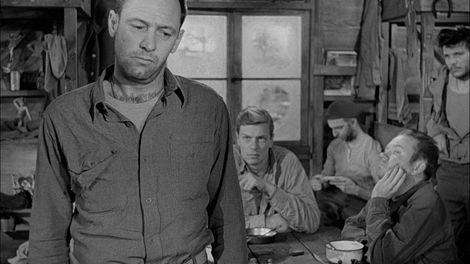
Stalag 17 (1953)

William Holden is the untrusted fixer in Billy Wilder’s prison camp drama Stalag 17

Director: Billy Wilder

Cast: William Holden (JJ Sefton), Don Taylor (Lieutenant Dunbar), Otto Preminger (Colonel von Scherbach), Robert Strauss (Stanislas ‘Animal’ Kuzara), Harvey Lembeck (Harry Shapiro), Peter Graves (Price), Sig Rumann (Sgt Johann Sebastian Schulz), Neville Brand (Duke), Richard Erdman (Hoffy)

A sort of cross between The Great Escape and Colditz (but not as good as either), Stalag 17 is a relatively minor entry into Billy Wilder’s illustrious cannon: but that makes it more than good enough to be a stand-out movie in anybody else’s. Set in a German prisoner of war camp for captured American NCOs, it follows the hunt for a traitor leaking escape plans to the Germans. The suspicions of the other inmates quickly turn to camp fixer JJ Sefton (William Holden), a self-serving, cynical outsider, despite his protestations of innocence. When a saboteur and POW is betrayed to the Germans, Sefton decides he needs to locate the stool pigeon himself.

The main historical interest in Stalag 17 is William Holden’s Oscar-winning performance. Holden apparently walked out of the original Broadway production of the play, but such was his trust in Wilder’s judgement he agreed to play the substantially rewritten role. Just as well he did, as Holden’s drawling cynicism, air of bitterness and the marvellous impression he is able to give of a man of commitment and principle under the veneer of a self-serving egotist are perfect for it. Holden won the Oscar (he believed it was a consolation for his failure to win for Sunset Boulevard) – and co-incidentally gave the shortest acceptance speech ever (due to TV coverage rules), a simple “thank you.”

Holden’s character slowly dominates the narrative more and more, but is often shot on the margins of the film. Wilder shoots a film where the lead character is on the periphery of the action, with Holden on the edge of frames, or just being caught by the camera as it drifts towards him. He feels like a supporting character for a large chunk of the first half of the film, while Wilder focuses on the daily life and bonhomie of the camp: two things Sefton deliberately exiles himself from. But you keep coming back to him, and are always aware of what he is thinking and planning.

The focus on the atmosphere of the camp allows a number of fun scenes around the isolation of the men. There are joyful celebrations for Christmas (including tree decorations and a full dance in the barracks, with men eagerly grabbing each other for a whirl in a way you can’t imagine them doing back home). We get the games and in-jokes that keep them sane, the cheeking of the guards, and the obsessive interest in the women held in the Russian camp next door.

This also allows a number of colourful performances from a solid group of character actors. Robert Strauss was Oscar-nominated as the scruffy, Betty-Grable-obsessed “Animal”, and his comic antics provide much of the film’s humour. There are fine performances from Harvey Lembeck as his confidante (Lembeck and Strauss had both played the same roles in the stage production), while Peter Graves, Neville Brand and Richard Erdman contribute performances as very different POWs.

The film also deals with mob dynamics: the group turns on Sefton, it seems, because he dares to bet against an escape and, as a fixer, he has access to luxuries the rest of the group don’t have (and charges them to access). Throw in his distance and his happiness not to make friends and it’s clear why they suspect him. But that doesn’t make their brutal punishment of him (on no evidence) and their cruel ostracism any easier to watch. You can’t help suspecting that Wilder had more than half his mind on the McCarthy trials taking place at the time when he was filming this mob-justice film.

The film is also notable for making the Germans reasonably fully-formed characters. Sure, our two main characters are, to varying degrees, ruthless buffoons, but they are not vicious or cruel. Otto Preminger’s camp commandant is a puffed-up martinet who puts his boots on when calling a General merely so he can click the heels together (and immediately removes them when the call is complete). Sig Rumann’s barracks guard is a decent cove and bluff braggart, who actually runs a fairly efficient spy system with the traitor.

The film is partly a study of men under pressure and partly a mystery – obviously Sefton isn’t the traitor, and the film slowly reveals who is before an impressive sequence where we see the traitor in action planting a message. There is a noir-ish quality to this mystery element, and the film holds a balance fairly well between a war comedy and an adventure where lives really are at stake (it’s book-ended by characters being machine gunned by the Germans after all). It’s not the greatest war film ever, but it has more than enough going for it.

The Bridge on the River Kwai (1957)


Alec Guinness is the British Colonel in captivity whose principles are sadly misguided in The Bridge on the River Kwai

Director: David Lean

Cast: William Holden (Commander Shears), Alec Guinness (Lt Colonel Nicholson), Jack Hawkins (Major Warden), Sessue Hayakawa (Colonel Saito), James Donald (Major Clipton), Geoffrey Horne (Lt Joyce), André Morell (Colonel Green), Peter Williams (Captain Reeves), John Boxer (Major Hughes)

“Madness! Madness!”Are there many better final lines of films – or any delivered with more emphatic, meaningful gusto than James Donald manages at the close of this David Lean classic? The Bridge on the River Kwai is a constantly reliable, wonderfully assembled classic film, and a never-ending joy to watch. It’s not only a gripping epic, it’s also a wonderful psychological study of a series of men and the impact war has on their psyches. It’s all madness after all.

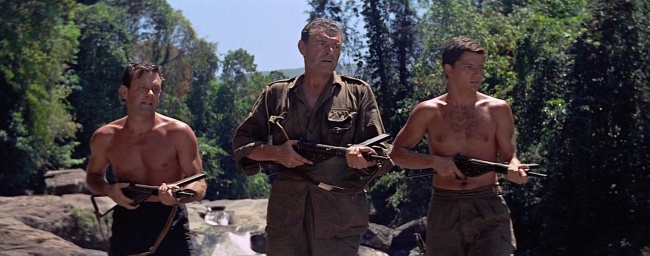
In 1943, Colonel Nicholson (Alec Guinness) and his men arrive in a Japanese prisoner of war camp in Burma. Camp Commander Colonel Saito (Sesse Hayakawa) has been tasked with building a bridge over the river Kwai, and demands officers and men go to work. When Nicholson adamantly refuses to allow officers to do manual labour (as per the Geneva Convention), he and Saito are set for a clash of wills, in which the iron-willed, rigid certainty of Nicholson eventually triumphs. However, once Nicholson is released from solitary confinement, he is so horrified by the decline in discipline of his men, he decides building the bridge is the perfect opportunity to rebuild morale and demonstrate British character=. So he sets upon building a better, stronger bridge than the Japanese had designed. Meanwhile, fellow prisoner American Commander Shears (William Holden) escapes from the camp back to Allied headquarters – only to be forced to return to the jungle on a commando raid to destroy the bridge, led by Major Warden (Jack Hawkins).

Wow this is one hell of a film. It was garlanded with seven Oscars, and totally deserves each and every one of them. Kwai is a deeply engaging, wonderfully structured epic that balances perfectly the sweep of Hollywood cinema with a keen understanding of the complexities of psychologies under pressure. Because like Clipton says, this is a film about madness. Virtually everyone in this is mad in some way. Lean brilliantly positions these psyches in a series of conflicts and clashes: we have Nicholson vs. Saito, Nicholson vs. Shears, Shears vs. Warden – in every relationship in the film there is conflict and disagreement. It makes for extraordinary drama.

Pile on top of that the fact that David Lean is a consummate film maker. Every moment of Kwai is a display of wondrous visual storytelling, from the arrival of the British in the prison camp – a triumph of defiance, pride and hubris – to the final attack on the bridge. The final sequence around the bridge is exquisitely assembled. The editing is flawless, the tension build-up (nearly 20 minutes!) never flags, but carefully establishes the who, what, why and where. The sequence itself builds up both events and problems with daunting skill. In between, every sequence of the film has some masterful work in it.

The heartbeat is Alec Guinness, simply marvellous as Nicholson. It’s hard to believe watching it that he was not the first choice – in a parallel universe Charles Laughton starred opposite Cary Grant’s Commander Shears! – because he is superb in this Oscar-winning role. Guinness’s Nicholson is mad. Not in the cuckoo way or a cruel or arrogant way. He’s blinded by the rule book, by the middle-class values of duty, order and dignity that govern his life. Mad because he takes a task from his Japanese enemies and does it better than they ever could have: “Must we work so well? Must we build them a better bridge than they could have built themselves?” Clipton asks of him. Too true. Nicholson’s response? That one day people will remember the bridge was built not by “a gang of slaves, but soldiers, British soldiers…even in captivity”. 

So Nicholson doesn’t see it that way. It doesn’t match his narrow world view of a place for everything and everything in its place. Because he has no vision beyond his own immediate circumstances. The important thing for him is to build the bridge, because it’s his duty to keep his men together, and demonstrate British resolve. So it’s Nicholson who visits Clipton’s sick bay and gently questions the wounded men, encouraging them to go back to work on the bridge so it can be finished on time (they ironically march through the graveyard of the camp on the way). For Nicholson the bridge is everything – and Guinness’ eyes are full of rigid monomania (needless to say, by the end of the film Nicholson himself off-handedly informs Clipton with pride that the officers have volunteered to work on the bridge to make sure it will be finished before the deadline).

His manner contrasts fascinatingly with Sesse Hawakaya’s Colonel Saito. Saito, a bank manager type if ever you saw one, clearly struggles with holding his command together and to deliver the bridge as planned. He has the strength of office, but not the strength of character of Nicholson. Hawakaya plays a weak man – and it’s fascinating how Lean charts the shift in power from Saito to Nicholson. Nicholson stands for principle and simply cannot imagine backing down – and then, with a sense of certainty and natural authority that governs his life, swiftly takes over the entire planning of the bridge from Saito. Poor Saito is a broken, weakened man: and in his own form of madness, is left with Nicholson alone as a confidant (the two of them talk more to each other about their loneliness and uncertainties than they do anyone else – Nicholson in particular gets a marvellous speech about the sad transience of the soldier’s life – “it’s a good life, but still there are times…”).

The madness doesn’t stop there. Jack Hawkins’ Major Warden is as fanatical as Nicholson: the mission is everything. Hawkins is excellent, turning Warden into a sort of over-grown schoolboy, playing at soldiers but with an adolescent aggressive willingness to sacrifice the pieces for the greater good. For Warden, no life in the team is sacred (including his own), and everything must be about the target. Warden’s gung-ho, take-no-prisoners attitude, his lack of empathy for the lives of those around him, makes him as much of an insane danger as Nicholson, perhaps more so.

Holden’s more humane Shears is the counterbalance with these three lunatics. Of course, Shears is sucked even more into the madness than anyone else – who else would escape from a prison camp, only to be forced to head back into the jungle on a fool’s errand? Holden is damned impressive as the naturally anti-authoritarian Shears, a man who never seems to have seen a boss without questioning him, who recognises the insanity of the war around him but when push comes to shove throws himself into the mission he has been given. 

He’s the big addition to the original source material – but it’s an idea so good that Pierre Boullé said he wished he had thought of it himself. Boullé won the screenplay Oscar, but the writers of the script were really the black-listed Michael Wilson and Carl Foreman. These two put together a superb script, and the structure contrasting Shears with Nicholson works perfectly. These two are mirror images, but never really antagonists. Their final meeting towards the end of the film has a poetic sadness about it. It adds a whole extra dimension to the film – while one storyline sees the bridge being built, a parallel one prepares for its destruction.

All these threads come together beautifully on the morning of the bridge’s opening, after a triumphant celebration by the prisoners on the completion of the bridge – a moment Nicholson describes to them as “turn[ing] defeat into victory”. He is of course both right and wrong – and the triumph of the film is that you can’t help but share Nicholson’s desire to save this bridge that we have seen so much work, effort and love go into constructing. 

“Madness”. That’s how Clipton sees it – James Donald is by the way wonderful as the one sane man – and yes of course he’s right. It’s all part of what is a masterful film made by a master storyteller, beautifully filmed and edited. Alec Guinness gives a performance for the ages as stubborn, small-minded man whom we somehow still end up strangely admiring and respecting. Holden, Hawkins and Hayakara offer intelligent, engaging portrayals. The Bridge on the River Kwaiis a film that you can watch again and again. In fact you should, because Lean here marries an epic scale with a story that feels small, personal and deeply felt – that places the psychology of real people at the centre of an epic stage. It’s simply a classic.